Results by title
28167 books match the query 'History' and 1262 start with b
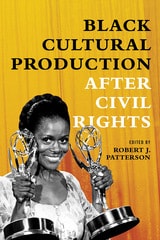
Black Cultural Production after Civil Rights
Edited by Robert J. Patterson
University of Illinois Press, 2019
This collection's fascinating spectrum of topics begins with the literary and cinematic representations of slavery from the 1970s to the present. Other authors delve into visual culture from Blaxploitation to the art of Betye Saar to stage works like A Movie Star Has to Star in Black and White as well as groundbreaking literary works like Corregidora and Captain Blackman. A pair of concluding essays concentrate on institutional change by looking at the Seventies surge of black publishing and by analyzing Ntozake Shange's for colored girls. . . in the context of current controversies surrounding sexual violence. Throughout, the writers reveal how Seventies black cultural production anchors important contemporary debates in black feminism and other issues while spurring the black imagination to thrive amidst abject social and political conditions.
Contributors: Courtney R. Baker, Soyica Diggs Colbert, Madhu Dubey, Nadine Knight, Monica White Ndounou, Kinohi Nishikawa, Samantha Pinto, Jermaine Singleton, Terrion L. Williamson, and Lisa Woolfork
Black Curators Matter
Conversations on Art and ChangeKellie Jones
J. Paul Getty Trust, The, 2026
Selected as one of Hyperallergic’s 15 Art Books We’re Excited to Read in 2026
This book chronicles the transformative impact of Black curators on American art museums since the 1970s as told by visionaries at the forefront of the change.
The relationship between Black Americans and U.S. art museums has historically been fraught and hard-won. In the late 1960s, the Black Emergency Cultural Coalition and other groups organized protests at major art museums, calling for the inclusion of Black artists and curators. Such advocacy led to acquisitions and exhibitions by Black artists at important institutions and spurred the establishment of museums and cultural organizations promoting Black art and culture. Today, Black curators hold significant positions at institutions nationwide. Black Curators Matter illuminates this critical history by spotlighting figures who have transformed the art world since the 1970s.
This book presents illuminating conversations between six pioneering curators—Lowery Stokes Sims, Deborah Willis, Richard J. Powell, Kellie Jones, Thelma Golden, and Franklin Sirmans—and a new generation of professionals, including Ashley James, Kalia Brooks, Aaron Bryant, Thomas Jean Lax, Rujeko Hockley, and LeRonn P. Brooks. Capturing the voices and experiences of Black curators, these discussions highlight their achievements and provide guidance for future generations aiming to diversify and enrich the cultural landscape. This volume reexamines the curatorial field to reveal the transformative strategies, critical interventions, and boundary-breaking exhibitions that reshaped American art museums toward greater inclusivity and experimentation.
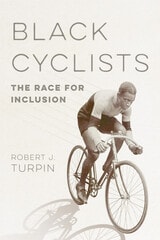
Black Cyclists
The Race for InclusionRobert J. Turpin
University of Illinois Press, 2024
Eye-opening and long overdue, Black Cyclists uses race, technology, and mobility to explore a forgotten chapter in cycling history.
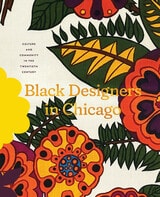
Black Designers in Chicago
Culture and Community in the Twentieth CenturyEdited by Chris Dingwall, David Hartt, and Daniel Schulman
University of Chicago Press, 2026
In twentieth-century Chicago, generations of Black artisans, craftspeople, art educators, clothing makers, commercial illustrators, sign painters, furniture makers, beauticians, graphic designers, art directors, and screen printers made and remade the city into an energetic center for modern design. Ambitious, enterprising, and resolutely modern, these Black designers were workers and intellectuals, activists and entrepreneurs. They created works for commercial and everyday use and helped to build community institutions such as the South Side Community Art Center and businesses like the Johnson Publishing Company. Their works ranged from branding and housewares for major corporations to pamphlets and posters made in the name of civil rights and Black Power. Together, they made Black Chicago into a dynamic design scene, working against racism in their professions while embracing the possibilities of design as a medium of social change.
This book is the first to chronicle their collective history while also celebrating their influence on design as well as African American culture more broadly. Based on extensive archival research and building on a major 2018 exhibition, Black Designers in Chicago presents essays by experts in African American history and design. The book features illustrations of a stunning variety of works—from graphic design to screenprints to textiles and household wares—placing African Americans at the center of modern design history, while highlighting the role of design in the cultural history of Black Chicago.
Black Detroit and the Rise of the UAW
August Meier and Elliott Rudwick
University of Michigan Press, 2007
Black Diamond Queens
African American Women and Rock and RollMaureen Mahon
Duke University Press, 2020

Black Earth, White Bread
A Technopolitical History of Russian Agriculture and FoodSusanne A. Wengle
University of Wisconsin Press, 2023
Examining governance, production, consumption, nature, and the ensuing vulnerabilities of the agrifood system, Wengle reveals the intended and unintended consequences of Russian agricultural policies since 1917. Ultimately, Black Earth, White Bread calls attention to Russian technopolitics and how macro systems of government impact life on a daily, quotidian level.

Black Earth
A Journey through UkraineJens Mühling
Haus Publishing, 2018
“Will someone pay for the spilled blood? No. Nobody.” Mikhail Bulgakov composed this ominous and prophetic phrase in Kiev amid the turmoil of the Russian civil war. Since then, Ukrainian borders have shifted constantly, and its people have suffered numerous military foreign interventions. Ukraine has only existed as an independent state since 1991, and what exactly it was before then is controversial among its people as well as its European neighbors.
In Black Earth: A Journey through the Ukraine, journalist and celebrated travel writer Jens Mühling takes readers across the country amid the ousting of former president Viktor Yanukovych and the Russian annexation of Crimea. Mühling delves deep into daily life in Ukraine, narrating his encounters with Ukrainian nationalists and old communists, Crimean Tatars and Cossacks, smugglers, and soldiers. Black Earth connects all these stories to convey an unconventional and unfiltered view of Ukraine, a country at the crossroads of Europe and Asia and the center of countless conflicts.
In this paperback edition, a new preface is included that takes into account recent developments up to the 2022 war between Russia and Ukraine.
Black Eden
The Idlewild CommunityLewis Walker
Michigan State University Press, 2002
Black Education in Alabama, 1865-1901
Robert G. Sherer
University of Alabama Press, 2005
The study of education in Alabama is especially important in understanding black education throughout the United States since the most famous black school, Booker T. Washington's Tuskegee Institute, is located in Alabama and began as a state teachers’ training school. A history of black education in Alabama provides a test case of the frequently assumed dominance of Booker T. Washington and his plan of "industrial'' or vocational training in black education.
Black Empire
The Masculine Global Imaginary of Caribbean Intellectuals in the United States, 1914–1962Michelle Ann Stephens
Duke University Press, 2005
Stephens argues that the global black political consciousness she identifies was constituted by both radical and reactionary impulses. On the one hand, Garvey, McKay, and James saw freedom of movement as the basis of black transnationalism. The Caribbean archipelago—a geographic space ideally suited to the free movement of black subjects across national boundaries—became the metaphoric heart of their vision. On the other hand, these three writers were deeply influenced by the ideas of militarism, empire, and male sovereignty that shaped global political discourse in the early twentieth century. As such, their vision of transnational blackness excluded women’s political subjectivities. Drawing together insights from American, African American, Caribbean, and gender studies, Black Empire is a major contribution to ongoing conversations about nation and diaspora.
Black Enlightenment
Surya Parekh
Duke University Press, 2023
Black Europe and the African Diaspora
Edited by Darlene Clark Hine, Trica Danielle Keaton, and Stephen Small
University of Illinois Press, 2009
The presence of Blacks in a number of European societies has drawn increasing interest from scholars, policymakers, and the general public. This interdisciplinary and multi-disciplinary collection penetrates the multifaceted Black presence in Europe, and, in so doing, complicates the notions of race, belonging, desire, and identities assumed and presumed in revealing portraits of Black experiences in a European context. In focusing on contemporary intellectual currents and themes, the contributors theorize and re-imagine a range of historical and contemporary issues related to the broader questions of blackness, diaspora, hegemony, transnationalism, and "Black Europe" itself as lived and perceived realities.
Contributors are Allison Blakely, Jacqueline Nassy Brown, Tina Campt, Fred Constant, Alessandra Di Maio, Philomena Essed, Terri Francis, Barnor Hesse, Darlene Clark Hine, Dienke Hondius, Eileen Julien, Trica Danielle Keaton, Kwame Nimako, Tiffany Ruby Patterson, T. Denean Sharpley-Whiting, Stephen Small, Tyler Stovall, Alexander G. Weheliye, Gloria Wekker, and Michelle M. Wright.

Black Flag Boricuas
Anarchism, Antiauthoritarianism, and th eLeft in Puerto Rico, 1897-1921Kirwin R. Shaffer
University of Illinois Press, 2013

Black Flag Over Dixie
Racial Atrocities and Reprisals in the Civil WarEdited by Gregory J. W. Urwin
Southern Illinois University Press, 2004
Black Flag over Dixie: Racial Atrocities and Reprisals in the Civil War highlights the central role that race played in the Civil War by examining some of the ugliest incidents that played out on its battlefields. Challenging the American public’s perception of the Civil War as a chivalrous family quarrel, twelve rising and prominent historians show the conflict to be a wrenching social revolution whose bloody excesses were exacerbated by racial hatred.
Edited by Gregory J. W. Urwin, this compelling volume focuses on the tendency of Confederate troops to murder black Union soldiers and runaway slaves and divulges the details of black retaliation and the resulting cycle of fear and violence that poisoned race relations during Reconstruction. In a powerful introduction to the collection, Urwin reminds readers that the Civil War was both a social and a racial revolution. As the heirs and defenders of a slave society’s ideology, Confederates considered African Americans to be savages who were incapable of waging war in a civilized fashion. Ironically, this conviction caused white Southerners to behave savagely themselves. Under the threat of Union retaliation, the Confederate government backed away from failing to treat the white officers and black enlisted men of the United States Colored Troops as legitimate combatants. Nevertheless, many rebel commands adopted a no-prisoners policy in the field. When the Union’s black defenders responded in kind, the Civil War descended to a level of inhumanity that most Americans prefer to forget.
In addition to covering the war’s most notorious massacres at Olustee, Fort Pillow, Poison Spring, and the Crater, Black Flag over Dixie examines the responses of Union soldiers and politicians to these disturbing and unpleasant events, as well as the military, legal, and moral considerations that sometimes deterred Confederates from killing all black Federals who fell into their hands. Twenty photographs and a map of massacre and reprisal sites accompany the volume.
The contributors are Gregory J. W. Urwin, Anne J. Bailey, Howard C. Westwood, James G. Hollandsworth Jr., David J. Coles, Albert Castel, Derek W. Frisby, Weymouth T. Jordan Jr., Gerald W. Thomas, Bryce A. Suderow, Chad L. Williams, and Mark Grimsley.
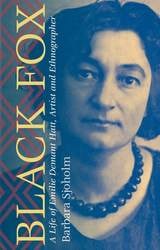
Black Fox
A Life of Emilie Demant Hatt, Artist and EthnographerBarbara Sjoholm
University of Wisconsin Press, 2017
In recounting Demant Hatt's fascinating life, Barbara Sjoholm investigates the boundaries and influences between ethnographers and sources, the nature of authorship and visual representation, and the state of anthropology, racial biology, and politics in Scandinavia during the first half of the twentieth century.
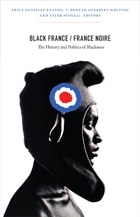
Black France / France Noire
The History and Politics of BlacknessTrica Danielle Keaton, T. Denean Sharpley-Whiting and Tyler Stovall, eds.
Duke University Press, 2012
Contributors. Rémy Bazenguissa-Ganga, Allison Blakely, Jennifer Anne Boittin, Marcus Bruce, Fred Constant, Mamadou Diouf, Arlette Frund, Michel Giraud, Bennetta Jules-Rosette, Trica Danielle Keaton, Jake Lamar, Patrick Lozès, Alain Mabanckou, Elisabeth Mudimbe-Boyi, T. Denean Sharpley-Whiting, Tyler Stovall, Christiane Taubira, Dominic Thomas, Gary Wilder
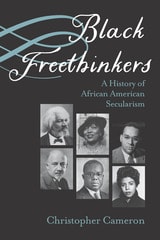
Black Freethinkers
A History of African American SecularismChristopher Cameron
Northwestern University Press, 2019
Christopher Cameron suggests an alternative origin of nonbelief and religious skepticism in America, namely the brutality of the institution of slavery. He also traces the growth of atheism and agnosticism among African Americans in two major political and intellectual movements of the 1920s: the New Negro Renaissance and the growth of black socialism and communism. In a final chapter, he explores the critical importance of freethought among participants in the civil rights and Black Power movements of the 1960s and 1970s.
Examining a wealth of sources, including slave narratives, travel accounts, novels, poetry, memoirs, newspapers, and archival sources such as church records, sermons, and letters, the study follows the lives and contributions of well-known figures, including Frederick Douglass, Zora Neale Hurston, James Baldwin, and Alice Walker, as well as lesser-known thinkers such as Louise Thompson Patterson, Sarah Webster Fabio, and David Cincore.
Black Georgia in the Progressive Era, 1900-1920
John Dittmer
University of Illinois Press, 1977
have of black life in a southern state at the beginning of the twentieth century."
-- Howard N. Rabinowitz,
Journal of American History
"The author shows clearly and forcefully
the ways in which this [white] system abused and controlled the black lower
caste in Georgia." -- Lester C. Lamon, American Historical Review.
"Dittmer has a faculty for lucid exposition of complicated subjects. This is
especially true of the sections on segregation, racial politics, disfranchisement,
woman's suffrage and prohitibion, the neo-slavery in agriculture, and the racial
violence whose threat and reality hung like a pall over all of Georgia throughout
the period." -- Donald L. Grant, Georgia Historical Quarterly.
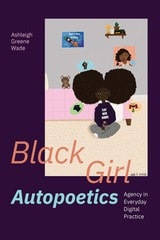
Black Girl Autopoetics
Agency in Everyday Digital PracticeAshleigh Greene Wade
Duke University Press, 2024
Black Girlhood in the Nineteenth Century
Nazera Sadiq Wright
University of Illinois Press, 2016
As Wright shows, the figure of the black girl in African American literature provided a powerful avenue for exploring issues like domesticity, femininity, and proper conduct. The characters' actions, however fictional, became a rubric for African American citizenship and racial progress. At the same time, their seeming dependence and insignificance allegorized the unjust treatment of African Americans. Wright reveals fascinating girls who, possessed of a premature knowing and wisdom beyond their years, projected a courage and resiliency that made them exemplary representations of the project of racial advance and citizenship.
Black Hawk
An AutobiographyBlack Hawk
University of Illinois Press, 1955
A foundational document, Black Hawk: An Autobiography is both an unsparing record of America's genocide against Native American peoples and the moving self-portrait of an extraordinary man.

Black Hills Forestry
A HistoryJohn F. Freeman
University Press of Colorado, 2023
One of the first forests actively managed by the federal government and the site of the first sale of federally owned timber to a private party, the Black Hills National Forest has served as a management model for all national forests. Its many uses, activities, and issues—recreation, timber, mining, grazing, tourism, First American cultural usage, and the intermingling of public and private lands—expose the ongoing tensions between private landowners and public land managers. Freeman shows how forest management in the Black Hills encapsulates the Forest Service's failures to keep up with changes in the public's view of forest values until compelled to do so by federal legislation and the courts. In addition, he explores how more recent events in the region like catastrophic wildfires and mountain pine beetle epidemics have provided forest managers with the chance to realign their efforts to create and maintain a biologically diverse forest that can better resist natural and human disturbances.
This study of the Black Hills offers an excellent prism through which to view the history of the US Forest Service's land management policies. Foresters, land managers, and regional historians will find Black Hills Forestry a valuable resource.

Black Hills Ghost Towns
Watson Parker
Ohio University Press, 1974
Black History in the Philadelphia Landscape
Deep Roots, Continuing LegacyAmy Jane Cohen
Temple University Press, 2024
Cohen also describes the path to erecting a statue of civil rights activist Octavius Catto at Philadelphia’s City Hall and profiles international celebrities Marian Anderson and Paul Robeson who are honored in the city. At the end of each chapter, she includes suggestions to continue readers’ exploration of this important cultural heritage.
Showing how increased attention to the role of African Americans in local and national history has resulted in numerous, sometimes controversial, alterations to the landscape, Cohen guides readers to Black history’s significance and its connections with today’s spotlight on racial justice.

Black Hunger
Soul Food And AmericaDoris Witt
University of Minnesota Press, 2004
Explores the complex relationship between food and African American history
In 1889, the owners of a pancake mix witnessed the vaudeville performance of a white man in blackface and drag playing a character called Aunt Jemima. This character went on to become one of the most pervasive stereotypes of black women in the United States, embodying not only the pancakes she was appropriated to market but also post–Civil War race and gender hierarchies—including the subordination of African American women as servants and white fantasies of the nurturing mammy.
Using the history of Aunt Jemima as a springboard for exploring the relationship between food and African Americans, Black Hunger focuses on debates over soul food since the 1960s to illuminate a complex web of political, economic, religious, sexual, and racial tensions between whites and blacks and within the black community itself. Celebrated by many African Americans as a sacramental emblem of slavery and protest, soul food was simultaneously rejected by others as a manifestation of middle-class black “slumming.”
Highlighting the importance of food for men as well as women, Doris Witt traces the promotion of soul food by New York Times food writer Craig Claiborne and its prohibition by Nation of Islam leader Elijah Muhammad and comedian-turned-diet guru Dick Gregory. A discussion of cookbook author Vertamae Grosvenor, who distanced herself from the myth of plantation mammy by reimagining soul food as "vibration cooking," sets the stage for Witt's concluding argument that the bodies and appetites of African American women should be viewed as central to contemporary conversations about eating disorders and reproductive rights.
Witt draws on vaudeville, literature, film, visual art, and cookbooks to explore how food has been used both to perpetuate and to challenge racial stereotypes. Raising her fist in a Black Power salute, wielding her spatula like a sword, Aunt Jemima steps off the pancake box in a righteous fury.
Black Huntington
An Appalachian StoryCicero M. Fain III
University of Illinois Press, 2019
How African Americans thrived in a West Virginia city
By 1930, Huntington had become West Virginia's largest city. Its booming economy and relatively tolerant racial climate attracted African Americans from across Appalachia and the South. Prosperity gave these migrants political clout and spurred the formation of communities that defined black Huntington--factors that empowered blacks to confront institutionalized and industrial racism on the one hand and the white embrace of Jim Crow on the other. Cicero M. Fain III illuminates the unique cultural identity and dynamic sense of accomplishment and purpose that transformed African American life in Huntington. Using interviews and untapped archival materials, Fain details the rise and consolidation of the black working class as it pursued, then fulfilled, its aspirations. He also reveals how African Americans developed a host of strategies--strong kin and social networks, institutional development, property ownership, and legal challenges--to defend their gains in the face of the white status quo. Eye-opening and eloquent, Black Huntington makes visible another facet of the African American experience in Appalachia.

Black Identity
Rhetoric, Ideology, and Nineteenth-Century Black NationalismDexter B. Gordon
Southern Illinois University Press, 2006
Exploring the role of rhetoric in African American identity and political discourse
Dexter B. Gordon’s Black Identity: Rhetoric, Ideology, and Nineteenth-Century Black Nationalism explores the problem of racial alienation and the importance of rhetoric in the formation of black identity in the United States. Faced with alienation and disenfranchisement as a part of their daily experience, African Americans developed collective practices of empowerment that cohere as a constitutive rhetoric of black ideology. Exploring the origins of that rhetoric, Gordon reveals how the ideology of black nationalism functions in contemporary African American political discourse.
Rooting his study in the words and works of nineteenth-century black abolitionists such as Maria Stewart, David Walker, and Henry Garnet, Gordon explores the rapprochement between rhetorical theory, race, alienation, and the role of public memory in identity formation. He argues that abolitionists used language in their speeches, pamphlets, letters, petitions, and broadsides that established black identity in ways that would foster liberation and empowerment. The arguments presented here constitute the only sustained treatment of nineteenth-century black activists from a rhetorical perspective.
Gordon demonstrates the pivotal role of rhetoric in African American efforts to create a viable public voice. Understanding nineteenth-century black alienation—and its intersection with twentieth-century racism—is crucial to understanding the continued sense of alienation that African Americans express about their American experience. Gordon explains how the ideology of black nationalism disciplines and describes African American life for its own ends, exposing a central piece of the ideological struggle for the soul of America. The book is both a platform for further discussion and an invitation for more voices to join the discourse as we search for ways to comprehend the sense of alienation experienced and expressed by African Americans in contemporary society.
Black Indians and Freedmen
The African Methodist Episcopal Church and Indigenous Americans, 1816-1916Christina Dickerson-Cousin
University of Illinois Press, 2021
Insightful and richly detailed, Black Indians and Freedmen illuminates how faith and empathy encouraged the unique interactions between two peoples.
Black Internationalist Feminism
Women Writers of the Black Left, 1945-1995Cheryl Higashida
University of Illinois Press, 2013
Black Jack
John A. Logan and Southern Illinois in the Civil War EraJames Pickett Jones. Foreword by John Y. Simon
Southern Illinois University Press, 1995
John A. Logan, called "Black Jack" by the men he led in Civil War battles from the Henry-Donelson campaign to Vicksburg, Chattanooga, and on to Atlanta, was one of the Union Army’s most colorful generals.
James Pickett Jones places Logan in his southern Illinois surroundings as he examines the role of the political soldier in the Civil War. When Logan altered his stance on national issues, so did the southern part of the state. Although secession, civil strife, Copperheadism, and the new attitudes created by the war contributed to this change of position in southern Illinois, Logan’s role as political and military leader was important in the region’s swing to strong support of the war against the Confederacy, to the policies of Lincoln, and eventually, to the Republican party.

Black Labor in Richmond, 1865-1890
Peter J. Rachleff
University of Illinois Press, 1989
Black Lawyers, White Courts
The Soul of South African LawKenneth S. Broun
Ohio University Press, 2000
In the struggle against apartheid, one often overlooked group of crusaders was the coterie of black lawyers who overcame the Byzantine system that the government established oftentimes explicitly to block the paths of its black citizens from achieving justice.
Now, in their own voices, we have the narratives of many of those lawyers as recounted in a series of oral interviews. Black Lawyers, White Courts is their story and the anti-apartheid story that has before now gone untold.
Professor Kenneth Broun conducted interviews with twenty-seven black South African lawyers. They were asked to tell about their lives, including their family backgrounds, education, careers, and their visions for the future. In many instances they also discussed their years in prison or exile, or under house arrest. Most told of both education and careers interrupted because of the ongoing struggle.
The story of the professional achievements of black lawyers in South Africa—indeed their very survival—provides an example of the triumph of individuals and, ultimately, of the law. Black Lawyers, White Courts is about South Africa, and about black professionals in that country, but the lessons its protagonists teach extend far beyond circumstances, geography, or race.

Black Legacy
America's Hidden HeritageWilliam D. Piersen
University of Massachusetts Press, 1993
Drawing on a vast wealth of evidence—folktales, oral histories, religious rituals, and music—this book explores the pervasive if often unacknowledged influence of African traditions on American life. The result is a bold reinterpretation of American history that disrupts conventional assumptions and turns racial stereotypes inside out.
William D. Piersen begins by examining a series of African and African-American oral narratives that interpret the experience of slavery from a distinctly black perspective. Centered on issues of moral truth, these tales bear witness to the meaning and human cost of the slave trade as perceived by those who were its victims. Piersen then analyzes the ways in which enslaved Africans adapted their rich cultural heritage to the new circumstances they were forced to endure. He shows, for example, how they imaginatively—and often aggressively—devised forms of public satire to resist white authority. He traces the transfer of traditional African medical knowledge to the Americas and demonstrates that in antebellum America many black healers were more skilled than their white counterparts. He further shows how African customs helped shape the evolving contours of American culture—particularly in the South—from holiday celebrations, musical traditions, and architectural styles to modes of speech, habits of work, and ways of cooking. The black legacy to America even extended, ironically, to the Ku Klux Klan, whose founders imitated masking traditions handed down from West African secret societies. By reestablishing the forgotten cultural links between Africa and America, this study enriches our understanding of American history and is a powerful testament to the legacy of African culture in American life.
Black Legislators in Louisiana during Reconstruction
Charles Vincent
Southern Illinois University Press, 2011
Now updated with a new preface, this volume endures as an important work that illustrates the strength of minorities in state government during Reconstruction. It focuses on the achievements of the black representatives and senators in the Louisiana legislature who, through tireless fighting, were able to push forward many progressive reforms, such as universal public education, and social programs for the less fortunate.

Black Life Matter
Blackness, Religion, and the SubjectBiko Mandela Gray
Duke University Press, 2022

Black Light
Revealing the Hidden History of Photography and CinemaChristophe Wall-Romana
University of Minnesota Press, 2026
A radical assessment of the racial motives underlying the conception of photography and cinema
Conventional histories have long traced the origins of photography and cinema to the goal of reproducing the visible world. Black Light offers a radical counter to this understanding. Investigating the optical, cosmological, and racial thought that surrounded their conception, Christophe Wall-Romana argues that these media developed out of a desire to visualize what cannot be seen.
Taking as its starting point the concurrent invention of the telescope and industrialization of the transatlantic slave trade, Black Light shows how photography and cinema are entangled with two key preoccupations of the Enlightenment: visualizing the mysteries of the cosmos and managing Blackness. Wall-Romana uses literary and technological sources to demonstrate how racial and astronomical thinking interwove throughout the long development of our modern visual media. Retracing the impulses behind nonmimetic photoimaging and dynamic modeling, he exposes the racial underpinnings of research on photosensitive compounds such as silver nitrate and the racist lenses applied in post-Copernican cosmology.
Black Light charts the pivotal period from the seventeenth through the nineteenth century when Europeans were reckoning with “multiple worlds” and natural philosophy was giving way to “mechanical objectivity.” Wall-Romana shows how engagement with the nature of light was always entangled with racist discourses on Blackness—especially after the 1801 discovery of the invisible spectrum and its paradox of “black light.” Deprovincializing media archaeology, this book presents a groundbreaking historical framework with which to reenvision our dominant modes of seeing and understanding the world.
Retail e-book files for this title are screen-reader friendly with images accompanied by short alt text and/or extended descriptions.
Black Lives, Native Lands, White Worlds
A History of Slavery in New EnglandJared Ross Hardesty
University of Massachusetts Press, 2019
In this concise yet comprehensive history, Jared Ross Hardesty focuses on the individual stories of enslaved people, bringing their experiences to life. He also explores larger issues such as the importance of slavery to the colonization of the region and to agriculture and industry, New England's deep connections to Caribbean plantation societies, and the significance of emancipation movements in the era of the American Revolution. Thoroughly researched and engagingly written, Black Lives, Native Lands, White Worlds is a must-read for anyone interested in the history of New England.
Black Metropolis
A Study of Negro Life in a Northern CitySt. Clair Drake and Horace R. Cayton
University of Chicago Press, 1993
"Black Metropolis is a rare combination of research and synthesis, a book to be deeply pondered. . . . No one who reads it intelligently can ever believe again that our racial dilemma can be solved by pushing buttons, or by gradual processes which may reach four or five hundred years into the future."—Bucklin Moon, The Nation
"This volume makes a great contribution to the building of the future American and the free world."—Louis Wirth, New York Times
"By virtue of its range, its labor and its insight, the book seems certain to become a landmark not only in race studies but in the broader field of social anthropology."—Thomas Sancton, New Republic
Black Metropolis
A Study of Negro Life in a Northern CitySt. Clair Drake and Horace R. Cayton
University of Chicago Press, 2015
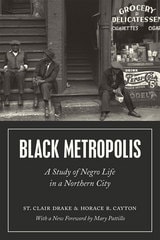
Black Metropolis has been a foundational work for the study of race and urban life since its publication in 1945, and it remains indispensable today. Few studies since have been able to match its scope and magnitude, offering one of the most comprehensive looks at black life in America. Based on research conducted by Works Progress Administration field workers, it is a sweeping historical and sociological account of the people of Chicago's South Side from the 1840s through the 1930s. Its findings offer a comprehensive analysis of black migration, settlement, community structure, and black-white race relations in the first half of the twentieth century. It offers a dizzying and dynamic world filled with captivating people and startling revelations.
A new foreword from sociologist Mary Pattillo places the study in modern context, updating the story with the current state of black communities in Chicago and the larger United States and exploring what this means for the future. As the country continues to struggle with race and our treatment of black lives, Black Metropolis continues to be a powerful contribution to the conversation.
Black Milwaukee
The Making of an Industrial Proletariat, 1915-45Joe William Trotter, Jr.
University of Illinois Press, 2006
Praise for the first edition: “Trotter has written a valuable, provocative book that opens new areas for certain--and heated--debate.”--Journal of American Ethnic History
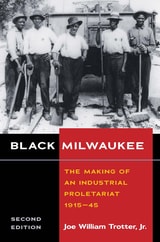
Other historians have tended to treat black urban life mainly in relation to the ghetto experience, but in Black Milwaukee, Joe William Trotter Jr. offers a new perspective that complements yet also goes well beyond that approach. The blacks in Black Milwaukee were not only ghetto dwellers; they were also industrial workers. The process by which they achieved this status is the subject of Trotter’s ground-breaking study.
This second edition features a new preface and acknowledgments, an essay on African American urban history since 1985, a prologue on the antebellum and Civil War roots of Milwaukee’s black community, and an epilogue on the post-World War II years and the impact of deindustrialization, all by the author. Brief essays by four of Trotter’s colleagues--William P. Jones, Earl Lewis, Alison Isenberg, and Kimberly L. Phillips--assess the impact of the original Black Milwaukee on the study of African American urban history over the past twenty years.
Black Minded
The Political Philosophy of Malcolm XMichael E. Sawyer
Pluto Press, 2020
Michael Sawyer argues that the foundational concepts of Malcolm X's political philosophy - economic and social justice, strident opposition to white supremacy and Black internationalism - are often obscured by an emphasis on biography. The text demonstrates the way in which Malcolm X's philosophy lies at the intersection of the thought of W.E.B. Du Bois and Frantz Fanon and is an integral part of the revolutionary politics formed to alleviate the plight of people of African descent globally.
Exploring themes of ontology, the body, geographic space and revolution, Black Minded provides a much-needed appraisal of Malcolm X's political philosophy.

Black Moods
Collected PoemsFrank Marshall Davis
University of Illinois Press, 2001
John Edgar Tidwell’s introduction examines both Davis’s poetry and his politics, presenting a subtle portrait of a complex writer devoted to exposing discriminatory practices and reaffirming the humanity of the common people.
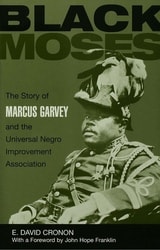
Black Moses
The Story of Marcus Garvey and the Universal Negro Improvement AssociationE. David Cronon; Foreward by John Hope Franklin
University of Wisconsin Press, 1960
In the early twentieth century, Marcus Garvey sowed the seeds of a new black pride and determination. Attacked by the black intelligentsia and ridiculed by the white press, this Jamaican immigrant astonished all with his black nationalist rhetoric. In just four years, he built the Universal Negro Improvement Association (UNIA), the largest and most powerful all-black organization the nation had ever seen. With hundreds of branches, throughout the United States, the UNIA represented Garvey’s greatest accomplishment and, ironically, the source of his public disgrace. Black Moses brings this controversial figure to life and recovers the significance of his life and work.
“Those who are interested in the revolutionary aspects of the twentieth century in America should not miss Cronon’s book. It makes exciting reading.”—The Nation
“A very readable, factual, and well-documented biography of Marcus Garvey.”—The Crisis, NAACP
“In a short, swiftly moving, penetrating biography, Mr. Cronon has made the first real attempt to narrate the Garvey story. From the Jamaican's traumatic race experiences on the West Indian island to dizzy success and inglorious failure on the mainland, the major outlines are here etched with sympathy, understanding, and insight.”—Mississippi Valley Historical Review (Now the Journal of American History).
“Good reading for all serious history students.”—Jet
“A vivid, detailed, and sound portrait of a man and his dreams.”—Political Science Quarterly
Black Mountain
An Exploration in CommunityMartin Duberman
Northwestern University Press, 2009
With faculty and alumni that included John Cage, Robert Creeley, Merce Cunningham, Buckminster Fuller, Charles Olson, Josef and Anni Albers, Paul Goodman, and Robert Rauschenberg, Black Mountain College ranked among the most important artistic and intellectual communities of the twentieth century. In his groundbreaking history, Martin Duberman uses interviews, anecdotes, and research to depict the relationships that made Black Mountain College what it was. Black Mountain documents the college’s twenty-three-year tenure, from its most brilliant moments of self-reinvention to its lowest moments of petty infighting. It records the financial difficulties that beleaguered the community throughout its existence and the determination it took to keep the college in operation. Duberman creates a nuanced portrait of this community so essential to the development of American arts and counterculture.
Black Movements
Performance and Cultural PoliticsColbert, Soyica Diggs
Rutgers University Press, 2017
Black Movements analyzes how artists and activists of recent decades reference earlier freedom movements in order to imagine and produce a more expansive and inclusive democracy. The post–Jim Crow, post–apartheid, postcolonial era has ushered in a purportedly color blind society and along with it an assault on race-based forms of knowledge production and coalition formation. Soyica Diggs Colbert argues that in the late twentieth century race went “underground,” and by the twenty-first century race no longer functioned as an explicit marker of second-class citizenship.
The subterranean nature of race manifests itself in discussions of the Trayvon Martin shooting that focus on his hoodie, an object of clothing that anyone can choose to wear, rather than focusing on structural racism; in discussions of the epidemic proportions of incarcerated black and brown people that highlight the individual’s poor decision making rather than the criminalization of blackness; in evaluations of black independence struggles in the Caribbean and Africa that allege these movements have accomplished little more than creating a black ruling class that mirrors the politics of its former white counterpart. Black Movements intervenes in these discussions by highlighting the ways in which artists draw from the past to create coherence about blackness in present and future worlds.
Through an exploration of the way that black movements create circuits connecting people across space and time, Black Movements offers important interventions into performance, literary, diaspora, and African American studies.
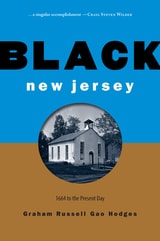
Black New Jersey
1664 to the Present DayGraham Russell Gao Hodges
Rutgers University Press, 2019
Black New Jersey tells the rich and complex story of the African American community’s remarkable accomplishments and the colossal obstacles they faced along the way. Drawing from rare archives, historian Graham Russell Gao Hodges brings to life the courageous black men and women who fought for their freedom and eventually built a sturdy and substantial middle class. He explores how the state’s unique mix of religious, artistic, and cultural traditions have helped to produce such world-renowned figures as Paul Robeson, Cory Booker, and Queen Latifah, as well as a host of lesser-known but equally influential New Jersey natives.
Black New Orleans, 1860-1880
John W. Blassingame
University of Chicago Press, 1976
“Blending historical and sociological perspectives, and drawing with skill and imagination upon a variety of sources, [Blassingame] offers fresh insights into an oft-studied period of Southern history. . . . In both time and place the author has chosen an extraordinarily revealing vantage point from which to view his subject. ”—Neil R. McMillen, American Historical Review

Black November
The Carl D. Bradley TragedyAndrew Kantar
Michigan State University Press, 2006
Michigan’s "storms of November" are famous in song, lore, and legend and have taken a tragic toll, breaking the hulls of many ships and sending them to cold, dark, and silent graves on the bottoms of the Great Lakes. On November 18, 1958, when the limestone carrier Carl D. Bradley broke up during a raging storm on Lake Michigan, it became the largest ship in Great Lakes' history to vanish beneath storm-tossed waves. Along with the Bradley, thirty-three crew members perished. Most of the casualties hailed from the little harbor town of Rogers City, Michigan, a community that was stung with grief when, in an instant, twenty-three women became widows and fifty- three children were left fatherless. Nevertheless, this is also a story of survival, as it recounts the tale of two of the ship’s crew, whose fifteen-hour ordeal on a life raft, in gale-force winds and 25 foot waves, is a remarkable story of endurance and tenacity.
Written in a style that is equally appealing to young adults and adult readers, Black November is a tale of adventure, courage, heroism, and tragedy. Kantar, the author of 29 Missing, a book about the loss of the great lakes freighter the Edmund Fitzgerald, has once again crafted a dramatic narrative that is both informative and compelling. Although the Carl D. Bradley has been called "the ship that time forgot," Black November recalls that tragic day nearly fifty years ago and is a moving tribute to the ship and its crew.
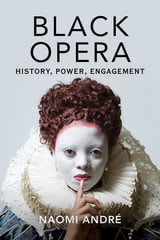
Black Opera
History, Power, EngagementNaomi Andre
University of Illinois Press, 2018