Results by title
18284 books match the query 'United States' and 902 start with b
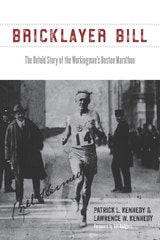
Bricklayer Bill
The Untold Story of the Workingman's Boston MarathonPatrick L. Kennedy and Lawrence W. Kennedy
University of Massachusetts Press, 2017
Two weeks after the United States officially entered World War I, Irish American “Bricklayer Bill” Kennedy won the Boston Marathon wearing his stars-and-stripes bandana, rallying the crowd of patriotic spectators. Kennedy became an American hero and, with outrageous stories of his riding the rails and sleeping on pool tables, a racing legend whose name has since appeared in almost every book written on the Boston Marathon.
When journalist Patrick Kennedy and historian Lawrence Kennedy unearthed their uncle's unpublished memoir, they discovered a colorful character who lived a tumultuous life, beyond his multiple marathons. The bricklayer survived typhoid fever, a five-story fall, auto and train accidents, World War action, Depression-era bankruptcy, decades of back-breaking work, and his own tendency to tipple. In many ways, Bill typified the colorful, newly emerging culture and working-class ethic of competitive long-distance running before it became a professionalized sport. Bricklayer Bill takes us back to another time, when bricklayers, plumbers, and printers could take the stage as star athletes.
Bricks Without Straw
A NovelAlbion W. Tourgée
Duke University Press, 2009
Bricks Without Straw is Tourgée’s fictionalized account of how Reconstruction was sabotaged. It is a chilling picture of violence against African Americans condoned, civil rights abrogated, constitutional amendments subverted, and electoral fraud institutionalized. Its plot revolves around a group of North Carolina freedpeople who strive to build new lives for themselves by buying land, marketing their own crops, setting up a church and school, and voting for politicians sympathetic to their interests, until Klan terrorism and the ascendancy of a white supremacist government reduce them to neo-slavery. This edition of Bricks Without Straw is enhanced by Carolyn L. Karcher’s introduction, which sets the novel in historical context and provides an overview of Albion W. Tourgée’s career, a chronology of the significant events of both the Reconstruction era and Tourgée’s life, and explanatory notes identifying actual events fictionalized in the novel.
Bridge and Tunnel Boys
Bruce Springsteen, Billy Joel, and the Metropolitan Sound of the American CenturyJim Cullen
Rutgers University Press, 2024
Bridge and Tunnel Boys compares the life and work of Long Islander Joel and Asbury Park, New Jersey, native Springsteen, considering how each man forged a distinctive sound that derived from his unique position on the periphery of the Big Apple. Locating their music within a longer tradition of the New York metropolitan sound, dating back to the early 1900s, cultural historian Jim Cullen explores how each man drew from the city’s diverse racial and ethnic influences. His study explains how, despite frequently releasing songs that questioned the American dream, Springsteen and Joel were able to appeal to wide audiences during both the national uncertainty of the 1970s and the triumphalism of the Reagan era. By placing these two New York–area icons in a new context, Bridge and Tunnel Boys allows us to hear their most beloved songs with new appreciation.
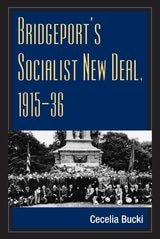
Bridgeport's Socialist New Deal, 1915-36
Cecelia Bucki
University of Illinois Press, 2001
In November 1933, the Socialist Party of Bridgeport, Connecticut put slate roofer Jasper McLevy in the mayor's seat and nearly won control of the city council. Cecelia Bucki explores how labor gained first a foothold and then a stronghold in local politics as broad debates pitted previously unengaged working-class citizens against local business leaders and traditional party elites.
In the heat of the Great Depression, the skilled union craftsmen who made up the bulk of the city's Socialist Party filled a political void created by the crumbling of mainstream parties, the disintegration of traditional modes of ethnic politics, and the city's acute fiscal crisis. In time, however, legislative measures and compromise politics blunted the progressive agenda. The local party split from the Socialist Party of America and became narrowly focused and reformist while still serving as the voice of the working class.
A portrait of a stunning moment in American politics, Bridgeport's Socialist New Deal, 1915-36 offers a fascinating look at the volatility of politics in the early years of the Great Depression.

Bridger
By Bobby Bridger
University of Texas Press, 2009
Renowned for A Ballad of the West, his epic trilogy about the American West from the era of mountain man Jim Bridger to the closing of the frontier, Bobby Bridger has had a career in show business that spans the rockabilly-to-"Music City, USA" era in Nashville, the cosmic cowboy scene in Austin, the flowering of folk music, and even Broadway theater. His multifaceted talents have found expression in singing, acting, writing, painting, and sculpting. In this engrossing account of the personal and artistic journey that led him to create a new American art form, the epic ballad, Bridger touches on almost every major musical, entertainment, and cultural movement of the second half of the twentieth century, with a cast of characters that reads like a "Who's Who" of American popular culture.
Bridger's story begins in a small town in northeast Louisiana, where he first experienced the twin attractions of painting and music. He recounts his early efforts to become a successful Nashville singer-songwriter and his growing awareness that the commercial music business would never support his evolving desire to become a historical balladeer. Bridger recalls how his interest in folk music and folk ballads fired his ambition to tell the story of the American West. He movingly describes how this dream eventually became A Ballad of the West, an epic trilogy about Jim Bridger, the Lakota Sioux, and Buffalo Bill that has taken form in an acclaimed cycle of songs, a one-man show, books, full-cast stage performances, and other media.
Included in the book is a DVD that offers songs from A Ballad of the West and a sample from the forthcoming documentary Quest of an Epic Balladeer, based on Bobby Bridger's life and work.

Bridges Over the Delaware River
A History of CrossingsFrank T. Dale
Rutgers University Press, 2003
When Washington made his famous crossing of the Delaware River, it is a shame he couldn't have invited local historian Frank T. Dale along for the ride. Dale could have suggested the easiest crossing points.
Fortunately for contemporary readers, Dale has written a fascinating book chronicling thirty-five of the most historic bridges crossing the Delaware, some of which have served the residents of New Jersey, Pennsylvania, and New York for almost two centuries. Many of us take these bridges for granted as we speed across, impatient to reach our destination, but their histories are too interesting to ignore.
Dale brings us the stories behind each bridge, covering design, engineering, ownership, finances, and politics. He chronicles the life of each, from the original construction, through modifications, and, sometimes, through the bridges' multiple destructions and reconstructions. Along the way, Dale recounts the history of the area surrounding each bridge, including the demise of ferry services, reasons why each bridge was built, politics surrounding construction, debates over public versus privately owned bridges, and stories of the floods and fires that threatened not only the bridges, but the local residents. Dozens of rare photos give readers a captivating window back into the past.
These fine old structures have become integral parts of Delaware River life and have an exciting past of their own. Bridges over the Delaware River will ensure that their legacies endure.
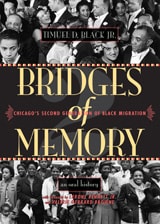
Bridges of Memory Volume 2
Chicago's Second Generation of Black MigrationTimuel Black
Northwestern University Press, 2008
In the second volume of Bridges of Memory, historian Timuel D. Black Jr. continues his conversations with African-Americans who migrated to Chicago from the South in search of economic, social, and cultural opportunities. With his trademark gift for interviewing, Black-himself the son of first-generation migrants to Chicago-guides these individual discussions with ease, resulting in first-person narratives that are informative and entertaining.
Picking up where the first book left off, volume 2 introduces the reader to more members of the first wave of migration and also members of the second generation, the children of those who came in the first wave. In telling their stories, the interviewees paint a vivid picture of the thriving and tight-knit Chicago community formerly known as the Black Belt—today's historic Bronzeville neighborhood. They bring to life the role of family, religion, business, music, and, most of all, the hopes, dreams, and perseverance that enabled a group of people to establish a successful community within a larger society that seemed determined to keep them from success. The experiences of these diverse and vivid personalities often illustrate the role that racial prejudice has played in shaping the specific arcs of their lives. But personal histories such as these are not just chronicles of frustration and despair; more important these narratives reveal an unwavering dedication to breaking the color line and a tireless pursuit of their right to the promise of America.
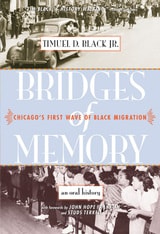
Bridges of Memory
Chicago's First Wave of Black MigrationTimuel D. Black Jr.
Northwestern University Press, 2005
Co-published with the DuSable Museum of African American History
Recipient of 2007 The Hyde Park Historical Society Paul Cornell Award
A collection of interviews with African Americans who came to Chicago from the South. In their first great migration to Chicago that began during World War I, African Americans came from the South seeking a better life--and fleeing a Jim Crow system of racial prejudice, discrimination, and segregation. What they found was much less than what they'd hoped for, but it was much better than what they'd come from--and in the process they set in motion vast changes not only in Chicago but also in the whole fabric of American society. This book, the first of three volumes, revisits this momentous chapter in American history with those who lived it.
Oral history of the first order, Bridges of Memory lets us hear the voices of those who left social, political, and economic oppression for political freedom and opportunity such as they'd never known--and for new forms of prejudice and segregation. These children and grandchildren of ex-slaves found work in the stockyards and steel mills of Chicago, settled and started small businesses in the "Black Belt" on the South Side, and brought forth the jazz, blues, and gospel music that the city is now known for. Historian Timuel D. Black, Jr., himself the son of first-generation migrants to Chicago, interviews a wide cross-section of African Americans whose remarks and reflections touch on issues ranging from fascism to Jim Crow segregation to the origin of the blues. Their recollections comprise a vivid record of a neighborhood, a city, a society, and a people undergoing dramatic and unprecedented changes.
Bridges
United States Academia for First-Generation and International College StudentsShawn Higgins
Temple University Press, 2020
An enhanced edition of this textbook is available on the Press’s Manifold platform: https://temple.manifoldapp.org/projects/bridges
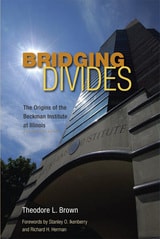
Bridging Divides
The Origins of the Beckman Institute at IllinoisTheodore L. Brown. Forewords by Stanley O. Ikenberry and Richard H. Herman.
University of Illinois Press, 2009
Bridging Liberalism and Multiculturalism in American Education
Rob Reich
University of Chicago Press, 2002
Linking political theory with educational history and policy, Rob Reich offers provocative new answers to these questions. He develops a liberal theory of multicultural education in which the leading goal is the cultivation of individual autonomy in children. Reich draws out the policy implications of his theory through one of the first sustained considerations of homeschooling in American education. He also evaluates three of the most prominent trends in contemporary school reform—vouchers, charter schools, and the small school movement—and provides pedagogical recommendations that sharply challenge the reigning wisdom of many multicultural educators.
Written in clear and accessible language, this book will be of interest to political theorists, philosophers, educators, educational policymakers, and teachers.
Bridging National Borders in North America
Transnational and Comparative HistoriesBenjamin H. Johnson and Andrew R. Graybill, eds.
Duke University Press, 2010
The contributors engage topics such as how mixed-race groups living on the peripheries of national societies dealt with the creation of borders in the nineteenth century, how medical inspections and public-health knowledge came to be used to differentiate among bodies, and how practices designed to channel livestock and prevent cattle smuggling became the model for regulating the movement of narcotics and undocumented people. They explore the ways that U.S. immigration authorities mediated between the desires for unimpeded boundary-crossings for day laborers, tourists, casual visitors, and businessmen, and the restrictions imposed by measures such as the Chinese Exclusion Act of 1882 and the 1924 Immigration Act. Turning to the realm of culture, they analyze the history of tourist travel to Mexico from the United States and depictions of the borderlands in early-twentieth-century Hollywood movies. The concluding essay suggests that historians have obscured non-national forms of territoriality and community that preceded the creation of national borders and sometimes persisted afterwards. This collection signals new directions for continental dialogue about issues such as state-building, national expansion, territoriality, and migration.
Contributors: Dominique Brégent-Heald, Catherine Cocks, Andrea Geiger, Miguel Ángel González Quiroga, Andrew R. Graybill, Michel Hogue, Benjamin H. Johnson, S. Deborah Kang, Carolyn Podruchny, Bethel Saler, Jennifer Seltz, Rachel St. John, Lissa Wadewitz
Published in cooperation with the William P. Clements Center for Southwest Studies, Southern Methodist University.
Bridging The Americas
The Literature of Paule Marshall, Toni Morrison, and Gayl JonesStelamaris Coser
Temple University Press, 1994
A literary study of three important black women writers, this book examines the "inter-American" characteristics in the work of Marshall, Morrison, and Jones, including detailed discussions of Morrison's Song of Solomon and Tar Baby, Jones's Corregidora and Song of Anninho, and Marshall's The Chose Place, The Timeless People.
Coser defines the inter-American characteristics in these authors' novels as a connection based on a common African heritage and a shared legacy of colonialism and racism. These three authors redefine the boundaries between the Americas, bridging the "extended Caribbean" that stretches from the U.S. Atlantic coast to Brazil. Their work reinterprets ethnic and sexual identity. Issues of race, class, and nationality overlap. History and identity are reinvented.
To explore the collective forms of resistance and cultural processes in Brazil, the Caribbean, and the United States, Coser also makes provocative connections between the visibility of black women writers and the popularity of male Latin American novelists like Carlos Fuentes and Gabriel Garcia Marquéz.
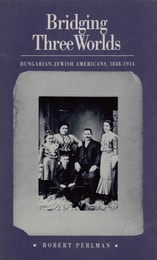
Bridging Three Worlds
Hungarian-Jewish Americans, 1848-1914Robert Perlman
University of Massachusetts Press, 1991
Between 1848 and 1914, approximately 100,000 Jews emigrated from Hungary to the United States. They came in two waves. The first group, catalyzed by the 1848 revolutions against the Austrian monarchy, consisted mainly of political dissidents and well educated, cosmopolitan, middle-class Jews seeking greater personal, religious, and political freedoms in the New World. The second and much larger group, which began to arrive around 1880, consisted primarily of unskilled laborers and lower-middle-class artisans and tradespeople, beckoned to America by the promise of vast economic opportunity.
In the abundant literature on Jewish immigration to the United States, virtually nothing has been written specifically about the Hungarian-Jewish experience, which differed in many respects from that of other Jewish national groups. Bridging Three Worlds offers such a chronicle, relating the immigrants’ history from their political and cultural roots in the Old Country to their acculturation as citizens in a newly adopted land. Based on primary archival materials, oral histories, and secondary sources, the book is also informed by the author’s own experiences as an American of Hungarian-Jewish origins.

Bridging Two Eras
The Autobiography of Emily Newell Blair, 1877-1951Emily Newell Blair, Edited & Intro by Virginia Jeans Laas
University of Missouri Press, 1999
First written in 1937 and never before published, Bridging Two Eras is the fascinating autobiography of Emily Newell Blair, a remarkable woman who successfully reconciled a productive public life with the traditional values of a housewife and mother.
Because Blair's life essentially spanned two eras, from the end of the nineteenth century through the middle of the twentieth, she thought of herself as a bridge builder. A dedicated feminist, she wanted her autobiography to help women understand what life was like during that transition time. She had moved from being a conventional, middle-class, midwestern wife and mother to becoming an acclaimed author, a nationally known feminist, and vice chairman of the Democratic National Committee only two years after women gained the right to vote. She felt that her story could encourage women to take their rightful places in public life.
Bridging Two Eras is divided into two parts. Book I is a charming evocation of life in southwest Missouri in the closing decades of the nineteenth century. It offers great insight into family relationships, class structure, and social attitudes typical of much of small-town America. Book II addresses Blair's public career and follows her progress as professional writer, suffrage activist, and partisan politician. Included are acute judgments of leading political figures, fascinating vignettes of the suffrage movement, an insider's view of the workings of the national Democratic Party in the 1920s and 1930s, and a valuable outlook on Missouri politics during the first third of the twentieth century.
Perceptive and introspective, Blair captivates her readers as she traces her own evolution. With candor, she explains her conflicts between family and career, acknowledging the difficulties and tensions she faced in pursuing a public life. Delightfully written, Bridging Two Eras provides valuable insight into all the possibilities, as well as the limitations, life then held for an American woman.

Bridging Worlds
Emerging Mode Ls And Practices OfRaymond Pun
Assoc of College & Research Libraries, 2016
Bridging a Great Divide
The Battle for the Columbia River GorgeKathie Durbin
Oregon State University Press, 2013
In Bridging a Great Divide, award-winning environmental journalist Kathie Durbin draws on interviews, correspondence, and extensive research to tell the story of the major shifts in the Gorge since the Act’s passage. Sweeping change has altered the Gorge’s landscape: upscale tourism and outdoor recreation, gentrification, the end of logging in national forests, the closing of aluminum plants, wind farms, and a population explosion in the metropolitan area to its west. Yet, to the casual observer, the Gorge looks much the same as it did twenty-five years ago.
How can we measure the success of the Columbia River Gorge National Scenic Area Act? In this insightful and revealing history, Durbin suggests that the answer depends on who you are: a small business owner, an environmental watchdog group, a chamber of commerce. The story of the Columbia River Gorge National Scenic Area is the story of the Pacific Northwest in microcosm, as the region shifts from a natural-resource-based economy to one based on recreation, technology, and quality of life.

Bridging the Distance
Common Issues of the Rural WestDavid B. Danbom
University of Utah Press, 2015
The essays in Bridging the Distance are fresh, informative, and insightful examinations of the complex problems facing the rural West. This is a book that will spur both conversations and the search for solutions.
Bridging the Divide
My LifeEdward W. Brooke
Rutgers University Press, 2006
President Lyndon Johnson never understood it. Neither did President Richard Nixon. How could a black man, a Republican no less, be elected to the United States Senate from liberal, Democratic Massachusetts-a state with an African American population of only 2 percent?
The mystery of Senator Edward Brooke's meteoric rise from Boston lawyer to Massachusetts attorney general to the first popularly elected African American U.S. senator with some of the highest favorable ratings of any Massachusetts politician confounded many of the best political minds of the day. After winning a name for himself as the first black man to be elected a state's attorney general, as a crime fighter, and as the organizer of the Boston Strangler Task Force, this articulate and charismatic man burst on the national scene in 1966 when he ran for the Senate.
In two terms in the Senate during some of the most racially tormented years of the twentieth century, Brooke, through tact, personality, charm, and determination, became a highly regarded member of "the most exclusive club in the world." The only African American senator ever to be elected to a second term, Brooke established a reputation for independent thinking and challenged the powerbrokers and presidents of the day in defense of the poor and disenfranchised.
In this autobiography, Brooke details the challenges that confronted African American men of his generation and reveals his desire to be measured not as a black man in a white society but as an individual in a multiracial society. Chided by some in the white community as being "too black to be white" and in the black community as "too white to be black," Brooke sought only to represent the people of Massachusetts and the national interest.
His story encompasses the turbulent post-World War II years, from the gains of the civil rights movement, through the riotous 1960s, to the dark days of Watergate, with stories of his relationships with the Kennedys, Martin Luther King Jr., Lyndon Johnson, Richard Nixon, Henry Kissinger, Colin Powell, and future senator Hillary Clinton. Brooke also speaks candidly of his personal struggles, including his bitter divorce from his first wife and, most recently, his fight against cancer.
A dramatic, compelling, and inspirational account, Brooke's life story demonstrates the triumph of the human spirit, offering lessons about politics, life, reconciliation, and love.
Bridging the Gaps
College Pathways to Career SuccessJames E. Rosenbaum
Russell Sage Foundation, 2017
The authors find that sub-baccalaureate credentials—associate degrees and college certificates—can improve employment outcomes. Young adults who complete these credentials have higher employment rates, earnings, autonomy, career opportunities, and job satisfaction than those who enroll but do not complete credentials. Sub-BA credentials can be completed at community college in less time than bachelor’s degrees, making them an affordable option for many low-income students.
Bridging the Gaps shows that when community colleges overemphasize bachelor’s degrees, they tend to funnel resources into remedial programs, and try to get low-performing students on track for a BA. Yet, remedial programs have inconsistent success rates and can create unrealistic expectations, leading struggling students to drop out before completing any degree. The authors show that colleges can devise procedures that reduce remedial placements and help students discover unseen abilities, attain valued credentials, get good jobs, and progress on degree ladders to higher credentials.
To turn college-for-all into a reality, community college students must be aware of their multiple credential and career options. Bridging the Gaps shows how colleges can create new pathways for non-traditional students to achieve success in their schooling and careers.
Bridging the Information Gap
Legislative Member Organizations as Social Networks in the United States and the European UnionNils Ringe and Jennifer Nicoll Victor with Christopher J. Carman
University of Michigan Press, 2013
Legislative member organizations (LMOs)—such as caucuses in the U.S. Congress and intergroups in the European Parliament—exist in lawmaking bodies around the world. Unlike parties and committees, LMOs play no obvious, predefined role in the legislative process. They provide legislators with opportunities to establish social networks with colleagues who share common interests. In turn, such networks offer valuable opportunities for the efficient exchange of policy-relevant—and sometimes otherwise unattainable—information between legislative offices. Building on classic insights from the study of social networks, the authors provide a comparative overview of LMOs across advanced, liberal democracies. In two nuanced case studies of LMOs in the European Parliament and the U.S. Congress, the authors rely on a mix of social network analysis, sophisticated statistical methods, and careful qualitative analysis of a large number of in-depth interviews.
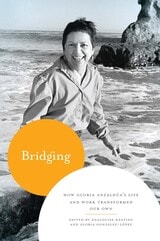
Bridging
How Gloria Anzaldúa's Life and Work Transformed Our OwnEdited by AnaLouise Keating and Gloria González-López
University of Texas Press, 2011
The inspirational writings of cultural theorist and social justice activist Gloria Anzaldúa have empowered generations of women and men throughout the world. Charting the multiplicity of Anzaldúa's impact within and beyond academic disciplines, community trenches, and international borders, Bridging presents more than thirty reflections on her work and her life, examining vibrant facets in surprising new ways and inviting readers to engage with these intimate, heartfelt contributions.
Bridging is divided into five sections: The New Mestizas: "transitions and transformations"; Exposing the Wounds: "You gave me permission to fly in the dark"; Border Crossings: Inner Struggles, Outer Change; Bridging Theories: Intellectual Activism with/in Borders; and "Todas somos nos/otras": Toward a "politics of openness." Contributors, who include Norma Elia Cantú, Elisa Facio, Shelley Fisher Fishkin, Aída Hurtado, Andrea Lunsford, Denise Segura, Gloria Steinem, and Mohammad Tamdgidi, represent a broad range of generations, professions, academic disciplines, and national backgrounds. Critically engaging with Anzaldúa's theories and building on her work, they use virtual diaries, transformational theory, poetry, empirical research, autobiographical narrative, and other genres to creatively explore and boldly enact future directions for Anzaldúan studies.
A book whose form and content reflect Anzaldúa's diverse audience, Bridging perpetuates Anzaldúa's spirit through groundbreaking praxis and visionary insights into culture, gender, sexuality, religion, aesthetics, and politics. This is a collection whose span is as broad and dazzling as Anzaldúa herself.
Brigham Young University
A House of FaithGary James Bergera
Signature Books, 1985
The purpose of Brigham Young University: A House of Faith is to outline the struggle the Mormon church has encountered in trying to blend academics and faith and in reconciling church standards with norms at other American universites, not to produce a comprehensive, chronological history of BYU. Instead, a selective approach has been taken–a thematic introduction to events, incidents, and statements, both published and private, in selected areas where tensions between scholarship and faith, freedom and regimentation have been the most pronounced. Examples include the development of a religious curriculum, the honor code, the controversy surrounding organic evolution, politics, student life, athletics, the arts, and faculty research. We hope that this approach will help readers appreciate the religious and intellectual dilemma facing educators and church leaders, as well as the fundamental sincerity of those involved in trying to establish academic rigor within religious parameters or to prevent moral deterioration when traditional restraints are left unchecked. Whatever the particular issue under discussion, an attempt has been made to keep the presentation balanced and impartial, yet sympathetic. While some readers may question the descriptive, largely noninterpretive approach, it is hoped that most will, through this approach, at least gain a greater understanding of the complex challenges involved in successfully integrating religion and academics.
We especially hope that Brigham Young University: A House of Faith will be of use to those who appreciate more than a cursory history of Mormonism–in this case, the Mormon concept of education–and who relish the rich fabric of pluralism. Brigham Young University has an engaging past, which, we believe, deserves more than a superficial treatment. Perhaps this book can be a springboard for more thorough investigations into other areas of the school’s past. There have been so many noteworthy accomplishments, discouraging defeats, moving religious experiences, humorous accounts of human foibles, and undocumented daily routine, that much remains in describing all that has gone into making the university founded more than a century ago by Brigham Young.
In presenting the sources cited in this work, we have followed the recommendations of the 1982 edition of The Chicago Manual of Style, with slight modifications. Readers will notice, for example, our incorporation of Chicago’s “down style” approach to capitalization. In order to facilitate future research, complete source citations are included as endnotes. To avoid a cumbersome and ultimately unworkable linking of each sentence with its corresponding source and bibliographic reference, we have instead referenced each paragraph and [p. xiii]cited sources in the endnotes section in the order in which material is presented in the paragraph indicated. Where the reader would otherwise encounter difficulty in identifying the specific source of a given piece of information, or where the source is considered especially important, it is provided in the text in an abbreviated form within parentheses.
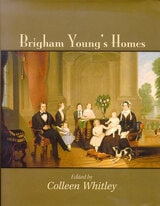
Brigham Young's Homes
Colleen K. Whitley
Utah State University Press, 2003
Brigham Young, the Quorum of the Twelve, and the Latter-Day Saint Investigation of the Mountain Meadows Massacre
Arrington Lecture No. TwelveThomas G. Alexander
Utah State University Press, 2007
In this 12th volume of the Arrington Lecture Series, Thomas Alexander (Lemuel Redd Professor of Western American History, Emeritus, at Brigham Young University), asserts that Brigham Young and the LDS Church’s governing Quorum of Twelve made timely and diligent efforts to investigate the massacre and encouraged legal proceedings but were hindered by federal territorial officials and lied to by massacre participant John D. Lee, preventing Young from learning the full truth for many years.

Bright College Years
Inside the American College TodayAnne Matthews
University of Chicago Press, 1998
"Matthews writes with sympathy and substantial understanding of the dilemmas colleges face these days."—Tara Fitzpatrick, Chicago Tribune
"A wide-ranging, well-written and lively account of contemporary academia."—Christian Wiman, Dallas Morning News
"Notable Book of the Year." New York Times
"An eye-opening, startling exposé;. . . . Matthews' energetic and well-written report provides a dismal yet concise insider portrait of college life."—Booklist
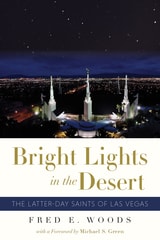
Bright Lights in the Desert
The Latter-day Saints of Las VegasFred E Woods
University of Nevada Press, 2023
Bright Lights in the Desert explores the history of how members of the Church of Jesus Christ of Latter-day Saints in Las Vegas have improved the regions’ neighborhoods, inspired educational institutions, brought integrity to the marketplace, and provided wholesome entertainment and cultural refinement. The LDS influence has helped shape the metropolitan city because of its members’ focus on family values and community service.
Woods discusses how, through their beliefs and work ethics, they have impacted the growth of the area from the time of their first efforts to establish a mission in 1855 through the present day. Bright Lights in the Desert reveals Las Vegas as more than just a tourist destination and shows the LDS community’s commitment to making it a place of deep religious faith and devotion to family.
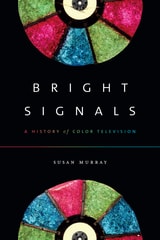
Bright Signals
A History of Color TelevisionSusan Murray
Duke University Press, 2018

Brightening Glance
Art and LifePat Lipsky
University of Iowa Press, 2025
Brightening Glance offers a stunningly self-revealing portrait of the struggles and sacrifices, joys and excitement inherent in a modern painter’s life, and captures the evergreen allure of New York’s art world between 1970 and 2010. In stripped down, elegant prose, Lipsky summons a New York that no longer exists and ponders why we love (and hate) the art world. Ultimately, it’s a story of a contemporary woman, a mother, and a painter, who dares a career in a field where only a handful of women have succeeded.
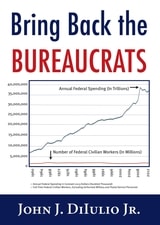
Bring Back the Bureaucrats
Why More Federal Workers Will Lead to Better (and Smaller!) GovernmentJohn DiIulio
Templeton Press, 2014
In Bring Back the Bureaucrats, John J. DiIulio Jr., one of America’s most respected political scientists and an adviser to presidents in both parties, summons the facts and statistics to show us how America’s big government works and why reforms that include adding a million more people to the federal workforce by 2035 might help to slow government’s growth while improving its performance.
Starting from the underreported reality that the size of the federal workforce hasn’t increased since the early 1960s, even though the federal budget has skyrocketed. The number of federal programs has ballooned; Bring Back the Bureaucrats tells us what our elected leaders won’t: there are not enough federal workers to work for our democracy effectively.
DiIulio reveals that the government in America is Leviathan by Proxy, a grotesque form of debt-financed big government that guarantees terrible government. Washington relies on state and local governments, for-profit firms, and nonprofit organizations to implement federal policies and programs. Big-city mayors, defense industry contractors, nonprofit executives, and other national proxies lobby incessantly for more federal spending. This proxy system chokes on chores such as cleaning up toxic waste sites, caring for hospitalized veterans, collecting taxes, handling plutonium, and policing more than $100 billion annually in “improper payments.” The lack of competent, well-trained federal civil servants resulted in the failed federal response to Hurricane Katrina and the troubled launch of Obamacare’s “health exchanges.”
Bring Back the Bureaucrats is further distinguished by the presence of E. J. Dionne Jr. and Charles Murray, two of the most astute voices from the political left and right, respectively, who offer their candid responses to DiIulio at the end of the book.
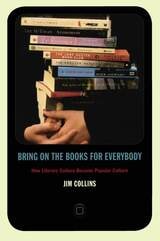
Bring on the Books for Everybody
How Literary Culture Became Popular CultureJim Collins
Duke University Press, 2010
Collins explores how digital technologies and the convergence of literary, visual, and consumer cultures have changed what counts as a “literary experience” in phenomena ranging from lush film adaptations such as The English Patient and Shakespeare in Love to the customer communities at Amazon. Central to Collins’s analysis and, he argues, to contemporary literary culture, is the notion that refined taste is now easily acquired; it is just a matter of knowing where to access it and whose advice to trust. Using recent novels, he shows that the redefined literary landscape has affected not just how books are being read, but also what sort of novels are being written for these passionate readers. Collins connects literary bestsellers from The Jane Austen Book Club and Literacy and Longing in L.A. to Saturday and The Line of Beauty, highlighting their depictions of fictional worlds filled with avid readers and their equations of reading with cultivated consumer taste.
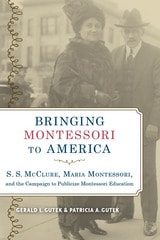
Bringing Montessori to America
S. S. McClure, Maria Montessori, and the Campaign to Publicize Montessori EducationGerald L. Gutek and Patricia A. Gutek
University of Alabama Press, 2016
2016 CHOICE OUTSTANDING ACADEMIC TITLE
The remarkable story of how Montessori education crossed the Atlantic and transformed American educational thought.
Born on the Adriatic, Montessori first entered the world stage in 1906 as the innovator of a revolutionary teaching method that creates an environment where children learn at their own pace and initiate skills like reading and writing in a spontaneous way. As her school in Rome swiftly attracted attention, curiosity, and followers, Montessori recruited disciples whom she immersed in a rigorous and detailed teacher-training regimen of her own creation.
McClure was an Irish-born media baron of America’s Gilded Age, best known as the founder and publisher of McClure’s Magazine. Against the backdrop of Theodore Roosevelt’s Bull Moose insurgency, the brilliant and mercurial McClure used his flagship publication as a vehicle to advance Progressive Party causes. After meeting in 1910, McClure and Montessori embarked on a five-year collaboration to introduce Montessori’s innovative teaching style in the United States.
Gerald and Patricia Gutek trace the dramatic arc of the partnership between the Italian teacher and American publisher united by a vision of educational change in the United States. After her triumphal lecture tour in 1913, Montessori, secure in her trust of her American partner, gave McClure her power of attorney and returned to Italy. The surge in popularity of Montessori education in America, however, deeply concerned Montessori, who had heretofore exerted total control over her method, apparatus, schools, and teacher training. The American entrepreneurial spirit, along with a desire to disseminate the Montessori method quickly, led to major conflicts between the Italian educator and American businesspeople, particularly McClure. Feeling betrayed, Montessori ended her relationship with her erstwhile collaborator.
Gutek and Gutek describe the fascinating story of this first wave of Montessori education in the United States, which did not sustain itself during Montessori’s lifetime. It would not be until the 1950s that Montessori education was revived with the successful establishment of Montessori academies throughout the United States.
Bringing Representation Home
State Legislators among Their ConstituenciesMichael A. Smith
University of Missouri Press, 2003

Bringing the Arts into the Library
Carol Smallwood
American Library Association, 2013
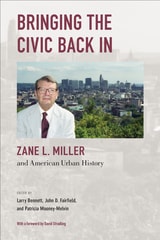
Bringing the Civic Back In
Zane L. Miller and American Urban HistoryEdited by Larry Bennett, John D. Fairfield, and Patricia Mooney-Melvin
Temple University Press, 2022
With the passing of Zane L. Miller in 2016, academia lost a renowned scholar and one of the key founders of new urban history—a branch of the discipline that placed urban life at the center of American history and treated the city as an arena for civic and political action. He was a devoted, tireless mentor who published or fostered dozens of books and articles on urban history. He also co-founded Temple University Press’ foundational series Urban Life, Landscape, and Policy.
Bringing the Civic Back In provides a critical overview, appreciation, and extension of Miller’s work as scholar, editor, mentor, colleague, and citizen. Included are three excerpts from Miller’s final, unfinished work, in which he presented cities as the source of a civic nationalism he viewed as fundamental to the development of American democracy. The editors—along with contributors Robert B. Fairbanks and Charles Lester—reflect on the life and work of their friend as well as his role in creating a Cincinnati school of urban history. These original essays by practitioners of Miller’s approach highlight the power of ideas to shape social change.
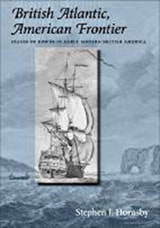
British Atlantic, American Frontier
Spaces of Power in Early Modern British AmericaStephen J. Hornsby
University Press of New England, 2004
British Soldiers, American War
Voices of the American RevolutionDonald N. Hagist
Westholme Publishing, 2012
Nine Rare and Fascinating First-Person Profiles of Soldiers Who Fought for the British Crown
Much has been written about the colonists who took up arms during the American Revolution and the army they created. Far less literature, however, has been devoted to their adversaries. The professional soldiers that composed the British army are seldom considered on a personal level, instead being either overlooked or inaccurately characterized as conscripts and criminals. Most of the British Redcoats sent to America in defense of their government’s policies were career soldiers who enlisted voluntarily in their late teens or early twenties. They came from all walks of British life, including those with nowhere else to turn, those aspiring to improve their social standing, and all others in between. Statistics show that most were simply hardworking men with various amounts of education who had chosen
the military in preference to other occupations. Very few of these soldiers left writings from which we can learn their private motives and experiences.
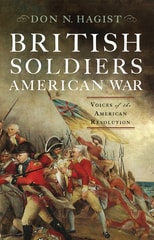
British Soldiers, American War: Voices of the American Revolution is the first collection of personal narratives by British common soldiers ever assembled and published. Author Don N. Hagist has located first-hand accounts of nine soldiers who served in America in the 1770s and 1780s. In their own words we learn of the diverse population—among them a former weaver, a boy who quarelled with his family, and a man with wanderlust—who joined the army and served tirelessly and dutifully, sometimes faithfully and sometimes irresolutely, in the uniform of their nation. To accompany each narrative, the author provides a contextualizing essay based on archival research giving background on the soldier and his military service. Taken as a whole these true stories reveal much about the individuals who composed what was, at the time, the most formidable fighting force in the world.
Broadcasting Empire
The American Forces Network and the Postwar Projection of US PowerStacy Takacs
University of Illinois Press, 2026
Stacy Takacs traces the AFN’s role in the worldwide expansion of American-style broadcasting and illuminates its impact on how foreign audiences viewed the United States. The AFN’s transformation emerged from collaborations between military leaders, foreign governments, commercial media companies, and local communities and turned the sprawling archipelago of US military bases into a potent instrument of soft power. Yet at times shifting alliances, practical problems, and the everyday routines of military life led to problems that complicated its mission
Knowledgeable and multidimensional, Broadcasting Empire combines big-picture analysis with case studies and oral history to reveal an important but overlooked tool of American influence.
Broadcasting Hollywood
The Struggle over Feature Films on Early TVJennifer Porst
Rutgers University Press, 2021
Broadcasting the Ozarks
Si Siman and Country Music at the CrossroadsKitty Ledbetter
University of Arkansas Press, 2024
“It’s good to see Si Siman and the Ozark Jubilee get their due in Broadcasting the Ozarks.”
—Willie Nelson
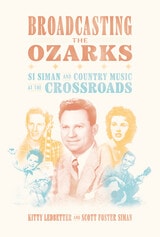
Broadcasting the Ozarks explores the vibrant country music scene that emerged in Springfield, Missouri, in the 1930s and thrived for half a century. Central to this history is the Ozark Jubilee (1955–60), the first regularly broadcast live country music show on network television. Dubbed the “king of the televised barn dances,” the show introduced the Ozarks to viewers across America and put Springfield in the running with Nashville for dominance of the country music industry—with the Jubilee’s producer, Si Siman, at the helm.
Siman’s life story is almost as remarkable as the show he produced. He was booking Tommy Dorsey, Ella Fitzgerald, and Glenn Miller during the mid-1930s while still a high school student and produced nationally syndicated country music radio shows in the decades that followed. Siman was a promotional genius with an ear for talent, a persuasive gift for gab, and the energy and persistence to make things happen for many future Country Music Hall of Famers, including Chet Atkins, Porter Wagoner, the Browns, and Brenda Lee. Following the Jubilee’s five-year run, Siman had a hand in some of the greatest hits of the twentieth century as a music publisher, collaborating with such songwriters as rockabilly legend and fellow Springfieldian Ronnie Self, who wrote Brenda Lee’s signature hit, “I’m Sorry,” and Wayne Carson, who wrote Willie Nelson’s “Always on My Mind.” Although Siman had numerous opportunities to find success in bigger cities, he chose to do it all from his hometown in the Ozarks.
Broadway Rhythm
Imaging the City in SongDominic Symonds
University of Michigan Press, 2017
Through musicological analyses of works by Gershwin, Bernstein, Copland, Sondheim and others, the author proposes that performance cartography is a versatile methodology for urban theory, and establishes a methodological approach that uses the idea of the map in three ways: as an impetus, a metaphor, and a tool for exploring the city.
Broke
The Racial Consequences of Underfunding Public UniversitiesLaura T. Hamilton and Kelly Nielsen
University of Chicago Press, 2021
In Broke, Laura T. Hamilton and Kelly Nielsen examine virtually all aspects of campus life to show how the new economic order in public universities, particularly at two campuses in the renowned University of California system, affects students. For most of the twentieth century, they show, less affluent families of color paid with their taxes for wealthy white students to attend universities where their own offspring were not welcome. That changed as a subset of public research universities, some quite old, opted for a “new” approach, making racially and economically marginalized youth the lifeblood of the university. These new universities, however, have been particularly hard hit by austerity. To survive, they’ve had to adapt, finding new ways to secure funding and trim costs—but ultimately it’s their students who pay the price, in decreased services and inadequate infrastructure.
The rise of new universities is a reminder that a world-class education for all is possible. Broke shows us how far we are from that ideal and sets out a path for how we could get there.

Broken Ballots
Will Your Vote Count?Douglas E. Jones and Barbara Simons
CSLI, 2012
For many of us, the presidential election of 2000 was a wake-up call. The controversy following the vote count led to demands for election reform. But the new voting systems that were subsequently introduced to the market have serious security flaws, and many are confusing and difficult to use. Moreover, legislation has not kept up with the constantly evolving voting technology, leaving little to no legal recourse when votes are improperly counted. How did we come to acquire the complex technology we now depend on to count votes? Douglas Jones and Barbara Simons probe this question, along with public policy and regulatory issues raised by our voting technologies. Broken Ballots is a thorough and incisive analysis of the current voting climate that approaches American elections from technological, legal, and historical perspectives. The authors examine the ways in which Americans vote today, gauging how inaccurate, unreliable, and insecure our voting systems are. An important book for election administrators, political scientists, and students of government and technology policy, Broken Ballots is also a vital tool for any voting American.
Broken Brotherhood
The Rise and Fall of the National Afro-American CouncilBenjamin R. Justesen
Southern Illinois University Press, 2008
Broken Brotherhood: The Rise and Fall of the National Afro-American Council gives a comprehensive account of the National Afro-American Council, the first truly nationwide U.S. civil rights organization, which existed from 1898 to 1908. Based on exhaustive research, the volume chronicles the Council’s achievements and its annual meetings and provides portraits of its key leaders.
Led by four of the most notable African American leaders of the time—journalist T. Thomas Fortune, Bishop Alexander Walters, educator Booker T. Washington, and Congressman George Henry White—the Council persevered for a decade despite structural flaws and external pressures that eventually led to its demise in 1908.
Author Benjamin R. Justesen provides historical context for the Council’s development during an era of unprecedented growth in African American organizations. Justesen establishes the National Afro-American Council as the earliest national arena for discussions of critical social and political issues affecting African Americans and the single most important united voice lobbying for protection of the nation’s largest minority. In a period marked by racial segregation, widespread disfranchisement, and lynching violence, the nonpartisan council helped establish two more enduring successor organizations, providing core leadership for both the National Association for the Advancement of Colored People and the National Urban League.
Broken Brotherhood traces the history of the Council and the complicated relationships among key leaders from its creation in Rochester in 1898 to its last gathering in Baltimore in 1907, drawing on both private correspondence and contemporary journalism to create a balanced historical portrait. Enhanced by thirteen illustrations, the volume also provides intriguing details about the ten national gatherings, describes the Council’s unsuccessful attempt to challenge disfranchisement before the U.S. Supreme Court, and sheds light on the gradual breakdown of Republican solidarity among African American leaders in the first decade of the twentieth century.
Broken Buildings, Busted Budgets
How to Fix America's Trillion-Dollar Construction IndustryBarry B. LePatner with Robert E. Wright and Timothy C. Jacobson
University of Chicago Press, 2007
With three decades of experience representing clients that include eminent architects and engineers, as well as corporations, institutions, and developers, LePatner has firsthand knowledge of the bad management, ineffective supervision, and insufficient investment in technology that plagues the risk-averse construction industry. In an engaging and direct style, he here pinpoints the issues that underlie the industry’s woes while providing practical tips for anyone in the business of building, including advice on the precise language owners should use during contract negotiations.
Armed with Broken Buildings, Busted Budgets, everyone involved in the purchase or renovation of a building or any structure—from homeowners seeking to remodel to civic developers embarking on large-scale projects—has the information they need to change this antiquated industry, one project at a time.
“LePatner describes what is wrong with the current system and suggests ways that architects can help—by retaking their rightful place as master builders.”—Fred A. Bernstein, Architect Magazine
Broken Heartland
The Rise of America's Rural GhettoOsha Gray Davidson
University of Iowa Press, 1996
Between 1940 and the mid 1980s, farm production expenses in America's Heartland tripled, capital purchases quadrupled, interest payments jumped tenfold, profits fell by 10 percent, the number of farmers decreased by two-thirds, and nearly every farming community lost population, businesses, and economic stability. Growth for these desperate communities has come to mean low-paying part-time jobs, expensive tax concessions, waste dumps, and industrial hog farming, all of which come with environmental and psychological price tags. In Broken Heartland, Osha Gray Davidson chronicles the decline of the Heartland and its transformation into a bitterly divided and isolated regional ghetto. Through interviews with more than two hundred farmers, social workers, government officials, and scholars, he puts a human face on the farm crisis of the 1980s.
In this expanded edition Davidson emphasizes the tenacious power of far-right-wing groups; his chapter on these burgeoning rural organizations in the original edition of Broken Heartland was the first in-depth look—six years before of the Oklahoma City bombing—at the politics of hate they nurture. He also spotlights NAFTA, hog lots, sustainable agriculture, and the other battles and changes over the past six years in rural America.
Broken Pieces
Michael Gorman
American Library Association, 2011
Broken Promise
The Subversion Of U.S. Labor RelationsJames A. Gross
Temple University Press, 2003
The Wagner Act of 1935 (later the Wagner-Taft-Hartley Act of 1947) was intended to democratize vast numbers of American workplaces: the federal government was to encourage worker organization and the substitution of collective bargaining for employers' unilateral determination of vital work-place matters. Yet this system of industrial democracy was never realized; the promise was "broken." In this rare inside look at the process of government regulation over the last forty-five years, James A. Gross analyzes why the promise of the policy was never fulfilled.
Gross looks at how the National Labor Relations Board's (NLRB) policy-making has been influenced by the President, the Congress, the Supreme Court, public opinion, resistance by organized employers, the political and economic strategies of organized labor, and the ideological dispositions of NLRB appointees. This book provides the historical perspective needed for a reevaluation of national labor policy. It delineates where we are now, how we got here, and what fundamental questions must be addressed if policy-makers are to make changes consistent with the underlying principles of democracy.

Broken Silences
Interviews with Black and White Women WritersEdited by Shirley M Jordan
Rutgers University Press, 1993
In these 20 interviews with women writers of fiction, Jordan, who teaches at Hampton University in Virginia, attempts to plumb the relations between black and white women in fiction and in life, and to explore the creative process. Although the book suffers from lengthy discussions of somewhat obscure work, the interviewees, most of whom have portrayed female characters of a race other than their own, offer intriguing, often conflicting observations about the primacy of race, gender or class. Kaye Gibbons ( Ellen Foster ) suggests that rural locations offer commonality to black and white Southern women; Marita Golden ( Long Distance Life ) observes that white writers emphasize female beauty while black writers focus on character. This book may be a useful supplement to literature courses.
From Library Journal
The message derived from the candid and articulate women interviewed here is, as Belva Plain states, "you learn as you live together." Editor Jordan (Hampton Univ., Virginia) has opened a dialog on writing and race relations by publishing these interviews with 20 significant contemporary black and white women writers, from Alice Childress and Joyce Carol Oates to Mildred Pitts Walker. The substance of these writers' thoughts is that the commonality of women's experience informs the genuine portrayal of a character as much as does the writer's understanding of her blackness or whiteness. This special book, so different from others that examine the writing process, is likely to stimulate dialog among women and to provoke serious study of many excellent women writers working today. Recommended for all collections supporting the study of literature, women's studies, and race relations.
Broken Soldiers
Raymond B. Lech
University of Illinois Press, 2000
Drawing on some 60,000 pages of court-martial transcripts Lech secured through the Freedom of Information Act, Broken Soldiers documents the appalling treatment and the sophisticated propagandizing to which American POWs fell victim during the Korean conflict. Three thousand American soldiers perished in North Korean camps over the winter of 1950-51, most from starvation. Through the unsentimental testimony of survivors, Lech describes how these young men, filthy and lice-infested, lost an average of 40 percent of their body weight. Many also lost their powers of resistance and their grip on soldierly conduct.
After six months of starvation, the emaciated, disoriented prisoners were subjected to a relentless campaign to educate them to the virtues of communism. Bombarded with propaganda, the Americans were organized into study groups and forced to discuss and write about communism and Marxism, even to broadcast harangues against capitalist aggression and appeals for an end to the war.
Lech traces the spiral of debilitation and compromise, showing how parroting certain phrases came to seem a small price to pay for physical safety. Threatened with starvation and indefinite confinement in Korea, many POWs succumbed to pressure to mouth communist slogans and provide information far in excess of the regulation "name, rank, and service number."
Of the thousands of American soldiers who, while prisoners in North Korea, spoke and wrote favorably of communism and disparaged their country, a handful were charged with collaborating with the enemy. Why were so few singled out? Why did each branch of the armed services judge parallel circumstances differently, and why were American soldiers not realistically prepared for capture? A powerful indictment of justice miscarried, Broken Soldiers raises troubling questions that remain unanswered decades after the events.