Results by title
3576 books match the query 'American' and 147 start with b
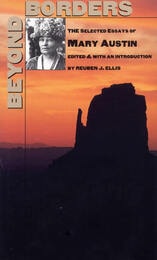
Beyond Borders
The Selected Essays of Mary AustinRueben J Ellis
Southern Illinois University Press, 1996
Seventeen essays by Mary Hunter Austin (1868–1934), author of the western classic The Land of Little Rain (1903), demonstrate her wide-ranging interests and equally varied writing styles.
Although she was born in Carlinville, Illinois, and graduated from Blackburn College, Mary Austin spent most of her writing career in California, New York, and finally Sante Fe, New Mexico. A well-known, popular, and prolific writer, Austin published thirty-three books and three plays and was closely associated with many important literary figures of her time, including H. G. Wells, George Bernard Shaw, Mabel Dodge Luhan, Jack London, and Willa Cather. Still best known today for her nature writing and southwestern cultural studies, Austin has been increasingly recognized for her work on feminist themes, including the play The Arrow Maker, the nonfiction The Young Woman Citizen, and the novels A Woman of Genius and No. 26 Jayne Street. What has been perhaps an overemphasis on Austin’s nature writing has, since her death, eclipsed the fact that Austin was known during her lifetime as a colorful, eccentric, and controversial person whose direct and outspoken opinions engaged a wide variety of topics.
Beyond Borders demonstrates that variety. In addition to her monographs, Austin also published her short fiction and essays in periodicals. In fact, like many a writer earning a living from her work, Austin wrote prolifically for the magazine market, producing during her career over two hundred individual pieces published in over sixty periodicals. Although a collection of her short fiction appeared in 1987, Austin’s nonfiction periodical work has remained uncollected until now.
In support of Austin’s essays, Reuben J. Ellis provides an introduction that establishes a biographical and historical context for Austin’s work. In addition, each Austin essay is prefaced by brief introductory remarks by the editor. A selected bibliography of Austin’s essays is also included.
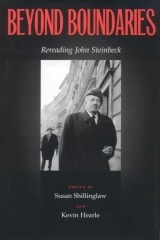
Beyond Boundaries
Rereading John SteinbeckSusan Shillinglaw
University of Alabama Press, 2002
As a writer who, beginning in the 1930s, illuminated the lives of ordinary people, Steinbeck came to be the conscience of America. He witnessed and recorded with clarity much of the political and social upheaval of the 20th century: The Great Depression, World War II, the Cold War, and Vietnam. Yet his place in the literary canon of American literature has been much debated and often dismissed by academics. Beyond Boundaries argues persuasively for Steinbeck's relevance, offering a fuller, more nuanced and international appreciation of the popular Nobel laureate and his works.
Topics treated in these wide-ranging essays include the historical and literary contexts and the artistic influence of the eminent novelist; the reception and translation of Steinbeck works outside the United States; Steinbeck’s worldview, his social vision, and his treatment of poverty, of self, and of patriotism; influence on Native American writers; the centrality of the archetypal feminine throughout his fiction; and the author's lifelong interest in science and philosophy.
International in scope, this timely study reevaluates the enduring and evolving legacy of one of America's most significant writers.
Beyond Innocence, or the Altersroman in Modern Fiction
Linda A. Westervelt
University of Missouri Press, 1997
In this groundbreaking work, Linda A. Westervelt defines an important yet previously unidentified and therefore unnamed type of novel, the altersroman, or age novel. Fictions focusing on a protagonist's confrontation with mortality toward the end of middle age are likely to become ever more prominent in a Western world in which the average age of the population increases and more people reach late middle age and old age.
Working from a diverse sample of modern literature, Westervelt analyzes the variety of responses to the life evaluation. Some characters achieve a level of affirmation that allows renewal, redirection, or simply peace, while others confront feelings of disgust or despair that so little time is left them. Her altersromane are books about seeking wisdom, though not everyone of this age becomes wise. The use of the term altersroman highlights the fact that the altersroman is a classification comparable to but also clearly distinguishable from the bildungsroman, wherein characters make the transition from youth to adulthood. Westervelt contrasts her older protagonists' characteristics with the equivalent characteristics in the bildungsroman through an examination of Don Quixote, part 2, as well as six American novels: The Ambassadors, by Henry James; The Professor's House, by Willa Cather; The Mansion, by William Faulkner; The Angle of Repose, by Wallace Stegner; A Book of Common Prayer, by Joan Didion; and Jazz, by Toni Morrison. These seven works, though remarkably different, share the common features of the altersroman. Westervelt articulates the traits clearly, rests them on the psychological literature, and then shows in depth how the characteristics of the altersroman can enrich and more deeply inform our reading of a significant subset of modern literature that previously went unheralded. Readers can use Westervelt's analysis to identify altersromane in literature other than their own, and she begins this process by identifying exemplars written in other languages.
Beyond Innocence, or the Altersroman in Modern Fiction introduces readers to the altersroman as a tool for classification and analysis and demonstrates the power and utility of that tool. It offers a meaningful and enriching complement to the more established category of the bildungsroman.
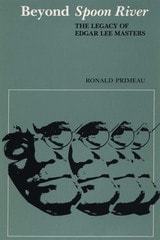
Beyond Spoon River
The Legacy of Edgar Lee MastersBy Ronald Primeau
University of Texas Press, 1981
As the first full-length critical study of Edgar Lee Masters, Beyond Spoon River is important not only for its reevaluation of this American poet and his work but also for its valuable insights into central questions of aesthetics, regionalism, and the nature and meaning of literary influence.
The inordinate popularity of Spoon River Anthology has for many years unfairly restricted Masters' reputation as a "one-book phenomenon," although between 1911 and 1942 he wrote over fifty other books—most of which were neglected or misinterpreted precisely because they attempted a large-scale rewriting of what he felt had been obscured or distorted in the Anglo-American tradition. Masters' wide reading in the whole of western literature shaped his own attitudes, themes, and style, and his detailed accounts of that reading and its effect on his work form the basis for this reinterpretation of his place in American poetry in this century.
After reviewing Masters' own statements on literary influence and his role as a critic, Primeau devotes the main body of his study to the major influences on Masters' work—the Greeks, Goethe, Emerson, Whitman, Shelley, and Browning. For Masters, the composite of all these influences provided a corrective to the poetry and criticism of his time, which he little admired. Primeau concludes by exploring Masters' midwestern heritage in the light of recent reinterpretations of regionalism.

Beyond the Body
The Boundaries of Medicine and English Renaissance DramaWilliam Kerwin
University of Massachusetts Press, 2005
Drawing on research in the social history of medicine as well as a wide-ranging collection of primary narratives of medical encounters, Kerwin pursues the stories of several medical groups. Specifically, he examines women healers in terms of the changing place of women in the public sphere; the connections between drug sellers—apothecaries and alchemists—and an emerging modern economy; the role barbers and surgeons played in early modern concerns for protecting a new sense of privacy and interiority; the ways physicians defined their professional primacy through the language of theaters and actors; and the ways individual patients employed rhetorics of diagnosis as a way of participating in sectarian religious battles. The study moves from the dynamics of medical politics to the work drama does in exposing those dynamics. In addition to offering astute readings of works by Shakespeare and Ben Jonson, the book pays substantial attention to plays by Samuel Daniel, John Fletcher, John Ford, Thomas Heywood, John Lyly, Philip Massinger, and John Webster.
Beyond the Body complements the wealth of recent critical attention given to the body. Kerwin attends to a different sort of material politics; as the book's title suggests, he asks a reader interested in the politics of medicine to look not at the practitioner treating the body but at the social forces influencing the practitioner. Beyond the Body works to erode a widespread cultural bias toward giving medicine deference as a self-defining profession.
Bicycle Cowboy
And Other Poems About Growing UpRon Helmboldt
Parkhurst Brothers, Inc., 2016

Big Blue Train
PoemsPaul Zimmer
University of Arkansas Press, 1993
Billboard in the Clouds
Suzanne S. Rancourt
Northwestern University Press, 2004
In this remarkable debut book of poems, winner of the Native Writers First Book Award, Suzanne S. Rancourt, presents her experience as a mixed-raced person seeking understanding through relationship with the natural world and dominant culture. Her family portraits are reminiscent of E. A. Robinson; her sensuous nature poems are imbued with love of earth as a "blessing."
Dance
my legs are explosions
expressions
of lustful wind
i converse through cracks in the walls
slipping in my true intention like a snow drift
on the inside
side of a door i pound
your chest
has become my wailing wall
i crave your tongue dusted
with words and implications
i have something you need
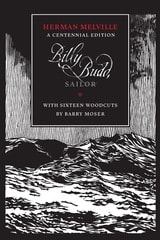
Billy Budd, Sailor (An Inside Narrative)
Herman Melville, Illustrated by Barry Moser
University of Chicago Press, 2025
An illustrated edition of Billy Budd featuring woodcuts by celebrated artist Barry Moser.
This edition of Billy Budd, Sailor presents Herman Melville’s iconic tale of the high seas alongside illustrations by renowned artist, publisher, and printmaker Barry Moser.
Throughout his fifty-year career, Moser has illustrated more than three hundred books ranging from novels to children’s stories to the Bible. Through his Pennyroyal Press, Moser designs and prints fine-press, illustrated, and occasionally oversized books in very limited editions, which are beloved by collectors and bibliophiles. To coincide with the centenary of the novella’s posthumous publication, Moser created sixteen original woodcuts illustrating the scenes and characters of Billy Budd, Sailor, and this trade edition now makes these exquisite illustrations accessible to a wide audience.
This illustrated edition adapts the text of the critical edition of the novella prepared for the Melville Electronic Library by John Bryant, Wyn Kelley, and Christopher Ohge.
Billy Budd, Sailor and Other Uncompleted Writings
The Writings of Herman Melville, Volume 13Herman Melville; Historical Note by Hershel Parker
Northwestern University Press, 2017
These unfinished writings include, besides Billy Budd, two projected volumes containing poems and prose pieces, Weeds and Wildings and Parthenope; three prose pieces, “Rammon,” “Story of Daniel Orme,” and “Under the Rose”; and some three dozen poems of varying lengths. Some of these pieces were surely composed late in Melville’s career, during his retirement, but others may date to as early as the 1850s. Except for Billy Budd, many of these works have not been readily available in reliable texts, when available at all.
This volume, the result of the editors’ meticulous study of the manuscripts, offers new reading texts, with significant corrections of words, phrases, and titles, the inclusion of heretofore unpublished lines of verse, and the return to their original locations of the two poems, “The Enviable Isles” and “Pausilippo,” that Melville had extracted for use in John Marr (1888) and Timoleon (1891). Hershel Parker’s Historical Note traces how these writings fit into the trajectory of Melville’s career, and the rest of the Editorial Appendix presents the scholarly evidence and decisions made in creating the reading texts. As a whole, the Northwestern-Newberry Edition of The Writings of Herman Melville, now complete in fifteen volumes, offers for the first time the total body of Melville’s extant writings in a critical text, faithful to his intentions.
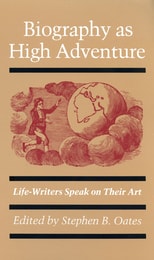
Biography as High Adventure
Life-Writers Speak on Their ArtStephen B. Oates
University of Massachusetts Press, 1986
Biography as High Adventure: Life-Writers Speak on Their Art is a collection of essays that explores the art and craft of biographical writing. Edited by acclaimed historian and biographer Stephen B. Oates this volume features contributions from prominent life-writers and historians who discuss their experiences, methods, and philosophies regarding the biographical form.
Through essays and reflections from accomplished biographers and historians, this collection examines biography as both an art form and a scholarly discipline, exploring what draws writers to biographical subjects and how they navigate the intersection of historical accuracy and narrative storytelling. What culminates is a diverse perspective on how face down the challenges of historical research and achieve the creative and intellectual dimensions of writing lives.
Birches
Carl Adamshick
Four Way Books, 2019
Bird Skin Coat
Angela Sorby
University of Wisconsin Press, 2009
Birth
A Literary CompanionKristin & Lynne Kovacic & Barrett
University of Iowa Press, 2002

Birthmark
Jon Pineda
Southern Illinois University Press, 2004
In Jon Pineda’s debut collection Birthmark, loss takes the shape of a scar, memory the shape of a childhood, and identity the shape of a birthmark on a lover’s thigh. Like water taking the form of its container, Pineda’s poems swell to fill the lines of his experiences. Against the backdrop of Tidewater, Virginia’s crabs and cicadas, Pineda invokes his mestizo—the Tagalog word for being half Filipino—childhood, weaving laments for a tenuous paternal relationship and the loss of a sibling. Channeling these fragmented memories into a new discovery of self, Birthmark reclaims an identity, delicate yet unrelenting, with plaintive tones marked equally by pain, reflection, and redemption.
Bitter English
Ahmad Almallah
University of Chicago Press, 2019
Through finely crafted poems that utilize a plainspoken roughness to keep the reader slightly disoriented, Almallah replicates his own verbal and cultural experience of existing between languages and societies. There is a sense of displacement to these poems as Almallah recounts the amusing, sad, and perilous moments of day-to-day living in exile. At the heart of Bitter English is a sense of loss, both of home and of his mother, whose struggle with Alzheimer’s becomes a reflection of his own reality in exile. Filled with wit, humor, and sharp observations of the world, Bitter English brings a fresh poetic voice to the American immigrant experience.
Black Atlas
Geography and Flow in Nineteenth-Century African American LiteratureJudith Madera
Duke University Press, 2015
Black Bostonians and the Politics of Culture, 1920-1940
Lorraine Elena Roses
University of Massachusetts Press, 2017
In the 1920s and 1930s Boston became a rich and distinctive site of African American artistic production, unfolding at the same time as the Harlem Renaissance and encompassing literature, theater, music, and visual art. Owing to the ephemeral nature of much of this work, many of the era's primary sources have been lost.
In this book, Lorraine Elena Roses employs archival sources and personal interviews to recover this artistic output, examining the work of celebrated figures such as Dorothy West, Helene Johnson, Meta Warrick Fuller, and Allan Rohan Crite, as well as lesser-known artists including Eugene Gordon, Ralf Coleman, Gertrude “Toki” Schalk, and Alvira Hazzard. Black Bostonians and the Politics of Culture, 1920–1940 demonstrates how this creative community militated against the color line not solely through powerful acts of civil disobedience but also by way of a strong repertoire of artistic projects.
Black Love, Black Hate
Intimate Antagonisms in African American LiteratureFelice D. Blake
The Ohio State University Press, 2018
Most importantly, the book shows how literature constitutes an alternative public sphere for Black people. In a society largely controlled by white supremacist actors and institutions, Black authors have conjured fiction into a space where hard questions can be asked and answered and where the work of combatting collective, racist suppression can occur without replicating oppressive hierarchies. Intimate Antagonisms uncovers a key theme in Black fiction and argues that literature itself is a vital institutional site within Black life. Through the examination of intimate conflicts in a wide array of twentieth- and twenty-first-century novels, Blake demonstrates the centrality of intraracial relations to the complexity and vision of Black social movements and liberation struggles and the power and promise of Black narrative in reshaping struggle.
Black Regions of the Imagination
African American Writers between the Nation and the WorldEve Dunbar
Temple University Press, 2012
Zora Neale Hurston, Richard Wright, James Baldwin, and Chester Himes were all pressured by critics and publishers to enlighten mainstream (white) audiences about race and African American culture. Focusing on fiction and non-fiction they produced between the Harlem Renaissance and the Black Arts Movement, Eve Dunbar’s important book, Black Regions of the Imagination, examines how these African American writers—who lived and traveled outside the United States—both document and re-imagine their “homegrown” racial experiences within a worldly framework.
From Hurston’s participant-observational accounts and Wright’s travel writing to Baldwin’s Another Country and Himes’ detective fiction, these writers helped develop the concept of a “region” of blackness that resists boundaries of genre and geography. Each writer represents—and signifies—blackness in new ways and within the larger context of the world. As they negotiated issues of “belonging,” these writers were more critical of social segregation in America as well as increasingly resistant to their expected roles as cultural “translators.”
Black Resonance
Iconic Women Singers and African American LiteratureLordi, Emily J.
Rutgers University Press, 2013
Ever since Bessie Smith’s powerful voice conspired with the “race records” industry to make her a star in the 1920s, African American writers have memorialized the sounds and theorized the politics of black women’s singing. In Black Resonance, Emily J. Lordi analyzes writings by Richard Wright, Ralph Ellison, James Baldwin, Gayl Jones, and Nikki Giovanni that engage such iconic singers as Bessie Smith, Billie Holiday, Mahalia Jackson, and Aretha Franklin.
Focusing on two generations of artists from the 1920s to the 1970s, Black Resonance reveals a musical-literary tradition in which singers and writers, faced with similar challenges and harboring similar aims, developed comparable expressive techniques. Drawing together such seemingly disparate works as Bessie Smith’s blues and Richard Wright’s neglected film of Native Son, Mahalia Jackson’s gospel music and Ralph Ellison’s Invisible Man, each chapter pairs one writer with one singer to crystallize the artistic practice they share: lyricism, sincerity, understatement, haunting, and the creation of a signature voice. In the process, Lordi demonstrates that popular female singers are not passive muses with raw, natural, or ineffable talent. Rather, they are experimental artists who innovate black expressive possibilities right alongside their literary peers.
The first study of black music and literature to centralize the music of black women, Black Resonance offers new ways of reading and hearing some of the twentieth century’s most beloved and challenging voices.
Black Women, Identity, and Cultural Theory
(Un)Becoming the SubjectKevin Everod Quashie
Rutgers University Press, 2004
In Black Women, Identity, and Cultural Theory, Kevin Everod Quashie explores the metaphor of the “girlfriend” as a new way of understanding three central concepts of cultural studies: self, memory, and language. He considers how the work of writers such as Toni Morrison, Ama Ata Aidoo, Dionne Brand, photographer Lorna Simpson, and many others, inform debates over the concept of identity. Quashie argues that these authors and artists replace the notion of a stable, singular identity with the concept of the self developing in a process both communal and perpetually fluid, a relationship that functions in much the same way that an adult woman negotiates with her girlfriend(s). He suggests that memory itself is corporeal, a literal body that is crucial to the process of becoming. Quashie also explores the problem language poses for the black woman artist and her commitment to a mastery that neither colonizes nor excludes.
The analysis throughout interacts with schools of thought such as psychoanalysis, postmodernism, and post-colonialism, but ultimately moves beyond these to propose a new cultural aesthetic, one that ultimately aims to center black women and their philosophies.
Black Yankees
The Development of an Afro-American Subculture in Eighteenth-Century New EnglandWilliam D. Piersen
University of Massachusetts Press, 1988
On the face of it, the master class called the tunes and slaves danced the beat. Blacks who were taken into New England's bondage were clearly engulfed in a pervasive, narrow-minded Euro-American society that had no interest in fostering Afro-American autonomy. The New England experience was often cruel, and the numbers alone suggest it was among the most unequal of black/white cultural contacts in the New World. Nonetheless, despite the strictures of bondage, the black Yankees of eighteenth-century New England created a sustaining folk culture of their own.

Black and White Strangers
Race and American Literary RealismKenneth W. Warren
University of Chicago Press, 1993
Black, White, and Huckleberry Finn
Re-imagining the American DreamElaine Mensh
University of Alabama Press, 2001
Takes a hard, systematic look at the depiction of blacks, whites, and race relations in Mark Twain's classic novel, raising questions about its canonical status in American literature
Huckleberry Finn, one of the most widely taught novels in American literature, has long been the subject of ongoing debates over issues ranging from immorality to racism. Here, Elaine Mensh and Harry Mensh enter the debate with a careful and thoughtful examination of racial messages imbedded in the tale of Huck and Jim.Using as a gauge for analysis the historical record left by both slaves and slaveholders, the Menshes compare Twain's depiction with historical reality, attempting to determine where the book either undermines or upholds traditional racial attitudes. Surveying the opinions of fellow critics, they challenge the current consensus that Huckleberry Finn fosters rapport between blacks and whites, arguing that the book does not subvert ingrained beliefs about race, and demonstrating that the argument over black-white relations in the novel is also an argument over non-fictional racial relations and conflicting perceptions of racial harmony.
Reading the novel in its historical context, the Menshes conclude that Twain, in the character of Huck, never questions the institution of slavery, and even supports it in both thought and action. In response to student and parent challenges to the inclusion of the book in literature classes, they suggest that it should remain in school libraries but not be required reading.Of importance to scholars of Mark Twain and American literature, African American cultural studies, or anyone interested in issues of literature and race, this book adds a strong voice to the long-ranging debate over Huckleberry Finn.
Black, White, and in Color
Essays on American Literature and CultureHortense J. Spillers
University of Chicago Press, 2003
Black, White, and in Color offers a long-awaited collection of major essays by Hortense Spillers, one of the most influential and inspiring black critics of the past twenty years. Spanning her work from the early 1980s, in which she pioneered a broadly poststructuralist approach to African American literature, and extending through her turn to cultural studies in the 1990s, these essays display her passionate commitment to reading as a fundamentally political act-one pivotal to rewriting the humanist project.
Spillers is best known for her race-centered revision of psychoanalytic theory and for her subtle account of the relationships between race and gender. She has also given literary criticism some of its most powerful readings of individual authors, represented here in seminal essays on Ralph Ellison, Gwendolyn Brooks, and William Faulkner. Ultimately, the essays collected in Black, White, and in Color all share Spillers's signature style: heady, eclectic, and astonishingly productive of new ideas. Anyone interested in African American culture and literature will want to read them.

Blacks
Gwendolyn Brooks
Northwestern University Press, 1987
Bleak Liberalism
Amanda Anderson
University of Chicago Press, 2016
Amanda Anderson examines canonical works of high realism, political novels from England and the United States, and modernist works to argue that liberalism has engaged sober and even stark views of historical development, political dynamics, and human and social psychology. From Charles Dickens’s Bleak House and Hard Times to E. M. Forster’s Howards End to Doris Lessing’s The Golden Notebook, this literature demonstrates that liberalism has inventive ways of balancing sociological critique and moral aspiration. A deft blend of intellectual history and literary analysis, Bleak Liberalism reveals a richer understanding of one of the most important political ideologies of the modern era.
Blessings for the Hands
Matthew Schwartz
University of Chicago Press, 2008
What you feel
reveals you.
Watch
for the sustenance
inclined to a source,
enamored of singularity,
quickly here and quickly
gone, shadow from which
the body's courage comes.
Fireflies
apparently stumbling.
I slapped one on my leg.
Its blood glowed.
Blessings for the Hands follows various speakers—often disabled speakers, who never once figure themselves as objects of complaint or self-pity—through the haunted dreamscape of “normalcy.” Indeed, dreams are continuous presences in this unusually subtle and elegant debut collection that juxtaposes physical circumstances with the vast interior life of the imagination. The subjects of Blessings for the Hands are real and imagined confrontations—and reconciliations—between family members, friends, strangers, and animals. Matthew Schwartz’s quasi-autobiographical verse complicates and clarifies the emotions waiting just underneath the patterns and expectations of the speakers’ daylight lives, where anger, joy, corporeality, and mortality all seem to collide. For Schwartz, poetry is a sleight of hand that keeps the reader guessing through nearly imperceptible shifts between present vision and absent reality. Blessings for the Hands is a lyric reckoning of the tension between the life we are given and the life we are determined to lead.
“Blessings for the Hands is emotionally strong and imaginatively wild, distinctive, deeply moving, without an ort of self-pity, and pervaded by ‘compassion down to your fingertips’ (which Chekhov said is ‘the only method’ both to write and to live). This angle of vision is sharp enough to unify much disparate material. The poems are clear and musical and consequently a pleasure to read and reread despite their gravity. I think this may be lasting work.”—Michael Ryan
Blood Harmony
Bruce Snider
University of Wisconsin Press, 2025
Blood Orchid
An Unnatural History of AmericaBy Charles Bowden, Foreword by William Langewiesche
University of Texas Press, 2018
Through stark observations and visceral experiences, Blood Orchid begins Charles Bowden’s dizzying excavation of the brutal, systemic violence and corruption at the roots of American society. Like a nightmarish fever dream that turns out to be our own reality, Bowden visits dying friends in skid row apartments in Los Angeles, traverses San Francisco byways lined with clubs and joints, and roams through village bars and streets in the Sierra Madre mountains. In these wanderings resides a yearning for the understanding of past and present sins, the human penchant for warfare, abuse, and oppression, and the true war between humanity, the industrialized world, and the immense tolls of our shared land. Deeply personal, hauntingly prophetic, and bracingly sharp, the start to Bowden’s harrowed quest to unearth our ugly truths remains strikingly poignant today.
Blood Prism
Edward Haworth Hoeppner
The Ohio State University Press, 2011
The poems in Blood Prism span a lifetime. Its three sections, “Memory,” “Politics,” and “Age,” frame meditations on a violence-blotched world with reflections on the author’s childhood and conclusions about a decades-long life of writing. “I’m 60 and still . . . alive in this world, with love and with its palindrome,” one poem says. And the argument of the book turns on that precise puzzle: on evol, invoking as it does both evil and evolve, both human wrong and life as something more than mere survival. In a variety of styles—prose poems, standard and dislocated forms—Hoeppner uses “blood” to represent family and history, his surprising and richly imagistic language rendering the emptiness he calls imagination “into remains. Into what persists.”
Blood Talk
American Race Melodrama and the Culture of the OccultSusan Gillman
University of Chicago Press, 2003
Blood Talk shows how race melodrama emerged from abolitionist works such as Uncle Tom's Cabin and surprisingly manifested itself in a set of more aesthetically and politically varied works, such as historical romances, sentimental novels, the travel literature of Mark Twain, the regional fiction of Kate Chopin and George Washington Cable, and the work of W. E. B. Du Bois. Gillman then uses the race melodrama to show how racial discourses in the United States have been entangled with occultist phenomena, from the rituals of the Ku Klux Klan and the concept of messianic second-sight to the production of conspiracy theories and studies of dreams and trances.
Blood Work
Matthew Siegel
University of Wisconsin Press, 2015
Finalist, Poetry, Foreword Reviews IndieFab Book of the Year Awards
Blood and Ink
The Barbary Archive in Early American Literary HistoryJacob Crane
University of Massachusetts Press, 2023
In the late eighteenth and early nineteenth centuries, Algerian piracy in the Mediterranean loomed large in the American imagination. An estimated seven hundred American citizens, sailors, and naval officers were taken captive over the course of the Barbary Crises (1784–1815), and this overseas danger threatened to grow and irreparably harm the young republic.
Blood and Ink reconstructs the largely forgotten influence of these early American conflicts with North Africa on notions of publicity, print culture, and racial and national identity from independence to the Civil War. Exploring the extensive archive of texts inspired by the conflicts—from captivity narratives, novels, plays, and poems to broadsides, travel narratives, children’s literature, newspaper articles, and visual ephemera—Jacob Crane connects anxieties surrounding North African piracy and white slavery to both the development of American abolitionism and representations of transatlantic African and Jewish identities in the early national and antebellum periods.
Blood of the Air
PoemsAma Codjoe
Northwestern University Press, 2020
Blooming Fiascoes
PoemsEllen Hagan
Northwestern University Press, 2021
Blooming Fiascoes is a collective of verse that deconstructs identity. We are beautiful and monstrous. We live in a beautiful and monstrous world. Ellen Hagan poetically mirrors these metaphoric adversaries, drawing on her experiences as a woman, an artist, a mother, a transplanted southerner, and above all, a human being. She plumbs origins in history, body, and living to question how we reckon our whole selves in the catacombs of a world gone mad:
We mourn, we bless, / we blow, we wail, we / wind—down, we sip, / we spin, we blind, we / bend, bow & hem. We / hip, we blend, we bind, / we shake, we shine, / shine. We lips & we / teeth, we praise & protest.
In these poems, Assyrian, Italian, and Irish lines seep deeper into a body that is growing older but remains engaged with unruly encounters: the experience of raising daughters, sexual freedom, and squaring body image against the body’s prohibitions. This is a work where the legacy is still evolving and always asking questions in real time. Blooming Fiascos spindles poetry that is not afraid to see itself and the lives it inhabits.

Blooming through the Ashes
An International Anthology on Violence and the Human SpiritEdited by Clifford Chanin and Aili McConnon
Rutgers University Press, 2008
The twentieth century is frequently characterized in terms of its unprecedented levels of bloodshed. More human beings were killed or allowed to die by human cause than ever before in history. The impact of the century’s carnage does not end with the lives that were taken; the atrocities continue to take their toll on those who survived, on those who bore witness, and on succeeding generations.
Blooming through the Ashes features over sixty writings about this historic violence and its aftermath in a global anthology that brings together the work of Nobel laureates Seamus Heaney, Toni Morrison, Czeslaw Milosz, Wole Soyinka, Elie Wiesel, Imre Kertesz, Alexandr Solzhenitsyn, Eugenio Montale, and Pablo Neruda. In non-fiction and fiction, these writers and others reflect on the litany of man-made violence that marred the twentieth century and that shadows the twenty-first, including the Holocaust, the Gulag, the Chinese Cultural Revolution, apartheid, repression in Latin America, genocides in Rwanda, Cambodia, and the attacks of 9/11.
The texts are arranged thematically, rather than by event, in order to highlight the shared themes of memory expressed across culture and geography. Starting with visceral reactions to a violent event, chapters proceed through recognitions of loss, and move into statements of public remembrance through which future generations attempt to understand the impact of past violence.
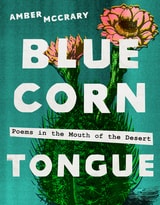
Blue Corn Tongue
Poems in the Mouth of the DesertAmber McCrary
University of Arizona Press, 2025
In a voice that is jubilant, irreverent, sometimes scouring, sometimes heartfelt, and always unmistakably her own, Amber McCrary remaps the deserts of Arizona through the blue corn story of a young Diné woman figuring out love and life with an O’odham man. Reflecting experiences of Indigenous joy, pain, and family, these shapeshifting poems celebrate the love between two Native partners, a love that flourishes alongside the traumas they face in the present and the past. From her ethereal connection with her saguaro muse, Hosh, to the intricate tapestry of her relationships with Diné relatives and her awakening to the complex world of toxic masculinity, McCrary brings together DIY zine aesthetics, life forms of juniper and mountains, and the beauty of Diné Bizaad to tell of the enduring bonds between people and place.
Journeying from the Colorado Plateau to the Sonoran Desert and back again, Blue Corn Tongue invokes the places, plants, and people of Diné Bikéyah and O’odham jeweḍ in a deeply honest exploration of love, memory, and intimacy confronting the legacy of land violence in these desert homelands.
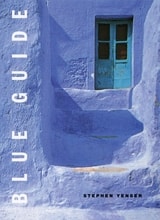
Blue Guide
Stephen Yenser
University of Chicago Press, 2006
Inspired by the miraculously mercurial potential of words, Stephen Yenser takes readers on a heady trip through a world full of promise yet compromised by human weakness. Set in sunny southern California and Greece, the poems of Blue Guide cast the shadow of mortality, and the tones are elegiac. This combination of the deadly serious and the exuberant is natural, Yenser notes; after all, work and orgy share the same etymological root, as do travail and travel, pledge and play.
Using various poetic modes, Yenser offers here a quatrain written to name a painting by Dorothea Tanning; a sequence of poems for his daughter; an excursive poem at once about Los Angeles and Baghdad and his father and a petty criminal; a group of prose poems set in penumbral bars; some postcards to a dead friend; and a meditation prompted by a sojourn on a remote Aegean island. The most unexpected work is an assemblage of quotations and glosses in the tradition of the commonplace book, except that in Yenser's hands these entries are densely interrelated
.
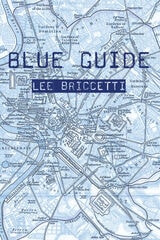
Blue Guide
Lee Briccetti
Four Way Books, 2018
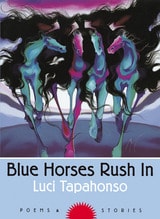
Blue Horses Rush In
Poems and StoriesLuci Tapahonso
University of Arizona Press, 1997
Blue Horses Rush In takes its title from a poem about the birth of her granddaughter Chamisa, whose heart "pounded quickly and we recognized / the sound of horses running: / the thundering of hooves on the desert floor." Through such personal insights, this collection follows the cycle of a woman's life and underlines what it means to be Navajo in the late twentieth century. The book marks a major accomplishment in American literature for its successful blending of Navajo cultural values and forms with the English language, while at the same time retaining the Navajo character. Here, Luci Tapahonso walks slowly through an ancient Hohokam village, recalling stories passed down from generation to generation. Later in the book, she may tell a funny story about a friend, then, within a few pages, describe family rituals like roasting green chiles or baking bread in an outside oven. Throughout, Tapahonso shares with readers her belief in the power of pollen and prayer feathers and sacred songs.
Many of these stories were originally told in Navajo, taking no longer than ten minutes in the telling. "Yet, in recreating them, it is necessary to describe the land, the sky, the light, and other details of time and place," writes Tapahonso. "In this way, I attempt to create and convey the setting for the oral text. In writing, I revisit the place or places concerned and try to bring the reader to them, thereby enabling myself and other Navajos to sojourn mentally and emotionally in our home, Dinétah."
Blue Men and River Monsters
Folklore of the NorthJohn Zimm
Wisconsin Historical Society Press, 2014
Blue Notes
Essays, Interviews, and CommentariesYusef Komunyakaa
University of Michigan Press, 2000
As editor Radiclani Clytus makes clear in the volume's introductory essay, although Komunyakaa's poetry has its roots in the stylistic innovations of early twentieth-century American modernists, his writing often reflects his understanding that a "black" experience should not particularize the presentation of one's art. This volume, according to the editor, is an attempt to understand Komunyakaa's critical eclecticism within the context of his own words.
Yusef Komunyakaa's books of poetry include I Apologize for the Eyes in My Head, Magic City, Thieves of Paradise, and Neon Vernacular, for which he received the Pulitzer Prize and the Kingsley Tufts Poetry Award in 1994.
Blue Yodel
Eleanor Stanford
Carnegie Mellon University Press, 2024
These poems take the reader from Mexico City to West Philadelphia to Karachi. The works wade into the difficult joys of mothering, self-exploration, and romantic entanglement in midlife. Throughout, Eleanor Stanford embraces the mysticism of Hildegard of Bingen, the abjection of Tammy Wynette, and the wry self-appraisal of Sylvia Plath, fashioning it all into something entirely its own.
Blue in Green
Chiyuma Elliott
University of Chicago Press, 2021
Collaboration runs through the heart of this collection. Human relationships—particularly in families—shape the poems in Blue in Green, as they consider how the question of what we expect from one another evolves into a question of what we owe. When cancer overshadows the ordinary—engrossing the labor of love, work, and friendship—disease becomes a collaborator and proposes new rules of exchange.
The forms of Elliott’s works highlight reciprocity. Here you’ll find ekphrastic poems that describe modern jazz songs, letters and letter fragments, and free verse poems in wildly variable line lengths. “When I was a wave,” the speaker repeats, each time telling a different story about intimacy and risk. Blue in Green moves through the struggle of processing the damaging interpersonal reverberations of racism, sexism, and environmental damage, while navigating intertwined personal and political incarnations of care. While a slow-growing disease burns its way through the speaker’s body, these poems reveal the feeling of perpetually existing in the shadow of catastrophe and document the slow and strange process of coming to terms with that way of living.
Blues and Roots/Rue and Bluets
A Garland for the Southern AppalachiansJonathan Williams
Duke University Press, 1985
Blues for Cannibals
The Notes from UndergroundBy Charles Bowden
University of Texas Press, 2018
Cultivated from the fierce ideas seeded in Blood Orchid, Blues for Cannibals is an elegiac reflection on death, pain, and a wavering confidence in humanity’s own abilities for self-preservation. After years of reporting on border violence, sex crimes, and the devastation of the land, Bowden struggles to make sense of the many ways in which we destroy ourselves and whether there is any way to survive. Here he confronts a murderer facing execution, sex offenders of the most heinous crimes, a suicidal artist, a prisoner obsessed with painting portraits of presidents, and other people and places that constitute our worst impulses and our worst truths. Painful, heartbreaking, and forewarning, Bowden at once tears us apart and yearns for us to find ourselves back together again.
Boarding Out
Inhabiting the American Urban Literary Imagination, 1840-1860David Faflik
Northwestern University Press, 2012
Body Blows
Six PerformancesTim Miller
University of Wisconsin Press, 2002
Hailed for his humor and passion, the internationally acclaimed performance artist Tim Miller has delighted, shocked, and emboldened audiences all over the world. Body Blows gathers six of Miller’s best-known performances that chart the sexual, spiritual, and political topography of his identity as a gay man: Some Golden States, Stretch Marks, My Queer Body, Naked Breath, Fruit Cocktail, and Glory Box. In Body Blows, Tim Miller leaps from the stage to the page, as each performance script is illustrated with striking photographs and accompanied by Miller’s notes and comment.
This book explores the tangible body blows—taken and given—of Miller’s life and times as explored in his performances: the queer-basher’s blow, the sweet blowing breath of a lover, the below-the-belt blow of HIV/AIDS, the psychic blows from a society that disrespects the humanity of lesbian and gay relationships. Miller’s performances are full of the put-up-your-dukes and stand-your-ground of such day-to-day blows that make up being gay in America