Results by title
5159 books match the query 'Biography' and 297 start with b

Bear Wrangler
Memoirs of an Alaska Pioneer BiologistWill Troyer
University of Alaska Press, 2008
Bearing Witness
Memories of Arkansas SlaveryGeorge E. Lankford
University of Arkansas Press, 2006
Beautiful Mystery
Living in a Wordless WorldDanilyn Rutherford
Duke University Press, 2025
Now in her twenties, Millie has never been able to express herself verbally, but she has a thriving social environment rooted in the people around her and in things her companions and family can see, hear, smell, and feel. Life in Millie’s world is far richer than might be immediately evident to those who think and communicate in conventional ways.
Beautiful Mystery explores what it means to be a person in the spaces between what we can and cannot say, and how we can fight to care for those we love when they don’t have the language to fight for themselves. Through her unique lens as a mother and an anthropologist, Rutherford tells the story of arriving in Millie’s world, what she found there, and how Millie showed her that words aren’t always what makes us human. Enlightening and deeply felt, Beautiful Mystery proves that you don’t have to understand someone to love them—a lesson that, if we all learned it, might allow us to live together in a fractured world.
Beautiful Work
A Meditation on PainSharon Cameron
Duke University Press, 2000
In order to understand the nature of pain, Anna undertakes a meditation practice. We tend to think of pain as self-absorbing and exclusively our own ("my pain," "I am in pain"). In distinction, Sharon Cameron’s Anna comes to explore pain as common property, and as the basis for a radically reconceived selfhood. Resisting the limitations of memoir, Beautiful Work speaks from experience and simultaneously releases it from the closed shell of personal ownership. Outside of the not quite inevitable stories we tell about it, experience is less protected, less compromised, and more vivid than could be supposed.
Beautiful Work brings to bear the same interest in consciousness and intersubjectivity that characterizes Cameron’s other work.
Because I'd Hate to Just Disappear
My Cancer, My Self, Our StoryDon Hardy
University of Nevada Press, 2018
Because I’d Hate to Just Disappear is a portrait of a husband and wife, Don and Heather Hardy, thrown into the physical and emotional machinery of Don being diagnosed with leukemia and going through chemotherapy and treatment over a period of close to two years.
In this thoughtful and exquisite account, Don and Heather narrate Don’s struggle in real-time. Disarmingly honest, they recount each intimate stage of a couple living through cancer together, the mental and physical struggles, the humor and visceral emotion to reveal how two very different personalities shape—and are shaped by—the experience of cancer and its treatment. Through these moments emerge a constant flow of human kindness and discovery that lifts them each day.
Because the Light Will Not Forgive Me
Essays from a PoetShaun T, Griffin
University of Nevada Press, 2019
In this luminous and moving book of essays, award-winning author Shaun Griffin weaves together a poetic meditation on living meaningfully in this world. Anchored in the American West but reaching well beyond, he recounts his discoveries as a poet and devoted reader of poetry, a teacher of the disadvantaged, a friend of poets and artists, and a responsible member of the human family.
Always grounded in place, be it Nevada, South Africa, North Dakota, Spain, Zimbabwe, or Mexico, Griffin confronts the world with an openness that allows him to learn and grow from the people he meets. This is a meditation on how all of us can confront our own influences to achieve wholeness in our lives. Along with Griffin, readers will reflect on how they might respond to a homeless man walking through central Nevada, viewing the open desert as Thoreau might have viewed Walden, seeing the US-Mexico border as a region of lost identity, reconciling how poets who live west of the Hudson River find anonymity to be their laurel, and experiencing how writing poetry in prison becomes lifesaving.
Whether poets or places in the West or beyond, experiences with other cultures, or an acute awareness that poetry is the refuge of redress—all have influenced Griffin’s writing and thinking as a poet and activist in the Great Basin. The mindfulness of Because the Light Will Not Forgive Me demonstrates that even though the light does not forgive, it still reveals.
Becoming Anna
Anna J. Michener
University of Chicago Press, 1998
"A teen's raw, in-your-face chronicle of events almost as they were happening. As such, it's unforgettable. . . . Michener's story gives voice to the thousands of children and adolescents trapped in 'the system,' biding their time until their 18th birthdays. A candid and unstinting tell-all."—Kirkus Reviews
"Extraordinary. . . . Michener's expressive writing does justice to a topic that is clearly very disturbing to her personally and communicates a profoundly important message on behalf of all abused and neglected children."—Booklist
"An important book, painful to read, but essential if other children in similar situations are to be saved."—Library Journal
"An innocent child's account of 16 years in hell and of the terrible wrongs inflicted on children who are without rights or caring advocates."—Choice
"[Michener] emerges as a compelling and courageous advocate for children and their welfare—she's a young writer with an extraordinary voice."Feminist Bookstore News
"Quite simply one of the best, most compelling, well-written autobiographies published in years. . . . Remember the name. We have not heard the last of Anna Michener."—Myree Whitfield, Melbourne Herald-Sun, cover story
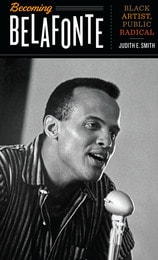
Becoming Belafonte
Black Artist, Public RadicalBy Judith E. Smith
University of Texas Press, 2014
A son of poor Jamaican immigrants who grew up in Depression-era Harlem, Harry Belafonte became the first black performer to gain artistic control over the representation of African Americans in commercial television and film. Forging connections with an astonishing array of consequential players on the American scene in the decades following World War II—from Paul Robeson to Ed Sullivan, John Kennedy to Stokely Carmichael—Belafonte established his place in American culture as a hugely popular singer, matinee idol, internationalist, and champion of civil rights, black pride, and black power.
In Becoming Belafonte, Judith E. Smith presents the first full-length interpretive study of this multitalented artist. She sets Belafonte’s compelling story within a history of American race relations, black theater and film history, McCarthy-era hysteria, and the challenges of introducing multifaceted black culture in a moment of expanding media possibilities and constrained political expression. Smith traces Belafonte’s roots in the radical politics of the 1940s, his careful negotiation of the complex challenges of the Cold War 1950s, and his full flowering as a civil rights advocate and internationally acclaimed performer in the 1960s. In Smith’s account, Belafonte emerges as a relentless activist, a questing intellectual, and a tireless organizer. From his first national successes as a singer of Calypso-inflected songs to the dedication he brought to producing challenging material on television and film regardless of its commercial potential, Belafonte stands as a singular figure in American cultural history—a performer who never shied away from the dangerous crossroads where art and politics meet.
Becoming Historians
Edited by James M. Banner, Jr. and John R. Gillis
University of Chicago Press, 2009
In this unique collection, the memoirs of eleven historians provide a fascinating portrait of a formative generation of scholars. Born around the time of World War II, these influential historians came of age just before the upheavals of the 1960s and ’70s and helped to transform both their discipline and the broader world of American higher education. The self-inventions they thoughtfully chronicle led, in many cases, to the invention of new fields—including women’s and gender history, social history, and public history—that cleared paths in the academy and made the study of the past more capacious and broadly relevant. In these stories—skillfully compiled and introduced by James Banner and John Gillis—aspiring historians will find inspiration and guidance, experienced scholars will see reflections of their own dilemmas and struggles, and all readers will discover a rare account of how today’s seasoned historians embarked on their intellectual journeys.
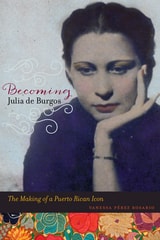
Becoming Julia de Burgos
The Making of a Puerto Rican IconVanessa Perez Rosario
University of Illinois Press, 2014
In the first book-length study written in English, Vanessa Pérez-Rosario examines poet and political activist Julia de Burgos's development as a writer, her experience of migration, and her legacy in New York City, the poet's home after 1940. Pérez-Rosario situates Julia de Burgos as part of a transitional generation that helps to bridge the historical divide between Puerto Rican nationalist writers of the 1930s and the Nuyorican writers of the 1970s. Becoming Julia de Burgos departs from the prevailing emphasis on the poet and intellectual as a nationalist writer to focus on her contributions to New York Latino/a literary and visual culture. It moves beyond the standard tragedy-centered narratives of de Burgos's life to place her within a nuanced historical understanding of Puerto Rico's peoples and culture to consider more carefully the complex history of the island and the diaspora. Pérez-Rosario unravels the cultural and political dynamics at work when contemporary Latina/o writers and artists in New York revise, reinvent, and riff off of Julia de Burgos as they imagine new possibilities for themselves and their communities.
Becoming Laura Ingalls Wilder
The Woman behind the LegendJohn E. Miller
University of Missouri Press, 2005
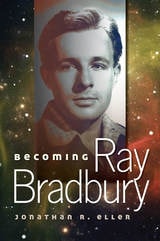
Becoming Ray Bradbury
Jonathan R. Eller
University of Illinois Press, 2013
Beginning with his childhood in Waukegan, Illinois, and Los Angeles, this biography follows Bradbury's development from avid reader to maturing author, making a living writing for the genre pulps and mainstream magazines. Eller illuminates the sources of Bradbury's growing interest in the human mind, the human condition, and the ambiguities of life and death--themes that became increasingly apparent in his early fiction. Bradbury's correspondence documents his frustrating encounters with the major trade publishing houses and his earliest unpublished reflections on the nature of authorship. Eller traces the sources of Bradbury's very conscious decisions, following the sudden success of The Martian Chronicles and The Illustrated Man, to voice controversial political statements in his fiction. Eller also elucidates the complex creative motivations that yielded Fahrenheit 451.
Becoming Ray Bradbury reveals Bradbury's emotional world as it matured through his explorations of cinema and art, his interactions with agents and editors, his reading discoveries, and the invaluable reading suggestions of older writers. These largely unexplored elements of his life pave the way to a deeper understanding of his more public achievements, providing a biography of the mind, the story of Bradbury's self-education and the emerging sense of authorship at the heart of his boundless creativity.
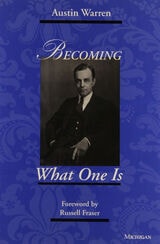
Becoming What One Is
Austin Warren
University of Michigan Press, 1995
The late Austin Warren was one of the most distinguished literary scholars of the twentieth century, well known as a biographer, literary critic, and teacher. He retired from the University of Michigan English Department in 1968 after twenty years on the faculty. Warren's memoir ends at age forty, because, as he explains in the preface, the most interesting part of anyone's life is the formative years.
He begins with his childhood in Massachusetts and education at Wesleyan, Harvard, and Princeton, and ends with reflections on the problems of integrating his profession, teaching, with his vocation, writing. The journey in between is extraordinary, a re-creation of the scholar's search for identity, religion, wisdom, and a new vision of the role of a teacher.
Warren "forged his soul when others weren't looking," writes Russell Fraser in his foreword to the book. He grew up on a lonely New England farm, went to a school where he learned to hate even Shakespeare, and entered college without enthusiasm. But the history of his education, as is often the case, was one first of rescue by inspiring mentors, then of outgrowing those mentors, and finally of forging a vision of his own. By the 1930s he had shaken up classrooms by abandoning formal lectures and become an inspiration in his own right.
A singular personality who never stopped searching for meaningful spirituality and a wider intellectual world, Austin Warren was among the most important scholars of the twentieth century. His memoirs of "becoming" are an elegant and absorbing chronicle.
Becoming Willa Cather
Creation and CareerDaryl W. Palmer
University of Nevada Press, 2019
Willa Cather has long been admired for O Pioneers! (1913), Song of the Lark (1915), and My Ántonia (1918)—the “prairie novels” about the lives of early Nebraska pioneers that launched her career. Thanks in part to these masterpieces, she is often viewed as a representative of pioneer life on the Great Plains, a controversial innovator in American modernism, and a compelling figure in the literary history of LGBTQ America. A century later, scholars acknowledge Cather’s place in the canon of American literature and continue to explore her relationship with the West.
Drawing on original archival research and paying unprecedented attention to Cather’s early short stories, Palmer demonstrates that the relationship with Nebraska in the years leading up to O Pioneers! is more dynamic than critics and scholars thought. Readers will encounter a surprisingly bold young author whose youth in Nebraska served as a kind of laboratory for her future writing career. Becoming Willa Cather changes the way we think about Cather, a brilliant and ambitious author who embraced experimentation in life and art, intent on reimagining the American West.

Becoming a Poet
Elizabeth Bishop with Marianne Moore and Robert LowellDavid Kalstone
University of Michigan Press, 2001
Becoming a Visible Man
Second EditionJamison Green
Vanderbilt University Press, 2020
Since the first edition's publication, author Jamison Green's writings and advocacy among business and governmental organizations around the world have led to major changes in the fields of law, medicine, and social policy, and his (mostly invisible) work has had significant effects on trans people globally. This new edition captures the changes of the last two decades, while also imparting a message of self-acceptance and health.
With profoundly personal and eminently practical threads, Green clarifies transgender experience for transgender people and their families, friends, and coworkers. Medical and mental health care providers, educators, business leaders, and advocates seeking information about transgender concerns can all gain from Green's integrative approach to the topic. This book candidly addresses emotional relationships that are affected by a transition, and brings refined integrity to the struggle to self-define, whether one undergoes a transition or chooses not to.
Emphasizing the lives of transgender men—who are often overlooked—he elucidates the experience of masculinity in a way that is self-assured and inclusive of feminist values. Green's inspirational wisdom has informed and empowered thousands of readers. There is still no other book like Becoming a Visible Man in the transgender canon.

Beep
Inside the Unseen World of Baseball for the BlindDavid Wanczyk
Ohio University Press, 2018
In Beep, David Wanczyk illuminates the sport of blind baseball to show us a remarkable version of America’s pastime. With balls tricked out to squeal three times per second, and with bases that buzz, this game of baseball for the blind is both innovative and intense. And when the best beep baseball team in America, the Austin Blackhawks, takes on its international rival, Taiwan Homerun, no one’s thinking about disability. What we find are athletes playing their hearts out for a championship.
Wanczyk follows teams around the world and even joins them on the field to produce a riveting inside narrative about the game and its players. Can Ethan Johnston, kidnapped and intentionally blinded as a child in Ethiopia, find a new home in beep baseball, and a spot on the all-star team? Will Taiwan’s rookie MVP Ching-kai Chen—whose superhuman feats on the field have left some veterans suspicious—keep up his incredible play? And can Austin’s Lupe Perez harness his competitive fire and lead his team to a long-awaited victory in the beep baseball world series?
Beep is the first book about blind baseball.
Beethoven for a Later Age
Living with the String QuartetsEdward Dusinberre
University of Chicago Press, 2016
Founded in Hungary in 1975 and now based in Boulder, Colorado, the Takács is one of the world’s preeminent string quartets, and performances of Beethoven have been at the center of their work together for over forty years. Using the history of both the Takács Quartet and the Beethoven quartets as a foundation, Beethoven for a Later Age provides a backstage look at the daily life of a quartet, showing the necessary creative tension between individual and group and how four people can at the same time forge a lasting artistic connection and enjoy making music together over decades. The key, Dusinberre reveals, to a quartet crafting its own sound is in balancing continuity with change and experimentation—a theme that lies at the heart of Beethoven’s remarkable compositions. In an accessible style, suitable for novices and chamber music enthusiasts alike, Dusinberre illuminates the variety and contradictions of Beethoven's quartets, which were composed against the turbulent backdrop of the Napoleonic Wars and their aftermath, and he brings the technical aspects of the music to life.
Beethoven for a Later Age vividly shows that creative engagement with Beethoven’s radical and brilliant quartets continues to be as stimulating now as it was for its first performers and audiences. Musicians and music lovers will be intrigued by Dusinberre’s exploration of the close collaboration at the heart of any great performance.
Before Bemberg
Women Filmmakers in ArgentinaMatt Losada
Rutgers University Press, 2020
Watch some of the films discussed in the book with English subtitles (https://www.youtube.com/channel/UCF_6F4am5024rklIWwExUVA?view_as=subscriber).
Before Brown
Heman Marion Sweatt, Thurgood Marshall, and the Long Road to JusticeBy Gary M. Lavergne
University of Texas Press, 2010
Winner, Coral Horton Tullis Memorial Prize for Best Book on Texas History, Texas State Historical Association, 2010
Carr P. Collins Award, Texas Institute of Letters, 2011
On February 26, 1946, an African American from Houston applied for admission to the University of Texas School of Law. Although he met all of the school's academic qualifications, Heman Marion Sweatt was denied admission because he was black. He challenged the university's decision in court, and the resulting case, Sweatt v. Painter, went to the U.S. Supreme Court, which ruled in Sweatt's favor. The Sweatt case paved the way for the landmark Brown v. Board of Education of Topeka rulings that finally opened the doors to higher education for all African Americans and desegregated public education in the United States.
In this engrossing, well-researched book, Gary M. Lavergne tells the fascinating story of Heman Sweatt's struggle for justice and how it became a milestone for the civil rights movement. He reveals that Sweatt was a central player in a master plan conceived by the National Association for the Advancement of Colored People (NAACP) for ending racial segregation in the United States. Lavergne masterfully describes how the NAACP used the Sweatt case to practically invalidate the "separate but equal" doctrine that had undergirded segregated education for decades. He also shows how the Sweatt case advanced the career of Thurgood Marshall, whose advocacy of Sweatt taught him valuable lessons that he used to win the Brown v. Board of Education case in 1954 and ultimately led to his becoming the first black Associate Justice of the Supreme Court.
Before Fidel
The Cuba I RememberBy Francisco José Moreno
University of Texas Press, 2007
Before Fidel Castro seized power, Cuba was an ebullient and chaotic society in a permanent state of turmoil, combining a raucous tropical nature with the evils of arbitrary and corrupt government. Yet this fascinating period in Cuban history has been largely forgotten or misrepresented, even though it set the stage for Castro's dramatic takeover in 1959. To reclaim the Cuba that he knew—and add color and detail to the historical record—distinguished political scientist Francisco José Moreno here offers his recollections of the Cuba in which he came of age personally and politically.
Moreno takes us into the little-known world of privileged, upper-middle-class, white Cubans of the 1930s through the 1950s. His vivid depictions of life in the family and on the streets capture the distinctive rhythms of Cuban society and the dynamics between parents and children, men and women, and people of different races and classes. The heart of the book describes Moreno's political awakening, which culminated during his student years at the University of Havana. Moreno gives a detailed, insider's account of the anti-Batista movement, including the Ortodoxos and the Triple A. He recaptures the idealism and naiveté of the movement, as well as its ultimate ineffectiveness as it fell before the juggernaut of the Castro Revolution. His own disillusionment and wrenching decision to leave Cuba rather than accept a commission in Castro's army poignantly closes the book.
Before Lawrence v. Texas
The Making of a Queer Social MovementWesley G. Phelps
University of Texas Press, 2022
2024 Coral Horton Tullis Memorial Prize, Texas State Historical Association
2024 Award of Merit, The Philosophical Society of Texas Nonfiction Book Prize
The grassroots queer activism and legal challenges that led to a landmark Supreme Court decision in favor of gay and lesbian equality.
In 2003 the US Supreme Court overturned anti-sodomy laws across the country, ruling in Lawrence v. Texas that the Constitution protects private consensual sex between adults. To some, the decision seemed to come like lightning from above, altering the landscape of America’s sexual politics all at once. In actuality, many years of work and organizing led up to the legal case, and the landmark ruling might never have happened were it not for the passionate struggle of Texans who rejected their state’s discriminatory laws.
Before Lawrence v. Texas tells the story of the long, troubled, and ultimately hopeful road to constitutional change. Wesley G. Phelps describes the achievements, setbacks, and unlikely alliances along the way. Over the course of decades, and at great risk to themselves, gay and lesbian Texans and their supporters launched political campaigns and legal challenges, laying the groundwork for Lawrence. Phelps shares the personal experiences of the people and couples who contributed to the legal strategy that ultimately overturned the state’s discriminatory law. Even when their individual court cases were unsuccessful, justice seekers and activists collectively influenced public opinion by insisting that their voices be heard. Nine Supreme Court justices ruled, but it was grassroots politics that vindicated the ideal of equality under the law.

Before Pictures
Douglas Crimp
University of Chicago Press, 2016
Before Pictures tells the story of Crimp’s life as a young gay man and art critic in New York City during the late 1960s through the turbulent 1970s. Crimp participated in all of what made the city so stimulating in that vibrant decade. The details of his professional and personal life are interwoven with this the particularly rich history of New York City at that time, producing a vivid portrait of both the critic and his adopted city. The book begins with his escape from his hometown in Idaho, and we quickly find Crimp writing criticism for ArtNews while working at the Guggenheim—where, as a young curatorial assistant, he was one of the few to see Daniel Buren’s Peinture-Sculpture before it was removed amid cries of institutional censorship. We also travel to the Chelsea Hotel (where Crimp helped the down-on-his-luck couturier Charles James organize his papers) through to his days as a cinephile and balletomane to the founding of the art journal October, where he remained a central figure for many years. As he was developing his reputation as a critic, he was also partaking of the New York night life, from drugs and late nights alongside the Warhol crowd at the Max’s Kansas City to discos, roller-skating, and casual sex with famous (and not-so-famous) men. As AIDS began to ravage the closely linked art and gay communities, Crimp eventually turned his attention to activism dedicated to rethinking AIDS.
Part biography and part cultural history, Before Pictures is a courageous account of an exceptional period in both Crimp’s life and the life of New York City. At the same time, it offers a deeply personal and engaging point of entry into important issues in contemporary art.
Before Porn Was Legal
The Erotica Empire of Beate UhseElizabeth Heineman
University of Chicago Press, 2011
Struggling to survive in post–World War II Germany, Beate Uhse (1919–2001)—a former Luftwaffe pilot, war widow, and young mother—turned to selling goods on the black market. A self-penned guide to the rhythm method found eager buyers and started Uhse on her path to becoming the world’s largest erotica entrepreneur. Battling restrictive legislation, powerful churches, and conservative social mores, she built a mail-order business in the 1950s that sold condoms, sex aids, self-help books, and more. The following decades brought the world’s first erotica shop, the legalization of pornography, the expansion of her business into eastern Germany, and web-based commerce.
Uhse was only one of many erotica entrepreneurs who played a role in the social and sexual revolution accompanying Germany’s transition from Nazism to liberal democracy. Tracing the activities of entrepreneurs, customers, government officials, and citizen-activists, Before Porn Was Legal brings to light the profound social, legal, and cultural changes that attended the growth of the erotica sector. Heineman’s innovative readings of governmental and industry records, oral histories, and the erotica industry’s products uncover the roots of today’s sexual marketplace and reveal the indelible ways in which sexual expression and consumption have become intertwined.
Before They Could Vote
American Women's Autobiographical Writing, 1819–1919Edited by Sidonie A. Smith and Julia Watson
University of Wisconsin Press, 2006
"This rich new anthology sets in motion an inter-textual conversation of remarkable vitality that will change the ways we understand gender, class, ethnicity, culture, and nation in nineteenth-century America."—Susanna Egan, author of Mirror-Talk

Before the Fire Dogs Steal the Sun
An ElegyCrystal Mun-hye Baik
Duke University Press, 2026
Before the Manifesto
The Life Writings of Mary Lois Walker MorrisMelissa Lambert Milewski
Utah State University Press, 2007
Mary Morris's memoir frames her 1879 to 1887 diary with both reflections on earlier years and passages that parallel entries in the day book, giving readers a better understanding of how she retrospectively saw her life. The thoroughly annotated diary offers the daily experience of a woman who kept a largely self-sufficient household, had a wide social network, ran her own business, wrote poetry, and was intellectually curious. The years of "the Raid" (federal prosecution of polygamists) led Mary and Elias Morris to hide their marriage on "the underground," and her to perjury in court during Elias's trial for unlawful cohabitation. The book ends with Mary Lois's arrival at the Salt Lake Depot after three years in exile in Mexico with a polygamist colony.
Before the Storm
A Year in the Pribilof Islands, 1941-1942Fredericka Martin
University of Alaska Press, 2010
From June of 1941 through the following summer, Fredericka Martin lived with her husband, Dr. Samuel Berenberg, on remote St. Paul Island in Alaska. During that time, Martin delved into the complex history of the Unangan people, and Before the Storm draws from her personal accounts of that year and her research to present a fascinating portrait of a time and a people facing radical change. A government-ordered evacuation of all Aleuts from the island in the face of World War II, which Martin recounts in her journal, proved but the first step in a long struggle by native peoples to gain independence, and, as editor Raymond L. Hudson explains, Martin came to play a significant role in the effort.
Begin Again
A Biography of John CageKenneth Silverman
Northwestern University Press, 2012
A man of extraordinary and seemingly limitless talents—musician, inventor, composer, poet, and even amateur mycologist—John Cage became a central figure of the avant-garde early in his life and remained at that pinnacle until his death in 1992 at the age of eighty. Award-winning biographer Kenneth Silverman gives us the first comprehensive life of this remarkable artist. Silverman begins with Cage’s childhood in interwar Los Angeles and his stay in Paris from 1930 to 1931, where immersion in the burgeoning new musical and artistic movements triggered an explosion of his creativity. Cage continued his studies in the United States with the seminal modern composer Arnold Schoenberg, and he soon began the experiments with sound and percussion instruments that would develop into his signature work with prepared piano, radio static, random noise, and silence. Cage’s unorthodox methods still influence artists in a wide range of genres and media. Silverman concurrently follows Cage’s rich personal life, from his early marriage to his lifelong personal and professional partnership with choreographer Merce Cunningham, as well as his friendships over the years with other composers, artists, philosophers, and writers.
Drawing on interviews with Cage’s contemporaries and friends and on the enormous archive of his letters and writings, and including photographs, facsimiles of musical scores, and Web links to illustrative sections of his compositions, Silverman gives us a biography of major significance: a revelatory portrait of one of the most important cultural figures of the twentieth century.
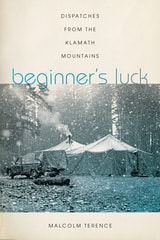
Beginner's Luck
Dispatches from the Klamath MountainsMalcolm Terence
Oregon State University Press, 2018
In the late 1960s, Malcolm Terence left his job as a reporter for the Los Angeles Times to look for adventure and may have found more than he bargained for. The era had triggered unprecedented social and political changes in America, tectonic shifts that challenged war and the social order that oppressed people along lines of class, gender, and race. One branch was a back-to-the-land movement, and Terence, who had just traveled for a year managing a rock band, strayed into Black Bear Ranch, a commune just starting in a remote corner of the Klamath Mountains near the California-Oregon border.
Black Bear Ranch still exists, but many of its early residents eventually returned to urban civilization. A few, Terence among them, stayed on in neighboring river towns. Some tried logging, others gold mining, and some tried growing marijuana, all with mixed success. The local mining and timber communities had a checkered opinion of their new hippie neighbors, as did the Native tribes, but it was the kind of place where people helped each other out, even if they didn’t always agree.
When wildfires grew large, Terence and other veterans of the commune joined the fire crews run by the US Forest Service. In between, the Black Bear expats built homesteads, planted gardens, delivered babies, and raised their children. They gradually overcame the skepticism of the locals and joined them in political battles against the use of herbicides in the forest and the Forest Service’s campaign to close all the mining claims. As in the best of organizing efforts, the organizers learned as much as they led.
Beginner’s Luck will appeal to anyone who experienced life on a commune in the 1960s–1970s or who wants to learn about this chapter in modern American history. Terence offers insight into environmental activism and the long history of conflict between resource exploitation and Native American rights without lecturing or pontificating. With wit, humor, and humility, his anecdotal essays chronicle a time and place where disparate people came together to form an unlikely community.
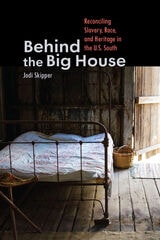
Behind the Big House
Reconciling Slavery, Race, and Heritage in the U.S. SouthJodi Skipper
University of Iowa Press, 2022
When residents and tourists visit sites of slavery, whose stories are told? All too often the lives of slaveowners are centered, obscuring the lives of enslaved people. Behind the Big House gives readers a candid, behind-the-scenes look at what it really takes to interpret the difficult history of slavery in the U.S. South. The book explores Jodi Skipper’s eight-year collaboration with the Behind the Big House program, a community-based model used at local historic sites to address slavery in the collective narrative of U.S. history and culture.
In laying out her experiences through an autoethnographic approach, Skipper seeks to help other activist scholars of color negotiate the nuances of place, the academic public sphere, and its ambiguous systems of reward, recognition, and evaluation.
Behind the Scenes
Covering the JFK AssassinationDarwin Payne
University of North Texas Press, 2023
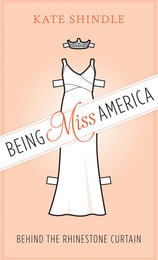
Being Miss America
Behind the Rhinestone CurtainBy Kate Shindle
University of Texas Press, 2014
For nearly a hundred years, young women have competed for the title of Miss America—although what it means to wear the crown and be our “ideal” has changed dramatically over time. The Miss America Pageant began as a bathing beauty contest in 1920s Atlantic City, New Jersey, sponsored by businessmen trying to extend the tourist season beyond Labor Day. In the post–World War II years, the pageant evolved into a national coronation of an idealized “girl next door,” as pretty and decorous as she was rarely likely to speak her mind on issues of substance. Since the cultural upheavals of the 1960s, the pageant has struggled to find a balance between beauty and brains as it tries to remain relevant to women who aspire to become leaders in the community, not hot babes in swimsuits.
In Being Miss America, Kate Shindle interweaves an engrossing, witty memoir of her year as Miss America 1998 with a fascinating and insightful history of the pageant. She explores what it means to take on the mantle of America’s “ideal,” especially considering the evolution of the American female identity since the pageant’s inception. Shindle profiles winners and organization leaders and recounts important moments in the pageant’s story, with a special focus on Miss America’s iconoclasts, including Bess Myerson (1945), the only Jewish Miss America; Yolande Betbeze (1951), who crusaded against the pageant’s pinup image; and Kaye Lani Rae Rafko (1987), a working-class woman from Michigan who wanted to merge her famous title with her work as an oncology nurse. Shindle’s own account of her work as an AIDS activist—and finding ways to circumvent the “gown and crown” stereotypes of Miss America in order to talk honestly with high school students about safer sex—illuminates both the challenges and the opportunities that keep young women competing to become Miss America.
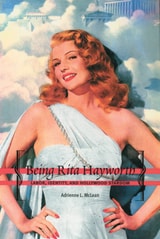
Being Rita Hayworth
Labor, Identity, and Hollywood StardomMcLean, Adrienne L
Rutgers University Press, 2004
Who was Rita Hayworth? Born Margarita Carmen Cansino, she spent her life subjected to others' definitions of her, no matter how hard she worked to claim her own identity. Although there have been many "revelations" about her life and career, Adrienne McLean's book is the first to show that such disclosures were part of a constructed image from the outset.
McLean explores Hayworth's participation in the creation of her star persona, particularly through her work as a dancer-a subject ignored by most film scholars. The passive love goddess, as it turns out, had a unique appeal to other women who, like her, found it extraordinarily difficult to negotiate the competing demands of family, domesticity, and professional work outside the home. Being Rita Hayworth also considers the ways in which the actress has been treated by film scholarship over the years to accomplish its own goals, sometimes at her expense. Several of Hayworth's best-known star vehicles-among them Gilda (1946), Down to Earth (1947), The Lady from Shanghai (1948), and Affair in Trinidad (1952)- are discussed in depth.
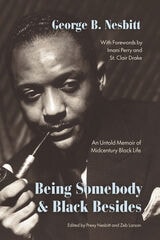
Being Somebody and Black Besides
An Untold Memoir of Midcentury Black LifeGeorge B. Nesbitt
University of Chicago Press, 2021
The late Chicagoan George Nesbitt could perhaps best be described as an ordinary man with an extraordinary gift for storytelling. In his newly uncovered memoir—written fifty years ago, yet never published—he chronicles in vivid and captivating detail the story of how his upwardly mobile Midwestern Black family lived through the tumultuous twentieth century.
Spanning three generations, Nesbitt’s tale starts in 1906 with the Great Migration and ends with the Freedom Struggle in the 1960s. He describes his parents’ journey out of the South, his struggle against racist military authorities in World War II, the promise and peril of Cold War America, the educational and professional accomplishments he strove for and achieved, the lost faith in integration, and, despite every hardship, the unwavering commitment by three generations of Black Americans to fight for a better world. Through all of it—with his sharp insights, nuance, and often humor—we see a family striving to lift themselves up in a country that is working to hold them down.
Nesbitt’s memoir includes two insightful forewords: one by John Gibbs St. Clair Drake (1911–90), a pioneer in the study of African American life, the other a contemporary rumination by noted Black studies scholar Imani Perry. A rare first-person, long-form narrative about Black life in the twentieth century, Being Somebody and Black Besides is a remarkable literary-historical time capsule that will delight modern readers.
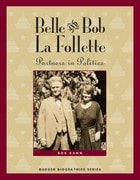
Belle and Bob La Follette
Partners in PoliticsBob Kann
Wisconsin Historical Society Press, 2008
The most famous couple in Wisconsin politics, "Fighting Bob" La Follette and his wife, Belle Case La Follette, come to life in the pages of the newest addition to the Badger Biographies series for young readers. In an accessible format that includes historic images, a glossary of terms, and sidebars explaining political concepts, students learn about Progressive politics and reform in the early 20th century through the experiences of this pioneering couple.
The father of "Progressive politics," Bob La Follette was famous for digging in his heels when it came to reforming government corruption. He also gained a reputation for fiery speeches on the campaign trail and on the Senate floor. Belle La Follette was political in her own right. The first woman to graduate from the University of Wisconsin's Law School, she was an advocate for world peace and an agitator for the women's vote. She was also Bob's most trusted political advisor. Together, the couple raised a family and fought for the changes they believed would make the world a better place.
Belo
From Newspapers to New MediaBy Judith Garrett Segura
University of Texas Press, 2008
Founded in Galveston in 1842 with the launch of the Daily News, the Belo Corporation entered the twenty-first century as a powerhouse conglomerate, owning four daily newspapers (including the Dallas Morning News), twenty-six television and cable stations, and over thirty interactive Web sites. The first comprehensive work to bring to life this remarkable success story, Belo blends biography with a history of corporate strategies.
Drawing on company archives and private papers of key figures, including A. H. Belo and G. B. Dealey, former company archivist Judith Garrett Segura brings to life important chapters in the cultural life of Texas, from Galveston's days as the largest and most vibrant town in the Republic of Texas, through the wars that followed statehood, periods of economic hardship, and the effects of sweeping social change. Turning points in the company's history, such as the sale of its Galveston paper when company revenues were dramatically affected by candid reporting of Ku Klux Klan activities in the 1920s, highlight crucial elements of the press's role in the life of a community. Segura also charts technological advances, from the telegraph and the typographers' union to the dawn of the Information Age. Finally, she includes the most complete portrait of the Dallas Times Herald Company to date, documenting the rise and fall of Belo's chief rival.
This is a story of frontier survival and futuristic thinking, marketing genius and historic reporting, nurtured by a family of mavericks.
Beloved Land
An Oral History of Mexican Americans in Southern ArizonaCollected and Edited by Patricia Preciado Martin, with Photographs by José Galvez
University of Arizona Press, 2004
For Doña Ramona as well as for countless generations of Mexican Americans, memories of rural life recall la querida tierra, the beloved land. Through good times and bad, the land provided sustenance. Today, many of those homesteads and ranches have succumbed to bulldozers that have brought housing projects and strip malls in their wake.
Now a writer and a photographer who have long been intimately involved with Arizona's Hispanic community have preserved the voices and images of men and women who are descendants of pioneer ranching and farming families in southern Arizona. Ranging from Tucson to the San Rafael Valley and points in between, this book documents the contributions of Mexican American families whose history and culture are intertwined with the lifestyle of the contemporary Southwest. These were hardy, self-reliant pioneers who settled in what were then remote areas. Their stories tell of love affairs with the land and a way of life that is rapidly disappearing.
Through oral histories and a captivating array of historic and contemporary photos, Beloved Land records a vibrant and resourceful way of life that has contributed so much to the region. Individuals like Doña Ramona tell stories about rural life, farming, ranching, and vaquero culture that enrich our knowledge of settlement, culinary practices, religious traditions, arts, and education of Hispanic settlers of Arizona. They talk frankly about how the land changed hands—not always by legal means—and tell how they feel about modern society and the disappearance of the rural lifestyle.
"Our ranch homes and fields, our chapels and corrals may have been bulldozed by progress or renovated into spas and guest ranches that never whisper our ancestors' names," writes Patricia Preciado Martin. "The story of our beautiful and resilient heritage will never be silenced . . . as long as we always remember to run our fingers through the nourishing and nurturing soil of our history." Beloved Land works that soil as it revitalizes that history for the generations to come.
Ben Thompson
Portrait of a GunfighterThomas C. Bicknell
University of North Texas Press, 2018

Beneath Missouri Skies
Pat Metheny in Kansas City, 1964-1972Carolyn Glenn Brewer
University of North Texas Press, 2021

Benjamin Franklin and His Gods
Kerry S. Walters
University of Illinois Press, 1999
the towering figure--and mind--of Benjamin Franklin. A Renaissance man
in a Revolutionary time, Franklin had interests and knowledge not only
in religion but in literature, philosophy, politics, publishing, history,
and scientific inquiry, among many other disciplines.
Kerry S. Walters examines Franklin's search for the Divine using a similar,
multifaceted approach--and in so doing has created the first extended
treatment of Franklin's religious thought in thirty years. Walters brings
the same intellectual range and depth to the understanding of Franklin's
beliefs that Franklin brought to his own quest. What emerges from this
pilgrimage into the soul of one of America's greatest figures is a very
human Benjamin Franklin who grew with the accumulation of knowledge to
arrive at a "theistic perspectivism," which provided him with
a philosophical explanation for the diversity of religious faiths--and
a justification for the liberty of conscience he advocated throughout
his life.
Benjamin Franklin and His Gods is an original and beautifully
challenging spiritual and intellectual biography. Destined to be a classic.

Benjamin Shambaugh and the Intellectual Foundations of Public Hisory
Rebecca Conard
University of Iowa Press, 2001

Berlin for Jews
A Twenty-First-Century CompanionLeonard Barkan
University of Chicago Press, 2016
Barkan, voraciously curious and witty, offers a self-deprecating guide to the history of Jewish life in Berlin, revealing how, beginning in the early nineteenth century, Jews became prominent in the arts, the sciences, and the city’s public life. With him, we tour the ivy-covered confines of the Schönhauser Allee cemetery, where many distinguished Jewish Berliners have been buried, and we stroll through Bayerisches Viertel, an elegant neighborhood created by a Jewish developer and that came to be called Berlin’s “Jewish Switzerland.” We travel back to the early nineteenth century to the salon of Rahel Varnhagen, a Jewish society doyenne, who frequently hosted famous artists, writers, politicians, and the occasional royal. Barkan also introduces us to James Simon, a turn-of-the-century philanthropist and art collector, and we explore the life of Walter Benjamin, who wrote a memoir of his childhood in Berlin as a member of the assimilated Jewish upper-middle class. Throughout, Barkan muses about his own Jewishness, while celebrating the rich Jewish culture on view in today’s Berlin.
A winning, idiosyncratic travel companion, Berlin for Jews offers a way to engage with German history, to acknowledge the unspeakable while extolling the indelible influence of Jewish culture.

Berlioz and His Century
An Introduction to the Age of RomanticismJacques Barzun
University of Chicago Press, 1982
Bernard Daly's Promise
The Enduring Legacy of a Place-based ScholarshipSam Stern
Oregon State University Press, 2022
Bernard Daly escaped the Irish Famine and with his family emigrated to America, where he became the town doctor in Lakeview, Oregon, and then a state legislator, Oregon Agricultural College regent, county judge, rancher, and banker. When he died in 1920, his estate, valued at about a million dollars, established a college scholarship for the youth of Lake County, ensuring that most of them could attend college.
It’s hard to imagine a place more distant from higher education than Lake County in south central Oregon, a county about the size of New Jersey with a population under eight thousand. When the Bernard Daly scholarship was first awarded in 1922, less than two percent of America’s youth went to college, and the percentage was even lower in Lake County.
Today, Lake County students are much more likely to go to college, graduate in four years without debt, go on to graduate school, have successful careers, and contribute to the larger community—all because of a scholarship established a hundred years ago by an immigrant who sought a better life, not only for himself but also for others.
Drawing on more than a hundred personal interviews, an extensive web-based survey, and archival materials, Bernard Daly’s Promise offers unique insights into the benefits of higher education and how it might best be supported—questions that we are struggling with today.
Bernie Whitebear
An Urban Indian's Quest for JusticeLawney L. Reyes
University of Arizona Press, 2006
Bernie Whitebear’s story takes readers from an impoverished youth—including a rare account of life on the Colville Reservation during the 1930s—to the “Red Power” movement as it traces Bernie’s emergence as an activist influenced by contemporaries such as Bob Satiacum, Vine DeLoria, and Joe Delacruz. By choosing this course, Bernie was clearly making a break with his past, but with an eye toward a better future, whether staging the successful protest at Fort Lawton or acting on behalf of Native fishing rights in Puget Sound. When he died in July 2000, Bernie Whitebear had left an inestimable legacy, accomplishing things that no other Indian seemed able to do. His biography is an inspiring story for readers at many levels, an account of how one American Indian overcame hardships and obstacles to make a difference in the lives of his people—and an entire community.
Bernini
His Life and His RomeFranco Mormando
University of Chicago Press, 2011
Sculptor, architect, painter, playwright, and scenographer, Gian Lorenzo Bernini (1598–1680) was the last of the great universal artistic geniuses of early modern Italy, placed by both contemporaries and posterity in the same exalted company as Leonardo, Raphael, and Michelangelo. And his artistic vision remains palpably present today, through the countless statues, fountains, and buildings that transformed Rome into the Baroque theater that continues to enthrall tourists today.
Beside the Troubled Waters
A Black Doctor Remembers Life, Medicine, and Civil Rights in an Alabama TownSonnie Wellington Hereford III and Jack D. Ellis
University of Alabama Press, 2011
A memoir by an African American physician in Alabama whose story in many ways typifies the lives and careers of black doctors in the south during the segregationist era
Beside the Troubled Waters is a memoir by an African American physician in Alabama whose story in many ways typifies the lives and careers of black doctors in the south during the segregationist era while also illustrating the diversity of the black experience in the medical profession. Based on interviews conducted with Hereford over ten years, the account includes his childhood and youth as the son of a black sharecropper and Primitive Baptist minister in Madison County, Alabama, during the Depression; his education at Huntsville’s all-black CouncillSchool and medical training at MeharryMedicalCollege in Nashville; his medical practice in Huntsville’s black community beginning in 1956; his efforts to overcome the racism he met in the white medical community; his participation in the civil rights movement in Huntsville; and his later problems with the Medicaid program and state medical authorities, which eventually led to the loss of his license.
Best Actress
The History of Oscar®-Winning WomenStephen Tapert
Rutgers University Press, 2020
This lavishly illustrated coffee table book offers a vital examination of the first 75 women to have won the Best Actress Oscar over the span of 90 years. From inaugural recipient Janet Gaynor to Frances McDormand’s 2018 acceptance speech that assertively brought women to the forefront, Best Actress: The History of Oscar®-Winning Women serves to promote a new appreciation for the cinematic roles these women won for, as well as the real-life roles many of them played – and still play – in advancing women’s rights and equality. Stories range from Bette Davis’ groundbreaking battle against the studio system; to the cutting-edge wardrobes of Katharine Hepburn, Diane Keaton and Cher; to the historical significance of Halle Berry’s victory; to the awareness raised around sexual violence by the performances of Jodie Foster, Brie Larson, and others.
Showcasing a dazzling collection of 200 photographs, many of which have never before been seen or published, Best Actress honors the legacies of these revered and extraordinary women while scrutinizing the roadblocks that they continue to overcome.
Best of Times, Worst of Times
Memoirs of a Political EducationWalter Laqueur
Brandeis University Press, 2009