Results by title
5550 books match the query 'Biography & Autobiography' and 296 start with b
Because the Light Will Not Forgive Me
Essays from a PoetShaun T, Griffin
University of Nevada Press, 2019
In this luminous and moving book of essays, award-winning author Shaun Griffin weaves together a poetic meditation on living meaningfully in this world. Anchored in the American West but reaching well beyond, he recounts his discoveries as a poet and devoted reader of poetry, a teacher of the disadvantaged, a friend of poets and artists, and a responsible member of the human family.
Always grounded in place, be it Nevada, South Africa, North Dakota, Spain, Zimbabwe, or Mexico, Griffin confronts the world with an openness that allows him to learn and grow from the people he meets. This is a meditation on how all of us can confront our own influences to achieve wholeness in our lives. Along with Griffin, readers will reflect on how they might respond to a homeless man walking through central Nevada, viewing the open desert as Thoreau might have viewed Walden, seeing the US-Mexico border as a region of lost identity, reconciling how poets who live west of the Hudson River find anonymity to be their laurel, and experiencing how writing poetry in prison becomes lifesaving.
Whether poets or places in the West or beyond, experiences with other cultures, or an acute awareness that poetry is the refuge of redress—all have influenced Griffin’s writing and thinking as a poet and activist in the Great Basin. The mindfulness of Because the Light Will Not Forgive Me demonstrates that even though the light does not forgive, it still reveals.
Becoming Anna
Anna J. Michener
University of Chicago Press, 1998
"A teen's raw, in-your-face chronicle of events almost as they were happening. As such, it's unforgettable. . . . Michener's story gives voice to the thousands of children and adolescents trapped in 'the system,' biding their time until their 18th birthdays. A candid and unstinting tell-all."—Kirkus Reviews
"Extraordinary. . . . Michener's expressive writing does justice to a topic that is clearly very disturbing to her personally and communicates a profoundly important message on behalf of all abused and neglected children."—Booklist
"An important book, painful to read, but essential if other children in similar situations are to be saved."—Library Journal
"An innocent child's account of 16 years in hell and of the terrible wrongs inflicted on children who are without rights or caring advocates."—Choice
"[Michener] emerges as a compelling and courageous advocate for children and their welfare—she's a young writer with an extraordinary voice."Feminist Bookstore News
"Quite simply one of the best, most compelling, well-written autobiographies published in years. . . . Remember the name. We have not heard the last of Anna Michener."—Myree Whitfield, Melbourne Herald-Sun, cover story
Becoming Educated
A Midwest StorySimone C. Drake
The Ohio State University Press, 2026
Becoming Educated is Simone C. Drake’s engaging and bold memoir about race, class, gender, and the meaning of education in the urban Midwest. Drake, a scholar of literature, culture, and law, uses her own story as a Black girl attending recently desegregated Columbus public schools in the 1980s and 1990s to explore the United States’ most entrenched social problems and how local systems have tried to combat them. From starting kindergarten the year after an Ohio court decision called for busing to end school segregation, to climbing the ranks of academia, to her decision to send her sons to highly rated but largely white suburban schools, Drake weaves a lively and erudite accounting of her identity formation as an “integration guinea pig.” She punctuates her story with rich evocations of the music, TV, and film that shaped her generation, powerful reflections on relevant works by Black writers and artists from Dawoud Bey to Jay-Z, and images of her own artwork. This prismatic book is a must-read for Gen Xers, Midwesterners, and Americans of any race wanting to think more deeply about how our nation’s educational systems—and by extension, all of us—must reckon with inequalities past and present.
Becoming Historians
Edited by James M. Banner, Jr. and John R. Gillis
University of Chicago Press, 2009
In this unique collection, the memoirs of eleven historians provide a fascinating portrait of a formative generation of scholars. Born around the time of World War II, these influential historians came of age just before the upheavals of the 1960s and ’70s and helped to transform both their discipline and the broader world of American higher education. The self-inventions they thoughtfully chronicle led, in many cases, to the invention of new fields—including women’s and gender history, social history, and public history—that cleared paths in the academy and made the study of the past more capacious and broadly relevant. In these stories—skillfully compiled and introduced by James Banner and John Gillis—aspiring historians will find inspiration and guidance, experienced scholars will see reflections of their own dilemmas and struggles, and all readers will discover a rare account of how today’s seasoned historians embarked on their intellectual journeys.
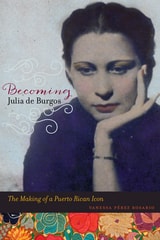
Becoming Julia de Burgos
The Making of a Puerto Rican IconVanessa Perez Rosario
University of Illinois Press, 2014
In the first book-length study written in English, Vanessa Pérez-Rosario examines poet and political activist Julia de Burgos's development as a writer, her experience of migration, and her legacy in New York City, the poet's home after 1940. Pérez-Rosario situates Julia de Burgos as part of a transitional generation that helps to bridge the historical divide between Puerto Rican nationalist writers of the 1930s and the Nuyorican writers of the 1970s. Becoming Julia de Burgos departs from the prevailing emphasis on the poet and intellectual as a nationalist writer to focus on her contributions to New York Latino/a literary and visual culture. It moves beyond the standard tragedy-centered narratives of de Burgos's life to place her within a nuanced historical understanding of Puerto Rico's peoples and culture to consider more carefully the complex history of the island and the diaspora. Pérez-Rosario unravels the cultural and political dynamics at work when contemporary Latina/o writers and artists in New York revise, reinvent, and riff off of Julia de Burgos as they imagine new possibilities for themselves and their communities.
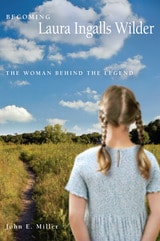
Becoming Laura Ingalls Wilder
The Woman behind the LegendJohn E. Miller
University of Missouri Press, 2005
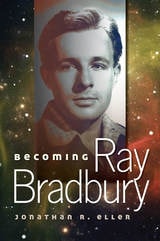
Becoming Ray Bradbury
Jonathan R. Eller
University of Illinois Press, 2013
Beginning with his childhood in Waukegan, Illinois, and Los Angeles, this biography follows Bradbury's development from avid reader to maturing author, making a living writing for the genre pulps and mainstream magazines. Eller illuminates the sources of Bradbury's growing interest in the human mind, the human condition, and the ambiguities of life and death--themes that became increasingly apparent in his early fiction. Bradbury's correspondence documents his frustrating encounters with the major trade publishing houses and his earliest unpublished reflections on the nature of authorship. Eller traces the sources of Bradbury's very conscious decisions, following the sudden success of The Martian Chronicles and The Illustrated Man, to voice controversial political statements in his fiction. Eller also elucidates the complex creative motivations that yielded Fahrenheit 451.
Becoming Ray Bradbury reveals Bradbury's emotional world as it matured through his explorations of cinema and art, his interactions with agents and editors, his reading discoveries, and the invaluable reading suggestions of older writers. These largely unexplored elements of his life pave the way to a deeper understanding of his more public achievements, providing a biography of the mind, the story of Bradbury's self-education and the emerging sense of authorship at the heart of his boundless creativity.
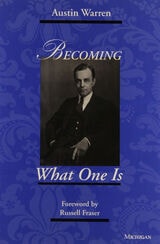
Becoming What One Is
Austin Warren
University of Michigan Press, 1995
The late Austin Warren was one of the most distinguished literary scholars of the twentieth century, well known as a biographer, literary critic, and teacher. He retired from the University of Michigan English Department in 1968 after twenty years on the faculty. Warren's memoir ends at age forty, because, as he explains in the preface, the most interesting part of anyone's life is the formative years.
He begins with his childhood in Massachusetts and education at Wesleyan, Harvard, and Princeton, and ends with reflections on the problems of integrating his profession, teaching, with his vocation, writing. The journey in between is extraordinary, a re-creation of the scholar's search for identity, religion, wisdom, and a new vision of the role of a teacher.
Warren "forged his soul when others weren't looking," writes Russell Fraser in his foreword to the book. He grew up on a lonely New England farm, went to a school where he learned to hate even Shakespeare, and entered college without enthusiasm. But the history of his education, as is often the case, was one first of rescue by inspiring mentors, then of outgrowing those mentors, and finally of forging a vision of his own. By the 1930s he had shaken up classrooms by abandoning formal lectures and become an inspiration in his own right.
A singular personality who never stopped searching for meaningful spirituality and a wider intellectual world, Austin Warren was among the most important scholars of the twentieth century. His memoirs of "becoming" are an elegant and absorbing chronicle.
Becoming Willa Cather
Creation and CareerDaryl W. Palmer
University of Nevada Press, 2019
Willa Cather has long been admired for O Pioneers! (1913), Song of the Lark (1915), and My Ántonia (1918)—the “prairie novels” about the lives of early Nebraska pioneers that launched her career. Thanks in part to these masterpieces, she is often viewed as a representative of pioneer life on the Great Plains, a controversial innovator in American modernism, and a compelling figure in the literary history of LGBTQ America. A century later, scholars acknowledge Cather’s place in the canon of American literature and continue to explore her relationship with the West.
Drawing on original archival research and paying unprecedented attention to Cather’s early short stories, Palmer demonstrates that the relationship with Nebraska in the years leading up to O Pioneers! is more dynamic than critics and scholars thought. Readers will encounter a surprisingly bold young author whose youth in Nebraska served as a kind of laboratory for her future writing career. Becoming Willa Cather changes the way we think about Cather, a brilliant and ambitious author who embraced experimentation in life and art, intent on reimagining the American West.
Beethoven for a Later Age
Living with the String QuartetsEdward Dusinberre
University of Chicago Press, 2016
Founded in Hungary in 1975 and now based in Boulder, Colorado, the Takács is one of the world’s preeminent string quartets, and performances of Beethoven have been at the center of their work together for over forty years. Using the history of both the Takács Quartet and the Beethoven quartets as a foundation, Beethoven for a Later Age provides a backstage look at the daily life of a quartet, showing the necessary creative tension between individual and group and how four people can at the same time forge a lasting artistic connection and enjoy making music together over decades. The key, Dusinberre reveals, to a quartet crafting its own sound is in balancing continuity with change and experimentation—a theme that lies at the heart of Beethoven’s remarkable compositions. In an accessible style, suitable for novices and chamber music enthusiasts alike, Dusinberre illuminates the variety and contradictions of Beethoven's quartets, which were composed against the turbulent backdrop of the Napoleonic Wars and their aftermath, and he brings the technical aspects of the music to life.
Beethoven for a Later Age vividly shows that creative engagement with Beethoven’s radical and brilliant quartets continues to be as stimulating now as it was for its first performers and audiences. Musicians and music lovers will be intrigued by Dusinberre’s exploration of the close collaboration at the heart of any great performance.
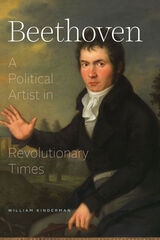
Beethoven
A Political Artist in Revolutionary TimesWilliam Kinderman
University of Chicago Press, 2021
William Kinderman presents Beethoven as a civically engaged thinker faced with severe challenges. The composer lived through many tumultuous events—the French Revolution, the rise and fall of Napoleon Bonaparte, and the Congress of Vienna among them. Previous studies of Beethoven have emphasized the importance of his personal suffering and inner struggles; Kinderman instead establishes that musical tensions in works such as the Eroica, the Appassionata, and his final piano sonata in C minor reflect Beethoven’s attitudes toward the political turbulence of the era. Written for the 250th anniversary of his birth, Beethoven takes stock of the composer’s legacy, showing how his idealism and zeal for resistance have ensured that masterpieces such as the Ninth Symphony continue to inspire activists around the globe. Kinderman considers how the Fifth Symphony helped galvanize resistance to fascism, how the Sixth has energized the environmental movement, and how Beethoven’s civic engagement continues to inspire in politically perilous times. Uncertain times call for ardent responses, and, as Kinderman convincingly affirms, Beethoven’s music is more relevant today than ever before.
Before Pictures
Douglas Crimp
University of Chicago Press, 2016
Before Pictures tells the story of Crimp’s life as a young gay man and art critic in New York City during the late 1960s through the turbulent 1970s. Crimp participated in all of what made the city so stimulating in that vibrant decade. The details of his professional and personal life are interwoven with this the particularly rich history of New York City at that time, producing a vivid portrait of both the critic and his adopted city. The book begins with his escape from his hometown in Idaho, and we quickly find Crimp writing criticism for ArtNews while working at the Guggenheim—where, as a young curatorial assistant, he was one of the few to see Daniel Buren’s Peinture-Sculpture before it was removed amid cries of institutional censorship. We also travel to the Chelsea Hotel (where Crimp helped the down-on-his-luck couturier Charles James organize his papers) through to his days as a cinephile and balletomane to the founding of the art journal October, where he remained a central figure for many years. As he was developing his reputation as a critic, he was also partaking of the New York night life, from drugs and late nights alongside the Warhol crowd at the Max’s Kansas City to discos, roller-skating, and casual sex with famous (and not-so-famous) men. As AIDS began to ravage the closely linked art and gay communities, Crimp eventually turned his attention to activism dedicated to rethinking AIDS.
Part biography and part cultural history, Before Pictures is a courageous account of an exceptional period in both Crimp’s life and the life of New York City. At the same time, it offers a deeply personal and engaging point of entry into important issues in contemporary art.
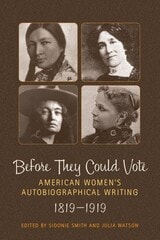
Before They Could Vote
American Women's Autobiographical Writing, 1819–1919Edited by Sidonie A. Smith and Julia Watson
University of Wisconsin Press, 2006
"This rich new anthology sets in motion an inter-textual conversation of remarkable vitality that will change the ways we understand gender, class, ethnicity, culture, and nation in nineteenth-century America."—Susanna Egan, author of Mirror-Talk
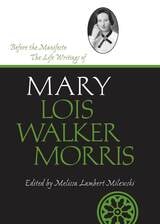
Before the Manifesto
The Life Writings of Mary Lois Walker MorrisMelissa Lambert Milewski
Utah State University Press, 2007
Mary Morris's memoir frames her 1879 to 1887 diary with both reflections on earlier years and passages that parallel entries in the day book, giving readers a better understanding of how she retrospectively saw her life. The thoroughly annotated diary offers the daily experience of a woman who kept a largely self-sufficient household, had a wide social network, ran her own business, wrote poetry, and was intellectually curious. The years of "the Raid" (federal prosecution of polygamists) led Mary and Elias Morris to hide their marriage on "the underground," and her to perjury in court during Elias's trial for unlawful cohabitation. The book ends with Mary Lois's arrival at the Salt Lake Depot after three years in exile in Mexico with a polygamist colony.
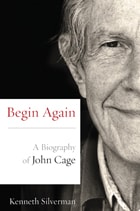
Begin Again
A Biography of John CageKenneth Silverman
Northwestern University Press, 2012
A man of extraordinary and seemingly limitless talents—musician, inventor, composer, poet, and even amateur mycologist—John Cage became a central figure of the avant-garde early in his life and remained at that pinnacle until his death in 1992 at the age of eighty. Award-winning biographer Kenneth Silverman gives us the first comprehensive life of this remarkable artist. Silverman begins with Cage’s childhood in interwar Los Angeles and his stay in Paris from 1930 to 1931, where immersion in the burgeoning new musical and artistic movements triggered an explosion of his creativity. Cage continued his studies in the United States with the seminal modern composer Arnold Schoenberg, and he soon began the experiments with sound and percussion instruments that would develop into his signature work with prepared piano, radio static, random noise, and silence. Cage’s unorthodox methods still influence artists in a wide range of genres and media. Silverman concurrently follows Cage’s rich personal life, from his early marriage to his lifelong personal and professional partnership with choreographer Merce Cunningham, as well as his friendships over the years with other composers, artists, philosophers, and writers.
Drawing on interviews with Cage’s contemporaries and friends and on the enormous archive of his letters and writings, and including photographs, facsimiles of musical scores, and Web links to illustrative sections of his compositions, Silverman gives us a biography of major significance: a revelatory portrait of one of the most important cultural figures of the twentieth century.
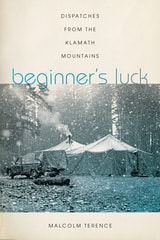
Beginner's Luck
Dispatches from the Klamath MountainsMalcolm Terence
Oregon State University Press, 2018
In the late 1960s, Malcolm Terence left his job as a reporter for the Los Angeles Times to look for adventure and may have found more than he bargained for. The era had triggered unprecedented social and political changes in America, tectonic shifts that challenged war and the social order that oppressed people along lines of class, gender, and race. One branch was a back-to-the-land movement, and Terence, who had just traveled for a year managing a rock band, strayed into Black Bear Ranch, a commune just starting in a remote corner of the Klamath Mountains near the California-Oregon border.
Black Bear Ranch still exists, but many of its early residents eventually returned to urban civilization. A few, Terence among them, stayed on in neighboring river towns. Some tried logging, others gold mining, and some tried growing marijuana, all with mixed success. The local mining and timber communities had a checkered opinion of their new hippie neighbors, as did the Native tribes, but it was the kind of place where people helped each other out, even if they didn’t always agree.
When wildfires grew large, Terence and other veterans of the commune joined the fire crews run by the US Forest Service. In between, the Black Bear expats built homesteads, planted gardens, delivered babies, and raised their children. They gradually overcame the skepticism of the locals and joined them in political battles against the use of herbicides in the forest and the Forest Service’s campaign to close all the mining claims. As in the best of organizing efforts, the organizers learned as much as they led.
Beginner’s Luck will appeal to anyone who experienced life on a commune in the 1960s–1970s or who wants to learn about this chapter in modern American history. Terence offers insight into environmental activism and the long history of conflict between resource exploitation and Native American rights without lecturing or pontificating. With wit, humor, and humility, his anecdotal essays chronicle a time and place where disparate people came together to form an unlikely community.
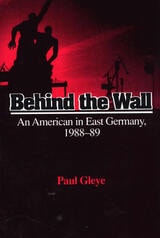
Behind the Wall
An American in East Germany, 1988-89Paul Gleye
Southern Illinois University Press, 1991
Standing in long lines in the shops, coaxing clean laundry from an outdated washing machine, traveling despite unpredictable train schedules, and being without hot water, fruit, and vegetables through the gray winter months failed to dull Paul Gleye’s perceptions during the year he lived in Weimar, East Germany. Day by day Gleye documented his varied observations and experiences, unaware that they would prove a unique record of what would soon be an extinct society.
Gleye was in East Germany as a Fulbright lecturer. Living beyond the capital city of East Berlin and traveling and conversing freely, Gleye gained access to people and places that had been almost completely closed to Americans and other Westerners for decades.
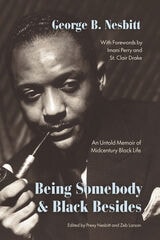
Being Somebody and Black Besides
An Untold Memoir of Midcentury Black LifeGeorge B. Nesbitt
University of Chicago Press, 2021
The late Chicagoan George Nesbitt could perhaps best be described as an ordinary man with an extraordinary gift for storytelling. In his newly uncovered memoir—written fifty years ago, yet never published—he chronicles in vivid and captivating detail the story of how his upwardly mobile Midwestern Black family lived through the tumultuous twentieth century.
Spanning three generations, Nesbitt’s tale starts in 1906 with the Great Migration and ends with the Freedom Struggle in the 1960s. He describes his parents’ journey out of the South, his struggle against racist military authorities in World War II, the promise and peril of Cold War America, the educational and professional accomplishments he strove for and achieved, the lost faith in integration, and, despite every hardship, the unwavering commitment by three generations of Black Americans to fight for a better world. Through all of it—with his sharp insights, nuance, and often humor—we see a family striving to lift themselves up in a country that is working to hold them down.
Nesbitt’s memoir includes two insightful forewords: one by John Gibbs St. Clair Drake (1911–90), a pioneer in the study of African American life, the other a contemporary rumination by noted Black studies scholar Imani Perry. A rare first-person, long-form narrative about Black life in the twentieth century, Being Somebody and Black Besides is a remarkable literary-historical time capsule that will delight modern readers.

Being a Minor Writer
Gail Gilliland
University of Iowa Press, 1994
There are countless theoretical arguments that attempt to define “major” and “minor” literatures, but this lively and deeply felt work is one of the first to speak from the authority of the experience of being minor—of being the “minor writer” who, according to the definition of “author” given by Michel Foucault, does not possess a “name.” This book, then, is an impassioned critical and ethical defense of the act of writing for purposes other than critical acclaim.
In the tradition of Horace's
Ars Poetica,Gilliland uses comments by a broad range of writers, as well as her own experience as a minor woman writer, to consider the basic Horatian questions of purpose, choice of subject matter and genre, diction, characterization, setting, and style. She points out that in the absence of major recognition, the minor writer is continually confronted by the existential question, why do I (still) write? This book offers not only a challenge to existing critical theories but an argument in favor of being—for
stillbeing, for continuing
anywaywith one's life and art
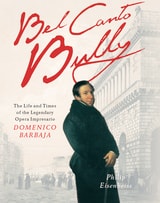
Bel Canto Bully
The Life and Times of the Legendary Opera Impresario Domenico BarbajaPhilip Eisenbeiss
Haus Publishing, 2013
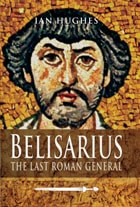
Belisarius
The Last Roman GeneralIan Hughes
Westholme Publishing, 2009
Hughes has written a lively and detailed account of Belisarius’s remarkable career.” - Adrian Goldsworthy, author of The Complete Roman Army
Belisarius (c. 505–565 AD) was the greatest general of the Eastern Roman Empire and is among history’s most notable military personalities. At the age of 29, he twice defeated the Persians and reconquered North Africa from the Vandals, before going on to regain the Italian peninsula from the Ostrogoths, including the Eternal City, Rome. Fighting in the name of Justinian I, Belisarius recaptured large portions of the original territory of the ancient Roman Empire. However, Byzantium was both unwilling and incapable of retaining much of Belisarius’s hard-won advances, and soon after his death, the empire once again retracted.
In Belisarius: The Last Roman General, historian Ian Hughes recounts the life of this great soldier. In addition, he explains the evolution of classical Roman armies and systems of warfare into those of the Byzantine Empire, as well as those of their chief enemies, the Persians, Goths, and Vandals. Based on ancient source and drawing on a wealth of modern research, Belisarius’s career is set in the context of the turbulent times in which he lived and his reputation is reassessed to give a balanced portrait of this neglected giant among ancient commanders.
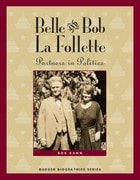
Belle and Bob La Follette
Partners in PoliticsBob Kann
Wisconsin Historical Society Press, 2008
The most famous couple in Wisconsin politics, "Fighting Bob" La Follette and his wife, Belle Case La Follette, come to life in the pages of the newest addition to the Badger Biographies series for young readers. In an accessible format that includes historic images, a glossary of terms, and sidebars explaining political concepts, students learn about Progressive politics and reform in the early 20th century through the experiences of this pioneering couple.
The father of "Progressive politics," Bob La Follette was famous for digging in his heels when it came to reforming government corruption. He also gained a reputation for fiery speeches on the campaign trail and on the Senate floor. Belle La Follette was political in her own right. The first woman to graduate from the University of Wisconsin's Law School, she was an advocate for world peace and an agitator for the women's vote. She was also Bob's most trusted political advisor. Together, the couple raised a family and fought for the changes they believed would make the world a better place.
Beneath the Skin of Sorrow
Improvisations on LossNnenna Freelon
Duke University Press, 2025
Part love story, part homage to jazz, and part guide to creative practice within bereavement, Beneath the Skin of Sorrow follows Freelon’s difficult and personal journey to healing. Calling on the improvisational skills that she had built over her forty-year career as a jazz singer, Freelon crafted her new reality by improvising—thinking about grieving as a series of small, daily engagements with the world around her. Slowly, Freelon regained the pieces of her musical sensibility, realizing that flowing between words spoken and words sung allowed her to understand what could not be fully realized in either realm.
By improvising a new life, Freelon forged a new companionship between grief, art, and daily life. In the essays, poems, lyrics, and explorations of jazz standards that comprise this lyrical and elegiac memoir, Freelon shows how thinking about grief as an exercise in improvisation can lead to a creative coexistence with grief in all its forms.
Benes & Masaryk
CzechoslovakiaPeter Neville
Haus Publishing, 2010

Benjamin Franklin - American Writers 19
University of Minnesota Pamphlets on American WritersTheodore Hornberger
University of Minnesota Press, 1962
Benjamin Franklin - American Writers 19 was first published in 1962. Minnesota Archive Editions uses digital technology to make long-unavailable books once again accessible, and are published unaltered from the original University of Minnesota Press editions.

Bergeners
Tomas Espedal
Seagull Books, 2017
Using James Joyce’s Dubliners as a discrete guide, celebrated Norwegian writer Tomas Espedal wanders the streets of his hometown. On the journey, he takes notes, reflects, writes a diary, and draws portraits of the city and its inhabitants. Espedal writes tales and short stories, meets fellow writers, and listens to their anecdotes. In a way that anyone from a small town can relate to, he is drawn away from Bergen but at the same time he can’t seem to stay away. Espedal’s Bergeners is a book not just about Bergen, but about life—in a way no one else could have captured.
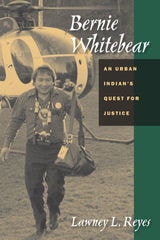
Bernie Whitebear
An Urban Indian's Quest for JusticeLawney L. Reyes
University of Arizona Press, 2006
Bernie Whitebear’s story takes readers from an impoverished youth—including a rare account of life on the Colville Reservation during the 1930s—to the “Red Power” movement as it traces Bernie’s emergence as an activist influenced by contemporaries such as Bob Satiacum, Vine DeLoria, and Joe Delacruz. By choosing this course, Bernie was clearly making a break with his past, but with an eye toward a better future, whether staging the successful protest at Fort Lawton or acting on behalf of Native fishing rights in Puget Sound. When he died in July 2000, Bernie Whitebear had left an inestimable legacy, accomplishing things that no other Indian seemed able to do. His biography is an inspiring story for readers at many levels, an account of how one American Indian overcame hardships and obstacles to make a difference in the lives of his people—and an entire community.
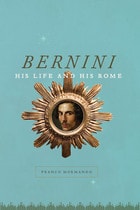
Bernini
His Life and His RomeFranco Mormando
University of Chicago Press, 2011
Sculptor, architect, painter, playwright, and scenographer, Gian Lorenzo Bernini (1598–1680) was the last of the great universal artistic geniuses of early modern Italy, placed by both contemporaries and posterity in the same exalted company as Leonardo, Raphael, and Michelangelo. And his artistic vision remains palpably present today, through the countless statues, fountains, and buildings that transformed Rome into the Baroque theater that continues to enthrall tourists today.

Bert
The Life and Times of A. L. LloydDave Arthur
Pluto Press, 2012
Folk singer and folk music collector, writer, painter, journalist, art critic, whalerman, sheep station roustabout, Marxist, and much more - this is the story of A. L. (Bert) Lloyd's extraordinary life.
A. L. Lloyd played a key part in the folk music revival of the 1950s and 60s, but that is only part of his story. Dave Arthur documents how Lloyd became a member of the Communist Party, forceful antifascist, trade unionist and an important part of left-wing culture from the early 1930s to his death in 1982. Following his return from Australia as a 21-year-old, self-educated agricultural labourer, he was at the heart of the most important left-wing movements and highly respected for his knowledge in various fields.
Dave Arthur recounts the life of a creative, passionate and life-loving Marxist, and in so doing provides a social history of a turbulent twentieth century.
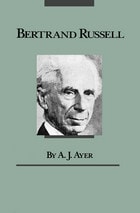
Bertrand Russell
A. J. Ayer
University of Chicago Press, 1988
"I am sure [this] is the best introduction of any length to Russell, and I suspect that it might serve as one of the best introductions to modern philosophy. . . . Ayer begins with a brief, austere, and balanced account of Russell's life: as in Russell's autobiography this means his thought, books, women, and politics. Tacitus (and Russell) would have found the account exemplary. Ayer ends with a sympathetic and surprisingly detailed survey of Russell's social philosophy. But the bulk of this book consists of a chapter on Russell's work in logic and the foundations of mathematics, followed by a chapter on his epistemological views and one on metaphysics. . . . I find it impossible to imagine that this book will not remain indefinitely the very best book of its sort."—Review of Metaphysics
"The confrontation or conjunction of Ayer and Russell is a notable event and has produced a remarkable book—brilliantly argued and written."—Martin Lebowitz, The Nation
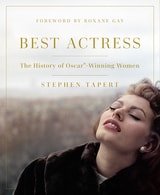
Best Actress
The History of Oscar®-Winning WomenStephen Tapert
Rutgers University Press, 2020
This lavishly illustrated coffee table book offers a vital examination of the first 75 women to have won the Best Actress Oscar over the span of 90 years. From inaugural recipient Janet Gaynor to Frances McDormand’s 2018 acceptance speech that assertively brought women to the forefront, Best Actress: The History of Oscar®-Winning Women serves to promote a new appreciation for the cinematic roles these women won for, as well as the real-life roles many of them played – and still play – in advancing women’s rights and equality. Stories range from Bette Davis’ groundbreaking battle against the studio system; to the cutting-edge wardrobes of Katharine Hepburn, Diane Keaton and Cher; to the historical significance of Halle Berry’s victory; to the awareness raised around sexual violence by the performances of Jodie Foster, Brie Larson, and others.
Showcasing a dazzling collection of 200 photographs, many of which have never before been seen or published, Best Actress honors the legacies of these revered and extraordinary women while scrutinizing the roadblocks that they continue to overcome.
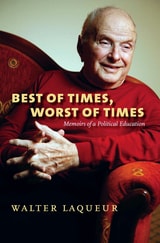
Best of Times, Worst of Times
Memoirs of a Political EducationWalter Laqueur
Brandeis University Press, 2009
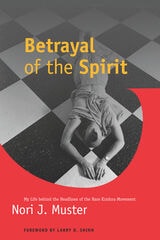
Betrayal of the Spirit
My Life behind the Headlines of the Hare Krishna MovementNori J. Muster
University of Illinois Press, 1996
Combining behind-the-scenes coverage of an often besieged religious group with a personal account of one woman's struggle to find meaning in it, Betrayal of the Spirit takes readers to the center of life in the Hare Krishna movement.
Nori J. Muster joined the International Society of Krishna Consciousness (ISKCON)--the Hare Krishnas--in 1978, shortly after the death of the movement's spiritual master, and worked for ten years as a public relations secretary and editor of the organization's newspaper, the ISKCON World Review. In this candid and critical account, Muster follows the inner workings of the movement and the Hare Krishnas' progressive decline.
Combining personal reminiscences, published articles, and internal documents, Betrayal of the Spirit details the scandals that beset the Krishnas--drug dealing, weapons stockpiling, deceptive fundraising, child abuse, and murder within ISKCON–as well as the dynamics of schisms that forced some 95 percent of the group's original members to leave. In the midst of this institutional disarray, Muster continued her personal search for truth and religious meaning as an ISKCON member until, disillusioned at last with the movement's internal divisions, she quit her job and left the organization.
In a new preface to the paperback edition, Muster discusses the personal circumstances that led her to ISKCON and kept her there as the movement's image worsened. She also talks about "the darkest secret"–child abuse in the ISKCON parochial schools--that was covered up by the public relations office where she worked.
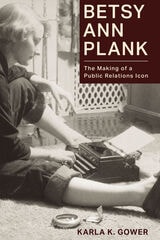
Betsy Ann Plank
The Making of a Public Relations IconKarla K. Gower
University of Missouri Press, 2022
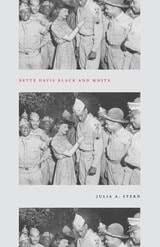
Bette Davis Black and White
Julia A. Stern
University of Chicago Press, 2021
Bette Davis was not only one of Hollywood’s brightest stars, but also one of its most outspoken advocates on matters of race. In Bette Davis Black and White, Julia A. Stern explores this largely untold facet of Davis’s brilliant career.
Bette Davis Black and White analyzes four of Davis’s best-known pictures—Jezebel (1938), The Little Foxes (1941), In This Our Life (1942), and What Ever Happened to Baby Jane? (1962)—against the history of American race relations. Stern also weaves in memories of her own experiences as a young viewer, coming into racial consciousness watching Davis’s films on television in an all-white suburb of Chicago.
Davis’s egalitarian politics and unique collaborations with her Black costars offer Stern a window into midcentury American racial fantasy and the efforts of Black performers to disrupt it. This book incorporates testimony from Davis’s Black contemporaries, including James Baldwin and C. L. R. James, as well as the African American fans who penned letters to Warner Brothers praising Davis’s work. A unique combination of history, star study, and memoir, Bette Davis Black and White allows us to contemplate cross-racial spectatorship in new ways.
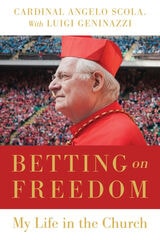
Betting on Freedom
My Life in the ChurchCarinal Angelo Scola
Catholic University of America Press, 2021
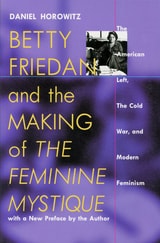
Betty Friedan and the Making of "The Feminine Mystique"
The American Left, the Cold War, and Modern FeminismDaniel Horowitz
University of Massachusetts Press, 1998
Ever since the 1963 publication of her landmark book, The Feminine Mystique, Betty Friedan has insisted that her commitment to women's rights grew out of her experiences as an alienated suburban housewife. Yet as Daniel Horowitz persuasively demonstrates in this illuminating and provocative biography, the roots of Friedan's feminism run much deeper than she has led us to believe. Drawing on an impressive body of new research—including Friedan's own papers—Horowitz traces the development of Friedan's feminist outlook from her childhood in Peoria, Illinois, through her wartime years at Smith College and Berkeley, to her decade-long career as a writer for two of the period's most radical labor journals, the Federated Press and the United Electrical Workers' UE News. He further shows that even after she married and began to raise a family, Friedan continued during the 1950s to write and work on behalf of a wide range of progressive social causes. By resituating Friedan within a broader cultural context, and by offering a fresh reading of The Feminine Mystique against that background, Horowitz not only overturns conventional ideas about “second wave” feminism but also reveals long submerged links to its past.
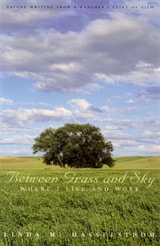
Between Grass And Sky
Where I Live And WorkLinda M. Hasselstrom
University of Nevada Press, 2005
An important collection of personal essays from one of the most widely published American environmental writers addresses the effects of ranching on the environment. Acclaimed nature writer Linda M. Hasselstrom sees herself as a rancher who writes—a definition that shapes the tone and content of her writing. Now owner of the South Dakota cattle ranch where she grew up, Hasselstrom lives in intimate contact with the natural world. "Nature is to me both home and office. Nature is my boss, manager of the branch office—or ranch office—where I toil to convert native grass into meat. . . . If I want to keep my job as well as my home, I pay attention not only to Nature's orders, but to her moods and whims." She writes knowingly of the rancher's toil and of the intelligence and dignity of the wild and domesticated creatures that share the prairie grassland she calls home. As one who knows and loves the land, Hasselstrom appreciates the concerns of environmental activists and understands that responsible ranchers can play a role in nurturing a healthy rural ecosystem. Rich in detail, humor, and pathos, these essays offer wry commentary on the scope of human folly and the even greater human potential for community and empathy. "Only people who live in the country," she writes, "could form a relationship with nature so intimate that they feel concern for one lonely duck. People who live in cities . . . only glimpse nature from high windows or speeding vehicles. Even wilderness lovers who probe deeply are only passing through. We who live on the land truly live within the land, each of our lives only one among the other inhabitants of the place." These are essays to read with wonder and delight, to relish and ponder. Available in hardcover and paperback.
Between History And Poetry
H.D. And Norman Holmes PearsonDonna Krolik Hollenberg
University of Iowa Press, 1997
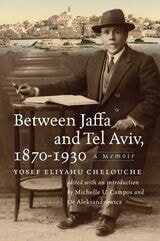
Between Jaffa and Tel Aviv, 1870–1930
A MemoirYosef Eliyahu Chelouche
Brandeis University Press, 2025
Born in Jaffa in 1870, Yosef Eliyahu Chelouche grew up within a notable Sephardi family in the local Jewish community. He went on to become a prominent entrepreneur; a founder of Tel Aviv; and a fierce critic of the Ashkenazi Zionist leadership, Arab nationalism, and British colonial sectarianism; before emerging, in the last decade of his life, as an anguished public figure struggling to repair Arab-Jewish relations.
His memoir paints an intimate portrait of life in Palestine at the turn of the twentieth century, told from the perspective of a Middle Eastern Jew deeply embedded in local society. By centering on the world and experiences of a native Jew who was an eyewitness to and participant in the unfolding conflict in Palestine, this book shows how the course of Zionist politics and Jewish-Arab relations in pre-state Palestine might have taken alternative pathways. A comprehensive introduction sets the scene in late nineteenth- and early twentieth-century Jaffa and thoughtful annotations contextualize Chelouche’s story within the modern history of Palestine and Israel. Between Jaffa and Tel Aviv, 1870–1930 tells the fascinating story of a civic leader—and offers a complex view of the various cultural, social, and political forces that forged multilayered Jewish identities in the Middle East. The book includes a family tree and is illustrated with photographs of the family and scenes of Jaffa and early Tel Aviv.
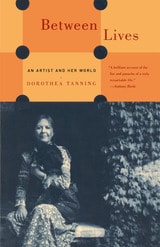
Between Lives
An Artist and Her WorldDorothea Tanning
Northwestern University Press, 2003
Between Two Worlds
My Life as a Child of Deaf AdultsDavid Sorensen
Gallaudet University Press, 2019
Sorensen relays the dynamics of his family life; he had a strained relationship with his father, who was an active leader and role model in the Deaf community and the Mormon Church, yet struggled to bond with his own son. Sorensen rebelled as a youth and left home as a teenager, completely detaching from the Deaf community. After struggling to establish himself as an independent adult, he discovered that he wanted to return to the Deaf world and use his ASL fluency and cultural understanding as a mental health therapist and community advocate. Now he considers himself an ambassador between the Deaf and hearing worlds, as well as between the older and younger generations of Deaf people. Between Two Worlds: My Life as a Child of Deaf Adults shares the unique experiences of a coda and passes on the rich cultural past shared by the American Deaf community.
Between What Was and What Is
EssaysAdriana Páramo
University of Massachusetts Press, 2027
A collection that explores the space between personal loss and collective crisis
The essays in Between What Was and What Is address timely questions of power, identity, history, and resilience. Ranging from intimate personal reflection to global crisis, Adriana Páramo examines the contradictions and tensions that define how we live—and how we make sense of what we’ve lived through.
Grounded in the present moment, Páramo engages directly with current events: the death of Pope Francis and the debates about reform his passing has reopened, and the ongoing devastation of the war in Ukraine. She grapples with the lasting weight of colonial, familial, and national trauma, and with the experience of returning to a homeland that no longer matches memory. These essays enter a broader conversation about the liberation of brown and Latina women—voices frequently pushed to the margins of predominantly white feminist spaces. She asks what drives people to persist in the face of systemic inequality. An encounter with a Kumari Devi in Nepal becomes an occasion to examine faith, ritual, and the assumptions we bring to spiritual experience. Throughout, Páramo moves between the everyday and the sacred to interrogate how culture and identity are lived and inherited.
From personal reflections on age, feminism, and rebuilding after failure to larger examinations of race and systemic oppression, Between What Was and What Is asks readers to engage seriously with difficult realities. It takes stock of what we inherit, what we survive, and what we carry forward.

Between Your House and Mine
The Letters of Lorine Niedecker to Cid Corman, 1960-1970Lisa Pater Faranda, ed.
Duke University Press, 1986
The early letters were written before Niedecker's marriage and at a time when the poet had "more trees for friends than people." In these letters from Black Hawk Island, Niedecker sought a community of fellow poets. The following period, the Milwaukee years, form the bulk of the collection and saw the establishment of Niedecker's identity as a poet. From the city of "point-top towers," she wrote Corman frequently about poetry, other poets, current events, and daily life. After her return in 1969 to Black Hawk Island, relieved of earlier anxieties over publication, she was confidently at work on her sequences, her most serious poetic undertaking.
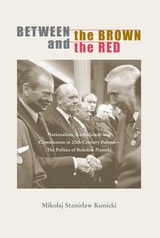
Between the Brown and the Red
Nationalism, Catholicism, and Communism in Twentieth-Century Poland—The Politics of Boleslaw PiaseckiMikolaj Stanislaw Kunicki
Ohio University Press, 2012
Between the Brown and the Red captures the multifaceted nature of church-state relations in communist Poland, relations that oscillated between mutual confrontation, accommodation, and dialogue. Ironically, under communism the bond between religion and nation in Poland grew stronger. This happened in spite of the fact that the government deployed nationalist themes in order to portray itself as more Polish than communist. Between the Brown and the Red also introduces one of the most fascinating figures in the history of twentieth-century Poland and the communist world.
In this study of the complex relationships between nationalism, communism, authoritarianism, and religion in twentieth-century Poland, Mikołaj Kunicki shows the ways in which the country’s communist rulers tried to adapt communism to local traditions, particularly ethnocentric nationalism and Catholicism. Focusing on the political career of Bolesław Piasecki, a Polish nationalist politician who began his surprising but illuminating journey as a fascist before the Second World War and ended it as a procommunist activist, Kunicki demonstrates that Polish communists reinforced an ethnocentric self-definition of Polishness and—as Piasecki’s case demonstrates—thereby prolonged the existence of Poland’s nationalist Right.
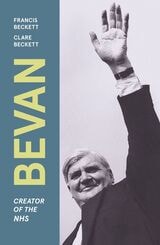
Bevan
Creator of the NHSFrancis Beckett and Clare Beckett
Haus Publishing, 2023
The creation of the National Health Service was the most significant of the many reforms of the post-war Labour government in the UK. The man responsible was Aneurin “Nye” Bevan. The son of a Welsh miner, he became a local trade union leader at only nineteen. In 1929, he was elected as a Labour MP. Bevan believed the war was Britain’s opportunity to create a new society, a position he maintained throughout the conflict. When the war ended in 1945, the landslide Labour victory gave him the chance to make this vision a reality. Known for his impassioned oratory, Bevan’s fundamental belief that the new NHS should be freely available to all was ultimately at odds with a government struggling to balance the books. He resigned in 1951 over the introduction of charges for prescriptions and glasses. With the NHS requiring an ever-increasing share of national income, this updated edition considers Bevan’s legacy as the future of the health service he created is fought over as never before.
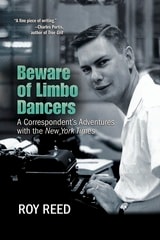
Beware of Limbo Dancers
A Correspondent’s Adventures with the New York TimesRoy Reed
University of Arkansas Press, 2012
Beyond Boundaries
C.L.R. James and Postnational StudiesEdited by Christopher Gair
Pluto Press, 2006
Invaluable for students of post-colonial studies, the book examines points where James crosses with other theorists, such as Lacan and Gramsci. Racial identity and cultural politics are key themes in his work, not to mention his unique writings on cricket. Contributors including Donald E Pease, Nicole King, Christopher Gair and Anthony Bogues illuminate the key themes in James's writing, and put forward the idea that the breath of James's thinking can be identified as the beginning of 'post-national' studies.
Christopher Gair is a lecturer in the Department of American and Canadian Studies, University of Birmingham. He is the author of Complicity and Resistance in Jack London¹ s Novels (Edwin Mullen Press, 1997), of The American Counterculture (forthcoming, Edinburgh University Press, 2006), and of numerous essays on American literature and culture. He is the editor of the journal Symbiosis.
Beyond Market Value
A Memoir of Book Collecting and the World of Venture CapitalBy Annette Campbell-White
University of Texas Press, 2019
Beyond Market Value chronicles Annette Campbell-White’s remarkable life, from a childhood spent in remote mining camps throughout the British Commonwealth, where books created an imaginary home; to her early adulthood in London, where she first discovered a vocation as a book collector; to Silicon Valley, where she built a pioneering career as a formidable venture capitalist. She recalls the impulsive purchase of the first book in her collection, T. S. Eliot’s A Song for Simeon, and her pursuit of rare editions of all one hundred titles listed in Cyril Connolly’s The Modern Movement. Campbell-White’s collecting and career peaked in 2005, when she acquired the last of the Connolly titles and was first named to Forbes’ Midas List, the annual ranking of the most successful dealmakers in venture capital.
In 2007, out of concern for their preservation, Campbell-White rashly sold the Connolly titles she had spent more than twenty years assembling, leading to a new appreciation of what remained of her collection and, going forward, a broader focus on collecting modernist letters, manuscripts, and ephemera. Beyond Market Value is both a loving tribute to literary collecting and a telling account of the challenges of being a woman in the male-dominated world of finance.
Beyond Memory
An Anthology of Contemporary Arab American Creative NonfictionPauline Kaldas
University of Arkansas Press, 2020