Results by title
2817 books match the query 'Nature' and 134 start with b
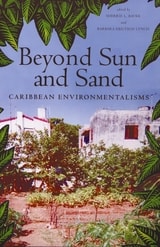
Beyond Sun and Sand
Caribbean EnvironmentalismsEdited by Sherrie L. Baver and Barbara Deutsch Lynch
Rutgers University Press, 2006
In both versions, the image of the exotic landscape overshadows the rich island cultures that are both linguistically and politically diverse, but trapped in a global economy that offers few options for development. Popular depictions also overlook the reality that the region is fraught with environmental problems, including water and air pollution, solid waste mismanagement, destruction of ecosystems, deforestation, and the transition from agriculture to ranching.
Bringing together ten essays by social scientists and activists, Beyond Sun and Sand provides the most comprehensive exploration to date of the range of environmental issues facing the region and the social movements that have developed to deal with them. The authors consider the role that global and regional political economies play in this process and provide valuable insight into Caribbean environmentalism. Many of the essays by prominent Caribbean analysts are made available for the first time in English.
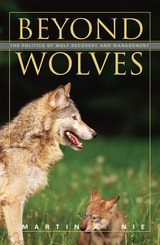
Beyond Wolves
The Politics Of Wolf Recovery And ManagementMartin A. Nie
University of Minnesota Press, 2003
Looks at the next stages of the controversy over wolf recovery
Since 1995, when the U.S. Fish and Wildlife Service released Canadian gray wolves into Yellowstone National Park as part of its wolf recovery program, reintroduction has been widely challenged in public forums and sensationalized in the media. This conflict has pitted western ranchers and property rights activists against environmental groups, highlighting starkly contrasting political perspectives. In this informed account, Martin A. Nie examines not only the future of wolf recovery but also the issues that will define debates around the politics of wildlife management, animal rights issues, and other flash points. The result is a revelatory look at the way the democratic process works when the subject is an environmental hot-button issue.
Examining the wolf recovery program from a policy-making perspective, Nie looks at programs in Alaska, the Lake Superior region, the Northern Rockies, the Southwest, and New England and upstate New York. He analyzes the social, political, and cultural backdrop in the areas in which wolves have been reintroduced and explores such contentious issues as the role of science in public policy; the struggle between wilderness protection, resource management, and private property; and the use of stakeholders in environmental conflicts.For Nie, the debate over wolf recovery is above all a value-based political conflict that should take place in a more inclusive, participatory, and representative democratic arena. Wolves, Nie writes, are an important indicator species both biologically and politically, and in Beyond Wolves, he tells an important story of wolves and people, place and politics, that resonates far beyond the fate of America’s most misunderstood inhabitants.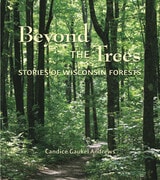
Beyond the Trees
Stories of Wisconsin ForestsCandice Gaukel Andrews
Wisconsin Historical Society Press, 2011
Nature writer Candice Andrews weaves together contemporary observations and historical reminisces in Beyond the Trees: Stories of Wisconsin Forests. Readers will journey to some of the most pristine and notable places in the Upper Midwest—Wisconsin’s state and national forests.
The diversity of landscapes evoked in Beyond the Trees is matched only by the characters who inhabit them. Traverse the footsteps of Ojibwe hunters and early explorers in the remote woods of Brule River State Forest. Trek past the remains of bygone logging and CCC camps in the Chequamegon-Nicolet National Forest. Glimpse into the world of Great Lakes shipping in Point Beach State Forest. Walk on trails named after John Muir and Increase Lapham in the Kettle Moraine State Forest, and experience urban green space at Milwaukee’s Havenwoods State Forest. From orchids to oak savanna, beaver to brook trout, and white-tailed deer to timber wolves, discover Wisconsin’s wildlife and flora and fauna. Archival images, informative sidebars, locator maps, and contact information for Wisconsin state and national forests round out this unique book.
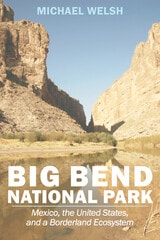
Big Bend National Park
Mexico, the United States, and a Borderland EcosystemMichael Welsh
University of Nevada Press, 2021
Big Bend National Park explores the cultural and diplomatic history of this transborder region that was designated a national park on the US side and the site of a long-hoped-for “international peace park” on the other. Michael Welsh demonstrates the challenges faced and lessons learned by both the US and Mexico as they struggled against political and environmental vicissitudes in their attempts to realize the creation of a shared frontier.
Geopolitical and environmental conflicts such as Cold War fears, immigration, the war on drugs, international water rights, and more stringent American border security measures after 9/11 all hindered relations between the two countries. But more recently, renewed cooperation and ongoing diplomatic relations have led to new developments. Mexican park personnel began assisting American officials with efforts to re-wild the American side of the river with animal species that had been eliminated, and the Obama administration relaxed some post-9/11 restrictions, allowing American visitors to cross over to the Mexican park and its nearby towns.
The ambition of developing a park for peace has yet to materialize, even as individuals and their governments continue to work toward an accord. Big Bend National Park provides a greater understanding of this complex borderland and hopes to help fulfill the aspiration of creating a shared ecosystem and the dream of a park for peace.

Big Box USA
The Environmental Impact of America’s Biggest Retail StoresBart Elmore
University of Wyoming Press, 2023
The rise of big box retail since the 1960s has transformed environments on both local and global scales. Almost everyone has explored the aisles of big box stores. The allure of “everyday low prices” and brightly colored products of every kind connect shoppers with a global marketplace. Contributors join a growing conversation between business and environmental history, addressing the ways American retail institutions have affected physical and cultural ecologies around the world. Essays on Walmart, Target, Cabela’s, REI, and Bass Pro Shops assess the “bigness” of these superstores from “smokestacks to coat racks” and contend that their ecological impacts are not limited to the footprints of parking lots and manufacturing but also play a didactic role in educating consumers about their relationships with the environment.
A model for historians seeking to bring business and environmental histories together in their analyses of merchant capital’s role in the landscapes of everyday life and how it has remade human relationships with nature, Big Box USA is a must-read for students and scholars of the environment, business, sustainability, retail professionals, and a general audience.
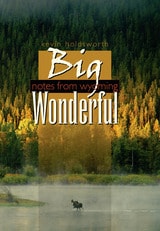
Big Wonderful
Notes from WyomingKevin Holdsworth
University Press of Colorado, 2006
Growing up in Utah, Holdsworth couldn't wait to move away. Once ensconced on the East Coast, however, he found himself writing westerns and dreaming of the mountains he'd skied and climbed. Fed up with city life, he moved to a small Wyoming town.
In Big Wonderful, he writes of a mountaineering companion's death, the difficult birth of his son, and his father's terminal illness - encounters with mortality that sharpened his ideas about risk, care, and commitment. He puts a new spin on mountaineering literature, telling wild tales from his reunion with the mountains but also relating the surprising willpower it took to turn back from risks he would have taken before he became a father. He found he needed courage to protect and engage deeply with his family, his community, and the wild places he loves.
Holdsworth's essays and poems are rich with anecdotes, characters, and vivid images. Readers will feel as if they themselves watched a bear destroy an entire expedition's food, walked with his great-great-grandmother along the icy Mormon Trail, and tried to plant a garden in Wyoming's infamous wind.
Readers who love the outdoors will enjoy this funny and touching take on settling down and adventuring in the West's most isolated country.

Billboard in the Clouds
Suzanne S. Rancourt
Northwestern University Press, 2004
In this remarkable debut book of poems, winner of the Native Writers First Book Award, Suzanne S. Rancourt, presents her experience as a mixed-raced person seeking understanding through relationship with the natural world and dominant culture. Her family portraits are reminiscent of E. A. Robinson; her sensuous nature poems are imbued with love of earth as a "blessing."
Dance
my legs are explosions
expressions
of lustful wind
i converse through cracks in the walls
slipping in my true intention like a snow drift
on the inside
side of a door i pound
your chest
has become my wailing wall
i crave your tongue dusted
with words and implications
i have something you need
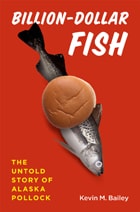
Billion-Dollar Fish
The Untold Story of Alaska PollockKevin M. Bailey
University of Chicago Press, 2013
In Billion-Dollar Fish, Kevin M. Bailey combines his years of firsthand pollock research with a remarkable talent for storytelling to offer the first natural history of Alaska pollock. Crucial to understanding the pollock fishery, he shows, is recognizing what aspects of its natural history make pollock so very desirable to fish, while at the same time making it resilient, yet highly vulnerable to overfishing. Bailey delves into the science, politics, and economics surrounding Alaska pollock in the Bering Sea, detailing the development of the fishery, the various political machinations that have led to its current management, and, perhaps most important, its impending demise. He approaches his subject from multiple angles, bringing in the perspectives of fishermen, politicians, environmentalists, and biologists, and drawing on revealing interviews with players who range from Greenpeace activists to fishing industry lawyers.
Seamlessly weaving the biology and ecology of pollock with the history and politics of the fishery, as well as Bailey’s own often raucous tales about life at sea, Billion-Dollar Fish is a book for every person interested in the troubled relationship between fish and humans, from the depths of the sea to the dinner plate.
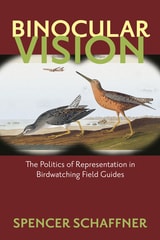
Binocular Vision
The Politics of Representation in Birdwatching Field GuidesSpencer Schaffner
University of Massachusetts Press, 2011
From meadows to marshlands, seashores to suburbs, field guides help us identify many of the things we find outdoors: plants, insects, mammals, birds. In these texts, nature is typically represented, both in words and images, as ordered, clean, and untouched by human technology and development. This preoccupation with species identification, however, has produced an increasingly narrow view of nature, a “binocular vision,” that separates the study of individual elements from a range of larger, interconnected environmental issues. In this book, Spencer Schaffner reconsiders this approach to nature study by focusing on how birds are presented in field guides.
Starting with popular books from the late nineteenth century and moving ultimately to the electronic guides of the current day, Binocular Vision contextualizes birdwatching field guides historically, culturally, and in terms of a wide range of important environmental issues. Schaffner questions the assumptions found in field guides to tease out their ideological workings. He argues that the sanitized world represented in these guides misleads readers by omitting industrial landscapes and so-called nuisance birds, leaving users of the guides disconnected from environmental degradation and its impact on bird populations.
By putting field guides into direct conversation with concerns about species conservation, environmental management, the human alteration of the environment, and the problem of toxic pollution, Binocular Vision is a field guide to field guides that takes a novel perspective on how we think about and interact with the world around us.
Biogeography of Reptiles and Amphibians in the Gomez Farias Region, Tamaulipas, Mexico
Paul S. Martin
University of Michigan Press, 1958
Biologically-Inspired Radar and Sonar
Lessons from natureAlessio Balleri
The Institution of Engineering and Technology, 2017
Biomechanics
An Approach to Vertebrate BiologyCarl Gans
University of Michigan Press, 1980
Biopolitics of the More-Than-Human
Forensic Ecologies of ViolenceJoseph Pugliese
Duke University Press, 2020
Biostratigraphic and Geological Significance of Planktonic Foraminifera
Marcelle K. BouDagher-Fadel
University College London, 2015
Biotic Borders
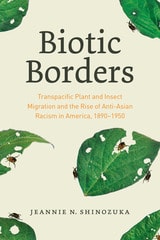
Transpacific Plant and Insect Migration and the Rise of Anti-Asian Racism in America, 1890–1950Jeannie N. Shinozuka
University of Chicago Press, 2022
In the late nineteenth century, increasing traffic of transpacific plants, insects, and peoples raised fears of a "biological yellow peril" when nursery stock and other agricultural products shipped from Japan to meet the growing demand for exotics in the United States. Over the next fifty years, these crossings transformed conceptions of race and migration, played a central role in the establishment of the US empire and its government agencies, and shaped the fields of horticulture, invasion biology, entomology, and plant pathology. In Biotic Borders, Jeannie N. Shinozuka uncovers the emergence of biological nativism that fueled American imperialism and spurred anti-Asian racism that remains with us today.
Shinozuka provides an eye-opening look at biotic exchanges that not only altered the lives of Japanese in America but transformed American society more broadly. She shows how the modern fixation on panic about foreign species created a linguistic and conceptual arsenal for anti-immigration movements that flourished in the early twentieth century. Xenophobia inspired concerns about biodiversity, prompting new categories of “native” and “invasive” species that defined groups as bio-invasions to be regulated—or annihilated. By highlighting these connections, Shinozuka shows us that this story cannot be told about humans alone—the plants and animals that crossed with them were central to Japanese American and Asian American history. The rise of economic entomology and plant pathology in concert with public health and anti-immigration movements demonstrate these entangled histories of xenophobia, racism, and species invasions.
Biotic Communities
Southwestern United States and Northwestern MexicoDavid E. Brown
University of Utah Press, 1994
Biotic Communities catalogs and defines by biome, or biotic community, the region centered on Arizona, New Mexico, Sonora, Chihuahua, and Baja California Norte, plus California, Nevada, Utah, Colorado, Texas, Coahuila, Sinaloa, and Baja California Sur. Originally published in 1982 by the Boyce Thompson Southwestern Arboretum, this ambitious book is still a "must-have" for those working in natural resources management and ecological research, as well as non-specialists who wish to know more about a particular locale.
Biotic Communities is arranged by climatic formation with a short chapter for each biome describing climate, physiognomy, distribution, dominant and common plant species, and characteristic vertebrates. Subsequent chapters contain careful descriptions of zonal subdivisions. The text is supplemented with over one hundred black and white photographs illustrating almost every community type.
Bird Day
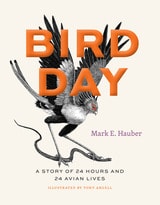
A Story of 24 Hours and 24 Avian LivesMark E. Hauber
University of Chicago Press, 2023
From morning to night and from the Antarctic to the equator, birds have busy days. In this short book, ornithologist Mark E. Hauber shows readers exactly how birds spend their time. Each chapter covers a single bird during a single hour, highlighting twenty-four different bird species from around the globe, from the tropics through the temperate zones to the polar regions. We encounter owls and nightjars hunting at night and kiwis and petrels finding their way in the dark. As the sun rises, we witness the beautiful songs of the “dawn chorus.” At eleven o’clock in the morning, we float alongside a common pochard, a duck resting with one eye open to avoid predators. At eight that evening, we spot a hawk swallowing bats whole, gorging on up to fifteen in rapid succession before retreating into the darkness.
For each chapter, award-winning artist Tony Angell has depicted these scenes with his signature pen and ink illustrations, which grow increasingly light and then dark as our bird day passes. Working closely together to narrate and illustrate these unique moments in time, Hauber and Angell have created an engaging read that is a perfect way to spend an hour or two—and a true gift for readers, amateur scientists, and birdwatchers.
Bird Student
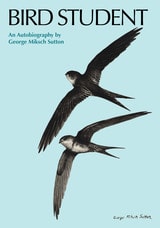
An AutobiographyAn Autobiography by George Miksch Sutton
University of Texas Press, 1980
At thirteen, George Miksch Sutton planned a school of ornithology centered around his collection of bird skins, feathers, bones, nests, eggs, and a prized stuffed crow. As an adult, he became one of the most prominent ornithologists and bird artists of the twentieth century. He describes his metamorphosis from amateur to professional in Bird Student.
Born in 1898, Sutton gives us his clearest memories of his boyhood in Nebraska, Minnesota, Oregon, Illinois, Texas, and West Virginia with his closely knit family. Recognizing birds, identifying them correctly, drawing them, and writing about them became more and more important to him. His intense admiration for Louis Agassiz Fuertes had a good deal to do with his beginning to draw birds in earnest, and his correspondence and his 1916 summer visit with the generous Fuertes taught him to look at birds with the eyes of a professional artist and to consider the possibility of making ornithology his career.
By 1918, Sutton had talked himself into a job at the Carnegie Museum of Natural History in Pittsburgh, which gave him fresh opportunities to learn and travel, and his 1920 field trip to the Labrador Peninsula stimulated his lifelong interest in arctic birds. Further expeditions to James Bay, the east coast of Hudson Bay—on leave from his job as state ornithologist of Pennsylvania—and Southampton Island at the north end of Hudson Bay, in search of the elusive blue goose and its nesting grounds, give us glimpses of field methods before the days of sophisticated equipment. Sutton ends his autobiography in 1935, with an account of his graduate days at Cornell University and his position as curator of the Fuertes Memorial Collection of Birds.
Bird Student is about raising young roadrunners and owls and prairie dogs, sailing (and being stranded) in arctic waters, preparing specimens in the hold of a ship, hunting birds and caribou and bears in almost inaccessible regions, canoeing in the Far North, camping in Florida, and delivering speeches in Pennsylvania. Sutton's gift for mixing facts and philosophy lets us see the evolution of a naturalist, as his inherent curiosity and innocent enjoyment of beauty led to a permanent desire to preserve this beauty.
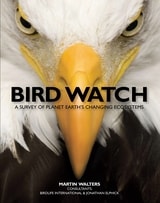
Bird Watch
A Survey of Planet Earth's Changing EcosystemsMartin Walters
University of Chicago Press, 2011
From the tufted puffin in the Pacific Northwest to the hook-billed hermit in the Brazilian rainforest, birds suffer from the effects of climate change in every corner of the globe. Scientists have found declines of up to 90 percent in some troubled bird populations and unprecedented reproductive failure in others. The most recent studies suggest dire prospects: 1,227 avian species are threatened with extinction and an additional 838 near-threatened species are urgent priorities for conservation action.
As much an indispensable guide as a timely call to action, Bird Watch is an illustrated tour of these endangered birds and their habitats. Encyclopedic in scope, this book features all 1,227 species on the International Union for Conservation of Nature (IUCN) Red List, thoroughly detailing the environmental pressures and conservation prescriptions that hold their futures in the balance. After introducing readers to the main threats to birds and regions at high risk, Bird Watch presents a visually stunning and scientifically accurate flight over the major bird habitats, including tropical forests; temperate and northern forests; deserts; mountains; grasslands; and Mediterranean, marine, freshwater, and oceanic islands. The volume concludes with an overview of bird species by region—categorized by family within each region, and a guide to the world’s best birding sites. Produced in cooperation with BirdLife International, Bird Watch is a celebration of the beauty and diversity of birds and their habitats—and a warning of the dangers they face around the world.
Bird-Witched!
How Birds Can Change a LifeBy Marjorie Valentine Adams
University of Texas Press, 2005
Birding can become an addiction. It starts when you hang a bird feeder in the backyard. Then you buy a bird book to identify the birds you see. Then, before you know it, you're keeping a life list and traveling the region, the country, perhaps even the world to catch glimpses of rare birds. Marjorie Adams's birding passion progressed through all these stages and continues today in her tenth decade. In this engaging and informative book, she looks back at her evolution into a full-fledged birder and the concurrent growth of the sport of birding, to which she contributed significantly as a founding member of the American Birding Association, a newspaper columnist on birding, and a teacher and producer of educational wildlife films with her husband and lifelong birding partner, "Red" Adams.
As one who was there from the beginning, Marjorie Adams is uniquely qualified to recount the astonishing rise of birding to a major pastime and recreational industry. She describes the founding of the American Birding Association and profiles its founder, James A. Tucker. She vividly recalls many of her and Red's birding adventures, from southern Canada to Mexico, as well as their encounters with a host of highly regarded birders, including Roger Tory Peterson, Pete Dunne, Victor Emanuel, Charles Hartshorne, and Roy Bedichek. She also explains how her and Red's love for birds led them to become conservation activists and how they produced an award-winning film on the endangered Golden-cheeked Warbler. Offering an important chapter in the story of birding in Texas and the United States, this book establishes Marjorie and Red Adams's rightful place among the leading Texas naturalists of recent decades.
Birding English
Exploring the History of a Language Through 50 BirdsJeremy Withers
University of Iowa Press, 2026
Birding While Indian
A Mixed-Blood MemoirThomas C. Gannon
The Ohio State University Press, 2023
Birding the Hudson Valley
Kathryn J. Schneider
University Press of New England, 2018
Birds and Other Wildlife of South Central Texas
A HandbookBy Edward A. Kutac and S. Christopher Caran
University of Texas Press, 1993
Nature takes a surprising turn in the heart of Texas. The flat Gulf Coastal Plains, which become the fertile Blackland Prairies in Central Texas, end abruptly at the Balcones Escarpment, one of the state’s most dramatic geological features, and the rolling, more sparsely vegetated Hill Country begins. The animal life varies as dramatically as the land. More than 400 species of birds alone, nearly three-fourths of all Texas birds, can be spotted in the region.
This handbook offers a concise natural history of Central Texas and a complete checklist of all native and naturalized vertebrate animals, including birds, mammals, reptiles, amphibians, and fish, as well as invertebrates that include butterflies and land snails. The listings cite both scientific and common names for each species, relative abundance in the region, and preferred habitats.
A distinguishing feature of the handbook is its list of parks and recreational areas in the region, which includes the counties of Bastrop, Bell, Bexar, Blanco, Burleson, Burnet, Caldwell, Comal, Fayette, Gillespie, Gonzales, Guadalupe, Hays, Kendall, Lee, Llano, Milam, Travis, and Williamson. The authors describe the recreational facilities available in each park and list the animal species likely to be encountered there.
For birdwatchers, naturalists, visitors, and residents alike, this popular handbook will be the essential "where-to-find-it" reference.
Birds of Algonquin Legend
Compiled and Written by Robert E. Nichols, Jr, with illustrations by Linda Hoffman Kimball
University of Michigan Press, 1996
Birds of Belize
By H. Lee Jones
University of Texas Press, 2003
With nearly six hundred identified species of birds—and an average of five "new" species discovered annually—Belize is becoming a birding hotspot for amateur and professional birders from around the globe. Thousands of birders visit the country each year to enjoy Belize's amazing abundance and variety of both temperate and tropical birds in natural habitats that remain largely unspoiled. But until now, despite the growing need for an authoritative identification guide, birders have had to rely on regional field guides that offer only limited information on Belizean birds.
Birds of Belize provides the first complete guide to the identification of all currently known species—574 in all. The birds are grouped by families, with an introduction to each family that highlights its uniquely identifying characteristics and behaviors. The species accounts include all the details necessary for field identification: scientific and common names, size, plumage features, thorough voice descriptions, habitat, distribution, and status in Belize. Full color, expertly drawn illustrations by noted bird artist Dana Gardner present male and female, juvenile and adult, and basic and alternate plumages to aid visual identification throughout the year, while 234 range maps show the birds' distribution and seasonality in Belize. A comprehensive bibliography completes the volume.
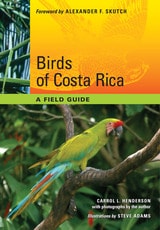
Birds of Costa Rica
A Field GuideText and photographs by Carrol L. Henderson
University of Texas Press, 2010
At the biological crossroads of the Americas, Costa Rica hosts an astonishing array of plants and animals—over half a million species! Ecotourists, birders, and biologists come from around the world, drawn by the likelihood of seeing more than three or four hundred species of birds and other animals during even a short stay. To help all of these visitors, as well as local residents, identify and enjoy the wildlife of Costa Rica, Carrol Henderson published Field Guide to the Wildlife of Costa Rica in 2002, and it became the instant and indispensable guide.
Now Henderson has created a dedicated field guide to the birds that travelers are most likely to see, as well as to the unique or endemic species that are of high interest to birders. Birds of Costa Rica covers 310 birds—an increase of 124 species from the earlier volume—with fascinating accounts of the birds' natural history, identification, and behavior gleaned from Henderson's forty years of traveling and birding in Costa Rica. All of the accounts include beautiful photographs of the birds, most of which were taken in the wild by Henderson. There are new updated distribution maps and a detailed appendix that identifies many of the country's best bird-watching locations and lodges, including contact information for trip planning purposes.
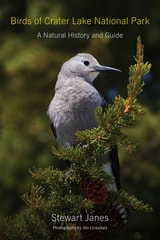
Birds of Crater Lake National Park
A Natural History and GuideStewart Janes
Oregon State University Press, 2026
From the Clark’s Nutcracker to the White-crowned Sparrow, the guide provides species accounts of the most characteristic birds found in the park. Accompanied by detailed color photographs, each entry also includes the scientific name, description, and distribution along with a short narrative.
With essays focusing on the history, climate, geology, and geography of the region, this guide offers a strong foundation to greater understanding of the birds of Crater Lake. Plus, chapters like “Birds Beyond Crater Lake National Park” and “Some Places to Bird in Crater Lake National Park,” along with a birding checklist, offer invaluable resources to beginner and skilled birders alike.
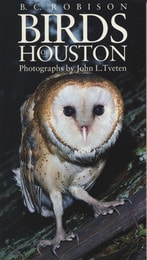
Birds of Houston
By B. C. Robison
University of Texas Press, 1997
No matter where you see birds in the city—in parks or woodlands, on power lines or in parking lots—they are the natural soul of the urban landscape. They enhance the city and the lives of those who watch them.
Nature writer B. C. Robison and wildlife photographer John Tveten have teamed up to produce this field guide for birders who want to identify the birds most commonly seen in Houston. Fifty-five species are included, ranging from such well-known favorites as the mockingbird and cardinal to the more exotic yellow-crowned night heron.
A full-color photograph for each bird appears alongside warm and often witty description. For quick reference, a summary of the primary field marks of the adult bird is also provided. This summary includes not only identifying features of the bird but also its habitats, the time of year it can be found, and its distinctive behavioral traits.
Aimed at the beginning birder, the guide also gives tips on buying binoculars and on attracting birds to your yard.
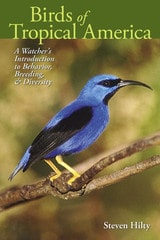
Birds of Tropical America
A Watcher's Introduction to Behavior, Breeding, and DiversityBy Steven Hilty
University of Texas Press, 2005
The guide to neotropical bird behavior that picks up where field guides leave off.
Why are tropical birds like parrots and quetzals so much more colorful than those in more temperate climates? How can a vulture soaring thousands of feet above the canopy spot a dead rodent no bigger than a mouse on the rainforest floor? What permits sparrow-sized antbirds to not only survive but to thrive among relentless hordes of army ants that devour every other living thing in their path?
Steven Hilty has led birding tours to the American Tropics for decades. By providing answers to the hundreds of questions asked by participants of these expeditions, Hilty has produced a natural history of the bird life of the New World Tropics that is at once practical, accurate, and as endlessly fascinating as the species whose lives it reveals.
Birds of Tropical America was published by Chapters Publishing in 1994 and went out of print in 1997. UT Press is pleased to reissue it with a new epilogue and updated references.
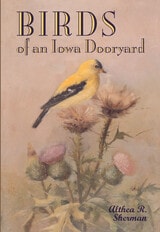
Birds of an Iowa Dooryard
Althea R. Sherman
University of Iowa Press, 1996
Now available in paperback with a new foreword by Marcia Myers Bonta, Birds of an Iowa Dooryard contains Althea Sherman's often caustic, always careful studies of the phoebes, wrens, cuckoos, rails, catbirds, owls, flickers, and many other species that inhabited her Acre of Birds in northern Iowa. Birds of an Iowa Dooryard, first published in 1952, is full of Sherman's meticulous observations of species both avian and human. Her paintings, her notebooks and publications, and her innovative chimney swift tower form a remarkably rich legacy to be valued by naturalists and researchers alike.
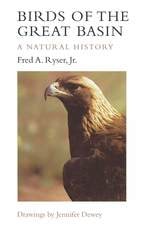
Birds of the Great Basin
A Natural HistoryFred A. Ryser
University of Nevada Press, 1985
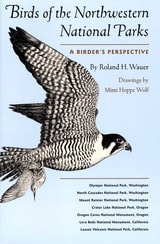
Birds of the Northwestern National Parks
A Birder's PerspectiveBy Roland H. Wauer
University of Texas Press, 2000
From the bald eagle to the pileolated woodpecker, the varied and abundant birdlife of the northwestern national parks is as impressive as the parks' dramatic scenery. To help both beginning and advanced birders make the most of their visits to these parks, Roland Wauer has written this finding guide, which introduces the most common birds and the most likely places to see them.
The book opens with practical advice on getting started in birding—choosing binoculars, bird identification, proper field techniques, etc. Then after a concise discussion of the national parks as "islands" of bird habitat, the succeeding chapters fully describe each park, including its plant and animal communities and the facilities and interpretive activities available to visitors. Wauer takes readers on "walks" through each park's most popular and accessible places, where he explains the identification and behavior of the birds that visitors are most likely to see. He closes each account with a review of the park's bird life and a list of key species. Pen-and-ink drawings illustrate many of the birds.
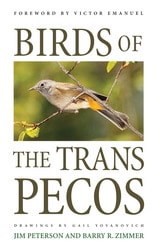
Birds of the Trans-Pecos
By Jim Peterson and Barry R. Zimmer
University of Texas Press, 1998
The Trans-Pecos, that huge region of Texas west of the Pecos River, is richer in recorded bird species than all but three of the United States. Hundreds of birders come here each year in search of species such as the Colima Warbler which are rarely if ever spotted in other parts of the country. Yet, until now, there was no comprehensive birding guide devoted to the entire region.
Designed for intermediate to advanced birders, Birds of the Trans-Pecos provides an annotated checklist of all 482 species found in the region. The species accounts include seasonal distribution, documentation of nesting, most likely habitat, and the bird's status as a "Texas Review Species." The authors also describe the geography and bird habitats of the Trans-Pecos; federal and state parklands in the area (including Big Bend and Guadalupe Mountains), with the species that occur in each; and the mountain-breeding birds and species of special interest.
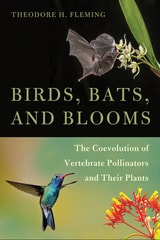
Birds, Bats, and Blooms
The Coevolution of Vertebrate Pollinators and Their PlantsTheodore H. Fleming
University of Arizona Press, 2024
Vertebrate pollinators like bats and birds are keystone species of the Sonoran Desert. Biologist Theodore H. Fleming uses these species—found in the desert around his home—to address two big questions dealing with the evolution of life on Earth: How did these animals evolve, and how did they coevolve with their food plants?
A deeply thoughtful and researched dive into evolutionary history, Birds, Bats, and Blooms offers an engaging trip across evolutionary trajectories as it discusses nectar-feeding birds and bats and their coevolution as pollinators with flowering plants. The primary focus is on New World birds such as hummingbirds and their chiropteran counterparts (nectar-feeding bats in the family Phyllostomidae). It also discusses their Old World ecological counterparts, including sunbirds, honeyeaters, lorikeets, and nectar-feeding bats in the Pteropodidae family. Fleming also addresses the conservation status of these beautiful animals.
Through engaging prose, Fleming pulls together the most recent research in evolutionary biology and pairs it with accounts of his personal interactions with bats and birds. His account includes fourteen color photographs taken by the author during his research trips around the world.
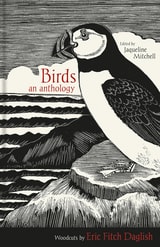
Birds
An AnthologyEdited by Jaqueline Mitchell
Bodleian Library Publishing, 2020
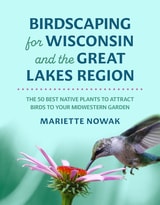
Birdscaping for Wisconsin and the Great Lakes Region
The 50 Best Native Plants to Attract Birds to Your Midwestern GardenMariette Nowak
University of Wisconsin Press, 2025
The book explains the value of particular plants for birds and other wildlife, not only as food sources but as nesting sites and cover. Each plant is described in depth, with details on color, height, blooming time, light requirements, and soil preferences, along with planting tips and suggested companion plants. Nowak offers closer looks at the intriguing features of these diverse plant species and their intertwined relationships with birds, complemented by more than 150 color photos that showcase the beauty of the plants and birds together. Novice gardeners will also find essential information on birdscaping basics, site preparation, management guidelines, and safeguarding songbirds.
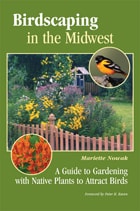
Birdscaping in the Midwest
A Guide to Gardening with Native Plants to Attract BirdsMariette Nowak; Foreword by Peter H. Raven
University of Wisconsin Press, 2012
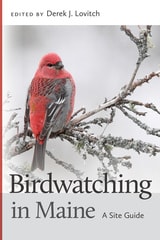
Birdwatching in Maine
A Site GuideEdited by Derek J. Lovitch
University Press of New England, 2017
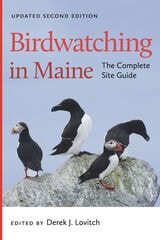
Birdwatching in Maine
The Complete Site GuideDerek J. Lovitch
Brandeis University Press, 2024
With over 470 species of birds recorded, Maine offers an abundance of birding opportunities for people of all levels of interest and experience, from those looking beyond their backyards for the first time to knowledgeable visitors looking to plug a hole in their list of sightings. The state’s wealth of undeveloped land and its extensive coastline, countless islands, and varied habitat combine to host an impressive diversity of birds at all times of the year. Birders travel to Maine from near and far to seek hard-to-find species, from the only Atlantic puffins breeding in the United States on offshore islands to Bicknell’s thrushes high in the mountains.
This book fills an important niche for the birdwatching community by offering comprehensive entries detailing the best locations for finding birds throughout the state for enthusiasts of all levels of skill and interest. It contains descriptions of 202 birding sites in Maine, with explicit directions on how to get there, for all sixteen of the state’s counties, several as large as other New England states! Each chapter features a county map, a brief overview by Derek J. Lovitch, numerous specific site guides, and a list of rarities. The book also contains a detailed and useful species accounts guide for finding the most sought-after birds.
Lavishly illustrated in color throughout, Birdwatching in Maine is the best available resource for finding birds in the largest of the New England states. This updated edition features a new introduction, as well as new birding sites and maps.
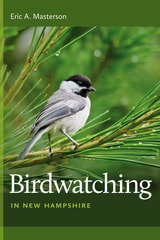
Birdwatching in New Hampshire
Eric A. Masterson
University Press of New England, 2013
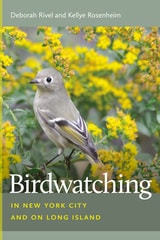
Birdwatching in New York City and on Long Island
Deborah Rivel and Kellye Rosenheim
University Press of New England, 2016
This easy-to-use guide gives seasonal information for both popular birding sites and those off the beaten path. Precise directions to the best viewing locations within the region’s diverse habitats enable birdwatchers to efficiently explore urban and wild birding hotspots. Over 500 species of birds can be seen in New York City’s five boroughs and on Long Island, one of the most densely populated and urbanized regions in North America, which also happens to be situated directly on the Atlantic Flyway. In this fragmented environment of scarce resources, birds concentrate on what’s available. This means that high numbers of birds are found in small spaces. In fact, Central Park alone attracts over 225 species of birds, which birders from around the world flock to see during spring and fall migration. Beyond Central Park, the five boroughs and Long Island have numerous wildlife refuges of extraordinary scenic beauty where resident and migratory birds inhabit forests, wetlands, grasslands, and beaches. These special places present an opportunity to see a wide array of songbirds, endangered nesting shorebirds, raptors, and an unprecedented number and variety of waterfowl. Including the latest information on the seasonal status and distribution of more than 400 species, with 39 maps and over 50 photographs, this full-color guide features information essential to planning a birding visit. It will become the go-to book for both the region’s longtime birders and those exploring the area for the first time.
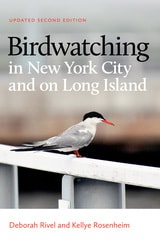
Birdwatching in New York City and on Long Island
Second EditionDeborah Rivel and Kellye Rosenheim
Brandeis University Press, 2025
Over five hundred species of birds can be seen in New York City’s five boroughs and on Long Island, one of the most densely populated and urbanized regions in North America, which also happens to be situated directly on the Atlantic Flyway. In this fragmented environment where resources are scarce, birds congregate in small spaces—Central Park alone attracts over 225 species of birds (not to mention birders from around the world who flock to the park during spring and fall migration). Beyond Central Park, the five boroughs and Long Island boast numerous wildlife refuges of extraordinary scenic beauty where resident and migratory birds inhabit forests, wetlands, grasslands, and beaches. These places present a unique opportunity to see a wide array of songbirds, endangered nesting shorebirds, raptors, and an unprecedented number and variety of waterfowl.
The fully updated edition of this easy-to-use guide provides year-round information for both popular birding sites as well as those off the beaten path. Precise directions to the best viewing locations within the region’s diverse habitats enable birdwatchers to explore urban and wild birding hot spots. Including the latest information on the seasonal status and distribution of more than four hundred species, and featuring thirty-nine maps and over fifty photographs, this full-color guide offers information essential to locals and visitors alike. This is the go-to book for both longtime birders and those exploring the area for the first time.
Black Hills Forestry
A HistoryJohn F. Freeman
University Press of Colorado, 2023
One of the first forests actively managed by the federal government and the site of the first sale of federally owned timber to a private party, the Black Hills National Forest has served as a management model for all national forests. Its many uses, activities, and issues—recreation, timber, mining, grazing, tourism, First American cultural usage, and the intermingling of public and private lands—expose the ongoing tensions between private landowners and public land managers. Freeman shows how forest management in the Black Hills encapsulates the Forest Service's failures to keep up with changes in the public's view of forest values until compelled to do so by federal legislation and the courts. In addition, he explores how more recent events in the region like catastrophic wildfires and mountain pine beetle epidemics have provided forest managers with the chance to realign their efforts to create and maintain a biologically diverse forest that can better resist natural and human disturbances.
This study of the Black Hills offers an excellent prism through which to view the history of the US Forest Service's land management policies. Foresters, land managers, and regional historians will find Black Hills Forestry a valuable resource.

Black Swan Lake
Life of a WetlandRod Giblett
Intellect Books, 2013
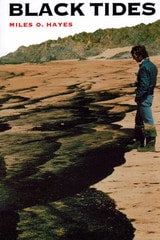
Black Tides
By Miles O. Hayes
University of Texas Press, 2000
Black tides of spilled oil pollute the world's coasts with depressing regularity, giving scientists ample opportunity to observe their environmental impacts and learn how to clean up and restore the affected shorelines. Miles O. Hayes has been a leader in this work for over twenty years. In this highly readable autobiography, he describes his evolution as a scientist, his work in coastal oil spill contingency planning and clean up, and his personal philosophy of one's relationship with nature.
A skilled raconteur, Hayes tells engrossing stories of responding to most of the recent, headline-grabbing oil spills, including the Gulf War spills, the Exxon Valdez, the Amoco Cadiz spill in France, and the Ixtoc I blowout in Mexico. Interspersed among them are personal events and adventures, such as his survival of a plane crash while mapping a remote part of Alaska. From this life story emerges a compelling statement of the ongoing conflict between environmental preservation and the exploitation of natural resources to sustain our modern society.
Blackland Prairies of the Gulf Coastal Plain
Nature, Culture, and SustainabilityEdited by Evan Peacock and Timothy Schauwecker
University of Alabama Press, 2003
Underscores the relevance of archaeological research in understanding long-term cultural change
Taking a holistic approach, this compilation gathers ecological, historical, and archaeological research written on the distinctive region of the Southeast called the Gulf coast blackland prairie. Ranging from the last glacial period to the present day, the case studies provide a broad picture of how the area has changed through time and been modified by humans, first with nomadic bands of Indians trailing the grazing animals and then by Euro-American settlers who farmed the rich agricultural area. Contemporary impacts include industrialization, aquaculture, population growth, land reclamation, and wildlife management.
It is believed that the Black Belt and the Great Plains were contiguous in the past and shared the same prairie vegetation, insects, and large fauna, such as bison. Swaths and patches of limestone-based soils still weave a biological corridor through what is now Alabama, Mississippi, Arkansas, Louisiana, and Texas. In analyzing this distinct grassland ecosystem, the essays compare both the mega and minute flora and fauna sustained by the land in the past and present; reveal what foods were harvested by early inhabitants, their gathering techniques, and diet changes over the 10,000-year period of native occupancy; survey the documents of early explorers for descriptions of the landform, its use, and the lives of inhabitants at the time of contact; and look at contemporary efforts to halt abuse and reverse damage to this unique and shrinking biome.
This book demonstrates that the blackland prairie has always been an important refuge for a teeming array of biological species, including humans. It will have wide scholarly appeal as well as general interest and will be welcomed by archaeologists, biologists, botanists, ecologists, historians, librarians, politicians, land managers, and national, state, and local administrators.
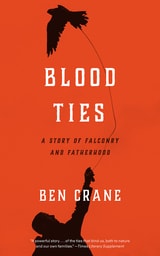
Blood Ties
A Story of Falconry and FatherhoodBen Crane
University of Chicago Press, 2020
In this artful and moving memoir, we follow Crane on his remarkable journey of flight and return. Traveling from the United Kingdom to Pakistan, we learn first about the history and practice of falconry, a beautiful and brutal partnership between humans and birds that has persisted for thousands of years. And as Crane’s personal story unfolds, we come to understand how he found solace and insight through his relationships with these animals. “I saw that my feelings toward nature, and birds of prey in particular, ran in parallel with my feelings for my son,” Crane writes. “I worked out that they were, in fact, two sides of the same coin—the deep love of one could, with gentle observation, inform and unlock the deep love for the other. . . . Perhaps this then is the central theme of my story.”
Many of us rely upon animal companions to provide a sense of joy, compassion, and empathy. But as Blood Ties teaches us, our relationships with the creatures among us can also transform us, illuminating what it means both to be human and to be part of the greater wild—what it means to be alive.
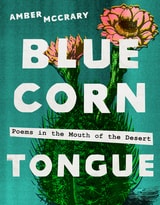
Blue Corn Tongue
Poems in the Mouth of the DesertAmber McCrary
University of Arizona Press, 2025
In a voice that is jubilant, irreverent, sometimes scouring, sometimes heartfelt, and always unmistakably her own, Amber McCrary remaps the deserts of Arizona through the blue corn story of a young Diné woman figuring out love and life with an O’odham man. Reflecting experiences of Indigenous joy, pain, and family, these shapeshifting poems celebrate the love between two Native partners, a love that flourishes alongside the traumas they face in the present and the past. From her ethereal connection with her saguaro muse, Hosh, to the intricate tapestry of her relationships with Diné relatives and her awakening to the complex world of toxic masculinity, McCrary brings together DIY zine aesthetics, life forms of juniper and mountains, and the beauty of Diné Bizaad to tell of the enduring bonds between people and place.
Journeying from the Colorado Plateau to the Sonoran Desert and back again, Blue Corn Tongue invokes the places, plants, and people of Diné Bikéyah and O’odham jeweḍ in a deeply honest exploration of love, memory, and intimacy confronting the legacy of land violence in these desert homelands.
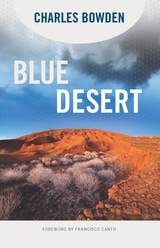
Blue Desert
Charles Bowden; Foreword by Francisco Cantú
University of Arizona Press, 2018
Bowden presents a view of the Southwest that measures how rapid growth takes its toll on the land. Writing with a reporter’s objectivity and a desert rat’s passion, Bowden offers us his trademarked craft and wit to take us into the streets as well as the desert to depict not a fragile environment but the unavoidable reality of abuse, exploitation, and human cruelty. Blue Desert shows us the darker side of development—where “the land always makes promises of aching beauty and the people always fail the land”—and defies us to ignore it.
In a thoughtful new foreword, Francisco Cantú writes, “In Blue Desert, we follow Bowden in the processes of becoming. We see the version of Bowden that he would likely most want us to remember—someone who did their best to be an honest witness, someone who was haunted by modernity and his place in it, someone who grappled with his demons by gazing deeply into the desert.” Blue Desert is a critical piece in the oeuvre of Charles Bowden, and it continues to remind readers of the cruelty and beauty of the world around us.