Results by title
1861 books match the query 'Social life and customs' and 71 start with b
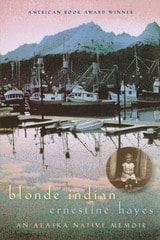
Blonde Indian
An Alaska Native MemoirErnestine Hayes
University of Arizona Press, 2006
Told in eloquent layers that blend Native stories and metaphor with social and spiritual journeys, this enchanting memoir traces the author’s life from her difficult childhood growing up in the Tlingit community, through her adulthood, during which she lived for some time in Seattle and San Francisco, and eventually to her return home. Neither fully Native American nor Euro-American, Hayes encounters a unique sense of alienation from both her Native community and the dominant culture. We witness her struggles alongside other Tlingit men and women—many of whom never left their Native community but wrestle with their own challenges, including unemployment, prejudice, alcoholism, and poverty.
The author’s personal journey, the symbolic stories of contemporary Natives, and the tales and legends that have circulated among the Tlingit people for centuries are all woven together, making Blonde Indian much more than the story of one woman’s life. Filled with anecdotes, descriptions, and histories that are unique to the Tlingit community, this book is a document of cultural heritage, a tribute to the Alaskan landscape, and a moving testament to how going back—in nature and in life—allows movement forward.
Bloodlines
Odyssey of a Native DaughterJanet Campbell Hale
University of Arizona Press, 1998
Bloodsucking Witchcraft
An Epistemological Study of Anthropomorphic Supernaturalism in Rural TlaxcalaHugo G. Nutini
University of Arizona Press, 1993
"The most comprehensive statement on this centrally important ethnographic phenomenon in the last forty years. It bears ready comparison with the two great classics, Evans-Pritchard's Witchcraft Among the Azande and Clyde Kluckhohn's Navaho Witchcraft."—Henry H. Selby
Blue Men and River Monsters
Folklore of the NorthJohn Zimm
Wisconsin Historical Society Press, 2014

Blue Money
StoriesStories by Susan Hubbard
University of Missouri Press, 1999
A union organizer returns to her hometown and her high school sweetheart, only to discover unexpected peril. A middle-aged man walks to meet his wife at work one day and loses her forever. A young writer's stage fright destroys her work and her marriage but offers her a new life. In Blue Money, Susan Hubbard creates a world in which the most ordinary things can be magical, and the most ordinary people can be extraordinary.
"Selling the House" is the enchanting story of Marianne, a young housewife whose life is altered forever by a mysterious stranger. He suddenly appears on her doorstep one morning, offers to buy her home, quotes poetry, and just as suddenly disappears. Marianne soon discovers, however, that the stranger wants more than her house—he wants her. Although she does not accept the man's proposition, Marianne has been changed by it. His words echo throughout her life. "If she sometimes had trouble sleeping, if she spent more time reading poetry or staring out the window . . . well, those were small aberrations in an otherwise quite satisfactory life."
Strangers appear and disappear in Blue Money. Shoes charm and cure. A soiled shirt conjures conscience, and a clean one promises new identity. Hubbard brilliantly weaves these fantastic elements into the fabric of her fiction.
Women's relationships with men—whether they be fathers, lovers, or strangers—are a prominent theme of Hubbard's collection. "What Friends Are For" captures this theme at its most humorous and bizarre in the strange mishaps of two young girls trying to rid their lives of the stepfathers they despise. When their plan fails miserably, the girls are forced to accept the unwanted men, but not without finding brief comfort in the humor of their failure. "Then I start laughing too--a laugh I've never laughed before, like some exotic bird, high and shrill and free—and now [we're] laughing so hard that the voices outside fade away entirely."
Praised by Ploughshares as "an assured storyteller and a complex narrative stylist," Hubbard excels at writing spare yet powerfully evocative prose. Haunting in its suspense and subtle grace, Blue Money celebrates Hubbard's marvelous ability to explore the power of imagination.
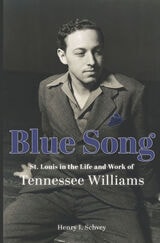
Blue Song
St. Louis in the Life and Work of Tennessee WilliamsHenry I. Schvey
University of Missouri Press, 2022
The question of this paradox lies at the heart of this book, an attempt not so much to correct the record about Williams’s well-chronicled dislike of the city, but rather to reveal how the city was absolutely indispensable to his formation and development both as a person and artist. Unlike the prevailing scholarly narrative that suggests that Williams discovered himself artistically and sexually in the deep South and New Orleans, Blue Song reveals that Williams remained emotionally tethered to St. Louis for a host of reasons for the rest of his life.
Bluebirds Used to Croon in the Choir
StoriesJoe Meno
Northwestern University Press, 2007
Children who anesthetize—and dress up—small wild animals in an ill-fated attempt to cheer their grieving mother; childhood friends who ritually return every year to the site of their near-kidnapping; an awkward teen trying to find his place among the cultural ruins of Greek Mythology Camp; brothers brought together, if not by mutual understanding, by a strange need to steal airport baggage: these are some of the characters who inhabit—and invariably tell—the stories in Joe Meno's Bluebirds Used to Croon in the Choir. Oddballs and charmers and would-be lovers, they are souls not so much lost as wandering, looking for something better, almost getting laid, trying to explain or, if all else fails, to entertain—and this they unfailingly do. Rarely has fiction so understated produced such hilarity and heartbreak.
Novelist, music journalist, and playwright Meno writes squarely in the American tradition of wringing large effects from small change, revealing the subtlety in the broad stroke, and conveying complexity with seeming simplicity. Celebrated for its "unflinching honesty" (Entertainment Weekly) and for its "poetic and visceral style" (Booklist), his work resonates with the unmistakable magic and curious mystery of modern life.
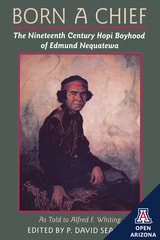
Born a Chief
The Nineteenth Century Hopi Boyhood of Edmund Nequatewa, as told to Alfred F. WhitingEdmund Nequatewa
University of Arizona Press, 1993
"This story was fascinating. . . . One worth the telling and one which will stay with the reader."—American Desert Magazine
"Recommended."—Choice
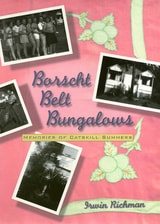
Borscht Belt Bungalows
Memoirs Of Catskill SummersIrwin Richman
Temple University Press, 2003
These were not glamorous places, and middle-class Jews today remember the colonies with either aversion or fondness. Irwin Richman's narrative, anecdotes, and photos recapture everything from the traffic jams leaving the city to the strategies for sneaking into the casinos of the big hotels. He brings to life the attitudes of the renters and the owners, the differences between the social activities and swimming pools advertised and what people actually received. He reminisces about the changing fashion of the guests and owners—everything that made summers memorable.
The author remembers his boyhood: what it was like to spend summers outside the city, swimming in the Neversink, "noodling around," and helping with the bungalow operation, while Grandpa charged the tenants and acted as president of Congregation B'nai Israel of Woodbourne, N.Y. He also traces the changes in the Catskills, including the influx of Hasidic families. Richman talks about what it's like to go back and to see the ghosts of resorts along the roads he once traveled.
Boystown
Sex and Community in ChicagoJason Orne
University of Chicago Press, 2017
In Boystown, Orne takes readers on a detailed, lively journey through Chicago’s Boystown, which serves as a model for gayborhoods around the country. The neighborhood, he argues, has become an entertainment district—a gay Disneyland—where people get lost in the magic of the night and where straight white women can “go on safari.” In their original form, though, gayborhoods like this one don’t celebrate differences; they create them. By fostering a space outside the mainstream, gay spaces allow people to develop an alternative culture—a queer culture that celebrates sex.
Orne spent three years doing fieldwork in Boystown, searching for ways to ask new questions about the connective power of sex and about what it means to be not just gay, but queer. The result is the striking Boystown, illustrated throughout with street photography by Dylan Stuckey. In the dark backrooms of raunchy clubs where bachelorettes wouldn’t dare tread, people are hooking up and forging “naked intimacy.” Orne is your tour guide to the real Boystown, then, where sex functions as a vital center and an antidote to assimilation.
Braided Worlds
Alma Gottlieb and Philip Graham
University of Chicago Press, 2012
Brewtown Tales
More Stories from Milwaukee and BeyondJohn Gurda
Wisconsin Historical Society Press, 2022

Bring Me Your Saddest Arizona
Ryan Harty
University of Iowa Press, 2003
The vast, unsettling landscape of the American Southwest is as much a character in Ryan Harty's debut collection, Bring Me Your Saddest Arizona, as the men and women who inhabit its award-winning stories. In eight vivid tales of real life in the west, Harty reminds us that life's greatest challenge may be to find the fine balance between desire and obligation.
A high school football player must make a choice between family and friends when his older brother commits an act of senseless violence. A middle-aged man must fly to Las Vegas to settle his dead sister's estate, only to discover that he must first confront his guilt over his sister's death. A young teacher tries to help a homeless girl, but, as their lives intertwine, he begins to understand that his generosity is motivated by his own relenting sense of lonliness. Well-intentioned but ultimately human, the characters in these stories often fall short of achieving grace. But the possibility of redemption, like the Sonoran Desert at the edge of Bring Me Your Saddest Arizona's suburban landscapes, is never far off. Harty's characters are as complicated as the people we know, and his vision of life in the west is as hopeful as it is strikingly real.
Broken K Pueblo
Prehistoric Social Organization in the American SouthwestJames N. Hill
University of Arizona Press, 1970
Brushed by Cedar, Living by the River
Coast Salish Figures of PowerCrisca Bierwert
University of Arizona Press, 1999
Crisca Bierwert has created a fresh poststructural ethnography that offers new insights into Coast Salish cultures. Arguing against the existence of a master narrative, she presents her understanding of these Native American peoples of Washington state and British Columbia, Canada, through poetic bricolage, offering the reader a pastiche of rich cultural images. Bierwert employs postmodern literary and social analyses to examine many aspects of Salish culture: legends and their storytellers; domestic violence; longhouse ceremonies; the importance and power of place; and disputes over fishing rights. Her reflections overlap as a dialogue would, weaving throughout the book significant threads of Salish knowledge and creating a nonauthoritative text that nonetheless speaks knowingly.
This book represents the future of contemporary anthropology. Unlike traditional ethnography, it makes no attempt to portray a complete picture of the Coast Salish. Instead, Bierwert utilizes a critical and diffuse approach that defies colonial, syncretic, and hegemonic structures and applies advanced literary theory to the creation of ethnography.
Brushed by Cedar is an important guideline for anyone who writes about other cultures and will be expecially useful to classes in the methodology and history of ethnography, as well as to scholars specializing in Native American studies or oral literatures.

Buckeye Schoolmaster
A Chronicle of Midwestern Rural Life, 1853–1865J. Merton England
University of Wisconsin Press, 1996
The journals and diaries of John M. Roberts provide an intimate view of the life and dthoughts of a young schoolmaster, miller, itenerant bookseller, and farmer in centreal Ohio in a time of rising sectional crisis and Civil War.
Buckeye Women
The History of Ohio’s DaughtersStephane Elise Booth
Ohio University Press, 2001
By the last two decades of the twentieth century, Ohio women had held positions as university presidents, chief executive officers, judges, superintendents of schools, and lieutenant governor. They had won Pulitzer Prizes and, in one case, the Nobel Prize for Literature.
But these women stood on the shoulders of those who came before: the pioneering women who helped tame the Ohio frontier, who filled the breach, who worked for reform, and who struggled for their own rights as citizens of one of the most prosperous states in the Union.
Buckeye Women is an accessible and comprehensive account of the role Ohio women have assumed in the history of the state and a narrative of their hardships and of the victories that have been won in the past two hundred years.
In this timely contribution to the Ohio Bicentennial Series, Professor Stephane Booth has written a rich and well-researched volume, providing for the first time a record of the vast and pivotal accomplishments shared by the women of Ohio over the last two centuries and documenting their contribution to the state’s remarkable heritage.

Building Sustainable Worlds
Latinx Placemaking in the MidwestEdited by Theresa Delgadillo, Ramon H. Rivera-Servera, Geraldo L. Cadava, and Claire F. Fox
University of Illinois Press, 2022
A rare and crucial perspective on Latina/o/x people in the Midwest, Building Sustainable Worlds reveals how expressive culture contributes to, and sustains, a sense of place in an uncertain era.

Burek
A Culinary MetaphorJernej Mlekuz
Central European University Press, 2015
Buried Roots and Indestructible Seeds
The Survival Of American Indian Life In Story, History, and SpiritMark A. Lindquist
University of Wisconsin Press, 1995
This anthology highlights central values and traditions in Native American societies, exploring the ongoing struggles and survival power of Native American people today. The essays and stories by well-known writers provide an excellent introduction for general readers as well as high school and college students. The stories and historical events are drawn especially from the tribes of the Great Lakes region, such as the Ojibwa (Chippewa) of Wisconsin, and are part of a continuing, sustaining storytelling tradition.
Starting with the opening selection, “The Circle of Stories,” which reaffirms the relationship of humans to all living things, the anthology emphasizes themes of connectedness and survival in essays on the environment, identity, community allegiance and treaty rights, marginalization and assimilation in American society, and conflict within the educational system. Several selections about Trickster tales introduce traditions of humor, irony, and imagination that have come to embody native survival, liberation, and continuance.
The authors included in Buried Roots and Indestructible Seeds are Kim Blaeser, Joseph Bruchac, George Cornell, Fred Hoxie, James Oberly, Denise Sweet, Tom Vennum, and Gerald Vizenor.

By the Rivers of Babylon and Other Stories
Patai, Daphne
Rutgers University Press, 1991