Results by title
1441 books match the query 'World' and 74 start with b
Branding Brazil
Transforming Citizenship on ScreenLeslie L. Marsh
Rutgers University Press, 2021

Brazil and the Quiet Intervention, 1964
By Phyllis R. Parker
University of Texas Press, 1979
When the Brazilian military overthrew President João Goulart in 1964, American diplomats characterized the coup as a "100 percent Brazilian movement." It has since become apparent, largely through government documents declassified during the course of research for this book, that the United States had an invisible but pervasive part in the coup.
Relying principally on documents from the Johnson and Kennedy presidential libraries, Phyllis Parker unravels the events of the coup in fascinating detail. The evidence she presents is corroborated by interviews with key participants.
U.S. interference in the Goulart regime began when normal diplomatic pressure failed to produce the desired enthusiasm from him for the Alliance of Progress. Political and economic manipulations also proving ineffective, the United States stood ready to back a military takeover of Brazil's constitutional democracy.
U.S. operation "Brother Sam" involved shipments of petroleum, a naval task force, and tons of arms and ammunition in preparation for intervention during the 1964 coup. When the Brazilian military gained control without calling on the ready assistance, U.S. policy makers immediately accorded recognition to the new government and set in motion plans for economic support.

Brazil at the Dawn of the Eighteenth Century
André João Antonil
Tagus Press, 2012
Brazil's Long Revolution
Radical Achievements of the Landless Workers MovementAnthony Pahnke
University of Arizona Press, 2018
Brazil’s Long Revolution shows how the Movimento dos Trabalhadores Rurais Sem Terra (the Brazilian Landless Workers Movement, or MST) positioned itself to take advantage of challenging economic times to improve its members’ lives. Pahnke analyzes the origins and development of the movement, one of the largest and most innovative social movements currently active. Over the last three decades, the MST has mobilized more than a million Brazilians through grassroots initiatives, addressing political and economic inequalities.
The MST and its allies—together known as the Landless Movement—confront inequality by constructing democratic ways of governing economic, political, and social life in collectivized production cooperatives, movement-run schools, and decentralized agrarian reform encampments and settlements. Their strategies for organizing political, economic, and social life challenge the current neoliberal orthodoxy that privileges individualized, market-oriented practices.
Based on research conducted over five years, Pahnke’s book places the Landless Movement squarely within the tradition of Latin American revolutionary struggles, while at the same time showing the potential for similar forms of radical resistance to develop in the United States and elsewhere in the Global North.

Brazil's Sex Wars
The Aesthetics of Queer Activism in São PauloJoseph Jay Sosa
University of Texas Press, 2024
An ethnography and media analysis of LGBT+ activism in São Paulo during Brazil’s conservative turn from 2010 to 2018.
For decades, LGBT+ activists across the globe have secured victories by persuasively articulating rights to sexual autonomy. Brazilian activists, some of the world’s most energetic, have kept pace. But since 2010, a backlash has set in, as defenders of “tradition” and “family” have countered LGBT+ rights discourses using a rights-based language of their own.
To understand this shifting ground, Joseph Jay Sosa collaborated with Brazilian LGBT+ activists, who use the language of rights while knowing that rights are not what they seem. Drawing on the symbolic and affective qualities of rights, activists mobilize slogans, bodies, and media to articulate an alternative democratic sensorium. Beyond conventional notions of rights as tools for managing the obligations of states vis-à-vis citizens, activists show how rights operate aesthetically—enjoining the public to see and feel as activists do. Sosa tracks the fate of LGBT+ rights in a growing authoritarian climate that demands “human rights for the right humans.” Interpreting conflicts between advocates and opponents over LGBT+ autonomy as not just an ideological struggle but an aesthetic one, Brazil’s Sex Wars rethinks a style of politics that seems both utterly familiar and counterintuitive.
Brazil
Essays on History and PoliticsLeslie Bethell
University of London Press, 2018
Brazil
Neoliberalism versus DemocracyAlfredo Saad-Filho and Lecio Morais
Pluto Press, 2017
In Brazil: Neoliberalism Versus Democracy, Alfredo Saad-Filho and Lecio Morais review the complex paradox that is modern Brazil. Focusing on 1980 to the present, they analyze the tensions between the two dominant systemic political transitions from military rule to first democracy, then neoliberalism. A groundbreaking interpretation of this intricate relationship, Brazil examines how the contradictory dynamics of these transitions eventually became symbiotic as they unfolded and intertwined.
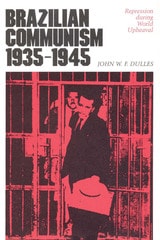
Brazilian Communism, 1935-1945
Repression during World UpheavalBy John W. F. Dulles
University of Texas Press, 1983
The Brazilian Communist Party was one of the largest Communist parties in Latin America until its split and dissolution in the 1990s. Although not granted legal status as a political party of Brazil until 1985, the Partido Comunista Brasileiro (PCB) has been tolerated by that country's regime.
Such governmental tolerance of the PCB was not always the case. In the past, the regime of Getúlio Vargas practiced savage forms of repression against Brazilian leftists, whose "Red extremism" was cited by both government leaders and the press as sufficient cause for Vargas' adoption of the most extreme measures.
Brazilian Communism, 1935–1945 is an objective and remarkably comprehensive account of the Brazilian Communist Party's struggle to survive those days of repression.
From his prison cell, PCB leader Luís Carlos Prestes guided the Party's quarreling factions. All who were associated with the Left shared a common enemy: the police, who used the most brutal forms of torture to extract information about leftist activities. Young Elza Fernandes, companion of the PCB's secretary general, was one whom the police interrogated. Suspecting that she had betrayed them, the Party itself arranged her murder.
Dulles' vivid account of this violent chapter in Latin American history is based on exclusive interviews with leading activists of the period and exhaustive research in the archives of both the PCB and the Brazilian police. The results make fascinating reading for Latin Americanists, historians of World War II, and students of international Communism alike.
Bread and Roses
Gender and Class Under CapitalismAndrea D'Atri
Pluto Press, 2021
Breaking Point
The UK Referendum on the EU and Its AftermathGary Gibbon
Haus Publishing, 2017
Examining official and off-the-record meetings with both senior politicians and ordinary voters, Gibbon addresses tough questions that are troubling the entire European continent: Now that the United Kingdom has voted for Brexit, to what extent can it truly “leave” a set of relationships that extend to the country’s doorstep? And will the decision be a lethal blow to the European Union, perhaps spurring on copycat secession movements?
Breaking the Jaws of Silence
Sixty American Poets Speak to the WorldSholeh Wolpé
University of Arkansas Press, 2013
Breaking the World
Black Insecurity and the Horizons of Speculative FictionJustin L. Mann
Duke University Press, 2026
Brexit and the British
Who Do We Think We Are?Stephen Green
Haus Publishing, 2017
In this short but powerful book, Stephen Green argues that it is time to acknowledge that underlying all the sound and fury of the Brexit debate were fundamental questions—whether or not fully recognized—about British identity. Are the British different, special, and capable of finding their own way in the world? Who are they, those who call themselves British? Is it all too easy to blame Brexit on post-industrial decline in the traditional heartlands of the Labor Party, or scaremongering by a band of deluded “Little Englanders”? Or is British identity more complex, deep-rooted—and perhaps, in some sense, troubling—than those of other European nations?

Bribes, People, and Politics
How Everyday Corruption Shapes Governance in EurasiaWilliam M. Reisinger & Marina Zaloznaya
University of Michigan Press, 2027
Everyday bureaucratic corruption is not the domain of oligarchs or powerful elites, but of informal exchanges between bureaucrats and ordinary citizens seeking to move paperwork, secure benefits, or avoid penalties. Despite extensive research on the economic, legal, and social consequences of corruption, this mundane form has rarely been treated as a political phenomenon.
Drawing on original, nationally representative surveys conducted in Russia, Ukraine, Georgia, and China, Bribes, People, and Politics analyzes how citizens’ encounters with corrupt bureaucratic practices influence popular political trust, perceptions of elite corruption, legal attitudes, voting behavior, and political activism. After each interaction with public bureaucracy, citizens subtly revise their views about what role people like themselves play within the political system. As a result, corrupt bureaucratic encounters can significantly shape popular attitudes and behavior toward the political order. By linking the microdynamics of bureaucratic encounters to macro-level questions of political legitimacy and regime durability, this book bridges the literature on corruption, political sociology, and comparative politics, offering a new framework for understanding the persistent phenomenon of public sector corruption in Eurasia.
Bridging the Information Gap
Legislative Member Organizations as Social Networks in the United States and the European UnionNils Ringe and Jennifer Nicoll Victor with Christopher J. Carman
University of Michigan Press, 2013
Legislative member organizations (LMOs)—such as caucuses in the U.S. Congress and intergroups in the European Parliament—exist in lawmaking bodies around the world. Unlike parties and committees, LMOs play no obvious, predefined role in the legislative process. They provide legislators with opportunities to establish social networks with colleagues who share common interests. In turn, such networks offer valuable opportunities for the efficient exchange of policy-relevant—and sometimes otherwise unattainable—information between legislative offices. Building on classic insights from the study of social networks, the authors provide a comparative overview of LMOs across advanced, liberal democracies. In two nuanced case studies of LMOs in the European Parliament and the U.S. Congress, the authors rely on a mix of social network analysis, sophisticated statistical methods, and careful qualitative analysis of a large number of in-depth interviews.
Brunei
From the Age of Commerce to the 21st CenturyMarie-Sybille de Vienne
National University of Singapore Press, 2015
Today home to some 393,000 inhabitants and comprising 5,765 square kilometers in area, Brunei first appears in the historical record at the end of the 10th century. After the Spanish attack of 1578, Brunei struggled to regain and expand its control on coastal West Borneo and to remain within the trading networks of the South China Sea. It later fell under British sway, and a residency was established in 1906, but it took the discovery of oil in Seria in 1929 before the colonial power began to establish the bases of a modern state.
Governed by an absolute monarchy, Bruneians today nonetheless enjoy a high level of social protection and rule of law. Ranking second (after Singapore) in Southeast Asia in terms of standards of living, the sultanate is implementing an Islamic penal code for the first time of its history. Focusing on Brunei’s political economy, history and geography, this book aims to understand the forces behind Brunei’s to-and-fro of tradition and modernisation.
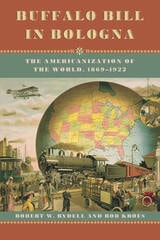
Buffalo Bill in Bologna
The Americanization of the World, 1869-1922Robert W. Rydell and Rob Kroes
University of Chicago Press, 2005
Buffalo Bill in Bologna reveals that the process of globalizing American mass culture began as early as the mid-nineteenth century. In fact, by the end of World War I, the United States already boasted an advanced network of culture industries that served to promote American values. Rydell and Kroes narrate how the circuses, amusement parks, vaudeville, mail-order catalogs, dime novels, and movies developed after the Civil War—tools central to hastening the reconstruction of the country—actually doubled as agents of American cultural diplomacy abroad. As symbols of America's version of the "good life," cultural products became a primary means for people around the world, especially in Europe, to reimagine both America and themselves in the context of America's growing global sphere of influence. Paying special attention to the role of the world's fairs, the exporting of Buffalo Bill's Wild West show to Europe, the release of The Birth of a Nation, and Woodrow Wilson's creation of the Committee on Public Information, Rydell and Kroes offer an absorbing tour through America's cultural expansion at the turn of the century. Buffalo Bill in Bologna is thus a tour de force that recasts what has been popularly understood about this period of American and global history.
Building Resilience
Social Capital in Post-Disaster RecoveryDaniel P. Aldrich
University of Chicago Press, 2012
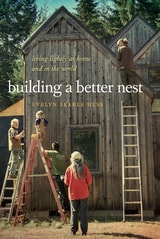
Building a Better Nest
Living Lightly at Home and in the WorldEvelyn Searle Hess
Oregon State University Press, 2015
What does it mean to build a better nest? Better for whom? Is it better for the individual or family? The planet? Green building and sustainable design are popular buzzwords, but to Hess, sustainable building is not a simple matter of buying and installing the latest recycled flooring products. It is also about cooperative work: working together in employment, in research, in activism, and in life. Hess is concerned with her local watershed, but also with the widening income gap, disappearing species, and peak resources. She actively works to reduce overconsumption and waste. For Hess, these problems are both philosophical and practical.
As Hess and her husband age, the questions of how to live responsibly arise with greater frequency and urgency. With unfailing wit and humor, she looks for answers in such places as neuroscience, Buddhism, and her ancestral legacy. Building a Better Nest will appeal to anyone with an interest in sustainable building, off-grid living, or alternative communities. The questions it asks about the way we live are earnest and important, from an author whose voice is steeped in wisdom and gratitude.
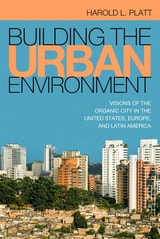
Building the Urban Environment
Visions of the Organic City in the United States, Europe, and Latin AmericaHarold L Platt
Temple University Press, 2015
Building the Urban Environment is a comparative study of the contestation among planners, policymakers, and the grassroots over the production and meaning of urban space. Award-winning historian Harold Platt presents case studies of seven cities, including Rotterdam, Chicago, and Sao Paulo, to show how, over time, urban life created hybrid spaces that transformed people, culture, and their environments.
As Platt explains, during the post-1945 race to technological modernization, policymakers gave urban planners of the International Style extraordinary influence to build their utopian vision of a self-sustaining “organic city.” However, in the 1960s, they faced a revolt of the grassroots. Building the Urban Environment traces the rise and fall of the Modernist planners during an era of Cold War, urban crisis, unnatural disasters, and global restructuring in the wake of the oil-energy embargo of the ’70s.
Ultimately, Platt provides a way to measure different visions of the postwar city against actual results in terms of the built environment, contrasting how each city created a unique urban space.
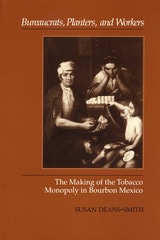
Bureaucrats, Planters, and Workers
The Making of the Tobacco Monopoly in Bourbon MexicoBy Susan Deans-Smith
University of Texas Press, 1992
Honorable Mention, Bolton Memorial Prize, Conference on Latin American History
A government monopoly provides an excellent case study of state-society relationships. This is especially true of the tobacco monopoly in colonial Mexico, whose revenues in the later half of the eighteenth century were second only to the silver tithe as the most valuable source of government income. This comprehensive study of the tobacco monopoly illuminates many of the most important themes of eighteenth-century Mexican social and economic history, from issues of economic growth and the supply of agricultural credit to rural relations, labor markets, urban protest and urban workers, class formation, work discipline, and late colonial political culture.
Drawing on exhaustive research of previously unused archival sources, Susan Deans-Smith examines a wide range of new questions. Who were the bureaucrats who managed this colonial state enterprise and what policies did they adopt to develop it? How profitable were the tobacco manufactories, and how rational was their organization? What impact did the reorganization of the tobacco trade have upon those people it affected most—the tobacco planters and tobacco workers?
This research uncovers much that was not previously known about the Bourbon government's management of the tobacco monopoly and the problems and limitations it faced. Deans-Smith finds that there was as much continuity as change after the monopoly's establishment, and that the popular response was characterized by accommodation, as well as defiance and resistance. She argues that the problems experienced by the monopoly at the beginning of the nineteenth century did not originate from any simmering, entrenched opposition. Rather, an emphasis upon political stability and short-term profits prevented any innovative reforms that might have improved the monopoly's long-term performance and productivity.
With detailed quantitative data and rare material on the urban working poor of colonial Mexico, Bureaucrats, Planters, and Workers will be important reading for all students of social, economic, and labor history, especially of Mexico and Latin America.
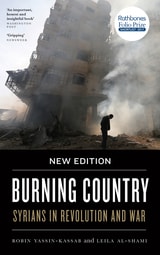
Burning Country
Syrians in Revolution and WarRobin Yassin-Kassab and Leila Al-Shami
Pluto Press, 2018
Burning Country explores the complicated reality of life in present-day Syria with unprecedented detail and sophistication, drawing on new firsthand testimonies from opposition fighters, exiles lost in an archipelago of refugee camps, and courageous human rights activists. Robin Yassin-Kassab and Leila Al-Shami expertly interweave these stories with an incisive analysis of the militarization of the uprising, the rise of the Islamists and sectarian warfare, and the role of Syria’s government in exacerbating the brutalization of the conflict. Through these accounts and a broad range of secondary source material, the authors persuasively argue that the international community has failed in its stated commitments to support the Syrian opposition movements.
This new edition brings the story up to the present, with a new chapter that covers the internationalization of the conflict, including interventions by the United States, Russia, and Iran; the rollback of ISIS; the fall of Daraya and Aleppo; the crushing of local democracy; sectarian cleansing; and the forced exile of millions of Syrians.
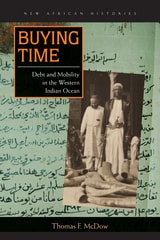
Buying Time
Debt and Mobility in the Western Indian OceanThomas F. McDow
Ohio University Press, 2018
In Buying Time, Thomas F. McDow synthesizes Indian Ocean, Middle Eastern, and East African studies as well as economic and social history to explain how, in the nineteenth century, credit, mobility, and kinship knit together a vast interconnected Indian Ocean region. That vibrant and enormously influential swath extended from the desert fringes of Arabia to Zanzibar and the Swahili coast and on to the Congo River watershed.
In the half century before European colonization, Africans and Arabs from coasts and hinterlands used newfound sources of credit to seek out opportunities, establish new outposts in distant places, and maintain families in a rapidly changing economy. They used temporizing strategies to escape drought in Oman, join ivory caravans in the African interior, and build new settlements.
The key to McDow’s analysis is a previously unstudied trove of Arabic business deeds that show complex variations on the financial transactions that underwrote the trade economy across the region. The documents list names, genealogies, statuses, and clan names of a wide variety of people—Africans, Indians, and Arabs; men and women; free and slave—who bought, sold, and mortgaged property. Through unprecedented use of these sources, McDow moves the historical analysis of the Indian Ocean beyond connected port cities to reveal the roles of previously invisible people.

By Airship to the North Pole
An Archaeology of Human ExplorationCapelotti, P. J
Rutgers University Press, 1999