Results by title
28167 books match the query 'History' and 1262 start with b

Boundaries of Repair
Memory, Emotion, and Mobility across Timor-Leste and IndonesiaVictoria Sakti
National University of Singapore Press, 2026
A study of Timorese communities that offers a human perspective on post-conflict reconciliation.
Violent conflict may end in a kind of peace. But reconciliation processes do not always work, let alone bring healing. How are families and communities to rebuild their lives when old divisions, pain, and memories still linger? Centering on social repair, this beautifully crafted study explores how families and communities in Timor-Leste and exile communities in Indonesia live with the enduring consequences of political violence, forced separation, and displacement after twenty-four years of Indonesian occupation.
Following relationships across borders and between generations, Boundaries of Repair shows how ruptures in kinship and community life reverberate across time and space, and even between the living and the dead. Rather than treating repair as a state-driven undertaking, the book reveals social repair as an uneven, fragile, and ongoing process, sustained through everyday care practices, memory work, emotional labor, and creative acts of negotiation in contexts marked by impunity and unresolved loss.
By foregrounding what it means to live with damage that cannot be fully repaired, the book challenges dominant assumptions about justice, healing, and closure. It offers a powerful account of how people renegotiate relationships, boundaries, and belonging amid traces of violence, contributing new insights to debates on post-conflict recovery, memory, displacement, and the limits of reconciliation.
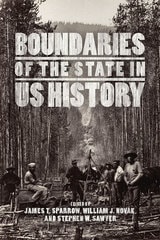
Boundaries of the State in US History
Edited by James T. Sparrow, William J. Novak, and Stephen W. Sawyer
University of Chicago Press, 2015
Here, James T. Sparrow, William J. Novak, and Stephen W. Sawyer assemble definitional essays that search for explanations to account for the extraordinary growth of US power without resorting to exceptionalist narratives. Turning away from abstract, metaphysical questions about what the state is, or schematic models of how it must work, these essays focus instead on the more pragmatic, historical question of what it does. By historicizing the construction of the boundaries dividing America and the world, civil society and the state, they are able to explain the dynamism and flexibility of a government whose powers appear so natural as to be given, invisible, inevitable, and exceptional.
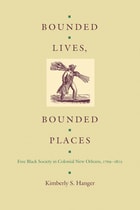
Bounded Lives, Bounded Places
Free Black Society in Colonial New Orleans, 1769–1803Kimberly S. Hanger
Duke University Press, 1997
Drawing on rare archives in Louisiana and Spain, Hanger reconstructs the world of late-eighteenth-century New Orleans from the perspective of its free black residents, and documents the common experiences and enterprises that helped solidify libres’ sense of group identity. Over the course of three and a half decades of Spanish rule, free people of African descent in New Orleans made their greatest advances in terms of legal rights and privileges, demographic expansion, vocational responsibilities, and social standing. Although not all blacks in Spanish New Orleans yearned for expanded opportunity, Hanger shows that those who did were more likely to succeed under Spain’s dominion than under the governance of France, Great Britain, or the United States.
The advent of U.S. rule brought restrictions to both manumission and free black activities in New Orleans. Nonetheless, the colonial libre population became the foundation for the city’s prosperous and much acclaimed Creoles of Color during the antebellum era.
Bounding Biomedicine
Evidence and Rhetoric in the New Science of Alternative MedicineColleen Derkatch
University of Chicago Press, 2016
Bounding Biomedicine centers on this boundary-changing era, looking at how consumer demand shook the health care hierarchy. Drawing on scholarship in rhetoric and science and technology studies, the book examines how the medical profession scrambled to maintain its position of privilege and prestige, even as its foothold appeared to be crumbling. Colleen Derkatch analyzes CAM-themed medical journals and related discourse to illustrate how members of the medical establishment applied Western standards of evaluation and peer review to test health practices that did not fit easily (or at all) within standard frameworks of medical research. And she shows that, despite many practitioners’ efforts to eliminate the boundaries between “regular” and “alternative,” this research on CAM and the forms of communication that surrounded it ultimately ended up creating an even greater division between what counts as safe, effective health care and what does not.
At a time when debates over treatment choices have flared up again, Bounding Biomedicine gives us a possible blueprint for understanding how the medical establishment will react to this new era of therapeutic change.
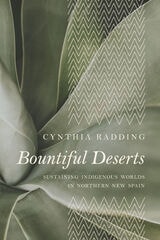
Bountiful Deserts
Sustaining Indigenous Worlds in Northern New SpainCynthia Radding
University of Arizona Press, 2022
Common understandings drawn from biblical references, literature, and art portray deserts as barren places that are far from God and spiritual sustenance. In our own time, attention focuses on the rigors of climate change in arid lands and the perils of the desert in the northern Mexican borderlands for migrants seeking shelter and a new life.
Bountiful Deserts foregrounds the knowledge of Indigenous peoples in the arid lands of northwestern Mexico, for whom the desert was anything but barren or empty. Instead, they nurtured and harvested the desert as a bountiful and sacred space. Drawing together historical texts and oral testimonies, archaeology, and natural history, author Cynthia Radding develops the relationships between people and plants and the ways that Indigenous people sustained their worlds before European contact through the changes set in motion by Spanish encounters, highlighting the long process of colonial conflicts and adaptations over more than two centuries. This work reveals the spiritual power of deserts by weaving together the cultural practices of historical peoples and contemporary living communities, centered especially on the Yaqui/Yoeme and Mayo/Yoreme.
Radding uses the tools of history, anthropology, geography, and ecology to paint an expansive picture of Indigenous worlds before and during colonial encounters. She re-creates the Indigenous worlds in both their spiritual and material realms, bringing together the analytical dimension of scientific research and the wisdom of oral traditions in its exploration of different kinds of knowledge about the natural world.
Published in cooperation with the William P. Clements Center for Southwest Studies, Southern Methodist University
Bourbon Democracy in Alabama, 1874–1890
Allen Johnston Going
University of Alabama Press, 1951
A definitive study of the political forces that reshaped Alabama after Reconstruction.
In Bourbon Democracy in Alabama, 1874-1890, historian Johnston Allen Going offers a seminal examination of the political transformation of Alabama during the years following Reconstruction. Focusing on the rise of Bourbon Democratic leadership, Going explores how a new political elite consolidated power, reshaped state institutions, and directed Alabama's economic and social development during a pivotal period in Southern history.
Drawing on extensive historical research, the book traces the efforts of Democratic leaders to restore political control after Reconstruction while promoting policies associated with the emerging New South. Going analyzes the complex interplay of political ideology, economic modernization, class interests, and racial dynamics that influenced governance and public life between 1874 and 1890. Through detailed accounts of elections, legislative initiatives, and political struggles, the study reveals how Alabama's leaders sought to balance progress, stability, and authority in a rapidly changing society.
A landmark contribution to both Alabama history and the broader study of the post-Reconstruction South, Bourbon Democracy in Alabama provides critical insight into the forces that shaped regional politics and helped define the course of Southern development in the late nineteenth century. Essential for understanding the origins of modern Alabama politics, this book is a valuable resource for historians, students, political scientists, genealogists, and anyone interested in Southern history and government.
Bourdieu and Historical Analysis
Philip S. Gorski, ed.
Duke University Press, 2012
The contributors to Bourdieu and Historical Analysis explore this expanded understanding of Bourdieu's thought and its potential contributions to analyses of large-scale social change and historical crisis. Their essays offer a primer on his concepts and methods and relate them to alternative approaches, including rational choice, Lacanian psychoanalysis, pragmatism, Latour's actor-network theory, and the "new" sociology of ideas. Several contributors examine Bourdieu's work on literature and sports. Others extend his thinking in new directions, applying it to nationalism and social policy. Taken together, the essays initiate an important conversation about Bourdieu's approach to sociohistorical change.
Contributors. Craig Calhoun, Charles Camic, Christophe Charle, Jacques Defrance, Mustafa Emirbayer, Ivan Ermakoff, Gil Eyal, Chad Alan Goldberg, Philip S. Gorski, Robert A. Nye, Erik Schneiderhan, Gisele Shapiro, George Steinmetz, David Swartz
Bourdieu's Secret Admirer in the Caucasus
A World-System BiographyGeorgi M. Derluguian
University of Chicago Press, 2005
Exploring globalization, democratization, ethnic identity, and international terrorism, Derluguian contextualizes Shanib's personal trajectory from de-Stalinization through the nationalist rebellions of the 1990s, to the recent rise in Islamic militancy. He masterfully reveals not only how external economic and political forces affect the former Soviet republics but how those forces are in turn shaped by the individuals, institutions, ethnicities, and social networks that make up those societies. Drawing on the work of Charles Tilly, Immanuel Wallerstein, and, of course, Bourdieu, Derluguian's explanation of the recent ethnic wars and terrorist acts in Russia succeeds in illuminating the role of human agency in shaping history.
Bourgeois Dignity
Why Economics Can't Explain the Modern WorldDeirdre Nansen McCloskey
University of Chicago Press, 2010
The big economic story of our times is not the Great Recession. It is how China and India began to embrace neoliberal ideas of economics and attributed a sense of dignity and liberty to the bourgeoisie they had denied for so long. The result was an explosion in economic growth and proof that economic change depends less on foreign trade, investment, or material causes, and a whole lot more on ideas and what people believe.
Or so says Deirdre N. McCloskey in Bourgeois Dignity, a fiercely contrarian history that wages a similar argument about economics in the West. Here she turns her attention to seventeenth- and eighteenth-century Europe to reconsider the birth of the industrial revolution and the rise of capitalism. According to McCloskey, our modern world was not the product of new markets and innovations, but rather the result of shifting opinions about them. During this time, talk of private property, commerce, and even the bourgeoisie itself radically altered, becoming far more approving and flying in the face of prejudices several millennia old. The wealth of nations, then, didn’t grow so dramatically because of economic factors: it grew because rhetoric about markets and free enterprise finally became enthusiastic and encouraging of their inherent dignity.
An utterly fascinating sequel to her critically acclaimed book The Bourgeois Virtues, Bourgeois Dignity is a feast of intellectual riches from one of our most spirited and ambitious historians—a work that will forever change our understanding of how the power of persuasion shapes our economic lives.
Bourgeois Equality
How Ideas, Not Capital or Institutions, Enriched the WorldDeirdre Nansen McCloskey
University of Chicago Press, 2016
Why? Most economists—from Adam Smith and Karl Marx to Thomas Piketty—say the Great Enrichment since 1800 came from accumulated capital. McCloskey disagrees, fiercely. “Our riches,” she argues, “were made not by piling brick on brick, bank balance on bank balance, but by piling idea on idea.” Capital was necessary, but so was the presence of oxygen. It was ideas, not matter, that drove “trade-tested betterment.” Nor were institutions the drivers. The World Bank orthodoxy of “add institutions and stir” doesn’t work, and didn’t. McCloskey builds a powerful case for the initiating role of ideas—ideas for electric motors and free elections, of course, but more deeply the bizarre and liberal ideas of equal liberty and dignity for ordinary folk. Liberalism arose from theological and political revolutions in northwest Europe, yielding a unique respect for betterment and its practitioners, and upending ancient hierarchies. Commoners were encouraged to have a go, and the bourgeoisie took up the Bourgeois Deal, and we were all enriched.
Few economists or historians write like McCloskey—her ability to invest the facts of economic history with the urgency of a novel, or of a leading case at law, is unmatched. She summarizes modern economics and modern economic history with verve and lucidity, yet sees through to the really big scientific conclusion. Not matter, but ideas. Big books don’t come any more ambitious, or captivating, than Bourgeois Equality.
Bowers Mansion
The Legacy of a Comstock FamilyTamera J. Buzick
University of Nevada Press, 2026
Boxcar Politics
The Hobo in U.S. Culture and Literature, 1869-1956John Lennon
University of Massachusetts Press, 2014
John Lennon maps the rise and demise of the political hobo from the nineteenth-century introduction of the transcontinental railroad to the Federal Aid Highway Act of 1956. Intertwining literary, historical, and theoretical representations of the hobo, he explores how riders and writers imagined alternative ways that working-class people could use mobility to create powerful dissenting voices outside of fixed hierarchal political organizations. Placing portrayals of hobos in the works of Jack London, Jim Tully, John Dos Passos, and Jack Kerouac alongside the lived reality of people hopping trains (including hobos of the IWW, the Scottsboro Boys, and those found in numerous long-forgotten memoirs), Lennon investigates how these marginalized individuals exerted collective political voices through subcultural practices.
Boxing the Kangaroo
A Reporter's MemoirRobert J. Donovan
University of Missouri Press, 2000
"The host had brought out a pair of boxing gloves and asked the president if any of his friends would like to indulge in the Australian sport of boxing kangaroos. Once the president of the United States had selected me, there was almost no way out, unless I ran home to tell my mother."
In Boxing the Kangaroo: A Reporter's Memoir, Robert J. Donovan shares many exciting events that highlighted his stellar journalistic career. As an investigative reporter during five presidential administrations, Donovan has had many "insider" experiences. His memoir delightfully humanizes each of the five presidents he reported on: Truman, Eisenhower, Kennedy, Johnson, and Nixon.
Donovan began his career working as a night copyboy for the Buffalo Courier-Express, earning seven dollars a week. In 1937, he got a job as a reporter for the New York Herald Tribune, where he worked for many years. By 1942 the Herald Tribune had assigned Donovan to cover City Hall and the lively activities of Fiorello La Guardia. After his service in World War II he returned to the Herald Tribune to cover the man from Missouri who followed FDR. Ultimately, Donovan served as chief of the New York Herald Tribune Washington bureau and the Los Angeles Times Washington bureau.
Donovan traveled across the country with Harry S. Truman during his "Give 'Em Hell, Harry" campaign. He covered Dwight D. Eisenhower's election, about which he says there was never a doubt--Ike, the war hero, mesmerized the country. He was a personal friend of John F. Kennedy, having written about the President's PT-109 heroics in World War II, and was on the scene the day Kennedy was assassinated: "The drama in the second press bus, in which I rode in the presidential motorcade in Dallas, is unforgettable. `Why has the motorcade stopped?' a reporter asked as we drew near the Texas School Book Depository. . . . `I heard a shot,' another said. A voice in the rear contradicted him. `That was a motorcycle backfiring.'" Donovan would find out shortly before the rest of the world that, in fact, it was not a motorcycle backfiring, but the firing of an assassin's bullet that killed the nation's thirty-fifth president.
Boxing the Kangaroo is one of the best "I was there" accounts of American history. This fascinating book will appeal to journalists, American history buffs, and the general reader alike.
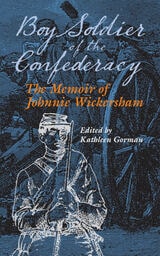
Boy Soldier of the Confederacy
The Memoir of Johnnie WickershamEdited by Kathleen Gorman
Southern Illinois University Press, 2006
Johnnie Wickersham was fourteen when he ran away from his Missouri home to fight for the Confederacy. Fifty years after the war, he wrote his memoir at the request of family and friends and distributed it privately in 1915. Boy Soldier of the Confederacy: The Memoir of Johnnie Wickersham offers not only a rare look into the Civil War through the eyes of a child but also a coming-of-age story.
Edited by Kathleen Gorman, the volume presents a new introduction and annotations that explain how the war was glorified over time, the harsh realities suppressed in the nation’s collective memory. Gorman describes a man who nostalgically remembers the boy he once was. She maintains that the older Wickersham who put pen to paper decades later likely glorified and embellished the experience, accepting a polished interpretation of his own past.
Wickersham recounts that during his first skirmish he was "wild with the ecstasy of it all" and notes that he was "too young to appreciate the danger." The memoir traces his participation in an October 1861 Confederate charge against Springfield, Missouri; his fight at the battle of Pea Ridge in March 1862; his stay at a plantation he calls Fairyland; and the battle of Corinth.
The volume details Wickersham’s assignment as an orderly for General Sterling Price, his capture at Vicksburg in 1863, his parole, and later his service with General John Bell Hood for the 1864 fighting around Atlanta. Wickersham also describes the Confederate surrender in New Orleans, the reconciliation of the North and the South, and his own return and reunification with his family.
While Gorman’s incisive introduction and annotations allow readers to consider how memories can be affected by the passage of time, Wickersham’s boy-turned-soldier tale offers readers an engaging narrative, detailing the perceptions of a child on the cusp of adulthood during a turbulent period in our nation’s history.
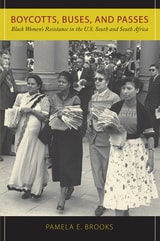
Boycotts, Buses, and Passes
Black Women's Resistance in the U.S. South and South AfricaPamela E. Brooks
University of Massachusetts Press, 2008
In the mid-1950s, as many developing nations sought independence from colonial rule, black women in the American South and in South Africa launched parallel campaigns to end racial injustice within their respective communities. Just as the dignified obstinacy of Mrs. Rosa Parks sparked the Montgomery bus boycott in 1955, the 20,000 South African women who marched in Pretoria a year later to protest the pass laws signaled a new wave of resistance to the system of apartheid. In both places women who had previously been consigned to subordinate roles brought fresh leadership to the struggle for political freedom and social equality.
In this book, Pamela E. Brooks tells their story, documenting the extraordinary achievements of otherwise ordinary women. In comparing the experiences of black women activists in two different parts of the African diaspora, Brooks draws heavily on oral histories that provide clear, and often painful, insight into their backgrounds, their motives, their hopes, and their fears. We learn how black women from all walks of life—domestic and factory workers, householders, teachers, union organizers, churchwomen, clubwomen, rural and urban dwellers alike—had to overcome their class differences and work through the often difficult gender relations within their families and communities. Yet eventually they came together to forge their own political organizations, such as the Women's Political Council and the Federation of South African Women, or joined orga-nizations of women and men, such as the Montgomery Improvement Association and the African National Congress, to advance the common agenda of black liberation.By tracing the dual rise of political consciousness and activism among the black women of the U.S. South and South Africa, Brooks not only illuminates patterns that have long been overlooked but places that shared history within the context of a larger global struggle to bring an end to the vestiges of European colonialism.
Boys Abducted
The Homoerotics of Empire and Race in Early ModernityAbdulhamit Arvas
Duke University Press, 2025
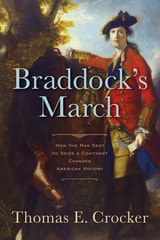
Braddock's March
How the Man Sent to Seize a Continent Changed American HistoryThomas E. Crocker
Westholme Publishing, 2009
Winner of the 2011 New York Society of Colonial Wars Distinguished Book Award
“The strength of this book lies in Crocker’s presentation of the battle and the complicated logistics involved.”—Times Literary Supplement “Braddock’s March is arguably the first truly comprehensive history devoted exclusively to the calamitous march that remade North America. . . . Braddock’s story is superb history.”—Weekly Standard “Drawing on original sources, Crocker grittily reconstructs the advance of Edward Braddock’s army on Fort Duquesne. . . . Attentive to detail, Crocker will engage colonial-history readers in this well illustrated book.”—Booklist
“Both Braddock’s epic march and subsequent destruction are brought to life by Thomas E. Crocker in Braddock’s March, his impeccably researched account of an important but largely forgotten chapter in American history. . . . It all adds up to a stirring tale.”—Washington Times
“Before we parted, the General told me he should never see me more; for he was going with a handful of men to conquer whole nations; and to do this they must cut their way through unknown woods. He produced a map of the country, saying at the same time, ‘Dear Pop, we are sent like sacrifices to the altar.’” - George Anne Bellamy on General Edward Braddock’s departure
In January 1755, Major General Edward Braddock was sent by Great Britain on a mission to drive France once and for all from the New World. Accompanied by the largest armed expeditionary force ever sent to North America, Braddock’s primary target was the Forks of the Ohio, where he planned to seize Fort Duquesne (at present-day Pittsburgh, Pennsylvania), and then march north into Canada. After landing in Alexandria, Virginia, and organizing his troops and supply chain, Braddock and his expedition began its nearly 250-mile trek, heroically cutting through uncharted wilderness, fording rivers, and scaling the Appalachian mountains, all while hauling baggage and heavy artillery. Braddock was joined on this epic mission by a young Virginia colonel, George Washington, and others who would later play major roles in the American Revolution, including Horatio Gates, Thomas Gage, and Charles Lee; among those driving the expedition’s wagons were Daniel Boone and Daniel Morgan. Having withstood the harsh frontier and finally marching upon Fort Duquesne on a hot July morning, Braddock’s exhausted column was ambushed by a combined French and Indian force. Over two-thirds of Braddock’s British and colonial troops were killed or wounded, including Braddock himself, struck by a bullet in the chest while attempting to rally his disoriented troops. George Washington miraculously escaped harm despite four bullet holes through his clothing. With this battle, North America became the greatest stake in the global war between France and Great Britain.
In Braddock’s March: How the Man Sent to Seize a Continent Changed American History, Thomas E. Crocker tells the riveting story of one of the most important events in colonial America. Not only did Braddock’s expedition have a profound impact on American political and military developments, this fateful march laid the foundation for the “National Pike,” the major road for westward expansion, launched the career of George Washington, and sowed the seeds of dissent between England and its colonies that would ultimately lead to the American Revolution.
Braided Worlds
Alma Gottlieb and Philip Graham
University of Chicago Press, 2012
Branching Out
The Public History of TreesEdited by Leah S. Glaser and Philip Levy
University of Massachusetts Press, 2025
Trees are not just natural resources; they are also cultural ones that present unique challenges and opportunities for public historians. Trees can serve as important objects of memory, recalling past triumphs or tragedies. They can be the last living witness to important events or community stories. Trees can also be objects of preservation, sometimes as individuals, other times as stands or even forests, all of which can take on historical significance for people, sites, and institutions. But as living entities they defy the kind of permanent legal preservation applicable to buildings and other non-living historical objects. Furthermore, their organic fragility can actually make them significant problems for historical sites and local preservation activities. For example, communities have had to cope with extensive tree loss from storm and fire damage, and dying trees can drop limbs or topple over, creating considerable danger to people and resources. Climate-change-driven increasing storm intensity has also highlighted the ways that trees—however historical or beloved—can become considerable threats.
The fourteen new essays in this volume explore the many ways that trees are an integral part of public history practice and sites. The authors draw on a range of approaches and historiographies to look at how memories of race-based hate, patriotic stories, community identities, and changed places have all centered on trees. In addition to contributions from the volume editors, this collection features scholarship by Sonja Dümpelmann Andrew Hurley, Carolyn M. Barske Crawford, Brian Dempsey, Liz Sargent, Sasha Coles, Mariaelena DiBenigno, Evan Haefeli, Krista McCracken, Alena Pirok, Christian Kosmas Mayer Alaina Scapicchio, and David Glassberg.
Branding Brazil
Transforming Citizenship on ScreenLeslie L. Marsh
Rutgers University Press, 2021
Branding Texas
Performing Culture in the Lone Star StateBy Leigh Clemons
University of Texas Press, 2008
Ask anyone to name an archetypal Texan, and you're likely to get a larger-than-life character from film or television (say John Wayne's Davy Crockett or J. R. Ewing of TV's Dallas) or a politician with that certain swagger (think LBJ or George W. Bush). That all of these figures are white and male and bursting with self-confidence is no accident, asserts Leigh Clemons. In this thoughtful study of what makes a "Texan," she reveals how Texan identity grew out of the history—and, even more, the myth—of the heroic deeds performed by Anglo men during the Texas Revolution and the years of the Republic and how this identity is constructed and maintained by theatre and other representational practices.
Clemons looks at a wide range of venues in which "Texanness" is performed, including historic sites such as the Alamo, the battlefield at Goliad, and the San Jacinto Monument; museums such as the Bob Bullock Texas State History Museum; seasonal outdoor dramas such as Texas! at Palo Duro Canyon; films such as John Wayne's The Alamo and the IMAX's Alamo: The Price of Freedom; plays and TV shows such as the Tuna trilogy, Dallas, and King of the Hill; and the Cavalcade of Texas performance at the 1936 Texas Centennial. She persuasively demonstrates that these performances have created a Texan identity that has become a brand, a commodity that can be sold to the public and even manipulated for political purposes.

Brave Are My People
Indian Heroes Not ForgottenFrank Waters
Ohio University Press, 1998
Pontiac, Sequoyah, Geronimo, Sitting Bull, Chief Joseph, and Chief Seattle. These legendary names are familiar even to the uninitiated in Native American history, yet the life stories of these great spiritual leaders have been largely unknown.
In this, his last book, internationally celebrated author Frank Waters makes vivid the poignant, humorous, and tragic stories of these neglected and heroic Native Americans. From the brilliant tactical abilities of famed warriors to the eloquent oratory of indigenous philosophers, poets, and statesmen, the profiles in Brave Are My People help correct this error of omission.
Now in paperback, Brave Are My People represents a major contribution to Water’s remarkable literary work.
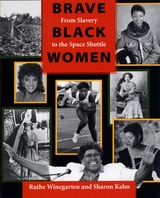
Brave Black Women
From Slavery to the Space ShuttleBy Ruthe Winegarten and Sharon Kahn
University of Texas Press, 1997
Brave black women have played important roles in American history. Before the Emancipation Proclamation in 1863, black women bore the bonds of slavery with courage and strength. Since Emancipation, black women have supported schools, churches, and civic organizations, entered many professions, and helped to build strong communities. This book dramatizes their impressive story and celebrates their achievements.
Writing especially for students in grades four through eight, Ruthe Winegarten and Sharon Kahn trace the history of black women from slavery until today. Their story includes many heroines, from Emily Morgan, "the Yellow Rose of Texas," to pioneer aviator Bessie Coleman, astronaut Mae Jemison, opera singer Barbara Conrad, actresses Phylicia Rashad and Debbie Allen, and Congresswoman Barbara Jordan, whose life story forms the final chapter.
In addition to these famous black women, the book also profiles teachers, businesswomen, civil rights leaders, community activists, doctors, nurses, athletes, musicians, artists, and political leaders. Adapted from the award-winning Black Texas Women: 150 Years of Trial and Triumph, it will be fascinating reading for children and their parents and grandparents, teachers, and librarians.

Brave new world
Imperial and democratic nation-building in Britain between the warsVolume editor Laura Beers and Geraint Thomas
University of London Press, 2012
Braxton Bragg and Confederate Defeat V. II
Judith Lee Hallock
University of Alabama Press, 2009
In the summer of 1863, Confederate General Braxton Bragg was commander of the Army of Tennessee., still reeling from its defeat in January at Murfreesboro, Tennessee. Failing to establish a strong defensive position at either Tullahoma or Chattanooga, Bragg saw the heartland of the South gradually slip away from him. Victory at Chickamauga Creek in September—Bragg’s last military success—was followed by disaster at Missionary Ridge and, shortly thereafter, his removal from army command.
Within three months, however, President Jefferson Davis had restored Bragg to active military involvement, naming him military adviser for the Confederacy. Here, finally, Bragg’s skills as an administrator and organizer bore fruit—as did his penchant for provoking quarrels and disunity within the military establishment. Reassigned to field command in late 1864, Bragg concluded his army service with defeats at Wilmington and Bentonville, North Carolina. The prevailing view of Bragg’s is a false one. Rather, he was a valuable asset to the Confederacy, a talented organizer whose gifts were misused by the nation he served. For the first time, Bragg’s tenure in Richmond is examined carefully and evaluated. Contrary to the common view that Bragg was nothing more than a sycophant to President Davis, this study shows that he and Davis often disagreed on policy. Much of Bragg’s present reputation among civil war scholars is based upon how contemporaries viewed him. Despite Bragg’s determined devotion to the Confederacy, his frailties have shaped the literature to such an extent that his real accomplishments have been distorted or ignored. In this study the author has tried, as General Joseph E. Johnston once advised, to “have a little charity for Bragg.”
Judith Lee Hallock draws a balanced picture of Bragg and of his important role in the Confederacy beginning in 1863. Her volume continues and completes the biography of Bragg published in Volume I by Grady McWhiney in 1969. Along with the military details, the author provides a full accounting of Bragg’s fractious relationships with other members of the military, a critical factor in this period for the entire Confederate command. This sympathetic biography of Bragg gives valuable insight into the workings of the Confederacy in the last two years of its struggle for independence.
Braxton Bragg and Confederate Defeat
Volume 1Grady McWhiney
University of Alabama Press, 1991
McWhiney intended this work – first published in 1969 – to be the first of two volumes covering the life of the Confederacy’s most problematic general. This reprint edition is issued along with Braxton Bragg and Confederate Defeat, Volume II by Judith Lee Hallock. McWhiney’s work carries Bragg through the defeat at Murfreesboro in January 1863, and Hallock’s book continues through the staff appointment in Richmond and Bragg’s final days as a private citizen.
Brazil Imagined
1500 to the PresentBy Darlene J. Sadlier
University of Texas Press, 2008
The first comprehensive cultural history of Brazil to be written in English, Brazil Imagined: 1500 to the Present captures the role of the artistic imaginary in shaping Brazil's national identity. Analyzing representations of Brazil throughout the world, this ambitious survey demonstrates the ways in which life in one of the world's largest nations has been conceived and revised in visual arts, literature, film, and a variety of other media.
Beginning with the first explorations of Brazil by the Portuguese, Darlene J. Sadlier incorporates extensive source material, including paintings, historiographies, letters, poetry, novels, architecture, and mass media to trace the nation's shifting sense of its own history. Topics include the oscillating themes of Edenic and cannibal encounters, Dutch representations of Brazil, regal constructs, the literary imaginary, Modernist utopias, "good neighbor" protocols, and filmmakers' revolutionary and dystopian images of Brazil. A magnificent panoramic study of race, imperialism, natural resources, and other themes in the Brazilian experience, this landmark work is a boon to the field.
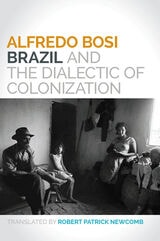
Brazil and the Dialectic of Colonization
Alfredo Bosi
University of Illinois Press, 2015
Portugal extracted wealth from its Brazilian colony. Slaves--first indigenous peoples, later Africans--mined its ore and cut its sugarcane. From the customs of the colonists and the aspirations of the enslaved rose Brazil. Bosi scrutinizes signal points in the creation of Brazilian culture--the plays and poetry, the sermons of missionaries and Jesuit priests, the Indian novels of José de Alencar and the Voices of Africa of poet Castro Alves. His portrait of the country's response to the pressures of colonial conformity offers a groundbreaking appraisal of Brazilian culture as it emerged from the tensions between imposed colonial control and the African and Amerindian cults--including the Catholic-influenced ones--that resisted it.
Brazil and the Quiet Intervention, 1964
By Phyllis R. Parker
University of Texas Press, 1979
When the Brazilian military overthrew President João Goulart in 1964, American diplomats characterized the coup as a "100 percent Brazilian movement." It has since become apparent, largely through government documents declassified during the course of research for this book, that the United States had an invisible but pervasive part in the coup.
Relying principally on documents from the Johnson and Kennedy presidential libraries, Phyllis Parker unravels the events of the coup in fascinating detail. The evidence she presents is corroborated by interviews with key participants.
U.S. interference in the Goulart regime began when normal diplomatic pressure failed to produce the desired enthusiasm from him for the Alliance of Progress. Political and economic manipulations also proving ineffective, the United States stood ready to back a military takeover of Brazil's constitutional democracy.
U.S. operation "Brother Sam" involved shipments of petroleum, a naval task force, and tons of arms and ammunition in preparation for intervention during the 1964 coup. When the Brazilian military gained control without calling on the ready assistance, U.S. policy makers immediately accorded recognition to the new government and set in motion plans for economic support.
Brazil and the World System
Edited and with an introduction by Richard Graham; with chapters by Fernando A. Novais, John R. Hall, and Luís Carlos Soares
University of Texas Press, 1991
Has the world economy shaped and defined Brazil’s economic and political history and, if so, to what extent? Is Brazil’s past to be explained principally by its insertion in a single world capitalist system? The authors of the three essays in this volume reflect critically on these questions along with the following: Should the determining factors be understood as sociological-cultural (as in a heritage of patrimonial rule) or were they based on material reality? What was the connection between the presence of slavery in the Americas and the emergence of capitalism in Europe? What accounts for Brazil’s centuries-long reliance on exports and the slow development of its industry?
The chapters in this book draw contrasting judgments on virtually every major issue in Brazilian history because they begin from divergent premises. In arguing their cause, noted scholars John R. Hall, Fernando A. Novais, and Luís Carlos Soares provide a formidable intellectual point and counterpoint whose theoretical assumptions bear heavily on all social scientists engaged in exploring colonialism, imperialism, capitalism, dependency, and relative international poverty.
Brazil and the World System provides provocative insights not only about Brazil but also about the nature of colonialism in general and its relationship to the rise of capitalism in Europe. It should appeal to Latin Americanists of all disciplinary persuasions as well as to general readers curious about great patterns of change in history. Stuart Schwartz, director of the Center for Early Modern History at the University of Minnesota, says, “ . . . an excellent collection . . . North American scholarship will find these essays an eye-opener.
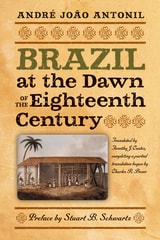
Brazil at the Dawn of the Eighteenth Century
André João Antonil
Tagus Press, 2012
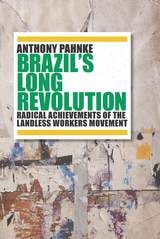
Brazil's Long Revolution
Radical Achievements of the Landless Workers MovementAnthony Pahnke
University of Arizona Press, 2018
Brazil’s Long Revolution shows how the Movimento dos Trabalhadores Rurais Sem Terra (the Brazilian Landless Workers Movement, or MST) positioned itself to take advantage of challenging economic times to improve its members’ lives. Pahnke analyzes the origins and development of the movement, one of the largest and most innovative social movements currently active. Over the last three decades, the MST has mobilized more than a million Brazilians through grassroots initiatives, addressing political and economic inequalities.
The MST and its allies—together known as the Landless Movement—confront inequality by constructing democratic ways of governing economic, political, and social life in collectivized production cooperatives, movement-run schools, and decentralized agrarian reform encampments and settlements. Their strategies for organizing political, economic, and social life challenge the current neoliberal orthodoxy that privileges individualized, market-oriented practices.
Based on research conducted over five years, Pahnke’s book places the Landless Movement squarely within the tradition of Latin American revolutionary struggles, while at the same time showing the potential for similar forms of radical resistance to develop in the United States and elsewhere in the Global North.
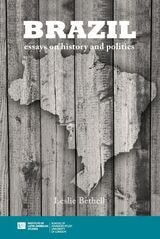
Brazil
Essays on History and PoliticsLeslie Bethell
University of London Press, 2018
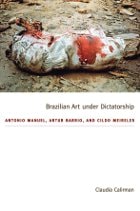
Brazilian Art under Dictatorship
Antonio Manuel, Artur Barrio, and Cildo MeirelesClaudia Calirman
Duke University Press, 2012
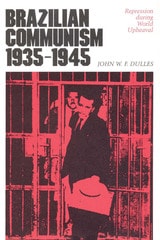
Brazilian Communism, 1935-1945
Repression during World UpheavalBy John W. F. Dulles
University of Texas Press, 1983
The Brazilian Communist Party was one of the largest Communist parties in Latin America until its split and dissolution in the 1990s. Although not granted legal status as a political party of Brazil until 1985, the Partido Comunista Brasileiro (PCB) has been tolerated by that country's regime.
Such governmental tolerance of the PCB was not always the case. In the past, the regime of Getúlio Vargas practiced savage forms of repression against Brazilian leftists, whose "Red extremism" was cited by both government leaders and the press as sufficient cause for Vargas' adoption of the most extreme measures.
Brazilian Communism, 1935–1945 is an objective and remarkably comprehensive account of the Brazilian Communist Party's struggle to survive those days of repression.
From his prison cell, PCB leader Luís Carlos Prestes guided the Party's quarreling factions. All who were associated with the Left shared a common enemy: the police, who used the most brutal forms of torture to extract information about leftist activities. Young Elza Fernandes, companion of the PCB's secretary general, was one whom the police interrogated. Suspecting that she had betrayed them, the Party itself arranged her murder.
Dulles' vivid account of this violent chapter in Latin American history is based on exclusive interviews with leading activists of the period and exhaustive research in the archives of both the PCB and the Brazilian police. The results make fascinating reading for Latin Americanists, historians of World War II, and students of international Communism alike.
Brazilian Popular Music and Citizenship
Idelber Avelar and Christopher Dunn, eds.
Duke University Press, 2011
Contributors. Idelber Avelar, Christopher Dunn, João Freire Filho, Goli Guerreiro, Micael Herschmann, Ari Lima, Aaron Lorenz, Shanna Lorenz, Angélica Madeira, Malcolm K. McNee, Frederick Moehn, Flávio Oliveira, Adalberto Paranhos, Derek Pardue, Marco Aurélio Paz Tella, Osmundo Pinho, Carlos Sandroni, Daniel Sharp, Hermano Vianna, Wivian Weller
Brazilian Women's Filmmaking
From Dictatorship to DemocracyLeslie Marsh
University of Illinois Press, 2012
At most recent count, there are no fewer than forty-five women in Brazil directing or codirecting feature-length fiction or documentary films. In the early 1990s, women filmmakers in Brazil were credited for being at the forefront of the rebirth of filmmaking, or retomada, after the abolition of the state film agency and subsequent standstill of film production. Despite their numbers and success, films by Brazilian women directors are generally absent from discussions of Latin American film and published scholarly works.
Brazilian-African Diaspora in Ghana
The Tabom, Slavery, Dissonance of Memory, Identity, and Locating HomeKwame Essien
Michigan State University Press, 2016
Breach of Faith
A Crisis of Coverage in the Age of Corporate NewspaperingGene Roberts
University of Arkansas Press, 2005
For more than two years, legendary editor Gene Roberts led a group of journalists in an unprecedented study of the newspaper industry for the American Journalism Review. This is the second volume of their findings. The first, Leaving Readers Behind: The Age of Corporate Newspapering, documented the storm of buying, selling, and consolidation that is transforming the American press. This second volume explores the consequences of these changes for ordinary communities and for the nation, arguing that they place democracy itself in peril.
Contributors include Peter Arnett, Mary Walton, Charles Layton, John Herbers, James McCartney, Carl Sessions Stepp, Lewis M. Simons, Chip Brown and Winnie Hu.
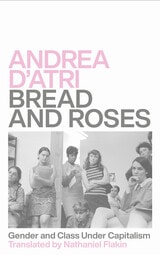
Bread and Roses
Gender and Class Under CapitalismAndrea D'Atri
Pluto Press, 2021

Bread and Work
The Experience of Unemployment 1918-39Matt Perry
Pluto Press, 2000
Looking beyond statistics and economic cycles, Perry investigates the human impact of unemployment. He uncovers the experience of being jobless from the perspective of those who lived through it, their employers and their communities. He uses oral history, memoirs, literary accounts, and newspaper articles to reveal the reality of unemployment.
Perry argues that the scale of the crisis has been minimised by historians who have tended to emphasise that prolonged unemployment was the problem of the distressed fringe.
Finally, Perry argues that the lessons of the 1930s have direct relevance today since the structural problems of industrial capitalism remain inherent.

Bread of Dreams
Food and Fantasy in Early Modern EuropePiero Camporesi
University of Chicago Press, 1989
"Camporesi is as much a poet as a historian. . . . His appeal is to the senses as well as to the mind. . . . Fascinating in its details and compelling in its overall message."—Vivian Nutton, Times Literary Supplement
"It is not often that an academic monograph in history is also a book to fascinate the discriminating general reader. Bread of Dreams is just that."—Kenneth McNaught, Toronto Star
"Not religion but bread was the opiate of the poor, Mr. Camporesi argues. . . . Food has always been a social and mythological construct that conditions what we vainly imagine to be matters of personal taste. Our hunger for such works should tell us that food is not only good but essential to think and to read as if our lives depended on it, which they do."—Betty Fussell, New York Times Book Review
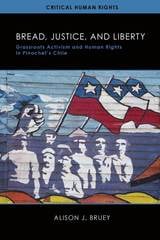
Bread, Justice, and Liberty
Grassroots Activism and Human Rights in Pinochet's ChileAlison J. Bruey
University of Wisconsin Press, 2020
As Bruey shows, crucial to the popular movement built in the 1970s were the activism of both men and women and the coalition forged by liberation-theology Catholics and Marxist-Left militants. These alliances made possible the mass protests of the 1980s that paved the way for Chile's return to democracy, but the changes fell short of many activists' hopes. Their grassroots demands for human rights encompassed not just an end to state terror but an embrace of economic opportunity and participatory democracy for all.
Deeply grounded by both extensive oral history interviews and archival research, Bread, Justice, and Liberty offers innovative contributions to scholarship on Chilean history, social movements, popular protest and democratization, neoliberal economics, and the Cold War in Latin America.
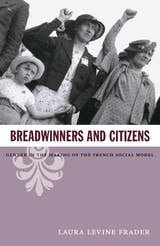
Breadwinners and Citizens
Gender in the Making of the French Social ModelLaura Levine Frader
Duke University Press, 2008
Frader’s analysis moves between the everyday lives of ordinary working women and men and the actions of national policymakers, political parties, and political movements, including feminists, pro-natalists, and trade unionists. In the years following World War I, the many women and an increasing number of immigrant men in the labor force competed for employment and pay. Family policy was used not only to encourage reproduction but also to regulate wages and the size of the workforce. Policies to promote married women’s and immigrants’ departure from the labor force were more common when jobs were scarce, as they were during the Depression. Frader contends that gender and ethnicity exerted a powerful and unacknowledged influence on French social policy during the Depression era and for decades afterward.
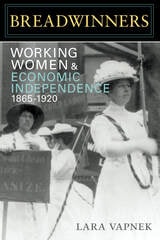
Breadwinners
Working Women and Economic Independence, 1865-1920Lara Vapnek
University of Illinois Press, 2009
Analyzing disjunctions between middle-class and working-class women's ideas of independence, Vapnek highlights the agendas for change advanced by leaders such as Jennie Collins, Leonora O'Reilly, and Helen Campbell and organizations such as the National Consumers' League, the Women's Educational and Industrial Union, and the Women's Trade Union League. Locating households as important sites of class conflict, Breadwinners recovers the class and gender politics behind the marginalization of domestic workers from labor reform while documenting the ways in which working-class women raised their voices on their own behalf.

Break Point
Two Minnesota Athletes and the Road to Title IXSheri Brenden
University of Minnesota Press, 2022
How two teenage girls in Minnesota jump-started a revolution in high school athletics
Peggy Brenden, a senior, played tennis. Toni St. Pierre, a junior, was a cross country runner and skier. All these two talented teenagers wanted was a chance to compete on their high school sports teams. But in Minnesota in 1972 the only way on the field with the boys ran through a federal court—so that was where the girls went. Break Point tells the story, for the first time, of how two teenagers took on the unequal system of high school athletics, setting a legal precedent for schools nationwide before the passage of Title IX.
As Peggy’s younger sister, author Sheri Brenden is uniquely positioned to convey the human drama of the case, the stakes, and the consequences for two young women facing the legal machinery of the state, in court and in school. In an account that begins with Peggy painstakingly typing her appeal to the Minnesota Civil Liberties Union and concludes with a long view of what Brenden v. Independent School District 742 set in motion, Sheri Brenden summons the salient details of this landmark case as it makes its way through the courts. Peggy and Toni, coaches, administrators, and experts testify before Judge Miles Lord, whose decision, upheld in a precedent-setting appeal, would change these girls’ lives and open up athletic opportunities for innumerable others.
Grounded in newspaper coverage, court records, and interviews, Brenden’s deeply researched, scrupulously reported book is at heart the story of two talented teenage girls whose pluck and determination—and, often, heartache—led to a victory much greater than any high school championship.
Breaking America
The Radical Abolitionists of Quincy, IllinoisTerrell Dempsey
University of Missouri Press, 2026
In this engaging new work, Terrell Dempsey and Patrick Hotle draw from newly discovered and underutilized primary sources to craft a detailed narrative history of the rise of a group of radical abolitionists in Quincy, Illinois, and the outsized, if mostly overlooked, influence they had on the dissolution of the Union.
The story begins with the 1830 arrival in Marion County, Missouri, of Dr. David Nelson, a Presbyterian minister and supporter of the American Colonization Society. After hearing a speech by Theodore B. Weld, Nelson was converted to the abolitionist cause and went on to recruit Elijah Lovejoy into the region’s nascent anti-slavery movement. Nelson’s activities resulted in the creation of an active anti-abolitionist organization in Northeast Missouri that ended up running him out of the state and across the river to Quincy, Illinois, at the same time Lovejoy sought shelter in Alton, Illinois.
In Quincy, Nelson and a group of like-minded moderate anti-slavery activists opened a manual labor school called the Mission Institute. Following the murder of Lovejoy by a pro-slavery mob, a small band of abolitionists at the Mission Institute became radicalized and decided to aid enslaved people in their quest for freedom. After three of these abolitionists were captured in Missouri and sentenced to twelve years in prison, others at the Mission Institute published a call for the Illinois Anti-Slavery Society to organize an underground railroad in Illinois. The Society officially committed to assisting enslaved people to escape slavery in May of 1842, which triggered a hostile reaction from enslavers in Missouri who went on to organize patrols, seek stricter state laws, and attempt to sabotage the underground railroad in neighboring Illinois.
In Breaking America, Dempsey and Hotle demonstrate the impact of the Quincy abolitionists on the later Dred Scott cases. The authors trace a sequence of revivals, public meetings, daring escapes, over-reactions, judicial decisions, and violence, providing a roadmap for how Missouri judicial opinion changed from “once free, always free” to “once a slave, always a slave” under Missouri Law. Breaking America is an important new addition to the history of abolitionism, the Dred Scott decision, and the eventual dissolution of the Union.
Breaking Babe Ruth
Baseball's Campaign Against Its Biggest StarEdmund F. Wehrle
University of Missouri Press, 2025

Breaking Bad and Cinematic Television
Angelo Restivo
Duke University Press, 2019
Breaking Chains
Slavery on Trial in the Oregon TerritoryR. Gregory Nokes
Oregon State University Press, 2013
In Breaking Chains, R. Gregory Nokes tells the story of the only slavery case adjudicated in Oregon’s pre-Civil War courts—Holmes v. Ford. Through the lens of this landmark case, Nokes explores the historical context of racism in Oregon and the West, reminding readers that there actually were slaves in Oregon, though relatively few in number.
Drawing on the court record, Nokes offers an intimate account of the relationship between a slave and his master from the slave’s point of view. He also explores the experiences of other slaves in early Oregon, examining attitudes toward race and revealing contradictions in the state’s history. Oregon was the only free state admitted to the union with a voter-approved constitutional clause banning African Americans and, despite the prohibition of slavery in the state, many in Oregon tolerated it and supported politicians who advocated for slavery, including Oregon’s first territorial governor.
Breaking Chains sheds light on a somber part of Oregon’s history, bringing the story of slavery in Oregon to a broader audience. The book will appeal to readers interested in Pacific Northwest history and in the history of slavery in the United States.