Results by title
22279 books match the query 'Social Science' and 1147 start with b
Brilliant Imperfection
Grappling with CureEli Clare
Duke University Press, 2017
Bring Down the Little Birds
On Mothering, Art, Work, and Everything ElseCarmen Giménez Smith
University of Arizona Press, 2010
Writing in fragmented yet coherent sections, the author shares with us her interior monologue, affording the reader a uniquely honest, insightful, and deeply personal glimpse into a woman’s first and second journeys into motherhood. Giménez Smith begins Bring Down the Little Birds by detailing the relationship with her own mother, from whom her own concept of motherhood originated, a conception the author continually reevaluates and questions over the course of the book.
Combining fragments of thought, daydreams, entries from notebooks both real and imaginary, and real-life experiences, Giménez Smith interrogates everything involved in becoming and being a mother for both the first and second times. She wonders what her children will one day know about her own “secret life,” meditates on the physical effects of pregnancy, and questions the myths about, nostalgia for, and glorification of motherhood.
While Giménez Smith incorporates universal experiences of motherhood that other authors have detailed throughout literature, what separates her book from these many others is that her reflections are captured in a style that establishes an intimacy and immediacy between author and reader through which we come to know the secret life of a mother and are made to question our own conception of what motherhood really means.
Bring on the Books for Everybody
How Literary Culture Became Popular CultureJim Collins
Duke University Press, 2010
Collins explores how digital technologies and the convergence of literary, visual, and consumer cultures have changed what counts as a “literary experience” in phenomena ranging from lush film adaptations such as The English Patient and Shakespeare in Love to the customer communities at Amazon. Central to Collins’s analysis and, he argues, to contemporary literary culture, is the notion that refined taste is now easily acquired; it is just a matter of knowing where to access it and whose advice to trust. Using recent novels, he shows that the redefined literary landscape has affected not just how books are being read, but also what sort of novels are being written for these passionate readers. Collins connects literary bestsellers from The Jane Austen Book Club and Literacy and Longing in L.A. to Saturday and The Line of Beauty, highlighting their depictions of fictional worlds filled with avid readers and their equations of reading with cultivated consumer taste.
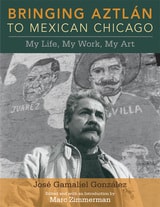
Bringing Aztlan to Mexican Chicago
My Life, My Work, My ArtJose Gamaliel Gonzalez, Edited and with an Introduction by Marc Zimmerman
University of Illinois Press, 2010
Bringing It All Back Home
Essays on Cultural StudiesLawrence Grossberg
Duke University Press, 1997
The essays collected here recognize both the specificity of cultural studies, by locating it in a range of alternative critical perspectives and practices, and its breadth, by mapping the extent of its diversity. By discussing American scholars’ initial reception of cultural studies, its relation to communication studies, and its origins in leftist politics, Grossberg grounds the development of cultural studies in the United States in specific historical and theoretical context. His criticism of "easy" identification of cultural studies with the theories, models, and issues of communications and his challenge to some of cultural studies’ current directions and preoccupations indicates what may lie ahead for this dynamic field of study. Bringing together the Gramscian tradition of British cultural studies with the antimodernist philosophical positions of Foucault, Deleuze, and Guattari, Grossberg articulates an original and important vision of the role of the political intellectual in the contemporary world and offers an essential overview of the emerging field of cultural studies by one of its leading practitioners and theorists.
Bringing Their Mother Home
Roman Multiculturalism and the Mother of the GodsKrishni Burns
University of Michigan Press, 2025
Drawing on historical, literary, and archaeological evidence, Bringing Their Mother Home reevaluates the semiotics and practices of the Magna Mater cult as a way to perform the multicultural Roman identity and explores the political and military climate of the Mediterranean leading up to the cult's adoption in 204 BCE.

Bringing Wreck
Megan Thee Stallion, Monica Roberts, and Other Houston HurricanesOmise'eke Natasha Tinsley
University of Texas Press, 2026
A whirling exploration of how Megan Thee Stallion inspires Black women and femmes like the late Monica Roberts, framed by the storm-making work of both.
While rap megastar Megan Thee Stallion needs no introduction, fewer will be familiar with Monica Roberts, a Houston journalist, community historian, and trans activist with the popular blog TransGriot. Though the two women never met, their work has inspired Black LGBTQ+ activists to love, resist violence, speak truth to power, and dance like life depends on it. With a written energy that’s infectious, Omise’eke Tinsley highlights just how intertwined these artists are.
An incisive look at the impactful sisterhood between Black women and femmes, Bringing Wreck is a book of empowerment. From Megan’s first performance on Saturday Night Live calling to “Protect Black Women,” to Roberts’s use of Hurricane Hanna to poke fun at Donald Trump’s border wall, Tinsley digs into the world-changing power of disruption and joyful expression in the face of racial injustice, anti-trans and queer violence, mental health crises, and community disparities. Reveling in both women’s love of Houston, calling-out of gendered violence, penchant for political humor, and staunch mental health advocacy, Bringing Wreck is an ode to the Bayou City, Black music, and the difference that one woman’s voice can make when we listen carefully.
Bringing the Civic Back In
Zane L. Miller and American Urban HistoryEdited by Larry Bennett, John D. Fairfield, and Patricia Mooney-Melvin
Temple University Press, 2022
With the passing of Zane L. Miller in 2016, academia lost a renowned scholar and one of the key founders of new urban history—a branch of the discipline that placed urban life at the center of American history and treated the city as an arena for civic and political action. He was a devoted, tireless mentor who published or fostered dozens of books and articles on urban history. He also co-founded Temple University Press’ foundational series Urban Life, Landscape, and Policy.
Bringing the Civic Back In provides a critical overview, appreciation, and extension of Miller’s work as scholar, editor, mentor, colleague, and citizen. Included are three excerpts from Miller’s final, unfinished work, in which he presented cities as the source of a civic nationalism he viewed as fundamental to the development of American democracy. The editors—along with contributors Robert B. Fairbanks and Charles Lester—reflect on the life and work of their friend as well as his role in creating a Cincinnati school of urban history. These original essays by practitioners of Miller’s approach highlight the power of ideas to shape social change.
Bringing the Empire Back Home
France in the Global AgeHerman Lebovics
Duke University Press, 2004
In Bringing the Empire Back Home, the inventive cultural historian Herman Lebovics provides a riveting account of how intense disputes about what it means to be French have played out over the past half-century, redefining Paris, the regions, and the former colonies in relation to one another and the world at large. In a narrative populated with peasants, people from the former colonies, museum curators, former colonial administrators, left Christians, archaeologists, anthropologists, soccer players and their teenage fans, and, yes, leading government officials, Lebovics reveals contemporary French society and cultures as perhaps the West’s most important testing grounds of pluralism and assimilation. A lively cultural history, Bringing the Empire Back Home highlights not only the political significance of France’s efforts to synthesize the regional, national, European, ethnic postcolonial, and global but also the chaotic beauty of the endeavor.
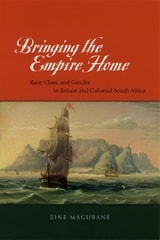
Bringing the Empire Home
Race, Class, and Gender in Britain and Colonial South AfricaZine Magubane
University of Chicago Press, 2003
Bringing the Empire Home tracks colonial images of blackness from South Africa to England and back again to answer questions such as these. Before the mid-1800s, black Africans were considered savage to the extent that their plight mirrored England's internal Others—women, the poor, and the Irish. By the 1900s, England's minority groups were being defined in relation to stereotypes of black South Africans. These stereotypes, in turn, were used to justify both new capitalist class and gender hierarchies in England and the subhuman treatment of blacks in South Africa. Bearing this in mind, Zine Magubane considers how marginalized groups in both countries responded to these racialized representations.
Revealing the often overlooked links among ideologies of race, class, and gender, Bringing the Empire Home demonstrates how much black Africans taught the English about what it meant to be white, poor, or female.

Britain's War on Poverty
Jane Waldfogel
Russell Sage Foundation, 2010
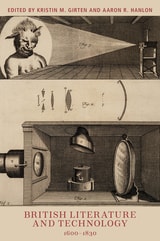
British Literature and Technology, 1600-1830
Kristin M. Girten
Bucknell University Press, 2023
Enlightenment-era writers had not yet come to take technology for granted, but nonetheless were—as we are today—both attracted to and repelled by its potential. This volume registers the deep history of such ambivalence, examining technology’s influence on Enlightenment British literature, as well as the impact of literature on conceptions of, attitudes toward, and implementations of technology. Offering a counterbalance to the abundance of studies on literature and science in seventeenth- and eighteenth-century Britain, this volume’s focus encompasses approaches to literary history that help us understand technologies like the steam engine and the telegraph along with representations of technology in literature such as the “political machine.” Contributors ultimately show how literature across genres provided important sites for Enlightenment readers to recognize themselves as “chimeras”—“hybrids of machine and organism”—and to explore the modern self as “a creature of social reality as well as a creature of fiction.”
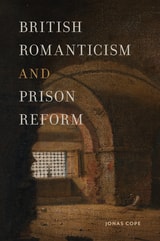
British Romanticism and Prison Reform
Jonas Cope
Bucknell University Press, 2025
In eighteenth-century Britain, criminals were routinely whipped, branded, hanged, or transported to America. Only in the last quarter of the century—with the War of American Independence and legal and sociopolitical challenges to capital punishment—did the criminal justice system change, resulting in the reformed prison, or penitentiary, meant to educate, rehabilitate, and spiritualize even hardened felons. This volume is the first to explore the relationship between historical penal reform and Romantic-era literary texts by luminaries such as Godwin, Keats, Byron, and Austen. The works examined here treat incarceration as ambiguous: prison walls oppress and reinforce the arbitrary power of legal structures but can also heighten meditation, intensify the imagination, and awaken the conscience. Jonas Cope skillfully traces the important ideological work these texts attempt: to reconcile a culture devoted to freedom with the birth of the modern prison system that presents punishment as a form of rehabilitation.
Published by Bucknell University Press. Distributed worldwide by Rutgers University Press.
British TV and Film Culture in the 1950s
Coming to a TV Near YouSu Holmes
Intellect Books, 1995
Britpop Cinema
From Trainspotting to This is EnglandMatt Glasby
Intellect Books, 2019
Broadcasters and Citizens in Europe
Trends in Media Accountability and Viewer ParticipationEdited by Paolo Baldi and Uwe Hasebrink
Intellect Books, 2007
European media is experiencing a paradoxical form of growth: as media outlets surge and new technologies develop, major broadcasting companies are consolidating like never before. In Broadcasters and Citizens in Europe, an esteemed group of contributors look at what this paradox might mean for the European community. Are broadcasting audiences better informed than they were twenty years ago? And how has the advent of the European Union changed media practices? This essential volume explores a new media world in the context of a continent in flux.
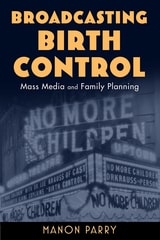
Broadcasting Birth Control
Mass Media and Family PlanningParry, Manon
Rutgers University Press, 2013
Mass media, Manon Parry contends, was critical to the birth control movement’s attempts to build support and later to publicize the idea of fertility control and the availability of contraceptive services in the United States and around the world. Though these public efforts in advertising and education were undertaken initially by leading advocates, including Margaret Sanger, increasingly a growing class of public communications experts took on the role, mimicking the efforts of commercial advertisers to promote health and contraception in short plays, cartoons, films, and soap operas. In this way, they made a private subject—fertility control—appropriate for public discussion.
Parry examines these trends to shed light on the contested nature of the motivations of birth control advocates. Acknowledging that supporters of contraception were not always motivated by the best interests of individual women, Parry concludes that family planning advocates were nonetheless convinced of women’s desire for contraception and highly aware of the ethical issues involved in the use of the media to inform and persuade.
Broadcasting Diversity
Migrant Representation in Irish RadioKatie Moylan
Intellect Books, 2013

Broadcasting Hollywood
The Struggle over Feature Films on Early TVJennifer Porst
Rutgers University Press, 2021
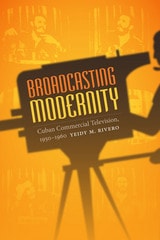
Broadcasting Modernity
Cuban Commercial Television, 1950-1960Yeidy M. Rivero
Duke University Press, 2015
Broadcasting and National Imagination in Post-Communist Latvia
Defining the Nation, Defining Public TelevisionJanis Juzefovics
Intellect Books, 2017
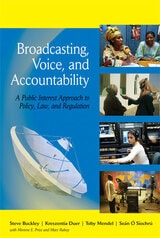
Broadcasting, Voice, and Accountability
A Public Interest Approach to Policy, Law, and RegulationSteve Buckley, Kreszentia Duer, Toby Mendel, and Seán Ó Siochrú
University of Michigan Press, 2008
---Ruth Teer-Tomaselli, UNESCO Chair in Communication for Southern Africa, Culture, Communication and Media Studies, University of KwaZulu-Natal
digitalculturebooks is an imprint of the University of Michigan Press and the Scholarly Publishing Office of the University of Michigan Library dedicated to publishing innovative and accessible work exploring new media and their impact on society, culture, and scholarly communication. Visit the website at www.digitalculture.org.
Broke
The Racial Consequences of Underfunding Public UniversitiesLaura T. Hamilton and Kelly Nielsen
University of Chicago Press, 2021
In Broke, Laura T. Hamilton and Kelly Nielsen examine virtually all aspects of campus life to show how the new economic order in public universities, particularly at two campuses in the renowned University of California system, affects students. For most of the twentieth century, they show, less affluent families of color paid with their taxes for wealthy white students to attend universities where their own offspring were not welcome. That changed as a subset of public research universities, some quite old, opted for a “new” approach, making racially and economically marginalized youth the lifeblood of the university. These new universities, however, have been particularly hard hit by austerity. To survive, they’ve had to adapt, finding new ways to secure funding and trim costs—but ultimately it’s their students who pay the price, in decreased services and inadequate infrastructure.
The rise of new universities is a reminder that a world-class education for all is possible. Broke shows us how far we are from that ideal and sets out a path for how we could get there.
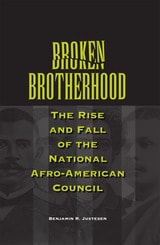
Broken Brotherhood
The Rise and Fall of the National Afro-American CouncilBenjamin R. Justesen
Southern Illinois University Press, 2008
Broken Brotherhood: The Rise and Fall of the National Afro-American Council gives a comprehensive account of the National Afro-American Council, the first truly nationwide U.S. civil rights organization, which existed from 1898 to 1908. Based on exhaustive research, the volume chronicles the Council’s achievements and its annual meetings and provides portraits of its key leaders.
Led by four of the most notable African American leaders of the time—journalist T. Thomas Fortune, Bishop Alexander Walters, educator Booker T. Washington, and Congressman George Henry White—the Council persevered for a decade despite structural flaws and external pressures that eventually led to its demise in 1908.
Author Benjamin R. Justesen provides historical context for the Council’s development during an era of unprecedented growth in African American organizations. Justesen establishes the National Afro-American Council as the earliest national arena for discussions of critical social and political issues affecting African Americans and the single most important united voice lobbying for protection of the nation’s largest minority. In a period marked by racial segregation, widespread disfranchisement, and lynching violence, the nonpartisan council helped establish two more enduring successor organizations, providing core leadership for both the National Association for the Advancement of Colored People and the National Urban League.
Broken Brotherhood traces the history of the Council and the complicated relationships among key leaders from its creation in Rochester in 1898 to its last gathering in Baltimore in 1907, drawing on both private correspondence and contemporary journalism to create a balanced historical portrait. Enhanced by thirteen illustrations, the volume also provides intriguing details about the ten national gatherings, describes the Council’s unsuccessful attempt to challenge disfranchisement before the U.S. Supreme Court, and sheds light on the gradual breakdown of Republican solidarity among African American leaders in the first decade of the twentieth century.
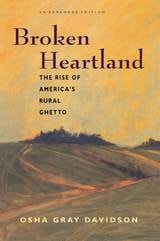
Broken Heartland
The Rise of America's Rural GhettoOsha Gray Davidson
University of Iowa Press, 1996
Between 1940 and the mid 1980s, farm production expenses in America's Heartland tripled, capital purchases quadrupled, interest payments jumped tenfold, profits fell by 10 percent, the number of farmers decreased by two-thirds, and nearly every farming community lost population, businesses, and economic stability. Growth for these desperate communities has come to mean low-paying part-time jobs, expensive tax concessions, waste dumps, and industrial hog farming, all of which come with environmental and psychological price tags. In Broken Heartland, Osha Gray Davidson chronicles the decline of the Heartland and its transformation into a bitterly divided and isolated regional ghetto. Through interviews with more than two hundred farmers, social workers, government officials, and scholars, he puts a human face on the farm crisis of the 1980s.
In this expanded edition Davidson emphasizes the tenacious power of far-right-wing groups; his chapter on these burgeoning rural organizations in the original edition of Broken Heartland was the first in-depth look—six years before of the Oklahoma City bombing—at the politics of hate they nurture. He also spotlights NAFTA, hog lots, sustainable agriculture, and the other battles and changes over the past six years in rural America.
Broken K Pueblo
Prehistoric Social Organization in the American SouthwestJames N. Hill
University of Arizona Press, 1970
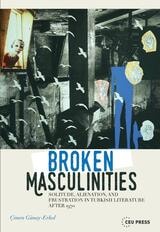
Broken Masculinities
Solitude, Alienation, and Frustration in Turkish Literature after 1970Cimen Günay-Erkol
Central European University Press, 2016
Broken Masculinities portrays the post-dictatorial novel of the 1970s in all its complexity, and introduces the reader to a 1968-era Turkey, a period which challenges Turkey’s now reinforced Islamic image by portraying the quest for sexual liberation and critical student uprisings. Günay-Erkol argues that the literature written after the 1971 coup in Turkey constitutes a coherent sub-genre and needs to be considered together. These novels share a common ground which is rich in images of men and women craving for power: general isolation, sexual-emotional frustration, and a traumatic sense of solitude and alienation.
This book is an original and significant contribution to two major fields of study: (1) gender and sexuality with respect to formation of subjectivity through literature, and (2) modern literature and history through the study of Turkish literature. The chief concern in this book is not only literature’s response to a particular period in Turkey, but also the role of literature in bearing witness to trauma and drastic political acts of violence—and coming to terms with them.B

Broken Silences
Interviews with Black and White Women WritersEdited by Shirley M Jordan
Rutgers University Press, 1993
In these 20 interviews with women writers of fiction, Jordan, who teaches at Hampton University in Virginia, attempts to plumb the relations between black and white women in fiction and in life, and to explore the creative process. Although the book suffers from lengthy discussions of somewhat obscure work, the interviewees, most of whom have portrayed female characters of a race other than their own, offer intriguing, often conflicting observations about the primacy of race, gender or class. Kaye Gibbons ( Ellen Foster ) suggests that rural locations offer commonality to black and white Southern women; Marita Golden ( Long Distance Life ) observes that white writers emphasize female beauty while black writers focus on character. This book may be a useful supplement to literature courses.
From Library Journal
The message derived from the candid and articulate women interviewed here is, as Belva Plain states, "you learn as you live together." Editor Jordan (Hampton Univ., Virginia) has opened a dialog on writing and race relations by publishing these interviews with 20 significant contemporary black and white women writers, from Alice Childress and Joyce Carol Oates to Mildred Pitts Walker. The substance of these writers' thoughts is that the commonality of women's experience informs the genuine portrayal of a character as much as does the writer's understanding of her blackness or whiteness. This special book, so different from others that examine the writing process, is likely to stimulate dialog among women and to provoke serious study of many excellent women writers working today. Recommended for all collections supporting the study of literature, women's studies, and race relations.
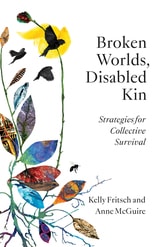
Broken Worlds, Disabled Kin
Strategies for Collective SurvivalKelly Fritsch
University of Minnesota Press, 2026
A call to remake our world through a new politics of disabled kin-making
We live in a world broken by design: a web of systems that debilitate and kill through racist and ableist infrastructural neglect, socioeconomic abandonment, and ecological negligence. Fixes for these forms of breakage often conceal and amplify harm—but what happens if we refuse to rehabilitate this inhospitable world? In Broken Worlds, Disabled Kin, Kelly Fritsch and Anne McGuire urge an alternative response through abolition, access, care, and interdependence.
Bringing a much-needed disability studies lens to discussions of public policy, legal reform, and social change, Fritsch and McGuire show how hostile social and economic structures such as racial capitalism, neoliberalism, and settler colonialism unevenly target certain populations and environments. As they trace how everyday encounters with broken infrastructures like inaccessible transit, fragmented mental health care, and crumbling educational institutions reflect broader patterns of structural abandonment and slow violence, they pose a radical means of response: the making of disabled kin. Ranging from mundane disruptions to global crises like pandemics, wars, genocides, and climate collapse, they demonstrate how disabled kin-making nurtures connection and support between people, ecologies, infrastructures, and objects, cultivating a collective “we” that can contest systems broken by design.
Urgent and passionate, Broken Worlds, Disabled Kin asks readers to reexamine conceptions of breakage, maintenance, and repair, viewing them as tools of abolition and justice. Against relentless fragmentation and atomization, this book equips us with a politics of solidarity and collectivity with which to begin making a more life-supporting world.
Retail e-book files for this title are screen-reader friendly with images accompanied by short alt text and/or extended descriptions.

Broker, Mediator, Patron, and Kinsman
An Historical Analysis of Key Leadership Roles in a Rural Malaysian DistrictConner Bailey
Ohio University Press, 1976
This study attempts to relate questions of rural leadership to the constantly changing social and economic environment of a rural district in Malaysia during the twentieth century. The study itself began as an effort to analyze a single instance of structural change in Malay village leadership which occurred while the author worked in Sik District as a Peace Corps Volunteer (1968–1971). A research proposal was developed positing a traditional pattern of behavior which could be identified as traditional leadership, the better to contrast this with the bureaucratic style of the district’s new penghulus (headmen of a mukim, or subdistrict).
As research progressed, it became obvious that there was in fact no single traditional leadership pattern to be discovered, but rather that over time adaptations were regularly made whenever a significant change in Sik’s social and economic environment occurred. Although the study has retained rural leadership as a primary concern, it has been found necessary to relate it to Sik’s social and economic history.
Brokered Boundaries
Immigrant Identity in Anti-Immigrant TimesDouglas S. Massey
Russell Sage Foundation, 2010
Brokered Subjects
Sex, Trafficking, and the Politics of FreedomElizabeth Bernstein
University of Chicago Press, 2018
Brokers and Bureaucrats
Building Market Institutions in RussiaTimothy Frye
University of Michigan Press, 2000
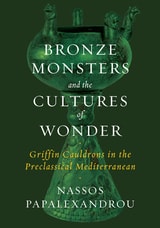
Bronze Monsters and the Cultures of Wonder
Griffin Cauldrons in the Preclassical MediterraneanNassos Papalexandrou
University of Texas Press, 2021
The eighth and seventh centuries BCE were a time of flourishing exchange between the Mediterranean and the Near East. One of the period’s key imports to the Hellenic and Italic worlds was the image of the griffin, a mythical monster that usually possesses the body of a lion and the head of an eagle. In particular, bronze cauldrons bore griffin protomes—figurative attachments showing the neck and head of the beast. Crafted in fine detail, the protomes were made to appear full of vigor, transfixing viewers.
Bronze Monsters and the Cultures of Wonder takes griffin cauldrons as case studies in the shifting material and visual universes of preclassical antiquity, arguing that they were perceived as lifelike monsters that introduced the illusion of verisimilitude to Mediterranean arts. The objects were placed in the tombs of the wealthy (Italy, Cyprus) and in sanctuaries (Greece), creating fantastical environments akin to later cabinets of curiosities. Yet griffin cauldrons were accessible only to elites, ensuring that the new experience of visuality they fostered was itself a symbol of status. Focusing on the sensory encounter of this new visuality, Nassos Papalexandrou shows how spaces made wondrous fostered novel subjectivities and social distinctions.
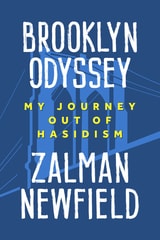
Brooklyn Odyssey
My Journey out of HasidismZalman Newfield
Temple University Press, 2026
Growing up in Crown Heights, Brooklyn as a member of the Chabad-Lubavitch Hasidic Orthodox Jewish community, Zalman Newfield was raised in an atmosphere of strict gender segregation, rigorous religious education, and nearly all-consuming ritual practices. Trained to be a Lubavitch emissary, he traveled around the world doing Jewish outreach to help usher in the messianic redemption. However, after exposure to the wider world, he abandoned the faith of his youth.
Brooklyn Odyssey is Newfield’s poignant and hopeful memoir about exiting Orthodoxy. He recounts asserting his individuality and taking the radical step of shaving his beard. Reflective about his upbringing, Newfield is open to and curious about a world beyond Brooklyn while also maintaining his profound bond with his family and Jewish tradition. He writes candidly about his emotional, intellectual, and social experiences in and out of the Lubavitch community.
From pivotal moments of devastation, including the illness and death of his younger brother and of his revered spiritual leader Rabbi Menachem Mendel Schneerson, to moments of joyful resolve, including the decision to pursue a doctorate and marry a non-Orthodox Jew, Newfield takes readers on his moving and impactful journey.
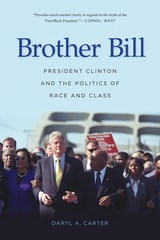
Brother Bill
President Clinton and the Politics of Race and ClassDaryl A Carter
University of Arkansas Press, 2016
“This book is a fascinating analysis of race and class in the age of President Bill Clinton. It provides much-needed clarity in regards to the myth of the ‘First Black President.’ It contributes much to our understanding of the history that informs our present moment!”
—Cornel West
As President Barack Obama was sworn into office on January 20, 2009, the United States was abuzz with talk of the first African American president. At this historic moment, one man standing on the inaugural platform, seemingly a relic of the past, had actually been called by the moniker the “first black president” for years.
President William Jefferson Clinton had long enjoyed the support of African Americans during his political career, but the man from Hope also had a complex and tenuous relationship with this faction of his political base. Clinton stood at the nexus of intense political battles between conservatives’ demands for a return to the past and African Americans’ demands for change and fuller equality. He also struggled with the class dynamics dividing the American electorate, especially African Americans. Those with financial means seized newfound opportunities to go to college, enter the professions, pursue entrepreneurial ambitions, and engage in mainstream politics, while those without financial means were essentially left behind. The former became key to Clinton’s political success as he skillfully negotiated the African American class structure while at the same time maintaining the support of white Americans. The results were tremendously positive for some African Americans. For others, the Clinton presidency was devastating.
Brother Bill examines President Clinton’s political relationship with African Americans and illuminates the nuances of race and class at the end of the twentieth century, an era of technological, political, and social upheaval.
Brother Is a Street Musician
Viewing the Landscape of Modernity Through Korean Popular MusicZhang Eujeong
Rutgers University Press, 2026
The history of the Korean popular music industry dates back a century before the beginnings of K-Pop, to when the Korean peninsula was still under Japanese rule. Though Koreans didn’t have an independent country, they were still able to use recorded music to assert a distinct cultural identity.
Brother Is a Street Musician chronicles the development of Korean popular music over the first half of the twentieth century, examining both industry trends and talented composers and performers like Nam Insu and Yi Nanyǒng. Drawing from rare archives of gramophone records and lyric books, musicologist Zhang Eujeong shows how Korean musicians drew from folk traditions to create totally new genres, ranging from comic songs to Western-influenced jazz records. She also includes English translations and detailed analyses of lyrics from some of the era’s most popular songs.
A landmark study of Korean music, now available in English for the first time, Brother Is a Street Musician tells the inspiring story of how a colonized people developed their own form of popular music, planting the seeds for an industry that would grow to export Korean culture around the world.
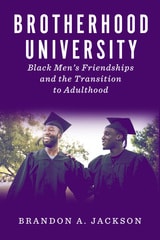
Brotherhood University
Black Men's Friendships and the Transition to AdulthoodBrandon A. Jackson
Rutgers University Press, 2024
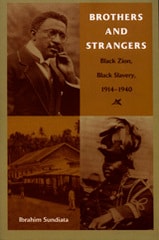
Brothers and Strangers
Black Zion, Black Slavery, 1914–1940Ibrahim Sundiata
Duke University Press, 2003
In an account based on extensive archival research, including work in the Liberian National Archives, Sundiata explains how Garvey’s plan collapsed when faced with opposition from the Liberian elite, opposition that belied his vision of a unified Black World. In 1930 the League of Nations investigated labor conditions and, damningly, the United States, land of lynching and Jim Crow, accused Liberia of promoting “conditions analogous to slavery.” Subsequently various plans were put forward for a League Mandate or an American administration to put down slavery and “modernize” the country. Threatened with a loss of its independence, the Liberian government turned to its “brothers beyond the sea” for support. A varied group of white and black anti-imperialists, among them W. E. B. Du Bois, took up the country’s cause. In revealing the struggle of conscience that bedeviled many in the black world in the past, Sundiata casts light on a human rights predicament which, he points out, continues in twenty-first-century African nations as disparate as Sudan, Mauritania, and the Ivory Coast.
Brothers at War
Making Sense of the Eritrean-Ethiopian WarTekaste Negash
Ohio University Press, 2001
The war between Eritrea and Ethiopia, which began in May 1998, took the world by surprise. During the war, both sides mobilized huge forces along their common borders and spent several hundred million dollars on military equipment. Outside observers found it difficult to evaluate the highly polarized official statements and proclamations issued by the two governments in conflict.
Brothers at War presents important, contextual aspects to explain the growing discord between the two formerly friendly governments. It looks at the historical relations between the two countries since the late nineteenth century, the historical border issues from local perspectives, and the complicated relations between the former liberation fronts that subsequently formed the current governments of the two countries.
Brothers in Grief
The Hidden Toll of Gun Violence on Black Boys and Their SchoolsNora Gross
University of Chicago Press, 2024
JahSun, a dependable, much-loved senior at Boys’ Prep was just hitting his stride in the fall of 2017. He had finally earned a starting position on the varsity football team and was already weighing two college acceptances. Then, over Thanksgiving, tragedy struck. An altercation at his older sister’s home escalated into violence, killing the unarmed teenager in a hail of bullets. JahSun’s untimely death overwhelmed his entire community, sending his family, friends, and school into seemingly insurmountable grief. Worse yet, that spring two additional Boys’ Prep students would be shot to death in their neighborhood. JahSun and his peers are not alone in suffering the toll of gun violence, as every year in the United States teenagers die by gunfire in epidemic numbers, with Black boys most deeply affected.
Brothers in Grief closely attends to the neglected victims of youth gun violence: the suffering friends and classmates who must cope, mostly out of public view, with lasting grief and hidden anguish. Set at an ambitious urban high school for boys during the heartbreaking year following the death of JahSun, the book chronicles the consequences of untimely death on Black teen boys and on a school community struggling to recover. Sociologist Nora Gross tells the story of students attempting to grapple with unthinkable loss, inviting readers in to observe how they move through their days at school and on social media in the aftermath of their friends’ and classmates’ deaths. Gross highlights the discrepancy between their school’s educational mission and teachers’ and administrators’ fraught attempts to care for students’ emotional wellbeing. In the end, the school did not provide adequate space for grief, making it more difficult for students to heal, reengage with school, and imagine hopeful futures. Even so, supportive relationships deepened among students and formed across generations, offering promising examples of productive efforts to channel student grief into positive community change.
A searing testimony of our collective failure to understand the inner lives of our children in crisis, Brothers in Grief invites us all to wrestle with the hidden costs of gun violence on racial and educational inequity.
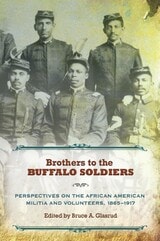
Brothers to the Buffalo Soldiers
Perspectives on the African American Militia and Volunteers, 1865-1917Bruce A. Glasrud
University of Missouri Press, 2011
Many black Americans continued to serve in times of military need. Nearly 180,000 African Americans served in units of the U.S. Colored Troops during the Civil War, and others, from states such as Massachusetts, Rhode Island, Missouri, and Kansas, participated in state militias organized to protect local populations from threats of Confederate invasion. As such, the Civil War was a turning point in the acceptance of black soldiers for national defense. By 1900, twenty-two states and the District of Columbia had accepted black men into some form of military service, usually as state militiamen—brothers to the “buffalo soldiers” of the regular army regiments, but American military men regardless.
Little has been published about them, but Brothers to the Buffalo Soldiers: Perspectives on the African American Militia and Volunteers, 1865–1919, offers insights into the varied experiences of black militia units in the post–Civil War period. The book includes eleven articles that focus either on “Black Participation in the Militia” or “Black Volunteer Units in the War with Spain.” The articles, collected and introduced by author and scholar Bruce A. Glasrud, provide an overview of the history of early black citizen-soldiers and offer criticism from prominent academics interested in that experience.
Brothers to the Buffalo Soldiers discusses a previously little-known aspect of the black military experience in U.S. history, while deliberating on the discrimination these men faced both within and outside the military. Chosen on the bases of scholarship, balance, and readability, these articles provide a rare composite picture of the black military man’s life during this period. Brothers to the Buffalo Soldiers offers both a valuable introductory text for students of military studies and a solid source of material for African American historians.
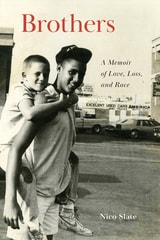
Brothers
A Memoir of Love, Loss, and RaceNico Slate
Temple University Press, 2023
Brothers is Nico Slate’s poignant memoir about Peter Slate, aka XL, a Black rapper and screenwriter whose life was tragically cut short. Nico and Peter shared the same White American mother but had different fathers. Nico’s was White; Peter’s was Black. Growing up in California in the 1980s and 1990s, Nico often forgot about their racial differences until one night in March 1994 when Peter was attacked by a White man in a nightclub in Los Angeles.
Nico began writing Brothers with the hope that investigating the attack would bring him closer to Peter. He could not understand that night, however, without grappling with the many ways race had long separated him from his brother.
This is a memoir of loss—the loss of a life and the loss at the heart of our racial divide—but it is also a memoir of love. The love between Nico and Peter permeates every page of Brothers. This achingly beautiful memoir presents one family’s resilience on the fault lines of race in contemporary America.
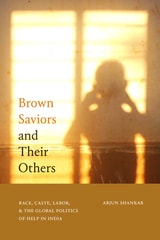
Brown Saviors and Their Others
Race, Caste, Labor, and the Global Politics of Help in IndiaArjun Shankar
Duke University Press, 2023
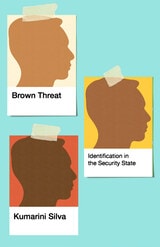
Brown Threat
Identification in the Security StateKumarini Silva
University of Minnesota Press, 2016
What is “brown” in—and beyond—the context of American identity politics? How has the concept changed since 9/11? In the most sustained examination of these questions to date, Kumarini Silva argues that “brown” is no longer conceived of solely as a cultural, ethnic, or political identity. Instead, after 9/11, the Patriot Act, and the wars in Iran, Iraq, and Afghanistan, it has also become a concept and, indeed, a strategy of identification—one rooted in xenophobic, imperialistic, and racist ideologies to target those who do not neatly fit or subscribe to ideas of nationhood.
Interweaving personal narratives, ethnographic research, analyses of popular events like the Miss America pageant, and films and TV shows such as the Harold and Kumar franchise and Black-ish, Silva maps junctures where the ideological, political, and mediated terrain intersect, resulting in an appetite for all things “brown” (especially South Asian brown) by U.S. consumers, while political and nationalist discourses and legal structures (immigration, emigration, migration, outsourcing, incarceration) conspire to control brown bodies both within and outside the United States.
Silva explores this contradictory relationship between representation and reality, arguing that the representation mediates and manages the anxieties that come from contemporary global realities, in which brown spaces, like India, Pakistan, and the Middle East pose key economic, security, and political challenges to the United States. While racism is hardly new, what makes this iteration of brown new is that anyone or any group, at any time, can be branded as deviant, as a threat.
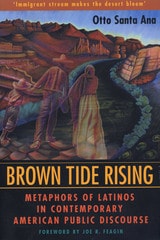
Brown Tide Rising
Metaphors of Latinos in Contemporary American Public DiscourseBy Otto Santa Ana
University of Texas Press, 2002
2002 – Best Book on Ethnic and Racial Political Ideology and/or Political Theory – Organized Section on Race, Ethnicity, and Politics of the American Political Science Association
"...awash under a brown tide...the relentless flow of immigrants..like waves on a beach, these human flows are remaking the face of America...." Since 1993, metaphorical language such as this has permeated mainstream media reporting on the United States' growing Latino population. In this groundbreaking book, Otto Santa Ana argues that far from being mere figures of speech, such metaphors produce and sustain negative public perceptions of the Latino community and its place in American society, precluding the view that Latinos are vested with the same rights and privileges as other citizens.
Applying the insights of cognitive metaphor theory to an extensive natural language data set drawn from hundreds of articles in the Los Angeles Times and other media, Santa Ana reveals how metaphorical language portrays Latinos as invaders, outsiders, burdens, parasites, diseases, animals, and weeds. He convincingly demonstrates that three anti-Latino referenda passed in California because of such imagery, particularly the infamous anti-immigrant measure, Proposition 187. Santa Ana illustrates how Proposition 209 organizers broadcast compelling new metaphors about racism to persuade an electorate that had previously supported affirmative action to ban it. He also shows how Proposition 227 supporters used antiquated metaphors for learning, school, and language to blame Latino children's speech—rather than gross structural inequity—for their schools' failure to educate them. Santa Ana concludes by calling for the creation of insurgent metaphors to contest oppressive U.S. public discourse about minority communities.
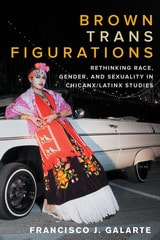
Brown Trans Figurations
Rethinking Race, Gender, and Sexuality in Chicanx/Latinx StudiesBy Francisco J. Galarte
University of Texas Press, 2021
Honorable Mention for the National Women’s Studies Association's 2021 Gloria E. Anzaldúa Book Prize
2021 Finalist Best LGBTQ+ Themed Book, International Latino Book Awards
2022 John Leo & Dana Heller Award for Best Single Work, Anthology, Multi-Authored, or Edited Book in LGBTQ Studies, Popular Culture Association
The Alan Bray Memorial Book Prize, GL/Q Caucus, Modern Language Association (MLA)
2022 AAHHE Book of the Year Award, American Association of Hispanics in Higher Education
Within queer, transgender, and Latinx and Chicanx cultural politics, brown transgender narratives are frequently silenced and erased. Brown trans subjects are treated as deceptive, unnatural, nonexistent, or impossible, their bodies, lives, and material circumstances represented through tropes and used as metaphors. Restoring personhood and agency to these subjects, Francisco J. Galarte advances “brown trans figuration” as a theoretical framework to describe how transness and brownness coexist within the larger queer, trans, and Latinx historical experiences.
Brown Trans Figurations presents a collection of representations that reveal the repression of brown trans narratives and make that repression visible and palpable. Galarte examines the violent deaths of two transgender Latinas and the corresponding narratives that emerged about their lives, analyzes the invisibility of brown transmasculinity in Chicana feminist works, and explores how issues such as transgender politics can be imagined as part of Chicanx and Latinx political movements. This book considers the contexts in which brown trans narratives appear, how they circulate, and how they are reproduced in politics, sexual cultures, and racialized economies.
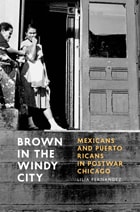
Brown in the Windy City
Mexicans and Puerto Ricans in Postwar ChicagoLilia Fernández
University of Chicago Press, 2012
Brown in the Windy City is the first history to examine the migration and settlement of Mexicans and Puerto Ricans in postwar Chicago. Lilia Fernández reveals how the two populations arrived in Chicago in the midst of tremendous social and economic change and, in spite of declining industrial employment and massive urban renewal projects, managed to carve out a geographic and racial place in one of America’s great cities. Through their experiences in the city’s central neighborhoods over the course of these three decades, Fernández demonstrates how Mexicans and Puerto Ricans collectively articulated a distinct racial position in Chicago, one that was flexible and fluid, neither black nor white.
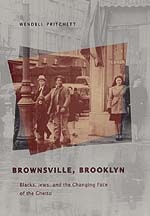
Brownsville, Brooklyn
Blacks, Jews, and the Changing Face of the GhettoWendell E. Pritchett
University of Chicago Press, 2001
The story of these two different, but in many ways similar, Brownsvilles is compellingly told in this probing new work. Focusing on the interaction of Brownsville residents with New York's political and institutional elites, Wendell Pritchett shows how the profound economic and social changes of post-World War II America affected the area. He covers a number of pivotal episodes in Brownsville's history as well: the rise and fall of interracial organizations, the struggles to deal with deteriorating housing, and the battles over local schools that culminated in the famous 1968 Teachers Strike. Far from just a cautionary tale of failed policies and institutional neglect, the story of Brownsville's transformation, he finds, is one of mutual struggle and frustrated cooperation among whites, blacks, and Latinos.
Ultimately, Brownsville, Brooklyn reminds us how working-class neighborhoods have played, and continue to play, a central role in American history. It is a story that needs to be read by all those concerned with the many challenges facing America's cities today.

Bruno Latour
Reassembling the PoliticalGraham Harman
Pluto Press, 2014
Bruno Latour, the French sociologist, anthropologist and long-established superstar in the social sciences is revisited in this pioneering account of his ever-evolving political philosophy. Breaking from the traditional focus on his metaphysics, most recently seen in Harman’s book Prince of Networks, the author instead begins with the Hobbesian and even Machiavellian underpinnings of Latour’s early period encountering his shift towards Carl Schmitt then finishing with his final development into the Lippmann / Dewey debate. Harman brings these twists and turns into sharp focus in terms of Latour’s personal political thinking.
Along with Latour’s most important articles on political themes, the book chooses three works as exemplary of the distinct periods in Latour’s thinking: The Pasteurization of France, Politics of Nature, and the recently published An Inquiry Into Modes of Existence, as his conception of politics evolves from a global power struggle between individuals, to the fabrication of fragile parliamentary networks, to just one mode of existence among many others.