22279 books match the query 'Social Science' and 1147 start with b
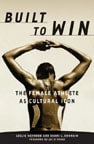
cover of Built To Win: The Female Athlete As Cultural Icon

Built To Win

The Female Athlete As Cultural Icon

Leslie Heywood

University of Minnesota Press, 2003

A timely look at the rise of women in sports

The sculpted speed of Marion Jones. The grit and agility of Mia Hamm. The slam-dunk style of Lisa Leslie. The skill and finesse of these sports figures are widely admired, no longer causing the puzzlement and discomfort directed toward earlier generations of athletic women. Built to Win explores this relatively recent phenomenon—the confident, empowered female athletes found everywhere in American popular culture.

Leslie Heywood and Shari L. Dworkin examine the role of female athletes through interviews with elementary- and high school-age girls and boys; careful readings of ad campaigns by Nike, Reebok, and others; discussions of movies like Fight Club and Girlfight; and explorations of their own sports experiences. They ask: what, if any, dissonance is there between popular images and the actual experiences of these athletes? Do these images really “redefine femininity” and contribute to a greater inclusion of all women in sport? Are sexualized images of these women damaging their quest to be taken seriously? Do they inspire young boys to respect and admire female athletes, and will this ultimately make a difference in the ways gender and power are constructed and perceived?Proposing a paradigm shift from second- to third-wave feminism, Heywood and Dworkin argue that, in the years since the passage of Title IX, gender stereotypes have been destabilized in profound ways, and they assert that female athletes and their imagery are doing important cultural work to that end. Important, refreshing, and engrossing, Built to Win examines sport in all its complexity.

[more]
cover of Bulldaggers, Pansies, and Chocolate Babies: Performance, Race, and Sexuality in the Harlem Renaissance

Bulldaggers, Pansies, and Chocolate Babies

Performance, Race, and Sexuality in the Harlem Renaissance

James F. Wilson

University of Michigan Press, 2011

Bulldaggers, Pansies, and Chocolate Babies shines the spotlight on historically neglected plays and performances that challenged early twentieth-century notions of the stratification of race, gender, class, and sexual orientation. On Broadway stages, in Harlem nightclubs and dance halls, and within private homes sponsoring rent parties, African American performers of the 1920s and early 1930s teased the limits of white middle-class morality. Blues-singing lesbians, popularly known as "bulldaggers," performed bawdy songs; cross-dressing men vied for the top prizes in lavish drag balls; and black and white women flaunted their sexuality in scandalous melodramas and musical revues. Race leaders, preachers, and theater critics spoke out against these performances that threatened to undermine social and political progress, but to no avail: mainstream audiences could not get enough of the riotous entertainment.James F. Wilson has based his rich cultural history on a wide range of documents from the period, including eyewitness accounts, newspaper reports, songs, and play scripts, combining archival research with an analysis grounded in a cultural studies framework that incorporates both queer theory and critical race theory. Throughout, he argues against the widely held belief that the stereotypical forms of black, lesbian, and gay show business of the 1920s prohibited the emergence of distinctive new voices. Figuring prominently in the book are African American performers including Gladys Bentley, Ethel Waters, and Florence Mills, among others, and prominent writers, artists, and leaders of the era, including Langston Hughes, Wallace Thurman, Zora Neale Hurston, and W. E. B. Du Bois. The study also engages with contemporary literary critics, including Henry Louis Gates and Houston Baker. "James F. Wilson uncovers fascinating new material on the Harlem Renaissance, shedding light on the oft-forgotten gay and lesbian contributions to the era's creativity and Civil Rights. Extremely well researched, compellingly written, and highly informative."
—David Krasner, author of A Beautiful Pageant: African American Theatre, Drama, and Performance in the Harlem Renaissance, 1910-1927
[more]
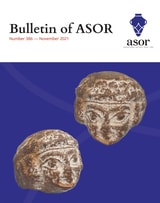
cover of Bulletin of ASOR, volume 386 number 1 (November 2021)

Bulletin of ASOR, volume 386 number 1 (November 2021)

The University of Chicago Press

University of Chicago Press Journals, 2021
This is volume 386 issue 1 of Bulletin of the American Schools of Oriental Research. The Bulletin of ASOR (BASOR) is a leader among peer-reviewed academic journals of the ancient Near East. For nearly a century, since 1919 when William F. Albright originally founded it as the Bulletin of the American School of Oriental Research in Jerusalem, BASOR has served as a highly respected interdisciplinary English-language forum for scholars worldwide in subject areas such as archaeology, art, anthropology, archaeometry, bioarchaeology, archaeozoology, biblical studies, history, literature, philology, geography, and epigraphy.
[more]
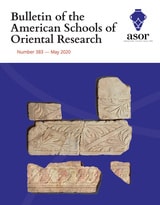
cover of Bulletin of the American Schools of Oriental Research, volume 383 number 1 (May 2020)

Bulletin of the American Schools of Oriental Research, volume 383 number 1 (May 2020)

The University of Chicago Press

University of Chicago Press Journals, 2020
This is volume 383 issue 1 of Bulletin of the American Schools of Oriental Research. The Bulletin of ASOR (BASOR) is a leader among peer-reviewed academic journals of the ancient Near East. For nearly a century, since 1919 when William F. Albright originally founded it as the Bulletin of the American School of Oriental Research in Jerusalem, BASOR has served as a highly respected interdisciplinary English-language forum for scholars worldwide in subject areas such as archaeology, art, anthropology, archaeometry, bioarchaeology, archaeozoology, biblical studies, history, literature, philology, geography, and epigraphy.
[more]
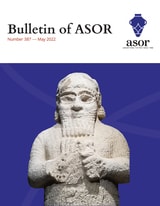
cover of Bulletin of the American Society of Overseas Research, volume 387 number 1 (May 2022)

Bulletin of the American Society of Overseas Research, volume 387 number 1 (May 2022)

The University of Chicago Press

University of Chicago Press Journals, 2022
This is volume 387 issue 1 of Bulletin of the American Society of Overseas Research. The Bulletin of ASOR (BASOR) is a leader among peer-reviewed academic journals of the ancient Near East. For nearly a century, since 1919 when William F. Albright originally founded it as the Bulletin of the American School of Oriental Research in Jerusalem, BASOR has served as a highly respected interdisciplinary English-language forum for scholars worldwide in subject areas such as archaeology, art, anthropology, archaeometry, bioarchaeology, archaeozoology, biblical studies, history, literature, philology, geography, and epigraphy.
[more]
cover of Bulletin of the American Society of Overseas Research, volume 388 number 1 (November 2022)

Bulletin of the American Society of Overseas Research, volume 388 number 1 (November 2022)

The University of Chicago Press

University of Chicago Press Journals, 2022
This is volume 388 issue 1 of Bulletin of the American Society of Overseas Research. The Bulletin of ASOR (BASOR) is a leader among peer-reviewed academic journals of the ancient Near East. For nearly a century, since 1919 when William F. Albright originally founded it as the Bulletin of the American School of Oriental Research in Jerusalem, BASOR has served as a highly respected interdisciplinary English-language forum for scholars worldwide in subject areas such as archaeology, art, anthropology, archaeometry, bioarchaeology, archaeozoology, biblical studies, history, literature, philology, geography, and epigraphy.
[more]
cover of Bulletin of the American Society of Overseas Research, volume 389 number 1 (May 2023)

Bulletin of the American Society of Overseas Research, volume 389 number 1 (May 2023)

The University of Chicago Press

University of Chicago Press Journals, 2023
This is volume 389 issue 1 of Bulletin of the American Society of Overseas Research. The Bulletin of ASOR (BASOR) is a leader among peer-reviewed academic journals of the ancient Near East. For nearly a century, since 1919 when William F. Albright originally founded it as the Bulletin of the American School of Oriental Research in Jerusalem, BASOR has served as a highly respected interdisciplinary English-language forum for scholars worldwide in subject areas such as archaeology, art, anthropology, archaeometry, bioarchaeology, archaeozoology, biblical studies, history, literature, philology, geography, and epigraphy.
[more]
cover of Bulletin of the American Society of Overseas Research, volume 390 number 1 (November 2023)

Bulletin of the American Society of Overseas Research, volume 390 number 1 (November 2023)

The University of Chicago Press

University of Chicago Press Journals, 2023
This is volume 390 issue 1 of Bulletin of the American Society of Overseas Research. The Bulletin of ASOR (BASOR) is a leader among peer-reviewed academic journals of the ancient Near East. For nearly a century, since 1919 when William F. Albright originally founded it as the Bulletin of the American School of Oriental Research in Jerusalem, BASOR has served as a highly respected interdisciplinary English-language forum for scholars worldwide in subject areas such as archaeology, art, anthropology, archaeometry, bioarchaeology, archaeozoology, biblical studies, history, literature, philology, geography, and epigraphy.
[more]
cover of Bulletin of the American Society of Overseas Research, volume 391 number 1 (May 2024)

Bulletin of the American Society of Overseas Research, volume 391 number 1 (May 2024)

The University of Chicago Press

University of Chicago Press Journals, 2024
This is volume 391 issue 1 of Bulletin of the American Society of Overseas Research. The Bulletin of ASOR (BASOR) is a leader among peer-reviewed academic journals of the ancient Near East. For nearly a century, since 1919 when William F. Albright originally founded it as the Bulletin of the American School of Oriental Research in Jerusalem, BASOR has served as a highly respected interdisciplinary English-language forum for scholars worldwide in subject areas such as archaeology, art, anthropology, archaeometry, bioarchaeology, archaeozoology, biblical studies, history, literature, philology, geography, and epigraphy.
[more]
cover of Bulletin of the American Society of Overseas Research, volume 392 number 1 (November 2024)

Bulletin of the American Society of Overseas Research, volume 392 number 1 (November 2024)

The University of Chicago Press

University of Chicago Press Journals, 2024
This is volume 392 issue 1 of Bulletin of the American Society of Overseas Research. The Bulletin of ASOR (BASOR) is a leader among peer-reviewed academic journals of the ancient Near East. For nearly a century, since 1919 when William F. Albright originally founded it as the Bulletin of the American School of Oriental Research in Jerusalem, BASOR has served as a highly respected interdisciplinary English-language forum for scholars worldwide in subject areas such as archaeology, art, anthropology, archaeometry, bioarchaeology, archaeozoology, biblical studies, history, literature, philology, geography, and epigraphy.
[more]
cover of Bulletin of the American Society of Overseas Research, volume 393 number 1 (May 2025)

Bulletin of the American Society of Overseas Research, volume 393 number 1 (May 2025)

The University of Chicago Press

University of Chicago Press Journals, 2025
This is volume 393 issue 1 of Bulletin of the American Society of Overseas Research. The Bulletin of ASOR (BASOR) is a leader among peer-reviewed academic journals of the ancient Near East. For nearly a century, since 1919 when William F. Albright originally founded it as the Bulletin of the American School of Oriental Research in Jerusalem, BASOR has served as a highly respected interdisciplinary English-language forum for scholars worldwide in subject areas such as archaeology, art, anthropology, archaeometry, bioarchaeology, archaeozoology, biblical studies, history, literature, philology, geography, and epigraphy.
[more]
cover of Bulletin of the American Society of Overseas Research, volume 394 number 1 (November 2025)

Bulletin of the American Society of Overseas Research, volume 394 number 1 (November 2025)

The University of Chicago Press

University of Chicago Press Journals, 2025
This is volume 394 issue 1 of Bulletin of the American Society of Overseas Research. The Bulletin of ASOR (BASOR) is a leader among peer-reviewed academic journals of the ancient Near East. For nearly a century, since 1919 when William F. Albright originally founded it as the Bulletin of the American School of Oriental Research in Jerusalem, BASOR has served as a highly respected interdisciplinary English-language forum for scholars worldwide in subject areas such as archaeology, art, anthropology, archaeometry, bioarchaeology, archaeozoology, biblical studies, history, literature, philology, geography, and epigraphy.
[more]
cover of Bulletin of the American Society of Overseas Research, volume 395 number 1 (May 2026)

Bulletin of the American Society of Overseas Research, volume 395 number 1 (May 2026)

The University of Chicago Press

University of Chicago Press Journals, 2026

This is volume 395 issue 1 of Bulletin of the American Society of Overseas Research. The Bulletin of ASOR (BASOR) is a leader among peer-reviewed academic journals of the ancient Near East. For nearly a century, since 1919 when William F. Albright originally founded it as the Bulletin of the American School of Oriental Research in Jerusalem, BASOR has served as a highly respected interdisciplinary English-language forum for scholars worldwide in subject areas such as archaeology, art, anthropology, archaeometry, bioarchaeology, archaeozoology, biblical studies, history, literature, philology, geography, and epigraphy.
[more]
cover of Bulletins and Supplementary Papers of the British School of Archaeology in Jerusalem, 1922–1931

Bulletins and Supplementary Papers of the British School of Archaeology in Jerusalem, 1922–1931

Jessica Holland

Council for British Research in the Levant, 2023
Bulletins and Supplementary Papers of the British School of Archaeology in Jerusalem, 1922–1931 has been republished by the Council for British Research in the Levant (CBRL) in 2023, with a newly commissioned introductory text. CBRL was formed as a merger from the British School of Archaeology in Jerusalem, and the British Institute at Amman for Archaeology and History in 1998. 100 years after their original publication, the republication of these bulletins and newsletters from the founding years of the British School of Archaeology in Jerusalem offers important insights into the history of the institution, and also into the discipline of archaeology in the period of the British Mandate in Palestine.
[more]
cover of Bulletproof: Afterlives of Anticolonial Prophecy in South Africa and Beyond

Bulletproof

Afterlives of Anticolonial Prophecy in South Africa and Beyond

Jennifer Wenzel

University of Chicago Press, 2009

In 1856 and 1857, in response to a prophet’s command, the Xhosa people of southern Africa killed their cattle and ceased planting crops; the resulting famine cost tens of thousands of lives. Much like other millenarian, anticolonial movements—such as the Ghost Dance in North America and the Birsa Munda uprising in India—these actions were meant to transform the world and liberate the Xhosa from oppression. Despite the movement’s momentous failure to achieve that goal, the event has continued to exert a powerful pull on the South African imagination ever since. It is these afterlives of the prophecy that Jennifer Wenzel explores in Bulletproof.

Wenzel examines literary and historical texts to show how writers have manipulated images and ideas associated with the cattle killing—harvest, sacrifice, rebirth, devastation—to speak to their contemporary predicaments. Widening her lens, Wenzel also looks at how past failure can both inspire and constrain movements for justice in the present, and her brilliant insights into the cultural implications of prophecy will fascinate readers across a wide variety of disciplines.

[more]
cover of Bullets and Fire: Lynching and Authority in Arkansas, 1840-1950

Bullets and Fire

Lynching and Authority in Arkansas, 1840-1950

Guy Lancaster

University of Arkansas Press, 2017

Bullets and Fire is the first collection on lynching in Arkansas, exploring all corners of the state from the time of slavery up to the mid-twentieth century and covering stories of the perpetrators, victims, and those who fought against vigilante violence.

Among the topics discussed are the lynching of slaves, the Arkansas Council of the Association of Southern Women for the Prevention of Lynching, the 1927 lynching of John Carter in Little Rock, and the state’s long opposition to a federal anti-lynching law.

Throughout, the work reveals how the phenomenon of lynching—as the means by which a system of white supremacy reified itself, with its perpetrators rarely punished and its defenders never condemned—served to construct authority in Arkansas. Bullets and Fire will add depth to the growing body of literature on American lynching and integrate a deeper understanding of this violence into Arkansas history.

[more]
cover of Bullets in Envelopes: Iraqi Academics in Exile

Bullets in Envelopes

Iraqi Academics in Exile

Louis Yako

Pluto Press, 2021

Following the U.S. invasion of Iraq in 2003, many Iraqi academics were assassinated. Countless others received bullets in envelopes and instructions to leave their institutions (and in many cases the country) or get killed. Many heeded the warning and fled into exile. Having played such a pivotal role in shaping post-independence Iraqi society, the exile and internal displacement of its academics has had a profound impact. Tracing the academic, political, and social lives of more than 60 academics, Bullets in Envelopes offers a 'genealogy of loss', and a groundbreaking appraisal of the dismantling and restructuring of Iraqi institutions, culture and society. Through extensive fieldwork in the UK, Jordan and Iraqi Kurdistan, Louis Yako shows the human side of the destructive 2003 occupation, how things are today, and how they came to be.
[more]
cover of Bulls, Bullfighting, and Spanish Identities

Bulls, Bullfighting, and Spanish Identities

Carrie B. Douglass

University of Arizona Press, 1997

The matador flourishes his cape, the bull charges, the crowd cheers: this is the image of Spain best known to the world. But while the bull has long been a symbol of Spanish culture, it carries more meaning than has previously been recognized. In this book, anthropologist Carrie B. Douglass views bulls and bullfighting as a means of discussing fundamental oppositions in Spanish society and explains the political significance of those issues for one of Europe's most regionalized countries.

In talking about bulls and bullfighting, observes Douglass, one ends up talking not only about differences in region, class, and politics in Spain but also about that country's ongoing struggle between modernity and tradition. She relates how Spaniards and outsiders see bullfighting as representative of a traditional, irrational Spain contrasted with a more civilized Europe, and she shows how Spaniards' ambivalence about bullfighting is actually a way of expressing ambivalence about the loss of traditional culture in a modern world. To fully explore the symbolism of bulls and bullfighting, Douglass offers an overview of Spain's fiesta cycle, in which the bull is central. She broadly and meticulously details three different fiestas through ethnographic fieldwork conducted over a number of years, delineating the differences in festivals held in different regions.

She also shows how a cycle of these fiestas may hold the key to resolving some of Spain's fundamental political contradictions by uniting the different regions of Spain and reconciling opposing political camps--the right, which holds that there is one Spain, and the left, which contends that there are many. Bulls, Bullfighting, and Spanish Identities is an intriguing study of symbolism used to examine the broader anthropological issues of identity and nationhood. Through its focus on the political discourse of bulls and bullfighting, it makes an original contribution to understanding not only Spanish politics but also Spain's place in the modern world.

[more]
cover of Bullying: The Social Destruction of Self

Bullying

The Social Destruction of Self

Laura Martocci

Temple University Press, 2015

In her forceful social history, Bullying, Laura Martocci explores the “bully culture” that has claimed national attention since the late 1990s. 
 
Moving beyond the identification of aggressive behaviors to an analysis of how and why we have arrived at a culture that thrives on humiliation, she critiques the social forces that gave rise to, and help maintain, bullying. Martocci’s analysis of gossip, laughter, stereotyping, and competition—dynamics that foment bullying and prompt responses of shame, violence, and depression—is positioned within a larger social narrative: the means by which we negotiate damaged social bonds and the role that bystanders play in the possibility of atonement, forgiveness, and redemption.  
 
Martocci’s fresh perspective on bullying positions shame as pivotal. She urges us to acknowledge the pain and confusion caused by social disgrace; to understand its social, psychological, and neurological nature; and to address it through narratives of loss, grief, and redemption—cultural supports that are already in place. 

[more]
cover of Bundle: Life, Stories, and Hope Across Díne Worlds

Bundle

Life, Stories, and Hope Across Díne Worlds

J. Jeffery Clark

University of Arizona Press, 2027

The stories colonizers tell about Diné people represent them as adaptors, uncontrollable, and unruly. These wounding narratives justify the displacement and dispossession of Diné people, masking the ongoing violence of settler colonialism. 

Bundle: Life, Stories, and Hope Across Diné Worlds challenges and dismantles these harmful depictions. By shifting the paradigm away from anthropological lenses, this book offers an exploration of bundling: the active, physical, spiritual, and ideological practice through which Diné people assemble stories, tools, and knowledge. From world shifts detailed in oral narratives to the present deadly structures of colonization, Diné people have long relied on their bundled knowledge systems to sustain their presence across worlds and time. 

Bundle is a must-read for anyone seeking to understand Diné resistance, hope, and worlding. Rather than studying Diné life from the outside, it prioritizes Diné ways of knowing and being to develop bundling as a theory of continuance. For readers invested in decolonization, place-making, and storytelling, Bundle provides an indispensable roadmap for how Diné people continue even in the face of domination.

[more]
cover of Burek: A Culinary Metaphor

Burek

A Culinary Metaphor

Jernej Mlekuz

Central European University Press, 2015

“As simple as burek” is a popular phrase used by many young people in Slovenia. In this book Jernej Mlekuž maintains that the truth is just the opposite. The burek is a pie made of pastry dough filled with various fillings that is well-known in the Balkans, and also in Turkey and the Near East by other names. Whether on the plate or as a cultural artifact, it is in fact, not that simple. After a brief stroll through its innocent history, Mlekuž focuses on the present state of the burek, after parasitical ideologies had attached themselves to it and poisoned its discourses. In Slovenia, the burek has become a loaded metaphor for the Balkans and immigrants from the republics of the former Socialist Federal Republic of Yugoslavia. Without the burek it would be equally difficult to consider the jargon of Slovenian youth, the imagined world of Slovenian chauvinism and the rhetorical arsenal of advertising agents when promoting healthy foods. In this analysis, Mlekuž refers to the burek as the “metaburek.” All at the same time it is greasy, Balkan, Slovene, not-Slovene, Yugoslavian, familiar, foreign, the greatest, the worst, disturbingly unhealthy, plebeian, junk food, and finally, a cherub (burek spelled backwards is kerub, the Slovene word for cherub). And this metaburek, the protagonist of this book, is never a completely pure, innocent, unconditioned burek. It is much more. A word of warning: after consuming this text, the burek will never be the same.
[more]
cover of Burgers in Blackface: Anti-Black Restaurants Then and Now

Burgers in Blackface

Anti-Black Restaurants Then and Now

Naa Oyo A. Kwate

University of Minnesota Press, 2019

Exposes and explores the prevalence of racist restaurant branding in the United States 

Aunt Jemima is the face of pancake mix. Uncle Ben sells rice. Chef Rastus shills for Cream of Wheat. Stereotyped Black faces and bodies have long promoted retail food products that are household names. Much less visible to the public are the numerous restaurants that deploy unapologetically racist logos, themes, and architecture. These marketing concepts, which center nostalgia for a racist past and commemoration of our racist present, reveal the deeply entrenched American investment in anti-blackness. Drawing on wide-ranging sources from the late 1800s to the present, Burgers in Blackface gives a powerful account, and rebuke, of historical and contemporary racism in restaurant branding.

Forerunners: Ideas First
Short books of thought-in-process scholarship, where intense analysis, questioning, and speculation take the lead
[more]
cover of Buried Indians: Digging Up the Past in a Midwestern Town

Buried Indians

Digging Up the Past in a Midwestern Town

Laurie Hovell McMillin

University of Wisconsin Press, 2006

In Buried Indians, Laurie Hovell McMillin presents the struggle of her hometown, Trempealeau, Wisconsin, to determine whether platform mounds atop Trempealeau Mountain constitute authentic Indian mounds. This dispute, as McMillin subtly demonstrates, reveals much about the attitude and interaction-past and present-between the white and Indian inhabitants of this Midwestern town.

McMillin's account, rich in detail and sensitive to current political issues of American Indian interactions with the dominant European American culture, locates two opposing views: one that denies a Native American presence outright and one that asserts its long history and ruthless destruction. The highly reflective oral histories McMillin includes turn Buried Indians into an accessible, readable portrait of a uniquely American culture clash and a dramatic narrative grounded in people's genuine perceptions of what the platform mounds mean.
[more]
cover of Buried Roots and Indestructible Seeds: The Survival Of American Indian Life In Story, History, and Spirit

Buried Roots and Indestructible Seeds

The Survival Of American Indian Life In Story, History, and Spirit

Mark A. Lindquist

University of Wisconsin Press, 1995

This anthology highlights central values and traditions in Native American societies, exploring the ongoing struggles and survival power of Native American people today. The essays and stories by well-known writers provide an excellent introduction for general readers as well as high school and college students. The stories and historical events are drawn especially from the tribes of the Great Lakes region, such as the Ojibwa (Chippewa) of Wisconsin, and are part of a continuing, sustaining storytelling tradition.
    Starting with the opening selection, “The Circle of Stories,” which reaffirms the relationship of humans to all living things, the anthology emphasizes themes of connectedness and survival in essays on the environment, identity, community allegiance and treaty rights, marginalization and assimilation in American society, and conflict within the educational system. Several selections about Trickster tales introduce traditions of humor, irony, and imagination that have come to embody native survival, liberation, and continuance.
    The authors included in Buried Roots and Indestructible Seeds are Kim Blaeser, Joseph Bruchac, George Cornell, Fred Hoxie, James Oberly, Denise Sweet, Tom Vennum, and Gerald Vizenor.
[more]
cover of Buried in Shades of Night: Contested Voices, Indian Captivity, and the Legacy of King Philip's War

Buried in Shades of Night

Contested Voices, Indian Captivity, and the Legacy of King Philip's War

Billy J. Stratton, Foreword by Frances Washburn, Afterword by George E. Tinker

University of Arizona Press, 2013

The captivity narrative of Mary Rowlandson, The Soveraignty and Goodness of God, published in 1682, is often considered the first “best seller” to be published in North America. Since then, it has long been read as a first-person account of the trials of Indian captivity. After an attack on the Puritan town of Lancaster, Massachusetts, in February 1676, Rowlandson was held prisoner for more than eleven weeks before eventually being ransomed. The account of her experiences, published six years later, soon took its place as an exemplar of the captivity narrative genre and a popular focal point of scholarly attention in the three hundred years since.

In this groundbreaking new book, Billy J. Stratton offers a critical examination of the narrative of Mary Rowlandson. Although it has long been thought that the book’s preface was written by the influential Puritan minister Increase Mather, Stratton’s research suggests that Mather was also deeply involved in the production of the narrative itself, which bears strong traces of a literary form that was already well established in Europe. As Stratton notes, the portrayal of Indian people as animalistic “savages” and of Rowlandson’s solace in Biblical exegesis served as a convenient alibi for the colonial aspirations of the Puritan leadership.

Stratton calls into question much that has been accepted as fact by scholars and historians over the last century, and re-centers the focus on the marginalized perspective of Native American people, including those whose land had been occupied by the Puritan settlers. In doing so, Stratton demands a careful reconsideration of the role that the captivity narrative—which was instrumental in shaping conceptions of “frontier warfare”—has played in the development of both American literary history and national identity.
[more]
cover of Burma’s Mass Lay Meditation Movement: Buddhism and the Cultural Construction of Power

Burma’s Mass Lay Meditation Movement

Buddhism and the Cultural Construction of Power

Ingrid Jordt

Ohio University Press, 2007

Burma's Mass Lay Meditation Movement: Buddhism and the Cultural Construction of Power describes a transformation in Buddhist practice in contemporary Burma. This revitalization movement has had real consequences for how the oppressive military junta, in power since the early 1960s, governs the country.

Drawing on more than ten years of extensive fieldwork in Burma, Ingrid Jordt explains how vipassanā meditation has brought about a change of worldview for millions of individuals, enabling them to think and act independently of the totalitarian regime. She addresses human rights as well as the relationship between politics and religion in a country in which neither the government nor the people clearly separates the two. Jordt explains how the movement has been successful in its challenge to the Burmese military dictatorship where democratically inspired resistance movements have failed.

Jordt's unsurpassed access to the centers of political and religious power in Burma becomes the reader's opportunity to witness the political workings of one of the world's most secretive and tyrannically ruled countries. Burma's Mass Lay Meditation Movement is a valuable contribution to Buddhist studies as well as anthropology, religious studies, and political science.

[more]
cover of Burn, Baby! BURN!: The Autobiography of Magnificent Montague

Burn, Baby! BURN!

The Autobiography of Magnificent Montague

Magnificent Montague with Bob Baker

University of Illinois Press, 2009

With his dynamic on-air personality and his trademark cry of "Burn, baby! BURN!" when spinning the hottest new records, Magnificent Montague was the charismatic voice of soul music in Chicago, New York, and Los Angeles from the mid-1950s to the mid-1960s. In this memoir Montague recounts the events of his momentous radio career, which ran from the era of segregation to that of the civil rights movement; as he does so, he also tells the broader story of a life spent in the passionate pursuit of knowledge, historical and musical.

Like many black disc jockeys of his day, Montague played a role in his community beyond simply spreading the music of James Brown, Otis Redding, Aretha Franklin, and other prominent artists. Montague served as an unofficial spokesman for his black listeners, reflecting their beliefs and acting as a sounding board for their concerns.

Montague was based in Los Angeles in 1965 when the Watts rioters seized on his incendiary slogan, turning the shout of musical appreciation into a rallying cry for racial violence. In Burn, Baby! BURN! Montague recalls these tumultuous times, including the personal struggle he faced over whether to remain true to his listeners or bend to political pressure and stop shouting his suddenly controversial slogan.

Since the mid-1950s Montague had also expressed his passion for African American culture by becoming a zealous collector of artifacts of black history. He has built a monumental collection, taking time out from his collecting to become only the second African American to build his own radio station literally from the ground up.

A compelling account of a rich and varied life, Burn, Baby! BURN! gives an insider's view of half a century of black history, told with on-the-air zest by the DJ/historian who was there to see it unfold.
[more]
cover of Burning Ambition: Education, Arson, and Learning Justice in Kenya

Burning Ambition

Education, Arson, and Learning Justice in Kenya

Elizabeth Cooper

University of Wisconsin Press, 2022

Burning Ambition explores how young people learn to understand and influence the workings of power and justice in their society. Since 2008, hundreds of secondary schools across Kenya have been targeted with fire by their students. Through an in-depth study of Kenyan secondary students’ use of arson, Elizabeth Cooper asks why. With insightful ethnographic analysis, she shows that these young students deploy arson as moral punishment for perceived injustices and arson proves an effective tactic in their politics from below.
 
Drawing from years of research and a rich array of sources, Cooper accounts for how school fires stoke a national conversation about the limited means for ordinary Kenyans, and especially youth, to peacefully influence the governance of their own lives. Further, Cooper argues that Kenyan students’ actions challenge the existing complacency with the globalized agenda of “education for all,” demonstrating that submissive despondency is not the only possible response to the failed promises of education to transform material and social inequalities.
[more]
cover of Burnt Cork: Traditions and Legacies of Blackface Minstrelsy

Burnt Cork

Traditions and Legacies of Blackface Minstrelsy

Stephen Johnson

University of Massachusetts Press, 2012

Beginning in the 1830s and continuing for more than a century, blackface minstrelsy—stage performances that claimed to represent the culture of black Americans—remained arguably the most popular entertainment in North America. A renewed scholarly interest in this contentious form of entertainment has produced studies treating a range of issues: its contradictory depictions of class, race, and gender; its role in the development of racial stereotyping; and its legacy in humor, dance, and music, and in live performance, film, and television. The style and substance of minstrelsy persist in popular music, tap and hip-hop dance, the language of the standup comic, and everyday rituals of contemporary culture. The blackface makeup all but disappeared for a time, though its influence never diminished—and recently, even the makeup has been making a comeback. 

This collection of original essays brings together a group of prominent scholars of blackface performance to reflect on this complex and troublesome tradition. Essays consider the early relationship of the blackface performer with American politics and the antislavery movement; the relationship of minstrels to the commonplace compromises of the touring “show” business and to the mechanization of the industrial revolution; the exploration and exploitation of blackface in the mass media, by D. W. Griffith and Spike Lee, in early sound animation, and in reality television; and the recent reappropriation of the form at home and abroad.

In addition to the editor, contributors include Dale Cockrell, Catherine Cole, Louis Chude-Sokei, W. T. Lhamon, Alice Maurice, Nicholas Sammond, and Linda Williams.
[more]
cover of Burnt Corn Pueblo: Conflict and Conflagration in the Galisteo Basin, A.D. 1250–1325

Burnt Corn Pueblo

Conflict and Conflagration in the Galisteo Basin, A.D. 1250–1325

Edited by James E. Snead and Mark W. Allen

University of Arizona Press, 2011

The Galisteo Basin of northern New Mexico has been a staple of archaeological research since it was first studied almost a century ago. This first book on the area since 1914 lays out an overview of the area, with research provided by the Tano Origins Project and funded by the National Science Foundation.

This volume covers the region’s history (including the Burnt Corn Pueblo, Petroglyph Hill, and Lodestar sites) during the Coalition Period (AD 1200–1300). Including chapters on architecture, ceramics, tree-ring samples, groundstone, and rock art, the book also addresses the stress that development has placed on the future of research in the area.
[more]
cover of Busayra excavations by Crystal-M. Bennett, 1971-1980

Busayra excavations by Crystal-M. Bennett, 1971-1980

Piotr Bienkowski

Council for British Research in the Levant, 2002

This volume is the long-awaited final report on the late Crystal Bennett's 1971-1980 excavations at Busayra, the major city of the Iron Age kingdom of Edom in southern Jordan. Dr. Bienkowski and specialist contributors describe and illustrate the architecture, stratigraphy, pottery and other finds of this impressive fortified administrative and religious center. The concluding chapter puts the nature and role of Busayra into its proper ancient context in the light of current research on tribal kingdoms.


Library of Congress subject headings for this publication:
Busayra Site (Bu�sayr�a, Jordan)
Excavations (Archaeology) -- Jordan -- Bu�sayr�a.
Iron age -- Jordan -- Bu�sayr�a.
[more]
cover of Business as Usual: How Sponsored Media Sold American Capitalism in the Twentieth Century

Business as Usual

How Sponsored Media Sold American Capitalism in the Twentieth Century

Caroline Jack

University of Chicago Press, 2024

How corporations used mass media to teach Americans that capitalism was natural and patriotic, exposing the porous line between propaganda and public service.
 
Business as Usual reveals how American capitalism has been promoted in the most ephemeral of materials: public service announcements, pamphlets, educational films, and games—what Caroline Jack calls “sponsored economic education media.” These items, which were funded by corporations and trade groups who aimed to “sell America to Americans,” found their way into communities, classrooms, and workplaces, and onto the airwaves, where they promoted ideals of “free enterprise” under the cloaks of public service and civic education. They offered an idealized vision of US industrial development as a source of patriotic optimism, framed business management imperatives as economic principles, and conflated the privileges granted to corporations by the law with foundational political rights held by individuals. This rhetoric remains dominant—a harbinger of the power of disinformation that so besets us today. Jack reveals the funding, production, and distribution that together entrenched a particular vision of corporate responsibility—and, in the process, shut out other hierarchies of value and common care.
[more]
cover of Butch Queens Up in Pumps: Gender, Performance, and Ballroom Culture in Detroit

Butch Queens Up in Pumps

Gender, Performance, and Ballroom Culture in Detroit

Marlon M. Bailey

University of Michigan Press, 2013

Butch Queens Up in Pumpsexamines Ballroom culture, in which inner-city LGBT individuals dress, dance, and vogue to compete for prizes and trophies. Participants are affiliated with a house, an alternative family structure typically named after haute couture designers and providing support to this diverse community. Marlon M. Bailey’s rich first-person performance ethnography of the Ballroom scene in Detroit examines Ballroom as a queer cultural formation that upsets dominant notions of gender, sexuality, kinship, and community.

[more]
cover of Butterfly Boy: Memories of a Chicano Mariposa

Butterfly Boy

Memories of a Chicano Mariposa

Rigoberto Gonzalez

University of Wisconsin Press, 2011

Winner of the American Book Award

[more]
cover of Buy Black: How Black Women Transformed US Pop Culture

Buy Black

How Black Women Transformed US Pop Culture

Aria S. Halliday

University of Illinois Press, 2022

Buy Black examines the role American Black women play in Black consumption in the US and worldwide, with a focus on their pivotal role in packaging Black feminine identity since the 1960s. Through an exploration of the dolls, princesses, and rags-to-riches stories that represent Black girlhood and womanhood in everything from haircare to Nicki Minaj’s hip-hop, Aria S. Halliday spotlights how the products created by Black women have furthered Black women’s position as the moral compass and arbiter of Black racial progress.

Far-ranging and bold, Buy Black reveals what attitudes inform a contemporary Black sensibility based in representation and consumerism. It also traces the parameters of Black symbolic power, mapping the sites where intraracial ideals of blackness, womanhood, beauty, play, and sexuality meet and mix in consumer and popular culture.

[more]
cover of Buy It Now: Lessons from eBay

Buy It Now

Lessons from eBay

Michele White

Duke University Press, 2012

In Buy It Now, Michele White examines eBay and its emphasis on community and social norms, revealing the cultural assumptions about gender, race, and sexuality that are reinforced throughout the site. She shows how instructional texts, rule systems, and advertisements "configure the user," allowing eBay to indicate how the site is supposed to function while also upholding particular values and practices. White details how eBay reinforces stereotypes about gender and sexuality, looking, for example, at descriptions included in wedding dress listings, and how eBay directs individuals to the "Adult Only" part of the website when they use the search terms "gay" and "lesbian." She discloses the ways that eBay promises a caring community but its "Black Americana" category reproduces racism by allowing sellers' narratives that excuse and romanticize slavery and insult African Americans. White also looks at how participants challenge eBay's categories, rules, and values, examining widely used strategies of resistance by sellers and buyers in the lesbian and gay interest listings. By analyzing the organizational and cultural logics present in eBay, White emphasizes how other Internet settings, including craigslist, are not as transparent, community-oriented, and empowering as they claim. She proposes methods for researching and reconceptualizing new media sites.
[more]
cover of Buyers Beware: Insurgency and Consumption in Caribbean Popular Culture

Buyers Beware

Insurgency and Consumption in Caribbean Popular Culture

Patricia Joan Saunders

Rutgers University Press, 2022

Buyers Beware offers a new perspective for critical inquiries about the practices of consumption in (and of) Caribbean popular culture. The book revisits commonly accepted representations of the Caribbean from “less respectable” segments of popular culture such as dancehall culture and 'sistah lit' that proudly jettison any aspirations toward middle-class respectability. Treating these pop cultural texts and phenomena with the same critical attention as dominant mass cultural representations of the region allows Patricia Joan Saunders to read them against the grain and consider whether and how their “pulp” preoccupation with contemporary fashion, music, sex, fast food, and television, is instructive for how race, class, gender, sexuality and national politics are constructed, performed, interpreted, disseminated and consumed from within the Caribbean.

 
[more]
cover of Buying Time: Debt and Mobility in the Western Indian Ocean

Buying Time

Debt and Mobility in the Western Indian Ocean

Thomas F. McDow

Ohio University Press, 2018

In Buying Time, Thomas F. McDow synthesizes Indian Ocean, Middle Eastern, and East African studies as well as economic and social history to explain how, in the nineteenth century, credit, mobility, and kinship knit together a vast interconnected Indian Ocean region. That vibrant and enormously influential swath extended from the desert fringes of Arabia to Zanzibar and the Swahili coast and on to the Congo River watershed.

In the half century before European colonization, Africans and Arabs from coasts and hinterlands used newfound sources of credit to seek out opportunities, establish new outposts in distant places, and maintain families in a rapidly changing economy. They used temporizing strategies to escape drought in Oman, join ivory caravans in the African interior, and build new settlements.

The key to McDow’s analysis is a previously unstudied trove of Arabic business deeds that show complex variations on the financial transactions that underwrote the trade economy across the region. The documents list names, genealogies, statuses, and clan names of a wide variety of people—Africans, Indians, and Arabs; men and women; free and slave—who bought, sold, and mortgaged property. Through unprecedented use of these sources, McDow moves the historical analysis of the Indian Ocean beyond connected port cities to reveal the roles of previously invisible people.

[more]
cover of Buying and Believing: Sri Lankan Advertising and Consumers in a Transnational World

Buying and Believing

Sri Lankan Advertising and Consumers in a Transnational World

Steven Kemper

University of Chicago Press, 2001

Advertising is a central part of the global system of commerce and culture. Every day it exposes consumers around the world to practices associated with the West, urban life, prosperity, and modernity. One consequence of this exposure is that it frees people's imaginations from time and place, and imposes a new and foreign reality. In this book Steven Kemper looks at a parallel trend, arguing that advertising firms in Nairobi, Caracas, and Colombo also domesticate the imagination, insinuating images into people's minds of the traditional as well as the modern, the local as much as the global.

Drawing upon fieldwork conducted over thirty years, Kemper examines the Sri Lankan advertising industry to show how executives draw on their skills as folk ethnographers to "Sri Lankanize" commodities and practices to make them locally desirable, essentially producing new forms of Sri Lankan culture. Addressing many of the most pressing agendas of contemporary anthropology, Buying and Becoming breaks new ground in studies of culture and globalization.
[more]
cover of Buying into the Regime: Grapes and Consumption in Cold War Chile and the United States

Buying into the Regime

Grapes and Consumption in Cold War Chile and the United States

Heidi Tinsman

Duke University Press, 2014

Buying into the Regime is a transnational history of how Chilean grapes created new forms of consumption and labor politics in both the United States and Chile. After seizing power in 1973, Augusto Pinochet embraced neoliberalism, transforming Chile’s economy. The country became the world's leading grape exporter. Heidi Tinsman traces the rise of Chile's fruit industry, examining how income from grape production enabled fruit workers, many of whom were women, to buy the commodities—appliances, clothing, cosmetics—flowing into Chile, and how this new consumerism influenced gender relations, as well as pro-democracy movements. Back in the United States, Chilean and U.S. businessmen aggressively marketed grapes as a wholesome snack. At the same time, the United Farm Workers and Chilean solidarity activists led parallel boycotts highlighting the use of pesticides and exploitation of labor in grape production. By the early-twenty-first century, Americans may have been better informed, but they were eating more grapes than ever.
[more]
cover of Buying the Farm: Peace and War on a Sixties Commune

Buying the Farm

Peace and War on a Sixties Commune

Tom Fels

University of Massachusetts Press, 2012

This book tells the story of Montague Farm, an early back-to-the land communal experiment in western Massachusetts, from its beginning in 1968 through the following thirty-five years of its surprisingly long life. Drawing on his own experience as a resident of the farm from 1969 to 1973 and decades of contact with the farm's extended family, Tom Fels provides an insightful account of the history of this iconic alternative community. He follows its trajectory from its heady early days as a pioneering outpost of the counterculture through many years of change, including a period of renewed political activism and, later, increasing episodes of conflict between opposing factions to determine what the farm represented and who would control its destiny.

With deft individual portraits, Fels reveals the social dynamics of the group and explores the ongoing difficulties faced by a commune that was founded in idealism and sought to operate on the model of a leaderless democracy. He draws on a large body of farm-family and 1960s-related writing and the notes of community members to present a variety of points of view. The result is an absorbing narrative that chronicles the positive aspects of Montague Farm while documenting the many challenges and disruptions that marked its history.
[more]
cover of Buying the Wind: Regional Folklore in the United States

Buying the Wind

Regional Folklore in the United States

Richard M. Dorson

University of Chicago Press, 1964

This anthology of regional folklore displays the abundance, humor, and continuing vigor of the American oral tradition. The collection explores rich and distinctive lore of Maine Down-Easters, Pennsylvania Dutchmen, Southern mountaineers, Louisiana Cajuns, Illinois Egyptians, Southwest Mexicans, and Utah Mormons.

Their tales, songs, riddles, proverbs, games, superstitions, and customs provide a wealth of living folklore presented here as it was recorded in the field. And this unvarnished folklore fact—retains the spicy flavor of authentic narrative, told in the vernacular of the skillful folk storyteller.

[more]
cover of By Heart De Memoria: Cuban Women'S Journeys In/Out Of Exile

By Heart De Memoria

Cuban Women'S Journeys In/Out Of Exile

Maria De Los Angeles Torre

Temple University Press, 2003

In this moving account of the Cuban Revolution and its aftermath, eleven women who lived through it as children or young adults recall the events of the last forty years. In Torres's words, "This book, which began in Miami, looking toward the island, ends on the island as it gazes toward the exile community."These poets, artists and scholars represent each post-revolution exile generation. Some left Cuba in the Peter Pan airlift, some left afterward, some never left at all. Others—like the editor—left as children only to return and leave again, disillusioned with both the exile community and with Castro's island. Together they testify to the powerful intersections of memory, politics, nation, and exile.
[more]
cover of By Their Work: Indigenous Women's Digital Media in North America

By Their Work

Indigenous Women's Digital Media in North America

Joanna Hearne

University of Minnesota Press, 2025

A first-of-its-kind collection to transform our understanding of digital media from Indigenous women creators

Indigenous women form a vital force in digital media production now and have over the past several decades—in fact, nearly three quarters of the projects at the 2017 imagineNATIVE Film and Media Arts Festival were created by women. By Their Work highlights the prismatic nature of Indigenous women’s digital media, connecting the digital arts with their creative labor and adaptive activism.

Joanna Hearne and Karrmen Crey bring together a collection of essays and interviews to highlight the voices of powerful and important media makers, from Indigenous video game creators to animators to social media influencers and from theorists of early Indigenous digital media to current practitioners, including trans and nonbinary creators often left out of public narratives about the digital. Creating a space to hear critical voices on Indigenous media history, theory, and production, the contributors share stories, genealogies, and practices behind Indigenous women’s power and presence in the digital world.

Focusing on the history of digital media as a whole, this collection presents a compelling case for Indigenous women’s crucial roles across the history of digital forms and platforms. In doing so, By Their Work transforms digital Indigenous studies in the twenty-first century.

Contributors: Nanobah Becker; Reilley Bishop-Stall, McGill U; Meagan Byrne; Tawny Trottier Cale; Dana Claxton; Crystal Harrison Collin; Elizabeth Day; Kristin L. Dowell, Florida State U; Miranda Due; Heid E. Erdrich; Marcella Ernest, U of New Mexico; Marisa Erven; David Gaertner, U of British Columbia; Carol Geddes; Faye Ginsburg, New York U; Patuk N. Glenn; Lisa Jackson; Jacqueline Land, William Jewell College; Jason Edward Lewis, Concordia University, Montreal; Joshua D. Miner, U of Kansas; Salma Monani, Gettysburg College; Jas M. Morgan, Simon Fraser U; Archer Pechawis, York U; Mikhel Proulx, Queen’s U Canada; Ryan Rice; Jolene Rickard, Cornell U; Channette Romero, U of Georgia; Wendi Sierra, Texas Christian U; Skawennati.

[more]
cover of By Touch Alone: Blindness and Reading in Nineteenth-Century Culture

By Touch Alone

Blindness and Reading in Nineteenth-Century Culture

Vanessa Warne

University of Michigan Press, 2025

By Touch Alone demonstrates how reading by touch not only changed the lives of nineteenth-century blind people, but also challenged longstanding perceptions about blindness and reading. Over the course of the nineteenth century, thousands of blind people learned how to read by touch. Using fiction, essays, letters, and speeches authored by blind readers, By Touch Alone traces the ways in which literacy changed blind people's experiences of education, leisure, spirituality, and social engagement. Analyzing records of activism and innovation as well as frustration, this study documents the development of an inkless book culture shaped by blind readers’ preferences and needs. 

While By Touch Alone features the writing and ideas of an understudied community of nineteenth-century blind authors, innovators, and activists, it also engages the work of sighted authors such as George Eliot and Rudyard Kipling to explore the culture-wide effects of reading by touch. The emergence of a new category of readers who did not rely on sight to read prompted sighted people to reimagine blindness and adopt more progressive attitudes toward blind people. In our own era, one characterized by the increasing digitization of our reading lives, Vanessa Warne’s exploration positions scholars and blind readers to navigate present-day developments and shape the future of their reading lives. A carefully contextualized study of how reading by touch shaped Victorian culture, By Touch Alone adds new chapters to the history of disability and reading.
[more]
cover of Bytes and Backbeats: Repurposing Music in the Digital Age

Bytes and Backbeats

Repurposing Music in the Digital Age

Steve Savage

University of Michigan Press, 2013

From Attali's "cold social silence" to Baudrillard's hallucinatory reality, reproduced music has long been the target of critical attack. In Bytes and Backbeats, however, Steve Savage deploys an innovative combination of designed recording projects, ethnographic studies of contemporary music practice, and critical analysis to challenge many of these traditional attitudes about the creation and reception of music. Savage adopts the notion of "repurposing" as central to understanding how every aspect of musical activity, from creation to reception, has been transformed, arguing that the tension within production between a naturalizing "art" and a self-conscious "artifice" reflects and feeds into our evolving notions of creativity, authenticity, and community.

At the core of the book are three original audio projects, drawing from rock & roll, jazz, and traditional African music, through which Savage is able to target areas of contemporary practice that are particularly significant in the cultural evolution of the musical experience. Each audio project includes a studio study providing context for the social and cultural analysis that follows. This work stems from Savage's experience as a professional recording engineer and record producer.

[more]
cover of Bêtes Noires: Sorcery as History in the Haitian-Dominican Borderlands

Bêtes Noires

Sorcery as History in the Haitian-Dominican Borderlands

Lauren Derby

Duke University Press, 2025

In Bêtes Noires, Lauren Derby explores storytelling traditions among the people of Haiti and the Dominican Republic, focusing on shape-shifting spirit demons called baka/bacá. Drawing on interviews with and life stories of residents in a central Haitian-Dominican frontier town, Derby contends that bacás—hot spirits from the sorcery side of vodou/vodú that present as animals and generate wealth for their owners—are a manifestation of what Dominicans call fukú de Colón, the curse of Columbus. The dogs, pigs, cattle, and horses that Columbus brought with him are the only types of animals that bacás become. As instruments of Indigenous dispossession, these animals and their spirit demons convey a history of trauma and racialization in Dominican popular culture. In the context of slavery and beyond, bacás keep alive the promise of freedom, since shape-shifting has long enabled fugitivity. As Derby demonstrates, bacás represent a complex history of race, religion, repression, and resistance.
[more]