Results by title
1563 books match the query 'African American & Black Studies' and 221 start with b
Black New Orleans, 1860-1880
John W. Blassingame
University of Chicago Press, 1976
“Blending historical and sociological perspectives, and drawing with skill and imagination upon a variety of sources, [Blassingame] offers fresh insights into an oft-studied period of Southern history. . . . In both time and place the author has chosen an extraordinarily revealing vantage point from which to view his subject. ”—Neil R. McMillen, American Historical Review
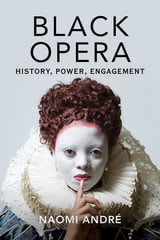
Black Opera
History, Power, EngagementNaomi Andre
University of Illinois Press, 2018
Black Over White
Negro Political Leadership in South Carolina during ReconstructionThomas Holt
University of Illinois Press, 1979
"Well crafted and well written, it not only broadens our knowledge of the period, but also deepens it, something that recent books on Reconstruction have too often failed to do." -- Michael Perman, American Historical Review.
" . . . a valuable study of post-Civil War black leaders in a state where Negro control came closest to realization during Reconstruction. . . . Effectively merging the techniques of quantitative analysis with those of narrative history, Holt shatters a number of myths and misconceptions. . . . It should be on the reading list of all students of Reconstruction and nineteenth-century black history." -- William C. Harris, Journal of Southern History
"Holt presents his work modestly as a state study of reconstruction politics. But this should not obscure a significant intellectual achievement and a contribution of fundamental importance, demonstrating the value of social-class analysis in understanding the politics of the black community." -- Jonathan M. Wiener, Journal of American History.
Black Patriots and Loyalists
Fighting for Emancipation in the War for IndependenceAlan Gilbert
University of Chicago Press, 2012
Black Pearls
Blues Queens of the 1920sDaphne Duval Harrison
Rutgers University Press, 1990
Blues music spawned legendary performers whose influence has been felt in many musical forms here and around the world. Until now the important role of the great women blues singers has largely gone unexplored. This book tells of the cultural and social impact of the blues during the 1920s when the genre was dominated by women, both on stage and on record. Harrison (Afro-American Studies Department, University of Maryland) writes with authority, focusing particularly on Sippie Wallace, Edith Wilson, Victoria Spivey, and Alberta Hunter as she analyzes the music and the collective black experience out of which it grew. A significant book, particularly for collections of music history, black studies, and women's studies. -- Library Journal
Black Performance Theory
Thomas F. DeFrantz and Anita Gonzalez, eds.
Duke University Press, 2014
Contributors. Melissa Blanco Borelli, Daphne A. Brooks, Soyica Diggs Colbert, Thomas F. DeFrantz, Nadine George-Graves, Anita Gonzalez, Rickerby Hinds, Jason King, D. Soyini Madison, Koritha Mitchell, Tavia Nyong'o, Carl Paris, Anna B. Scott, Wendy S. Walters, Hershini Bhana Young

Black Physicians in the Jim Crow South
Thomas J. Ward
University of Arkansas Press, 2016
Black Picket Fences, Second Edition
Privilege and Peril among the Black Middle ClassMary Pattillo
University of Chicago Press, 2013
Stark, moving, and still timely, the book is updated for this edition with a new epilogue by the author that details how the neighborhood and its residents fared in the recession of 2008, as well as new interviews with many of the same neighborhood residents featured in the original. Also included is a new foreword by acclaimed University of Pennsylvania sociologist Annette Lareau.
Black Picket Fences
Privilege and Peril among the Black Middle ClassMary Pattillo-McCoy
University of Chicago Press, 1999
"An insightful look at the socio-economic experiences of the black middle class. . . . Through the prism of a South Side Chicago neighborhood, the author shows the distinctly different reality middle-class blacks face as opposed to middle-class whites." —Ebony
"A detailed and well-written account of one neighborhood's struggle to remain a haven of stability and prosperity in the midst of the cyclone that is the American economy." —Emerge
Black Political Organizations in the Post-Civil Rights Era
Edited by Ollie A. Johnson III, Karin L. Stanford
Rutgers University Press, 2002
We know a great deal about civil rights organizations during the 1960s, but relatively little about black political organizations since that decade. Questions of focus, accountability, structure, and relevance have surrounded these groups since the modern Civil Rights Movement ended in 1968. Political scientists Ollie A. Johnson III and Karin L. Stanford have assembled a group of scholars who examine the leadership, membership, structure, goals, ideology, activities, accountability, and impact of contemporary black political organizations and their leaders. Questions considered are: How have these organizations adapted to the changing sociopolitical and economic environment? What ideological shifts, if any, have occurred within each one? What issues are considered important to black political groups and what strategies are used to implement their agendas? The contributors also investigate how these organizations have adapted to changes within the black community and American society as a whole.
Organizations covered include well-known ones such as the NAACP, Rainbow/PUSH Coalition, the Southern Christian Leadership Conference, the Urban League, and the Congress of Racial Equality, as well as organizations such as the National Association of Colored Women’s Clubs. Religious groups, including black churches and the Nation of Islam, are also considered.
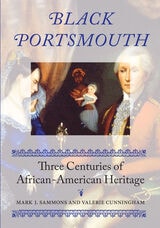
Black Portsmouth
Three Centuries of African-American HeritageMark J. Sammons
University of New Hampshire Press, 2004
Few people think of a rich Black heritage when they think of New England. In the pioneering book Black Portsmouth, Mark J. Sammons and Valerie Cunningham celebrate it, guiding the reader through more than three centuries of New England and Portsmouth social, political, economic, and cultural history as well as scores of personal and site-specific stories.
Here, we meet such Africans as the likely negro boys and girls from Gambia, who debarked at Portsmouth from a slave ship in 1758, and Prince Whipple, who fought in the American Revolution. We learn about their descendants, including the performer Richard Potter and John Tate of the People's Baptist Church, who overcame the tragedies and challenges of their ancestors' enslavement and subsequent marginalization to build communities and families, found institutions, and contribute to their city, region, state, and nation in many capacities. Individual entries speak to broader issues—the anti-slavery movement, American religion, and foodways, for example. We also learn about the extant historical sites important to Black Portsmouth—including the surprise revelation of an African burial ground in October 2003—as well as the extraordinary efforts being made to preserve remnants of the city's early Black heritage.
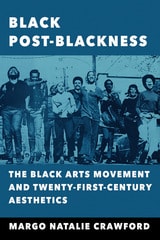
Black Post-Blackness
The Black Arts Movement and Twenty-First-Century AestheticsMargo Natalie Crawford
University of Illinois Press, 2017
Black Power Ideologies
An Essay in African American Political ThoughtJohn T. McCartney
Temple University Press, 1993
In a systematic survey of the manifestations and meaning of Black Power in America, John McCartney analyzes the ideology of the Black Power Movement in the 1960s and places it in the context of both African-American and Western political thought. He demonstrates, though an exploration of historic antecedents, how the Black Power versus black mainstream competition of the sixties was not unique in American history. Tracing the evolution of black social and political movements from the 18th century to the present, the author focuses on the ideas and actions of the leaders of each major approach.
Starting with the colonization efforts of the Pan-Negro Nationalist movement in the 18th century, McCartney contrasts the work of Bishop Turner with the opposing integrationist views of Frederick Douglass and his followers. McCartney examines the politics of accommodation espoused by Booker T. Washington; W.E.B. Du Bois's opposition to this apolitical stance; the formation of the NAACP, the Urban League, and other integrationist organizations; and Marcus Garvey's reawakening of the separatist ideal in the early 20th century. Focusing on the intense legal activity of the NAACP from the 1930s to the 1960s, McCartney gives extensive treatment to the moral and political leadership of Martin Luther King, Jr., and his challenge from the Black Power Movement in 1966.
Black Power Praxis
Theory, Practice, and Activist Intellectuals in Detroit's Black Power MovementMatt Birkhold
University of Michigan Press, 2026
Black Power Praxis shows how four groups of activist-intellectuals—James and Grace Lee Boggs, Richard and Milton Henry, Reverend Albert Cleage, and a group of college students called Uhuru—shifted the consciousness and political perspectives of Black Detroiters in the 1960s and 1970s. By developing theories that they could unite with community-organizing practices, these activist-intellectuals turned the focus of the grassroots movement for racial equality from Civil Rights to Black Power. Following the 1967 Detroit Rebellion, these Black Power activist-intellectuals were already positioned to harness the energy that emerged from the uprising and directed it into the city’s first citywide Black Power organization, the Citywide Citizens Action Committee.
Even as Black Power theories became dominant over Detroit’s grassroots movement, their influence faltered when they failed to develop community organizing practices corresponding to the lived experiences of Black Detroiters. Black Power Praxis reveals how the relationships between ideas, practices, leadership, material reality, and consciousness drove the historical development of Black Power. Ideal for readers curious about social movements, Detroit history, African American history, and African American Studies, the book sheds light on how, why, and when Detroit’s activist-intellectual leaders successfully showed everyday people how their power might be used in transformative ways.
Black Power TV
Devorah Heitner
Duke University Press, 2013
Black Power on Campus
The University of Illinois, 1965-75Joy Ann Williamson
University of Illinois Press, 2003
Drawing on student publications of the late 1960s and early 1970s, as well as interviews with student activists, former administrators, and faculty, Williamson discusses the emergence of Black Power ideology, what constituted "blackness," and notions of self-advancement versus racial solidarity. Promoting an understanding of the role of black youth in protest movements, Black Power on Campus is an important contribution to the literature on African American liberation movements and the reform of American higher education.

Black Property Owners in the South, 1790-1915
Loren Schweninger
University of Illinois Press, 1990
Black Public History in Chicago
Civil Rights Activism from World War II into the Cold WarIan Rocksborough-Smith
University of Illinois Press, 2018
Ian Rocksborough-Smith’s meticulous research and adept storytelling provide the first in-depth look at how these committed individuals leveraged Chicago’s black public history. Their goal: to engage with the struggle for racial equality. Rocksborough-Smith shows teachers working to advance curriculum reform in public schools, while well-known activists Margaret and Charles Burroughs pushed for greater recognition of black history by founding the DuSable Museum of African American History. Organizations like the Afro-American Heritage Association, meanwhile, used black public history work to connect radical politics and nationalism. Together, these people and their projects advanced important ideas about race, citizenship, education, and intellectual labor that paralleled the shifting terrain of mid-twentieth-century civil rights.
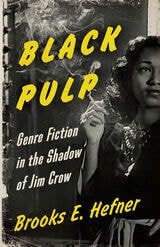
Black Pulp
Genre Fiction in the Shadow of Jim CrowBrooks E. Hefner
University of Minnesota Press, 2021
A deep dive into mid-century African American newspapers, exploring how Black pulp fiction reassembled genre formulas in the service of racial justice
In recent years, Jordan Peele’s Get Out, Marvel’s Black Panther, and HBO’s Watchmen have been lauded for the innovative ways they repurpose genre conventions to criticize white supremacy, celebrate Black resistance, and imagine a more racially just world—important progressive messages widely spread precisely because they are packaged in popular genres. But it turns out, such generic retooling for antiracist purposes is nothing new.
As Brooks E. Hefner’s Black Pulp shows, this tradition of antiracist genre revision begins even earlier than recent studies of Black superhero comics of the 1960s have revealed. Hefner traces it back to a phenomenon that began in the 1920s, to serialized (and sometimes syndicated) genre stories written by Black authors in Black newspapers with large circulations among middle- and working-class Black readers. From the pages of the Pittsburgh Courier and the Baltimore Afro-American, Hefner recovers a rich archive of African American genre fiction from the 1920s through the mid-1950s—spanning everything from romance, hero-adventure, and crime stories to westerns and science fiction. Reading these stories, Hefner explores how their authors deployed, critiqued, and reassembled genre formulas—and the pleasures they offer to readers—in the service of racial justice: to criticize Jim Crow segregation, racial capitalism, and the sexual exploitation of Black women; to imagine successful interracial romance and collective sociopolitical progress; and to cheer Black agency, even retributive violence in the face of white supremacy.
These popular stories differ significantly from contemporaneous, now-canonized African American protest novels that tend to represent Jim Crow America as a deterministic machine and its Black inhabitants as doomed victims. Widely consumed but since forgotten, these genre stories—and Hefner’s incisive analysis of them—offer a more vibrant understanding of African American literary history.
Black Queer Studies
A Critical AnthologyE. Patrick Johnson and Mae G. Henderson, eds.
Duke University Press, 2005
The contributors consider representations of the black queer body, black queer literature, the pedagogical implications of black queer studies, and the ways that gender and sexuality have been glossed over in black studies and race and class marginalized in queer studies. Whether exploring the closet as a racially loaded metaphor, arguing for the inclusion of diaspora studies in black queer studies, considering how the black lesbian voice that was so expressive in the 1970s and 1980s is all but inaudible today, or investigating how the social sciences have solidified racial and sexual exclusionary practices, these insightful essays signal an important and necessary expansion of queer studies.
Contributors. Bryant K. Alexander, Devon Carbado, Faedra Chatard Carpenter, Keith Clark, Cathy Cohen, Roderick A. Ferguson, Jewelle Gomez, Phillip Brian Harper, Mae G. Henderson, Sharon P. Holland, E. Patrick Johnson, Kara Keeling, Dwight A. McBride, Charles I. Nero, Marlon B. Ross, Rinaldo Walcott, Maurice O. Wallace
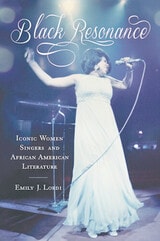
Black Resonance
Iconic Women Singers and African American LiteratureLordi, Emily J.
Rutgers University Press, 2013
Ever since Bessie Smith’s powerful voice conspired with the “race records” industry to make her a star in the 1920s, African American writers have memorialized the sounds and theorized the politics of black women’s singing. In Black Resonance, Emily J. Lordi analyzes writings by Richard Wright, Ralph Ellison, James Baldwin, Gayl Jones, and Nikki Giovanni that engage such iconic singers as Bessie Smith, Billie Holiday, Mahalia Jackson, and Aretha Franklin.
Focusing on two generations of artists from the 1920s to the 1970s, Black Resonance reveals a musical-literary tradition in which singers and writers, faced with similar challenges and harboring similar aims, developed comparable expressive techniques. Drawing together such seemingly disparate works as Bessie Smith’s blues and Richard Wright’s neglected film of Native Son, Mahalia Jackson’s gospel music and Ralph Ellison’s Invisible Man, each chapter pairs one writer with one singer to crystallize the artistic practice they share: lyricism, sincerity, understatement, haunting, and the creation of a signature voice. In the process, Lordi demonstrates that popular female singers are not passive muses with raw, natural, or ineffable talent. Rather, they are experimental artists who innovate black expressive possibilities right alongside their literary peers.
The first study of black music and literature to centralize the music of black women, Black Resonance offers new ways of reading and hearing some of the twentieth century’s most beloved and challenging voices.
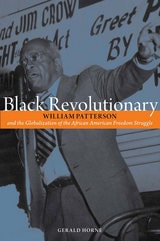
Black Revolutionary
William Patterson and the Globalization of the African American Freedom StruggleGerald Horne
University of Illinois Press, 2013
Black Rodeo
A History of the African American WesternMia Mask
University of Illinois Press, 2023
A first-of-its kind survey, Black Rodeo illuminates the figure of the Black cowboy while examining the intersection of African American film history and the western.
Black Scare / Red Scare
Theorizing Capitalist Racism in the United StatesCharisse Burden-Stelly
University of Chicago Press, 2023
In the early twentieth century, two panics emerged in the United States. The Black Scare was rooted in white Americans’ fear of Black Nationalism and dread at what social, economic, and political equality of Black people might entail. The Red Scare, sparked by communist uprisings abroad and subversion at home, established anticapitalism as a force capable of infiltrating and disrupting the American order. In Black Scare / Red Scare, Charisse Burden-Stelly meticulously outlines the conjoined nature of these state-sanctioned panics, revealing how they unfolded together as the United States pursued capitalist domination. Antiradical repression, she shows, is inseparable from anti-Black oppression, and vice versa.
Beginning her account in 1917—the year of the Bolshevik Revolution, the East St. Louis Race Riot, and the Espionage Act—Burden-Stelly traces the long duration of these intertwined and mutually reinforcing phenomena. She theorizes two bases of the Black Scare / Red Scare: US Capitalist Racist Society, a racially hierarchical political economy built on exploitative labor relationships, and Wall Street Imperialism, the violent processes by which businesses and the US government structured domestic and foreign policies to consolidate capital and racial domination. In opposition, Radical Blackness embodied the government’s fear of both Black insurrection and Red instigation. The state’s actions and rhetoric therefore characterized Black anticapitalists as foreign, alien, and undesirable. This reactionary response led to an ideology that Burden-Stelly calls True Americanism, the belief that the best things about America were absolutely not Red and not Black, which were interchangeable threats.
Black Scare / Red Scare illuminates the anticommunist nature of the US and its governance, but also shines a light on a misunderstood tradition of struggle for Black liberation. Burden-Stelly highlights the Black anticapitalist organizers working within and alongside the international communist movement and analyzes the ways the Black Scare/Red Scare reverberates through ongoing suppression of Black radical activism today. Drawing on a range of administrative, legal, and archival sources, Burden-Stelly incorporates emancipatory ideas from several disciplines to uncover novel insights into Black political minorities and their legacy.
Black Scholars Matter
Visions, Struggles, and Hopes in Africana Biblical StudiesGay L. Byron
SBL Press, 2022
Distinctive, Powerful, Transformational
This book collects the presentations of twelve leading Africana scholars who participated in the groundbreaking #Black Scholars Matter virtual symposium held in August 2020 that was organized by the Society of Biblical Literature's Black Scholars Matter Task Force in coordination with the SBL’s Committee on Underrepresented Racial and Ethnic Minorities in the Profession. These scholars share their perspectives on biblical studies and their experiences in the discipline on a range of topics, including blatant and subtle forms of bias and racism; mentoring; lessons of struggle, sacrifice, and lack of support; reflections on the obstacles of national tragedies, geographical locations, and academic disciplines; and the challenges of creating a more welcoming environment for the next generation of Black biblical scholars. Eight additional contributors and stakeholders that have administrative and decision-making responsibilities within theological and other settings address the need for institutional and personal accountability. Contributors include Efraín Agosto, Cheryl B. Anderson, Randall C. Bailey, Gay L. Byron, Ronald Charles, Stephanie Buckhanon Crowder, Steed Vernyl Davidson, Sharon Watson Fluker, John F. Kutsko, Vanessa Lovelace, Madipoane Masenya (Ngwan'a Mphahlele), Raj Nadella, Hugh R. Page Jr., Adele Reinhartz, Kimberly D. Russaw, Abraham Smith, Shively T. J. Smith, Mai-Anh Le Tran, Renita J. Weems, and Vincent L. Wimbush.
Black Sexual Economies
Race and Sex in a Culture of CapitalEdited by Adrienne D. Davis and the BSE Collective
University of Illinois Press, 2019

Black Sexualities
Probing Powers, Passions, Practices, and PoliciesEdited and with an Introduction by Juan Battle and Sandra L. Barnes
Rutgers University Press, 2009
From questioning forces that have constrained sexual choices to examining how Blacks have forged healthy sexual identities in an oppressive environment, Black Sexualities acknowledges the diversity of the Black experience and the shared legacy of racism. Contributors seek resolution to Blacks' understanding of their lives as sexual beings through stories of empowerment, healing, self-awareness, victories, and other historic and contemporary life-course panoramas and provide practical information to foster more culturally relative research, tolerance, and acceptance.
Black Society in Spanish Florida
Jane Landers
University of Illinois Press, 1999
Blacks under Spanish rule in Florida lived in a more complex and international world that linked the Caribbean, Africa, and Europe with a powerful and diverse Indian hinterland. Jane Landers’s pioneering study of people of the African diaspora under Spain’s colonial rule rewrites Florida history and enriches our understanding of the powerful links between race relations and cultural custom.
As Landers shows, Spanish Florida was a sanctuary to Blacks fleeing enslavement on plantations. Castilian law, meanwhile, offered many avenues out of slavery. In St. Augustine and elsewhere, society accepted European-African unions, with families developing community connections through marriage, concubinage, and godparents. Assisted by Spanish traditions and ever-present geopolitical threats, people of African descent leveraged linguistic, military, diplomatic, and artisanal skills into citizenship and property rights. Landers details how Blacks became homesteaders, property owners, and entrepreneurs, and in the process enjoyed greater legal and social protection than in the two hundred years of Anglo history that followed.
Black Sporting Resistance
Diaspora, Transnationalism, and InternationalismJoseph N. Cooper
Rutgers University Press, 2025
Black Students in the Ivory Tower
African American Student Activism at the University of Pennsylvania, 1967-1990Wayne C. Glasker
University of Massachusetts Press, 2002
Glasker begins his study in the late 1960s, when the university's expansion into a predominantly black Philadelphia neighborhood precipitated a massive sit-in and protest. In response, Penn accelerated the process of admitting more black students, doubling the number of black matriculants by September 1969. Many came from inner city public high schools with backgrounds, ideas, and interests far different from those of the affluent middle- and upper-class white students who constituted the majority of the undergraduate population. As a result, the next decade was marked by recurrent tension and conflict, as black students at Penn rejected assimilation and agitated successfully for the creation of a variety of institutions that recognized their needs. These included an Afro-American studies program, a residence for students interested in black culture, and a Black Student League. Following a 1978 sit-in, they won a demand for an Inter-cultural Center and formed the United Minorities Council, and in 1986 they joined with white activists to press the university to divest its holdings from companies doing business in South Africa.
Throughout the book Glasker interweaves two parallel stories: that of an Ivy League university wrestling with questions of diversity, compensatory education, and the meaning of merit and qualification; and that of black students grappling with issues of assimilation, separatism, and cultural pluralism. In the end, he argues, the students sought to preserve their own distinctive ethnic culture, identity, and heritage while pursuing economic upward mobility. Rather than separatism, they aspired to a form of biculturalism that involved economic empowerment without cultural assimilation.
Black Studies, Rap, and the Academy
Houston A. Baker Jr.
University of Chicago Press, 1993
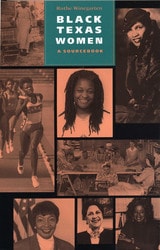
Black Texas Women
A SourcebookBy Ruthe Winegarten
University of Texas Press, 1994
When Black Texas Women: 150 Years of Trial and Triumph was published in 1995, it was acclaimed as the first comprehensive history of black women's struggles and achievements. This companion volume contains the original source materials that Ruthe Winegarten uncovered during her extensive research.
Like a time capsule of black women's history, A Sourcebook includes petitions from free women of color, lawsuits, slave testimonies, wills, plantation journals, club minutes, autobiographies, ads, congressional reports, contracts, prison records, college catalogues, newspaper clippings, protest letters, and much more.
In addition to the documents, a biographical section highlights the lives of women from various walks of life. The book concludes with a timeline that begins in 1777 and reaches to 1992. This wealth of original material will be a treasure trove for scholars and general readers interested in the emerging field of black women's history.
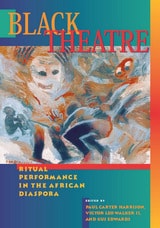
Black Theatre
Ritual Performance In The African Diasporaedited by Paul Carter Harrison, Victor Leo Walker II and Gus Edwards
Temple University Press, 2002

Black Trans Feminism
Marquis Bey
Duke University Press, 2022
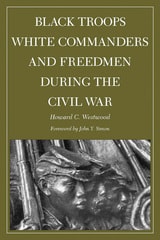
Black Troops, White Commanders and Freedmen during the Civil War
Howard C. Westwood
Southern Illinois University Press, 2008
Recounting the experiences of black soldiers in the Civil War
In the ten probing essays collected in this volume, Howard C. Westwood recounts the often bitter experiences of black men who were admitted to military service and the wrenching problems associated with the shifting status of African Americans during the Civil War.
Black Troops, White Commanders and Freedmen during the Civil War covers topics ranging from the roles played by Lincoln and Grant in beginning black soldiery to the sensitive issues that arose when black soldiers (and their white officers) were captured by the Confederates. The essays relate the exploits of black heroes such as Robert Smalls, who single-handedly captured a Confederate steamer, as well as the experiences of the ignoble Reverend Fountain Brown, who became the first person charged with violating the Emancipation Proclamation.
Although many thousands were enlisted as soldiers, blacks were barred from becoming commissioned officers and for a long time they were paid far less than their white counterparts. These and other blatant forms of discrimination understandably provoked discontent among black troops which, in turn, sparked friction with their white commanders. Westwood's fascinating account of the artillery company from Rhode Island amply demonstrates how frustrations among black soldiers came to be seen as "mutiny" by some white officers.

Black Undertow
Hugo ka Canham
Duke University Press, 2026

Black Unhappiness
The Philosophy of W. E. B. Du BoisGrant Farred
Duke University Press, 2027
Black Visual Cultures of the Midwest
Freda L. Fair
University of Minnesota Press, 2027
Recentering black creativity and resistance in the history of the Midwest
African American creators have unsettled and upended racism in the Midwest region since as far back as 1787, and Black Visual Cultures of the Midwest examines the work of many such innovators, presenting an unruly, transgressive, and defiant vision of queer blackness that complicates fundamental American ideals of liberty, progress, life, and property.
Spanning the nineteenth century to the present, Freda L. Fair draws from a broad array of sources, including film, visual art, and even arrest records to examine concepts of freedom and resistance grounded in black cultural production in the Midwest. Through subjects such as Joshua Glover, who escaped slavery in Missouri and relocated to Wisconsin; sex workers in the Twin Cities; Ruth Ellis, a black lesbian elder in Detroit; and Nick Cave, who created Soundsuits in response to the police beating of Rodney King, Fair challenges monolithic formulations of blackness and black culture. Fair also queers Midwest history, engaging an LGBTQ lens to reexamine Wisconsin’s 1854 decision to declare the Fugitive Slave Act of 1850 unconstitutional, the Springfield Race Riot of 1908, and other historic moments.
Revealing how black visual cultures in the Midwest both illuminate black gendered and sexual difference and actively resist antiblackness, Fair shows that the region is a site that can advance freedom and social change.
Retail e-book files for this title are screen-reader friendly with images accompanied by short alt text and/or extended descriptions.

Black Wellness
Health Beyond OutcomesGerShun Avilez
University of Minnesota Press, 2027
Revealing how contemporary Black creatives explore personal and collective wellness within anti-Black societies
Black Wellness tracks how Black artists, writers, poets, and other cultural producers explore Black health as feeling good while attending to underlying physical and mental exhaustion resulting from racism, homophobia, and sexism. Considering depictions of and discourse about pain, HIV/AIDS, Covid-19, cancer, and diabetes, GerShun Avilez moves beyond pathologies of Black illness and the outcome-motivated medical field to delineate the nature of Black wellness as the basis for artistic experiments, envisioning manifold expressions of health.
Responding to the history and impact of racial health disparities, Avilez locates a complex interplay between pain and care, stigma and pleasure, self-management and blame, and isolation and contact. In Black Wellness, he delves into innovative literary writing and digital projects: poetry by Danez Smith, Claudia Rankine, and Bettina Judd; personal reflections by Zadie Smith, Audre Lorde, and Yohanes Godanna Gatiso; novels by Toni Cade Bambara and Masande Ntshanga; and video, theatrical, and multimedia projects by Faithe Daye, Seth E. Davis, and Robbie McCauley.
Reading and thinking across borders to analyze African diasporic artists originating from the United States, Jamaica, South Africa, Ethiopia, and the United Kingdom, Avilez highlights how interconnected histories of racialization, minoritization, and colonization contextualize the lived experiences of Black wellness and illness. By deemphasizing—but not discounting—health outcomes, Black Wellness argues that cultural acts of envisioning and communicating Black health are always double pronged, simultaneously attending to states of debility and vitality in Black bodies.
Retail e-book files for this title are screen-reader friendly.
Black Women and Politics in New York City
Julie A. Gallagher
University of Illinois Press, 2014
Historian and human rights activist Julie A. Gallagher deftly examines how race, gender, and the structure of the state itself shape outcomes, and exposes the layers of power and discrimination at work in American society. She combines her analysis with a look at the career of Shirley Chisholm, the first black woman elected to Congress and the first to run for president on a national party ticket. In so doing, she rewrites twentieth-century women's history and the dominant narrative arcs of feminist history that hitherto ignored African American women and their accomplishments.
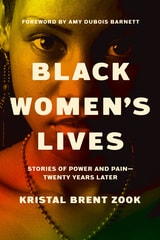
Black Women's Lives
Stories of Power and Pain — Twenty Years LaterKristal Brent Zook
Rutgers University Press, 2027
When author Kristal Brent Zook first published Black Women’s Lives: Stories of Power and Pain, nearly 20 years ago, the reality of so many Black women's lived experiences was not widely discussed in mainstream media. Two decades later, after much social change in the United States, including national media attention on Black women following the police murder of Breonna Taylor and the #SayHerName movement, the election of the first Black female vice president, Kamala Harris, and massive political and social backlash because of these gains, the timing for a refreshed look at these women's lives has never been better.
The stories in this collection invite readers into the intimate spaces of ten African American women from all walks of life, in cities and towns across the country. Twenty years later, we revisit them to learn how their lives have evolved. There are fresh new codas at the end of each chapter that illustrate how the women have fared over the last two decades. Did they achieve their dreams? What twists and turns did they meet along the way? These stories highlight the complex, nuanced, and passionate lives that Black women lead, often requiring ambition, ingenuity, and creativity to survive and thrive in the United States. This collection is a testament to the fact that the past repeats — and we remain, each of us, still, connected.
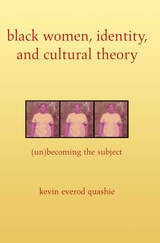
Black Women, Identity, and Cultural Theory
(Un)Becoming the SubjectKevin Everod Quashie
Rutgers University Press, 2004
In Black Women, Identity, and Cultural Theory, Kevin Everod Quashie explores the metaphor of the “girlfriend” as a new way of understanding three central concepts of cultural studies: self, memory, and language. He considers how the work of writers such as Toni Morrison, Ama Ata Aidoo, Dionne Brand, photographer Lorna Simpson, and many others, inform debates over the concept of identity. Quashie argues that these authors and artists replace the notion of a stable, singular identity with the concept of the self developing in a process both communal and perpetually fluid, a relationship that functions in much the same way that an adult woman negotiates with her girlfriend(s). He suggests that memory itself is corporeal, a literal body that is crucial to the process of becoming. Quashie also explores the problem language poses for the black woman artist and her commitment to a mastery that neither colonizes nor excludes.
The analysis throughout interacts with schools of thought such as psychoanalysis, postmodernism, and post-colonialism, but ultimately moves beyond these to propose a new cultural aesthetic, one that ultimately aims to center black women and their philosophies.
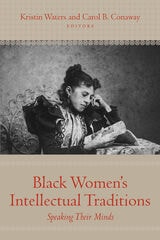
Black Women’s Intellectual Traditions
Speaking Their MindsEdited by Kristin B. Waters and Carol B. Conaway
University Press of New England, 2007
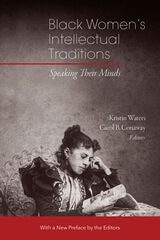
Black Women’s Intellectual Traditions
Speaking Their MindsEdited by Kristin Waters and Carol B. Conaway
Brandeis University Press, 2022
An astonishing wealth of literary and intellectual work by nineteenth-century Black women is being rediscovered and restored to print in scholarly and popular editions. In Kristin Waters’s and Carol B. Conaway’s landmark edited collection, Black Women’s Intellectual Traditions: Speaking Their Minds, sophisticated commentary on this rich body of work chronicles a powerful and interwoven legacy of activism based in social and political theories that helped shape the history of North America. The book meticulously reclaims this American legacy, providing a collection of critical analyses of the primary sources and their vital traditions. Written by leading scholars, Black Women’s Intellectual Traditions is particularly powerful in its exploration of the pioneering thought and action of the nineteenth-century Black woman lecturer and essayist Maria W. Stewart, abolitionist Sojourner Truth, novelist and poet Frances Ellen Watkins Harper, educator Anna Julia Cooper, newspaper editor Mary Ann Shadd Cary, and activist Ida B. Wells. The distinguished contributors are Hazel V. Carby, Patricia Hill Collins, Karen Baker-Fletcher, Kristin Waters, R. Dianne Bartlow, Carol B. Conaway, Olga Idriss Davis, Vanessa Holford Diana, Evelyn Simien, Janice W. Fernheimer, Michelle N. Garfield, Joy James, Valerie Palmer-Mehta, Carla L. Peterson, Marilyn Richardson, Evelyn M. Simien, Ebony A. Utley, Mary Helen Washington, Melina Abdullah, and Lena Ampadu. The volume will interest scholars and readers of African-American and women’s studies, history, rhetoric, literature, poetry, sociology, political science, and philosophy. This updated edition features a new preface by the editors in the light of new developments in current scholarship.
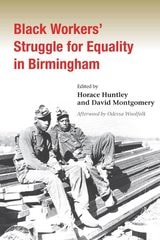
Black Workers' Struggle for Equality in Birmingham
Edited by Horace Huntley and David Montgomery
University of Illinois Press, 2004
Horace Huntley and David Montgomery curate a collection of annotated oral interviews of black workers who served on the front lines of the Civil Rights Movement in Birmingham, Alabama. As the interviewees recount their struggles against discrimination, they show how collective action--whether through unions, the Movement, or networks of workplace activists--sought to gain access to better jobs, municipal services, housing, and less restrictive voter registration.
Powerful and honest, Black Workers' Struggle for Equality in Birmingham draws on work by the Birmingham Civil Rights Institute to offer readers vivid eyewitness accounts of American history in the making.
Black and Blue TV
Industry Responses to the Black Lives Matter MovementLaurena Bernabo
Rutgers University Press, 2026
Black and Blue TV explores the ways television productions have responded to the Black Lives Matter movement. Television programs’ engagement with BLM was common before George Floyd’s murder sparked international protests in the summer of 2020, at which point it became nearly unavoidable for many series. Images of police using violence against Black Americans fueled criticisms of the role of television—especially cop shows—in perpetuating “copaganda,” highlighting the fact that television’s cops are nearly always the good guys, even when they break the law and use excessive force. Black and Blue TV identifies trends and anomalies in television’s engagement with BLM but also investigates the people who influence what those representations look like. Pairing textual criticism with interviews with television creatives, executives, and media activists, author Laurena Bernabo traces shifts in how these individuals understand their role in televisual culture and the cultural forum of narratives that are produced and distributed as a result.
Black and Smart
How Black High-Achieving Women Experience CollegeAdrianne Musu Davis
Rutgers University Press, 2023
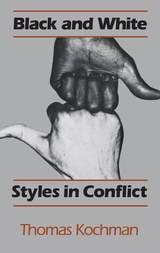
Black and White Styles in Conflict
Thomas Kochman
University of Chicago Press, 1981

Black behind the Ears
Dominican Racial Identity from Museums to Beauty ShopsGinetta E. B. Candelario
Duke University Press, 2007
Candelario draws on her participant observation in a Dominican beauty shop in Washington Heights, a New York City neighborhood with the oldest and largest Dominican community outside the Republic, and on interviews with Dominicans in New York City, Washington, D.C., and Santo Domingo. She also analyzes museum archives and displays in the Museo del Hombre Dominicano and the Smithsonian Institution as well as nineteenth- and early-twentieth-century European and American travel narratives.

Black in White Space
The Enduring Impact of Color in Everyday LifeElijah Anderson
University of Chicago Press, 2021
A birder strolling in Central Park. A college student lounging on a university quad. Two men sitting in a coffee shop. Perfectly ordinary actions in ordinary settings—and yet, they sparked jarring and inflammatory responses that involved the police and attracted national media coverage. Why? In essence, Elijah Anderson would argue, because these were Black people existing in white spaces.
In Black in White Space, Anderson brings his immense knowledge and ethnography to bear in this timely study of the racial barriers that are still firmly entrenched in our society at every class level. He focuses in on symbolic racism, a new form of racism in America caused by the stubbornly powerful stereotype of the ghetto embedded in the white imagination, which subconsciously connects all Black people with crime and poverty regardless of their social or economic position. White people typically avoid Black space, but Black people are required to navigate the “white space” as a condition of their existence. From Philadelphia street-corner conversations to Anderson’s own morning jogs through a Cape Cod vacation town, he probes a wealth of experiences to shed new light on how symbolic racism makes all Black people uniquely vulnerable to implicit bias in police stops and racial discrimination in our country.
An unwavering truthteller in our national conversation on race, Anderson has shared intimate and sharp insights into Black life for decades. Vital and eye-opening, Black in White Space will be a must-read for anyone hoping to understand the lived realities of Black people and the structural underpinnings of racism in America.