Results by title
5550 books match the query 'Biography & Autobiography' and 296 start with b
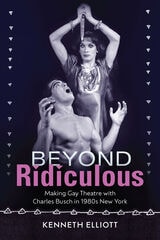
Beyond Ridiculous
Making Gay Theatre with Charles Busch in 1980s New YorkKenneth Elliott
University of Iowa Press, 2023
In Beyond Ridiculous, Elliott narrates in first-person the company’s Cinderella tale of fun, heartbreak, and dishy drama. At the center of the book is a young Charles Busch, an unforgettable personality fighting to be seen, be heard, and express his unique style as a writer-performer in plays such as Psycho Beach Party and The Lady in Question. The tragedy of AIDS among treasured friends in the company, the struggle for mainstream acceptance of LGBTQ+ theatre during the reign of President Ronald Reagan, and the exploration of new ways of being a gay theatre artist make the book a bittersweet and joyous ride.
Beyond Slash, Burn, and Poison
Transforming Breast Cancer Stories into ActionMarcy Jane Knopf-Newman
Rutgers University Press, 2004
Depending on one’s vantage point, breast cancer can be a very different experience, and indeed, a very different concern. It is, for some, a personal struggle; for others, it is a disease posing scientific and environmental challenges; and for others it is a highly charged and politicized issue around which policy wars rage. Beyond Slash, Burn, and Poison brings a unique perspective to breast cancer by recognizing the overlapping relationship of all these realities.
Drawing on the writings of Rachel Carson, Betty Ford, Rose Kushner, and Audre Lorde, this book explores the various ways in which patient-centered texts continue to leave their mark on the political realm of breast cancer and, ultimately, the disease itself. Ordered chronologically, the selections trace the progression of discussions about breast cancer from a time when the subject was kept private and silent to when it became part of public discourse. The texts included are personal accounts, written by women struggling to play an active role in their healing process and, at the same time, hoping to help others do the same.
Knopf-Newman also shows us how these writings eventually changed public opinion and the underlying tendency to blame women for their illness. She argues that changes in medical practice and public policy are linked to textual interventions, and makes a case for the politicization of cultural studies of disease through personal and literary expression.
Passionately written and well-researched, Beyond Slash, Burn, and Poison transforms how we think about breast cancer. Rather than facilitating forums for separate discussions, this book brings conversations into dialog with each other. It is essential reading for anyone concerned with breast cancer and its history, as well as for those interested in the effect of the environment on public health and the role that literature plays in public policy and medicine.
Beyond The Whiteness of Whiteness
Memoir of a White Mother of Black SonsJane Lazarre
Duke University Press, 1997
Lazarre has spent over twenty-five years living in a Black American family, married to an African American man, birthing and raising two sons. A teacher of African American literature, she has been influenced by an autobiographical tradition that is characterized by a speaking out against racism and a grounding of that expression in one’s own experience—an overlapping of the stories of one’s own life and the world. Like the stories of that tradition, Lazarre’s is a recovery of memories that come together in this book with a new sense of meaning. From a crucial moment in which consciousness is transformed, to recalling and accepting the nature and realities of whiteness, each step describes an aspect of her internal and intellectual journey. Recalling events that opened her eyes to her sons’ and husband’s experience as Black Americans—an operation, turned into a horrific nightmare by a doctor’s unconscious racism or the jarring truths brought home by a visit to an exhibit on slavery at the Richmond Museum of the Confederacy—or her own revealing missteps, Lazarre describes a movement from silence to voice, to a commitment to action, and to an appreciation of the value of a fluid, even ambiguous, identity. It is a coming of age that permits a final retelling of family history and family reunion.
With her skill as a novelist and her experience as a teacher, Jane Lazarre has crafted a narrative as compelling as it is telling. It eloquently describes the author’s delight at being accepted into her husband’s family and attests to the power of motherhood. And as personal as this story is, it is a remarkably incisive account of how perceptions of racial difference lie at the heart of the history and culture of America.
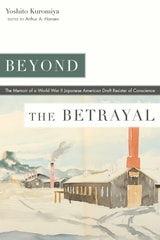
Beyond the Betrayal
The Memoir of a World War II Japanese American Draft Resister of Conscienceby Yoshito Kuromiya edited by ArthurA.Hansen
University Press of Colorado, 2022
Of the 300 Japanese Americans who resisted the military draft on the grounds that the US government had deprived them of their fundamental rights as US citizens, Kuromiya alone has produced an autobiographical volume that explores the short- and long-term causes and consequences of this fateful wartime decision. In his exquisitely written and powerfully documented testament he speaks truth to power, making evident why he is eminently qualified to convey the plight of the Nisei draft resisters. He perceptively reframes the wartime and postwar experiences of the larger Japanese American community, commonly said to have suffered in the spirit of shikata ga nai—enduring that which cannot be changed—and emerged with dignity.
Beyond the Betrayal makes abundantly clear that the unjustly imprisoned Nisei could and did exercise their patriotism even when they refused to serve in the military in the name of civil liberties and social justice. Kuromiya’s account, initially privately circulated only to family and friends, is an invaluable and insightful addition to the Nikkei historical record.

Beyond the Booth
Merrill's Fifty Years with the EaglesCindy Reese and Merrill Reese
Temple University Press, 2027
Merrill Reese is the longest tenured radio play-by-play announcer in the history of the NFL. He has been with the Philadelphia Eagles since 1977, covering the team’s players, coaches, and owners in locker rooms, on the sidelines, and on road trips.
Beyond the Booth is a heartfelt history of the Eagles as recounted by Reese in conversation with the interviewer who knows him best—his wife, Cindy. Reese shares his memories and recollections of the team from the Dick Vermeil years through the Nick Sirianni era. (Spoiler alert: he was no Chip Kelly fan.) Cindy draws out her husband’s observations on the authenticity of the team’s personalities and leaders and how they make it successful. Merrill also describes his relationships with his broadcast colleagues and players, including Jalen Hurts.
With her insider perspective, Cindy knows what to ask for Merrill to share his thoughts on his connection with the fans and success as a broadcaster, such as how performing in TV commercials as a child helped him develop his keen memorization skills. (She uses flashcards to test Merrill on players.)
Reese’s passion for the game, shared by his wife, is infectious. Beyond the Booth will excite every Eagles fan.

Beyond the Briar Patch
Affrilachian Folktales, Food, and FolkloreLynette Ford
Parkhurst Brothers, Inc., 2014
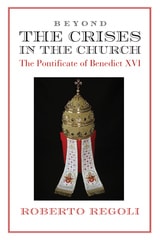
Beyond the Crises
The Pontificate of Benedict XVIRegoli
St. Augustine's Press, 2023
––Benedict XVI, General Audience, 27 February 2013
Roberto Regoli offers a keen and comprehensive preview of Pope Benedict XVI's pontificate, which will be better understood only after time has passed and more becomes available. As an historian, Regoli provides ample context to frame the theology and pastoral priorities of a pope, professor, priest, and figure of history who has been shaped by his times, and who will undoubtedly be remembered as deeply orienting the Church toward the future. The perspective and questions offered by Regoli will likewise be a key component to the scholarship surrounding Pope Benedict's pontificate for decades to come, and he significantly broadens what has already been compiled by Anglophone writers.
Beyond the Frontier
The Midwestern Voice in American Historical WritingDavid S. Brown
University of Chicago Press, 2009
As the world went to war in 1941, Time magazine founder Henry Luce coined a term for what was rapidly becoming the establishment view of America’s role in the world: the twentieth century, he argued, was the American Century. Many of the nation’s most eminent historians—nearly all of them from the East Coast—agreed with this vision and its endorsement of the vigorous use of power and persuasion to direct world affairs. But an important concentration of midwestern historians actively dissented. With Beyond the Frontier, David S. Brown tells their little-known story of opposition.
Raised in a cultural landscape that combined agrarian provincialism with reform-minded progressivism, these historians—among them Charles Beard, William Appleman Williams, and Christopher Lasch—argued strenuously against the imperial presidencies, interventionist foreign policies, and Keynesian capitalism that swiftly shaped cold war America. Casting a skeptical eye on the burgeoning military-industrial complex and its domestic counterpart, the welfare state, they warned that both components of the liberal internationalist vision jeopardized the individualistic, republican ethos that had long lain at the heart of American democracy.
Drawing on interviews, personal papers, and correspondence of the imoprtant players in the debate, Brown has written a fascinating follow-up to his critically acclaimed biography of Richard Hofstadter. Illuminating key ideas that link midwestern writers from Frederick Jackson Turner all the way to William Cronon and Thomas Frank, Beyond the Frontier is intellectual history at its best: grounded in real lives and focused on issues that remain salient—and unresolved—even today.

Beyond the Mask
Gordon Craig, Movement, and the ActorIrene Eynat-Confino
Southern Illinois University Press, 1987
Eynat-Confino goes beyond the usual consideration of Craig’s purported theories of the actor, scenery, and the scene painter to get at the heart of Craig’s idea of theater.
She draws not only on the research of contemporary Craig scholars but on material hitherto unavailable—his writings and daybooks and the writings of friends. She ties Craig’s encounter with Isadora Duncan to a decisive modification in his notion of movement. To have an instrument more controllable than the actor, he invented the über-marionette, a giant puppet. Craig also invented the “Scene,” a kinetic stage, the “screens” that brought him worldwide fame were simply an adaptation of this concept.
Eynat-Confino argues that a scenario Craig wrote in 1905, here published for the first time, reveals a theosophical system like that of Blake, a system that was the main force motivating Craig’s artistic quest. In her final chapter, she carefully examines the psychological, aesthetic, and circumstantial factors that kept Craig from completing his work to bring “friendliness—humor—love—ease—peace” to the world.
Beyond the Siege of Leningrad
One Woman’s Life during and after the Occupation: The Recollections of Evdokiia Vasil’evna Baskakova-BogachevaPavel Gavrilov
Central European University Press, 2024
This memoir about the experiences of German occupation during the siege of Leningrad (now Saint Petersburg) was written by Moscow-born Evdokiia Vasil’evna Baskakova-Bogacheva (1888–1976), an émigré in Australia, at the age of eighty-one. The text had been forgotten in the Museum of Russian Culture in San Francisco since 1970 until the editors of this volume discovered it.
In the memoirs, after accounting on her youth spent against the background of the First World War and of the two Russian revolutions of 1917, Evdokiia describes the inferno of the Nazi occupation as experienced in a suburb of Leningrad in 1941-43. She survived for nearly two years almost on the front line, within a few kilometers of the blockade ring. As a medical practitioner, she became useful for the occupational authorities and the ever-shrinking town population, until her family was evacuated to the west in October 1943. Besides hunger, discord, disease, the hunt for food and firewood, along with violence and death, Evdokiia’s account deals with various forms of cooperation between Soviet citizens and the new authorities.
All the events she recalls can be confirmed through other sources. The introduction and the detailed notes to the text help the reader to locate Evdokiia’s recollections in time and place, and situate them in their historical context.
Beyond the Whiteness of Whiteness
Memoir of a White Mother of Black SonsJane Lazarre
Duke University Press, 1996

Big Bend
A Homesteader's StoryBy J. O. Langford, with Fred Gipson.
University of Texas Press, 1952
To the wild and fabulous country where the Rio Grande makes its big bend, J. O. Langford came in 1909 with his wife and daughter in search of health and a home. High on a bluff overlooking the spot where Tornillo Creek pours its waters into the turbulent Rio Grande, the Langfords built their home, a rude structure of adobe blocks in a land reputed to be inhabited only by bandits and rattlesnakes.
Big Bend is the story of the Langfords' life in the rugged and spectacularly beautiful country which they came to call their own. Langford's account is told with the help of Fred Gipson, author of Old Yeller and Hound Dog Man.

Big Bill Thompson, Chicago, and the Politics of Image
Douglas Bukowski
University of Illinois Press, 1998
A brilliant chameleon of a politician, Thompson could move from pro- to anti-prohibition, from opposing the Chicago Teachers Federation to opposing a superintendent hostile to it, from being anti-Catholic to winning, in huge numbers, the Catholic vote. Shape-shifter extraordinaire, Thompson stayed in power by repeatedly altering his political image. In Big Bill Thompson, Chicago, and the Politics of Image, Douglas Bukowski captures the essence of this wily urban politico as no other biographer or historian has. Using materials accessible only thanks to the Freedom of Information Act, Bukowski has fashioned an unforgettable story of a volatile Chicago leader and his era. And he does it with such grace and in such an irresistible style that readers will yearn to visit the local speakeasy and lift a glass to colorful politicians gone by.
Big Bill of Chicago
Lloyd Wendt and Herman Kogan
Northwestern University Press, 2005
To some he was a humanitarian and builder. Others scorned him as a fake and friend of gangsters with "the carcass of a rhinoceros and the brain of a baboon." This rollicking history traces the rise of William Hale "Big Bill" Thompson, Chicago's famous reform mayor, from his upper class roots to his years as a teenaged cowboy, from his fame as a star athlete to the years as a master politician in a world where the ward boss ruled and whiskey for the voters cost a quarter a shot. Big Bill of Chicago profiles the whole brawling arena of city politics from the turn of the century to the Prohibition Era. It is a primer in the way American politics worked-and works-and a map along the countless winding ways even the dirtiest deal can lead to something great.
Big Bosses
A Working Girl’s Memoir of Jazz Age AmericaAlthea McDowell Altemus
University of Chicago Press, 2016
Beginning with her employment as a private secretary to James Deering of International Harvester, whom she describes as “probably the world’s oldest and wealthiest bachelor playboy,” Altemus tells us much about high society during the time, taking us inside Deering’s glamorous Miami estate, Vizcaya, an Italianate mansion worthy of Gatsby himself. Later, we meet her other notable employers, including Samuel Insull, president of Chicago Edison; New York banker S. W. Straus; and real estate developer Fred F. French. We cinch up our trenchcoats and head out sleuthing in Chicago, hired by the wife of a big boss to find out how he spends his evenings (with, it turns out, a mistress hidden in an apartment within his office, no less). Altemus was also a struggling single mother, a fact she had to keep secret from her employers, and she reveals the difficulties of being a working woman at the time through glimpses into women’s apartments, their friendships, and the dangers—sexual and otherwise—that she and others faced. Throughout, Altemus entertains with a tart and self-aware voice that combines the knowledge of an insider with the wit and clarity of someone on the fringe.
Anchored by extensive annotation and an afterword from historian Robin F. Bachin, which contextualizes Altemus’s narrative, Big Bosses provides a one-of-a-kind peek inside the excitement, extravagances, and the challenges of being a working woman roaring through the ’20s.
Big Wild Soul of Terrence Cole
An Eclectic Collection to Honor Alaska’s Public HistorianEdited by Frank Soos and Mary Ehrlander
University of Alaska Press, 2019
Big Wonderful
Notes from WyomingKevin Holdsworth
University Press of Colorado, 2006
Growing up in Utah, Holdsworth couldn't wait to move away. Once ensconced on the East Coast, however, he found himself writing westerns and dreaming of the mountains he'd skied and climbed. Fed up with city life, he moved to a small Wyoming town.
In Big Wonderful, he writes of a mountaineering companion's death, the difficult birth of his son, and his father's terminal illness - encounters with mortality that sharpened his ideas about risk, care, and commitment. He puts a new spin on mountaineering literature, telling wild tales from his reunion with the mountains but also relating the surprising willpower it took to turn back from risks he would have taken before he became a father. He found he needed courage to protect and engage deeply with his family, his community, and the wild places he loves.
Holdsworth's essays and poems are rich with anecdotes, characters, and vivid images. Readers will feel as if they themselves watched a bear destroy an entire expedition's food, walked with his great-great-grandmother along the icy Mormon Trail, and tried to plant a garden in Wyoming's infamous wind.
Readers who love the outdoors will enjoy this funny and touching take on settling down and adventuring in the West's most isolated country.
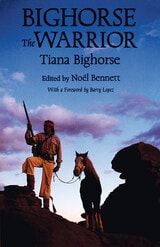
Bighorse the Warrior
Tiana Bighorse; Edited by Noël Bennett
University of Arizona Press, 1994
When the Navajos were taken from their land by the federal government in the 1860s, thousands lost their lives on the infamous Long Walk, while those who eluded capture lived in constant fear. These men and women are now dead, but their story lives on in the collective memory of their tribe.
Gus Bighorse lived through that period of his people's history, and his account of it—recalled by his daughter Tiana and retold in her father's voice—provides authentic glimpses into Navajo life and values of a century ago. Born around 1846, Gus was orphaned at sixteen when his parents were killed by soldiers, and he went into hiding with other Navajos banded together under chiefs like Manuelito. Over the coming years, he was to see members of his tribe take refuge in Canyon de Chelly, endure the Long Walk from Fort Defiance to Bosque Redondo in 1864, and go into hiding at Navajo Mountain. Gus himself was the leader of one of Manuelito's bands who fought against Kit Carson's troops.
After the Navajos were allowed to return to their land, Gus took up the life of a horseman, only to see his beloved animals decimated in a government stock reduction program.
"I know some people died of their tragic story," says Gus. "They think about it and think about how many relatives they lost. Their parents got shot. They get into shock. That is what kills them. That is why we warriors have to talk to each other. We wake ourselves up, get out of the shock. And that is why I tell my kids what happened, so it won't be forgot." Throughout his narrative, he makes clear those human qualities that for the Navajos define what it is to be a warrior: vision, compassion, courage, and endurance.
Befitting the oral tradition of her people, Tiana Bighorse draws on her memory to tell her father's story. In doing so, she ensures that a new generation of Navajos will know how the courage of their ancestors enabled their people to have their reservation today: "They paid for our land with their lives." Following the text is a chronology of Navajo history, with highlights of Gus Bighorse's life placed in the context of historical events.
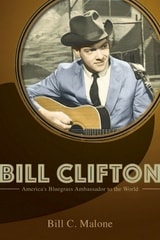
Bill Clifton
America's Bluegrass Ambassador to the WorldBill C Malone
University of Illinois Press, 2016
Bill Clinton on Stump, State, and Stage
The Rhetorical Road to the White HouseStephen A. Smith
University of Arkansas Press, 1994
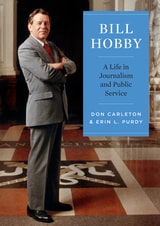
Bill Hobby
A Life in Journalism and Public ServiceDon Carleton and Erin L. Purdy
University of Texas Press, 2024
A comprehensive biography of a legendary lieutenant governor.
During his five terms as lieutenant governor of Texas, Bill Hobby became one of the most powerful political figures in the state’s history. He was first elected lieutenant governor of Texas in 1972 and served until 1990. Thanks to his brilliance as a political tactician and his personal integrity, Hobby was able to set the Senate’s agenda and garner respect from legislators on both sides of the aisle.
In Bill Hobby: A Life in Journalism and Public Service, Don Carleton and Erin Purdy document Hobby’s significant contributions to Texas as a journalist, politician, and philanthropist. Born into a prominent Texas family with a rich legacy of public service, he was the son of Houston newspaper publisher and former Texas governor William P. Hobby Sr., and Oveta Culp Hobby, who led the Women’s Army Corps during World War II and served in Eisenhower’s cabinet. After more than a decade as a journalist for the Houston Post, Hobby forged his own political path while also playing a prominent role in his family’s newspaper and television business.
Hobby was never shy about using his power to serve the people of Texas. Even after he left office, he continued to make a difference as a strong advocate for public education, including a term as chancellor of the University of Houston.
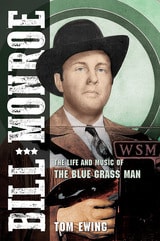
Bill Monroe
The Life and Music of the Blue Grass ManTom Ewing
University of Illinois Press, 2021
The Father of Bluegrass Music, Bill Monroe was a major star of the Grand Ole Opry for over fifty years; a member of the Country Music, Songwriters, and Rock and Roll Halls of Fame; and a legendary figure in American music. This authoritative biography sets out to examine his life in careful detail--to move beyond hearsay and sensationalism to explain how and why he accomplished so much.
Former Blue Grass Boy and longtime music journalist Tom Ewing draws on hundreds of interviews, his personal relationship with Monroe, and an immense personal archive of materials to separate the truth from longstanding myth. Ewing tells the story of the Monroe family's musical household and Bill's early career in the Monroe Brothers duo. He brings to life Monroe's 1940s heyday with the Classic Bluegrass Band, the renewed fervor for his music sparked by the folk revival of the 1960s, and his declining fortunes in the years that followed. Throughout, Ewing deftly captures Monroe's relationships and the personalities of an ever-shifting roster of band members while shedding light on his business dealings and his pioneering work with Bean Blossom and other music festivals.
Filled with a wealth of previously unknown details, Bill Monroe offers even the most devoted fan a deeper understanding of Monroe's towering achievements and timeless music.

Bill Veeck's Crosstown Classic
Bill Veeck and Ed Linn
University of Chicago Press, 1962
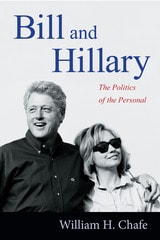
Bill and Hillary
The Politics of the PersonalWilliam H. Chafe
Duke University Press, 2012
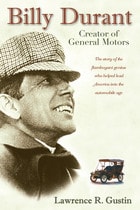
Billy Durant
Creator of General MotorsLawrence R. Gustin
University of Michigan Press, 2012
Praise for the first edition:
"A fascinating book [and] a sympathetic look at the man who glued General Motors together and in the process made Flint one of the great industrial centers of America."
---Detroit Free Press
"It is refreshing to report that Billy Durant is one of the best researched books dealing with an automotive giant."
---Antique Automobile
"Billy Durant fills in a masterly way the only important void remaining concerning the work of the motorcar pioneers."
---Richard Crabb, author of Birth of a Giant: The Men and Incidents That Gave America the Motorcar
What explains Billy Durant's powerful influence on the auto industry during its early days? And why, given Durant's impact, has he been nearly forgotten for decades?
In search of answers to these questions, Lawrence Gustin interviewed Durant's widow, who provided a wealth of previously unpublished autobiographical notes, letters, and personal papers. Gustin also interviewed two of Durant's personal secretaries and others who had known and worked with the man who created General Motors. The result is the amazing account of the mastermind behind what would become, as the twentieth century progressed, the world's largest company.
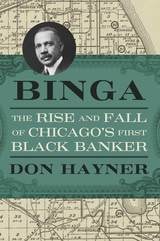
Binga
The Rise and Fall of Chicago's First Black BankerDon Hayner
Northwestern University Press, 2020
Binga is the definitive full-length biography of Jesse Binga, the first black banker in Chicago. Born into a large family in Detroit, Binga arrived in Chicago in 1892 in his late twenties with virtually nothing. Through his wits and resourcefulness, he rose to wealth and influence as a real estate broker, and in 1908 he founded the Binga Bank, the first black-owned bank in the city. But his achievements were followed by an equally notable downfall. Binga recounts this gripping story about race, history, politics, and finance.
The Black Belt, where Binga’s bank was located, was a segregated neighborhood on Chicago’s South Side—a burgeoning city within a city—and its growth can be traced through the arc of Binga’s career. He preached and embodied an American gospel of self-help and accrued wealth while expanding housing options and business opportunities for blacks. Devout Roman Catholics, he and his wife Eudora supported church activities and various cultural and artistic organizations; their annual Christmas party was the Black Belt’s social event of the year. But Binga’s success came at the price of a vicious backlash. After he moved his family into a white neighborhood in 1917, their house was bombed multiple times, his offices were attacked twice, and he became a lightning rod for the worst race riots in Chicago history, which took place in 1919. Binga persevered, but, starting with the stock market crash of October 1929, a string of reversals cost him his bank, his property, and his fortune.
A quintessentially Chicago story, Binga tells the history of racial change in one of the most segregated cities in America and how an extraordinary man stood as a symbol of hope in a community isolated by racial animosity.
Biographies in the Global South
Life Stories Embedded in Figurations and DiscoursesEdited by Gabriele Rosenthal and Artur Bogner
Campus Verlag, 2017
Biography as High Adventure
Life-Writers Speak on Their ArtStephen B. Oates
University of Massachusetts Press, 1986
Biography as High Adventure: Life-Writers Speak on Their Art is a collection of essays that explores the art and craft of biographical writing. Edited by acclaimed historian and biographer Stephen B. Oates this volume features contributions from prominent life-writers and historians who discuss their experiences, methods, and philosophies regarding the biographical form.
Through essays and reflections from accomplished biographers and historians, this collection examines biography as both an art form and a scholarly discipline, exploring what draws writers to biographical subjects and how they navigate the intersection of historical accuracy and narrative storytelling. What culminates is a diverse perspective on how face down the challenges of historical research and achieve the creative and intellectual dimensions of writing lives.
Biography of a Runaway Slave
Miguel Barnet
Northwestern University Press, 2002
In this remarkable testimony, Cuban novelist and anthropologist Miguel Barnet presents the narrative of 105-year-old Esteban Montejo, who lived as a slave, as fugitive in the wilderness, and as a soldier in the Cuban War of Independence. Honest, blunt, compassionate, shrewd, and engaging, his voice provides an extraordinary insight into the African culture that took root in the Caribbean.
Biography of a Runaway Slave
Fiftieth Anniversary EditionMiguel Barnet; Translated from the Spanish by W. Nick Hill; Introduction by William Luis
Northwestern University Press, 2016
Fiftieth Anniversary Edition
Originally published in 1966, Miguel Barnet’s Biography of a Runaway Slave provides the written history of the life of Esteban Montejo, who lived as a slave, as a fugitive in the wilderness, and as a soldier fighting against Spain in the Cuban War of Independence. A new introduction by one of the most preeminent Afro-Hispanic scholars, William Luis, situates Barnet’s ethnographic strategy and lyrical narrative style as foundational for the tradition of testimonial fiction in Latin American literature. Barnet recorded his interviews with the 103-year-old Montejo at the onset of the Cuban Revolution. This insurgent’s history allows the reader into the folklore and cultural history of Afro-Cubans before and after the abolition of slavery. The book serves as an important contribution to the archive of black experience in Cuba and as a reminder of the many ways that the present continues to echo the past.
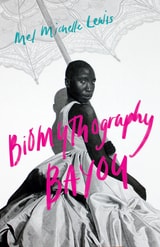
Biomythography Bayou
Mel Michelle Lewis
Bucknell University Press, 2025
Biomythography Bayou is more than just a book of memoir; it is a ritual for conjuring queer embodied knowledges and decolonial perspectives. Blending a rich gumbo of genres—from ingredients such as praise songs, folk tales, recipes, incantations, and invocations—it also includes a multimedia component, with “bayou tableau” images and audio recording links. Inspired by such writers as Audre Lorde, Zora Neale Hurston, and Octavia Butler, Mel Michelle Lewis draws from the well of her ancestors in order to chart a course toward healing Afrofutures. Showcasing the nature, folklore, dialect, foodways, music, and art of the Gulf’s coastal communities, Lewis finds poetic ways to celebrate their power and wisdom.
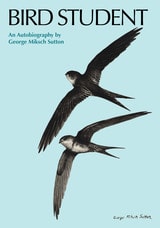
Bird Student
An AutobiographyAn Autobiography by George Miksch Sutton
University of Texas Press, 1980
At thirteen, George Miksch Sutton planned a school of ornithology centered around his collection of bird skins, feathers, bones, nests, eggs, and a prized stuffed crow. As an adult, he became one of the most prominent ornithologists and bird artists of the twentieth century. He describes his metamorphosis from amateur to professional in Bird Student.
Born in 1898, Sutton gives us his clearest memories of his boyhood in Nebraska, Minnesota, Oregon, Illinois, Texas, and West Virginia with his closely knit family. Recognizing birds, identifying them correctly, drawing them, and writing about them became more and more important to him. His intense admiration for Louis Agassiz Fuertes had a good deal to do with his beginning to draw birds in earnest, and his correspondence and his 1916 summer visit with the generous Fuertes taught him to look at birds with the eyes of a professional artist and to consider the possibility of making ornithology his career.
By 1918, Sutton had talked himself into a job at the Carnegie Museum of Natural History in Pittsburgh, which gave him fresh opportunities to learn and travel, and his 1920 field trip to the Labrador Peninsula stimulated his lifelong interest in arctic birds. Further expeditions to James Bay, the east coast of Hudson Bay—on leave from his job as state ornithologist of Pennsylvania—and Southampton Island at the north end of Hudson Bay, in search of the elusive blue goose and its nesting grounds, give us glimpses of field methods before the days of sophisticated equipment. Sutton ends his autobiography in 1935, with an account of his graduate days at Cornell University and his position as curator of the Fuertes Memorial Collection of Birds.
Bird Student is about raising young roadrunners and owls and prairie dogs, sailing (and being stranded) in arctic waters, preparing specimens in the hold of a ship, hunting birds and caribou and bears in almost inaccessible regions, canoeing in the Far North, camping in Florida, and delivering speeches in Pennsylvania. Sutton's gift for mixing facts and philosophy lets us see the evolution of a naturalist, as his inherent curiosity and innocent enjoyment of beauty led to a permanent desire to preserve this beauty.
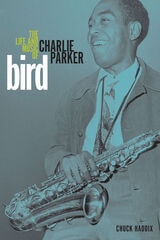
Bird
The Life and Music of Charlie ParkerChuck Haddix
University of Illinois Press, 2013
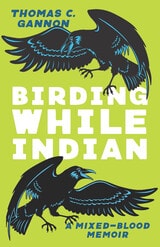
Birding While Indian
A Mixed-Blood MemoirThomas C. Gannon
The Ohio State University Press, 2023

Birkenau
The Camp of DeathMarco Nahon, translated from the French by Jacqueline Bowers, edited and with an introduction by Steven B. Bowan
University of Alabama Press, 1989
Step into Birkenau, Marco Nahon’s unflinching memoir of survival in Auschwitz, where a Greek doctor bears witness to brutality, loss, and endurance—preserving forgotten voices and compelling readers to confront history through one unforgettable, human testimony
Birkenau is a searing firsthand Holocaust memoir by Greek physician Marco Nahon, recounting his deportation to Auschwitz-Birkenau and survival of one of history’s most lethal extermination camps. Writing soon after liberation, Nahon offers a deeply personal chronicle of Nazi persecution. He recounts the occupation of Greece, the ghettoization of Greek Jews, their transport to German death camps, and the daily horrors of camp life. He documents the dehumanization and destruction of Greek Jews while preserving the memory of those who perished.
Nahon presents his story episodically, guiding readers through his arrest, transport, forced labor, and survival. He illuminates the historical context of the Holocaust with vivid stories from daily life in the death camps. Rounding out the work are maps, appendices, and Bowman’s introduction, which provides background on Greek Jewry—whose complex story is little known—and describes the progress of the Nazi occupation of Greece and the Balkans.
Nahon, an MD trained in Beirut who lost much of his family, writes with restrained objectivity that heightens the emotional force of his account, while the translation and editorial framing make this early memoir accessible to modern readers.
This book will resonate with scholars of the Holocaust, students of World War II, and general readers seeking an authentic survivor voice. It is especially valuable for those interested in lesser-known aspects of the genocide, such as the fate of Greek Jewish communities. Both an indispensable historical document and a powerful act of remembrance, it speaks urgently to anyone committed to understanding—and never forgetting—the human realities of genocide.
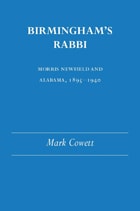
Birmingham's Rabbi
Morris Newfield and Alabama, 1895-1940Mark Cowett
University of Alabama Press, 1986
Taking a multidimensional approach, Cowett places Newfield's early life in the context of his Hungarian childhood and also relates Newfield’s career to those of fellow Hebrew Union College graduates and to national Reform Jewish history. The reader is made aware constantly of changing conditions in Birmingham, in Alabama, and in the south and how those changes affected Newfield’s congregants. Cowett illuminates Newfield’s efforts to help Jews maintain a sense of religious identity in a predominately Southern and Christian environment.
Based upon essential sources including interviews, newspapers, and manuscript collections in Alabama and at the American Jewish Archives in Cincinnati, Cowett shows Newfield’s struggle to support social welfare efforts in Alabama during the Progressive Era. He recognized the need for Jews to develop bonds with other American ethnic groups. Cowett portrays him as a mediator between not only Jew and Christian but also black and white, labor and capital, liberal and conservative—in short, within the full spectrum of political and social exchange in an industrial city of the New South.
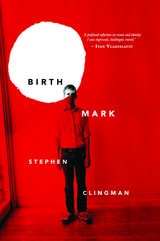
Birthmark
Stephen Clingman
University of Massachusetts Press, 2016
Not only was the operation unsuccessful, it affected his vision, and his eyes came to see differently from each other. Birthmark explores the questions raised by living with divided vision in a divided world—the world of South Africa under apartheid, where every view was governed by the markings of birth, the accidents of color, race, and skin. But what were the effects on the mind? Clingman's book engages a number of questions. How, in such circumstances, can we come to a deeper kind of vision? How can we achieve wholeness and acceptance? How can we find our place in the midst of turmoil and change?
In a beguiling narrative set on three continents, this is a story that is personal, painful, comic, and ultimately uplifting: a book not so much of the coming of age but the coming of perspective.
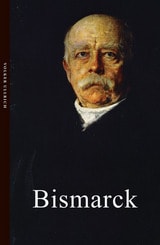
Bismarck
Volker Ullrich
Haus Publishing, 2015
A leading historian of nineteenth- and twentieth-century history, Ullrich demonstrates that the “Founder of the Reich” was in fact an opponent of liberal German nationalism. After the wars of 1866 and 1870, Bismarck spent the rest of his career working to preserve peace in Europe and protect the empire he had created. Despite his reputation as an enemy of socialism, he introduced comprehensive health and unemployment insurance for German workers. Far from being a “man of iron and blood,” Bismarck was in fact a complex statesman who was concerned with maintaining stability and harmony far beyond Germany’s newly unified borders.
Comprehensive and balanced, Bismarck shows us the post-reunification value of looking anew at this monumental figure’s role in European history.
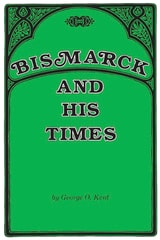
Bismarck and His Times
George O. Kent
Southern Illinois University Press, 1978
A new account of the life and policies of the first German chancellor, Otto von Bismarck, this concise historical-biography reflects, for the first time in English, the historical shift in emphasis from the traditional political-economic approach to the more complex social-economic one of post—World War II scholarship.
Since the middle of the 1950s, much new material on Bismarck and nineteenth-century Germany and new interpretations of existing material have been published in Germany, Great Britain, and the United States. Professor George O. Kent’s brilliant synthesis, drawing on this mass of material, examines changes in emphasis in post—World War II scholarship. The book, particularly in the historiographical notes and bibliographical essay, provides the serious student with an invaluable guide to the intricacies of recent Bismarckian scholarship. For the general reader, the main text presents a picture of the man, the issues, and the age in the light of modern scholarship.
The major shift in historical emphasis described in this new account is the importance scholars give to the period 1877–79, the years of change from free trade to protectionism, rather than to 1870–71 the founding of the Reich. Bismarck’s political machinations, particularly his willingness to explore the possibilities of a coup d’état, are more fully discussed here than in any other book.
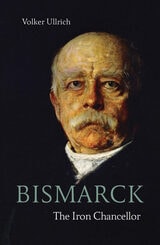
Bismarck
The Iron ChancellorVolker Ullrich
Haus Publishing, 2021
Otto von Bismarck (1815–1898) has gone down in history as the Iron Chancellor, a reactionary and militarist whose 1871 unification of Germany put Europe on a path of disaster leading up to World War I. But, as this new edition of his accessible biography shows, the real Bismarck was a far more complex character.
A leading historian of nineteenth- and twentieth-century history, Volker Ullrich demonstrates that Bismarck—the “Founder of the Reich”—was, in fact, an opponent of liberal German nationalism. After the wars of 1866 and 1870, Bismarck spent the rest of his career working to preserve peace in Europe and to protect the empire he had created. Despite his reputation as an enemy of socialism, he introduced comprehensive health and unemployment insurance for German workers, and he was concerned with maintaining stability and harmony far beyond Germany’s newly unified borders. Comprehensive and balanced, Bismarck shows us the value of looking anew at this monumental figure’s role in European history.
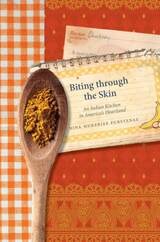
Biting through the Skin
An Indian Kitchen in America's HeartlandNina Mukerjee Furstenau
University of Iowa Press, 2013
As a girl and a young woman, Nina traveled to her ancestral India as well as to college and to Peace Corps service in Tunisia. Through her journeys and her marriage to an American man whose grandparents hailed from Germany and Sweden, she learned that her family was not alone in being a small pocket of culture sheltered from the larger world. Biting through the Skin shows how we maintain our differences as well as how we come together through what and how we cook and eat. In mourning the partial loss of her heritage, the author finds that, ultimately, heritage always finds other ways of coming to meet us. In effect, it can be reduced to a 4 x 6-inch recipe card, something that can fit into a shirt pocket. It’s on just such tiny details of life that belonging rests.
In this book, the author shares her shirt-pocket recipes and a great deal more, inviting readers to join her on her journey toward herself and toward a vital sense of food as culture and the mortar of community.
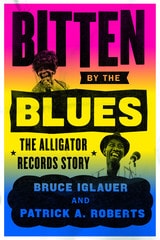
Bitten by the Blues
The Alligator Records StoryBruce Iglauer and Patrick A. Roberts
University of Chicago Press, 2018
Bitten by the Blues is Iglauer’s memoir of a life immersed in the blues—and the business of the blues. No one person was present at the creation of more great contemporary blues music than Iglauer: he produced albums by Koko Taylor, Albert Collins, Professor Longhair, Johnny Winter, Lonnie Mack, Son Seals, Roy Buchanan, Shemekia Copeland, and many other major figures. In this book, Iglauer takes us behind the scenes, offering unforgettable stories of those charismatic musicians and classic sessions, delivering an intimate and unvarnished look at what it’s like to work with the greats of the blues. It’s a vivid portrait of some of the extraordinary musicians and larger-than-life personalities who brought America’s music to life in the clubs of Chicago’s South and West Sides. Bitten by the Blues is also an expansive history of half a century of blues in Chicago and around the world, tracing the blues recording business through massive transitions, as a genre of music originally created by and for black southerners adapted to an influx of white fans and musicians and found a worldwide audience.
Most of the smoky bars and packed clubs that fostered the Chicago blues scene have long since disappeared. But their soul lives on, and so does their sound. As real and audacious as the music that shaped it, Bitten by the Blues is a raucous journey through the world of Genuine Houserockin’ Music.
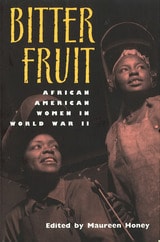
Bitter Fruit
African American Women in World War IIEdited by Maureen Honey
University of Missouri Press, 1999
Despite the participation of African American women in all aspects of home-front activity during World War II, advertisements, recruitment posters, and newsreels portrayed largely white women as army nurses, defense plant workers, concerned mothers, and steadfast wives. This sea of white faces left for posterity images such as Rosie the Riveter, obscuring the contributions that African American women made to the war effort. In Bitter Fruit, Maureen Honey corrects this distorted picture of women's roles in World War II by collecting photos, essays, fiction, and poetry by and about black women from the four leading African American periodicals of the war period: Negro Digest, The Crisis, Opportunity, and Negro Story.
Mostly appearing for the first time since their original publication, the materials in Bitter Fruit feature black women operating technical machinery, working in army uniforms, entertaining audiences, and pursuing a college education. The articles praise the women's accomplishments as pioneers working toward racial equality; the fiction and poetry depict female characters in roles other than domestic servants and give voice to the bitterness arising from discrimination that many women felt. With these various images, Honey masterfully presents the roots of the postwar civil rights movement and the leading roles black women played in it.
Containing works from eighty writers, this anthology includes forty African American women authors, most of whose work has not been published since the war. Of particular note are poems and short stories anthologized for the first time, including Ann Petry's first story, Octavia Wynbush's last work of fiction, and three poems by Harlem Renaissance writer Georgia Douglas Johnson. Uniting these various writers was their desire to write in the midst of a worldwide military conflict with dramatic potential for ending segregation and opening doors for women at home.
Traditional anthologies of African American literature jump from the Harlem Renaissance to the 1960s with little or no reference to the decades between those periods. Bitter Fruit not only illuminates the literature of these decades but also presents an image of black women as community activists that undercuts gender stereotypes of the era. As Honey concludes in her introduction, "African American women found an empowered voice during the war, one that anticipates the fruit of their wartime effort to break silence, to challenge limits, and to change forever the terms of their lives."
BitterSweet
The Memoir of a Chinese Indonesian Family in the Twentieth CenturyStuart Pearson
National University of Singapore Press, 2013
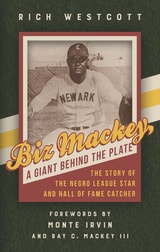
Biz Mackey, a Giant behind the Plate
The Story of the Negro League Star and Hall of Fame CatcherRich Westcott
Temple University Press, 2020
“The best all-around catcher in black baseball history”—Cumberland Posey, Owner of the Homestead Grays
National Baseball Hall of Fame catcher James Raleigh “Biz” Mackey’s professional career spanned nearly three decades in the Negro Leagues and elsewhere. He distinguished himself as a defensive catcher who also had an impressive batting average and later worked as a manager of the Newark Eagles and the Baltimore Elite Giants.
Using archival materials and interviews with former Negro League players, baseball historian Rich Westcott chronicles the catcher’s life and remarkable career in Biz Mackey, a Giant behind the Plate as well as providing an in-depth look at Philadelphia Negro League history. Westcott traces Mackey’s childhood in Texas as the son of sharecroppers to his success on the baseball diamond where he displayed extraordinary defensive skills and an exceptional ability to hit and to handle pitchers. Mackey spent one third of his career playing in Philadelphia, winning championships with the Hilldale Daisies and the Philadelphia Stars. Mackey also mentored famed catcher Roy Campanella and had an unlikely role in the story of baseball’s development in Japan.
A celebrated ballplayer before African Americans were permitted to join Major League Baseball, Biz Mackey ranks as one of the top catchers ever to play the game. With Biz Mackey, he finally gets the biography he deserves.
Bjarki, Not Bjarki
On Floorboards, Love, and Irreconcilable DifferencesMatthew J. C. Clark
University of Iowa Press, 2023
These are the words of Bjarki Thor Gunnarsson, the young man who manufactures the widest, purest, most metaphorical pine floorboards on the planet.
As Matthew Clark—a carpenter by trade—begins researching a magazine-style essay about Bjarki and his American Dream Boards, he comes to discover that nothing is quite as it seems. Santa Claus arrives by helicopter. A wedding diamond disappears. A dead coyote jumps to its feet. And then, at a Thai restaurant in central Maine, Bjarki is transformed into an eggplant.
In Bjarki, Not Bjarki, Clark wants nothing less than to understand everything, to make the world a better place, for you and him to love each other, and to be okay. He desires all of this sincerely, desperately even, and at the same time he proceeds with a light heart, playfully, with humor and awe. As Clark reports on the people and processes that transform the forest into your floor, he also ruminates on gift cards, crab rangoon, and Jean Claude Van Damme. He considers North American colonization, masculinity, the definition of disgusting, his own uncertain certainty. When the boards beneath our feet are so unstable, always expanding and cupping and contracting, how can we make sense of the world? What does it mean to know another person and to connect with them, especially in an increasingly polarized America?
Black Avatar
and Other EssaysAmit Majmudar
Acre Books, 2023
The eight pieces in this deeply engaging volume reflect author Amit Majmudar’s comprehensive studies of American, European, and Indian traditions, as well as his experiences in both suburban Ohio and the western Indian state of Gujarat. The volume begins with the title piece, a fifteen-part examination of “How Colorism Came to India.” Tracing the evolution of India’s bias in favor of light skin, Majmudar reflects on the effects of colonialism, drawing upon sources ranging from early Sanskrit texts to contemporary film and television.
Other essays illuminate subjects both timely and timeless. “The Ramayana and the Birth of Poetry” discusses how suffering is portrayed in art and literature (“The spectrum of suffering: slapstick on one end, scripture on the other, with fiction and poetry . . . in the vastness between them”), while in “Five Famous Asian War Photographs”—a 2018 Best American Essays selection—Majmudar analyzes why these iconic images of atrocity have such emotional resonance. In “Nature/Worship,” another multi-part piece, the author turns his attention to climate change, linking notions of environmentalism to his ancestral tradition of finding divinity within the natural world, connections that form the basis of religious belief.
Perhaps the greatest achievement of these wide-ranging essays is the prose itself—learned yet lively, erudite yet accessible—nimbly revealing the workings of a wonderfully original mind.
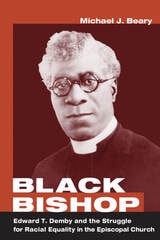
Black Bishop
Edward T. Demby and the Struggle for Racial Equality in the Episcopal ChurchMichael J. Beary
University of Illinois Press, 2001
America’s first Black bishop and his struggle to rebuild the African American presence inside the Episcopal Church
In 1918, the Right Reverend Edward T. Demby took up the reins as Suffragan (assistant) Bishop for Colored Work in Arkansas and the Province of the Southwest, an area encompassing Arkansas, Texas, Kansas, Oklahoma, Missouri, and New Mexico. Set within the context of a series of experiments in black leadership conducted by the Episcopal Diocese of Arkansas in the early decades of the twentieth century, Demby's tenure in a segregated ministry illuminates the larger American experience of segregation disguised as a social good.
Intent on demonstrating the industry and self-reliance of black Episcopalians to the church at large, Demby set about securing black priests for the diocese, baptizing and confirming communicants, and building schools and other institutions of community service. A gifted leader and a committed Episcopalian, Demby recognized that black service institutions, such as schools, hospitals, and orphanages, would be the means to draw African Americans back to the Episcopal Church, which they had abandoned in droves after emancipation as the church of their former masters.
For more than twenty years, hamstrung by white apathy, lack of funds, jurisdictional ambiguity, and the Great Depression, Demby doggedly tried to establish the credibility of a ministry that was as ill-conceived as it was well intended. Michael J. Beary skillfully narrates the shifting alliances within the Episcopal Church and shows how race was but one aspect of a more elemental struggle for power. He demonstrates how Demby's steadiness of purpose and non-confrontational manner gathered allies on both sides of the color line and how, ultimately, his judgment and the weight of his experience carried the church past its segregationist experiment.
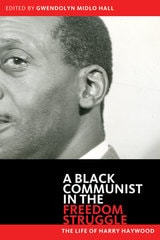
Black Communist in the Freedom Struggle
The Life of Harry HaywoodHarry Haywood
University of Minnesota Press, 2012
Mustering out of the U.S. army in 1919, Harry Haywood stepped into a battle that was to last the rest of his life. Within months, he found himself in the middle of one of the bloodiest race riots in U.S. history and realized that he’d been fighting the wrong war—the real enemy was right here at home. This book is Haywood’s eloquent account of coming of age as a black man in twentieth-century America and of his political awakening in the Communist Party.
For all its cultural and historical interest, Harry Haywood’s story is also noteworthy for its considerable narrative drama. The son of parents born into slavery, Haywood tells how he grew up in Omaha, Nebraska, found his first job as a shoeshine boy in Minneapolis, then went on to work as a waiter on trains and in restaurants in Chicago. After fighting in France during the war, he studied how to make revolutions in Moscow during the 1920s, led the Communist Party’s move into the Deep South in 1931, helped to organize the campaign to free the Scottsboro Boys, worked with the Sharecroppers’ Union, supported protests in Chicago against Mussolini’s invasion of Ethiopia, fought with the International Brigades in Spain, served in the Merchant Marines during World War II, and continued to fight for the right of self-determination for the Afro-American nation in the United States until his death in 1985.
This new edition of his classic autobiography, Black Bolshevik, introduces American readers to the little-known story of a brilliant thinker, writer, and activist whose life encapsulates the struggle for freedom against all odds of the New Negro generation that came of age during and after World War I.
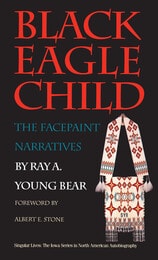
Black Eagle Child
The Facepaint NarrativesRay A. Young Bear
University of Iowa Press, 1992
A candid, poetic account of childhood and young manhood through the eyes of a Native American, this vivid narrative is destined to become a central moral text for our time. Through the persona of Edgar Bearchild—a member of the Black Eagle Child Settlement—Ray A. Young Bear takes readers on an unforgettable “journey of words” as he documents grief and anguish countered by an abundance of humor, pride, and insight.