Results by title
2916 books match the query 'Politics and government' and 133 start with b
Bordering on War
A Social and Political History of KhuzestanShaherzad Ahmadi
University of Texas Press, 2024
A study of transnational identity, migration, and state loyalties told through the social and political history of Iran’s Khuzestan province.
In 1980, Saddam Hussein’s Ba‘athist forces invaded Khuzestan, one of the oldest and richest provinces in Iran, triggering the Iran-Iraq War. Shaherzad Ahmadi’s Bordering on War examines the social history of Khuzestan and sheds light on how border dwellers, provincial leaders, and migrants in the region shaped Iran and Iraq's history before, during, and after the war.
Drawing from a rich collection of Persian- and Arabic-language archival sources—rarely used by western scholars due to restrictions in Iran—Ahmadi’s research focuses on Arab Iranians and argues that Iranian border dwellers and migrants formed local, non-national loyalties, thereby eschewing bureaucratic pressures to confine loyalties to a single nation-state. The transnational character and ethnically diverse composition of Khuzestan, especially in the oil-rich towns on the southwestern border, led many, including Iraq’s Ba‘ath Party, to question the national belonging of Arab Iranians. Bordering on War contributes to a wider discussion about the ability of individuals and communities to exert agency through migration, trade, education, and other activities.
Borderland Lives in Northern South Asia
David N. Gellner, ed.
Duke University Press, 2013
Contributors. Jason Cons, Rosalind Evans, Nicholas Farrelly, David N. Gellner, Radhika Gupta, Sondra L. Hausner, Annu Jalais, Vibha Joshi, Nayanika Mathur, Deepak K. Mishra, Anastasia Piliavsky, Jeevan R. Sharma, Willem van Schendel

Borderless Borders
edited by Frank Bonilla, Edwin Meléndez, Rebecca Morales and María de los Angeles Torres
Temple University Press, 2000
Borderless Borders describes the structural processes and active interventions taking place inside and outside U.S. Latino communities. After a context-setting introduction by urban planner Rebecca Morales, the contributors focus on four themes. Economist Manuel Pastor Jr., urban sociologist Saskia Sassen, and political scientist Carol Wise look at emerging forms of global and transnational interdependence and at whether they are likely to produce individuals who are economically independent or simply more dependent. Sociologist Jorge Chapa, social anthropologist Maria P. Fernandez Kelly, and economist Edwin Melendez examine the negative impact of economic and political restructuring within the United States,especially within Latino communities. Performance artist Guillermo Gomez-Pena, legal scholar Gerald Torres, political scientist Maria de los Angeles Torres, and modern language specialist Silvio Torres-Saillant consider the implications -- for community formation, citizenship, political participation, and human rights -- of the fact that individuals are forced to construct identities for themselves in more than one sociopolitical setting. Finally, sociologist Jeremy Brecher, sociologist Frank Bonilla, and political scientist Pedro Caban speculate on new paths into international relations and issue-oriented social movements and organizations among these mobile populations. To supplement the written contributions, Painter Bibiana Suarez has chosen several artworks that contribute to the interdisciplinary scope of the book.

Bosnia
Faking Democracy After DaytonDavid Chandler
Pluto Press, 2000
Boss Cox’s Cincinnati
Urban Politics in the Progressive EraZane L. Miller
The Ohio State University Press, 2000
In documenting the changes Cincinnati experienced during the Progressive Era, Zane L. Miller provides a clear perspective on the processes of urbanization that transformed the American city. His focus is political because politics provided continuity amid the diversity of city life. The most important aspect of political continuity in Cincinnati and in other cities was "bossism," often depicted as an example of corruption, but which was in many cities part of the quest for a new urban order. In Cincinnati, Boss George B. Cox's machine was a response to the disorder of the times; interestingly, the machine actually helped to control disorder, paving the way for later reforms. Miller carefully explores both the nature and the significance of bossism, showing how it and municipal reform were both essential components of the modern urban political system.
Originally published in 1968, Boss Cox's Cincinnati is considered a classic in the field of urban studies.
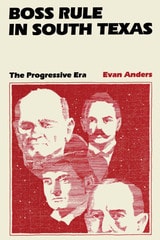
Boss Rule in South Texas
The Progressive EraBy Evan Anders
University of Texas Press, 1982
Four men played leading roles in the political drama that unfolded in South Texas during the first decades of this century:
- James B. Wells, who ruled as boss of Cameron County and served as leading conservative spokesman of the Democratic Party in Texas;
- Archer (Archie) Parr, whose ruthless tactics and misuse of public funds in Duval County established him as one of the most notoriously corrupt politicians in Texas history;
- Manuel Guerra, Mexican American rancher and merchant whose domination of Starr County mirrored the rule of his Anglo counterparts in the border region;
- John Nance Garner, who served the interests of these bosses of South Texas as he set forth on the road that would lead him to the United States vice-presidency.
Evan Anders's Boss Rule in South Texas tells the story of these men and the county rings they shaped in South Texas during the Progressive Era.
Power was the byword of the bosses of the Lower Rio Grande Valley, and Anders explores the sources of that power. These politicos did not shirk from using corrupt and even violent means to attain their goals, but Anders demonstrates that their keen sensitivity to the needs of their diverse constituency was key to their long-term success. Patronage and other political services were their lifeblood, and the allies gained by these ranged from developers and businessmen to ranchers and Mexican Americans, wealthy and poor.
Besides examining the workings of the Democratic machines of four South Texas counties, Anders explores the role of the Hispanic populace in shaping the politics of the border region, the economic development of the Lower Rio Grande Valley and its political repercussions, the emergence and nature of progressive movements at both local and state levels, and the part played by the Texas Rangers in supporting bossism in South Texas.
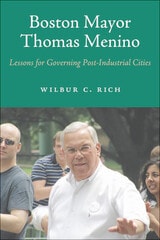
Boston Mayor Thomas Menino
Lessons for Governing Post-Industrial CitiesWilbur C. Rich
University of Massachusetts Press, 2023
Hailed as one of Boston’s most beloved mayors and its longest serving, Thomas Menino (1942–2014) deftly managed the city’s finances and transformed Boston into the hub of innovation that it is today. During his time in office, Boston embraced modern industrial growth and moved forward with noteworthy developments that altered neighborhoods, while also facing ongoing racial strife, challenges of unaffordable housing, and significant public union negotiations.
Mayors in modern American cities occupy unique positions as government leaders who need to remain active parts of their communities in addition to being tasked with fixing neighborhood issues, managing crises, and keeping schools and public infrastructure on course. Situating news coverage alongside interviews with the mayor and his administration, political scientist Wilbur C. Rich chronicles Menino’s time in office while also considering his personal and professional background, his larger-than-life personality, and his ambitions. Menino’s approach to these challenges and opportunities offers enduring lessons to anyone interested in urban government and political leadership.
Boundaries of the State in US History
Edited by James T. Sparrow, William J. Novak, and Stephen W. Sawyer
University of Chicago Press, 2015
Here, James T. Sparrow, William J. Novak, and Stephen W. Sawyer assemble definitional essays that search for explanations to account for the extraordinary growth of US power without resorting to exceptionalist narratives. Turning away from abstract, metaphysical questions about what the state is, or schematic models of how it must work, these essays focus instead on the more pragmatic, historical question of what it does. By historicizing the construction of the boundaries dividing America and the world, civil society and the state, they are able to explain the dynamism and flexibility of a government whose powers appear so natural as to be given, invisible, inevitable, and exceptional.
Bourbon Democracy in Alabama, 1874–1890
Allen Johnston Going
University of Alabama Press, 1951
A definitive study of the political forces that reshaped Alabama after Reconstruction.
In Bourbon Democracy in Alabama, 1874-1890, historian Johnston Allen Going offers a seminal examination of the political transformation of Alabama during the years following Reconstruction. Focusing on the rise of Bourbon Democratic leadership, Going explores how a new political elite consolidated power, reshaped state institutions, and directed Alabama's economic and social development during a pivotal period in Southern history.
Drawing on extensive historical research, the book traces the efforts of Democratic leaders to restore political control after Reconstruction while promoting policies associated with the emerging New South. Going analyzes the complex interplay of political ideology, economic modernization, class interests, and racial dynamics that influenced governance and public life between 1874 and 1890. Through detailed accounts of elections, legislative initiatives, and political struggles, the study reveals how Alabama's leaders sought to balance progress, stability, and authority in a rapidly changing society.
A landmark contribution to both Alabama history and the broader study of the post-Reconstruction South, Bourbon Democracy in Alabama provides critical insight into the forces that shaped regional politics and helped define the course of Southern development in the late nineteenth century. Essential for understanding the origins of modern Alabama politics, this book is a valuable resource for historians, students, political scientists, genealogists, and anyone interested in Southern history and government.

Brazil and the Quiet Intervention, 1964
By Phyllis R. Parker
University of Texas Press, 1979
When the Brazilian military overthrew President João Goulart in 1964, American diplomats characterized the coup as a "100 percent Brazilian movement." It has since become apparent, largely through government documents declassified during the course of research for this book, that the United States had an invisible but pervasive part in the coup.
Relying principally on documents from the Johnson and Kennedy presidential libraries, Phyllis Parker unravels the events of the coup in fascinating detail. The evidence she presents is corroborated by interviews with key participants.
U.S. interference in the Goulart regime began when normal diplomatic pressure failed to produce the desired enthusiasm from him for the Alliance of Progress. Political and economic manipulations also proving ineffective, the United States stood ready to back a military takeover of Brazil's constitutional democracy.
U.S. operation "Brother Sam" involved shipments of petroleum, a naval task force, and tons of arms and ammunition in preparation for intervention during the 1964 coup. When the Brazilian military gained control without calling on the ready assistance, U.S. policy makers immediately accorded recognition to the new government and set in motion plans for economic support.
Brazil and the Soviet Challenge, 1917–1947
By Stanley E. Hilton
University of Texas Press, 1991
Between 1918 and 1961, Brazil and the USSR maintained formal diplomatic ties for only thirty-one months, at the end of World War II. Yet, despite the official distance, the USSR is the only external actor whose behavior, real or imagined, influenced the structure of the Brazilian state in the twentieth century. In Brazil and the Soviet Challenge, 1917–1947, Stanley Hilton provides the first analysis in any language of Brazilian policy toward the Soviet Union during this period.
Drawing on American, British, and German diplomatic archives and unprecedented access to official and private Brazilian records, Hilton elucidates the connection between the Brazilian elite’s perception of a communist threat and the creation of the authoritarian Estado Novo (1937–1945), the forerunner of the post-1964 national security state. He shows how the 1935 communist revolt, prepared by Comintern agents, was a pivotal event in Brazilian history, making prophets of conservative alarmists and generating irresistible pressure for an authoritarian government to contain the Soviet threat. He details the Brazilian government’s secret cooperation with the Gestapo during the 1930s and its concomitant efforts to forge an anti-Soviet front in the Southern Cone. And he uncovers an unexplored aspect of Brazil’s national security policy, namely, the attempt to build counterintelligence capabilities not only within Brazil but also in neighboring countries.
While the history of the Brazilian communist movement has been extensively studied, this is the first work to explore how images of the Soviet Union and its policies influenced the Brazilian foreign policy elite. It will be important reading for all students of twentieth-century political history.

Brazil's Sex Wars
The Aesthetics of Queer Activism in São PauloJoseph Jay Sosa
University of Texas Press, 2024
An ethnography and media analysis of LGBT+ activism in São Paulo during Brazil’s conservative turn from 2010 to 2018.
For decades, LGBT+ activists across the globe have secured victories by persuasively articulating rights to sexual autonomy. Brazilian activists, some of the world’s most energetic, have kept pace. But since 2010, a backlash has set in, as defenders of “tradition” and “family” have countered LGBT+ rights discourses using a rights-based language of their own.
To understand this shifting ground, Joseph Jay Sosa collaborated with Brazilian LGBT+ activists, who use the language of rights while knowing that rights are not what they seem. Drawing on the symbolic and affective qualities of rights, activists mobilize slogans, bodies, and media to articulate an alternative democratic sensorium. Beyond conventional notions of rights as tools for managing the obligations of states vis-à-vis citizens, activists show how rights operate aesthetically—enjoining the public to see and feel as activists do. Sosa tracks the fate of LGBT+ rights in a growing authoritarian climate that demands “human rights for the right humans.” Interpreting conflicts between advocates and opponents over LGBT+ autonomy as not just an ideological struggle but an aesthetic one, Brazil’s Sex Wars rethinks a style of politics that seems both utterly familiar and counterintuitive.
Brazil
Essays on History and PoliticsLeslie Bethell
University of London Press, 2018
Brazil
Neoliberalism versus DemocracyAlfredo Saad-Filho and Lecio Morais
Pluto Press, 2017
In Brazil: Neoliberalism Versus Democracy, Alfredo Saad-Filho and Lecio Morais review the complex paradox that is modern Brazil. Focusing on 1980 to the present, they analyze the tensions between the two dominant systemic political transitions from military rule to first democracy, then neoliberalism. A groundbreaking interpretation of this intricate relationship, Brazil examines how the contradictory dynamics of these transitions eventually became symbiotic as they unfolded and intertwined.
Bridgeport's Socialist New Deal, 1915-36
Cecelia Bucki
University of Illinois Press, 2001
In November 1933, the Socialist Party of Bridgeport, Connecticut put slate roofer Jasper McLevy in the mayor's seat and nearly won control of the city council. Cecelia Bucki explores how labor gained first a foothold and then a stronghold in local politics as broad debates pitted previously unengaged working-class citizens against local business leaders and traditional party elites.
In the heat of the Great Depression, the skilled union craftsmen who made up the bulk of the city's Socialist Party filled a political void created by the crumbling of mainstream parties, the disintegration of traditional modes of ethnic politics, and the city's acute fiscal crisis. In time, however, legislative measures and compromise politics blunted the progressive agenda. The local party split from the Socialist Party of America and became narrowly focused and reformist while still serving as the voice of the working class.
A portrait of a stunning moment in American politics, Bridgeport's Socialist New Deal, 1915-36 offers a fascinating look at the volatility of politics in the early years of the Great Depression.
Bridging State and Civil Society
Informal Organizations in Tajik/Afghan BadakhshanSuzanne Levi-Sanchez
University of Michigan Press, 2021
Bridging State and Civil Society provides an in-depth study of parts of Central Asia and Afghanistan that remain marginalized from the larger region. As such, the people have developed distinct ways of governing and surviving, sometimes in spite of the state and in part because of informal organizations. Suzanne Levi-Sanchez provides eight case studies, each an independent look at a particular informal organization, but each also part of a larger picture that helps the reader understand the importance and key role that informal organizations play for civil society and the state. Each case explores how informal organizations operate and investigates their structures and interactions with official state institutions, civil society, familial networks, and development organizations. As such, each chapter explores the concepts through a different lens while asking a deceptively simple question: What is the relationship between informal organizations and the state?

Bridging Two Eras
The Autobiography of Emily Newell Blair, 1877-1951Emily Newell Blair, Edited & Intro by Virginia Jeans Laas
University of Missouri Press, 1999
First written in 1937 and never before published, Bridging Two Eras is the fascinating autobiography of Emily Newell Blair, a remarkable woman who successfully reconciled a productive public life with the traditional values of a housewife and mother.
Because Blair's life essentially spanned two eras, from the end of the nineteenth century through the middle of the twentieth, she thought of herself as a bridge builder. A dedicated feminist, she wanted her autobiography to help women understand what life was like during that transition time. She had moved from being a conventional, middle-class, midwestern wife and mother to becoming an acclaimed author, a nationally known feminist, and vice chairman of the Democratic National Committee only two years after women gained the right to vote. She felt that her story could encourage women to take their rightful places in public life.
Bridging Two Eras is divided into two parts. Book I is a charming evocation of life in southwest Missouri in the closing decades of the nineteenth century. It offers great insight into family relationships, class structure, and social attitudes typical of much of small-town America. Book II addresses Blair's public career and follows her progress as professional writer, suffrage activist, and partisan politician. Included are acute judgments of leading political figures, fascinating vignettes of the suffrage movement, an insider's view of the workings of the national Democratic Party in the 1920s and 1930s, and a valuable outlook on Missouri politics during the first third of the twentieth century.
Perceptive and introspective, Blair captivates her readers as she traces her own evolution. With candor, she explains her conflicts between family and career, acknowledging the difficulties and tensions she faced in pursuing a public life. Delightfully written, Bridging Two Eras provides valuable insight into all the possibilities, as well as the limitations, life then held for an American woman.

Bridging a Great Divide
The Battle for the Columbia River GorgeKathie Durbin
Oregon State University Press, 2013
In Bridging a Great Divide, award-winning environmental journalist Kathie Durbin draws on interviews, correspondence, and extensive research to tell the story of the major shifts in the Gorge since the Act’s passage. Sweeping change has altered the Gorge’s landscape: upscale tourism and outdoor recreation, gentrification, the end of logging in national forests, the closing of aluminum plants, wind farms, and a population explosion in the metropolitan area to its west. Yet, to the casual observer, the Gorge looks much the same as it did twenty-five years ago.
How can we measure the success of the Columbia River Gorge National Scenic Area Act? In this insightful and revealing history, Durbin suggests that the answer depends on who you are: a small business owner, an environmental watchdog group, a chamber of commerce. The story of the Columbia River Gorge National Scenic Area is the story of the Pacific Northwest in microcosm, as the region shifts from a natural-resource-based economy to one based on recreation, technology, and quality of life.
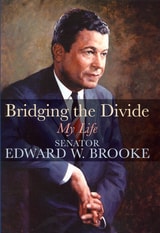
Bridging the Divide
My LifeEdward W. Brooke
Rutgers University Press, 2006
President Lyndon Johnson never understood it. Neither did President Richard Nixon. How could a black man, a Republican no less, be elected to the United States Senate from liberal, Democratic Massachusetts-a state with an African American population of only 2 percent?
The mystery of Senator Edward Brooke's meteoric rise from Boston lawyer to Massachusetts attorney general to the first popularly elected African American U.S. senator with some of the highest favorable ratings of any Massachusetts politician confounded many of the best political minds of the day. After winning a name for himself as the first black man to be elected a state's attorney general, as a crime fighter, and as the organizer of the Boston Strangler Task Force, this articulate and charismatic man burst on the national scene in 1966 when he ran for the Senate.
In two terms in the Senate during some of the most racially tormented years of the twentieth century, Brooke, through tact, personality, charm, and determination, became a highly regarded member of "the most exclusive club in the world." The only African American senator ever to be elected to a second term, Brooke established a reputation for independent thinking and challenged the powerbrokers and presidents of the day in defense of the poor and disenfranchised.
In this autobiography, Brooke details the challenges that confronted African American men of his generation and reveals his desire to be measured not as a black man in a white society but as an individual in a multiracial society. Chided by some in the white community as being "too black to be white" and in the black community as "too white to be black," Brooke sought only to represent the people of Massachusetts and the national interest.
His story encompasses the turbulent post-World War II years, from the gains of the civil rights movement, through the riotous 1960s, to the dark days of Watergate, with stories of his relationships with the Kennedys, Martin Luther King Jr., Lyndon Johnson, Richard Nixon, Henry Kissinger, Colin Powell, and future senator Hillary Clinton. Brooke also speaks candidly of his personal struggles, including his bitter divorce from his first wife and, most recently, his fight against cancer.
A dramatic, compelling, and inspirational account, Brooke's life story demonstrates the triumph of the human spirit, offering lessons about politics, life, reconciliation, and love.
Britain and the Greek Economic Crisis, 1944-1947
From Liberation to the Truman DoctrineAthanasios Lykogiannis
University of Missouri Press, 2002
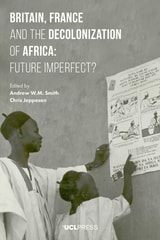
Britain, France and the Decolonization of Africa
Future Imperfect?Edited by Andrew W.M. Smith and Chris Jeppesen
University College London, 2017
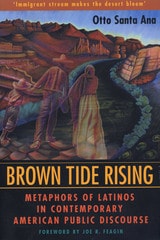
Brown Tide Rising
Metaphors of Latinos in Contemporary American Public DiscourseBy Otto Santa Ana
University of Texas Press, 2002
2002 – Best Book on Ethnic and Racial Political Ideology and/or Political Theory – Organized Section on Race, Ethnicity, and Politics of the American Political Science Association
"...awash under a brown tide...the relentless flow of immigrants..like waves on a beach, these human flows are remaking the face of America...." Since 1993, metaphorical language such as this has permeated mainstream media reporting on the United States' growing Latino population. In this groundbreaking book, Otto Santa Ana argues that far from being mere figures of speech, such metaphors produce and sustain negative public perceptions of the Latino community and its place in American society, precluding the view that Latinos are vested with the same rights and privileges as other citizens.
Applying the insights of cognitive metaphor theory to an extensive natural language data set drawn from hundreds of articles in the Los Angeles Times and other media, Santa Ana reveals how metaphorical language portrays Latinos as invaders, outsiders, burdens, parasites, diseases, animals, and weeds. He convincingly demonstrates that three anti-Latino referenda passed in California because of such imagery, particularly the infamous anti-immigrant measure, Proposition 187. Santa Ana illustrates how Proposition 209 organizers broadcast compelling new metaphors about racism to persuade an electorate that had previously supported affirmative action to ban it. He also shows how Proposition 227 supporters used antiquated metaphors for learning, school, and language to blame Latino children's speech—rather than gross structural inequity—for their schools' failure to educate them. Santa Ana concludes by calling for the creation of insurgent metaphors to contest oppressive U.S. public discourse about minority communities.
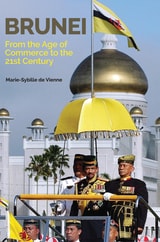
Brunei
From the Age of Commerce to the 21st CenturyMarie-Sybille de Vienne
National University of Singapore Press, 2015
Today home to some 393,000 inhabitants and comprising 5,765 square kilometers in area, Brunei first appears in the historical record at the end of the 10th century. After the Spanish attack of 1578, Brunei struggled to regain and expand its control on coastal West Borneo and to remain within the trading networks of the South China Sea. It later fell under British sway, and a residency was established in 1906, but it took the discovery of oil in Seria in 1929 before the colonial power began to establish the bases of a modern state.
Governed by an absolute monarchy, Bruneians today nonetheless enjoy a high level of social protection and rule of law. Ranking second (after Singapore) in Southeast Asia in terms of standards of living, the sultanate is implementing an Islamic penal code for the first time of its history. Focusing on Brunei’s political economy, history and geography, this book aims to understand the forces behind Brunei’s to-and-fro of tradition and modernisation.
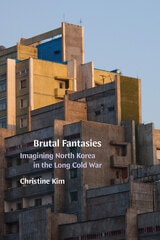
Brutal Fantasies
Imagining North Korea in the Long Cold WarChristine Kim
Duke University Press, 2025
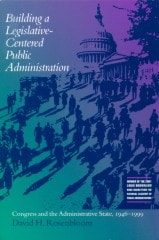
Building a Legislative-Centered Public Administration
Congress and the Administrative State, 1946-1999David Rosenbloom
University of Alabama Press, 2002
2001 Louis Brownlow Award from the National Academy of Public Administration
Reimagining public administration through the lens of constitutional governance and legislative intent.
Before 1946 the congressional role in public administration had been limited to authorization, funding, and review of federal administrative operations, which had grown rapidly as a result of the New Deal and the Second World War. But in passing the Administrative Procedure Act and the Legislative Reorganization Act that pivotal year, Congress self-consciously created for itself a comprehensive role in public administration. Reluctant to delegate legislative authority to federal agencies, Congress decided to treat the agencies as extensions of itself and established a framework for comprehensive regulation of the agencies' procedures. Additionally, Congress reorganized itself so it could provide continuous supervision of federal agencies.
Rosenbloom shows how these 1946 changes in the congressional role in public administration laid the groundwork for future major legislative acts, including the Freedom of Information Act (1966), Privacy Act (1974), Government in the Sunshine Act (1976), Paperwork Reduction Acts (1980, 1995), Chief Financial Officers Act (1990), and Small Business Regulatory Fairness Enforcement Act (1996). Each of these acts, and many others, has contributed to the legislative-centered public administration that Congress has formed over the past 50 years.
This first book-length study of the subject provides a comprehensive explanation of the institutional interests, values, and logic behind the contemporary role of Congress in federal administration and attempts to move the public administration field beyond condemning legislative "micromanagement" to understanding why Congress values it.
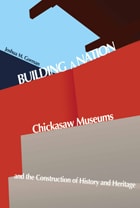
Building a Nation
Chickasaw Museums and the Construction of History and HeritageJoshua M. Gorman
University of Alabama Press, 2011
A groundbreaking study of Indigenous museums and cultural self-representation.
The Chickasaw Nation, an American Indian nation headquartered in southeastern Oklahoma, entered into a period of substantial growth in the late 1980s. Following its successful reorganization and expansion, which was enabled by federal policies for tribal self-determination, the Nation pursued gaming and other industries to affect economic growth. From 1987 to 2009 the Nation’s budget increased exponentially as tribal investments produced increasingly large revenues for a growing Chickasaw population. Coincident to this growth, the Chickasaw Nation began acquiring and creating museums and heritage properties to interpret their own history, heritage, and culture through diverse exhibitionary representations. By 2009, the Chickasaw Nation directed representation of itself at five museum and heritage properties throughout its historic boundaries.
Josh Gorman examines the history of these sites and argues that the Chickasaw Nation is using museums and heritage sites as places to define itself as a coherent and legitimate contemporary Indian nation. In doing so, they are necessarily engaging with the shifting historiographical paradigms as well as changing articulations of how museums function and what they represent. The roles of the Chickasaw Nation’s museums and heritage sites in defining and creating discursive representations of sovereignty are examined within their historicized local contexts. The work describes the museum exhibitions’ dialogue with the historiography of the Chickasaw Nation, the literature of new museum studies, and the indigenous exhibitionary grammars emerging from indigenous museums throughout the United States and the world.
Building the Cold War Consensus
The Political Economy of U.S. National Security Policy, 1949-51Benjamin O. Fordham
University of Michigan Press, 1998
Bulletproof
Afterlives of Anticolonial Prophecy in South Africa and BeyondJennifer Wenzel
University of Chicago Press, 2009
In 1856 and 1857, in response to a prophet’s command, the Xhosa people of southern Africa killed their cattle and ceased planting crops; the resulting famine cost tens of thousands of lives. Much like other millenarian, anticolonial movements—such as the Ghost Dance in North America and the Birsa Munda uprising in India—these actions were meant to transform the world and liberate the Xhosa from oppression. Despite the movement’s momentous failure to achieve that goal, the event has continued to exert a powerful pull on the South African imagination ever since. It is these afterlives of the prophecy that Jennifer Wenzel explores in Bulletproof.
Wenzel examines literary and historical texts to show how writers have manipulated images and ideas associated with the cattle killing—harvest, sacrifice, rebirth, devastation—to speak to their contemporary predicaments. Widening her lens, Wenzel also looks at how past failure can both inspire and constrain movements for justice in the present, and her brilliant insights into the cultural implications of prophecy will fascinate readers across a wide variety of disciplines.
Bullets, Ballots, and Rhetoric
Confederate States Policy for the United States Presidential ContestLarry E. Nelson
University of Alabama Press, 1980
The Confederacy's hopes for independence were founded less on the belief that the South could defeat the North than on a strategy of staving off defeat long enough for the North to weary of the fight. The South’s single biggest opportunity to effect political change in the North was the presidential contest of 1864. If Lincoln’s support foundered and the North elected a president with a more flexible vision of peace on the continent, the South might realize its dream of independence.
Praised as an important contribution to understanding the Davis administration, in Bullets, Ballots, and Rhetoric, Larry Nelson vividly brings to life the complex state of Northern and Southern internal politics during the election year of 1863. He recounts fluctuations in the value of the dollar, draft resistance and riots, protests against emancipation, political defeats suffered by the Republicans in the elections of 1862, and growing discontent in the border states and Midwest. This gripping account explores a mission Davis sent to Canada in 1864 seeking to influence the election of a new US president, a strategy Nelson's persuasive analysis shows to have been intelligent and reasonable. Nevertheless, Davis's haphazard leadership contributed to its failure. Nelson hypothesizes that had Davis drawn the North into negotiations before the Democratic convention for the upcoming elections, a temporary armistice might well have proved permanent.
Nelson offers an insider’s look at the administration of Jefferson Davis as it searched for cracks in Northern unity and electoral opportunities to exploit—and yet also as it overlooked war-weariness in the South itself. Bullets, Ballots, and Rhetoric is an engrossing account of a little-known but critical aspect of Civil War statecraft and politics.

Burek
A Culinary MetaphorJernej Mlekuz
Central European University Press, 2015
Burma
The Curse of IndependenceShelby Tucker
Pluto Press, 2001
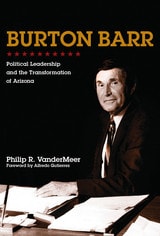
Burton Barr
Political Leadership and the Transformation of ArizonaPhilip R. VanderMeer, Foreword by Alfredo Gutierrez
University of Arizona Press, 2014
Considered perhaps the most influential person in Arizona’s political development, Burton Barr represented north central Phoenix in the Arizona House of Representatives for the twenty-two years from 1964 to 1986. As the Republican House Majority Leader for twenty of those years, he left his fingerprints on every major piece of legislation during those decades, covering such issues as air pollution, health care for indigents, school aid, the tax code, prison reform, child care, groundwater management, and freeway funding.
Burton Barr’s political life unfolded during the very time his state and region shifted from being outliers to trendsetters. His choices in policy making and his leadership style were both an outcome and a creator of his sociopolitical environment. Arizona politics in the 1960s and ’70s was a rich brew of key elements, a time when the economy was being transformed, the nature and distribution of populations shifted, partisan politics were in flux, and the very lifeblood of the West—water—was being contested under increasing pressures of usage and depletion.
How Barr successfully responded to those challenges is the story of Arizona’s development during those years. At the heart of it, Barr’s political life and personality are inextricably bound up with the life of the West.

By Fire
Writings on the Arab SpringTahar Ben Jelloun, translated and with an introduction by Rita Nezami
Northwestern University Press, 2016
Tahar Ben Jelloun’s By Fire, the first fictional account published on the Arab Spring, reimagines the true-life self-immolation of Mohamed Bouazizi in Tunisia, an event that has been credited with setting off the Tunisian revolt. The novella depicts the days leading up to Bouazizi’s self-immolation. Ben Jelloun’s deliberate ambiguity about the location of the story, set in an unnamed Islamic country, allows the reader to imagine the experiences and frustrations of other young men who have endured physical violence and persecution in places beyond Tunisia. The tale begins and ends in fire, and the imagery of burning frames the political accounts in The Spark, Ben Jelloun’s nonfiction writings on the Tunisian events that provide insight into the despotic regimes that drove Bouazizi to such despair. Rita S. Nezami’s elegant translations and critical introduction provide the reader with multiple strategies for approaching these potent texts.