Results by title
3027 books match the query 'Sociology' and 145 start with b
Body Thoughts
Andrew J. Strathern
University of Michigan Press, 1996
Bolivia in the Age of Gas
Bret Gustafson
Duke University Press, 2020
Bombay Brokers
Lisa Björkman, editor
Duke University Press, 2021
Contributors. Anjali Arondekar, Sarthak Bagchi, Tobias Baitsch, Sangeeta Banerji, Srimati Basu, Tarini Bedi, Amita Bhide, Lisa Björkman, Uday Chandra, Simon Chauchard, Ka-Kin Cheuk, Michael Collins, Daisy Deomampo, Maura Finkelstein, Ajay Gandhi, Rupali Gupte, Kathryn C. Hardy, Lalitha Kamath, Prasad Khanolkar, Bhushan Korgaonkar, Ratoola Kundu, Ken Kuroda, Annelies Kusters, Lisa Mitchell, Shailaja Paik, Gautam Pemmaraju, Lubaina Rangwala, Llerena Guiu Searle, Atreyee Sen, Prasad Shetty, Rohan Shivkumar, Edward Simpson, David Strohl, Rachel Sturman, R. Swaminathan, Aneri Taskar, Yaffa Truelove, Sahana Udupa, Lalit Vachani, Leilah Vevaina
Bombay Cinema
An Archive of the CityRanjani Mazumdar
University of Minnesota Press, 2007
In this analysis of the cinematic city, Mazumdar reveals a complex postnationalist world, convulsed by the social crisis of the 1970s and transformed by the experience of globalization in the 1990s. She argues that the upheaval of postcolonial nationalism led to Bombay cinema’s articulation of urban life in entirely new terms. Specifically, the place of the village in the imaginary constitution of anticolonial nationalism gave way to a greater acknowledgment, even centrality, of urban space. Bombay Cinema takes the reader on an inventive journey through a cinematic city of mass crowds, violence, fashion, architectural fantasies, and subcultural identities. Moving through the world of gangsters and vamps, families and drifters, and heroes and villains, Bombay Cinema explores an urban landscape marked by industrial decline, civic crisis, working-class disenchantment, and diverse street life.Combining the anecdotal with the theoretical, the philosophical with the political, and the textual with the historical, Bombay Cinema leads the reader into the heart of the urban labyrinth in India, revising and deepening our understanding of both the city and the cinema.
"A landmark study—carefully researched, well organized and offering refreshingly uncondescending and strikingly insightful discussions of mainstream films—that deserves to be read by anyone interested in India's popular cinema or its contemporary urban life." —Journal of Asian Studies
"Bombay Cinema is an exciting and important contribution to a field that has, to date, been under researched and under theorized. Lively, provocative and richly suggestive, it will also serve as a surefire incentive to watch those films all over again." —Screen
"Here, at last, is a book length study on Cinema in India that does not get locked into a dance of hermetic closure between what transpires on screen and a set of stock off screen textual and cultural references, but more importantly, walks the streets where the films are set, looks at shop windows, publicity material, costumes, fashion, architecture, telecommunications and the concrete materiality that surrounds the film object." —Seminar
"Bombay Cinema is lucid, provocative, stylish and substantial. It is an illuminating scholarly study that spares no effort to bring Bombay cinema out of the academic closet." —The Book Review India
"Departing from the obsession that Film Studies in India has displayed with the idea of cinema as a national allegory, the book convincingly argues for the need to examine the city's hidden archive as one that cannot be subsumed within the sign of the national." —Biblio
"Mazumdar has a great capacity to discuss Indian cinema, with a brilliant grasp of its political, historical, and aesthetic developments, but equally she is well attuned to the interests and ruptures in the academic discourse of film and cinema studies."—Film International
"Mazumdar's experience as a filmmaker allowed her to offer significant readings of not just the narratives and character development in the films, but of the cinematography, mise-en-scene, and other technical and performance aspects of production." —Journal of Popular Culture
"At once about Hindi films, spatial practices, urban modernity and globalization . . . the strength of Bombay Cinema lies in bringing all of them together in a productive conversation.” —Economic and Political Weekly
"Bombay Cinema is methodologically challenging in its deployment of moments rather than discursiveformations of film as text. The book also refuses to read film alone, but interprets the medium alongside the detailed insights of people involved in making them, and with the recent history of Bombay, within which the film industry is located. In Mazumdar's evocative reading of the films she engages with, the cinematic city becomes the space of critique of the nation, the site of the ruin of the modern nationalist project." —Contemporary South Asia
Boomtown
Runaway Globalisation on the Queensland CoastThomas Hylland Eriksen
Pluto Press, 2018
Capturing Gladstone at the peak of its accelerated growth in 2013–14, Thomas Hylland Eriksen dissects here the boomtown phenomenon in all its profound ambivalence. Based on ethnographic fieldwork, the book examines local identity, family life, infrastructure, and local services and explores the tensions and resentments surrounding migrant workers.
Writ large in Boomtown are the clashes of scale at the heart of the town’s contradictions, where the logic of big industry and the state compete with those of the individual and the local community and ecology, crystallizing the current crisis of political legitimacy that is unfurling all over the world.
Both Hands Tied
Welfare Reform and the Race to the Bottom in the Low-Wage Labor MarketJane L. Collins and Victoria Mayer
University of Chicago Press, 2010
Both Hands Tied studies the working poor in the United States, focusing in particular on the relation between welfare and low-wage earnings among working mothers. Grounded in the experience of thirty-three women living in Milwaukee and Racine, Wisconsin, it tells the story of their struggle to balance child care and wage-earning in poorly paying and often state-funded jobs with inflexible schedules—and the moments when these jobs failed them and they turned to the state for additional aid.
Jane L. Collins and Victoria Mayer here examine the situations of these women in light of the 1996 national Personal Responsibility and Work Opportunity Reconciliation Act and other like-minded reforms—laws that ended the entitlement to welfare for those in need and provided an incentive for them to return to work. Arguing that this reform came at a time of gendered change in the labor force and profound shifts in the responsibilities of family, firms, and the state, Both Hands Tied provides a stark but poignant portrait of how welfare reform afflicted poor, single-parent families, ultimately eroding the participants’ economic rights and affecting their ability to care for themselves and their children.
Bottleneck
Moving, Building, and Belonging in an African CityCaroline Melly
University of Chicago Press, 2017
Melly opens with an account of the generation of urban men who came of age on the heels of the era of structural adjustment, a diverse cohort with great dreams of building, moving, and belonging, but frustratingly few opportunities to do so. From there, she moves to a close study of taxi drivers and state workers, and shows how bottlenecks—physical and institutional—affect both. The third section of the book covers a seemingly stalled state effort to solve housing problems by building large numbers of concrete houses, while the fourth takes up the thousands of migrants who attempt, sometimes with tragic results, to cross the Mediterranean on rickety boats in search of new opportunities. The resulting book offers a remarkable portrait of contemporary Senegal and a means of theorizing mobility and its impossibilities far beyond the African continent.
Bound by Creativity
How Contemporary Art Is Created and JudgedHannah Wohl
University of Chicago Press, 2021
Bound by Creativity reveals how artists develop conceptions of their distinctive creative visions through experimentation and social interactions. Ultimately, we come to appreciate how judgment is integral to the creative process, both resulting in the creation of original works while also limiting an artist’s ability to break new ground. Exploring creativity through the lens of judgment sheds new light on the production of cultural objects, markets, and prestige.

Boundaries of Touch
Parenting and Adult-Child IntimacyJean O'Malley Halley
University of Illinois Press, 2006
Discussing issues of parent-child contact ranging from breastfeeding to sexual abuse, Jean O'Malley Halley traces the evolution of mainstream ideas about touching between adults and children over the course of the twentieth century in the United States. Debates over when a child should be weaned and whether to allow a child to sleep in the parent's bed reveal deep differences in conceptions of appropriate adult-child contact.
Boundaries of Touch shows how arguments about adult-child touch have been politicized, simplified, and bifurcated into "naturalist" and "behaviorist" viewpoints, thereby sharpening certain binary constructions such as mind/body and male/female. Halley discusses the gendering of ideas about touch that were advanced by influential social scientists and parenting experts including Benjamin Spock, Alfred C. Kinsey, and Luther Emmett Holt. She also explores how touch ideology fared within and against the post-World War II feminist movements, especially with respect to issues of breastfeeding and sleeping with a child versus using a crib.
In addition to contemporary periodicals and self-help books on child rearing, Halley uses information gathered from interviews she conducted with mothers ranging in age from twenty-eight to seventy-three. Throughout, she reveals how the parent-child relationship, far from being a private or benign subject, continues as a highly contested, politicized affair of keen public interest.

Boundaries of the State in US History
Edited by James T. Sparrow, William J. Novak, and Stephen W. Sawyer
University of Chicago Press, 2015
Here, James T. Sparrow, William J. Novak, and Stephen W. Sawyer assemble definitional essays that search for explanations to account for the extraordinary growth of US power without resorting to exceptionalist narratives. Turning away from abstract, metaphysical questions about what the state is, or schematic models of how it must work, these essays focus instead on the more pragmatic, historical question of what it does. By historicizing the construction of the boundaries dividing America and the world, civil society and the state, they are able to explain the dynamism and flexibility of a government whose powers appear so natural as to be given, invisible, inevitable, and exceptional.

Bourdieu and Historical Analysis
Philip S. Gorski, ed.
Duke University Press, 2012
The contributors to Bourdieu and Historical Analysis explore this expanded understanding of Bourdieu's thought and its potential contributions to analyses of large-scale social change and historical crisis. Their essays offer a primer on his concepts and methods and relate them to alternative approaches, including rational choice, Lacanian psychoanalysis, pragmatism, Latour's actor-network theory, and the "new" sociology of ideas. Several contributors examine Bourdieu's work on literature and sports. Others extend his thinking in new directions, applying it to nationalism and social policy. Taken together, the essays initiate an important conversation about Bourdieu's approach to sociohistorical change.
Contributors. Craig Calhoun, Charles Camic, Christophe Charle, Jacques Defrance, Mustafa Emirbayer, Ivan Ermakoff, Gil Eyal, Chad Alan Goldberg, Philip S. Gorski, Robert A. Nye, Erik Schneiderhan, Gisele Shapiro, George Steinmetz, David Swartz
Bourdieu's Secret Admirer in the Caucasus
A World-System BiographyGeorgi M. Derluguian
University of Chicago Press, 2005
Exploring globalization, democratization, ethnic identity, and international terrorism, Derluguian contextualizes Shanib's personal trajectory from de-Stalinization through the nationalist rebellions of the 1990s, to the recent rise in Islamic militancy. He masterfully reveals not only how external economic and political forces affect the former Soviet republics but how those forces are in turn shaped by the individuals, institutions, ethnicities, and social networks that make up those societies. Drawing on the work of Charles Tilly, Immanuel Wallerstein, and, of course, Bourdieu, Derluguian's explanation of the recent ethnic wars and terrorist acts in Russia succeeds in illuminating the role of human agency in shaping history.
Boystown
Sex and Community in ChicagoJason Orne
University of Chicago Press, 2017
In Boystown, Orne takes readers on a detailed, lively journey through Chicago’s Boystown, which serves as a model for gayborhoods around the country. The neighborhood, he argues, has become an entertainment district—a gay Disneyland—where people get lost in the magic of the night and where straight white women can “go on safari.” In their original form, though, gayborhoods like this one don’t celebrate differences; they create them. By fostering a space outside the mainstream, gay spaces allow people to develop an alternative culture—a queer culture that celebrates sex.
Orne spent three years doing fieldwork in Boystown, searching for ways to ask new questions about the connective power of sex and about what it means to be not just gay, but queer. The result is the striking Boystown, illustrated throughout with street photography by Dylan Stuckey. In the dark backrooms of raunchy clubs where bachelorettes wouldn’t dare tread, people are hooking up and forging “naked intimacy.” Orne is your tour guide to the real Boystown, then, where sex functions as a vital center and an antidote to assimilation.
Brains/Practices/Relativism
Social Theory after Cognitive ScienceStephen Turner
University of Chicago Press, 2002
In a series of tightly argued essays, Turner traces out the implications that discarding the notion of shared frameworks has for relativism, social constructionism, normativity, and a number of other concepts. He suggests ways in which these ideas might be reformulated more productively, in part through extended critiques of the work of scholars such as Ian Hacking, Andrew Pickering, Pierre Bourdieu, Quentin Skinner, Robert Brandom, Clifford Geertz, and Edward Shils.
Breadwinners and Citizens
Gender in the Making of the French Social ModelLaura Levine Frader
Duke University Press, 2008
Frader’s analysis moves between the everyday lives of ordinary working women and men and the actions of national policymakers, political parties, and political movements, including feminists, pro-natalists, and trade unionists. In the years following World War I, the many women and an increasing number of immigrant men in the labor force competed for employment and pay. Family policy was used not only to encourage reproduction but also to regulate wages and the size of the workforce. Policies to promote married women’s and immigrants’ departure from the labor force were more common when jobs were scarce, as they were during the Depression. Frader contends that gender and ethnicity exerted a powerful and unacknowledged influence on French social policy during the Depression era and for decades afterward.
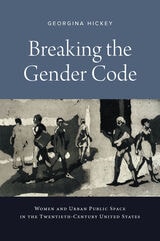
Breaking the Gender Code
Women and Urban Public Space in the Twentieth-Century United StatesGeorgina Hickey
University of Texas Press, 2023
A history of the activism that made public spaces in American cities more accessible to women.
From the closing years of the nineteenth century, women received subtle—and not so subtle—messages that they shouldn’t be in public. Or, if they were, that they were not safe. Breaking the Gender Code tells the story of both this danger narrative and the resistance to it.
Historian Georgina Hickey investigates challenges to the code of urban gender segregation in the twentieth century, focusing on organized advocacy to make the public spaces of American cities accessible to women. She traces waves of activism from the Progressive Era, with its calls for public restrooms, safe and accessible transportation, and public accommodations, through and beyond second-wave feminism, and its focus on the creation of alternative, women-only spaces and extensive anti-violence efforts. In doing so, Hickey explores how gender segregation intertwined with other systems of social control, as well as how class, race, and sexuality shaped activists' agendas and women's experiences of urban space. Drawing connections between the vulnerability of women in public spaces, real and presumed, and contemporary debates surrounding rape culture, bathroom bills, and domestic violence, Hickey unveils both the strikingly successful and the incomplete initiatives of activists who worked to open up public space to women.

Breeding Better Vermonters
The Eugenics Project in the Green Mountain StateNancy L. Gallagher
Brandeis University Press, 1999

Bridging Enigma
Cubans on Cuba, Volume 96Ambrosio Fornet
Duke University Press, 0
Fostered by both caution and audacity, in a climate of both trust and tension, and in the face of sustained North American hostility through nearly four decades, Cuban artists and writers have succeeded in building bridges between domestic and foreign cultural institutions, partly offsetting the profound material deprivations under which they have labored. The work collected in this volume introduces a group of writers, artists, and filmmakers who provide a window on Cuban life, illuminating this enigmatic island and bridging the troubled waters it shares with its continental neighbor to the north.
Contributors. Arturo Arango, Emilio Bejel, Rosa Ileana Boudet, Roberto Fernández Retamar, Ambrosio Fornet, Rafael Hernández, Francisco López Sacha, Humberto Manduley López, Vivian Martínez Tabares, Margarita Mateo Palmer, Miguel Mejides, Reinaldo Montero, Lisandro Otero, Graziella Pogolotti, Magda Resik, Cintio Vitier
Bridging Scholarship and Activism
Reflections from the Frontlines of Collaborative ResearchBernd Reiter
Michigan State University Press, 2015
CONTENTS:
Introduction, Ulrich Oslender and Bernd Reiter
Part One. The Promises and Pitfalls of Collaborative Research
- Of Academic Embeddedness: Communities of Choice and How to Make Sense of Activism and Research Abroad, Bernd Reiter
- New Shapes of Revolution, Gustavo Esteva
- The Accidental Activist Scholar: A Memoir on Reactive Boundary and Identity Work for Social Change within the Academy, Rob Benford
- Leaving the Field: How to Write about Disappointment and Frustration in Collaborative Research, Ulrich Oslender
- Invisible Heroes, Eshe Lewis
- El Muntuen America, Manuel Zapata Olivella
- Activism as History Making: The Collective and the Personal in Collaborative Research with the Process of Black Communities in Colombia, Arturo Escobar
- Out of Bounds: Negotiating Researcher Positionality in Brazil, Elizabeth Hordge-Freeman
- Between Soapboxes and Shadows: Activism, Theory, and the Politics of Life and Death in Salvador, Bahia, Brazil, Christen A. Smith
- State Violence and the Ethnographic Encounter: Feminist Research and Racial Embodiment, Keisha-Khan Y. Perry
- The Challenges Resulting from Combining Scientific Production and Social-Political Activism in the Brazilian Academy, Fernando Conceição
- The Challenge of Doing Applied/Activist Anti-Racist Anthropology in Revolutionary Cuba, Gayle L. McGarrity
- Conclusion, Ulrich Oslender and Bernd Reiter
- About the Authors
Bridging the Gaps
College Pathways to Career SuccessJames E. Rosenbaum
Russell Sage Foundation, 2017
The authors find that sub-baccalaureate credentials—associate degrees and college certificates—can improve employment outcomes. Young adults who complete these credentials have higher employment rates, earnings, autonomy, career opportunities, and job satisfaction than those who enroll but do not complete credentials. Sub-BA credentials can be completed at community college in less time than bachelor’s degrees, making them an affordable option for many low-income students.
Bridging the Gaps shows that when community colleges overemphasize bachelor’s degrees, they tend to funnel resources into remedial programs, and try to get low-performing students on track for a BA. Yet, remedial programs have inconsistent success rates and can create unrealistic expectations, leading struggling students to drop out before completing any degree. The authors show that colleges can devise procedures that reduce remedial placements and help students discover unseen abilities, attain valued credentials, get good jobs, and progress on degree ladders to higher credentials.
To turn college-for-all into a reality, community college students must be aware of their multiple credential and career options. Bridging the Gaps shows how colleges can create new pathways for non-traditional students to achieve success in their schooling and careers.
Bringing It All Back Home
Essays on Cultural StudiesLawrence Grossberg
Duke University Press, 1997
The essays collected here recognize both the specificity of cultural studies, by locating it in a range of alternative critical perspectives and practices, and its breadth, by mapping the extent of its diversity. By discussing American scholars’ initial reception of cultural studies, its relation to communication studies, and its origins in leftist politics, Grossberg grounds the development of cultural studies in the United States in specific historical and theoretical context. His criticism of "easy" identification of cultural studies with the theories, models, and issues of communications and his challenge to some of cultural studies’ current directions and preoccupations indicates what may lie ahead for this dynamic field of study. Bringing together the Gramscian tradition of British cultural studies with the antimodernist philosophical positions of Foucault, Deleuze, and Guattari, Grossberg articulates an original and important vision of the role of the political intellectual in the contemporary world and offers an essential overview of the emerging field of cultural studies by one of its leading practitioners and theorists.
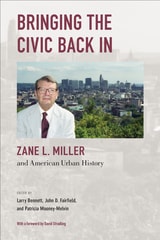
Bringing the Civic Back In
Zane L. Miller and American Urban HistoryEdited by Larry Bennett, John D. Fairfield, and Patricia Mooney-Melvin
Temple University Press, 2022
With the passing of Zane L. Miller in 2016, academia lost a renowned scholar and one of the key founders of new urban history—a branch of the discipline that placed urban life at the center of American history and treated the city as an arena for civic and political action. He was a devoted, tireless mentor who published or fostered dozens of books and articles on urban history. He also co-founded Temple University Press’ foundational series Urban Life, Landscape, and Policy.
Bringing the Civic Back In provides a critical overview, appreciation, and extension of Miller’s work as scholar, editor, mentor, colleague, and citizen. Included are three excerpts from Miller’s final, unfinished work, in which he presented cities as the source of a civic nationalism he viewed as fundamental to the development of American democracy. The editors—along with contributors Robert B. Fairbanks and Charles Lester—reflect on the life and work of their friend as well as his role in creating a Cincinnati school of urban history. These original essays by practitioners of Miller’s approach highlight the power of ideas to shape social change.

Bringing the Empire Home
Race, Class, and Gender in Britain and Colonial South AfricaZine Magubane
University of Chicago Press, 2003
Bringing the Empire Home tracks colonial images of blackness from South Africa to England and back again to answer questions such as these. Before the mid-1800s, black Africans were considered savage to the extent that their plight mirrored England's internal Others—women, the poor, and the Irish. By the 1900s, England's minority groups were being defined in relation to stereotypes of black South Africans. These stereotypes, in turn, were used to justify both new capitalist class and gender hierarchies in England and the subhuman treatment of blacks in South Africa. Bearing this in mind, Zine Magubane considers how marginalized groups in both countries responded to these racialized representations.
Revealing the often overlooked links among ideologies of race, class, and gender, Bringing the Empire Home demonstrates how much black Africans taught the English about what it meant to be white, poor, or female.
Broke
The Racial Consequences of Underfunding Public UniversitiesLaura T. Hamilton and Kelly Nielsen
University of Chicago Press, 2021
In Broke, Laura T. Hamilton and Kelly Nielsen examine virtually all aspects of campus life to show how the new economic order in public universities, particularly at two campuses in the renowned University of California system, affects students. For most of the twentieth century, they show, less affluent families of color paid with their taxes for wealthy white students to attend universities where their own offspring were not welcome. That changed as a subset of public research universities, some quite old, opted for a “new” approach, making racially and economically marginalized youth the lifeblood of the university. These new universities, however, have been particularly hard hit by austerity. To survive, they’ve had to adapt, finding new ways to secure funding and trim costs—but ultimately it’s their students who pay the price, in decreased services and inadequate infrastructure.
The rise of new universities is a reminder that a world-class education for all is possible. Broke shows us how far we are from that ideal and sets out a path for how we could get there.
Broken Heartland
The Rise of America's Rural GhettoOsha Gray Davidson
University of Iowa Press, 1996
Between 1940 and the mid 1980s, farm production expenses in America's Heartland tripled, capital purchases quadrupled, interest payments jumped tenfold, profits fell by 10 percent, the number of farmers decreased by two-thirds, and nearly every farming community lost population, businesses, and economic stability. Growth for these desperate communities has come to mean low-paying part-time jobs, expensive tax concessions, waste dumps, and industrial hog farming, all of which come with environmental and psychological price tags. In Broken Heartland, Osha Gray Davidson chronicles the decline of the Heartland and its transformation into a bitterly divided and isolated regional ghetto. Through interviews with more than two hundred farmers, social workers, government officials, and scholars, he puts a human face on the farm crisis of the 1980s.
In this expanded edition Davidson emphasizes the tenacious power of far-right-wing groups; his chapter on these burgeoning rural organizations in the original edition of Broken Heartland was the first in-depth look—six years before of the Oklahoma City bombing—at the politics of hate they nurture. He also spotlights NAFTA, hog lots, sustainable agriculture, and the other battles and changes over the past six years in rural America.

Broker, Mediator, Patron, and Kinsman
An Historical Analysis of Key Leadership Roles in a Rural Malaysian DistrictConner Bailey
Ohio University Press, 1976
This study attempts to relate questions of rural leadership to the constantly changing social and economic environment of a rural district in Malaysia during the twentieth century. The study itself began as an effort to analyze a single instance of structural change in Malay village leadership which occurred while the author worked in Sik District as a Peace Corps Volunteer (1968–1971). A research proposal was developed positing a traditional pattern of behavior which could be identified as traditional leadership, the better to contrast this with the bureaucratic style of the district’s new penghulus (headmen of a mukim, or subdistrict).
As research progressed, it became obvious that there was in fact no single traditional leadership pattern to be discovered, but rather that over time adaptations were regularly made whenever a significant change in Sik’s social and economic environment occurred. Although the study has retained rural leadership as a primary concern, it has been found necessary to relate it to Sik’s social and economic history.
Brokered Subjects
Sex, Trafficking, and the Politics of FreedomElizabeth Bernstein
University of Chicago Press, 2018
Brokers and Bureaucrats
Building Market Institutions in RussiaTimothy Frye
University of Michigan Press, 2000

Bruno Latour
Reassembling the PoliticalGraham Harman
Pluto Press, 2014
Bruno Latour, the French sociologist, anthropologist and long-established superstar in the social sciences is revisited in this pioneering account of his ever-evolving political philosophy. Breaking from the traditional focus on his metaphysics, most recently seen in Harman’s book Prince of Networks, the author instead begins with the Hobbesian and even Machiavellian underpinnings of Latour’s early period encountering his shift towards Carl Schmitt then finishing with his final development into the Lippmann / Dewey debate. Harman brings these twists and turns into sharp focus in terms of Latour’s personal political thinking.
Along with Latour’s most important articles on political themes, the book chooses three works as exemplary of the distinct periods in Latour’s thinking: The Pasteurization of France, Politics of Nature, and the recently published An Inquiry Into Modes of Existence, as his conception of politics evolves from a global power struggle between individuals, to the fabrication of fragile parliamentary networks, to just one mode of existence among many others.

Brutal Ephemerality
Migrant Temporalities on China's Urban FringeYang Zhan
University of Michigan Press, 2027
How do you build a hopeful future when your present is designed to be temporary? Brutal Ephemerality reveals that the sprawling urban villages on the edge of megacities such as Beijing aren’t slums that grew by accident. Instead, urban villages are intentionally kept in a state of uncertainty, allowing the city to have a ready supply of cheap land and flexible labor to fuel its rapid growth. Yang Zhan proposes the concept of “migrant venturers” (chuǎngdàng de rén) and argues that “venturing” (chuǎngdàng) represents a distinct survival strategy of mobility, risk-taking, and opportunity seeking, rather than rooting oneself in a specific place or profession. This strategy is an active practice of “future-making”—an effort to project a meaningful future from an uncertain present.
Brutal Ephemerality demonstrates how time is not a neutral backdrop, but the central arena for political struggle, ethical practice, and imaginative creation among marginalized groups. Zhan shows how hope and suffering are paradoxically intertwined, and how the very struggle for a better life can, itself, become a source of harm.
Brutalism
Achille Mbembe
Duke University Press, 2024
Bubbles and Machines
Gender, Information and Financial CrisesMicky Lee
University of Westminster Press, 2019

Buenos Aires
400 YearsEdited by Stanley R. Ross and Thomas F. McGann
University of Texas Press, 1982
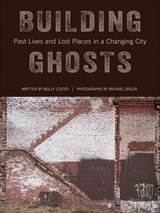
Building Ghosts
Past Lives and Lost Places in a Changing CityWritten by Molly Lester, Photographs by Michael Bixler
Temple University Press, 2024
Building Ghosts features more than 100 striking contemporary color photographs and a deeply researched narrative about Philadelphia’s buildings, neighborhoods, and the ghosts that reveal new truths and provocations about the changing city. The text and images in this lavish volume illuminate these lost buildings and found ghosts. Building Ghosts is an invitation to see the city differently, with the past clinging visibly to the present.
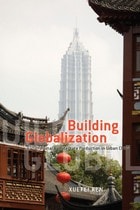
Building Globalization
Transnational Architecture Production in Urban ChinaXuefei Ren
University of Chicago Press, 2011
From the years 2004 to 2008, Beijing and Shanghai witnessed the construction of an extraordinary number of new buildings, many of which were designed by architectural firms overseas. Combining ethnographic fieldwork, historical research, and network analysis, Building Globalization closely scrutinizes the growing phenomenon of transnational architecture and its profound effect on the development of urban space.
Roaming from construction sites in Shanghai to architects’ offices in Paris, Xuefei Ren interviews hundreds of architects, developers, politicians, residents, and activists to explore this issue. She finds that in the rapidly transforming cities of modern China, iconic designs from prestigious international architects help private developers to distinguish their projects, government officials to advance their careers, and the Chinese state to announce the arrival of modern China on the world stage.
China leads the way in the globalization of architecture, a process whose ramifications can be felt from Beijing to Dubai to Basel. Connecting the dots between real estate speculation, megaproject construction, residential displacement, historical preservation, housing rights, and urban activism, Building Globalization reveals the contradictions and consequences of this new, global urban frontier.

Building Nature's Market
The Business and Politics of Natural FoodsLaura J. Miller
University of Chicago Press, 2017
Building Nature’s Market shows how the meaning of natural foods was transformed as they changed from a culturally marginal, religiously inspired set of ideas and practices valorizing asceticism to a bohemian lifestyle to a mainstream consumer choice. Laura J. Miller argues that the key to understanding this transformation is to recognize the leadership of the natural foods industry. Rather than a simple tale of cooptation by market forces, Miller contends the participation of business interests encouraged the natural foods movement to be guided by a radical skepticism of established cultural authority. She challenges assumptions that private enterprise is always aligned with social elites, instead arguing that profit-minded entities can make common cause with and even lead citizens in advocating for broad-based social and cultural change.
Building Resilience
Social Capital in Post-Disaster RecoveryDaniel P. Aldrich
University of Chicago Press, 2012
Building a Resilient Twenty-First-Century Economy for Rural America
Don E. Albrecht
Utah State University Press, 2020
Trump’s promises to restore rural industrial jobs simply cannot be fulfilled because his policies do not address the base cause for this job loss—technological change, the most significant factor being the machine replacement of human labor in the production process. Bringing a personal understanding of the effects on rural communities and residents, Albrecht focuses each chapter on a community that has traditionally been economically dependent on a single industry—manufacturing, coal mining, agriculture, logging, oil and gas production, and tourism—and the consequences of losing that industry. He also lays out a plan for rebuilding America’s rural areas and creating an economically vibrant country with a more sustainable future.
The rural economy cannot return to the past as it was structured and instead must look to a new future. Building a Resilient Twenty-First-Century Economy for Rural America describes the source of economic concerns in rural America and offers real ways to address them. It will be vital to students, scholars, practitioners, community leaders, politicians, and policy makers concerned with rural community development.
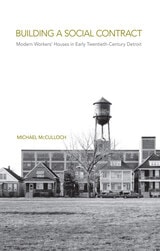
Building a Social Contract
Modern Workers' Houses in Early-Twentieth Century DetroitMcCulloch, Michael
Temple University Press, 2023
Through oral histories, letters, photographs, and period fiction, McCulloch traces wage earners’ agency in negotiating a new implicit social contract, one that rewarded hard work with upward mobility in modern houses. This promise reflected workers’ increased bargaining power but, at the same time, left them increasingly vulnerable to layoffs.
Building a Social Contract focuses on Detroit, the quintessential city of the era, where migrant workers came and were Americanized, and real estate agents and the speculative housebuilding industry thrived. The Motor City epitomized the struggle of Black workers in this period, who sought better lives through industrial labor but struggled to translate their wages into housing security amid racist segregation and violence. When Depression-era unemployment created an eviction crisis, the social contract unraveled, and workers rose up—at the polls and in the streets—to create a labor movement that reshaped American capitalism for decades.
Today, the lessons McCulloch provides from early twentieth-century Detroit are a necessary reminder that wages are not enough, and only working-class political power can secure affordable housing.
Building for the Arts
The Strategic Design of Cultural FacilitiesPeter Frumkin and Ana Kolendo
University of Chicago Press, 2014
With Building for the Arts, Peter Frumkin and Ana Kolendo explore how artistic vision, funding partnerships, and institutional culture work together—or fail to—throughout the process of major cultural construction projects. Drawing on detailed case studies and in-depth interviews at museums and other cultural institutions varying in size and funding arrangements, including the Art Institute of Chicago, Atlanta Opera, and AT&T Performing Arts Center in Dallas, Frumkin and Kolendo analyze the decision-making considerations and challenges and identify four factors whose alignment characterizes the most successful and sustainable of the projects discussed: institutional requirements, capacity of the institution to manage the project while maintaining ongoing operations, community interest and support, and sufficient sources of funding. How and whether these factors are strategically aligned in the design and execution of a building initiative, the authors argue, can lead an organization to either thrive or fail. The book closes with an analysis of specific tactics that can enhance the chances of a project’s success.
A practical guide grounded in the latest scholarship on nonprofit strategy and governance, Building for the Arts will be an invaluable resource for professional arts staff and management, trustees of arts organizations, development professionals, and donors, as well as those who study and seek to understand them.
Building on Borrowed Time
Rising Seas and Failing Infrastructure in SemarangLukas Ley
University of Minnesota Press, 2021
A timely ethnography of how Indonesia’s coastal dwellers inhabit the “chronic present” of a slow-motion natural disaster
Ice caps are melting, seas are rising, and densely populated cities worldwide are threatened by floodwaters, especially in Southeast Asia. Building on Borrowed Time is a timely and powerful ethnography of how people in Semarang, Indonesia, on the north coast of Java, are dealing with this global warming–driven existential challenge. In addition to antiflooding infrastructure breaking down, vast areas of cities like Semarang and Jakarta are rapidly sinking, affecting the very foundations of urban life: toxic water oozes through the floors of houses, bridges are submerged, traffic is interrupted.
As Lukas Ley shows, the residents of Semarang are constantly engaged in maintaining their homes and streets, trying to live through a slow-motion disaster shaped by the interacting temporalities of infrastructural failure, ecological deterioration, and urban development. He casts this predicament through the temporal lens of a “meantime,” a managerial response that means a constant enduring of the present rather than progress toward a better future—a “chronic present.”
Building on Borrowed Time takes us to a place where a flood crisis has already arrived—where everyday residents are not waiting for the effects of climate change but are in fact already living with it—and shows that life in coastal Southeast Asia is defined not by the temporality of climate science but by the lived experience of tidal flooding.
Building on a Borrowed Past
Place and Identity in Pipestone, MinnesotaSally J. Southwick
Ohio University Press, 2005
Why is there a national monument near a small town on the Minnesota prairie? Why do the town’s residents dress as Indians each summer and perform a historical pageant based on a Victorian-era poem? To answer such questions, Building on a Borrowed Past: Place and Identity in Pipestone, Minnesota shows what happens when one culture absorbs the heritage of another for civic advantage.
Founded in 1874, Pipestone was named for the quarries where regional tribes excavated soft stone for making pipes. George Catlin and Henry Wadsworth Longfellow described the place and its tribal history. Promotion by white residents of the quarries as central to America’s Indian heritage helped Pipestone obtain a federal Indian boarding school in the 1890s and a national monument in the 1930s. The annual “Song of Hiawatha” pageant attracted tourists after World War II. Sally J. Southwick’s prizewinning study demonstrates how average, small–town citizens contributed to the generic image of “the Indian” in American culture.
Examining oral histories, memoirs, newspapers, federal documents, civic group records, and promotional literature, Southwick focuses on the role of middle–class individuals in establishing a historical, place–based identity. Building on a Borrowed Past reveals how identities are formed through adaptation of cultural, spiritual, racial, and historical symbols.
Building the Prison State
Race and the Politics of Mass IncarcerationHeather Schoenfeld
University of Chicago Press, 2018
Reframing the story of mass incarceration, Heather Schoenfeld illustrates how the unfinished task of full equality for African Americans led to a series of policy choices that expanded the government’s power to punish, even as they were designed to protect individuals from arbitrary state violence. Examining civil rights protests, prison condition lawsuits, sentencing reforms, the War on Drugs, and the rise of conservative Tea Party politics, Schoenfeld explains why politicians veered from skepticism of prisons to an embrace of incarceration as the appropriate response to crime. To reduce the number of people behind bars, Schoenfeld argues that we must transform the political incentives for imprisonment and develop a new ideological basis for punishment.
Building the South Side
Urban Space and Civic Culture in Chicago, 1890-1919Robin F. Bachin
University of Chicago Press, 2004
Building the Urban Environment
Visions of the Organic City in the United States, Europe, and Latin AmericaHarold L Platt
Temple University Press, 2015
Building the Urban Environment is a comparative study of the contestation among planners, policymakers, and the grassroots over the production and meaning of urban space. Award-winning historian Harold Platt presents case studies of seven cities, including Rotterdam, Chicago, and Sao Paulo, to show how, over time, urban life created hybrid spaces that transformed people, culture, and their environments.
As Platt explains, during the post-1945 race to technological modernization, policymakers gave urban planners of the International Style extraordinary influence to build their utopian vision of a self-sustaining “organic city.” However, in the 1960s, they faced a revolt of the grassroots. Building the Urban Environment traces the rise and fall of the Modernist planners during an era of Cold War, urban crisis, unnatural disasters, and global restructuring in the wake of the oil-energy embargo of the ’70s.
Ultimately, Platt provides a way to measure different visions of the postwar city against actual results in terms of the built environment, contrasting how each city created a unique urban space.