Results by title
1563 books match the query 'African American & Black Studies' and 221 start with b
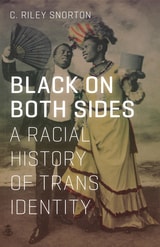
Black on Both Sides
A Racial History of Trans IdentityC. Riley Snorton
University of Minnesota Press, 2017
Winner of the John Boswell Prize from the American Historical Association 2018
Winner of the William Sanders Scarborough Prize from the Modern Language Association 2018
Winner of an American Library Association Stonewall Honor 2018
Winner of Lambda Literary Award for Transgender Nonfiction 2018
Winner of the Sylvia Rivera Award in Transgender Studies from the Center for Lesbian and Gay Studies
The story of Christine Jorgensen, America’s first prominent transsexual, famously narrated trans embodiment in the postwar era. Her celebrity, however, has obscured other mid-century trans narratives—ones lived by African Americans such as Lucy Hicks Anderson and James McHarris. Their erasure from trans history masks the profound ways race has figured prominently in the construction and representation of transgender subjects. In Black on Both Sides, C. Riley Snorton identifies multiple intersections between blackness and transness from the mid-nineteenth century to present-day anti-black and anti-trans legislation and violence.
Drawing on a deep and varied archive of materials—early sexological texts, fugitive slave narratives, Afro-modernist literature, sensationalist journalism, Hollywood films—Snorton attends to how slavery and the production of racialized gender provided the foundations for an understanding of gender as mutable. In tracing the twinned genealogies of blackness and transness, Snorton follows multiple trajectories, from the medical experiments conducted on enslaved black women by J. Marion Sims, the “father of American gynecology,” to the negation of blackness that makes transnormativity possible.
Revealing instances of personal sovereignty among blacks living in the antebellum North that were mapped in terms of “cross dressing” and canonical black literary works that express black men’s access to the “female within,” Black on Both Sides concludes with a reading of the fate of Phillip DeVine, who was murdered alongside Brandon Teena in 1993, a fact omitted from the film Boys Don’t Cry out of narrative convenience. Reconstructing these theoretical and historical trajectories furthers our imaginative capacities to conceive more livable black and trans worlds.
Black on the Block
The Politics of Race and Class in the CityMary Pattillo
University of Chicago Press, 2007
“To see how diversity creates strange and sometimes awkward bedfellows . . . turn to Mary Pattillo's Black on the Block.”—Boston Globe
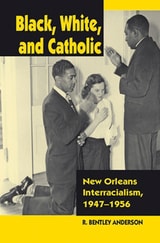
Black, White, and Catholic
New Orleans Interracialism, 1947-1956R. Bentley Anderson
Vanderbilt University Press, 2005
Anderson leads readers through the tumultuous years just after World War II when the Roman Catholic Church in the American South struggled to reconcile its commitment to social justice with the legal and social heritage of Jim Crow society. Though these early efforts at reform, by and large, failed, they did serve to galvanize Catholic supporters and opponents of the Civil Rights Movement and provided a model for more successful efforts at desegregation in the '60s.
As a Jesuit himself, Anderson has access to archives that remain off-limits to other scholars. His deep knowledge of the history of the Catholic Church also allows him to draw connections between this historical period and the present. In the resistance to desegregation, Anderson finds expression of a distinctly American form of Catholicism, in which lay people expect Church authorities to ratify their ideas and beliefs in an almost democratic fashion. The conflict he describes is as much between popular and hierarchical models of the Church as between segregation and integration.
This book has been made possible through a grant from the Louisiana Endowment for the Humanities, a state affiliate of the National Endowment for the Humanities.
Black-Brown Solidarity
Racial Politics in the New Gulf SouthBy John D. Márquez
University of Texas Press, 2014
Houston is the largest city in the Gulf South, a region sometimes referred to as the “black belt” because of its sizeable African American population. Yet, over the last thirty years, Latinos have become the largest ethnic minority in Houston, which is surpassed only by Los Angeles and New York in the number of Latino residents. Examining the history and effects of this phenomenon, Black-Brown Solidarity describes the outcomes of unexpected coalitions that have formed between the rapidly growing Latino populations and the long-held black enclaves in the region.
Together, minority residents have put the spotlight on prominent Old South issues such as racial profiling and police brutality. Expressions of solidarity, John D. Márquez argues, have manifested themselves in expressive forms such as hip-hop music, youth gang cultural traits, and the storytelling of ordinary residents in working-class communities. Contrary to a growing discourse regarding black-brown conflict across the United States, the blurring of racial boundaries reflects broader arguments regarding hybrid cultures that unsettle the orders established by centuries-old colonial formations. Accentuating what the author defines as a racial state of expendability—the lynchpin of vigilante violence and police brutality—the new hybridization has resulted in shared wariness of a linked fate. Black-Brown Solidarity also explores the ways in which the significance of African American history in the South has influenced the structures through which Latinos have endured and responded to expendability. Mining data from historical archives, oral histories, legal documents, popular media, and other sources, this work is a major contribution to urban studies, ethnic studies, and critical race theory.
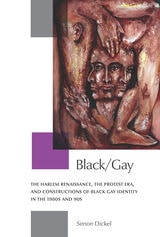
Black/Gay
The Harlem Renaissance, the Protest Era, and the Constructions of Black Gay Identity in the 1980s and 90sSimon Dickel
Michigan State University Press, 2011
This book explores key texts of the black gay culture of the 1980s and ’90s. Starting with an analysis of the political discourse in anthologies such as In the Life and Brother to Brother, it identifies the references to the Harlem Renaissance and the Protest Era as common elements of black gay discourse. This connection to African American cultural and political traditions legitimizes black gay identity and criticizes the construction of gay identity as white. Readings of Isaac Julien’s Looking for Langston, Samuel R. Delany’s “Atlantis: Model 1924” and The Motion of Light in Water, Melvin Dixon’s Vanishing Rooms, Randall Kenan’s A Visitation of Spirits, and Steven Corbin’s No Easy Place to Be demonstrate how these strategies of signifying are used in affirmative, humorous, and ironic ways.
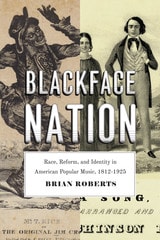
Blackface Nation
Race, Reform, and Identity in American Popular Music, 1812-1925Brian Roberts
University of Chicago Press, 2017
The Hutchinson Family Singers, the Northeast’s most popular middle-class singing group during the mid-nineteenth century, is perhaps the best example of the first strain of music. The group’s songs expressed an American identity rooted in communal values, with lyrics focusing on abolition, women’s rights, and socialism. Blackface minstrelsy, on the other hand, emerged out of an audience-based coalition of Northern business elites, Southern slaveholders, and young, white, working-class men, for whom blackface expressed an identity rooted in individual self-expression, anti-intellectualism, and white superiority. Its performers embodied the love-crime version of racism, in which vast swaths of the white public adored African Americans who fit blackface stereotypes even as they used those stereotypes to rationalize white supremacy. By the early twentieth century, the blackface version of the American identity had become a part of America’s consumer culture while the Hutchinsons’ songs were increasingly regarded as old-fashioned. Blackface Nation elucidates the central irony in America’s musical history: much of the music that has been interpreted as black, authentic, and expressive was invented, performed, and enjoyed by people who believed strongly in white superiority. At the same time, the music often depicted as white, repressed, and boringly bourgeois was often socially and racially inclusive, committed to reform, and devoted to challenging the immoralities at the heart of America’s capitalist order.

Blackness and Disability
Critical Examinations and Cultural InterventionsChristopher M. Bell
Michigan State University Press, 2012
Disability Studies diverge from the medical model of disability (which argues that disabled subjects can and should be “fixed”) to view disability as socially constructed, much in the same way other identities are. The work of reading black and disabled bodies is not only recovery work, but work that requires a willingness to deconstruct the systems that would keep those bodies in separate spheres. This pivotal volume uncovers the misrepresentations of black disabled bodies and demonstrates how those bodies transform systems and culture. Drawing on key themes in Disability Studies and African American Studies, these collected essays complement one another in interesting and dynamic ways, to forge connections across genres and chronotopes, an invitation to keep blackness and disability in conversation. With an analysis of disability as a result of war, studies of cognitive impairment and slavery in fiction, representations of slavery and violence in photography, deconstructions of illness (cancer and AIDS) narratives, comparative analyses of black and Latina/o and black and African subjects, analysis of treatments of disability in hip-hop, and commentary on disability, blackness, and war, this volume shows that the historical lines of demarcation in this field are permeable and should be challenged.
Blackness in Opera
Edited by Naomi André, Karen M. Bryan, and Eric Saylor
University of Illinois Press, 2012
Blacks and Whites in Sao Paulo, Brazil, 1888-1988
George Reid Andrews
University of Wisconsin Press, 1991
For much of the twentieth century Brazil enjoyed an international reputation as a “racial democracy,” but that image has been largely undermined in recent decades by research suggesting the existence of widespread racial inequality. George Reid Andrews provides the first thoroughly documented history of Brazilian racial inequality from the abolition of slavery in 1888 up to the late 1980s, showing how economic, social, and political changes in Brazil during the last one hundred years have shaped race relations.
No laws of segregation or apartheid exist in Brazil, but by looking carefully at government policies, data on employment, mainstream and Afro-Brazilian newspapers, and a variety of other sources, Andrews traces pervasive discrimination against Afro-Brazilians over time. He draws his evidence from the country’s largest and most economically important state, São Paulo, showing how race relations were affected by its transformation from a plantation-based economy to South America’s most urban, industrialized society.
The book focuses first on Afro-Brazilians' entry into the agricultural and urban working class after the abolition of slavery. This transition, Andrews argues, was seriously hampered by state policies giving the many European immigrants of the period preference over black workers. As immigration declined and these policies were overturned in the late 1920s, black laborers began to be employed in agriculture and industry on nearly equal terms with whites. Andrews then surveys efforts of blacks to move into the middle class during the 1900s. He finds that informal racial solidarity among middle-class whites has tended to exclude Afro-Brazilians from the professions and other white-collar jobs.
Andrews traces how discrimination throughout the century led Afro-Brazilians to mobilize, first through the antislavery movement of the 1880s, then through such social and political organizations of the 1920s and 1930s as the Brazilian Black Front, and finally through the anti-racism movements of the 1970s and 1980s. These recent movements have provoked much debate among Brazilians over their national image as a racial democracy. It remains to be seen, Andrews concludes, whether that debate will result in increased opportunities for black Brazilians.
Winner of the 1993 Arthur P. Whitaker Prize

Blacks on the Border
The Black Refugees in British North America, 1815–1860Harvey Whitfield
University Press of New England, 2006

Blacks, Coloureds and National Identity in Nineteenth-century Latin America
Edited by Nancy Priscilla Naro
University of London Press, 2003

Blacks, Medical Schools, and Society
James L. Curtis, M.D.
University of Michigan Press, 1971
Blacks, Reds, and Russians
Sojourners in Search of the Soviet PromiseJoy Gleason Carew
Rutgers University Press, 2010
In Blacks, Reds, and Russians, Joy Gleason Carew offers insight into the political strategies that often underlie relationships between different peoples and countries. She draws on the autobiographies of key sojourners, including Harry Haywood and Robert Robinson, in addition to the writings of Claude McKay, W.E.B. Du Bois, and Langston Hughes. Interviews with the descendents of figures such as Paul Robeson and Oliver Golden offer rare personal insights into the story of a group of emigrants who, confronted by the daunting challenges of making a life for themselves in a racist United States, found unprecedented opportunities in communist Russia.
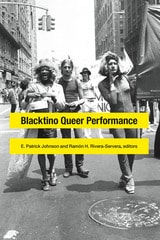
Blacktino Queer Performance
E. Patrick Johnson and Ramón H. Rivera-Servera, editors
Duke University Press, 2016
Blood in Their Eyes
The Elaine Massacre of 1919Grif Stockley
University of Arkansas Press, 2020
The first edition of Grif Stockley’s Blood in Their Eyes, published in 2001, brought renewed attention to the Elaine Massacre and sparked valuable new studies on racial violence and exploitation in Arkansas and beyond. With contributions from fellow historians Brian K. Mitchell and Guy Lancaster, this revised edition draws from recently uncovered source material and explores in greater detail the actions of the mob, the lives of those who survived the massacre, and the regime of fear and terror that prevailed under Jim Crow.
Blowin' Up
Rap Dreams in South CentralJooyoung Lee
University of Chicago Press, 2016
While most books on rap are written from the perspective of listeners and the market, Blowin’ Up looks specifically at the creative side of rappers. As Lee shows, learning how to rap involves a great deal of discipline, and it takes practice to acquire the necessary skills to put on a good show. Along with Lee—who is himself a pop-locker—we watch as the rappers at Project Blowed learn the basics, from how to hold a microphone to how to control their breath amid all those words. And we meet rappers like E. Crimsin, Nocando, VerBS, and Flawliss as they freestyle and battle with each other. For the men at Project Blowed, hip hop offers a creative alternative to the gang lifestyle, substituting verbal competition for physical violence, and provides an outlet for setting goals and working toward them.
Engagingly descriptive and chock-full of entertaining personalities and real-life vignettes, Blowin’ Up not only delivers a behind-the-scenes view of the underground world of hip hop, but also makes a strong case for supporting the creative aspirations of young, urban, black men, who are often growing up in the shadow of gang violence and dead-end jobs.
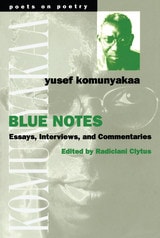
Blue Notes
Essays, Interviews, and CommentariesYusef Komunyakaa
University of Michigan Press, 2000
As editor Radiclani Clytus makes clear in the volume's introductory essay, although Komunyakaa's poetry has its roots in the stylistic innovations of early twentieth-century American modernists, his writing often reflects his understanding that a "black" experience should not particularize the presentation of one's art. This volume, according to the editor, is an attempt to understand Komunyakaa's critical eclecticism within the context of his own words.
Yusef Komunyakaa's books of poetry include I Apologize for the Eyes in My Head, Magic City, Thieves of Paradise, and Neon Vernacular, for which he received the Pulitzer Prize and the Kingsley Tufts Poetry Award in 1994.
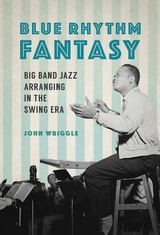
Blue Rhythm Fantasy
Big Band Jazz Arranging in the Swing EraJohn Wriggle
University of Illinois Press, 2016
Blue Rhythm Fantasy traces the extraordinary career of arranger Chappie Willet--a collaborator of Louis Armstrong, Cab Calloway, Duke Ellington, Gene Krupa, and many others--to revisit legendary Swing Era venues and performers from Harlem to Times Square. Wriggle's insightful music analyses of big band arranging techniques explore representations of cultural modernism, discourses on art and commercialism, conceptions of race and cultural identity, music industry marketing strategies, and stage entertainment variety genres.
Drawing on archives, obscure recordings, untapped sources in the African American press, and interviews with participants, Blue Rhythm Fantasy is a long-overdue study of the arranger during this dynamic era of American music history.
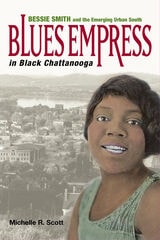
Blues Empress in Black Chattanooga
Bessie Smith and the Emerging Urban SouthMichelle R. Scott
University of Illinois Press, 2007
As one of the first African American vocalists to be recorded, Bessie Smith is a prominent figure in American popular culture and African American history. Michelle R. Scott uses Smith's life as a lens to investigate broad issues in history, including industrialization, Southern rural to urban migration, black community development in the post-emancipation era, and black working-class gender conventions.
Arguing that the rise of blues culture and the success of female blues artists like Bessie Smith are connected to the rapid migration and industrialization in the late nineteenth and early twentieth centuries, Scott focuses her analysis on Chattanooga, Tennessee, the large industrial and transportation center where Smith was born. This study explores how the expansion of the Southern railroads and the development of iron foundries, steel mills, and sawmills created vast employment opportunities in the postbellum era. Chronicling the growth and development of the African American Chattanooga community, Scott examines the Smith family's migration to Chattanooga and the popular music of black Chattanooga during the first decade of the twentieth century, and culminates by delving into Smith's early years on the vaudeville circuit.
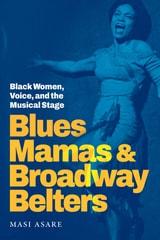
Blues Mamas and Broadway Belters
Black Women, Voice, and the Musical StageMasi Asare
Duke University Press, 2024
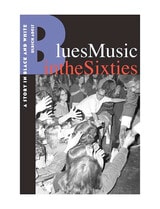
Blues Music in the Sixties
A Story in Black and WhiteUlrich Adelt
Rutgers University Press, 2010
In the 1960s, within the larger context of the civil rights movement and the burgeoning counterculture, the blues changed from black to white in its production and reception, as audiences became increasingly white. Yet, while this was happening, blackness--especially black masculinity--remained a marker of authenticity. Crossing color lines and mixing the beats of B.B. King, Eric Clapton, and Janis Joplin; the Newport Folk Festival and the American Folk Blues Festival; and publications such as Living Blues, Ulrich Adelt discusses these developments, including the international aspects of the blues. He highlights the performers and venues that represented changing racial politics and addresses the impact and involvement of audiences and cultural brokers.
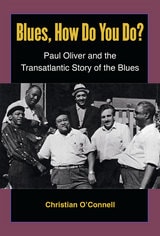
Blues, How Do You Do?
Paul Oliver and the Transatlantic Story of the BluesChristian O’Connell
University of Michigan Press, 2015

Blues, Ideology, and Afro-American Literature
A Vernacular TheoryHouston A. Baker Jr.
University of Chicago Press, 1987
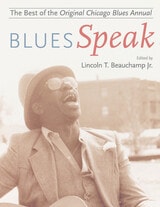
BluesSpeak
Best of the Original Chicago Blues AnnualLincoln T. Beauchamp, Jr.
University of Illinois Press, 2010
This incomparable anthology collects articles, interviews, fiction, and poetry from the Original Chicago Blues Annual, one of music history's most significant periodical blues publications. Founded and operated from 1989 to 1995 by African American musician and entrepreneur Lincoln T. Beauchamp Jr., OCBA gave voice to the blues community and often frankly addressed contentious issues within the blues such as race, identity, prejudice, wealth, gender, and inequity.
OCBA often expressed an explicitly black perspective, but its contributors were a mix of black and white, American and international. Likewise, although OCBA's roots and main focus were in Chicago, Beauchamp's vision for the publication (and his own activities as a blues performer and promoter) embraced an international dimension, reflecting a broad diversity of blues audiences and activities in locations as farflung as Iceland, Poland, France, Italy, and South Africa.
This volume includes key selections from OCBA's seven issues and features candid interviews with blues luminaries such as Koko Taylor, Eddie Boyd, Famoudou Don Moye, Big Daddy Kinsey, Lester Bowie, Junior Wells, Billy Boy Arnold, Herb Kent, Barry Dolins, and many more. Also featured are heartfelt memorials to bygone blues artists, insightful observations on the state of the blues in Chicago and beyond, and dozens of photographs of performers, promoters, and other participants in the worldwide blues scene.

Body Language
Sisters in Shape, Black Women's Fitness, and Feminist Identity PoliticsKimberly J. Lau
Temple University Press, 2011
In her evocative ethnographic study, Body Language, Kimberly Lau traces the multiple ways in which the success of an innovative fitness program illuminates what identity means to its Black female clientele and how their group interaction provides a new perspective on feminist theories of identity politics—especially regarding the significance of identity to political activism and social change.
Sisters in Shape, Inc., Fitness Consultants (SIS), a Philadelphia company, promotes balance in physical, mental, and spiritual health. Its program goes beyond workouts, as it educates and motivates women to make health and fitness a priority. Discussing the obstacles at home and the importance of the group's solidarity to their ability to stay focused on their goals, the women speak to the ways in which their commitment to reshaping their bodies is a commitment to an alternative future.
Body Language shows how the group's explorations of black women's identity open new possibilities for identity-based claims to recognition, justice, and social change.
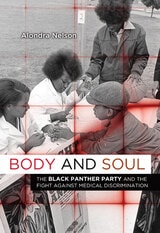
Body and Soul
The Black Panther Party and the Fight against Medical DiscriminationAlondra Nelson
University of Minnesota Press, 2013
Between its founding in 1966 and its formal end in 1980, the Black Panther Party blazed a distinctive trail in American political culture. The Black Panthers are most often remembered for their revolutionary rhetoric and militant action. Here Alondra Nelson deftly recovers an indispensable but lesser-known aspect of the organization’s broader struggle for social justice: health care. The Black Panther Party’s health activism—its network of free health clinics, its campaign to raise awareness about genetic disease, and its challenges to medical discrimination—was an expression of its founding political philosophy and also a recognition that poor blacks were both underserved by mainstream medicine and overexposed to its harms.
Drawing on extensive historical research as well as interviews with former members of the Black Panther Party, Nelson argues that the Party’s focus on health care was both practical and ideological. Building on a long tradition of medical self-sufficiency among African Americans, the Panthers’ People’s Free Medical Clinics administered basic preventive care, tested for lead poisoning and hypertension, and helped with housing, employment, and social services. In 1971, the party launched a campaign to address sickle-cell anemia. In addition to establishing screening programs and educational outreach efforts, it exposed the racial biases of the medical system that had largely ignored sickle-cell anemia, a disease that predominantly affected people of African descent.
The Black Panther Party’s understanding of health as a basic human right and its engagement with the social implications of genetics anticipated current debates about the politics of health and race. That legacy—and that struggle—continues today in the commitment of health activists and the fight for universal health care.
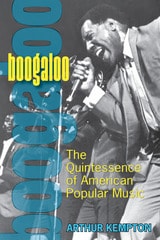
Boogaloo
The Quintessence of American Popular MusicArthur Kempton
University of Michigan Press, 2005
Praise for Boogaloo:
"From Thomas A. Dorsey and gospel to Sam Cooke and the classic age of boogaloo ('soul') to George Clinton and hip hop, this comprehensive analysis of African-American popular music is a deep and gorgeous meditation on its aesthetics and business."
---Henry Louis Gates, Jr., W.E.B. Du Bois Professor of the Humanities, Harvard
"Surpassingly sympathetic and probing. . . . a panoramic critical survey of black popular music over seventy-five years. . . .There is no book quite like it."
---New York Review of Books
". . . moving, dense, and fascinating. . . ."
---New Yorker
". . . a grand and sweeping survey of the history of soul music in America. . . . one of the best books of music journalism. . . ."
---Publisher's Weekly
". . . a fascinating and often original addition to the extensive literature. . . . an astute and witty account. . . . there is plenty in Boogaloo to set the mind and heart alight, as well as some flashes of brilliance and originality rare in music writing today."
---Times Literary Supplement
Booker T. Washington Papers Volume 10
1909-11. Assistant editors, Geraldine McTigue and Nan E. WoodruffBooker T. Washington
University of Illinois Press, 1981
Booker T. Washington Papers Volume 11
1911-12. Assistant editor, Geraldine McTigueBooker T. Washington
University of Illinois Press, 1981
Booker T. Washington Papers Volume 12
1912-14Booker T. Washington
University of Illinois Press, 1982
Booker T. Washington Papers Volume 13
1914-15. Assistant editors, Susan Valenza and Sadie M. HarlanBooker T. Washington
University of Illinois Press, 1983
Booker T. Washington Papers Volume 1
The Autobiographical WritingsBooker T. Washington
University of Illinois Press, 1972
Volume 1 contains Washington's Up from Slavery, one of the most widely read American autobiographies, in addition to The Story of My Life and Work, and six other autobiographical writings. Together, the selections provide readers with a first step toward understanding Washington and his immense impact. These writings reveal the moral values he absorbed from his mid-nineteenth-century experiences and teachers. As importantly, they present him to the world as he wished to be seen: as the black version of the American success hero and an exemplar of the Puritan work ethic that he believed to be the secret of his success. These works, along with so much of Washington's writing, served as a model for many black Americans striving to overcome poverty and prejudice.
Booker T. Washington Papers Volume 2
1860-89. Assistant editors, Pete Daniel, Stuart B. Kaufman, Raymond W. Smock, and William M. WeltyBooker T. Washington
University of Illinois Press, 1972
Booker T. Washington Papers Volume 3
1889-95. Assistant editors, Stuart B. Kaufman and Raymond W. SmockBooker T. Washington. Edited by Louis R. Harlan, Assistant editors, Stuart B. Kaufman and Raymond W. Smock
University of Illinois Press, 1974
Booker T. Washington Papers Volume 4
1895-98. Assistant editors, Stuart B. Kaufman, Barbara S. Kraft, and Raymond W. SmockBooker T. Washington
University of Illinois Press, 1975
Booker T. Washington Papers Volume 5
1899-1900. Assistant editor, Barbara S. KraftBooker T. Washington
University of Illinois Press, 1976
Booker T. Washington Papers Volume 6
1901-2. Assistant editor, Barbara S. KraftBooker T. Washington
University of Illinois Press, 1977
Booker T. Washington Papers Volume 7
1903-4. Assistant editor, Barbara S. KraftBooker T. Washington
University of Illinois Press, 1977
Booker T. Washington Papers Volume 8
1904-6. Assistant editor, Geraldine McTigueBooker T. Washington
University of Illinois Press, 1979
Booker T. Washington Papers Volume 9
1906-8. Assistant editor, Nan E. WoodruffBooker T. Washington
University of Illinois Press, 1980
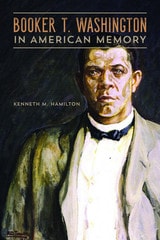
Booker T. Washington in American Memory
Kenneth M. Hamilton
University of Illinois Press, 2017

Bookmarks
Reading in Black and White, First Paperback EditionKarla F. Holloway
Rutgers University Press, 2006
"BookMarks is a moving and revelatory memoir... a work of fiercely intelligent scholarship." - Susan Larson,
"Erudite and emotional in turns, [BookMarks] is full of truths that appeal to the head and the heart." - Charlotte News Observer"
What are you reading? What books have been important to you? Whether you are interviewing for a job, chatting with a friend or colleague, or making small talk, these questions arise almost unfailingly. Some of us have stock responses, which may or may not be a fiction of our own making. Others gauge their answers according to who is asking the question. Either way, the replies that we give are thoughtfully crafted to suggest the intelligence, worldliness, political agenda, or good humor that we are hoping to convey. We form our answers carefully because we know that our responses say a lot.
But what exactly do our answers say? In BookMarks, Karla FC Holloway explores the public side of reading, and specifically how books and booklists form a public image of African Americans. Revealing her own love of books and her quirky passion for their locations in libraries and on bookshelves, Holloway reflects on the ways that her parents guided her reading when she was young and her bittersweet memories of reading to her children. She takes us on a personal and candid journey that considers the histories of reading in children’s rooms, prison libraries, and “Negro” libraries of the early twentieth century, and that finally reveals how her identity as a scholar, a parent, and an African American woman has been subject to judgments that public cultures make about race and our habits of reading.
Holloway is the first to call our attention to a remarkable trend of many prominent African American writers—including Maya Angelou, W.E.B. Du Bois, Henry Louis Gates, Malcolm X, and Zora Neale Hurston. Their autobiographies and memoirs are consistently marked with booklists—records of their own habits of reading. She examines these lists, along with the trends of selection in Oprah Winfrey’s popular book club, raising the questions: What does it mean for prominent African Americans to associate themselves with European learning and culture? How do books by black authors fare in the inevitable hierarchy of a booklist?
BookMarks provides a unique window into the ways that African Americans negotiate between black and white cultures. This compelling rumination on reading is a book that everyone should add to their personal collections and proudly carry “cover out.”

Borders, Human Itineraries, and All Our Relation
Dele Adeyemo, Natalie Diaz, Nadia Yala Kisukidi, and Rinaldo Walcott. With a Foreword by Christina Sharpe
Duke University Press, 2024
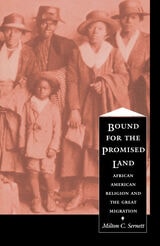
Bound For the Promised Land
African American Religion and the Great MigrationMilton C. Sernett
Duke University Press, 1997
Drawing on a range of sources—interviews, government documents, church periodicals, books, pamphlets, and articles—Sernett shows how the mass migration created an institutional crisis for black religious leaders. He describes the creative tensions that resulted when the southern migrants who saw their exodus as the Second Emancipation brought their religious beliefs and practices into northern cities such as Chicago, and traces the resulting emergence of the belief that black churches ought to be more than places for "praying and preaching." Explaining how this social gospel perspective came to dominate many of the classic studies of African American religion, Bound for the Promised Land sheds new light on various components of the development of black religion, including philanthropic endeavors to "modernize" the southern black rural church. In providing a balanced and holistic understanding of black religion in post–World War I America, Bound for the Promised Land serves to reveal the challenges presently confronting this vital component of America’s religious mosaic.

Bounded Lives, Bounded Places
Free Black Society in Colonial New Orleans, 1769–1803Kimberly S. Hanger
Duke University Press, 1997
Drawing on rare archives in Louisiana and Spain, Hanger reconstructs the world of late-eighteenth-century New Orleans from the perspective of its free black residents, and documents the common experiences and enterprises that helped solidify libres’ sense of group identity. Over the course of three and a half decades of Spanish rule, free people of African descent in New Orleans made their greatest advances in terms of legal rights and privileges, demographic expansion, vocational responsibilities, and social standing. Although not all blacks in Spanish New Orleans yearned for expanded opportunity, Hanger shows that those who did were more likely to succeed under Spain’s dominion than under the governance of France, Great Britain, or the United States.
The advent of U.S. rule brought restrictions to both manumission and free black activities in New Orleans. Nonetheless, the colonial libre population became the foundation for the city’s prosperous and much acclaimed Creoles of Color during the antebellum era.
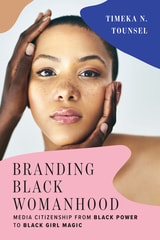
Branding Black Womanhood
Media Citizenship from Black Power to Black Girl MagicTimeka N. Tounsel
Rutgers University Press, 2022
Beginning with the inception of the Essence brand in the late 1960s, Timeka N. Tounsel examines the individuals and institutions that have reconfigured Black women’s empowerment as a business enterprise. Ultimately, these commercial gatekeepers have constructed an image economy that operates as both a sacred space for Black women and an easy hunting ground for their dollars.
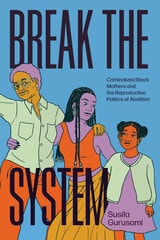
Break the System
Criminalized Black Mothers and the Reproductive Politics of AbolitionSusila Gurusami
University of Chicago Press, 2026
Upends the “broken systems” myth and reveals how the law deliberately criminalizes and punishes Black women, inflicting lasting harm on Black communities in the process.
The United States has one of the highest rates of incarceration in the world, with Black Americans representing a disproportionate share of theimprisoned. Many view this statistic as evidence of a broken system. But sociologist Susila Gurusami argues that the carceral system that so disproportionately harms Black families is not broken at all. In fact, it works just as it was intended. Looking closely at the lives of formerly incarcerated Black mothers, Gurusami shows how state institutions—the criminal-legal, child welfare, and healthcare systems—keep Black mothers from their families, harming Black communities in the process. She also shows how Black women work towards conditions that seem impossible—and even utopian—as part of their everyday mothering labor, but find themselves criminalized for these same actions.
Drawing on ethnographic data and interviews with formerly incarcerated Black women in South Los Angeles, Gurusami challenges dominant assumptions about mothering and criminal justice reform. Gurusami finds that criminalized Black women endure multigenerational political, social, and embodied assaults–what she calls “reproductive warfare”— and still, they build networks, practices, and theories of radical care that protect Black maternal life, legacies, and futures. With incarcerated, formerly incarcerated, and system-impacted Black mothers at the forefront of the growing movement to abolish prisons and jails, Gurusami demonstrates how their everyday mothering work—what she calls “abolitionist motherwork”—is essential to imagining the end of incarceration and ultimately achieving it.
Written with a tender and honest voice, Break the System shares moving vignettes that underscore why we must break the system, rather than reform it, and why we must imagine a future that is radically different than the one we’re told we must accept or salvage.
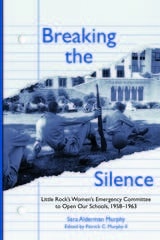
Breaking the Silence
The Little Rock Women's Emergency Committee to Open Our Schools, 1958–1963Sara Murphy
University of Arkansas Press, 1997
The Little Rock Central High School integration crisis did not end in1957 when President Eisenhower sent a portion of the first Airborne Division to protect nine black students. The turmoil was entering its second year in 1958 when Arkansas governor Orval Faubus invoked a hastily passed state law to close the high schools rather than obey the federal court orders that would integrate them.
A group of respectable, middle-class white women, faced with the prospect of no schools as well as the further loss of their city’s good name, turned militant. Led by Adolphine Fletcher Terry, a prominent, “old family” civic leader in her seventies, the women quickly put together the Women’s Emergency Committee to Open Our Schools (WEC), a highly effective organization that bombarded the city with ads, fliers, and statements challenging Faubus’s action. At peak membership, the WEC mustered two thousand to their cause. Largely inexperienced in politics when they joined the WEC, these women became articulate, confident promoters of public schools and helped others to understand that those schools must be fully integrated.
Forty years later, Sara Murphy, a key member of the WEC, recounts the rarely told sto1y of these courageous women who formed a resistance movement. With passion and sensitivity, she reconstructs the challenges and triumphs of that battle, which issued from the mutual link Southern white women shared with disfranchised African Americans in their common goal for full citizenship.

Breaking the World
Black Insecurity and the Horizons of Speculative FictionJustin L. Mann
Duke University Press, 2026
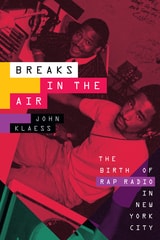
Breaks in the Air
The Birth of Rap Radio in New York CityJohn Klaess
Duke University Press, 2022