Results by title
5550 books match the query 'Biography & Autobiography' and 296 start with b
Black Eagle
General Daniel "Chappie" James Jr.James R. Mcgovern
University of Alabama Press, 2002
Born in Pensacola, Florida, the youngest of seventeen children in a relatively poor family, "Chappie" James (1920-1978) rose to attain the rank of four-star general-the highest rank of the peacetime American military. His parents had early on imbued him with personal and national pride and a singular drive that motivated him his whole life.
At Tuskegee Institute, James enrolled in the Army Air Corps unit formed to train black pilots. After combat service in World War II, James became the leader of a fighter group in the Korean War, during which he developed innovative tactics for providing close air support for advancing ground forces. He served with distinction in Vietnam and then became a public affairs officer in the Department of Defense. Between 1970 and 1974, James served as the Pentagon's chief spokesman to youth and civic organizations.
General James's importance transcends his unprecedented achievements as an African American in the military and his role as a spokesman for the patriotic community. He was an early and important proponent of black self-improvement through education, training, and the tireless pursuit of excellence. He became the very embodiment of the American dream.
First published in 1985 in hardcover, this reissue of Black Eagle in paperback makes the inspiring story of a notable Tuskegee airman available again.

Black Eye
Escaping a Marriage, Writing a LifeJudith Strasser
University of Wisconsin Press, 2004
Black Eye includes excerpts from a journal Strasser kept from 1985 to1986, the year she made the decision to leave her marriage, and present-day commentary on the journal passages and her family history. Strasser works like a detective investigating her own life, drawing clarity and power from journal passages, dreams, and memories that originally emerged from confusion and despair. With language that is both insightful and poetic, she reveals the psychological and social circumstances that led a "strong" woman, an intelligent and politically active feminist, to become an emotionally dependent, abused wife.
Not coincidentally, the same year that Strasser finally found the courage to leave her husband, she also reclaimed her creative voice. Newly empowered and energized by this enormous life change, Strasser began writing again after twenty-five silent years dominated by her mother’s illness and death, her own cancer, and her painful, fearful marriage. Black Eye is one of the fruits of this creative reawakening. Strasser’s writing is refreshingly honest and instantly engrossing. Not shy of wretchedness or beauty, Strasser’s story is bitterly personal, ultimately triumphant, and inspiring to all who deal with the adversity that is part of human life.
Black Fox
A Life of Emilie Demant Hatt, Artist and EthnographerBarbara Sjoholm
University of Wisconsin Press, 2017
In recounting Demant Hatt's fascinating life, Barbara Sjoholm investigates the boundaries and influences between ethnographers and sources, the nature of authorship and visual representation, and the state of anthropology, racial biology, and politics in Scandinavia during the first half of the twentieth century.
Black Hawk
An AutobiographyBlack Hawk
University of Illinois Press, 1955
A foundational document, Black Hawk: An Autobiography is both an unsparing record of America's genocide against Native American peoples and the moving self-portrait of an extraordinary man.

Black Jack
John A. Logan and Southern Illinois in the Civil War EraJames Pickett Jones. Foreword by John Y. Simon
Southern Illinois University Press, 1995
John A. Logan, called "Black Jack" by the men he led in Civil War battles from the Henry-Donelson campaign to Vicksburg, Chattanooga, and on to Atlanta, was one of the Union Army’s most colorful generals.
James Pickett Jones places Logan in his southern Illinois surroundings as he examines the role of the political soldier in the Civil War. When Logan altered his stance on national issues, so did the southern part of the state. Although secession, civil strife, Copperheadism, and the new attitudes created by the war contributed to this change of position in southern Illinois, Logan’s role as political and military leader was important in the region’s swing to strong support of the war against the Confederacy, to the policies of Lincoln, and eventually, to the Republican party.

Black Minded
The Political Philosophy of Malcolm XMichael E. Sawyer
Pluto Press, 2020
Michael Sawyer argues that the foundational concepts of Malcolm X's political philosophy - economic and social justice, strident opposition to white supremacy and Black internationalism - are often obscured by an emphasis on biography. The text demonstrates the way in which Malcolm X's philosophy lies at the intersection of the thought of W.E.B. Du Bois and Frantz Fanon and is an integral part of the revolutionary politics formed to alleviate the plight of people of African descent globally.
Exploring themes of ontology, the body, geographic space and revolution, Black Minded provides a much-needed appraisal of Malcolm X's political philosophy.
Black Moses
The Story of Marcus Garvey and the Universal Negro Improvement AssociationE. David Cronon; Foreward by John Hope Franklin
University of Wisconsin Press, 1960
In the early twentieth century, Marcus Garvey sowed the seeds of a new black pride and determination. Attacked by the black intelligentsia and ridiculed by the white press, this Jamaican immigrant astonished all with his black nationalist rhetoric. In just four years, he built the Universal Negro Improvement Association (UNIA), the largest and most powerful all-black organization the nation had ever seen. With hundreds of branches, throughout the United States, the UNIA represented Garvey’s greatest accomplishment and, ironically, the source of his public disgrace. Black Moses brings this controversial figure to life and recovers the significance of his life and work.
“Those who are interested in the revolutionary aspects of the twentieth century in America should not miss Cronon’s book. It makes exciting reading.”—The Nation
“A very readable, factual, and well-documented biography of Marcus Garvey.”—The Crisis, NAACP
“In a short, swiftly moving, penetrating biography, Mr. Cronon has made the first real attempt to narrate the Garvey story. From the Jamaican's traumatic race experiences on the West Indian island to dizzy success and inglorious failure on the mainland, the major outlines are here etched with sympathy, understanding, and insight.”—Mississippi Valley Historical Review (Now the Journal of American History).
“Good reading for all serious history students.”—Jet
“A vivid, detailed, and sound portrait of a man and his dreams.”—Political Science Quarterly
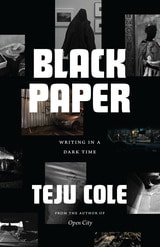
Black Paper
Writing in a Dark TimeTeju Cole
University of Chicago Press, 2021
“Darkness is not empty,” writes Teju Cole in Black Paper, a book that meditates on what it means to sustain our humanity—and witness the humanity of others—in a time of darkness. One of the most celebrated essayists of his generation, Cole here plays variations on the essay form, modeling ways to attend to experience—not just to take in but to think critically about what we sense and what we don’t.
Wide-ranging but thematically unified, the essays address ethical questions about what it means to be human and what it means to bear witness, recognizing how our individual present is informed by a collective past. Cole’s writings in Black Paper approach the fractured moment of our history through a constellation of interrelated concerns: confrontation with unsettling art, elegies both public and private, the defense of writing in a time of political upheaval, the role of the color black in the visual arts, the use of shadow in photography, and the links between literature and activism. Throughout, Cole gives us intriguing new ways of thinking about blackness and its numerous connotations. As he describes the carbon-copy process in his epilogue: “Writing on the top white sheet would transfer the carbon from the black paper onto the bottom white sheet. Black transported the meaning.”
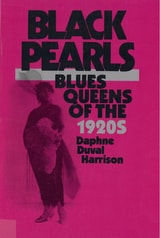
Black Pearls
Blues Queens of the 1920sDaphne Duval Harrison
Rutgers University Press, 1990
Blues music spawned legendary performers whose influence has been felt in many musical forms here and around the world. Until now the important role of the great women blues singers has largely gone unexplored. This book tells of the cultural and social impact of the blues during the 1920s when the genre was dominated by women, both on stage and on record. Harrison (Afro-American Studies Department, University of Maryland) writes with authority, focusing particularly on Sippie Wallace, Edith Wilson, Victoria Spivey, and Alberta Hunter as she analyzes the music and the collective black experience out of which it grew. A significant book, particularly for collections of music history, black studies, and women's studies. -- Library Journal
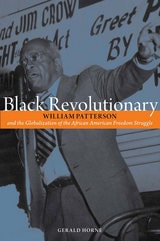
Black Revolutionary
William Patterson and the Globalization of the African American Freedom StruggleGerald Horne
University of Illinois Press, 2013
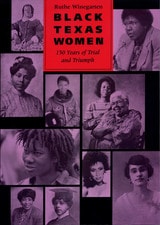
Black Texas Women
150 Years of Trial and TriumphBy Ruthe Winegarten, Janet G. Humphrey & Frieda Werden, consulting editors
University of Texas Press, 1994
Women of all colors have shaped families, communities, institutions, and societies throughout history, but only in recent decades have their contributions been widely recognized, described, and celebrated. This book presents the first comprehensive history of black Texas women, a previously neglected group whose 150 years of continued struggle and some successes against the oppression of racism and sexism deserve to be better known and understood.
Beginning with slave and free women of color during the Texas colonial period and concluding with contemporary women who serve in the Texas legislature and the United States Congress, Ruthe Winegarten organizes her history both chronologically and topically. Her narrative sparkles with the life stories of individual women and their contributions to the work force, education, religion, the club movement, community building, politics, civil rights, and culture. The product of extensive archival and oral research and illustrated with over 200 photographs, this groundbreaking work will be equally appealing to general readers and to scholars of women's history, black history, American studies, and Texas history.
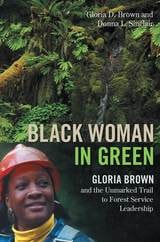
Black Woman in Green
Gloria Brown and the Unmarked Trail to Forest Service LeadershipGloria D. Brown
Oregon State University Press, 2020
As scholars awaken to the racist history of public land management and the ways that people of color have been excluded from contemporary notions of nature and wilderness, Brown’s story provides valuable insight into the roles that African Americans have carved out in the outdoors generally and in the field of environmental policy and public lands management specifically. Drawing on her powerful communication and listening skills, her sense of humor, and her willingness to believe in the basic goodness of humanity, Brown conducted civil rights trainings and shattered glass ceilings, all while raising her children alone.
Written in an engaging and accessible style with historian Donna Sinclair, Brown’s story provides a fascinating case study for public administration and contributes to a deeper understanding of the environmental and civil rights movements of the twentieth century, particularly the role that racial discrimination has played in national forests, parks, and other wilderness spaces. It also highlights issues of representation in the federal government, women’s history, the history of the American West, and literature associated with African American experiences in predominately white societies.
Black Women Directors
Christina N. Baker
Rutgers University Press, 2022
Black women have long recognized the power of film for storytelling. For far too long, however, the cultural and historical narratives about film have not accounted for the contributions of Black women directors. This book remedies this omission by highlighting the trajectory of the culturally significant work of Black women directors in the United States, from the under-examined pioneers of the silent era, to the documentarians who sought to highlight the voices and struggles of Black women, and the contemporary Black women directors in Hollywood. Applying a Black feminist perspective, this book examines the ways that Black women filmmakers have made a way for themselves and their work by resisting the dominant cultural expectations for Black women and for the medium of film, as a whole.
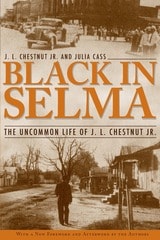
Black in Selma
The Uncommon Life of J. L. Chestnut Jr.J. L. Chestnut
University of Alabama Press, 2007
One man’s fight for justice. One town’s reckoning with history.
Born in Selma in 1930, J. L. Chestnut left home to study law at Howard University in Washington, DC. Returning to Selma, Chestnut was the town’s first and only African American attorney in the late 1950s. As the turbulent struggle for civil rights spread across the South, Chestnut became an active and ardent promoter of social and legal equality in his hometown. A key player on the local and state fronts, Chestnut accrued deep insights into the racial tensions in his community and deftly opened paths toward a more equitable future.
Though intimately involved in many events that took place in Selma, Chestnut was nevertheless often identified in history books simply as “a local attorney.” Black in Selma reveals his powerful yet little-known story.
In the 2014 film Selma, director Ava DuVernay takes audiences to the climactic confrontation between civil rights advocates and the state’s security forces of March 1965. Readers looking for a deeper understanding of the events that preceded that epic moment, as well as how racial integration unfolded in Selma in the decades that followed, will find Chestnut’s story and memories both a vital primary source and an inspiration.
Black, Jewish, and Interracial
It’s Not the Color of Your Skin, but the Race of Your Kin, and Other Myths of IdentityKatya Gibel Azoulay
Duke University Press, 1997
Beginning with an examination of the concept of identity as it figures in philosophical and political thought, Gibel Azoulay moves on to consider and compare the politics and traditions of the Black and Jewish experience in America. Her inquiry draws together such diverse subjects as Plessy v. Ferguson, the Leo Frank case, "passing," intermarriage, civil rights, and anti-Semitism. The paradoxical presence of being both Black and Jewish, she argues, leads questions of identity, identity politics, and diversity in a new direction as it challenges distinct notions of whiteness and blackness. Rising above familiar notions of identity crisis and cultural confrontation, she offers new insights into the discourse of race and multiculturalism as she suggests that identity can be a more encompassing concept than is usually thought. Gibel Azoulay adds her own personal history and interviews with eight other Black and Jewish individuals to reveal various ways in which interracial identities are being lived, experienced, and understood in contemporary America.
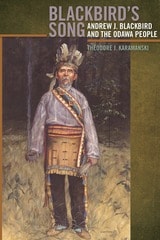
Blackbird's Song
Andrew J. Blackbird and the Odawa PeopleTheodore J. Karamanski
Michigan State University Press, 2012
For much of U.S. history, the story of native people has been written by historians and anthropologists relying on the often biased accounts of European-American observers. Though we have become well acquainted with war chiefs like Pontiac and Crazy Horse, it has been at the expense of better knowing civic-minded intellectuals like Andrew J. Blackbird, who sought in 1887 to give a voice to his people through his landmark book History of the Ottawa and Chippewa People. Blackbird chronicled the numerous ways in which these Great Lakes people fought to retain their land and culture, first with military resistance and later by claiming the tools of citizenship. This stirring account reflects on the lived experience of the Odawa people and the work of one of their greatest advocates.

Blair
Mick Temple
Haus Publishing, 2006

Bleeder
A MemoirShelby Smoak
Michigan State University Press, 2013

Blessed Are the Peacemakers
Small Histories during World War II, Letter Writing, and Family History MethodologySuzanne Kesler Rumsey
University of Alabama Press, 2021
Where family letters become history, and ordinary lives reveal the untold story of World War II.
In the summer of 2013, Suzanne Kesler Rumsey discovered hundreds of letters exchanged between her late grandparents, Miriam and Benjamin Kesler. The letters, written between 1941 and 1946, were filled with typical wartime sentiments: love and longing, anguish at being apart, uncertainty about the war and the country’s future, and attempts at humor to keep their spirits up. What is unusual about their story is that Ben Kesler was not writing from a theater of war. Instead, Ben, a member of the Dunkard Brethren Church, was a conscientious objector. He, along with about 12,000 other men, opted to join the Civilian Public Service (CPS) and contribute to “work of national importance” at one of the 218 CPS camps around the country.
In Blessed Are the Peacemakers: Small Histories during World War II, Letter Writing, and Family History Methodology, Rumsey has mined not only her grandparents’ letters but also archival research on CPS camps and historical data from several Mennonite and Brethren archives to recapture the narrative of Ben’s service at two different camps and of Miriam’s struggle to support herself and her husband financially at the young age of seventeen. Ben and Miriam’s life during the war was extraordinarily ordinary, spanning six years of unrecognized and humble work for their country. Ben was not compensated for his work in the camps, and Miriam stayed home and worked as a day laborer, as a live-in maid, as a farmhand, and in the family butcher shop in order to earn enough money to support them both. Small histories like that of her grandparents, Rumsey argues, provide a unique perspective on significant political and historical moments.
Blessed Are the Peacemakers also explores the rhetorical functions of letter writing as well as the methodology of family history writing. Ben and Miriam’s letters provide an apt backdrop to examine the genre, a relatively understudied mode of literacy. Rumsey situates the young couple’s correspondence within ars dictaminis, the art of letter writing, granting new insights into the genre and how personal accounts shape our understanding of historical events.
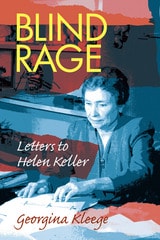
Blind Rage
Letters to Helen KellerGeorgina Kleege
Gallaudet University Press, 2006
As a young blind girl, Georgina Kleege repeatedly heard the refrain, “Why can’t you be more like Helen Keller?” Kleege’s resentment culminates in her book Blind Rage: Letters to Helen Keller, an ingenious examination of the life of this renowned international figure using 21st-century sensibilities. Kleege’s absorption with Keller originated as an angry response to the ideal of a secular saint, which no real blind or deaf person could ever emulate. However, her investigation into the genuine person revealed that a much more complex set of characters and circumstances shaped Keller’s life.
Blind Rage employs an adroit form of creative nonfiction to review the critical junctures in Keller’s life. The simple facts about Helen Keller are well-known: how Anne Sullivan taught her deaf-blind pupil to communicate and learn; her impressive career as a Radcliffe graduate and author; her countless public appearances in various venues, from cinema to vaudeville, to campaigns for the American Foundation for the Blind. But Kleege delves below the surface to question the perfection of this image. Through the device of her letters, she challenges Keller to reveal her actual emotions, the real nature of her long relationship with Sullivan, with Sullivan’s husband, and her brief engagement to Peter Fagan. Kleege’s imaginative dramatization, distinguished by her depiction of Keller’s command of abstract sensations, gradually shifts in perspective from anger to admiration. Blind Rage criticizes the Helen Keller myth for prolonging an unrealistic model for blind people, yet it appreciates the individual who found a practical way to live despite the restrictions of her myth.
Blind Spot
Myriam Tadessé
Seagull Books, 2021
In Blind Spot, Myriam Tadessé exposes the difficulty, even the impossibility, for France to truly understand and celebrate the lived realities of mixed or biracial French citizens. What the French word métis—which translates to “half-breed” or “mixed-race”—hides is how central the notion of race actually is in a society that claims to repudiate it. The French film and theater world, in which Tadessé has made her career, appears unable to confront the individuality of the performers. They are required to correspond to categories—often based on race—that don’t allow for biracial identities. This classification not only contradicts France’s asserted ideals but also views as anomalies those who defy ethno-racial assumptions.
Drawing on her personal experiences as a biracial Ethiopian-French woman and her family history, Tadessé explores the realities of life for mixed-race individuals in France through her searing and honest memoir.
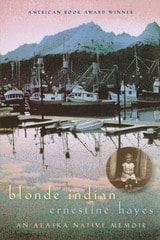
Blonde Indian
An Alaska Native MemoirErnestine Hayes
University of Arizona Press, 2006
Told in eloquent layers that blend Native stories and metaphor with social and spiritual journeys, this enchanting memoir traces the author’s life from her difficult childhood growing up in the Tlingit community, through her adulthood, during which she lived for some time in Seattle and San Francisco, and eventually to her return home. Neither fully Native American nor Euro-American, Hayes encounters a unique sense of alienation from both her Native community and the dominant culture. We witness her struggles alongside other Tlingit men and women—many of whom never left their Native community but wrestle with their own challenges, including unemployment, prejudice, alcoholism, and poverty.
The author’s personal journey, the symbolic stories of contemporary Natives, and the tales and legends that have circulated among the Tlingit people for centuries are all woven together, making Blonde Indian much more than the story of one woman’s life. Filled with anecdotes, descriptions, and histories that are unique to the Tlingit community, this book is a document of cultural heritage, a tribute to the Alaskan landscape, and a moving testament to how going back—in nature and in life—allows movement forward.
Blood Loss
A Love Story of AIDS, Activism, and ArtKeiko Lane
Duke University Press, 2024
Blood Ties
A Story of Falconry and FatherhoodBen Crane
University of Chicago Press, 2020
In this artful and moving memoir, we follow Crane on his remarkable journey of flight and return. Traveling from the United Kingdom to Pakistan, we learn first about the history and practice of falconry, a beautiful and brutal partnership between humans and birds that has persisted for thousands of years. And as Crane’s personal story unfolds, we come to understand how he found solace and insight through his relationships with these animals. “I saw that my feelings toward nature, and birds of prey in particular, ran in parallel with my feelings for my son,” Crane writes. “I worked out that they were, in fact, two sides of the same coin—the deep love of one could, with gentle observation, inform and unlock the deep love for the other. . . . Perhaps this then is the central theme of my story.”
Many of us rely upon animal companions to provide a sense of joy, compassion, and empathy. But as Blood Ties teaches us, our relationships with the creatures among us can also transform us, illuminating what it means both to be human and to be part of the greater wild—what it means to be alive.
Bloodlines
Odyssey of a Native DaughterJanet Campbell Hale
University of Arizona Press, 1998

Bloom
A Transgender MemoirShane A. McCammon
University of Utah Press, 2027
Blue Daughter of the Red Sea
A MemoirMeti Birabiro
University of Wisconsin Press, 2004
Born into a life of constant financial, physical, and moral threat, Meti Birabiro takes refuge in literature and the fantastic. Blue Daughter of the Red Sea is Birabiro’s poetic account of the harsh reality of her young life spread across three continents. Her voice is a fresh mélange of child and adult perspectives, at once brutally honest and wise beyond her years. Through her journey from Ethiopia to Italy and finally to the United States, we encounter Birabiro’s relatives, friends, and enemies—relationships so intense that these people become her vampires, devils, angels, and saints. These characterizations always lead her back to the truth, helping her to decipher what is fair and good, to understand what she must cherish and what she must rage against.

Blue Guitar Highway
Paul Metsa
University of Minnesota Press, 2011
This is a musician’s tale: the story of a boy growing up on the Iron Range, playing his guitar at family gatherings, coming of age in the psychedelic seventies, and honing his craft as a pro in Minneapolis, ground zero of American popular music in the mid-eighties. “There is a drop of blood behind every note I play and every word I write,” Paul Metsa says. And it’s easy to believe, as he conducts us on a musical journey across time and country, navigating switchbacks, detours, dead ends, and providing us the occasional glimpse of the promised land on the blue guitar highway.
His account captures the thrill of the Twin Cities when acts like the Replacements, Husker Dü, and Prince were remaking pop music. It takes us right onto the stages he shared with stars like Billy Bragg, Pete Seeger, and Bruce Springsteen. And it gives us a close-up, dizzying view of the roller-coaster ride that is the professional musician’s life, played out against the polarizing politics and intimate history of the past few decades of American culture. Written with a songwriter’s sense of detail and ear for poetry, Paul Metsa’s book conveys all the sweet absurdity, dry humor, and passion for the language of music that has made his story sing.
Blue Jenkins
Working for WorkersJulia Pferdehirt
Wisconsin Historical Society Press, 2011
Blue Song
St. Louis in the Life and Work of Tennessee WilliamsHenry I. Schvey
University of Missouri Press, 2022
The question of this paradox lies at the heart of this book, an attempt not so much to correct the record about Williams’s well-chronicled dislike of the city, but rather to reveal how the city was absolutely indispensable to his formation and development both as a person and artist. Unlike the prevailing scholarly narrative that suggests that Williams discovered himself artistically and sexually in the deep South and New Orleans, Blue Song reveals that Williams remained emotionally tethered to St. Louis for a host of reasons for the rest of his life.
Blue-State Republican
How Larry Hogan Won Where Republicans Lose and Lessons for a Future GOPMileah K. Kromer
Temple University Press, 2023
Larry Hogan is one of the most popular political figures in the United States today. The two-term Republican governor of Maryland first won his seat after upsetting a favorite of the Democratic political establishment, and then overcame the Trump-driven wave in the heartland of the #resistance to win a second term in 2018.
Blue-State Republican is the remarkable story of how his carefully messaged, pragmatic approach to governance helped build a coalition of moderate and conservative Democrats, independents, women, college-educated and Black voters and maintained his GOP base during a time of polarization and negative partisanship. Mileah Kromer takes readers inside Maryland politics to illustrate exactly how Hogan won where Republicans lose and consider whether the un-Trump Republican offers any lessons for how the GOP can win the center-right voters who continue to make up a majority of the country.
Kromer conducts interviews with key political leaders and insiders, including Hogan himself, to explain the mechanics of his political success. She also provides a cogent analysis of public opinion polls and focus groups, ultimately showing why the success of a blue-state Republican matters outside of his home state, especially as Hogan considers a 2024 Presidential run.

Bluegrass Ambassadors
The McLain Family Band in Appalachia and the WorldPaul O. Jenkins
West Virginia University Press, 2020
Interpreting the band’s diverse repertoire as both a source of its popularity and a reason for its exclusion from the bluegrass pantheon, Paul Jenkins advances subtle arguments about genre, criticism, and audience. Bluegrass Ambassadors analyzes the McLains’ compositions, recordings, and performances, and features a complete discography.
Bluegrass Bluesman
A MemoirJosh Graves; Edited by Fred Bartenstein; Foreword by Neil Rosenberg
University of Illinois Press, 2012
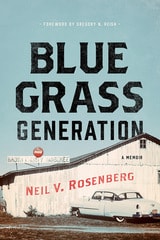
Bluegrass Generation
A MemoirNeil V Rosenberg
University of Illinois Press, 2018
Rosenberg's memoir shines a light on the changing bluegrass scene of the early 1960s. Already a fan and aspiring musician, his appetite for banjo music quickly put him on the Jamboree stage. Rosenberg eventually played with Monroe and spent four months managing the Jamboree. Those heights gave him an eyewitness view of nothing less than bluegrass's emergence from the shadow of country music into its own distinct art form. As the likes of Bill Keith and Del McCoury played, Rosenberg watched Monroe begin to share a personal link to the music that tied audiences to its history and his life--and helped turn him into bluegrass's foundational figure.
An intimate look at a transformative time, Bluegrass Generation tells the inside story of how an American musical tradition came to be.
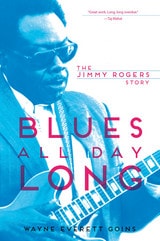
Blues All Day Long
The Jimmy Rogers StoryWayne Everett Goins, foreword by Kim Wilson
University of Illinois Press, 2014
In Blues All Day Long, Wayne Everett Goins mines seventy-five hours of interviews with Rogers' family, collaborators, and peers to follow a life spent in the blues. Goins' account takes Rogers from recording Chess classics and barnstorming across the South to a late-in-life renaissance that included new music, entry into the Blues Hall of Fame, and high profile tours with Eric Clapton and the Rolling Stones. Informed and definitive, Blues All Day Long fills a gap in twentieth century music history with the story of one of the blues' eminent figures and one of the genre's seminal bands.
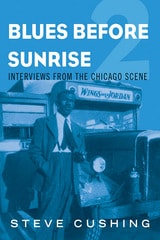
Blues Before Sunrise 2
Interviews from the Chicago SceneSteve Cushing
University of Illinois Press, 2019
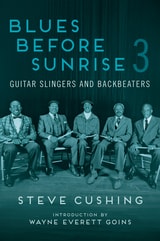
Blues Before Sunrise 3
Guitar Slingers and BackbeatersSteve Cushing. Introduction by Wayne Everett Goins
University of Illinois Press, 2025
Steve Cushing’s third volume of interviews from Blues Before Sunrise puts fans face-to-face with music legends and industry figures. The volume kicks off with a roundtable featuring drumming all-stars Earl Phillips, S.P. Leary, Odie Payne, Clifton James, and Fred Below discussing their lives and craft. Cushing segues to one-on-one interviews with Howlin’ Wolf sideman Phillips; Leary, a fellow Wolf alum and player with Sonny Boy Williamson II; Payne, known for his kick drum technique; longtime Muddy Waters drummer Willie “Big Eyes” Smith; next-generation standard bearer and session mainstay Casey Jones; and King Records house drummer Phillip Paul.
Interviews with guitarists include talks with Honeyboy Edwards, whose friendships with innumerable Chicago blues legends (and Robert Johnson) predated the Great Migration; jazz player turned bluesman Guitar Shorty; and figures like Texas native Roy Gaines, Johnny Heartsman of Oakland, and Memphis-born Floyd Murphy. A final section offers interviews with vocalists, record label founders, and other figures. Music scholar Wayne Everett Goins provides an introduction on blues history, blues style, and the careers of the featured artists.
Interviews: Joel Dorn, Honeyboy Edwards, Slim Gaillard, Roy Gaines, Johnny Heartsman, Franz Jackson, Casey Jones, S.P. Leary, Floyd Murphy, Jimmy “T-99” Nelson, Johnny Parth, Phillip Paul, Odie Payne, Earl Phillips, Art Sheridan, Guitar Shorty, Willie “Big Eyes” Smith, and Norvel Taborn
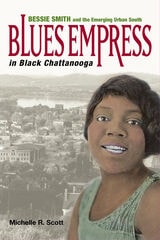
Blues Empress in Black Chattanooga
Bessie Smith and the Emerging Urban SouthMichelle R. Scott
University of Illinois Press, 2007
As one of the first African American vocalists to be recorded, Bessie Smith is a prominent figure in American popular culture and African American history. Michelle R. Scott uses Smith's life as a lens to investigate broad issues in history, including industrialization, Southern rural to urban migration, black community development in the post-emancipation era, and black working-class gender conventions.
Arguing that the rise of blues culture and the success of female blues artists like Bessie Smith are connected to the rapid migration and industrialization in the late nineteenth and early twentieth centuries, Scott focuses her analysis on Chattanooga, Tennessee, the large industrial and transportation center where Smith was born. This study explores how the expansion of the Southern railroads and the development of iron foundries, steel mills, and sawmills created vast employment opportunities in the postbellum era. Chronicling the growth and development of the African American Chattanooga community, Scott examines the Smith family's migration to Chattanooga and the popular music of black Chattanooga during the first decade of the twentieth century, and culminates by delving into Smith's early years on the vaudeville circuit.
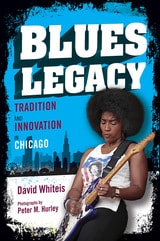
Blues Legacy
Tradition and Innovation in ChicagoDavid Whiteis
University of Illinois Press, 2019
David Whiteis delves into how the current and upcoming Chicago blues generations carry on this legacy. Drawing on in-person interviews, Whiteis places the artists within the ongoing social and cultural reality their work reflects and helps create. Beginning with James Cotton, Eddie Shaw, and other bequeathers, he moves through an all-star council of elders like Otis Rush and Buddy Guy and on to inheritors and today's heirs apparent like Ronnie Baker Brooks, Shemekia Copeland, and Nellie "Tiger" Travis.
Insightful and wide-ranging, Blues Legacy reveals a constantly adapting art form that, whatever the challenges, maintains its links to a rich musical past.
Blues of a Lifetime
Autobiography of Cornell WoolrichEdited by Mark T. Bassett
University of Wisconsin Press, 1991
Blutopia
Visions of the Future and Revisions of the Past in the Work of Sun Ra, Duke Ellington, and Anthony BraxtonGraham Lock
Duke University Press, 2000
A century after Ellington’s birth, Lock reassesses his use of music as a form of black history and compares the different approaches of Ra, a band leader who focused on the future and cosmology, and Braxton, a contemporary composer whose work creates its own elaborate mythology. Arguing that the majority of writing on black music and musicians has—even if inadvertently—incorporated racial stereotypes, he explains how each artist reacted to criticism and sought to break free of categorical confines. Drawing on social history, musicology, biography, cultural theory, and, most of all, statements by the musicians themselves, Lock writes of their influential work.
Blutopia will be a welcome contribution to the literature on twentieth-century African American music and creativity. It will interest students of jazz, American music, African American studies, American culture, and cultural studies.
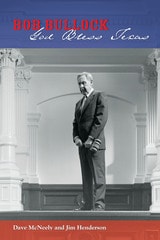
Bob Bullock
God Bless TexasBy Dave McNeely and Jim Henderson
University of Texas Press, 2008
Renowned for his fierce devotion to the people of Texas—as well as his equally fierce rages and unpredictable temper—Bob Bullock was the most powerful political figure in Texas at the end of the twentieth century. First elected to the Texas House of Representatives in 1956, Bullock held several key statewide posts before capturing the lieutenant governor's office in 1990. Though nominally the state's number two official, Bullock in fact became Texas's top power broker, wielding tremendous influence over the legislative agenda and state budget through the 1990s while also mentoring and supporting a future president—George W. Bush.
In this lively, yet thoroughly researched biography, award-winning journalists Dave McNeely and Jim Henderson craft a well-rounded portrait of Bob Bullock, underscoring both his political adroitness and his personal demons. They trace Bullock's rise through state government as Assistant Attorney General, Secretary of State, State Comptroller, and Lieutenant Governor, showing how he increased the power of every office he held. The authors spotlight Bullock's substantial achievements, which included hiring an unprecedented number of women and minorities, instituting a performance review to increase the efficiency of state agencies, restructuring the public school funding system, and creating the state's first water conservation and management plan.

Bob Kleberg and the King Ranch
A Worldwide Sea of GrassBy John Cypher
University of Texas Press, 1996
Ranching on the vast scale that Texas is famous for actually happened at King Ranch, a sea of grass that ultimately spread its pastures to countries around the globe under the fifty-year leadership of Bob Kleberg. This absorbing biography, written by Kleberg's top assistant of many years, captures both the life of the man and the spirit of the kingdom he ruled, offering a rare, insider's view of life on a fabled Texas ranch.
John Cypher spent forty years (1948-1988) on King Ranch. In these pages, he melds highlights of Kleberg's life with memories of his own experiences as the "right hand" who implemented many of Kleberg's grand designs. In a lively story laced with fascinating anecdotes he both recounts his worldwide travels with Kleberg as the ranch expanded its holdings to Latin America, Cuba, Australia, the Philippines, Europe, and Africa, and describes timeless, traditional tasks such as roundup at the home ranch in Kingsville.
Kleberg's accomplishments as the founder of the Santa Gertrudis cattle breed and a breeder of Thoroughbred racing horses receive full attention, as does his fabled lifestyle, which included friendships not merely with the rich and famous but also with Queen Elizabeth the Queen Mother, who shared his love of horse racing. For everyone interested in ranching and one of its most famous practitioners, this book will be essential reading.

Bobby Braddock
A Life on Nashville’s Music RowBobby Braddock
Vanderbilt University Press, 2015
If you're looking for insight into Nashville, the life of music in this town, and the story of a force of nature on the Row to this day, Bobby Braddock will take you there.
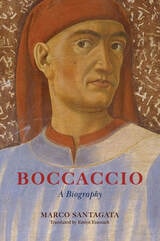
Boccaccio
A BiographyMarco Santagata
University of Chicago Press, 2025
Boccaccio (1313–75) stands with Dante and Petrarch as one of the “Three Crowns” of Italian letters, a trio of writers who shaped the history of humanism, literature, and poetry. In this book, Dante’s award-winning biographer, Marco Santagata, takes up the moving life and legacy of Boccaccio—whose unflinching story of a pandemic-era community (the Decameron) created new possibilities for vernacular Italian prose.
This landmark biography sheds new light on Boccaccio’s life—his family, friends, and foes, his aspirations, fears, and frustrations—and it shows how he was affected by transformations in Italian society. It also charts the influences that shaped Boccaccio’s understanding of literature: what kinds of stories it could tell and what kinds of characters it could depict; and, perhaps most importantly, what role art could play in a changing world. An insightful portrait of one of literature’s most important figures, this book promises to be the definitive biography of Boccaccio for many years to come.

Body Story
Julia K. De Pree
Ohio University Press, 2004
For De Pree, between being a girl and being a woman, there was starvation. Body Story is her intimate account of girlhood, virginity, anorexia, and motherhood. De Pree's prose is spare and unguarded, revealing in vivid flashbacks and poignant vignettes the sources of her inner pain.
In high school, the five-foot-ten De Pree weighed as little as 114 pounds. She was too weak to raise her arms above her head. “In a paradoxical way, I starved my body in order to understand my life,” she writes. “I had to place my body in suspension before I could move physically into sexuality. Starving allowed me to create an interim space between innocence and experience.”
De Pree renders the starkness of anorexia along with the process of recovery, relapse, and, ultimately, redemption. She also tells the story of the physical landscape, from her origins in the Midwest to the American South, Paris, and the vast New Mexican desert, as well as the psychic landscape of her body as it encounters the joys and challenges of maturation, childbirth, and motherhood.
De Pree offers readers a new way of understanding women¿s bodily experience, as she writes about the mystery and the meaning of her illness. As many as eight million Americans suffer from eating disorders. Body Story, unlike clinical reports or news accounts, illuminates the complexity of anorexia as the narrative moves toward a subjective and deeply personal truth.
This evocative and often radiant vision is a unique window into womanhood and selfhood in middle-class, contemporary America.

Body, Remember
A MemoirKenny Fries
University of Wisconsin Press, 2003
In this poetic, introspective memoir, Kenny Fries illustrates his intersecting identities as gay, Jewish, and disabled. While learning about the history of his body through medical records and his physical scars, Fries discovers just how deeply the memories and psychic scars run. As he reflects on his relationships with his family, his compassionate doctor, the brother who resented his disability, and the men who taught him to love, he confronts the challenges of his life. Body, Remember is a story about connection, a redemptive and passionate testimony to one man’s search for the sources of identity and difference.

Bolívar and the War of Independence
Memorias del General Daniel Florencio O’Leary, NarraciónBy Daniel Florencio O'Leary
University of Texas Press, 1970
The overthrow of Spanish rule and the birth of new republican governments in northern South America at the beginning of the nineteenth century were in large part the work of one man—Simón Bolívar. Bolívar was not only the soldier who built a patriot army from a small band of exiles and led them victoriously across Venezuela and down the spine of the Andes as far as Potosí; he was also the statesman who framed the new republics that sprang to life after the defeat of the Spanish and who called the Congress of Panama in hopes of making real his dream of uniting all the South American republics in a single confederation. He was truly the Liberator.
The Narración, or narrative, of the Memorias of Daniel Florencio O’Leary has long been recognized by Spanish American scholars as one of the most important historical sources for a major part of Bolívar’s life. O’Leary took an active part in the wars for independence, first as a young officer, recruited in the British Isles to aid the patriot cause, and later as Bolívar’s chief aide, often entrusted with diplomatic missions. His firsthand knowledge of the stirring events of the period, his access to relevant documents, and his close association with the major figures in the struggle, as well as his friendship with Bolívar, made O’Leary a particularly valuable chronicler and biographer. Bolívar himself, shortly before his death, requested that O’Leary write the story of his life.
O’Leary’s meticulous attention to military and diplomatic maneuvers and his keen, sometimes acrid, comments on both men and events give the reader not only a vivid portrait of Bolívar—the man and his achievements—but also a remarkable insight into O’Leary’s own position as an autocratic-minded participant in the wars for independence. Although O’Leary’s devotion to, and admiration for, his Chief make for an occasionally partisan view, his stark account of the hardships and disappointments that Bolívar and his armies overcame against almost impossible odds does much to balance the narrative.
In his abridged translation, Robert McNerney has omitted the Apéndice, documents that O’Leary, had he lived, undoubtedly would have used as the source for completing his account of Bolívar’s life. Numerous letters and documents scattered through the original text also have been omitted, leaving a highly readable narrative.

Bonar Law
Andrew Taylor
Haus Publishing, 2006

Bond
The Nature of UsJill Sission Quinn
University of Iowa Press, 2027