Results by title
5448 books match the query 'History and criticism' and 252 start with b
Both from the Ears and Mind
Thinking about Music in Early Modern EnglandLinda Phyllis Austern
University of Chicago Press, 2020
Bounce
Rap Music and Local Identity in New OrleansMatt Miller
University of Massachusetts Press, 2012
Over the course of the twentieth century, African Americans in New Orleans helped define the genres of jazz, rhythm and blues, soul, and funk. In recent decades, younger generations of New Orleanians have created a rich and dynamic local rap scene, which has revolved around a dance-oriented style called “bounce.”
Hip-hop has been the latest conduit for a “New Orleans sound” that lies at the heart of many of the city's best-known contributions to earlier popular music genres. Bounce, while globally connected and constantly evolving, reflects an enduring cultural continuity that reaches back and builds on the city's rich musical and cultural traditions.
In this book, the popular music scholar and filmmaker Matt Miller explores the ways in which participants in New Orleans's hip-hop scene have collectively established, contested, and revised a distinctive style of rap that exists at the intersection of deeply rooted vernacular music traditions and the modern, globalized economy of commercial popular music. Like other forms of grassroots expressive culture in the city, New Orleans rap is a site of intense aesthetic and economic competition that reflects the creativity and resilience of the city's poor and working-class African Americans.
Bound and Determined
Captivity, Culture-Crossing, and White Womanhood from Mary Rowlandson to Patty HearstChristopher Castiglia
University of Chicago Press, 1996
Examining more than sixty accounts by women captives, as well as novels ranging from Susanna Rowson's eighteenth-century classic Rueben and Rachel to today's mass-market romances, Castiglia investigates paradoxes central to the genre. In captivity, women often find freedom from stereotypical roles as helpless, dependent, sexually vulnerable, and xenophobic. In their condemnations of their non-white captors, they defy assumptions about race that undergird their own societies. Castiglia questions critical conceptions of captivity stories as primarily an appeal to racism and misogyny, and instead finds in them an appeal of a much different nature: as all-too-rare stories of imaginative challenges to rigid gender roles and racial ideologies.
Whether the women of these stories resist or escape captivity, endure until they are released, or eventually choose to live among their captors, they end up with the power to be critical of both cultures. Castiglia shows that these compelling narratives, with their boundary crossings and persistent explorations of cultural divisions and differences, have significant implications for current critical investigations into the construction of gender, race, and nation.
Bound to Respect
Antebellum Narratives of Black Imprisonment, Servitude, and Bondage, 1816–1861Keith Michael Green
University of Alabama Press, 2015
WINNER OF THE ELIZABETH AGEE PRIZE IN AMERICAN LITERATURE
Challenges the commonplace narrative that the African American experience of captivity in the United States is reducible to the legal institution of slavery, a status remedied through emancipation
In Bound to Respect: Antebellum Narratives of Black Imprisonment, Servitude, and Bondage, 1816–1861, Keith Michael Green examines key texts that illuminate forms of black bondage and captivity that existed within and alongside slavery. In doing so, he restores to antebellum African American autobiographical writing the fascinating heterogeneity lost if the historical experiences of African Americans are attributed to slavery alone.
The book’s title is taken from the assertion by US Supreme Court chief justice Roger B. Taney in his 1857 Dred Scott decision that blacks had no rights that whites were “bound to respect.” This allusion highlights Green’s critical assertion that the dehumanizing absurdities to which defenders of slavery resorted to justify slavery only brought into more stark relief the humanity of African Americans.
A gifted storyteller, Green examines four forms of captivity: incarceration, enslavement to Native Americans, child indentured servitude, and maritime capture. By illuminating this dense penumbra of captivity beyond the strict definitions of slavery, he presents a fluid and holistic network of images, vocabulary, narratives, and history. By demonstrating how these additional forms of confinement flourished in the era of slavery, Green shows how they persisted beyond emancipation, in such a way that freed slaves did not in fact partake of “freedom” as white Americans understood it. This gap in understanding continues to bedevil contemporary American society, and Green deftly draws persuasive connections between past and present.
A vital and convincing offering to readers of literary criticism, African American studies, and American history, Green’s Bound to Respect brings fresh and nuanced insights to this fundamental chapter in the American story.
Boundaries of the Text
Epic Performances in South and Southeast AsiaJoyce Burkhalter Flueckiger and Laurie Sears, Editors
University of Michigan Press, 1991
Boundless
Native American Abundance in Art and LiteratureLisa A. Crossman and Heid E. Erdrich
Amherst College Press, 2025
Amherst College’s Collection of Native American Literature contains thousands of Indigenous-authored works spanning centuries. The Collection’s abundance of books, prints, music, ephemera, and artist-made works, all by Native people, provide rich selections for Boundless. Crosscurrents of Indigenous visual art and literature are considered in this broad and interdisciplinary project. Boundless crosses generations to explore relatedness, kinship, and collegiality.
Boundless brings artists and writers together across generations, often drawing together works by members of the same tribe or even the same family to show the history, presence, and futurity of Native American creative and intellectual production.
Boxcar Politics
The Hobo in U.S. Culture and Literature, 1869-1956John Lennon
University of Massachusetts Press, 2014
John Lennon maps the rise and demise of the political hobo from the nineteenth-century introduction of the transcontinental railroad to the Federal Aid Highway Act of 1956. Intertwining literary, historical, and theoretical representations of the hobo, he explores how riders and writers imagined alternative ways that working-class people could use mobility to create powerful dissenting voices outside of fixed hierarchal political organizations. Placing portrayals of hobos in the works of Jack London, Jim Tully, John Dos Passos, and Jack Kerouac alongside the lived reality of people hopping trains (including hobos of the IWW, the Scottsboro Boys, and those found in numerous long-forgotten memoirs), Lennon investigates how these marginalized individuals exerted collective political voices through subcultural practices.
Boys Abducted
The Homoerotics of Empire and Race in Early ModernityAbdulhamit Arvas
Duke University Press, 2025
Boys From Grover Avenue
Ed Mcbain's 87th Precinct NovelsGeorge N. Dove
University of Wisconsin Press, 1985
Brave Humanism
Black Women Rewriting the Human in the Age of Jane CrowMollie Godfrey
The Ohio State University Press, 2025
Brave New Words
How Literature Will Save the PlanetAmmons, Elizabeth
University of Iowa Press, 2010
The activist tradition in American literature has long testified to the power of words to change people and the power of people to change the world, yet in recent years many professional humanists have chosen to distract themselves with a postmodern fundamentalism of indeterminacy and instability rather than engage with social and political issues. Throughout her bold and provocative call to action, Elizabeth Ammons argues that the responsibility now facing humanists is urgent: inside and outside academic settings, they need to revive the liberal arts as a progressive cultural force that offers workable ideas and inspiration in the real-world struggle to achieve social and environmental justice.
Brave New Words challenges present and future literary scholars and teachers to look beyond mere literary critique toward the concrete issue of social change and how to achieve it. Calling for a profound realignment of thought and spirit in the service of positive social change, Ammons argues for the continued importance of multiculturalism in the twenty-first century despite attacks on the concept from both right and left. Concentrating on activist U.S. writers—from ecocritics to feminists to those dedicated to exposing race and class biases, from Jim Wallis and Cornel West to Winona LaDuke and Paula Moya and many others—she calls for all humanists to link their work to the progressive literature of the last half century, to insist on activism in the service of positive change as part of their mission, and to teach the power of hope and action to their students.
As Ammons clearly demonstrates, much of American literature was written to expose injustice and motivate readers to work for social transformation. She challenges today’s academic humanists to address the issues of hope and purpose by creating a practical activist pedagogy that gives students the knowledge to connect their theoretical learning to the outside world. By relying on the transformative power of literature and replacing nihilism and powerlessness with conviction and faith, the liberal arts can offer practical, useful inspiration to everyone seeking to create a better world.
Brazilian Popular Music and Citizenship
Idelber Avelar and Christopher Dunn, eds.
Duke University Press, 2011
Contributors. Idelber Avelar, Christopher Dunn, João Freire Filho, Goli Guerreiro, Micael Herschmann, Ari Lima, Aaron Lorenz, Shanna Lorenz, Angélica Madeira, Malcolm K. McNee, Frederick Moehn, Flávio Oliveira, Adalberto Paranhos, Derek Pardue, Marco Aurélio Paz Tella, Osmundo Pinho, Carlos Sandroni, Daniel Sharp, Hermano Vianna, Wivian Weller
Breakfast Served Any Time All Day
Essays on Poetry New and SelectedDonald Hall
University of Michigan Press, 2004
Praise for Breakfast Served:
". . . the essays in this book are engaging, passionate, strange, and unified. Hall has been around a long time, and you can trace the concerns of a generation through the mind of this one man: questions about the diminished scope of poetry, the diminished ambitions of poets, how a poem 'means,' etc. . . . . Criticism . . . is an exercise in sanity, of which these essays are a splendid and useful example."
-Poetry
"A luminous and essential volume about the sensuality of language, its pleasures and sounds."
-Ploughshares
"It is in this merger of a poet's biography and a poem's body that Hall does his best work. . . . [Breakfast Served Any Time All Day] has an undeniably infectious quality to it. Finishing it, you cannot help but want to return to your bookshelf, and read-again or for the first time-the great forgotten poems of our past."
-Nathan Greenwood Thompson, Rain Taxi
Breaking Bad and Cinematic Television
Angelo Restivo
Duke University Press, 2019

Breaking Boundaries
Women'S Regional WritingSherrie A. Inness
University of Iowa Press, 1997
These lively essays reveal the generational continuum of women's regional literature, which has always offered a voice to women and their concerns. By exploring the multiplicity of connections between women and regional writing and the subversive potential of regional writing to put forth social criticisms and correctives, Breaking Boundaries charts some of the major ways in which this literary genre is of particular importance to today's writers.
Breaking the Frames
Populism and Prestige in Comics StudiesBy Marc Singer
University of Texas Press, 2018
A CHOICE Outstanding Academic Title, 2019
Comics studies has reached a crossroads. Graphic novels have never received more attention and legitimation from scholars, but new canons and new critical discourses have created tensions within a field built on the populist rhetoric of cultural studies. As a result, comics studies has begun to cleave into distinct camps—based primarily in cultural or literary studies—that attempt to dictate the boundaries of the discipline or else resist disciplinarity itself. The consequence is a growing disconnect in the ways that comics scholars talk to each other—or, more frequently, do not talk to each other or even acknowledge each other’s work.
Breaking the Frames: Populism and Prestige in Comics Studies surveys the current state of comics scholarship, interrogating its dominant schools, questioning their mutual estrangement, and challenging their propensity to champion the comics they study. Marc Singer advocates for greater disciplinary diversity and methodological rigor in comics studies, making the case for a field that can embrace more critical and oppositional perspectives. Working through extended readings of some of the most acclaimed comics creators—including Marjane Satrapi, Alan Moore, Kyle Baker, and Chris Ware—Singer demonstrates how comics studies can break out of the celebratory frameworks and restrictive canons that currently define the field to produce new scholarship that expands our understanding of comics and their critics.
Breaking the World
Black Insecurity and the Horizons of Speculative FictionJustin L. Mann
Duke University Press, 2026

Breakout
Profiles in African RhythmGary Stewart
University of Chicago Press, 1992
Amid Africa's deepening economic and political crises of the last two decades, African musicians who developed these genres faced the need to cross cultural boundaries, or "break out," and achieve a hit in the international marketplace. Challenging conventional assumptions, Gary Stewart demonstrates for the first time the true dimensions of this struggle to create music that will qualify as both an authentic cultural expression and an export commodity. From accounts of the outrageous Fela, who snipes at African leaders and recounts his days with Isis in ancient Egypt, to S. E. Rogie, who lurches from the pinnacle of stardom in West Africa to delivering pizzas in California, to Olatunji, who finds new life with the Grateful Dead, these are the stories of Africans straddling traditional life and an encroaching modernity—and also the stories of third world musicians surmounting political and economic chaos at home and carrying their music to a world dominated by Western cultural and economic power.
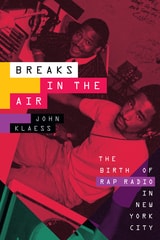
Breaks in the Air
The Birth of Rap Radio in New York CityJohn Klaess
Duke University Press, 2022
Brian W. Aldiss
Paul Kincaid
University of Illinois Press, 2022
Paul Kincaid explores the many contradictions that underlay the distinctive qualities of Aldiss’s writing. Wartime experiences in Asia and the alienation that arose upon his return to the cold austerity of postwar Britain inspired themes and imagery that Aldiss drew upon throughout his career. He wrote of prolific nature overwhelming humanity, believed war was madness even though it provided him with the happiest period of his life, and found parallels in the static lives of Indian peasants and hidebound English society. As Kincaid shows, contradictions created tensions that fueled the metaphorical underpinnings of Aldiss's work and shaped not only his long career but the evolution of postwar British science fiction.
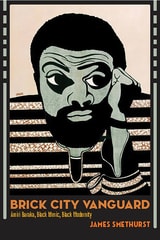
Brick City Vanguard
Amiri Baraka, Black Music, Black ModernityJames Smethurst
University of Massachusetts Press, 2020
Amiri Baraka is unquestionably the most recognized leader of the Black Arts Movement of the 1960s and 1970s, and one of the key literary and cultural figures of the postwar United States. While Baraka's political and aesthetic stances changed considerably over the course of his career, Brick City Vanguard demonstrates the continuity in his thinking about the meaning of black music in the material, psychic, and ideological development of black people. Drawing on primary texts, paratexts (including album liner notes), audio and visual recordings, and archival sources, James Smethurst takes a new look at how Baraka's writing on and performance of music envisioned the creation of an African American people or nation, as well as the growth and consolidation of a black working class within that nation, that resonates to this day. This vision also provides a way of understanding the encounter of black people with what has been called “the urban crisis” and a projection of a liberated black future beyond that crisis.
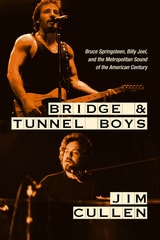
Bridge and Tunnel Boys
Bruce Springsteen, Billy Joel, and the Metropolitan Sound of the American CenturyJim Cullen
Rutgers University Press, 2024
Bridge and Tunnel Boys compares the life and work of Long Islander Joel and Asbury Park, New Jersey, native Springsteen, considering how each man forged a distinctive sound that derived from his unique position on the periphery of the Big Apple. Locating their music within a longer tradition of the New York metropolitan sound, dating back to the early 1900s, cultural historian Jim Cullen explores how each man drew from the city’s diverse racial and ethnic influences. His study explains how, despite frequently releasing songs that questioned the American dream, Springsteen and Joel were able to appeal to wide audiences during both the national uncertainty of the 1970s and the triumphalism of the Reagan era. By placing these two New York–area icons in a new context, Bridge and Tunnel Boys allows us to hear their most beloved songs with new appreciation.
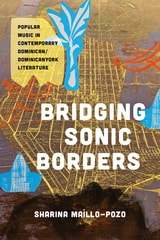
Bridging Sonic Borders
Popular Music in Contemporary Dominican/Dominicanyork LiteratureSharina Maíllo-Pozo
University of Texas Press, 2025
2026 Creative Research Medal, Office of Research at the University of Georgia
2026 Isis Duarte Book Prize, Haiti/Dominican Republic Section, Latin American Studies Association
How music depicted in literature shapes Dominican and Dominican New Yorkers’ identities and links the homeland to the diaspora.
Music has played a large role in recent Dominican literature, whether of the island or the diaspora. Bridging Sonic Borders explores this sonic connection linking the homeland and far-flung locales—especially New York, the center of Dominican cultural production in the United States. Sharina Maíllo-Pozo argues that literary representations of popular music delineate a shared aesthetic territory for US and Caribbean Dominicans, fostering an inclusive and transnational Dominicanidad.
Examining works written in Spanish, English, and Dominicanish, Maíllo-Pozo focuses on Dominican/Dominicanyork writings that have nurtured a borderless aesthetics through their shared investment in hip-hop, jazz, blues, pop, rock, and merengue. For Dominican writers, popular music has become a way of exploring memory and nostalgia and a means of centering people rejected from hegemonic identity formation—the working class, those of African descent, rural and queer people. For example, many works focused on the life of rocker Luis “Terror” Días have emphasized the in-between identity of being both Dominican and a New Yorker. Collectively, these writings have created a space in which boundaries of nation and diaspora are revealed for their fundamental porosity.
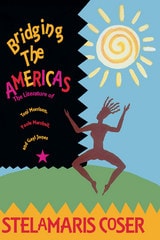
Bridging The Americas
The Literature of Paule Marshall, Toni Morrison, and Gayl JonesStelamaris Coser
Temple University Press, 1994
A literary study of three important black women writers, this book examines the "inter-American" characteristics in the work of Marshall, Morrison, and Jones, including detailed discussions of Morrison's Song of Solomon and Tar Baby, Jones's Corregidora and Song of Anninho, and Marshall's The Chose Place, The Timeless People.
Coser defines the inter-American characteristics in these authors' novels as a connection based on a common African heritage and a shared legacy of colonialism and racism. These three authors redefine the boundaries between the Americas, bridging the "extended Caribbean" that stretches from the U.S. Atlantic coast to Brazil. Their work reinterprets ethnic and sexual identity. Issues of race, class, and nationality overlap. History and identity are reinvented.
To explore the collective forms of resistance and cultural processes in Brazil, the Caribbean, and the United States, Coser also makes provocative connections between the visibility of black women writers and the popularity of male Latin American novelists like Carlos Fuentes and Gabriel Garcia Marquéz.
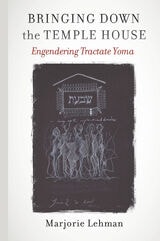
Bringing Down the Temple House
Engendering Tractate YomaMarjorie Lehman
Brandeis University Press, 2022
While the use of feminist analysis as a methodological lens is not new to the study of Talmudic literature or to the study of individual tractates, this book demonstrates that such an intervention with the Babylonian Talmud reveals new perspectives on the rabbis’ relationship with the temple and its priesthood. More specifically, through the relationships most commonly associated with home, such as those of husband-wife, father-son, mother-son, and brother-brother, the rabbis destabilize the temple bayit (or temple house). Moving beyond the view that the temple was replaced by the rabbinic home, and that rabbinic rites reappropriate temple practices, a feminist approach highlights the inextricable link between kinship, gender, and the body, calling attention to the ways the rabbis deconstruct the priesthood so as to reconstruct themselves.
Bringing the Devil to His Knees
The Craft of Fiction and the Writing LifeCharles Baxter and Peter Turchi, Editors
University of Michigan Press, 2001
Each of the contributors is a current or former lecturer at the Warren Wilson College MFA Program for Writers, one of the most highly respected writing programs in the country. Included are essays by Charles Baxter, Robert Boswell, Karen Brennan, Judith Grossman, Ehud Havazelet, C. J. Hribal, Margot Livesey, Michael Martone, Kevin McIlvoy, Pablo Medina, Antonya Nelson, Susan Neville, Richard Russo, Steven Schwartz, Jim Shepard, Joan Silber, Debra Spark, Peter Turchi, and Chuck Wachtel.
Rich with masterful examples and personal anecdotes, these imaginative essays provide hard-earned insight into a writer's work. The book will interest not only those seeking inspiration and guidance to become stronger writers, but also readers of contemporary literary fiction, who will find a number of surprising and original approaches to the writer's work by award-winning practitioners adept at teaching others what they know.
Charles Baxter is author of several novels, including The Feast of Love, Shadow Play, and First Light. and collections of stories including Believers and A Relative Stranger. He teaches writing at the University of Michigan. Peter Turchi is author of the novel The Girls Next Door, a collection of stories, Magician, and a book of non-fiction, The Pirate Prince. He is Director of the MFA Program for Writers, Warren Wilson College.
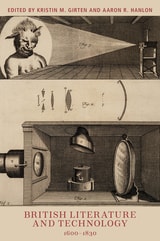
British Literature and Technology, 1600-1830
Kristin M. Girten
Bucknell University Press, 2023
Enlightenment-era writers had not yet come to take technology for granted, but nonetheless were—as we are today—both attracted to and repelled by its potential. This volume registers the deep history of such ambivalence, examining technology’s influence on Enlightenment British literature, as well as the impact of literature on conceptions of, attitudes toward, and implementations of technology. Offering a counterbalance to the abundance of studies on literature and science in seventeenth- and eighteenth-century Britain, this volume’s focus encompasses approaches to literary history that help us understand technologies like the steam engine and the telegraph along with representations of technology in literature such as the “political machine.” Contributors ultimately show how literature across genres provided important sites for Enlightenment readers to recognize themselves as “chimeras”—“hybrids of machine and organism”—and to explore the modern self as “a creature of social reality as well as a creature of fiction.”
British Romanticism and Prison Reform
Jonas Cope
Bucknell University Press, 2025
In eighteenth-century Britain, criminals were routinely whipped, branded, hanged, or transported to America. Only in the last quarter of the century—with the War of American Independence and legal and sociopolitical challenges to capital punishment—did the criminal justice system change, resulting in the reformed prison, or penitentiary, meant to educate, rehabilitate, and spiritualize even hardened felons. This volume is the first to explore the relationship between historical penal reform and Romantic-era literary texts by luminaries such as Godwin, Keats, Byron, and Austen. The works examined here treat incarceration as ambiguous: prison walls oppress and reinforce the arbitrary power of legal structures but can also heighten meditation, intensify the imagination, and awaken the conscience. Jonas Cope skillfully traces the important ideological work these texts attempt: to reconcile a culture devoted to freedom with the birth of the modern prison system that presents punishment as a form of rehabilitation.
Published by Bucknell University Press. Distributed worldwide by Rutgers University Press.
British Women Writing Fiction
Abby H.P. Werlock
University of Alabama Press, 2000
British women in the second half of the 20th century have produced a body of work that is as diverse as it is entertaining. This book offers an informal, jargon-free introduction to the fiction of sixteen contemporary writers either brought up or now living in England, from Muriel Spark to Jeanette Winterson.
British Women Writing Fiction presents a balanced view comprising women writing since the 1950s and 1960s, those who attracted critical attention during the 1970s and 1980s, and those who have burst upon the literary scene more recently, including African-Caribbean and African women. The essays show how all of these writers treat British subjects and themes, sometimes from radically different perspectives, and how those who are daughters of immigrants see themselves as women writing on the margins of society.
Abby Werlock's introduction explores the historical and aesthetic factors that have contributed to the genre, showing how even those writers who began in a traditional vein have created experimental work. The contributors provide complete bibliographies of each writer's works and selected bibliographies of criticism. Exceptional both in its breadth of subjects covered and critical approaches taken, this book provides essential background that will enable readers to appreciate the singular merits of each writer. It offers an approach toward better understanding favorite authors and provides a way to become acquainted with new ones.
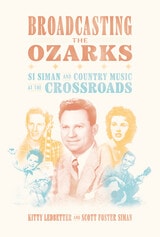
Broadcasting the Ozarks
Si Siman and Country Music at the CrossroadsKitty Ledbetter
University of Arkansas Press, 2024
“It’s good to see Si Siman and the Ozark Jubilee get their due in Broadcasting the Ozarks.”
—Willie Nelson
Broadcasting the Ozarks explores the vibrant country music scene that emerged in Springfield, Missouri, in the 1930s and thrived for half a century. Central to this history is the Ozark Jubilee (1955–60), the first regularly broadcast live country music show on network television. Dubbed the “king of the televised barn dances,” the show introduced the Ozarks to viewers across America and put Springfield in the running with Nashville for dominance of the country music industry—with the Jubilee’s producer, Si Siman, at the helm.
Siman’s life story is almost as remarkable as the show he produced. He was booking Tommy Dorsey, Ella Fitzgerald, and Glenn Miller during the mid-1930s while still a high school student and produced nationally syndicated country music radio shows in the decades that followed. Siman was a promotional genius with an ear for talent, a persuasive gift for gab, and the energy and persistence to make things happen for many future Country Music Hall of Famers, including Chet Atkins, Porter Wagoner, the Browns, and Brenda Lee. Following the Jubilee’s five-year run, Siman had a hand in some of the greatest hits of the twentieth century as a music publisher, collaborating with such songwriters as rockabilly legend and fellow Springfieldian Ronnie Self, who wrote Brenda Lee’s signature hit, “I’m Sorry,” and Wayne Carson, who wrote Willie Nelson’s “Always on My Mind.” Although Siman had numerous opportunities to find success in bigger cities, he chose to do it all from his hometown in the Ozarks.
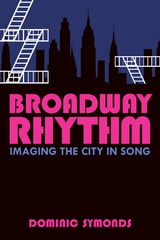
Broadway Rhythm
Imaging the City in SongDominic Symonds
University of Michigan Press, 2017
Through musicological analyses of works by Gershwin, Bernstein, Copland, Sondheim and others, the author proposes that performance cartography is a versatile methodology for urban theory, and establishes a methodological approach that uses the idea of the map in three ways: as an impetus, a metaphor, and a tool for exploring the city.
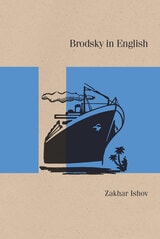
Brodsky in English
Zakhar Ishov
Northwestern University Press, 2023
Joseph Brodsky’s translations of his own Russian-language poems into English “new originals” have been criticized for their “un-Englishness,” an appraisal based on a narrow understanding of translation itself. With this radical reassessment of the Nobel Prize winner’s self-translations, Zakhar Ishov proposes a fresh approach to poetry translation and challenges the assumption that poetic form is untranslatable.
Brodsky in English draws on previously unexamined archival materials, including drafts and correspondence with translators and publishers, to trace the arc of Brodsky’s experience with the English language. Ishov shows how Brodsky’s belief in the intellectual continuity between his former life in the Soviet Union and his new career in the United States, including as Poet Laureate, anchored his insistence on maintaining the formal architecture of his poems in translation, locating the transmission of poetic meaning in the rhythms of language itself. This book highlights Brodsky’s place within the long history of the compromises translation must make between linguistic material and poetic process.
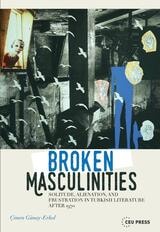
Broken Masculinities
Solitude, Alienation, and Frustration in Turkish Literature after 1970Cimen Günay-Erkol
Central European University Press, 2016
Broken Masculinities portrays the post-dictatorial novel of the 1970s in all its complexity, and introduces the reader to a 1968-era Turkey, a period which challenges Turkey’s now reinforced Islamic image by portraying the quest for sexual liberation and critical student uprisings. Günay-Erkol argues that the literature written after the 1971 coup in Turkey constitutes a coherent sub-genre and needs to be considered together. These novels share a common ground which is rich in images of men and women craving for power: general isolation, sexual-emotional frustration, and a traumatic sense of solitude and alienation.
This book is an original and significant contribution to two major fields of study: (1) gender and sexuality with respect to formation of subjectivity through literature, and (2) modern literature and history through the study of Turkish literature. The chief concern in this book is not only literature’s response to a particular period in Turkey, but also the role of literature in bearing witness to trauma and drastic political acts of violence—and coming to terms with them.B
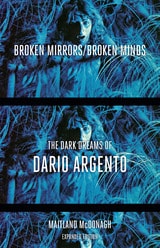
Broken Mirrors/Broken Minds
The Dark Dreams of Dario ArgentoMaitland McDonagh
University of Minnesota Press, 2010
Broken Souths
Latina/o Poetic Responses to Neoliberalism and GlobalizationMichael Dowdy
University of Arizona Press, 2013
Dowdy argues that a transnational Latina/o imaginary has emerged in response to neoliberalism—the free-market philosophy that underpins what many in the northern hemisphere refer to as “globalization.” His work examines how poets represent the places that have been “broken” by globalization’s political, economic, and environmental upheavals. Broken Souths locates the roots of the new imaginary in 1968, when the Mexican student movement crested and the Chicano and Nuyorican movements emerged in the United States. It theorizes that Latina/o poetics negotiates tensions between the late 1960s’ oppositional, collective identities and the present day’s radical individualisms and discourses of assimilation, including the “post-colonial,” “post-national,” and “post-revolutionary.” Dowdy is particularly interested in how Latina/o poetics reframes debates in cultural studies and critical geography on the relation between place, space, and nature.
Broken Souths features discussions of Latina/o writers such as Victor Hernández Cruz, Martín Espada, Juan Felipe Herrera, Guillermo Verdecchia, Marcos McPeek Villatoro, Maurice Kilwein Guevara, Judith Ortiz Cofer, Jack Agüeros, Marjorie Agosín, Valerie Martínez, and Ariel Dorfman, alongside discussions of influential Latin American writers, including Roberto Bolaño, Ernesto Cardenal, David Huerta, José Emilio Pacheco, and Raúl Zurita.
Brother Is a Street Musician
Viewing the Landscape of Modernity Through Korean Popular MusicZhang Eujeong
Rutgers University Press, 2026
The history of the Korean popular music industry dates back a century before the beginnings of K-Pop, to when the Korean peninsula was still under Japanese rule. Though Koreans didn’t have an independent country, they were still able to use recorded music to assert a distinct cultural identity.
Brother Is a Street Musician chronicles the development of Korean popular music over the first half of the twentieth century, examining both industry trends and talented composers and performers like Nam Insu and Yi Nanyǒng. Drawing from rare archives of gramophone records and lyric books, musicologist Zhang Eujeong shows how Korean musicians drew from folk traditions to create totally new genres, ranging from comic songs to Western-influenced jazz records. She also includes English translations and detailed analyses of lyrics from some of the era’s most popular songs.
A landmark study of Korean music, now available in English for the first time, Brother Is a Street Musician tells the inspiring story of how a colonized people developed their own form of popular music, planting the seeds for an industry that would grow to export Korean culture around the world.
Brown Gumshoes
Detective Fiction and the Search for Chicana/o IdentityBy Ralph E. Rodriguez
University of Texas Press, 2005
Winner, Modern Language Association Prize in United States Latina and Latino and Chicana and Chicano Literary and Cultural Studies, 2006
Popular fiction, with its capacity for diversion, can mask important cultural observations within a framework that is often overlooked in the academic world. Works thought to be merely "escapist" can often be more seriously mined for revelations regarding the worlds they portray, especially those of the disenfranchised. As detective fiction has slowly earned critical respect, more authors from minority groups have chosen it as their medium. Chicana/o authors, previously reluctant to write in an underestimated genre that might further marginalize them, have only entered the world of detective fiction in the past two decades.
In this book, the first comprehensive study of Chicano/a detective fiction, Ralph E. Rodriguez examines the recent contributions to the genre by writers such as Rudolfo Anaya, Lucha Corpi, Rolando Hinojosa, Michael Nava, and Manuel Ramos. Their works reveal the struggles of Chicanas/os with feminism, homosexuality, familia, masculinity, mysticism, the nationalist subject, and U.S.-Mexico border relations. He maintains that their novels register crucial new discourses of identity, politics, and cultural citizenship that cannot be understood apart from the historical instability following the demise of the nationalist politics of the Chicana/o movement of the 1960s and 1970s. In contrast to that time, when Chicanas/os sought a unified Chicano identity in order to effect social change, the 1980s, 1990s, and 2000s have seen a disengagement from these nationalist politics and a new trend toward a heterogeneous sense of self. The detective novel and its traditional focus on questions of knowledge and identity turned out to be the perfect medium in which to examine this new self.
Brown on Brown
Chicano/a Representations of Gender, Sexuality, and EthnicityBy Frederick Luis Aldama
University of Texas Press, 2005
Common conceptions permeating U.S. ethnic queer theory tend to confuse aesthetics with real-world acts and politics. Often Chicano/a representations of gay and lesbian experiences in literature and film are analyzed simply as propaganda. The cognitive, emotional, and narrational ingredients (that is, the subject matter and the formal traits) of those representations are frequently reduced to a priori agendas that emphasize a politics of difference.
In this book, Frederick Luis Aldama follows an entirely different approach. He investigates the ways in which race and gay/lesbian sexuality intersect and operate in Chicano/a literature and film while taking into full account their imaginative nature and therefore the specific kind of work invested in them. Also, Aldama frames his analyses within today's larger (globalized) context of postcolonial literary and filmic canons that seek to normalize heterosexual identity and experience. Throughout the book, Aldama applies his innovative approach to throw new light on the work of authors Arturo Islas, Richard Rodriguez, John Rechy, Ana Castillo, and Sheila Ortiz Taylor, as well as that of film director Edward James Olmos. In doing so, Aldama aims to integrate and deepen Chicano literary and filmic studies within a comparative perspective. Aldama's unusual juxtapositions of narrative materials and cultural personae, and his premise that literature and film produce fictional examples of a social and historical reality concerned with ethnic and sexual issues largely unresolved, make this book relevant to a wide range of readers.
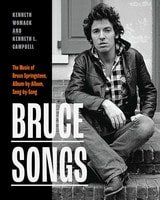
Bruce Songs
The Music of Bruce Springsteen, Album-by-Album, Song-by-SongKenneth Womack
Rutgers University Press, 2024
Bruce Songs is an authoritative guide that offers an in-depth exploration of Bruce Springsteen's musical legacy. Covering Springsteen's entire discography, from Greetings from Asbury Park, N.J. to Only the Strong Survive, this unique book combines historical context, literary analysis, and meticulous research.
Unlike any other resource, it provides detailed analyses of each album, essays on their historical significance, and a chronological examination of every studio song. Discover the stories behind the recordings and gain insight into Springsteen's creative process.
Rich with contemporary reviews, insider accounts, photographs, and special sections highlighting pivotal moments and key figures, Bruce Songs is an indispensable companion for fans and scholars. It offers an immersive journey through the music of the Boss, making it an essential read for anyone captivated by Springsteen's enduring musical legacy.
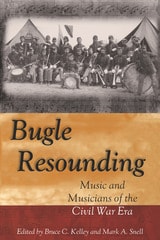
Bugle Resounding
Music and Musicians of the Civil War EraEdited by Bruce C. Kelley & Mark A. Snell
University of Missouri Press, 2004
Although numerous academic resources examine the music and musicians of the Civil War era, the research is spread across a variety of disciplines and is found in a wide array of scholarly journals, books, and papers. It is difficult to assimilate this diverse body of research, and few sources are dedicated solely to a rigorous and comprehensive investigation of the music and the musicians of this era. This anthology, which grew out of the first two National Conferences on Music of the Civil War Era, is an initial attempt to address that need.
Those conferences established the first academic setting solely devoted to exploring the effects of the Civil War on music and musicians. Bridging musicology and history, these essays represent the forefront of scholarship in music of the Civil War era. Each one makes a significant contribution to research in the music of this era and will ultimately encourage more interdisciplinary research on a subject that has relevance both for its own time and for ours. The result is a readable, understandable volume on one of the few understudied—yet fascinating—aspects of the Civil War era.
Building Domestic Liberty
Charlotte Perkins Gilman's Architectural FeminismPolly Wynn Allen
University of Massachusetts Press, 1988
Building Domestic Liberty offers a critical and admiring analysis of feminist philosopher Charlotte Perkins Gilman (1860–1935). Polly Allen examines Gilman's approach to architecture, landscape, and neighborhood design and discusses Gilman's case against prevailing household design and looks at her philosophy of world improvement.
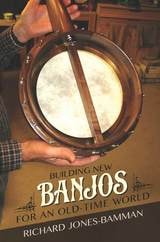
Building New Banjos for an Old-Time World
Richard Jones-Bamman
University of Illinois Press, 2017
Building Romanticism
Literature and Architecture in Nineteenth-Century BritainNicole Reynolds
University of Michigan Press, 2010
Building Their Own Waldos
Emerson’s First Biographers and the Politics of Life-Writing in the Gilded AgeRobert D. Habich
University of Iowa Press, 2011
@font-face { font-family: "Calibri";}p.MsoNormal, li.MsoNormal, div.MsoNormal { margin: 0in 0in 0.0001pt; font-size: 12pt; font-family: "Times New Roman"; }h4 { margin: 12pt 0in 3pt; page-break-after: avoid; font-size: 14pt; font-family: "Times New Roman"; }span.Heading4Char { font-family: Calibri; font-weight: bold; }div.Section1 { page: Section1; }
By the end of the nineteenth century, Ralph Waldo Emerson was well on his way to becoming the “Wisest American” and the “Sage of Concord,” a literary celebrity and a national icon. With that fame came what Robert Habich describes as a blandly sanctified version of Emerson held widely by the reading public. Building Their Own Waldos sets out to understand the dilemma faced by Emerson’s early biographers: how to represent a figure whose subversive individualism had been eclipsed by his celebrity, making him less a representative of his age than a caricature of it.Drawing on never-before-published letters, diaries, drafts, business records, and private documents, Habich Emerson’s First Biographers explores the making of a cultural hero through the stories of Emerson’s first biographers—George Willis Cooke, a minister most recently from Indianapolis who considered himself a disciple; the English reformer and newspaper mogul Alexander Ireland, a friend for half a century; Moncure D. Conway, a Southern abolitionist then residing in London, who called Emerson his “spiritual father and intellectual teacher”; the poet and medical professor Oliver Wendell Holmes, with Emerson a member of Boston’s gathering of literary elite, the Saturday Club; James Elliot Cabot, the family’s authorized biographer, an architect and amateur philosopher with unlimited access to Emerson’s unpublished papers; and Emerson’s son Edward, a physician and painter whose father had passed over him as literary executor in favor of Cabot.
Just as their biographies reveal a complex, socially engaged Emerson, so too do the biographers’ own stories illustrate the real-world perils, challenges, and motives of life-writing in the late nineteenth century, when biographers were routinely vilified as ghoulish and disreputable and biography as a genre underwent a profound redefinition. Building Their Own Waldos is at once a revealing look at Emerson’s constructed reputation, a case study in the rewards and dangers of Victorian life-writing, and the story of six authors struggling amidst personal misfortunes and shifting expectations to capture the elusive character of America’s “representative man,” as they knew him and as they needed him to be.
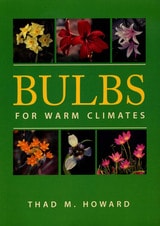
Bulbs for Warm Climates
By Thad M. Howard
University of Texas Press, 2001
Bulb gardening in the southwestern and southern United States presents challenges unknown in cooler climates. Bulbs that turn Holland into a kaleidoscope of color droop and fade in our mild winters, hot summers, and uncertain rainfall. Yet hundreds of native and naturalized species of bulbs thrive in these same conditions and offer as many colors, shapes, and fragrances as even the most demanding gardener desires. These are the bulbs that Thad Howard describes in this comprehensive guide to bulbs that will grow in USDA gardening zones 8 and 9.
Writing from more than forty-five years' experience in collecting and cultivating bulbs, Howard offers expert advice about hundreds of little-known, hybrid, and common species and varieties that grow well in warm climates. His species accounts, which are grouped by family, describe each plant and its growing requirements and often include interesting stories from his collecting expeditions. Lovely color photos illustrate many of the species.
Howard also gives reliable information about refrigerating bulbs, using them in the landscape and in containers, choosing scented ones, making potpourri, buying, collecting, cultivating, and hybridizing bulbs, and dealing with pests and diseases. He concludes with lists of plant societies and suppliers and a helpful glossary and bibliography.
Bulldaggers, Pansies, and Chocolate Babies
Performance, Race, and Sexuality in the Harlem RenaissanceJames F. Wilson
University of Michigan Press, 2011
—David Krasner, author of A Beautiful Pageant: African American Theatre, Drama, and Performance in the Harlem Renaissance, 1910-1927
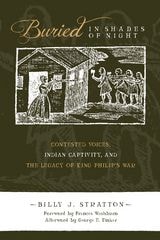
Buried in Shades of Night
Contested Voices, Indian Captivity, and the Legacy of King Philip's WarBilly J. Stratton, Foreword by Frances Washburn, Afterword by George E. Tinker
University of Arizona Press, 2013
In this groundbreaking new book, Billy J. Stratton offers a critical examination of the narrative of Mary Rowlandson. Although it has long been thought that the book’s preface was written by the influential Puritan minister Increase Mather, Stratton’s research suggests that Mather was also deeply involved in the production of the narrative itself, which bears strong traces of a literary form that was already well established in Europe. As Stratton notes, the portrayal of Indian people as animalistic “savages” and of Rowlandson’s solace in Biblical exegesis served as a convenient alibi for the colonial aspirations of the Puritan leadership.
Stratton calls into question much that has been accepted as fact by scholars and historians over the last century, and re-centers the focus on the marginalized perspective of Native American people, including those whose land had been occupied by the Puritan settlers. In doing so, Stratton demands a careful reconsideration of the role that the captivity narrative—which was instrumental in shaping conceptions of “frontier warfare”—has played in the development of both American literary history and national identity.
Butterfly, the Bride
Essays on Law, Narrative, and the FamilyCarol Weisbrod
University of Michigan Press, 2004
Butterfly, the Bride looks at law from the outside, using narrative to provide a fresh perspective on the issues of law and social structure---and individual responses to law. This book thoroughly explores relationships between inner and public lives by examining what is ordinarily classified as the sphere of private life---the world of family relationships.
By Authors Possessed
The Demonic Novel in RussiaAdam Weiner
Northwestern University Press, 1998
Weiner contends that the theme of demonism increasingly infects the narrative point of view from Gogol's Dead Souls to Dostoevsky's The Devils and Bely's Petersburg, until Nabokov exorcised the demonic novel through his fiction and his criticism. Starting from the premise that artistic creation has always been enshrouded in a haze of moral dilemma and religious doubt, Weiner's study of the demonic novel is an attempt to illuminate the potential ethical perils and aesthetic gains of great art.

By Words Alone
The Holocaust in LiteratureSidra DeKoven Ezrahi
University of Chicago Press, 1980