Results by title
18284 books match the query 'United States' and 902 start with b

Beyond Pluralism
The Conception of Groups and Group Identities in AmericaEdited by Wendy F. Katkin, Ned Landsman, and Andrea Tyree
University of Illinois Press, 1998
melting pot, people come in all persuasions. This volume attempts to bridge
the gap that has developed between pluralists and multiculturalists, advocates
of the academic canon and defenders of diversity, celebrants of ethnic
heritage and critics of racial ascription. Contributors explore the nation's
pluralistic framework as a historical creation, looking at group relations
in the United States and how they have been conceptualized in the past.
Beyond Pontiac's Shadow
Michilimackinac and the Anglo-Indian War of 1763Keith R. Widder
Michigan State University Press, 2013
On June 2, 1763, the Ojibwe captured Michigan’s Fort Michilimackinac from the British. Ojibwe warriors from villages on Mackinac Island and along the Cheboygan River had surprised the unsuspecting garrison while playing a game of baggatiway. On the heels of the capture, Odawa from nearby L’Arbre Croche arrived to rescue British prisoners, setting into motion a complicated series of negotiations among Ojibwe, Odawa, and Menominee and other Indians from Wisconsin. Because nearly all Native people in the Michilimackinac borderland had allied themselves with the British before the attack, they refused to join the Michilimackinac Ojibwe in their effort to oust the British from the upper country; the turmoil effectively halted the fur trade. Beyond Pontiac’s Shadow examines the circumstances leading up to the attack and the course of events in the aftermath that resulted in the regarrisoning of the fort and the restoration of the fur trade. At the heart of this discussion is an analysis of French-Canadian and Indian communities at the Straits of Mackinac and throughout the pays d’en haut. An accessible guide to this important period in Michigan, American, and Canadian history, Beyond Pontiac’s Shadow sheds invaluable light on a political and cultural crisis.
Beyond Preservation
Using Public History to Revitalize Inner CitiesAuthored by Andrew Hurley
Temple University Press, 2010
Across the United States, historic preservation has become a catalyst for urban regeneration. Entrepreneurs, urban pioneers, and veteran city dwellers have refurbished thousands of dilapidated properties and put them to productive use as shops, restaurants, nightclubs, museums, and private residences. As a result, inner-cities, once disparaged as zones of poverty, crime, and decay have been re-branded as historic districts. Although these preservation initiatives, often supported by government tax incentives and rigid architectural controls, deserve credit for bringing people back to the city, raising property values, and generating tourist revenue, they have been less successful in creating stable and harmonious communities.
Beyond Preservation proposes a framework for stabilizing and strengthening inner-city neighborhoods through the public interpretation of historic landscapes. Its central argument is that inner-city communities can best turn preserved landscapes into assets by subjecting them to public interpretation at the grass-roots. Based on an examination of successful projects in St. Louis, Missouri and other U.S. cities, Andrew Hurley demonstrates how rigorous historical analysis can help communities articulate a local identity and plan intelligently on the basis of existing cultural and social assets.
Beyond Recognition
Transgender Antidiscrimination Law, Rhetoric, and Ethical ResponsibilityCollins, Laura Jane
University of Alabama Press, 2026
A bold and original analysis of how the complexity of legal struggles over transgender rights is shaped not only by politics but by a deeper cultural anxiety about the meaning of sex itself.
Beyond Recognition: Transgender Antidiscrimination Law, Rhetoric, and Ethical Responsibility is a timely analysis that challenges the idea of transgender antidiscrimination law as a simple matter of inclusion or exclusion. Far from treating the law as a straightforward recognition project, Laura Jane Collins employs a rhetorically responsive approach that reveals how legal systems both reflect and shape our deepest uncertainties about sex, identity, and justice.
Through close readings of Title VII case law, state-level legislation such as California’s Fair Employment and Housing Act, and legislative debates surrounding bathroom access and trans rights, Collins exposes the deep-seated anxieties driving contemporary legal debates. While courts, policymakers, and advocates struggle to construct legal protections, the very act of defining sex within the law exposes law’s limitations.
Rather than condemning the law’s failures or romanticizing its liberatory potential, Collins calls for a more self-reflective, ethically engaged response. She argues that our demand for legal clarity often conceals a broader discomfort with ambiguity—and that the law’s so-called shortcomings may in fact reflect our own refusal to confront the complexity of sex as a category and system of power.
A vital contribution to scholarship in law and rhetoric, gender studies, and critical legal theory, Beyond Recognition invites a deeper reckoning with both legal frameworks and personal responsibility. It offers a compelling perspective on the evolving landscape of transgender rights and the cultural anxieties that continue to shape it.
Beyond Redemption
Race, Violence, and the American South after the Civil WarCarole Emberton
University of Chicago Press, 2013
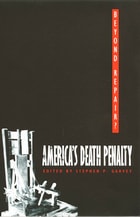
Beyond Repair?
America's Death PenaltyStephen P. Garvey, ed.
Duke University Press, 2003
A number of the essays scrutinize thinking about capital punishment. They examine why, following almost two decades of strong public support for the death penalty, public opinion in favor of it has recently begun to decline. Beyond Repair? presents some of the findings of the Capital Jury Project, a nationwide research initiative that has interviewed over one thousand people who served as jurors in capital trials. It looks at what goes through the minds of jurors asked to consider imposing the death penalty, how qualified they are to make such an important decision, and how well they understand the judge’s instructions. Contributors also investigate the risk of executing the innocent, the role that race plays in determining which defendants are sentenced to death, and the effect of expanded restrictions on access to federal appellate relief. The postscript contemplates the peculiarities of our contemporary system of capital punishment, including the alarming variance in execution rates from state to state.
Filled with current insights and analysis, Beyond Repair? will provide valuable information to attorneys, political scientists, criminologists, and all those wanting to participate knowledgeably in the debates about the death penalty in America.
Contributors. Ken Armstrong, John H. Blume, Theodore Eisenberg, Phoebe C. Ellsworth, Stephen P. Garvey, Samuel R. Gross, Sheri Lynn Johnson, Steve Mills, William A. Schabas, Larry W. Yackle, Franklin E. Zimring
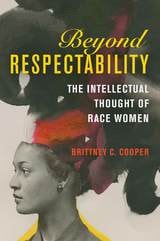
Beyond Respectability
The Intellectual Thought of Race WomenBrittney C. Cooper
University of Illinois Press, 2017
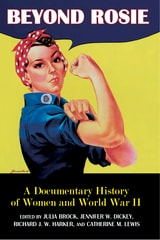
Beyond Rosie
A Documentary History of Women and World War IIJulia Brock
University of Arkansas Press, 2015
Beyond Rosie offers readers an opportunity to see the numerous contributions they made to the fight against the Axis powers and how American women’s roles changed during the war. The primary documents (newspapers, propaganda posters, cartoons, excerpts from oral histories and memoirs, speeches, photographs, and editorials) collected here represent cultural, political, economic, and social perspectives on the diverse roles women played during World War II.
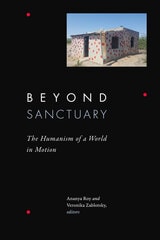
Beyond Sanctuary
The Humanism of a World in MotionAnanya Roy and Veronika Zablotsky, editors
Duke University Press, 2025
Contributors. Leisy Abrego, Damon Azali-Rojas, Amy Sara Carroll, Sharad Chari, Nicholas De Genova, Ricardo Dominguez, Lorgia García-Peña, Sarah Haley, Gaye Theresa Johnson, Moon-Kie Jung, Maria Kaika, Saree Makdisi, Kyle T. Mays, Ananya Roy, Charles Sepulveda, SA Smythe, Vanessa E. Thompson, Charalampos Tsavdaroglou, João H. Costa Vargas, Rinaldo Walcott, Veronika Zablotsky, Maite Zubiaurre
Beyond Segregation
Multiracial And Multiethnic NeighborhoodsMichael T. Maly
Temple University Press, 2005
Beyond Settler Time
Temporal Sovereignty and Indigenous Self-DeterminationMark Rifkin
Duke University Press, 2017
Beyond Shangri-La
America and Tibet's Move into the Twenty-First CenturyJohn Kenneth Knaus
Duke University Press, 2012
Since the late 1950s, the rugged resolve of the Dalai Lama and his people and the growing respect for their efforts to free their homeland from Chinese occupation have made Tibet's political and cultural status a pressing issue in international affairs. So has the realization by nations, including the United States, that their geopolitical interests would best be served by the defeat of the Chinese and the achievement of Tibetan self-determination. Beyond Shangri-La provides unique insight into the efforts of the U.S. government and committed U.S. citizens to support a free Tibet.
Beyond Slash, Burn, and Poison
Transforming Breast Cancer Stories into ActionMarcy Jane Knopf-Newman
Rutgers University Press, 2004
Depending on one’s vantage point, breast cancer can be a very different experience, and indeed, a very different concern. It is, for some, a personal struggle; for others, it is a disease posing scientific and environmental challenges; and for others it is a highly charged and politicized issue around which policy wars rage. Beyond Slash, Burn, and Poison brings a unique perspective to breast cancer by recognizing the overlapping relationship of all these realities.
Drawing on the writings of Rachel Carson, Betty Ford, Rose Kushner, and Audre Lorde, this book explores the various ways in which patient-centered texts continue to leave their mark on the political realm of breast cancer and, ultimately, the disease itself. Ordered chronologically, the selections trace the progression of discussions about breast cancer from a time when the subject was kept private and silent to when it became part of public discourse. The texts included are personal accounts, written by women struggling to play an active role in their healing process and, at the same time, hoping to help others do the same.
Knopf-Newman also shows us how these writings eventually changed public opinion and the underlying tendency to blame women for their illness. She argues that changes in medical practice and public policy are linked to textual interventions, and makes a case for the politicization of cultural studies of disease through personal and literary expression.
Passionately written and well-researched, Beyond Slash, Burn, and Poison transforms how we think about breast cancer. Rather than facilitating forums for separate discussions, this book brings conversations into dialog with each other. It is essential reading for anyone concerned with breast cancer and its history, as well as for those interested in the effect of the environment on public health and the role that literature plays in public policy and medicine.
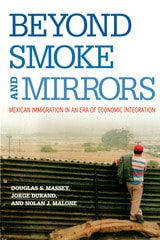
Beyond Smoke and Mirrors
Mexican Immigration in an Era of Economic IntegrationDouglas S. Massey
Russell Sage Foundation, 2002
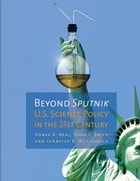
Beyond Sputnik
U.S. Science Policy in the Twenty-First CenturyHomer A. Neal, Tobin L. Smith, and Jennifer B. McCormick
University of Michigan Press, 2008
Science and technology are responsible for almost every advance in our modern quality of life. Yet science isn't just about laboratories, telescopes and particle accelerators. Public policy exerts a huge impact on how the scientific community conducts its work. Beyond Sputnik is a comprehensive survey of the field for use as an introductory textbook in courses and a reference guide for legislators, scientists, journalists, and advocates seeking to understand the science policy-making process. Detailed case studies---on topics from cloning and stem cell research to homeland security and science education---offer readers the opportunity to study real instances of policymaking at work. Authors and experts Homer A. Neal, Tobin L. Smith, and Jennifer B. McCormick propose practical ways to implement sound public policy in science and technology and highlight how these policies will guide the results of scientific discovery for years to come.
Homer A. Neal is the Samuel A. Goudsmit Distinguished University Professor of Physics, Interim President Emeritus, and Vice President for Research Emeritus at the University of Michigan, and is a former member of the U.S. National Science Board.
Tobin L. Smith is Associate Vice President for Federal Relations at the Association of American Universities. He was formerly Assistant Director of the University of Michigan and MIT Washington, DC, offices.
Jennifer B. McCormick is an Assistant Professor of Biomedical Ethics in the Division of General Internal Medicine at the Mayo College of Medicine in Rochester, Minnesota, and is the Associate Director of the Research Ethics Resource, part of the Mayo Clinic's NIH Clinical Translational Science Award research programs.
GO BEYOND SPUTNIK ONLINE--Visit www.science-policy.net for the latest news, teaching resources, learning guides, and internship opportunities in the 21st-Century field of science policy.
Beyond Subsistence
Plains Archaeology and the Postprocessual CritiqueEdited by Philip Duke and Michael C. Wilson
University of Alabama Press, 1995
A series of essays, written by Plains scholars of diverse research interests and backgrounds, that apply postprocessual approaches to the solution of current problems in Plains archaeology
Postprocessual archaeology is seen as a potential vehicle for integrating culture-historical, processual, and postmodernist approaches to solve specific archaeological problems.
The contributors address specific interpretive problems in all the major regions of the North American Plains, investigate different Plains societies (including hunter-gatherers and farmers and their associated archaeological records), and examine the political content of archaeology in such fields as gender studies and cultural resource management. They avoid a programmatic adherence to a single paradigm, arguing instead that a mature archaeology will use different theories, methods, and techniques to solve specific empirical problems. By avoiding excessive infatuation with the correct scientific method, this volume addresses questions that have often been categorized as beyond archaeological investigations.
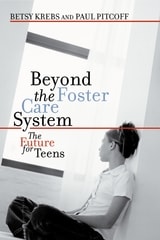
Beyond The Foster Care System
The Future for TeensBetsy Krebs
Rutgers University Press, 2006
Each year tens of thousands of teenagers are released from the foster care system in the United States without high school degrees or strong family relationships. Two to four years after discharge, half of these young people still do not have either a high school diploma or equivalency degree, and fewer than ten percent enter college. Nearly a third end up on public assistance within fifteen months, and eventually more than a third will be arrested or convicted of a crime.
In this richly detailed and often surprising exploration of the foster care system, Betsy Krebs and Paul Pitcoff argue that the existing structure sets kids up to fail by inadequately preparing them for adult life. Foster care programs traditionally emphasize goals of reuniting children with family or placing children into adoptive homes. But neither of these outcomes is likely for adolescents. Krebs and Pitcoff contend that the primary goal of foster care for teenagers should be rigorous preparation for a fully productive adult life and that the standard life skills curriculum is woefully inadequate for this purpose.
The authors, who together cofounded the Youth Advocacy Center in New York City, draw on their fifteen years of experience working with teens and the foster care system to introduce new ways to teach teens to be responsible for themselves and to identify and develop their potential. They also explore what sorts of resources-legal, financial, and human-will need to come from inside and outside the system to more fully humanize the practice of foster care. Ultimately, Krebs and Pitcoff argue that change must involve the participation of caring communities of volunteers who want to see disadvantaged youth succeed as well as developing methods to empower teens to take control of their lives.
Bringing together a series of inspiring, real-life accounts, Beyond the Foster Care System introduces readers to a number of dynamic young people who have participated in the Youth Advocacy Center's programs and who have gone on to apply these lessons to other areas of life. Their stories demonstrate that more successful alternatives to the standard way of providing foster care are not only imaginable, but possible. With the practical improvements Krebs and Pitcoff outline, teens can learn the skills of effective self-advocacy, become better prepared for the transition to full independence, and avoid becoming the statistics that foster care has so often produced in the past.
Beyond The Good Earth
Transnational Perspectives on Pearl S. BuckJay Cole
West Virginia University Press, 2019
How well do we really know Pearl S. Buck? Many think of Buck solely as the Nobel laureate and Pulitzer Prize–winning author of The Good Earth, the novel that explained China to Americans in the 1930s. But Buck was more than a novelist and interpreter of China. As the essays in Beyond The Good Earth show, she possessed other passions and projects, some of which are just now coming into focus.
Who knew, for example, that Buck imagined and helped define multiculturalism long before it became a widely known concept? Or that she founded an adoption agency to locate homes for biracial children from Asia? Indeed, few are aware that she advocated successfully for a genocide convention after World War II and was ahead of her time in envisioning a place for human rights in American foreign policy. Buck’s literary works, often dismissed as simple portrayals of Chinese life, carried a surprising degree of innovation as she experimented with the styles and strategies of modernist artists.
In Beyond The Good Earth, scholars and writers from the United States and China explore these and other often overlooked topics from the life of Pearl S. Buck, positioning her career in the context of recent scholarship on transnational humanitarian activism, women’s rights activism, and civil rights activism.
Beyond The Mafia
Italian Americans And The Development Of Las VegasAlan Balboni
University of Nevada Press, 2006
When Beyond the Mafia first appeared in 1996 it was hailed as a significant contribution to the history of Las Vegas and of ethnic minorities in America. Author Alan Balboni traces the history of Italians in Las Vegas from the founding of the city in 1905, recording their activities in the fledgling settlement. As Las Vegas grew, Italian Americans participated in every aspect of the city’s society and economy, including construction, retail establishments, hotels, and—after the statewide legalization of gambling in 1931—the casino industry. Basing his research on well over a hundred interviews, as well as the records of Italian American organizations, public agencies, and other sources, Balboni has produced a sparkling and thoroughly documented account of the history of one of Las Vegas’s most progressive and productive ethnic minorities. This new paperback edition includes an afterword by the author that brings the story of Las Vegas’s Italian Americans up to the present.
Beyond The Whiteness of Whiteness
Memoir of a White Mother of Black SonsJane Lazarre
Duke University Press, 1997
Lazarre has spent over twenty-five years living in a Black American family, married to an African American man, birthing and raising two sons. A teacher of African American literature, she has been influenced by an autobiographical tradition that is characterized by a speaking out against racism and a grounding of that expression in one’s own experience—an overlapping of the stories of one’s own life and the world. Like the stories of that tradition, Lazarre’s is a recovery of memories that come together in this book with a new sense of meaning. From a crucial moment in which consciousness is transformed, to recalling and accepting the nature and realities of whiteness, each step describes an aspect of her internal and intellectual journey. Recalling events that opened her eyes to her sons’ and husband’s experience as Black Americans—an operation, turned into a horrific nightmare by a doctor’s unconscious racism or the jarring truths brought home by a visit to an exhibit on slavery at the Richmond Museum of the Confederacy—or her own revealing missteps, Lazarre describes a movement from silence to voice, to a commitment to action, and to an appreciation of the value of a fluid, even ambiguous, identity. It is a coming of age that permits a final retelling of family history and family reunion.
With her skill as a novelist and her experience as a teacher, Jane Lazarre has crafted a narrative as compelling as it is telling. It eloquently describes the author’s delight at being accepted into her husband’s family and attests to the power of motherhood. And as personal as this story is, it is a remarkably incisive account of how perceptions of racial difference lie at the heart of the history and culture of America.
Beyond Tordesillas
New Approaches to Comparative Luso-Hispanic StudiesEdited by Robert Patrick Newcomb and Richard A. Gordon
The Ohio State University Press, 2017
The jumping-off point for Beyond Tordesillas is the critic Jorge Schwartz’s evocative call to arms, “Down with Tordesillas!” In this groundbreaking essay, Schwartz looks to the imaginary line created by the Treaty of Tordesillas (1494), which divided the known world into Spanish and Portuguese spheres of influence, to stand in for generations of literary and cultural noncommunication between the Spanish- and Portuguese-speaking spheres, and their attendant academic disciplines. This volume’s contributions range topically across continents, from the Iberian Peninsula to Latin American countries. They also range across genres, with studies that analyze fictional narrative, music, performance, and visual culture. Beyond Tordesillas forcefully challenges the disciplinary—and indeed, arbitrary—boundaries that for too long have separated Hispanic and Luso-Brazilian studies.
Beyond Vietnam
The Politics of Protest in Massachusetts, 1974-1990Robert Surbrug
University of Massachusetts Press, 2009
Narratives of the 1960s typically describe an ascending arc of political activism that peaked in 1968, then began a precipitous descent as the revolutionary dreams of the New Left failed to come to fruition. The May 1970 killings at Kent State often stand as an epitaph to a decade of protest, after which the principal story becomes the resurgence of the right.
In Beyond Vietnam: The Politics of Protest in Massachusetts, 1974–1990, Robert Surbrug challenges this prevailing paradigm by examining three protest movements that were direct descendants of Vietnam-era activism: the movement against nuclear energy; the nuclear weapons freeze movement; and the Central American solidarity movement. Drawing lessons from the successes and failures of the preceding era, these movements had a significant impact on the liberal wing of the Democratic Party, which itself had been undergoing major transformations in the wake of the 1960s.
By focusing on one state—Massachusetts—Surbrug is able to illuminate the interaction between the activist left and mainstream liberalism, showing how each influenced the other and how together they helped shape the politics of the 1970s and 1980s. During these years, Massachusetts emerged as a center of opposition to nuclear power, the continuing Cold War arms race, and Ronald Reagan's interventionist policies in Central America. The state's role in national policy was greatly enhanced by prominent political figures such as Senator Edward Kennedy, Speaker of the House Thomas “Tip” O'Neill, presidential candidate Governor Michael Dukakis, Vietnam veteran Senator John Kerry, and moderate Republican Silvio Conte.
What Beyond Vietnam shows is that the rise of the right in the aftermath of the 1960s was by no means a unilateral ascendancy. Instead it involved a bifurcation of American politics in which an increasingly strong conservative movement was vigorously contested by an activist left and a reinvigorated mainstream liberalism.
Beyond Winning
National Scholarship Competitions and the Student ExperienceSuzanne McCray
University of Arkansas Press, 2005

Beyond Wolves
The Politics Of Wolf Recovery And ManagementMartin A. Nie
University of Minnesota Press, 2003
Looks at the next stages of the controversy over wolf recovery
Since 1995, when the U.S. Fish and Wildlife Service released Canadian gray wolves into Yellowstone National Park as part of its wolf recovery program, reintroduction has been widely challenged in public forums and sensationalized in the media. This conflict has pitted western ranchers and property rights activists against environmental groups, highlighting starkly contrasting political perspectives. In this informed account, Martin A. Nie examines not only the future of wolf recovery but also the issues that will define debates around the politics of wildlife management, animal rights issues, and other flash points. The result is a revelatory look at the way the democratic process works when the subject is an environmental hot-button issue.
Examining the wolf recovery program from a policy-making perspective, Nie looks at programs in Alaska, the Lake Superior region, the Northern Rockies, the Southwest, and New England and upstate New York. He analyzes the social, political, and cultural backdrop in the areas in which wolves have been reintroduced and explores such contentious issues as the role of science in public policy; the struggle between wilderness protection, resource management, and private property; and the use of stakeholders in environmental conflicts.For Nie, the debate over wolf recovery is above all a value-based political conflict that should take place in a more inclusive, participatory, and representative democratic arena. Wolves, Nie writes, are an important indicator species both biologically and politically, and in Beyond Wolves, he tells an important story of wolves and people, place and politics, that resonates far beyond the fate of America’s most misunderstood inhabitants.
Beyond the Bandstand
Paul Whiteman in American Musical CultureEdited by W. Anthony Sheppard
University of Illinois Press, 2024
The most successful bandleader of the 1920s, Paul Whiteman was an entertainment icon who played a major role in the mainstreaming of jazz. Whiteman and his band premiered Gershwin’s Rhapsody in Blue. Duke Ellington acknowledged his achievements. His astonishing ear for talent vaulted a who’s who of artists toward prominence. But Whiteman’s oversized presence eclipsed Black jazz musicians while his middlebrow music prompted later generations to jettison him from jazz history.
W. Anthony Sheppard’s collection of essays confronts the racial implications of Whiteman’s career. The contributors explore Whiteman’s broad impact on popular culture, tracking his work and influence in American marketing, animated films, the Black press, Hollywood, and the music publication industry, and following him behind the scenes with arrangers, into grand concert halls, across the Atlantic, into the courtroom, and on television.
Multifaceted and cutting-edge, Beyond the Bandstand explores the racial politics and artistic questions surrounding a controversial figure in popular music.
Contributors: Ryan Raul Bañagale, Stephanie Doktor, John Howland, Katherine M. Leo, Sarah Caissie Provost, W. Anthony Sheppard, Catherine Tackley, Elijah Wald, and Christi Jay Wells

Beyond the Battlefield
Race, Memory, and the American Civil WarDavid W. Blight
University of Massachusetts Press, 2002
The book as a whole demonstrates several ways to probe the history of memory, to understand how and why groups of Americans have constructed versions of the past in the service of contemporary social needs. Topics range from the writing and thought of Frederick Douglass and W.E.B. Du Bois to a comparison of Abraham Lincoln and Douglass on the level of language and memory. The volume also includes a compelling study of the values of a single Union soldier, an analysis of Ken Burns's PBS series The Civil War, and a retrospective treatment of the distinguished African American historian Nathan I. Huggins.
Taken together, these lucidly written pieces offer a thoroughgoing assessment of the stakes of Civil War memory and their consequences for American race relations. Beyond the Battlefield demonstrates not only why we should preserve and study our Civil War battlefields, but also why we should lift our vision above those landscapes and ponder all the unfinished questions of healing and justice, of racial harmony and disharmony, that still bedevil our society and our historical imagination.
Beyond the Betrayal
The Memoir of a World War II Japanese American Draft Resister of Conscienceby Yoshito Kuromiya edited by ArthurA.Hansen
University Press of Colorado, 2022
Of the 300 Japanese Americans who resisted the military draft on the grounds that the US government had deprived them of their fundamental rights as US citizens, Kuromiya alone has produced an autobiographical volume that explores the short- and long-term causes and consequences of this fateful wartime decision. In his exquisitely written and powerfully documented testament he speaks truth to power, making evident why he is eminently qualified to convey the plight of the Nisei draft resisters. He perceptively reframes the wartime and postwar experiences of the larger Japanese American community, commonly said to have suffered in the spirit of shikata ga nai—enduring that which cannot be changed—and emerged with dignity.
Beyond the Betrayal makes abundantly clear that the unjustly imprisoned Nisei could and did exercise their patriotism even when they refused to serve in the military in the name of civil liberties and social justice. Kuromiya’s account, initially privately circulated only to family and friends, is an invaluable and insightful addition to the Nikkei historical record.
Beyond the Binary
Reconstructing Cultural Identity In a Multicultural ContextEdited by Timothy B. Powell
Rutgers University Press, 1999
"Beyond the Binary offers a coherently presented collection of uniformly strong essays that speak to what is perhaps the most widely discussed, contested and conflicted topic in the study of US culture. It joins the growing body of work that seeks to move beyond identity politics and racial essentialism to formulate racial identity as a more complex series of social, cultural and political gestures." -Priscilla Wald, author of Constituting Americans: Cultural Anxiety and Narrative Form and Constituting Americans
Cultural studies have reached a theoretical impasse. As scholars continue to topple the previously entrenched concept of Eurocentrism, this field has fragmented into works covering many separate cultural enclaves. In the first wave of this "post-Eurocentric" scholarship, a binary model ensued, using the designations of "Self" and "Other:" i.e., black/white, gay/straight. This model, however, also has found disfavor. As a result, recent scholarship has focused on a single group studied in isolation.
What is needed is a new critical phase of reconstruction that will bring discussion of these disparate cultural enclaves back into a more organized, critical sphere. Researchers must have the necessary conceptual tools so they can study the ways in which cultures overlap, intersect, or else violently conflict with one another.
Beyond the Binary: Reconstructing Cultural Identity in a Multicultural Context addresses this theoretical impasse by proposing new critical models that fully engage the dilemmas posed by multiculturalism. Rather than becoming entangled in the polarizing rhetoric of the culture wars, these essays are firmly grounded in the lived perplexities of specific historical moments. One piece, for example, considers the cultural identity of "freaks" exhibited in P. T. Barnum's circus, the contested place of hemophiliacs within Queer Nation, and "white" working-class musicians who proudly proclaim themselves to be "black lesbians."
Beyond the Binary is meant to be read in its entirety as a many-voiced narrative dedicated to bringing the divisions within cultural studies back into contact with one another. By doing so, Powell ushers in a new era of multicultural analysis that recognizes the historical existence of racism, yet also acknowledges the dynamic fluidity of cultural identity.
Beyond the Black Lady
Sexuality and the New African American Middle ClassLisa B. Thompson
University of Illinois Press, 2012
Beyond the Black Power Salute
Athlete Activism in an Era of ChangeGregory J. Kaliss
University of Illinois Press, 2023
Beyond the Black and White TV
Asian and Latin American Spectacle in Cold War AmericaBenjamin M. Han
Rutgers University Press, 2020

Beyond the Booth
Merrill's Fifty Years with the EaglesCindy Reese and Merrill Reese
Temple University Press, 2027
Merrill Reese is the longest tenured radio play-by-play announcer in the history of the NFL. He has been with the Philadelphia Eagles since 1977, covering the team’s players, coaches, and owners in locker rooms, on the sidelines, and on road trips.
Beyond the Booth is a heartfelt history of the Eagles as recounted by Reese in conversation with the interviewer who knows him best—his wife, Cindy. Reese shares his memories and recollections of the team from the Dick Vermeil years through the Nick Sirianni era. (Spoiler alert: he was no Chip Kelly fan.) Cindy draws out her husband’s observations on the authenticity of the team’s personalities and leaders and how they make it successful. Merrill also describes his relationships with his broadcast colleagues and players, including Jalen Hurts.
With her insider perspective, Cindy knows what to ask for Merrill to share his thoughts on his connection with the fans and success as a broadcaster, such as how performing in TV commercials as a child helped him develop his keen memorization skills. (She uses flashcards to test Merrill on players.)
Reese’s passion for the game, shared by his wife, is infectious. Beyond the Booth will excite every Eagles fan.
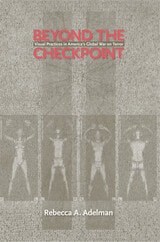
Beyond the Checkpoint
Visual Practices in America's Global War on TerrorRebecca A. Adelman
University of Massachusetts Press, 2014
Tracing the connections between citizenship and spectatorship, and moving beyond the close reading of visual representations, this book focuses on the institutions and actors that create, monitor, and regulate the visual landscape of the GWOT. Adelman looks around and through common images to follow the complex patterns of practice by which institutions and audiences engage them in various contexts. In the process, she proposes a new methodology for studying visual cultures of conflict, and related phenomena like violence, terror, and suffering that are notoriously difficult to represent.
Attending to previously unanalyzed dimensions of this conflict, this book illustrates the complexity of GWOT visual culture and the variegated experiences of citizenship that result as Americans navigate this terrain.
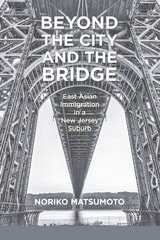
Beyond the City and the Bridge
East Asian Immigration in a New Jersey SuburbMatsumoto, Noriko
Rutgers University Press, 2018
Winner of the Richard P. McCormick Prize from the New Jersey Historical Association
Honorable Mention, 2019 American Sociological Association Book Award - Asia/Asian American Section
In recent decades, the American suburbs have become an important site for immigrant settlement. Beyond the City and the Bridge presents a case study of Fort Lee, Bergen County, on the west side of the George Washington Bridge connecting Manhattan and New Jersey. Since the 1970s, successive waves of immigrants from East Asia have transformed this formerly white community into one of the most diverse suburbs in the greater New York region. Fort Lee today has one of the largest concentrations of East Asians of any suburb on the East Coast, with Chinese, Japanese, and Koreans forming distinct communities while influencing the structure and everyday life of the borough. Noriko Matsumoto explores the rise of this multiethnic suburb—the complex processes of assimilation and reproduction of ethnicities, the changing social relationships, and the conditions under which such transformations have occurred.
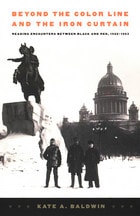
Beyond the Color Line and the Iron Curtain
Reading Encounters between Black and Red, 1922-1963Kate A. Baldwin
Duke University Press, 2002
Langston Hughes, W. E. B. Du Bois, Claude McKay, and Paul Robeson each lived or traveled extensively in the Soviet Union between the 1920s and the 1960s, and each reflected on Communism and Soviet life in works that have been largely unavailable, overlooked, or understudied. Kate A. Baldwin takes up these writings, as well as considerable material from Soviet sources—including articles in Pravda and Ogonek, political cartoons, Russian translations of unpublished manuscripts now lost, and mistranslations of major texts—to consider how these writers influenced and were influenced by both Soviet and American culture. Her work demonstrates how the construction of a new Soviet citizen attracted African Americans to the Soviet Union, where they could explore a national identity putatively free of class, gender, and racial biases. While Hughes and McKay later renounced their affiliations with the Soviet Union, Baldwin shows how, in different ways, both Hughes and McKay, as well as Du Bois and Robeson, used their encounters with the U. S. S. R. and Soviet models to rethink the exclusionary practices of citizenship and national belonging in the United States, and to move toward an internationalism that was a dynamic mix of antiracism, anticolonialism, social democracy, and international socialism.
Recovering what Baldwin terms the "Soviet archive of Black America," this book forces a rereading of some of the most important African American writers and of the transnational circuits of black modernism.

Beyond the Field
How Soccer Built Community in the United StatesBrian D. Bunk
University of Illinois Press, 2025
Played by both migrants and native-born Americans, soccer created communities across the United States. Brian D. Bunk ranges from Pawtucket to Honolulu as he illuminates the deep and diverse origins of the American sport.
Soccer took root as immigration, urbanization, and industrialization triggered immense changes across society. Matches built local pride as teams battled rival neighborhoods and towns. Teammates and supporters shared meals, raised money for fallen players, and attended each other’s weddings and funerals. If sometimes damaged by economic depression or shattered by war, clubs often bounced back to provide a steadying, resilient force in their towns. Bunk follows the story from the 1880s through World War I by profiling the struggles and joys of players while also tracing the overlooked impact of people of African, Chinese, Hawaiian, Jewish, and Filipino descent on American soccer culture.
Engaging and rich in detail, Beyond the Field draws on extensive original research to expand our idea of the people and places that formed the American game.
Beyond the Frontier
The Midwestern Voice in American Historical WritingDavid S. Brown
University of Chicago Press, 2009
As the world went to war in 1941, Time magazine founder Henry Luce coined a term for what was rapidly becoming the establishment view of America’s role in the world: the twentieth century, he argued, was the American Century. Many of the nation’s most eminent historians—nearly all of them from the East Coast—agreed with this vision and its endorsement of the vigorous use of power and persuasion to direct world affairs. But an important concentration of midwestern historians actively dissented. With Beyond the Frontier, David S. Brown tells their little-known story of opposition.
Raised in a cultural landscape that combined agrarian provincialism with reform-minded progressivism, these historians—among them Charles Beard, William Appleman Williams, and Christopher Lasch—argued strenuously against the imperial presidencies, interventionist foreign policies, and Keynesian capitalism that swiftly shaped cold war America. Casting a skeptical eye on the burgeoning military-industrial complex and its domestic counterpart, the welfare state, they warned that both components of the liberal internationalist vision jeopardized the individualistic, republican ethos that had long lain at the heart of American democracy.
Drawing on interviews, personal papers, and correspondence of the imoprtant players in the debate, Brown has written a fascinating follow-up to his critically acclaimed biography of Richard Hofstadter. Illuminating key ideas that link midwestern writers from Frederick Jackson Turner all the way to William Cronon and Thomas Frank, Beyond the Frontier is intellectual history at its best: grounded in real lives and focused on issues that remain salient—and unresolved—even today.
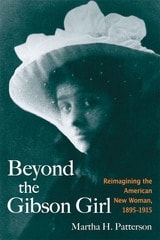
Beyond the Gibson Girl
Reimagining the American New Woman, 1895-1915Martha H. Patterson
University of Illinois Press, 2005
Challenging monolithic images of the New Woman as white, well-educated, and politically progressive, this study focuses on important regional, ethnic, and sociopolitical differences in the use of the New Woman trope at the turn of the twentieth century. Using Charles Dana Gibson's "Gibson Girls" as a point of departure, Martha H. Patterson explores how writers such as Pauline Hopkins, Margaret Murray Washington, Sui Sin Far, Mary Johnston, Edith Wharton, Ellen Glasgow, and Willa Cather challenged and redeployed the New Woman image in light of other “new” conceptions: the "New Negro Woman," the "New Ethics," the "New South," and the "New China."
As she appears in these writers' works, the New Woman both promises and threatens to effect sociopolitical change as a consumer, an instigator of evolutionary and economic development, and (for writers of color) an icon of successful assimilation into dominant Anglo-American culture. Examining a diverse array of cultural products, Patterson shows how the seemingly celebratory term of the New Woman becomes a trope not only of progressive reform, consumer power, transgressive femininity, modern energy, and modern cure, but also of racial and ethnic taxonomies, social Darwinist struggle, imperialist ambition, assimilationist pressures, and modern decay.
Beyond the Laboratory
Scientists as Political Activists in 1930s AmericaPeter J. Kuznick
University of Chicago Press, 1987
Beyond the Laboratory
Scientists as Political Activists in 1930s AmericaPeter J. Kuznick
University of Chicago Press, 1987
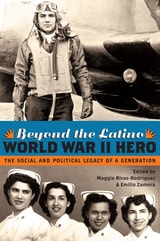
Beyond the Latino World War II Hero
The Social and Political Legacy of a GenerationEdited by Maggie Rivas-Rodríguez and Emilio Zamora
University of Texas Press, 2009
Maggie Rivas-Rodríguez 's edited volume Mexican Americans & World War II brought pivotal stories from the shadows, contributing to the growing acknowledgment of Mexican American patriotism as a meaningful force within the Greatest Generation. In this latest anthology, Rivas-Rodríguez and historian Emilio Zamora team up with scholars from various disciplines to add new insights. Beyond the Latino World War II Hero focuses on home-front issues and government relations, delving into new arenas of research and incorporating stirring oral histories.
These recollections highlight realities such as post-traumatic stress disorder and its effects on veterans' families, as well as Mexican American women of this era, whose fighting spirit inspired their daughters to participate in Chicana/o activism of the 1960s and 1970s. Other topics include the importance of radio as a powerful medium during the war and postwar periods, the participation of Mexican nationals in World War II, and intergovernmental negotiations involving Mexico and Puerto Rico. Addressing the complexity of the Latino war experience, such as the tandem between the frontline and the disruption of the agricultural migrant stream on the home front, the authors and contributors unite diverse perspectives to harness the rich resources of an invaluable oral history.
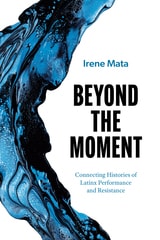
Beyond the Moment
Connecting Histories of Latinx Performance and ResistanceIrene Mata
University of Texas Press, 2026
Exploring cultural resistance by creating and archiving Latinx performance art
Performance is often seen as ephemeral, a condition that seemingly reduces its activist possibilities. After all, not everyone can take part or bear witness. Beyond the Moment shows how Latinx artists have responded with a theater of dissent that endures—performance art that also documents and can itself be archived, creating opportunities for sustained solidarity and resistance.
Through close readings of works such as Coco Fusco’s multi-genre performance A Field Guide for Female Interrogators, Irene Mata theorizes what she calls “textual mentoring.” This method involves tracing previous moments of resistance, archiving the creative process itself, and transforming the performance into a pedagogical tool. By means of textual mentoring, a work like The Panza Monologues becomes a lesson in confronting systemic oppression through collaborative storytelling. Mata also shows how the 2012 No Papers, No Fear Ride for Justice, a multistate immigrant-rights action, relies on a vocabulary of refusal of movements of the past—like the Freedom Rides of the Civil Rights era—and continues its activism beyond its immediate performance context by digitally archiving its process. With an emphasis on intersectional critique, Beyond the Moment positions performance as a radical form of resistance that educates and inspires across generations and movements.
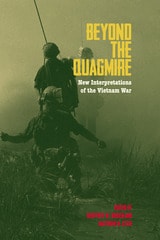
Beyond the Quagmire
New Interpretations of the Vietnam WarGeoffrey W. Jensen
University of North Texas Press, 2019
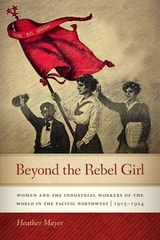
Beyond the Rebel Girl
Women and the Industrial Workers of the World in the Pacific Northwest, 1905-1924Heather Mayer
Oregon State University Press, 2018
In Beyond the Rebel Girl, historian Heather Mayer questions the well-worn vision of Wobblies as young, single, male, itinerant workers. While such workers formed a large portion of the membership, they weren’t the whole picture. In small towns across the Northwest, and in the larger cities of Seattle, Portland, and Spokane, women played an integral role in Wobbly life. Single women, but also families—husband and wife Wobbly teams—played important roles in some of the biggest fights for justice. IWW halls in these Northwest cities often functioned as community centers, with family-friendly events and entertainment.
Women were drawn to the IWW for its radical vision, inclusionary policies, birth control advocacy, and emphasis on freedom of choice in marriage. The IWW also offered women an avenue for activism that wasn’t focused primarily on the fight for suffrage. Beyond the Rebel Girl deepens our understanding of how the IWW functioned and how the union supported women in their fight for birth control, sexual emancipation, and better labor conditions, all while facing persecution at the local, state, and federal levels.
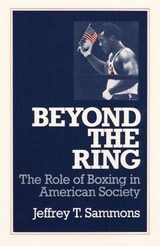
Beyond the Ring
The Role of Boxing in American SocietyJeffrey T. Sammons
University of Illinois Press, 1988
Primitive, dangerous, low-paying, crooked, exploitive--boxing, in all but a few cases, offered its athletes very little while taking everything. Why does boxing exist? What accounted for its decades-long popularity? What does its presence on the sport history landscape say about America?
Jeffrey T. Sammons looks at how boxing reflected the society that fostered it at different points in history. In the time of John L. Sullivan, the sport provided an arena for testing law, order, and social growth. Jack Johnson's career reflected the racism, nationalism, and xenophobia of the Progressive era. At its popular peak in the 1920s, boxing expressed tensions as disparate as the tug-of-war between modernism and tradition and the women's rights movement. From there, Sammons traces how the sport intertwined with Nazi antisemitism, reflected the hopes of the New Deal, produced the seminal figure Joe Louis, and stood at the nexus of the union of organized crime with business and television. Finally, he shows how Muhammad Ali and reactions to him exposed the shifting tides of racial issues and American involvement in Vietnam.
Beyond the Schoolhouse Gate
Free Speech and the Inculcation of ValuesRobert Wheeler Lane
Temple University Press, 1995

Beyond the Stars 4
Locales in American Popular FilmPaul Loukides
University of Wisconsin Press, 1990
In this volume of the Beyond the Stars series, the subject of the various individual essays are discrete conventions of movie locales, but the subject of the volume as a whole—as with the other books in the series—is the viability of film convention studies as a tool for the study of film and American culture.
Beyond the Stars 5
Themes and Ideologies in American Popular FilmUniversity of Wisconsin Press, 1990
Beyond the Stars
Stock Characters in American Popular FilmUniversity of Wisconsin Press, 1990
Beyond the Trees
Stories of Wisconsin ForestsCandice Gaukel Andrews
Wisconsin Historical Society Press, 2011
Nature writer Candice Andrews weaves together contemporary observations and historical reminisces in Beyond the Trees: Stories of Wisconsin Forests. Readers will journey to some of the most pristine and notable places in the Upper Midwest—Wisconsin’s state and national forests.
The diversity of landscapes evoked in Beyond the Trees is matched only by the characters who inhabit them. Traverse the footsteps of Ojibwe hunters and early explorers in the remote woods of Brule River State Forest. Trek past the remains of bygone logging and CCC camps in the Chequamegon-Nicolet National Forest. Glimpse into the world of Great Lakes shipping in Point Beach State Forest. Walk on trails named after John Muir and Increase Lapham in the Kettle Moraine State Forest, and experience urban green space at Milwaukee’s Havenwoods State Forest. From orchids to oak savanna, beaver to brook trout, and white-tailed deer to timber wolves, discover Wisconsin’s wildlife and flora and fauna. Archival images, informative sidebars, locator maps, and contact information for Wisconsin state and national forests round out this unique book.