Results by title
43 books match the query 'Investigation'

A Death in Bali
A Jenna Murphy MysteryNancy Tingley
Ohio University Press, 2018
Intrepid young curator-turned-private eye Jenna Murphy—whom readers first met in A Head in Cambodia—goes to the tourist town of Ubud to study early twentieth-century Balinese painting. But her first discovery when she arrives in Indonesia is the speared body of expat artist Flip Hendricks. She soon is working with an old friend, a detective for the Ubud police force, to seek the killer. Jenna suspects the motive for the killing has to do with Flip’s paintings. Detective Wayan Tyo is not so sure.
Is Jenna right, or are there other forces at work in this paradise overrun with tourists? The threats to Jenna’s safety pile up, until she can no longer deny that her life is in danger. Her entanglement with various men only clouds her judgment and complicates the situation.
As she did in the first Jenna Murphy book, in A Death in Bali, Nancy Tingley draws on her extensive experience as a scholar of Asian art to bring the armchair traveler an immersive, inside view of the art world.
A Driftless Murder
Jerry McGinley
University of Wisconsin Press, 2021
As strange details continue to emerge, the detectives enlist the help of city cop and data expert Shea Sommers. As the team crisscrosses the state to chase a few promising leads, their search expands beyond local guides and neighbors to members of a sinister, secret hunting society. When Duggan mysteriously disappears—and becomes a suspect himself—Donegal must take over the investigation. He soon realizes the case might not only be unsolvable but could land him in prison—or an early grave.

A Head in Cambodia
A Jenna Murphy MysteryNancy Tingley
Ohio University Press, 2017
When the alluring, eleventh-century Cambodian stone head of Radha, consort to Krishna, shows up at the Searles Museum, young curator Jenna Murphy doesn’t suspect that it will lead her to a murder. Asian art is her bailiwick, not criminal investigation, and her immediate concern is simply figuring out whether the head is one famously stolen from its body, or a fake.
When a second decapitation happens—this time of an art collector, not a statue—Jenna finds herself drawn into a different kind of mystery, and the stakes are life or death. It turns out that the same talents for research and for unraveling puzzles—the bread and butter of an art historian—have perfectly equipped her to solve crimes. She’s certain the sculpture provides clues to help her solve the case, which takes her to Thailand and Cambodia. But the collectors, dealers, and con artists of the Bangkok art world only compound her questions.
A Head in Cambodia is the fiction debut of noted Asian art expert Nancy Tingley. Readers will delight in the rarified world of collecting, as well as getting to know Jenna, an intrepid and shrewd observer who will easily find her place among V.I. Warshawski, Kinsey Milhone, and other great female sleuths.
Alchemy of Bones
Chicago's Luetgert Murder Case of 1897Robert Loerzel
University of Illinois Press, 2002
On May 1, 1897, Louise Luetgert disappeared. Although no body was found, Chicago police arrested her husband, Adolph, the owner of a large sausage factory, and charged him with murder. The eyes of the world were still on Chicago following the success of the World's Columbian Exposition, and the Luetgert case, with its missing victim, once-prosperous suspect, and all manner of gruesome theories regarding the disposal of the corpse, turned into one of the first media-fueled celebrity trials in American history.
Newspapers fought one another for scoops, people across the country claimed to have seen the missing woman alive, and each new clue led to fresh rounds of speculation about the crime. Meanwhile, sausage sales plummeted nationwide as rumors circulated that Luetgert had destroyed his wife's body in one of his factory's meat grinders.
Weaving in strange-but-true subplots involving hypnotists, palmreaders, English con artists, bullied witnesses, and insane-asylum bodysnatchers, Alchemy of Bones is more than just a true crime narrative; it is a grand, sprawling portrait of 1890s Chicago--and a nation--getting an early taste of the dark, chaotic twentieth century.
An Investigation of Ethnographic and Archaeological Specimens of Mescalbeans (Sophora secundiflora) in American Museums
William L. Merrill
University of Michigan Press, 1977
Aristotle Detective
An Aristotle Detective NovelMargaret Doody
University of Chicago Press, 2014
In Aristotle Detective, we first meet Stephanos—naive Watson to Aristotle’s learned Holmes—a young landed Athenian and student of Aristotle. With the aid of his cunning, olive-loving teacher, Stephanos must clear his exiled cousin of murder and save his family’s honor in a tense public trial. Will Stephanos survive to cinch the case?
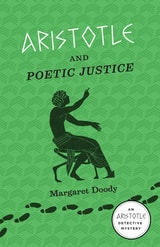
Aristotle and Poetic Justice
An Aristotle Detective NovelMargaret Doody
University of Chicago Press, 2014
Stephanos and his teacher return in Aristotle and Poetic Justice, when a party given by wealthy Athenian silver miners leads to kidnapping, a ghost, a road trip to Delphi, and, of course, murder. More historical fiction than a detective novel, this sequel runs the gamut of Athenian social customs, myth, politics, and economics—from the trials of virgin love to the dangers of silver lust.
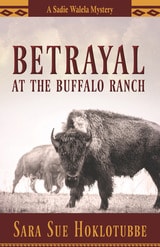
Betrayal at the Buffalo Ranch
Sara Sue Hoklotubbe
University of Arizona Press, 2018
Even though Deputy Sheriff Lance Smith, Sadie’s love interest, suspects a link to the Buffalo Ranch, he can find little evidence to make an arrest. And when a rare white buffalo calf is born on the ranch and immediately disappears, Sadie’s instincts tell her something is wrong—and she sets out to prove it. Her suspicions—and fears of more violence—escalate when a former schoolmate returns to Oklahoma to visit her ailing father and finds employment at the ranch. Will she be the next victim?
Drawn deeper and deeper into danger, Sadie uncovers an unparalleled web of greed and corruption. It will take all of her investigative skill to set things straight—assuming she and her wolfdog can stay alive long enough to succeed.
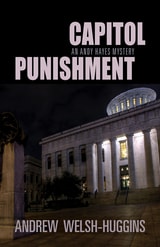
Capitol Punishment
An Andy Hayes MysteryAndrew Welsh-Huggins
Ohio University Press, 2016
The job seems simple enough: Reporter Lee Hershey needs protection for a couple of weeks as he pursues the biggest story of his career with all eyes on swing state Ohio in the midst of a presidential election. Columbus private eye Andy Hayes, broke as usual, doesn’t have much choice but to sign on, even with his girlfriend falling for the charming journalist.
Then murder strikes at the Statehouse and Andy finds himself partly responsible for the death. With an innocent man behind bars, a mysterious vehicle following Andy around the city, and more lives in danger, the detective has his hands full trying to solve a killing in a poisonous political environment where everyone has a motive for murder and anyone could be the next target.
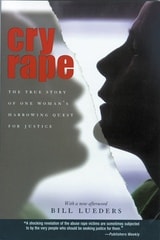
Cry Rape
The True Story of One Woman's Harrowing Quest for JusticeBill Lueders
University of Wisconsin Press, 2007
Other books have dealt with how police and prosecutors bend and break the law in their zeal to prevail. This one focuses instead on how the gravest injustice can be committed with the best of intentions, and how one woman’s bravery and persistence finally triumphed.
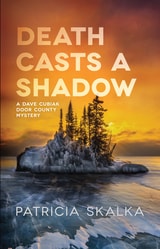
Death Casts a Shadow
Patricia Skalka
University of Wisconsin Press, 2022
The scene bears all the characteristics of an accidental fall, not unheard of for a person of her age, but something is not adding up. Later that week, an explosion in an ice fishing shack on the frozen bay leads to the discovery of another body, burned beyond recognition. Was this the widow’s missing handyman? Could the two deaths be related? With what has become a hallmark for books in the series, past and present collide as Cubiak’s search for answers uncovers the sad legacy of loneliness and the disquieting links between wealth and poverty on the peninsula.
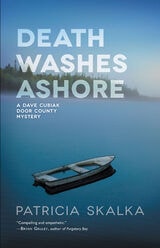
Death Washes Ashore
Patricia Skalka
University of Wisconsin Press, 2023
Chasing leads, the sheriff learns the victim directed a troupe of live-action role players living in an ersatz Camelot. In a setting where pretense in the norm, Cubiak must determine if suspects are who they say they are or if their made-up identities conceal a ruthless killer. As tensions escalate among neighbors unhappy about the noise and commotion, the sheriff discovers that more than one person on the peninsula has a motive for murder.
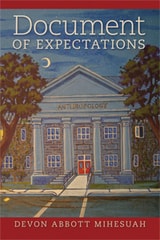
Document of Expectations
Devon Abbott Mihesuah
Michigan State University Press, 2011
When Hopi/White Mountain Apache anthropologist Tony M. Smokerise is found murdered in his office at Central Highlands University, the task of solving the crime falls to jaded Choctaw detective Monique Blue Hawk and her partner Charles T. Clarke. A seemingly tolerant and amicable office of higher education, the university, Monique soon learns, harbors parties determined to destroy the careers of Tony and his best friend, the volatile Oglala anthropologist Roxanne Badger. In the course of her investigation, Monique discovers that the scholars who control Tony’s department are also overseeing the excavation of a centuries-old tribal burial site that was uncovered during the construction of a freeway. Tony’s role in the project, she realizes, might be the key to identifying his murderer. This virtuosic mystery novel explores, in engrossing detail, the complex motives for a killing within the sometimes furtive and hermetic setting of academia.
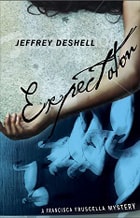
Expectation
A Francesca Fruscella MysteryJeffrey DeShell
University of Alabama Press, 2013
In his newest novel, Jeffrey DeShell draws on the musical innovations of Arnold Schoenberg—by turns traditional, serial, and atonal—to inform his grammar and language. Moving progressively through specific Schoenberg compositions, DeShell complicates the surface of his text into lyrical derivatives, all the while drawing us into a murder mystery like no other as Detective Francisca Fruscella pursues both the killer and her own complicated personal history.
By turns rapturous, rigorous, and gripping, Expectation is a thriller of another kind—and a bold venture to the limits of the mystery genre and language itself.
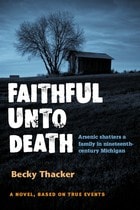
Faithful Unto Death
Becky Thacker
University of Michigan Press, 2011
Benzonia, Michigan, 1894: a sleepy Congregationalist community, dedicated to the education of hardworking and virtuous young people of both sexes and all races. Anna Spencer Thacker is the daughter of missionaries, a faithful wife, and mother of five, pious to a fault. She is suddenly stricken with a mysterious ailment that soon proves fatal. Was it truly an unfortunate illness? Or was it murder—or suicide?
Taking a true story of a murder in her own family, Becky Thacker has crafted a historical mystery novel whose cast of characters rapidly builds, including William Henry Thacker as deputy sheriff, deacon in his church, a kind man . . . but perhaps just a trifle too fond of the attractive young housekeeper; and Charlotte Spencer, the pretty missionary sister, almost saintly in her efforts to bring Jesus to the Armenians in the mountains of Turkey, though a bit prone to exaggeration. She could be a suspect—or the next target.
The children are Roy, 19: musical, a good student, but a little too wild for Benzonia; Ralph, 17: trying to shoulder the responsibilities of farm and family; and Lottie, 14: a talented young artist trying to take care of young Will and Josie. Faithful Unto Death provides a window into the daily lives of small-town Michiganders at the turn of the century wrapped up in a riveting whodunit.
Cover image by Hemera/Thinkstock
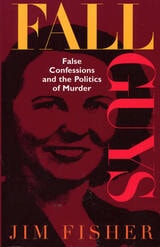
Fall Guys
False Confessions and the Politics of MurderJim Fisher
Southern Illinois University Press, 1996
Jim Fisher, criminal justice professor and former FBI agent, reveals how he uncovered the framing of two boys in a pair of unrelated murders committed in 1956 and 1958.
In the first of the cases, eleven-year-old Charlie Zubryd confessed that at the age of eight, he had murdered his widowed mother by driving a hatchet into her skull. The crime was committed in the basement of the modest Zubryd home in a rural section of Sewickley Township in western Pennsylvania, an area not far from Pittsburgh. Following intense police questioning, young Zubryd confessed to the crime in March 1959, a full twenty-eight months after the bloody murder of his mother.
Too young to prosecute, Charlie Zubryd was adopted after his confession and a brief stay in a mental ward. A childless couple gave Zubryd a new name and identity. It would be twenty years before Charlie Zubryd—now going by the name Chuck Duffy—would have any contact with his biological family.
When Zubryd/Duffy made an effort to get his real family back, he was rejected because his relatives still believed he had murdered his mother. In fact, until Fisher began to investigate the case in 1989, Chuck Duffy himself was not sure he had not killed his mother during some kind of mental blackout.
The second murder occurred in 1958, two years after the Zubryd case. Thirteen-year-old Jerry Pacek endured forty-one hours of police grilling before he confessed to raping and killing fifty-year-old Lillian Steveck as she walked home one evening from a bus stop in Breckenridge, Pennsylvania. Pacek told the same Allegheny County homicide detective who had framed Charlie Zubryd that he had killed the woman with a variety of blunt objects, none of which were ever found. The thirteen-year-old boy was tried and convicted of the murder the following spring. He was sent to Camp Hill Prison, where he remained incarcerated for ten years.
Fisher’s investigation cleared the names of both the wrongfully accused boys. Because of his investigation, the Zubryd case was reopened, which led to the identification of a vicious killer. In 1991, Fisher’s investigative efforts convinced the governor of Pennsylvania to grant a full pardon to Jerry Pacek, who as a teenager had served ten years in an adult prison for a murder he had not committed.
Jim Fisher and the Zubryd and Pacek stories have been featured on a number of nationally broadcast television programs.
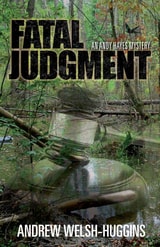
Fatal Judgment
An Andy Hayes MysteryAndrew Welsh-Huggins
Ohio University Press, 2024
Judge Laura Porter fiercely guarded her privacy, and never more so than during her long-running—and long in the past—affair with disgraced quarterback-turned-private investigator Andy Hayes. Now she’s missing, disappeared just hours after she calls Andy out of the blue explaining she’s in trouble and needs his help.
A trail of clues leads Andy to a central Ohio swamp whose future lies in the judge’s hands as she weighs a lawsuit pitting environmentalists against developers. Soon Hayes encounters the case of another missing person, a young man who vanished without a trace in a different swamp two counties away. As he looks for links between the two disappearances, Hayes is led from Columbus to Cleveland, unearthing a history of secrets and betrayals threatening not just the judge but her family as well.
Along the way, Hayes is forced to confront a newly strained relationship with his older son, now a budding football star himself, and revisit his tumultuous days as a Cleveland Browns quarterback and the gridiron failures that haunt him to this day. In partnership with a cop on her own quest for justice, Hayes rushes to find the judge, and the truth, before it’s too late.
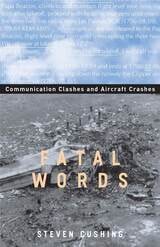
Fatal Words
Communication Clashes and Aircraft CrashesSteven Cushing
University of Chicago Press, 1994
In Fatal Words, Steven Cushing explains how miscommunication has led to dozens of aircraft disasters, and he proposes innovative solutions for preventing them. He examines ambiguities in language when aviation jargon and colloquial English are mixed, when a word is used that has different meanings, and when different words are used that sound alike. To remedy these problems, Cushing proposes a visual communication system and a computerized voice mechanism to help clear up confusing language.
Fatal Words is an accessible explanation of some of the most notorious aircraft tragedies of our time, and it will appeal to scholars in communications, linguistics, and cognitive science, to aviation experts, and to general readers.
Fetch the Devil
The Sierra Diablo Murders and Nazi Espionage in AmericaClint Richmond
University Press of New England, 2014
Finding Amy
A True Story of Murder in MaineJoseph K. Loughlin and Kate Clark Flora
University Press of New England, 2011
Forensic Media
Reconstructing Accidents in Accelerated ModernityGreg Siegel
Duke University Press, 2014
Innocent Until Interrogated
The True Story of the Buddhist Temple Massacre and the Tucson FourBy Gary L. Stuart
University of Arizona Press, 2010
Soon after, all five men recanted, saying their confessions had been coerced. One was freed after providing an alibi, but the remaining suspects—dubbed “The Tucson Four” by the media—remained in custody even though no physical evidence linked them to the crime.
Seven weeks later, investigators discovered—almost by chance—physical evidence that implicated two entirely new suspects. The Tucson Four were finally freed on November 22 after two teenage boys confessed to the crime, yet troubling questions remained. Why were confessions forced out of innocent suspects? Why and how did legal authorities build a case without evidence? And, ultimately, how did so much go so wrong?
In this first book-length treatment of the Buddhist Temple Massacre, Gary L. Stuart explores the unspeakable crime, the inexplicable confessions, and the troubling behavior of police officials. Stuart’s impeccable research for the book included a review of the complete legal records of the case, an examination of all the physical evidence, a survey of three years of print and broadcast news, and more than fifty personal interviews related to the case. Like In Cold Blood, and The Executioner’s Song, Innocent Until Interrogated is a riveting read that provides not only a striking account of the crime and the investigation but also a disturbing look at the American justice system at its very worst.

Man with the Killer Smile
The Life and Crimes of a Serial Mass MurdererMitchel P. Roth
University of North Texas Press, 2022
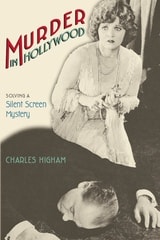
Murder in Hollywood
Solving a Silent Screen MysteryCharles Higham
University of Wisconsin Press, 2004
When it was discovered that a famous star of the day had probably killed Taylor, a massive cover-up began—from the removal of crucial evidence to the naming of innocent people as killers—which has continued until now to protect the truth. Murder in Hollywood goes beyond the killing to unearth unknown details about the life of Taylor before his arrival in Hollywood, as well as the stories and histories buried by the crooked authorities and criminals involved the case. The author’s exclusive interviews with the culpable star, his unique possession of long-vanished police records, and the support of the present-day Los Angeles county coroner—who examined the evidence as if the murder had taken place now—have ensured a hair-raising thriller.
Charles Higham successfully presents the most plausible and convincing solution yet to the mystery. In the process he paints a vivid portrait of Hollywood in the 1920s—from its major stars to its bisexual subculture. The result is a compelling answer to a long-standing mystery and a fascinating study of a place, and an industry that, as today, let people reinvent themselves. Murder in Hollywood is more extraordinary than any crime of fiction and more exciting than any action adventure movie.
Murder on the White Sands
The Disappearance of Albert and Henry FountainCorey Recko
University of North Texas Press, 2007
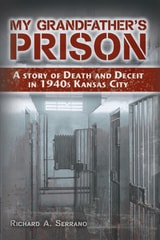
My Grandfather's Prison
A Story of Death and Deceit in 1940s Kansas CityRichard A. Serrano
University of Missouri Press, 2009
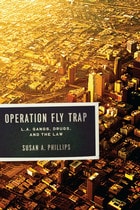
Operation Fly Trap
L. A. Gangs, Drugs, and the LawSusan A. Phillips
University of Chicago Press, 2012
In 2003, an FBI-led task force known as Operation Fly Trap attempted to dismantle a significant drug network in two Bloods-controlled, African American neighborhoods in Los Angeles. The operation would soon be considered an enormous success, noted for the precision with which the task force targeted and removed gang members otherwise entrenched in larger communities. In Operation Fly Trap, Susan A. Phillips questions both the success of this operation and the methods used to conduct it. Based on in-depth ethnographic research with Fly Trap participants, Phillips’s work brings together police narratives, crime statistics, gang cultural histories, and extensive public policy analysis to examine the relationship between state persecution and the genesis of violent social systems.
Crucial to Phillips’s contribution is the presentation of the voices and perspectives of both the people living in impoverished communities and the agents that police them. Phillips positions law enforcement surveillance and suppression as a critical point of contact between citizen and state. She tracks the bureaucratic workings of police and FBI agencies and the language, ideologies, and methods that prevail within them, and shows how gangs have adapted, seeking out new locations, learning to operate without hierarchies, and moving their activities more deeply underground. Additionally, she shows how the targeted efforts of task forces such as Fly Trap wreak sweeping, sustained damage on family members and the community at large. Balancing her roles as even-handed reporter and public scholar, Phillips presents multiple flaws within the US criminal justice system and builds a powerful argument that many law enforcement policies in fact nurture, rather than prevent, violence in American society.
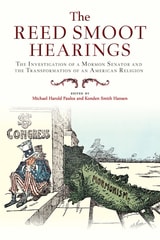
Reed Smoot Hearings
The Investigation of a Mormon Senator and the Transformation of an American ReligionMichael Harold Paulos
Utah State University Press, 2022
The work adds new insights into the role religion and the secular played in the shaping of US political institutions and national policies. Chapters also look at the history of anti-polygamy laws, the persistence of post-1890 plural marriage, the continuation of anti-Mormon sentiment, the intimacies and challenges of religious privatization, the dynamic of federal power on religious reform, and the more intimate role individuals played in effecting these institutional and national developments.
The Smoot hearings stand as an important case study that highlights the paradoxical history of religious liberty in America and the principles of exclusion and coercion that history is predicated on. Framed within a liberal Protestant sensibility, these principles of secular progress mapped out the relationship of religion and the nation-state for the new modern century. The Reed Smoot Hearings will be of significant interest to students and scholars of Mormon, western, American, and religious history.
Publication supported, in part, by Gonzaba Medical Group.
Contributors: Gary James Bergera, John Brumbaugh, Kenneth L. Cannon II, Byron W. Daynes, Kathryn M. Daynes, Kathryn Smoot Egan, D. Michael Quinn
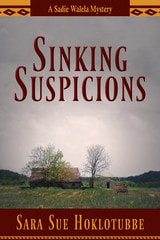
Sinking Suspicions
Sara Sue Hoklotubbe
University of Arizona Press, 2014
Iconic lawman Lance Smith joins a community-wide search, but Buck is nowhere to be found. As evidence mounts against her old friend, Sadie rushes to return home to help—only to be delayed by an island-wide earthquake and her own sinking suspicions.
A diverse cast of characters weave together a breathless story of murder, thievery, and the toll of war on the human spirit. In her effort to restore balance to her neighbor’s life, Sadie not only uncovers the truth, but unravels much more than a murder.

Sins against Nature
Sex and Archives in Colonial New SpainZeb Tortorici
Duke University Press, 2018
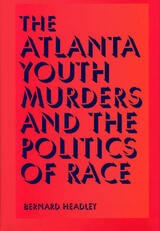
The Atlanta Youth Murders and the Politics of Race
Bernard Headley
Southern Illinois University Press, 1998
At least twenty-nine black children and young adults were murdered by an Atlanta serial killer between the summer of 1979 and the spring of 1981. Drawing national media attention, the “Atlanta tragedy,” as it became known, was immediately labeled a hate crime. However, when a young black man was arrested and convicted for the killings, public attention quickly shifted. Noted criminologist Bernard Headley was in Atlanta as the tragedy unfolded and provides here a thoughtful exploration of the social and political implications of the case both locally and nationally. Focusing on a singular historical event, Headley exposes broader tensions of race and class in contemporary America.
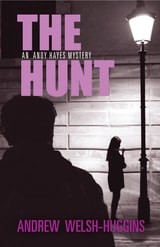
The Hunt
An Andy Hayes MysteryAndrew Welsh-Huggins
Ohio University Press, 2017
As a serial killer stalks prostitutes in Columbus, Ohio, a distraught brother asks private investigator Andy Hayes to find his sister before it’s too late. In a deadly race against time, Andy soon learns he’s not the only person hunting Jessica Byrnes, but he may be the only one who wants her alive. Byrnes hasn’t been seen in weeks following a downward slide that started as a runaway teenager and may have ended permanently on the streets.
Assisting Andy is ex-prostitute Theresa Sullivan. She now works at St. Andrew’s, the mission church run by Andy’s pal the Reverend Roy Roberts, who is less than keen on Theresa reliving the memories that nearly killed her. A local congresswoman making headlines with her work against human trafficking puts pressure on Andy to solve the case, while the police don’t want him near their exhaustive search for the murderer. At the same time, Andy’s hunt for Jessica exposes the buying and selling of trafficked women across the region. Looming over Andy’s increasingly desperate search is the shadow of his most dangerous adversary yet.
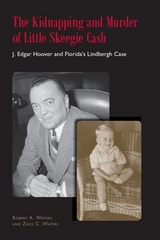
The Kidnapping and Murder of Little Skeegie Cash
J. Edgar Hoover and Florida's Lindbergh CaseRobert Alvin Waters
University of Alabama Press, 2014
In his long and storied career, J. Edgar Hoover investigated only one case personally, the 1938 kidnapping and murder of five-year-old Floridian James “Skeegie” Cash. What prompted the director himself to fly from Washington, DC, to a rain-drenched hamlet on the edge of the Everglades? Congress had slashed FBI funding, forcing Hoover to lay off half his agents. The combative Hoover believed if he could bring Skeegie’s killer to justice, the halo of positive publicity would revive the fortunes of the embattled FBI.
In The Kidnapping and Murder of Little Skeegie Cash, Robert A. Waters and Zack C. Waters bring to life the drama of the abduction, the payment of a $10,000 ransom, the heartbreaking manhunt for Skeegie and his kidnapper, the arrest and confession of Franklin Pierce McCall, and the killer’s trial and execution. Hordes of reporters swarmed into the little village south of Miami, and for thirteen days until McCall confessed, the case dominated national headlines. The authors capture the drama and the detail as well as the desperate and sometimes extralegal lengths to which Hoover went to crack the case.
Using the Freedom of Information Act, the authors obtained more than four thousand pages of FBI files and court documents to reconstruct this important but forgotten case. The tragedy that played out in the swamps of Dade County constituted the backdrop for a political struggle that would involve J. Edgar Hoover, the United States Congress, and even president Franklin Delano Roosevelt. Hoover and the president prevailed, and within two years the FBI grew from 680 employees to more than 14,000. No books and few articles have been published about this historic case.
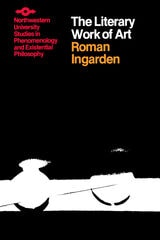
The Literary Work of Art
An Investigation of the Borderlines of Ontology, Logic, and Theory of LanguageRoman Ingarden
Northwestern University Press, 1973
The Literary Word of Art establishes the groundwork for a philosophy of literature, i.e., an ontology in terms of which the basic general structure of all lliterary works can be determined. This "essential anatomy" makes basic tools and concepts available for rigorous and subtle aesthetic analysis.
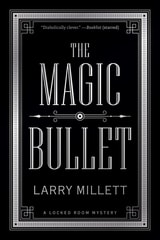
The Magic Bullet
A Locked Room MysteryLarry Millett
University of Minnesota Press, 2020
Enter Shadwell Rafferty: Irishman, St. Paul saloonkeeper, sometime detective, and old friend of the celebrated sleuth Sherlock Holmes. Summoned by Louis B. Hill—son of railroad magnate James J. Hill—to investigate, Rafferty descends into a world dominated by greedy tycoons and awash in political intrigue and wartime fearmongering. Suspects lurk in every corner of the city—including Dodge’s beautiful young widow, his slippery assistant, and a shadowy anarchist—and Rafferty pursues them from the streets of Ramsey Hill and the rooms of the Ryan Hotel to the labyrinthine caves under the Schmidt brewery. Matching wits with his foes at the police department and his unsavory rival, the St. Paul detective Mordecai Jones, Rafferty knows that in order to bring a killer to justice he must first unravel the riddle of a single bullet fired in a locked room, three hundred feet above the streets of St. Paul.
Set during a bitter streetcar strike and amid the clandestine activities of a ruthless commission charged with enforcing wartime patriotism, Larry Millett has created a classic and perfectly executed locked-room mystery in the great tradition of John Dickson Carr. From locked rooms and civil unrest to murder and wartime paranoia, The Magic Bullet presents Rafferty’s most challenging case, and its gripping conclusion—with a timely assist from Sherlock Holmes—finds both Rafferty and Millett at the top of their games.
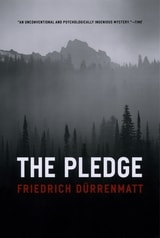
The Pledge
Friedrich Dürrenmatt
University of Chicago Press, 2000
One of Dürrenmatt’s most diabolically imagined and constructed novels, The Pledge was adapted for the screen in 2000 in a film directed by Sean Penn and starring Jack Nicholson.
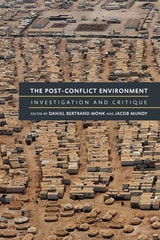
The Post-Conflict Environment
Investigation and CritiqueDaniel Bertrand Monk and Jacob Mundy, editors
University of Michigan Press, 2014
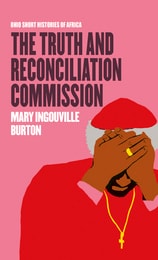
The Truth and Reconciliation Commission
Mary Ingouville Burton
Ohio University Press, 2017
In 1995, South Africa’s new government set up the Truth and Reconciliation Commission, a lynchpin of the country’s journey forward from apartheid. In contrast to the Nuremberg Trials and other retributive responses to atrocities, the TRC’s emphasis on reconciliation marked a restorative approach to addressing human rights violations and their legacies. The hearings, headed by Bishop Desmond Tutu, began in spring of 1996.
The commission was set up with three purposes: to investigate abuses, to assist victims with rehabilitation, and to consider perpetrators’ requests for amnesty. More than two decades after the first hearings, the TRC’s legacy remains mixed. Many families still do not know what became of their loved ones, and the commission came under legal challenges both from ex-president F. W. de Klerk and the African National Congress. Yet, the TRC fulfilled a vital role in the transition from apartheid to democracy, and has become a model for other countries.
This latest addition to the Ohio Short Histories of Africa series is a trenchant look at the TRC’s entire, stunningly ambitious project. And as a longtime activist for justice in South Africa and a former commissioner of the TRC, Mary Ingouville Burton is uniquely positioned to write this complex story.
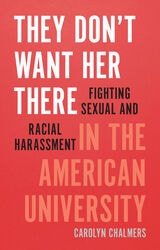
They Don't Want Her There
Fighting Sexual and Racial Harassment in the American UniversityCarolyn Chalmers
University of Iowa Press, 2022
As Jew gained accolades and advanced through the ranks at Iowa, she was met with increasingly vicious attacks on her character by her white male colleagues—implying that her sexuality had opened doors for her. After years of being subjected to demoralizing sexual, racial, and ethnic discrimination, finding herself without any higher-up departmental support, and noting her professional progression beginning to suffer by the hands of hate, Jean Jew decided to fight back. Carolyn Chalmers was her lawyer.
This book tells the inside story of pioneering litigation unfolding during the eight years of a university investigation, a watershed federal trial, and a state court jury trial. In the face of a university determined to defeat them and maintain the status quo, Jew and Chalmers forged an exceptional relationship between a lawyer and a client, each at the top of their game and part of the first generation of women in their fields. They Don’t Want Her There is a brilliant, original work of legal history that is deeply personal and shows today’s professional women just how recently some of our rights have been won—and at what cost.
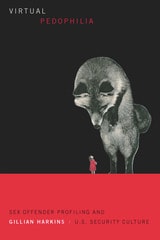
Virtual Pedophilia
Sex Offender Profiling and U.S. Security CultureGillian Harkins
Duke University Press, 2020
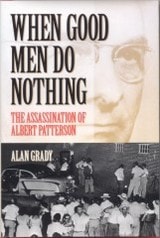
When Good Men Do Nothing
The Assassination Of Albert PattersonAlan Grady
University of Alabama Press, 2003
A true crime classic, the definitive account of the notorious 1954 assassination of Alabama Attorney General Albert Patterson
On June 18, 1954, just a few weeks after being elected Alabama's Attorney General, Albert Patterson was assassinated outside his law office in Phenix City, Alabama. His campaign promised hope and inspired reform to law-abiding citizens of Phenix City, which was notorious for organized crime, prostitution, gambling, bootlegging, and political corruption. Patterson's stance on cleaning up Phenix City had been met with threats and intimidation. With millions of dollars in illegal income and hundreds of political and professional careers at stake, the motive for his killing seemed apparent. The primary investigation surrounding Patterson's shooting focused on who pulled the trigger.
Alan Grady has exhaustively mined the state's original murder case files; the papers of John Patterson, Albert's son; records from the Office of Alabama Attorney General (who directed the murder investigation); the case files of the Alabama Department of Toxicology and Criminal Investigation; National Guard reports; and more than 30 interviews with eyewitnesses and interested parties.
Grady takes a complex story of multiple dimensions—a large cast of judicial, criminal, and political players; a web of alliances and allegiances; and a knotted sequence of investigative revelations and dead ends—and transforms it into a readable, incisive analysis of the powers and loyalties that governed, and corrupted to the core, the body politic of the state. Readers will be enthralled and educated by this authoritative account of the most compelling crime drama in Alabama during the 20th century.
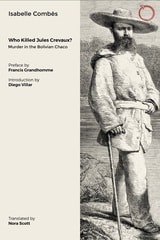
Who Killed Jules Crevaux?
Murder in the Bolivian ChacoIsabelle Combès
HAU, 2023
In 1882, the celebrated French explorer Jules Crevaux and his crew were killed by Indigenous people in the Bolivian Chaco, a fiercely contested region on the border between Bolivia, Argentina, and Paraguay. The event sparked an international uproar. The scene of the crime was embroiled in clashes among various Indigenous peoples, rubber tappers, and missionaries. Official investigators sent from France and competing newspapers ended up mired in a morass of equivocal, ambiguous, false, and contradictory information.
To make sense of this event, Isabelle Combès is the first researcher to consult the local archives and to include the perspective of Indigenous peoples. In search of who killed Crevaux and why, Combès unearths the power struggles and social imaginaries behind the incident and its aftermath. Readers will find not only an engrossing story in these pages but also an exemplar of historical inquiry that questions the very nature of truth-telling.
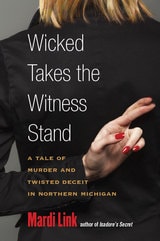
Wicked Takes the Witness Stand
A Tale of Murder and Twisted Deceit in Northern MichiganMardi Link
University of Michigan Press, 2015