55 books match the query 'Civil society' and 11 start with c
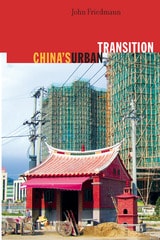
cover of China's Urban Transition

China's Urban Transition

John Friedmann

University of Minnesota Press, 2005
Though China's urban history reaches back over five thousand years, it is only in the last quarter century that urbanization has emerged as a force of widespread social transformation while a massive population shift from country to city has brought about a dramatic revolution in China's culture, politics, and economy. Employing a historical perspective, John Friedmann presents a succinct, readable account and interpretation of how this transition - one of the most momentous phenomena in contemporary history - has occurred. China's Urban Transition synthesizes a broad array of research to provide the first integrated treatment of the many processes that encompass the multi-layered meaning of urbanization: regional policy, the upsurge of rural industries, migration, expanding spheres of personal autonomy, and the governance of city building. John Friedmann's detailed analysis suggests that the nation's economic development has been driven more by social forces from within than by global capital. This leads directly to the epic story of rural migration to major urban regions, the policies used to restrain and direct this "avalanche" of humanity on the move, and the return of many migrants to their home communities, where the process of urbanization continues. Focusing on everyday life in cities, he also shows how this social transformation extends to the most intimate spheres of people's lives. In conclusion, the author raises the question of a "sustainable" urban development and its relation with China's own past, values, and institutions. Friedmann predicts that within ten years China - already the most powerful country in East Asia - will have become a major power in the world. With historical depth, interpretive insight, and interdisciplinary breadth, this book offers an unparalleled introduction to China's transformation.
[more]
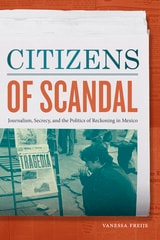
cover of Citizens of Scandal: Journalism, Secrecy, and the Politics of Reckoning in Mexico

Citizens of Scandal

Journalism, Secrecy, and the Politics of Reckoning in Mexico

Vanessa Freije

Duke University Press, 2020
In Citizens of Scandal, Vanessa Freije explores the causes and consequences of political scandals in Mexico from the 1960s through the 1980s. Tracing the process by which Mexico City reporters denounced official wrongdoing, she shows that by the 1980s political scandals were a common feature of the national media diet. News stories of state embezzlement, torture, police violence, and electoral fraud provided collective opportunities to voice dissent and offered an important, though unpredictable and inequitable, mechanism for political representation. The publicity of wrongdoing also disrupted top-down attempts by the ruling Partido Revolucionario Institucional to manage public discourse, exposing divisions within the party and forcing government officials to grapple with popular discontent. While critical reporters denounced corruption, they also withheld many secrets from public discussion, sometimes out of concern for their safety. Freije highlights the tensions—between free speech and censorship, representation and exclusion, and transparency and secrecy—that defined the Mexican public sphere in the late twentieth century.
[more]
cover of Civil Society Elites: Field Studies from Cambodia and Indonesia

Civil Society Elites

Field Studies from Cambodia and Indonesia

Edited by Astrid Norén-Nilsson, Amalinda Savirani, and Anders Uhlin

National University of Singapore Press, 2023
This innovative volume is the first systematic study of civil society elites in Southeast Asia (and indeed anywhere in the world). Spanning two previously separate areas of research – civil society and elites – it sheds new light on power inequalities within and beyond civil society, identifies different types of elite formation and elite interaction within and beyond civil society, and traces interactions and integration with elite groups from party politics, the state, and the business sector. This tightly edited volume, produced by a research team ranging from senior scholars to promising younger academics, analyses how such processes are influenced by reliance on foreign funding and explores how they play out in two settings – where the political space for civil society is generally shrinking (Cambodia) and where it is relatively expanding (Indonesia). However, the volume offers more than a rethinking of civil society in Cambodia and Indonesia; it looks beyond. It thus challenges a view of civil society entities as relatively isolated from the state and from political and economic society, revealing power relations that link them. Suggesting a new direction for civil society research, the book will be of great interest to the many researchers working on civil society, elites and contemporary Southeast Asian politics as well as those engaged in other areas of society in Cambodia and Indonesia. Policymakers, donors and not least civil society activists themselves will find the volume highly relevant to their work.
[more]
cover of Civil Society and Dictatorship in Modern German History

Civil Society and Dictatorship in Modern German History

Jürgen Kocka

Brandeis University Press, 2012
In this rich and thought-provoking work, Jürgen Kocka focuses his analytic lens on Germany’s long twentieth century, from the empire to the present. He begins by establishing the semantic problematic in the German term Bürgertum and presenting an analytical survey of German civil society over the past 120 years. He then offers a fascinating social history of the GDR, along with a comparative analysis of the East German dictatorship and that of the Third Reich. He further compares Germany’s “two dictatorships” in regard to historical memory, post-regime justice, and historiography before and after reunification. Kocka concludes with a wonderfully expansive view of historical interpretation and even argues for the place of trendiness and fashion in the profession.
[more]
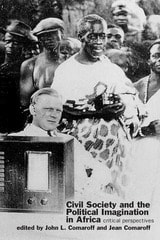
cover of Civil Society and the Political Imagination in Africa: Critical Perspectives

Civil Society and the Political Imagination in Africa

Critical Perspectives

Edited by John L. Comaroff and Jean Comaroff

University of Chicago Press, 1999

The essays in this important new collection explore the diverse, unexpected, and controversial ways in which the idea of civil society has recently entered into populist politics and public debate throughout Africa.

In a substantial introduction, anthropologists Jean and John Comaroff offer a critical theoretical analysis of the nature and deployment of the concept—and the current debates surrounding it. Building on this framework, the contributors investigate the "problem" of civil society across their regions of expertise, which cover the continent. Drawing creatively on one another's work, they examine the impact of colonial ideology, postcoloniality, and development practice on discourses of civility, the workings of everyday politics, the construction of new modes of selfhood, and the pursuit of moral community.

Incisive and original, the book shows how struggles over civil society in Africa reveal much about larger historical forces in the post-Cold War era. It also makes a strong case for the contribution of historical anthropology to contemporary discourses on the rise of a "new world order."
[more]
cover of Civil Society, Philanthropy, and the Fate of the Commons

Civil Society, Philanthropy, and the Fate of the Commons

Bruce R. Sievers

University Press of New England, 2010
Among the greatest challenges facing humanity in the twenty-first century is that of sustaining a healthy civil society, which depends upon managing the tension between individual and collective interests. Bruce R. Sievers explores this issue by investigating ways to balance the public and private sides of modern life in a manner that allows realization of the ideal of individual freedom and, at the same time, makes possible the effective pursuit of the common good. He traces the development of civil society from the seventeenth-century Dutch Republic and the eighteenth-century Scottish Enlightenment, analyzes its legacy for modern political life, and explores how historical trends in the formation of civil society and philanthropy aid or impede our achievement of public goods in the modern era.
[more]
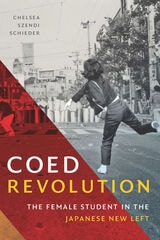
cover of Coed Revolution: The Female Student in the Japanese New Left

Coed Revolution

The Female Student in the Japanese New Left

Chelsea Szendi Schieder

Duke University Press, 2021

In the 1960s, a new generation of university-educated youth in Japan challenged forms of capitalism and the state. In Coed Revolution Chelsea Szendi Schieder recounts the crucial stories of Japanese women's participation in these protest movements led by the New Left through the early 1970s. Women were involved in contentious politics to an unprecedented degree, but they and their concerns were frequently marginalized by men in the movement and the mass media, and the movement at large is often memorialized as male and masculine. Drawing on stories of individual women, Schieder outlines how the media and other activists portrayed these women as icons of vulnerability and victims of violence, making women central to discourses about legitimate forms of postwar political expression. Schieder disentangles the gendered patterns that obscured radical women's voices to construct a feminist genealogy of the Japanese New Left, demonstrating that student activism in 1960s Japan cannot be understood without considering the experiences and representations of these women.
[more]
cover of Commodity & Propriety: Competing Visions of Property in American Legal Thought, 1776-1970

Commodity & Propriety

Competing Visions of Property in American Legal Thought, 1776-1970

Gregory S. Alexander

University of Chicago Press, 1997

Most people understand property as something that is owned, a means of creating individual wealth. But in Commodity and Propriety, the first full-length history of the meaning of property, Gregory Alexander uncovers in American legal writing a competing vision of property that has existed alongside the traditional conception. Property, Alexander argues, has also been understood as proprietary, a mechanism for creating and maintaining a properly ordered society. This view of property has even operated in periods—such as the second half of the nineteenth century—when market forces seemed to dominate social and legal relationships.

In demonstrating how the understanding of property as a private basis for the public good has competed with the better-known market-oriented conception, Alexander radically rewrites the history of property, with significant implications for current political debates and recent Supreme Court decisions.
[more]
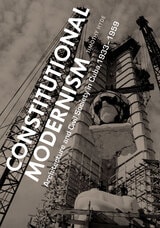
cover of Constitutional Modernism: Architecture and Civil Society in Cuba, 1933-1959

Constitutional Modernism

Architecture and Civil Society in Cuba, 1933-1959

Timothy Hyde

University of Minnesota Press, 2013

How does architecture make its appearance in civil society? Constitutional Modernism pursues this challenging question by exploring architecture, planning, and law as cultural forces. Analyzing the complex entanglements between these disciplines in the Cuban Republic, Timothy Hyde reveals how architects joined with other professionals and intellectuals in efforts to establish a stable civil society, from the promulgation of a new Cuban Constitution in 1940 up until the Cuban Revolution.

By arguing that constitutionalism was elaborated through architectural principles and practices as well as legal ones, Hyde offers a new view of architectural modernism as a political and social instrument. He contends that constitutionalism produced a decisive confluence of law and architecture, a means for planning the future of Cuba. The importance of architecture in this process is laid bare by Hyde’s thorough scrutiny of a variety of textual, graphical, and physical artifacts. He examines constitutional articles, exhibitions, interviews, master plans, monuments, and other primary materials as acts of design.

Read from the perspective of architectural history, Constitutional Modernism demonstrates how the modernist concepts that developed as an international discourse before the Second World War evolved through interactions with other disciplines into a civil urbanism in Cuba. And read from the perspective of Cuban history, the book explains how not only material products such as buildings and monuments but also the immaterial methods of architecture as a cultural practice produced ideas that had consequential effects on the political circumstances of the nation.

[more]
cover of Control and Order in French Colonial Louisbourg, 1713-1758

Control and Order in French Colonial Louisbourg, 1713-1758

A.J.B. Johnston

Michigan State University Press, 2001

Control and Order in French Colonial Louisbourg, 1713-1758 is the culmination of nearly a quarter century of research and writing on 18th-century Louisbourg by A. J. B. Johnston. The author uses a multitude of primary archival sources-official correspondence, court records, parish registries, military records, and hundreds of maps and plans-to put together a detailed analysis of a distinctive colonial society. Located on Cape Breton Island (then known as Île Royale), the seaport and stronghold of Louisbourg emerged as one of the most populous and important settlements in all of New France. Its economy was based on fishing and trade, and the society that developed there had little or nothing to do with the fur trade, or the seigneurial regime that characterized the Canadian interior. Johnston traces the evolution of a broad range of controlling measures that were introduced and adapted to achieve an ordered civil and military society at Louisbourg. Town planning, public celebrations, diversity in the population, use of punishments, excessive alcohol consumption, the criminal justice system, and sexual abuse are some of the windows that reveal attempts to control and regulate society. A. J. B. Johnston's Control and Order in French Colonial Louisbourg offers both a broad overview of the colony's evolution across its half-century of existence, and insightful analyses of the ways in which control was integrated into the mechanisms of everyday life.
[more]
cover of Cuba: Religion, Social Capital, and Development

Cuba

Religion, Social Capital, and Development

Adrian H. Hearn

Duke University Press, 2008

When Cuba’s centralized system for providing basic social services began to erode in the early 1990s, Christian and Afro-Cuban religious groups took on new social and political responsibilities. They began to work openly with state institutions on projects such as the promotion of Afro-Cuban heritage to encourage tourism, and community welfare initiatives to confront drug use, prostitution, and housing decay. In this rich ethnography, the anthropologist Adrian H. Hearn provides a detailed, on-the-ground analysis of how the Cuban state and local religious groups collaborate on community development projects and work with the many foreign development agencies operating in Cuba. Hearn argues that the growing number of collaborations between state and non-state actors has begun to consolidate the foundations of a civil society in Cuba.

While conducting research, Hearn lived for one year each in two Santería temple-houses: one located in Old Havana and the other in Santiago de Cuba. During those stays he conducted numerous interviews: with the historian of Havana and the conservationist of Santiago de Cuba (officials roughly equivalent to mayors in the United States), acclaimed writers, influential leaders of Afro-Cuban religions, and many citizens involved in community development initiatives. Hearn draws on those interviews, his participant observation in the temple-houses, case studies, and archival research to convey the daily life experiences and motivations of religious practitioners, development workers, and politicians. Using the concept of social capital, he explains the state’s desire to incorporate tightly knit religious groups into its community development projects, and he illuminates a fundamental challenge facing Cuba’s religious communities: how to maintain their spiritual integrity and internal solidarity while participating in state-directed projects.

[more]