Results by title
341 books match the query 'Cooking' and 32 start with c
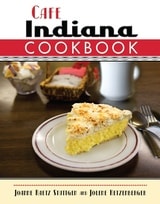
Cafe Indiana Cookbook
Joanne Raetz Stuttgen
University of Wisconsin Press, 2010
Joanne Raetz Stuttgen’s cafe guides showcase popular regional diner traditions. In her companion book Cafe Indiana she introduces travelers to the state’s top mom-and-pop restaurants. Now, Cafe Indiana Cookbook allows you to whip up local cafe classics yourself. Breakfast dishes range from Swiss Mennonite eier datch (egg pancakes) to biscuits and gravy; entree highlights include chicken with noodles (or with dumplings) and the iconic Hoosier breaded pork tenderloin sandwich. For dessert, try such Indiana favorites as apple dapple cake or rhubarb, coconut cream, or sugar cream pie . All 130 recipes have been kitchen-tested by Jolene Ketzenberger, food writer for the Indianapolis Star.
Cafe Indiana Cookbook reveals the favorite recipes of Indiana’s Main Street eateries, including some rescued for publication before a diner’s sad closure, and documents old-fashioned delicacies now fading from the culinary landscape—like southern Indiana’s fried brain sandwiches.
Finalist, Cookbook, Midwest Book Awards
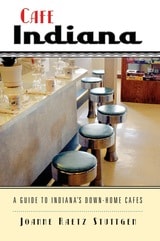
Cafe Indiana
A Guide to Indiana’s Down-Home CafesJoanne Raetz Stuttgen
University of Wisconsin Press, 2007
Over plates of chicken and noodles, fried bologna sandwiches, and sugar cream pie, folks are crafting community at the Main Street eatery. In Cafe Indiana, Hoosiers and out-of-staters alike are invited to pull out a chair and sit a spell.
Cafe Wisconsin Cookbook
Joanne Raetz Stuttgen and Terese Allen
University of Wisconsin Press, 2007
Stuttgen tracked down Wisconsin's best small town cafes, from Boscobel to Sturgeon Bay, chatted with owners and customers, took notes, and recorded the history, anecdotes, and recipes behind the food. Tested and fine-tuned by Wisconsin food writer and former chef Terese Allen, these favorite recipes will bring an authentic slice of Wisconsin into your home kitchen.
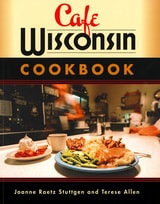
Cafe Wisconsin
A Guide To Wisconsin's Down-Home CafesJoanne Raetz Stuttgen
University of Wisconsin Press, 2004
Featuring 133 cafes, with another 101 Next Best Bets alternatives, Cafe Wisconsin is every hungry traveler’s guide to real mashed potatoes, melt-in-your-mouth hot beef, from-scratch baked goods, and colorful coffee klatches. At the counter of aptly named cafes like the Coffee Cup, Main Street, and Chatterbox, you’ll laugh with owners, shake dice with customers, and find the authentic taste and flavor of Wisconsin.
Come on. Let’s go out to eat!
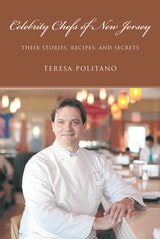
Celebrity Chefs of New Jersey
Their Stories, Recipes, and SecretsTeresa Politano
Rutgers University Press, 2010
Not so long ago, perhaps even just at the turn of this century, it was easy to lament the lack of sophisticated food in New Jersey. Oh sure, a few restaurants always sparkled, but, for the most part, New Jerseyans looked across at the bright lights of the big city, wistfully yearning for a table in glamorous Manhattan. Now, however, the most sought- after tables are right here and we have the best seats in the house, made even sweeter perhaps because they're our own little secret. We can dine frequently and dine well, with a smug sense that if only New Yorkers knew, they'd be looking across the river wishing they were us.
In Celebrity Chefs of New Jersey, Teresa Politano profiles Craig Shelton, the chef who crystallized New Jersey's place in culinary history with his legendary Ryland Inn, along with other chefs, telling their personal stories of both creativity and survival. Some of these men and women rose from humble or difficult childhoods to fame in the food world. Others were not only talented but lucky enough to be in the right place at the right time. Their stories are arranged into three categories: legends, stars, and chefs to watch, and then topped off with a sweet surprise finish. Politano includes photographs, cooking secrets, and some of their sought-after signature recipes that are sophisticated but manageable for the skilled home chef.
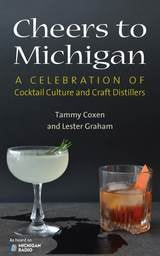
Cheers to Michigan
A Celebration of Cocktail Culture and Craft DistillersTammy Coxen and Lester Graham
University of Michigan Press, 2019
Learn how to mix a Bullshot, the Detroit-born cocktail containing Campbell’s Beef Broth—Marilyn Monroe famously called the drink “a horrible thing to do to vodka.” Or try out the authors’ Whiskey Sour recipe honoring the true story of Valentine Goesaert, a Dearborn woman who challenged the constitutionality of a Michigan law prohibiting female bartenders and in 1948 took her case before the U.S. Supreme Court. Whether you’re a fan of whiskey, gin, or vodka—of the latest cocktail trends or all-time classic drinks—there’s something in this book for all tastes. What’s constant is that each drink showcases a uniquely Michigan twist, making this book perfect for anyone who loves the state, its history and culture, or simply the delicious, delightful, and distinctive cocktails it has inspired.
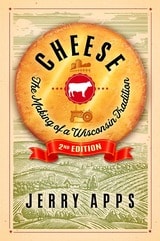
Cheese
The Making of a Wisconsin TraditionJerry Apps
University of Wisconsin Press, 2020
In this updated edition of a classic, Apps examines tumultuous changes in the business over the past twenty years, including the impacts of corporate megafarms and the rise of artisanal producers. Vivid historical photographs and striking portraits of modern family-operated factories reveal the delicate balance between art and science that goes into the process of turning ordinary milk into a wide variety of flavors, from the ubiquitous cheddar to sublime delicacies. Through these stories, we can come to better appreciate the remarkable farmers and producers that shaped cheesemaking into the thriving industry it is today.
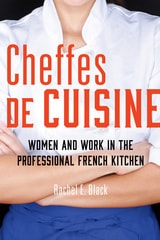
Cheffes de Cuisine
Women and Work in the Professional French KitchenRachel E. Black
University of Illinois Press, 2021
Works of Distinction, LDEI M.F.K. Fisher Prize for Excellence in Culinary Media Content, 2022
A rare woman’s-eye-view of working in the professional French kitchen
Though women enter France’s culinary professions at higher rates than ever, men still receive the lion’s share of the major awards and Michelin stars. Rachel E. Black looks at the experiences of women in Lyon to examine issues of gender inequality in France’s culinary industry. Known for its female-led kitchens, Lyon provides a unique setting for understanding the gender divide, as Lyonnais women have played a major role in maintaining the city’s culinary heritage and its status as a center for innovation. Voices from history combine with present-day interviews and participant observation to reveal the strategies women use to navigate male-dominated workplaces or, in many cases, avoid men in kitchens altogether. Black also charts how constraints imposed by French culture minimize the impact of #MeToo and other reform-minded movements.
Evocative and original, Cheffes de Cuisine celebrates the successes of women inside the professional French kitchen and reveals the obstacles women face in the culinary industry and other male-dominated professions.
Chefs, Restaurants, and Culinary Sustainability
Carole Counihan
University of Arkansas Press, 2025
Chefs, Restaurants, and Culinary Sustainability explores how chefs around the world approach culinary sustainability in highly unstable times while working in myriad professional domains. Building on empirical data collected from a wide range of cultural, historical, political, and economic settings, the contributors to this collection provide a sophisticated and engaging examination of how chefs in diverse culinary contexts tackle the increasingly urgent societal and environmental need for a more secure food future.
Chicago Coffeehouses
Brewing Community and Connection in the MidwestJune Sawyers
University of Illinois Press, 2027
Since the turn of the last century, immigrants have brought Chicago an abundance of varied café traditions from Europe, the Middle East, and beyond. Sawyers delves into yesteryear’s Towertown bohemian enclave and midcentury venues that helped fuel the folk music revival. She also explores the coffeehouse’s ongoing evolution into a digitized workplace, and the creative ways today’s artists and entrepreneurs reimagine these spaces as patisseries, cafés, bake shops, tearooms, and performance settings. Throughout, Sawyers brings to light the Midwestern coffeehouse’s role in cultivating individual identity and neighborhood connection.
Entertaining and enlightening, Chicago Coffeehouses takes readers into iconic gathering places with art on the walls and the aroma of ground beans in the air, where steam rises from a chipped but bottomless cup of coffee.
Chicago Style
The Unrivaled History of Chicago's Hot Dog CultureJimmy Jellinek, Patty Carroll, Steve Dolinsky
Northwestern University Press, 2027
The history of the iconic Chicago hot dog and the stands that built its legacy
Part culinary history, part street-corner anthropology, Chicago Style is a love letter to a city that built its identity on a bun. This book dives deep into the neon-lit, steam-fogged world of Chicago’s hot dog stands—those stubborn, glorious institutions where time seems to have stopped somewhere around 1963. Here, the steamed bun is sacred; the snap of the Vienna Beef frank is non-negotiable; and the famous warning—no ketchup—is less a rule than a social philosophy.
Chicago Style tells the story of the families, immigrants, hustlers, and neighborhood lifers who turned a humble Depression-era sandwich into one of the most recognizable foods in America. These stands are more than places to eat—they are tiny republics of flavor where politics, sports, gossip, and history are traded over paper boats loaded with mustard, relish, onions, tomatoes, sport peppers, celery salt, and a spear of pickle. With full-color art photography capturing the stands’ iconic visual culture and a reporter’s instinct for the characters who live behind the counter, Chicago Style reveals the Chicago hot dog stand for what it truly is: a form of civic architecture—democratic, delicious, and defiantly itself.
Chilies to Chocolate
Food the Americas Gave the WorldNelson Foster and Linda S. Cordell
University of Arizona Press, 1992
Chilies to Chocolate traces the biological and cultural history of some New World crops that have worldwide economic importance. Drawing on disciplines as diverse as anthropology, ethnobotany, and agronomy, it focuses on the domestication and use of these plants by native peoples and their dispersion into the fields and kitchens of the Old World: tomatoes to Italy, chili peppers throughout Asia, cacao wherever a sweet tooth craves chocolate. Indeed, potatoes and maize now rank with wheat and rice as the world's principal crops.
"The sweetness of corn on the cob is sweeter for knowing the long, winding way by which it has come into one's hands," observe Foster and Cordell. Featuring contributions by Gary Nabhan, Alan Davidson, and others, Chilies to Chocolate will increase readers' appreciation of the foods we all enjoy, of the circuitous routes by which they have become part of our diets, and of the vital role that Native Americans have played in this process.
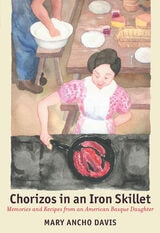
Chorizos in an Iron Skillet
Memories and Recipes from an American Basque DaughterMary Ancho Davis
University of Nevada Press, 2001
Chuck Wagon Cookbook
Beth McElfresh
Ohio University Press, 1960
No chuck wagon feed is complete without its basic ingredients of beans, beef, hot biscuits, apple pie, and lots of coffee. Beth McElfresh shows you how to host the all–time chuck wagon feed with easy–to–follow recipes.
Included are original recipes for boiled apple dumplings, lima beans baked with steak, and general, everyday useful tips, all from the renowned Western cook, Hi Pockets. She describes various health remedies learned from the old–timers on the range, that are as useful today as they were then.
Also included are recipes showing you how to create actual hand lotion and soaps like those used in the rugged west; wines, tea, punch, even candy and ice cream are included.
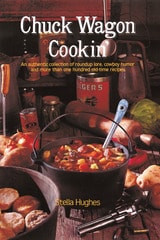
Chuck Wagon Cookin'
Stella Hughes
University of Arizona Press, 1974
"This is a splendid collection of cowcamp cook tales and 112 authentic old-time dutch oven recipes." —Books of the Southwest
"It is a delightful combination of yarns, history, nostalgia, and solid information—all ingeniously brewed up and spiced by a lady who knows what she is about." —Journal of Arizona History
"We haven't had a book that was so much fun to read in a long time." —Journal of the West
"If you want a good change in your eating, this is the book for you." —True West
Classic Recipes from the University of Alabama's University Club
Alline P. Van Duzor, Foreword by Camille Maxwell Elebash
University of Alabama Press, 2010
250 Recipes from the University of Alabama’s famed University Club in Tuscaloosa
The historic mansion at the corner of University Boulevard and Queen City Avenue in Tuscaloosa, Alabama has been home to the University of Alabama University Club since 1944. In its early years, the Club took shape around the vision and culinary expertise of the formidable Atlantan Alline P. Van Duzor, still remembered in Tuscaloosa for her impeccable and exacting standards. This book reveals her most beloved recipes.
Commissioned in the early 1960s by a New York publisher, this collection of her gastronomic creations sold through more than eight printings, further spreading her reputation.
The more than 250 favorite Southern recipes in this now-classic cookbook are written in Van Duzor’s straight-forward style, using common fresh and store-bought ingredients. This new edition has been augmented by a guide to portions and food brand names, an index to the recipes, and an appendix of past presidents of the University Club Board.
Cookbook collectors, local history buffs, the university community, and happy cooks everywhere will welcome this reissue of a popular cookbook that has won decades of fans.
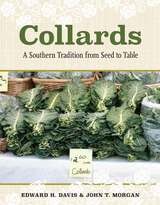
Collards
A Southern Tradition from Seed to TableEdward H. Davis and John T. Morgan
University of Alabama Press, 2015
The definitive survey of collards, an iconic southern food.
Food is essential to southern culture, and collard greens play a central role in the South’s culinary traditions. A feast to the famished, a reward to the strong, and a comfort to the weary, collards have long been held dear in the food-loving southern heart. In Collards: A Southern Tradition from Seed to Table, Edward H. Davis and John T. Morgan provide this emblematic and beloved vegetable the full-length survey its fascinating and complex history merits.
The book begins with collards’ obscure origins. Like a good detective story, the search for collards’ home country leads the authors both to Europe and West Africa, where they unravel a tale as surprising and complex as that of southern people themselves. Crossing back over the Atlantic, the authors traverse miles of American back roads, from Arkansas to Florida and from Virginia to Louisiana. They vividly recount visits to homes, gardens, grocers, farms, and restaurants where the many varieties of collards are honored, from the familiar green collards to the yellow cabbage collard and rare purple cultivars.
In uncovering the secrets of growing collards, the authors locate prize-winning patches of the plant, interview “seed savers,” and provide useful tips for kitchen gardeners. They also describe how collards made the leap from kitchen garden staple to highly valued commercial crop.
Collards captures the tastes, smells, and prize-winning recipes from the South’s premier collards festivals. They find collards at the homes of farmers, jazz musicians, governors, and steel workers. Kin to cabbage and broccoli but superior to both in nutritional value, collard greens transcend human divisions of black and white, rich and poor, sophisticated and rustic, and urban and rural.
Food trends may come and go, but collards are a tradition that southerners return to again and again. Richly illustrated in color, Collards demonstrates the abiding centrality of this green leafy vegetable to the foodways of the American South. In it, readers will rediscover an old friend.
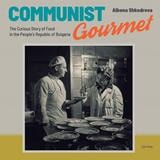
Communist Gourmet
The Curious Story of Food in the People’s Republic of BulgariaAlbena Shkodrova
Central European University Press, 2021
Communist Gourmet presents a lively, detailed account of how the communist regime in Bulgaria determined people’s everyday food experience between 1944 and 1989. It examines the daily routines of acquiring food, cooking it, and eating out at restaurants through the memories of Bulgarians and foreigners, during communism.
In looking back on a wide array of issues and events, Albena Shkodrova attempts to explain the paradoxes of daily existence. She reports human stories that are touching, sometimes dark, but often full of humor and anecdotes from nearly one hundred people: some of them are Bulgarians who were involved in the communist food industry, whether as consumers or employees, while others are visitors from the United States and Western Europe who report culinary highlights and disappointments. The author made use of the national press, officially published cookbooks, Communist Party documents, and other previously unstudied sources.
An appendix containing recipes of dishes typical of the period and an extensive set of archival photographs are special features of the volume.
Consumed
Food for a Finite PlanetSarah Elton
University of Chicago Press, 2013
Cookery
Food Rhetorics and Social ProductionEdited by Donovan Conley and Justin Eckstein
University of Alabama Press, 2020
The rhetoric of contemporary food production and consumption with a focus on social boundaries
The rhetoric of food is more than just words about food, and food is more than just edible matter. Cookery: Food Rhetorics and Social Production explores how food mediates both rhetorical influence and material life through the overlapping concepts of invention and production. The classical canon of rhetorical invention entails the process of discovering one’s persuasive appeals, whereas the contemporary landscape of agricultural production touches virtually everyone on the planet. Together, rhetoric and food shape the boundaries of shared living.
The essays in this volume probe the many ways that food informs contemporary social life through its mediation of bodies—human and extra-human alike—in the forms of intoxication, addiction, estrangement, identification, repulsion, and eroticism. Our bodies, in turn, shape the boundaries of food through research, technology, cultural trends, and, of course, by talking about it.
Each chapter explores food’s persuasive nature through a unique prism that includes intoxication, dirt, “food porn,” strange foods, and political “invisibility.” Each case offers new insights about the relations between rhetorical influence and embodied practice through food. As a whole Cookery articulates new ways of viewing food’s powers of persuasion, as well as the inherent role of persuasion in agricultural production.
The purpose of Cookery, then, is to demonstrate the deep rhetoricity of our modern industrial food system through critical examinations of concepts, practices, and tendencies endemic to this system. Food has become an essential topic for discussions concerned with the larger social dynamics of production, distribution, access, reception, consumption, influence, and the fraught question of choice. These questions about food and rhetoric are equally questions about the assumptions, values, and practices of contemporary public life.
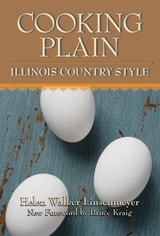
Cooking Plain, Illinois Country Style
Helen Walker Linsenmeyer
Southern Illinois University Press, 1976
Cooking Plain, Illinois Country Style by Helen Walker Linsenmeyer presents a collection of family recipes created prior to 1900 and perfected from generation to generation, mirroring the delicious and distinctive kind of cookery produced by the mix of people who settled the Illinois Country during this period. Some recipes reflect a certain New England or Southern influence, while others echo a European heritage. All hark back to a simpler style of living, when cooking was plain yet flavorful.
The recipes specify the use of natural ingredients (including butter, lard, and suet) rather than synthetic or ready-mixed foods, which were unavailable in the 1800s. Cooking at the time was pure and unadulterated, and portions were large. Strength-giving food was essential to health and endurance; thus fare was pure, hearty, flavorful, and wholesome.
The many treasures of Cooking Plain, Illinois Country Style include
• basic recipes for mead, originally served to the militiamen of Jackson County; sumac lemonade, made the Indian way; root beer, as it was originally made;
• soups of many kinds—from wholesome vegetable to savory sorrel leaf, enjoyed by the Kaskaskia French;
• old-fashioned fried beefsteak, classic American pot roast and gravy, as well as secret marinades to tenderize the tougher but more flavorful cuts of meat;
• methods for preparing and cooking rabbit, squirrel, wild turkey, venison, pheasant, rattlesnake, raccoon, buffalo, and fish;
• over one hundred recipes for wheat breads, sweet breads, corn breads, and pancakes;
• an array of delectable desserts and confections, including puddings, ice cream, taffy, and feathery-light cakes and pies;
• sections on the uses of herbs, spices, roots, and weeds; instructions for making sausage, jerky, and smoked fish and for drying one’s own fruits and vegetables; and household hints on everything from making lye soap to cooking for the sick.
And there are extra-special nuggets, too, for Mrs. Linsenmeyer laces her cookbook with interesting biographical notes on a number of the settlers and the origin of many of the foods they used. There is also a wealth of historical information on lifestyles and cooking before 1900, plus helpful tips on the use of old-fashioned cooking utensils.
A working cookbook complete in its coverage of every area of food preparation, Cooking Plain, Illinois Country Style will be used and treasured as much today as its recipes were by families of an earlier century. The recipes are not gourmet, but they are certain to please today’s cooks, especially those interested in using local ingredients and getting back to a more natural way of cooking and eating.
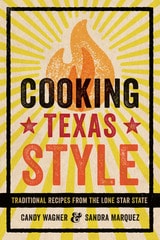
Cooking Texas Style
Traditional Recipes from the Lone Star StateBy Candy Wagner and Sandra Marquez
University of Texas Press, 2013
Just remembering the crispy fried chicken and luscious peach cobblers a grandmother or aunt used to make can set your mouth watering. And since remembering is no substitute for eating, cooks across the country have turned to Cooking Texas Style to find recipes for the comfort foods we love best. Thirty years after its first publication, popular acclaim has made this collection of favorite family recipes the standard source for traditional Texas cooking.
Here are over three hundred tasty recipes from the kitchens of Candy Wagner and Sandra Marquez. You’ll find classic Texas dishes such as chicken-fried steak, barbecue, chili, guacamole, and cornbread hot with jalapeños, as well as novel, exciting ways to prepare old favorites such as Tortilla Soup, Fajitas, and Chicken and Dumplings. Organized for easy reference, all the recipes are clearly explained, simple to prepare, and simply delicious. Cooking Texas Style is an invaluable addition to the kitchen bookshelf of anyone interested in cooking—and eating—Texas style.
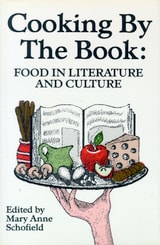
Cooking by the Book
Food in Literature and CultureEdited by Mary Anne Schofield
University of Wisconsin Press, 1989
The second part of Cooking by the Book turns to the more diverse food rhetorics of the marketplace. What, for example, is the fast food rhetoric? Why are there so many eating disorders in our society? Is it possible to teach philosophy through cookery? How long has vegetarianism been popular?
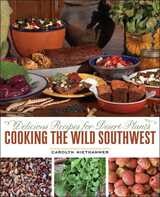
Cooking the Wild Southwest
Delicious Recipes for Desert PlantsCarolyn Niethammer, Illustrations by Paul Mirocha
University of Arizona Press, 2011
Many people’s idea of cooking with southwestern plants begins and ends with prickly pear jelly. With this update to the classic Tumbleweed Gourmet, master cook Carolyn Niethammer opens a window on the incredible bounty of the southwestern deserts and offers recipes to help you bring these plants to your table. Included here are sections featuring each of twenty-three different desert plants. The chapters include basic information, harvesting techniques, and general characteristics. But the real treat comes in the form of some 150 recipes collected or developed by the author herself. Ranging from every-day to gourmet, from simple to complex, these recipes offer something for cooks of all skill levels. Some of the recipes also include stories about their origin and readers are encouraged to tinker with the ingredients and enjoy desert foods as part of their regular diet.
Featuring Paul Mirocha’s finely drawn illustrations of the various southwestern plants discussed, this volume will serve as an indispensible guide from harvest to table. Whether you’re looking for more ways to prepare local foods, ideas for sustainable harvesting, or just want to expand your palette to take in some out-of-the-ordinary flavors, Cooking the Wild Southwest is sure to delight.
Cooking with Texas Highways
Edited by Nola McKey
University of Texas Press, 2005
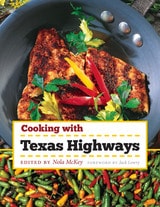
Whether you're hungry for down-home barbecue and Tex-Mex, or you want to try more exotic dishes such as Paella Valenciana and Thai Pesto, Texas Highways has long been a trusted source for delicious recipes that reflect wide-ranging Lone Star tastes. The state's official travel magazine published its first Texas Highways Cookbook, which has sold 20,000 copies, in 1986. Responding to the public's demand for a new collection of the magazine's recipes, the editors are pleased to bring you Cooking with Texas Highways, a compilation of more than 250 recipes that are as richly diverse and flavorful as Texas itself.
Cooking with Texas Highways samples all the major ethnic cuisines of the state with recipes from home cooks, well-known chefs, and popular restaurants. It offers a varied and intriguing selection of snacks and beverages, breads, soups and salads, main dishes, vegetables and sides, sauces and spreads, desserts, and more. A special feature of this cookbook is a chapter on Dutch-oven cooking, which covers all the basics for cooking outdoors with live coals, including seventeen mouth-watering recipes. In addition, you'll find dozens of the lovely color photographs that have long made Texas Highways such a feast for the eyes, along with tips on cooking techniques and sources for ingredients and stories about some of the folks who created the recipes. If you want to sample all the tastes of Texas, there's no better place to start than Cooking with Texas Highways.
Cookstove Chronicles
Social Life of a Women’s Technology in IndiaMeena R. Khandelwal
University of Arizona Press, 2024
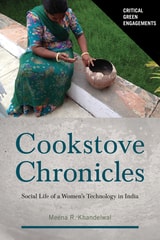
Based on anthropological research in Rajasthan, Cookstove Chronicles argues that the supposedly obsolete chulha persists because it offers women control over the tools needed to feed their families. Their continued use of old stoves alongside the new is not a failure to embrace new technologies but instead a strategy to maximize flexibility and autonomy. The chulha is neither the villain nor hero of this story. It produces particulate matter that harms people’s bodies, leaves soot on utensils and walls, and accelerates glacial melting and atmospheric warming. Yet it also depends on renewable biomass fuel and supports women’s autonomy as a local, do-it-yourself technology.
Meena Khandelwal, a feminist anthropologist, describes her collaboration with engineers, archaeologists, and others. She employs critical social theory and reflections from fieldwork to bring together research from a range of fields, including history, geography, anthropology, energy and environmental studies, public health, and science and technology studies (STS). In so doing she not only demystifies multidisciplinary research but also highlights the messy reality of actual behavior.
Cookstove Chronicles critically examines why, despite extensive development efforts, use of the chulha persists. It offers an important new framework for looking at development, technology, environmental change, and human behavior.
Craft Obsession
The Social Rhetorics of BeerJeff Rice
Southern Illinois University Press, 2016
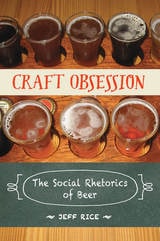
Rice weaves together theories of writing, narrative, new media, and rhetoric with a personal story of his passion for craft beer. He identifies six key elements of social media rhetoric—anecdotes, repetition, aggregation, delivery, sharing, and imagery—and examines how each helps to transform small, personal experiences with craft into a more widespread movement. When shared via social media, craft anecdotes—such as the first time one had a beer—interrupt and repeat one another, building a sense of familiarity and identity among otherwise unconnected people. Aggregation, the practice of joining unlike items into one space, builds on this network identity, establishing a connection to particular brands or locations, both real and virtual. The public releases of craft beers are used to explore the concept of craft delivery, which involves multiple actors across multiple spaces and results in multiple meanings. Finally, Rice highlights how personal sharing operates within the community of craft beer enthusiasts, who share online images of acquiring, trading for, and consuming a wide variety of beers. These shared stories and images, while personal for each individual, reflect the dependence of craft on systems of involvement. Throughout, Rice relates and reflects on his own experience as a craft beer enthusiast and his participation via social media in these systems.
Both an objective scholarly study and an engaging personal narrative about craft beer, Craft Obsession provides valuable insights into digital writing, storytelling, and social media.
Crush
The Triumph of California WineJohn Briscoe
University of Nevada Press, 2018
Finalist, Northern California Book Awards General Non-Fiction
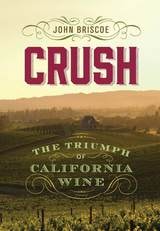
Look. Smell. Taste. Judge. Crush is the 200-year story of the heady dream that wines as good as the greatest of France could be made in California. A dream dashed four times in merciless succession until it was ultimately realized in a stunning blind tasting in Paris. In that tasting, in the year of America's bicentennial, California wines took their place as the leading wines of the world.
For the first time, Briscoe tells the complete and dramatic story of the ascendancy of California wine in vivid detail. He also profiles the larger story of California itself by looking at it from an entirely innovative perspective, the state seen through its singular wine history.
With dramatic flair and verve, Briscoe not only recounts the history of wine and winemaking in California, he encompasses a multidimensional approach that takes into account an array of social, political, cultural, legal, and winemaking sources. Elements of this history have plot lines that seem scripted by a Sophocles, or Shakespeare. It is a fusion of wine, personal histories, cultural, and socioeconomic aspects.
Crush is the story of how wine from California finally gained its global due. Briscoe recounts wine’s often fickle affair with California, now several centuries old, from the first harvest and vintage, through the four overwhelming catastrophes, to its amazing triumph in Paris.
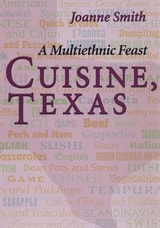
Cuisine, Texas
A Multiethnic FeastBy Joanne Smith
University of Texas Press, 1995
People from around the world have found a home in Texas, bringing with them a multiethnic feast replete with dishes that originated in Mexico, Europe, Africa, the Middle East, and Asia. In these pages you'll discover a magical place called Cuisine, Texas, where you can find all these favorite family recipes in one handy source.
Noted food writer Joanne Smith spent several years gathering the traditional recipes of every major ethnic group in Texas. As a result, Cuisine, Texas is a virtual encyclopedia of Texas cooking, with more than 375 recipes drawn from Native American, Spanish, Japanese, French, Cajun, Mexican, Tex-Mex, Anglo-American, African American, Thai, Czech, Swiss, Dutch, Jewish, Greek, German, Polish, Italian, British, Lebanese, Chinese, Russian, Vietnamese, and Scandinavian cooking.
The recipes cover the full range of foods, from appetizers to entrees, salads, vegetables, breads, and desserts, and all have clear, simple-to-follow instructions. Interspersed among them are engaging discussions of the different ethnic cuisines, flavored with delightful stories of some of the cooks who created or perfected the recipes. And to make your cooking even easier, Joanne Smith includes information on how to readily find imported and specialized ingredients and a word about health-conscious substitutions.
Cuisine, Texas, may not exist on the map, but it can be found everywhere that people enjoy good food and the fellowship that goes with it. Let this book be your one-stop source for all the tastes of Texas.
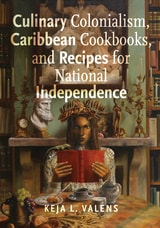
Culinary Colonialism, Caribbean Cookbooks, and Recipes for National Independence
Keja L. Valens
Rutgers University Press, 2024
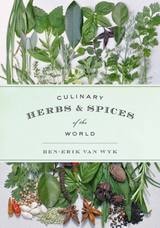
Culinary Herbs and Spices of the World
Ben-Erik van Wyk
University of Chicago Press, 2014
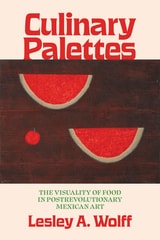
Culinary Palettes
The Visuality of Food in Postrevolutionary Mexican ArtLesley A. Wolff
University of Texas Press, 2025
2026 Mejor libro Humanidades, Mexico Section of the Latin American Studies Association
2026 Honorable Mention, First Book Prize, Cultural Studies Association
2025 Excellence in Scholarly Research and Publication Award, SECAC (formerly the Southeastern College Art Conference)
How the visual culture of food, cookery, and consumption played a central role in the making of postrevolutionary Mexico.
Postrevolutionary Mexico City was a site of anxious nation-building, as rampant modernization converged and clashed with the nation’s growing nostalgia for its pre-Columbian heritage. During this volatile period, food became a meaningful symbol for a Mexican citizenry seeking new modes of national participation.
Culinary Palettes explores how the artistic invocation of food cultures became an arena in which to negotiate the political entanglements of postrevolutionary Mexico. Lesley Wolff casts a nuanced eye on the work of visual artists such as Tina Modotti, Carlos González, and Rufino Tamayo, who nurtured the symbolic and performative power of iconic foods such as pulque, mole poblano, and watermelon. Through analysis of a wide array of visual evidence, including paintings, architecture, vintage postcards, menus, and cookbooks, Culinary Palettes demonstrates how these artists positioned their work within a broad visual landscape that relied upon the power of Mexican foodways in the urban and national imagination. In the studios of modernists, Wolff argues, artistic production, foodways, and Indigeneity proved to be mutually constitutive—and at times weaponized—agents in articulating competing claims to a new nationhood.