Results by title
459 books match the query 'Criminology' and 88 start with c
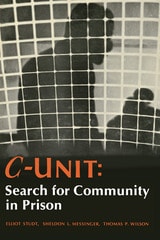
C-Unit
Search for Community in PrisonElliot Studt
Russell Sage Foundation, 1968
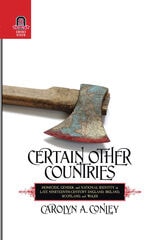
CERTAIN OTHER COUNTRIES
Homicide, Gender, and National Identity in Late Nineteenth-Century England, Ireland, Scotland, and WalesCarolyn A. Conley
The Ohio State University Press, 2007
By combining quantitative techniques in the analysis of over seven thousand cases, as well as careful and detailed readings of individual cases, the book exposes trends and patterns that might not have been evident in works using only one method. For instance, by examining all homicide trials rather than concentrating exclusively on a few highly celebrated ones, it becomes clear that most female killers were not viewed with particular horror, but were treated much like their male counterparts.
The conclusions offer challenges and correctives to existing scholarship on gender, ethnicity, class, and violence. The book also demonstrates that the Welsh, Scots, and English remained quite distinct long after their melding as Britons was announced and celebrated. By blending a study of trends in violent behavior with ideas about national identity, Conley brings together rich and hotly debated fields of modern history. This book will be valuable both for scholars of crime and violence as well as for those studying British history.
CONTROLLING VICE
REGULATING BROTHEL PROSTITUTION IN ST. PAUL, 1865–1883JOEL BEST
The Ohio State University Press, 1998
For eighteen years following the Civil War, the police in St. Paul, Minnesota, informally regulated brothel prostitution. Each month, the madams who ran the brothels were charged with keeping houses of ill fame and fined in the city’s municipal court. In effect, they were paying licensing fees in order to operate illegal enterprises. This arrangement was open; during this period, the city’s newspapers published hundreds of articles about vice and its regulation.
Joel Best claims that the sort of informal regulation in St. Paul was common in the late nineteenth century and was far more typical than the better known but brief experiment with legalization tried in St. Louis. With few exceptions, the usual approach to these issues of social control has been to treat informal regulation as a form of corruption, but Best’s view is that St. Paul’s arrangement exposes the assumption that the criminal justice system must seek to eradicate crime. He maintains that other policies are possible.
In a book that integrates history and sociology, the author has reconstructed the municipal court records for most of 1865–83, using newspaper articles, an arrest ledger kept by the St. Paul police, and municipal court dockets. He has been able to trace which madams operated brothels and the identities of many of the prostitutes who lived and worked in them.
COPS AND KIDS
Policing Juvenile Delinquency in Urban America, 1890–1940David B. Wolcott
The Ohio State University Press, 2005
Cops and Kids analyzes how police regulated juvenile behavior in turn-of-the-century America. Focusing on Los Angeles, Chicago, and Detroit, it examines how police saw their mission, how they dealt with public demands, and how they coped daily with kids. Whereas most scholarship in the field of delinquency has focused on progressive-era reformers who created a separate juvenile justice system, David B. Wolcott’s study looks instead at the complicated, sometimes coercive, relationship between police officers and young offenders. Indeed, Wolcott argues, police officers used their authority in a variety of ways to influence boys’ and girls’ behavior. Prior to the creation of juvenile courts, police officers often disciplined kids by warning and releasing them, keeping them out of courts. Establishing separate juvenile courts, however, encouraged the police to cast a wider net, pulling more young offenders into the new system. While some departments embraced “child-friendly” approaches to policing, others clung to rough-and-tumble methods. By the 1920s and 1930s, many police departments developed new strategies that combined progressive initiatives with tougher law enforcement targeted specifically at growing minority populations.
Cops and Kids illuminates conflicts between reformers and police over the practice of juvenile justice and sheds new light on the origins of lasting tensions between America’s police and urban communities.
CRIME, JUSTICE, HISTORY
ERIC MONKKONEN
The Ohio State University Press, 2002
Crime in the U.S. and the institutions for its control are deeply embedded in and shaped by history. The historical origins have often become invisible, and their recovery difficult, but any understanding of the contemporary situation requires historical context. For over twenty-five years Eric H. Monkkonen has worked on some of the puzzles and problems in recovering the history of crime and police.
Much of his work has appeared in articles, often in specialized journals or not in English, which this book collects for the first time. In addition to Monkkonen’s major published articles, this volume includes several new ones. The topics embrace violence, public disorder, policing, popular culture, and contrasts between the U.S. and Europe. Some articles illuminate special methodological and source issues that challenge historians of criminal justice. As well as dealing with serious crime, this book includes several articles on specifically urban problems and solutions associated with disorder, crime, and poverty.
In contrast to the more technical articles, several chapters, which originally appeared as op-ed pieces, show how historical understanding can help address current policy issues in crime and crime control. All too often, current policy debates occur without proper historical background. As a result, old ideas that have been tried and rejected are re-introduced, or new and sometimes simple ideas are ignored.

Captivating Technology
Race, Carceral Technoscience, and Liberatory Imagination in Everyday LifeRuha Benjamin, editor
Duke University Press, 2019

Captive Revolution
Palestinian Women's Anti-Colonial Struggle within the Israeli Prison SystemNahla Abdo
Pluto Press, 2014
Women throughout the world have always played their part in struggles against colonialism, imperialism and other forms of oppression. However, there are few books on Arab political prisoners, fewer still on the Palestinians who have been detained in their thousands for their political activism and resistance.
Nahla Abdo's Captive Revolution seeks to break the silence on Palestinian women political detainees, providing a vital contribution to research on women, revolutions, national liberation and anti-colonial resistance. Based on stories of the women themselves, as well as her own experiences as a former political prisoner, Abdo draws on a wealth of oral history and primary research in order to analyse their anti-colonial struggle, their agency and their appalling treatment as political detainees.
Making crucial comparisons with the experiences of female political detainees in other conflicts, and emphasising the vital role Palestinian political culture and memorialisation of the 'Nakba' have had on their resilience and resistance, Captive Revolution is a rich and revealing addition to our knowledge of this little-studied phenomenon.
Captivity Beyond Prisons
Criminalization Experiences of Latina (Im)migrantsBy Martha D. Escobar
University of Texas Press, 2016
Today the United States leads the world in incarceration rates. The country increasingly relies on the prison system as a “fix” for the regulation of societal issues. Captivity Beyond Prisons is the first full-length book to explicitly link prisons and incarceration to the criminalization of Latina (im)migrants.
Starting in the 1990s, the United States saw tremendous expansion in the number of imprisoned (im)migrants, specifically Latinas/os. Consequently, there was also an increase in the number of deportations. In addition to regulating society, prisons also serve as a reproductive control strategy, both in preventing female inmates from having children and by separating them from their families. With an eye to racialized and gendered technologies of power, Escobar argues that incarcerated Latinas are especially depicted as socially irrecuperable because they are not considered useful within the neoliberal labor market. This perception impacts how they are criminalized, which is not limited to incarceration but also extends to and affects Latina (im)migrants’ everyday lives. Escobar also explores the relationship between the immigrant rights movement and the prison abolition movement, scrutinizing a variety of social institutions working on solutions to social problems that lead to imprisonment.
Accessible to both academics and those in the justice and social service sectors, Escobar’s book pushes readers to consider how, even in radical spaces, unequal power relations can be reproduced by the very entities that attempt to undo them.
Carbon Criminals, Climate Crimes
Ronald C. Kramer
Rutgers University Press, 2020
Carbon Criminals, Climate Crimes analyzes the looming threats posed by climate change from a criminological perspective. It advances the field of green criminology through a examination of the criminal nature of catastrophic environmental harms resulting from the release of greenhouse gases. The book describes and explains what corporations in the fossil fuel industry, the U.S. government, and the international political community did, or failed to do, in relation to global warming. Carbon Criminals, Climate Crimes integrates research and theory from a wide variety of disciplines, to analyze four specific state-corporate climate crimes: continued extraction of fossil fuels and rising carbon emissions; political omission (failure) related to the mitigation of these emissions; socially organized climate change denial; and climate crimes of empire, which include militaristic forms of adaptation to climate disruption. The final chapter reviews policies that could mitigate greenhouse gas emissions, adapt to a warming world, and achieve climate justice.
Carceral Liberalism
Feminist Voices against State ViolenceEdited by Shreerekha Pillai. Foreword by Demita Frazier
University of Illinois Press, 2023
One of Ms. Magazine's Most Anticipated Books of 2023
Carceral liberalism emerges from the confluence of neoliberalism, carcerality, and patriarchy to construct a powerful ruse disguised as freedom. It waves the feminist flag while keeping most women still at the margins. It speaks of a post-race society while one in three Black men remain incarcerated. It sings the praises of capital while the dispossessed remain mired in debt.
Shreerekha Pillai edits essays on carceral liberalism that continue the trajectory of the Combahee River Collective and the many people inspired by its vision of feminist solidarity and radical liberation. Academics, activists, writers, and a formerly incarcerated social worker look at feminist resurgence and resistance within, at the threshold of, and outside state violence; observe and record direct and indirect forms of carcerality sponsored by the state and shaped by state structures, traditions, and actors; and critique carcerality. Acclaimed poets like Honorée Fanonne Jeffers and Solmaz Sharif amplify the volume’s themes in works that bookend each section.
Cutting-edge yet historically grounded, Carceral Liberalism examines an American ideological creation that advances imperialism, anti-blackness, capitalism, and patriarchy.
Contributors: Maria F. Curtis, Joanna Eleftheriou, Autumn Elizabeth and Zarinah Agnew and D Coulombe, Jeremy Eugene, Demita Frazier, Honorée Fanonne Jeffers, Alka Kurian, Cassandra D. Little, Beth Matusoff Merfish, Francisco Argüelles Paz y Puente, Shreerekha Pillai, Marta Romero-Delgado, Ravi Shankar, Solmaz Sharif, Shailza Sharma, Tria Blu Wakpa and Jennifer Musial, Javier Zamora
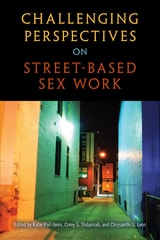
Challenging Perspectives on Street-Based Sex Work
Katie Hail-Jares
Temple University Press, 2017
Are sex workers victims, criminals, or just trying to make a living? Over the last five years, public policy and academic discourse have moved from criminalization of sex workers to victim-based understanding, shaped by human trafficking. While most research focuses on macro-level policies and theories, less is known about the on-the-ground perspectives of people whose lives are impacted by sex work, including attorneys, social workers, police officers, probation officers, and sex workers themselves.
Challenging Perspectives on Street-Based Sex Work brings the voices of lower-echelon sex workers and those individuals charged with policy development and enforcement into conversation with one another. Chapters highlight some of the current approaches to sex work, such as diversion courts, trafficking task forces, law enforcement assisted diversion and decriminalization. It also examines how sex workers navigate seldom-discussed social phenomenon like gentrification, pregnancy, imperialism, and being subjects of research. Through dialogue, our authors reveal the complex reality of engaging in and regulating sex work in the United States and through American aid abroad.
Contributors include: Aneesa A. Baboolal, Marie Bailey-Kloch, Mira Baylson, Nachale “Hua” Boonyapisomparn, Belinda Carter, Jennifer Cobbina, Ruby Corado, Eileen Corcoran, Kate D’Adamo, Edith Kinney, Margot Le Neveu, Martin A. Monto, Linda Muraresku, Erin O’Brien, Sharon Oselin. Catherine Paquette, Dan Steele, Chase Strangio, Signy Toquinto, and the editors.
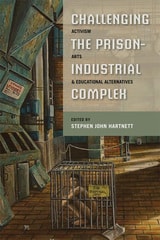
Challenging the Prison-Industrial Complex
Activism, Arts, and Educational AlternativesEdited by Stephen John Hartnett
University of Illinois Press, 2011
Changing Lives
Delinquency Prevention as Crime-Control PolicyPeter W. Greenwood
University of Chicago Press, 2005
Peter W. Greenwood here demonstrates here that as crimes rates have fallen, researchers have identified more connections between specific risk factors and criminal behavior, while program developers have discovered a wide array of innovative interventions. The result of all this activity, he reveals, has been the revelation of a few prevention models that reduce crime much more cost-effectively than popular approaches such as tougher sentencing, D.A.R.E., boot camps, and "scared straight" programs. Changing Lives expertly presents the most promising of these prevention programs, their histories, the quality of evidence to support their effectiveness, the public policy programs involved in bringing them into wider use, and the potential for investments and developmental research to increase the range and quality of programs.
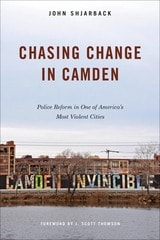
Chasing Change in Camden
Police Reform in One of America's Most Violent CitiesJohn Shjarback
Temple University Press, 2025
In Chasing Change in Camden, John Shjarback investigates how Camden’s police department re-formed and questions whether it can serve as a model for other cities. He analyzes successful policies—from innovative police training to advancements in technology—and evidence-based policing strategies.
Shjarback explains how the changes were implemented and then adjusted in response to community backlash. Chasing Change in Camden concludes with a discussion of threats to the reform and accountability efforts in both the CCPD and American policing more broadly. Ultimately, Camden’s case study offers valuable lessons for cities seeking effective police reform.

Chronicles of a Radical Criminologist
Working the Margins of Law, Power, and JusticeGregg Barak
Rutgers University Press, 2020
What holds this book together is the story of how resisting the crimes of the powerful while struggling locally for social justice is the essence of critical criminology. His seven chapters are divided into three parts—academic freedom, academic activism, and academic praxis—and these connected stories link the author's own academic career in Berkeley, California; Las Vegas, Nevada; Chicago; Alabama; Ann Arbor, Michigan; and across the United States. Barak's eventful scholarly life involved efforts to overcome laws against abortion and homosexuality; to formalize protective practices for women from domestic violence and sexual assault; to oppose racism and classism in the criminal justice system; to challenge the wars on gangs, drugs, and immigrants; and to confront the policies of mass incarceration and the treatment of juvenile offenders.
Citizens against Crime and Violence
Societal Responses in MexicoTrevor Stack
Rutgers University Press, 2022
Citizens, Cops, and Power
Recognizing the Limits of CommunitySteve Herbert
University of Chicago Press, 2006
That strategy seems to make sense, but in Citizens, Cops, and Power, Steve Herbert reveals the reasons why it rarely, if ever, works. Drawing on data he collected in diverse Seattle neighborhoods from interviews with residents, observation of police officers, and attendance at community-police meetings, Herbert identifies the many obstacles that make effective collaboration between city dwellers and the police so unlikely to succeed. At the same time, he shows that residents’ pragmatic ideas about the role of community differ dramatically from those held by social theorists.
Surprising and provocative, Citizens, Cops, and Power provides a critical perspective not only on the future of community policing, but on the nature of state-society relations as well.

City of Suspects
Crime in Mexico City, 1900–1931Pablo Piccato
Duke University Press, 2001
By investigating postrevolutionary examples of corruption and organized crime, Piccato shines light on the historical foundations of a social problem that remains the main concern of Mexico City today. Emphasizing the social construction of crime and the way it was interpreted within the moral economy of the urban poor, he describes the capital city during the early twentieth century as a contested territory in which a growing population of urban poor had to negotiate the use of public spaces with more powerful citizens and the police. Probing official discourse on deviance, Piccato reveals how the nineteenth-century rise of positivist criminology—which asserted that criminals could be readily distinguished from the normal population based on psychological and physical traits—was used to lend scientific legitimacy to class stratifications and to criminalize working-class culture. Furthermore, he argues, the authorities’ emphasis on punishment, isolation, and stigmatization effectively created cadres of professional criminals, reshaping crime into a more dangerous problem for all inhabitants of the capital.
This unique investigation into crime in Mexico City will interest Latin Americanists, sociologists, and historians of twentieth-century Mexican history.
Classifying Criminal Offenders with the MMPI-2
The Megargee SystemEdwin I. Megargee
University of Minnesota Press, 2001

Code of the Suburb
Inside the World of Young Middle-Class Drug DealersScott Jacques and Richard Wright
University of Chicago Press, 2015
In Code of the Suburb, Scott Jacques and Richard Wright offer a fascinating ethnography of the culture of suburban drug dealers. Drawing on fieldwork among teens in a wealthy suburb of Atlanta, they carefully parse the complicated code that governs relationships among buyers, sellers, police, and other suburbanites. That code differs from the one followed by urban drug dealers in one crucial respect: whereas urban drug dealers see violent vengeance as crucial to status and security, the opposite is true for their suburban counterparts. As Jacques and Wright show, suburban drug dealers accord status to deliberate avoidance of conflict, which helps keep their drug markets more peaceful—and, consequently, less likely to be noticed by law enforcement.
Offering new insight into both the little-studied area of suburban drug dealing, and, by extension, the more familiar urban variety, Code of the Suburb will be of interest to scholars and policy makers alike.
College in Prison
Reading in an Age of Mass IncarcerationKarpowitz, Daniel
Rutgers University Press, 2017
College in Prison chronicles how, since 2001, Bard College has provided hundreds of incarcerated men and women across the country access to a high-quality liberal arts education. Earning degrees in subjects ranging from Mandarin to advanced mathematics, graduates have, upon release, gone on to rewarding careers and elite graduate and professional programs. Yet this is more than just a story of exceptional individuals triumphing against the odds. It is a study in how the liberal arts can alter the landscape of some of our most important public institutions giving people from all walks of life a chance to enrich their minds and expand their opportunities.
Drawing on fifteen years of experience as a director of and teacher within the Bard Prison Initiative, Daniel Karpowitz tells the story of BPI’s development from a small pilot project to a nationwide network. At the same time, he recounts dramatic scenes from in and around college-in-prison classrooms pinpointing the contested meanings that emerge in moments of highly-charged reading, writing, and public speaking. Through examining the transformative encounter between two characteristically American institutions—the undergraduate college and the modern penitentiary—College in Prison makes a powerful case for why liberal arts education is still vital to the future of democracy in the United States.
Collision Course
Economic Change, Criminal Justice Reform, and Work in AmericaKathleen Auerhahn
Rutgers University Press, 2022
Recently, a widespread consensus has emerged that the era of “mass incarceration” is at an end, reflected in a declining prison population. Criminal justice reforms such as diversion and problem-solving courts, a renewed focus on reentry, and drug policy reform have as their goal keeping more individuals with justice system involvement out of prisons, in the community and subsequently in the labor force, which lacks the capacity to accommodate these additional would-be workers. This poses significant problems for criminal justice practice, which relies heavily on employment as a signal of offenders’ intentions to live a law-abiding lifestyle. The diminished capacity of the economy to utilize the labor of all who have historically been expected to work presents significant challenges for American society. Work, in the American ethos is the marker of success, masculinity and how one “contributes to society.” What are the consequences of ignoring these converging structural trends? This book examines these potential consequences, the meaning of work in American society, and suggests alternative redistributive and policy solutions to avert the collision course of these economic and criminal justice policy trends.

Colonialism Is Crime
Marianne Nielsen
Rutgers University Press, 2019

Common Sense Police Review
Douglas Perez
Temple University Press, 1995
Communities and Crime
An Enduring American ChallengePamela Wilcox
Temple University Press, 2017
Social scientists have long argued over the links between crime and place. The authors of Communities and Crime provide an intellectual history that traces how varying images of community have evolved over time and influenced criminological thinking and criminal justice policy.
The authors outline the major ideas that have shaped the development of theory, research, and policy in the area of communities and crime. Each chapter examines the problem of the community through a defining critical or theoretical lens: the community as social disorganization; as a system of associations; as a symptom of larger structural forces; as a result of criminal subcultures; as a broken window; as crime opportunity; and as a site of resilience.
Focusing on these changing images of community, the empirical adequacy of these images, and how they have resulted in concrete programs to reduce crime, Communities and Crime theorizes about and reflects upon why some neighborhoods produce so much crime. The result is a tour of the dominant theories of place in social science today.
Compassionate Confinement
A Year in the Life of Unit CAbrams, Laura S.
Rutgers University Press, 2013
Received an Honorable Mention for the 2015 Society for Social Work and Research Outstanding Social Work Book Award
To date, knowledge of the everyday world of the juvenile correction institution has been extremely sparse. Compassionate Confinement brings to light the challenges and complexities inherent in the U.S. system of juvenile corrections. Building on over a year of field work at a boys’ residential facility, Laura S. Abrams and Ben Anderson-Nathe provide a context for contemporary institutions and highlight some of the system’s most troubling tensions.
This ethnographic text utilizes narratives, observations, and case examples to illustrate the strain between treatment and correctional paradigms and the mixed messages regarding gender identity and masculinity that the youths are expected to navigate. Within this context, the authors use the boys’ stories to show various and unexpected pathways toward behavior change. While some residents clearly seized opportunities for self-transformation, others manipulated their way toward release, and faced substantial challenges when they returned home.
Compassionate Confinement concludes with recommendations for rehabilitating this notoriously troubled system in light of the experiences of its most vulnerable stakeholders.

Competence and Character through Life
Edited by Anne Colby, Jacquelyn Boone James, and Daniel Hart
University of Chicago Press, 1998
In this collection, leading psychologists, sociologists, and criminologists highlight the potential for positive development in different domains. By positing the possibility of multiple pathways of development rather than a single universal sequence, the contributors view the individual as potentially advancing in a wide range of interrelated and overlapping competencies. The nine essays in the book cover the years from youth to middle age, and they examine a range of social, political, and moral components of "competence and character" from teenage pregnancy and life-planning skills to voting records and educational attainment in low income households. Unlike comparable studies, this original and comprehensive volume frames issues, events, and longitudinal data through the lens of possibility rather than the pathology of defeat, stressing a positive approach to our conception of human potential.

Complicated Lives
Girls, Parents, Drugs, and Juvenile JusticeLopez, Vera
Rutgers University Press, 2017
Complicated Lives focuses on the lives of sixty-five drug-using girls in the juvenile justice system (living in group homes, a residential treatment center, and a youth correctional facility) who grew up in families characterized by parental drug use, violence, and child maltreatment. Vera Lopez situates girls’ relationships with parents who fail to live up to idealized parenting norms and examines how these relationships change over time, and ultimately contribute to the girls’ future drug use and involvement in the justice system.
While Lopez’s subjects express concerns and doubt in their chances for success, Lopez provides an optimistic prescription for reform and improvement of the lives of these young women and presents a number of suggestions ranging from enhanced cultural competency training for all juvenile justice professionals to developing stronger collaborations between youth and adult serving systems and agencies.
Comprehending Drug Use
Ethnographic Research at the Social MarginsPage, J. Bryan
Rutgers University Press, 2010
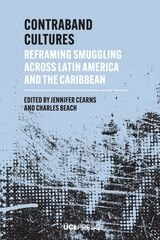
Contraband Cultures
Reframing Smuggling across Latin America and the CaribbeanEdited by Jennifer Cearns and Charles Beach
University College London, 2024
Contraband Cultures reframes smuggling activities across Latin America (including the Caribbean) and its diasporas through the lenses of kinship, political movements, economic exchange, and resistance to capitalist state hegemony, countering the popular representations of smuggling in the region as chaotic, lawless, violent, and exotic.
This book includes a broad range of chapters from social science and humanities scholars, and it uses various methodologies, theoretical traditions, and analytic approaches to explore the efficacy and valence of smuggling as a lens to examine personhood, materiality, statehood, and political (dis)connection across Latin America. Its combination of historic documentation and contemporary ethnographic research highlights the development of these cultural practices while grounding them in the capitalist and colonial refashioning of the entire region since the sixteenth century.
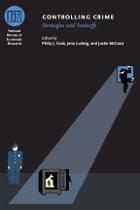
Controlling Crime
Strategies and TradeoffsEdited by Philip J. Cook, Jens Ludwig, and Justin McCrary
University of Chicago Press, 2011
Criminal justice expenditures have more than doubled since the 1980s, dramatically increasing costs to the public. With state and local revenue shortfalls resulting from the recent recession, the question of whether crime control can be accomplished either with fewer resources or by investing those resources in areas other than the criminal justice system is all the more relevant.
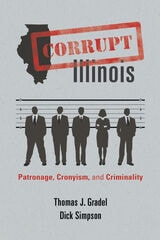
Corrupt Illinois
Patronage, Cronyism, and CriminalityThomas J. Gradel and Dick Simpson
University of Illinois Press, 2015
In Corrupt Illinois, veteran political observers Thomas J. Gradel and Dick Simpson take aim at business-as-usual. Naming names, the authors lead readers through a gallery of rogues and rotten apples to illustrate how generations of chicanery have undermined faith in, and hope for, honest government. From there, they lay out how to implement institutional reforms that provide accountability and eradicate the favoritism, sweetheart deals, and conflicts of interest corroding our civic life.
Corrupt Illinois lays out a blueprint to transform our politics from a pay-to-play–driven marketplace into what it should be: an instrument of public good.
Counter-Colonial Criminology
A Critique of Imperialist ReasonBiko Agozino
Pluto Press, 2003
He looks at how radical critiques of mainstream criminology by critical feminist and postmodernist thinkers contribute to an understanding of the relationship between colonial experience and criminology. But he also shows that even critical feminist and postmodernist assessments of conventional criminology do not go far enough as they remain virtually silent on colonial issues.
Biko Agozino considers African and other postcolonial literature and contributions to counter colonial criminology, their originality, relevance and limitations. Finally he advocates a “committed objectivity” approach to race-class-gender criminology investigations in order to come to terms with imperialistic and neo-colonialist criminology.
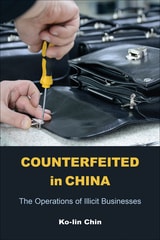
Counterfeited in China
The Operations of Illicit BusinessesKo-lin Chin
Temple University Press, 2025
In his illuminating study, Counterfeited in China, Ko-lin Chin investigates this lucrative industry and its emergence in China. His face-to-face interviews with counterfeiters — business owners, workers, facilitators, and key informants — in the hub of Guangzhou, China reveal how businesses that design, produce, and distribute fake and unauthorized luxury goods manage the risks inherent in their business.
Counterfeited in China examines the individual and group characteristics of counterfeiters and their relationships with organized crime; analyzes the economic aspects of counterfeiting; assesses the relationships among counterfeiting, violence, and corruption; and seeks to understand the demand for counterfeit goods. Chin also discusses the role of Chinese authorities and other parties in the war against counterfeiting.
Assessing the state of the industry and its future, Chin provides fascinating new insights into the modus operandi of counterfeiters.
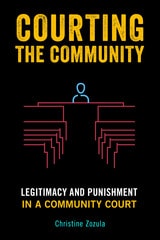
Courting the Community
Legitimacy and Punishment in a Community CourtChristine Zozula
Temple University Press, 2019
Community Courts are designed to handle a city’s low-level offenses and quality-of-life crimes, such as littering, loitering, or public drunkenness. Court advocates maintain that these largely victimless crimes jeopardize the well-being of residents, businesses, and visitors. Whereas traditional courts might dismiss such cases or administer a small fine, community courts aim to meaningfully punish offenders to avoid disorder escalating to apocalyptic decline.
Courting the Community is a fascinating ethnography that goes behind the scenes to explore how quality-of-life discourses are translated into court practices that marry therapeutic and rehabilitative ideas. Christine Zozula shows how residents and businesses participate in meting out justice—such as through community service, treatment, or other sanctions—making it more emotional, less detached, and more legitimate in the eyes of stakeholders. She also examines both “impact panels,” in which offenders, residents, and business owners meet to discuss how quality-of-life crimes negatively impact the neighborhood, as well as strategic neighborhood outreach efforts to update residents on cases and gauge their concerns.
Zozula’s nuanced investigation of community courts can lead us to a deeper understanding of punishment and rehabilitation and, by extension, the current state of the American court system.
Covering Accident Costs
Insurance, Liability, and Tort ReformsMark C. Rahdert
Temple University Press, 1995
Over the past century, tort law and insurance have developed deeply intertwined legal and economic roots. Insurance usually determines whether tort cases are brought to trial, whom plaintiffs sue, how much they claim, who provides the defense, how the case gets litigated, the dynamics of the settlement, and how much plaintiffs ultimately recover. But to what extent should liability rules be influenced by insurance? In this study, Mark Rahdert identifies the leading arguments both in favor of and against what he terms the "insurance rationale"—the idea that tort law should be structured to facilitate victim access to assured compensation.
The insurance rationale has been a leading force in the development of product liability law and, as a component of accident compensation, has significantly influenced pro-plaintiff advances in principal areas of tort law. However, the insurance rationale is also the source of great controversy. Critics charge that liability rules deliberately set to maximize plaintiffs' access to insurance funds have corrupted the system, causing insurance costs to spiral upward uncontrollably. Considering the strengths and weaknesses of both sides of the current debate, Rahdert develops a modified version of the insurance rationale that can become a tool for evaluating future tort reform proposals.

Creating Born Criminals
Nicole Hahn Rafter
University of Illinois Press, 1997
Crime And Capitalism
Readings in Marxist Crimonologyedited by David F. Greenberg
Temple University Press, 1993

Crime and Family
Selected Essays of Joan McCordJoan McCord, introduction by David Farrington, foreword by Geoffrey Sayre-McCord
Temple University Press, 2007
Crime and Justice, Volume 10
An Annual Review of ResearchEdited by Michael Tonry and Norval Morris
University of Chicago Press Journals, 1988
Crime and Justice, Volume 11
Family ViolenceEdited by Lloyd Ohlin and Michael Tonry
University of Chicago Press Journals, 1990
Crime and Justice, Volume 12
An Annual Review of ResearchEdited by Michael Tonry and Norval Morris
University of Chicago Press Journals, 1989
Crime and Justice, Volume 13
Drugs and CrimeEdited by Michael Tonry and James Q. Wilson
University of Chicago Press Journals, 1991
Crime and Justice, Volume 14
An Annual Review of ResearchEdited by Michael Tonry
University of Chicago Press Journals, 1991
Crime and Justice, Volume 16
An Annual Review of ResearchEdited by Michael Tonry
University of Chicago Press Journals, 1992
Crime and Justice, Volume 17
An Annual Review of ResearchEdited by Michael Tonry
University of Chicago Press Journals, 1993
Crime and Justice, Volume 18
Beyond the Law: Crime in Complex OrganizationsEdited by Michael Tonry and Albert J. Reiss Jr.
University of Chicago Press Journals, 1993
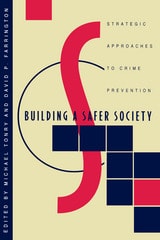
Crime and Justice, Volume 19
Strategic Approaches to Crime PreventionEdited by Michael Tonry and David Farrington
University of Chicago Press Journals, 1995

Crime and Justice, Volume 20
An Annual Review of ResearchEdited by Michael Tonry
University of Chicago Press Journals, 1996
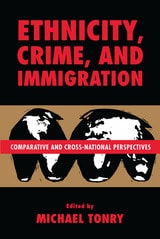
Crime and Justice, Volume 21
Comparative and Cross-National Perspectives on Ethnicity, Crime, and ImmigrationEdited by Michael Tonry
University of Chicago Press Journals, 1997
ethnic differences in criminal offending, victimization by crime, and
disparities and discrimination in justice systems. These nine essays
provide comrehensive up-to-date summaries of research and experience
concerning those subjects in Australia, Canada, England and Wales,
France, Germany, the Netherlands, Sweden, Switzerland, and the United
States. Population migration has reached an all time high in Europe and
with it, "immigration and crime" has become the single most volatile and
topical crime control issue in most of these countries.
The nine essays in this book are written by the leading specialists in
each country. Contributors include Roderic Broadhurst, Julian V. Roberts
and Anthony N. Doob, David J. Smith, Pierre Tournier, Hans-Jörg
Albrecht, Josine Junger-Tas, Peter L. Martens, Martin Killias, Robert J.
Sampson and Janet L. Lauritsen.
Michael Tonry is Sonosky Professor of Law and Public Policy at the
University of Minnesota.