Results by title
1882 books match the query 'Criticism and interpretation' and 112 start with c
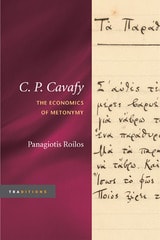
C. P. Cavafy
The Economics of MetonymyPanagiotis Roilos
University of Illinois Press, 2009
Konstantinos P. Kavafis--known to the English-reading world as C. P. Cavafy--has been internationally recognized as an important poet and attracted the admiration of eminent literary figures such as E. M. Forster, F. T. Marinetti, W. H. Auden, George Seferis, and James Merrill. Cavafy's idiosyncratic poetry remains one of the most influential and perplexing voices of European modernism.
Focusing on Cavafy's intriguing work, this book navigates new territories in critical theory and offers an interdisciplinary study of the construction of (homo)erotic desire in poetry in terms of metonymic discourse and anti-economic libidinal modalities. Panagiotis Roilos shows that problematizations of art production, market economy, and trafficability of erôs in diverse late-nineteenth and early twentieth-century European sociocultural and political contexts were re-articulated in Cavafy's poetry in new subversive ways that promoted an "unorthodox" discursive and libidinal anti-economy of jouissance.
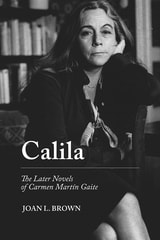
Calila
The Later Novels of Carmen Martín GaiteJoan L. Brown
Bucknell University Press, 2021
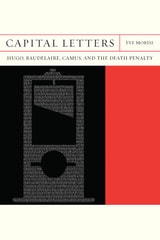
Capital Letters
Hugo, Baudelaire, Camus, and the Death PenaltyÈve Morisi
Northwestern University Press, 2020
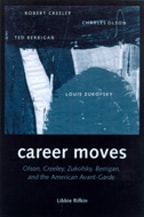
Career Moves
Olson, Creeley, Zukofsky, Berrigan, AndLibbie Rifkin
University of Wisconsin Press, 2000
How much did "making it new" have to do with "making it"? For the four "outsider poets" considered in this book—Charles Olson, Robert Creeley, Louis Zukofsky, and Ted Berrigan—the connection was everything. At once a social history of literary ambition in America in the fifties and sixties and a uniquely collective form of literary biography, Career Moves offers an intimate account of the postwar poetry underground.
Making the controversial claim that anti-Establishment poets were at least as "careerist" as their mainstream peers, Libbie Rifkin shows how the nature of these poets’ ambition actually defined postwar avant-garde identity. In doing so, she clarifies the complicated link between the crafting of a literary career and the defining of a literary canon.
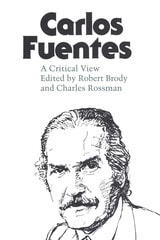
Carlos Fuentes
A Critical ViewEdited by Robert Brody and Charles Rossman
University of Texas Press, 1982
Carlos Fuentes is a master of modern world literature. With the translation of his major works into English and other languages, his reputation has surpassed the boundaries of his native Mexico and of Hispanic literature and has become international. Now each new novel stimulates popular and scholarly reviews in periodicals from Mexico City and Buenos Aires to Paris and New York.
Carlos Fuentes: A Critical View is the first full-scale examination in English of this major writer's work. The range and diversity of this critical view are remarkable and reflect similar characteristics in the creative work of Carlos Fuentes, a man of formidable intellectual energy and curiosity.
The whole of Fuentes' work is encompassed by Luis Leal as he explores history and myth in the writer's narrative. Insightful new views of single works are provided by other well-known scholars, such as Roberto González Echevarría, writing on Fuentes' extraordinary Terra Nostra, and Margaret Sayers Peden, exploring Distant Relations, for which she served as authorized translator. Here too are fresh approaches to Fuentes' other novels, among them Where the Air Is Clear, Aura, and The Hydra Head, as well as an examination by John Brushwood of the writer's short fiction and a look by Merlin Forster at Fuentes the playwright. Lanin Gyurko reaches outside Fuentes' canon for his fascinating study of the influence of Orson Welles' Citizen Kane on The Death of Artemio Cruz. Manuel Durán and George Wing consider Fuentes in his role as critic of both literature and art.
Carlos Fuentes: A Critical View has been prepared with the writer's many English-speaking readers in mind. Quotations are most frequently from standard, readily available English translations of Fuentes' works. A valuable chronology of the writer's life rounds off the volume.
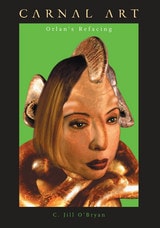
Carnal Art
Orlan’s RefacingC. Jill O'Bryan
University of Minnesota Press, 2005
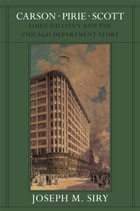
Carson Pirie Scott
Louis Sullivan and the Chicago Department StoreJoseph M. Siry
University of Chicago Press, 1988
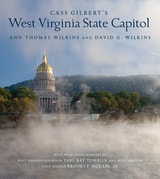
Cass Gilbert's West Virginia State Capitol
Ann Wilkins
West Virginia University Press, 2014
At the turn of the twentieth century, West Virginia was in the throes of its formative years as a state. After more than two decades of alternating its government seat between Wheeling and Charleston and the destruction of the Gothic Revival Capitol in Charleston by fire in 1921, a building commission was formed to create a permanent Capitol that would display the young state’s pride, wealth, and sophistication to the entire nation. To achieve these goals, the legislature approved a budget of more than $6.5 million for the design and construction of this statehouse and the Commission appointed by the Governor hired internationally renowned Cass Gilbert as its architect. After much debate, an impressive site along the shore of the Kanawha River in Charleston was selected as its location.
As one of the most influential architects of the early twentieth century, Cass Gilbert is known for structures such as the Woolworth Building, the United States Supreme Court building, and the Minnesota State Capitol. He believed architecture should reflect historic tradition and established social order, and this conservative philosophy is evinced within the classic form and proportions of the West Virginia State Capitol. As one of his final commissions, the West Virginia Capitol, with its golden “dome of majestic proportion,” marble interiors, ornamental reliefs, and rich woodwork, remains a distinguished example of noble simplicity in American architecture.
Cass Gilbert’s West Virginia State Capitol narrates the intricate story behind this architectural feat. Its close examination of the design, construction, and execution of this commission not only reveals the social, political, and financial climate of West Virginia during this period but also provides insight into the cultural importance of this public building. As Cass Gilbert’s design process is traced through unpublished documentation, drawings, and letters from several archives, the over one hundred accompanying photographs—many historical and others newly commissioned for this book—divulge the subtle beauty of the Capitol complex. At the same time, an extensive analysis of historical and contemporary illustrations and primary sources further elucidates the architectural value of this structure.
With welcomes by West Virginia Governor Earl Ray Tomblin and State Senator Brooks F. McCabe, Jr., a prologue by art historians Bernard Schultz and Mary L. Soldo Schultz, and an epilogue by Chad Proudfoot, this revealing and comprehensive study examines the importance of this often overlooked architectural accomplishment, solidifying its significance as a socio-political symbol as well as its place within the history of American public architecture.
Casting a Shadow
Creating the Alfred Hitchcock FilmEdited by Will Schmenner and Corinne Granof
Northwestern University Press, 2007
Scott Curtis considers the four functions of Hitchcock’s sketches and storyboards and how they undermine the impression of Hitchcock as a lone artist. Tom Gunning examines the visual vocabulary and cultural weight of Hitchcock’s movies. Bill Krohn focuses sharply on the film I Confess, tracking its making over a very cooperative path.
Finally, Jan Olsson draws on the television series, Alfred Hitchcock Presents, to show the ways that collaboration contributes to the formation of his well known public persona. Anchored by editor Will Schmenner’s introduction, this book represents an important contribution to Hitchcock scholarship and a provocative glimpse at his unsung strength as a collaborative artist.
Cather Among the Moderns
Janis P. Stout
University of Alabama Press, 2019
A masterful study by a preeminent scholar that situates Cather as a visionary practitioner of literary modernism
Willa Cather is often pegged as a regionalist, a feminine and domestic writer, or a social realist. In Cather Among the Moderns, Janis P. Stout firmly situates Cather as a visionary practitioner of literary modernism, something other scholars have hinted at but rarely affirmed. Stout presents Cather on a large, dramatic stage among a sizable cast of characters and against a brightly lit social and historical backdrop, invoking numerous figures and instances from the broad movement in the arts and culture that we call modernism.
Early on, Stout addresses the matter of gender. The term “cross-dresser” has often been applied to Cather, but Stout sees Cather’s identity as fractured or ambiguous, a reading that links her firmly to early twentieth-century modernity. Later chapters take up topics of significance both to Cather and to twentieth-century American modernists, including shifting gender roles, World War I’s devastation of social and artistic norms, and strains in racial relations. She explores Cather’s links to a small group of modernists who, after the war, embraced life in New Mexico, a destination of choice for many artists, and which led to two of Cather’s most fully realized modernist novels, The Professor’s House and Death Comes for the Archbishop.
The last chapter addresses Cather’s place within modernism. Stout first places her in relation to Ezra Pound and T. S. Eliot with their shared ties to tradition even while making, sometimes startling, innovations in literary form, then showing parallels with William Faulkner with respect to economic disparity and social injustice.
Catholic Modernism and the Irish "Avant-Garde
" The Achievement of Brian Coffey, Denis Devlin, and Thomas MacGreeveyJames Matthew Wilson
Catholic University of America Press, 2023
Cato the Censor and the Beginnings of Latin Prose
From Poetic Translation to Elite TranscriptionEnrica Sciarrino
The Ohio State University Press, 2011
Cemetery of the Murdered Daughters
Feminism, History, and Ingeborg BachmannSara Lennox
University of Massachusetts Press, 2006
Although Austrian writer Ingeborg Bachmann (1926–1973) is widely regarded as one of the most important twentieth-century authors writing in German, her novels and stories have sometimes been viewed narrowly as portraits of women as victims. In this innovative study, Sara Lennox provides a much broader perspective on Bachmann's work, at the same time undertaking an experiment in feminist methodology. Lennox examines Bachmann's poetry and prose in historical context, arguing that the varied feminist interpretations of her writings are the result of shifts in theoretical emphases over a period of more than three decades. Lennox then places her own essays on Bachmann in similar perspective, showing how each piece reflects the historical moment in which it was written. Making use of recent interdisciplinary approaches—Foucauldian theories of sexuality, post-colonial theory, materialist feminism—she explores the extent to which each of her earlier readings was shaped by the methods employed, the questions asked, and the political issues that seemed most germane at the time. Out of this analysis comes a new understanding of the significance of Bachmann's work and new insight into the theory and practice of feminist criticism.
Certain Concealments
Poe, Hawthorne, and Early Nineteenth-Century AbortionDana Medoro
University of Massachusetts Press, 2022
Antebellum America saw a great upsurge in abortion, driven in part by the rise of the pharmaceutical industry. Unsurprisingly, the practice became increasingly visible in the popular culture and literature of the era, appearing openly in advertisements, popular fiction, and newspaper reports. One figure would come to dominate national headlines from the 1840s onward: Madame Restell. Facing public condemnation and mob attacks at her home for her dogged support of women’s reproductive rights, Restell built an empire selling her powders, pills, and services along the Eastern Seaboard.
Edgar Allan Poe and Nathaniel Hawthorne undoubtedly knew of Restell’s work and would go on to depict the incompatibility of abortion and nationalism in their writings. Through the thwarted plotlines, genealogical interruptions, and terminated ideas of Poe’s Dupin trilogy and Hawthorne’s The Scarlet Letter, The House of Seven Gables, and The Blithedale Romance, these authors consider new concepts around race, reproduction, and American exceptionalism. Dana Medoro demonstrates that their work can be usefully read in the context of debates on fetal life and personhood that circulated in the era.
Cezanne and Provence
The Painter in His CultureNina Maria Athanassoglou-Kallmyer
University of Chicago Press, 2003
Like many of his childhood friends, Cézanne detested the homogenizing effects of modernism and bourgeois capitalism on the culture, people, and landscapes of his beloved Provence. Turning away from the mainstream modernist aesthetic of his impressionist years, Cézanne sought instead to develop a new artistic tradition more evocative of his Provençal heritage. Athanassoglou-Kallmyer shows that Provence served as a distinct and defining cultural force that shaped all aspects of Cézanne's approach to representation, including subject matter, style, and technical treatment. For instance, his self-portraits and portraits of family members reflect a specifically Provençal sense of identity. And Cézanne's Provençal landscapes express an increasingly traditionalist style firmly grounded in details of local history and even geology. These landscapes, together with images of bathers, cardplayers, and other figures, were key facets of Cézanne's imaginary reconstruction of Provence as primordial and idyllic—a modern French Arcadia.
Highly original and lavishly illustrated, Cézanne and Provence gives us an entirely new Cézanne: no longer the quintessential icon of generic, depersonalized modernism, but instead a self-consciously provincial innovator of mainstream styles deeply influenced by Provençal culture, places, and politics.

Cezanne
A Study of His DevelopmentRoger Fry
University of Chicago Press, 1989
This study established Fry as a critical "father," the first of his line to explicate the ideas of "vision and design" in an attempt to understand modern art. His critical analysis has in many respects never been surpassed. Fry endeavored both to show the essential development of the painter's style and to approach individual works directly; he wrote that he would detect "the profound difference between Cézanne's message and what we have made of it." The result is a book, couched in Fry's most lucid, penetrating language, which is of great technical value to the painter and student and which offers the layman an illuminating demonstration of the remarkable force of Cézanne's art.
Challenging the Bard
Dostoevsky and Pushkin, a Study of Literary RelationshipGary Rosenshield
University of Wisconsin Press, 2013
Challenging the Black Atlantic
The New World Novels of Zapata Olivella and GonçalvesJohn T. Maddox IV
Bucknell University Press, 2021
Published by Bucknell University Press. Distributed worldwide by Rutgers University Press.
Changing Our Minds with Gloria Anzaldúa
Archival Practices and Discoveriesedited by Suzanne Bost, AnaLouise Keating, Amelia María de la luz Montes, Kelli D. Zaytoun
University of Texas Press, 2026
A collection of essays using Gloria Anzaldúa’s archival works to further explore and reassess the meaning of her legacy.
In the 1980s, Gloria Anzaldúa’s pioneering Borderlands/La Frontera and This Bridge Called My Back created new and durable trajectories for feminist, queer, Latinx, and postcolonial thought. Still, much of her writing was never published. Drawing on Anzaldúa’s impressive archive—manuscript drafts, personal memorabilia, correspondence, and drawings held at the Benson Collection at the University of Texas, Austin—this volume explores what we are still learning from a pathbreaking scholar more than twenty years after her death.
Changing Our Minds with Gloria Anzaldúa gathers essays from eleven writers working in diverse fields, including philosophy, literature, geography, performance studies, and visual arts. All have been powerfully influenced by Anzaldúa, and after examining her archives, all came to know her work anew. Each chapter relates discoveries among the unpublished materials, illuminating Anzaldúa’s celebrated texts and raising novel questions. A meditation, as well, on archivalism itself, Changing Our Minds reckons with the power of dusty papers to motivate new generations of readers outside the geographies and academic departments in which Anzaldúa has long been a fixture.
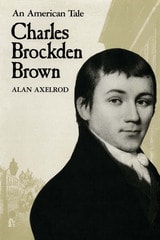
Charles Brockden Brown
An American TaleBy Alan Axelrod
University of Texas Press, 1983
Charles Brockden Brown: An American Tale is the first comprehensive literary, biographical, and cultural study of the novelist whom critic Leslie Fiedler has dubbed "the inventor of the American writer."
The author of Wieland, Arthur Mervyn, Ormond, and Edgar Huntly, Charles Brockden Brown (1771-1810) is considered the first American professional author. He introduced Indian characters into American fiction. His keen interest in character delineation and abnormal psychology anticipates the stories of Poe, Hawthorne, and later masters of the psychological novel.
Brown was eager to establish for himself an American identity as a writer, to become what Crèvecoeur called "the new man in the New World." It is especially this intimate identification of writer with country that makes Brown a telling precursor of our most characteristic authors from Poe, Hawthorne, and Cooper to Fitzgerald, Hemingway, and Faulkner.
To understand its significance, Brown's work must be examined as both art and artifact. Accordingly, Charles Brockden Brown: An American Tale is literary history as well as criticism, embued with insights into a writer's sources and influences and the psychology of literary composition. It is also a fascinating examination of a nation's emotional and intellectual impact on a young man in search of his identity as creative artist.
Charles Ives's Concord
Essays after a SonataKyle Gann
University of Illinois Press, 2021
Charles Johnson in Context
Linda Furgerson Selzer
University of Massachusetts Press, 2009
Charles Ludlam Lives!
Charles Busch, Bradford Louryk, Taylor Mac, and the Queer Legacy of the Ridiculous Theatrical CompanySean F. Edgecomb
University of Michigan Press, 2017
Author Sean F. Edgecomb focuses on the neo-Ridiculous artists Charles Busch, Bradford Louryk, and Taylor Mac to trace the connections between Ludlam’s legacy and their performances, using alternative queer models such as kinetic kinship, lateral historiography, and a new approach to camp. Charles Ludlam Lives! demonstrates that the queer legacy of Ludlam is one of distinct transformation—one where artists can reject faithful interpretations in order to move in new interpretive directions.
Charles Olson
Call Him IshmaelBy Paul Christensen
University of Texas Press, 1979
Charles Olson was an important force behind the raucous, explicit, jaunty style of much of twentieth-century poetry in America. This study makes a major contribution to our understanding of his life and work.
Paul Christensen draws upon a wide variety of source materials—from letters, unpublished essays, and fragments and sketches from the Olson Archives to the full range of Olson's published prose and poetry. Under Christensen's critical examination, Olson emerges as a stunning theorist and poet, whose erratic and often unfinished writings obscured his provocative intellect and the coherence of his perspective on the arts.
Soon after World War II, Olson emerged as one of America's leading poets with his revolutionary document on poetics, "Projective Verse," and his now-classic poem, "The Kingfishers," both of which declared a new set of techniques for verse composition. Throughout the 1950s Olson wrote many polemical essays on literature, history, aesthetics, and philosophy that outlined a new stance to experience he called objectism.
A firm advocate of spontaneous self-expression in the arts, Olson regarded the poet's return to an intense declaration of individuality as a force to combat the decade's insistence on conformity. Throughout his life Olson fought against the depersonalization of the artist in the modern age; his resources, raw verve and unedited tumultuous lyricism, were weapons he used against generalized life and identity.
This volume begins with an overview of Olson's life from his early years as a student at Harvard through his short-lived political career, his rectorship at Black Mountain College, and his retirement to Gloucester to finish writing the Maximus poems. Christensen provides a systematic review of Olson's prose works, including a close examination of his brilliant monograph on Melville, Call Me Ishmael.
Considerable attention is devoted to Olson's theory of projectivism, the themes and techniques of his short poems, and the strategies and content of his major work, the Maximus series. In addition, there is a critical survey of the works of Robert Creeley, Robert Duncan, Denise Levertov, Paul Blackburn, and other poets who show Olson's influence in their own innovative, self-exploratory poetry.
Charlie Chaplin, Director
Donna Kornhaber
Northwestern University Press, 2014
Charlie Chaplin was one of the cinema’s consummate comic performers, yet he has long been criticized as a lackluster film director. In this groundbreaking work—the first to analyze Chaplin’s directorial style—Donna Kornhaber radically recasts his status as a filmmaker. Spanning Chaplin’s career, Kornhaber discovers a sophisticated "Chaplinesque" visual style that draws from early cinema and slapstick and stands markedly apart from later, "classical" stylistic conventions. His is a manner of filmmaking that values space over time and simultaneity over sequence, crafting narrative and meaning through careful arrangement within the frame rather than cuts between frames. Opening up aesthetic possibilities beyond the typical boundaries of the classical Hollywood film, Chaplin’s filmmaking would profoundly influence directors from Fellini to Truffaut. To view Chaplin seriously as a director is to re-understand him as an artist and to reconsider the nature and breadth of his legacy.
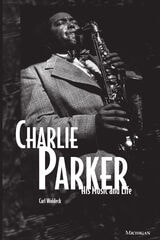
Charlie Parker
His Music and LifeCarl Woideck
University of Michigan Press, 1998
As one of the architects of modern jazz (often called "bebop"), Charlie Parker (1920-55) had a profound effect on American music that continues to this day.
This book opens with a chapter of biography and then progresses to four chapters focusing on Charlie Parker's music by tracing his artistic evolution and major achievements as a jazz improviser. Much like a guided tour through an artist's retrospective, the book introduces readers to a sampling of Charlie Parker's most illustrative works. The musical discussions and transcribed musical examples are keyed to compact disc timings for easy location--a feature unique to this book.
"The musical analysis is brilliant, particularly the pre-1945 fragments." --DownBeat
". . . debunks the stereotype that jazz musicians are unschooled and unsophisticated when it comes to music as art rather than entertainment. . . . [An] insightful and informative addition to the literature of jazz." --Calvin Wilson, Kansas City Star
Carl Woideck is Instructor of Jazz History, University of Oregon.
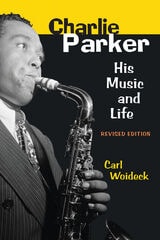
Charlie Parker
His Music and LifeCarl Woideck
University of Michigan Press, 2020

Charlotte Bronte and the Storyteller's Audience
Carol Bock
University of Iowa Press, 1992
Charlotte Brontë's World of Death
By Robert Keefe
University of Texas Press, 1979
By the age of eight, Charlotte Brontë had lost first her mother and then her two older sisters. Later, in a second wave of deaths, her brother and two younger sisters died, leaving her a sole survivor.
With subtlety and imagination, Robert Keefe examines Brontë’s works as the creative response to these losses, particularly the loss of her mother. Terrified and yet fascinated by death, struggling with guilt, remorse, and a deep sense of rejection, Charlotte Brontë found in art a way to come to terms with death through its symbolic reenactment. In her earlier writings she created a fictional world marked by devices that allow her to control or deny death. In her later works these mechanisms evolved into mature expressions of a profound psychological reality.
Brontë’s preoccupation with death is seen in her fiction in the recurring patterns of separation and exile. Keefe traces the development of these motifs in the juvenilia and the four novels: The Professor, Jane Eyre, Shirley, and Villette.
Unique in its emphasis on the maternal relationships in Brontë’s life and art, this study also explores certain aspects of her life that have often puzzled biographers.
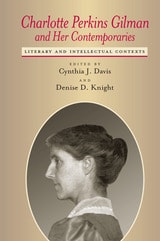
Charlotte Perkins Gilman and Her Contemporaries
Literary and Intellectual ContextsEdited by Cynthia J. Davis and Denise D. Knight
University of Alabama Press, 2004
Considers Gilman’s place in American literary and social history by examining her relationships to other prominent intellectuals of her era
By placing Charlotte Perkins Gilman in the company of her contemporaries, this collection seeks to correct misunderstandings of the feminist writer and lecturer as an isolated radical. Gilman believed and preached that no life is ever led in isolation; indeed, the cornerstone of her philosophy was the idea that “humanity is a relation.”Gilman's highly public and combative stances as a critic and social activist brought her into contact and conflict with many of the major thinkers and writers of the period, including Mary Austin, Margaret Sanger, Ambrose Bierce, Grace Ellery Channing, Lester Ward, Inez Haynes Gillmore, William Randolph Hearst, Karen Horney, William Dean Howells, Catharine Beecher, George Bernard Shaw, and Owen Wister. Gilman wrote on subjects as wide ranging as birth control, eugenics, race, women's rights and suffrage, psychology, Marxism, and literary aesthetics. Her many contributions to social, intellectual, and literary life at the turn of the 20th century raised the bar for future discourse, but at great personal and professional cost.
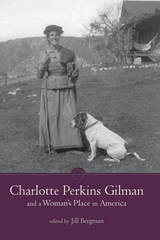
Charlotte Perkins Gilman and a Woman's Place in America
Edited by Jill Bergman
University of Alabama Press, 2017
Charlotte Perkins Gilman and a Woman’s Place in America is a pioneering collection that probes how depictions of space, confinement, and liberation establish both the difficulty and necessity of female empowerment. Turning Victorian notions of propriety and a woman’s place on its ear, this finely crafted essay collection studies Gilman’s writings and the manner in which they push back against societal norms and reject male-dominated confines of space.
The contributors present fascinating and innovative readings of some of Gilman’s most significant works. By examining the settings in “The Yellow Wallpaper” and Herland, for example, the volume analyzes Gilman’s construction of place, her representations of male dominance and female subjugation, and her analysis of the rules and obligations that women feel in conforming to their assigned place: the home.
Additionally, this volume delineates female resistance to this conformity. Contributors highlight how Gilman’s narrators often choose resistance over obedient captivity, breaking free of the spaces imposed upon them in order to seek or create their own habitats. Through biographical interpretations of Gilman’s work that focus on the author’s own renouncement of her “natural” role of wife and mother, contributors trace her relocation to the American West in an attempt to appropriate the masculinized spaces of work and social organization.
Engaging, well-researched, and deftly written, the essays in this collection will appeal to scholars of Gilman, literature, and gender issues alike.
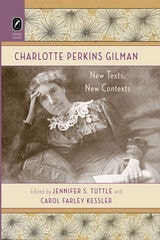
Charlotte Perkins Gilman
New Texts, New ContextsJennifer S. Tuttle and Carol Farley Kessler
The Ohio State University Press, 2011
Chateaubriand Across Empires
Fabienne Moore
Bucknell University Press, 0
What happens when the liberty of ancient nobility collides with the revolutionary ideals of equality? This groundbreaking study explores how the American, French, Haitian, and Greek Revolutions redefined freedom—and how French Romantic figure Chateaubriand grappled with that transformation. Tracing his travels across England, North America, and the Mediterranean, this book uncovers Chateaubriand’s seductive visions of “paradises lost,” which were taken up, challenged, and reimagined by Anglophone and Hispanic writers.
From Charlotte Brontë to Harriet Beecher Stowe, from Byron to Bolaño authors found in Chateaubriand a conflicted but powerful voice at the crossroads of liberty, race, religion, and empire. This is the first comprehensive study to situate Chateaubriand within the histories of colonialism and global revolution, revealing a literary legacy that remains startlingly relevant in today’s struggles over equality.
Published by Bucknell University Press. Distributed worldwide by Rutgers University Press.
Chaucer's (Anti-)Eroticisms and the Queer Middle Ages
Tison Pugh
The Ohio State University Press, 2014
For Chaucer, erotic pursuits establish the thrust and tenor of many of his narratives, as they also expose the frustrations inherent in pursuing desires frowned upon by the religious foundations of Western medieval culture. One cannot love freely within an ideological framework that polices sexuality and privileges the anti-erotic Christian ideals of virginity and chastity, yet loving queerly creates escapes from social structures inimical to amour and its expressions in the medieval period. Thus Chaucer is not just England’s foundational love poet, he is also England’s foundational queer poet.
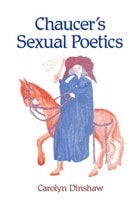
Chaucer's Sexual Poetics
Carolyn Dinshaw
University of Wisconsin Press, 1990
Through an analysis of the poems Chaucers wordes Unto Adam, His Owne Scriveyn, Troilus and Criseyde, the Legend of Good Women, the Man of Law’s Tale, the Wife of Bath’s Tale and its Prologue, the Clerk’s Tale, and the Pardoner’s Tale, Carolyn Dinshaw offers a provocative argument on medieval sexual constructs and Chaucer’s role in shaping them. Operating under the assumption that people read and write certain ways based upon society’s demands, Dinshaw examines gender identity and the effects of a patriarchal society. The focal point of Dinshaw’s argument is the idea that the literary text can be seen as the female body while any literary activities upon the text are decidedly male. Through a series of six provocative essays, Dinshaw argues that Chaucer was not only aware that gender is a social construction, but that he self-consciously worked to oppose the dominance of masculinity that a patriarchal society places on texts by creating works in which gender identity and hierarchy were more fluid.
Chaucer, Gower, and the Affect of Invention
Steele Nowlin
The Ohio State University Press, 2016
Chaucer, Gower, and the Affect of Invention thus formulates a definition of affect that differs from most work in the recent “turn to affect” in medieval studies, focusing not on the representation of emotion or desire, or efforts to engage medieval alterity, but on the movement and emergence that precede emotional experience. It likewise argues for a broader understanding of invention in late medieval literature beyond analyses of rhetorical poetics and authorial politics by recuperating the dynamism and sense of potential that characterize inventional activity. Finally, its close readings of Chaucer’s and Gower’s poetry provide new insights into how these poets represent invention in order to engage the pervasive social and cultural discourses their poetry addresses.
Chaucer’s Queer Nation
Glenn Burger
University of Minnesota Press, 2003
Draws parallels between questions of identity in Chaucer’s time and our own.
Bringing the concerns of queer theory and postcolonial studies to bear on Chaucer’s Canterbury Tales, this ambitious book compels a rethinking not only of this most canonical of works, but also of questions of sexuality and gender in pre- and postmodern contexts, of issues of modernity and nation in historiography, and even of the enterprise of historiography itself. Glenn Burger shows us Chaucer uneasily situated between the medieval and the modern, his work representing new forms of sexual and communal identity but also enacting the anxieties provoked by such departures from the past.
Burger argues that, under the pressure of producing a poetic vision for a new vernacular English audience in the Canterbury Tales, Chaucer reimagines late medieval relations between the body and the community. In close readings that are at once original, provocative, and convincing, Chaucer’s Queer Nation helps readers to see the author and audience constructed with and by the Tales as subjects-in-process caught up in a conflicted moment of "becoming." In turn, this historicization unsettles present-day assumptions about identity with the realization that social organizations of the body can be done differently.
Cheap Rooms and Restless Hearts
A Study of Formula in the Urban Tales of William Sydney PorterKaren Charmaine Blansfield
University of Wisconsin Press, 1988
Chen Yi
Leta E. Miller and J. Michele Edwards
University of Illinois Press, 2020
Winner of the Leila Webster Memorial Music Award for the International Alliance for Women in Music of the 2022 Pauline Alderman Awards for Outstanding Scholarship on Women in Music
Chen Yi is the most prominent woman among the renowned group of new wave composers who came to the US from mainland China in the early 1980s. Known for her creative output and a distinctive merging of Chinese and Western influences, Chen built a musical language that references a breathtaking range of sources and crisscrosses geographical and musical borders without eradicating them.
Leta E. Miller and J. Michele Edwards provide an accessible guide to the composer's background and her more than 150 works. Extensive interviews with Chen complement in-depth analyses of selected pieces from Chen's solos for Western or Chinese instruments, chamber works, choral and vocal pieces, and compositions scored for wind ensemble, chamber orchestra, or full orchestra. The authors highlight Chen's compositional strategies, her artistic elaborations, and the voice that links her earliest and most recent music. A concluding discussion addresses questions related to Chen's music and issues such as gender, ethnicity and nationality, transnationalism, border crossing, diaspora, exoticism, and identity.
Chesnutt and Realism
A Study of the NovelsRyan Simmons
University of Alabama Press, 2006
Provides an important examination of Charles Chesnutt as a practitioner of realism
Although Chesnutt is typically acknowledged as the most prominent African American writer of the realist period, scholars have paid little attention to the central question of this study: what does it mean to call Chesnutt a realist? As a writer whose career was restricted by the dismal racial politics of his era, Chesnutt refused to conform to literary conventions for depicting race. Nor did he use his imaginative skills to evade the realities he and other African Americans faced. Rather, he experimented with ways of portraying reality that could elicit an appropriate, proportionate response to it, as Ryan Simmons demonstrates in extended readings of each of Chesnutt’s novels, including important unpublished works overlooked by previous critics.
In addition, Chesnutt and Realism addresses a curiously neglected subject in American literary studies—the relationship between American literary realism and race. By taking Chesnutt seriously as a contributor to realism, this book articulates the strategies by which one African American intellectual helped to define the discourses that influenced his fate.
Chi Boy
Native Sons and Chicago ReckoningsKeenan Norris
The Ohio State University Press, 2022
Chimes at Midnight
Orson Welles, DirectorLyons, Bridget G
Rutgers University Press, 1988
This volume offers a complete continuity script of Chimes at Midnight, including its famous battle sequence. Each shot is described in detail and is keyed to the original Shakesperian sources, thus making the volume an invaluable guide to Welles as an adaptor and creator of texts. The first complete transcription of the continuity script of Chimes is accompanied by the editor's critical introduction on Welles's transformation of Shakespeare; a special interview with Keith Baxter, one of the film's principal actors, which discusses its production history; reviews and articles; and a biographical sketch of Welles, a filmography, and a bibliography.
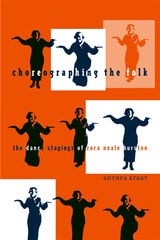
Choreographing the Folk
The Dance Stagings of Zora Neale HurstonAnthea Kraut
University of Minnesota Press, 2008
Recovers an important dimension of the work of the renowned African American artist
While Zora Neale Hurston and her 1937 novel Their Eyes Were Watching God have become widely celebrated, she was also a prolific stage director and choreographer. In the 1930s Hurston produced theatrical concerts that depicted a day in the life of a railroad work camp in Florida and featured a rousing Bahamian Fire Dance as the dramatic finale. In Choreographing the Folk, Anthea Kraut traces the significance and influence of Hurston’s little-known choreographic work.
Hurston’s concerts were concrete illustrations of the “real Negro art theatre” she was eager to establish, and they compellingly demonstrate how she used the arena of performance to advance a nuanced understanding of the black diaspora. Her version of the Fire Dance was staged in a variety of venues during the 1930s. In its multiple representations, Kraut asserts, the dance raised critical issues about ownership, artistry, and authenticity. Choreographing the Folk argues for the significance of Hurston’s choreography, and with perceptiveness, sensitivity, and originality, Kraut illuminates the important and often-contested place of black folk dance in American culture.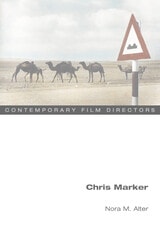
Chris Marker
Nora M. Alter
University of Illinois Press, 2006
The maverick filmmaker's personal and political relationships with film
Best known in the United States for his visionary short film La Jetée, Chris Marker spearheaded the bourgeoning Nouvelle Vague scene in the late 1950s. His distinctive style and use of still images place him among the postwar era's most influential European filmmakers. His fearless political cinema, meanwhile, provided a bold model for other activist filmmakers.
Nora M. Alter investigates the core themes and motivations behind an unpredictable and transnational career that defies easy classification. A photographer, multimedia artist, writer, broadcaster, producer, and organizer, Marker cultivated an artistic dynamism and always-changing identity. ""I am an essayist,"" Marker once said, and his 1953 debut filmic essay The Statues Also Die (with Alain Resnais) exposed the European art market's complicity in atrocities in the former Belgian Congo. Ranging geographically as well as artistically, Marker's travels led to films like the classic Sans Soleil and Sunday in Peking. His decades-long struggle against global injustice involved him with Night and Fog, Le Joli Mai, Far from Vietnam, Le fond du l'air est Rouge, and Prime Time in the Camps.
Insightful and revealing, Chris Marker includes interviews with the notoriously private director.
Christian Humanism in Shakespeare
A Study in Religion and LiteratureLee Oser
Catholic University of America Press, 2022
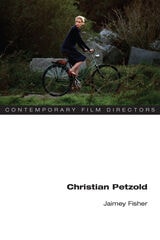
Christian Petzold
Jaimey Fisher
University of Illinois Press, 2013
In the first book-length study on Petzold in English, Jaimey Fisher frames Petzold's cinema at the intersection of international art cinema and sophisticated genre cinema. This approach places his work in the context of global cinema and invites comparisons to the work of directors like Pedro Almodovar and Rainer Werner Fassbinder, who repeatedly deploy and reconfigure genre cinema to their own ends. These generic aspects constitute a cosmopolitan gesture in Petzold's work as he interprets and elaborates on cult genre films and popular genres, including horror, film noir, and melodrama. Fisher explores these popular genres while injecting them with themes like terrorism, globalization, and immigration, central issues for European art cinema. The volume also includes an extended original interview with the director about his work.

Christina Rossetti
The Poetry of EnduranceDolores Rosenblum
Southern Illinois University Press, 1987
Christina Rossetti was considered the ideal female poet of her time. Her poetry was devotional, moral, and spoke of frustrated affection.
Dolores Rosenblum presents a fresh reading of Rossetti’s works and places them in the context of her life. Rosenblum shows that what was ostensibly devotional, moral, and loveless, was actually what Luce Irigaray calls “mimetism,” a subtle parody and subversion of the male tradition of literature.
Only with the coming of feminist criticism can Rossetti be meaningfully re-evaluated. Rosenblum calls Rossetti’s works the “poetry of endurance,” stating that it is similar, and at times identical, to the female “sentimental” tradition in literature. Rossetti endured the constraints of the Victorian female artistic spirit by becoming a “watcher.” Within this self-accepted role, Rossetti was able to carefully and deliberately choose artistic self-protection. In her religious poetry, Rossetti transcended, by aesthetic renunciation, the alienation and immobilization forced upon her.
Rossetti’s poetry is full of paradox; it sings about silence, exposes the poet’s oblivion. From the repining Victorian poet, there emerged a “stone woman.” Rosenblum discusses this passively enduring female figure’s alienation from knowledge and power, and how the myth of self strengthened the lyric voice within her. Because she was a woman, she was denied the male use of the lyric “I.”
Rossetti’s work is unified, Rosenblum argues, because she was a deliberate poet, and by accepting the “burden of womanhood,” she played out what men only symbolized as female in their art. By her mimicry and revision of the male tradition of literature, Christina Rossetti engaged the patriarchal tradition in ways that make it usable for the female experience, and that provide a critique of male objectification of women in art.
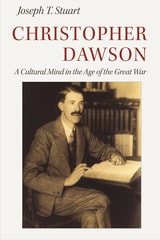
Christopher Dawson
A Cultural Mind in the Age of the Great WarJoseph T. Stuart
Catholic University of America Press, 2022
Cinema's Original Sin
D.W. Griffith, American Racism, and the Rise of Film CulturePaul McEwan
University of Texas Press, 2022
For over a century, cinephiles and film scholars have had to grapple with an ugly artifact that sits at the beginnings of film history. D. W. Griffith’s profoundly racist epic, The Birth of a Nation, inspired controversy and protest at its 1915 release and was defended as both a true history of Reconstruction (although it was based on fiction) and a new achievement in cinematic art. Paul McEwan examines the long and shifting history of its reception, revealing how the film became not just a cinematic landmark but also an influential force in American aesthetics and intellectual life.
In every decade since 1915, filmmakers, museums, academics, programmers, and film fans have had to figure out how to deal with this troublesome object, and their choices have profoundly influenced both film culture and the notion that films can be works of art. Some critics tried to set aside the film’s racism and concentrate on the form, while others tried to relegate that racism safely to the past. McEwan argues that from the earliest film retrospectives in the 1920s to the rise of remix culture in the present day, controversies about this film and its meaning have profoundly shaped our understandings of film, race, and art.

Cinema’s Alchemist
The Films of Péter ForgácsBill Nichols
University of Minnesota Press, 2011
Péter Forgács, based in Budapest, is best known for his award-winning films built on home movies from the 1930s to the 1960s that document ordinary lives soon to intersect with offscreen historical events. Cinema’s Alchemist offers a sustained exploration of the imagination and skill with which Forgács reshapes such film footage, originally intended for private and personal viewing, into extraordinary films dedicated to remembering the past in ways that matter for our future.
Contributors: Whitney Davis, U of California, Berkeley; László F. Földényi, U of Theatre, Film and Television, Budapest; Marsha Kinder, U of Southern California; Tamás Korányi; Scott MacDonald, Hamilton College; Tyrus Miller, U of California, Santa Cruz; Roger Odin, U of Paris III Sorbonne–Nouvelle; Catherine Portuges, U of Massachusetts Amherst; Michael S. Roth, Wesleyan U; Kaja Silverman, U of Pennsylvania; Ernst van Alphen, Leiden U, the Netherlands; Malin Wahlberg, Stockholm U.