Results by title
3369 books match the query 'Cultural & Social' and 263 start with c

CT Suite
The Work of Diagnosis in the Age of Noninvasive CuttingBarry F. Saunders
Duke University Press, 2008
Saunders’s analyses are informed by strands of cultural history and theory including art historical critiques of realist representation, Walter Benjamin’s concerns about violence in “mechanical reproduction,” and tropes of detective fiction such as intrigue, the case, and the culprit. Saunders analyzes the diagnostic “gaze” of medical personnel reading images at the viewbox, the two-dimensional images or slices of the human body rendered by the scanner, methods of archiving images, and the use of scans as pedagogical tools in clinical conferences. Bringing cloistered diagnostic practices into public view, he reveals the customs and the social and professional hierarchies that are formulated and negotiated around the weighty presence of the CT scanner. At the same time, by returning throughout to the nineteenth-century ideas of detection and scientific authority that inform contemporary medical diagnosis, Saunders highlights the specters of the past in what appears to be a preeminently modern machine.
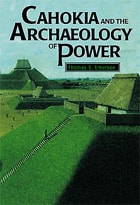
Cahokia and the Archaeology of Power
Thomas E. Emerson
University of Alabama Press, 1997
Examines the authority a ruling elite exercised over the surrounding countryside through a complex of social, political, and religious symbolism
This study uses the theoretical concepts of agency, power, and ideology to explore the development of cultural complexity within the hierarchically organized Cahokia Middle Mississippian society of the American Bottom from the 11th to the 13th centuries. By scrutinizing the available archaeological settlement and symbolic evidence, Emerson demonstrates that many sites previously identified as farmsteads were actually nodal centers with specialized political, religious, and economic functions integrated into a centralized administrative organization. These centers consolidated the symbolism of such 'artifacts of power' as figurines, ritual vessels, and sacred plants into a rural cult that marked the expropriation of the cosmos as part of the increasing power of the Cahokian rulers.
During the height of Cahokian centralized power, it is argued, the elites had convinced their subjects that they ruled both the physical and the spiritual worlds. Emerson concludes that Cahokian complexity differs significantly in degree and form from previously studied Eastern Woodlands chiefdoms and opens new discussion about the role of rural support for the Cahokian ceremonial center.
Cahokia's Complexities
Ceremonies and Politics of the First Mississippian FarmersSusan M. Alt
University of Alabama Press, 2018
The reasons for the rise and fall of early cities and ceremonial centers around the world have been sought for centuries. In the United States, Cahokia has been the focus of intense archaeological work to explain its mysteries. Cahokia was the first and exponentially the largest of the Mississippian centers that appeared across the Midwest and Southeast after AD 1000. Located near present-day East St. Louis, Illinois, the central complex of Cahokia spanned more than 12 square kilometers and encompassed more than 120 earthen mounds.
As one of the foremost experts on Cahokia, Susan M. Alt addresses long-standing considerations of eastern Woodlands archaeology—the beginnings, character, and ending of Mississippian culture (AD 1050–1600)—from a novel theoretical and empirical vantage point. Through this case study on farmers’ immigration and resettling, Alt’s narrative reanalyzes the relationship between administration and diversity, incorporating critical new discoveries and archaeological patterns from outside of Cahokia.
Alt examines the cultural landscape of the Cahokia flood plain and the layout of one extraordinary upland site, Grossman, as an administrative settlement where local farmers might have seen or participated in Cahokian rituals and ceremonies involving a web of ancestors, powers, and places. Alt argues that a farming district outside the center provides definitive evidences of the attempted centralized administration of a rural hinterland.
Cairo Pop
Youth Music in Contemporary EgyptDaniel J. Gilman
University of Minnesota Press, 2014
Cairo Pop is the first book to examine the dominant popular music of Egypt, shababiyya. Scorned or ignored by scholars and older Egyptians alike, shababiyya plays incessantly in Cairo, even while Egyptian youth joined in mass protests against their government, which eventually helped oust longtime Egyptian president Hosni Mubarak in early 2011. Living in Cairo at the time of the revolution, Daniel Gilman saw, and more importantly heard, the impact that popular music can have on culture and politics. Here he contributes a richly ethnographic analysis of the relationship between mass-mediated popular music, modernity, and nationalism in the Arab world.
Before Cairo Pop, most scholarship on the popular music of Egypt focused on musiqa al-ṭarab. Immensely popular in the 1950s and ’60s and even into the ’70s, musiqa al-ṭarab adheres to Arabic musical theory, with non-Western scales based on tunings of the strings of the ‘ud—the lute that features prominently, nearly ubiquitously, in Arabic music. However, today one in five Egyptians is between the ages of 15 and 24; half the population is under the age of 25. And shababiyya is their music of choice. By speaking informally with dozens of everyday young people in Cairo, Gilman comes to understand shababiyya as more than just a musical genre: sometimes it is for dancing or seduction, other times it propels social activism, at others it is simply sonic junk food.
In addition to providing a clear Egyptian musical history as well as a succinct modern political history of the nation, Cairo Pop elevates the aural and visual aesthetic of shababiyya—and its role in the lives of a nation’s youth.

Cajun Women and Mardi Gras
Reading the Rules BackwardCarolyn E. Ware
University of Illinois Press, 2006
Cajun Women and Mardi Gras is the first book to explore the importance of women’s contributions to the country Cajun Mardi Gras tradition, or Mardi Gras “run.” Most Mardi Gras runs--masked begging processions through the countryside, led by unmasked capitaines--have customarily excluded women. Male organizers explain that this rule protects not only the tradition’s integrity but also women themselves from the event’s rowdy, often drunken, play.
Throughout the past twentieth century, and especially in the past fifty years, women in some prairie communities have insisted on taking more active and public roles in the festivities. Carolyn E. Ware traces the history of women’s participation as it has expanded from supportive roles as cooks and costume makers to increasingly public performances as Mardi Gras clowns and (in at least one community) capitaines. Drawing on more than a decade of fieldwork interviews and observation in Mardi Gras communities, Ware focuses on the festive actions in Tee Mamou and Basile to reveal how women are reshaping the celebration as creative artists and innovative performers.

Calculating Amazonia
The Politics of Quantification in the Age of Climate ChangeEduardo Romero Dianderas
Duke University Press, 2027
Calculating Brilliance
An Intellectual History of Mayan Astronomy at Chich’en ItzaGerardo Aldana y Villalobos
University of Arizona Press, 2021
Near the structure known today as the Great Ball Court and within the interior of the Lower Temple of the Jaguar, a mural depicts a female Mayan astronomer called K'uk'ul Ek' Tuyilaj. Weaving together archaeology, mathematics, history, and astronomy, Calculating Brilliance brings to light the discovery by this Mayan astronomer, which is recorded in the Venus Table of the Dresden Codex. As the book demonstrates, this brilliant discovery reverberated throughout Mayan science. But it has remained obscured to modern eyes.
Jumping from the vital contributions of K'uk'ul Ek' Tuyilaj, Gerardo Aldana y Villalobos critically reframes science in the pre-Columbian world. He reexamines the historiography of the Dresden Codex and contextualizes the Venus Table relative to other Indigenous literature. From a perspective anchored to Indigenous cosmologies and religions, Aldana y Villalobos delves into how we may understand Indigenous science and discovery—both its parallels and divergences from modern globalized perspectives of science.
Calculating Brilliance brings different intellectual threads together across time and space, from the Classic to the Postclassic, the colonial period to the twenty-first century to offer a new vision for understanding Mayan astronomy.
Callaloo Nation
Metaphors of Race and Religious Identity among South Asians in TrinidadAisha Khan
Duke University Press, 2004
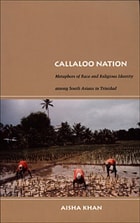
Khan combines ethnographic research she conducted in Trinidad over the course of a decade with extensive archival research to explore how Hindu and Muslim Indo-Trinidadians interpret authority, generational tensions, and the transformations of Indian culture in the Caribbean through metaphors of mixing. She demonstrates how ambivalence about the desirability of a callaloo nation—a multicultural society—is manifest around practices and issues, including rituals, labor, intermarriage, and class mobility. Khan maintains that metaphors of mixing are pervasive and worth paying attention to: the assumptions and concerns they communicate are key to unraveling who Indo-Trinidadians imagine themselves to be and how identities such as race and religion shape and are shaped by the politics of multiculturalism.
Calling Family
Digital Technologies and the Making of Transnational Care CollectivesTanja Ahlin
Rutgers University Press, 2023
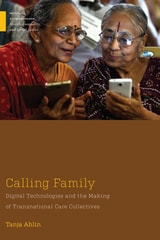
This book is also freely available online as an open access digital edition. The open access publication was financially supported by the Social Science Research Master and partly also by the Health, Care and the Body Programme Group of the Department of Anthropology, both at the Amsterdam Institute of Social Science Research, University of Amsterdam.
Calricaram Naulluutem-llu Qanrutkumallra / Wellness and Illness in Yup'ik Oral Tradition
Ann Fienup-Riordan
University of Alaska Press, 2027
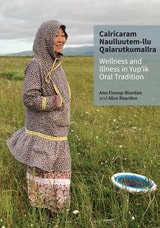
Calricaram Naulluutem-llu Qanrutkumallra / Wellness and Illness in Yup’ik Oral Tradition brings together stories and information shared by more than a hundred Yup’ik tradition bearers over more than thirty years. Recorded during elder gatherings hosted by the Calista Elders Council beginning in 1997 and, since 2014, by Calista Education and Culture, the book passes on the words of wisdom that will remain enduring parts of these elders’ legacy.
Combining recent recordings with material from earlier gatherings, the narratives address various aspects of personal and community health: how people talk about sickness and health, traditional foods, qanruyutet (oral instructions) for living a healthy life, medicinal plants, medicinal uses of bodily fluids, ailments and treatments, traditional healing techniques, caring for those who are sick, mental health and mental illness, and epidemics.
Calricaram Naulluutem-llu Qanrutkumallra / Wellness and Illness in Yup’ik Oral Tradition invites readers to listen to these elders to better understand past practices and how they can contribute to a healthier future for all.
Calvinists Incorporated
Welsh Immigrants on Ohio's Industrial FrontierAnne Kelly Knowles
University of Chicago Press, 1996
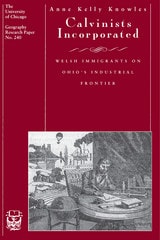
capitalist transformation, Anne Kelly Knowles traces a community of
Welsh immigrants to Jackson and Gallia counties in southern Ohio. After
reconstructing the gradual process of community-building, Knowles
focuses on the pivotal moment when the immigrants became involved with
the industrialization of their new region as workers and investors in
Welsh-owned charcoal iron companies. Setting the southern Ohio Welsh in
the context of Welsh immigration as a whole from 1795 to 1850, Knowles
explores how these strict Calvinists responded to the moral dilemmas
posed by leaving their native land and experiencing economic success in
the United States.
Knowles draws on a wide variety of sources, including obituaries and
community histories, to reconstruct the personal histories of over 1,700
immigrants. The resulting account will find appreciative readers not
only among historical geographers, but also among American economic
historians and historians of religion.

Camera Indica
The Social Life of Indian PhotographsChristopher Pinney
University of Chicago Press, 1997
These quiet but moving images represent the changing role of photographic portraiture in India, a topic anthropologist Christopher Pinney explores in Camera Indica. Studying photographic practice in India, Pinney traces photography's various purposes and goals from colonial through postcolonial times. He identifies three key periods in Indian portraiture: the use of photography under British rule as a quantifiable instrument of measurement, the later role of portraiture in moral instruction, and the current visual popular culture and its effects on modes of picturing. Photographic culture thus becomes a mutable realm in which capturing likeness is only part of the project. Lavishly illustrated, Pinney's account of the change from depiction to invention uncovers fascinating links between these evocative images and the society and history from which they emerge.

Can Onions Cure Ear-Ache?
Medical Advice from 1769William Buchan
Bodleian Library Publishing, 2012
Originally published in 1769, Domestic Medicine was produced for the benefit of those without access to—or means to afford—medical assistance, and copies of the book were found in apothecaries and coffee houses, private households and clubs. In 1797, Bounty mutineer Fletcher Christian and his crew even had the foresight to pack a copy before fleeing to the Pitcairns. Derived from folklore and the emerging medical science of the day, some of Buchan’s recommendations for how to live a healthy life still ring true: for instance, exercising, enjoying a varied diet, and getting an abundance of fresh air. Others are delightfully dodgy or even downright dangerous, such as genital trusses, the prescription of mercury, or the suggestion that Spanish fly might soothe aching joints.
Bringing together an exceedingly entertaining selection of entries from one of the earliest self-help books, Can Onions Cure Ear-ache? offers fascinating insight into the popular treatments of the time.
Can We Survive Our Origins?
Readings in René Girard's Theory of Violence and the SacredPierpaolo Antonello
Michigan State University Press, 2015
Can a Liberal be a Chief? Can a Chief be a Liberal?
Some Thoughts on an Unfinished Business of ColonialismOlúfémi Táíwò
Prickly Paradigm Press, 2021
Across Africa, it is not unusual for proponents of liberal democracy and modernization to make room for some aspects of indigenous culture, such as the use of a chief as a political figure. Yet for Olúfẹ́mi Táíwò, no such accommodation should be made. Chiefs, he argues, in this thought-provoking and wide-ranging pamphlet, cannot be liberals—and liberals cannot be chiefs. If we fail to recognize this, we fail to acknowledge the metaphysical underpinnings of modern understandings of freedom and equality, as well as the ways in which African intellectuals can offer a distinctive take on the unfinished business of colonialism.
Canals and Communities
Small-Scale Irrigation SystemsJonathan B. Mabry
University of Arizona Press, 1996
CONTENTS
Introduction
The Ethnology of Irrigation: Cross-Cultural Characteristics of Local Water Management, Jonathan B. Mabry
Patterns of Cooperation and Conflict in Local Irrigation
1. La Gente es Muy Perra: Conflict and Cooperation over Irrigation Water in Cucurpe, Sonora, Mexico, Thomas E. Sheridan
2. Dhasheeg Agriculture in the Jubba Valley of Somalia, Catherine Besteman
3. The Dry and the Drier: Cooperation and Conflict in Moroccan Irrigation, John R. Welch
4. The Political Ecology of Irrigation in an Andean Peasant Community, Paul H. Gelles
Methods and Models for Analyzing Local Irrigation
5. Rapid Rural Appraisal of Arid Land Irrigation: A Moroccan Example, John R. Welch, Jonathan B. Mabry, and Hsain Ilahiane
6. Simulation Modelling of Balinese Irrigation, J. Stephen Lansing
7. Institutional Innovation in Small-Scale Irrigation Networks: A Cape Verdean Case, Mark W. Langworthy and Timothy J. Finan
Development Lessons from Local Irrigation
8. Qanats and Rural Societies: Sustainable Agriculture and Irrigation Cultures in Contemporary Iran, Michael E. Bonine
9. The Utility of Tradition in Sri Lankan Bureaucratic Irrigation: The Case of the Kirindi Oya Project, Pamela Stanbury
10. The Relevance of Indigenous Irrigation: A Comparative Analysis of Sustainability, Jonathan B. Mabry and David A. Cleveland
Conclusion
The Hydraulics of History: Evolutionary Trajectories of Local and Centralized Irrigation, Jonathan B. Mabry

Cape Verde, Let's Go
Creole Rappers and Citizenship in PortugalDerek Pardue
University of Illinois Press, 2015
Drawing on fieldwork and archival research in Portugal and Cape Verde, Derek Pardue introduces Lisbon's kriolu rap scene and its role in challenging metropolitan Portuguese identities. Pardue demonstrates that Cape Verde, while relatively small within the Portuguese diaspora, offers valuable lessons about the politics of experience and social agency within a postcolonial context that remains poorly understood. As he argues, knowing more about both Cape Verdeans and the Portuguese invites clearer assessments of the relationship between the experience and policies of migration. That in turn allows us to better gauge citizenship as a balance of individual achievement and cultural ascription.
Deftly shifting from domestic to public spaces and from social media to ethnographic theory, Pardue describes an overlooked phenomenon transforming Portugal, one sure to have parallels in former colonial powers across twenty-first-century Europe.

Capital, Interrupted
Agrarian Development and the Politics of Work in IndiaVinay Gidwani
University of Minnesota Press, 2008
The central Gujarat region of western India is home to the entrepreneurial landowning Patel caste who have leveraged their rural dominance to become a powerful global diaspora of merchants, industrialists, and professionals. Investigating the Patels’ intriguing ascent, Vinay Gidwani analyzes its broad implications for the nature of labor and capital worldwide.
With the Patels as his central case, Gidwani interrogates established concepts of value, development, and the relationship between capital and history. Capitalism, he argues, is not a frame of economic organization based on the smooth, consistent operation of a series of laws, but rather an assemblage of contingent and interrupted logics stitched together into the appearance of a deus ex machina. Following this line of thinking, Gidwani points to ways in which political economy might be freed of its lingering Eurocentrism, raises questions about the adequacy of postcolonial studies’ critique of Marx and capitalism, and opens the possibility of situating capitalism as a geographically uneven social formation in which different normative or value-creating practices are imperfectly sutured together in ways that can equally impair and enable profit and accumulation.
Both theoretically astute and empirically informed, Capital, Interrupted unsettles encrusted understandings of staple concepts within the human sciences such as hegemony, governmentality, caste, and agency and, ultimately, does nothing less than rethink the very constitution of capitalism.
Vinay Gidwani is associate professor of geography and global studies at the University of Minnesota.
Capitalism from Outside?
Economic Cultures in Eastern Europe after 1989János Mátyás Kovács
Central European University Press, 2012

Capitalism's New Clothes
Enterprise, Ethics and Enjoyment in Times of CrisisColin Cremin
Pluto Press, 2011
Using materialist, psychoanalytic and linguistic approaches, Cremin shows how capitalism, anxiety and desire enter into a mutually supporting relationship. He identifies three ways in which we are tied in to capitalism – through a social imperative for enterprise and competition; through enjoyment and consumption; and through the depoliticisation of ethical debate by government and business.
Capitalism's New Clothes is ideal for students of sociology and for anyone worried about the ethics of capitalism or embarrassed by the enjoyments the system has afforded them.
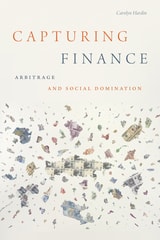
Capturing Finance
Arbitrage and Social DominationCarolyn Hardin
Duke University Press, 2021
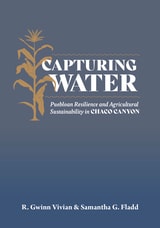
Capturing Water
Puebloan Resilience and Agricultural Sustainability in Chaco CanyonR. Gwinn Vivian and Samantha G. Fladd
University of Utah Press, 2025
The ability of the inhabitants of Chaco Canyon to sustain themselves through farming in an arid environment has long been a topic of debate among scholars. Building upon the work of his father, Gordon, R. Gwinn Vivian dedicated his lifetime of archaeological work to investigating water management and practices at Chaco. These efforts provide compelling evidence of the extensive use of canal irrigation systems and other water management techniques employed by the Ancestral Puebloan people by the ninth century and continuing through recent periods by Navajo farmers.
Rich with archaeological data, ethnographic evidence, maps, and photographs, this volume challenges long-standing assumptions about Chaco Canyon's agricultural potential. By highlighting the adaptability and ingenuity of the canyon's early inhabitants, the book offers a fresh perspective on the role of water management in the development of Chaco Canyon as a sociopolitical center in the northern Southwest.
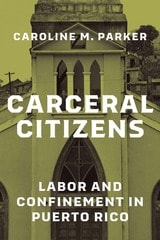
Carceral Citizens
Labor and Confinement in Puerto RicoCaroline M. Parker
University of Chicago Press, 2024
In Carceral Citizens, anthropologist Caroline M. Parker offers an ethnographic portrait of therapeutic communities in Puerto Rico, the oldest colony in the Americas. As nonprofits nested within the carceral state, therapeutic communities serve as reeducation and recovery centers for the mostly male drug offenders who serve out their sentences engaged in manual labor and prayer. The most surprising aspect of these centers, however, is that their “graduates” often remain long after the completion of their term, working as self-appointed peer counselors in a mixture of volunteer and low-wage positions.
Parker seeks to explain this dynamic by showing how, in these therapeutic communities, criminalized men find new and meaningful ways of living in the shadow of the prison. Through their participation in the day-to-day functioning of the centers, they discover and cultivate alternative forms of belonging, livelihood, and citizenship, despite living within the restrictions of the carceral state. Situating her study against the backdrop of Puerto Rico’s colonial history, and with findings that extend across Latin America, Parker challenges common assumptions about confinement, labor, and rehabilitation. By delving into lives shaped by the convergence of imperialism, the carceral state, and self-help, she offers a fresh understanding of the transformations of labor and social life brought about by mass incarceration.
Carceral Citizens
Labor and Confinement in Puerto RicoCaroline M. Parker
University of Chicago Press, 2024
In Carceral Citizens, anthropologist Caroline M. Parker offers an ethnographic portrait of therapeutic communities in Puerto Rico, the oldest colony in the Americas. As nonprofits nested within the carceral state, therapeutic communities serve as reeducation and recovery centers for the mostly male drug offenders who serve out their sentences engaged in manual labor and prayer. The most surprising aspect of these centers, however, is that their “graduates” often remain long after the completion of their term, working as self-appointed peer counselors in a mixture of volunteer and low-wage positions.
Parker seeks to explain this dynamic by showing how, in these therapeutic communities, criminalized men find new and meaningful ways of living in the shadow of the prison. Through their participation in the day-to-day functioning of the centers, they discover and cultivate alternative forms of belonging, livelihood, and citizenship, despite living within the restrictions of the carceral state. Situating her study against the backdrop of Puerto Rico’s colonial history, and with findings that extend across Latin America, Parker challenges common assumptions about confinement, labor, and rehabilitation. By delving into lives shaped by the convergence of imperialism, the carceral state, and self-help, she offers a fresh understanding of the transformations of labor and social life brought about by mass incarceration.
Care and Agency
The Andean Community through the Eyes of ChildrenJeanine Anderson
Rutgers University Press, 2025
Cargoes in Motion
Materiality and Connectivity across the Indian OceanBurkhard Schnepel
Ohio University Press, 2022
An innovative collection of essays that foregrounds specific cargoes as a means to understand connectivity and mobility across the Indian Ocean world.
Scholars have long appreciated the centrality of trade and commerce in understanding the connectivity and mobility that underpin human experience in the Indian Ocean region. But studies of merchant and commercial activities have paid little attention to the role that cargoes have played in connecting the disparate parts of this vast oceanic world. Drawing from the work of anthropologists, geographers, and historians, Cargoes in Motion tells the story of how material objects have informed and continue to shape processes of exchange across the Indian Ocean.
By following selected cargoes through both space and time, this book makes an important and innovative contribution to Indian Ocean studies. The multidisciplinary approach deepens our understanding of the nature and dynamics of the Indian Ocean world by showing how transoceanic connectivity has been driven not only by economic, social, cultural, and political factors but also by the materiality of the objects themselves.
Essays by:
- Edward A. Alpers
- Fahad Ahmad Bishara
- Eva-Maria Knoll
- Karl-Heinz Kohl
- Lisa Jenny Krieg
- Pedro Machado
- Rupert Neuhöfer
- Mareike Pampus
- Hannah Pilgrim
- Burkhard Schnepel
- Hanne Schönig
- Tansen Sen
- Steven Serels
- Julia Verne
- Kunbing Xiao
Carib-Speaking Indians
Culture, Society, and LanguageEdited by Ellen B. Basso
University of Arizona Press, 1977
Caribbean Journeys
An Ethnography of Migration and Home in Three Family NetworksKaren Fog Olwig
Duke University Press, 2007
The migratory journeys of the families in this study began more than sixty years ago, when individuals in the three families left home in a British colonial town in Jamaica, a French Creole rural community in Dominica, and an African-Caribbean village of small farmers on Nevis. Olwig follows the three family networks forward in time, interviewing family members living under highly varied social and economic circumstances in locations ranging from California to Barbados, Nova Scotia to Florida, and New Jersey to England. Through her conversations with several generations of these far-flung families, she gives insight into each family’s educational, occupational, and socioeconomic trajectories. Olwig contends that terms such as “Caribbean diaspora” wrongly assume a culturally homogeneous homeland. As she demonstrates in Caribbean Journeys, anthropologists who want a nuanced understanding of how migrants and their descendants perceive their origins and identities must focus on interpersonal relations and intimate spheres as well as on collectivities and public expressions of belonging.
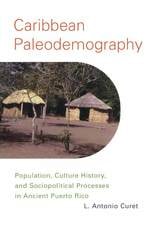
Caribbean Paleodemography
Population, Culture History, and Sociopolitical Processes in Ancient Puerto RicoL. Antonio Curet
University of Alabama Press, 2005
Unearthing the demographic past of the Caribbean to illuminate its cultural origins and transformations.
According to the European chronicles, at the time of contact, the Greater Antilles were inhabited by the Taino or Arawak Indians, who were organized in hierarchical societies. Since its inception Caribbean archaeology has used population as an important variable in explaining many social, political, and economic processes such as migration, changes in subsistence systems, and the development of institutionalized social stratification.
In Caribbean Paleodemography, L. Antonio Curet argues that population has been used casually by Caribbean archaeologists and proposes more rigorous and promising ways in which demographic factors can be incorporated in our modeling of past human behavior. He analyzes a number of demographic issues in island archaeology at various levels of analysis, including inter- and intra-island migration, carrying capacity, population structures, variables in prehistory, cultural changes, and the relationship with material culture and social development. With this work, Curet brings together the diverse theories on Greater Antilles island populations and the social and political forces governing their growth and migration.

Caribbean Spaces
Escapes from Twilight ZoneCarol Boyce Davies
University of Illinois Press, 2013
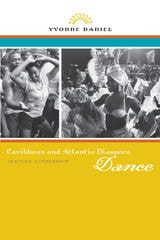
Caribbean and Atlantic Diaspora Dance
Igniting CitizenshipYvonne Daniel
University of Illinois Press, 2011
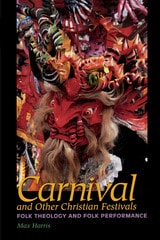
Carnival and Other Christian Festivals
Folk Theology and Folk PerformanceBy Max Harris
University of Texas Press, 2003
With a riotous mix of saints and devils, street theater and dancing, and music and fireworks, Christian festivals are some of the most lively and colorful spectacles that occur in Spain and its former European and American possessions. That these folk celebrations, with roots reaching back to medieval times, remain vibrant in the high-tech culture of the twenty-first century strongly suggests that they also provide an indispensable vehicle for expressing hopes, fears, and desires that people can articulate in no other way.
In this book, Max Harris explores and develops principles for understanding the folk theology underlying patronal saints' day festivals, feasts of Corpus Christi, and Carnivals through a series of vivid, first-hand accounts of these festivities throughout Spain and in Puerto Rico, Mexico, Peru, Trinidad, Bolivia, and Belgium. Paying close attention to the signs encoded in folk performances, he finds in these festivals a folk theology of social justice that—however obscured by official rhetoric, by distracting theories of archaic origin, or by the performers' own need to mask their resistance to authority—is often in articulate and complex dialogue with the power structures that surround it. This discovery sheds important new light on the meanings of religious festivals celebrated from Belgium to Peru and on the sophisticated theatrical performances they embody.

Carrying a Secret in My Heart
Children of the Victims of the Reprisals after the Hungarian Revolution in 1956 - An Oral HistoryZsuzsanna Korösi
Central European University Press, 2003
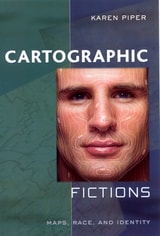
Cartographic Fictions
Maps, Race, and IdentityPiper, Karen
Rutgers University Press, 2002
Maps are stories as much about us as about the landscape. They reveal changing perceptions of the natural world, as well as conflicts over the acquisition of territories. Cartographic Fictions looks at maps in relation to journals, correspondence, advertisements, and novels by authors such as Joseph Conrad and Michael Ondaatje. In her innovative study, Karen Piper follows the history of cartography through three stages: the establishment of the prime meridian, the development of aerial photography, and the emergence of satellite and computer mapping.
Piper follows the cartographer’s impulse to “leave the ground” as the desire to escape the racialized or gendered subject. With the distance that the aerial view provided, maps could then be produced “objectively,” that is, devoid of “problematic” native interference. Piper attempts to bring back the dialogue of the “native informant,” demonstrating how maps have historically constructed or betrayed anxieties about race. The book also attempts to bring back key areas of contact to the map between explorer/native and masculine/feminine definitions of space.

Cash Flow
The Businesses of MenstruationCamilla Mørk Røstvik
University College London, 2022
The menstrual product industry has played a large role in shaping the past hundred years of menstrual culture, including technological innovation, creative advertising, and education in classrooms. How much do we know about this sector and how has it changed in later decades? What constitutes “the industry,” who works in it, and how is it adapting to the current menstrual equity movement?
Cash Flow provides a new academic study of the menstrual corporate landscape that links its twentieth-century origins to the current day. Drawing on a range of previously unexplored archival materials and interviews with industry insiders, each chapter examines one key company and brand: Saba in Norway, Essity in Sweden, Tambrands in the Soviet Union, Procter & Gamble in Britain and Europe, Kimberly-Clark in North America, and start-ups Clue and Thinx. The book provides timely insights into a secretive and largely unexamined corporate world and the ongoing political and industry-wide debate about the cost of menstrual products. Cash Flow will be of interest to a wide range of groups within and outside academia, including scholars in the emerging field of critical menstruation studies and menstrual activists.
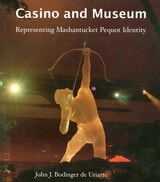
Casino and Museum
Representing Mashantucket Pequot IdentityJohn J. Bodinger de Uriarte
University of Arizona Press, 2007
To some degree, both institutions offer Native representations yet create different strategies for attracting and engaging visitors. While the casino is crucial as an economic generator, the museum has an important role as the space for authentic Mashantucket Pequot images and narratives. The book’s focus is on how the casino and the museum successfully deploy different strategies to take control of the tribe’s identity, image, and cultural agency.
Photographs in the book provide a view of Mashantucket, allowing the reader to study the spaces of the book’s central arguments. They are a key methodology of the project and offer a non-textual opportunity to navigate the sites as well as one finely focused way to work through the representation and formation of the Native American photographic subject—the powerful popular imagining of Native Americans. Casino and Museum presents a unique understanding of the prodigious role that representation plays in the contemporary poetics and politics of Native America. It is essential reading for scholars of Native American studies, museum studies, cultural studies, and photography.
Castoffs of Capital
Work and Love among Garment Workers in BangladeshLamia Karim
University of Minnesota Press, 2022
FINALIST FOR THE GREGORY BATESON PRIZE FROM THE AMERICAN ANTHROPOLOGICAL ASSOCIATION
Dispelling stereotypes about garment workers in the global apparel industry
Castoffs of Capital examines how female garment workers experience their work and personal lives within the stranglehold of global capital. Drawing on fieldwork in Bangladesh, anthropologist Lamia Karim focuses attention onto the lives of older women aged out of factory work, heretofore largely ignored, thereby introducing a new dimension to the understanding of a female-headed workforce that today numbers around four million in Bangladesh.
Bringing a feminist labor studies lens, Castoffs of Capital foregrounds these women not only as workers but as mothers, wives, sisters, lovers, friends, and political agents. Focusing on relations among work, gender, and global capital’s targeting of poor women to advance its market penetration, Karim shows how women navigate these spaces by adopting new subject formations. She locates these women’s aspirations for the “good life” not only in material comforts but also in their longings for love and sexual fulfillment that help them momentarily forget the precarity of their existence under the shadow of capital.
Through richly detailed ethnographic studies, this innovative and beautifully written book examines the making and unmaking of these women’s wants and desires, loves and tribulations, hopes and despairs, and triumphs and struggles.
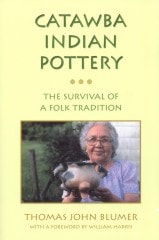
Catawba Indian Pottery
The Survival of a Folk TraditionThomas John Blumer, with a foreword by William L. Harris
University of Alabama Press, 2004
Traces the craft of pottery making among the Catawba Indians of North Carolina from the late 18th century to the present
When Europeans encountered them, the Catawba Indians were living along the river and throughout the valley that carries their name near the present North Carolina-South Carolina border. Archaeologists later collected and identified categories of pottery types belonging to the historic Catawba and extrapolated an association with their protohistoric and prehistoric predecessors.
In this volume, Thomas Blumer traces the construction techniques of those documented ceramics to the lineage of their probable present-day master potters or, in other words, he traces the Catawba pottery traditions. By mining data from archives and the oral traditions of contemporary potters, Blumer reconstructs sales circuits regularly traveled by Catawba peddlers and thereby illuminates unresolved questions regarding trade routes in the protohistoric period. In addition, the author details particular techniques of the representative potters—factors such as clay selection, tool use, decoration, and firing techniques—which influence their styles.
Catching a Case
Inequality and Fear in New York City's Child Welfare SystemLee, Tina
Rutgers University Press, 2016
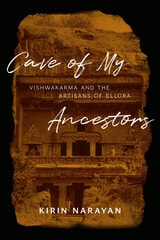
Cave of My Ancestors
Vishwakarma and the Artisans of ElloraKirin Narayan
University of Chicago Press, 2024
As a young girl in Bombay, Kirin Narayan was enthralled by her father’s stories about how their ancestors had made the ancient rock-cut cave temples at Ellora. Recalling those stories as an adult, she was inspired to learn more about the caves, especially the Buddhist worship hall known as the “Vishwakarma cave.” Immersing herself in family history, oral traditions, and works by archaeologists, art historians, scholars of Buddhism, Indologists, and Sanskritists, Narayan set out to answer the question of how this cave came to be venerated as the home of Vishwakarma, the god of making in Hindu and Buddhist traditions.
Cave of My Ancestors represents the perfect blend of Narayan’s skills as a researcher and writer. Her quest to trace her family’s stories took her to Ellora; through libraries, archives, and museums around the world; and across disciplinary borders. Equal parts scholarship, detective story, and memoir, Narayan’s book ably leads readers through centuries of history, offering a sensitive meditation on devotion, wonder, and all that connects us to place, family, the past, and the divine.
Celibacy, Culture, And Society
Anthropology Of Sexual AbstinenceElisa J Sobo
University of Wisconsin Press, 2001
This is the first cross-cultural inquiry into the practice of celibacy around the world and through the ages, among groups as diverse as Kenyan villagers and U.S. prisoners, Mazatec Shamans and Buddhist nuns and monks, Shaker church members and anorexic women.
The examples of celibacy described here illustrate the complex relationship between human sexuality and its particular sociocultural context. Ideas about the body, gender, family, work, religion, health, and other dimensions of life come sharply into focus as the contributors examine the many practices and institutions surrounding sexual abstinence. They show that, though celibacy is certainly sometimes a punishment or a deliberate ritual abstinence, it also serves many other social and material functions and in some cases contributes to kin-group survival and well-being. Celibacy, Culture, and Society represents a significant step towards understanding the functions and meanings of sexuality.
Censorium
Cinema and the Open Edge of Mass PublicityWilliam Mazzarella
Duke University Press, 2013
At the intersection of anthropology, media studies, and critical theory, Censorium is a pathbreaking analysis of Indian film censorship. The book encompasses two moments of moral panic: the consolidation of the cinema in the 1910s and 1920s, and the global avalanche of images unleashed by liberalization since the early 1990s. Exploring breaks and continuities in film censorship across colonial and postcolonial moments, William Mazzarella argues that the censors' obsessive focus on the unacceptable content of certain images and the unruly behavior of particular audiences displaces a problem that they constantly confront yet cannot directly acknowledge: the volatile relation between mass affect and collective meaning. Grounded in a close analysis of cinema regulation in the world's largest democracy, Censorium ultimately brings light to the elusive foundations of political and cultural sovereignty in mass-mediated societies.
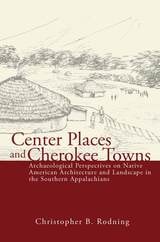
Center Places and Cherokee Towns
Archaeological Perspectives on Native American Architecture and Landscape in the Southern AppalachiansChristopher B. Rodning
University of Alabama Press, 2015
In Center Places and Cherokee Towns, Christopher B. Rodning opens a panoramic vista onto protohistoric Cherokee culture. He posits that Cherokee households and towns were anchored within their cultural and natural landscapes by built features that acted as “center places.”
Rodning investigates the period from just before the first Spanish contact with sixteenth-century Native American chiefdoms in La Florida through the development of formal trade relations between Native American societies and English and French colonial provinces in the American South during the late 1600s and 1700s. Rodning focuses particularly on the Coweeta Creek archaeological site in the upper Little Tennessee Valley in southwestern North Carolina and describes the ways in which elements of the built environment were manifestations of Cherokee senses of place.
Drawing on archaeological data, delving into primary documentary sources dating from the eighteenth century, and considering Cherokee myths and legends remembered and recorded during the nineteenth century, Rodning shows how the arrangement of public structures and household dwellings in Cherokee towns both shaped and were shaped by Cherokee culture. Center places at different scales served as points of attachment between Cherokee individuals and their communities as well as between their present and past. Rodning explores the ways in which Cherokee architecture and the built environment were sources of cultural stability in the aftermath of European contact, and how the course of European contact altered the landscape of Cherokee towns in the long run.
In this multi-faceted consideration of archaeology, ethnohistory, and recorded oral tradition, Rodning adeptly demonstrates the distinct ways that Cherokee identity was constructed through architecture and other material forms. Center Places and Cherokee Towns will have a broad appeal to students and scholars of southeastern archaeology, anthropology, Native American studies, prehistoric and protohistoric Cherokee culture, landscape archaeology, and ethnohistory.
Center
Ideas and InstitutionsEdited by Liah Greenfeld and Michel Martin
University of Chicago Press, 1988
"Center" is a commonly used term with a variety of meanings. According to editors Liah Greenfeld and Michel Martin, "center" carries a twofold meaning when used as a concept. In its first sense, it is a synonym for "central value system," referring to irreducible values and beliefs that establish the identity of individuals and bind them into a common universe. In its second sense, "center" refers to "central institutional system," the authoritative institutions and persons who often express or embody the central value system. Both meanings imply a corresponding idea of "periphery," referring both to the elements of society that need to be integrated and to institutions and persons who lack authority.
The original essays compiled in this volume examine and apply the concept of the center in different contexts. The contributors come from a broad range of disciplines—classics, religion, philosophy, history, literary criticism, anthropology, political science, and sociology—which serves to underscore the far-reaching significance of the Shilsean theory of society. The interrelated subsets of the "center-periphery" theme addressed here include: symbolic systems, intellectuals, the expansion of the center into the periphery, parallel concepts in the work of other scholars besides Shils, and the paths of research inspired by these concepts. The volume features an introspective essay by Shils himself, in which he reexamines his central ideas in the light of new experiences and the ideas of others, some of them contained in this volume.
By drawing together such diverse scholars around a unified idea, this collection achieves a cohesion that makes it an exciting contribution to the comparative analysis of social and cultural systems. A collective effort in social theory, Center: Ideas and Institutions is a testimony to the breadth and complexity of one of man's ideas.
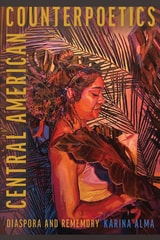
Central American Counterpoetics
Diaspora and RememoryKarina Alma
University of Arizona Press, 2024
Author Karina Alma offers a systemic method and artistic mode for unpacking social and political memory formation that resists dominant histories. Central American Counterpoetics responds to political repression through acts of creativity that prioritize the well-being of anticolonial communities. Building on Toni Morrison’s theory of rememory, the volume examines the concept as an embodied experience of a sensory place and time lived in the here and now. By employing primary sources of image and word, interviews of creatives, and a critical self-reflection as a Salvadoran immigrant woman in academia, Alma’s research breaks ground in subject matter and methods by considering cultural and historical ties across countries, regions, and traditions. The diverse creatives included explore critical perspectives on topics such as immigration, forced assimilation, maternal love, gender violence, community arts, and decolonization.
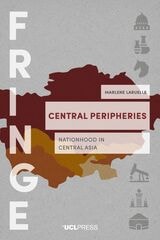
Central Peripheries
Nationhood in Central AsiaMarlene Laruelle
University College London, 2021
Committed to internationalism, Kazakhstan and other central Asian states nevertheless embrace classically nationalist conceptions of the nation-state. Their unabashed celebration of borders and citizenship challenges Western views of nationalism as a dying ideology transcended by cosmopolitanism. Drawing on twenty years of fieldwork, Central Peripheries reveals the origin of central Asian national consciousness in imaginary and ritualized efforts to grapple with the Soviet past.
Century Of Revolution
Social Movements in IranJohn Foran
University of Minnesota Press, 1994
Provides insight into the political currents that led to the Iranian revolution.
Before late 1978 Iran did not occupy a large place in the public mind, mass media, or academic pursuits. With the massive upheaval of the next few months, all this changed-and the world is still trying to catch up with the dramatic events that brought Iran to its attention. This volume offers a much needed look into the historical, social, and political developments leading up to the Iranian revolution. Bringing together a group of scholars, historians, and social scientists, most of them Iranian in origin, the book documents an extraordinary revolutionary heritage that predates this century.
Each contributor examines a critical moment in Iranian social history-on its own terms as well as within a larger theoretical and comparative context. The topics they take up include: • the Tobacco Rebellion of 1890-91 • the Constitutional Revolution of 1905-11 • the rise of Reza Khan between 1921 and 1925• the autonomy movement in Azerbaijan and Kurdistan after World War II• the oil nationalization movement under Musaddiq between 1951and 1953• the unrest of the 1960-63 period• the Iranian revolution of 1977-79 • the state of Iran since the revolution Thoughout, common themes emerge, especially the heterogeneous bases of Iranian social movements with respect to class, gender, and ethnicity, as well as the diverse discourses-nationalist, Islamic, socialist, populist, and radical-that have animated these movements. Representing a wide variety of perspectives and approaches, this volume provides crucial insight into the widely watched but poorly understood phenomenon of present-day Iran.Contributors: Janet Afary, Purdue University; John Foran, University of California, Santa Barbara; Amir Hassanpour, Uppsala University; Mansoor Moaddel, Eastern Michigan University; Val Moghadam, United Nations University; Misgah Parsa, Dartmouth College; Sussan Siavoshi, Trinity University; Michael Zirinsky, Boise State University
Ceramic Ethnoarchaeology
Edited by William A. Longacre
University of Arizona Press, 1991
Drawing on projects undertaken around the world, in the Phillipines, East Africa, Mesoamerica, India, in both traditional and complex societies, the contributors focus on identifying social and behavioral sources of ceramic variation to show how analogical reasoning is fundamental to archaeological interpretation. As the number of pottery-making societies declines, opportunities for such research must be seized. By bringing together a variety of ceramic ethnoarchaeological analyses, this volume offers the profession a much-needed touchstone on method and theory for the study of pottery-making among living peoples.
Ceremonial Exchange as a Mechanism in Tribal Integration Among the Mayos of Northwest Mexico
Lynne Scoggins Crumrine
University of Arizona Press, 1969
Challenging Colonial Narratives
Nineteenth-Century Great Lakes ArchaeologyMatthew A. Beaudoin
University of Arizona Press, 2019
To create a conceptual bridge between disparate dialogues, Beaudoin examines multigenerational nineteenth-century Mohawk and settler sites in southern Ontario, Canada. He demonstrates that few obvious differences exist and calls for more nuanced interpretive frameworks. Using conventional categories, methodologies, and interpretative processes from Indigenous and settler archaeologies, Beaudoin encourages archaeologists and scholars to focus on the different or similar aspects among sites to better understand the nineteenth-century life of contemporaneous Indigenous and settler peoples.
Beaudoin posits that the archaeological record represents people’s navigation through the social and political constraints of their time. Their actions, he maintains, were undertaken within the understood present, the remembered past, and perceived future possibilities. Deconstructing existing paradigms in colonial and postcolonial theories, Matthew A. Beaudoin establishes a new, dynamic discourse on identity formation and politics within the power relations created by colonization that will be useful to archaeologists in the academy as well as in cultural resource management.