Results by title
1038 books match the query 'Economic conditions' and 93 start with c
COURTS AND COMMERCE
GENDER, LAW, AND THE MARKET ECONOMY IN COLONIAL NEW YORKDeborah A. Rosen
The Ohio State University Press, 1997
Illuminates the legal engine behind colonial America’s market economy, revealing how law and commerce intertwined to sideline women's participation and lay the groundwork for industrial capitalism.
In Courts and Commerce, Deborah A. Rosen offers a fresh, incisive look at the economic and legal foundations of colonial New York. Drawing on a wide array of 18th-century sources—probate inventories, court records, petitions, and more—Rosen uncovers how law and commerce intertwined to shape a market economy long before the rise of industrial capitalism.
Rosen challenges the romanticized view of colonial America as a bastion of communal values. Instead, she reveals a society already driven by arm’s-length transactions and legal mechanisms that empowered men to expand their economic reach while systematically limiting women’s participation. Her analysis spans both urban and rural settings, highlighting regional contrasts and the gendered impact of legal structures.
This book pushes back against the idea that the nineteenth century marked a sudden economic transformation. Rosen shows that many of the legal and economic patterns associated with industrialization were already in motion a century earlier. Engaging and deeply researched, Courts and Commerce is essential reading for scholars of colonial history, legal and economic development, and gender studies. It reframes our understanding of early American life—and the roots of inequality in the modern economy.
COVID and Gender in the Middle East
Edited by Rita Stephan
University of Texas Press, 2023
As the coronavirus ravages the globe, its aftermaths have brought gender inequalities to the forefront of many conversations. Countries in the Middle East and North Africa have been slow to prepare for, adapt to, and mitigate the COVID-19 health crisis and its impacts on governance, economics, security, and rights. Women’s physical well-being, social safety nets, and economic participation have been disproportionately affected, and with widespread shutdowns and capricious social welfare programs, women are exiting the workplace and the classroom, carrying the caregiving burden.
With feminist foregrounding, Rita Stephan's collection COVID and Gender in the Middle East gathers an impressive group of local scholars, activists, and policy experts. The book examines a range of national and localized responses to gender-specific issues around COVID’s health impact and the economic fallout and resulting social vulnerabilities, including the magnified marginalization of Syrian refugees; the inequitable treatment of migrant workers in Bahrain; and the inadequate implementation of gender-based violence legislation in Morocco. An essential global resource, this book is the first to provide empirical evidence of COVID’s gendered effects.
California And The Fictions Of Capital
George Henderson
Temple University Press, 2003
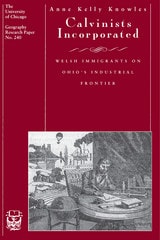
Calvinists Incorporated
Welsh Immigrants on Ohio's Industrial FrontierAnne Kelly Knowles
University of Chicago Press, 1996
capitalist transformation, Anne Kelly Knowles traces a community of
Welsh immigrants to Jackson and Gallia counties in southern Ohio. After
reconstructing the gradual process of community-building, Knowles
focuses on the pivotal moment when the immigrants became involved with
the industrialization of their new region as workers and investors in
Welsh-owned charcoal iron companies. Setting the southern Ohio Welsh in
the context of Welsh immigration as a whole from 1795 to 1850, Knowles
explores how these strict Calvinists responded to the moral dilemmas
posed by leaving their native land and experiencing economic success in
the United States.
Knowles draws on a wide variety of sources, including obituaries and
community histories, to reconstruct the personal histories of over 1,700
immigrants. The resulting account will find appreciative readers not
only among historical geographers, but also among American economic
historians and historians of religion.
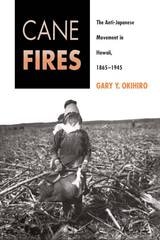
Cane Fires
The Anti-Japanese Movement in Hawaii, 1865-1945Gary Y. Okihiro
Temple University Press, 1992
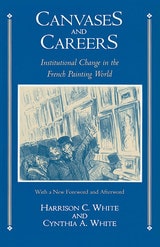
Canvases and Careers
Institutional Change in the French Painting WorldHarrison C. White and Cynthia A. White
University of Chicago Press, 1993
Originally published in 1965, this ground-breaking work is a classic piece of empirical research in the sociology of art. In this edition, Harrison C. White's new Foreword compares the marketing approaches of two contemporary painters, while Cynthia A. White's new Afterword reviews recent scholarship in the field.

Capital Letters
Authorship in the Antebellum Literary MarketDavid Dowling
University of Iowa Press, 2009
In the 1840s and 1850s, as the market revolution swept the United States, the world of literature confronted for the first time the gaudy glare of commercial culture. Amid growing technological sophistication and mounting artistic rejection of the soullessness of materialism, authorship passed from an era of patronage and entered the clamoring free market. In this setting, romantic notions of what it meant to be an author came under attack, and authors became professionals.
In lively and provocative writing, David Dowling moves beyond a study of the emotional toll that this crisis in self-definition had on writers to examine how three sets of authors—in pairings of men and women: Harriet Wilson and Henry David Thoreau, Fanny Fern and Walt Whitman, and Rebecca Harding Davis and Herman Melville—engaged with and transformed the book market. What were their critiques of the capitalism that was transforming the world around them? How did they respond to the changing marketplace that came to define their very success as authors? How was the role of women influenced by these conditions?
Capital Letters concludes with a fascinating and daring transhistorical comparison of how two superstar authors—Herman Melville in the nineteenth century and Stephen King today—have negotiated the shifty terrain of the literary marketplace. The result is an important contribution to our understanding of print culture and literary work.
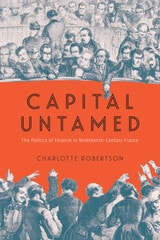
Capital Untamed
The Politics of Finance in Nineteenth-Century FranceCharlotte Robertson
University of Chicago Press, 2026
The story of a bold political experiment in nineteenth-century France to establish power through finance.
Amid the rise of industrial capitalism and revolutionary upheaval, French reformers asserted that finance should be reimagined as an instrument of economic and social transformation rather than left to the logic of private profit and speculation. In the 1850s, under Napoleon III’s authoritarian regime, this vision took institutional form as the Bonapartist state strategically deployed finance, broadened market participation, and sponsored new banks with the promise of directing investment toward infrastructure and industry. Yet this effort to harness and mobilize capital ran into a problem: The financial markets refused to be tamed.
Drawing on rich archival sources—from police surveillance and courtroom transcripts to investment manuals and petitions for incorporation—Capital Untamed reveals how the financial markets became an instrument of political power, frustrated state ambitions, and ultimately escaped attempts at mastery. In this striking debut, historian Charlotte Robertson shows how the French state and its citizens navigated a turbulent era of European capitalism animated by debates over the social purpose of financial capital. Ultimately, politicians’ efforts to establish legitimacy by reorganizing finance—and their confrontations with the limits of that project—set the stage for a form of modern discontent with the financial system that survives to this day.
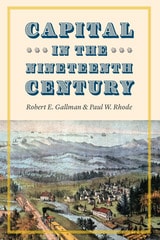
Capital in the Nineteenth Century
Robert E. Gallman and Paul W. Rhode
University of Chicago Press, 2020
When we think about history, we often think about people, events, ideas, and revolutions, but what about the numbers? What do the data tell us about what was, what is, and how things changed over time? Economist Robert E. Gallman (1926–98) gathered extensive data on US capital stock and created a legacy that has, until now, been difficult for researchers to access and appraise in its entirety.
Gallman measured American capital stock from a range of perspectives, viewing it as the accumulation of income saved and invested, and as an input into the production process. He used the level and change in the capital stock as proxy measures for long-run economic performance. Analyzing data in this way from the end of the US colonial period to the turn of the twentieth century, Gallman placed our knowledge of the long nineteenth century—the period during which the United States began to experience per capita income growth and became a global economic leader—on a strong empirical foundation. Gallman’s research was painstaking and his analysis meticulous, but he did not publish the material backing to his findings in his lifetime. Here Paul W. Rhode completes this project, giving permanence to a great economist’s insights and craftsmanship. Gallman’s data speak to the role of capital in the economy, which lies at the heart of many of the most pressing issues today.

Capital, Interrupted
Agrarian Development and the Politics of Work in IndiaVinay Gidwani
University of Minnesota Press, 2008
The central Gujarat region of western India is home to the entrepreneurial landowning Patel caste who have leveraged their rural dominance to become a powerful global diaspora of merchants, industrialists, and professionals. Investigating the Patels’ intriguing ascent, Vinay Gidwani analyzes its broad implications for the nature of labor and capital worldwide.
With the Patels as his central case, Gidwani interrogates established concepts of value, development, and the relationship between capital and history. Capitalism, he argues, is not a frame of economic organization based on the smooth, consistent operation of a series of laws, but rather an assemblage of contingent and interrupted logics stitched together into the appearance of a deus ex machina. Following this line of thinking, Gidwani points to ways in which political economy might be freed of its lingering Eurocentrism, raises questions about the adequacy of postcolonial studies’ critique of Marx and capitalism, and opens the possibility of situating capitalism as a geographically uneven social formation in which different normative or value-creating practices are imperfectly sutured together in ways that can equally impair and enable profit and accumulation.
Both theoretically astute and empirically informed, Capital, Interrupted unsettles encrusted understandings of staple concepts within the human sciences such as hegemony, governmentality, caste, and agency and, ultimately, does nothing less than rethink the very constitution of capitalism.
Vinay Gidwani is associate professor of geography and global studies at the University of Minnesota.
Capital, State, Empire
The New American Way of Digital WarfareScott Timcke
University of Westminster Press, 2017
The United States presents the greatest source of global geo-political violence and instability. Guided by the radical political economy tradition, this book offers an analysis of the USA’s historical impulse to weaponize communication technologies.
Scott Timcke explores the foundations of this impulse and how the militarization of digital society creates structural injustices and social inequalities. He analyses how new digital communication technologies support American paramountcy and conditions for worldwide capital accumulation. Identifying selected features of contemporary American society, Capital, State, Empire undertakes a materialist critique of this digital society and of the New American Way of War. At the same time it demonstrates how the American security state represses activists—such as Black Lives Matter—who resist this emerging security leviathan. The book also critiques the digital positivism behind the algorithmic regulation used to control labour and further diminish prospects for human flourishing for the ‘99%’.
Capital, State, Empire contributes to a broader understanding of the dynamics of global capitalism and political power in the early 21st century.
Capitalism Takes Command
The Social Transformation of Nineteenth-Century AmericaEdited by Michael Zakim and Gary J. Kornblith
University of Chicago Press, 2011
Most scholarship on nineteenth-century America’s transformation into a market society has focused on consumption, romanticized visions of workers, and analysis of firms and factories. Building on but moving past these studies, Capitalism Takes Command presents a history of family farming, general incorporation laws, mortgage payments, inheritance practices, office systems, and risk management—an inventory of the means by which capitalism became America’s new revolutionary tradition.
Capitalism and the Historians
Edited by F. A. Hayek
University of Chicago Press, 1963
Capitalism, God, and a Good Cigar
Cuba Enters the Twenty-first CenturyLydia Chávez, ed.
Duke University Press, 2005
Based on reporting by journalists, writers, and documentary filmmakers since 2001, each of the essays collected here covers a particular dimension of contemporary Cuban society, revealing what it is like to have lived, for more than a decade, suspended between communism and capitalism. There are pieces on hip hop musicians, fiction writing and censorship, the state of ballet and the performing arts, and the role of computers and the Internet. Other essays address the shrinking yet still sizeable numbers of true believers in the promise of socialist revolution, the legendary cigar industry, the changing state of religion, the significance of the recent influx of money and people from Spain, and the tensions between recent Cuban emigrants and previous generations of exiles. Including more than seventy striking documentary photographs of Cuba’s people, countryside, and city streets, this richly illustrated collection offers keen, even-handed insights into the abundant ironies of life in Cuba today.
Contributors. Juliana Barbassa, Ana Campoy, Mimi Chakarova, Lydia Chávez, John Coté, Julian Foley, Angel González, Megan Lardner, Ezequiel Minaya, Daniela Mohor, Archana Pyati, Alicia Roca, Olga R. Rodríguez, Bret Sigler, Annelise Wunderlich
Capitalizing China
Edited by Joseph P. H. Fan and Randall Morck
University of Chicago Press, 2012
Cargoes in Motion
Materiality and Connectivity across the Indian OceanBurkhard Schnepel
Ohio University Press, 2022
An innovative collection of essays that foregrounds specific cargoes as a means to understand connectivity and mobility across the Indian Ocean world.
Scholars have long appreciated the centrality of trade and commerce in understanding the connectivity and mobility that underpin human experience in the Indian Ocean region. But studies of merchant and commercial activities have paid little attention to the role that cargoes have played in connecting the disparate parts of this vast oceanic world. Drawing from the work of anthropologists, geographers, and historians, Cargoes in Motion tells the story of how material objects have informed and continue to shape processes of exchange across the Indian Ocean.
By following selected cargoes through both space and time, this book makes an important and innovative contribution to Indian Ocean studies. The multidisciplinary approach deepens our understanding of the nature and dynamics of the Indian Ocean world by showing how transoceanic connectivity has been driven not only by economic, social, cultural, and political factors but also by the materiality of the objects themselves.
Essays by:
- Edward A. Alpers
- Fahad Ahmad Bishara
- Eva-Maria Knoll
- Karl-Heinz Kohl
- Lisa Jenny Krieg
- Pedro Machado
- Rupert Neuhöfer
- Mareike Pampus
- Hannah Pilgrim
- Burkhard Schnepel
- Hanne Schönig
- Tansen Sen
- Steven Serels
- Julia Verne
- Kunbing Xiao

Caribbean Journeys
An Ethnography of Migration and Home in Three Family NetworksKaren Fog Olwig
Duke University Press, 2007
The migratory journeys of the families in this study began more than sixty years ago, when individuals in the three families left home in a British colonial town in Jamaica, a French Creole rural community in Dominica, and an African-Caribbean village of small farmers on Nevis. Olwig follows the three family networks forward in time, interviewing family members living under highly varied social and economic circumstances in locations ranging from California to Barbados, Nova Scotia to Florida, and New Jersey to England. Through her conversations with several generations of these far-flung families, she gives insight into each family’s educational, occupational, and socioeconomic trajectories. Olwig contends that terms such as “Caribbean diaspora” wrongly assume a culturally homogeneous homeland. As she demonstrates in Caribbean Journeys, anthropologists who want a nuanced understanding of how migrants and their descendants perceive their origins and identities must focus on interpersonal relations and intimate spheres as well as on collectivities and public expressions of belonging.
Casa Pueblo
A Puerto Rican Model of Self-GovernanceAlexis Massol González, Translated by Ashwin Ravikumar and Paul Schroeder Rodríguez
Lever Press, 2022
Cash, Clothes, and Construction
Rethinking Value in Bolivia's Pluri-economyKate Maclean
University of Minnesota Press, 2023
A groundbreaking feminist perspective on Movimiento al Socialismo (MAS) rule in Bolivia and the country’s radical transformation under Evo Morales
The presidency of Evo Morales in Bolivia (2006–2019) has produced considerable academic scholarship, much of it focused on indigenous social movements or extractivism, and often triumphalist about the successes of Morales’s Movimiento al Socialismo (MAS). Turning a new lens on the movement, Cash, Clothes, and Construction presents the first gender-based analysis of “pluri-economy,” a central pillar of Bolivia’s program under Morales, evaluating the potential of this vision of “an economy where all economies fit” to embrace feminist critiques of capitalism and economic diversity.
Based on more than twelve years of empirical research exploring the remarkable transformations in Bolivia since 2006, this book focuses on three sectors—finance, clothing, and construction—in which indigenous women have defied gendered expectations. Kate Maclean presents detailed case studies of women selling secondhand high street clothes from the United States in the vast, peri-urban markets of Bolivian cities; Aymaran designers of new pollera (traditional Andean dress) fashions, one of whom exhibited her collection in New York City; and the powerful and rich chola paceña, whose real estate investments have transformed the cultural maps of La Paz and El Alto.
Cash, Clothes, and Construction offers a gendered analysis of the mission of MAS to dismantle neoliberalism and decolonize politics and economy from the perspective of the Indigenous women who have radically transformed Bolivia’s economy from the ground up.
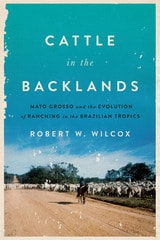
Cattle in the Backlands
Mato Grosso and the Evolution of Ranching in the Brazilian TropicsBy Robert W. Wilcox
University of Texas Press, 2017
Henry A. Wallace Award, The Agricultural History Society, 2018
Brazil has the second-largest cattle herd in the world and is a major exporter of beef. While ranching in the Amazon—and its destructive environmental consequences—receives attention from both the media and scholars, the states of Mato Grosso and Mato Grosso do Sul actually host the most cattle. A significant beef producer in Brazil beginning in the late nineteenth century, the region served as a laboratory for raising cattle in the tropics, where temperate zone ranching practices do not work. Mato Grosso ranchers and cowboys transformed ranching’s relationship with the environment, including the introduction of an exotic cattle breed—the Zebu—that now dominates Latin American tropical ranching.
Cattle in the Backlands presents a comprehensive history of ranching in Mato Grosso. Using extensive primary sources, Robert W. Wilcox explores three key aspects: the economic transformation of a remote frontier region through modern technical inputs; the resulting social changes, especially in labor structures and land tenure; and environmental factors, including the long-term impact of ranching on ecosystems, which, he contends, was not as detrimental as might be assumed. Wilcox demonstrates that ranching practices in Mato Grosso set the parameters for tropical beef production in Brazil and throughout Latin America. As the region was incorporated into national and international economic structures, its ranching industry experienced the entry of foreign investment, the introduction of capitalized processing facilities, and nascent discussions of ecological impacts—developments that later affected many sectors of the Brazilian economy.
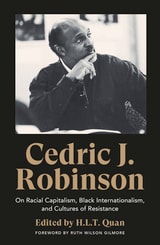
Cedric J. Robinson
On Racial Capitalism, Black Internationalism, and Cultures of ResistanceCedric J. Robinson
Pluto Press, 2019
"Like W. E. B. Du Bois, Michel Foucault, Sylvia Wynter, and Edward Said, Robinson was that rare polymath capable of seeing the whole....He left behind a body of work to which we must return constantly and urgently"—Robin D. G. Kelley, author of Freedom Dreams
Cedric J. Robinson is one of the doyens of Black Studies and a pioneer in study of the Black Radical Tradition. His works have been essential texts, deconstructing racial capitalism and inspiring insurgent movements from Ferguson, Missouri to the West Bank. For the first time, Robinson's essays come together, spanning over four decades and reflective of his diverse interests in the interconnections between culture and politics, radical social theory, and classic and modern political philosophy.
Themes explored include Africa and Black internationalism, World politics, race and US Foreign Policy, representations of blackness in popular culture, and reflections on popular resistance to racial capitalism, white supremacy and more. Essays here include:
*The Black Detective and American Memory
*Slavery and the Platonic Origins of Anti-Democracy
*Africa: In Hock to History and the Banks
*Blaxploitation and the Misrepresentation of Liberalism
*The Mulatta on Film
*Race, Capitalism, and Anti-democracy
*The Killing in Ferguson
*And much more!
Accompanied by an introduction by H. L. T. Quan and a foreword by Ruth Wilson Gilmore, this collection, which includes previously unpublished materials, extends the many contributions by a giant in Black radical thought.
Central America, 1821-1871
Liberalism before Liberal ReformLowell Gudmundson
University of Alabama Press, 1995
Reassessing the foundations of liberalism, nation-building, and economic change in nineteenth-century Central America.
Central America and its ill-fated federation (1824-1839) are often viewed as the archetype of the “anarchy” of early independent Spanish America. This book consists of two interrelated essays dealing with the economic, social, and political changes that took place in Central America, changes that let to both Liberal regime consolidation and export agricultural development after the middle of the last century. The authors provide a challenging reinterpretation of Central American history and the most detailed analysis available in English of this most heterogeneous and obscure of societies. It avoids the dichotomous (Costa Rica versus the rest of Central America) and the centralist (Guatemala as the standard or model) treatments dominant in the existing literature and is required reading for anyone with an interest in 19th century Latin America.
Central American Recovery and Development
William L. Ascher and Ann Hubbard, editors
Duke University Press, 1989
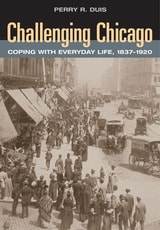
Challenging Chicago
Coping with Everyday Life, 1837-1920Perry R. Duis
University of Illinois Press, 2006
Follow along and encounter some of Chicago’s most infamous citizens--the loathed Traction Baron, high-speed “scorchers,” and peddlers of “swill milk.” Learn about the perils of payday, the lunchtime problems of women, the lure of dime museums, and the fatal attraction of Chicago’s “cruelest place.” Against this bleak backdrop emerged the innovators and institutions that made Chicago the vibrant city it is today. The superbly textured narrative is enhanced by eighty-six historic photographs and illustrations.
Changing the Subject
Feminist and Queer Politics in Neoliberal IndiaSrila Roy
Duke University Press, 2022
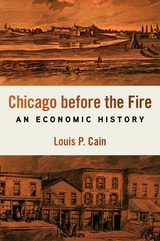
Chicago Before the Fire
An Economic HistoryLouis P. Cain
University of Illinois Press, 2025
An advantageous location and entrepreneurial passion helped fuel Chicago’s transformation from a fur trading post to a thriving city. Louis P. Cain’s economic history places pre-1871 Chicago within the narrative of national expansion and examines infrastructure, finance, and other areas of city life. Business histories tell the story of fortunes made with essential products like meat and grain. Sketches of titans like William Ogden and Cyrus McCormick reveal how real estate, farm equipment, and other industries became engines of local growth. Cain also details public health improvements that made Lake Michigan safe as a water supply while census data informs a portrait of Chicago’s population and the lives of the free Blacks and Irish immigrants at the bottom of the socioeconomic ladder.
Panoramic and up to date, Chicago before the Fire looks at how an intersection of geography, vision, and investment built a great American city.
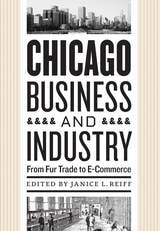
Chicago Business and Industry
From Fur Trade to E-CommerceEdited by Janice L. Reiff
University of Chicago Press, 2013
Drawing on the award-winning Encyclopedia of Chicago, Janice L. Reiff has compiled a unique history of work in the Windy City. Beginning with an overview of the city’s commercial development, Chicago Business and Industry considers how key industries shaped—and were shaped by—both the local and global economies. The city’s phenomenal population growth, its proximity to water, and its development of railroads made Chicago one of the most productive markets for lumber and grain throughout the nineteenth century. The region’s once-booming steel industry, on the other hand, suffered a dramatic decline in the second half of the twentieth century, when already weakened demand met with increasing international competition. Chicago Business and Industry chronicles the Chicago region’s changing fortunes from its beginning.
Reiff has compiled and updated essays from the Encyclopedia covering the city’s most historically famous—and infamous—companies, from the Union Stock Yard to Montgomery Ward to the Board of Trade. The book concludes with a historical account of labor types and issues in the city, with attention to such topics as health-care workers, unemployment, and unionization. Today, Groupon and a host of other high-tech firms have led some experts to christen Chicago the Silicon Valley of the Midwest. Reiff’s new introduction takes account of these and other recent trends.
Engaging, accessible, and packed with fascinating facts, Chicago Business and Industry invites readers into the history and diversity of work in the city, helping them understand how Chicago became Chicago.
Chicago Metropolis 2020
The Chicago Plan for the Twenty-First CenturyElmer W. Johnson
University of Chicago Press, 2001
Nearly a century later, Chicago, like all cities, faces similar dilemmas: how to reconcile privatism with public control, growth with restraint, wealth with poverty, and beauty with industry. And as it did a hundred years ago with the Burnham Plan, the Commercial Club has sponsored a wholly contemporary plan for the city's future development. Written by Elmer W. Johnson, a lawyer and civic leader, Chicago Metropolis 2020 is a guide for those in all spheres of influence who are working to make cities economically and socially vigorous while addressing the greatest problems modern metropolises face. While Burnham's plan primarily addressed architecture and spatial planning, Chicago Metropolis 2020 addresses all facets of urban life, from public education to suburban sprawl, from transportation to social and economic segregation, with the expressed goal of continuing Chicago's tradition of renewal and foresight.
Chicago Metropolis 2020 is an ambitious and necessary plan for a major city at the turn of the century. In scope and execution, it aims at nothing less than economic vibrancy, quality of life, and equity of opportunity.
Chicago in the Age of Capital
Class, Politics, and Democracy during the Civil War and ReconstructionJohn B. Jentz and Richard Schneirov
University of Illinois Press, 2015
Chicago
Metropolis of the Mid-Continent, 4th EditionIrving Cutler. Foreword by James F. Marran
Southern Illinois University Press, 2006
Chicago: Metropolis of the Mid-Continent provides a comprehensive portrayal of the growth and development of Chicago from the mudhole of the prairie to today’s world-class city. This completely revised fourth edition skillfully weaves together the geography, history, economy, and culture of the city and its suburbs with a special emphasis on the role of the many ethnic and racial groups that comprise the “real Chicago” of its neighborhoods. Cutler demonstrates how the geography of “Chicagoland” and the influx of a diverse population spurred transportation, industrial technology, the economy, and sporadic planning to foster rapid urban growth, which brought both great progress and severe problems.
Through insightful analysis, Cutler also traces the demographic and societal changes to Chicago, critically examining such problems as the environment, education, racial tension, crime, welfare, housing, employment, and transportation. Richly illustrated with nearly three hundred drawings, photos, maps, and tables, the volume includes six appendices with sections dedicated to Chicago facts, population growth and income data, weather and climate, significant dates, and historic sites.
Chicanas/Chicanos at the Crossroads
Social, Economic, and Political ChangeEdited by David R. Maciel and Isidro D. Ortiz
University of Arizona Press, 1996
Chicanas/Chicanos at the Crossroads is a state-of-the-art assessment of the most significant developments in the conditions, fortunes, and experiences of Chicanas/os since the late seventies, with an emphasis on the years after 1980, which have thus far received little scholarly attention. Ten essays by leading Chicana and Chicano scholars on economic, social, educational, and political trends in Chicana/o life examine such issues as the rapid population growth of Chicanas/os and other Latinos; the ascendancy of Reaganomics and the turn to the right of American politics; the rise of anti-immigrant sentiment; the launching of new initiatives by the Mexican government toward the Chicano community; and the emergence of a new generation of political activists. The authors have been drawn from a broad array of disciplines, ranging from economics to women's studies, in order to offer a multidisciplinary perspective on Chicana/o developments in the contemporary era. The inclusion of authors from different regions of the United States and from divergent backgrounds enhances the broad perspective of the volume.
The editors offer this anthology with the intent of providing timely and useful insights and stimulating reflection and scholarship on a diverse and complex population. A testament to three decades of intense social struggle, Chicanas/Chicanos at the Crossroads is ample evidence that the legacy of the Movimiento is alive and well.
Contents
Part One: Demographic and Economic Trends Among Chicanas/os
1. Demographic Trends in the Chicano Population: Policy Implications for the Twenty First Century, Susan Gonzalez-Baker
2. Mexican Immigration in the 1980s and Beyond: Implications for Chicanos/as, Leo R. Chavez and Rebecca Martinez
3. Chicanas/os in the Economy: Issues and Challenges Since 1970, Refugio Rochin and Adela de la Torre
Part Two: Chicano Politics: Trajectories and Consequences
4. The Chicano Movement: Its Legacy for Politics and Policy, John A. Garcia
5. Chicano Organizational Politics and Strategies in the Era of Retrenchment, Isidro D. Ortiz
6. Return to Aztlan: Mexican Policy Design Toward Chicanos, María Rosa Garcia-Acevedo
Part Three: Chicana/o Educational Struggles: Dimensions, Accomplishments and Challenges
7. Actors Not Victims: Chicanos in the Struggle for Educational Equality, Guadalupe San Miguel
8. Juncture in the Road: Chincano Studies Since El Plan de Santa Barbara, Ignacio Garcia
Part Four: Gender Feminism and Chicanas/os: Developments and Perspectives
9. Gender and Its Discontinuities in Male/Female Domestic Relations: Mexicans in Cross Cultural Context, Adelaida R. Del Castillo
10. With Quill and Torch: A Chicana Perspective on the American Women's Movement and Feminist Theories, Beatríz Pesquera and Denise A. Segura
Children of the Great Recession
Irwin Garfinkel
Russell Sage Foundation, 2016
Several contributors examine the recession’s impact on the economic well-being of families, including changes to income, poverty levels, and economic insecurity. Irwin Garfinkel and Natasha Pilkauskas find that in cities with high unemployment rates during the recession, incomes for families with a college-educated mother fell by only about 5 percent, whereas families without college degrees experienced income losses three to four times greater. Garfinkel and Pilkauskas also show that the number of non-college-educated families enrolled in federal safety net programs—including Medicaid, the Earned Income Tax Credit, and the Supplemental Nutrition Assistance Program (or food stamps)—grew rapidly in response to the Great Recession.
Other researchers examine how parents’ physical and emotional health, relationship stability, and parenting behavior changed over the course of the recession. Janet Currie and Valentina Duque find that while mothers and fathers across all education groups experienced more health problems as a result of the downturn, health disparities by education widened. Daniel Schneider, Sara McLanahan and Kristin Harknett find decreases in marriage and cohabitation rates among less-educated families, and Ronald Mincy and Elia de la Cruz-Toledo show that as unemployment rates increased, nonresident fathers’ child support payments decreased. William Schneider, Jeanne Brooks-Gunn, and Jane Waldfogel show that fluctuations in unemployment rates negatively affected parenting quality and child well-being, particularly for families where the mother did not have a four-year college degree.
Although the recession affected most Americans, Children of the Great Recession reveals how vulnerable parents and children paid a higher price. The research in this volume suggests that policies that boost college access and reinforce the safety net could help protect disadvantaged families in times of economic crisis.
China and the Twenty-first-Century Crisis
Minqi Li
Pluto Press, 2015
By looking at the big questions of class struggle, global economic imbalances, peak oil, climate change and political power play, Minqi Li argues that by the time of the next crisis, China will be at the epicentre of these contradictions.
China is the last large region, and source of cheap labour, into which capital could expand: the system is at its limits. By combining this argument with issues surrounding the planet’s ecological limits and the internal politics of the Chinese Communist Party, Li commands a narrative of China at a pivotal, and possibly apocalyptic stage.
China's Economic Development
The Interplay of Scarcity and IdeologyAlexander Eckstein
University of Michigan Press, 1975

China's Global Strategy
Towards a Multipolar WorldJenny Clegg
Pluto Press, 2009
China is fast emerging as a powerful player on the world stage. This book takes a closer look at the country's stance on a range of global issues, arguing that its multipolar diplomacy offers a concrete strategy to constrain the US pursuit of unipolar primacy.
Many people assume that China will follow an imperialistic strategy and therefore be in direct conflict with the American empire in a quest for world domination. Jenny Clegg shows that China is in fact taking a multilateral approach, offering real assistance to developing countries and helping to build the institutions required to run a multipolar world. Without glossing over China's own internal difficulties, the book argues that its international consensus-building strategy could lead to a more peaceful and equitable world.
This book offers a refreshing perspective on China that will be of great value to those interested in the big political questions of how to tackle war and imperialism, globalisation and development as well as to undergraduate students of politics, economics and international relations.
China's Urban Transition
John Friedmann
University of Minnesota Press, 2005
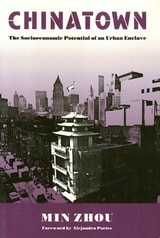
Chinatown
The Socioeconomic Potential of an Urban EnclaveMin Zhou, foreword by Alejandro Portes
Temple University Press, 1995
Min Zhou examines how an ethnic enclave works to direct its members into American society, while at the same time shielding them from it. Focusing specifically on New York's Chinatown, a community established more than a century ago, Zhou offers a thorough and modern treatment of the enclave as a socioeconomic system, distinct form, but intrinsically linked with, the larger society.
Zhou's central theme is that Chinatown does not keep immigrant Chinese from assimilating into mainstream society, but instead provides an alternative means of incorporation into society that does not conflict with cultural distinctiveness. Concentrating on the past two decades, Zhou maintains that community networks and social capital are important resources for reaching socioeconomic goals and social positions in the United States; in Chinatown, ethnic employers use family ties and ethnic resources to advance socially. Relying on her family's networks in New York's Chinatown and her fluency in both Cantonese and Mandarin, the author, who was born in the People's Republic of China, makes extensive use of personal interviews to present a rich picture of the daily work life in the community. She demonstrates that for many immigrants, low-paid menial jobs provide by the enclave are expected as a part of the time-honored path to upward social mobility of the family.
In the series Conflicts in Urban and Regional Development, edited by John R. Logan and Todd Swanstrom.
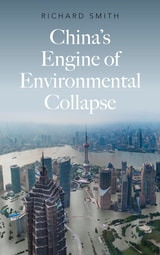
China’s Engine of Environmental Collapse
Richard Smith
Pluto Press, 2020
As the world hurtles towards environmental oblivion, China is leading the charge. The nation's CO2 emissions are more than twice those of the US with a GDP just two-thirds as large. China leads the world in renewable energy yet it is building new coal-fired power plants faster than renewables. The country's lakes, rivers, and farmlands are severely polluted yet China's police state can't suppress pollution, even from its own industries.
This is the first book to explain these contradictions. Richard Smith explains how the country's bureaucratic rulers are driven by nationalist-industrialist tendencies that are even more powerful than the drive for profit under 'normal' capitalism. In their race to overtake the US they must prioritise hyper-growth over the environment, even if this ends in climate collapse and eco-suicide.
Smith contends that nothing short of drastic shutdowns and the scaling back of polluting industries, especially in China and the US, will suffice to slash greenhouse gas emissions enough to prevent climate catastrophe.
Chinese Business in the Making of a Malay State, 1882-1941
Kedah and PenangWu Xiao An
National University of Singapore Press, 2010
Using Penang and Kedah as a case study, Wu draws on archival sources, family histories and an examination of legal arrangements and the press to show that personal business and business networks were not bound by the territorial borders of traditional or modern states, but extended across much of Southeast Asia and into China. His demonstration of the complexity of interactions involving new migrants, sojourners and settlers, both Chinese and non-Chinese, challenges understandings of state formation and economic growth in colonial Malaya based on ethnic stereotypes and accounts of events limited by fixed political boundaries.
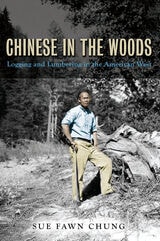
Chinese in the Woods
Logging and Lumbering in the American WestSue Fawn Chung
University of Illinois Press, 2015

Chippewa Lake
A Community in Search of an IdentityCindy L. Hull
Michigan State University Press, 2012
Chippewa Lake is an idyllic waterfront community in north-central Michigan, popular with retirees and weekenders. The lake is surrounded by a rural farming community, but the area is facing a difficult transition as local demographics shift, and as it transforms from an agriculture-based economy to one that relies on wage labor. As farms have disappeared, local residents have employed a variety of strategies to adapt to a new economic structure. The community, meanwhile, has been indelibly affected by the advent of newcomers and retirees challenging the rural cultural values. An anthropologist with a background in sociology, Cindy L. Hull deftly weaves together oral accounts, historic documents, and participant surveys compiled from her nearly thirty years of living in the area to create a textured portrait of a community in flux.
Chosen Capital
The Jewish Encounter with American CapitalismKobrin, Rebecca
Rutgers University Press, 2012
Surveying such diverse topics as Jews’ participation in the real estate industry, the liquor industry, and the scrap metal industry, as well as Jewish political groups and unions bent on reforming American capital, such as the American Labor Party and the International Ladies’ Garment Workers’ Union, contributors to this volume provide a new prism through which to view the Jewish encounter with America. The volume also lays bare how American capitalism reshaped Judaism itself by encouraging the mass manufacturing and distribution of foods like matzah and the transformation of synagogue cantors into recording stars. These essays force us to rethink not only the role Jews played in American economic development but also how capitalism has shaped Jewish life and Judaism over the course of the twentieth century.
Contributors:
Marni Davis, Georgia State University
Phyllis Dillon, independent documentary producer, textile conservator, museum curator
Andrew Dolkart, Columbia University
Andrew Godley, Henley Business School, University of Reading
Jonathan Karp, executive director, American Jewish Historical Society
Daniel Katz, Empire State College, State University of New York
Ira Katznelson, Columbia University
David S. Koffman, New York University
Eli Lederhendler, Hebrew University, Jerusalem
Jonathan Z. S. Pollack, University of Wisconsin—Madison
Jonathan D. Sarma, Brandeis University
Jeffrey Shandler, Rutgers University
Daniel Soyer, Fordham University
Chronicles of a Global City
Speculative Lives and Unsettled Futures in BengaluruVinay Gidwani
University of Minnesota Press, 2024
Tracking Bengaluru’s dramatic urban transformation through the entanglements of finance, land frenzy, real estate volatility, and livelihood upheavals
Over the past two decades, Bengaluru’s exploding real estate sector and massive infrastructure investments have led to land speculation targeting working-class neighborhoods and agricultural land for development. Chronicles of a Global City turns Bengaluru inside out to examine its “world-city” transformation that stimulated rapid urbanization and unbounded growth. Moving the spotlight away from the urban elites and “new middle class,” this book explores how people caught up in the whirlwinds of change in Bengaluru—from construction laborers, street vendors, domestic workers, and platform delivery workers to small-time property brokers, petty landlords, and local politicians—experience, struggle, aspire, invent, strive, and speculate to make a livable city for themselves.
Grounded in long-term ethnographic research and activist experiences, Chronicles of a Global City vividly illuminates the multifaceted entanglements of finance capital, real estate markets, livelihood struggles, and fraying ecologies in urban and peri-urban Bengaluru. Its anchoring concept, “speculative urbanism,” provides a powerful, innovative lens for understanding the risk-laden practices of leveraging land, labor, and resources for the promise of future profit.
Contributors: Hemangini Gupta, Pierre Hauser, Priyanka Krishna, Eesha Kunduri, Kaveri Medappa, Usha Rao, Shaheen Shasa, Swathi Shivanand, Vinay K. Sreenivasa.
Cities, Sagebrush, and Solitude
Urbanization and Cultural Conflict in the Great BasinDennis R. Judd
University of Nevada Press, 2015
The blooming of cities in a fragile desert region poses a host of environmental challenges. The policies required to manage their impact, however, often collide with an entrenched political culture that has long resisted cooperative or governmental effort. The alchemical mixture of three ingredients--cities, aridity, and a libertarian political outlook--makes the Great Basin a compelling place to study. This book addresses a pressing question: are large cities ultimately sustainable in such a fragile environment?
City of Women
Sex and Class in New York, 1789-1860Christine Stansell
University of Illinois Press, 1987
City of Women delves into the misfortunes that New York City's laboring women suffered and the problems that resulted. Looking at how and why a community of women workers came into existence, Christine Stansell analyzes the social conflicts surrounding laboring women and they social pressure these conflicts brought to bear on others. The result is a fascinating journey into economic relations and cultural forms that influenced working women's lives—one that reveals at last the female city concealed within America's first great metropolis.
City of Wood
San Francisco and the Architecture of the Redwood Lumber IndustryJames Michael Buckley
University of Texas Press, 2024
2025 John Brinckerhoff Jackson Prize, Association of American Geographers
2025 Abbott Lowell Cummings Award
2025 John Brinckerhoff Jackson Prize, UVA Center for Cultural Landscapes
2026 Hagley Prize in Business History, Hagley Museum and Library
2025 Honorable Mention, PROSE Award, Association of American Publishers (AAP)
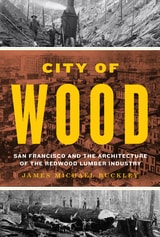
California’s 1849 gold rush triggered creation of the “instant city” of San Francisco as a base to exploit the rich natural resources of the American West. City of Wood examines how capitalists and workers logged the state’s vast redwood forests to create the financial capital and construction materials needed to build the regional metropolis of San Francisco. Architectural historian James Michael Buckley investigates the remote forest and its urban core as two poles of a regional “city.” This city consisted of a far-reaching network of spaces, produced as company owners and workers arrayed men and machines to extract resources and create human commodities from the region’s rich natural environment.
Combining labor, urban, industrial, and social history, City of Wood employs a variety of sources—including contemporary newspaper articles, novels, and photographs—to explore the architectural landscape of lumber, from backwoods logging camps and company towns in the woods to busy lumber docks and the homes of workers and owners in San Francisco. By imagining the redwood lumber industry as a single community spread across multiple sites—a “City of Wood”—Buckley demonstrates how capitalist resource extraction links different places along the production value chain. The result is a paradigm shift in architectural history that focuses not just on the evolution of individual building design across time, but also on economic connections that link the center and periphery across space.
Civilization And Violence
Regimes of Representation in Nineteenth-Century ColombiaCristina Rojas
University of Minnesota Press, 2001
Civilization and violence are not necessarily the antagonists we presume-withcivilization taming violence, and violence unmaking civilization. Focusing on postindependence Colombia, this book brings to light the ways in which violenceand civilization actually intertwined and reinforced each other in the development of postcolonial capitalism.
The narratives of civilization and violence, Cristina Rojas contends, play key roles in the formation of racial, gender, and class identities; they also provide pivotal logic to both the formation of the nation and the processes of capitalist development. During the Liberal era of Colombian history (1849-1878), a dominant creole elite enforced a "will to civilization" that sought to create a new world in its own image. Rojas explores different arenas in which this pursuit meant the violent imposition of white, liberal, laissez-faire capitalism. Drawing on a wide range of social theory, Rojas develops a new way of understanding the relationship between violence and the formation of national identity-not just in the history of Colombia, but also in the broader narratives of civilization.
Class And Its Others
J. K. Gibson-Graham
University of Minnesota Press, 2000
A surprising and innovative look at class that proposes new approaches to this important topic
While references to gender, race, and class are everywhere in social theory, class has not received the kind of theoretical and empirical attention accorded to gender and race. A welcome and much-needed corrective, this book offers a novel theoretical approach to class and an active practice of class analysis.
The authors offer new and compelling ways to look at class through examinations of such topics as sex work, the experiences of African American women as domestic laborers, and blue- and white-collar workers. Their work acknowledges that individuals may participate in various class relations at one moment or over time and that class identities are multiple and changing, interacting with other aspects of identity in contingent and unpredictable ways.
The essays in the book focus on class difference, class transformation and change, and on the intersection of class, race, gender, sexuality, and other dimensions of identity. They find class in seemingly unlikely places-in households, parent-child relationships, and self-employment-and locate class politics on the interpersonal level as well as at the level of enterprises, communities, and nations. Taken together, they will prompt a rethinking of class and class subjectivity that will expand social theory.
Contributors: Enid Arvidson, U of Texas, Arlington; Jenny Cameron, Monash U, Australia; Harriet Fraad; Janet Hotch; Susan Jahoda, U of Massachusetts, Amherst; Amitava Kumar, U of Florida; Cecilia Marie Rio; Jacquelyn Southern; Marjolein van der Veen.
Class War?
What Americans Really Think about Economic InequalityBenjamin I. Page and Lawrence R. Jacobs
University of Chicago Press, 2009
Recent battles in Washington over how to fix America’s fiscal failures strengthened the widespread impression that economic issues sharply divide average citizens. Indeed, many commentators split Americans into two opposing groups: uncompromising supporters of unfettered free markets and advocates for government solutions to economic problems. But such dichotomies, Benjamin Page and Lawrence Jacobs contend, ring false. In Class War? they present compelling evidence that most Americans favor free enterprise and practical government programs to distribute wealth more equitably.
At every income level and in both major political parties, majorities embrace conservative egalitarianism—a philosophy that prizes individualism and self-reliance as well as public intervention to help Americans pursue these ideals on a level playing field. Drawing on hundreds of opinion studies spanning more than seventy years, including a new comprehensive survey, Page and Jacobs reveal that this worldview translates to broad support for policies aimed at narrowing the gap between rich and poor and creating genuine opportunity for all. They find, for example, that across economic, geographical, and ideological lines, most Americans support higher minimum wages, improved public education, wider access to universal health insurance coverage, and the use of tax dollars to fund these programs.
In this surprising and heartening assessment, Page and Jacobs provide our new administration with a popular mandate to combat the economic inequity that plagues our nation.
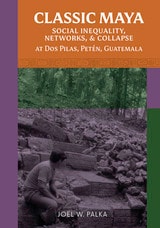
Classic Maya Social Inequality, Networks, and Collapse at Dos Pilas, Petén, Guatemala
Joel W. Palka
University of Utah Press, 2026
The Classic Maya collapse (ca. CE 800) in Mesoamerica has been the focus of much scholarly debate over the last century. In Classic Maya Social Inequality, Networks, and Collapse at Dos Pilas, Petén, Guatemala, Joel W. Palka further explores possible causes of the collapse and breaks new ground by examining its differing effects on Maya elites and commoners.
Drawing on four years of extensive household excavations, Palka reveals how the unraveling of Maya society unfolded not through drought or economic decline alone, but through the disintegration of elite social networks and shifting strategies of survival among high-status commoners. Using data from monumental architecture, hieroglyphic inscriptions, and domestic archaeology, this study illuminates the lived experience of collapse from multiple social strata. By integrating political, environmental, and household perspectives, Palka provides one of the most comprehensive archaeological analyses of social change at an ancient Maya capital. This richly illustrated volume redefines our understanding of collapse, resilience, and transformation in ancient Mesoamerica, offering vital insights for archaeologists, anthropologists, and historians alike.