Results by title
517 books match the query 'In literature' and 37 start with c
C. L. R. James's Caribbean
Paget Henry and Paul Buhle, eds.
Duke University Press, 1992
Drawing upon James's observations of his own life as revealed to interviewers and close friends, this volume provides an examination of James's childhood and early years as colonial literatteur and his massive contribution to West Indian political-cultural understanding. Moving beyond previous biographical interpretations, the contributors here take up the problem of reading James's texts in light of poststructuralist criticism, the implications of his texts for Marxist discourse, and for problems of Caribbean development.

CONSUMING FANTASIES
LABOR, LEISURE, AND THE LONDON SHOPGIRL,LISE SHAPIRO SANDERS
The Ohio State University Press, 2006
Caesar
A Life in Western CultureMaria Wyke
University of Chicago Press, 2008
Caliban's Curse
George Lamming and the Revisioning of HistorySupriya Nair
University of Michigan Press, 1996
Caliban's Curse draws upon a range of theories--postcolonial, Marxist, and feminist--to contextualize the black diaspora of the modern Caribbean through one of its primary anglophone novelists. Putting George Lamming in conversation with such contemporaries as C.L.R. James, Derek Walcott, and Wilson Harris, Nair argues that Lamming's works expand the protest of Shakespeare's Caliban to articulate a reinvention of Caribbean cultures. Both cursed by and cursing the weight of colonial history, Lamming works against the paralysis induced by such an encounter; his work serves to rewrite canonical icons and to reimagine popular cultures.
"Supriya Nair writes about the problems of history and social revolution with passion and clarity and an amazing range of critical and cultural reference. . . . She brings to existing studies of Lamming a wide and sustained knowledge of the forces that have shaped the West Indian novel, and the wider postcolonial debates in which these novels are read and discussed." --Simon Gikandi, University of Michigan
Supriya Nair is Associate Professor of English, Tulane University.
California And The Fictions Of Capital
George Henderson
Temple University Press, 2003

Canaan Bound
The African-American Great Migration NovelLawrence R. Rodgers
University of Illinois Press, 1997
The Great Migration--the exodus of more than six million blacks from
their southern homes hoping for better lives in the North--is a defining
event of post-emancipation African-American life and a central feature
of twentieth-century black literature. Lawrence Rodgers explores the historical
and literary significance of this event and in the process identifies
the Great Migration novel as a literary form that intertwines geography
and identity.
Drawing on a wide range of major literary voices, including Richard Wright,
Ralph Ellison, and Toni Morrison, as well as lesser-known writers such
as William Attaway (Blood on the Forge) and Dorothy West (The Living Is
Easy), Rodgers conducts a kind of literary archaeology of the Great Migration.
He mines the writers' biographical connections to migration and teases
apart the ways in which individual novels relate to one another, to the
historical situation of black America, and to African-American literature
as a whole.
In reading migration novels in relation to African-American literary
texts such as slave narratives, folk tales, and urban fiction, Rodgers
affirms the southern folk roots of African-American culture and argues
for a need to stem the erosion of southern memory.
Cannibal Writes
Eating Others in Caribbean and Indian Ocean Women's WritingNjeri Githire
University of Illinois Press, 2014
In Cannibal Writes, Njeri Githire concentrates on the gendered and sexualized dimensions of these visceral metaphors of consumption in works by women writers from Haiti, Jamaica, Mauritius, and elsewhere. Employing theoretical analysis and insightful readings of English- and French-language texts, she explores the prominence of alimentary-related tropes and their relationship to sexual consumption, writing, global geopolitics and economic dynamics, and migration. As she shows, the use of cannibalism in particular as a central motif opens up privileged modes for mediating historical and sociopolitical issues.
Ambitiously comparative, Cannibal Writes ranges across the works of well-known and lesser known writers to tie together two geographic and cultural spaces that have much in common but are seldom studied in parallel.
Cartographic Humanism
The Making of Early Modern EuropeKatharina N. Piechocki
University of Chicago Press, 2019
What is “Europe,” and when did it come to be? In the Renaissance, the term “Europe” circulated widely. But as Katharina N. Piechocki argues in this compelling book, the continent itself was only in the making in the fifteenth and sixteenth centuries.
Cartographic Humanism sheds new light on how humanists negotiated and defined Europe’s boundaries at a momentous shift in the continent’s formation: when a new imagining of Europe was driven by the rise of cartography. As Piechocki shows, this tool of geography, philosophy, and philology was used not only to represent but, more importantly, also to shape and promote an image of Europe quite unparalleled in previous centuries. Engaging with poets, historians, and mapmakers, Piechocki resists an easy categorization of the continent, scrutinizing Europe as an unexamined category that demands a much more careful and nuanced investigation than scholars of early modernity have hitherto undertaken. Unprecedented in its geographic scope, Cartographic Humanism is the first book to chart new itineraries across Europe as it brings France, Germany, Italy, Poland, and Portugal into a lively, interdisciplinary dialogue.
Catholic Modernism and the Irish "Avant-Garde
" The Achievement of Brian Coffey, Denis Devlin, and Thomas MacGreeveyJames Matthew Wilson
Catholic University of America Press, 2023
Cato's Tears and the Making of Anglo-American Emotion
Julie Ellison
University of Chicago Press, 1999
Early popular dramas of this time, Ellison shows, linked male stoicism with sentimentality through portrayals of stoic figures whose civic sacrifices bring other men to tears. Later works develop a different model of sensibility, drawing their objects of sympathy from other races and classes—Native Americans, African slaves, servants. Only by examining these texts in light of the complex masculine tradition of stoic sentimentality, Ellison argues, can one interpret women's roles in the culture of sensibility.
In her conclusion, Ellison offers "a short history of liberal guilt," exploring the enduring link between male stoicism and male sensibility in political and cultural life from the late seventeenth century to today.
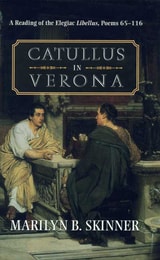
Catullus in Verona
A Reading of the Elegiac Libellus, Poems 65–116Marilyn B. Skinner
The Ohio State University Press, 2003
“Skinner’s Catullus in Verona . . . gives a dazzling demonstration of how even the seemingly over-familiar can yield fresh insights. Subtly interweaving old biographical platitudes and new literary theory, persona and person, she offers us a Catullus (sorry, construct of Catullus) faced with a public and private crisis of late Republican values—political, social, and literary—that forced him to abandon his neoteric models, to rethink all his relationships; plus a Lesbia, the ‘written woman,’ who here generates more semantic flux than heartbreak. Skinner’s readers, too, will end by rethinking a group of poems they thought they knew. This is no small achievement.” —Peter Green, The Times Literary Supplement
“This book is an important contribution to the study of Catullus, and more broadly to the study of Latin poetry. As an example of erudite scholarship and sensitive, supple criticism, I believe it will be of interest as well to a wider audience, including scholars and students working in other disciplines in the humanities.” —David Wray, assistant professor of classics, University of Chicago
Gaius Valerius Catullus is one of Rome’s greatest surviving poets and also one of the most popular Latin authors. Comprehensive treatments of his work have been hindered, however, by the problems posed by the Catullan collection as it has come down to us. Although many scholars now believe that Catullus did publish his verse in one or more small volumes (libelli), the theory that these books were rearranged after his death means that individual pieces continue to be read and analyzed separately, without reference to their placement within the collection. Skinner challenges this theory of posthumous editorship by offering a unified reading of Catullus’ elegiac poetry (poems 65–116 in our collection) and arguing that it constitutes what was once a separately circulated libellus whose authorial arrangement has been preserved intact. Purportedly issued from the poet’s native city, Verona, to his Roman readership, the volume presents itself as a valedictory.
This reading of the elegiac collection represents a major departure in Catullan studies. The methodological contention that Catullus’ elegiac poems are better approached as a single cohesive poetic statement makes this book a valuable new contribution to Catullan scholarship.
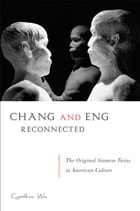
Chang and Eng Reconnected
The Original Siamese Twins in American CultureCynthia Wu
Temple University Press, 2012
Conjoined twins Chang and Eng Bunker have fascinated the world since the nineteenth century. In her captivating book, Chang and Eng Reconnected, Cynthia Wu traces the “Original Siamese Twins” through the terrain of American culture, showing how their inseparability underscored tensions between individuality and collectivity in the American popular imagination.
Using letters, medical documents and exhibits, literature, art, film, and family lore, Wu provides a trans-historical analysis that presents the Bunkers as both a material presence and as metaphor. She also shows how the twins figure in representations of race, disability, and science in fictional narratives about nation building.
As astute entrepreneurs, the twins managed their own lives; nonetheless, as Chang and Eng Reconnected shows, American culture has always viewed them through the multiple lenses of difference.
Chaucer's Italian Tradition
Warren Ginsberg
University of Michigan Press, 2002
Because divergent political, municipal, and literary histories would have made the Italian cities--Genoa, Florence, and Milan--unfamiliar to an English poet from medieval London, Ginsberg argues that we must consider what Chaucer overlooked and mistook from his Italian models alongside the material he did appropriate. To make sense of premises in texts like Dante's Comedy that were peculiarly Italian, Chaucer would look to Boccaccio as a gloss; by reading these authors in conjunction with one another, Chaucer generates an "Italian tradition" that translates into the terms of his English experience works already mediated by a prior stage of transposition.
Ginsberg explores Chaucer's relationship to Italian poets not in terms of the interaction of individual talents with accredited authorities (Chaucer and Dante, Boccaccio and Petrarch, etc.). Rather, he focuses on the shifts in tension that occur when the civic engagements and disengagements of Florence's poets are brought into contact with Chaucer's growing metropolitanism and increasing reluctance to make London the locus of his poetic art.
Beyond its appeal to medievalists and those who study the Renaissance, Chaucer's Italian Tradition will be welcomed by readers interested in theoretical questions about translation and the development of tradition, including individuals who study history, literature, and the nature of the humanities.
Warren Ginsberg is Professor of English, University of Oregon.
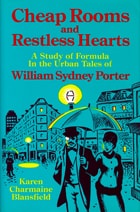
Cheap Rooms and Restless Hearts
A Study of Formula in the Urban Tales of William Sydney PorterKaren Charmaine Blansfield
University of Wisconsin Press, 1988
Chekhov and Russian Religious Culture
Poetics of the Marian ParadigmJulie de Sherbinin
Northwestern University Press, 1997
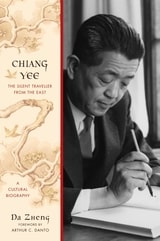
Chiang Yee
The Silent Traveller from the East--A Cultural BiographyZheng, Da
Rutgers University Press, 2010
This biography is more than a recounting of extraordinary accomplishments. It also embraces the transatlantic life experience of Yee who traveled from China to England and then on to the United States, where he taught at Columbia University, to his return to China in 1975, after a forty-two year absence. Interwoven is the history of the communist revolution in China; the battle to save England during World War II; the United States during the McCarthy red scare era; and, eventually, thawing Sino-American relations in the 1970s. Da Zheng uncovers Yee's encounters with racial exclusion and immigration laws, displacement, exile, and the pain and losses he endured hidden behind a popular public image.
Chicago by the Book
101 Publications That Shaped the City and Its ImageCaxton Club
University of Chicago Press, 2018
Chicago by the Book profiles 101 landmark publications about Chicago from the past 170 years that have helped define the city and its image. Each title—carefully selected by the Caxton Club, a venerable Chicago bibliophilic organization—is the focus of an illustrated essay by a leading scholar, writer, or bibliophile.
Arranged chronologically to show the history of both the city and its books, the essays can be read in order from Mrs. John H. Kinzie’s 1844 Narrative of the Massacre of Chicago to Sara Paretsky’s 2015 crime novel Brush Back. Or one can dip in and out, savoring reflections on the arts, sports, crime, race relations, urban planning, politics, and even Mrs. O’Leary’s legendary cow. The selections do not shy from the underside of the city, recognizing that its grit and graft have as much a place in the written imagination as soaring odes and boosterism. As Neil Harris observes in his introduction, “Even when Chicagoans celebrate their hearth and home, they do so while acknowledging deep-seated flaws.” At the same time, this collection heartily reminds us all of what makes Chicago, as Norman Mailer called it, the “great American city.”
With essays from, among others, Ira Berkow, Thomas Dyja, Ann Durkin Keating, Alex Kotlowitz, Toni Preckwinkle, Frank Rich, Don Share, Carl Smith, Regina Taylor, Garry Wills, and William Julius Wilson; and featuring works by Saul Bellow, Gwendolyn Brooks, Sandra Cisneros, Clarence Darrow, Erik Larson, David Mamet, Studs Terkel, Ida B. Wells-Barnett, Frank Lloyd Wright, and many more.
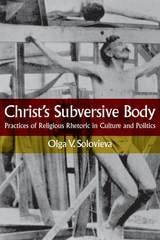
Christ's Subversive Body
Practices of Religious Rhetoric in Culture and PoliticsOlga V. Solovieva; Foreword by Haun Saussy
Northwestern University Press, 2018
Solovieva’s survey includes the iconoclastic polemics of Epiphanius at the moment of struggles for supremacy between the Roman state and the Christian church, the mystical theologico-political alchemy of an anonymous treatise circulated at the Council of Constance, Lavater’s counter-Enlightenment visions of the afterlife expressd through physiognomy, Dostoevsky’s refashioning of ethical communities, Pier Paolo Pasolini’s attempts to provoke the “scandal” of Jesus’s mission once more in the modern world, and the elaboration of a political theology subordinating democratic dissent to the higher unity of a corporately conceived “unitary executive” in early twenty-first-century America.
Solovieva presents her findings not as an entry into theological or Christological debates but rather as a study in comparative discourse analysis. She demonstrates how these uses of Christ’s body are triggered by moments of epistemological, political, and representational crisis in the history of Western civilization.
City of Dreadful Night
A Tale of Horror and the Macabre in IndiaLee Siegel
University of Chicago Press, 1995
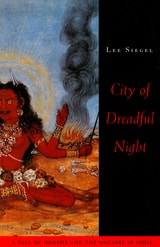
But what started out as a study of other people's stories became a compelling story itself. City of Dreadful Night is an astonishing work of fiction, a tangle of tales that transports the reader from the Medieval India of magicians, witches, and vampires, through the British India of Brahm Kathuwala's childhood, into the chaos and political terror of contemporary India. Vividly recreating Indian literary and oral traditions, Siegel weaves a web of possession, reincarnation, and magical transformation unlike any found in the Western tradition. Flesh-eating demons, Rajiv Gandhi's assassin, even Bram Stoker and Dracula populate the serpentine narrative, which intermingles stories about the characters with the terrifying tales they tell.
Siegel pursues Brahm Kathuwala from the ghastly lights of the cremation ground at Banaras through villages all over north India. Brahm's life story is revealed through countless tales along the way. We learn that he was raised, and abandoned, by two mothers—one the destitute floor sweeper who bore him; the other her employer, a wealthy Irish woman who read and reread to him the story of Dracula. We hear of his marriage to the daughter of a cremation ground attendant, his battles against her demonic possession, and their painful parting. We come to understand the daily life and motivations of this "horror professional," who uses terrifying tales to ward off the evil he himself fears.
This unorthodox book is more than a story; it blends scholarship, fantasy, travelogue, and autobiography—fusing and overlapping historical accounts and newscasts, literary texts and films, dreams and nocturnal tales. Siegel uses imagination to explore the relation of real terror to horror fiction and to contemplate the ways fear and disgust become thrilling elements in stories of the macabre.
This book is the product of Siegel's deep knowledge of both Indian and Western literary and philosophical traditions. It is also an attempt to come to grips with the omnipresence of political and religious terror in contemporary India. Shocking, original, beautifully written, City of Dreadful Night offers readers a captivating immersion in the wonder and terror of India, past and present.
City of the Soul
Rome and the RomanticsJohn A. Pinto
University Press of New England, 2016
Claiming a Tradition
Italian American Women WritersMary Jo Bona
Southern Illinois University Press, 1999
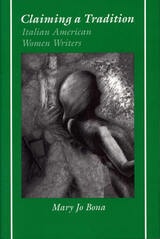
Bona discusses the novels in pairs according to their focus on Italian American life. She first examines the traditions of italianitá (a flavor of things Italian) that inform and enhance works of fiction. The novelists in that tradition were Mari Tomasi (Like Lesser Gods, 1949) and Marion Benasutti (No Steady Job for Papa, 1966).
Bona then turns to later novels that highlight the Italian American belief in the family's honor and reputation. Conflicts between generations, specifically between autocratic fathers and their children, are central to Octavia Waldo's 1961 A Cup of the Sun and Josephine Gattuso Hendin's 1988 The Right Thing to Do.
Even when writers choose to steer away from the familial focus, Bona notes, their developmental narratives trace the reintegration of characters suffering from a crisis of cultural identity. Relating the characters' struggles to their relationship to the family, Bona examines Diana Cavallo's 1961 A Bridge of Leaves and Dorothy Bryant's 1978 Miss Giardino.
Bona then discusses two innovative novels— Helen Barolini's 1979 Umbertina and Tina De Rosa's 1980 Paper Fish— both of which feature a granddaughter who invokes her grandmother, a godparent figure. Through Barolini's feminist and De Rosa's modernist perspectives, both novels present a young girl developing artistically.
Closing with a discussion of the contemporary terrain Italian American women traverse, Bona examines such topics as sexual identity when it meets cultural identity and the inclusion of italianitá when Italian American identity is not central to the story. Italian American women writers, she concludes, continue in the 1980s and 1990s to focus on the interplay between cultural identity and women's development.
Collisions With History
Latin American Fiction and Social Science from “El Boom” to the New World OrderFrederick M. Nunn
Ohio University Press, 2001
Latin American intellectuals have traditionally debated their region’s history, never with so much agreement as in the fiction, commentary, and scholarship of the late twentieth century. Collisions with History shows how “fictional histories” of discovery and conquest, independence and early nationhood, and the recent authoritarian past were purposeful revisionist collisions with received national versions. These collisions occurred only because of El Boom, thus making Latin America’s greatest literary movement a historical phenomenon as well. Frederick M. Nunn discusses the cataclysmic view of history conveyed in Boom novels and examines the thought and self-perception of selected authors whose political activism enhanced the appeal of their works—historical and otherwise: Alejo Carpentier, Carlos Fuentes, Gabriel García Márquez, and Augusto Roa Bastos; Julio Cortázar, Isabel Allende, Mario Vargas Llosa, and Darcy Ribeiro.
Collisions with History demonstrates how their commentary on history, literature, politics, and international affairs reveals a conscious sense of purpose. From between the lines of their nonfiction emerges a consensus that outside forces have defined as well as controlled Latin America’s history.
Professor Nunn also suggests that, with novelists now no longer very interested in colliding with history, it may fall to social scientists to speak for what remains of the region’s past in the New World Order.
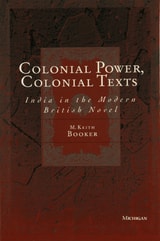
Colonial Power, Colonial Texts
India in the Modern British NovelM. Keith Booker
University of Michigan Press, 1997
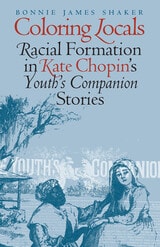
Coloring Locals
Racial Formation in Katie Chopin's "Youth's Companion" StoriesBonnie James Shaker
University of Iowa Press, 2003
Chopin's canonical status as a feminist rebel and reformer conflicts with the fact that one of her most supportive publishers throughout her life was the Youth's Companion, a juvenile periodical whose thoroughly orthodox “family values” contributed to its success as the longest-running and, at one time, most widely circulating periodical in nineteenth-century America. Not surprisingly, Chopin’s Youth’s Companion stories differ from her canonical texts in that they embrace and advance ideals of orthodox white femininity and masculinity. Rather than viewing these two representations as being at odds with each other, Bonnie Shaker asserts that Chopin's endorsement of conventional gender norms is done in the service of a second political agenda beyond her feminism, one that can help the reader appreciate nuances of identity construction previously misunderstood or overlooked in the body of her work.
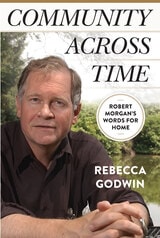
Community across Time
Robert Morgan’s Words for HomeRebecca Godwin
West Virginia University Press, 2023
One of the first book-length considerations of the Appalachian writer Robert Morgan.
One of the first book-length studies of Robert Morgan, Community across Time considers the Appalachian writer’s explorations of memory, family history, and landscape. It provides a study of all of Morgan’s fiction to date, as well as a chapter on his poetry and some reference, where appropriate, to his nonfiction. Rebecca Godwin examines the family history that informs much of this body of work, offering an extended biographical essay that ties characters and plot details to Morgan’s ancestors’ lives and to his own experiences growing up in the Blue Ridge Mountains.
Religious rifts, economic hardships, class conflicts, the place of women and Indigenous peoples, and the failure of humans to recognize the divinity of the natural world are among the motifs centering Morgan’s writing. Community across Time explores those themes as it looks to Morgan’s relationship to the Appalachian South.

Contemporary Irish Drama and Cultural Identity
Margaret Llewellyn-Jones
Intellect Books, 2013
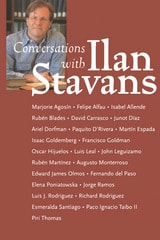
Conversations with Ilan Stavans
Ilan Stavans
University of Arizona Press, 2005
Spontaneous and surprising, these conversations reflect Latino life in the United States in all its facets. Among the more than two dozen selections, Edward James Olmos talks about Hispanics in Hollywood; John Leguizamo describes how he shapes a stage show; author Richard Rodriguez reflects on his gang background; Esmeralda Santiago takes on the Puerto Rican stereotype; and Piri Thomas shares thoughts on the writing of Down These Mean Streets. "A conversation is a tango," writes Stavans, "for it takes two to dance it." Conversations with Ilan Stavans invites readers to catch the rhythm and enjoy these unique meetings of minds.
Conversations with Texas Writers
Edited by Frances Leonard and Ramona Cearley, for Humanities Texas
University of Texas Press, 2005
Larry McMurtry declares, "Texas itself doesn't have anything to do with why I write. It never did." Horton Foote, on the other hand, says, "I've just never had a desire to write about any place else." In between those figurative bookends are hundreds of other writers—some internationally recognized, others just becoming known—who draw inspiration and often subject matter from the unique places and people that are Texas. To give everyone who is interested in Texas writing a representative sampling of the breadth and vitality of the state's current literary production, this volume features conversations with fifty of Texas's most notable established writers and emerging talents.
The writers included here work in a wide variety of genres—novels, short stories, poetry, plays, screenplays, essays, nonfiction, and magazine journalism. In their conversations with interviewers from the Writers' League of Texas and other authors' organizations, the writers speak of their apprenticeships, literary influences, working habits, connections with their readers, and the domestic and public events that have shaped their writing. Accompanying the interviews are excerpts from the writers' work, as well as their photographs, biographies, and bibliographies. Joe Holley's introductory essay—an overview of Texas writing from Cabeza de Vaca's 1542 Relación to the work of today's generation of writers, who are equally at home in Hollywood as in Texas—provides the necessary context to appreciate such a diverse collection of literary voices.
A sampling from the book:
"This land has been my subject matter. One thing that distinguishes me from the true naturalist is that I've never been able to look at land without thinking of the people who've been on it. It's fundamental to me." —John Graves
"Writing is a way to keep ourselves more in touch with everything we experience. It seems the best gifts and thoughts are given to us when we pause, take a deep breath, look around, see what's there, and return to where we were, revived." —Naomi Shihab Nye
"I've said this many times in print: the novel is the middle-age genre. Very few people have written really good novels when they are young, and few people have written really good novels when they are old. You just tail off, and lose a certain level of concentration. Your imaginative energy begins to lag. I feel like I'm repeating myself, and most writers do repeat themselves." —Larry McMurtry
"I was a pretty poor cowhand. I grew up on the Macaraw Ranch, east of Crane, Texas. My father tried very hard to make a cowboy out of me, but in my case it never seemed to work too well. I had more of a literary bent. I loved to read, and very early on I began to write small stories, short stories, out of the things I liked to read." —Elmer Kelton
Cordially Yours, Brother Cadfael
Edited by Anne K. Kaler
University of Wisconsin Press, 1998
Why, essays ask, is a cloistered monk solving murders? How can an author combine a valid detective and an effective healer?
Cormac McCarthy's Western Novels
Barcley Owens
University of Arizona Press, 2000
In the continuing redefinition of the American West, few recent writers have left a mark as indelible as Cormac McCarthy. A favorite subject of critics and fans alike despite—or perhaps because of—his avoidance of public appearances, the man is known solely through his writing. Thanks to his early work, he is most often associated with a bleak vision of humanity grounded in a belief in man's primordial aggressiveness.
McCarthy scholar Barcley Owens has written the first book to concentrate exclusively on McCarthy's acclaimed western novels: Blood Meridian, National Book Award winner All the Pretty Horses, The Crossing, and Cities of the Plain. In a thought-provoking analysis, he explores the differences between Blood Meridian and the Border Trilogy novels and shows how those differences reflect changing conditions in contemporary American culture.
Owens captures both Blood Meridian's wanton violence and the Border Trilogy's fond remembrance of the Old West. He shows how this dramatic shift from atavistic brutality to nostalgic Americana suggests that McCarthy has finally given his readers what they most want—the stuff of their mythic dreams.
Owens's study is both an incisive look at one of our most important and demanding authors and a penetrating analysis of violence and myth in American culture. Fans of McCarthy's work will find much to consider for ongoing discussions of this influential body of work.
Cowboy Poets and Cowboy Poetry
Edited by David Stanley and Elaine Thatcher
University of Illinois Press, 2000
Centered around six areas of focus, from historical background to biographical profiles to creative process, Cowboy Poets and Cowboy Poetry approaches the tradition of occupational folk poetry from a variety of perspectives. Contributors trace its history as an extension of the Homeric tradition of storytelling in verse and discuss such topics as the way a text evolves in retelling, how it becomes linked to a tune, and how poetic content fuses with form to generate narrative tension and humor.
Personal and telling portraits of cowboy poets and reciters--including D. J. O'Malley, Henry Herbert Knibbs, and a number of contemporary cowboy poets--illuminate the creative process through which individual poets work within a long community tradition, while comparative studies examine poetry by women, Mexican-American vaqueros, loggers, Argentine gauchos, and Australian bush poets.
Cowboy Poets and Cowboy Poetry offers the first in-depth examination of a distinctive and community-based tradition rich with larger-than-life heroes, vivid occupational language, humor, and unblinking encounters with birth, death, nature, and animals. Throughout, the collection shows that cowboy poetry interweaves two thematic strands: a fierce defense of an endangered way of life and a dynamic celebration of organic wholeness, camaraderie, and individualism.

Coyote Country
Fictions of the Canadian WestArnold E. Davidson
Duke University Press, 1994
Davidson details the evolution of the U.S. and Canadian Western forms, tracing the divergence between the two as Canadian writers responded to their unique historical circumstances by reinventing the West as well as the Western and establishing a new literary landscape where author and reader could work out new possibilities of being. Surveying a range of texts by Canada’s most innovative writers, with special attention to women writers and Native stories of Coyote, he provides close readings of novels by Howard O’Hagan, Sheila Watson, Robert Kroetsch, Aritha van Herk, Anne Cameron, Peter Such, W. O. Mitchell, Beatrice Culleton, and Thomas King. A unique study, Coyote Country offers at one and the same time a theory of Canadian Western fiction, a history of crosscultural paradigms of the West as manifested in novels, and an intensive reading of some of Canada’s best literature.
Coyote In The Maze
Peter Quigley
University of Utah Press, 1999
The works of Edward Abbey have been well known to general readers since the 1960’s. This volume, the first comprehensive collection of literary criticism devoted to the entire challenging corpus of Abbey’s fiction and nonfiction, couldn’t be more timely or significant.
From the perspective of his scholarly critics in Western American literature and environmental studies Ed Abbey is, in a word, problematic. As Peter Quigley, volume editor, comments, "The title of this collection refers to a number of references within Abbey’s work. The maze is a place of myriad canyons, of wonder, and a place where the desperadoes in The Monkey Wrench Gang could lose the authorities. The coyote refers to the slippery figure in Native American myth, a figure, known to Abbey, that always eluded definition an could slip out of every trap set to catch him." In this long-awaited anthology, eighteen intrepid scholars have chosen to ignore the coyote’s reputation, tracking Abbey in one masterful and illuminating essay after another through the canyons of anarchist politics, philosophy, feminist literary criticism, post-structuralism, and rhetoric, as well as nature and environmental theory and activism.

Creole Medievalism
Colonial France and Joseph Bédier’s Middle AgesMichelle R. Warren
University of Minnesota Press, 2010
In Creole Medievalism, Michelle Warren demonstrates that Bédier's relationship to this multicultural and economically peripheral colony motivates his nationalism in complex ways. Simultaneously proud of his French heritage and nostalgic for the island, Bédier defends French sovereignty based on an ambivalent resistance to his creole culture. Warren shows that in the early twentieth century, influential intellectuals from Réunion helped define the new genre of the "colonial novel," adopting a pro-colonial spirit that shaped both medieval and Francophone studies. Probing the work of a once famous but little understood cultural figure, Creole Medievalism illustrates how postcolonial France and Réunion continue to grapple with histories too varied to meet expectations of national unity.
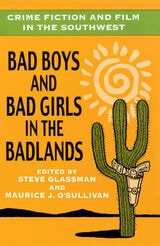
Crime Fiction and Film in the Southwest
Bad Boys and Bad Girls in the BadlandsEdited by Steve Glassman and Maurice O'Sullivan
University of Wisconsin Press, 2001
When Joe Leaphorn and Jim Chee, Tony Hillerman’s oddly matched tribal police officers, patrol the mesas and canyons of their Navajo reservation, they join a rich traditon of Southwestern detectives. In Crime Fiction and Film in the Southwest, a group of literary critics tracks the mystery and crime novel from the Painted Desert to Death Valley and Salt Lake City. In addition, the book includes the first comprehensive bibliography of mysteries set in the Southwest and a chapter on Southwest film noir from Humphrey Bogart’s tough hood in The Petrified Forest to Russell Crowe’s hard-nosed cop in L.A. Confidential.
Criticism in the Borderlands
Studies in Chicano Literature, Culture, and IdeologyHéctor Calderón and José David Saldívar, eds.
Duke University Press, 1991
The editors have organized essays around four board themes: the situation of Chicano literary studies within American literary history and debates about the “canon”; representations of the Chicana/o subject; genre, ideology, and history; and the aesthetics of Chicano literature. The volume as a whole aims at generating new ways of understanding what counts as culture and “theory” and who counts as a theorist. A selected and annotated bibliography of contemporary Chicano literary criticism is also included.
By recovering neglected authors and texts and introducing readers to an emergent Chicano canon, by introducing new perspectives on American literary history, ethnicity, gender, culture, and the literary process itself, Criticism in the Borderlands is an agenda-setting collection that moves beyond previous scholarship to open up the field of Chicano literary studies and to define anew what is American literature.
Contributors. Norma Alarcón, Héctor Calderón, Angie Chabram, Barbara Harlow, Rolando Hinojosa, Luis Leal, José E. Limón, Terese McKenna, Elizabeth J. Ordóñez, Genero Padilla, Alvina E. Quintana, Renato Rosaldo, José David Saldívar, Sonia Saldívar-Hull, Rosaura Sánchez, Roberto Trujillo
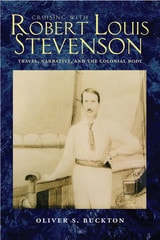
Cruising with Robert Louis Stevenson
Travel, Narrative, and the Colonial BodyOliver S. Buckton
Ohio University Press, 2007