Results by title
468 books match the query 'Industries' and 35 start with c
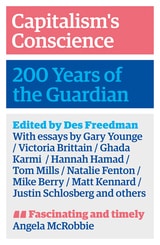
Capitalism's Conscience
200 Years of the GuardianDes Freedman
Pluto Press, 2021
Since its inception in Manchester in 1821 as a response to the 1819 Peterloo Massacre, the Guardian has been a key institution in the definition and development of liberalism. The stereotype of the 'Guardianista', an environmentally-conscious, Labour-voting, progressively-minded public sector worker endures in the popular mythology of British press history.
Yet the title has a complex lineage and occupies an equivocal position between capital and its opponents. It has both fiercely defended the need for fearless, independent journalism and handed over documents to the authorities; it has carved out a niche for itself in the UK media as a progressive voice but has also consistently diminished more radical projects on the left.
Published to coincide with its 200th anniversary, Capitalism's Conscience brings together historians, journalists and activists in an appraisal of the Guardian's contribution to British politics, society and culture - and its distinctive brand of centrism. Contextualising some of the main controversies in which the title has been implicated, the book offers timely insights into the publication's history, loyalties and political values.

Catawba Indian Pottery
The Survival of a Folk TraditionThomas John Blumer, with a foreword by William L. Harris
University of Alabama Press, 2004
Traces the craft of pottery making among the Catawba Indians of North Carolina from the late 18th century to the present
When Europeans encountered them, the Catawba Indians were living along the river and throughout the valley that carries their name near the present North Carolina-South Carolina border. Archaeologists later collected and identified categories of pottery types belonging to the historic Catawba and extrapolated an association with their protohistoric and prehistoric predecessors.
In this volume, Thomas Blumer traces the construction techniques of those documented ceramics to the lineage of their probable present-day master potters or, in other words, he traces the Catawba pottery traditions. By mining data from archives and the oral traditions of contemporary potters, Blumer reconstructs sales circuits regularly traveled by Catawba peddlers and thereby illuminates unresolved questions regarding trade routes in the protohistoric period. In addition, the author details particular techniques of the representative potters—factors such as clay selection, tool use, decoration, and firing techniques—which influence their styles.

Chasing Success
The Challenge for NonprofitsJudith Van Ginkel
University of Minnesota Press, 2023
Chasing Success follows the first twenty years of the organization Every Child Succeeds under the leadership of their former Executive Director turned author, Judith Van Ginkel. Every Child Succeeds is a regional nonprofit located in Cincinnati, Ohio that focuses on home visitation and support for parents from pregnancy through the first one thousand days of their newborn’s life. The organization was born in the 1990s out of widespread scientific evidence about the impacts of early childhood on development across the lifespan.
Chasing Success uses the story of Every Child Succeeds as a case study for readers interested in the changing landscape of nonprofit administration. With the benefit of Van Ginkel’s years of experience in nonprofit management, this book offers concrete lessons about developing a new nonprofit, utilizing research and best practices, learning to be adaptable, and being accountable to stakeholders. Van Ginkel also explores how changing policies and funding priorities for larger national nonprofits and the state and federal governments can impact how regional nonprofits work to achieve their missions, an often underappreciated and under-discussed reality for many smaller organizations around the country.

Cheese War
Conflict and Courage in Tillamook County, OregonMarilyn Milne
Oregon State University Press, 2022
On one side of the battle was Beale Dixon, head of Tillamook County Creamery Association. Dixon set up a scheme to offer low-interest, low-collateral loans from TCCA’s largest member cooperative, Tillamook Cheese & Dairy Association, to the supermarkets that stocked Tillamook products. Dixon argued it was a cheap, easy way to ensure good will—and continued purchases—in a tight market. On the other side was George Milne, a respected farmer and board president of the cooperative. Milne supported his board’s decision that loans would require board approval and bank oversight. Dixon mostly ignored those requirements.
The discovery of more financial irregularities soon spiraled into a community-wide dispute, exacerbated by a complex web of family and business relationships. The Cheese War raged for the better part of a decade across board meetings, courtrooms, and the community itself. While largely unknown outside of Tillamook County, the Cheese War was so divisive that some families remain fractured today.
Sisters Marilyn Milne and Linda Kirk, children of the Cheese War, saw how it absorbed their parents. As adults, they set out to learn more about what had happened. The authors conducted years of research and have integrated it with tales of their experiences as farm kids living through the all-consuming fight. As Americans become ever more interested in food supply chains and ethical consumption, here is the story of the very human factors behind one of Oregon’s most iconic brands.

Cheese
The Making of a Wisconsin TraditionJerry Apps
University of Wisconsin Press, 2020
In this updated edition of a classic, Apps examines tumultuous changes in the business over the past twenty years, including the impacts of corporate megafarms and the rise of artisanal producers. Vivid historical photographs and striking portraits of modern family-operated factories reveal the delicate balance between art and science that goes into the process of turning ordinary milk into a wide variety of flavors, from the ubiquitous cheddar to sublime delicacies. Through these stories, we can come to better appreciate the remarkable farmers and producers that shaped cheesemaking into the thriving industry it is today.

Cheffes de Cuisine
Women and Work in the Professional French KitchenRachel E. Black
University of Illinois Press, 2021
Works of Distinction, LDEI M.F.K. Fisher Prize for Excellence in Culinary Media Content, 2022
A rare woman’s-eye-view of working in the professional French kitchen
Though women enter France’s culinary professions at higher rates than ever, men still receive the lion’s share of the major awards and Michelin stars. Rachel E. Black looks at the experiences of women in Lyon to examine issues of gender inequality in France’s culinary industry. Known for its female-led kitchens, Lyon provides a unique setting for understanding the gender divide, as Lyonnais women have played a major role in maintaining the city’s culinary heritage and its status as a center for innovation. Voices from history combine with present-day interviews and participant observation to reveal the strategies women use to navigate male-dominated workplaces or, in many cases, avoid men in kitchens altogether. Black also charts how constraints imposed by French culture minimize the impact of #MeToo and other reform-minded movements.
Evocative and original, Cheffes de Cuisine celebrates the successes of women inside the professional French kitchen and reveals the obstacles women face in the culinary industry and other male-dominated professions.
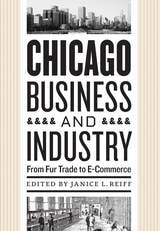
Chicago Business and Industry
From Fur Trade to E-CommerceEdited by Janice L. Reiff
University of Chicago Press, 2013
Drawing on the award-winning Encyclopedia of Chicago, Janice L. Reiff has compiled a unique history of work in the Windy City. Beginning with an overview of the city’s commercial development, Chicago Business and Industry considers how key industries shaped—and were shaped by—both the local and global economies. The city’s phenomenal population growth, its proximity to water, and its development of railroads made Chicago one of the most productive markets for lumber and grain throughout the nineteenth century. The region’s once-booming steel industry, on the other hand, suffered a dramatic decline in the second half of the twentieth century, when already weakened demand met with increasing international competition. Chicago Business and Industry chronicles the Chicago region’s changing fortunes from its beginning.
Reiff has compiled and updated essays from the Encyclopedia covering the city’s most historically famous—and infamous—companies, from the Union Stock Yard to Montgomery Ward to the Board of Trade. The book concludes with a historical account of labor types and issues in the city, with attention to such topics as health-care workers, unemployment, and unionization. Today, Groupon and a host of other high-tech firms have led some experts to christen Chicago the Silicon Valley of the Midwest. Reiff’s new introduction takes account of these and other recent trends.
Engaging, accessible, and packed with fascinating facts, Chicago Business and Industry invites readers into the history and diversity of work in the city, helping them understand how Chicago became Chicago.

Children and Drug Safety
Balancing Risk and Protection in Twentieth-Century AmericaConnolly, Cynthia A
Rutgers University Press, 2018
Children and Drug Safety traces the development, use, and marketing of drugs for children in the twentieth century, a history that sits at the interface of the state, business, health care providers, parents, and children. This book illuminates the historical dimension of a clinical and policy issue with great contemporary significance—many of the drugs administered to children today have never been tested for safety and efficacy in the pediatric population.
Each chapter of Children and Drug Safety engages with major turning points in pediatric drug development; themes of children’s risk, rights, protection and the evolving context of childhood; child-rearing; and family life in ways freighted with nuances of race, class, and gender. Cynthia A. Connolly charts the numerous attempts by Congress, the Food and Drug Administration, the American Academy of Pediatrics, and leading pediatric pharmacologists, scientists, clinicians, and parents to address a situation that all found untenable.
Open access edition funded by the National Endowment for the Humanities.
The text of this book is licensed under a Creative Commons Attribution NonCommercial-NoDerivatives 4.0 International License: https://creativecommons.org/licenses/by-nc-nd/4.0/

Chinese State Enterprises
A Regional Property Rights AnalysisDavid Granick
University of Chicago Press, 1990
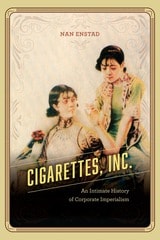
Cigarettes, Inc.
An Intimate History of Corporate ImperialismNan Enstad
University of Chicago Press, 2018
In this startling account of innovation and expansion, Enstad uncovers a corporate network rooted in Jim Crow segregation that stretched between the United States and China and beyond. Cigarettes, Inc. teems with a global cast—from Egyptian, American, and Chinese entrepreneurs to a multiracial set of farmers, merchants, factory workers, marketers, and even baseball players, jazz musicians, and sex workers. Through their stories, Cigarettes, Inc. accounts for the cigarette’s spectacular rise in popularity and in the process offers nothing less than a sweeping reinterpretation of corporate power itself.
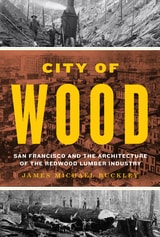
City of Wood
San Francisco and the Architecture of the Redwood Lumber IndustryJames Michael Buckley
University of Texas Press, 2024
2025 John Brinckerhoff Jackson Prize, Association of American Geographers
2025 Abbott Lowell Cummings Award
2025 John Brinckerhoff Jackson Prize, UVA Center for Cultural Landscapes
2026 Hagley Prize in Business History, Hagley Museum and Library
2025 Honorable Mention, PROSE Award, Association of American Publishers (AAP)
California’s 1849 gold rush triggered creation of the “instant city” of San Francisco as a base to exploit the rich natural resources of the American West. City of Wood examines how capitalists and workers logged the state’s vast redwood forests to create the financial capital and construction materials needed to build the regional metropolis of San Francisco. Architectural historian James Michael Buckley investigates the remote forest and its urban core as two poles of a regional “city.” This city consisted of a far-reaching network of spaces, produced as company owners and workers arrayed men and machines to extract resources and create human commodities from the region’s rich natural environment.
Combining labor, urban, industrial, and social history, City of Wood employs a variety of sources—including contemporary newspaper articles, novels, and photographs—to explore the architectural landscape of lumber, from backwoods logging camps and company towns in the woods to busy lumber docks and the homes of workers and owners in San Francisco. By imagining the redwood lumber industry as a single community spread across multiple sites—a “City of Wood”—Buckley demonstrates how capitalist resource extraction links different places along the production value chain. The result is a paradigm shift in architectural history that focuses not just on the evolution of individual building design across time, but also on economic connections that link the center and periphery across space.
Climate Dependence and Food Problems in Russia, 1900-1990
The Interaction of Climate and Agricultural Policy and Their Effect on Food ProblemsNikolai M. Dronin
Central European University Press, 2006
Columbus, Ohio
Two Centuries of Business and Environmental ChangeMansel G. Blackford
The Ohio State University Press, 2016
Precisely because they lived in a midsize, midwestern city, Columbus residents could learn from the earlier experiences of their counterparts in older, larger coastal metropolises, and then go beyond them. Not having large sunk costs in pre-existing water systems, Columbus residents could, for instance, develop new, world-class, state-of-the-art methods for treating water and sewage, steps essential for urban expansion. Columbus, Ohio explores how city residents approached urban challenges—especially economic and environmental ones—and how they solved them.
Columbus, Ohio: Two Centuries of Business and Environmental Change concludes that scholars and policy makers need to pay much more attention to environmental issues in the shaping of cities, and that they need to look more closely at what midwestern metropolises accomplished, as opposed to simply examining coastal cities.
Comic Shop
The Retail Mavericks Who Gave Us a New Geek CultureDan Gearino
Ohio University Press, 2019
The modern comic book shop was born in the early 1970s. Its rise was due in large part to Phil Seuling, the entrepreneur whose direct market model allowed shops to get comics straight from the publishers. Stores could then better customize their offerings and independent publishers could access national distribution. Shops opened up a space for quirky ideas to gain an audience and helped transform small-press series, from Teenage Mutant Ninja Turtles to Bone, into media giants.
Comic Shop is the first book to trace the history of these cultural icons. Dan Gearino brings us from their origins to the present-day, when the rise of digital platforms and a changing retail landscape have the industry at a crossroads. When the book was first published in 2017, Gearino had spent a year with stores around the country, following how they navigated the business. For this updated and expanded paperback edition, he covers the wild retail landscape of 2017 and 2018, a time that was brutal for stores and rich for comics as an art form.
Along the way he interviews pioneers of comics retailing and other important players, including many women; top creators; and those who continue to push the business in new directions. A revised guide to dozens of the most interesting shops around the United States and Canada is a bonus for fans.

Commercial Cinema
The History of the Advertising Film in the United StatesMartin L. Johnson
University of Illinois Press, 2026
An advertising film placed promotional content into movies presented as travelogues, educational shorts, industrial films, or scenes of daily life. Business and government, meanwhile, built systems to distribute the films to unsuspecting audiences in schools, churches, civic groups, and universities. Through experimentation, corporations honed sophisticated tools of persuasion that used moving images to influence the public. What they learned reshaped notions of storytelling, technology, and corporate communication while setting the stage for advertising’s symbiotic relationship with television.
Persuasive and expert, Commercial Cinema illuminates the changing fortunes and eventual fate of a film genre in disguise.
Company Towns
Industry Power and the Historical Foundations of Public MistrustElizabeth Mitchell Elder
University of Chicago Press, 2026
Reveals the deep, historical roots of public distrust in former mining areas in the US, shedding new light on the corrosive feedback loops that persist today.
In Company Towns, Elizabeth Mitchell Elder examines the long-lasting political legacies of mining-company dominance in the Midwest and Appalachia. While the economic consequences of deindustrialization are well-known, Elder shifts the focus to a more insidious problem: the political dysfunction that took root long before the mines shut down.
Drawing on historical and administrative data, Elder shows that the coal industry hindered the growth of local government capacity in the places where it was dominant. Mining companies also engaged in outright corruption to shape local governments, practices which local elites then carried forward. When mining companies withdrew, they left behind not just economic decline, but local governments ill-equipped to govern.
These patterns have had enduring consequences for public life. Elder shows how these historical experiences have fueled a broader cynicism toward government, in which citizens expect little from public institutions and doubt the usefulness of elections. Company Towns underscores the consequences of corporate dominance for state capacity, public opinion, and democratic accountability today.

Comparative Media Systems
European and Global PerspectivesMiklós Sükösd
Central European University Press, 2010

Competition in the Health Care Sector
Ten Years LaterWarren Greenberg, ed.
Duke University Press, 1988
“Competition in health care has developed to a greater degree than most economists predicted ten years ago. That is the conclusion of Warren Greenberg in his introduction to Competition in the Health Care Sector: Ten Years Later, a retrospective of a 1977 Federal Trade Commission conference, which produced the landmark treatise Competition in the Health Care Sector: Past, Present, and Future. Seven of the ten original papers are reexamined; a chapter on the nursing home industry has been added.
“As with the original volume, Greenberg predicts that the retrospective will become a critical element in the health care economic literature.”—Hospitals

Consumed
Food for a Finite PlanetSarah Elton
University of Chicago Press, 2013
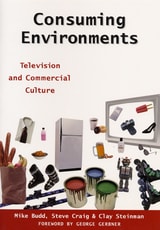
Consuming Environments
Television and Commercial CultureMichael Budd
Rutgers University Press, 1999
Whether we love it, hate it, or use it just to pass the time, most adults in the United States are watching more television than ever, up to four hours a day by some estimates. Our devotion to commercial television gives it unprecedented power in our lives.
Advertisers and television executives want us to spend as much time as we can in front of our sets, for it is access to our brains that they buy and sell. Yet the most important effect of television may be one that no one intends-accelerated destruction of the natural environment.
Consuming Environments explores how, with its portrayals of a world of simulated abundance, television has nurtured a culture of consumerism and overconsumption. The average person in the U.S. consumes more than twice the grain and ten times the oil of a citizen of Brazil or Indonesia. And people in less industrialized countries suffer while their resources are commandeered to support comfortable lifestyles in richer nations.
Using detailed examples illustrated with images from actual commercials, news broadcasts, and television shows, the authors demonstrate how ads and programs are put together in complex ways to manipulate viewers, and they offer specific ways to counteract the effects of TV and overconsumption's assault on the environment.
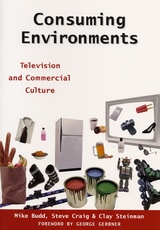
Consuming Environments
Television and Commercial CultureCraig, Steve
Rutgers University Press, 1999
Advertisers and television executives want us to spend as much time as we can in front of our sets, for it is access to our brains that they buy and sell. Yet the most important effect of television may be one that no one intends--accelerated destruction of the natural environment.
Consuming Environments explores how, with its portrayals of a world of simulated abundance, television has nurtured a culture of consumerism and overconsumption. The average person in the U.S. consumes more than twice the grain and ten times the oil of a citizen in Brazil or Indonesia. And people in less industrialized countries suffer while their resources are commandeered to support comfortable lifestyles in richer nations. Using detailed examples illustrated with images from actual commercials, news broadcasts, and television shows, the authors demonstrate how ads and programs are put together in complex ways to manipulate viewers, and they offer specific ways to counteract the effects of TV and overconsumption's assault on the environment.
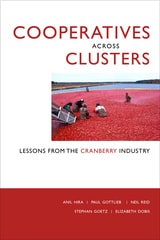
Cooperatives across Clusters
Lessons from the Cranberry IndustryAnil Hira
Oregon State University Press, 2024
Most agricultural production is of commodity or undifferentiated products. Producers suffer from a roller-coaster ride of price swings, over- or under-production, weather and pest threats, and the inability of family famers to capture anything beyond a small percentage of the final price.
Cooperatives Across Clusters provides lessons from the cranberry industry, a commodity product organized mostly into family farms in seven different clusters around North America. The industry is remarkable in that it's substantially organized around one large cooperative, Ocean Spray. The authors examine how the cooperative came to be, the challenges of coordination and industry leadership across the diverging clusters, and the lessons for cooperation for other agricultural industries.
The book provides a multi-layered contribution to agricultural economics. First, it examines location decisions and what factors supersede growing conditions to allow industries to arise around production. Second, it explores pathways available for farmers to try to overcome, through cooperative organization, the natural boom-bust cycles of commodity price swings. Third, it looks at how cooperative decisions are made, and the challenges of providing industry leadership, including research and development and collective marketing, through a cooperative that faces continual defections and new problems. Finally, through in-depth historical, statistical, and field research, it provides a comprehensive study of the cranberry industry and suggests ways farmers can grow the industry. Agricultural policymakers, farmers, industry specialists, and researchers of agriculture and clusters more generally will find this to be an important and informative new resource.

Corporate Aviation Management
Raoul Castro. Foreword by Torch Lewis
Southern Illinois University Press, 1995
In this comprehensive aviation manual, Raoul Castro provides a source of invaluable corporate aviation management information. He begins by giving an overview of corporate aviation from its inception, then focuses on the management principles and functions that specifically target corporate aviation. Through the utilization of these sound management principles, Castro facilitates the acceptance of corporate aircraft as indispensable tools of industry.
As Castro notes, few companies know how to use corporate aircraft to maximum advantage. Drawing on his expertise and experience, Castro designs a plan by which a company can achieve maximum utilization of an airplane or helicopter fleet. He gives specific instructions on how to facilitate the efficient use of the aviation department of a company, select appropriate aircraft, plan for disasters and establish security measures, fulfill legal requirements of the governmental agencies that regulate the use of aircraft, and manage the maintenance and repair of aircraft. Castro also discusses the scores of details involved in the management of a professional corporate aviation branch and how these details can be handled in a positive, productive manner.
After thoroughly examining the overall managerial functions involved in planning, organizing, controlling, and implementing an aviation arm, Castro concludes by discussing the future of corporate aviation.
This book is a practical and valuable guide for the executive in charge of an aviation department, an aviation department manager or chief pilot, aspirants to aviation management positions, and both students and teachers of aviation management.

Corporate Crops
Biotechnology, Agriculture, and the Struggle for ControlBy Gabriela Pechlaner
University of Texas Press, 2012
Biotechnology crop production area increased from 1.7 million hectares to 148 million hectares worldwide between 1996 to 2010. While genetically modified food is a contentious issue, the debates are usually limited to health and environmental concerns, ignoring the broader questions of social control that arise when food production methods become corporate-owned intellectual property. Drawing on legal documents and dozens of interviews with farmers and other stakeholders, Corporate Crops covers four case studies based around litigation between biotechnology corporations and farmers. Pechlaner investigates the extent to which the proprietary aspects of biotechnologies—from patents on seeds to a plethora of new rules and contractual obligations associated with the technologies—are reorganizing crop production.
The lawsuits include patent infringement litigation launched by Monsanto against a Saskatchewan canola farmer who, in turn, claimed his crops had been involuntarily contaminated by the company’s GM technology; a class action application by two Saskatchewan organic canola farmers launched against Monsanto and Aventis (later Bayer) for the loss of their organic market due to contamination with GMOs; and two cases in Mississippi in which Monsanto sued farmers for saving seeds containing its patented GM technology. Pechlaner argues that well-funded corporate lawyers have a decided advantage over independent farmers in the courts and in creating new forms of power and control in agricultural production. Corporate Crops demonstrates the effects of this intersection between the courts and the fields where profits, not just a food supply, are reaped.

Corporate Governance in Central Europe and Russia
Banks, Funds, and Foreign InvestorsRoman Frydman
Central European University Press, 1996
Creating Dairyland
How caring for cows saved our soil, created our landscape, brought prosperity to our state, and still shapes our way of life in WisconsinEdward Janus
Wisconsin Historical Society Press, 2011
The story of dairying in Wisconsin is the story of how our very landscape and way of life were created. By making cows the center of our farm life and learning how to care for them, our ancestors launched a revolution that changed much more than the way farmers earned their living — it changed us.

Creating Dairyland
How caring for cows saved our soil, created our landscape, brought prosperity to our state, and still shapes our way of life in WisconsinEdward Janus
Wisconsin Historical Society Press, 2011
The story of dairying in Wisconsin is the story of how our very landscape and way of life were created. By making cows the center of our farm life and learning how to care for them, our ancestors launched a revolution that changed much more than the way farmers earned their living — it changed us.

Creating Dairyland
How caring for cows saved our soil, created our landscape, brought prosperity to our state, and still shapes our way of life in WisconsinEdward Janus
Wisconsin Historical Society Press, 2012
The story of dairying in Wisconsin is the story of how our very landscape and way of life were created. By making cows the center of our farm life and learning how to care for them, our ancestors launched a revolution that changed much more than the way farmers earned their living — it changed us.

Creating Worlds Otherwise
Art, Collective Action, and (Post)ExtractivismPaula Serafini
Vanderbilt University Press, 2022
Extractivism has increasingly become the ground on which activists and scholars in Latin America frame the dynamics of ecological devastation, accumulation of wealth, and erosion of rights. These maladies are the direct consequences of long-standing extraction-oriented economies, and more recently from the expansion of the extractive frontier and the implementation of new technologies in the extraction of fossil fuels, mining, and agriculture. But the fields of sociology, political ecology, anthropology, and geography have largely ignored the role of art and cultural practices in studies of extractivism and post-extractivism.
The field of art theory, on the other hand, has offered a number of texts that put forward insightful analyses of artwork addressing extraction, environmental devastation, and the climate crisis. However, an art theory perspective that does not engage firsthand and in depth with collective action remains limited and fails to provide an account of the role, processes, and politics of art in anti- and post-extractivist movements.
Creating Worlds Otherwise examines the narratives that subaltern groups generate around extractivism, and how they develop, communicate, and mobilize these narratives through art and cultural practices. It reports on a six-year project on creative resistance to extractivism in Argentina and builds on long-term engagement working on environmental justice projects and campaigns in Argentina and the UK.
It is an innovative contribution to the fields of Latin American studies, political ecology, cultural studies, and art theory, and addresses pressing questions regarding what post-extractivist worlds might look like as well as how such visions are put into practice.
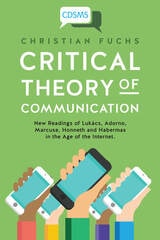
Critical Theory of Communication
New Readings of Lukács, Adorno, Marcuse, Honneth and Habermas in the Age of the InternetChristian Fuchs
University of Westminster Press, 2016
Critical Theory of Communication offers a vital set of new insights on how communication operates in the age of information, digital media and social media, arguing that we need to transcend the communication theory of Habermas by establishing a dialectical and cultural-materialist critical theory of communication.
It is the first title in a major new book series 'Critical Digital and Social Media Studies' published by the University of Westminster Press.
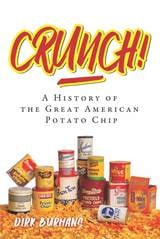
Crunch!
A History of the Great American Potato ChipDirk Burhans
University of Wisconsin Press, 2017
Crunch! also uncovers a dark side of potato chip history, including a federal investigation of the snack food industry in the 1990s following widespread allegations of antitrust activity, illegal buyouts, and predatory pricing. In the wake of these "Great Potato Chip Wars," corporate snack divisions closed and dozens of family-owned companies went bankrupt. Yet, despite consolidation, many small chippers persist into the twenty-first century, as mom-and-pop companies and upstart "boutique" businesses serve both new consumers and markets with strong regional loyalties.
Illustrated with images of early snack food paraphernalia and clever packaging from the glory days of American advertising art, Crunch! is an informative tour of large and small business in America and the vicissitudes of popular tastes.
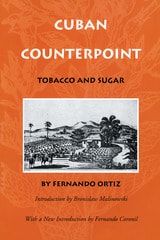
Cuban Counterpoint
Tobacco and SugarFernando Ortiz
Duke University Press, 1995
Ortiz presents his understanding of Cuban history in two complementary sections written in contrasting styles: a playful allegorical tale narrated as a counterpoint between tobacco and sugar and a historical analysis of their development as the central agricultural products of the Cuban economy. Treating tobacco and sugar both as agricultural commodities and as social characters in a historical process, he examines changes in their roles as the result of transculturation. His work shows how transculturation, a critical category Ortiz developed to grasp the complex transformation of cultures brought together in the crucible of colonial and imperial histories, can be used to illuminate not only the history of Cuba, but, more generally, that of America as well.
This new edition includes an introductory essay by Fernando Coronil that provides a contrapuntal reading of the relationship between Ortiz’s book and its original introduction by the renowned anthropologist Bronislaw Malinowski. Arguing for a distinction between theory production and canon formation, Coronil demonstrates the value of Ortiz’s book for anthropology as well as Cuban, Caribbean, and Latin American studies, and shows Ortiz to be newly relevant to contemporary debates about modernity, postmodernism, and postcoloniality.

Cyber-Proletariat
Global Labour in the Digital VortexNick Dyer-Witheford
Pluto Press, 2015
Cyber-Proletariat brings Marxist analysis to bear on a range of modern informational technologies. The result is a book indispensable to social theorists and hacktivists alike and essential reading for anyone who wants to understand how Silicon Valley shapes the way we live today.

Cyberchiefs
Autonomy and Authority in Online TribesMathieu O'Neil
Pluto Press, 2009
People are inventing new ways of working together on the internet. Decentralised production thrives on weblogs, wikis and free software projects. In Cyberchiefs, Mathieu O’Neil focuses on the regulations of these working relationships. He examines the transformation of leadership and expertise in online networks, and the emergence of innovative forms of participatory politics.
What are the costs and benefits of alternatives to hierarchical organisation? Using case studies of online projects or ‘tribes’ such as the radical Primitivism archive, the Daily Kos political weblog, the Debian free software project, and Wikipedia, O’Neil shows that leaders must support maximum autonomy for participants, and he analyses the tensions generated by this distribution of authority.
Cyberfutures
Culture and Politics on the Information SuperhighwayEdited by Ziauddin Sardar
Pluto Press, 1996