Results by title
716 books match the query 'Literary Figures' and 38 start with c
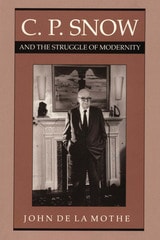
C. P. Snow and the Struggle of Modernity
By John de la Mothe
University of Texas Press, 1992
The condition of modernity springs from that tension between science and the humanities that had its roots in the Enlightenment but reached its full flowering with the rise of twentieth-century technology. It manifests itself most notably in the crisis of individuality that is generated by the nexus of science, literature, and politics, one that challenges each of us to find a way of balancing our personal identities between our public and private selves in an otherwise estranging world. This challenge, which can only be expressed as "the struggle of modernity," perhaps finds no better expression than in C. P. Snow. In his career as novelist, scientist, and civil servant, C. P. Snow (1905-1980) attempted to bridge the disparate worlds of modern science and the humanities.
While Snow is often regarded as a late-Victorian liberal who has little to say about the modernist period in which he lived and wrote, de la Mothe challenges this judgment, reassessing Snow's place in twentieth-century thought. He argues that Snow's life and writings—most notably his Strangers and Brothers sequence of novels and his provocative thesis in The Two Cultures and the Scientific Revolution—reflect a persistent struggle with the nature of modernity. They manifest Snow's belief that science and technology were at the center of modern life.
Captain Billy's Troopers
A Writer's LifeWilliam Cobb
University of Alabama Press, 2015
Captain Billy’s Troopers is a frank, literary memoir about William Cobb’s life as a southern writer—his struggles with addiction and illness, his career as a teacher and novelist, and his hard‑won return to creative life.
In this audacious memoir, William Cobb reveals the tumultuous creative life of a distinguished practitioner of southern and Alabama storytelling. As poignant and inspiring as his own fiction, Captain Billy’s Troopers traces Cobb’s early life, education, and struggles with alcohol and the debilitating condition normal pressure hydrocephalus (NPH).
Like a curving river, the broad sweep of Cobb’s turbulent life includes both startling cataracts and desultory eddies, leading sometimes into shadows or opening into unexpected sunlight. With unsentimental clarity, Cobb recounts coming of age in his native Demopolis in the churning middle years of the twentieth century. It’s there he has his first tantalizing tastes of alcohol and begins to drink habitually. Readers then travel with Cobb to Livingston University (now the University of West Alabama) and then on to Vanderbilt University. Along the way, readers relish his first experiences of love and success as a writer, leading to a career as a professor of writing at Alabama College (now the University of Montevallo) in 1963.
From there Cobb’s struggles with alcohol and depression lead to elongated years of tumbling creative output and the collapse of his marriage. The summer of 1984 found Cobb in rehab, the first step in his path to recovery. His unflinching memoir narrates both the milestones and telling details of his intense therapy and years in Alcoholics Anonymous (AA). In the sober thirty years since, Cobb has published a string of critically praised novels and a prize-winning collection of short stories. The capstone of his comeback was winning the Harper Lee Award in 2007 for distinguished fiction writing.
In 2000, shortly after retiring, Cobb developed NPH, which upset his sense of balance and triggered dementia symptoms and other maladies. Nine years later in 2009, brain surgery brought Cobb a dramatic recovery, which began the third act in his writing career. Vital, honest, and entertaining, Captain Billy’s Troopers captures the life of an Alabama original.
Captain Medwin
Friend of Byron and ShelleyBy Ernest J. Lovell
University of Texas Press, 1962
Here is the first biography of Thomas Medwin—literary adventurer, rascal, scholar, confidence man, successful fortune hunter, and bemused speculator on a grand scale in old Italian oil paintings. Poet, novelist, translator of Aeschylus, cousin and boyhood friend of the poet Shelley, he was a man of fiery temper, fierce hatreds, and enduring loves.
Although an intimate friend of Lord Byron, he was so dangerous (or disreputable) that his Lordship warned Teresa Guiccioli, his last mistress, not to be alone in Medwin's company. Later, Medwin introduced Byron's daughter to her future husband, Lord Lovelace, and so determined the poet's line of descent.
Friend of Washington Irving, gentleman of the old school, neglected Boswell of the nineteenth century, Medwin reported the conversations of Byron, Shelley, Trelawny, Hazlitt, Canova the sculptor, and others. His life and adventures light up little-known aspects of the nineteenth-century literary, military, social, and publishing world—in England, India, Italy, France, Switzerland, and Germany.
Medwin served as midwife to the words of a dead man—Lord Byron—who returned to laugh and sneer at the living from the Captain's pages. The Conversations of Lord Byron thus became the most controversial book of the day, going through a dozen editions, in six countries, and being translated into French, German, and Italian. It aroused the wrath, indignation, or enthusiastic interest of such individuals as Goethe, Lady Byron, Lady Caroline Lamb, the Countess Teresa Guiccioli, John Cam Hobhouse (later Lord Broughton), Sir Walter Scott, John Murray, and Washington Irving. Medwin, whose long and adventurous life extended from the rise and flowering of the Romantic Period to the mid-Victorian Age (which he regarded as a dreary decline from the great heights of his youth), was an influence of the first magnitude in determining the early public image of Byron and the reputation of Shelley.
This often amusing story, as engrossing as a novel, is drawn from all the available accounts, including many important sources never before published. In effect a new contribution to the biographical study of Byron and Shelley, it clarifies Medwin's relations not only with these two poets but also with many other important and interesting figures of the day.

Carl Sandburg - American Writers 97
University of Minnesota Pamphlets on American WritersGay Wilson Allen
University of Minnesota Press, 1972
Carl Sandburg - American Writers 97 was first published in 1972. Minnesota Archive Editions uses digital technology to make long-unavailable books once again accessible, and are published unaltered from the original University of Minnesota Press editions.
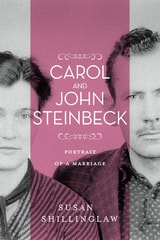
Carol and John Steinbeck
Portrait of a MarriageSusan Shillinglaw
University of Nevada Press, 2024
Caroline Gordon - American Writers 59
University of Minnesota Pamphlets on American WritersFrederick P.W. McDowell
University of Minnesota Press, 1966
Caroline Gordon - American Writers 59 was first published in 1966. Minnesota Archive Editions uses digital technology to make long-unavailable books once again accessible, and are published unaltered from the original University of Minnesota Press editions.
Carson McCullers
University of Minnesota Pamphlets on American WritersLawrence Graver
University of Minnesota Press, 1969
Carson McCullers was first published in 1969. Minnesota Archive Editions uses digital technology to make long-unavailable books once again accessible, and are published unaltered from the original University of Minnesota Press editions.
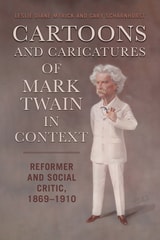
Cartoons and Caricatures of Mark Twain in Context
Reformer and Social Critic, 1869–1910Leslie Diane Myrick and Gary Scharnhorst
University of Alabama Press, 2023
Cartoons and Caricatures of Mark Twain in Context: Reformer and Social Critic, 1869–1910 examines the production, reception, and history of Twain’s reputation as a social and political satirist. Myrick and Scharnhorst trace the evolution of Twain’s depiction throughout his life, career, and even death and across more than seventy illustrations—from portrayals of the famous author as a court jester adorned with cap and bells, to a regally haloed king with a royal train—offering a new perspective on his influence and reputation. Although he was among the most photographed figures of the nineteenth century, Myrick and Scharnhorst focus on a medium that Twain, an expert ofself-promotion and brand management, could not control. As a result, Myrick and Scharnhorst have compiled an innovative and incisive visual reception history.
Cartoons and Caricatures of Mark Twainin Context illustrates the popular and often critical response to many famous and infamous episodes in his career, such as the storm of controversy that surrounded the publication of his anti-imperialist writings at the turn of the twentieth century. Routinely depicted with hair like a fright wig, a beak-like nose, and a cigar in hand, no matter the context or the costume, Twain was instantly recognizable. Yet it was not merely the familiarity of his image that made him a regular feature in visual commentary, but also his willingness to speak out against corruption and to insert himself into controversies of his day.
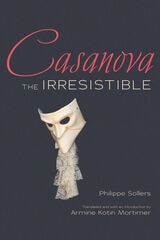
Casanova the Irresistible
Translated and with an Introduction by Armine Kotin Mortimer
University of Illinois Press, 2016
Armine Kotin Mortimer's translation of Sollers's reading tracks the alluring Venetian through the whole of his astounding and disreputable life. Eschewing myth, Sollers dares to present the plain realities of a man "simple, direct, courageous, cultivated, seductive, funny. A philosopher in action." The lovers are here, and the ruses and adventures. But Sollers also rescues Casanova the writer, a gifted composer of words who reigns as a titan of eighteenth-century literature. As always, Sollers seeks to shame society for its failure to recognize its failings. By admiring those of Casanova's admirable qualities present in himself, Sollers spurns bourgeois hypocrisy and cliché to affirm a jocund philosophy of life devoted to the twinned pursuits of pleasure and joy.
A masterful translation that captures Sollers's idiosyncratic style, Casanova the Irresistible escorts readers on a journey into the heads and hearts of two singular personalities.
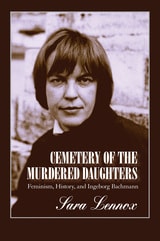
Cemetery of the Murdered Daughters
Feminism, History, and Ingeborg BachmannSara Lennox
University of Massachusetts Press, 2006
Although Austrian writer Ingeborg Bachmann (1926–1973) is widely regarded as one of the most important twentieth-century authors writing in German, her novels and stories have sometimes been viewed narrowly as portraits of women as victims. In this innovative study, Sara Lennox provides a much broader perspective on Bachmann's work, at the same time undertaking an experiment in feminist methodology. Lennox examines Bachmann's poetry and prose in historical context, arguing that the varied feminist interpretations of her writings are the result of shifts in theoretical emphases over a period of more than three decades. Lennox then places her own essays on Bachmann in similar perspective, showing how each piece reflects the historical moment in which it was written. Making use of recent interdisciplinary approaches—Foucauldian theories of sexuality, post-colonial theory, materialist feminism—she explores the extent to which each of her earlier readings was shaped by the methods employed, the questions asked, and the political issues that seemed most germane at the time. Out of this analysis comes a new understanding of the significance of Bachmann's work and new insight into the theory and practice of feminist criticism.
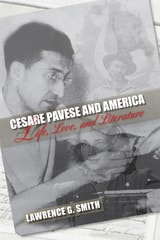
Cesare Pavese and America
Life, Love, and LiteratureLawrence G. Smith
University of Massachusetts Press, 2008
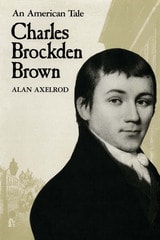
Charles Brockden Brown
An American TaleBy Alan Axelrod
University of Texas Press, 1983
Charles Brockden Brown: An American Tale is the first comprehensive literary, biographical, and cultural study of the novelist whom critic Leslie Fiedler has dubbed "the inventor of the American writer."
The author of Wieland, Arthur Mervyn, Ormond, and Edgar Huntly, Charles Brockden Brown (1771-1810) is considered the first American professional author. He introduced Indian characters into American fiction. His keen interest in character delineation and abnormal psychology anticipates the stories of Poe, Hawthorne, and later masters of the psychological novel.
Brown was eager to establish for himself an American identity as a writer, to become what Crèvecoeur called "the new man in the New World." It is especially this intimate identification of writer with country that makes Brown a telling precursor of our most characteristic authors from Poe, Hawthorne, and Cooper to Fitzgerald, Hemingway, and Faulkner.
To understand its significance, Brown's work must be examined as both art and artifact. Accordingly, Charles Brockden Brown: An American Tale is literary history as well as criticism, embued with insights into a writer's sources and influences and the psychology of literary composition. It is also a fascinating examination of a nation's emotional and intellectual impact on a young man in search of his identity as creative artist.
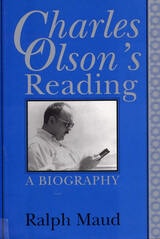
Charles Olson's Reading
A BiographyRalph Maud
Southern Illinois University Press, 1996
In this narrative account of the life and work of Charles Olson, Ralph Maud focuses on what the poet read as a basis for understanding the work he produced.
To an extraordinary degree, Olson’s reading and life were coextensive, according to Maud, who notes that Olson saw his written output over his lifetime as a total cosmology. An individual who rarely traveled, this major American poet explored the world and its history as well as the furthest reaches of the thought of his day through books.
Maud builds upon George Butterick’s annotated listing of Olson’s library, bought by the University of Connecticut after the poet’s death in 1970. The present volume, however, adds categories of books Butterick deliberately omitted: Olson’s childhood books and poetry by his own contemporaries.
Linking Olson’s books to his intellectual and poetic development at each stage of his career, Maud reveals such little-known but important connections as the contracted book project "Operation Red, White and Black" and Olson’s plan for the long poem "West"—two unrealized projects much later shaped into The Maximus Poems.
Maud also outlines the surprisingly multiple role of the painter Corrado Cagli, who brought home to Olson the significance of the Holocaust and introduced him both to the Tarot and to the theories of non-Euclidean geometry that Olson variously incorporated into his poems and essays. In discussing Olson’s relationship to Ezra Pound, Maud defines in some detail what Olson gained from Pound and what he repudiated.
Maud refutes the notion that Olson’s intellectual and creative powers declined during the last years of his life, demonstrating that during these years Olson developed his Jungian interest, his attention to early Greek thought, and a new concern for Northern mythology.
This chronicle of Olson’s reading from childhood to deathbed constitutes a critical biography of the larger-than-life author of Call Me Ishmael and The Maximus Poems. No modern poet is more revealed in his sources than Olson. Maud’s comprehensive and complete study provides a basis for new and fresh modes of thinking about Olson’s great achievement.
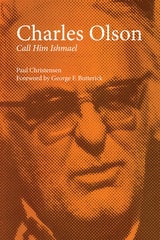
Charles Olson
Call Him IshmaelBy Paul Christensen
University of Texas Press, 1979
Charles Olson was an important force behind the raucous, explicit, jaunty style of much of twentieth-century poetry in America. This study makes a major contribution to our understanding of his life and work.
Paul Christensen draws upon a wide variety of source materials—from letters, unpublished essays, and fragments and sketches from the Olson Archives to the full range of Olson's published prose and poetry. Under Christensen's critical examination, Olson emerges as a stunning theorist and poet, whose erratic and often unfinished writings obscured his provocative intellect and the coherence of his perspective on the arts.
Soon after World War II, Olson emerged as one of America's leading poets with his revolutionary document on poetics, "Projective Verse," and his now-classic poem, "The Kingfishers," both of which declared a new set of techniques for verse composition. Throughout the 1950s Olson wrote many polemical essays on literature, history, aesthetics, and philosophy that outlined a new stance to experience he called objectism.
A firm advocate of spontaneous self-expression in the arts, Olson regarded the poet's return to an intense declaration of individuality as a force to combat the decade's insistence on conformity. Throughout his life Olson fought against the depersonalization of the artist in the modern age; his resources, raw verve and unedited tumultuous lyricism, were weapons he used against generalized life and identity.
This volume begins with an overview of Olson's life from his early years as a student at Harvard through his short-lived political career, his rectorship at Black Mountain College, and his retirement to Gloucester to finish writing the Maximus poems. Christensen provides a systematic review of Olson's prose works, including a close examination of his brilliant monograph on Melville, Call Me Ishmael.
Considerable attention is devoted to Olson's theory of projectivism, the themes and techniques of his short poems, and the strategies and content of his major work, the Maximus series. In addition, there is a critical survey of the works of Robert Creeley, Robert Duncan, Denise Levertov, Paul Blackburn, and other poets who show Olson's influence in their own innovative, self-exploratory poetry.
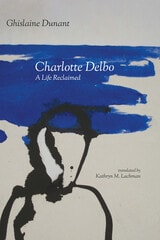
Charlotte Delbo
A Life ReclaimedGhislaine Dunant, Translated by Kathryn M. Lachman
University of Massachusetts Press, 2021
Ghislaine Dunant's unforgettable biography of Delbo, La vie retrouvée (2016), captivated French readers and was awarded the Prix Femina. Now translated into English for the first time, Charlotte Delbo: A Life Reclaimed depicts Delbo's lifelong battles as a working-class woman, as a survivor, as a leftist who broke from the Communist Party, and most of all, as a writer whose words compelled others to see.
Cheap Rooms and Restless Hearts
A Study of Formula in the Urban Tales of William Sydney PorterKaren Charmaine Blansfield
University of Wisconsin Press, 1988
Childhood
Nathalie Sarraute
University of Chicago Press, 2013
Childhood Years
A MemoirTanizaki Jun'ichiro; Translated by Paul McCarthy
University of Michigan Press, 2017
Christopher Dawson
A Cultural Mind in the Age of the Great WarJoseph T. Stuart
Catholic University of America Press, 2022
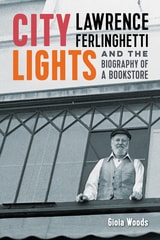
City Lights
Lawrence Ferlinghetti and the Biography of a BookstoreGioia Woods
University of Nevada Press, 2026
City Lights: Lawrence Ferlinghetti and the Biography of a Bookstore is the seminal story of the bookstore, its press, and the inimitable Ferlinghetti.
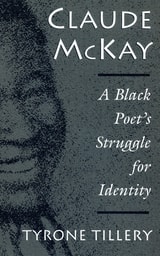
Claude McKay
A Black Poet's Struggle for IdentityTyrone Tillery
University of Massachusetts Press, 1992
The 1920s witnessed an extraordinary flowering of literary and artistic creativity among African Americans. Critics hailed the emergence of a “New Negro,” who took pride in the Black race and its African heritage, and whose writings exposed and attacked discrimination, explored Black folk culture, and strove to create a unique African-American literature. Yet for all its vitality, the cultural movement best known as the Harlem Renaissance was fraught with tensions: between the ideal of Africa and the reality of America; between the lure of a romanticized rural past and the demands of an alien urban present; between the need to affirm the uniqueness of Black culture and the desire to achieve acceptance by the majority white culture. Perhaps more than any other Harlem Renaissance figure, Claude McKay embodied these contradictory impulses.
The paradox of Claude McKay cannot be reduced to any simple formula. He was at once an enfant terrible who took pride in the Negro's cultural heritage and an intellectual who strove for acceptance in predominantly white circles. He was a radical intent on transforming his adopted county who nevertheless left the United States temporarily for the Soviet Union. Yet these tensions, as this book strives to show, cannot simply be ascribed to personal or psychological problems; ultimately, they were rooted in the ambiguous social and cultural position of the Black artist and political radical of the early twentieth century.
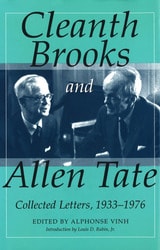
Cleanth Brooks and Allen Tate
Collected Letters, 1933-1976Edited by Alphonse Vinh & Intro by Louis D. Rubin, Jr.
University of Missouri Press, 1998
Offering all of the extant letters exchanged by two of the twentieth century's most distinguished literary figures, Cleanth Brooks and Allen Tate: Collected Letters, 1933-1976 vividly depicts the remarkable relationship, both professional and personal, between Brooks and Tate over the course of their lifelong friendship.
An accomplished poet, critic, biographer, and teacher, Allen Tate had a powerful influence on the literary world of his era. Editor of the Fugitive and the Sewanee Review, Tate greatly affected the lives and careers of his fellow literati, including Cleanth Brooks. Esteemed coeditor of An Approach to Literature and Understanding Poetry, Brooks was one of the principal creators of the New Criticism. His Modern Poetry and the Tradition and The Well Wrought Urn, as well as his two-volume study of Faulkner, remain among the classics read by any serious student of literature. The correspondence between these two gentlemen-scholars, which began in the 1930s, extended over five decades and covered a vast amount of twentieth-century literary history.
In the more than 250 letters collected here, the reader will encounter their shared concerns for and responses to the work of their numerous friends and many prominent writers, including T. S. Eliot, William Faulkner, and Robert Lowell. Their letters offer details about their own developing careers and also provide striking insight into the group dynamics of the Agrarians, the noteworthy community of southern writers who played so influential a role in the literature of modernism.
Brooks once said that Tate treated him like a younger brother, and despite great differences between their personalities and characters, these two figures each felt deep brotherly affection for the other. Whether they contain warm invitations for the one to visit the other, genteel or honest commentaries on their families and friends, or descriptions of the vast array of social, professional, and even political activities each experienced, the letters of Brooks and Tate clearly reveal the personalities of both men and the powerful ties of their strong camaraderie.
Invaluable to both students and teachers of literature, Cleanth Brooks and Allen Tate provides a substantial contribution to the study of twentieth-century American, and particularly southern, literary history.

Close Formation
My Friendship with James SalterWilliam Benton
University of Iowa Press, 2027
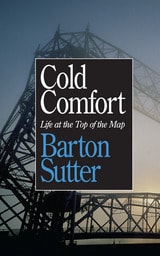
Cold Comfort
Life at the Top of the MapBarton Sutter
University of Minnesota Press, 2000
A whimsical look at the pleasures and challenges of living in the far north-now in paperback!
A whimsical look at the pleasures and challenges of living in the far north-now in paperback!
"Sutter knows Duluth and the hinterlands to the North the way Garrison Keillor knows Lake Wobegon and the prairies. With a nimble wit and a roving eye for detail, Sutter goes beneath the veneer of the North Country to expose its attraction, its quirks, and its characters. There isn’t a clinker in the collection, and even if you’ve lived your entire life in Duluth or the North Country, you’ll see your home place with new insight after reading Cold Comfort." Duluth News-Tribune"Mostly whimsical, sometimes meditative, but most often warmhearted, these essays explore Lake Superior, its neighboring rivers and streams, duck hunting, cross-country skiing, bridges, cider-pressing parties, and camping out in the family car. Sutter’s prose is clean, straightforward, and sometimes mirthful." Chicago New City "An oddly brilliant and lovely little book. . . . Resonant, evocative, and splendidly written." Jim HarrisonTemperatures that dive to forty degrees below zero are only part of life in northern Minnesota, according to award-winning writer Barton Sutter. Cold Comfort is his temperamental tribute to the city of Duluth, Minnesota, where bears wander the streets and canoe racks are standard equipment. Winner of a 1998 Northeast Minnesota Book AwardWinner of a 1998 Minnesota Book Award for Creative Nonfiction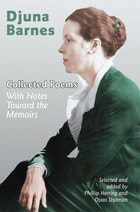
Collected Poems
With Notes Toward the MemoirsDjuna Barnes; selected and edited by Phillip Herrring and Osias Stutman
University of Wisconsin Press, 2005
This groundbreaking edition compiles many of the late unpublished works of American writer Djuna Barnes (1892–1982). Because she published only seven poems and a play during the last forty years of her life, scholars believed Barnes wrote almost nothing during this period. But at the time of her death her apartment was filled with multiple drafts of unpublished poetry and notes toward her memoirs, both included here for the first time. Best known for her tragic lesbian novel Nightwood, Barnes has always been considered a crucial modernist. Her later poetry will only enhance this reputation as it shows her remarkable evolution from a competent young writer to a deeply intellectual poet in the metaphysical tradition. With the full force of her biting wit and dramatic flair, Barnes’s autobiographical notes describe the expatriate scene in Paris during the 1920s, including her interactions with James Joyce and Gertrude Stein and her intimate recollections of T. S. Eliot. These memoirs provide a rare opportunity to experience the intense personality of this complex and fascinating poet.
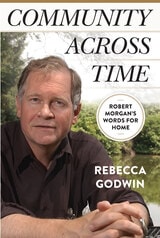
Community across Time
Robert Morgan’s Words for HomeRebecca Godwin
West Virginia University Press, 2023
One of the first book-length considerations of the Appalachian writer Robert Morgan.
One of the first book-length studies of Robert Morgan, Community across Time considers the Appalachian writer’s explorations of memory, family history, and landscape. It provides a study of all of Morgan’s fiction to date, as well as a chapter on his poetry and some reference, where appropriate, to his nonfiction. Rebecca Godwin examines the family history that informs much of this body of work, offering an extended biographical essay that ties characters and plot details to Morgan’s ancestors’ lives and to his own experiences growing up in the Blue Ridge Mountains.
Religious rifts, economic hardships, class conflicts, the place of women and Indigenous peoples, and the failure of humans to recognize the divinity of the natural world are among the motifs centering Morgan’s writing. Community across Time explores those themes as it looks to Morgan’s relationship to the Appalachian South.
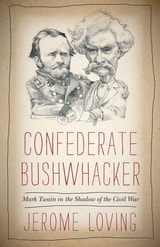
Confederate Bushwhacker
Mark Twain in the Shadow of the Civil WarJerome Loving
University Press of New England, 2013
Conrad Aiken - American Writers 38
University of Minnesota Pamphlets on American WritersReuel Denney
University of Minnesota Press, 1964
Conrad Aiken - American Writers 38 was first published in 1964. Minnesota Archive Editions uses digital technology to make long-unavailable books once again accessible, and are published unaltered from the original University of Minnesota Press editions.
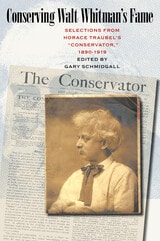
Conserving Walt Whitman's Fame
Selections from Horace Traubel's Conservator, 1890-1919Schmidgall, Gary
University of Iowa Press, 2006
Continuing Bonds with the Dead
Parental Grief and Nineteenth-Century American AuthorsHarold K. Bush
University of Alabama Press, 2016
Grief transformed into legacy—how loss shaped the soul of American literature.
Harold K. Bush's Continuing Bonds with the Dead examines the profound transfiguration that the death of a child wrought on the literary work of nineteenth-century American writers. Taking as his subjects Harriet Beecher Stowe, Abraham Lincoln, William Dean Howells, Mark Twain, and W. E. B. Du Bois, Bush demonstrates how the death of a child became the defining "before-and-after moment" in their lives as adults and as artists. In narrating their struggles, Bush maps the intense field of creative energy induced by reverberating waves of parental grief and the larger nineteenth-century culture of mortality and grieving.
Bush explores in detail how each of these five writers grappled with and were altered by the loss of a child. He writes, for example, with moving insights about how the famed author of Adventures of Huckleberry Finn found himself adrift on a river of grief when meningitis struck down his daughter, Susy. In his deeply learned exploration of Twain's subsequent work, Bush illuminates how Twain wrote to cope with Susy's death, to make sense of her persistent presence in his life, and possibly to redeem her loss. Passionate and personal, Bush's insightful prose traces the paths of personal transformation each of these emblematic American writers took in order to survive the spiritual trauma of loss.
The savage Civil War was America's shared "before and after moment," the pivot upon which the nation's future swung. Bush's account of these five writers' grief amplifies our understanding of America's evolving, national relationship to mourning from then to the present.

Conversations with Nelson Algren
H. E. F. Donohue and Nelson Algren
University of Chicago Press, 2001
Conversations with Primo Levi
Ferdinando Camon
Northwestern University Press, 1989
Conversations with Texas Writers
Edited by Frances Leonard and Ramona Cearley, for Humanities Texas
University of Texas Press, 2005
Larry McMurtry declares, "Texas itself doesn't have anything to do with why I write. It never did." Horton Foote, on the other hand, says, "I've just never had a desire to write about any place else." In between those figurative bookends are hundreds of other writers—some internationally recognized, others just becoming known—who draw inspiration and often subject matter from the unique places and people that are Texas. To give everyone who is interested in Texas writing a representative sampling of the breadth and vitality of the state's current literary production, this volume features conversations with fifty of Texas's most notable established writers and emerging talents.
The writers included here work in a wide variety of genres—novels, short stories, poetry, plays, screenplays, essays, nonfiction, and magazine journalism. In their conversations with interviewers from the Writers' League of Texas and other authors' organizations, the writers speak of their apprenticeships, literary influences, working habits, connections with their readers, and the domestic and public events that have shaped their writing. Accompanying the interviews are excerpts from the writers' work, as well as their photographs, biographies, and bibliographies. Joe Holley's introductory essay—an overview of Texas writing from Cabeza de Vaca's 1542 Relación to the work of today's generation of writers, who are equally at home in Hollywood as in Texas—provides the necessary context to appreciate such a diverse collection of literary voices.
A sampling from the book:
"This land has been my subject matter. One thing that distinguishes me from the true naturalist is that I've never been able to look at land without thinking of the people who've been on it. It's fundamental to me." —John Graves
"Writing is a way to keep ourselves more in touch with everything we experience. It seems the best gifts and thoughts are given to us when we pause, take a deep breath, look around, see what's there, and return to where we were, revived." —Naomi Shihab Nye
"I've said this many times in print: the novel is the middle-age genre. Very few people have written really good novels when they are young, and few people have written really good novels when they are old. You just tail off, and lose a certain level of concentration. Your imaginative energy begins to lag. I feel like I'm repeating myself, and most writers do repeat themselves." —Larry McMurtry
"I was a pretty poor cowhand. I grew up on the Macaraw Ranch, east of Crane, Texas. My father tried very hard to make a cowboy out of me, but in my case it never seemed to work too well. I had more of a literary bent. I loved to read, and very early on I began to write small stories, short stories, out of the things I liked to read." —Elmer Kelton
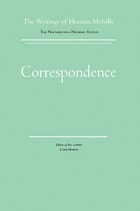
Correspondence
Paul Celan and Ingeborg Bachmann
Seagull Books, 2019
Collected here for the first time in English are their letters written between 1948 and 1961. Their correspondence forms a moving testimony of the discourse of love in the age after Auschwitz, with all the symptomatic disturbances and crises caused by their conflicting backgrounds and their hard-to-reconcile designs for living—as a woman, as a man, as writers. In addition to the almost 200 letters, the volume includes an important exchange between Bachmann and Gisèle Celan-Lestrange, who married Celan in 1951, as well as the letters between Paul Celan and Swiss writer Max Frisch.
“Scarcely more breathlessly and desperately can two lovers ever have struggled for words. Little known among German literary historians, the relationship between these two poets amounts to one of the most dramatic and momentous occurrences in German literature.”—FAZ, on the German edition
Correspondence
Volume Fourteen, Scholarly EditionHerman Melville
Northwestern University Press, 1993
This scholarly edition presents a text as close to the author's intention as his difficult handwriting or other surviving evidence permits. Fifty-two newly discovered letters by Melville, more than half of which are presented here for the first time, are added to those printed in the 1960 edition. This text is an Approved Text of the Center for Editions of American Authors (Modern Language Association of America).
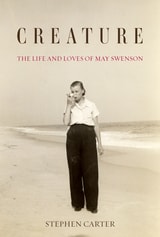
Creature
The Life and Loves of May SwensonCarter, Stephen
Signature Books, 2026
In the summer of 1936, twenty-three-year-old May Swenson boarded a bus heading east out of her Mormon hometown of Logan, Utah. Her destination was New York City, where she had a single goal: become a poet. Creature tells the story of how this small-town woman fought to achieve her dreams in the Depression-era big city, keeping a roof over her head and honing her craft as she pursued romantic relationships with both men and women. After decades of struggle, Swenson became one of mid-century America’s most beloved and prolific poets.
What is it that makes her poetry so extraordinary? How did she see and reveal the world? How did she teach the art of poetry? And how does her work interact with her Mormon roots? Readers will learn the answers to these questions and more in this artfully written biography.
Creature
The Life and Loves of May SwensonCarter, Stephen
Signature Books, 2026
In the summer of 1936, twenty-three-year-old May Swenson boarded a bus heading east out of her Mormon hometown of Logan, Utah. Her destination was New York City, where she had a single goal: become a poet. Creature tells the story of how this small-town woman fought to achieve her dreams in the Depression-era big city, keeping a roof over her head and honing her craft as she pursued romantic relationships with both men and women. After decades of struggle, Swenson became one of mid-century America’s most beloved and prolific poets.
What is it that makes her poetry so extraordinary? How did she see and reveal the world? How did she teach the art of poetry? And how does her work interact with her Mormon roots? Readers will learn the answers to these questions and more in this artfully written biography.
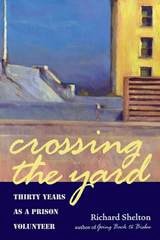
Crossing the Yard
Thirty Years as a Prison VolunteerRichard Shelton
University of Arizona Press, 2007
Richard Shelton was a young English professor in 1970 when a convict named Charles Schmid—a serial killer dubbed the “Pied Piper of Tucson” in national magazines—shared his brooding verse. But for Shelton, the novelty of meeting a death-row monster became a thirty-year commitment to helping prisoners express themselves. Shelton began organizing creative writing workshops behind bars, and in this gritty memoir he offers up a chronicle of reaching out to forgotten men and women—and of creativity blossoming in a repressive environment. He tells of published students such as Paul Ashley, Greg Forker, Ken Lamberton, and Jimmy Santiago Baca who have made names for themselves through their writing instead of their crimes. Shelton also recounts the bittersweet triumph of seeing work published by men who later met with agonizing deaths, and the despair of seeing the creative strides of inmates broken by politically motivated transfers to private prisons. And his memoir bristles with hard-edged experiences, ranging from inside knowledge of prison breaks to a workshop conducted while a riot raged outside a barricaded door. Reflecting on his decision to tutor Schmid, Shelton sees that the choice “has led me through bloody tragedies and terrible disappointments to a better understanding of what it means to be human.”
Crossing the Yard is a rare story of professional fulfillment—and a testament to the transformative power of writing.