Results by title
2335 books match the query 'Modern' and 138 start with c
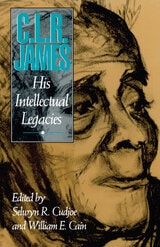
C.L.R. James
His Intellectual LegaciesEdited by Selwyn R. Cudjoe and William E. Cain
University of Massachusetts Press, 1995
C.L.R. James (1901–1989) made important contributions in a host of fields—literature, criticism, cultural studies, political theory, history, and philosophy. One of the most astute minds of this century, he served as mentor for two generations of international intellectuals. He contributed enormously to their understanding of the colonial question, the Negro question, the Russian question, the role of dialectics in proletarian struggle, and the theory and practice of Marxism in the Americas. In addition to The Black Jacobins, his incisive account of the Haitian revolution of the 1790s, and Notes on Dialectics, James published a range of other books, including a classic work on the game of cricket and a study of Herman Melville.
This collection of essays offers a variety of fresh perspectives on James's life and writings. Included are reminiscences of those who knew James well and critical essays by eminent scholars. The book is the first to offer a full treatment of James's many contributions to twentieth-century intellectual life.

CONSUMING FANTASIES
LABOR, LEISURE, AND THE LONDON SHOPGIRL,LISE SHAPIRO SANDERS
The Ohio State University Press, 2006

CW-21 Interceptor
Edwin Hoogschagen
Amsterdam University Press, 2023
Cadaverland
Inventing a Pathology of Catastrophe for Holocaust Survival [The Limits of Medical Knowledge and Historical Memory in France]Michael Dorland
Brandeis University Press, 2009
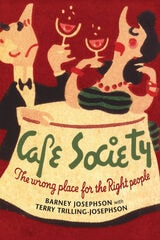
Cafe Society
The wrong place for the Right peopleBarney Josephson with Terry Trilling-Josephson. Foreword by Dan Morgenstern.
University of Illinois Press, 2009
Set against the drama of the Great Depression, the conflict of American race relations, and the inquisitions of the House Un-American Activities Committee, Cafe Society tells the personal history of Barney Josephson, proprietor of the legendary interracial New York City night clubs Cafe Society Downtown and Cafe Society Uptown and their successor, The Cookery. Famously known as "the wrong place for the Right people," Cafe Society featured the cream of jazz and blues performers--among whom were Billie Holiday, boogie-woogie pianists, Big Joe Turner, Lester Young, Buck Clayton, Big Sid Catlett, and Mary Lou Williams--as well as comedy stars Imogene Coca, Zero Mostel, and Jack Gilford, and also gospel and folk singers. A trailblazer in many ways, Josephson welcomed black and white artists alike to perform for mixed audiences in a venue whose walls were festooned with artistic and satiric murals lampooning what was then called "high society."
Featuring scores of photographs that illustrate the vibrant cast of characters in Josephson's life, this exceptional book speaks richly about Cafe Society's revolutionary innovations and creativity, inspired by the vision of one remarkable man.
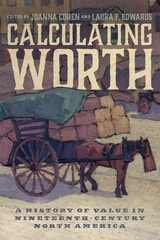
Calculating Worth
A History of Value in Nineteenth-Century North AmericaEdited by Joanna Cohen Laura F. Edwards
University of Chicago Press, 2027
Explores the history of value as a concept, one that we regularly use but tend to take for granted as the monetary expression of market mechanisms.
Calculating Worth, a collection of essays edited by historians Joanna Cohen and Laura F. Edwards, reshapes our concept of what “value” meant in the past. Collectively, the essays reorient conventional narratives and reveal multiple methods of determining value, some traditional, some new, but all based in human agency. Calculating Worth brings together scholars of legal history, Native American history, women’s history, material culture, the history of slavery, and African American history, with topics that range widely over the nineteenth century, across North America and beyond.
Through studying subjects as varied as personal property, land, enslaved people, and intangibles such as prayer, reputation, and suffering, this portrait of value is diverse, humanistic, and far more capacious than what typically fits within the bounds of the concept of capitalism. Rather, value turns out to be a question of power—and how it is used.
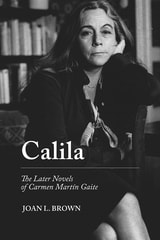
Calila
The Later Novels of Carmen Martín GaiteJoan L. Brown
Bucknell University Press, 2021
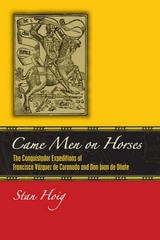
Came Men on Horses
The Conquistador Expeditions of Francisco Vázquez de Coronado and Don Juan de OñateStan Hoig
University Press of Colorado, 2013
Guided by myths of golden cities and worldly rewards, policy makers, conquistador leaders, and expeditionary aspirants alike came to the new world in the sixteenth century and left it a changed land. Came Men on Horses follows two conquistadors—Francisco Vázquez de Coronado and Don Juan de Oñate—on their journey across the southwest.
Driven by their search for gold and silver, both Coronado and Oñate committed atrocious acts of violence against the Native Americans, and fell out of favor with the Spanish monarchy. Examining the legacy of these two conquistadors Hoig attempts to balance their brutal acts and selfish motivations with the historical significance and personal sacrifice of their expeditions. Rich human details and superb story-telling make Came Men on Horses a captivating narrative scholars and general readers alike will appreciate.
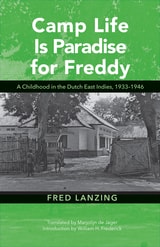
Camp Life Is Paradise for Freddy
A Childhood in the Dutch East Indies, 1933–1946Fred Lanzing
Ohio University Press, 2017
“Children see and hear what is there; adults see and hear what they are expected to and mainly remember what they think they ought to remember,” David Lowenthal wrote in The Past Is a Foreign Country. It is on this fraught foundation that Fred Lanzing builds this memoir of his childhood in a Japanese internment camp for Dutch colonialists in the East Indies during the World War II.
When published in the Netherlands in 2007, the book triggered controversy, if not vitriol, for Lanzing’s assertion that his time in the camp was not the compendium of horrors commonly associated with the Dutch internment experience. Despite the angry reception, Lanzing’s account corresponds more closely with the scant historical record than do most camp memoirs. In this way, Lanzing’s work is a substantial addition to ongoing discussions of the politics of memory and the powerful—if contentious—contributions that subjective accounts make to historiography and to the legacies of the past.
Lanzing relates an aspect of the war in the Pacific seldom discussed outside the Netherlands and, by focusing on the experiences of ordinary people, expands our understanding of World War II in general. His compact, beautifully detailed account will be accessible to undergraduate students and a general readership and, together with the introduction by William H. Frederick, is a significant contribution to literature on World War II, the Dutch colonial experience, the history of childhood, and Southeast Asian history.
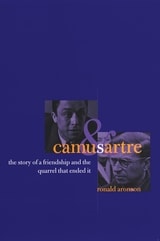
Camus and Sartre
The Story of a Friendship and the Quarrel that Ended ItRonald Aronson
University of Chicago Press, 2003
Albert Camus and Jean-Paul Sartre first met in 1943, during the German occupation of France. The two became fast friends. Intellectual as well as political allies, they grew famous overnight after Paris was liberated. As playwrights, novelists, philosophers, journalists, and editors, the two seemed to be everywhere and in command of every medium in post-war France. East-West tensions would put a strain on their friendship, however, as they evolved in opposing directions and began to disagree over philosophy, the responsibilities of intellectuals, and what sorts of political changes were necessary or possible.
As Camus, then Sartre adopted the mantle of public spokesperson for his side, a historic showdown seemed inevitable. Sartre embraced violence as a path to change and Camus sharply opposed it, leading to a bitter and very public falling out in 1952. They never spoke again, although they continued to disagree, in code, until Camus's death in 1960.
In a remarkably nuanced and balanced account, Aronson chronicles this riveting story while demonstrating how Camus and Sartre developed first in connection with and then against each other, each keeping the other in his sights long after their break. Combining biography and intellectual history, philosophical and political passion, Camus and Sartre will fascinate anyone interested in these great writers or the world-historical issues that tore them apart.
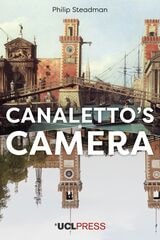
Canaletto's Camera
Philip Steadman
University College London, 2025
Canaletto’s Camera provides a revelatory look at how the Venetian master Antonio Canaletto (1697–1768) used the camera obscura, a precursor to the modern camera, to create his meticulous cityscapes. Drawing on new research, Steadman examines Canaletto’s connections to contemporary scientists and his reliance on measured architectural drawings, discovering previously unrecognized techniques that shaped his iconic views of Venice and London.
By analyzing Canaletto’s sketches and reconstructing an 18th-century camera obscura, Steadman and his colleagues have recreated the artist’s process, demonstrating how he traced real scenes, altered them in his finished works, and even engaged in a form of early photomontage. Through digital overlays and side-by-side comparisons with contemporary photographs, the book challenges assumptions about Canaletto’s realism and artistic manipulation.
Lavishly illustrated and deeply engaging, Canaletto’s Camera is a compelling read for art historians, scholars of optical devices, and those fascinated by the intersection of art and science.
Cannibal Translation
Literary Reciprocity in Contemporary Latin AmericaIsabel C. Gómez
Northwestern University Press, 2023
Winner of the 2024 ACLA Harry Levin Prize • Honorable Mention MLA Katherine Singer Kovacs Prize
A bold comparative study illustrating the creative potential of translations that embrace mutuality and resist assimilation
Cannibal translators digest, recombine, transform, and trouble their source materials. Isabel C. Gómez makes the case for this model of literary production by excavating a network of translation projects in Latin America that includes canonical writers of the twentieth century, such as Haroldo and Augusto de Campos, Rosario Castellanos, Clarice Lispector, José Emilio Pacheco, Octavio Paz, and Ángel Rama. Building on the avant-garde reclaiming of cannibalism as an Indigenous practice meant to honorably incorporate the other into the self, these authors took up Brazilian theories of translation in Spanish to fashion a distinctly Latin American literary exchange, one that rejected normative and Anglocentric approaches to translation and developed collaborative techniques to bring about a new understanding of world literature.
By shedding new light on the political and aesthetic pathways of translation movements beyond the Global North, Gómez offers an alternative conception of the theoretical and ethical challenges posed by this artistic practice. Cannibal Translation: Literary Reciprocity in Contemporary Latin America mobilizes a capacious archive of personal letters, publishers’ records, newspapers, and new media to illuminate inventive strategies of collectivity and process, such as untranslation, transcreation, intersectional autobiographical translation, and transpeaking. The book invites readers to find fresh meaning in other translational histories and question the practices that mediate literary circulation.
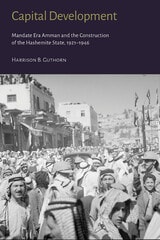
Capital Development
Mandate Era Amman and the Construction of the Hashemite State (1921–1946)Harrison B. Guthorn
Gingko, 2021
Amman, the capital of Jordan, contends with a crisis of identity rooted in how it grew to become a symbol for the Anglo-Hashemite government first, and a city second. As a representation of the new centralized authority, Amman became the seat of the Mandatory government that orchestrated the development of Transjordan, the British mandate established in 1921.
Despite its diminutive size, the city grew to house all the components necessary for a thriving and cohesive state by the end of the British mandate in 1946. However, in spite of its modernizing and regulatory ambitions, the Transjordan government did not control all facets of life in the region. Instead, the story of Transjordan is one of tensions between the state and the realities of the region, and these limitations forced the government to scale down its aspirations. This book presents the history of Amman’s development under the rule of the British mandate from 1921–46 and illustrates how the growth of the Anglo-Hashemite state imbued the city with physical, political, and symbolic significance.
Capital Letters
Hugo, Baudelaire, Camus, and the Death PenaltyÈve Morisi
Northwestern University Press, 2020
Capital Times
Tales from the Conquest of TimeEric Alliez
University of Minnesota Press, 1996
Capital Untamed
The Politics of Finance in Nineteenth-Century FranceCharlotte Robertson
University of Chicago Press, 2026
The story of a bold political experiment in nineteenth-century France to establish power through finance.
Amid the rise of industrial capitalism and revolutionary upheaval, French reformers asserted that finance should be reimagined as an instrument of economic and social transformation rather than left to the logic of private profit and speculation. In the 1850s, under Napoleon III’s authoritarian regime, this vision took institutional form as the Bonapartist state strategically deployed finance, broadened market participation, and sponsored new banks with the promise of directing investment toward infrastructure and industry. Yet this effort to harness and mobilize capital ran into a problem: The financial markets refused to be tamed.
Drawing on rich archival sources—from police surveillance and courtroom transcripts to investment manuals and petitions for incorporation—Capital Untamed reveals how the financial markets became an instrument of political power, frustrated state ambitions, and ultimately escaped attempts at mastery. In this striking debut, historian Charlotte Robertson shows how the French state and its citizens navigated a turbulent era of European capitalism animated by debates over the social purpose of financial capital. Ultimately, politicians’ efforts to establish legitimacy by reorganizing finance—and their confrontations with the limits of that project—set the stage for a form of modern discontent with the financial system that survives to this day.

Capitalism's Other Times
Fiction, Speculation, and FuturityGreg Forter
Northwestern University Press, 2027
Reorienting critical theory and literary criticism to consider how the present contains seeds of a future beyond capitalism
Critical theorists have long held to the axiom that it is easier to imagine the end of the world than the end of capitalism. Greg Forter starts this wide-ranging study of contemporary literature by suggesting that this position is increasingly hard to maintain. In the wake of the 2008 financial crisis, the global rise of the New Right, and the mass disruptions and despair wrought by COVID-19, the story that capital had built about itself has begun to reveal cracks in its foundations. Capitalism has not succeeded in fully flattening or homogenizing time. Developing in combined and uneven fashion, it has retained the residues of pasts that suggest other futures are possible. Forter assembles a corpus of novels that theorize this insight. He names these fictions speculative realism to highlight how they map the closures of our present while opening that present onto other, more speculative orders of time. In the face of ongoing, overlapping crises, Forter posits, these fictions locate flickering intimations of a utopian somewhen; they illuminate a present charged with precipitates of a transfigured but now imaginable future.
Captors and Captives
The 1704 French and Indian Raid on DeerfieldEvan Haefeli
University of Massachusetts Press, 2003
Haefeli and Sweeney reconstruct events from multiple points of view, through the stories of a variety of individuals involved. These stories begin in the Native, French, and English communities of the colonial Northeast, then converge in the February 29 raid, as a force of more than two hundred Frenchmen, Abenakis, Hurons, Kahnawake Mohawks, Pennacooks, and Iroquois of the Mountain overran the northwesternmost village of the New England frontier. Although the inhabitants put up more of a fight than earlier accounts of the so-called Deerfield Massacre have suggested, the attackers took 112 men, women, and children captive. The book follows the raiders and their prisoners on the harsh three-hundred-mile trek back to Canada and into French and Native communities. Along the way the authors examine how captives and captors negotiated cultural boundaries and responded to the claims of competing faiths and empires—all against a backdrop of continuing warfare.
By giving equal weight to all participants, Haefeli and Sweeney range across the fields of social, political, literary, religious, and military history, and reveal connections between cultures and histories usually seen as separate.
Carnie
Les Bodnar
St. Augustine's Press, 2010
Les Bodnar is a respected orthopedic surgeon and former physician for the Notre Dame football team. His memoir, however, is from an era long before that fame, when he was 12 and 13, and a part of his father’s carnival. The romance of carnival life, of escaping the 9-5 doldrums and somehow recapturing yourself, is there, but so too the hard work and trials, the difficulty of putting on a show day after day and week after week for people who both love the show and are apprehensive of the people who put it on.
The year is 1928, and the Boom is booming in our great cities, but life in the small towns in the Indiana, Illinois, and Wisconsin remains tenuous. Bodnar writes about putting the show together, handling the sometimes-unpredictable people who perform and run the games, holding on to the core that made the carnival that expectant joy for kids everywhere and of all ages. It’s a world filled with shills and cons, freak shows (some of them real) and rides galore, trust given to unlikely characters and the security of family, above all family, despite all the absences and hardships.
In the background the coming end of the Boom whispers, and soon the country will plunge into what will be called in America “the Great Depression.” It is not the innocence experienced before the Great War. Childhood had witnessed something too unspeakable and horrific to write about then; it demanded poetry. We hunkered down within our own, and did our best to forget, and only occasionally, as when Bodnar witnessed a Ku Klux Klan rally, did the ugliness that can be the world intrude on our sensibilities, and the reader finds himself or herself sharing this street-smart innocence of a never-to-return era.
Complete with period photographs, a lexicon, a bibliography, and a look at the way carnivals operate to this day, Carnie will inform, charm, and perhaps edify.
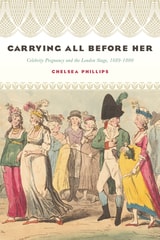
Carrying All before Her
Celebrity Pregnancy and the London Stage, 1689-1800Chelsea Phillips
University of Delaware Press, 2022
The rise of celebrity stage actresses in the long eighteenth century created a class of women who worked in the public sphere while facing considerable scrutiny about their offstage lives. Such powerful celebrity women used the cultural and affective significance of their reproductive bodies to leverage audience support and interest to advance their careers, and eighteenth-century London patent theatres even capitalized on their pregnancies. Carrying All Before Her uses the reproductive histories of six celebrity women (Susanna Mountfort Verbruggen, Anne Oldfield, Susannah Cibber, George Anne Bellamy, Sarah Siddons, and Dorothy Jordan) to demonstrate that pregnancy affected celebrity identity, impacted audience reception and interpretation of performance, changed company repertory and altered company hierarchy, influenced the development and performance of new plays, and had substantial economic consequences for both women and the companies for which they worked. Deepening the fields of celebrity, theatre, and women's studies, as well as social and medical histories, Phillips reveals an untapped history whose relevance and impact persists today.
Carrying a Secret in My Heart
Children of the Victims of the Reprisals after the Hungarian Revolution in 1956 - An Oral HistoryZsuzsanna Korösi
Central European University Press, 2003
Cartesian Questions
Method and MetaphysicsJean-Luc Marion
University of Chicago Press, 1999
"Besides the impact of their content, the clarity and reach of these essays force one to consider foundational questions concerning philosophy and its history."—Richard Watson, Journal of the History of Philosophy
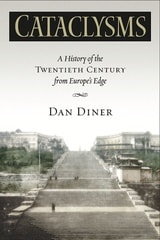
Cataclysms
A History of the Twentieth Century from Europe’s EdgeDan Diner, Translated by William Templer with Joel Golb
University of Wisconsin Press, 2007
Influenced by continental historical, legal, and social thought, Dan Diner views the totality of world history evolving from an Eastern and Southeastern European angle. A work of great synthesis, Cataclysms chronicles twentieth century history as a “universal civil war” between a succession of conflicting dualisms such as freedom and equality, race and class, capitalism and communism, liberalism and fascism, East and West.
Diner’s interpretation rotates around cataclysmic events in the transformation from multinational empires into nation states, accompanied by social revolution and “ethnic cleansing,” situating the Holocaust at the core of the century’s predicament. Unlike other Eurocentric interpretations of the last century, Diner also highlights the emerging pivotal importance of the United States and the impact of decolonization on the process of European integration.
Catastrophe and Meaning
The Holocaust and the Twentieth CenturyEdited by Moishe Postone and Eric Santner
University of Chicago Press, 2003
This collection features essays that consider the role of anti-Semitism in the recounting of the Holocaust; the place of the catastrophe in the narrative of twentieth-century history; the questions of agency and victimhood that the Holocaust inspires; the afterlife of trauma in literature written about the tragedy; and the gaps in remembrance and comprehension that normal historical works fail to notice.
Contributors:
Omer Bartov, Dan Diner, Debòrah Dwork, Saul Friedländer, Geoffrey Hartman, Dominick LaCapra, Paul Mendes-Flohr, Anson Rabinbach, Frank Trommler, Shulamit Volkov, Froma Zeitlin
Cather Among the Moderns
Janis P. Stout
University of Alabama Press, 2019
A masterful study by a preeminent scholar that situates Cather as a visionary practitioner of literary modernism
Willa Cather is often pegged as a regionalist, a feminine and domestic writer, or a social realist. In Cather Among the Moderns, Janis P. Stout firmly situates Cather as a visionary practitioner of literary modernism, something other scholars have hinted at but rarely affirmed. Stout presents Cather on a large, dramatic stage among a sizable cast of characters and against a brightly lit social and historical backdrop, invoking numerous figures and instances from the broad movement in the arts and culture that we call modernism.
Early on, Stout addresses the matter of gender. The term “cross-dresser” has often been applied to Cather, but Stout sees Cather’s identity as fractured or ambiguous, a reading that links her firmly to early twentieth-century modernity. Later chapters take up topics of significance both to Cather and to twentieth-century American modernists, including shifting gender roles, World War I’s devastation of social and artistic norms, and strains in racial relations. She explores Cather’s links to a small group of modernists who, after the war, embraced life in New Mexico, a destination of choice for many artists, and which led to two of Cather’s most fully realized modernist novels, The Professor’s House and Death Comes for the Archbishop.
The last chapter addresses Cather’s place within modernism. Stout first places her in relation to Ezra Pound and T. S. Eliot with their shared ties to tradition even while making, sometimes startling, innovations in literary form, then showing parallels with William Faulkner with respect to economic disparity and social injustice.
Cavalry
Its History and TacticsLouis Edward Nolan
Westholme Publishing, 2020
A New Edition of One of the Great Military Treatises of the Nineteenth Century
First published in 1853, Cavalry: Its History and Tactics had a major impact on military theorists and officers for decades—it was reprinted as a manual during the American Civil War—and its influence on European cavalry performance can be traced into World War I. It is an intelligent work which discusses the history and development of cavalry over the ages, advocates a program of reform for Britain’s horsed troops, and covers many aspects of equipment, training, drill, organization, formation, and battlefield tactics. The author, an experienced and gifted cavalryman, first served in the Austrian army, then joined the British army’s 15th Hussars in 1839, fought in India, and became the regimental riding master. Captain Nolan’s 1852 tour of European armies, wide reading in many languages, and service in Europe and India makes Cavalry an extraordinary statement on mid-nineteenth-century theory and practice.
As historian Jon Coulston explains in his introduction, Nolan was writing at the cusp of technological change, drawing upon the experiences of the Napoleonic Wars, continental suppression of the 1848 Revolutions, and Britain’s wars in India, but with an eye to firepower developments on the eve of the Crimean War. In 1854, at the Battle of Balaklava, Nolan rode with the written order which unleashed the Charge of the Light Brigade, an action in which he lost his life. Presented here as the first modern reprint, complete with a new introduction and further reading, Nolan’s Cavalry remains a hallmark of military history.
Celebrity Across the Channel, 1750–1850
Anaïs Pédron
University of Delaware Press, 2021
Censorship and Self-Censorship in History Education
A Comparative Approach to Backsliding DemocraciesRuben Zeeman
Central European University Press, 2026
Censorship in Romania
Lidia Vianu
Central European University Press, 1998
Cesare Pavese and America
Life, Love, and LiteratureLawrence G. Smith
University of Massachusetts Press, 2008
Challenges to Traditional Authority
Plays by French Women Authors, 1650-1700Françoise Pascal, Mary-Catherine Desjardins, Antoinette Deshoulières, and Catherine Durand
Iter Press, 2015
Charles Johnson's "General History of the Pyrates" and Global Commerce
Noel Chevalier
Bucknell University Press, 2025
This study explores how General History of the Pyrates was at the heart of early eighteenth-century British debates about commerce, colonialism, and law. Examining how pirates are depicted as both monsters and Great Men, Noel Chevalier untangles the contradictions within a Britain emerging as a colonial superpower, where ruthlessness and ambition were both feared and praised. Traveling the high seas to plunder treasure from foreign lands, pirates were not so different from the British capitalists who built fortunes from resource extraction, the plantation economy, and the transatlantic slave trade. Connecting the work to later books like Gulliver’s Travels and The Beggar’s Opera that satirized the era and its power-hungry prime minister Robert Walpole, Chevalier shows how the pirate became an iconic figure in 1720s Britain, a time of cold-hearted capitalism and rapacious colonial expansion.
Charlotte Delbo
A Life ReclaimedGhislaine Dunant, Translated by Kathryn M. Lachman
University of Massachusetts Press, 2021
Ghislaine Dunant's unforgettable biography of Delbo, La vie retrouvée (2016), captivated French readers and was awarded the Prix Femina. Now translated into English for the first time, Charlotte Delbo: A Life Reclaimed depicts Delbo's lifelong battles as a working-class woman, as a survivor, as a leftist who broke from the Communist Party, and most of all, as a writer whose words compelled others to see.
Chateaubriand Across Empires
Fabienne Moore
Bucknell University Press, 0
What happens when the liberty of ancient nobility collides with the revolutionary ideals of equality? This groundbreaking study explores how the American, French, Haitian, and Greek Revolutions redefined freedom—and how French Romantic figure Chateaubriand grappled with that transformation. Tracing his travels across England, North America, and the Mediterranean, this book uncovers Chateaubriand’s seductive visions of “paradises lost,” which were taken up, challenged, and reimagined by Anglophone and Hispanic writers.
From Charlotte Brontë to Harriet Beecher Stowe, from Byron to Bolaño authors found in Chateaubriand a conflicted but powerful voice at the crossroads of liberty, race, religion, and empire. This is the first comprehensive study to situate Chateaubriand within the histories of colonialism and global revolution, revealing a literary legacy that remains startlingly relevant in today’s struggles over equality.
Published by Bucknell University Press. Distributed worldwide by Rutgers University Press.
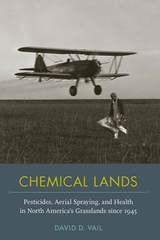
Chemical Lands
Pesticides, Aerial Spraying, and Health in North America’s Grasslands since 1945David D. Vail
University of Alabama Press, 2018
An exploration of the elaborate relationship between farmers, aerial sprayers, agriculturalists, crop pests, chemicals, and the environment.
The controversies in the 1960s and 1970s that swirled around indiscriminate use of agricultural chemicals—their long-term ecological harm versus food production benefits—were sparked and clarified by biologist Rachel Carson’s Silent Spring (1962). This seminal publication challenged long-held assumptions concerning the industrial might of American agriculture while sounding an alarm for the damaging persistence of pesticides, especially chlorinated hydrocarbons such as DDT, in the larger environment.
In Chemical Lands: Pesticides, Aerial Spraying, and Health in North America’s Grasslands since 1945 David D. Vail shows, however, that a distinctly regional view of agricultural health evolved. His analysis reveals a particularly strong ethic in the North American grasslands where practitioners sought to understand and deploy insecticides and herbicides by designing local scientific experiments, engineering more precise aircraft sprayers, developing more narrowly specific chemicals, and planting targeted test crops. Their efforts to link the science of toxicology with environmental health reveal how the practitioners of pesticides evaluated potential hazards in the agricultural landscape while recognizing the production benefits of controlled spraying.
Chemical Lands adds to a growing list of books on toxins in the American landscape. This study provides a unique Grasslands perspective of the Ag pilots, weed scientists, and farmers who struggled to navigate novel technologies for spray planes and in the development of new herbicides/insecticides while striving to manage and mitigate threats to human health and the environment.
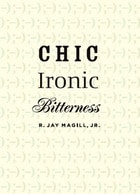
Chic Ironic Bitterness
R. Jay Magill, Jr.
University of Michigan Press, 2009
A brilliant and timely reflection on irony in contemporary American culture
“This book is a powerful and persuasive defense of sophisticated irony and subtle humor that contributes to the possibility of a genuine civic trust and democratic life. R. Jay Magill deserves our congratulations for a superb job!”
—Cornel West, University Professor, Princeton University
“A well-written, well-argued assessment of the importance of irony in contemporary American social life, along with the nature of recent misguided attacks and, happily, a deep conviction that irony is too important in our lives to succumb. The book reflects wide reading, varied experience, and real analytical prowess.”
—Peter Stearns, Provost, George Mason University
“Somehow, Americans—a pragmatic and colloquial lot, for the most part—are now supposed to speak the Word, without ironic embellishment, in order to rebuild the civic culture. So irony’s critics decide it has become ‘worthy of moral condemnation.’ Magill pushes back against this new conventional wisdom, eloquently defending a much livelier American sensibility than the many apologists for a somber ‘civic culture’ could ever acknowledge."
—William Chaloupka, Chair and Professor, Department of Political Science, Colorado State University
The events of 9/11 had many pundits on the left and right scrambling to declare an end to the Age of Irony. But six years on, we're as ironic as ever. From The Simpsons and Borat to The Daily Show and The Colbert Report, the ironic worldview measures out a certain cosmopolitan distance, keeping hypocrisy and threats to personal integrity at bay.
Chic Ironic Bitterness is a defense of this detachment, an attitude that helps us preserve values such as authenticity, sincerity, and seriousness that might otherwise be lost in a world filled with spin, marketing, and jargon. And it is an effective counterweight to the prevailing conservative view that irony is the first step toward cynicism and the breakdown of Western culture.
R. Jay Magill, Jr., is a writer and illustrator whose work has appeared in American Prospect, American Interest, Atlantic Monthly, Foreign Policy, International Herald Tribune, New York Times, Wall Street Journal, and Print, amongother periodicals and books. A former Harvard Teaching Fellow and Executive Editor of DoubleTake, he holds a Ph.D. in American Studies from the University of Hamburg in Germany. This is his first book.
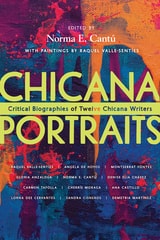
Chicana Portraits
Critical Biographies of Twelve Chicana WritersEdited by Norma E. Cantú; With paintings by Raquel Valle-Sentíes
University of Arizona Press, 2023
Artist Raquel Valle-Sentíes’s portraits bring visual dimension, while essays delve deeply into the authors’ lives for details that inform their literary, artistic, feminist, and political trajectories and sensibilities. The collection brilliantly intersects artistic visual and literary cultural productions, allowing complex themes to emerge, such as the fragility of life, sexism and misogyny, Chicana agency and forging one’s own path, the struggles of becoming a writer and battling self-doubt, economic instability, and political engagement and activism.
Arranged chronologically by birth order of the authors, the book can be read cover to cover for a genealogical overview, or scholars and general readers can easily jump in at any point and read about an individual author, regardless of the chronology.
Biographies included in this work include Raquel Valle-Sentíes, Angela de Hoyos, Montserrat Fontes, Gloria E. Anzaldúa, Norma E. Cantú, Denise Elia Chávez, Carmen Tafolla, Cherríe Moraga, Ana Castillo, Lorna Dee Cervantes, Sandra Cisneros, and Demetria Martínez.
Contributors
Cordelia E. Barrera
Mary Pat Brady
Norma E. Cantú
María Jesus Castro Dopacio
Carlos Nicolás Flores
Myrriah Gómez
Maria Magdalena Guerra de Charur
Gabriella Gutiérrez y Muhs
Georgina Guzmán
Cristina Herrera
María Esther Quintana
Eliza Rodríguez y Gibson
Meagan Solomon
Lourdes Torres
Raquel Valle-Sentíes
Jen Yáñez-Alaniz
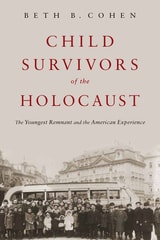
Child Survivors of the Holocaust
The Youngest Remnant and the American ExperienceCohen, Beth B
Rutgers University Press, 2018
The majority of European Jewish children alive in 1939 were murdered during the Holocaust. Of 1.5 million children, only an estimated 150,000 survived. In the aftermath of the Shoah, efforts by American Jews brought several thousand of these child survivors to the United States. In Child Survivors of the Holocaust, historian Beth B. Cohen weaves together survivor testimonies and archival documents to bring their story to light. She reveals that even as child survivors were resettled and “saved,” they struggled to adapt to new lives as members of adoptive families, previously unknown American Jewish kin networks, or their own survivor relatives. Nonetheless, the youngsters moved ahead. As Cohen demonstrates, the experiences both during and after the war shadowed their lives and relationships through adulthood, yet an identity as “survivors” eluded them for decades. Now, as the last living link to the Holocaust, the voices of Child Survivors are finally being heard.
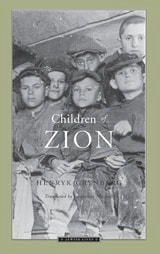
Children of Zion
Henryk Grynberg
Northwestern University Press, 1997
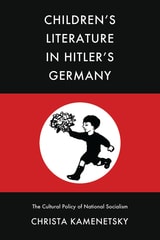
Children’s Literature in Hitler’s Germany
The Cultural Policy of National SocialismChrista Kamenetsky
Ohio University Press, 1984
Between 1933 and 1945, National Socialists enacted a focused effort to propagandize children’s literature by distorting existing German values and traditions with the aim of creating a homogenous “folk community.” A vast censorship committee in Berlin oversaw the publication, revision, and distribution of books and textbooks for young readers, exercising its control over library and bookstore content as well as over new manuscripts, so as to redirect the cultural consumption of the nation’s children. In particular, the Nazis emphasized Nordic myths and legends with a focus on the fighting spirit of the saga heroes, their community loyalty, and a fierce spirit of revenge—elements that were then applied to the concepts of loyalty to and sacrifice for the Führer and the fatherland. They also tolerated select popular series, even though these were meant to be replaced by modern Hitler Youth camping stories.
In this important book, first published in 1984 and now back in print, Christa Kamenetsky demonstrates how Nazis used children’s literature to selectively shape a “Nordic Germanic” worldview that was intended to strengthen the German folk community, the Führer, and the fatherland by imposing a racial perspective on mankind. Their efforts corroded the last remnants of the Weimar Republic’s liberal education, while promoting an enthusiastic following for Hitler.

China’s Politics in Perspective
Harold S. Quigley
University of Minnesota Press, 1962
China's Politics in Perspective was first published in 1962. Minnesota Archive Editions uses digital technology to make long-unavailable books once again accessible, and are published unaltered from the original University of Minnesota Press editions.
In a concise, readable diagnosis of present-day China, this book provides the perspective which is needed for a realistic view of the Chinese situation today.
Professor Quigley introduces the reader to contemporary political, economic, and social conditions on the mainland and on Nationalist-held Taiwan by briefly reviewing the basic tenets of Confucianism and other classical philosophies, the principal aspects of the imperial system, and the domestic and foreign influences which contributed to the collapse of monarchy in 1911. He recalls the revolutionary doctrine of Sun Yat-sen and surveys the nature and conduct of government under the first and second republics and the forces that operated for and against the transfer of liberal ideals from paper to practice. After showing how the Communist leadership gained its foothold and present control, he discusses the ideologies of Mao Tse-tung and Chiang Kai-shek, the structure and administration of their governments and major parties, their economic, social, and foreign policies, the independence movement on Taiwan, the prospects for democracy and the dilemma in which the United States has been placed by the victory of the Communists over a wartime ally.
In addition to being appropriate for general readers and for study groups interested in contemporary affairs, the book is especially suitable for use as a college text.
Christian Networks in the Ottoman Empire
A Transnational HistoryYura Konstantinova
Central European University Press, 2024
Observers and historians continue to marvel at the diversity and complexity of the Ottoman Empire. This book explores the significant and multifaceted role that Orthodox Christian networks played in the sultan’s realm from the 17th century until WWI. These multi-ethnic, multi-lingual, and multi-confessional formations contributed fundamentally to the political, economic, social, and cultural development of the Empire as well as to its gradual disintegration.
Bringing together scholars from most Balkan countries, Christian Networks in the Ottoman Empire describes the variety of Orthodox Christian networks under Ottoman rule. The examples examined include commercial relations, intellectual networks, educational systems, religious dynamics, consular activities, and revolutionary movements, and involve Muslims and Christians, Romanians and Serbs, Bulgarians and Greeks, Albanians and Turks. The contributions show that the Christian populations and their elites were an integral part of Ottoman society.
The geographical spread of the formal and informal networks enriches our understanding of the terms ‘center’ and ‘periphery.’ They were either centered within the official Ottoman borders and extended their activities to other states and empires, or vice versa, located elsewhere, but also active in the Ottoman Empire. A common feature of these formations is their constant fluctuation, which enables a dynamic understanding of Ottoman history.
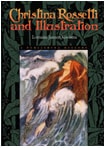
Christina Rossetti and Illustration
A Publishing HistoryLorraine Janzen Kooistra
Ohio University Press, 2002
Readers do not always take into account how books that combine image and text make their meanings. But for the Pre-Raphaelite poet Christina Rossetti, such considerations were central.
Christina Rossetti and Illustration maps the production and reception of Rossetti’s illustrated poetry, devotional prose, and work for children, both in the author’s lifetime and in posthumous twentieth-century reprints.
Lorraine Janzen Kooistra’s reading of Rossetti’s illustrated works reveals for the first time the visual-verbal aesthetic that was fundamental to Rossetti’s poetics. Her exhaustive archival research brings to light new information on how Rossetti’s commitment to illustration and attitudes to copyright and control influenced her transactions with publishers and the books they produced. Janzen Kooistra also tracks the poet’s reception in the twentieth century through a complex web of illustrated books produced for a wide range of audiences.
Analyzing an impressive array of empirical data, Janzen Kooistra shows how Rossetti’s packaging for commodity consumption—by religious presses, publishers of academic editions and children’s picture books, and makers of erotica and collectibles—influenced the reception of her work and her place in literary history.
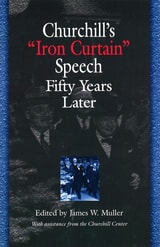
Churchill's "Iron Curtain" Speech Fifty Years Later
Edited & Intro by James W. Muller
University of Missouri Press, 1999
Winston Churchill's visit to Fulton, Missouri, on March 5, 1946, marked the first public recognition of the cold war that was to follow World War II. Churchill delivered his most famous speech, "The Sinews of Peace," which became best known by the phrase he used to describe the cold-war division of Europe, the "iron curtain."
In the United States and Britain, wartime alliances had fostered favorable feelings toward the Soviet Union. By 1946 democratic citizens on both sides of the Atlantic had begun to consider communist Russia a friend. In his speech at Fulton, Churchill exhibited breathtaking flexibility and a clear recognition of the main threat as he reminded the public that true friendship must be reserved for countries sharing a common love of liberty. The "Iron Curtain" speech defined postwar relations with the Soviet Union for citizens of Western democracies. Although it initially provoked intense controversy in the United States and Britain, criticism soon gave way to wide public agreement to oppose Soviet imperialism.
Opening with the full text of the address Churchill delivered in Fulton and concluding with Margaret Thatcher's fiftieth-anniversary address surveying the challenges facing Western democracies in this post-cold war climate, the book brings together essays that reflect on the past fifty years, recognizing Churchill's speech as a carefully conceived herald of the cold war for the Western democracies. These powerful essays offer a fresh appreciation of the speech's political, historical, diplomatic, and rhetorical significance.
Cinders
Jacques Derrida
University of Minnesota Press, 2014
“More than fifteen years ago,” Jacques Derrida writes in the prologue to this remarkable and uniquely revealing book, “a phrase came to me, as though in spite of me. . . . It imposed itself upon me with the authority, so discreet and simple it was, of a judgment: ‘cinders there are’ (il y a là cendre). . . . I had to explain myself to it, respond to it—or for it.”
In Cinders Derrida ranges across his work from the previous twenty years and discerns a recurrent cluster of arguments and images, all involving in one way or another ashes and cinders. For Derrida, cinders or ashes—at once fragile and resilient—are “the better paradigm for what I call the trace—something that erases itself totally, radically, while presenting itself.”
In a style that is both highly condensed and elliptical, Cinders offers probing reflections on the relation of language to truth, writing, the voice, and the complex connections between the living and the dead. It also contains some of his most essential elaborations of his thinking on the feminine and on the legacy of the Holocaust (both a word—from the Greek hólos, “whole,” and kaustós, “burnt”—and a historical event that invokes ashes) in contemporary poetry and philosophy. In turning from the texts of other philosophers to his own, Cinders enables readers to follow the trajectory from Derrida’s early work on the trace, the gramma, and the voice to his later writings on life, death, time, and the spectral.
Among the most accessible of this renowned philosopher’s many writings, Cinders is an evocative and haunting work of poetic self-analysis that deepens our understanding of Derrida’s critical and philosophical vision.
Cinema’s Alchemist
The Films of Péter ForgácsBill Nichols
University of Minnesota Press, 2011
Péter Forgács, based in Budapest, is best known for his award-winning films built on home movies from the 1930s to the 1960s that document ordinary lives soon to intersect with offscreen historical events. Cinema’s Alchemist offers a sustained exploration of the imagination and skill with which Forgács reshapes such film footage, originally intended for private and personal viewing, into extraordinary films dedicated to remembering the past in ways that matter for our future.
Contributors: Whitney Davis, U of California, Berkeley; László F. Földényi, U of Theatre, Film and Television, Budapest; Marsha Kinder, U of Southern California; Tamás Korányi; Scott MacDonald, Hamilton College; Tyrus Miller, U of California, Santa Cruz; Roger Odin, U of Paris III Sorbonne–Nouvelle; Catherine Portuges, U of Massachusetts Amherst; Michael S. Roth, Wesleyan U; Kaja Silverman, U of Pennsylvania; Ernst van Alphen, Leiden U, the Netherlands; Malin Wahlberg, Stockholm U.
Circus World
Roustabouts, Animals, and the Work of Putting on the Big ShowAndrea Ringer
University of Illinois Press, 2024
Andrea Ringer examines the industry-wide circus world--the collection of shows that traveled by rail, wagon, steamboat, and car--and the traditional and nontraditional laborers who created it. Performers and their onstage labor played an integral part in the popularity of the circus. But behind the scenes, other laborers performed the endless menial tasks that kept the show on the road. Circus operators regulated employee behavior both inside and outside the tent even as the employees themselves blurred the line between leisure and labor until, in all parts of the show, the workers could not escape their work.
Illuminating and vivid, Circus World delves into the gender, class, and even species concerns within an extinct way of life.
Citizen of the World
The Late Career and Legacy of W. E. B. Du BoisEdited by Phillip Luke Sinitiere
Northwestern University Press, 2019
From his birth in 1868 until his death in 1963, Du Bois sought the liberation of black people in the United States and across the world through intellectual and political labor. His tireless efforts documented and demonstrated connections between freedom for African-descended people abroad and black freedom at home.
In concert with growing scholarship on his twilight years, the essays in this volume assert the fundamental importance of considering Du Bois’s later decades not as a life in decline that descended into blind ideological allegiance to socialism and communism but as the life of a productive, generative intellectual who responded rationally, imaginatively, and radically to massive mid-century changes around the world, and who remained committed to freedom’s realization until his final hour.
Citizenship in Cold War America
The National Security State and the Possibilities of DissentAndrea Friedman
University of Massachusetts Press, 2014
The stories told here capture a wide-ranging debate about the workings of the national security state and the meaning of American citizenship. Some of the participants in this debate—women like war bride Ellen Knauff and Pentagon employee Annie Lee Moss—were able to make their own experiences compelling examples of the threats posed by the national security regime. Others, such as Ruth Reynolds and Lolita Lebrón, who advocated an end to American empire in Puerto Rico, or the psychiatrist Fredric Wertham, who sought to change the very definition of national security, were less successful. Together, however, they exposed the gap between democratic ideals and government policies.
Friedman traverses immigration law and loyalty boards, popular culture and theoretical treatises, U.S. court-rooms and Puerto Rican jails, to demonstrate how Cold War repression made visible in new ways the unevenness and limitations of American citizenship. Highlighting the ways that race and gender shaped critiques and defenses of the national security regime, she offers new insight into the contradictions of Cold War political culture.
Citoyennes
Women and the Ideal of Citizenship in Eighteenth-Century FranceAnnie K. Smart
University of Delaware Press, 2012
Did women have a civic identity in eighteenth-century France? In Citoyennes: Women and the Ideal of Citizenship in Eighteenth-Century France, Annie Smart contends that they did. While previous scholarship has emphasized the ideal of domestic motherhood or the image of the republican mother, Smart argues persuasively that many pre-revolutionary and revolutionary texts created another ideal for women–the ideal of civic motherhood. Smart asserts that women were portrayed as possessing civic virtue, and as promoting the values and ideals of the public sphere.
Contemporary critics have theorized that the eighteenth-century ideal of the Republic intentionally excluded women from the public sphere. According to this perspective, a discourse of “Rousseauean” domestic motherhood stripped women of an active civic identity, and limited their role to breastfeeding and childcare. Eighteenth-century France marked thus the division between a male public sphere of political action and a female private sphere of the home.
Citoyennes challenges this position and offers an alternative model of female identity. This interdisciplinary study brings together a variety of genres to demonstrate convincingly that women were portrayed as civic individuals. Using foundational texts such as Jean-Jacques Rousseau’s Emile, or on Education (1762), revolutionary gouaches of Lesueur, and vaudeville plays of Year II of the Republic (1793/1794), this study brilliantly shows that in text and image, women were represented as devoted to both the public good and their families.
In addition, Citoyennes offers an innovative interpretation of the home. Through re-examining sphere theory, this study challenges the tendency to equate the home with private concerns, and shows that the home can function as a site for both private life and civic identity.
Citoyennes breaks new ground, for it both rectifies the ideal of domestic Rousseauean motherhood, and brings a fuller understanding to how female civic identity operated in important French texts and images.
Published by University of Delaware Press. Distributed worldwide by Rutgers University Press.