Results by title
2817 books match the query 'Nature' and 144 start with c
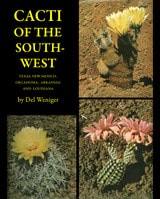
Cacti of the Southwest
Texas, New Mexico, Oklahoma, Arkansas, and LouisianaDel Weniger
University of Texas Press, 0
Del Weniger presents a beautifully illustrated account of all the cacti found in Texas, New Mexico, Oklahoma, Arkansas, and Louisiana. Cactus blossoms often rival the most exotic hothouse plants for delicate beauty. Depending upon the species, they range in color from white through almost the entire spectrum of the rainbow. Nearly every plant in the five-state area is here pictured in color, usually in full bloom.
The cactus was one of the most completely new and different plants encountered by Europeans in the Americas, and the larger species, at least, easily made their presence known to even the most unobservant passerby. To the observant the cactus in its surprising variety of forms has from the beginning exercised a strong fascination. The casual student may easily identify most specimens from these illustrations, and the more serious student will find detailed keys to all of the cacti of the area.
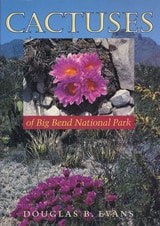
Cactuses of Big Bend National Park
By Douglas B. Evans
University of Texas Press, 1998
When the cactuses bloom in Big Bend National Park, their vivid pinks and purples, reds and yellows bring an unforgettable beauty to the rugged Chihuahuan Desert landscape. In fact, many people visit the park just see the cactus blossoms and the wildflowers. If you're one of them, this book will increase your enjoyment by helping you identify the wonders at your feet. And if you've never been to Big Bend when the cactuses are blooming, you'll discover here what you've been missing.
Douglas B. Evans describes twelve kinds of cactus—living rock, topflower, stout-spined, hedgehog, pineapple, button, barrel, fishhook, nipple, chollas and pricklypears, and Texas nipple—and their individual species known to occur in the park. Color photographs taken by Doris Evans and Ro Wauer accompany the species descriptions. As you hike or drive through the park, you can identify most of the cactuses you see simply by leafing through these splendid pictures and then checking the descriptions, which indicate the cactuses' characteristic features and habitat.
To make the book even more useful, Evans also briefly defines the parts of a cactus, explains how scientific names work, and offers a quick introduction to the geography and ecology of Big Bend National Park and the Chihuahuan Desert. With this information, you'll enjoy not only seeing the cactuses of the Big Bend but also being able to tell one from another and knowing just what makes each one special.
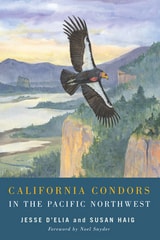
California Condors in the Pacific Northwest
Jesse D'Elia and Susan M. Haig
Oregon State University Press, 2013
Despite frequent depiction as a bird of California and the desert southwest, North America’s largest avian scavenger once graced the skies of the Pacific Northwest, from northern California to British Columbia. This important volume documents the condor’s history in the region, from prehistoric times to the early twentieth century, and explores the challenges of reintroduction.
Jesse D’Elia and Susan Haig investigate the paleontological and observational record as well as the cultural relationships between Native American tribes and condors, providing the most complete assessment to date of the condor’s occurrence in the Pacific Northwest. They evaluate the probable causes of regional extinction and the likelihood that condors once bred in the region, and they assess factors that must be considered in determining whether they could once again thrive in Northwest skies.
Incorporating the newest research and findings and more than eighty detailed historical accounts of human encounters with these birds of prey, California Condors in the Pacific Northwest sets a new standard for examining the historical record of a species prior to undertaking a reintroduction effort. It is a vital reference for academics, agency decision makers, conservation biologists, and readers interested in Northwest natural history. The volume is beautifully illustrated by Ram Papish and includes a number of previously unpublished photographs.

California
A Fire SurveyStephen J. Pyne
University of Arizona Press, 2016
In this collection of essays on the region, Stephen J. Pyne colorfully explores the ways the region has approached fire management and what sets it apart from other parts of the country. Pyne writes that what makes California’s fire scene unique is how its dramatically distinctive biomes have been yoked to a common system, ultimately committed to suppression, and how its fires burn with a character and on a scale commensurate with the state’s size and political power. California has not only a ferocity of flame but a cultural intensity that few places can match. California’s fires are instantly and hugely broadcast. They shape national institutions, and they have repeatedly defined the discourse of fire’s history. No other place has so sculpted the American way of fire.
California is part of the multivolume series describing the nation’s fire scene region by region. The volumes in To the Last Smoke also cover Florida, the Northern Rockies, the Great Plains, the Southwest, and several other critical fire regions. The series serves as an important punctuation point to Pyne’s fifty-year career with wildland fire—both as a firefighter and a fire scholar. These unique surveys of regional pyrogeography are Pyne’s way of “keeping with it to the end,” encompassing the directive from his rookie season to stay with every fire “to the last smoke.”

Canadian Wetlands
Places and PeopleRod Giblett
Intellect Books, 2014
Canoe Country Flora
Plants and Trees of the North Woods and Boundary WatersMark Stensaas
University of Minnesota Press, 2004
The vast North Woods, a land magnificently arrayed in the deep greens of pine, spruce, and fir and the brilliant blues of crystal clear lakes, spans the area from Minnesota to Maine and from Michigan to Hudson Bay. With a little help fromCanoe Country Flora, keen explorers will discover a world full of life and wonder in the plants that thrive in this beautiful lake country.
Canoe Country Flora, a friendly field guide, introduces you to ninety-six of the most common trees, shrubs, wildflowers, fungi, ferns, lichens, and other plants you’re likely to encounter during your travels north. Detailed line drawings and brief plant profiles help you recognize what you’re seeing, while “Sparky” Stensaas’s intriguing tales draw you into a deeper study of the plants’s natural and cultural histories.
Each plant is made identifiable and memorable by fascinating facts, handy checklists, diagrams and charts, and interesting activities that help adults and children learn by discovery.
Use this book as a companion to Canoe Country Wildlife or alone as your guide to a unique North Woods adventure.
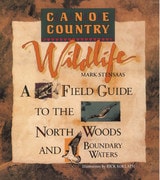
Canoe Country Wildlife
A Field Guide to the North Woods and Boundary WatersMark Stensaas
University of Minnesota Press, 2004
Warblers, wolves, and whirligig beetles—the creatures of the canoe countrywilderness come alive in Canoe Country Wildlife. In this read-aloud treasure, “Sparky” Stensaas, naturalist and storyteller, intrigues you with his tales of encounters with the forest inhabitants—from tiny toads to majestic moose.
Canoe Country Wildlife, a friendly field guide, introduces you to the wildlife you are most likely to see as you travel in the North Woods. It describes these creatures and their habits accurately so you’ll know where and when to look for them. Detailed line drawings illustrate each animal clearly so you’ll recognize what you’re seeing.
The book is filled with fascinating little-known facts: Did you know that wood frogs can freeze solid, only to live again? That loons can fly a hundred miles an hour? That chipmunks can carry seventy sunflower seeds in their cheeks?
Canoe Country Wildlife includes handy checklists to help you keep track of the critters you encounter, a calendar for you to record the natural events you witness, and activities—one for each animal—that will help both adults and children learn by discovery.
Carry Canoe Country Wildlife in your pack. Your trip will be more enjoyable and your memories will last forever. It’s a great gift for anyone who loves the outdoors.
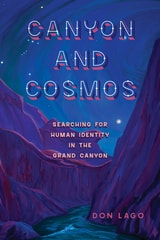
Canyon and Cosmos
Searching for Human Identity in the Grand CanyonDon Lago
University of Nevada Press, 2025
Named one of the 2026 Southwest Books of the Year
Throughout history, humans have sought creation stories to define our identity and affirm our connections with the universe, diverse life forms, and one another. Over the last two centuries, science has delivered a bold new creation story full of immense time and space, extraordinary objects, and powerful natural forces. Science ideas can seem mere abstractions, but at the Grand Canyon, better than anywhere else on Earth, our new creation story is manifested physically and powerfully.
A major work of literary nature writing, Canyon and Cosmos takes readers on a journey through the Grand Canyon's deep time, geological forces, and biological evolution, making them very real, personal, and meaningful. Through decades of hiking and kayaking, author Don Lago has gotten to know the canyon intimately. Ranging through world mythologies and Native American spirituality, he explores how humans have sought to understand the universe. He confronts existential questions of whether humans can find enough meaning in the scientific cosmos. Through poetic prose, symbolism, and philosophical insight, he shows how existence itself is our deepest source of life and meaning.
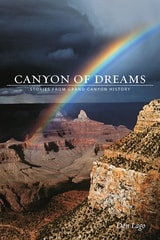
Canyon of Dreams
Stories from Grand Canyon HistoryDon Lago
University of Utah Press, 2014
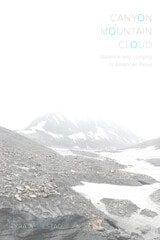
Canyon, Mountain, Cloud
Absence and Longing in American ParksTyra A. Olstad
Oregon State University Press, 2021
Part memoir and part scholarly analysis of the psychological and societal dimensions of place-creation, Canyon, Mountain, Cloud details the author’s experiences working and living in Black Canyon of the Gunnison National Park, Denali National Park and Preserve, Adirondack State Park, and arctic Alaska. Along the way, Olstad explores canyons, climbs mountains, watches clouds, rafts rivers, searches for fossils, and protects rare and fragile vegetation. She learns and shares local natural and cultural histories, questions perceptions of “wilderness,” deepens her appreciation for wildness, and reshapes her understanding of self and self-in-place.
Anyone who has ever felt appreciation for wild places and who wants to think more deeply about individual and societal relationships with American parks and protected areas will find humor, fear, provocation, wonder, awe, and, above all, inspiration in these pages.
Cape Cod
An Environmental History of a Fragile EcosystemJohn T. Cumbler
University of Massachusetts Press, 2014
John T. Cumbler's book offers an environmental, social, and economic history of Cape Cod told through the experiences of residents as well as visitors. He notes that over the past four hundred years the Cape has experienced three regimes of resource utilization. The first regime of Native Americans who lived relatively lightly on the land was supplanted by European settlers who focused on production and extraction. This second regime began in the age of sail but declined through the age of steam as the soil and seas failed to yield the resources necessary to sustain continuing growth. Environmental and then economic crises during the second half of the nineteenth century eventually gave way to the third regime of tourism and recreation. But this regime has its own environmental costs, as residents have learned over the last half century.
Although the Cape remains a special place, its history of resource scarcity and its attempts to deal with that scarcity offer useful lessons for anyone addressing similar issues around the globe.

Capitalism, Colonisation and the Ecocide-Genocide Nexus
Martin Crook
University of London Press, 2024
This timely publication examines the drivers of ecologically induced genocide, in particular, how environmental destruction can lead to conditions that fundamentally threaten a social group’s cultural or physical existence. Focusing on the former British colonies of Kenya and Australia, both united by a discourse of developmentalism, this book draws attention to the critical role that ecological destruction has in the genocide of Indigenous and place-based peoples. The book synthesizes radical political ecology with a political-economic approach, illuminating the chain connection between the inherent genocidal and ecocidal properties of global capitalism, and how this connection intersects with settler and post-colonial structures. In exploring the genocidal effects of climate governance, the economic market for environmental rights, and energy extraction on Indigenous peoples in Kenya and Australia, the book also draws on original interviews to prioritize the lived experiences of the groups that have suffered structural violence and social harm. Fundamentally, Crook calls forward the political economy of genocide. As such, this important book deepens and enriches our knowledge of genocide, the eco-genocidal nature of colonization, and the capitalist mode of production that underpins developmentalism.
Capturing the Commons
Devising Institutions to Manage the Maine Lobster IndustryJames M. Acheson
University Press of New England, 2004
Carex of Illinois and Surrounding States
The Oval SedgesMichael Murphy, Greg Spyreas, and Paul Marcum
University of Illinois Press, 2025
Drawing on the study of thousands of specimens, Carex of Illinois and Surrounding States: The Oval Sedges is an invaluable resource for botanists, ecologists, environmental engineers, and professional and amateur environmentalists interested in a deeper understanding of these essential plants.
Caribou Herds of Northwest Alaska, 1850-2000
Ernest S. Burch, Jr.
University of Alaska Press, 2012
In his final, major publication Ernest S. “Tiger” Burch Jr. reconstructs the distribution of caribou herds in northwest Alaska using data and information from research conducted over the past several decades as well as sources that predate western science by more than one hundred years. Additionally, he explores human and natural factors that contributed to the demise and recovery of caribou and reindeer populations during this time. Burch provides an exhaustive list of published and unpublished literature and interviews that will intrigue laymen and experts alike. The unflinching assessment of the roles that humans and wolves played in the dynamics of caribou and reindeer herds will undoubtedly strike a nerve. Supplemental essays before and after the unfinished work add context about the author, the project of the book, and the importance of both.
Caring for Life
A Postdevelopment Politics of Infant HygieneKelly Dombroski
University of Minnesota Press, 2024
The transformational possibilities of everyday hygiene and care practices
In order to mitigate the worst forecasts of climate change, many of us need to make drastic adjustments to how we live and what we consume. For Kelly Dombroski, these changes must also happen in the home: in rethinking routines of care and hygiene that still rely on disposable and plastic products. Caring for Life examines the remarkable evolution in Asia-Pacific hygiene practices and amplifies the creative work of ordinary people guarding human and more-than-human life in their everyday practices of care.
Dombroski develops the concept of “guarding life,” a viewpoint that counters homogenous cultural practices and imposed sanitation standards and instead embraces diverse hygiene practices that are networked across varying wisdoms and bodies. She traces how the Chinese diaper-free infant toilet training practice of baniao has traveled to Australia and New Zealand, and she explores the practice of elimination communication, in which babies learn to communicate to their caregivers when they need to eliminate, thus removing the need for diapers. A mother herself, Dombroski conducted ethnographic research while mothering to examine how collectives of mothers draw on Chinese knowledge and their own embodied practices of childcare to create new hybrid forms of infant care.
Caring for Life is a call to action, a theory of change, and a fascinating account of the transformational possibilities of care practices. It shows how experiments in personal care can lead to collective, widespread change, ultimately providing a practical and hopeful vision for environmental action.
Retail e-book files for this title are screen-reader friendly with images accompanied by short alt text and/or extended descriptions.

Cash For Your Trash
Scrap Recycling in AmericaCarl A. Zimring
Rutgers University Press, 2005
Over the past two decades, concern about the environment has brought with it a tremendous increase in recycling in the United States and around the world. For many, it has become not only a civic, but also a moral obligation. Long before our growing levels of waste became an environmental concern, however, recycling was a part of everyday life for many Americans, and for a variety of reasons. From rural peddlers who traded kitchen goods for scrap metal to urban children who gathered rags in exchange for coal, individuals have been finding ways to reuse discarded materials for hundreds of years.
In Cash for Your Trash, Carl A. Zimring provides a fascinating history of scrap recycling, from colonial times to the present. Moving beyond the environmental developments that have shaped modern recycling enterprises, Zimring offers a unique cultural and economic portrait of the private businesses that made large-scale recycling possible. Because it was particularly common for immigrants to own or operate a scrap business in the nineteenth century, the history of the industry reveals much about ethnic relationships and inequalities in American cities. Readers are introduced to the scrapworkers, brokers, and entrepreneurs who, like the materials they handled, were often marginalized.
Integrating findings from archival, industrial, and demographic records, Cash for Your Trash demonstrates that over the years recycling has served purposes far beyond environmental protection. Its history and evolution reveals notions of Americanism, the immigrant experience, and the development of small business in this country.
Cataclysms
An Environmental History of HumanityLaurent Testot
University of Chicago Press, 2020
Testot explores the interconnected histories of human evolution and planetary deterioration, arguing that our development from naked apes to Homo sapiens has entailed wide-scale environmental harm. Testot makes the case that humans have usually been catastrophic for the planet, “hyperpredators” responsible for mass extinctions, deforestation, global warming, ocean acidification, and unchecked pollution, as well as the slaughter of our own species. Organized chronologically around seven technological revolutions, Cataclysms unspools the intertwined saga of humanity and our environment, from our shy beginnings in Africa to today’s domination of the planet, revealing how we have blown past any limits along the way—whether by exploding our own population numbers, domesticating countless other species, or harnessing energy from fossils. Testot’s book, while sweeping, is light and approachable, telling the stories—sometimes rambunctious, sometimes appalling—of how a glorified monkey transformed its own environment beyond all recognition.
In order to begin reversing our environmental disaster, we must have a better understanding of our own past and the incalculable environmental costs incurred at every stage of human innovation. Cataclysms offers that understanding and the hope that we can now begin to reform our relationship to the Earth.

Catalogue of Fungi of Colombia
Edited by Rafael F. De Almeida, Robert Lücking, Aída Vasco-Palacios, Ester Gaya, and Mauricio Diazgranados
Royal Botanic Gardens, Kew, 2022
Catalogue of Fungi of Colombia is the first comprehensive listing of the known Colombian fungi. It was compiled by a team of Colombian and international mycologists from the Royal Botanic Gardens, Kew, the Humboldt Institute, and other partner organizations. The catalog is accompanied by fifteen chapters written by specialists providing perspectives on the state of knowledge of the Colombian fungi covering a range of topics, from the diversity of the main groups of fungi and history of mycological studies in Colombia to aspects of the biogeography, ecology, biotechnology, conservation, and uses of Colombian fungi. The catalog is further enriched by supplementary material that allows readers to explore open questions, develop new ideas on the use of fungi and their conservation, and foster social and environmental awareness.
Catalogue of Useful Plants of Colombia
Edited by Raquel Negrão, Alexandre K. Monro, Carolina Castellanos-Castro, and Mauricio Diazgranados
Royal Botanic Gardens, Kew, 2022
The Catalogue of Useful Plants of Colombia is the most comprehensive listing of the known useful plants found in Colombia. It was compiled by a team of Colombian and international botanists from the Royal Botanic Gardens, Kew, the Humboldt Institute, and other partner organizations. The catalog is accompanied by eleven chapters written by specialists covering a range of topics, from taxonomic, geographic, and conservation aspects to the plants’ uses in sustainable value chains and contributions to the bioeconomy. Specific topics such as medicinal, edible, and insecticide plants and their representation in the Amazon region are also covered. The catalog includes supplementary material that allows readers to explore open questions and opportunities, develop new ideas on the use of plants and their conservation, and foster social and environmental awareness.
Catastrophic Thinking
Extinction and the Value of Diversity from Darwin to the AnthropoceneDavid Sepkoski
University of Chicago Press, 2020
We live in an age in which we are repeatedly reminded—by scientists, by the media, by popular culture—of the looming threat of mass extinction. We’re told that human activity is currently producing a sixth mass extinction, perhaps of even greater magnitude than the five previous geological catastrophes that drastically altered life on Earth. Indeed, there is a very real concern that the human species may itself be poised to go the way of the dinosaurs, victims of the most recent mass extinction some 65 million years ago.
How we interpret the causes and consequences of extinction and their ensuing moral imperatives is deeply embedded in the cultural values of any given historical moment. And, as David Sepkoski reveals, the history of scientific ideas about extinction over the past two hundred years—as both a past and a current process—is implicated in major changes in the way Western society has approached biological and cultural diversity. It seems self-evident to most of us that diverse ecosystems and societies are intrinsically valuable, but the current fascination with diversity is a relatively recent phenomenon. In fact, the way we value diversity depends crucially on our sense that it is precarious—that it is something actively threatened, and that its loss could have profound consequences. In Catastrophic Thinking, Sepkoski uncovers how and why we learned to value diversity as a precious resource at the same time as we learned to think catastrophically about extinction.
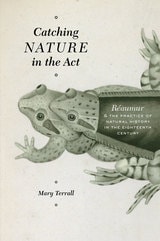
Catching Nature in the Act
Réaumur and the Practice of Natural History in the Eighteenth CenturyMary Terrall
University of Chicago Press, 2014
At the center of Terrall’s study is René-Antoine Ferchault de Réaumur (1683–1757)—the definitive authority on natural history in the middle decades of the eighteenth century—and his many correspondents, assistants, and collaborators. Through a close examination of Réaumur’s publications, papers, and letters, Terrall reconstructs the working relationships among these naturalists and shows how observing, collecting, and experimenting fit into their daily lives. Essential reading for historians of science and early modern Europe, Catching Nature in the Act defines and excavates a dynamic field of francophone natural history that has been inadequately mined and understood to date.
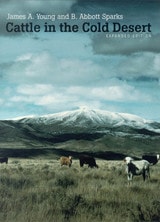
Cattle In The Cold Desert, Expanded Edition
James A. Young
University of Nevada Press, 2002
A sophisticated ecological analysis of ranching in northern Nevada featuring a new chapter and new epilogue by the authors.First published in 1985, Cattle in the Cold Desert has become a classic in the environmental history of the Great Basin, brilliantly combining a lively account of the development of the Great Basin grazing industry with a detailed scientific discussion of the ecology of its sagebrush/grassland plant communities. The volume traces the history of white settlement in the Great Basin from about 1860, along with the arrival of herds of cattle and sheep to exploit the forage resources of a pristine environment and, through the history of John Sparks, a pioneer cattleman, illustrates how the herdsmen interacted with the sagebrush/grasslands of the cold desert West. As the story unfolds on two levels—that of the herdsmen adapting their livelihood to the challenging conditions of the Great Basin's scanty forage, aridity, and fierce winters, and that of the fragile ecology of the desert plant communities responding to the presence of huge herds of livestock—we see the results of a grand experiment initiated by men willing to venture beyond the limits of accepted environmental potential to settle the Great Basin, as well as the often ruinous consequences of the introduction of domestic livestock into the plant communities of the region. The result is a remarkably balanced and insightful discussion of the grazing industry in the Intermountain West. This new paperback edition includes an additional chapter that addresses the impact of wild mustangs on the Great Basin rangelands, and an epilogue that discusses changes in rangeland management and in rangeland conditions, especially the impact of recent wildfires. As concern over the future of the Great Basin's unique rangeland environment and its principal agricultural industry grows, Cattle in the Cold Desert remains essential reading for everyone who cares about this underappreciated region of the American West.
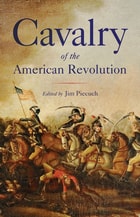
Cavalry of the American Revolution
Jim Piecuch
Westholme Publishing, 2012
Nine Historians and Writers Investigate the Role of Cavalry in the War for Independence
From the bitterly contested no-man’s-land between American and British lines in New York and New Jersey to the scorching pine forests of the South, the cavalry of both armies fought valiantly throughout the American Revolution. This volume explores several aspects of cavalry’s role in the war, which has often been overlooked in general histories. The topics covered include the development of the Continental Army’s cavalry arm, European influences on American cavalry training and tactics, accounts of several important cavalry raids and battles, and histories of mounted units such as the Continental Light Dragoons, American rangers in the South Carolina backcountry, and the British army’s Queen’s Rangers and “Black Dragoons,” the latter force composed entirely of former slaves. The essays also examine the roles of important commanders, including Brigadier General Francis “Swamp Fox” Marion, Lieutenant Colonel William Washington, and Colonel Anthony Walton White of the American army, and British cavalry leaders Banastre “Bloody Ban” Tarleton and John Graves Simcoe, as well as the American prisoners of war who switched sides and served in the “British Legion.” The authors of the essays include acclaimed military historians Gregory J. W. Urwin and Lawrence E. Babits. Readers with a general interest in military history, as well as those with more specific interests in the American Revolution or the history of the cavalry arm, and anyone who wishes to undertake further study of these subjects, will find the essays fresh, engaging, and informative.
@font-face { font-family: "Times New Roman";}@font-face { font-family: "HelveticaNeue-LightCond";}p.MsoNormal, li.MsoNormal, div.MsoNormal { margin: 0in 0in 0.0001pt; font-size: 12pt; font-family: "Times New Roman"; }table.MsoNormalTable { font-size: 10pt; font-family: "Times New Roman"; }div.Section1 { page: Section1; }
Contents
Gregory J. W. Urwin: The Continental Light Dragoons, 1776-1783
Lee F. McGee: European Influences on Continental Cavalry
John M. Hutchins: Cavalry Action at Poundridge, New York
Donald J. Gara: Cavalry Battles in New York and New Jersey
Scott A. Miskimon: Anthony Walton White: A Revolutionary Dragoon
Michael C. Scoggins: South Carolina’s Backcountry Rangers
Lawrence E. Babits and Joshua B. Howard: Continentals in Tarleton’s
British Legion
Charles F. Price: Cavalry Operations at Eutaw Springs
Jim Piecuch: The “Black Dragoons”
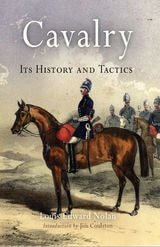
Cavalry
Its History and TacticsLouis Edward Nolan
Westholme Publishing, 2020
A New Edition of One of the Great Military Treatises of the Nineteenth Century
First published in 1853, Cavalry: Its History and Tactics had a major impact on military theorists and officers for decades—it was reprinted as a manual during the American Civil War—and its influence on European cavalry performance can be traced into World War I. It is an intelligent work which discusses the history and development of cavalry over the ages, advocates a program of reform for Britain’s horsed troops, and covers many aspects of equipment, training, drill, organization, formation, and battlefield tactics. The author, an experienced and gifted cavalryman, first served in the Austrian army, then joined the British army’s 15th Hussars in 1839, fought in India, and became the regimental riding master. Captain Nolan’s 1852 tour of European armies, wide reading in many languages, and service in Europe and India makes Cavalry an extraordinary statement on mid-nineteenth-century theory and practice.
As historian Jon Coulston explains in his introduction, Nolan was writing at the cusp of technological change, drawing upon the experiences of the Napoleonic Wars, continental suppression of the 1848 Revolutions, and Britain’s wars in India, but with an eye to firepower developments on the eve of the Crimean War. In 1854, at the Battle of Balaklava, Nolan rode with the written order which unleashed the Charge of the Light Brigade, an action in which he lost his life. Presented here as the first modern reprint, complete with a new introduction and further reading, Nolan’s Cavalry remains a hallmark of military history.
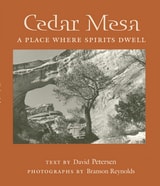
Cedar Mesa
A Place Where Spirits DwellText by David Petersen; Photographs by Branson Reynolds
University of Arizona Press, 2002
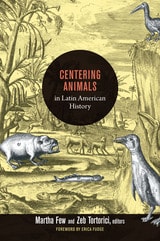
Centering Animals in Latin American History
Martha Few and Zeb Tortorici, eds.
Duke University Press, 2013
Contributors. Neel Ahuja, Lauren Derby, Regina Horta Duarte, Martha Few, Erica Fudge, León García Garagarza, Reinaldo Funes Monzote, Heather L. McCrea, John Soluri, Zeb Tortorici, Adam Warren, Neil L. Whitehead
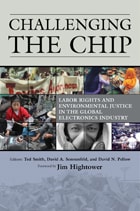
Challenging the Chip
Labor Rights and Environmental Justice in the Global Electronics Industryedited by Ted Smith, David A. Sonnenfeld and David Naguib Pellow, foreword by Jim Hightower
Temple University Press, 2006
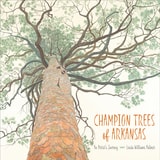
Champion Trees of Arkansas
An Artist's JourneyLinda Williams Palmer
University of Arkansas Press, 2016
In Champion Trees of Arkansas, Linda Williams Palmer explores the state’s largest trees of their species, registered with the Arkansas Forestry Commission as “champions.” Through her beautiful colored-pencil drawings, each magnificent tree is interpreted through the lens of season, location, history, and human connection.
Readers will get to know the cherrybark oak, rendered in fall colors, an avatar for the passing of seasons. The sugar maple, with its bare limbs and weather-beaten trunk, stands sentry over the headstones in a confederate cemetery. The 350-year-old white oak was once dubbed the Council Oak by Native Americans, and the post oak, cared for by generations of the same family, has its own story to tell.
Palmer travelled from Delta swamps to Ozark and Ouachita mountain ridges over a seven-year period to see and document the champions and to talk with property owners and others willing to share the stories of how these trees are beloved and protected by the community, and often entwined with its history. Champion Trees of Arkansas is sure to inspire art and nature lovers everywhere.
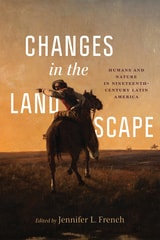
Changes in the Landscape
Humans and Nature in Nineteenth-Century Latin AmericaEdited by Jennifer L. French
Vanderbilt University Press, 2024
Ranging from the immediate aftermath of the Spanish‑American Wars of Independence (1810–1826) to the early twentieth century (1925), the volume’s essays cover a wide variety of genres and forms of cultural production, from José Hernández’s epic poem Martín Fierro to prose fiction, painting and photography, and the personal albums compiled by Spanish-American women. Individually and collectively, the essays engage with scientific writing as both a discourse of power and a source of potentially significant, even revelatory information about human and nonhuman nature. Changes in the Landscape enables readers to more fully understand the transition from colonial regimes to the ecocidal extractivism of the export boom (1870–1930) by drawing out and analyzing some of the cognitive resources and rhetorical strategies that were available to imagine, protest, or enact new norms and expectations regarding the relations between human and nonhuman life, be it the life of wildflowers, waterfalls, or Cuba’s Ciénaga de Zapata.

Changing Pacific Forests
Historical Perspectives on the Pacific Basin Forest EconomyJohn Dargavel and Richard P. Tucker, eds.
Duke University Press, 1992
Drawing on a 1991 conference sponsored by the Forest History Society and the International Union of Forestry Research Organizations held in Honolulu, these papers address a range of topics related to the changing Pacific forests, including the remnants of colonialism, the emergence of the Third World, people and resources caught in the middle of policy decisions, land management, national forests, and subsistence use of the forest by indigenous peoples. Essays also explore macroeconomic theories of international trade and the interests of the United States and the former Soviet Union in the economic health of the region. Changing Pacific Forests will be of interest to scholars of the economy and environment of the Pacific Basin as well as of land management and the history of land use in general.
Contributors. Charles S. Backman, Thomas R. Cox, John Dargavel, Elizabeth Flint, Lim Hin Fui, G. R. Henning, Kenneth E. Jackson, Hiroaki Kakizawa, Nicholas K. Menzies, Andrew Price, John F. Richards, Jr., M. M. Roche, I. Gustin M. Tantra, Conrad Totman, Richard P. Tucker, Thomas R. Waggener
Changing Tropical Forests
Historical Perspectives on Today’s Challenges in Central and South AmericaHarold K. Steen and Richard P. Tucker, eds.
Duke University Press, 1991
Contributors. William Balée, James R. Barborak, Peter Boomgaard, Larissa V. Brown, Gerardo Budowski, John Dargavel, Warren Dean, Silvia del Amo R., Elizabeth Graham, J. Régis Guillaumon, Rhena Hoffmann, Sally P. Horn, Sebastião Kengen, Herman W. Konrad, Mary Pamela Lehmann, Robert D. Leier, Murdo J. MacLeod, M. Patricia Marchak, Elinor G. K. Melville, David M. Pendergast, Susan M. Pierce, Leslie E. Sponsel, Richard P. Tucker, Terry West
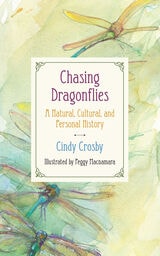
Chasing Dragonflies
A Natural, Cultural, and Personal HistoryCindy Crosby; Illustrations by Peggy Macnamara
Northwestern University Press, 2020
Chasing Dragonflies: A Natural, Cultural, and Personal History is an engaging, beautifully illustrated introduction to these remarkable insects. Drawing on her experiences as a natural history instructor, dragonfly monitor, cancer survivor, grandmother, and steward, Crosby tells the stories of dragonflies: their roles in poetry and art, their fascinating sex life—unique within the animal kingdom—and their evolution from dark-water dwellers to denizens of the air. We follow Crosby and other citizen-scientists into the prairies, wetlands, and woodlands of the Midwest, where they observe the environment and chronicle dragonfly populations and migration to decipher critical clues about our changing waterways and climate.
Woven throughout are personal stories: reflections on the author’s cancer diagnosis and recovery, change, loss, aging, family, joy, and discovering what it means to be at home in the natural world. Crosby draws an intimate portrait of a landscape teeming with variety and mystery, one that deserves our attention and conservation. As warm as it is informative, this book will interest gardeners, readers of literary nonfiction, and anyone intrigued by transformation, whether in nature or our personal lives.
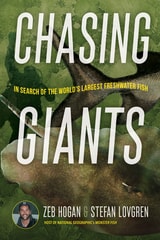
Chasing Giants
In Search of the World's Largest Freshwater FishZeb Hogan
University of Nevada Press, 2023
On May 1, 2005, a Thai fisherman caught a truly monstrous Mekong giant catfish. At 646 pounds, it captured the world’s attention, and with awe and wonder, it was deemed the largest freshwater fish on record. There was no denying its size, but when biologist and research associate professor Hogan saw a photo of the fish, he wondered if it really was the biggest in the world. To his surprise, no one had systematically sought to answer the question: Which of the giant freshwater species really was the largest?
Seeking to answer that question has brought Hogan face to face with massive arapaima and piranha in the Amazon, alligator gar in Texas, pigeon-eating wels catfish in France, stingrays in Cambodia, and the gnarled-toothed sawfish in Australia. Part of his scientific adventure has been captured on Monster Fish, and Hogan now tells the full story of his 25-year quest to understand the mysteries of some of the oldest, largest, most bizarre creatures on Earth.
The fate of these giant fish motivates Hogan to understand the various species he studies. The megafish’s numbers are dwindling, and the majority of them face extinction. In this book, he teams up with award-winning journalist Stefan Lovgren to tell, for the first time, the remarkable and troubling story of the world’s largest freshwater fish. It is a story that stretches across the globe, chronicling a race against the clock to find and protect these ancient leviathans before they disappear forever.
Chasing Giants: In Search of the World’s Largest Freshwater Fish combines science, adventure, and wonder to provide insights into the key role the massive fish of our lakes and rivers play in our past, present, and future.
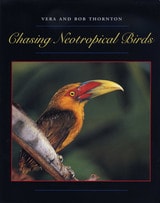
Chasing Neotropical Birds
Text by Bob Thornton, Photography by Vera and Bob Thornton
University of Texas Press, 2005
From Belize to Brazil, the forests of the American neotropics are home to an astonishing array of birds—over 3,700 different species, or nearly 40 percent of all the birds on earth. Because of this overwhelming abundance, birders come from all over the world to try to catch glimpses of species that can be found nowhere else, such as toucans and antbirds, motmots and manakins, bellbirds and cocks-of-the-rock, and practically all of the planet's hummingbirds. Two such birding enthusiasts are Vera and Bob Thornton, who have spent fifteen years photographing these special and exotic birds in the rainforests of eleven different countries of Central and South America. In this book, you'll find more than a hundred spectacular color photographs they took during their travels, along with a highly entertaining account of their adventures—and misadventures—in chasing these exotic neotropicals.
The birds pictured here are among the Thorntons' personal favorites—birds that, in their words, "either dazzled us with their beauty, or charmed us by their behavior, or, in a few cases, simply challenged us by the mystique of their rarity." This latter category includes such elusive and sought-after birds as the Black-crowned Antpitta, the Zigzag Heron, the Rufous-vented Ground-Cuckoo, the Bare-necked Umbrellabird, and the monkey-eating Harpy Eagle. In the accompanying text, Bob Thornton engagingly describes the challenges as well as the magic of negotiating the neotropical rainforests in search of colorful birds to photograph. For those who would like to follow in the Thorntons' footsteps, there are also helpful tips about photographic gear and techniques, preferred places to see the birds, lodging, and guides. For everyone who enjoys excellent nature photography, Chasing Neotropical Birds is a must-have volume on the coffee table or in the library.
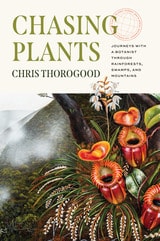
Chasing Plants
Journeys with a Botanist through Rainforests, Swamps, and MountainsChris Thorogood
University of Chicago Press, 2022
From an acclaimed botanist and artist, a thrilling and beautifully illustrated expedition around the globe in search of the world’s most extraordinary plants.
After making a strange discovery on a childhood trip to Ikea—a stand of sap-sucking, leafless broomrapes, stealing nutrients from their neighbors’ roots—Chris Thorogood dreamed of becoming a botanist and would stop at nothing to feed his growing addiction to plants. In his hair-raising adventures across Europe, Africa, the Middle East, and Asia, Thorogood treads a death-defying path over cliffs, up erupting volcanoes, through typhoons, and out into the very heart of the world’s vast, green wilderness. Along the way, he encounters pitcher plants, irises, and orchids more heart-piercingly beautiful than could ever be imagined.
But with Thorogood as our guide in Chasing Plants, we not only imagine: we see. An internationally acclaimed botanical illustrator, Thorogood conjures his adventures spent seed-collecting and conserving plants around the world back to life in his electric paintings, which feature throughout the book. They bring plants out of the shadows, challenging us to see their intrigue and their character, and helping us to understand why plant species must be protected. To join Thorogood in his wild adventures is to be cast under his green spell: readers will never think of plants the same way again.
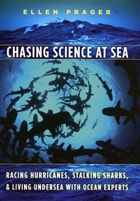
Chasing Science at Sea
Racing Hurricanes, Stalking Sharks, and Living Undersea with Ocean ExpertsEllen Prager
University of Chicago Press, 2008
With passion and wit, well-known marine scientist Ellen Prager shares her stories as well as those of her colleagues, revealing that in the field ingenuity and a good sense of humor are as essential as water, sunblock, and GPS. Serendipity is invaluable, and while collecting data is the goal, sometimes just getting back to shore means success. But despite the physical hardship and emotional duress that come with the work, optimism and adventure prompt a particularly hardy species of scientist to return again and again to the sea.
Filled with firsthand accounts of the challenges and triumphs of dealing with the extreme forces of nature and the unpredictable world of the ocean, Chasing Science at Sea is a unique glimpse below the water line at what it is like and why it is important to study, explore, and spend time in one of our planet’s most fascinating and foreign environments.
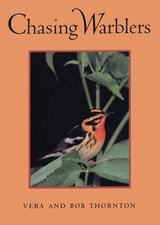
Chasing Warblers
By Vera and Bob Thornton
University of Texas Press, 1999
Honorable Mention, Southern Books Competition, 1999
Known to many as "the butterflies of the bird world," wood warblers allure even the most experienced and discriminating birders. Their annual migrations to and from nesting areas in the United States and Canada draw thousands of birders to places such as High Island, Texas; Crane Creek, Ohio; and Point Pelee, Ontario, where warblers stop to rest and feed during the long journey. There birders have a chance to see and photograph these colorful, elusive songbirds whose quick, darting flight among high branches and thick cover makes them some of the most challenging birds to observe and identify.
In this entertaining, beautifully illustrated book, Bob Thornton recounts his and Vera Thornton's cross-continent adventures in finding and photographing all 52 species of wood warblers that nest in the United States. In addition to describing where and how they photographed each species, Thornton tells marvelous stories of the colorful characters they encountered along the way. He also touches on the current human threats to wood warblers that come from loss of habitat.
Cheatgrass
Fire and Forage on the RangeJames A. Young
University of Nevada Press, 2009
Cheatgrass (Bromus tectorum) is an exotic species that appeared in North America in the late nineteenth century and has since become a dominant plant in the arid and semiarid rangelands between the Sierra Nevadas, Cascades, and Rocky Mountains. It is the first grass to appear after the region's long, cold winters and thus has become an important forage plant for livestock and wildlife. Cheatgrass is also a major environmental hazard in the sagebrush plant communities where it has established itself, providing highly combustible fuel for the wildfires that have ravaged so much of the Great Basin since the mid-twentieth century. Cheatgrass is the first comprehensive study of this highly invasive plant that has changed the ecology of millions of acres of western rangeland. Authors Young and Clements have researched the biology and impact of cheatgrass for four decades. Their book addresses the subject from several perspectives: the history of the invasion; the origins and biology of cheatgrass; its genetic variations, breeding systems, and patterns of distribution; its impact on grazing management; and the role it plays, both positive and negative, in the lives of high desert wildlife.
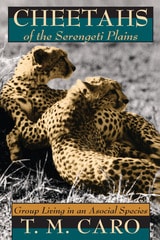
Cheetahs of the Serengeti Plains
Group Living in an Asocial SpeciesT. M. Caro
University of Chicago Press, 1994
Why do cheetah cubs stay with their mother for a full year after weaning? Why do adolescents remain in groups? Why do adult males live in permanent associations with each other? Why do adult females live alone? Through observations on the costs and benefits of group living, Caro offers new insight into the complex behavior of this extraordinary species. For example, contrary to common belief about cooperative hunting in large carnivores, he shows that neither adolescents nor adult males benefit from hunting in groups.
With many surprising findings, and through comparisons with other cat species, Caro enriches our understanding of the evolution of social behavior and offers new perspectives on conservation efforts to save this charismatic and endangered carnivore.
Chemical Alert!
A Community Action HandbookEdited by Marvin S. Legator and Sabrina F. Strawn
University of Texas Press, 1993
In the 1978 Love Canal toxic waste crisis, concerned citizens "did a far better job of evaluating the health of the community than did the professionals of the New York Health Department," asserts Marvin Legator. In Chemical Alert! A Community Action Handbook, he and coeditor Sabrina Strawn offer a step-by-step guide that can be used by any lay person or citizens' group to determine whether a health risk exists in their area.
Writing for the general reader with no scientific expertise, environmental, medical, and legal professionals instruct communities on the organizational and investigative techniques that will produce a valid, scientific case study. With these tools, citizens living near petrochemical plants or waste disposal areas—or who may have simply noticed a high incidence of certain health problems in their community—can determine for themselves whether a problem really exists and seek remediation. Given the reality that government agencies often lack the resources—or the will—to detect health hazards before they affect a community, an informed citizenry should be its own best environmental watchdog.

Chemical Consequences
Environmental Mutagens, Scientist Activism, and the Rise of Genetic ToxicologyFrickel, Scott
Rutgers University Press, 2004
Hereis the first historical and sociological account of the formation of an interdisciplinary science known as genetic toxicology, and of the scientists’ social movement that created it.
After research geneticists discovered that synthetic chemicals were capable of changing the genetic structure of living organisms, scientists began to explore how these chemicals affected gene structure and function. In the late 1960s, a small group of biologists became concerned that chemical mutagens represented a serious and possibly global environmental threat.
Genetic toxicology is nurtured as much by public culture as by professional practices, reflecting the interplay of genetics research and environmental politics. Drawing on a wealth of resources, Scott Frickel examines the creation of this field through the lens of social movement theory. He reveals how a committed group of scientist-activists transformed chemical mutagens into environmental problems, mobilized existing research networks, recruited scientists and politicians, secured financial resources, and developed new ways of acquiring knowledge. The result is a book that vividly illustrates how science and activism were interwoven to create a discipline that remains a defining feature of environmental health science.
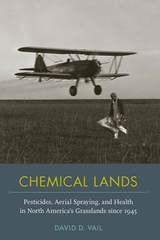
Chemical Lands
Pesticides, Aerial Spraying, and Health in North America’s Grasslands since 1945David D. Vail
University of Alabama Press, 2018
An exploration of the elaborate relationship between farmers, aerial sprayers, agriculturalists, crop pests, chemicals, and the environment.
The controversies in the 1960s and 1970s that swirled around indiscriminate use of agricultural chemicals—their long-term ecological harm versus food production benefits—were sparked and clarified by biologist Rachel Carson’s Silent Spring (1962). This seminal publication challenged long-held assumptions concerning the industrial might of American agriculture while sounding an alarm for the damaging persistence of pesticides, especially chlorinated hydrocarbons such as DDT, in the larger environment.
In Chemical Lands: Pesticides, Aerial Spraying, and Health in North America’s Grasslands since 1945 David D. Vail shows, however, that a distinctly regional view of agricultural health evolved. His analysis reveals a particularly strong ethic in the North American grasslands where practitioners sought to understand and deploy insecticides and herbicides by designing local scientific experiments, engineering more precise aircraft sprayers, developing more narrowly specific chemicals, and planting targeted test crops. Their efforts to link the science of toxicology with environmental health reveal how the practitioners of pesticides evaluated potential hazards in the agricultural landscape while recognizing the production benefits of controlled spraying.
Chemical Lands adds to a growing list of books on toxins in the American landscape. This study provides a unique Grasslands perspective of the Ag pilots, weed scientists, and farmers who struggled to navigate novel technologies for spray planes and in the development of new herbicides/insecticides while striving to manage and mitigate threats to human health and the environment.
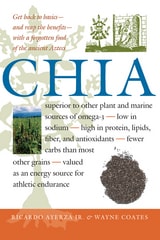
Chia
Rediscovering a Forgotten Crop of the AztecsRicardo Ayerza Jr. and Wayne Coates
University of Arizona Press, 2005
In this book, agronomist Ricardo Ayerza and agricultural engineer Wayne Coates trace the long and fascinating history of chia’s use, then reveal the scientific story of the plant and its modern potential. They compare fatty acid profiles of chia with our other major sources—fish oil, flaxseed, and marine algae—and provide evidence that chia is superior in many ways.
Here are just some of the benefits that chia provides:
- chia has the highest known percentage of alpha-linolenic acid, and the highest combined alpha-linolenic and linoleic fatty acid percentage of all crops
- chia has more protein, lipids, energy, and fiber—but fewer carbs—than rice, barley, oats, wheat, or corn—and its protein is gluten-free
- chia is an excellent source of calcium, phosphorus, magnesium, potassium, iron, zinc, and copper
- chia is low in sodium: salmon has 78 times as much, tuna 237 times as much
- chia exhibits no evidence of allergic response, even in individuals with peanut and tree-nut allergies
- chia doesn’t give off a “fishy flavor,” unlike some other sources of omega-3 fatty acid
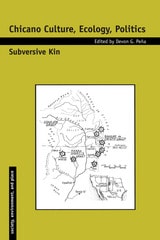
Chicano Culture, Ecology, Politics
Subversive KinDevon G. Peña
University of Arizona Press, 1998
Employing a variety of genres ranging from poetry to autobiography to theoretical and empirical essays, the voices in this collection speak to the most significant issues of environmentalism and social justice, recognizing throughout the need for a pluralism of Chicana/o philosophies. The contributors provide an excellent basis for understanding how multiple Chicana/o views on the environment play out in the context of dominant social, political and economic views. Chicano Culture, Ecology, Politics examines a number of Chicana/o ecological perspectives. How can the ethics of reciprocity present in Chicana/o agropastoral life be protected and applied on a broader scale? How can the dominant society, whose economic structure is invested in "placeless mobility," take note of the harm caused to land-based cultures, take responsibility for it, and take heed before it is too late? Will the larger society be "ecologically housebroken" before it destroys its home?
Grounded in actual political struggles waged by Chicana/o communities over issues of environmental destruction, cultural genocide, and socioeconomic domination, this volume provides an important series of snapshots of Chicana/o history. Chicano Culture, Ecology, Politics illuminates the bridges that exist—and must be understood—between race, ethnicity, class, gender, politics, and ecology.
CONTENTS
Part 1: IndoHispano Land Ethics
Los Animalitos: Culture, Ecology, and the Politics of Place in the Upper R¡o Grande, Devon G. Peña
Social Action Research, Bioregionalism, and the Upper Río Grande, Rubén O. Martínez
Notes on (Home)Land Ethics: Ideas, Values, and the Land, Reyes García
Part 2: Environmental History and Ecological Politics
Ecological Legitimacy and Cultural Essentialism: Hispano Grazing in Northern New Mexico, Laura Pulido
The Capitalist Tool, the Lawless, and the Violent: A Critique of Recent Southwestern Environmental History, Devon G. Peña and Rubén O. Martínez
Ecofeminism and Chicano Environmental Struggles: Bridges across Gender and Race, Gwyn Kirk
Philosophy Meets Practice: A Critique of Ecofeminism through the Voices of Three Chicana Activists, Malia Davis
Part 3: Alternatives to Destruction
The Pasture Poacher (a poem), Joseph C. Gallegos
Acequia Tales: Stories from a Chicano Centennial Farm, Joseph C. Gallegos
A Gold Mine, an Orchard, and an Eleventh Commandment, Devon G. Peña
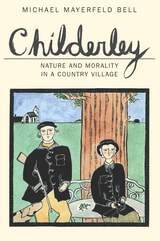
Childerley
Nature and Morality in a Country VillageMichael Mayerfeld Bell
University of Chicago Press, 1994
Why do these villagers find country living so compelling? Why, despite our urban lives, do so many of us strive for a home in the country, closer to nature? Michael Bell suggests that we are looking for a natural conscience: an unshakeable source of identity and moral value that is free from social interests—comfort and solace and a grounding of self in a world of conflict and change.
During his interviews with over a hundred of Childerley's 475 residents—both working-class and professional—Bell heard time and again of their desire to be "country people" and of their anxiety over their class identities. Even though they often knowingly participate in class discrimination themselves—and see their neighbors doing the same—most Childerleyans feel a deep moral ambivalence over class. Bell argues they find in class and its conflicts the restraints and workings of social interests and feel that by living "close to nature" they have an alternative: the identity of a "country person," a "villager that the natural consicence gives."
Yet there are clear parallels between the ways in which the villagers conceive of nature and of social life, and Bell traces these parallels across Childerleyans' perspectives on class, gender, and politics. Where conventional theories would suggest that what the villagers see as nature is a reflection of how they see society, and that the natural conscience must be a product of social interests, Bell argues that ideological processes are more complex. Childerleyans' understandings of society and of the natural conscience shape each other, says Bell, through a largely intuitive process he calls resonance.
For anyone who has ever lived in the countryside or considered doing so, this book is not to be missed. It will also be of particular interest to scholars of British studies and the sociology of knowledge and culture, and to those who work on problems of environment, community, class, and rural life.
"[An] exemplary piece of fieldwork. . . . These gentle conclusions . . . reminds us (when we most need reminding) of the skillful ethnographer's enduring capacity to make the everyday seem truly extraordinary."—Laurie Taylor, New Statesman & Society
"Bell's achievement, and his perceptions, are impressive."—J.W.M. Thompson, London Times
"Races along with all the gossipy compulsion of a blockbuster."—Frances Hardy, Daily Mill
"I believe this view of how people relate to the different domains of their experience is absolutely right. . . . The reader, this ready anyway, finishes Childerley with the feeling that she has just returned from visiting a remote Hampshire village and has learned something, not just about that place, but about human social life lived in other places and lived through place itself."—Wendy Griswold, American Journal of Sociology

Chimpanzees in Context
A Comparative Perspective on Chimpanzee Behavior, Cognition, Conservation, and WelfareEdited by Lydia M. Hopper and Stephen R. Ross
University of Chicago Press, 2020
After a foreword by Jane Goodall, the book features sections that examine chimpanzee life histories and developmental milestones, behavior, methods of study, animal communication, cooperation, communication, and tool use. The book ends with chapters that consider how we can apply contemporary knowledge of chimpanzees to enhance their care and conservation. Collectively, these chapters remind us of the importance of considering the social, ecological, and cognitive context of chimpanzee behavior, and how these contexts shape our comprehension of chimpanzees. Only by leveraging these powerful perspectives do we stand a chance at improving how we understand, care for, and protect this species.
China Lake
A Journey into the Contradicted Heart of a Global Climate CatastropheBarret Baumgart
University of Iowa Press, 2017
Stalking the fringes of Internet conspiracy, speculative science, and contemporary archaeology, Baumgart weaves memoir, military history, and investigative journalism in a dizzying journey that carries him from the cornfields of Iowa to drought-riddled California, from the Vietnam jungle to the caves of prehistoric Europe and eventually the walls of the US Capitol, the sparkling white hallways of the Pentagon, and straight into the contradicted heart of a worldwide climate emergency.
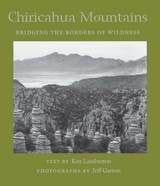
Chiricahua Mountains
Bridging the Borders of WildnessText by Ken Lamberton; Photographs by Jeff Garton
University of Arizona Press, 2003
Lamberton shares insights about the geology, habitats, and diversity of wildlife in a place of such isolation that species must either adapt or become extinct. The Chiricahuas are one link in a chain of mountains connecting the Rockies to the Sierra Madre Occidental in Mexico, and some Madrean species reach the northernmost extension of their ranges here: birds like sulphur-bellied flycatchers, mammals like jaguarundis, and trees like the Apache pine. But this is not an untraveled wilderness. We learn why the Chiricahuas are so popular with birders, who flock to these mountains from around the world in the hopes of spotting some of the nearly four hundred avian species found here. We also learn something of the Chiricahua's rich human culture, from Apache warriors to European settlers.
Gracing the text are more than a dozen black-and-white photographs by Jeff Garton that offer views of the Chiricahuas different from those usually found in tourist brochures: landscapes and riparian settings, rock formations and plant studies that give readers a lasting impression of the beauty and tranquility of this wilderness. Together words and images convey an intimate view of one of the Southwest's most exotic locations—stronghold, paradise, and everlasting island in the vast and rolling desert.
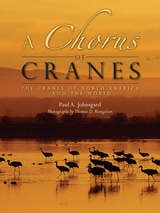
Chorus of Cranes
The Cranes of North America and the WorldPaul A. Johnsgard, Photographs by Thomas D. Mangelsen
University Press of Colorado, 2015
“Since long before medieval times cranes have been considered messengers of the gods, calling annually from on high to remind humans below of the passing years and of their own mortality. Now it is up to humans to take responsibility for controlling our own fate—and also to cry out to protect not only cranes but all the other wonderful creatures that share our increasingly fragile and threatened planetary ecosystem with us."
—Paul A. Johnsgard, from the acknowledgments
Accompanied by the stunning photography of Thomas D. Mangelsen, A Chorus of Cranes details the natural history, biology, and conservation issues surrounding the abundant sandhill crane and the endangered whooping crane in North America. Author Paul A. Johnsgard, one of the leading authorities on cranes and crane biology, describes the fascinating social behaviors, beautiful natural habitats, and grueling seasonal migrations that have stirred the hearts of people as far back as medieval times and garnered the crane a place in folklore and mythology across continents.
Johnsgard has substantially updated and significantly expanded his 1991 work Crane Music, incorporating new information on the biology and status of these two North American cranes and providing abbreviated summaries on the other thirteen crane species of the world. The stories of these birds and their contrasting fates provide an instructive and moving history of bird conservation in North America. A Chorus of Cranes is a gorgeous and invaluable resource for crane enthusiasts, birders, natural historians, and conservationists alike.
The University Press of Colorado gratefully acknowledges the generous support of the Iain Nicholson Audubon Center at Rowe Sanctuary, Audubon Nebraska, Ron and Judy Parks, Wagon Tongue Creek Farm, and the Trull Foundation toward the publication of this book.