Results by title
88 books match the query 'Population' and 5 start with c
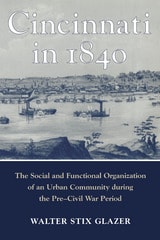
CINCINNATI IN 1840
The Social and Functional Organization of an Urban Community during the Pre-Civil War PeriodWALTER STIX GLAZER
The Ohio State University Press, 1999
During the pre-Civil War period, Cincinnati was the fastest growing and, according to many contemporary observers, most interesting city in America. This classic study, completed in the early 1970s, focuses on the community in 1840 to explain its success but also to suggest some broader patterns in the city’s development and American urbanization.
Using local census records, city directories, tax lists, newspapers, and other contemporary sources, Walter Stix Glazer describes the demographic, social, economic, and political structure of the adult white male population in 1840 and then develops a unified model of its social and functional organizations. This analysis (based on computerized records of thousands of Cincinnatians) also documents some broader trends between 1820 and 1860: the volatility of Cincinnati’s labor force, the career patterns of its homeowners, and the leadership of a small group of successful citizens active in a broad range of voluntary associations.
This statistical analysis is complemented with sections of traditional historical narrative and biographical profiles that illustrate the general themes of the book. Glazer argues that Cincinnati’s success up to 1840 was due to a unified booster vision and a cohesive community elite that gradually broke down, as a result of ethnic and economic division, over the next twenty years. This story has broader implications in terms of the character of Jacksonian democracy and American urbanization.
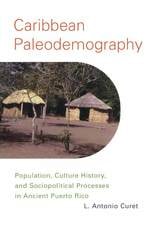
Caribbean Paleodemography
Population, Culture History, and Sociopolitical Processes in Ancient Puerto RicoL. Antonio Curet
University of Alabama Press, 2005
Unearthing the demographic past of the Caribbean to illuminate its cultural origins and transformations.
According to the European chronicles, at the time of contact, the Greater Antilles were inhabited by the Taino or Arawak Indians, who were organized in hierarchical societies. Since its inception Caribbean archaeology has used population as an important variable in explaining many social, political, and economic processes such as migration, changes in subsistence systems, and the development of institutionalized social stratification.
In Caribbean Paleodemography, L. Antonio Curet argues that population has been used casually by Caribbean archaeologists and proposes more rigorous and promising ways in which demographic factors can be incorporated in our modeling of past human behavior. He analyzes a number of demographic issues in island archaeology at various levels of analysis, including inter- and intra-island migration, carrying capacity, population structures, variables in prehistory, cultural changes, and the relationship with material culture and social development. With this work, Curet brings together the diverse theories on Greater Antilles island populations and the social and political forces governing their growth and migration.

Casas Grandes and Its Hinterlands
Prehistoric Regional Organization in Northwest MexicoMichael E. Whalen and Paul E. Minnis
University of Arizona Press, 2001
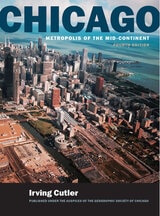
Chicago
Metropolis of the Mid-Continent, 4th EditionIrving Cutler. Foreword by James F. Marran
Southern Illinois University Press, 2006
Chicago: Metropolis of the Mid-Continent provides a comprehensive portrayal of the growth and development of Chicago from the mudhole of the prairie to today’s world-class city. This completely revised fourth edition skillfully weaves together the geography, history, economy, and culture of the city and its suburbs with a special emphasis on the role of the many ethnic and racial groups that comprise the “real Chicago” of its neighborhoods. Cutler demonstrates how the geography of “Chicagoland” and the influx of a diverse population spurred transportation, industrial technology, the economy, and sporadic planning to foster rapid urban growth, which brought both great progress and severe problems.
Through insightful analysis, Cutler also traces the demographic and societal changes to Chicago, critically examining such problems as the environment, education, racial tension, crime, welfare, housing, employment, and transportation. Richly illustrated with nearly three hundred drawings, photos, maps, and tables, the volume includes six appendices with sections dedicated to Chicago facts, population growth and income data, weather and climate, significant dates, and historic sites.
Costing the Earth?
Perspectives on Sustainable DevelopmentBernd Meyer
Haus Publishing, 2009