123 books match the query 'Religious life' and 9 start with c
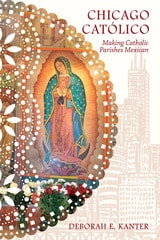
cover of Chicago Católico: Making Catholic Parishes Mexican

Chicago Católico

Making Catholic Parishes Mexican

Deborah E. Kanter

University of Illinois Press, 2020

Today, over one hundred Chicago-area Catholic churches offer Spanish language mass to congregants. How did the city's Mexican population, contained in just two parishes prior to 1960, come to reshape dozens of parishes and neighborhoods?

Deborah E. Kanter tells the story of neighborhood change and rebirth in Chicago's Mexican American communities. She unveils a vibrant history of Mexican American and Mexican immigrant relations as remembered by laity and clergy, schoolchildren and their female religious teachers, parish athletes and coaches, European American neighbors, and from the immigrant women who organized as guadalupanas and their husbands who took part in the Holy Name Society. Kanter shows how the newly arrived mixed memories of home into learning the ways of Chicago to create new identities. In an ever-evolving city, Mexican immigrants and Mexican Americans’ fierce devotion to their churches transformed neighborhoods such as Pilsen.

The first-ever study of Mexican-descent Catholicism in the city, Chicago Católico illuminates a previously unexplored facet of the urban past and provides present-day lessons for American communities undergoing ethnic integration and succession.
[more]
cover of Children in New Religions

Children in New Religions

Palmer, Susan J

Rutgers University Press, 1999
The late 1960s and early 1970s constituted a remarkable period for spiritual experimentation and for the proliferation of new religious groups. Now the children born into these religions have come of age. While their parents made the decision as adults to embrace alternative religious practices, the children have been raised with a very different orientation toward the larger society. While they take their religious communities for granted, many of these children gaze with curiosity at the surrounding secular world which their parents, not they, chose to reject. The contributors to this volume examine children from many different alternative religious movements worldwide, including The Family, Hare Krishna, Wiccans, and Pagans, Messianic Communities, and the Rajneesh (Osho) Movement. The essays explore two general questions: 1) What impact does the presence of children have on a new religion's lifestyle and chance of surviving into the future? 2) Is child abuse more likely to occur in unconventional religions, or are children born into them, the 'new' religions have grown up and have become an important and rapidly changing social force that we cannot reasonably dismiss or wisely ignore
[more]
cover of Christian Converts and Social Protests in Meiji Japan

Christian Converts and Social Protests in Meiji Japan

Irwin Scheiner

University of Michigan Press, 2002
Nowhere has there been a discussion of the confusion necessarily generated by the rapidity of the change or of the agony created in the lives of many whose attitudes, expectations, and even success depended on the continuance of now abolished institutions. Historians have ignored the settled conditions of most samurai and instead concentrated on the study of the minority of activist samurai leaders who, with the backing of only a few Han (feudal domains) sought to overthrow the old order and whose success in doing so has made the study of the modernization of Japan the prime concern of historians. The history of the Meiji period may have been an overall political and industrial success story, but for a fuller understanding of the conditions of that success it is also necessary to understand "what it was really like" for the members of the old elite to be estranged from the proponents of revolution and what many members did to assure their own social and psychological position in a world they had not expected.
In this book the author attempts to show that the impact of the Meiji Restoration destroyed the meaningfulness of the Confucian doctrine for these declasse samurai. Through Christianity, the samurai attempted to revive their status in society by finding a doctrine that offered a meaningful path to power. But in doing so, they had to accept a new theory of social relations. Ultimately, as the convert's understanding of society became totally informed by the Christian doctrine, they accepted a transcendent authority that brought them into conflict with society about them. Therefore, to understand the development of a Christian opposition in Meiji society we must begin with the conversion experience itself. [intro]
[more]
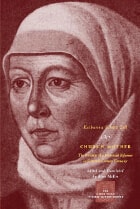
cover of Church Mother: The Writings of a Protestant Reformer in Sixteenth-Century Germany

Church Mother

The Writings of a Protestant Reformer in Sixteenth-Century Germany

Katharina Schütz Zell

University of Chicago Press, 2006

Imbued with character and independence, strength and articulateness, humor and conviction, abundant biblical knowledge and intense compassion, Katharina Schütz Zell (1498–1562) was an outspoken religious reformer in sixteenth-century Germany who campaigned for the right of clergy to marry and the responsibility of lay people—women as well as men—to proclaim the Gospel. As one of the first and most daring models of the pastor’s wife in the Protestant Reformation, Schütz Zell demonstrated that she could be an equal partner in marriage; she was for many years a respected, if unofficial, mother of the established church of Strasbourg in an age when ecclesiastical leadership was dominated by men.

Though a commoner, Schütz Zell participated actively in public life and wrote prolifically, including letters of consolation, devotional writings, biblical meditations, catechetical instructions, a sermon, and lengthy polemical exchanges with male theologians. The complete translations of her extant publications, except for her longest, are collected here in Church Mother, offering modern readers a rare opportunity to understand the important work of women in the formation of the early Protestant church.
[more]
cover of Circling Faith: Southern Women on Spirituality

Circling Faith

Southern Women on Spirituality

Wendy Reed

University of Alabama Press, 2012
Circling Faith is a collection of essays by southern women that encompasses spirituality and the experience of winding through the religiously charged environment of the American South.
 
Mary Karr, in “Facing Altars,” describes how the consolation she found in poetry directed her to a similar solace in prayer. In “Chiaroscuro: Shimmer and Shadow,” Susan Cushman recounts how her dissatisfaction with a Presbyterian upbringing led her to hold her own worship services at home and eventually to join the Eastern Orthodox Church. “Magic” by Amy Blackmarr depicts a religious practice that occurs wholly outside of any formal setting—she recognizes places, such as a fishing shack in south Georgia, and things, such as crystal Cherokee earrings, as reminders that God exists everywhere and that a Great Comforter is always present. In “The Only Jews in Town,” Stella Suberman gives her account of growing up as a religious minority in Tennessee, connecting her story to a larger narrative of Eastern European Jews who moved away from the Northeast, often to found and run “Jew stores” in midwestern and southern towns.  Alice Walker, in an interview with Valerie Reiss titled “Alice Walker Calls God ‘Mama,’” relates her dynamic relationship with her God, which includes meditation and yoga, and explains how she views the role of faith in her work, including her novel The Color Purple.  These essays showcase the large spectrum of spirituality that abides in the South, as well as the equally large spectrum of individual women who hold these faiths.
 
 
[more]
cover of Cognitive Behavioral Therapy for Christians with Depression: A Practical Tool-Based Primer

Cognitive Behavioral Therapy for Christians with Depression

A Practical Tool-Based Primer

Michelle Pearce

Templeton Press, 2016

Does religion belong in psychotherapy?
 
For anyone in the helping profession, whether as mental health professional or religious leader, this question is bound to arise. Many mental health professionals feel uncomfortable discussing religion. In contrast, many religious leaders feel uncomfortable referring their congregants to professionals who do not know their faith or intent to engage with it.
 
And yet Michelle Pearce, PhD, assistant professor and clinical psychologist at the Center for Integrative Medicine at the University of Maryland, argues that if religion is essential to a client, religion will be a part of psychotherapy, whether it is discussed or not. Clients cannot check their values at the door more than the professionals who treat them.
 
To Pearce, the question isn’t really, “does religion belong?” but rather, “how can mental health professionals help their religious clients engage with and use their faith as a healing resource in psychotherapy?”
 
Cognitive Behavioral Therapy for Christian Clientswith Depression is the answer to that question, as the book’s purpose is to educate mental health professionals and pastoral counselors about religion’s role in therapy, as well as equip them to discuss religious issues and use evidence-based, religiously-integrated tools with Christian clients experiencing depression.
 
In this book, readers will find the following resources in an easy-to-use format: 
  • An overview of the scientific benefits of integrating clients’ religious  beliefs and practices in psychotherapy
  • An organizing therapeutic approach for doing Christian CBT
  • Seven tools specific to Christian CBT to treat depression
  • Suggested dialogue for therapists to introduce concepts and tools
  • Skill-building activity worksheets for clients
  • Clinical examples of Christian CBT and the seven tools in action
Practitioners will learn the helpful (and sometimes not so beneficial) role a person’s Christian faith can play in psychotherapy. They will be equipped to discuss religious issues and use religiously-integrated tools in their work. At the same time, clergy will learn how Christianity can be integrated into an evidence-based secular mental health treatment for depression, which is sure to increase their comfort level for making referrals to mental health practitioners who provide this form of treatment.
 
Cognitive Behavioral Therapy for Christian Clients with Depression is a practical guide for mental health professionals and pastoral counselors who want to learn how to use Christian-specific CBT tools to treat depression in their Christian clients.
 
[more]
cover of Coming of Age in Jewish America: Bar and Bat Mitzvah Reinterpreted

Coming of Age in Jewish America

Bar and Bat Mitzvah Reinterpreted

Patricia Keer Munro

Rutgers University Press, 2016
The Jewish practice of bar mitzvah dates back to the twelfth century, but this ancient cultural ritual has changed radically since then, evolving with the times and adapting to local conditions. For many Jewish-American families, a child’s bar mitzvah or bat mitzvah is both a major social event and a symbolic means of asserting the family’s ongoing connection to the core values of Judaism. Coming of Age in Jewish America takes an inside look at bar and bat mitzvahs in the twenty-first century, examining how the practices have continued to morph and exploring how they serve as a sometimes shaky bridge between the values of contemporary American culture and Judaic tradition.
 
Interviewing over 200 individuals involved in bar and bat mitzvah ceremonies, from family members to religious educators to rabbis, Patricia Keer Munro presents a candid portrait of the conflicts that often emerge and the negotiations that ensue. In the course of her study, she charts how this ritual is rife with contradictions; it is a private family event and a public community activity, and for the child, it is both an educational process and a high-stakes performance.
 
Through detailed observations of Conservative, Orthodox, Reform, and independent congregations in the San Francisco Bay Area, Munro draws intriguing, broad-reaching conclusions about both the current state and likely future of American Judaism.  In the process, she shows not only how American Jews have forged a unique set of bar and bat mitzvah practices, but also how these rituals continue to shape a distinctive Jewish-American identity.  
 
[more]
cover of Congregations in Conflict: The Battle over Homosexuality

Congregations in Conflict

The Battle over Homosexuality

Hartman, Keith

Rutgers University Press, 1996

A Methodist church puts its minister on trial after he marches in a gay rights parade. A Quaker meeting struggles to decide whether to marry a lesbian couple. An entire congregation is thrown out of the Southern Baptist Convention for deciding that a gay divinity student had a sincere calling to the ministry, and an order of celibate monks comes out of the closet. An Episcopal priest blesses two same-sex relationships--then a closeted gay lawyer leads the charge to have him fired.

Homosexuality is the most divisive issue facing churches today. Like the issue of slavery 150 years ago, it is a matter that ignites passionate convictions on both sides, a matter that threatens to turn members of the same faith against each other, to divide congregations, and possibly even to fragment several denominations. Like slavery, it is an issue that calls up basic questions about what it means to be a Christian. How does one know right from wrong? Is the Bible fallible? Do good Christians always follow their church's teachings, or are they allowed to think for themselves on moral issues? And to what source does one finally look to determine what God really wants?

While many books have been written analyzing the scriptural and theological dimensions of the conflict, none has yet shown how it is being played out in the pews. Congregations in Conflict examines nine churches that were split by disagreements over gay and lesbian issues, and how the congregations resolved them.

Hartman explores in very readable prose how different denominations have handled their conflicts and what it says about the nature of their faith. He shows some churches coming through their struggles stronger and more unified, while others irrevocably split. Most importantly, he illuminates how people with a passionate clash of beliefs can still function together as a community of faith.

[more]
cover of Coping With Poverty: Pentecostals and Christian Base Communities in Brazil

Coping With Poverty

Pentecostals and Christian Base Communities in Brazil

Cecilia Mariz

Temple University Press, 1994

Only by understanding the enduring poverty of Brazil can one hope to understand the recent growth of Protestant evangelical churches there, Cecília Loreto Mariz contends. Her study investigates how religious groups support individualism and encourage the poor to organize. Groups with shared values are then able to develop strategies to cope with poverty and, ultimately, to transform the social structure.

Interviews with members and leaders of religious groups, accounts of meetings, and close readings of religious literature contribute to a realistic account of Christian base communities and Assembly of God churches, folk Catholic tradition, and Afro Brazilian Spiritism.

[more]