Results by title
397 books match the query 'Rome' and 49 start with c
CP vol 110 num 1
The University of Chicago Press
University of Chicago Press Journals, 2015
Caesar in Gaul and Rome
War in WordsBy Andrew M. Riggsby
University of Texas Press, 2006
Winner, AAP/PSP Award for Excellence, Classics and Ancient History, 2006
Anyone who has even a passing acquaintance with Latin knows "Gallia est omnis divisa in partes tres" ("All Gaul is divided into three parts"), the opening line of De Bello Gallico, Julius Caesar's famous commentary on his campaigns against the Gauls in the 50s BC. But what did Caesar intend to accomplish by writing and publishing his commentaries, how did he go about it, and what potentially unforeseen consequences did his writing have? These are the questions that Andrew Riggsby pursues in this fresh interpretation of one of the masterworks of Latin prose.
Riggsby uses contemporary literary methods to examine the historical impact that the commentaries had on the Roman reading public. In the first part of his study, Riggsby considers how Caesar defined Roman identity and its relationship to non-Roman others. He shows how Caesar opens up a possible vision of the political future in which the distinction between Roman and non-Roman becomes less important because of their joint submission to a Caesar-like leader. In the second part, Riggsby analyzes Caesar's political self-fashioning and the potential effects of his writing and publishing the Gallic War. He reveals how Caesar presents himself as a subtly new kind of Roman general who deserves credit not only for his own virtues, but for those of his soldiers as well. Riggsby uses case studies of key topics (spatial representation, ethnography, virtus and technology, genre, and the just war), augmented by more synthetic discussions that bring in evidence from other Roman and Greek texts, to offer a broad picture of the themes of national identity and Caesar's self-presentation.
Caesar
A Life in Western CultureMaria Wyke
University of Chicago Press, 2008
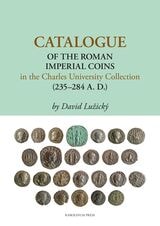
Catalogue of the Roman Imperial Coins in the Charles University Collection (235–284 A.D.)
David Lužický
Karolinum Press, 2026
Spotlights over five hundred Roman Imperial coins from Charles University's vast collection of ancient coins.
Charles University’s collection of ancient coins in its present state has existed since l945. Greek, Roman, and other ancient coins were entrusted to the care of the Seminar for Ancient History and compiled into a single collection along with antique coins from the original collection of the Czech University. The collection contains about 4,000 pieces altogether, mostly in silver and bronze.
This publication presents a catalogue of 564 Roman Imperial coins dating from 235 to 284 A. D. and is part of efforts to gradually catalogue the entirety of Charles University’s collection of ancient coins, stored in the depository of the CU Institute of Greek and Latin Studies. The book builds upon Václav Marek’s 1985 monograph, The Roman Republican Coins in the Collection of Charles University, and Federico Gambacorta’s 2013 continuation titled Catalogue of the Late Roman, Byzantine and Barbaric Coins in the Charles University Collection (364–1092 A. D.).
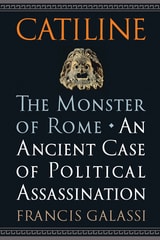
Catiline, The Monster of Rome
An Ancient Case of Political AssassinationFrancis Galassi
Westholme Publishing, 2014
In 62 BC, Roman Senator Lucius Sergius Catiline lay dead on a battlefield in Tuscany. He was slain along with his soldiers after his conspiracy to overthrow the Roman Republic had been exposed by his adversary Cicero. It was an ignominious end for a man described at the time as a perverted, insane monster who had attempted to return his family to fortune and social standing. Chroniclers were not kind to Catiline, and his name over the centuries was synonymous with treachery. Recently, scholars have been reappraising the life and influence of this ancient Roman. In Catiline, The Monster of Rome: An Ancient Case of Political Assassination, economic historian Francis Galassi provides the first book-length account of Catiline in more than a generation.
Rome first achieved a status as an empire during Catiline’s lifetime. The republic was, however, constantly at war with foreign powers and occasionally its own allies, and the disparity between the wealthy and the poor threatened to destabilize society. Catiline was from an aristocratic but impoverished family and first served as an officer with Cornelius Sulla during that general’s purges against Gaius Marius, the supposed champion of the oppressed masses. Catiline’s goal was to serve Sulla and then use that as a springboard to public office where he could recover his family’s former wealth and honor. However, the senatorial elite became suspicious if not threatened by the upstart Catiline and blocked his ambitions. Catiline was dogged by trumped-up charges, including raping a Vestal virgin and murdering his brother-in-law; he was acquitted each time, but his political life was ruined. With citizens demanding land and agrarian reform, Catiline genuinely embraced their dissatisfaction, and realizing that the elite would stop his attempt to gain status through elections, he organized a conspiracy to take control of Roman government through arms. Once his actions had been made public, many of his supporters and co-conspirators left him; but honoring the course he had chosen, he and his remaining soldiers fought a Roman army to their deaths. Rather than the “monster” as portrayed by his contemporaries, the author contends that Catiline was compelled to act for the benefit of common Romans to save Rome even if it meant overthrowing the government. As Galassi notes, Catiline’s contemporary, the slave Spartacus, has been a symbol of social reform for centuries, but it was actually Catiline, not Spartacus, who attempted to change Rome.
Cato the Censor and the Beginnings of Latin Prose
From Poetic Translation to Elite TranscriptionEnrica Sciarrino
The Ohio State University Press, 2011
Ceremony and Power
Performing Politics in Rome between Republic and EmpireGeoffrey S. Sumi
University of Michigan Press, 2015
Christian and Pagan in the Roman Empire
Robert Sider
Catholic University of America Press, 2001
Cicero's Use of Judicial Theater
Jon Hall
University of Michigan Press, 2014
While Cicero’s Use of Judicial Theater will be of interest primarily to professional scholars and students studying the speeches of Cicero, its wider analyses, both of Roman cultural customs and the idiosyncratic practices of the courts, will prove relevant also to social historians, as well as historians of legal procedure.
Cicero, Catullus, and the Language of Social Performance
Brian A. Krostenko
University of Chicago Press, 2001
As Krostenko demonstrates, a key feature of this language is its capacity to express both approval and disdain—an artifact of its origins at a time when the "style" and "charm" of imported Greek cultural practices were greeted with both enthusiasm and hostility. Cicero played on that ambiguity, for example, by chastising lepidus ("fine") boys in the "Second Oration against Catiline" as degenerates, then arguing in his De Oratore that the successful speaker must have a certain charming lepos ("wit"). Catullus, in turn, exploited and inverted the political subtexts of this language for innovative poetic and erotic idioms.
City of the Soul
Rome and the RomanticsJohn A. Pinto
University Press of New England, 2016
Classical Philology, volume 116 number 4 (October 2021)
The University of Chicago Press
University of Chicago Press Journals, 2021
Classical Philology, volume 117 number 1 (January 2022)
The University of Chicago Press
University of Chicago Press Journals, 2022
Classical Philology, volume 117 number 2 (April 2022)
The University of Chicago Press
University of Chicago Press Journals, 2022
Classical Philology, volume 117 number 3 (July 2022)
The University of Chicago Press
University of Chicago Press Journals, 2022
Classical Philology, volume 117 number 4 (October 2022)
The University of Chicago Press
University of Chicago Press Journals, 2022
Classical Philology, volume 118 number 1 (January 2023)
The University of Chicago Press
University of Chicago Press Journals, 2023
Classical Philology, volume 118 number 2 (April 2023)
The University of Chicago Press
University of Chicago Press Journals, 2023
Classical Philology, volume 118 number 3 (July 2023)
The University of Chicago Press
University of Chicago Press Journals, 2023
Classical Philology, volume 119 number 1 (January 2024)
The University of Chicago Press
University of Chicago Press Journals, 2024
Classical Philology, volume 119 number 2 (April 2024)
The University of Chicago Press
University of Chicago Press Journals, 2024
Classical Philology, volume 119 number 3 (July 2024)
The University of Chicago Press
University of Chicago Press Journals, 2024
Classical Philology, volume 119 number 4 (October 2024)
The University of Chicago Press
University of Chicago Press Journals, 2024
Classical Philology, volume 120 number 1 (January 2025)
The University of Chicago Press
University of Chicago Press Journals, 2025
Classical Philology, volume 120 number 2 (April 2025)
The University of Chicago Press
University of Chicago Press Journals, 2025
Classical Philology, volume 120 number 3 (July 2025)
The University of Chicago Press
University of Chicago Press Journals, 2025
Classical Philology, volume 120 number 4 (October 2025)
The University of Chicago Press
University of Chicago Press Journals, 2025
Classical Philology, volume 121 number 1 (January 2026)
The University of Chicago Press
University of Chicago Press Journals, 2026
Classical Philology, volume 121 number 2 (April 2026)
The University of Chicago Press
University of Chicago Press Journals, 2026
Classical Philology, volume 121 number 3 (July 2026)
The University of Chicago Press
University of Chicago Press Journals, 2026
Classical Philology, volume 121 number 4 (October 2026)
The University of Chicago Press
University of Chicago Press Journals, 2026

Classical Reception in Asian American Literature
Christopher Waldo
University of Michigan Press, 2027
Troubled by the discipline’s historical relationship to white supremacy, classical scholars have begun to reexamine their fundamental assumptions about the relevance of ancient Greece and Rome to the modern world. After decades in which classical reception was relegated to the periphery of the discipline, a consensus has developed that the study of modern interactions with antiquity is inherently valuable. One of the newest branches of classical reception focuses on the cultural productions and political realities of Asian Americans. Contending that the Asian American authors discussed herein understand the ancient world as fundamentally unstable, Classical Reception in Asian American Literature interrogates this instability as manifested in fragmentation, violence, mythology, allusion, performance, and memory.
The study explores the written works of Theresa Hak Kyung Cha, Ocean Vuong, Quan Barry, Chang-rae Lee, David Lau, Sally Wen Mao, Johanna Hedva, Hoa Nguyen, and Vi Khi Nao. Via their written works, Christopher Waldo explores the bond between Demeter and Persephone, Telemachus’ identity as a fatherless son, the relationship between diasporic authors and Sappho, reinventions of mythology surrounding the Trojan War, and more. In Classical Reception in Asian American Literature, the literary traditions of the East and West collide to illuminate the threads of connection between the ancient and modern worlds.
Classical Receptions in the Struggle for Justice
Ellen Perry, Dominic Machado, Marina Haworth
University of Michigan Press, 2027
History is written and constructed by many, not just those few who proclaim themselves “the victors.” Classical Receptions in the Struggle for Justice examines how activists, artists, and writers of the past have found studying ancient Greece and Rome to be hopeful avenues for justice or personal liberation. These individuals, while sometimes critiquing the classical tradition, also saw in it ways to intervene in their contemporary reality for their struggle for justice.
Each contribution to this volume contains original research that highlights how ancient Greece or Rome informed and inspired an individual or movement between the eighteenth and twenty-first centuries, such as the struggles against structural racism, sexism, and homophobia. These engagements included visual arts, poetry, political activism, rhetoric, philosophy, environmentalism, and fiction. Individuals profiled in this volume include Mary Shelley, Henry David Thoreau, and Martin Luther King, Jr., as well as figures whose work remains underrepresented in the study of classical reception. Classical Receptions in the Struggle for Justice speaks to the enduring power of the humanities and the ancient world in difficult times.
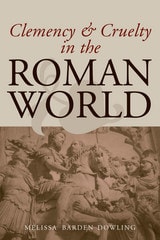
Clemency and Cruelty in the Roman World
Melissa Barden Dowling
University of Michigan Press, 2006
In this first thorough study of the origins of clemency, Dowling provides a vivid look at the ideology of clemency and new philosophies of mercy and cruelty in Western society, through an examination of ancient art, literature, historical documents, and archaeological artifacts. By illuminating the emergence of mercy and forgiveness as social concepts, and the mechanisms by which peoples are transformed in response to changes in power structures, Dowling makes an important contribution to the study of the ancient Roman world, as well as to modern Western culture.
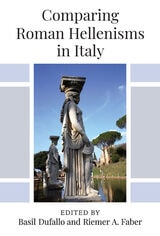
Comparing Roman Hellenisms in Italy
Edited by Basil Dufallo and Riemer A. Faber
University of Michigan Press, 2023
The story of Roman Hellenism—defined as the imitation or adoption of something Greek by those subject to or operating under Roman power—begins not with Roman incursions into the Greek mainland, but in Italy, where our most plentiful and spectacular surviving evidence is concentrated. Think of the architecture of the Roman capital, the Campanian towns of Pompeii and Herculaneum buried by Vesuvius, and the Hellenic culture of the Etruscans. Perhaps “everybody knows” that Rome adapted Greek culture in a steadily more “sophisticated” way as its prosperity and might increased. This volume, however, argues that the assumption of smooth continuity, let alone steady “improvement,” in any aspect of Roman Hellenism can blind us to important aspects of what Roman Hellenism really is and how it functions in a given context.
As the first book to focus on the comparison of Roman Hellenisms per se, Comparing Roman Hellenisms in Italy shows that such comparison is especially valuable in revealing how any singular instance of the phenomenon is situated and specific, and has its own life, trajectory, circumstances, and afterlife. Roman Hellenism is always a work in progress, is often strategic, often falls prey to being forgotten, decontextualized, or reread in later periods, and thus is in important senses contingent. Further, what we may broadly identify as a Roman Hellenism need not imply Rome as the only center of influence. Roman Hellenism is often decentralized, and depends strongly on local agents, aesthetics, and materials. With this in mind, the essays concentrate geographically on Italy to lend both focus and breadth to our topic, as well as to emphasize the complex interrelation of Hellenism at Rome with Rome’s surroundings. Because Hellenism, whether as practiced by Romans or Rome’s subjects, is in fact widely diffused across far-flung geographical regions, the final part of the collection gestures to this broader context.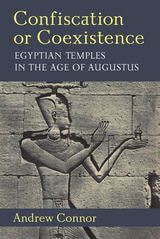
Confiscation or Coexistence
Egyptian Temples in the Age of AugustusAndrew Connor
University of Michigan Press, 2022
The interpretative consensus developed after the publication of a handful of key documents—P.Tebt. 2.302 especially, alongside BGU 4.1198 and 1200, and P.Berl.Leihg. 1.5. Connor offers a fundamentally revised interpretation of these texts, building from a fresh examination of the papyri themselves. The book frames the interpretation in a wider discussion of Roman interactions with Egyptian religion, including material from inside and outside Egypt, and locates the development of an interpretative consensus in early 20th-century scholarship within the wider context of empire and colonization at the time. In doing so, Connor explores these papyri through their historical, intellectual, and linguistic contexts, alongside a number of other important texts bearing on the relationship between the temples and the Roman state.
Conspiracy Narratives in Roman History
By Victoria Emma Pagán
University of Texas Press, 2005
Conspiracy is a thread that runs throughout the tapestry of Roman history. From the earliest days of the Republic to the waning of the Empire, conspiracies and intrigues created shadow worlds that undermined the openness of Rome's representational government. To expose these dark corners and restore a sense of order and safety, Roman historians frequently wrote about famous conspiracies and about how their secret plots were detected and the perpetrators punished. These accounts reassured readers that the conspiracy was a rare exception that would not happen again—if everyone remained vigilant.
In this first book-length treatment of conspiracy in Roman history, Victoria Pagán examines the narrative strategies that five prominent historians used to disclose events that had been deliberately shrouded in secrecy and silence. She compares how Sallust, Livy, and Tacitus constructed their accounts of the betrayed Catilinarian, Bacchanalian, and Pisonian conspiracies. Her analysis reveals how a historical account of a secret event depends upon the transmittal of sensitive information from a private setting to the public sphere—and why women and slaves often proved to be ideal transmitters of secrets. Pagán then turns to Josephus's and Appian's accounts of the assassinations of Caligula and Julius Caesar to explore how the two historians maintained suspense throughout their narratives, despite readers' prior knowledge of the outcomes.
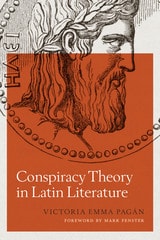
Conspiracy Theory in Latin Literature
By Victoria Emma Pagán
University of Texas Press, 2012
Conspiracy theory as a theoretical framework has emerged only in the last twenty years; commentators are finding it a productive way to explain the actions and thoughts of individuals and societies. In this compelling exploration of Latin literature, Pagán uses conspiracy theory to illuminate the ways that elite Romans invoked conspiracy as they navigated the hierarchies, divisions, and inequalities in their society. By seeming to uncover conspiracy everywhere, Romans could find the need to crush slave revolts, punish rivals with death or exile, dismiss women, denigrate foreigners, or view their emperors with deep suspicion. Expanding on her earlier Conspiracy Narratives in Roman History, Pagán here interprets the works of poets, satirists, historians, and orators—Juvenal, Tacitus, Suetonius, Terence, and Cicero, among others—to reveal how each writer gave voice to fictional or real actors who were engaged in intrigue and motivated by a calculating worldview.
Delving into multiple genres, Pagán offers a powerful critique of how conspiracy and conspiracy theory can take hold and thrive when rumor, fear, and secrecy become routine methods of interpreting (and often distorting) past and current events. In Roman society, where knowledge about others was often lacking and stereotypes dominated, conspiracy theory explained how the world worked. The persistence of conspiracy theory, from antiquity to the present day, attests to its potency as a mechanism for confronting the frailties of the human condition.
Constructing Communities in Vergil's Aeneid
Cultural Memory, Identity, and IdeologyTedd A. Wimperis
University of Michigan Press, 2024
Where previous studies of identity and memory in the Aeneid have focused on the poem’s constructions of Roman identity, Constructing Communities turns the spotlight onto the characters themselves to show how the world inside the poem is replicating, as if in miniature, real forms of contemporary political and cultural discourse, reflecting an historical milieu where appeals to Roman identity were vigorously asserted in political rhetoric. The book applies this evidence to a broad literary analysis of the Aeneid, as well as a reevaluation of its engagement with Roman imperial ideology in the Age of Augustus.
Constructions of the Classical Body
James I. Porter, Editor
University of Michigan Press, 2002
Classical scholarship has traditionally neglected the prominence of the body in antiquity. Constructions of the Classical Body theorizes that the study of antiquity is necessarily a study of the body, and that attention to this fact can lead to a much-needed shift in the way in which classical studies are approached today. This volume aims to reestablish the relevance of the problem of the body at the perimeters of several different kinds of inquiry, and, in this way, to help open up a field of possibilities for future study. The range covered by the essays in this volume is sweeping: from Corinthian vaseware to Athenian and Roman politics, poetry from Homer to Ovid, medical writers from the Hippocratic corpus to the diary of Aelius Aristides (second century c.e.), philosophy (Seneca, Porphyry), the Greek novel, Christian apocrypha, Ovid's medieval reception, and twentieth century film. This range is a consequence of the multidisciplinarity that any study of the body requires, and it attests to the particular richness of the body in classical antiquity and as an object for study today. The volume illustrates that body is located between traditional borders, not within them; the body dissolves traditional objects of study and joins areas usually kept apart. Retracing the fate of the body is thus a way of rendering antiquity truly strange again -- it allows us to see the past afresh, with open eyes. This volume includes essays by Carlin A. Barton, Anne Carson, Eric Downing, Catherine Edwards, Maud W. Gleason, John Henderson, Ralph Hexter, S. C. Humphreys, Helen King, Leslie Kurke, Robert Lamberton, David S. Potter, Amy Richlin, Giulia Sissa, Maria Wyke, and Froma I. Zeitlin, along with an introduction by James I. Porter. ". . . a superb collection, one that I know will be most welcome not only in the field of classical studies, but in the libraries of all those interested in the history and historicity of the body." --Page duBois, University of California, San Diego
Contested Pasts
A Determinist History of Alexander the Great in the Roman EmpireJennifer Finn
University of Michigan Press, 2022
Coriolanus
William Shakespeare
Arizona Center for Medieval and Renaissance Studies, 2023
Bay Area director, actor, and producer Sean San José takes on the themes of power and politics in his version of Coriolanus, Shakespeare’s exploration of militaristic might and political folly. San José’s take on this little-known classic reimagines the text to be spoken by and for a community of “others.” The translation, which brings Shakespeare’s language into our era, rendering its thematic and dramatic power broadly accessible, is powered by a reexamination of populism in our current political moment.
This translation of Coriolanus was written as part of the Oregon Shakespeare Festival’s Play On! project, which commissioned new translations of thirty-nine Shakespeare plays. These translations present the work of “The Bard” in language accessible to modern audiences while never losing the beauty of Shakespeare’s verse. Enlisting the talents of a diverse group of contemporary playwrights, screenwriters, and dramaturges from diverse backgrounds, this project reenvisions Shakespeare for the twenty-first century. These volumes make these works available for the first time in print—a new First Folio for a new era.
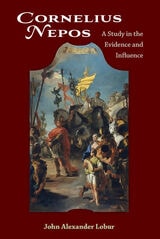
Cornelius Nepos
A Study in the Evidence and InfluenceJohn Alexander Lobur
University of Michigan Press, 2021
Cornelius Nepos: A Study in the Evidence and Influence begins by exploring the writer's ancient reception, which suggests he was in no way seen as beneath consideration by the Romans themselves. The volume then deconstructs the critical framework that cast him as an "inferior" author in the classical canon. What emerges is an author who reworked Greek historical narratives in a learned, sophisticated way, yet one still limited by the compositional logistics and limitations inherent in ancient scholarship. The study then explores his contemporary relationships and embeds his work among the crucial ideological activity at play in the late Republic and Triumviral periods. Cornelius Nepos spends considerable time on the fragmentary evidence (which highlights Nepos' interest in changes in fashion and consumption) to suggest that he was a valued cultural elder who informed a public eager to recover a sense of tradition during a period of bewilderingly fast social and cultural change. The book finishes with a thematic examination of the entire Lives of the Foreign Commanders (a set of biographies on ancient non-Roman generals) to show that despite the expression of very “Republican” sentiments, he was in fact fashioning an ideological framework for something imperial and quasi-monarchic which, though autocratic, was still antityrannical and imagined as resting on a broad and “democratic” foundation of social consent. Nepos saw that Rome would soon be ruled by one person, and his biographies show how the elites of the day both processed that reality and attempted to circumscribe it for good ends through the creation of new models of legitimacy.
Corrupting Luxury in Ancient Greek Literature
Robert J. Gorman and Vanessa B. Gorman
University of Michigan Press, 2014
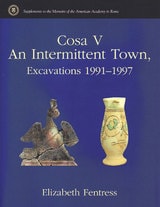
Cosa V
An Intermittent Town, Excavations 1991-1997Elizabeth Fentress
University of Michigan Press, 2003

Cosa and the Colonial Landscape of Republican Italy (Third and Second Centuries BCE)
Andrea U. De Giorgi, Editor
University of Michigan Press, 2019
This important new volume examines archaeological evidence of Roman colonization of the Middle Republican period. Themes of land use, ethnic accommodation and displacement, colonial identity, and administrative schemes are also highlighted. In delving deeply into the uniqueness of select colonial contexts, these essays invite a novel discussion on the phenomenon of colonialism in the political landscape of Rome’s early expansion. Roman urbanism of the Middle Republican period brought to the Italian peninsula fundamental changes, an important example of which, highlighted by a wealth of studies, is the ebullience of a dense network of colonies, as well as a mix of senatorial tactics and individual initiatives that underpinned their foundation. Whether Latin, Roman, or Maritimae, colonies created a new mesh of communities and imposed a new topography; more subtly, they signified the mechanisms of the rising hegemony. This book brings to the fore the diversity, agendas, and overall impact of a “settlement device” that changed the Italian landscape and introduced a new idea of Roman town.
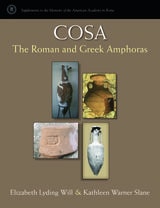
Cosa
The Roman and Greek AmphorasElizabeth Lyding Will and Kathleen Warner Slane
University of Michigan Press, 2019
At the time of Will’s death, her manuscript consisted of a typed catalogue of the amphora stamps from Cosa and an equal number of unstamped vessels, but was missing important elements. On the basis of extensive notes and photographs, Kathleen Warner Slane has reviewed and updated the manuscript, adding type descriptions and footnotes to materials that have appeared since Will’s death as well as a framing introduction and conclusions. Appendices highlight an Augustan amphora dump on the Arx and add a catalogue of the Greek amphora stamps found at Cosa.
Cosa: The Roman and Greek Amphoras will be of interest to scholars and students of Rome and its system of colonies, and also to those interested in Greek and Roman archaeology and trade in the ancient world.
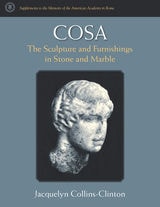
Cosa
The Sculpture and Furnishings in Stone and MarbleJacquelyn Collins-Clinton
University of Michigan Press, 2020
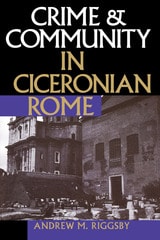
Crime and Community in Ciceronian Rome
By Andrew M. Riggsby
University of Texas Press, 1999
In the late Roman Republic, acts of wrongdoing against individuals were prosecuted in private courts, while the iudicia publica (literally "public courts") tried cases that involved harm to the community as a whole. In this book, Andrew M. Riggsby thoroughly investigates the types of cases heard by the public courts to offer a provocative new understanding of what has been described as "crime" in the Roman Republic and to illuminate the inherently political nature of the Roman public courts.
Through the lens of Cicero's forensic oratory, Riggsby examines the four major public offenses: ambitus (bribery of the electorate), de sicariis et veneficiis (murder), vis (riot), and repetundae (extortion by provincial administrators). He persuasively argues that each of these offenses involves a violation of the proper relations between the state and the people, as interpreted by orators and juries. He concludes that in the late Roman Republic the only crimes were political crimes.