Results by title
22279 books match the query 'Social Science' and 1700 start with c
C-Unit
Search for Community in PrisonElliot Studt
Russell Sage Foundation, 1968
C. L. R. James in Imperial Britain
Christian Høgsbjerg
Duke University Press, 2014
C. L. R. James's Caribbean
Paget Henry and Paul Buhle, eds.
Duke University Press, 1992
Drawing upon James's observations of his own life as revealed to interviewers and close friends, this volume provides an examination of James's childhood and early years as colonial literatteur and his massive contribution to West Indian political-cultural understanding. Moving beyond previous biographical interpretations, the contributors here take up the problem of reading James's texts in light of poststructuralist criticism, the implications of his texts for Marxist discourse, and for problems of Caribbean development.

CANCELED - Notes from Home
Jonna McKone
Rutgers University Press, 2021
Through portraiture, oral history, writing, and family archives, the contributors explore childhood, geography, immigration, education, and family relationships, recovering misunderstood or overlooked moments. In the process of making this work, the group found old family photos, returned to sites of significance, and made new friendships, discovering the transformational potential of this kind of storytelling to reframe hardship, loss, and uncertainty. In the words of one contributor, “I felt like this process was a necessary step that allowed me to acknowledge and comprehend what I was experiencing at the time. It allowed me to create a more coherent understanding that I am who I am because of my past and because I was the one who had control of molding my own, better path.” Each chapter, encompassing one person’s story, is strikingly unique in its vision and approach.
CASE 2.1 Brenna Schneider at 99Degrees
Carole Carlson and Rachael Weiker
Brandeis University Press, 2024
CASE 2.2 The Kindness of Human Milk
The Founding of Mothers’ MilkBank NortheastNaomi Bromberg Bar-Yam and Mark I. Rosen
Brandeis University Press, 2024
CASE 3.1 Engage or Divest? Trillium Asset Management, Facebook Governance,and Shareholder Advocacy
Monique DeSimone, Jess Lynch-Foust, Douglass Guernsey, and Laura Burroughs
Brandeis University Press, 2024
CASE 3.2A SAMRIDH Blended Finance Facility
Accelerating Pandemic Responseand Building Equitable Health Systems in India (A)Archita Adlakha, Neeta Rao, Achin B. N. Biyani, Ritika Pandey, and Sudheer Nadipally
Brandeis University Press, 2024
CASE 3.2B SAMRIDH Blended Finance Facility
Accelerating Pandemic Responseand Building Equitable Health Systems in India (B)Archita Adlakha, Neeta Rao, Achin B. N. Biyani, Ritika Pandey, and Sudheer Nadipally
Brandeis University Press, 2024
CASE 4.1 HopeWell, Inc.
Della M. Hughes and Marji Erickson Warfield
Brandeis University Press, 2024
CASE 4.2A Tufts Medicine Health Care System
Merging Hospitals in a New Model (A)Maher Tabba and Jon Chilingerian
Brandeis University Press, 2024
CASE 4.2B Tufts Medicine Health Care System
Merging Hospitals in a New Model (B)Maher Tabba and Jon Chilingerian
Brandeis University Press, 2024
CASE 4.3 Aligning Transition Supports and Services for Students With Disabilities
Jennifer Stewart
Brandeis University Press, 2024
CASE 4.4 The Native Plant Ordinance Meeting
Elizabeth V. Sessions
Brandeis University Press, 2024
CASE 5.1 Boston MedFlight
Leveraging Data to Design a New Helicopter AlgorithmMatthew Kriegsman
Brandeis University Press, 2024
CASE 5.2 Ford Hall 2015
Avery Brien, Mónica García, Sonia Kikeri, and Miya Ward
Brandeis University Press, 2024
CASE 5.3 The Interfaith Worker Rights Council Call Center
Joel Cutcher-Gershenfeld
Brandeis University Press, 2024
CASE 6.1 JA Worldwide
Creating a Global BrandKeshia Engwenyi, Julia Robinson-Rosendorff, and Sean C. Rush
Brandeis University Press, 2024
CASE 7.1 Breaking Down Silos to Build Collaborative Systems
Lauren Hajjar, Jody Hoffer Gittell, Ninna Meier, and Bill Gunn
Brandeis University Press, 2024
CASE 7.2 The Unit-BasedTeam Meeting
Joel Cutcher-Gershenfeld
Brandeis University Press, 2024
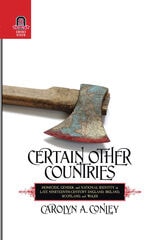
CERTAIN OTHER COUNTRIES
Homicide, Gender, and National Identity in Late Nineteenth-Century England, Ireland, Scotland, and WalesCarolyn A. Conley
The Ohio State University Press, 2007
By combining quantitative techniques in the analysis of over seven thousand cases, as well as careful and detailed readings of individual cases, the book exposes trends and patterns that might not have been evident in works using only one method. For instance, by examining all homicide trials rather than concentrating exclusively on a few highly celebrated ones, it becomes clear that most female killers were not viewed with particular horror, but were treated much like their male counterparts.
The conclusions offer challenges and correctives to existing scholarship on gender, ethnicity, class, and violence. The book also demonstrates that the Welsh, Scots, and English remained quite distinct long after their melding as Britons was announced and celebrated. By blending a study of trends in violent behavior with ideas about national identity, Conley brings together rich and hotly debated fields of modern history. This book will be valuable both for scholars of crime and violence as well as for those studying British history.
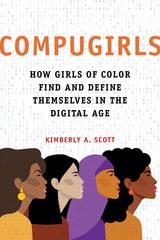
COMPUGIRLS
How Girls of Color Find and Define Themselves in the Digital AgeKimberly A. Scott
University of Illinois Press, 2021
Kimberly A. Scott explores this question and others as she details the National Science Foundation-funded enrichment project COMPUGIRLS. This groundbreaking initiative teaches tech skills to adolescent girls of color but, as importantly, offers a setting that emphasizes empowerment, community advancement, and self-discovery. Scott draws on her experience as an architect of COMPUGIRLS to detail the difficulties of translating participants' lives into a digital context while tracing how the program evolved. The dramatic stories of the participants show them blending newly developed technical and communication skills in ways designed to spark effective action and bring about important change.
A compelling merger of theory and storytelling, COMPUGIRLS provides a much-needed roadmap for understanding how girls of color can find and define their selves in today's digital age.

CONSUMING FANTASIES
LABOR, LEISURE, AND THE LONDON SHOPGIRL,LISE SHAPIRO SANDERS
The Ohio State University Press, 2006
CONTROLLING VICE
REGULATING BROTHEL PROSTITUTION IN ST. PAUL, 1865–1883JOEL BEST
The Ohio State University Press, 1998
For eighteen years following the Civil War, the police in St. Paul, Minnesota, informally regulated brothel prostitution. Each month, the madams who ran the brothels were charged with keeping houses of ill fame and fined in the city’s municipal court. In effect, they were paying licensing fees in order to operate illegal enterprises. This arrangement was open; during this period, the city’s newspapers published hundreds of articles about vice and its regulation.
Joel Best claims that the sort of informal regulation in St. Paul was common in the late nineteenth century and was far more typical than the better known but brief experiment with legalization tried in St. Louis. With few exceptions, the usual approach to these issues of social control has been to treat informal regulation as a form of corruption, but Best’s view is that St. Paul’s arrangement exposes the assumption that the criminal justice system must seek to eradicate crime. He maintains that other policies are possible.
In a book that integrates history and sociology, the author has reconstructed the municipal court records for most of 1865–83, using newspaper articles, an arrest ledger kept by the St. Paul police, and municipal court dockets. He has been able to trace which madams operated brothels and the identities of many of the prostitutes who lived and worked in them.

COPS AND KIDS
Policing Juvenile Delinquency in Urban America, 1890–1940David B. Wolcott
The Ohio State University Press, 2005
Cops and Kids analyzes how police regulated juvenile behavior in turn-of-the-century America. Focusing on Los Angeles, Chicago, and Detroit, it examines how police saw their mission, how they dealt with public demands, and how they coped daily with kids. Whereas most scholarship in the field of delinquency has focused on progressive-era reformers who created a separate juvenile justice system, David B. Wolcott’s study looks instead at the complicated, sometimes coercive, relationship between police officers and young offenders. Indeed, Wolcott argues, police officers used their authority in a variety of ways to influence boys’ and girls’ behavior. Prior to the creation of juvenile courts, police officers often disciplined kids by warning and releasing them, keeping them out of courts. Establishing separate juvenile courts, however, encouraged the police to cast a wider net, pulling more young offenders into the new system. While some departments embraced “child-friendly” approaches to policing, others clung to rough-and-tumble methods. By the 1920s and 1930s, many police departments developed new strategies that combined progressive initiatives with tougher law enforcement targeted specifically at growing minority populations.
Cops and Kids illuminates conflicts between reformers and police over the practice of juvenile justice and sheds new light on the origins of lasting tensions between America’s police and urban communities.

COVID Diagnosed the System
Lessons from the Pandemic in Massachusetts PrisonsBridget Conley
Rutgers University Press, 0
The American criminal justice system was in flux in 2020, a clash of possibilities for reform, retrenchment, and radical change—nowhere more so than in Massachusetts, which had just passed major criminal justice reform. The COVID-19 pandemic interrupted the moment with life-threatening force, ravaging people held in prisons and jails across the country. However, it did not so much create new deprivations and suffering as it exposed prisons as sites of physical, institutional, and psychological violence that do not make communities safer. At the same time, advocates for people in prisons—including many incarcerated and formerly incarcerated people—seized on the pandemic’s disruptions to demand change. Detailing the first year of the pandemic inside the Massachusetts state prison system, this book argues that the history of the pandemic inside prisons exposed both the cruelties of incarceration and the power of change when it is led by directly affected people.
COVID and Gender in the Middle East
Edited by Rita Stephan
University of Texas Press, 2023
As the coronavirus ravages the globe, its aftermaths have brought gender inequalities to the forefront of many conversations. Countries in the Middle East and North Africa have been slow to prepare for, adapt to, and mitigate the COVID-19 health crisis and its impacts on governance, economics, security, and rights. Women’s physical well-being, social safety nets, and economic participation have been disproportionately affected, and with widespread shutdowns and capricious social welfare programs, women are exiting the workplace and the classroom, carrying the caregiving burden.
With feminist foregrounding, Rita Stephan's collection COVID and Gender in the Middle East gathers an impressive group of local scholars, activists, and policy experts. The book examines a range of national and localized responses to gender-specific issues around COVID’s health impact and the economic fallout and resulting social vulnerabilities, including the magnified marginalization of Syrian refugees; the inequitable treatment of migrant workers in Bahrain; and the inadequate implementation of gender-based violence legislation in Morocco. An essential global resource, this book is the first to provide empirical evidence of COVID’s gendered effects.

COVID and...
How to Do Rhetoric in a PandemicEmily Winderman
Michigan State University Press, 2023

COVID-19 and Public Health
Global Responses to the PandemicCaroline Kingori
Ohio University Press, 2024

CRIME, JUSTICE, HISTORY
ERIC MONKKONEN
The Ohio State University Press, 2002
Crime in the U.S. and the institutions for its control are deeply embedded in and shaped by history. The historical origins have often become invisible, and their recovery difficult, but any understanding of the contemporary situation requires historical context. For over twenty-five years Eric H. Monkkonen has worked on some of the puzzles and problems in recovering the history of crime and police.
Much of his work has appeared in articles, often in specialized journals or not in English, which this book collects for the first time. In addition to Monkkonen’s major published articles, this volume includes several new ones. The topics embrace violence, public disorder, policing, popular culture, and contrasts between the U.S. and Europe. Some articles illuminate special methodological and source issues that challenge historians of criminal justice. As well as dealing with serious crime, this book includes several articles on specifically urban problems and solutions associated with disorder, crime, and poverty.
In contrast to the more technical articles, several chapters, which originally appeared as op-ed pieces, show how historical understanding can help address current policy issues in crime and crime control. All too often, current policy debates occur without proper historical background. As a result, old ideas that have been tried and rejected are re-introduced, or new and sometimes simple ideas are ignored.
CROSS-CULTURAL VISIONS IN AFRICAN AMERICAN MODERNISM
FROM SPATIAL NARRATIVE TO JAZZ HAIKUYOSHINOBU HAKUTANI
The Ohio State University Press, 2006
In writing Black Boy, the centerpiece of the Chicago Renaissance, Wright was inspired by Theodore Dreiser. Because the European and African cultural visions that Wright, Ralph Ellison, Alice Walker, and Toni Morrison acquired were buttressed by the universal humanism that is common to all cultures, this ideology is shown to transcend the problems of society. Fascinated by Eastern thought and art, Wright, Walker, Sonia Sanchez, and James Emanuel wrote highly accomplished poetry and prose. Like Ezra Pound, Wright was drawn to classic haiku, as reflected in the 4,000 haiku he wrote at the end of his life. As W. B. Yeats’s symbolism was influenced by his cross-cultural visions of noh theatre and Irish folklore, so is James Emanuel’s jazz haiku energized by his cross-cultural rhythms of Japanese poetry and African American music.
The book demonstrates some of the most visible cultural exchanges in modern and postmodern African American literature. Such a study can be extended to other contemporary African American writers whose works also thrive on their cross-cultural visions, such as Amiri Baraka, Ishmael Reed, Charles Johnson, and haiku poet Lenard Moore.

CT Suite
The Work of Diagnosis in the Age of Noninvasive CuttingBarry F. Saunders
Duke University Press, 2008
Saunders’s analyses are informed by strands of cultural history and theory including art historical critiques of realist representation, Walter Benjamin’s concerns about violence in “mechanical reproduction,” and tropes of detective fiction such as intrigue, the case, and the culprit. Saunders analyzes the diagnostic “gaze” of medical personnel reading images at the viewbox, the two-dimensional images or slices of the human body rendered by the scanner, methods of archiving images, and the use of scans as pedagogical tools in clinical conferences. Bringing cloistered diagnostic practices into public view, he reveals the customs and the social and professional hierarchies that are formulated and negotiated around the weighty presence of the CT scanner. At the same time, by returning throughout to the nineteenth-century ideas of detection and scientific authority that inform contemporary medical diagnosis, Saunders highlights the specters of the past in what appears to be a preeminently modern machine.
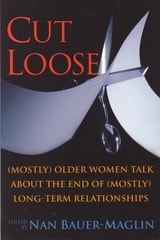
CUT LOOSE
(Mostly) Older Women on the End of their (Mostly) Long-Term RelationshipsBauer-Maglin, Nan
Rutgers University Press, 2006
Although breakups—whether celebrity or everyday—are a constant source of fascination, surprisingly little attention has been given to women who are cut loose in their later years. This is a book about (mostly) long-term relationships that have come apart. Each woman involved, the majority of whom are over sixty, tells of her experience through journal entries, essays, poetry, or stories. Although in many senses they have been abandoned, they have also been set free, untethered, and, for some, liberated sexually, mentally, or emotionally.
The book is divided into two major sections. The pieces in the first part are personal narratives. Among the varied voices, we hear from women in both heterosexual and same-sex relationships who have been left by their partners or who have decided to leave them. In the second section, the contributors look at being left and leaving from psychological, sociological, economic, sexual, medical, anthropological, and literary perspectives. Other essays explore the shared experiences of specific classes of women, such as single women, widows, or abandoned daughters.
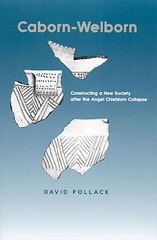
Caborn-Welborn
Constructing a New Society after the Angel Chiefdom CollapseDavid Pollack
University of Alabama Press, 2004
Caborn-Welborn, a late Mississippian (A.D. 1400-1700) farming society centered at the confluence of the Ohio and Wabash Rivers (in what is now southwestern Indiana, southeastern Illinois, and northwestern Kentucky), developed following the collapse of the Angel chiefdom (A.D. 1000-1400). Using ceramic and settlement data, David Pollack examines the ways in which that new society reconstructed social, political, and economic relationships from the remnants of the Angel chiefdom. Unlike most instances of the demise of a complex society led by elites, the Caborn-Welborn population did not become more inward-looking, as indicated by an increase in extraregional interaction, nor did they disperse to smaller more widely scattered settlements, as evidenced by a continuation of a hierarchy that included large villages.
This book makes available for the first time detailed, well-illustrated descriptions of Caborn-Welborn ceramics, identifies ceramic types and attributes that reflect Caborn-Welborn interaction with Oneota tribal groups and central Mississippi valley Mississippian groups, and offers an internal regional chronology. Based on intraregional differences in ceramic decoration, the types of vessels interred with the dead, and cemetery location, Pollack suggests that in addition to the former Angel population, Caborn-Welborn society may have included households that relocated to the Ohio/Wabash confluence from nearby collapsing polities, and that Caborn-Welborn’s sociopolitical organization could be better considered as a riverine confederacy.
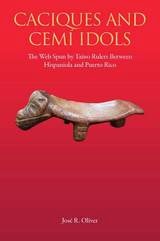
Caciques and Cemi Idols
The Web Spun by Taino Rulers Between Hispaniola and Puerto RicoJose R Oliver
University of Alabama Press, 2009
Cemís are both portable artifacts and embodiments of persons or spirit, which the Taínos and other natives of the Greater Antilles (ca. AD 1000-1550) regarded as numinous beings with supernatural or magic powers. This volume takes a close look at the relationship between humans and other (non-human) beings that are imbued with cemí power, specifically within the Taíno inter-island cultural sphere encompassing Puerto Rico and Hispaniola. The relationships address the important questions of identity and personhood of the cemí icons and their human “owners” and the implications of cemí gift-giving and gift-taking that sustains a complex web of relationships between caciques (chiefs) of Puerto Rico and Hispaniola.
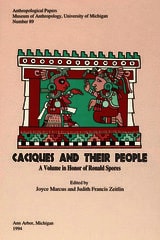
Caciques and Their People
A Volume in Honor of Ronald SporesEdited by Joyce Marcus and Judith Francis Zeitlin
University of Michigan Press, 1994
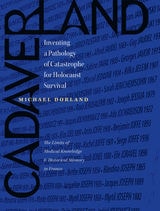
Cadaverland
Inventing a Pathology of Catastrophe for Holocaust Survival [The Limits of Medical Knowledge and Historical Memory in France]Michael Dorland
Brandeis University Press, 2009
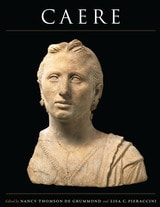
Caere
Edited by Nancy Thomson de Grummond and Lisa C. Pieraccini
University of Texas Press, 2016
The Etruscan city of Caere and eleven other Etruscan city-states were among the first urban centers in ancient Italy. Roman descriptions of Etruscan cities highlight their wealth, beauty, and formidable defenses. Although Caere left little written historical record outside of funerary inscriptions, its complex story can be deciphered by analyzing surviving material culture, including architecture, tomb paintings, temples, sanctuaries, and materials such as terracotta, bronze, gold, and amber found in Etruscan crafts. Studying Caere provides valuable insight not only into Etruscan history and culture but more broadly into urbanism and the development of urban centers across ancient Italy.
Comprehensive in scope, Caere is the first English-language book dedicated to the study of its eponymous city. Collecting the work of an international team of scholars, it features chapters on a wide range of topics, such as Caere’s formation and history, economy, foreign relations, trade networks, art, funerary traditions, built environment, religion, daily life, and rediscovery. Extensively illustrated throughout, Caere presents new perspectives on and analysis of not just Etruscan civilization but also the city’s role in the wider pan-Mediterranean basin.

Cafe Indiana
A Guide to Indiana’s Down-Home CafesJoanne Raetz Stuttgen
University of Wisconsin Press, 2007
Over plates of chicken and noodles, fried bologna sandwiches, and sugar cream pie, folks are crafting community at the Main Street eatery. In Cafe Indiana, Hoosiers and out-of-staters alike are invited to pull out a chair and sit a spell.

Cafe Wisconsin Cookbook
Joanne Raetz Stuttgen and Terese Allen
University of Wisconsin Press, 2007
Stuttgen tracked down Wisconsin's best small town cafes, from Boscobel to Sturgeon Bay, chatted with owners and customers, took notes, and recorded the history, anecdotes, and recipes behind the food. Tested and fine-tuned by Wisconsin food writer and former chef Terese Allen, these favorite recipes will bring an authentic slice of Wisconsin into your home kitchen.
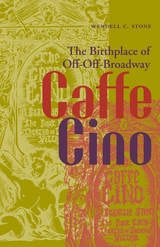
Caffe Cino
The Birthplace of Off-Off-BroadwayWendell C. Stone
Southern Illinois University Press, 2005
“It’s Magic Time!” That colorful promise began each performance at the Caffe Cino, the storied Greenwich Village coffeehouse that fostered the gay and alternative theatre movements of the 1960s and launched the careers of such stage mainstays as Sam Shepard, Lanford Wilson, Robert Heide, Harry Koutoukas, Robert Patrick, Robert Dahdah, Helen Hanft, Al Pacino, and Bernadette Peters. As Off-Off-Broadway productions enjoy a deserved resurgence, theatre historian and actor Wendell C. Stone reopens the Cino’s doors in this vibrant look at the earliest days of OOB.
Rife with insider interviews and rich with evocative photographs, Caffe Cino: The Birthplace of Off-Off-Broadway provides the first detailed account of Joe Cino’s iconic café theatre and its influence on American theatre. A hub of artistic innovation and haven for bohemians, beats, hippies, and gays, the café gave a much-sought outlet to voices otherwise shunned by mainstream entertainment. The Cino’s square stage measured only eight feet, but the dynamic ideas that emerged there spawned the numerous alternative theatre spaces that owe their origins to the risky enterprise on Cornelia Street.
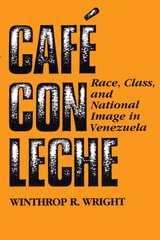
Café con leche
Race, Class, and National Image in VenezuelaBy Winthrop R. Wright
University of Texas Press, 1990
For over a hundred years, Venezuelans have referred to themselves as a café con leche (coffee with milk) people. This colorful expression well describes the racial composition of Venezuelan society, in which European, African, and Indian peoples have intermingled to produce a population in which almost everyone is of mixed blood. It also expresses a popular belief that within their blended society Venezuelans have achieved a racial democracy in which people of all races live free from prejudice and discrimination. Whether or not historical facts actually support this popular perception is the question Winthrop Wright explores in this study.
Wright's research suggests that, contrary to popular belief, blacks in Venezuela have not enjoyed the full benefits of racial democracy. He finds that their status, even after the abolition of slavery in 1854, remained low in the minds of Venezuelan elites, who idealized the European somatic type and viewed blacks as inferior. Indeed, in an effort to whiten the population, Venezuelan elites promoted European immigration and blocked the entry of blacks and Asians during the early twentieth century.
These attitudes remained in place until the 1940s, when the populist Acción Democrática party (AD) challenged the elites' whitening policies. Since that time, blacks have made significant strides and have gained considerable political power. But, as Wright reveals, other evidence suggests that most remain social outcasts and have not accumulated significant wealth. The popular perception of racial harmony in Venezuela hides the fact of ongoing discrimination.
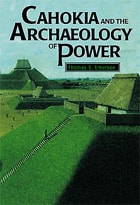
Cahokia and the Archaeology of Power
Thomas E. Emerson
University of Alabama Press, 1997
Examines the authority a ruling elite exercised over the surrounding countryside through a complex of social, political, and religious symbolism
This study uses the theoretical concepts of agency, power, and ideology to explore the development of cultural complexity within the hierarchically organized Cahokia Middle Mississippian society of the American Bottom from the 11th to the 13th centuries. By scrutinizing the available archaeological settlement and symbolic evidence, Emerson demonstrates that many sites previously identified as farmsteads were actually nodal centers with specialized political, religious, and economic functions integrated into a centralized administrative organization. These centers consolidated the symbolism of such 'artifacts of power' as figurines, ritual vessels, and sacred plants into a rural cult that marked the expropriation of the cosmos as part of the increasing power of the Cahokian rulers.
During the height of Cahokian centralized power, it is argued, the elites had convinced their subjects that they ruled both the physical and the spiritual worlds. Emerson concludes that Cahokian complexity differs significantly in degree and form from previously studied Eastern Woodlands chiefdoms and opens new discussion about the role of rural support for the Cahokian ceremonial center.

Cahokia and the Hinterlands
Middle Mississippian Cultures of the MidwestEdited by Thomas E. Emerson and R. Barry Lewis
University of Illinois Press, 1991
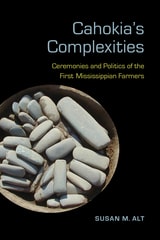
Cahokia's Complexities
Ceremonies and Politics of the First Mississippian FarmersSusan M. Alt
University of Alabama Press, 2018
The reasons for the rise and fall of early cities and ceremonial centers around the world have been sought for centuries. In the United States, Cahokia has been the focus of intense archaeological work to explain its mysteries. Cahokia was the first and exponentially the largest of the Mississippian centers that appeared across the Midwest and Southeast after AD 1000. Located near present-day East St. Louis, Illinois, the central complex of Cahokia spanned more than 12 square kilometers and encompassed more than 120 earthen mounds.
As one of the foremost experts on Cahokia, Susan M. Alt addresses long-standing considerations of eastern Woodlands archaeology—the beginnings, character, and ending of Mississippian culture (AD 1050–1600)—from a novel theoretical and empirical vantage point. Through this case study on farmers’ immigration and resettling, Alt’s narrative reanalyzes the relationship between administration and diversity, incorporating critical new discoveries and archaeological patterns from outside of Cahokia.
Alt examines the cultural landscape of the Cahokia flood plain and the layout of one extraordinary upland site, Grossman, as an administrative settlement where local farmers might have seen or participated in Cahokian rituals and ceremonies involving a web of ancestors, powers, and places. Alt argues that a farming district outside the center provides definitive evidences of the attempted centralized administration of a rural hinterland.
Cahokia, the Great Native American Metropolis
Biloine Whiting Young and Melvin L. Fowler
University of Illinois Press, 2000
Cahuilla Nation Activism and the Tribal Casino Movement
Theodor P. Gordon
University of Nevada Press, 2018
Cahuilla Nation Activism and the Tribal Casino Movement tells the bigger story of how the Cahuilla nations—including the Cabazon—have used self-reliance and determination to maintain their culture and independence against threats past and present. From California’s first governor’s “war of extermination” against native peoples through today’s legal and political challenges, Gordon shows that successful responses have depended on the Cahuilla’s ability to challenge non-natives’ assumptions and misconceptions.
Cairo Pop
Youth Music in Contemporary EgyptDaniel J. Gilman
University of Minnesota Press, 2014
Cairo Pop is the first book to examine the dominant popular music of Egypt, shababiyya. Scorned or ignored by scholars and older Egyptians alike, shababiyya plays incessantly in Cairo, even while Egyptian youth joined in mass protests against their government, which eventually helped oust longtime Egyptian president Hosni Mubarak in early 2011. Living in Cairo at the time of the revolution, Daniel Gilman saw, and more importantly heard, the impact that popular music can have on culture and politics. Here he contributes a richly ethnographic analysis of the relationship between mass-mediated popular music, modernity, and nationalism in the Arab world.
Before Cairo Pop, most scholarship on the popular music of Egypt focused on musiqa al-ṭarab. Immensely popular in the 1950s and ’60s and even into the ’70s, musiqa al-ṭarab adheres to Arabic musical theory, with non-Western scales based on tunings of the strings of the ‘ud—the lute that features prominently, nearly ubiquitously, in Arabic music. However, today one in five Egyptians is between the ages of 15 and 24; half the population is under the age of 25. And shababiyya is their music of choice. By speaking informally with dozens of everyday young people in Cairo, Gilman comes to understand shababiyya as more than just a musical genre: sometimes it is for dancing or seduction, other times it propels social activism, at others it is simply sonic junk food.
In addition to providing a clear Egyptian musical history as well as a succinct modern political history of the nation, Cairo Pop elevates the aural and visual aesthetic of shababiyya—and its role in the lives of a nation’s youth.
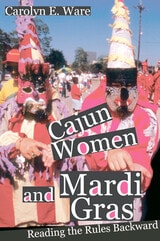
Cajun Women and Mardi Gras
Reading the Rules BackwardCarolyn E. Ware
University of Illinois Press, 2006
Cajun Women and Mardi Gras is the first book to explore the importance of women’s contributions to the country Cajun Mardi Gras tradition, or Mardi Gras “run.” Most Mardi Gras runs--masked begging processions through the countryside, led by unmasked capitaines--have customarily excluded women. Male organizers explain that this rule protects not only the tradition’s integrity but also women themselves from the event’s rowdy, often drunken, play.
Throughout the past twentieth century, and especially in the past fifty years, women in some prairie communities have insisted on taking more active and public roles in the festivities. Carolyn E. Ware traces the history of women’s participation as it has expanded from supportive roles as cooks and costume makers to increasingly public performances as Mardi Gras clowns and (in at least one community) capitaines. Drawing on more than a decade of fieldwork interviews and observation in Mardi Gras communities, Ware focuses on the festive actions in Tee Mamou and Basile to reveal how women are reshaping the celebration as creative artists and innovative performers.

Calamities of Exile
Three Nonfiction NovellasLawrence Weschler
University of Chicago Press, 1998
"Beautiful but harrowing chronicles of three exiles that probe the moral and personal risks of their encounters with totalitarianism. . . . Piercing and timely."—Kirkus Reviews, starred review
"Weschler . . . combines a novelist's gift for drama with the objectivity and research skills of a journalist. . . . The result is three gripping profiles of very human but also extraordinary men."—Publishers Weekly
"[Weschler's] thorough accounting of the men's covert operations, assumed identities and strained relationships with fathers, wives, and colleagues creates a disturbing triptych of the perils of totalitarianism."—Lance Gould, New York Times Book Review
"Weschler tells these three tragic tales with an admirable combination of psychological penetration, intellectual thrust, concision and compassion."—Francis King, Spectator
"Endlessly absorbing. . . . Breathtaking."—Jeri Laber, Los Angeles Times Book Review