323 books match the query 'Southeast Asia' and 28 start with c
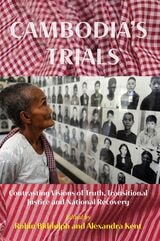
cover of Cambodia's Trials: Contrasting Visions of Truth, Transitional Justice and National Recovery

Cambodia's Trials

Contrasting Visions of Truth, Transitional Justice and National Recovery

Edited by Robin Biddulph and Alexandra Kent

National University of Singapore Press, 2023

New insights into understanding how Cambodia grapples with its traumatic historical past. 

More than four decades have passed since the end of Khmer Rouge rule in Cambodia in 1979. Even so, the country is still coming to terms with the destruction wrought by the Khmer Rouge during both the time they were in power and during the period of guerrilla resistance that lasted until 1998. The Khmer Rouge Tribunal, or the Extraordinary Chambers in the Court of Cambodia (ECCC), was established in 2006 to bring the Khmer Rouge leadership to justice. In many ways a product of the 1990s, when liberal democracy appeared to be on the rise both in Cambodia and internationally, the ECCC was imagined as a transitional justice initiative that would help ease the transition to liberal democracy. 

The ECCC has long been the focus of scholarly attention in Cambodia’s recovery, but this compelling study argues that such an approach is dated, noting that the political circumstances in which the ECCC was born have since changed profoundly, both globally and locally. Cambodia’s current situation can no longer be analyzed solely in terms of transitional justice narratives or the work of the ECCC, and other ways in which Cambodians have come to terms with their past and built new lives must be considered. By decentering the ECCC in the scholarly narrative of Cambodia’s recovery, the volume’s authors offer fascinating new insights into the Khmer Rouge period and more recent years of social, cultural, and political change in Cambodia.
[more]
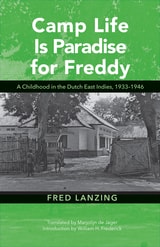
cover of Camp Life Is Paradise for Freddy: A Childhood in the Dutch East Indies, 1933–1946

Camp Life Is Paradise for Freddy

A Childhood in the Dutch East Indies, 1933–1946

Fred Lanzing

Ohio University Press, 2017

“Children see and hear what is there; adults see and hear what they are expected to and mainly remember what they think they ought to remember,” David Lowenthal wrote in The Past Is a Foreign Country. It is on this fraught foundation that Fred Lanzing builds this memoir of his childhood in a Japanese internment camp for Dutch colonialists in the East Indies during the World War II.

When published in the Netherlands in 2007, the book triggered controversy, if not vitriol, for Lanzing’s assertion that his time in the camp was not the compendium of horrors commonly associated with the Dutch internment experience. Despite the angry reception, Lanzing’s account corresponds more closely with the scant historical record than do most camp memoirs. In this way, Lanzing’s work is a substantial addition to ongoing discussions of the politics of memory and the powerful—if contentious—contributions that subjective accounts make to historiography and to the legacies of the past.

Lanzing relates an aspect of the war in the Pacific seldom discussed outside the Netherlands and, by focusing on the experiences of ordinary people, expands our understanding of World War II in general. His compact, beautifully detailed account will be accessible to undergraduate students and a general readership and, together with the introduction by William H. Frederick, is a significant contribution to literature on World War II, the Dutch colonial experience, the history of childhood, and Southeast Asian history.
[more]
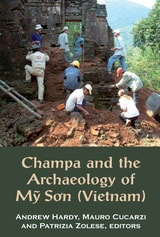
cover of Champa and the Archaeology of M? So'n (Vietnam)

Champa and the Archaeology of M? So'n (Vietnam)

Edited by Andrew Hardy, Mauro Cucarzi, and Patrizia Zolese

National University of Singapore Press, 2009
The kings of ancient Champa, a civilization located in the central region of today's Vietnam, started building sacred temples in a circular valley more than 1500 years ago. The monuments, now known by the Vietnamese name M? So'n, were discovered by nineteenth-century colonial soldiers and first studied by the French architect Henri Parmentier. Bombed during the Vietnam War, the ruins of the brick towers, decorated with exquisite carvings and sculptures, were designated as a UNESCO World Cultural Heritage site in 1999. An Italian team has worked at the site for the last ten years, doing archaeological research and restoration work in cooperation with Vietnamese specialists. This book is the first published volume based on their efforts. The opening section consists of historical, anthropological and architectural studies of the civilization of Champa. The remainder of the book presents an unusually intimate and extensively illustrated portrait of the archaeologists' research and restoration work at M? So'n. While this book is important for specialists and students of the history and archaeology of Champa and Southeast Asia, it also tells a fascinating story that will appeal to general readers and visitors to this exceptional archaeological site.
[more]
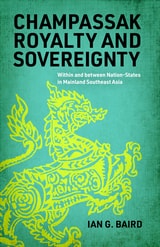
cover of Champassak Royalty and Sovereignty: Within and between Nation-States in Mainland Southeast Asia

Champassak Royalty and Sovereignty

Within and between Nation-States in Mainland Southeast Asia

Ian G. Baird

University of Wisconsin Press, 2024

The Kingdom of Champassak was founded in 1713 in what is now southern Laos, and its royal lineage, the House of Champassak, continues to the present. In this historical study of Champassak, Ian G. Baird explores the ways it has asserted its sovereignty across time and through monumental historical shifts, including the delineation of national boundaries for Laos, Thailand, and Cambodia in the nineteenth and twentieth centuries.

In re-creating this story, Baird draws not only on a dazzling variety of primary sources in English, French, Lao, and Thai but also on many years spent in conversation with members of the Na Champassak family, who are now spread across a wide geographical area, from Laos and Thailand to France and the United States. Each chapter treats one historical period, identifying the Champassak approach to sovereignty during that time. Through this deep history, Baird shows how sovereign power, even within one case, takes a wide range of forms, always contingent, contested, and uneven across space and time.
[more]
cover of Change and the Persistence of Tradition in India: Five Lectures

Change and the Persistence of Tradition in India

Five Lectures

Richard L. Park, Editor

University of Michigan Press, 1971
The lectures presented in this volume were given during the summer of 1970 under the sponsorship of the CIC Summer Program on South Asia and the Center for South and Southeast Asian Studies of the University of Michigan. It should be recognized that these essays appear in revised lecture form, and not as fully polished scholarly papers. They carry nevertheless the authority—and no little verve—of experienced scholars concerned with both the traditions and the changes so characteristic of modern India. [v]
[more]
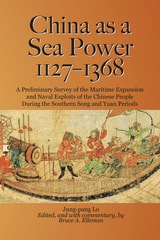
cover of China as a Sea Power, 1127–1368: A Preliminary Survey of the Maritime Expansion and Naval Exploits of the Chinese People During the Southern Song and Yuan Periods

China as a Sea Power, 1127–1368

A Preliminary Survey of the Maritime Expansion and Naval Exploits of the Chinese People During the Southern Song and Yuan Periods

Lo Jung-pang

National University of Singapore Press, 2012

Lo Jung-pang argues that during each of the three periods when imperial China embarked on maritime enterprises (the Qin and Han dynasties, the Sui and early Tang dynasties, and Song, Yuan, and early Ming dynasties), coastal states took the initiative at a time when China was divided, maritime trade and exploration subsequently peaked when China was strong and unified, and declined as Chinese power weakened. At such times, China's people became absorbed by internal affairs, and state policy focused on threats from the north and the west. These cycles of maritime activity, each lasting roughly five hundred years, corresponded with cycles of cohesion and division, strength and weakness, prosperity and impoverishment, expansion and contraction.


In the early 21st century, a strong and outward looking China is again building up its navy and seeking maritime dominance, with important implications for trade, diplomacy and naval affairs. Events will not necessarily follow the same course as in the past, but Lo Jung-pang's analysis suggests useful questions for the study of events as they unfold and decades to come.
[more]
cover of China's Footprints in Southeast Asia

China's Footprints in Southeast Asia

Edited by Maria Serena I. Diokno, Hsin-Huang Michael Hsiao, and Alan H. Yang

National University of Singapore Press, 2018

The countries that make up Southeast Asia are seeing an incredible resurgence in their economic power. Over the past fifty years, their combined wealth has reached the same level as the United Kingdom and, taken together, they are on track to become the fifth-largest world economy. But that stability and success has drawn the attention of the second largest world economy—China. The emerging superpower is increasingly involved in Southeast Asia as part of the ongoing global realignment. As China deepens its influence across the region, the countries of Southeast Asia are negotiating spaces for themselves in order to respond to—or even challenge—China’s power.
                This is the first book to survey China’s growing role in Southeast Asia along multiple dimensions. It looks closely and skeptically at the multitude of ways that China has built connections in the region, including through trade, foreign aid, and cultural diplomacy. It incorporates examples such as the operation of Confucius Institutes in Indonesia or the promotion of the concept of guangxi.China’s Footprints in Southeast Asia raises the question of whether the Chinese efforts are helpful or disruptive and explores who it is that really stands to benefit from these relationships. The answers differ from country to country, but, as this volume suggests, the footprint of hard and soft power always leaves a lasting mark on other countries’ institutions.
 
[more]
cover of Chinese Business in the Making of a Malay State, 1882-1941: Kedah and Penang

Chinese Business in the Making of a Malay State, 1882-1941

Kedah and Penang

Wu Xiao An

National University of Singapore Press, 2010

The Chinese in colonial Malaya were noted for their involvement in revenue farming, the rice trade, mining and estates, and pawnbroking. However, the Chinese presence was also significant in broader economic and social spheres, and the wealth and power of the Chinese community helped fuel the emerging colonial state and the modern transformation of Southeast Asia. In Chinese Business in the Making of a Malay State, Wu Xiao An argues persuasively that Chinese ventures owed much of their success to the flexibility and dynamism of Chinese family and economic networks, and the moral imperatives that governed relationships within the Chinese community.
 Using Penang and Kedah as a case study, Wu draws on archival sources, family histories and an examination of legal arrangements and the press to show that personal business and business networks were not bound by the territorial borders of traditional or modern states, but extended across much of Southeast Asia and into China. His demonstration of the complexity of interactions involving new migrants, sojourners and settlers, both Chinese and non-Chinese, challenges understandings of state formation and economic growth in colonial Malaya based on ethnic stereotypes and accounts of events limited by fixed political boundaries.
[more]
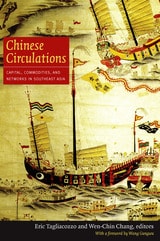
cover of Chinese Circulations: Capital, Commodities, and Networks in Southeast Asia

Chinese Circulations

Capital, Commodities, and Networks in Southeast Asia

Eric Tagliacozzo and Wen-Chin Chang, eds.

Duke University Press, 2011

Chinese merchants have traded with Southeast Asia for centuries, sojourning and sometimes settling, during their voyages. These ventures have taken place by land and by sea, over mountains and across deserts, linking China with vast stretches of Southeast Asia in a broad, mercantile embrace. Chinese Circulations provides an unprecedented overview of this trade, its scope, diversity, and complexity. This collection of twenty groundbreaking essays foregrounds the commodities that have linked China and Southeast Asia over the centuries, including fish, jade, metal, textiles, cotton, rice, opium, timber, books, and edible birds’ nests. Human labor, the Bible, and the coins used in regional trade are among the more unexpected commodities considered. In addition to focusing on a certain time period or geographic area, each of the essays explores a particular commodity or class of commodities, following its trajectory from production, through exchange and distribution, to consumption. The first four pieces put Chinese mercantile trade with Southeast Asia in broad historical perspective; the other essays appear in chronologically ordered sections covering the precolonial period to the present. Incorporating research conducted in Chinese, Japanese, Vietnamese, Thai, Burmese, Malay, Indonesian, and several Western languages, Chinese Circulations is a major contribution not only to Sino-Southeast Asian studies but also to the analysis of globalization past and present.

Contributors. Leonard Blussé, Wen-Chin Chang, Lucille Chia, Bien Chiang, Nola Cooke, Jean DeBernardi, C. Patterson Giersch, Takeshi Hamashita, Kwee Hui Kian, Li Tana, Lin Man-houng, Masuda Erika, Adam McKeown, Anthony Reid , Sun Laichen, Heather Sutherland, Eric Tagliacozzo, Carl A. Trocki, Wang Gungwu, Kevin Woods, Wu Xiao
[more]
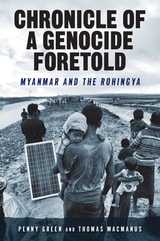
cover of Chronicle of a Genocide Foretold: Myanmar and the Rohingya

Chronicle of a Genocide Foretold

Myanmar and the Rohingya

Penny Green

Rutgers University Press, 2027

Chronicle of a Genocide Foretold is a powerful account of one of the most devastating human crises of the 21st century. Drawing on firsthand research conducted in Burma (Myanmar) and neighboring countries, the book uncovers how the Rohingya Muslims have been systematically isolated, impoverished, and targeted in a state-led genocidal campaign. Through more than 150 interviews with survivors, local officials, religious leaders, and international actors, the authors reveal how discrimination, mass displacement, and organized brutality have created conditions that meet the legal, criminological, and moral definition of genocide. The book also challenges the silence and complicity of the international community. Accessible and grounded in rigorous research, this book speaks to scholars, activists, policymakers, and anyone concerned with justice, human rights, and the global failure to prevent genocide.
[more]
cover of City of Screens: Imagining Audiences in Manila's Alternative Film Culture

City of Screens

Imagining Audiences in Manila's Alternative Film Culture

Jasmine Nadua Trice

Duke University Press, 2021
In City of Screens Jasmine Nadua Trice examines the politics of cinema circulation in early-2000s Manila. She traces Manila's cinema landscape by focusing on the primary locations of film exhibition and distribution: the pirated DVD district, mall multiplexes, art-house cinemas, the university film institute, and state-sponsored cinematheques. In the wake of digital media piracy and the decline of the local commercial film industry, the rising independent cinema movement has been a site of contestation between filmmakers and the state, each constructing different notions of a prospective, national public film audience. Discourses around audiences become more salient given that films by independent Philippine filmmakers are seldom screened to domestic audiences, despite their international success. City of Screens provides a deeper understanding of the debates about the competing roles of the film industry, the public, and the state in national culture in the Philippines and beyond.
[more]
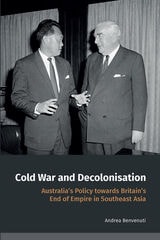
cover of Cold War and Decolonisation: Australia's Policy towards Britain's End of Empire in Southeast Asia

Cold War and Decolonisation

Australia's Policy towards Britain's End of Empire in Southeast Asia

Andrea Benvenuti

National University of Singapore Press, 2017
In this book, Andrea Benvenuti discusses the development of Australia’s foreign and defense policies toward Malaya and Singapore in light of the redefinition of Britain’s imperial role in Southeast Asia and the formation of new postcolonial states. Benvenuti sheds light on the impact of Britain on Australia’s political and strategic interests in Southeast Asia during the Cold War. It will be of interest to historians of Australia’s foreign relations, Southeast Asia, and the British Empire and decolonization.
 
[more]
cover of Cold War and Sinophone Culture at the Borders

Cold War and Sinophone Culture at the Borders

Shuang Shen

University of Michigan Press, 2027

Cold War and Sinophone Culture at the Borders examines Sinophone literary and cultural production in relation to the politics of the global Cold War and decolonization in Hong Kong, Singapore, and Malaysia. As we reckon with the historical and contemporary geopolitical standoffs in the Cold War–divided territories, Shuang Shen draws attention to the diasporic communities outside Chinese sovereign territories and shows that these supposedly peripheral locations were in fact significant cultural and political hot spots. 

Shen demonstrates how Cold War borders exerted geo-power over strategic hot spots, organized global flows of populations and cultures, hardened the boundaries of aesthetic debates, and managed interracial relationships and plurilingual exchange. The multifold bordering effect in turn complicates the common perception of the border as a mechanism of territorial division. Cold War and Sinophone Culture at the Borders proposes that a critical examination of borders—not just territorial divisions, but also social, political, and aesthetic boundaries––can tap into different structures of power without needing to incorporate them into a single binary framework of the metropole versus colony.
[more]
cover of Colonial Law Making: Cambodia under the French

Colonial Law Making

Cambodia under the French

Sally Frances Low

National University of Singapore Press, 2023

An important case study in the history of law under colonialism. 

Covering a previously neglected area of Cambodian history, Colonial Law Making explores the structural forces and contingent exchanges that shaped colonial law in Cambodia and examines its post-independence colonial legacy.

The court of King Norodom and the temples of Angkor Wat became orientalist icons in the French colonial imagination, perpetuating an image of the Protectorate (1863–1953) as special and worthy of preservation. This contributed to exceptionalism in the way the Kingdom was colonized, including through law. Drawing on previously unexamined archival material, Sally Low presents a comparative case study of French approaches to colonial law, jurisdiction, and protection. Although the voices of non-elite Cambodians are largely absent from the archives, their influence on colonial law is evident as they resisted efforts to regulate their lives and their land. Low argues that the result was a set of state legal institutions and an indigenous jurisdiction that blended Cambodian and French notions of patronage and royal power as the source and authority for law.

This work is a case study of colonial law as an instrument of control and administration in an indirectly ruled colony. It adds depth to our understanding of the impact of European colonial law and the significance of different forms of colonial rule—direct, indirect, and unofficial. It is easily accessible for non-lawyers and is a must-read for those interested in the recent past of Southeast Asia and the countries that were previously colonized as French Indochina.
[more]
cover of Colonial Pathologies: American Tropical Medicine, Race, and Hygiene in the Philippines

Colonial Pathologies

American Tropical Medicine, Race, and Hygiene in the Philippines

Warwick Anderson

Duke University Press, 2006

Colonial Pathologies is a groundbreaking history of the role of science and medicine in the American colonization of the Philippines from 1898 through the 1930s. Warwick Anderson describes how American colonizers sought to maintain their own health and stamina in a foreign environment while exerting control over and “civilizing” a population of seven million people spread out over seven thousand islands. In the process, he traces a significant transformation in the thinking of colonial doctors and scientists about what was most threatening to the health of white colonists. During the late nineteenth century, they understood the tropical environment as the greatest danger, and they sought to help their fellow colonizers to acclimate. Later, as their attention shifted to the role of microbial pathogens, colonial scientists came to view the Filipino people as a contaminated race, and they launched public health initiatives to reform Filipinos’ personal hygiene practices and social conduct.

A vivid sense of a colonial culture characterized by an anxious and assertive white masculinity emerges from Anderson’s description of American efforts to treat and discipline allegedly errant Filipinos. His narrative encompasses a colonial obsession with native excrement, a leper colony intended to transform those considered most unclean and least socialized, and the hookworm and malaria programs implemented by the Rockefeller Foundation in the 1920s and 1930s. Throughout, Anderson is attentive to the circulation of intertwined ideas about race, science, and medicine. He points to colonial public health in the Philippines as a key influence on the subsequent development of military medicine and industrial hygiene, U.S. urban health services, and racialized development regimes in other parts of the world.

[more]
cover of Coming Together: Singapore and the Idea of the Entrepot

Coming Together

Singapore and the Idea of the Entrepot

Jeff Khoo

National University of Singapore Press, 2027

Explores the circumstances and elements that make for a successful Southeast Asian entrepôt.

What made modern Singapore and fifteenth-century Malacca so exceptional in their success in trade, and why did so many other attempts fail to coalesce? Coming Together recasts the founding of modern Singapore as the culmination of a long tradition of alliance-building within the “straits and peninsula,” that sliver of maritime Southeast Asia that connects the Indian Ocean with the China Seas. From abortive Franco-Siamese projects in the 1680s, through lonely failure at Poulo Condor and stubborn frustration on the Burmese “Eastern Coast,” to the persistent enterprise of Bugis and Malay rulers during the 1770s and 1780s, Coming Together follows an evolving cast of princes, captains, merchants, and missionaries drawn together by a powerful idea: that the trade of Asia could be concentrated at a single and wildly prosperous place.

Long-neglected French archival materials illuminate events long distorted by colonial historiography, revealing the entrepôt as a transcultural project sustained by tributary diplomacy, treaty-making, and the pragmatic exchange of protection for commercial privilege. The result is a fundamental reinterpretation of the origins of Penang and Singapore—and of the alliance-building that lies at the core of modern Singapore.

[more]
cover of Communism, Religion, and Revolt in Banten in the Early Twentieth Century: Mis Sea#86

Communism, Religion, and Revolt in Banten in the Early Twentieth Century

Mis Sea#86

Michael Williams

Ohio University Press, 1990

Twice in this century popular revolts against colonial rule have occured in the Banten district of West Java. These revolts, conducted largely under an Islamic leadership, also proclaimed themselves Communist. Islamic Communism is seemingly a paradox. This is especially the case when one considers that probably no religion has proved more resistant to Communist ideology than Islam.

Michael Williams here details the complicated history of the Bantenese revolts in the twentieth century and probes the ideological riddle of Islamic Communism. Modern history is replete with examples of regions with a long history of organizing themselves politically to resist intrusion on their territory, resources, and people. This book establishes that in Indonesia, the Bantenese were among the most practiced exponents of resistance.
[more]
cover of Compadre Colonialism: Studies in the Philippines under American Rule

Compadre Colonialism

Studies in the Philippines under American Rule

Norman G. Owen, Editor

University of Michigan Press, 1971
This volume is a manifestation of the continuing interest of scholars at the University of Michigan in Philippine studies. Written by a generation of post-colonial scholars, it attempts to unravel some of the historical problems of the colonial era. Again and again the authors focus on the relationship of the ilustrados and the Americans, on the problems of continuity and discontinuity, and on the meaning of “modernization” in the Philippine context. As part of the Vietnam generation, these authors have looked at American imperialism with a new perspective, and yet their analysis is tempered, not strident, and reflective, not dogmatic. Perhaps the most central theme to emerge is the depth of the contradiction inherent in the American colonial experiment. [vi-vii]
[more]
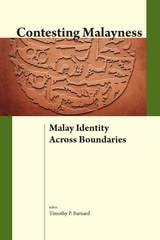
cover of Contesting Malayness: Malay Identity Across Boundaries

Contesting Malayness

Malay Identity Across Boundaries

Edited by Timothy P. Barnard

National University of Singapore Press, 2014
People who call themselves Malay - Melayu - are found in many countries, united by a notional shared identity but divided by political boundaries, divergent histories, variant dialects and peculiarities of local experience. While the term 'Malay' is widely used and readily understood in Southeast Asia, it remains elusive and open to varying interpretations. "Malay" as an identity, or nationality, is one of the most challenging and perplexing concepts in the multi-ethnic world of Southeast Asia. This book assembles research on the theme of how Malays have identified themselves in time and place, developed by a wide range of scholars. The authors include Malaysian anthropologist Shamsul A.B., Indonesian poet Tenas Effendy, and linguists and historians based in Australia, the Netherlands, Singapore and the U.S.A. While the authors describe some of the historical and cultural patterns that make up the Malay world, taken as a whole their work demonstrates the impossibility of offering a definition or even a description of 'Melayu' that is not rife with omissions and contradictions.
[more]
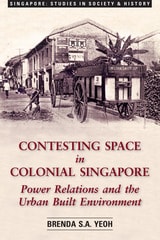
cover of Contesting Space in Colonial Singapore: Power Relations and the Urban Built Environment

Contesting Space in Colonial Singapore

Power Relations and the Urban Built Environment

Brenda S.A. Yeoh

National University of Singapore Press, 2003
In the British colonial city of Singapore, municipal authorities and Asian communities faced off over numerous issue. As the city expanded, disputes arose in connection with sanitation, housing, street names, control over pedestrian 'five-foot-ways', and sacred spaces such as burial grounds. Brenda Yeoh's Contesting Space in Colonial Singapore details these conflicts and how they shaped the city. The British administration structured the private and public environments of the city with an eye toward shaping human behaviour, following scientific principles and the lessons of urban planning in other parts of the world. For the Asian communities, Singapore was the place where they lived according to their own values, priorities and resources. The two perceptions of the city frequently clashed, and the author reads the cityscape of Singapore as the result of this contest between discipline and resistance. Drawing on meticulous research and a theoretically sophisticated use of cultural and social geography, post-colonial historical discourse, and social theory, the author offers a compelling picture of a critical stage in Singapore's past. It is an important contribution to the study of colonial cities and an indispensable resource for understanding the shape of modern Singapore.
[more]
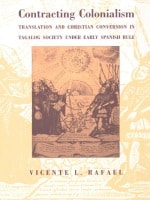
cover of Contracting Colonialism: Translation and Christian Conversion in Tagalog Society Under Early Spanish Rule

Contracting Colonialism

Translation and Christian Conversion in Tagalog Society Under Early Spanish Rule

Vicente L. Rafael

Duke University Press, 1993

In an innovative mix of history, anthropology, and post-colonial theory, Vicente L. Rafael examines the role of language in the religious conversion of the Tagalogs to Catholicism and their subsequent colonization during the early period (1580–1705) of Spanish rule in the Philippines. By tracing this history of communication between Spaniards and Tagalogs, Rafael maps the conditions that made possible both the emergence of a colonial regime and resistance to it. Originally published in 1988, this new paperback edition contains an updated preface that places the book in theoretical relation to other recent works in cultural studies and comparative colonialism.
[more]
cover of Creole Kingdoms in Southeast Asia: Slave-Gathering Warfare and Cultural Exchange in Burma, Siam, and Manipur

Creole Kingdoms in Southeast Asia

Slave-Gathering Warfare and Cultural Exchange in Burma, Siam, and Manipur

Bryce G. Beemer

National University of Singapore Press, 2027

Examines the cultural consequences of slave-gathering warfare.

Long-distance slave-gathering warfare reshuffled the populations of mainland Southeast Asia between the eighteenth and nineteenth centuries. In this lightly populated region, people were power, and warfare between kingdoms was dedicated to the enslavement and forced relocation of defeated peoples. In the Southeast Asian context, war slaves were often valued and exploited for native talents and knowledge. In Upper Burma, for example, captured artisans, performers, pundits, weavers, and elephant trainers were made the king’s property and incorporated into a vast and tightly organized force of coerced laborers.

The enslaved became critical agents in the transmission of artistic practices, knowledge, religious beliefs, and exotic skills and talents. Using the concept of creolization as a conceptual anchor, Creole Kingdoms offers new insights into the many ways that war slaves and their descendants creatively built, popularized, and consolidated cultural practices across the cosmopolitan kingdoms of mainland Southeast Asia.

Creole Kingdoms opens up new terrain for both future generations of Southeast Asian scholars and general readers from the mainland who want to explore the cultural history of their home.
[more]
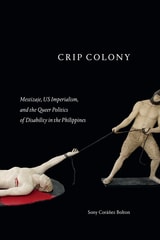
cover of Crip Colony: Mestizaje, US Imperialism, and the Queer Politics of Disability in the Philippines

Crip Colony

Mestizaje, US Imperialism, and the Queer Politics of Disability in the Philippines

Sony Coráñez Bolton

Duke University Press, 2023
In Crip Colony, Sony Coráñez Bolton examines the racial politics of disability, mestizaje, and sexuality in the Philippines. Drawing on literature, poetry, colonial records, political essays, travel narratives, and visual culture, Coráñez Bolton traces how disability politics colluded with notions of Philippine mestizaje. He demonstrates that Filipino mestizo writers in the late nineteenth and early twentieth centuries used mestizaje as a racial ideology of ability that marked Indigenous inhabitants of the Philippines as lacking in civilization and in need of uplift and rehabilitation. Heteronormative, able-bodied, and able-minded mixed-race Filipinos offered a model and path for assimilation into the US empire. In this way, mestizaje allowed for supposedly superior mixed-race subjects to govern the archipelago in collusion with American imperialism. By bringing disability studies together with studies of colonialism and queer-of-color critique, Coráñez Bolton extends theorizations of mestizaje beyond the United States and Latin America while considering how Filipinx and Filipinx American thought fundamentally enhances understandings of the colonial body and the racial histories of disability.
[more]
cover of Critical Studies in Indian Grammarians I: The Theory of Homogeneity (Savar?ya)

Critical Studies in Indian Grammarians I

The Theory of Homogeneity (Savar?ya)

Madhav M. Deshpande

University of Michigan Press, 1975
In the historical study of the Indian grammarian tradition, a line of demarcation can often be drawn between the conformity of a system with the well-known grammar of Pāṇini and the explanatory effectiveness of that system. One element of Pāṇini’s grammar that scholars have sometimes struggled to bring across this line of demarcation is the theory of homogeneity, or sāvarṇya, which concerns the final consonants in Pāṇini’s reference catalog, as well as phonetic similarities between sounds. While modern Sanskrit scholars understand how to interpret and apply Pāṇini’s homogeneity, they still find it necessary to unravel the history of varying interpretations of the theory in subsequent grammars.
Madhav Deshpande’s The Theory of Homogeneity provides a thorough account of the historical development of the theory. Proceeding first to study this conception in the Pāṇinian tradition, Deshpande then passes on to other grammatical systems. Deshpande gives attention not only to the definitions of homogeneity in these systems but also the implementation of the theory in those respective systems. Even where definitions are identical, the concept may be applied quite differently, in which cases Deshpande examines by considering the historical relationships among the various systems.
[more]
cover of Cross-Cultural Exchange and the Colonial Imaginary: Global Encounters via Southeast Asia

Cross-Cultural Exchange and the Colonial Imaginary

Global Encounters via Southeast Asia

Edited by H. Hazel Hahn

National University of Singapore Press, 2019
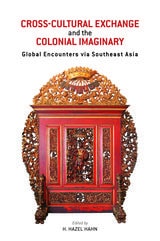
For years, the study of how culture operates in colonial contexts was dominated by the ideas of transmission and influence. Yet the more we learn, the less useful those concepts seem to be. This collection deliberately complicates the binary of colonizer and colonized in order to establish a more effective framework for understanding. The contributors address a wide range of questions, rooted in specific colonial experiences: How can a controversy about forms of deference in Java reveal tensions around colonial policies and the rise of nationalism? What was Vietnamese about the French colonial governor’s palace in Hanoi? What can the circulation of jazz in Asia tell us about its evolution, circuits of exchange, colonial culture, and its appropriation? Through such inquiries, the volume traces the multilinear trajectories of the flow of decorative objects, architectural styles, photographs, sartorial practices, music, deference rituals, and ethnographic knowledge, in a transimperial framework within and beyond Southeast Asia and Europe. Highlighting a wide range of actors along with their motivations and interactions, this volume treats cultural heritage as dynamic processes.
[more]
cover of Cultural Values and Human Ecology in Southeast Asia

Cultural Values and Human Ecology in Southeast Asia

Karl L. Hutterer, A. Terry Rambo, and George Lovelace, Editors

University of Michigan Press, 1981
Ecologists have long based their conceptual frameworks in the natural sciences. Recently, however, they have acknowledged that ecosystems cannot be understood without taking into account human interventions that may have taken place for thousands of years. And for their part, social scientists have recognized that human behavior must be understood in the environment in which it is acted out. Researchers have thus begun to develop the area of “human ecology.” Yet human ecology needs suitable conceptual frameworks to tie the human and natural together.
In response, Cultural Values and Human Ecology uses the framework of cultural values to collect a set of highly diverse contributions to the field of human ecology. Values represent an important and essential aspect of the intellectual organization of a society, integrated into and ordained by the over-arching cosmological system, and constituting the meaningful basis for action, in terms of concreteness and abstraction of content as well as mutability and permanence. Because of this balance, values lend themselves to the kinds of analyses of ecological relationships conducted here, those that demand a reasonable amount of specificity as well as historical stability.
The contributions to Cultural Values and Human Ecology are exceedingly diverse. They include abstract theoretical discussions and specific case studies, ranging across the landscape of Southeast Asia from the islands to southern China. They deal with hunting-gathering populations as well as peasants operating within contemporary nation-states, and they are the work of natural scientists, social scientists, and humanists of Western and Asian origin. Diversity in the backgrounds of the authors contributes most to the varied approaches to the theme of this volume, because differences in cultural background and academic tradition will lead to different research interests and to differences in the empirical approaches chosen to pursue given problems.
[more]
cover of Culture and Economy: The Shaping of Capitalism in Eastern Asia

Culture and Economy

The Shaping of Capitalism in Eastern Asia

Timothy Brook and Hy Van Luong, Editors

University of Michigan Press, 1999
In recent years, most of the economies of Eastern Asia have been absorbed into global capitalism. Capitalism has transformed these economies, but the process has not been one-way. The cultures of Eastern Asia have in turn shaped how capitalism organizes labor, capital, and markets in ways that could not have been anticipated even ten years ago. On the basis of rich empirical analyses of East and Southeast Asia, and with theoretical insights from different approaches in the social sciences, Culture and Economy addresses these issues in both macroscopic and microscopic terms. Specific topics discussed range from the use and reinvention of Confucian and Islamic legacies in South Korea and Malaysia to promote a particular vision of the economy, to the role of family- and network-structured firms and the reliance on trust-based personal networks in Southeast Asia, to the cultures of labor and management in Chinese village enterprises and Vietnamese ceramics firms, as well as in South Korean export processing zones and the current Chinese labor market. These careful case studies suggest that it is inevitable that Eastern Asia will shape, even remake, capitalism into a system of production and consumption beyond its original definition. Timothy Brook is Professor of History, Stanford University. Hy V. Luong is Professor of Anthropology, University of Toronto.
[more]
cover of Culture and the Question of Rights: Forests, Coasts, and Seas in Southeast Asia

Culture and the Question of Rights

Forests, Coasts, and Seas in Southeast Asia

Charles Zerner, ed.

Duke University Press, 2003

This collection of ethnographic and interpretive essays fundamentally alters the debate over indigenous land claims in Southeast Asia and beyond. Based on fieldwork conducted in Malaysia and Indonesia during the 1980s and 1990s, these studies explore new terrain at the intersection of environmental justice, nature conservation, cultural performance, and the politics of making and interpreting claims.
Calling for radical redefinitions of development and ownership and for new understandings of the translation of culture and rights in politically dangerous contexts—natural resource frontiers—this volume links social injustice and the degradation of Southeast Asian environments. Charles Zerner and his colleagues show how geographical areas once viewed as wild and undeveloped are actually cultural artifacts shaped by complex interactions with human societies. Drawing on richly varied sources of evidence and interpretation—from trance dances, court proceedings, tree planting patterns, marine and forest rituals, erotic poems, and codifications of customary law, Culture and the Question of Rights reveals the ironies, complexities, and histories of contemporary communities’ struggles to retain their gardens, forests, fishing territories, and graveyards. The contributors examine how these cultural activities work to both construct and to lay claim to nature. These essays open up new avenues for negotiating indigenous rights against a background of violence, proliferating markets, and global ideas of biodiversity and threatened habitat.

Contributors. Jane Atkinson, Don Brenneis, Stephanie Fried, Nancy Peluso, Marina Roseman, Anna Tsing, Charles Zerner

[more]