Results by title
250 books match the query 'Subjects' and 34 start with c
CASE 2.1 Brenna Schneider at 99Degrees
Carole Carlson and Rachael Weiker
Brandeis University Press, 2024
CASE 2.2 The Kindness of Human Milk
The Founding of Mothers’ MilkBank NortheastNaomi Bromberg Bar-Yam and Mark I. Rosen
Brandeis University Press, 2024
CASE 3.1 Engage or Divest? Trillium Asset Management, Facebook Governance,and Shareholder Advocacy
Monique DeSimone, Jess Lynch-Foust, Douglass Guernsey, and Laura Burroughs
Brandeis University Press, 2024
CASE 3.2A SAMRIDH Blended Finance Facility
Accelerating Pandemic Responseand Building Equitable Health Systems in India (A)Archita Adlakha, Neeta Rao, Achin B. N. Biyani, Ritika Pandey, and Sudheer Nadipally
Brandeis University Press, 2024
CASE 3.2B SAMRIDH Blended Finance Facility
Accelerating Pandemic Responseand Building Equitable Health Systems in India (B)Archita Adlakha, Neeta Rao, Achin B. N. Biyani, Ritika Pandey, and Sudheer Nadipally
Brandeis University Press, 2024
CASE 4.1 HopeWell, Inc.
Della M. Hughes and Marji Erickson Warfield
Brandeis University Press, 2024
CASE 4.2A Tufts Medicine Health Care System
Merging Hospitals in a New Model (A)Maher Tabba and Jon Chilingerian
Brandeis University Press, 2024
CASE 4.2B Tufts Medicine Health Care System
Merging Hospitals in a New Model (B)Maher Tabba and Jon Chilingerian
Brandeis University Press, 2024
CASE 4.3 Aligning Transition Supports and Services for Students With Disabilities
Jennifer Stewart
Brandeis University Press, 2024
CASE 4.4 The Native Plant Ordinance Meeting
Elizabeth V. Sessions
Brandeis University Press, 2024
CASE 5.1 Boston MedFlight
Leveraging Data to Design a New Helicopter AlgorithmMatthew Kriegsman
Brandeis University Press, 2024
CASE 5.2 Ford Hall 2015
Avery Brien, Mónica García, Sonia Kikeri, and Miya Ward
Brandeis University Press, 2024
CASE 5.3 The Interfaith Worker Rights Council Call Center
Joel Cutcher-Gershenfeld
Brandeis University Press, 2024
CASE 6.1 JA Worldwide
Creating a Global BrandKeshia Engwenyi, Julia Robinson-Rosendorff, and Sean C. Rush
Brandeis University Press, 2024
CASE 7.1 Breaking Down Silos to Build Collaborative Systems
Lauren Hajjar, Jody Hoffer Gittell, Ninna Meier, and Bill Gunn
Brandeis University Press, 2024
CASE 7.2 The Unit-BasedTeam Meeting
Joel Cutcher-Gershenfeld
Brandeis University Press, 2024
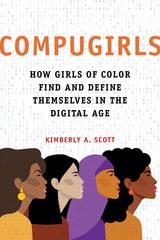
COMPUGIRLS
How Girls of Color Find and Define Themselves in the Digital AgeKimberly A. Scott
University of Illinois Press, 2021
Kimberly A. Scott explores this question and others as she details the National Science Foundation-funded enrichment project COMPUGIRLS. This groundbreaking initiative teaches tech skills to adolescent girls of color but, as importantly, offers a setting that emphasizes empowerment, community advancement, and self-discovery. Scott draws on her experience as an architect of COMPUGIRLS to detail the difficulties of translating participants' lives into a digital context while tracing how the program evolved. The dramatic stories of the participants show them blending newly developed technical and communication skills in ways designed to spark effective action and bring about important change.
A compelling merger of theory and storytelling, COMPUGIRLS provides a much-needed roadmap for understanding how girls of color can find and define their selves in today's digital age.

Chemical Demonstrations, Volume 1
A Handbook for Teachers of ChemistryBassam Z. Shakhashiri
University of Wisconsin Press, 1983
The demonstrations capture interest, teach, inform, fascinate, amaze, and perhaps, most importantly, involve students in chemistry. Nowhere else will you find books that answer, "How come it happens? . . . Is it safe? . . . What do I do with all the stuff when the demo is over?"
Shakhashiri and his collaborators offer 282 chemical demonstrations arranged in 11 chapters. Each demonstration includes seven sections: a brief summary, a materials list, a step-by-step account of procedures to be used, an explanation of the hazards involved, information on how to store or dispose of the chemicals used, a discussion of the phenomena displayed and principles illustrated by the demonstration, and a list of references.

Chemical Demonstrations, Volume 2
A Handbook for Teachers of ChemistryBassam Z. Shakhashiri
University of Wisconsin Press, 1985
The demonstrations capture interest, teach, inform, fascinate, amaze, and perhaps, most importantly, involve students in chemistry. Nowhere else will you find books that answer, "How come it happens? . . . Is it safe? . . . What do I do with all the stuff when the demo is over?"
Shakhashiri and his collaborators offer 282 chemical demonstrations arranged in 11 chapters. Each demonstration includes seven sections: a brief summary, a materials list, a step-by-step account of procedures to be used, an explanation of the hazards involved, information on how to store or dispose of the chemicals used, a discussion of the phenomena displayed and principles illustrated by the demonstration, and a list of references.

Chemical Demonstrations, Volume 3
A Handbook for Teachers of ChemistryBassam Z. Shakhashiri
University of Wisconsin Press, 1989
The demonstrations capture interest, teach, inform, fascinate, amaze, and perhaps, most importantly, involve students in chemistry. Nowhere else will you find books that answer, "How come it happens? . . . Is it safe? . . . What do I do with all the stuff when the demo is over?"
Shakhashiri and his collaborators offer 282 chemical demonstrations arranged in 11 chapters. Each demonstration includes seven sections: a brief summary, a materials list, a step-by-step account of procedures to be used, an explanation of the hazards involved, information on how to store or dispose of the chemicals used, a discussion of the phenomena displayed and principles illustrated by the demonstration, and a list of references. You'll find safety emphasized throughout the book in each demonstration.

Chemical Demonstrations, Volume 4
A Handbook for Teachers of ChemistryBassam Z. Shakhashiri
University of Wisconsin Press, 1992
The demonstrations capture interest, teach, inform, fascinate, amaze, and perhaps, most importantly, involve students in chemistry. Nowhere else will you find books that answer, "How come it happens? . . . Is it safe? . . . What do I do with all the stuff when the demo is over?"
Shakhashiri and his collaborators offer 282 chemical demonstrations arranged in 11 chapters. Each demonstration includes seven sections: a brief summary, a materials list, a step-by-step account of procedures to be used, an explanation of the hazards involved, information on how to store or dispose of the chemicals used, a discussion of the phenomena displayed and principles illustrated by the demonstration, and a list of references. You'll find safety emphasized throughout the book in each demonstration.
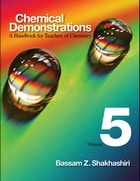
Chemical Demonstrations, Volume 5
A Handbook for Teachers of ChemistryBassam Z. Shakhashiri
University of Wisconsin Press, 2011
Color and light are the focus of this long-awaited fifth volume in the Chemical Demonstrations series, which describes demonstrations that effectively communicate science to both students and general audiences. Using full color illustrations, the book provides meticulous instructions for safely demonstrating colorful phenomena and illustrating scientific principles. A rich introductory section explores the science of color and light, outlines the chemical processes of vision, and explains what happens when visual information enters the human eye and is perceived by the brain. With more than fifty demonstrations and multiple procedures included, this volume offers abundant opportunities to arouse and sustain interest in science for both classroom and public presentations.
Each demonstration includes:
• a brief description of the demonstration
• a materials list
• a step-by-step account of procedures to be used
• an explanation of the potential hazards involved
• information on safely storing and disposing the chemicals used
• a full discussion of the phenomena displayed and principles illustrated
• a list of references.
Created by acclaimed chemists and science educators Bassam Shakhashiri and his collaborators Rodney Schreiner and Jerry Bell, these demonstrations make an impressive addition to the earlier volumes, which have been lauded for guiding teachers and scientists in effectively communicating science. Like all volumes in the series, Volume 5 communicates chemistry using pedagogical knowledge to enhance the effectiveness of demonstrations to all audiences.
Co-Motion
Re-Thinking Power, Subjects, and Feminist and Queer AlliancesPaola Bacchetta
Duke University Press, 2026
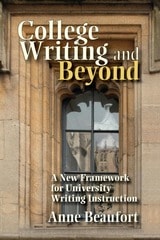
College Writing and Beyond
A New Framework for University Writing InstructionAnne Beaufort
Utah State University Press, 2007
Composition research consistently demonstrates that the social context of writing determines the majority of conventions any writer must observe. Still, most universities organize the required first-year composition course as if there were an intuitive set of general writing "skills" usable across academic and work-world settings.
In College Writing and Beyond: A New Framework for University Writing Instruction, Anne Beaufort reports on a longitudinal study comparing one student’s experience in FYC, in history, in engineering, and in his post-college writing. Her data illuminate the struggle of college students to transfer what they learn about "general writing" from one context to another. Her findings suggest ultimately not that we must abolish FYC, but that we must go beyond even genre theory in reconceiving it.
Accordingly, Beaufort would argue that the FYC course should abandon its hope to teach a sort of general academic discourse, and instead should systematically teach strategies of responding to contextual elements that impinge on the writing situation. Her data urge attention to issues of learning transfer, and to developmentally sound linkages in writing instruction within and across disciplines. Beaufort advocates special attention to discourse community theory, for its power to help students perceive and understand the context of writing.

Colorado
A History of the Centennial State, Fifth EditionCarl Abbott
University Press of Colorado, 2013
The fifth edition tells of conflicts, shifting alliances, and changing ways of life as Hispanic, European, and African American settlers flooded into a region that was already home to Native Americans. Providing a balanced treatment of the entire state’s history—from Grand Junction to Lamar and from Trinidad to Craig—the authors also reveal how Denver and its surrounding communities developed and gained influence.
While continuing to elucidate the significant impact of mining, agriculture, manufacturing, and tourism on Colorado, this edition broadens and focuses its coverage by consolidating material on Native Americans into one chapter and adding a new chapter on sports history. The authors also expand their discussion of the twentieth century with updated sections on the environment, economy, politics, and recent cultural conflicts. New illustrations, updated statistics, and an extensive bibliography including Internet resources enhance this edition.
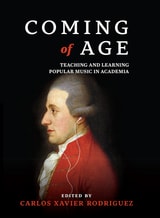
Coming of Age
Teaching and Learning Popular Music in AcademiaEdited by Carlos Rodriguez
Michigan Publishing Services, 2017
This book is a collection of essays originally presented at Ann Arbor Symposium IV, Teaching and Learning Popular Music, at the University of Michigan. Organized into four sections of similar-themed writings, the essays trace numerous discourses, principles, methods, and prospects for popular music education in academia. Additionally, the book contains several features that are useful for modern-day scholars and their institutions. First, it acknowledges the gradual liquidation of traditional disciplinary boundaries, signaling the likely future dominance of interdisciplinary research and collaborations. Second, it values international perspectives of music teaching and learning. Third, the selected topics, methodologies, and predictions provide a working agenda for the future development and success of popular music teaching and learning.
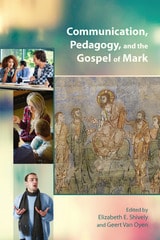
Communication, Pedagogy, and the Gospel of Mark
Elizabeth E. Shively
SBL Press, 2016
Using Mark as a test case, scholars address questions like: How should my research and my approach to the text play out in the classroom? What differences should my academic context and my students' expectations make? How should new approaches and innovations inform interpretation and teaching? This resource enables biblical studies instructors to explore various interpretative approaches and to begin to engage pedagogical issues in our changing world.
Features:
- Ideas that may be adapted for teaching any biblical text
- Diverse perspectives from nine experts in their fields
- Essays include tips, ideas, and lesson plans for the classroom
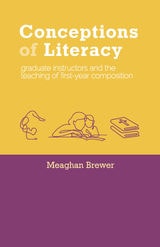
Conceptions of Literacy
Graduate Instructors and the Teaching of First-Year CompositionMeaghan Brewer
Utah State University Press, 2020
Brewer argues that conceptions of literacy undergird the work of writing instructors and that many of the anxieties around composition studies’ disciplinary status are related to the differences perceived between the field’s conceptions of literacy and those of the graduate instructors and adjuncts who teach the majority of composition courses. Conceptions of Literacy makes practical recommendations for how new graduate instructors can begin to perceive and interrogate their conceptions of literacy, which, while influential, are often too personal to recognize.
Connecting Reading & Writing in Second Language Writing Instruction, Second Edition
Alan R. Hirvela
University of Michigan Press, 2016
The new edition features two new chapters. The first is a chapter on assessment because students are now being asked to connect reading and writing in the classroom and on formal assessments like the TOEFL®. The second new chapter is an argument for accounting for transfer elements in the teaching and researching of reading-writing connections.
The goals of this revised volume are to provide: resources for those wishing to pursue reading-writing connections, summaries of the beliefs underlying those connections, ideas for teaching the connections in the classroom, and information about the work others have done to develop this domain of L2 writing.
Content-Based Instruction
What Every ESL Teacher Needs to KnowMarguerite Ann Snow and Donna M. Brinton
University of Michigan Press, 2019
This book introduces readers to the concept of Content-Based Instruction (CBI) through a brief history and countless examples of the many ways this approach can be applied across settings and programs. Whether readers want to deepen their understanding of CBI or get ideas for their own teaching situation, this book provides an overview of CBI and the process of implementing it. The book discusses the three prototype models (theme-based, sheltered, and adjunct), new models (sustained content language teaching, content and language-integrated learning, English-medium instruction, adjunct models, and other hybrid models), and a research-based rationale for using CBI in the classroom. Each section includes reflection questions designed to guide readers to consider how best to implement CBI in their course and program.
Controversies in Second Language Writing, Second Edition
Dilemmas and Decisions in Research and InstructionChristine Pearson Casanave
University of Michigan Press, 2017
The second edition is a thorough revision with all chapters updated to refer to works written since the first edition was published. A few chapters have been added: one devoted to writing in a digital era (Chapter 3); one devoted to the debates about English as a lingua franca, "translingual literacy practices," and other hybrid uses of English that have been ongoing in the last ten years (Chapter 4); and one giving special attention to issues related to writing from sources and plagiarism (Chapter 6).
As with the first edition, the second edition of Controversies is not a book that will teach readers how to do things. Rather, it is a book designed to help readers think and to wrestle with issues in L2 writing that are not easily resolved by how-to prescriptions.
Creating Generative AI Policies
A Guide for Public and Academic LibrariesRobin Hastings
American Library Association, 2026
Though it’s challenging to set policies for a technology that is so young and still in flux, the need is urgent. Because usage of AI presents both opportunities and risks, libraries must be proactive. The WEF (World Economic Forum) predicts that while there may be a loss of 92 million jobs to various AI tools, they see 170 million new jobs and roles emerging from the use of this new technology. Whether or not this proves correct, there are already digital literacy skills, including a basic understanding of the technology around AI, that libraries can help their patrons master; and because of data privacy, security, and ethics issues, library workers require clear AI policies too. Technology expert Hastings highlights the first attempts of libraries across the country to set up policies for the use of AI in their organizations, as well as policies created by cities and other similar institutions, to guide stakeholders in creating their own smart, forward-thinking course of action. Succinct and pragmatic, this timely resource
- provides a short overview of Generative AI history, basic technical knowledge, and the key arguments put forth by those in favor and those opposed to this technology;
- offers advice on discovering how library staff encounter AI in their day-to-day work, both in their own usage and by patrons, to inform what policies the library needs and which policies to consider adjusting for particular use cases;
- includes separate chapters focusing on staff-side policy and patron/public-facing policy, delving into essential considerations like staff training, privacy and data protection, security, AI usage for reference, patron education and AI literacy, and setting limits and boundaries on patron AI use;
- suggests useful approaches to ensure that AI policies are easy to follow and understand by library workers, patrons, and the wider community;
- discusses how to craft flexible procedures that can be updated as AI continues to change, drawing on technology management best practices; and
- offers links to additional resources like sample policy documents and a curated reading list for understanding the environment around AI.
Culture Work
Folklore for the Public GoodTim Frandy and B. Marcus Cederström
University of Wisconsin Press, 2022
Thematically arranged chapters embody the interconnected aspects of culture work, from amplifying local voices to galvanizing community from within, from preservation of cultural knowledge to its creative repurposing for a desired future. These inventive projects provide concrete examples and accessible theory grounded in practice, encourage readers to embark on their own public culture work, and create new forward-looking inspiration for community leaders and scholars in the field.
Culture and Content in French
Frameworks for Innovative CurriculaAurélie Chevant-Aksoy
Lever Press, 2022