Results by title
1214 books match the query 'Subjects & Themes' and 60 start with c
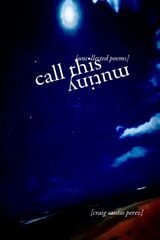
Call This Mutiny
[uncollected poems]Craig Santos Perez
Omnidawn, 2024
The seventh book from award-winning Chamoru author Craig Santos Perez, Call This Mutiny brings together poems that were originally published in journals and anthologies from 2008 to 2023. Throughout these selected poems, Perez offers critical explorations of native cultures, decolonial politics, colonial histories, and the entangled ecologies of his homeland of Guam, his current home of Hawaiʻi, and the larger Pacific region in relation to the Global South and the Indigenous Fourth World. Perez’s poetry draws on the power of storytelling to share Indigenous history and culture and to offer healing from the trauma of colonialism and injustice. As he writes, “If we can write the ocean, we will never be silenced.”
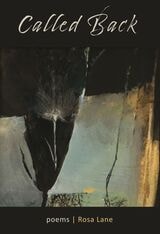
Called Back
Rosa Lane
Tupelo Press, 2024
In bold tribute with a title utilizing the last two words Emily Dickinson wrote, Rosa Lane’s Called Back converses with one of our greatest poets in theatrical monologue—decoding secrets amid the blatant. Evoked by epigraphs selected from Dickinson’s work, Lane’s poems, through her I-speaker, reveal the extraordinary to be found in the ordinary and speak to the struggle of sexual orientation, otherness, and the challenges of living in a Calvinistic socioreligious world of oughts and noughts as evidenced in Dickinson’s poems. From sapphic eroticism and subsequent pangs of nonbelonging to tacking next life as a welcome reprieve, poems in Called Back create a de novo dot-connecting lyrical narrative.
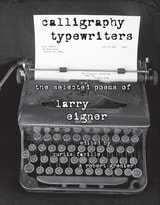
Calligraphy Typewriters
The Selected Poems of Larry EignerLarry Eigner, Edited and introduced by Curtis Faville and Robert Grenier, Foreword by Charles Bernstein
University of Alabama Press, 2016
The first and only single-volume collection of Larry Eigner’s most significant poems, gathering in one place the most celebrated of the several thousand poems that constitute his remarkable life’s work
Larry Eigner began writing poetry at age eight and was first published at age nine. Revered by poets and artists across a broad spectrum of generations and schools, Eigner’s remarkably moving poetry was created through enormous effort: because of severe physical disabilities, he produced his texts by typing with only one index finger and thumb on a 1940 Royal manual typewriter, creating a body of work that is unparalleled in its originality.
Calligraphy Typewriters showcases the most celebrated of Eigner's several thousand poems, which are an important part of the Black Mountain/Projectivist movement that began in the 1950s and which remain a primary inspiration for many younger writers, including those in the Language movement that began in the 1970s. In its two sections—Swampscott and Berkeley, named for the two locales where Eigner lived and worked—the volume traces his fantastic perception of the ordinary and his zeal for language. Eigner’s use of visual space, metaphor, and description provide fascinating insights into both his own life and the world that surrounded him. This volume maintains the distinctive visual spacing of his original typescripts, reminders of his method, aesthetic sensibility, and creative ability to compose on the typewriter.
A collection that reimagines the ordinary, Calligraphy Typewriters is the definitive selection of Eigner’s poems, and will serve well not only poets and students of poetry, but readers and writers of every vein.
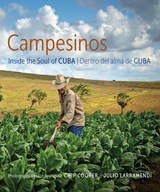
Campesinos
Inside the Soul of CubaChip Cooper and Julio Larramendi
University of Alabama Press, 2017
Into the center of this world traveled two photographers to document these extraordinary people. One, Julio Larramendi, was born in Cuba and has spent his whole life there. The other, Chip Cooper, came to visit for the first time from his native Alabama more than a decade ago. Together, Cooper and Larramendi have captured the light, sounds, and spirit of the campesino landscape and the humble and determined people who inhabit it, ways of living that have not changed, in many instances, for a century or more. From green tobacco fields and winding roads to the faces, both stern and smiling, of children and their close-knit families, Cooper and Larramendi have captured in this landmark volume the rhythms and traditions of contemporary rural Cuban life in ways never before documented.
Cannibal Translation
Literary Reciprocity in Contemporary Latin AmericaIsabel C. Gómez
Northwestern University Press, 2023
Winner of the 2024 ACLA Harry Levin Prize • Honorable Mention MLA Katherine Singer Kovacs Prize
A bold comparative study illustrating the creative potential of translations that embrace mutuality and resist assimilation
Cannibal translators digest, recombine, transform, and trouble their source materials. Isabel C. Gómez makes the case for this model of literary production by excavating a network of translation projects in Latin America that includes canonical writers of the twentieth century, such as Haroldo and Augusto de Campos, Rosario Castellanos, Clarice Lispector, José Emilio Pacheco, Octavio Paz, and Ángel Rama. Building on the avant-garde reclaiming of cannibalism as an Indigenous practice meant to honorably incorporate the other into the self, these authors took up Brazilian theories of translation in Spanish to fashion a distinctly Latin American literary exchange, one that rejected normative and Anglocentric approaches to translation and developed collaborative techniques to bring about a new understanding of world literature.
By shedding new light on the political and aesthetic pathways of translation movements beyond the Global North, Gómez offers an alternative conception of the theoretical and ethical challenges posed by this artistic practice. Cannibal Translation: Literary Reciprocity in Contemporary Latin America mobilizes a capacious archive of personal letters, publishers’ records, newspapers, and new media to illuminate inventive strategies of collectivity and process, such as untranslation, transcreation, intersectional autobiographical translation, and transpeaking. The book invites readers to find fresh meaning in other translational histories and question the practices that mediate literary circulation.
Capital Letters
Hugo, Baudelaire, Camus, and the Death PenaltyÈve Morisi
Northwestern University Press, 2020
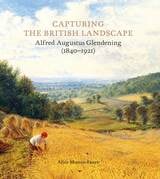
Capturing the British Landscape
Alfred Augustus Glendening (1840–1921)Alice Munro-Faure
Paul Holberton Publishing, 2022
Though critics often reviewed Alfred Augustus Glendening’s exhibitions, very little has been written about the artist himself. Here, new and extensive research removes layers of mystery and misinformation about his life, family, and career, accurately placing him amid the British art world during much of the nineteenth and into the twentieth century. Glendening was a man from humble origins, working full-time as a railway clerk when he managed to make his London exhibition debut at the age of twenty—a feat that would have been almost impossible before the Victorian era ushered in new possibilities of social mobility. Although his paintings show a tranquil and unspoiled landscape, his environment was rapidly being transformed by social, scientific, and industrial developments, while advances in transport, photography, and other technical discoveries undoubtedly influenced him and his fellow painters.
Celebrating his uniquely Victorian story, the book places Glendening within his proper historical context. Running alongside the main text is a timeline outlining significant landmarks, from political and social events to artistic and technical innovations. Thoroughly researched, the narrative explores why and for whom he painted, his artistic training, and his various inspirations. The book uncovers new information about the Victorian art world and embraces such aspects as Royal Academy prejudices, the popularity of Glendening’s work at home and abroad, his use of photography, and the sourcing of his art materials.
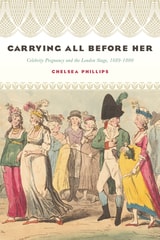
Carrying All before Her
Celebrity Pregnancy and the London Stage, 1689-1800Chelsea Phillips
University of Delaware Press, 2022
The rise of celebrity stage actresses in the long eighteenth century created a class of women who worked in the public sphere while facing considerable scrutiny about their offstage lives. Such powerful celebrity women used the cultural and affective significance of their reproductive bodies to leverage audience support and interest to advance their careers, and eighteenth-century London patent theatres even capitalized on their pregnancies. Carrying All Before Her uses the reproductive histories of six celebrity women (Susanna Mountfort Verbruggen, Anne Oldfield, Susannah Cibber, George Anne Bellamy, Sarah Siddons, and Dorothy Jordan) to demonstrate that pregnancy affected celebrity identity, impacted audience reception and interpretation of performance, changed company repertory and altered company hierarchy, influenced the development and performance of new plays, and had substantial economic consequences for both women and the companies for which they worked. Deepening the fields of celebrity, theatre, and women's studies, as well as social and medical histories, Phillips reveals an untapped history whose relevance and impact persists today.
Catholic Modernism and the Irish "Avant-Garde
" The Achievement of Brian Coffey, Denis Devlin, and Thomas MacGreeveyJames Matthew Wilson
Catholic University of America Press, 2023
Cauterized
Laura Apol
Michigan State University Press, 2024
Cement Guitar
Michael Carlson
University of Massachusetts Press, 2003
In this striking debut collection, Michael Carlson offers poems that combine the concrete and the musical, while embodying a tendency toward contradiction. He writes by working with rhythms, structures, images, associational leaps, and an obsession with the sound of words, as opposed to narrative. The book begins, “A thing wants to pounce but can't,” and this spirit of hesitation continues throughout the volume.
The first section of the book contains heavily rhythmic poems measured sometimes by syllable, sometimes by stress, dealing with rural landscapes, a struggle with disillusionment, and a reconciliation of knowledge and belief. The second section confronts the terrain and people of Carlson's childhood in Rhode Island, using longer sentences, riskier enjambments, and a more colloquial and emotional language.
The poems in the third section—which range from Manhattan to Florida, Vietnam, and Paris—share a tendency to be more fantastic and are formal in weird ways. They include an homage to Ezra Pound borrowing the vocabulary of his first book and the syntax of his last, a nod to John Donne borrowing some of his stanza shapes, a sonnet whose constraint is that each of its fourteen lines contains a piece of armor, and a sestina composed of four syllable lines with four end words that rhyme. In the fourth section, Carlson returns to Brooklyn, speaks from the present, and resolves his stances in a brief notational way that is reminiscent of Chinese poetry.
Cenizas
PoemsCynthia Guardado
University of Arizona Press, 2022
Guardado crafted the poems in Cenizas over a ten-year period, often traveling to El Salvador for research and to conduct interviews. The Salvadoran Civil War haunts the pages of this collection as it unflinchingly explores war, its aftermath, and the bittersweet legacies that are passed down from one generation to the next. The poems mourn those who were lost and honor the strength of the speaker’s ancestors. “All my people have been born from the ashes of volcanoes,” she writes, invoking a family lineage that has endured the atrocities committed against them. Even so, El Salvador keeps pulling the speaker back—and despite warnings of danger, she still manages to find beauty among the ruins.
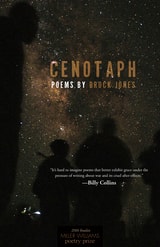
Cenotaph
PoemsBrock Jones
University of Arkansas Press, 2016
Finalist, 2016 Miller Williams Poetry Prize, edited by Billy Collins
Out of the contradiction, paradox, loss, and strange beauty of contemporary warfare, Brock Jones brings us Cenotaph, a collection of poems that have as their genesis Jones’s deployments to Iraq in 2002 and 2005, when he was in the US Army.
These are war poems, but also love poems and hate poems, poems about dying and living, poems about hope and hopelessness. These are poems that beautifully reflect Jones’s resignation to and rejection of the impossibility of saying anything definitive or honest about war.
These are poems that strive to do what poet Bruce Weigl described as the poet’s job: to find “some kind of miraculous way th at if you work hard enough to get the words right, that which you call horrific and wrong is defeated.”
Cenotaph is a poet doing the poet’s work: trying, hoping to get the words right.
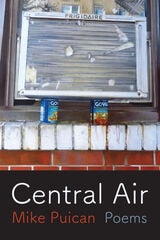
Central Air
PoemsMike Puican
Northwestern University Press, 2020
Puican’s focus on the city, its people and underbellied spaces, pays homage in the tradition of the great Chicago masters: Carl Sandburg, Gwendolyn Brooks, and Campbell McGrath. This contemporary Chicago son finds his own place with lyrical integrity.
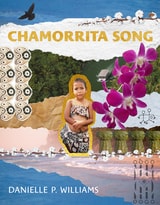
Chamorrita Song
Danielle P. Williams
University of Arizona Press, 2026
Rooted in oral tradition, Chamorrita Song pays homage to Black and Chamorro cultures, honoring the artistic expressions that these communities have created to reconcile lifetimes of imposed trauma. Bearing witness to these many narratives, Williams intertwines spoken word poetry and gospel music with Chamorro storytelling, weaving together the nuanced histories of queer, Black, and Indigenous existence and literature.
Here Williams reveals capacious contemporary forms that speak to the future as well as to the past and that further ground lineages in homelands, finding strength and beauty in collective pain and triumph. These poems transform and spread the messages of those long silenced. They act as song and prayer.
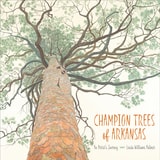
Champion Trees of Arkansas
An Artist's JourneyLinda Williams Palmer
University of Arkansas Press, 2016
In Champion Trees of Arkansas, Linda Williams Palmer explores the state’s largest trees of their species, registered with the Arkansas Forestry Commission as “champions.” Through her beautiful colored-pencil drawings, each magnificent tree is interpreted through the lens of season, location, history, and human connection.
Readers will get to know the cherrybark oak, rendered in fall colors, an avatar for the passing of seasons. The sugar maple, with its bare limbs and weather-beaten trunk, stands sentry over the headstones in a confederate cemetery. The 350-year-old white oak was once dubbed the Council Oak by Native Americans, and the post oak, cared for by generations of the same family, has its own story to tell.
Palmer travelled from Delta swamps to Ozark and Ouachita mountain ridges over a seven-year period to see and document the champions and to talk with property owners and others willing to share the stories of how these trees are beloved and protected by the community, and often entwined with its history. Champion Trees of Arkansas is sure to inspire art and nature lovers everywhere.
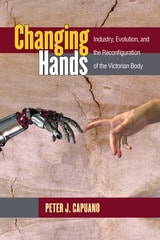
Changing Hands
Industry, Evolution, and the Reconfiguration of the Victorian BodyPeter J. Capuano
University of Michigan Press, 2015
Charon's Ferry
Fifty PoemsGyula Illyes
Northwestern University Press, 2000
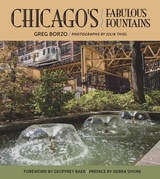
Chicago's Fabulous Fountains
Greg Borzo. Photographs by Julia Thiel. Foreword by Geoffrey Baer. Preface by Debra Shore.
Southern Illinois University Press, 2017
Winner, ISHS Annual Award for Other Publications, 2018
Most people do not realize it, but Chicago is home to many diverse, artistic, fascinating, and architecturally and historically important fountains. In this attractive volume, Greg Borzo reveals more than one hundred outdoor public fountains of Chicago with noteworthy, amusing, or surprising stories about these gems. Complementing Borzo’s engagingly written text are around one hundred beautiful fine-art color photos of the fountains, taken by photographer Julia Thiel for this book, and a smaller number of historical photos.
Greg Borzo begins by providing an overview of Chicago’s fountains and discussing the oldest ones, explaining who built them and why, how they survived as long as they have, and what they tell us about early Chicago. At the heart of the book are four thematic chapters on drinking fountains, iconic fountains, plaza fountains, and park and parkway fountains. Among the iconic fountains described are Buckingham (in Grant Park), Crown (in Millennium Park), Centennial (with its water cannon shooting over the Chicago River), and two fountains designed by famed sculptor Lorado Taft (Time and Great Lakes). Plazas all around Chicago—in the neighborhoods as well as downtown—have fountains that anchor communities or enhance the skyscrapers they adorn. Also presented are the fountains in Chicago’s parks, some designed by renowned artists and many often overlooked or taken for granted. A chapter on the self-proclaimed City of Fountains, Kansas City, Missouri, shows how Chicago’s city planners could raise public awareness and funding for the care and preservation of these important landmarks. Also covered are a brief period of fountain building and rehabbing (1997–2002) that vastly enriched the city; fountains that no longer exist; and proposed Chicago fountains that were never built, as well as the future of fountain design.
A beautiful photography book and a guide to the city’s many fountains, Chicago’s Fabulous Fountains also provides fascinating histories and behind-the-scenes stories of these underappreciated artistic and architectural treasures of the Windy City.
Childcare
Rob Schlegel
Four Way Books, 2023
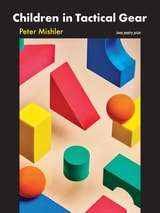
Crackling with the hypervigilance of parenthood, Childcare explores the paradox at the root of raising kids: the joy of new life accompanies an awareness of potential loss. Rob Schlegel’s fourth collection observes the tangled emotions of fatherhood; even as he wonders at the strange intelligence of youth, he elegizes the present moment. The longitudinal wisdom of this collection appears in the choreography of its leaps — how it moves from the aside “[My son] needs my love the most when he least deserves it / Is something I read” to the reflection that “Death / Names my shape. I keep my clothes / From dust and ghosts and time. / I’m angry at my father for aging.” From Schlegel’s relentless curiosity and keen observations, the artistic crisis driving the book emerges: does poetry memorialize the ephemeral moment, saving something for us, or does it remove us from experience? The duality of language’s role — that it, ultimately, has the capacity to do both — doubles the significance of “childcare” in this collection, which comes to represent not just the work of child rearing but the dutiful care by adult children for their parents. Perhaps nothing can convey the scope and quality of family life like the concatenated dependencies of “(Un)conditional,” which terminate here: “If the cut draws blood / If life ends in desire // If it begins in love.”
Children in Tactical Gear
Peter Mishler
University of Iowa Press, 2024

Christina Rossetti
The Poetry of EnduranceDolores Rosenblum
Southern Illinois University Press, 1987
Christina Rossetti was considered the ideal female poet of her time. Her poetry was devotional, moral, and spoke of frustrated affection.
Dolores Rosenblum presents a fresh reading of Rossetti’s works and places them in the context of her life. Rosenblum shows that what was ostensibly devotional, moral, and loveless, was actually what Luce Irigaray calls “mimetism,” a subtle parody and subversion of the male tradition of literature.
Only with the coming of feminist criticism can Rossetti be meaningfully re-evaluated. Rosenblum calls Rossetti’s works the “poetry of endurance,” stating that it is similar, and at times identical, to the female “sentimental” tradition in literature. Rossetti endured the constraints of the Victorian female artistic spirit by becoming a “watcher.” Within this self-accepted role, Rossetti was able to carefully and deliberately choose artistic self-protection. In her religious poetry, Rossetti transcended, by aesthetic renunciation, the alienation and immobilization forced upon her.
Rossetti’s poetry is full of paradox; it sings about silence, exposes the poet’s oblivion. From the repining Victorian poet, there emerged a “stone woman.” Rosenblum discusses this passively enduring female figure’s alienation from knowledge and power, and how the myth of self strengthened the lyric voice within her. Because she was a woman, she was denied the male use of the lyric “I.”
Rossetti’s work is unified, Rosenblum argues, because she was a deliberate poet, and by accepting the “burden of womanhood,” she played out what men only symbolized as female in their art. By her mimicry and revision of the male tradition of literature, Christina Rossetti engaged the patriarchal tradition in ways that make it usable for the female experience, and that provide a critique of male objectification of women in art.
Chronicle of My Worst Years
Tino Villanueva
Northwestern University Press, 1994
Citoyennes
Women and the Ideal of Citizenship in Eighteenth-Century FranceAnnie K. Smart
University of Delaware Press, 2012
Did women have a civic identity in eighteenth-century France? In Citoyennes: Women and the Ideal of Citizenship in Eighteenth-Century France, Annie Smart contends that they did. While previous scholarship has emphasized the ideal of domestic motherhood or the image of the republican mother, Smart argues persuasively that many pre-revolutionary and revolutionary texts created another ideal for women–the ideal of civic motherhood. Smart asserts that women were portrayed as possessing civic virtue, and as promoting the values and ideals of the public sphere.
Contemporary critics have theorized that the eighteenth-century ideal of the Republic intentionally excluded women from the public sphere. According to this perspective, a discourse of “Rousseauean” domestic motherhood stripped women of an active civic identity, and limited their role to breastfeeding and childcare. Eighteenth-century France marked thus the division between a male public sphere of political action and a female private sphere of the home.
Citoyennes challenges this position and offers an alternative model of female identity. This interdisciplinary study brings together a variety of genres to demonstrate convincingly that women were portrayed as civic individuals. Using foundational texts such as Jean-Jacques Rousseau’s Emile, or on Education (1762), revolutionary gouaches of Lesueur, and vaudeville plays of Year II of the Republic (1793/1794), this study brilliantly shows that in text and image, women were represented as devoted to both the public good and their families.
In addition, Citoyennes offers an innovative interpretation of the home. Through re-examining sphere theory, this study challenges the tendency to equate the home with private concerns, and shows that the home can function as a site for both private life and civic identity.
Citoyennes breaks new ground, for it both rectifies the ideal of domestic Rousseauean motherhood, and brings a fuller understanding to how female civic identity operated in important French texts and images.
Published by University of Delaware Press. Distributed worldwide by Rutgers University Press.
City of Ash
Eugenijus Alisanka
Northwestern University Press, 2000
Civil Bound
Myung Mi Kim
Omnidawn, 2019
Civil War Nurse Narratives, 1863-1870
Daneen Wardrop
University of Iowa Press, 2015
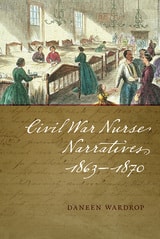
As a subgenre of war literature, the Civil War nurse narrative offered realistic reportage of medical experiences and declined to engage with military strategies or Congressional politics. Instead, nurse narrators chronicled the details of attending wounded soldiers in the hospital, where a kind of microcosm of US democracy-in-progress emerged. As the war reshaped the social and political ideologies of the republic, nurses labored in a workplace that reflected cultural changes in ideas about gender, race, and class. Through interactions with surgeons and other officials they tested women’s rights convictions, and through interactions with formerly enslaved workers they wrestled with the need to live up to their own often abolitionist convictions and support social equality.
By putting these accounts in conversation with each other, Civil War Nurse Narratives productively explores a developing genre of war literature that has rarely been given its due and that offers refreshing insights into women’s contributions to the war effort. Taken together, these stories offer an impressive and important addition to the literary history of the Civil War.
Civilizing War
Imperial Politics and the Poetics of National RuptureNasser Mufti
Northwestern University Press, 2018
Honorable Mention for the 2019 Sonya Rudikoff Prize, awarded by the Northeast Victorian Studies Association
Civilizing War traces the historical transformation of civil war from a civil affair into an uncivil crisis. Civil war is today synonymous with the global refugee crisis, often serving as grounds for liberal-humanitarian intervention and nationalist protectionism.
In Civilizing War, Nasser Mufti situates this contemporary conjuncture in the long history of British imperialism, demonstrating how civil war has been and continues to be integral to the politics of empire. Through comparative readings of literature, criticism, historiography, and social analysis, Civilizing War shows how writers and intellectuals of Britain’s Anglophone empire articulated a “poetics of national rupture” that defined the metropolitan nation and its colonial others.
Mufti’s tour de force marshals a wealth of examples as diverse as Thomas Carlyle, Benjamin Disraeli, Friedrich Engels, Arthur Conan Doyle, Rudyard Kipling, Joseph Conrad, V. S. Naipaul, Nadine Gordimer, and Michael Ondaatje to examine the variety of forms this poetics takes—metaphors, figures, tropes, puns, and plot—all of which have played a central role in Britain’s civilizing mission and its afterlife. In doing so, Civilizing War shifts the terms of Edward Said’s influential Orientalism to suggest that imperialism was not only organized around the norms of civility but also around narratives of civil war.
Claim Tickets for Stolen People
Quintin Collins
The Ohio State University Press, 2022
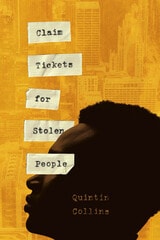
In Claim Tickets for Stolen People, Quintin Collins embraces a range of poetic forms and registers to show the resilience of Blackness in a colonized world. The tension between mortality and vitality is ever-present, whether Collins is charting his daughter’s emergence into being, cataloging the toll of white violence, or detailing the exuberance of community, family, and Chicago and Boston life. In Collins’s hands, the world is exquisitely physical and no element is without its own perspective, whether it is a truck sheared by a highway bridge or bees working through the knowledge that humans will kill them, burn their homes, and steal their honey. All goes toward honoring Black grief, Black anger, Black resistance, Black hope—and the persistence of Black love.
Classics and Race
A Historical ReaderEdited by Sarah Derbew, Daniel Orrells, and Phiroze Vasunia
University College London, 2025
Spanning centuries and continents, Classics and Race follows the entangled histories of classical studies and racial thought to show how ancient texts have been used to shape and justify ideas about race. This essential collection presents historical primary sources from the late medieval period to the mid-twentieth century, each paired with insightful essays by leading scholars who unpack their significance in shaping both racist and anti-racist ideologies.
Moving chronologically, the volume explores classical humanism in the Renaissance, the discipline’s ties to the transatlantic slave trade, and the global intersections of race and antiquity across Africa, Asia, the Caribbean, Europe, and North America. Rather than treating Classics as a neutral intellectual pursuit, this work demonstrates how the field has long been entangled in broader struggles over identity and power. More relevant than ever, Classics and Race offers a vital historical foundation for ongoing debates about the role of antiquity in shaping modern racial discourse.
Clay
Martha Ronk
Omnidawn, 2025
The poems in Clay look to the process of forming clay on a potter’s wheel to examine our sense of touch and texture, emptiness, fragility, and the nature of time. Martha Ronk moves through the steps of creating a pot that must be formed, dried, bisque-fired, glazed, and fired again. This practice is paralleled in Ronk’s process-oriented language that addresses how we read texture and color, the ways history and landscapes appear in glazes, Mimbres bowls that covered the faces of the dead, and Giorgio Morandi’s still life paintings of ceramic forms.
For Ronk, pottery raises questions about the value of repetition, inevitable failure, and how we may become one with matter. As the potter’s hands ache and age, the bowl seems to age as it slumps or breaks. Clay includes observations from other potters and writers as well as small photographs of pots.
Clear-Cutting Eden
Ecology and the Pastoral in Southern LiteratureChristopher Rieger
University of Alabama Press, 2009
Examines how Southern literary depictions of the natural world were influenced by the historical, social, and ecological changes of the 1930s and 1940s
Rieger studies the ways that nature is conceived of and portrayed by four prominent Southern writers of the era: Erskine Caldwell, Marjorie Kinnan Rawlings, Zora Neale Hurston, and William Faulkner. Specifically, he argues that these writers created new versions of an old literary mode—the pastoral—in response to the destabilizing effects of the Great Depression, the rise of Southern modernism, and the mechanization of agricultural jobs.
Mass deforestation, soil erosion, urban development, and depleted soil fertility are issues that come to the fore in the works of these writers. In response, each author depicts a network model of nature, where humans are part of the natural world, rather than separate, over, or above it, as in the garden pastorals of the Old South, thus significantly revising the pastoral mode proffered by antebellum and Reconstruction-era writers.
Each writer, Rieger finds, infuses the pastoral mode with continuing relevance, creating new versions that fit his or her ideological positions on issues of race, class, and gender. Despite the ways these authors represent nature and humankind’s place in it, they all illustrate the idea that the natural environment is more than just a passive background against which the substance of life, or fiction, is played out.
Climate Change Fiction and Ecocultural Crisis
The Industrial Revolution to the PresentTatiana Konrad
University of Nevada Press, 2024
Focusing on a diverse range of issues, including fossil fuels, cheap energy, the intricacies of human–more-than-human relationships, and postcolonial geographies, Konrad illustrates how cli-fi transcends mere storytelling. The genre ultimately emerges as an important means to forecast, imagine, and contemplate climatic events.
The book invites a broadening of the environmental humanities discourse, asking readers not only to deepen their understanding of the current climate crisis, but also to consider how cli-fi culture can be viewed as an effective method to address climate change.
Close Encounters between Bible and Film
An Interdisciplinary EngagementLaura Copier
SBL Press, 2016
Explore new routes into the burgeoning field of biblical literature and film theory
The present collection of essays is a sequel to the groundbreaking Semeia 74 issue, published in 1996, entitled Biblical Glamour and Hollywood Glitz. These new essays showcase the divergent approaches from film studies and cultural studies that can be used in the visual analysis of biblical and religious themes, narratives, and characters in cinema. It is the first volume that specifically addresses issues of methodology, theory, and analysis in the study between bible and film. As such, this collection is of interest to scholars in film studies and theology/religion/biblical studies, who are invested in doing interdisciplinary research in the expanding field of religion and film.
Features
- Specific focus on methods of film analysis, rather than the more common focus on thematic analysis in the study of religion, Bible, and film.
- Visual analysis in the encounter between Bible and film
- Fourteen essays and an introduction by top scholars in the field
Closely and Consciously
Reading and the US Women's Liberation MovementYung-Hsing Wu
University of Massachusetts Press, 2024
The significant archive of writing that came out of the women’s liberation movement in the United States, from 1965 to 1980, speaks to the value activists placed on reading as an act that is at once personal and yet also about the collective good. Yung-Hsing Wu examines the importance of reading—personal, professional, vocational, aesthetic, and always political—and how the act itself brought a host of women, each with their own history with the movement, into relation, and into a belief in that relation. The value given to reading can be seen in the ways feminists pursued media representation; in consciousness-raising (CR) groups including shared reading in their meetings; in women opening bookstores, developing newsletters, establishing journals, and starting presses; and in corporate publishers pursuing feminist fiction.
Closely and Consciously crisscrosses distinct print spheres, including newsletters and periodicals produced by feminist cells and consciousness-raising groups, feminist presses seeking to articulate their visions for women’s writing, the emergence of feminist literary criticism in first-time monographs and newly established journals, personal and editorial correspondence, press records, and the publishing histories of bestsellers that testified to the increasingly broad popularity of women’s writing. Uniting all these disparate activists and media outlets, and providing crucial relationality, was reading. With a mix of close readings and archival research, Wu unpacks and interprets this central act of reading and why it matters during a crucial moment of feminist history.

Clouds Upside Down Among the Flowers
New & SelectedCal Bedient
Omnidawn, 2026
The poems in Clouds Upside Down Among the Flowers speak to the emotionally and existentially tough challenge presented by Gilles Deleuze and Félix Guattari in What is Philosophy: “It may be that believing in this world, in this life, becomes our most difficult task.”Filled with wit, color, and high-spirited invention, these selected poems offer no room for softness and sentiment. They carry variant voices, whispers like dramatic asides, and mind-expanding assertions as they reveal their layers and nuances. Bedient confronts disasters of politics, love, and faithless time, never turning away from the glinting axe.
This collection also includes new poems that are direct in dealing with the difficulties of keeping faith through life. They recognize that making something—for instance, poetry—is necessary to coach the world into realness and render oneself real in the process, a journey of both intensive investigation and creativity.
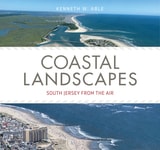
Coastal Landscapes
South Jersey from the AirKenneth W. Able
Rutgers University Press, 2023
Based on numerous aerial images from helicopter and drone flights between 2015 and 2021, this book provides extensive photographs and maps of the New Jersey coast, from the Pine Barrens to the ocean beaches. The text associated with each exceptional image describes it in detail, including its location, ecological setting, and relative position within the larger landscape. Author Kenneth Able, director of the Rutgers University Marine Field Station for over thirty years, has thoroughly ground-truthed each image by observations made through kayaks, boats, and wading through marshes. Calling upon his decades of expertise, Able paints a compelling portrait of coastal New Jersey’s stunning natural features, resources, history, and possible futures in an era of rising sea levels.

Coffin Honey
Todd Davis
Michigan State University Press, 2022
Come Again?
Alyssa N. Moore
University of Chicago Press, 2026
In this formally inventive debut collection, a speaker continuously shapeshifts through roles, forms, and characters.
Alyssa N. Moore’s Come Again? conjures a series of otherworldly scenarios in which reinvention becomes a form of resistance and a method to escape the snares of a modern existence to which we contribute but cannot control. Throughout these surreal and absurdist poems, an untethered consciousness is continuously reincarnated and dragged through various personae—including the Volunteer, the Eternal Counselor, the Streetcleaner, and the Architect—to find “what exactly to do with a willing body.” For example, in “The Volunteer,” a visual sequence, the book’s shapeshifting narrator is dropped into a formless expanse and expected to perform. As we move through the collection, the speaker’s perception morphs rapidly. From wage worker to computer programmer to sexbot to God, they collide over and over with the boundaries of the world. With each shift, the speaker guides us through a series of darkly comic set pieces that are, in turns, cinematic and slapstick as they seek a solid home base from which to “reject the emptiness that’s inherited.”
Moore’s facility with poetic form, use of image and text, and play between irony and sincerity make Come Again? a bold collection that defies the customary and conventional, instead forging new worlds of continual remaking.
Comfort Measures Only
New and Selected Poems, 1994–2016Rafael Campo
Duke University Press, 2018
Common Disaster
PoemsM. Cynthia Cheung
Acre Books, 2025
As a front-line physician, M. Cynthia Cheung started writing poetry during the worst days of the COVID-19 pandemic. Her remarkable debut collection, Common Disaster, chronicles these experiences. Confronting not just the coronavirus but also war crimes and the death of loved ones, Cheung shows us that the pandemic is only one of many disasters we hold in common. In poems that look to both the past and future, she takes a stand against the extinction of self and memory, challenging the violence of erasure.
The period covered by the book is geologic and vast. It examines present-day evidence of ancient human activity and natural history, including the Lascaux caves, asteroid craters, tar pits, and Viking ruins. The poems include ghazals, thoughtful free verse, and work that takes up the page in reframing classical Chinese oracular texts to situate the pain of a doctor in crisis.
As a physician-poet, Cheung asks us to see beyond the every day to the devastating truths about the human condition.
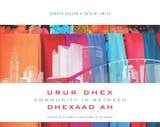
Community In-Between / Urur Dhex Dhexad Ah
Portraits of Somali-Americans in ColumbusQorsho Hassan and Ruth M. Smith
The Ohio State University Press, 2017
A combination of storytelling and research connect each narrative to another, creating a strong framework for capturing the roles of young Somali Americans in community building through innovative initiatives such as designing a mixer bottle, beginning charitable programs, and educating the Somali community on voter rights. Two community artists help to capture the participants in their natural spaces, and their journey, aided by their empowering mentor, Riya Jama, bridges the gap of Somali females and their access to photography.
The portraits, stories, and artifacts throughout the book create a modicum of belonging. This new generation resiliently overcomes challenges such as racism, xenophobia, and Islamophobia while still maintaining their hope in the future. Community In-Between captures their spirit and unwavering faith.
The portraits, stories, and artifacts throughout the book create a modicum of belonging. This new generation resiliently overcomes challenges such as racism, xenophobia, and Islamophobia while still maintaining their hope in the future. Community In-Between captures their spirit and unwavering faith.
Companion Grasses
Brian Teare
Omnidawn, 2013
Concepts of the World
The French Avant-Garde and the Idea of the International, 1910–1940Effie Rentzou
Northwestern University Press, 2022
The writers and artists of the French avant-garde aspired to reach a global audience that would be wholly transformed by their work. In this study, Effie Rentzou delves deep into their depictions of the interwar world as an international and modern landscape, one marked by a varied cosmopolitanism. The avant-garde’s conceptualization of the world paralleled, rejected, or expanded prevailing notions of the global sphere.
The historical avant garde—which encompassed movements like futurism, Dada, and surrealism—was self-consciously international, operating across global networks and developed with the whole world as its horizon and its public. In the heady period between the end of the Belle Époque and the tumult of World War II, both individual artists (including Guillaume Apollinaire, Blaise Cendrars, Francis Picabia, Louis Aragon, Leonora Carrington, and Nicolas Calas) and collective endeavors (such as surrealist magazines and exhibitions) grappled with contemporary anxieties about economic growth, imperialism, and colonialism, as well as various universalist, cosmopolitan, and internationalist visions. By probing these works, Concepts of the World offers an alternative narrative of globalization, one that integrates the avant-garde’s enthusiasm for, as well as resistance to, the process. Rentzou identifies within the avant-garde a powerful political language that expressed the ambivalence of living and creating in an increasingly globalized world—a language that profoundly shaped the way the world has been conceptualized and is experienced today.
Concerning the Angels
Rafael Alberti
Four Way Books, 2025
Contemporary Immigrant Writing and Black America
Mirmotahari, Emad
University of Iowa Press, 2026
Contemporary Immigrant Writing and Black America addresses how minoritized communities in the United States find each other, make sense of each other, and come together to confront the many guises of racism and racist practices. This book probes the life and writings of Korean immigrants, Indian immigrants, and various African immigrants for insights into the ways that they experience and express their new lives in the United States. More specifically, this book shows how immigrant communities come to understand their relationship with the Black American community; the relation that is key to finding their own voice about race, culture, and power in the United States.
Cormac McCarthy
An American ApocalypseMarkus Wierschem
Michigan State University Press, 2024
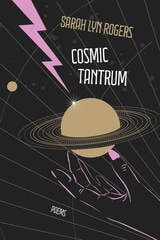
Cosmic Tantrum
PoemsSarah Lyn Rogers
Northwestern University Press, 2025
A debut full-length poetry collection from Sarah Lyn Rogers rewriting girlhood and summoning mischief
Sarah Lyn Rogers’s debut full-length collection is a tragicomic exploration of codependent and transactional relationships: economies of shame, gifts as debts, businesses run like families, and families run like businesses. What transgressions and abuses do we believe are acceptable fees for safety or love, and who upholds these myths? The poems in Cosmic Tantrum examine how our most intimate relationships shape the way we move through the wider world—and what happens when we reject the stories we’ve inherited about our worth.
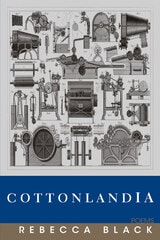
Cottonlandia
Rebecca Black
University of Massachusetts Press, 2005
The poems in Rebecca Black's first volume, Cottonlandia, move through myth and landscape, beginning in the deep South's “shimmer and tar” and ending in the “soot and orange dolor” of the California desert. Cottonlandia conjures a proto-continent where fashionable golems pose for antique photographs and nineteenth-century naturalists wander into the melee of the civil rights struggle in the South.
By turns haunting and comic, Black's poems describe the archaeology of the apocalypse. Countesses leave behind poisonous snapshots, lovers examine their shapes in the mirror, and Seminoles return for skeletons arranged illegally in exhibits, even as floods force antebellum coffins to rise.
In the title poem, reproduced on this page, the lines of a spiritual splinter and circle through a loose narrative, evoking the delirium of class and race in the author's Georgia hometown. Throughout the volume, poems quarrel with primal forces, threading the needle of historical oblivion with a dark, intelligent, and incantatory voice.
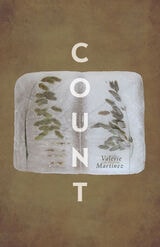
Count
Valerie Martínez
University of Arizona Press, 2021
With sections that vary between poetry, science, Indigenous storytelling, numerical measurement, and narration, Valerie Martínez’s new work results in an epic panorama infused with the timely urgency of facing an apocalyptic future. This beautiful, tragic, and unusual poem is a testimonial, a warning, and a call to action that will captivate lovers of contemporary poetry and ecopoetry, environmentalists, and climate activists alike. Count skillfully calls on our collective desire to leave a livable world, filled with the potential for healing, as a legacy to the generations of children that come after us.