453 books match the query 'Wisconsin' and 24 start with c
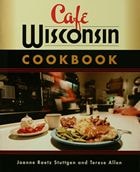
cover of Cafe Wisconsin Cookbook

Cafe Wisconsin Cookbook

Joanne Raetz Stuttgen and Terese Allen

University of Wisconsin Press, 2007

     Joanne Stuttgen's popular book Cafe Wisconsin guides travelers to Wisconsin's best home-style cafes. Now, continue the journey with the Cafe Wisconsin Cookbook, a compilation of more than one hundred cherished recipes that showcase the distinct culinary and cultural traditions of Wisconsin. From classic pot roasts and country-style pies to long-simmering soups and heritage specialties, the whole soul-satisfying spectrum of Wisconsin cafe fare is here. 
     Stuttgen tracked down Wisconsin's best small town cafes, from Boscobel to Sturgeon Bay, chatted with owners and customers, took notes, and recorded the history, anecdotes, and recipes behind the food. Tested and fine-tuned by Wisconsin food writer and former chef Terese Allen, these favorite recipes will bring an authentic slice of Wisconsin into your home kitchen.

[more]
cover of Cafe Wisconsin: A Guide To Wisconsin's Down-Home Cafes

Cafe Wisconsin

A Guide To Wisconsin's Down-Home Cafes

Joanne Raetz Stuttgen

University of Wisconsin Press, 2004

    Cafe Wisconsin returns in a new, updated version that provides a sure-bet guide to Wisconsin’s best small town, home-cooking cafes. For this second edition, author Joanne Raetz Stuttgen traveled more than 12,000 miles in six months, revisiting old business districts and main streets in search of the ultimate cafe, the perfect slice of homemade pie, and the meaning of life in Wisconsin’s down-home cafes.
    Featuring 133 cafes, with another 101 Next Best Bets alternatives, Cafe Wisconsin is every hungry traveler’s guide to real mashed potatoes, melt-in-your-mouth hot beef, from-scratch baked goods, and colorful coffee klatches. At the counter of aptly named cafes like the Coffee Cup, Main Street, and Chatterbox, you’ll laugh with owners, shake dice with customers, and find the authentic taste and flavor of Wisconsin.
    Come on. Let’s go out to eat!

[more]
cover of Caroline Quarlls and the Underground Railroad

Caroline Quarlls and the Underground Railroad

Julia Pferdehirt

Wisconsin Historical Society Press, 2008
On July 4th, 1842, Caroline Quarlls left family, friends, and the only life she'd known behind in St. Louis, Missouri. As the child of a slave mother and a slave-owner father, her young life was one of drudgery and obedience until that fateful Independence Day when she illegally took a steamboat across the Mississippi River from St. Louis to Alton, Illinois, in the hope of reaching freedom.
 
With the help of abolitionists, the 16-year-old traveled through Illinois, Wisconsin, Indiana, and Michigan on the Underground Railroad, enduring long, bumpy rides in the bottom of a wagon and taking cover in everything from barrels to potato chutes. Each step of the way, Quarlls was pursued by lawyers paid to retrieve her and bounty hunters greedy for the reward money. Finally, she crossed from Detroit into Sandwich, Canada, where created a new life as a free woman, an exciting but also frightening, experience. Quarlls' story gives young readers a personal snapshot of the tension-filled journey of a runaway slave while illuminating a segment of the complicated history of race in our nation.
[more]
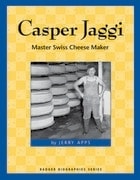
cover of Casper Jaggi: Master Swiss Cheese Maker

Casper Jaggi

Master Swiss Cheese Maker

Jerry Apps

Wisconsin Historical Society Press, 2008

Have you ever wondered why Swiss cheese has holes? You'll find out in this story about a Swiss cheese maker named Casper Jaggi. Casper Jaggi was only six years old when his father taught him how to make cheese in the Swiss Alps. In 1913, Jaggi left Switzerland in search of new opportunities in the United States. Like many other Swiss, he settled in Green County, Wisconsin, where the rolling hills dotted with grazing cows reminded him of home. And soon, he'd be turning cow's milk into cheese, just as he did in Switzerland.

The book opens the doors to Jaggi's Brodhead Swiss Cheese Factory - largest factory of its kind in Wisconsin in the 1950s. Archival photos help illustrate, step-by-step, the process Jaggi and his workers followed to transform 2,000 pounds of milk in a copper kettle into a 200-pound wheel of Swiss cheese.
 
Jaggi was one of the many European immigrants who helped establish Wisconsin's reputation for delicious cheese. The artisan cheese makers crafting award-winning cheeses today are continuing this rich tradition in America's Dairyland.
 
[more]
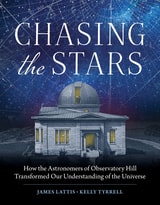
cover of Chasing the Stars: How the Astronomers of Observatory Hill Transformed Our Understanding of the Universe

Chasing the Stars

How the Astronomers of Observatory Hill Transformed Our Understanding of the Universe

James Lattis

Wisconsin Historical Society Press, 2024

A richly illustrated history of Wisconsin’s astronomical innovations

Explore the remarkable story of Wisconsin astronomers whose curiosity, persistence, and innovation helped us better understand our universe. 

Chasing the Stars traces the history of the University of Wisconsin’s Washburn Observatory, where some of the world’s most cutting-edge astronomical inventions were born. Learn about the earliest Indigenous stargazers, the women who worked as the first human computers, the astronomers who sold time by the stars, the scientists who shrank the Milky Way, and the crucial role Wisconsin astronomers played in the development of modern astrophysics and space astronomy.

This extraordinary book features more than 100 modern and historic photographs that illustrate the people and science behind Wisconsin’s astronomical innovations. Designed for lay readers and astronomers alike, Chasing the Stars inspires all of us to look up at the sky in wonder.


“Filled with fascinating astronomy-related facts, Chasing the Stars covers the first century-plus of the University of Wisconsin’s Washburn Observatory and the science it inspired. . . . [It is] a thorough, enlightening history of an important scientific site and the personalities who brought it to life.”
—Foreword Reviews 

“Lattis and Tyrrell give us a masterful tour of Washburn Observatory, its legacy of astronomical discovery, and the key figures who forever changed our understanding of the cosmos. Readers will find delightful insights on these pages that bring this rich history to life and instill a desire to gaze at the stars.”
—Kenneth Sembach, former director of the Space Telescope Science Institute

“Through enchanting photos and compelling tales of astronomers, Lattis and Tyrrell shed light on the impressive innovations Wisconsin has contributed to the field of astrophysics. From the novel ways of collecting light from space to the new technologies sent to space on early satellites, readers will be fascinated to learn how Wisconsin astronomers have influenced our understanding of the universe.”
—Dr. Amanda Bauer, deputy director and head of science and education, Yerkes Observatory

“This fascinating and detailed account of the history of astronomy in Wisconsin highlights a diverse set of connections, from the construction of the University of Wisconsin’s first observatory in the late 1880s, to General Mills, Oscar Meyer, railroads, and the creation of the American Astronomical Society. Chasing the Stars recounts for us how Wisconsin’s astronomers came to be leaders in this field for more than a century and reminds us of why astronomy is a deeply human endeavor that appeals to professionals and nonprofessionals alike.”
—Dr. Andrea Ghez, UCLA astrophysicist and Nobel laureate 

 
[more]
cover of Cheese: The Making of a Wisconsin Tradition

Cheese

The Making of a Wisconsin Tradition

Jerry Apps

University of Wisconsin Press, 2020

Wisconsin has not always been the dairy state, but cheese is a notable part of its heritage. Capturing the voices of farmers, milk haulers, makers, and graders, Jerry Apps provides a rich view into the history of cheese in the state, beginning with its humble origins in farmhouse kitchens. As he explores the extraordinary diversity of cheese products, he peppers his lively narrative with obscure lore.

In this updated edition of a classic, Apps examines tumultuous changes in the business over the past twenty years, including the impacts of corporate megafarms and the rise of artisanal producers. Vivid historical photographs and striking portraits of modern family-operated factories reveal the delicate balance between art and science that goes into the process of turning ordinary milk into a wide variety of flavors, from the ubiquitous cheddar to sublime delicacies. Through these stories, we can come to better appreciate the remarkable farmers and producers that shaped cheesemaking into the thriving industry it is today.

[more]
cover of Cindy Bentley: Spirit of a Champion

Cindy Bentley

Spirit of a Champion

Bob Kann

Wisconsin Historical Society Press, 2010

Cindy Bentley: Spirit of a Champion celebrates the life of one of Wisconsin's most inspirational leaders and activists. Born with an intellectual disability as the result of fetal alcohol syndrome, Cindy Bentley spent much of her childhood at the Southern Wisconsin Center for the Developmentally Disabled. No one expected her to learn the skills necessary to live on her own. To everyone's surprise, including her own, she did that and much more.

With the encouragement of a teacher at Southern Center, Cindy realized she had a deep passion for sports, and the discipline to train and compete. She began participating in Special Olympics, and gained confidence as she worked with teammates to earn medals in tennis, track and field, and even snowshoeing. Chosen as a Global Messenger for the Special Olympics International in 2000, Cindy has had dinner at the White House with two different American presidents, traveled around the world, and given speeches in front of thousands of people.

In these pages, young readers will learn what gives Cindy her champion spirit, and why she gave away some of her gold medals. Today, Cindy is still competing in Special Olympics. She also continues to advocate for people with disabilities, and helped to start People First, a statewide organization that encourages those with disabilities to speak up for their rights.

[more]
cover of Climber’s Guide to Devil’s Lake

Climber’s Guide to Devil’s Lake

Sven Olof Swartling

University of Wisconsin Press, 2008

Devil’s Lake State Park in Wisconsin is the most popular rock-climbing area in the Midwest. It features spectacular cliffs and other rock formations where the Ice Age glacier's terminal moraine meets an ancient landscape of rock.
            This third edition of the popular Climber’s Guide to Devil’s Lake has been thoroughly updated for twenty-first-century climbers and hikers and includes information for use with GPS receivers. It provides information for climbers of all abilities and preferences, offering precise directions to help them navigate and climb within the park.
 
Features include:
•an updated introduction by George J. Pokorny and new photographs by Eric Andre
•a summary of the geologic and natural history of the Baraboo hills by Patricia K. Armstrong
•locations and updated descriptions of nearly 1,800 climbs
•landmark photographs from most major climbing areas
•GPS waypoints, map coordinates, altimeter readings, and approach information
•detailed diagrams locating climbing routes at most major climbing areas
•6 new diagrams, 5 new climbing areas, and 120 new routes

[more]
cover of Cold War University: Madison and the New Left in the Sixties

Cold War University

Madison and the New Left in the Sixties

Matthew Levin

University of Wisconsin Press, 2013
As the Cold War between the United States and the Soviet Union escalated in the 1950s and 1960s, the federal government directed billions of dollars to American universities to promote higher enrollments, studies of foreign languages and cultures, and, especially, scientific research. In Cold War University, Matthew Levin traces the paradox that developed: higher education became increasingly enmeshed in the Cold War struggle even as university campuses became centers of opposition to Cold War policies. The partnerships between the federal government and major research universities sparked a campus backlash that provided the foundation, Levin argues, for much of the student dissent that followed. At the University of Wisconsin in Madison, one of the hubs of student political activism in the 1950s and 1960s, the protests reached their flashpoint with the 1967 demonstrations against campus recruiters from Dow Chemical, the manufacturers of napalm.
            Levin documents the development of student political organizations in Madison in the 1950s and the emergence of a mass movement in the decade that followed, adding texture to the history of national youth protests of the time. He shows how the University of Wisconsin tolerated political dissent even at the height of McCarthyism, an era named for Wisconsin's own virulently anti-Communist senator, and charts the emergence of an intellectual community of students and professors that encouraged new directions in radical politics. Some of the events in Madison—especially the 1966 draft protests, the 1967 sit-in against Dow Chemical, and the 1970 Sterling Hall bombing—have become part of the fabric of "The Sixties," touchstones in an era that continues to resonate in contemporary culture and politics.
[more]
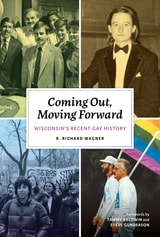
cover of Coming Out, Moving Forward: Wisconsin’s Recent Gay History

Coming Out, Moving Forward

Wisconsin’s Recent Gay History

R. Richard Wagner

Wisconsin Historical Society Press, 2020

Coming Out, Moving Forward, the second volume in R. Richard Wagner’s groundbreaking work on gay history in Wisconsin, outlines the challenges that LGBT Wisconsinites faced in their efforts to right past oppressions and secure equality in the post-Stonewall period between 1969 and 2000. During this era, Wisconsin made history as the first state to enact a gay rights law prohibiting discrimination in employment, housing, and public accommodations on the basis of sexual orientation. It also became the first state to elect three openly gay/lesbian persons to Congress.

In this volume, R. Richard Wagner draws on historical research and materials from his extensive personal archive to not only chronicle an important movement, but also to tell the stories of the state’s LGBT pioneers—from legislators and elected officials to activists, businesspeople, and everyday citizens. Coming Out, Moving Forward documents the rich history of Wisconsin’s LGBT individuals and communities as they pushed back against injustice and found ways to live openly and proudly as themselves.

Coming Out, Moving Forward is a continuation to the first volume in this series, We’ve Been Here All Along.
 
[more]
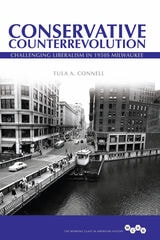
cover of Conservative Counterrevolution: Challenging Liberalism in 1950s Milwaukee

Conservative Counterrevolution

Challenging Liberalism in 1950s Milwaukee

Tula A. Connell

University of Illinois Press, 2016
In the 1950s, Milwaukee's strong union movement and socialist mayor seemed to embody a dominant liberal consensus that sought to continue and expand the New Deal. Tula Connell explores how business interests and political conservatives arose to undo that consensus, and how the resulting clash both shaped a city and helped redefine postwar American politics. Connell focuses on Frank Zeidler, the city's socialist mayor. Zeidler's broad concept of the public interest at times defied even liberal expectations. At the same time, a resurgence of conservatism with roots presaging twentieth-century politics challenged his initiatives in public housing, integration, and other areas. As Connell shows, conservatives created an anti-progressive game plan that included a well-funded media and PR push; an anti-union assault essential to the larger project of delegitimizing any government action; opposition to civil rights; and support from a suburban silent majority. In the end, the campaign undermined notions of the common good essential to the New Deal order. It also sowed the seeds for grassroots conservatism's more extreme and far-reaching future success.
[more]
cover of Continually Working: Black Women,  Community Intellectualism, and  Economic Justice in Postwar Milwaukee

Continually Working

Black Women, Community Intellectualism, and Economic Justice in Postwar Milwaukee

Crystal Marie Moten

Vanderbilt University Press, 2023

Continually Working tells the stories of Black working women who resisted employment inequality in Milwaukee, Wisconsin, from the 1940s to the 1970s. The book explores the job-related activism of Black Midwestern working women and uncovers the political and intellectual strategies they used to critique and resist employment discrimination, dismantle unjust structures, and transform their lives and the lives of those in their community.

Moten emphasizes the ways in which Black women transformed the urban landscape by simultaneously occupying spaces from which they had been historically excluded and creating their own spaces. Black women refused to be marginalized within the historically white and middle‑class Milwaukee Young Women's Christian Association (MYWCA), an association whose mission centered on supporting women in urban areas. Black women forged interracial relationships within this organization and made it, not without much conflict and struggle, one of the most socially progressive organizations in the city. When Black women could not integrate historically white institutions, they created their own. They established financial and educational institutions, such as Pressley School of Beauty Culture, which beautician Mattie Pressley DeWese opened in 1946 as a result of segregation in the beauty training industry. This school served economic, educational, and community development purposes as well as created economic opportunities for Black women. Historically and contemporarily, Milwaukee has been and is still known as one of the most segregated cities in the nation. Black women have always contested urban inequality, by making space for themselves and others on the margins. In so doing, they have transformed both the urban landscape and urban history.
[more]
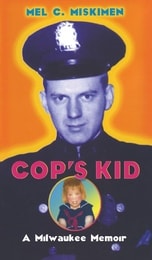
cover of Cop's Kid: A Milwaukee Memoir

Cop's Kid

A Milwaukee Memoir

Mel C. Miskimen

University of Wisconsin Press, 2003

    B-Day, as it came to be known, finally arrived. It was a Friday. A school day. I identified with Cinderella as I watched Dad get ready for work. Holster, check. Gun, check.  Billy club, check. Handcuffs, check. . . . Saturday morning I got up early. Dad was already gone. Back to work. Ushering the Beatles out of town. On the table . . . there were two small bars of soap, slightly used, the words "Coach House Inn" still legible. One book of matches with four missing. And a note from Dad, "From their room." . . . No one else’s dad comes home from work with something that might, just might, have been intimate with a Beatle.
    Growing up, Mel Miskimen thought that a gun and handcuffs on the kitchen table were as normal as a gallon of milk and a loaf of Mrs. Karl’s bread. Her father, a Milwaukee cop for almost forty years was part Super Hero (He simply held up his hand and three lanes of traffic came to a screeching halt) and part Supreme Being (He could be anywhere at anytime. I never knew when or where he would pop up.) Miskimen’s memoir, told in humorous vignettes, tells what it was like for a girl growing up with a dad who packed a lunch and packed heat.

[more]
cover of Cordelia Harvey: Civil War Angel

Cordelia Harvey

Civil War Angel

Bob Kann

Wisconsin Historical Society Press, 2011

Cordelia Harvey: Civil War Angel tells the story of an iconic figure from Wisconsin’s Civil War history. As the wife of a promising young governor, Cordelia Harvey seemed destined for great things. Then tragedy struck: her husband, Louis Harvey, drowned, and Cordelia found herself widowed and alone. Like Louis had, Cordelia cared deeply about the Wisconsin soldiers fighting in the Civil War, and she jumped at a job offer from the new governor: working as the sanitary agent for Wisconsin. In this position, Cordelia could fight for the well-being of the state’s men and boys wounded in battle.
 
Young readers will follow Cordelia on her travels up and down the Mississippi to visit Wisconsin soldiers in military hospitals. In her efforts to make sure soldiers were well cared for, Cordelia wrote to the governor about their need for wholesome food, clean supplies, and fresh air. Eventually, she would travel to Washington to plead with President Lincoln for a Soldier’s Home hospital in Wisconsin. When Cordelia returned home after the war, she continued her humanitarian work by starting an orphanage for the children of fallen Civil War soldiers.
 
Cordelia Harvey: Civil War Angel includes sidebars on medical care, early nursing, and military prisons. A timeline, glossary of terms, and suggestions for activities and discussion round out this spirited narrative.
[more]
cover of Cranberry Red: A Novel

Cranberry Red

A Novel

Jerry Apps

University of Wisconsin Press, 2010

The fourth novel in Jerry Apps’s Ames County series, Cranberry Red brings the story into the present, portraying the challenges of agriculture in the twenty-first century.    
    As the novel opens, Ben Wesley has lost his job as agricultural agent for Ames County. He is soon hired as a research application specialist for Osborne University, a for-profit institution that has developed “Cranberry Red,” a new chemical that promises not only to improve cranberry crop yields but also to endow the fruits with the power to prevent heart disease, reduce brain damage from strokes, and ward off Alzheimer’s disease. Ben must promote the new product to cranberry growers in Ames County and beyond, but he worries whether the promised results are credible. Was Cranberry Red rushed to market?
    When the chemical does all that the university claims it will do, Ben is relieved . . . until disturbing side effects emerge. Can he criticize Cranberry Red and safeguard farmers and consumers without losing his job, or will Ben’s honesty get him fired while his community continues to get sicker?

Finalist, General Fiction, Midwest Book Awards
[more]
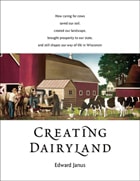
cover of Creating Dairyland: How caring for cows saved our soil, created our landscape, brought prosperity to our state, and still shapes our way of life in Wisconsin

Creating Dairyland

How caring for cows saved our soil, created our landscape, brought prosperity to our state, and still shapes our way of life in Wisconsin

Edward Janus

Wisconsin Historical Society Press, 2011

The story of dairying in Wisconsin is the story of how our very landscape and way of life were created. By making cows the center of our farm life and learning how to care for them, our ancestors launched a revolution that changed much more than the way farmers earned their living — it changed us.
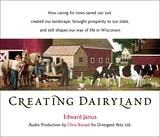
In Creating Dairyland, journalist, oral historian, and former dairyman Ed Janus opens the pages of the fascinating story of Wisconsin dairy farming. He explores the profound idea that led to the remarkable "big bang" of dairying here a century and a half ago. He helps us understand why there are cows in Wisconsin, how farmers became responsible stewards of our resources, and how cows have paid them back for their efforts. And he introduces us to dairy farmers and cheesemakers of today: men and women who want to tell us why they love what they do.
 
Ed Janus offers a sort of field guide to Dairyland, showing us how to "read" our landscape with fresh eyes, explaining what we see today by describing how and why it came to be. Creating Dairyland pays tribute to the many thousands of Wisconsin farmers who have found a way to stay on their land with their cows. Their remarkable effort of labor, intelligence, and faith is one of the great stories of Wisconsin.
[more]
cover of Creating Dairyland: How caring for cows saved our soil, created our landscape, brought prosperity to our state, and still shapes our way of life in Wisconsin

Creating Dairyland

How caring for cows saved our soil, created our landscape, brought prosperity to our state, and still shapes our way of life in Wisconsin

Edward Janus

Wisconsin Historical Society Press, 2011

The story of dairying in Wisconsin is the story of how our very landscape and way of life were created. By making cows the center of our farm life and learning how to care for them, our ancestors launched a revolution that changed much more than the way farmers earned their living — it changed us.
In Creating Dairyland, journalist, oral historian, and former dairyman Ed Janus opens the pages of the fascinating story of Wisconsin dairy farming. He explores the profound idea that led to the remarkable "big bang" of dairying here a century and a half ago. He helps us understand why there are cows in Wisconsin, how farmers became responsible stewards of our resources, and how cows have paid them back for their efforts. And he introduces us to dairy farmers and cheesemakers of today: men and women who want to tell us why they love what they do.
 
Ed Janus offers a sort of field guide to Dairyland, showing us how to "read" our landscape with fresh eyes, explaining what we see today by describing how and why it came to be. Creating Dairyland pays tribute to the many thousands of Wisconsin farmers who have found a way to stay on their land with their cows. Their remarkable effort of labor, intelligence, and faith is one of the great stories of Wisconsin.
[more]
cover of Creating Dairyland: How caring for cows saved our soil, created our landscape, brought prosperity to our state, and still shapes our way of life in Wisconsin

Creating Dairyland

How caring for cows saved our soil, created our landscape, brought prosperity to our state, and still shapes our way of life in Wisconsin

Edward Janus

Wisconsin Historical Society Press, 2012

The story of dairying in Wisconsin is the story of how our very landscape and way of life were created. By making cows the center of our farm life and learning how to care for them, our ancestors launched a revolution that changed much more than the way farmers earned their living — it changed us.
In Creating Dairyland, journalist, oral historian, and former dairyman Ed Janus opens the pages of the fascinating story of Wisconsin dairy farming. He explores the profound idea that led to the remarkable "big bang" of dairying here a century and a half ago. He helps us understand why there are cows in Wisconsin, how farmers became responsible stewards of our resources, and how cows have paid them back for their efforts. And he introduces us to dairy farmers and cheesemakers of today: men and women who want to tell us why they love what they do.
 
Ed Janus offers a sort of field guide to Dairyland, showing us how to "read" our landscape with fresh eyes, explaining what we see today by describing how and why it came to be. Creating Dairyland pays tribute to the many thousands of Wisconsin farmers who have found a way to stay on their land with their cows. Their remarkable effort of labor, intelligence, and faith is one of the great stories of Wisconsin.
[more]
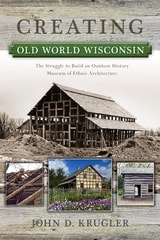
cover of Creating Old World Wisconsin: The Struggle to Build an Outdoor History Museum of Ethnic Architecture

Creating Old World Wisconsin

The Struggle to Build an Outdoor History Museum of Ethnic Architecture

John D. Krugler

University of Wisconsin Press, 2013

With its charming heirloom gardens, historic livestock breeds, and faithfully recreated farmsteads and villages that span nearly 600 acres, Old World Wisconsin is the largest outdoor museum of rural life in the United States. But this seemingly time-frozen landscape of rustic outbuildings and rolling wooded hills did not effortlessly spring into existence, as John D. Krugler shows in Creating Old World Wisconsin.

Visionaries, researchers, curators, and volunteers launched a massive preservation initiative to salvage fast-disappearing immigrant and migrant architecture. Dozens of historic buildings in the 1970s were transported from locations throughout the state to the Kettle Moraine State Forest. These buildings created a backdrop against which twenty-first-century interpreters demonstrate nineteenth- and early twentieth-century agricultural techniques and artisanal craftsmanship. The site, created and maintained by the Wisconsin Historical Society, offers visitors a unique opportunity to learn about the state’s rich and ethnically diverse past through depictions of the everyday lives of its Norwegian, Danish, Finnish, German, Polish, African American, and Yankee inhabitants.

Creating Old World Wisconsin chronicles the fascinating and complex origins of this outdoor museum, highlighting the struggles that faced its creators as they worked to achieve their vision. Even as Milwaukee architect and preservationist Richard W. E. Perrin, the Society's staff, and enthusiastic volunteers opened the museum in time for the national bicentennial in 1976, the site was plagued by limited funds, bureaucratic tangles, and problems associated with gaining public support. By documenting the engaging story of the challenges, roadblocks, false starts, and achievements of the site's founders, Krugler brings to life the history of the dedicated corps who collected and preserved Wisconsin's diverse social history and heritage.

[more]
cover of Cris Plata: From Fields to Stage // Del Campo al Escenario

Cris Plata

From Fields to Stage // Del Campo al Escenario

Maia Surdam

Wisconsin Historical Society Press, 2014

Raised among Mexican American farmworkers, singer-songwriter Cris Plata spoke Spanish, ate Mexican food, and heard Mexican music played by family and friends. He also spoke English, went to school with mostly white children for at least half the year, and grew more familiar with mainstream American culture. Until he was seven, he and his family lived and worked on a ranch near Poteet, Texas. The family became migrant farmworkers, moving from Indiana to Arkansas and Florida before finally settling in Wisconsin in 1966 to work at an Astico farm.
 
This dual language book shares the Plata’s family story of migrant farming, music, and family amid the constant change and uncertainty of migrant life. While hardships—from poor working conditions and low wages to racial prejudice—were constant in Cris Plata’s upbringing, so too was the music that bonded and uplifted his family. After long days in the fields, Cris’s family spent their small amount of free time playing and singing songs from Mexico and South Texas. Cris learned to play the guitar, accordion, and mandolin, beginning to strum when he was just five years old. Today, he writes his own music, performs songs in English and Spanish, and records albums with his band, Cris Plata with Extra Hot.
 
Following Cris Plata’s journey from farm fields to musical stages, the story explores how a migrant, and the son of an immigrant, decided to make Wisconsin his home.
[more]
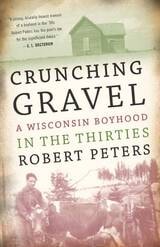
cover of Crunching Gravel: A Wisconsin Boyhood in the Thirties

Crunching Gravel

A Wisconsin Boyhood in the Thirties

Robert Louis Peters

University of Wisconsin Press, 1993

No nostalgic tale of the good old days, Robert Peters’s recollections of his adolescence vividly evoke the Depression on a hardscrabble farm near Eagle River:  Dad driving the Vilas County Relief truck, Lars the Swede freezing to death on his porch, the embarassment of graduation in a suit from welfare.  The hard efforts to put fish and potatoes and blueberries on the table are punctuated by occasional pleasures:  the Memorial Day celebration, swimming at Perch Lake, the county fair with Mother’s prizes for jam and the exotic delights of the midway.  Peters’s clear-eyed memoir reveals a poet’s eye for rich and stark detail even as a boy of twelve.

“Peters misses nothing, from the details of the town’s Fourth of July celebration to the cause and effect of a young cousin’s suicide to the calibrations of racism toward Indians that was so acceptable then.  It is a fascinating, unsentimental look at a piece of our past.”—Margaret E. Guthrie, New York Times Book Review

“It’s unlikely that any other contemporary poet and scholar as distinguished has risen from quite so humble beginnings as Robert Peters.  Born and raised by semiliterate parents on a subsistence farm in northeastern Wisconsin, Peters lived harrowingly close to the eventual stuff of his poetry—the dependency of humans on animal lives, the inexplicable and ordinary heroism and baseness of people facing extreme conditions, the urgency of physical desire.  .  .  .  Sterling childhood memoirs.”—Booklist

“Robert Peters has written a memoir exemplary because he insists on the specific, on the personal and the local.  It is also enormously satisfying to read, and it is among the most authentic accounts of childhood and youth I know—a Wisconsin David Copperfield!”—Thom Gunn
[more]
cover of Cry Rape: The True Story of One Woman's Harrowing Quest for Justice

Cry Rape

The True Story of One Woman's Harrowing Quest for Justice

Bill Lueders

University of Wisconsin Press, 2007

Cry Rape dramatically exposes the criminal justice system’s capacity for error as it recounts one woman’s courageous battle in the face of adversity. In September 1997, a visually impaired woman named Patty was raped by an intruder in her home in Madison, Wisconsin. The rookie detective assigned to her case came to doubt Patty’s account and focused the investigation on her. Under pressure, he got her to recant, then had her charged with falsely reporting a crime. The charges were eventually dropped, but Patty continued to demand justice, filing complaints and a federal lawsuit against the police. All were rebuffed. But later, as the result of her perseverance, a startling discovery was made. Even then, Patty’s ordeal was far from over.
     Other books have dealt with how police and prosecutors bend and break the law in their zeal to prevail. This one focuses instead on how the gravest injustice can be committed with the best of intentions, and how one woman’s bravery and persistence finally triumphed.
 
Courage Award Winner, Wisconsin Coalition against Sexual Assault
[more]
cover of Culture Work: Folklore for the Public Good

Culture Work

Folklore for the Public Good

Tim Frandy and B. Marcus Cederström

University of Wisconsin Press, 2022

How do culture workers construct public arts and culture projects that are effective and transformative? How do we create public humanities projects of the community, for the community, and with the community? How can culture work make a concrete difference in the quality of life for communities, and lead to the creation of a more just world? Why do the public humanities matter? Culture Work explores these questions through real-world examples of cultural and public humanities projects. The innovative case studies analyzed in the book demonstrate the vast numbers of creative possibilities in culture work today—in all their complexities, challenges, and potentialities.
 
Thematically arranged chapters embody the interconnected aspects of culture work, from amplifying local voices to galvanizing community from within, from preservation of cultural knowledge to its creative repurposing for a desired future. These inventive projects provide concrete examples and accessible theory grounded in practice, encourage readers to embark on their own public culture work, and create new forward-looking inspiration for community leaders and scholars in the field.
[more]
cover of Culture and Resource Conflict: Why Meanings Matter

Culture and Resource Conflict

Why Meanings Matter

Douglas L. Medin

Russell Sage Foundation, 2006

In a multi-cultural society, differing worldviews among groups can lead to conflict over competing values and behaviors. Nowhere is this tension more concrete than in the wilderness, where people of different cultures hunt and fish for the same animals. White Americans tend to see nature as something external which they have some responsibility to care for. In contrast, Native Americans are more likely to see themselves as one with nature. In Culture and Resource Conflict, authors Douglas Medin, Norbert Ross, and Douglas Cox investigate the discord between whites and Menominee American Indians over hunting and fishing, and in the process, contribute to our understanding of how and why cultures so often collide. Based on detailed ethnographic and experimental research, Culture and Resource Conflict finds that Native American and European American hunters and fishermen have differing approaches—or mental models—with respect to fish and game, and that these differences lead to misunderstanding, stereotyping, and conflict. Menominee look at the practice of hunting and fishing for sport as a sign of a lack of respect for nature. Whites, on the other hand, define respect for nature more on grounds of resource management and conservation. Some whites believe—contrary to fact—that Native Americans are depleting animal populations with excessive hunting and fishing, while the Menominee protest that they only hunt what they need and make extensive use of their catch. Yet the authors find that, despite these differences, the two groups share the fundamental underlying goal of preserving fish and game for future generations, and both groups see hunting and fishing as deeply meaningful activities. At its core, the conflict between these two groups is more about mistrust and stereotyping than actual disagreement over values. Combining the strengths of psychology and anthropology, Culture and Resource Conflict shows how misunderstandings about the motives of others can lead to hostility and conflict. As debates over natural resources rage worldwide, this unique book demonstrates the obstacles that must be overcome for different groups to reach consensus over environmental policy.
[more]