Results by title
28167 books match the query 'History' and 1913 start with c
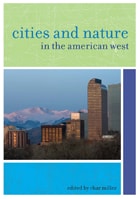
Cities and Nature in the American West
Char Miller
University of Nevada Press, 2010
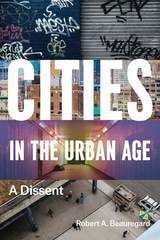
Cities in the Urban Age
A DissentRobert A. Beauregard
University of Chicago Press, 2018
For Beauregard, the city is a cauldron for four haunting contradictions. First, cities are equally defined by both their wealth and their poverty. Second, cities are simultaneously environmentally destructive and yet promise sustainability. Third, cities encourage rule by political machines and oligarchies, even as they are essentially democratic and at least nominally open to all. And fourth, city life promotes tolerance among disparate groups, even as the friction among them often erupts into violence. Beauregard offers no simple solutions or proposed remedies for these contradictions; indeed, he doesn’t necessarily hold that they need to be resolved, since they are generative of city life. Without these four tensions, cities wouldn’t be cities. Rather, Beauregard argues that only by recognizing these ambiguities and contradictions can we even begin to understand our moral obligations, as well as the clearest paths toward equality, justice, and peace in urban settings.
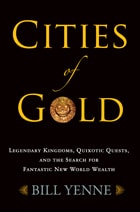
Cities of Gold
Legendary Kingdoms, Quixotic Quests, and Fantastic New World WealthBill Yenne
Westholme Publishing, 2011
A History of Exploration for Real and Mythical Treasures in the Americas
For half a millennium, stories of vast treasures—El Dorado, Manoa, the Seven Cities of Cibola, the Lost Dutchman Mine—have been part of the lore of the Americas. Long before the Europeans set foot in the New World, myths and rumors of fabulous wealth in distant lands, such as the kingdom of Prester John, were told and retold so often that they were assumed to be true. When Spanish explorers first made contact with the Aztec and Inca civilizations, they found cultures that were literally dripping with gold. This evidence made it easy to believe the native stories of even greater wealth just beyond the horizon. In these uncharted lands, dreamers sought their fortunes: Francisco de Coronado ranged over the North American plains in search of the elusive Quivira; Gonzalo Pizarro, brother of the Incan conqueror, and Lope Aguirre, the “Wrath of God,” were both part of ill-fated expeditions in search of El Dorado; and Leonard Clark walked out of the Amazon after World War II with gold and claimed he had found that fabled kingdom.
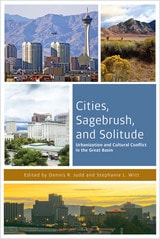
Cities, Sagebrush, and Solitude
Urbanization and Cultural Conflict in the Great BasinDennis R. Judd
University of Nevada Press, 2015
The blooming of cities in a fragile desert region poses a host of environmental challenges. The policies required to manage their impact, however, often collide with an entrenched political culture that has long resisted cooperative or governmental effort. The alchemical mixture of three ingredients--cities, aridity, and a libertarian political outlook--makes the Great Basin a compelling place to study. This book addresses a pressing question: are large cities ultimately sustainable in such a fragile environment?
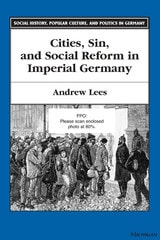
Cities, Sin, and Social Reform in Imperial Germany
Andrew Lees
University of Michigan Press, 2002
Thematically and methodologically wide-ranging and innovative, this volume considers a broad spectrum of responses not only to the supposed breakdown of social cohesion but also to specific forms of deviant behavior. It draws on large numbers of writings from the period by clergymen, jurists, medical doctors, educators, social workers, and others. This literature illuminates the histories not only of urbanization and cities but also of sexuality and Christianity, crime and criminology, leisure and education, youth and women, charity and social work, and the welfare state as well as local government.
Focusing on positive instead of escapist responses to the challenges that inhered in urban society, this work can be read as part of an ongoing reassessment of the German Empire that points away from the idea that Germans were traveling an antimodernist Sonderweg, or special path, that led inevitably to National Socialism and the Third Reich. Although intended primarily for scholars and students of modern Germany, this book should speak to a variety of readers, among them anyone who cares about the history of cities, deviant behavior, or social reform.
Andrew Lees is Professor of History, Rutgers University.
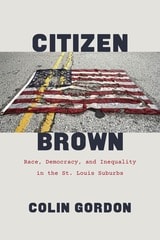
Citizen Brown
Race, Democracy, and Inequality in the St. Louis SuburbsColin Gordon
University of Chicago Press, 2019
Citizen Brown uncovers half a century of private practices and public policies that resulted in bitter inequality and sustained segregation in Ferguson and beyond. Gordon shows how municipal and school district boundaries were pointedly drawn to contain or exclude African Americans and how local policies and services—especially policing, education, and urban renewal—were weaponized to maintain civic separation. He also makes it clear that the outcry that arose in Ferguson was no impulsive outburst but rather an explosion of pent-up rage against long-standing systems of segregation and inequality—of which a police force that viewed citizens not as subjects to serve and protect but as sources of revenue was only the most immediate example. Worse, Citizen Brown illustrates the fact that though the greater St. Louis area provides some extraordinarily clear examples of fraught racial dynamics, in this it is hardly alone among American cities and regions.
Interactive maps and other companion resources to Citizen Brown are available at the book website.
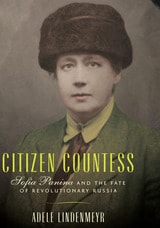
Citizen Countess
Sofia Panina and the Fate of Revolutionary RussiaAdele Lindenmeyr
University of Wisconsin Press, 2019
Based on Adele Lindenmeyr's detailed research in dozens of archival collections, Citizen Countess establishes Sofia Panina as an astute eyewitness to and passionate participant in the historical events that shaped her life. Her experiences shed light on the evolution of the European nobility, women's emancipation and political influence of the time, and the fate of Russian liberalism.

Citizen Critics
Literary Public SpheresRosa A. Eberly
University of Illinois Press, 2000
The condition of our public discussions about literary and cultural works has much to say about the state of our democracy. Classrooms, newspapers, magazines, Internet forums, and many other places grant citizens a place to hold public discourses—and claim a voice on national artistic matters.
Rosa A. Eberly looks at four censorship controversies where professionals asserted their authority to deny citizen critics a voice—and effectively removed discussion of literature from the public sphere. Eberly compares the outrage sparked by the publication of James Joyce's Ulysses and Henry Miller's Tropic of Cancer with the relative quiescence that greeted the much more violent and sexually explicit content of Bret Easton Ellis's American Psycho and Andrea Dworkin's Mercy. Through a close reading of letters to the editor, reviews, media coverage, and court cases, Eberly shows how literary critics and legal experts defused censorship debates—and undercut the authority of citizen critics—by shifting the focus from content to aesthetics and from social values to publicity.
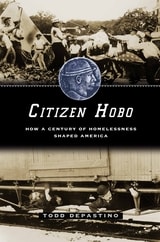
Citizen Hobo
How a Century of Homelessness Shaped AmericaTodd DePastino
University of Chicago Press, 2003
In this eye-opening work of American history, Todd DePastino tells the epic story of hobohemia's rise and fall, and crafts a stunning new interpretation of the "American century" in the process. Drawing on sources ranging from diaries, letters, and police reports to movies and memoirs, Citizen Hobo breathes life into the largely forgotten world of the road, but it also, crucially, shows how the hobo army so haunted the American body politic that it prompted the creation of an entirely new social order and political economy. DePastino shows how hoboes—with their reputation as dangers to civilization, sexual savages, and professional idlers—became a cultural and political force, influencing the creation of welfare state measures, the promotion of mass consumption, and the suburbanization of America. Citizen Hobo's sweeping retelling of American nationhood in light of enduring struggles over "home" does more than chart the change from "homelessness" to "houselessness." In its breadth and scope, the book offers nothing less than an essential new context for thinking about Americans' struggles against inequality and alienation.
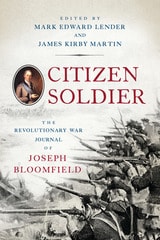
Citizen Soldier
The Revolutionary War Journal of Joseph BloomfieldMark Edward Lender and James K. Martin
Westholme Publishing, 2017
“About sunset we made a stand, when I was wounded, having a Ball with the Wad shot through my left forearm & the fuse set my coat and shirt on fire.” So wrote Major Joseph Bloomfield in his journal on September 11, 1777, describing his experiences during the hard-fought battle of Brandywine. Bloomfield was an officer in the 3rd New Jersey Regiment from 1776 to 1779. His service took him from Fort Stanwix to Fort Ticonderoga in New York, to the battle of Brandywine in Pennsylvania, and to the battle of Monmouth in his native state. He later served as governor of New Jersey from 1801 to 1812. A compassionate officer admired by his men, Bloomfield carefully recounted the hardships of military campaigns—the swings of morale, the shortage of supplies, the ever-present illnesses—and the intensity of combat. Of special interest are Bloomfield’s important notes on the culture and behavior of the Iroquois tribes known collectively as the Six Nations, which played a crucial role in revolutionary New York.
Unpublished and all but unknown when the first edition—skillfully edited by historians Mark Edward Lender and Joseph Kirby Martin—appeared, Bloomfield’s wartime journal was praised for providing both scholars and general readers with new information on the Continental soldier; the revolution’s impact on society; warfare in New York, New Jersey, and Pennsylvania; and the motives and actions of the revolutionary generation. Soldiers and civilians, Patriots and Tories, come alive in this fascinating eyewitness narrative. This new edition of Citizen Soldier: The Revolutionary War Journal of Joseph Bloomfield—the first in thirty-five years—includes a new introduction and bibliographic essay by the editors.
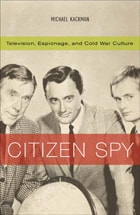
Citizen Spy
Television, Espionage, and Cold War CultureMichael Kackman
University of Minnesota Press, 2005
During the first decade of the Cold War, Hollywood developed such shows as I Led 3 Lives and Behind Closed Doors with the approval of federal intelligence agencies, even basing episodes on actual case files. These “documentary melodramas” were, Kackman argues, vehicles for the fledgling television industry to proclaim its loyalty to the government, and they came stocked with appeals to patriotism and anti-Communist vigilance.
As the rigid cultural logic of the Red Scare began to collapse, spy shows became more playful, self-referential, and even critical of the ideals professed in their own scripts. From parodies such as The Man from U.N.C.L.E. and Get Smart to the more complicated global and political situations of I Spy and Mission: Impossible, Kackman situates espionage television within the tumultuous culture of the civil rights and women’s movements and the war in Vietnam. Yet, even as spy shows introduced African-American and female characters, they continued to reinforce racial and sexual stereotypes.
Bringing these concerns to the political and cultural landscape of the twenty-first century, Kackman asserts that the roles of race and gender in national identity have become acutely contentious. Increasingly exclusive definitions of legitimate citizenship, heroism, and dissent have been evident through popular accounts of the Iraq war. Moving beyond a snapshot of television history, Citizen Spy provides a contemporary lens to analyze the nature—and implications—of American nationalism in practice.
Michael Kackman is assistant professor in Radio-Television-Film at the University of Texas, Austin.
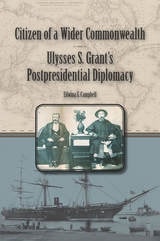
Citizen of a Wider Commonwealth
Ulysses S. Grant's Postpresidential DiplomacyEdwina S. Campbell
Southern Illinois University Press, 2012
Traveling commercially and on U.S. Navy warships, Grant visited ports of call throughout the British Empire, Europe, and Asia, including Britain, France, Egypt, the Ottoman Empire, Greece, Italy, the Netherlands, Germany, Scandinavia, Russia, Spain, Portugal, Gibraltar, Ireland, India, Singapore, Hong Kong, China, and Japan. Along the way, he met with monarchs, ministers, and average citizens, creating the model for the summitry and public diplomacy practiced by future American presidents and articulating concepts of national self-determination, international organization, and the peaceful settlement of international disputes decades before Elihu Root’s advocacy of binding international arbitration and Woodrow Wilson’s proposal for the League of Nations.
Campbell reveals Grant to be a skillful envoy who brought to his travels the deep interest in foreign policy issues he had shown during his administration. Grant confirmed the United States’ commitment to Anglo-American cooperation, demonstrated America’s interest in the territorial integrity of China, affirmed American faith in universal (male) suffrage as the basis for governmental legitimacy, and asserted the importance of an international order based on equality and justice for all states and their citizens. Grant’s efforts shaped not only John Hay’s Open Door policy in 1899–1900 but also the broader American approach to twentieth-century international relations. Throughout the trip, Julia Grant proved essential to the success of her husband’s mission, and Campbell tells how the couple impressed people around the world with an enduring image of an American president and first lady.
By illuminating the significance of Grant’s often overlooked postpresidential travels, Citizen of a Wider Commonwealth establishes the eighteenth president as a key diplomat whose work strongly influenced the direction of future U.S. foreign policy and contributes substantially to the study of American international relations.
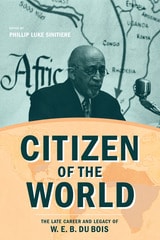
Citizen of the World
The Late Career and Legacy of W. E. B. Du BoisEdited by Phillip Luke Sinitiere
Northwestern University Press, 2019
From his birth in 1868 until his death in 1963, Du Bois sought the liberation of black people in the United States and across the world through intellectual and political labor. His tireless efforts documented and demonstrated connections between freedom for African-descended people abroad and black freedom at home.
In concert with growing scholarship on his twilight years, the essays in this volume assert the fundamental importance of considering Du Bois’s later decades not as a life in decline that descended into blind ideological allegiance to socialism and communism but as the life of a productive, generative intellectual who responded rationally, imaginatively, and radically to massive mid-century changes around the world, and who remained committed to freedom’s realization until his final hour.

Citizen, Invert, Queer
Lesbianism and War in Early Twentieth-Century BritainDeborah Cohler
University of Minnesota Press, 2010
Citizen-General
Jacob Dolson Cox and the Civil War EraEugene D. Schmiel
Ohio University Press, 2014
The wrenching events of the Civil War transformed not only the United States but also the men unexpectedly called on to lead their fellow citizens in this first modern example of total war. Jacob Dolson Cox, a former divinity student with no formal military training, was among those who rose to the challenge. In a conflict in which “political generals” often proved less than competent, Cox, the consummate citizen general, emerged as one of the best commanders in the Union army.
During his school days at Oberlin College, no one could have predicted that the intellectual, reserved, and bookish Cox possessed what he called in his writings the “military aptitude” to lead men effectively in war. His military career included helping secure West Virginia for the Union; jointly commanding the left wing of the Union army at the critical Battle of Antietam; breaking the Confederate supply line and thereby precipitating the fall of Atlanta; and holding the defensive line at the Battle of Franklin, a Union victory that effectively ended the Confederate threat in the West.
At a time when there were few professional schools other than West Point, the self-made man was the standard for success; true to that mode, Cox fashioned himself into a Renaissance man. In each of his vocations and avocations—general, governor, cabinet secretary, university president, law school dean, railroad president, historian, and scientist—he was recognized as a leader. Cox’s greatest fame, however, came to him as the foremost participant historian of the Civil War. His accounts of the conflict are to this day cited by serious scholars and serve as a foundation for the interpretation of many aspects of the war.
Citizen-Saints
Shakespeare and Political TheologyJulia Reinhard Lupton
University of Chicago Press, 2005
Among the many questions Julia Reinhard Lupton attempts to answer under the rubric of the citizen-saint are: how did states of emergency, acts of sovereign exception, and Messianic anticipations lead to new forms of religious and political law? What styles of universality were implied by the abject state of the pure creature, at sea in a creation abandoned by its creator? And how did circumcision operate as both a marker of ethnicity and a means of conversion and civic naturalization?
Written with clarity and grace, Citizen-Saints will be of enormous interest to students of English literature, religion, and early modern culture.
Citizen
Jane Addams and the Struggle for DemocracyLouise W. Knight
University of Chicago Press, 2005
Citizen covers the first half of Addams's life, from 1860 to 1899. Knight recounts how Addams, a child of a wealthy family in rural northern Illinois, longed for a life of larger purpose. She broadened her horizons through education, reading, and travel, and, after receiving an inheritance upon her father's death, moved to Chicago in 1889 to co-found Hull House, the city's first settlement house. Citizen shows vividly what the settlement house actually was—a neighborhood center for education and social gatherings—and describes how Addams learned of the abject working conditions in American factories, the unchecked power wielded by employers, the impact of corrupt local politics on city services, and the intolerable limits placed on women by their lack of voting rights. These experiences, Knight makes clear, transformed Addams. Always a believer in democracy as an abstraction, Addams came to understand that this national ideal was also a life philosophy and a mandate for civic activism by all.
As her story unfolds, Knight astutely captures the enigmatic Addams's compassionate personality as well as her flawed human side. Written in a strong narrative voice, Citizen is an insightful portrait of the formative years of a great American leader.
“Knight’s decision to focus on Addams’s early years is a stroke of genius. We know a great deal about Jane Addams the public figure. We know relatively little about how she made the transition from the 19th century to the 20th. In Knight’s book, Jane Addams comes to life. . . . Citizen is written neither to make money nor to gain academic tenure; it is a gift, meant to enlighten and improve. Jane Addams would have understood.”—Alan Wolfe, New York Times Book Review
“My only complaint about the book is that there wasn’t more of it. . . . Knight honors Addams as an American original.”—Kathleen Dalton, Chicago Tribune
Citizens and Paupers
Relief, Rights, and Race, from the Freedmen's Bureau to WorkfareChad Alan Goldberg
University of Chicago Press, 2008
Citizens and Paupers explores this contentious history by analyzing and comparing three major programs: the Freedmen’s Bureau, the Works Progress Administration, and the present-day system of workfare that arose in the 1990s. Each of these overhauls of the welfare state created new groups of clients, new policies for aiding them, and new disputes over citizenship—conflicts that were entangled in racial politics and of urgent concern for social activists.
This combustible mix of racial tension and social reform continues to influence how we think about welfare, and Citizens and Paupers is an invaluable analysis of the roots of the debate.
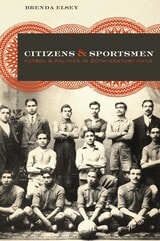
Citizens and Sportsmen
Fútbol and Politics in Twentieth-Century ChileBy Brenda Elsey
University of Texas Press, 2011
Fútbol, or soccer as it is called in the United States, is the most popular sport in the world. Millions of people schedule their lives and build identities around it. The World Cup tournament, played every four years, draws an audience of more than a billion people and provides a global platform for displays of athletic prowess, nationalist rhetoric, and commercial advertising. Fútbol is ubiquitous in Latin America, yet few academic histories of the sport exist, and even fewer focus on its relevance to politics in the region. To fill that gap, this book uses amateur fútbol clubs in Chile to understand the history of civic associations, popular culture, and politics.
In Citizens and Sportsmen, Brenda Elsey argues that fútbol clubs integrated working-class men into urban politics, connected them to parties, and served as venues of political critique. In this way, they contributed to the democratization of the public sphere. Elsey shows how club members debated ideas about class, ethnic, and gender identities, and also how their belief in the uniquely democratic nature of Chile energized state institutions even as it led members to criticize those very institutions. Furthermore, she reveals how fútbol clubs created rituals, narratives, and symbols that legitimated workers' claims to political subjectivity. Her case study demonstrates that the relationship between formal and informal politics is essential to fostering civic engagement and supporting democratic practices.
Citizens of Memory
Affect, Representation, and Human Rights in Postdictatorship ArgentinaSilvia R. Tandeciarz
Bucknell University Press, 2026
Published by Bucknell University Press. Distributed worldwide by Rutgers University Press.
Citizens of Photography
The Camera and the Political ImaginationEdited by Christopher Pinney with the PhotoDemos Collective (Naluwembe Binaisa, Vindhya Buthpitiya, Konstantinos Kalantzis, Christopher Pinney, Ileana L. Selejan, and Sokphea Young)
Duke University Press, 2023
Citizens of Scandal
Journalism, Secrecy, and the Politics of Reckoning in MexicoVanessa Freije
Duke University Press, 2020
Citizens on Stage
Comedy and Political Culture in the Athenian DemocracyJames F. McGlew
University of Michigan Press, 2002
Old Comedy gives Citizens on Stage its chronological backbone; the beginning and end of Aristophanes' career roughly define the period on which the book concentrates. Reading and interpreting comedy provides a model for reading Athenian politics itself. McGlew argues that the plays of Old Comedy, with their fantastic stories of common individuals triumphing over the various social and political dilemmas of democratic Athens, interpreted the relationship of private life and political activity for an Athenian audience, dramatically reaffirming the ties between citizens' personal desires and the will of the collective body. In particular, McGlew argues that comedy transforms private fantasies of personal power and pleasures--what seem most to keep the individual audience members apart--into a collective possession and touchstone of democratic citizen identity.
Citizens on Stage focuses primarily on the democratic citizen and on contemporary representations of him as a decision maker. McGlew shows that the democratic individual, sometimes idealized, sometimes despised, was a dominant concern of the literature and politics of late fifth- and early fourth-century Athens. This book will appeal to students of ancient theater and drama, Athenian politics and democracy, and the relationships between theater and politics. Social historians will also find it an invaluable resource.
James F. McGlew is Assistant Professor of Foreign Languages and Literatures and Classical Studies, Iowa State University.
Citizenship and Those Who Leave
The Politics of Emigration and ExpatriationEdited by Nancy L. Green and Fran‡ois Weil
University of Illinois Press, 2006
Exit, like entry, has helped define citizenship over the last two centuries, yet little attention has been given to the politics of emigration. How have countries impeded or facilitated people leaving? How have they perceived and regulated those who leave? What relations do they seek to maintain with their citizens abroad and why? Citizenship and Those Who Leave reverses the immigration perspective to examine how nations define themselves not just through entry but through exit as well.
Citizenship from Below
Erotic Agency and Caribbean FreedomMimi Sheller
Duke University Press, 2012
Attending to the hidden linkages among intimate realms and the public sphere, Sheller explores specific struggles for freedom, including women's political activism in Jamaica; the role of discourses of "manhood" in the making of free subjects, soldiers, and citizens; the fiercely ethnonationalist discourses that excluded South Asian and African indentured workers; the sexual politics of the low-bass beats and "bottoms up" moves in the dancehall; and the struggle for reproductive and LGBT rights and against homophobia in the contemporary Caribbean. Through her creative use of archival sources and emphasis on the connections between intimacy, violence, and citizenship, Sheller enriches critical theories of embodied freedom, sexual citizenship, and erotic agency in all post-slavery societies.
Citizenship in Cold War America
The National Security State and the Possibilities of DissentAndrea Friedman
University of Massachusetts Press, 2014
The stories told here capture a wide-ranging debate about the workings of the national security state and the meaning of American citizenship. Some of the participants in this debate—women like war bride Ellen Knauff and Pentagon employee Annie Lee Moss—were able to make their own experiences compelling examples of the threats posed by the national security regime. Others, such as Ruth Reynolds and Lolita Lebrón, who advocated an end to American empire in Puerto Rico, or the psychiatrist Fredric Wertham, who sought to change the very definition of national security, were less successful. Together, however, they exposed the gap between democratic ideals and government policies.
Friedman traverses immigration law and loyalty boards, popular culture and theoretical treatises, U.S. court-rooms and Puerto Rican jails, to demonstrate how Cold War repression made visible in new ways the unevenness and limitations of American citizenship. Highlighting the ways that race and gender shaped critiques and defenses of the national security regime, she offers new insight into the contradictions of Cold War political culture.
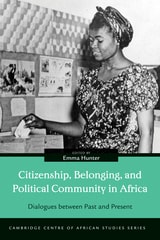
Citizenship, Belonging, and Political Community in Africa
Dialogues between Past and PresentEmma Hunter
Ohio University Press, 2016
Africa, it is often said, is suffering from a crisis of citizenship. At the heart of the contemporary debates this apparent crisis has provoked lie dynamic relations between the present and the past, between political theory and political practice, and between legal categories and lived experience. Yet studies of citizenship in Africa have often tended to foreshorten historical time and privilege the present at the expense of the deeper past.
Citizenship, Belonging, and Political Community in Africa provides a critical reflection on citizenship in Africa by bringing together scholars working with very different case studies and with very different understandings of what is meant by citizenship. By bringing historians and social scientists into dialogue within the same volume, it argues that a revised reading of the past can offer powerful new perspectives on the present, in ways that might also indicate new paths for the future.
The project collects the works of up-and-coming and established scholars from around the globe. Presenting case studies from such wide-ranging countries as Sudan, Mauritius, South Africa, Côte d’Ivoire, and Ethiopia, the essays delve into the many facets of citizenship and agency as they have been expressed in the colonial and postcolonial eras. In so doing, they engage in exciting ways with the watershed book in the field, Mahmood Mamdani’s Citizen and Subject.
Contributors: Samantha Balaton-Chrimes, Frederick Cooper, Solomon M. Gofie, V. Adefemi Isumonah, Cherry Leonardi, John Lonsdale, Eghosa E.Osaghae, Ramola Ramtohul, Aidan Russell, Nicole Ulrich, Chris Vaughan, and Henri-Michel Yéré.
Citoyennes
Women and the Ideal of Citizenship in Eighteenth-Century FranceAnnie K. Smart
University of Delaware Press, 2012
Did women have a civic identity in eighteenth-century France? In Citoyennes: Women and the Ideal of Citizenship in Eighteenth-Century France, Annie Smart contends that they did. While previous scholarship has emphasized the ideal of domestic motherhood or the image of the republican mother, Smart argues persuasively that many pre-revolutionary and revolutionary texts created another ideal for women–the ideal of civic motherhood. Smart asserts that women were portrayed as possessing civic virtue, and as promoting the values and ideals of the public sphere.
Contemporary critics have theorized that the eighteenth-century ideal of the Republic intentionally excluded women from the public sphere. According to this perspective, a discourse of “Rousseauean” domestic motherhood stripped women of an active civic identity, and limited their role to breastfeeding and childcare. Eighteenth-century France marked thus the division between a male public sphere of political action and a female private sphere of the home.
Citoyennes challenges this position and offers an alternative model of female identity. This interdisciplinary study brings together a variety of genres to demonstrate convincingly that women were portrayed as civic individuals. Using foundational texts such as Jean-Jacques Rousseau’s Emile, or on Education (1762), revolutionary gouaches of Lesueur, and vaudeville plays of Year II of the Republic (1793/1794), this study brilliantly shows that in text and image, women were represented as devoted to both the public good and their families.
In addition, Citoyennes offers an innovative interpretation of the home. Through re-examining sphere theory, this study challenges the tendency to equate the home with private concerns, and shows that the home can function as a site for both private life and civic identity.
Citoyennes breaks new ground, for it both rectifies the ideal of domestic Rousseauean motherhood, and brings a fuller understanding to how female civic identity operated in important French texts and images.
Published by University of Delaware Press. Distributed worldwide by Rutgers University Press.
Citrus
A HistoryPierre Laszlo
University of Chicago Press, 2007
“Laszlo . . . has approached the lore of citrus fruit with the élan of a master chef (the man is French, after all), mixing history, economics, biology and chemistry to produce a book that will bring a smile to readers of every taste.”—Natural History
“Altogether charming, eccentric, erudite, and definitely worth the price.”—Times Higher Education Supplement
“Stimulating. . . . Laszlo shows that the citrus fruit ‘is a treasure trove of chemicals that are highly useful to humankind’—which also happens to taste wonderful.”—Sunday Times (UK)
“Did you know there are a billion citrus trees under cultivation, or that grapefruit juice may potentiate the effects of Viagra? Citrus mines over two millennia of history to explore the spread of these fruits out of Asia, their commercialization in the United States, and enduring symbolism the world over.”—New Scientist
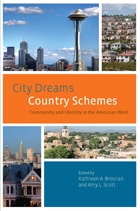
City Dreams, Country Schemes
Community and Identity in the American WestKathleen A. Brosnan
University of Nevada Press, 2011
The American West, from the beginning of Euro-American settlement, has been shaped by diverse ideas about how to utilize physical space and natural environments to create cohesive, sometimes exclusive community identities. When westerners developed their towns, they constructed spaces and cultural identities that reflected alternative understandings of modern urbanity. The essays in City Dreams, Country Schemes utilize an interdisciplinary approach to explore the ways that westerners conceptualized, built, and inhabited urban, suburban, and exurban spaces in the twentieth century.
The contributors examine such topics as the attractions of open space and rural gentrification in shaping urban development; the role of tourism in developing national parks, historical sites, and California's Napa Valley; and the roles of public art, gender, and ethnicity in shaping urban centers. City Dreams, Country Schemes reveals the values and expectations that have shaped the West and the lives of the people who inhabit it.
City Games
The Evolution of American Urban Society and the Rise of SportsSteven A. Riess
University of Illinois Press, 1989
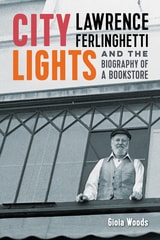
City Lights
Lawrence Ferlinghetti and the Biography of a BookstoreGioia Woods
University of Nevada Press, 2026
City Lights: Lawrence Ferlinghetti and the Biography of a Bookstore is the seminal story of the bookstore, its press, and the inimitable Ferlinghetti.
City Limits
Paul E. Peterson
University of Chicago Press, 1981
"City Limits radically reinterprets urban politics by deriving its dominant forces from the logic of the American federal structure. It is thereby able to explain some pervasive tendencies of urban political outcomes that are puzzling or scarcely noticed at all when cities are viewed as autonomous units, outside the federal framework. Professor Peterson's analysis is imaginativelyfor conceived and skillfully carried through. His beautifully finished volume will lastingly alter our understanding of urban affairs in America."—from the citation by the selection committee for the Woodrow Wilson Foundation Award
City Of Plagues
Disease, Poverty, And Deviance In San FranciscoSusan Craddock
University of Minnesota Press, 2004
An eye-opening discussion of the ways disease shapes urban society
Disease may not discriminate, but it helps those who do. In this fascinating book, Susan Craddock examines the role of disease and health policy in the construction of race, gender, and class, and in urban development in nineteenth- and twentieth-century San Francisco. An absorbing look at the role of disease and health policy in the construction of race, gender, and class in urban development during nineteenth- and twentieth-century San Francisco. Susan Craddock considers tuberculosis, plague, smallpox, and syphilis as diseases whose devastations were derived in part from their use as political tools and disciplinary mechanisms
City Of Sisterly And Brotherly Loves
Lesbian And Gay Philadelphia, 1945-1972Marc Stein
Temple University Press, 2004
City Scripts
Narratives of Postindustrial Urban FuturesEdited by Barbara Buchenau, Jens Martin Gurr, and Maria Sulimma
The Ohio State University Press, 2023
Storytelling shapes how we view our cities, legitimizing histories, future plans, and understandings of the urban. City Scripts responds to calls by literary theorists to engage a new kind of narrative analysis that recalibrates close reading and interpretation to the multiple ways in which narratives “do things”—how they intervene in the world and take action in everyday life. A multidisciplinary cast of contributors approaches this new way of looking at cities through the stories people tell about them, looking especially at political activism and urban planning, which depend on the invention of plausible stories of connectedness and of a redemptive future.
The stakes are especially high in cities where economic, ecological, and social futures are delimited by histories of large-scale extraction and racialized industrial labor. Contributors thus focus on cities in postindustrial areas of Germany and the United States, examining how narratives about cities become scripts and how these scripts produce real-life results. This approach highlights how uses of narrative and scripting appeal to stakeholders in urban change. These actors continually deploy narrative, media, and performance, with consequences for urban futures worldwide.
Contributors:
Lieven Ameel, Juliane Borosch, Barbara Buchenau, Florian Deckers, Barbara Eckstein, Kornelia Freitag, Walter Grünzweig, Randi Gunzenhäuser, Jens Martin Gurr, Elisabeth Haefs, Chris Katzenberg, Johannes Maria Krickl, Renee M. Moreno, Hanna Rodewald, Julia Sattler, Maria Sulimma, James A. Throgmorton, Michael Wala, Katharina Wood
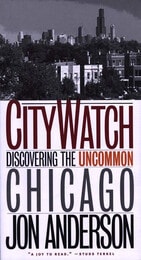
City Watch
Discovering The Uncommon ChicagoJon Anderson
University of Iowa Press, 2000
In forty-five years as one of Chicago's liveliest journalists for Time, Life, and the Chicago Tribune, Jon Anderson has established a reputation for picking up on what someone once called "the beauty of the specific fact." Part "Talk of the Town," part On the Road with Charles Kuralt, Anderson's twice-a-week "City Watch" columns in the Chicago Tribune seek out interesting and unexpected people and places from the everyday life of what the author calls the "most typical American big city." In the process he discovers the joys and triumphs of ordinary people.
Anderson writes with wit and insight about those who find themselves inspired or obsessed with alternative ways of viewing life or getting through the day. Like the man who started with one light pole, then painted all the poles in his southside neighborhood. Or the founder of Cats-Are-Purrsons-Too, a nun who lives with sixty-seven cats. Or the philosopher who, with no financial success, still publishes a newsletter called "The Meaning of Life." After years of hunting down moments of everyday life that have drama and meaning, Anderson offers a book that has curious power, because all of its stories are true.
Drawn from the best of Anderson's columns, City Watch introduces readers to an eclectic mix of social clubs, subcultures, and minor celebrities. From Foraging Friends, a group of penniless ecologists who forage for wild foods in a county forest preserve, to the annual Dumpster Diver fashion show, from the Oakton Elementary School chess team to a group that calls itself Some Chicago Anarchists, readers will discover the characters and events that define Chicago's local color.
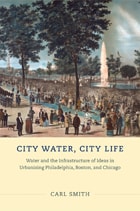
City Water, City Life
Water and the Infrastructure of Ideas in Urbanizing Philadelphia, Boston, and ChicagoCarl Smith
University of Chicago Press, 2013
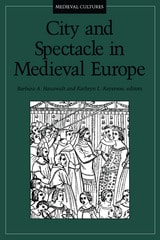
City and Spectacle in Medieval Europe
Barbara Hanawalt
University of Minnesota Press, 1994
Medieval Europe is known for its sense of ceremony and drama. Knightings, tournaments, coronations, religious processions, and even private celebrations such as baptisms, weddings, and funerals were occasions for ritual, feasting, and public display. This volume is the first to take a comprehensive look at the many types of city spectacles that entertained the masses and confirmed various messages of power in late medieval Europe. Bringing together leading scholars in history, art history, and literature, this interdisciplinary collection sets new standards for the study of medieval popular culture.
Drawing examples from Spain, England, France, Italy, and the Netherlands, most of them in the fifteenth century, the authors explore the uses of ceremony as statements of political power, as pleas for divine intercession, and as expressions of popular culture. Their essays show us spectacles meant to confirm events such as victories, the signing of a city charter, or the coronation of a king. In other circumstances, the spectacle acts as a battleground where a struggle for the control of the metaphors of power is played out between factions within cities or between cities and kings. Still other ceremonies called upon divine spiritual powers in the hope that their intervention might save the urban inhabitants. We see here a public cognizant of the power of symbols to express its goals and achievements, a society reaching the height of sophistication in its manipulation of popular and elite culture for grand shows.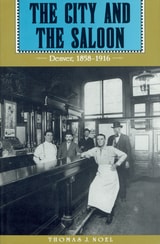
City and the Saloon
Denver, 1858-1916Thomas J. Noel
University Press of Colorado, 1996
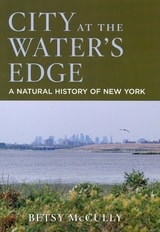
City at the Water's Edge
A Natural History of New YorkMcCully, Betsy
Rutgers University Press, 2007
City at the Water's Edge invites readers to do just that. Betsy McCully, a long-time urban dweller, argues that this city of lights is much more than a human-made metropolis. It has a rich natural history that is every bit as fascinating as the glitzy veneer that has been built atop it. Through twenty years of nature exploration, McCully has come to know New York as part of the Lower Hudson Bioregion-a place of salt marshes and estuaries, sand dunes and barrier islands, glacially sculpted ridges and kettle holes, rivers and streams, woodlands and outwash plains. Here she tells the story of New York that began before the first humans settled in the region twelve thousand years ago, and long before immigrants ever arrived at Ellis Island. The timeline that she recounts is one that extends backward half a billion years; it plumbs the depths of Manhattan's geological history and forecasts a possible future of global warming, with rising seas lapping at the base of the Empire State Building.
Counter to popular views that see the city as a marvel of human ingenuity diametrically opposed to nature, this unique account shows how the region has served as an evolving habitat for a diversity of species, including our own. The author chronicles the growth of the city at the expense of the environment, but leaves the reader with a vision of a future city as a human habitat that is brought into balance with nature.
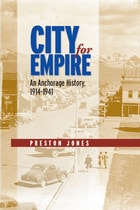
City for Empire
An Anchorage History, 1914-1941Preston Jones
University of Alaska Press, 2010
First settled in 1915, Anchorage, Alaska, was founded with the American empire in mind. During World War I, it served as a conduit through which coal could be shipped to the Pacific, where the US Navy was engaged with Japan. Decades later, during World War II, Anchorage became an equally important site for the defense of the mainland and the projection of American power. City for Empire tells the story of Anchorage's development in that period, focusing in particular on the international context of the city's early decades and its surprisingly diverse inhabitants. A thorough yet accessible read, City for Empire captures the history of this remarkable city.
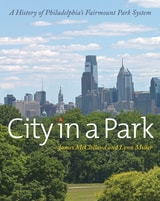
City in a Park
A History of Philadelphia's Fairmount Park SystemLynn Miller
Temple University Press, 2015
Fairmount Park is the municipal park system of Philadelphia, Pennsylvania. It consists of more than one hundred parks, squares, and green spaces totaling about 11,000 acres, and is one of the largest landscaped urban park systems in the world. In City in a Park, James McClelland and Lynn Miller provide an affectionate and comprehensive history of this 200-year-old network of parks.
Originated in the nineteenth century as a civic effort to provide a clean water supply to Philadelphia, Fairmount Park also furnished public pleasure grounds for boat races and hiking, among other activities. Millions travel to the city to view its eighteenth-century villas, attend boat races on the Schuylkill River, hike the Wissahickon Creek, visit the Philadelphia Zoo, hear concerts in summer, stroll the city’s historic squares and the Benjamin Franklin Parkway, and enjoy its enormous collection of public art. Green initiatives flower today; Philadelphia lives amidst its parks.
Filled with nearly 150 gorgeous full-color photographs, City in a Park chronicles the continuing efforts to create what founder William Penn desired: a “greene countrie town.”
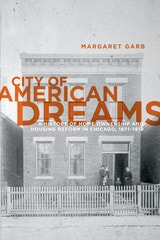
City of American Dreams
A History of Home Ownership and Housing Reform in Chicago, 1871-1919Margaret Garb
University of Chicago Press, 2005
Based on research of real estate markets, housing and health reform, and ordinary homeowners—African American and white, affluent and working class—City of American Dreams provides a richly detailed picture of life in one of America's great urban centers. Garb shows that the pursuit of a single-family house set on a tidy yard, commonly seen as the very essence of the American dream, resulted from clashes of interests and decades of struggle.
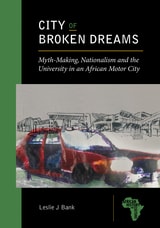
City of Broken Dreams
Myth-Making, Nationalism and the University in an African Motor CityLeslie J. Bank
Michigan State University Press, 2019
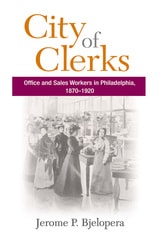
City of Clerks
Office and Sales Workers in Philadelphia, 1870-1920Jerome P. Bjelopera
University of Illinois Press, 2005
Below the middle class managers and professionals yet above the skilled blue-collar workers, sales and office workers occupied an intermediate position in urban America's social structure as the nation industrialized. Jerome P. Bjelopera traces the shifting occupational structures and work choices that facilitated the emergence of a white-collar workforce. His fascinating portrait reveals the lives led by Philadelphia's male and female clerks, both inside and outside the workplace, as they formed their own clubs, affirmed their "whiteness," and challenged sexual norms.
A vivid look at an overlooked but recognizable workforce, City of Clerks reveals how the notion of "white collar" shifted over half a century.
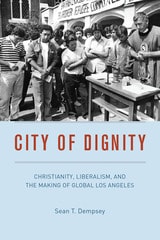
City of Dignity
Christianity, Liberalism, and the Making of Global Los AngelesSean T. Dempsey
University of Chicago Press, 2023
Contemporary Los Angeles is commonly seen as an American bulwark of progressive secular politics, a place that values immigration, equity, diversity, and human rights. But what accounts for the city’s embrace of such staunchly liberal values, which are more hotly contested in other parts of the country? The answer, Sean Dempsey reveals, lies not with those frequent targets of credit and blame—Democrats in Hollywood—but instead with liberal Protestants and other steadfast religious organizations of the postwar era.
As the Religious Right movement emerged in the 1970s, progressive religious activists quietly began promoting an ethical vision that made waves worldwide but saw the largest impact in its place of origin: metropolitan Los Angeles. At the center of this vision lay the concept of human dignity—entwining the integral importance of political and expressive freedom with the moral sanctity of the human condition—which suffused all of the political values that arose from it, whether tolerance, diversity, or equality of opportunity. The work of these religious organizations birthed such phenomena as the Sanctuary Movement—which provided safe haven for refugees fleeing conflict-torn Central America—and advocacy for the homeless, both of which became increasingly fraught issues amid the rising tides of neoliberalism and conservatism. City of Dignity explores how these interwoven spiritual and theological strands found common ground—and made common impacts—in the humanitarian ecosystem of one of America’s largest and most dynamic metro areas.
City of Dignity
Christianity, Liberalism, and the Making of Global Los AngelesSean T. Dempsey
University of Chicago Press, 2023
City of Dignity illuminates how liberal Protestants quietly, yet indelibly, shaped the progressive ethics of postwar Los Angeles.
Contemporary Los Angeles is commonly seen as an American bulwark of progressive secular politics, a place that values immigration, equity, diversity, and human rights. But what accounts for the city’s embrace of such staunchly liberal values, which are more hotly contested in other parts of the country? The answer, Sean Dempsey reveals, lies not with those frequent targets of credit and blame—Democrats in Hollywood—but instead with liberal Protestants and other steadfast religious organizations of the postwar era.
As the Religious Right movement emerged in the 1970s, progressive religious activists quietly began promoting an ethical vision that made waves worldwide but saw the largest impact in its place of origin: metropolitan Los Angeles. At the center of this vision lay the concept of human dignity—entwining the integral importance of political and expressive freedom with the moral sanctity of the human condition—which suffused all of the political values that arose from it, whether tolerance, diversity, or equality of opportunity. The work of these religious organizations birthed such phenomena as the Sanctuary Movement—which provided safe haven for refugees fleeing conflict-torn Central America—and advocacy for the homeless, both of which became increasingly fraught issues amid the rising tides of neoliberalism and conservatism. City of Dignity explores how these interwoven spiritual and theological strands found common ground—and made common impacts—in the humanitarian ecosystem of one of America’s largest and most dynamic metro areas.
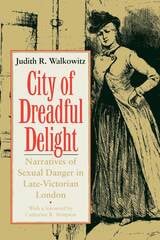
City of Dreadful Delight
Narratives of Sexual Danger in Late-Victorian LondonJudith R. Walkowitz
University of Chicago Press, 1992
Victorian London was a world where long-standing traditions of class and gender were challenged by a range of public spectacles, mass media scandals, new commercial spaces, and a proliferation of new sexual categories and identities. In the midst of this changing culture, women of many classes challenged the traditional privileges of elite males and
asserted their presence in the public domain.
An important catalyst in this conflict, argues Walkowitz, was W. T. Stead's widely read 1885 article about child prostitution. Capitalizing on the uproar caused by the piece and the volatile political climate of the time, women spoke of sexual danger, articulating their own grievances against men, inserting themselves into the public discussion of sex to an unprecedented extent, and gaining new entree to public spaces and journalistic practices. The ultimate manifestation of class anxiety and gender antagonism came in 1888 with the tabloid tales of Jack the Ripper. In between, there were quotidien stories of sexual possibility and urban adventure, and Walkowitz examines them all, showing how women were not simply figures in the imaginary landscape of male spectators, but also central actors in the stories of metropolotin life that reverberated in courtrooms, learned journals, drawing rooms, street corners, and in the letters columns of the daily press.
A model of cultural history, this ambitious book will stimulate and enlighten readers across a broad range of interests.
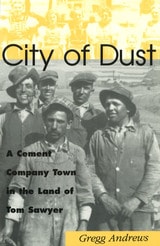
City of Dust
A Cement Company Town in the Land of Tom SawyerGregg Andrews
University of Missouri Press, 2002