Results by title
22279 books match the query 'Social Science' and 1700 start with c
Cloud Ethics
Algorithms and the Attributes of Ourselves and OthersLouise Amoore
Duke University Press, 2020
Clout City
The Rise and Fall of the Chicago Political MachineDominic A. Pacyga
University of Chicago Press, 2025
Unearths the religious and cultural roots of a powerful political machine that empowered some everyday Chicagoans but ruled all of the city for decades.
In politics, clout is essential. Too often, it determines whether insider access is granted or denied, favors are given or withheld, and payoffs are made or received. But Chicago clout, as we know it today, is even more potent than that—it’s the absolute currency of a social, cultural, and political order that is self-reinforcing and self-dealing. Or, at least, it was.
In Clout City, award-winning historian Dominic A. Pacyga reveals how cultural, ethnic, and religious forces created this distinctive system—and ultimately led to its collapse. Tracing clout’s origins in the Irish Catholic–dominated working-class neighborhood of Bridgeport, shaped by De La Salle Institute and home to the legendary Daley family, Pacyga shows how communal ties can be a force for good and also the deepest wellspring of corruption. He maps Chicago’s unique politics to its remarkable history, from the Great Fire of 1871 through its rise and decline as an industrial center to its emergence as a global city in the early twenty-first century. With deep research and firsthand experience from a lifetime in the city, Pacyga argues that Chicago’s politics is understood best as a mixture of cultural and religious influences and more worldly pursuits, exploring how both Jewish and Catholic communalism played central roles in the creation and sustenance of the Chicago machine.
Chicago’s politics today aren’t as defined by its distinctive brand of clout. But they are shaped by clout’s decline and the ghost of the machine. Pacyga’s tour of the city’s multilayered past is an indispensable guide to its present and future.
Clout City
The Rise and Fall of the Chicago Political MachineDominic A. Pacyga
University of Chicago Press, 2025
This is an auto-narrated audiobook version of this book.
Unearths the religious and cultural roots of a powerful political machine that empowered some everyday Chicagoans but ruled all of the city for decades.
In politics, clout is essential. Too often, it determines whether insider access is granted or denied, favors are given or withheld, and payoffs are made or received. But Chicago clout, as we know it today, is even more potent than that—it’s the absolute currency of a social, cultural, and political order that is self-reinforcing and self-dealing. Or, at least, it was.
In Clout City, award-winning historian Dominic A. Pacyga reveals how cultural, ethnic, and religious forces created this distinctive system—and ultimately led to its collapse. Tracing clout’s origins in the Irish Catholic–dominated working-class neighborhood of Bridgeport, shaped by De La Salle Institute and home to the legendary Daley family, Pacyga shows how communal ties can be a force for good and also the deepest wellspring of corruption. He maps Chicago’s unique politics to its remarkable history, from the Great Fire of 1871 through its rise and decline as an industrial center to its emergence as a global city in the early twenty-first century. With deep research and firsthand experience from a lifetime in the city, Pacyga argues that Chicago’s politics is understood best as a mixture of cultural and religious influences and more worldly pursuits, exploring how both Jewish and Catholic communalism played central roles in the creation and sustenance of the Chicago machine.
Chicago’s politics today aren’t as defined by its distinctive brand of clout. But they are shaped by clout’s decline and the ghost of the machine. Pacyga’s tour of the city’s multilayered past is an indispensable guide to its present and future.
Clovis Blade Technology
A Comparative Study of the Keven Davis Cache, TexasBy Michael B. Collins
University of Texas Press, 1999
Around 11,000 years ago, a Paleoindian culture known to us as "Clovis" occupied much of North America. Considered to be among the continent's earliest human inhabitants, the Clovis peoples were probably nomadic hunters and gatherers whose remaining traces include camp sites and caches of goods stored for utilitarian or ritual purposes.
This book offers the first comprehensive study of a little-known aspect of Clovis culture—stone blade technology. Michael Collins introduces the topic with a close look at the nature of blades and the techniques of their manufacture, followed by a discussion of the full spectrum of Clovis lithic technology and how blade production relates to the production of other stone tools. He then provides a full report of the discovery and examination of fourteen blades found in 1988 in the Keven Davis Cache in Navarro County, Texas.
Collins also presents a comparative study of known and presumed Clovis blades from many sites, discusses the Clovis peoples' caching practices, and considers what lithic technology and caching behavior can add to our knowledge of Clovis lifeways. These findings will be important reading for both specialists and amateurs who are piecing together the puzzle of the peopling of the Americas, since the manufacture of blades is a trait that Clovis peoples shared with the Upper Paleolithic peoples in Europe and northern Asia.
Clutch
An Education at WorkLinda Pawlenty
The Ohio State University Press, 2025
Co-Motion
Re-Thinking Power, Subjects, and Feminist and Queer AlliancesPaola Bacchetta
Duke University Press, 2026
Co-designing Infrastructures
Community Collaboration for Liveable CitiesSarah Bell, Charlotte Johnson, Kat Austen, Gemma Moore, and Tse-Hui Teh
University College London, 2023
Co-designing Infrastructures tells the story of a research program designed to bring the power of engineering and technology into the hands of grassroots community groups in order to create bottom-up solutions to global crises. The authors examine in detail four projects in London in detail that exemplify collaboration with engineers, designers, and scientists to enact urban change. The projects at the heart of the book are grounded in specific settings that face challenges familiar to urban communities throughout the world. This place-based approach to infrastructure is of international relevance as a foundation for urban resilience and sustainability. The authors document the tools used to deliver this work, providing guidance for others who are working to deliver local technical solutions to complex social and environmental problems around the world.
Co-production of Knowledge in Action
Emancipatory Strategies for Urban EqualityEdited by Cassidy Johnson, Vanesa Castán Broto, Wilbard Kombe, Catalina Ortiz, Barbara Lipietz, Emmanuel Osuteye, and Caren Levy
University College London, 2025
In urban development, co-production refers to a strategy that prioritizes collaboration across multiple institutions and with citizens, aiming to enable conflict resolution and transformative change. However, critics contend that these theoretical ambitions often have limited practical impact. Co-production of Knowledge in Action examines how co-production is articulated and deployed in cities such as Lima, Freetown, Kampala, Dar es Salaam, and Delhi. It engages with ongoing experiences of co-production-inspired action, mapping the different aspirations that inform co-production practices and their impacts on urban communities. Critiquing co-production strategies for urban development in relation to practical experiences in these cities, this volume adopts a postcolonial approach to knowledge production as a means to transform urban planning practices.
Co-wives and Calabashes
Sally Price
University of Michigan Press, 1984
Coal and Culture
Opera Houses in AppalachiaWilliam Faricy Condee
Ohio University Press, 2005
Opera houses were fixtures of Appalachian life from the end of the Civil War through the 1920s. Most towns and cities had at least one opera house during this golden age. Coal mining and railroads brought travelers, money, and change to the region. Many aspects of American life converged in the opera house.
Coal and Culture: Opera Houses in Appalachia is a critical appreciation of the opera house in the coal-mining region of Appalachia from the mid-1860s to the early 1930s. Author William Faricy Condee demonstrates that these were multipurpose facilities that were central to the life of their communities. In the era before radio, movies, television, and malls, these buildings were essential. They housed little, if any, opera, but were used for almost everything else, including traveling theater, concerts, religious events, lectures, commencements, boxing matches, benefits, union meetings, and—if the auditorium had a flat floor—skating and basketball.
The only book on opera houses that stresses their cultural context, Condee’s unique study will interest cultural geographers, scholars of Appalachian studies, and all those who appreciate the gaudy diversity of the American scene.
Coastal Ecosystems and Economic Strategies at Cerro Azul, Peru
The Study of a Late Intermediate KingdomEdited by Joyce Marcus
University of Michigan Press, 2016
Coastal Foragers of the Gran Desierto
Investigations of Prehistoric Shell Middens along the Northern Sonoran CoastDouglas R. Mitchell, Jonathan B. Mabry, Gary Huckleberry, and Natalia Martínez-Tagüeña
University of Arizona Press, 2024
Focused on the coast near Puerto Peñasco, Sonora, Mexico, Coastal Foragers of the Gran Desierto examines the diverse groups occupying the coast for salt, abundant food sources, and shells for ornament manufacturing. The archaeological patterns demonstrated by the data gathered lead to the conclusion that, since ancient times, this coastal landscape was not a marginal zone but rather an important source of food and trade goods, and a pilgrimage destination that influenced broad and diverse communities across the Sonoran Desert and beyond.
Contributors
Jenny L. Adams
Karen R. Adams
Thomas Bowen
Tessa L. Branyan
Bill Broyles
Richard C. Brusca
David L. Dettman
Michael S. Foster
Gary Huckleberry
Jonathan B. Mabry
Natalia Martínez-Tagüeña
Richard J. Martynec
Douglas R. Mitchell
Kirsten Rowell
Melissa R. Schwan
M. Steven Shackley
R. J. Sliva
Kayla B. Worthey
Coastal Lives
Nature, Capital, and the Struggle for Artisanal Fisheries in PeruMaximilian Viatori and Héctor Bombiella
University of Arizona Press, 2019
In Coastal Lives, Maximilian Viatori and Héctor Bombiella argue that this has not made Peru’s fisheries more sustainable. Through a fine-grained ethnographic and historical account of Lima’s fisheries, the authors reveal that new government regimes of entrepreneurial agency have placed overwhelming burdens on the city’s impoverished artisanal fishers to demonstrate that they are responsible producers and have created failures that can be used to justify closing these fishers’ traditional use areas and to deny their historically sanctioned rights. The result is a critical examination of how neoliberalized visions of nature and individual responsibility work to normalize the dispossessions that have enabled ongoing capital accumulation at the cost of growing social dislocations and ecological degradation.
The authors’ innovative approach to the politics of constructing and degrading coastal lives will interest a wide range of scholars in cultural anthropology, environmental humanities, and Latin American studies, as well as policymakers and anyone concerned with inequality, global food systems, and multispecies ecologies.
Cobble Circles and Standing Stones
Archaeology at the Rivas Site, Costa RicaJeffrey Quilter
University of Iowa Press, 2004
Writing in the first person with a balance between informal language and academic theory, Quilter concludes that Rivas was a ceremonial center for mortuary rituals to bury chiefly elite on the Panteón. Through use of his narrative technique, he provides the reader with accounts of discoveries as they occurred in fieldwork and the development of interpretations to explain the ancient refuse and cobble architecture his team uncovered. As his story progresses amid the enchantment of the Costa Rican landscape, research plans are adjusted and sometimes completely overturned as new discoveries, often serendipitous ones, are made. Such changing circumstances lead to new insights into the rise and fall of the people who built the cobble circles and raised the standing stones at Rivas, a thousand years ago.
The only book in English that focuses on a single archaeological site in Costa Rica, which continues to develop as a destination for archaeological tourism, Cobble Stones and Standing Circles will appeal to laypeople and professionals alike.
Coca Yes, Cocaine No
How Bolivia's Coca Growers Reshaped DemocracyThomas Grisaffi
Duke University Press, 2019
Coca-Cola Socialism
Americanization of Yugoslav Culture in the SixtiesRadina Vucetic
Central European University Press, 2018
This book is about the Americanization of Yugoslav culture and everyday life during the nineteen-sixties. After falling out with the Eastern bloc, Tito turned to the United States for support and inspiration. In the political sphere the distance between the two countries was carefully maintained, yet in the realms of culture and consumption the Yugoslav regime was definitely much more receptive to the American model. For Titoist Yugoslavia this tactic turned out to be beneficial, stabilising the regime internally and providing an image of openness in foreign policy.
Coca-Cola Socialism addresses the link between cultural diplomacy, culture, consumer society and politics. Its main argument is that both culture and everyday life modelled on the American way were a major source of legitimacy for the Yugoslav Communist Party, and a powerful weapon for both USA and Yugoslavia in the Cold War battle for hearts and minds.
Radina Vučetić explores how the Party used American culture in order to promote its own values and what life in this socialist and capitalist hybrid system looked like for ordinary people who lived in a country with communist ideology in a capitalist wrapping. Her book offers a careful reevaluation of the limits of appropriating the American dream and questions both an uncritical celebration of Yugoslavia’s openness and an exaggerated depiction of its authoritarianism.

Cocaine Changes
The Experience of Using and QuittingDan Waldorf
Temple University Press, 1992
Cocaine
From Coca Fields to the StreetsEnrique Desmond Arias and Thomas Grisaffi, editors
Duke University Press, 2021
Contributors. Enrique Desmond Arias, Lilian Bobea, Philippe Bourgois, Anthony W. Fontes, Robert Gay, Paul Gootenberg, Romain Le Cour Grandmaison, Thomas Grisaffi, Laurie Kain Hart, Annette Idler, George Karandinos, Fernando Montero, Dennis Rodgers, Taniele Rui, Cyrus Veeser, Autumn Zellers-León
Cochabamba, 1550-1900
Colonialism and Agrarian Transformation in BoliviaBrooke Larson
Duke University Press, 1998
This study of Bolivia uses Cochabamba as a laboratory to examine the long-term transformation of native Andean society into a vibrant Quechua-Spanish-mestizo region of haciendas and smallholdings, towns and villages, peasant markets and migratory networks caught in the web of Spanish imperial politics and economics. Combining economic, social, and ethnohistory, Brooke Larson shows how the contradictions of class and colonialism eventually gave rise to new peasant, artisan, and laboring groups that challenged the evolving structures of colonial domination. Originally published in 1988, this expanded edition includes a new final chapter that explores the book’s implications for understanding the formation of a distinctive peasant political culture in the Cochabamba valleys over the eighteenth and nineteenth centuries.
Cocopa Ethnography
William H. Kelly
University of Arizona Press, 1977
Code and Clay, Data and Dirt
Five Thousand Years of Urban MediaShannon Mattern
University of Minnesota Press, 2017
For years, pundits have trumpeted the earthshattering changes that big data and smart networks will soon bring to our cities. But what if cities have long been built for intelligence, maybe for millennia? In Code and Clay, Data and Dirt Shannon Mattern advances the provocative argument that our urban spaces have been “smart” and mediated for thousands of years.
Offering powerful new ways of thinking about our cities, Code and Clay, Data and Dirt goes far beyond the standard historical concepts of origins, development, revolutions, and the accomplishments of an elite few. Mattern shows that in their architecture, laws, street layouts, and civic knowledge—and through technologies including the telephone, telegraph, radio, printing, writing, and even the human voice—cities have long negotiated a rich exchange between analog and digital, code and clay, data and dirt, ether and ore.
Mattern’s vivid prose takes readers through a historically and geographically broad range of stories, scenes, and locations, synthesizing a new narrative for our urban spaces. Taking media archaeology to the city’s streets, Code and Clay, Data and Dirt reveals new ways to write our urban, media, and cultural histories.

Code of the Quipu
A Study in Media, Mathematics, and CultureMarcia Ascher and Robert Ascher
University of Michigan Press, 0
This book explores Inca use of knotted cords to transmit information and the problem of interpreting artifacts from distant cultures.

Code of the Suburb
Inside the World of Young Middle-Class Drug DealersScott Jacques and Richard Wright
University of Chicago Press, 2015
In Code of the Suburb, Scott Jacques and Richard Wright offer a fascinating ethnography of the culture of suburban drug dealers. Drawing on fieldwork among teens in a wealthy suburb of Atlanta, they carefully parse the complicated code that governs relationships among buyers, sellers, police, and other suburbanites. That code differs from the one followed by urban drug dealers in one crucial respect: whereas urban drug dealers see violent vengeance as crucial to status and security, the opposite is true for their suburban counterparts. As Jacques and Wright show, suburban drug dealers accord status to deliberate avoidance of conflict, which helps keep their drug markets more peaceful—and, consequently, less likely to be noticed by law enforcement.
Offering new insight into both the little-studied area of suburban drug dealing, and, by extension, the more familiar urban variety, Code of the Suburb will be of interest to scholars and policy makers alike.

Code
From Information Theory to French TheoryBernard Dionysius Geoghegan
Duke University Press, 2022

Coded Encounters
Writing, Gender, and Ethnicity in Colonial Latin AmericaFrancisco Javier Cevallos
University of Massachusetts Press, 1994
Coderspeak
The Language of Computer ProgrammersGuilherme Orlandini Heurich
University College London, 2024
Software applications have taken over our lives. We use and are used by software many times a day. Nevertheless, we know very little about the invisibly ubiquitous workers who write software. Who are they and how do they perceive their practice? How does that shape how they collaborate to build the myriad of apps that we use every day? And how does that impact the users of apps?
Coderspeak provides a critical approach to the digital transformation of our world through an engaging and thoughtful analysis of the people who write software applications. It is a focused and in-depth look at one programming language and its community, Ruby, based on ethnographic research at a London company and conversations with members of the wider Ruby community in Europe, the Americas, and Japan.
This book shows that the place where people write code, the language they write it in, and the stories shared by that community are crucial in questioning and unpacking what it means to be a coder. Understanding this social group is essential if we are to grasp a future (and a present) in which computer programming increasingly dominates our lives.
Codes of Conduct
Behavioral Research into Business EthicsDavid M. Messick
Russell Sage Foundation, 1996

Codes of Misconduct
Regulating Prostitution in Late Colonial BombayAshwini Tambe
University of Minnesota Press, 2009
Against the backdrop of the industrial growth of Bombay, Codes of Misconduct examines the relationship between lawmaking, law enforcement, and sexual commerce. Ashwini Tambe challenges linear readings of how laws create effects and demonstrates that the regulation and criminalization of prostitution were not contrasting approaches to prostitution but different modes of state coercion. By analyzing legal prohibitions as productive forces, she also probes the pornographic imagination of the colonial state, showing how regulations made sexual commerce more visible but rendered the prostitute silent.
Codes of Misconduct engages with debates on state control of sex work and traces how a colonial legacy influences contemporary efforts to contain the spread of HIV and decriminalize sex workers in India today. In doing so, Tambe’s work not only adds to our understanding of empire, sexuality, and the law, it also sheds new light on the long history of Bombay’s transnational links and the social worlds of its underclasses.

Coed Revolution
The Female Student in the Japanese New LeftChelsea Szendi Schieder
Duke University Press, 2021
Coeds Ruining the Nation
Women, Education, and Social Change in Postwar Japanese MediaJulia C. Bullock
University of Michigan Press, 2019
This is the first book in English to explore the arguments for and against coeducation as presented in newspaper and magazine articles, cartoons, student-authored school newsletters, and roundtable discussions published in the Japanese press as these reforms were being implemented. It complicates the notion of the postwar years as a moment of rupture, highlighting prewar experiments with coeducation that belied objections that the practice was a foreign imposition and therefore “unnatural” for Japanese culture. It also illustrates a remarkable degree of continuity between prewar and postwar models of femininity, arguing that Occupation-era guarantees of equal educational opportunity were ultimately repurposed toward a gendered division of labor that underwrote the postwar project of economic recovery. Finally, it excavates discourses of gender and sexuality underlying the moral panic surrounding coeducation to demonstrate that claims of rampant sexual deviance and other concerns were employed as disciplinary mechanisms to reinforce an ideology of harmonious gender complementarity and to dissuade women from pursuing conventionally masculine prerogatives.
Coethnicity
Diversity and the Dilemmas of Collective ActionJames Habyarimana
Russell Sage Foundation, 2009

Coffee and Community
Maya Farmers and Fair-Trade MarketsSarah Lyon
University Press of Colorado, 2010
Focusing on La Voz Que Clama en el Desierto-a cooperative in San Juan la Laguna, Guatemala-and its relationships with coffee roasters, importers, and certifiers in the United States, Coffee and Community argues that while fair trade does benefit small coffee-farming communities, it is more flawed than advocates and scholars have acknowledged. However, through detailed ethnographic fieldwork with the farmers and by following the product, fair trade can be understood and modified to be more equitable.
This book will be of interest to students and academics in anthropology, ethnology, Latin American studies, and labor studies, as well as economists, social scientists, policy makers, fair-trade advocates, and anyone interested in globalization and the realities of fair trade. Winner of the Society for Economic Anthropology Book Award

Coins from Seleucia on the Tigris
Robert Harbold McDowell
University of Michigan Press, 1935
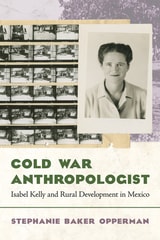
Cold War Anthropologist
Isabel Kelly and Rural Development in MexicoStephanie Baker Opperman
University of Arizona Press, 2024
Kelly’s transition from a prominent archaeologist to a key figure in applied anthropology is meticulously chronicled, unveiling her pivotal role in shaping rural development strategies in Mexico amidst the geopolitical context of the Cold War. Through an extensive examination of her correspondence, archival material, and scholarly output, Kelly’s evolving viewpoints offer profound insights into the intricate dynamics of U.S.-Mexico relations and the challenges encountered by female academics during this era.
Organized chronologically, each chapter of this work delves into distinct facets of Kelly’s international journey, with a particular emphasis on her involvement in cooperative programs aimed at fostering diplomatic relations with Mexico. Through this narrative framework, readers are immersed in a compelling exploration of Kelly’s enduring impact on both the field of anthropology and the realm of international diplomacy.
This book is indispensable for historians, anthropologists, and individuals intrigued by the nuanced complexities of Cold War politics, presenting pioneering research at the intersection of history and anthropology. Opperman skillfully brings to light the previously untold narratives of Isabel Kelly, unveiling her influence on mid-twentieth-century Mexico.

Cold War Anthropology
The CIA, the Pentagon, and the Growth of Dual Use AnthropologyDavid H. Price
Duke University Press, 2016
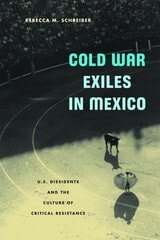
Cold War Exiles in Mexico
U.S. Dissidents and the Culture of Critical ResistanceRebecca M. Schreiber
University of Minnesota Press, 2008
As Schreiber recounts, the first exiles to arrive in Mexico after World War II were visual artists, many of them African-American, including Elizabeth Catlett, Charles White, and John Wilson. Individuals who were blacklisted from the Hollywood film industry, such as Dalton Trumbo and Hugo Butler, followed these artists, as did writers, including Willard Motley. Schreiber examines the artists’ work with the printmaking collective Taller de Gráfica Popular and the screenwriters’ collaborations with filmmakers such as Luis Buñuel, as well as the influence of the U.S. exiles on artistic and political movements.
The Cold War culture of political exile challenged American exceptionalist ideology and, as Schreiber reveals, demonstrated the resilience of oppositional art, literature, and film in response to state repression.

Cold War Femme
Lesbianism, National Identity, and Hollywood CinemaRobert J. Corber
Duke University Press, 2011
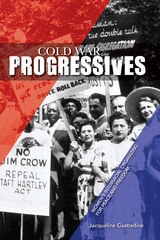
Cold War Progressives
Women's Interracial Organizing for Peace and FreedomJacqueline Castledine
University of Illinois Press, 2012
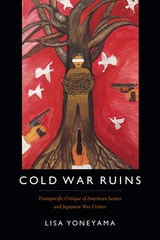
Cold War Ruins
Transpacific Critique of American Justice and Japanese War CrimesLisa Yoneyama
Duke University Press, 2016
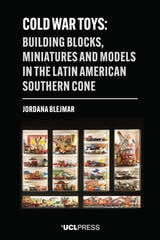
Cold War Toys
Building blocks, miniatures and models in the Latin American Southern ConeJordana Blejmar
University College London, 2026
A decolonial study of the toys that were produced and collected in Latin America during the Cold War.
Cold War Toys examines playthings manufactured, promoted, and commercialized in Argentina, Chile, and Uruguay during the second half of the twentieth century. Establishing connections and conversations with toys produced in earlier periods, including nineteenth-century dollhouses and building blocks created in the 1920s by Joaquín Torres-García, it goes on to analyze, among other items, construction sets made in 1970s Chile during Salvador Allende’s Popular Unity government, scale-model household appliances distributed by the Eva Perón Foundation, and more recent figurines such as the Latin American versions of G.I. Joe and Latin Barbie dolls.
The book approaches toys as “dispositifs”—cultural formations that condense the discourses, institutions, architectural forms, scientific statements, and philosophical propositions of Latin America’s Cold War. Drawing on a rich compendium of objects, many inspired by European or US brands, it shows how South American toys incorporated local characters, designs, messages, and materials through a process of creative adaptation, thereby acquiring new identities. These and other original artifacts are examined variously as commodities from a once-flourishing industry, works of art, originators of cultural myths, and training tools for Cold War childhoods. They are also seen as undervalued expressions of children’s material culture, imbued with the collective memory of a turbulent and contested era.

Cold War on the Airwaves
The Radio Propaganda War against East GermanyNicholas J. Schlosser
University of Illinois Press, 2015
Nicholas J. Schlosser draws on broadcast transcripts, internal memoranda, listener letters, and surveys by the U.S. Information Agency to profile RIAS. Its mission: to undermine the German Democratic Republic with propaganda that, ironically, gained in potency by obeying the rules of objective journalism. Throughout, Schlosser examines the friction inherent in such a contradictory project and propaganda's role in shaping political culture. He also portrays how RIAS's primarily German staff influenced its outlook and how the organization both competed against its rivals in the GDR and pushed communist officials to alter their methods in order to keep listeners.
From the occupation of Berlin through the airlift to the construction of the Berlin Wall, Cold War on the Airwaves offers an absorbing view of how public diplomacy played out at a flashpoint of East-West tension.
Cold Warriors
Manliness on Trial in the Rhetoric of the WestSuzanne Clark
Southern Illinois University Press, 2000
Cold Warriors: Manliness on Trial in the Rhetoric of the West returns to familiar cultural forces—the West, anticommunism, and manliness—to show how they combined to suppress dissent and dominate the unruliness of literature in the name of a national identity after World War II. Few realize how much the domination of a “white male” American literary canon was a product not of long history, but of the Cold War. Suzanne Clark describes here how the Cold War excluded women writers on several levels, together with others—African American, Native American, poor, men as well as women—who were ignored in the struggle over white male identity.
Clark first shows how defining national/individual/American identity in the Cold War involved a brand new configuration of cultural history. At the same time, it called upon the nostalgia for the old discourses of the West (the national manliness asserted by Theodore Roosevelt) to claim that there was and always had been only one real American identity.
By subverting the claims of a national identity, Clark finds, many male writers risked falling outside the boundaries not only of public rhetoric but also of the literary world: men as different from one another as the determinedly masculine Ernest Hemingway and the antiheroic storyteller of the everyday, Bernard Malamud. Equally vocal and contentious, Cold War women writers were unwilling to be silenced, as Clark demonstrates in her discussion of the work of Mari Sandoz and Ursula Le Guin.
The book concludes with a discussion of how the silencing of gender, race, and class in Cold War writing maintained its discipline until the eruptions of the sixties. By questioning the identity politics of manliness in the Cold War context of persecution and trial, Clark finds that the involvement of men in identity politics set the stage for our subsequent cultural history.
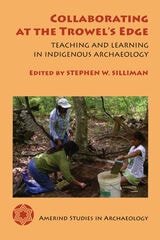
Collaborating at the Trowel's Edge
Teaching and Learning in Indigenous ArchaeologyEdited by Stephen W. Silliman
University of Arizona Press, 2008
Eighteen contributors—many with tribal ties—cover the current state of collaborative indigenous archaeology in North America to show where the discipline is headed. Continent-wide cases, from the Northeast to the Southwest, demonstrate the situated nature of local practice alongside the global significance of further decolonizing archaeology. And by probing issues of indigenous participation with an eye toward method, theory, and pedagogy, many show how the archaeological field school can be retailored to address politics, ethics, and critical practice alongside traditional teaching and research methods.
These chapters reflect the strong link between politics and research, showing what can be achieved when indigenous values, perspectives, and knowledge are placed at the center of the research process. They not only draw on experiences at specific field schools but also examine advances in indigenous cultural resource management and in training Native American and non-native students.
Theoretically informed and practically grounded, Collaborating at the Trowel’s Edge is a virtual guide for rethinking field schools and is an essential volume for anyone involved in North American archaeology—professionals, students, tribal scholars, or avocationalists—as well as those working with indigenous peoples in other parts of the world. It both reflects the rapidly changing landscape of archaeology and charts new directions to ensure the ongoing vitality of the discipline.
Collaborating for Change
A Participatory Action Research CasebookSusan D. Greenbaum
Rutgers University Press, 2020
Collaboration in Practice
Transforming Community-Based Research in the SouthwestFumi Arakawa, Octavius Seowtewa, and Dylan Retzinger
University of Arizona Press, 2026
The book situates this collaboration within the broader historical and political context of archaeology and museology. It critically explores how museums and academic institutions can shift from extractive practices to ones that prioritize Indigenous sovereignty, knowledge systems, and cultural continuity. Through personal narratives, historical context, and methodological insights, the authors highlight the challenges and transformative potential of working collaboratively. They show how true collaboration requires humility, mutual respect, and a commitment to shared authority in both research and representation.
Ultimately, this work charts a path forward for community-based research that centers Indigenous voices and values. It advocates for an archaeology that is not only more inclusive but also more meaningful to the communities whose histories are being studied. A vital resource for scholars, students, and practitioners, this work seeks to engage in ethical, reciprocal, and culturally grounded research in the Southwest and beyond.
Collaborative Archaeology at Stewart Indian School
Sarah E. Cowie
University of Nevada Press, 2019
This edited volume addresses the theory, methods, and outcomes of collaborative archaeology conducted at the Stewart Indian School site and is a genuine collective effort between archaeologists, former students of the school, and other tribal members. With more than twenty contributing authors from the University of Nevada, Reno, Nevada Indian Commission, Washoe Tribal Historic Preservation Office, and members of Washoe, Paiute, and Shoshone tribes, this rich case study is strongly influenced by previous work in collaborative and Indigenous archaeologies. It elaborates on those efforts by applying concepts of governmentality (legal instruments and practices that constrain and enable decisions, in this case, regarding the management of historical populations and modern heritage resources) as well as social capital (valued relations with others, in this case, between Native and non-Native stakeholders).
As told through the trials, errors, shared experiences, sobering memories, and stunning accomplishments of a group of students, archaeologists, and tribal members, this rare gem humanizes archaeological method and theory and bolsters collaborative archaeological research.
Collaborative Archaeology
How Native American Knowledge Enhances Our Collective Understanding of the PastEdited by Chris Loendorf
University of Arizona Press, 2026
Collaborative Archaeology brings together a diverse group of scholars and tribal cultural resource professionals to showcase how Indigenous knowledge is transforming archaeological practice. Edited by Chris Loendorf, this volume features twelve case studies that highlight the power of partnership between Native American communities and archaeologists. These collaborations not only enrich our understanding of the past but also affirm Indigenous cultural continuity. From the establishment of Tribal Historic Preservation Offices to tribally led research initiatives, the book illustrates how Native voices are reshaping the field.
This timely collection bridges disciplinary divides between archaeology, history, and traditional knowledge, challenging outdated narratives that separate “prehistory” from living Indigenous communities. Contributors demonstrate how ethical, community-based research can lead to more accurate and respectful interpretations of the past. Collaborative Archaeology is essential reading for scholars, students, and practitioners committed to scientific understanding and cultural preservation.
Contributors
Nicole Armstrong-Best
Skylar Begay
Jennifer Bess
Hannah F. Chavez
Robert B. Ciaccio
Shannon Cowell
William H. Doelle
Karl A. Hoerig
Anabel Galindo
Barnaby V. Lewis
Chris Loendorf
Brian Medchill
Linda Morgan
Laurene G. Montero
Stephen E. Nash
Eloise Pedro
Glen E. Rice
Teresa Rodrigues
Hoski Schaafsma
Thomas E. Sheridan
Katrina Soke
Lindsey Vogel-Teeter
Anastasia Walhovd
Reylynne Williams
M. Kyle Woodson
Aaron M. Wright
Collaborative Circles
Friendship Dynamics and Creative WorkMichael P. Farrell
University of Chicago Press, 2001
In a unique study that will become a rich source of ideas for professionals and anyone interested in fostering creative work in the arts and sciences, Michael P. Farrell looks at the group dynamics in six collaborative circles: the French Impressionists; Sigmund Freud and his friends; C. S. Lewis, J. R. R. Tolkien, and the Inklings; social reformers Elizabeth Cady Stanton and Susan B. Anthony; the Fugitive poets; and the writers Joseph Conrad and Ford Maddox Ford. He demonstrates how the unusual interactions in these collaborative circles drew out the creativity in each member. Farrell also presents vivid narrative accounts of the roles played by the members of each circle. He considers how working in such circles sustains the motivation of each member to do creative work; how collaborative circles shape the individual styles of the persons within them; how leadership roles and interpersonal relationships change as circles develop; and why some circles flourish while others flounder.
Collaborative Production in the Creative Industries
James Graham and Alessandro Gandini
University of Westminster Press, 2017
In recent years research into creative labour and cultural work has usually addressed the politics of production in these fields, but the sociotechnical and aesthetic dimensions of collaborative creative work have been somewhat overlooked.
This book aims to address this gap. Through case studies that range from TV showrunning to independent publishing, from the film industry to social media platforms such as Tumblr and Wattpad, this collection develops a critical understanding of the integral role collaboration plays in contemporary media and culture. It draws attention to diverse kinds of creative collaboration afforded via the intermediation of digital platforms and networked publics. It considers how these are incorporated into emergent market paradigms and investigates the complicated forms of subjectivity that develop as a consequence. But it also acknowledges historical continuities, not least in terms of the continued exploitation of ‘support personnel’ and of resulting artistic conflicts but also of alternative models that resist the precarious nature of contemporary cultural work.
Finally, this volume attempts to situate creative collaboration in broader social and economic contexts, where the experience and outcomes of such work have proved more problematic than the rich potential of their promise would lead us to expect.
The Editors: James Graham is Senior Lecturer in the Faculty of Arts and Creative Industries, Middlesex University, London. Alessandro Gandini is Lecturer in Digital Media Management and Innovation in the Department of Digital Humanities, Kings College, London.

Collards
A Southern Tradition from Seed to TableEdward H. Davis and John T. Morgan
University of Alabama Press, 2015
The definitive survey of collards, an iconic southern food.
Food is essential to southern culture, and collard greens play a central role in the South’s culinary traditions. A feast to the famished, a reward to the strong, and a comfort to the weary, collards have long been held dear in the food-loving southern heart. In Collards: A Southern Tradition from Seed to Table, Edward H. Davis and John T. Morgan provide this emblematic and beloved vegetable the full-length survey its fascinating and complex history merits.
The book begins with collards’ obscure origins. Like a good detective story, the search for collards’ home country leads the authors both to Europe and West Africa, where they unravel a tale as surprising and complex as that of southern people themselves. Crossing back over the Atlantic, the authors traverse miles of American back roads, from Arkansas to Florida and from Virginia to Louisiana. They vividly recount visits to homes, gardens, grocers, farms, and restaurants where the many varieties of collards are honored, from the familiar green collards to the yellow cabbage collard and rare purple cultivars.
In uncovering the secrets of growing collards, the authors locate prize-winning patches of the plant, interview “seed savers,” and provide useful tips for kitchen gardeners. They also describe how collards made the leap from kitchen garden staple to highly valued commercial crop.
Collards captures the tastes, smells, and prize-winning recipes from the South’s premier collards festivals. They find collards at the homes of farmers, jazz musicians, governors, and steel workers. Kin to cabbage and broccoli but superior to both in nutritional value, collard greens transcend human divisions of black and white, rich and poor, sophisticated and rustic, and urban and rural.
Food trends may come and go, but collards are a tradition that southerners return to again and again. Richly illustrated in color, Collards demonstrates the abiding centrality of this green leafy vegetable to the foodways of the American South. In it, readers will rediscover an old friend.