Results by title
1563 books match the query 'African American & Black Studies' and 79 start with c
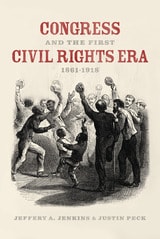
Congress and the First Civil Rights Era, 1861-1918
Jeffery A. Jenkins and Justin Peck
University of Chicago Press, 2021
The authors examine in detail how the Republican Party slowly withdrew its support for a meaningful civil rights agenda, as well as how Democrats and Republicans worked together to keep civil rights off the legislative agenda at various points. In doing so, Jenkins and Peck show how legal institutions can be used both to liberate and protect oppressed minorities and to assert the power of the white majority against those same minority groups.
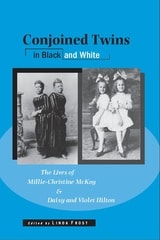
Conjoined Twins in Black and White
The Lives of Millie-Christine McKoy and Daisy and Violet HiltonEdited by Linda Frost
University of Wisconsin Press, 2009
Conjoined Twins in Black and White provides contemporary readers with the twins’ autobiographies, the first two “show histories” to be republished since their original appearance, a previously unpublished novella, and a nineteenth-century medical examination, each of which attempts to define these women and reveal the issues of race, gender, and the body prompted by the twins themselves. The McKoys, born slaves, were kidnapped and taken to Britain, where they worked as entertainers until they were reunited with their mother in an emotional chance encounter. The Hiltons, cast away by their horrified mother at birth, worked the carnival circuit as vaudeville performers until the WWII economy forced them to the burlesque stage. The hardships, along with the triumphs, experienced by these very different sister sets lend insight into our fascination with conjoined twins.
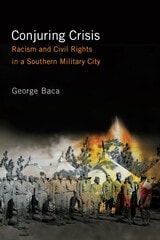
Conjuring Crisis
Racism and Civil Rights in a Southern Military CityBaca, George
Rutgers University Press, 2010
In the 1990s at Fort Bragg and Fayetteville, North Carolina, the city's dominant political coalition of white civic and business leaders had lost control of the city council. Amid accusations of racism in the police department, two white council members joined black colleagues in support of the NAACP's demand for an investigation. George Baca's ethnographic research reveals how residents and politicians transformed an ordinary conflict into a "crisis" that raised the specter of chaos and disaster. He explores new territory by focusing on the broader intersection of militarization, urban politics, and civil rights.
Connexions
Histories of Race and Sex in North AmericaEdited by Jennifer Brier, Jim Downs, and Jennifer L. Morgan
University of Illinois Press, 2016
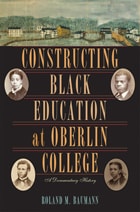
Constructing Black Education at Oberlin College
A Documentary HistoryRoland M. Baumann
Ohio University Press, 2010
In 1835 Oberlin became the first institute of higher education to make a cause of racial egalitarianism when it decided to educate students “irrespective of color.” Yet the visionary college’s implementation of this admissions policy was uneven. In Constructing Black Education at Oberlin College: A Documentary History, Roland M. Baumann presents a comprehensive documentary history of the education of African American students at Oberlin College.
Following the Reconstruction era, Oberlin College mirrored the rest of society as it reduced its commitment to black students by treating them as less than equals of their white counterparts. By the middle of the twentieth century, black and white student activists partially reclaimed the Oberlin legacy by refusing to be defined by race. Generations of Oberlin students, plus a minority of faculty and staff, rekindled the college’s commitment to racial equality by 1970. In time, black separatism in its many forms replaced the integrationist ethic on campus as African Americans sought to chart their own destiny and advance curricular change.
Oberlin’s is not a story of unbroken progress, but rather of irony, of contradictions and integrity, of myth and reality, and of imperfections. Baumann takes readers directly to the original sources by including thirty complete documents from the Oberlin College Archives. This richly illustrated volume is an important contribution to the college’s 175th anniversary celebration of its distinguished history, for it convincinglydocuments how Oberlin wrestled over the meaning of race and the destiny of black people in American society.
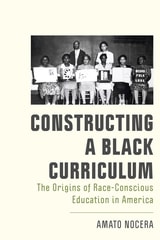
Constructing a Black Curriculum
The Origins of Race-Conscious Education in AmericaAmato Nocera
Rutgers University Press, 2027
Constructing a Black Curriculum reframes how we understand Black Americans’ intellectual and political engagement with education during the first half of the twentieth century. It traces the powerful, diffuse movement created by Black Americans to build what Nocera calls a “Black Curriculum:" a communal effort to represent Black identity, guide racial consciousness, and rebut claims of inferiority. This curriculum first developed as a public educational project in Black learned societies and during the Harlem Renaissance before making its way into schools. The struggle for a Black curriculum was not only a fight against white supremacy, but also an internal debate among Black advocates over the very nature of how race should be represented and taught. This book illuminates this struggle through the work of Black intellectuals (Alexander Crummell, Carter G. Woodson, Hubert Harrison, and Alain Locke) and the intellectual contributions of African American educators (Nannie Burroughs, Jane Dabney Shackelford, and Julia Davis). This essential history provides vital context for contemporary debates over curriculum reform, racial knowledge, and the enduring quest for educational equity.
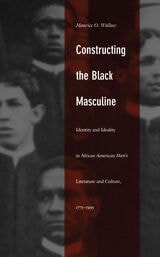
Constructing the Black Masculine
Identity and Ideality in African American Men’s Literature and Culture, 1775–1995Maurice O. Wallace
Duke University Press, 2002
Highlighting their chronic objectification under the gaze of white eyes, Wallace argues that black men suffer a social and representational crisis in being at once seen and unseen, fetish and phantasm, spectacle and shadow in the American racial imagination. Invisible and disregarded on one hand, black men, perceived as potential threats to society, simultaneously face the reality of hypervisibility and perpetual surveillance. Paying significant attention to the sociotechnologies of vision and image production over two centuries, Wallace shows how African American men—as soldiers, Freemasons, and romantic heroes—have sought both to realize the ideal image of the American masculine subject and to deconstruct it in expressive mediums like modern dance, photography, and theatre. Throughout, he draws on the experiences and theories of such notable figures as Frederick Douglass, W. E. B. Du Bois, Booker T. Washington, and James Baldwin.
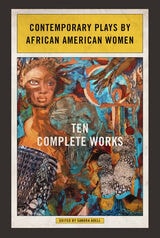
Contemporary Plays by African American Women
Ten Complete WorksEdited by Sandra Adell
University of Illinois Press, 2015
Selections: Blue Door, by Tanya Barfield; Levee James, by S. M. Shephard-Massat; Hoodoo Love, by Katori Hall; Carnaval, by Nikkole Salter; Single Black Female, by Lisa B. Thompson; Fabulation, or The Re-Education of Undine, by Lynn Nottage; BlackTop Sky, by Christina Anderson; Voyeurs de Venus, by Lydia Diamond; Fedra, by J. Nicole Brooks; and Uppa Creek: A Modern Anachronistic Parody in the Minstrel Tradition, by Keli Garrett.

Controlling Anger
The Anthropology of Gisu ViolenceSuzette Heald
Ohio University Press, 1997
Controlling Anger examines the dilemmas facing rural people who live within the broader context of political instability. Following Uganda’s independence from Britain in 1962, the Bagisu men of Southeastern Uganda developed a reputation for extreme violence.
Drawing on a wide range of historical sources including local court records, statistical survey analysis, and intensive fieldwork, Suzette Heald portrays and analyzes the civil violence that grew out of intense land shortage, the marginalization of the Gisu under British rule, and the construction of male gender identity among the Gisu. Now available in a paperback edition with a new preface by the author, Controlling Anger is an important contribution to rural sociology in Africa.
Coping With Poverty
The Social Contexts of Neighborhood, Work, and Family in the African-American CommunitySheldon Danziger and Ann Chih Lin, Editors
University of Michigan Press, 2000
Counting the Tiger's Teeth
An African Teenager's StoryToyin Falola
University of Michigan Press, 2016
Cracking Up
Black Feminist Comedy in the Twentieth and Twenty-First Century United StatesKatelyn Hale Wood
University of Iowa Press, 2021
Katelyn Hale Wood interprets these artists not as tokens in a white, male-dominated field, but as part of a continuous history of Black feminist performance and presence. Broadly, Cracking Up frames stand-up comedy as an important platform from which to examine citizenship in the United States, articulate Black feminist political thought, and subvert structures of power. Wood also champions comedic performance and theatre history as imperative contexts for advancing historical studies of race, gender, and sexuality. From the comedy routines popular on Black vaudeville circuits to stand-up on contemporary social media platforms, Cracking Up excavates an overlooked history of Black women who have made the art of joke-telling a key part of radical performance and political engagement.
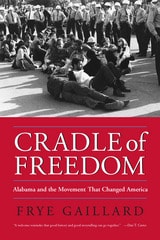
Cradle of Freedom
Alabama and the Movement That Changed AmericaFrye Gaillard
University of Alabama Press, 2006
Cradle of Freedom puts a human face on the story of the black American struggle for equality in Alabama during the 1960s.
While exceptional leaders such as Martin Luther King Jr., Rosa Parks, Fred Shuttlesworth, Ralph Abernathy, John Lewis, and others rose up from the ranks and carved their places in history, the burden of the movement was not carried by them alone. It was fueled by the commitment and hard work of thousands of everyday people who decided that the time had come to take a stand.
Cradle of Freedom is tied to the chronology of pivotal events occurring in Alabama the Montgomery bus boycott, the Freedom Rides, the Letter from the Birmingham Jail, the bombing of the 16th Street Baptist Church, Bloody Sunday, and the Black Power movement in the Black Belt. Gaillard artfully interweaves fresh stories of ordinary people with the familiar ones of the civil rights icons. We learn about the ministers and lawyers, both black and white, who aided the movement in distinct ways at key points. We meet Vernon Johns, King's predecessor at the Dexter Avenue Baptist Church in Montgomery, who first suggested boycotting the buses and who wrote later, "It is a heart strangely un-Christian that cannot thrill with joy when the least of men begin to pull in the direction of the stars." We hear from John Hulett who tells how terror of lynching forced him down into ditches whenever headlights appeared on a night road. We see the Edmund Pettus Bridge beatings from the perspective of marcher JoAnne Bland, who was only a child at the time. We learn of E. D. Nixon, a Pullman porter who helped organize the bus boycott and who later choked with emotion when, for the first time in his life, a white man extended his hand in greeting to him on a public street.
How these ordinary people rose to the challenges of an unfair system with a will and determination that changed their times forever is a fascinating and extraordinary story that Gaillard tells with his hallmark talent. Cradle of Freedom unfolds with the dramatic flow of a novel, yet it is based on meticulous research. With authority and grace, Gaillard explains how the southern state deemed the cradle of the Confederacy became with great struggle, some loss, and much hope the cradle of freedom.

Crate Missions
The Art and Archive of Hip Hop Beat-MakingJason D. Rawls
University of Michigan Press, 2027
Crate Missions takes readers inside the world of Hip Hop producers, where dusty record stores, forgotten albums, and decades-old recordings become the raw materials for new musical creation. Drawing on qualitative research, autoethnography, and oral history, Crate Missions combines the author’s more than twenty-five years of experience as a producer and DJ with interviews conducted with influential Hip Hop practitioners, including Pete Rock, Diamond D, Buckwild, Ski Beatz, K-Def, Mr. Walt and Evil Dee of the Beatminerz, and Breakbeat Lou. The online audio component allows readers to hear three new beats created by Rawls for this project, as well as “producer’s commentaries” in which Rawls walks listeners through his inspiration and process. Together, the text and audio reveal how crate digging is far more than collecting records—it is a form of historical discovery, cultural preservation, and creative expression.
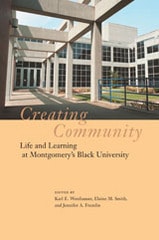
Creating Community
Life and Learning at Alabama State UniversityEdited by Karl E. Westhauser, Elaine M. Smith, and Jennifer A. Fremlin
University of Alabama Press, 2008
Creating Ourselves
African Americans and Hispanic Americans on Popular Culture and Religious ExpressionAnthony B. Pinn and Benjamín Valentín, eds.
Duke University Press, 2009
Corresponding to a particular form of popular culture, each section features two essays, one by an African American scholar and one by a Latino/a scholar, as well as a short response by each scholar to the other’s essay. The essays and responses are lively, varied, and often personal. One contributor puts forth a “brown” theology of hip hop that celebrates hybridity, contradiction, and cultural miscegenation. Another analyzes the content of the message transmitted by African American evangelical preachers who have become popular sensations through television broadcasts, video distribution, and Internet promotions. The other essays include a theological reading of the Latina body, a consideration of the “authenticity” of representations of Jesus as white, a theological account of the popularity of telenovelas, and a reading of African American ideas of paradise in one of Toni Morrison’s novels. Creating Ourselves helps to make popular culture available as a resource for theology and religious studies and for facilitating meaningful discussions across racial and ethnic boundaries.
Contributors. Teresa Delgado, James H. Evans Jr., Joseph De León, Cheryl Kirk-Duggan, Angel F. Méndez Montoya, Alexander Nava, Anthony B. Pinn, Mayra Rivera, Suzanne E. Hoeferkamp Segovia, Benjamín Valentín, Jonathan L. Walton, Traci C. West, Nancy Lynne Westfield, Sheila F. Winborne
Crime and Punishment in the Jim Crow South
Edited by Amy Louise Wood and Natalie J. Ring
University of Illinois Press, 2019
In this collection, Amy Louise Wood and Natalie J. Ring present nine groundbreaking essays about the carceral system and its development over time. Topics range from activism against police brutality to the peculiar path of southern prison reform to the fraught introduction of the electric chair. The essays tell nuanced stories of rapidly changing state institutions, political leaders who sought to manage them, and African Americans who appealed to the regulatory state to protect their rights.
Contributors: Pippa Holloway, Tammy Ingram, Brandon T. Jett, Seth Kotch, Talitha L. LeFlouria, Vivien Miller, Silvan Niedermeier, K. Stephen Prince, and Amy Louise Wood
Critical Ethnic Studies
A ReaderCritical Ethnic Studies Editorial Collective
Duke University Press, 2016
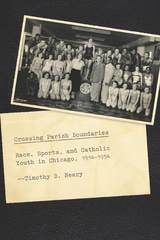
Crossing Parish Boundaries
Race, Sports, and Catholic Youth in Chicago, 1914-1954Timothy B. Neary
University of Chicago Press, 2016
In this book, Timothy B. Neary reveals the history of Bishop Bernard Sheil’s Catholic Youth Organization (CYO), which brought together thousands of young people of all races and religions from Chicago’s racially segregated neighborhoods to take part in sports and educational programming. Tens of thousands of boys and girls participated in basketball, track and field, and the most popular sport of all, boxing, which regularly filled Chicago Stadium with roaring crowds. The history of Bishop Sheil and the CYO shows a cosmopolitan version of American Catholicism, one that is usually overshadowed by accounts of white ethnic Catholics aggressively resisting the racial integration of their working-class neighborhoods. By telling the story of Catholic-sponsored interracial cooperation within Chicago, Crossing Parish Boundaries complicates our understanding of northern urban race relations in the mid-twentieth century.
Crossing Waters, Crossing Worlds
The African Diaspora in Indian CountryTiya Miles and Sharon P. Holland, eds.
Duke University Press, 2006
Essays range from a close reading of the 1838 memoirs of a black and Native freewoman to an analysis of how Afro-Native intermarriage has impacted the identities and federal government classifications of certain New England Indian tribes. One contributor explores the aftermath of black slavery in the Choctaw and Chickasaw nations, highlighting issues of culture and citizenship. Another scrutinizes the controversy that followed the 1998 selection of a Miss Navajo Nation who had an African American father. A historian examines the status of Afro-Indians in colonial Mexico, and an ethnographer reflects on oral histories gathered from Afro-Choctaws. Crossing Waters, Crossing Worlds includes evocative readings of several of Toni Morrison’s novels, interpretations of plays by African American and First Nations playwrights, an original short story by Roberta J. Hill, and an interview with the Creek poet and musician Joy Harjo. The Native American scholar Robert Warrior develops a theoretical model for comparative work through an analysis of black and Native intellectual production. In his afterword, he reflects on the importance of the critical project advanced by this volume.
Contributors. Jennifer D. Brody, Tamara Buffalo, David A. Y. O. Chang, Robert Keith Collins, Roberta J. Hill, Sharon P. Holland, ku'ualoha ho’omnawanui, Deborah E. Kanter, Virginia Kennedy, Barbara Krauthamer, Tiffany M. McKinney, Melinda Micco, Tiya Miles, Celia E. Naylor, Eugene B. Redmond, Wendy S. Walters, Robert Warrior
Crossing the Border
A Free Black Community in CanadaSharon A. Roger Hepburn
University of Illinois Press, 2007
How formerly enslaved people found freedom and built community in Ontario
In 1849, the Reverend William King and fifteen once-enslaved people he had inherited founded the Canadian settlement of Buxton on Ontario land set aside for sale to Blacks. Though initially opposed by some neighboring whites, Buxton grew into a 700-person agricultural community that supported three schools, four churches, a hotel, a lumber mill, and a post office.
Sharon A. Roger Hepburn tells the story of the settlers from Buxton’s founding of through its first decades of existence. Buxton welcomed Black men, woman, and children from all backgrounds to live in a rural setting that offered benefits of urban life like social contact and collective security. Hepburn’s focus on social history takes readers inside the lives of the people who built Buxton and the hundreds of settlers drawn to the community by the chance to shape new lives in a country that had long represented freedom from enslavement.
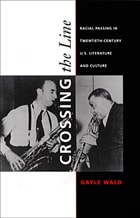
Crossing the Line
Racial Passing in Twentieth-Century U.S. Literature and CultureGayle Wald
Duke University Press, 2000
Wald begins her reading of twentieth-century passing narratives by analyzing works by African American writers James Weldon Johnson, Jessie Fauset, and Nella Larsen, showing how they use the “passing plot” to explore the negotiation of identity, agency, and freedom within the context of their protagonists' restricted choices. She then examines the 1946 autobiography Really the Blues, which details the transformation of Milton Mesirow, middle-class son of Russian-Jewish immigrants, into Mezz Mezzrow, jazz musician and self-described “voluntary Negro.” Turning to the 1949 films Pinky and Lost Boundaries, which imagine African American citizenship within class-specific protocols of race and gender, she interrogates the complicated representation of racial passing in a visual medium. Her investigation of “post-passing” testimonials in postwar African American magazines, which strove to foster black consumerism while constructing “positive” images of black achievement and affluence in the postwar years, focuses on neglected texts within the archives of black popular culture. Finally, after a look at liberal contradictions of John Howard Griffin’s 1961 auto-ethnography Black Like Me, Wald concludes with an epilogue that considers the idea of passing in the context of the recent discourse of “color blindness.”
Wald’s analysis of the moral, political, and theoretical dimensions of racial passing makes Crossing the Line important reading as we approach the twenty-first century. Her engaging and dynamic book will be of particular interest to scholars of American studies, African American studies, cultural studies, and literary criticism.
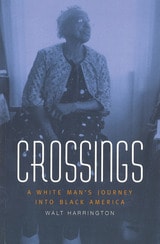
Crossings
A White Man's Journey Into Black AmericaWalt Harrington
University of Missouri Press, 1999
One day in the dentist's office journalist Walt Harrington heard a casual racist joke that left him enraged. Married to a black woman, Harrington is the father of two biracial children. His experience in the dentist's office made him realize not only that the joke was about his own children but also that he really knew very little about what it was like to be a black person in America.
After this rude awakening, Harrington set off on a twenty- five-thousand-mile journey through black America, talking with scores of black and white people along the way, including an old sharecropper, a city police chief, a jazz trumpeter, a convicted murderer, a welfare mother, and a corporate mogul. In Crossings, winner of the Gustavus Myers Award for the Study of Human Rights, he relates what he learned as he listened.
Crossroads, Directions and A New Critical Race Theory
edited by Francisco Valdes, Jerome McCristal Culp and Angela P. Harris
Temple University Press, 2002
But what is Critical Race Theory? How did it develop? Where does it stand now? Where should it go in the future? In this volume, thirty-one CRT scholars present their views on the ideas and methods of CRT, its role in academia and in the culture at large, and its past, present, and future.
Critical race theorists assert that both the procedures and the substance of American law are structured to maintain white privilege. The neutrality and objectivity of the law are not just unattainable ideals; they are harmful actions that obscure the law's role in protecting white supremacy. This notion—so obvious to some, so unthinkable to others—has stimulated and divided legal thinking in this country and, increasingly, abroad.
The essays in Crossroads, Directions, and a New Critical Race Theory—all original—address this notion in a variety of helpful and exciting ways. They use analysis, personal experience, historical narrative, and many other techniques to explain the importance of looking critically at how race permeates our national consciousness.
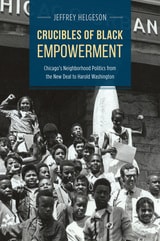
Crucibles of Black Empowerment
Chicago's Neighborhood Politics from the New Deal to Harold WashingtonJeffrey Helgeson
University of Chicago Press, 2014
In Crucibles of Black Empowerment, Jeffrey Helgeson recounts the rise of African American political power and activism from the 1930s onward, revealing how it was achieved through community building. His book tells stories of the housewives who organized their neighbors, building tradesmen who used connections with federal officials to create opportunities in a deeply discriminatory employment sector, and the social workers, personnel managers, and journalists who carved out positions in the white-collar workforce. Looking closely at black liberal politics at the neighborhood level in Chicago, Helgeson explains how black Chicagoans built the networks that eventually would overthrow the city’s seemingly invincible political machine.
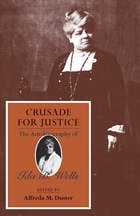
Crusade for Justice
The Autobiography of Ida B. WellsIda B. Wells
University of Chicago Press, 1970
"No student of black history should overlook Crusade for Justice."—William M. Tuttle, Jr., Journal of American History
"Besides being the story of an incredibly courageous and outspoken black woman in the face of innumerable odds, the book is a valuable contribution to the social history of the United States and to the literature of the women's movement as well."—Elizabeth Kolmer, American Quarterly
"[Wells was] a sophisticated fighter whose prose was as thorough as her intellect."—Walter Goodman, New York Times
"An illuminating narrative of a zealous, race-conscious, civic- and church-minded black woman reformer, whose life story is a significant chapter in the history of Negro-White relations."—Thelma D. Perry, Negro History Bulletin
Crusade for Justice
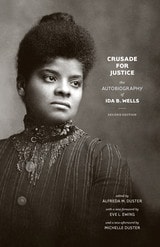
The Autobiography of Ida B. Wells, Second EditionIda B. Wells
University of Chicago Press, 2020
Ida B. Wells is an American icon of truth telling. Born to slaves, she was a pioneer of investigative journalism, a crusader against lynching, and a tireless advocate for suffrage, both for women and for African Americans. She co-founded the NAACP, started the Alpha Suffrage Club in Chicago, and was a leader in the early civil rights movement, working alongside W. E. B. Du Bois, Madam C. J. Walker, Mary Church Terrell, Frederick Douglass, and Susan B. Anthony.
This engaging memoir, originally published 1970, relates Wells’s private life as a mother as well as her public activities as a teacher, lecturer, and journalist in her fight for equality and justice. This updated edition includes a new foreword by Eve L. Ewing, new images, and a new afterword by Ida B. Wells’s great-granddaughter, Michelle Duster.
Cultural Melancholy
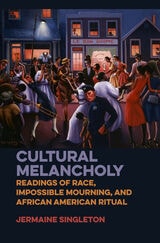
Readings of Race, Impossible Mourning, and African American RitualJermaine Singleton
University of Illinois Press, 2015
Singleton develops the concept of "cultural melancholy" as a response to scholarship that calls for the separation of critical race studies and psychoanalysis, excludes queer theoretical approaches from readings of African American literatures and cultures, and overlooks the status of racialized performance culture as a site of serious academic theorization. In doing so, he weaves critical race studies, psychoanalysis, queer theory, and performance studies into conversation to uncover a host of hidden dialogues—psychic and social, personal and political, individual and collective—for the purpose of promoting a culture of racial grieving, critical race consciousness, and collective agency.
Wide-ranging and theoretically bold, Cultural Melancholy counteracts the racial legacy effects that plague our twenty-first century multiculture.
Curriculum of the Mind
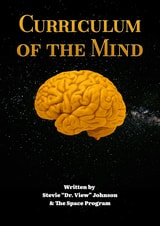
Stevie “Dr. View” Johnson and The Space Program
University of Michigan Press, 2026
Curriculum of the Mind is a groundbreaking hip-hop album that transforms the boundaries of scholarship, sound, and storytelling. A deeply personal and political intervention into the structures of higher education, the project speaks directly to the soul of education, identity, and cultural resilience. Part collective memoir, part mixtape, and part political manifesto, Curriculum of the Mind invites readers and listeners alike into a world where turntables become textbooks, beats carry the weight of history, and samples act as archives of Black life.
Produced by Stevie “Dr. View” Johnson, this album features the work of Black students, parents, creatives, and prospective college-goers who rarely see themselves reflected in academia. At the same time, it challenges educators, librarians, and institutions to rethink what learning looks and sounds like in the 21st century. The album draws from and contributes to interdisciplinary fields including Black studies, critical race theory, performance studies, and hip-hop pedagogy. Through powerful mashups and lyrical reflections, Dr. View and The Space Program explore themes of educational trauma, invisibility, intergenerational resilience, and the radical potential of sound as a vehicle for theorizing lived experience. Paired with a written preface, the project challenges the primacy of text-based knowledge, asserting that sound, emotion, and memory are equally valid forms of intellectual inquiry—and that scholarship can, and should, be a collective effort. As a model for the future of performance-based scholarship, Curriculum of the Mind proves that hip-hop is not only music—it’s a method, a memory, and a movement.