Results by title
5159 books match the query 'Biography' and 258 start with c
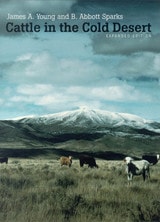
Cattle In The Cold Desert, Expanded Edition
James A. Young
University of Nevada Press, 2002
A sophisticated ecological analysis of ranching in northern Nevada featuring a new chapter and new epilogue by the authors.First published in 1985, Cattle in the Cold Desert has become a classic in the environmental history of the Great Basin, brilliantly combining a lively account of the development of the Great Basin grazing industry with a detailed scientific discussion of the ecology of its sagebrush/grassland plant communities. The volume traces the history of white settlement in the Great Basin from about 1860, along with the arrival of herds of cattle and sheep to exploit the forage resources of a pristine environment and, through the history of John Sparks, a pioneer cattleman, illustrates how the herdsmen interacted with the sagebrush/grasslands of the cold desert West. As the story unfolds on two levels—that of the herdsmen adapting their livelihood to the challenging conditions of the Great Basin's scanty forage, aridity, and fierce winters, and that of the fragile ecology of the desert plant communities responding to the presence of huge herds of livestock—we see the results of a grand experiment initiated by men willing to venture beyond the limits of accepted environmental potential to settle the Great Basin, as well as the often ruinous consequences of the introduction of domestic livestock into the plant communities of the region. The result is a remarkably balanced and insightful discussion of the grazing industry in the Intermountain West. This new paperback edition includes an additional chapter that addresses the impact of wild mustangs on the Great Basin rangelands, and an epilogue that discusses changes in rangeland management and in rangeland conditions, especially the impact of recent wildfires. As concern over the future of the Great Basin's unique rangeland environment and its principal agricultural industry grows, Cattle in the Cold Desert remains essential reading for everyone who cares about this underappreciated region of the American West.
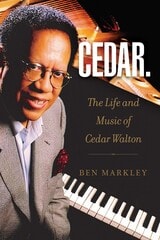
Cedar
The Life and Music of Cedar WaltonBen Markley
University of North Texas Press, 2023
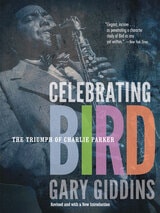
Celebrating Bird
The Triumph of Charlie ParkerGary Giddins
University of Minnesota Press, 2013
Within days of Charlie “Bird” Parker’s death at the age of thirty-four, a scrawled legend began appearing on walls around New York City: Bird Lives. Gone was one of the most outstanding jazz musicians of any era, the troubled genius who brought modernism to jazz and became a defining cultural force for musicians, writers, and artists of every stripe. Arguably the most significant musician in the country at the time of his death, Parker set the standard many musicians strove to reach—though he never enjoyed the same popular success that greeted many of his imitators. Today, the power of Parker’s inventions resonates undiminished; and his influence continues to expand.
Celebrating Bird is the groundbreaking and award-winning account of the life and legend of Charlie Parker from renowned biographer and critic Gary Giddins, whom Esquire called “the best jazz writer in America today.” Richly illustrated and drawing primarily from original sources, Giddins overturns many of the myths that have grown up around Parker. He cuts a fascinating portrait of the period, from Parker’s apprentice days in the 1930s in his hometown of Kansas City to the often difficult years playing clubs in New York and Los Angeles, and reveals how Parker came to embody not only musical innovation and brilliance but the rage and exhilaration of an entire generation.
Fully revised and with a new introduction by the author, Celebrating Bird is a classic of jazz writing that the Village Voice heralded as “a celebration of the highest order”—a portrayal of a jazz virtuoso whose gargantuan talent was haunted by his excesses and a view into the ravishing art of one of jazz’s most commanding and remarkable figures.
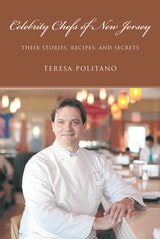
Celebrity Chefs of New Jersey
Their Stories, Recipes, and SecretsTeresa Politano
Rutgers University Press, 2010
Not so long ago, perhaps even just at the turn of this century, it was easy to lament the lack of sophisticated food in New Jersey. Oh sure, a few restaurants always sparkled, but, for the most part, New Jerseyans looked across at the bright lights of the big city, wistfully yearning for a table in glamorous Manhattan. Now, however, the most sought- after tables are right here and we have the best seats in the house, made even sweeter perhaps because they're our own little secret. We can dine frequently and dine well, with a smug sense that if only New Yorkers knew, they'd be looking across the river wishing they were us.
In Celebrity Chefs of New Jersey, Teresa Politano profiles Craig Shelton, the chef who crystallized New Jersey's place in culinary history with his legendary Ryland Inn, along with other chefs, telling their personal stories of both creativity and survival. Some of these men and women rose from humble or difficult childhoods to fame in the food world. Others were not only talented but lucky enough to be in the right place at the right time. Their stories are arranged into three categories: legends, stars, and chefs to watch, and then topped off with a sweet surprise finish. Politano includes photographs, cooking secrets, and some of their sought-after signature recipes that are sophisticated but manageable for the skilled home chef.
Celluloid Activist
The Life and Times of Vito RussoMichael Schiavi
University of Wisconsin Press, 2011
“Schiavi tells a compelling story in this biography—from his re-creation of life on the streets of East Harlem and in Greenwich Village of the 1960s and 1970s to the way he conveys Russo’s excitement about his film research and popular education to his account of the AIDS years in New York City.”—John D’Emilio, Italian American Review
“In [Schiavi’s] hands Russo’s life is both fascinating in its own right and a window into a larger milieu of activism during two critical decades.”—Italian American Review
Best Books for General Audiences, selected by the Public Library Reviewers
Finalist, Gay Memoir/Biography, Lambda Literary Awards
Finalist, Over the Rainbow Selection, American Library Association
Central Standard
A Time, a Place, a FamilyPatrick Irelan
University of Iowa Press, 2002
Not so long ago, the Rock Island Railroad was a household name, the Great Depression was a recent memory, and family farms dotted the landscape. Today, the great railroads have nearly disappeared, the Depression is a chapter in history books, and family farms are hard to come by. Yet this time is not forgotten.
In Central Standard: A Time, a Place, a Family, Patrick Irelan vividly recaptures a remarkable era in midwestern history in twenty-four beautifully crafted and often witty essays. Beginning with his parents’ marriage in 1932 and continuing into the present, Irelan relates the many wonderful stories and experiences of his Davis County, Iowa, family. In “Country Living,” he describes his parents’ disheartening life as farmers during the worst years of the Depression. “The CB&Q” then relates the happiest years of his family’s life when his parents lived and worked in the Burlington Railroad depots of rural Nebraska.
Irelan’s tales of hard times and harder work, family meals and talkative relatives, depots and farmsteads paint a brilliant yet deceptively simple portrait of one rural, working-class family. At its heart, Central Standard carries a greater message: it reminds us of the enduring strength of the American family.
Chaim Weizmann
A BiographyJehuda Reinharz and Motti Golani
Brandeis University Press, 2024
In Chaim Weizmann: A Biography, Jehuda Reinharz and Motti Golani show how Weizmann, a leader of the World Zionist Organization who became the first president of Israel, advocated for a Jewish state by gaining the support of influential politicians and statesmen as well as Jews around the world. Beginning with his childhood in Belorussia and concluding with his tenure as president, Reinharz and Golani describe how a Russian Jew, who immigrated to the United Kingdom in the early twentieth century, was able to advance the goals of Theodor Herzl, the founder of the Zionist Organization. Weizmann is also shown as a man of human foibles—his infatuations, political machinations, and elitism—as well as a man of admirable qualities—intelligence, wit, charisma, and dedication.
Weizmann, who came to the UK to work as a biochemist, was in regular communication with British political figures, including prime ministers Arthur James Balfour, David Lloyd George, Winston Churchill, and Ramsay MacDonald. He also met presidents of the United States from Woodrow Wilson to Harry Truman. His success in earning the support of British political figures helped lead to the Balfour Declaration, which advocated for a “national home” for the Jewish people in Palestine.
As the authors show in this authoritative account of Weizmann’s life, Weizmann was guided by the belief that “Zion shall be redeemed in justice,” a phrase that recurs often in his writings.
Chains of Love
Slave Couples in Antebellum South CarolinaEmily West
University of Illinois Press, 2004
Focusing on South Carolina, West deals directly with the most intimate areas of the slave experience including courtship, love and affection between spouses, the abuse of slave women by white men, and the devastating consequences of forced separations. Slaves fought these separations through cross-gender bonding and cross-plantation marriages, illustrating West's thesis about slave marriage as a fierce source of resistance to the oppression of slavery in general.
Making expert use of sources such as the Works Progress Administration narratives, slave autobiographies, slave owner records, and church records, this book-length study is the first to focus on the primacy of spousal support as a means for facing oppression. Chains of Love provides telling insights into the nature of the slave family that emerged from these tensions, celebrates its strength, and reveals new dimensions to the slaves' struggle for freedom.
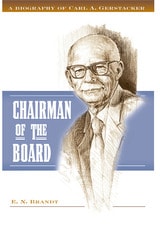
Chairman of the Board
A Biography of Carl A. GerstackerE. N. Brandt
Michigan State University Press, 2003
Carl A. Gerstacker was born in 1916 in Cleveland, Ohio. At an early age his father, Rollin, instilled in him an interest in finance and the stock market. In 1930, when Carl turned fourteen, Rollin advised his son to withdraw his paper-route and odd-job money from a local bank and invest it all in The Dow Chemical Company. It was the beginning of a relationship that would last a lifetime. After high school, Carl landed an hourly position with Dow Chemical as a lab assistant and, at the same time, pursued an engineering degree at the University of Michigan as part of the company’s student training course. After graduating in 1938, Gerstacker continued to work for Dow Chemical until the outbreak of World War II when he joined the U.S. Army. Returning to civilian life in 1946, he was rehired by Dow and quickly moved up the corporate ladder, becoming Treasurer in 1949, Vice-President in 1955, and Chairman of the Board in 1960, a position he retained until 1976. He retired five years later in 1981.
Carl Gerstacker was a business leader who believed that every company had a special personality and that the Dow personality was largely shaped by its employees. “For Dow Chemical, people are the most important asset, not the patents, the plants, nor the products.” Gerstacker’s personal financial acumen was rivaled only by his own contributions to the sound corporate growth of Dow Chemical, a business he loved and to which he devoted his life. Gerstacker died in 1995, leaving a legacy that lives on in the form of numerous philanthropic endeavors he began during his lifetime and on whose boards he once served. Carl A. Gerstacker was one of the towering figures of twentieth-century American industry.
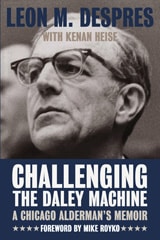
Challenging the Daley Machine
A Chicago Alderman's MemoirLeon M. Despres
Northwestern University Press, 2005
Winner, 2007 The Hyde Park Historical Society Paul Cornell Award
Political war stories from a thorn in the side of Chicago's famous Boss
In 1955, south-sider Leon Despres was elected to the Chicago City Council-the same year that Paddy Bauler famously uttered that "Chicago ain't ready for reform." Ready or not, Chicago got twenty years of reform efforts from Despres, one of the few independents in the council and the most liberal alderman in the city. His demand to cut out the corrupt sale of city driveway permits made him enemies from the very beginning. Over the years his crusades to ban discrimination, preserve Chicago landmark buildings, and gain equality for African-Americans-when Daley-beholden African-American council members refused to help-threw wrench after wrench into the Machine. And, not incidentally, changed the city.
But Challenging the Daley Machine is more than a memoir. It's a historical portrait of the way things were done under the Boss, when changing times and a changing city forced the Machine to confront the problems Despres championed. His battles against the seemingly monolithic Machine are also an inspiration to anyone who is facing long odds, but is convinced he/she is on the side of right.
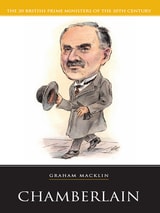
Chamberlain
Graham Macklin
Haus Publishing, 2006

Chamfort
A BiographyClaude Arnaud
University of Chicago Press, 1992
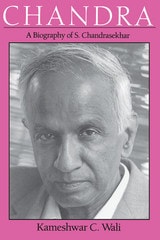
Chandra
A Biography of S. ChandrasekharKameshwar C. Wali
University of Chicago Press, 1992
"Wali has given us a magnificent portrait of Chandra, full of life and color, with a deep understanding of the three cultures—Indian, British, and American—in which Chandra was successively immersed. . . . I wish I had the job of reviewing this book for the New York Times rather than for Physics Today. If the book is only read by physicists, then Wali's devoted labors were in vain."—Freeman Dyson, Physics Today
"An enthralling human document."—William McCrea, Times Higher Education Supplement
"A dramatic, exuberant biography of one of the century's great scientists."—Publishers Weekly
Character Is Destiny
The Autobiography of Alice SalomonAndrew Lees, Editor
University of Michigan Press, 2004
Charisma under Pressure
Joseph Smith, American Prophet, 1831–1839Dan Vogel
Signature Books, 2023
But just who was Joseph Smith? What motivated him? In examining Smith’s life during his Ohio and Missouri sojourns, Vogel seeks to answer those questions. But, Vogel is quick to note, “There are, in fact, many possible constructions of Joseph Smith, and depending on how one assesses the evidence for his truth-claims, a completely different Joseph Smith emerges. But this is probably as Smith wanted it.”
During this period, Smith established a temple, printing presses, additional scripture, expanded church offices, and built a bank—all indicating a sense of permanence and strength for his young church at one level while causing its near collapse at another.

Charles A. Lindbergh and the American Dilemma
The Conflict of Technology and Human ValuesSusan M. Gray
University of Wisconsin Press, 1988
Charles Bell and the Anatomy of Reform
Carin Berkowitz
University of Chicago Press, 2015
In Charles Bell and the Anatomy of Reform, Carin Berkowitz takes readers into Bell’s world, helping us understand the life of medicine before the modern separation of classroom, laboratory, and clinic. Through Bell’s story, we witness the age when modern medical science, with its practical universities, set curricula, and medical professionals, was born.
Charles E. Hires and the Drink that Wowed a Nation
The Life and Times of a Philadelphia EntrepreneurBill Double
Temple University Press, 2018
Introduced at the 1876 Centennial Exposition and powered by an historic advertising campaign, Hires Root Beer—launched 10 years before Coca-Cola—blazed the trail for development of the American soft drink industry. Its inventor, Charles Elmer Hires, has been described as “a tycoon with the soul of a chemist.” In addition to creating root beer, Hires, a devoted family man and a pillar of the Quaker community, became a leading importer of botanical commodities, an authority on the vanilla bean. Starting from scratch, he also built one of the world’s largest condensed milk companies.
Charles E. Hires and the Drink that Wowed a Nation chronicles the humble origin and meteoric business success of this extraordinary entrepreneur. Author Bill Double uses published interviews, correspondence, newspaper reports, magazine articles, financial data, and a small family archive to tell this story of native ingenuity. Here, the rough-hewn capitalism of the gilded age, the evolution of the neighborhood drugstore, the rise of advertising in creating mass markets, and the emerging temperance movement all come together in a biography that, well, fizzes with entrepreneurial spirit.
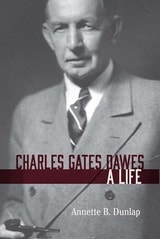
Charles Gates Dawes
A LifeAnnette B. Dunlap
Northwestern University Press, 2016
Charles Gates Dawes: A Life is the first comprehensive biography of an American in whose fascinating story contemporary readers can follow the struggles and triumphs of early twentieth-century America and Europe.
Dawes is most known today as vice president of the United States under Calvin Coolidge, but he also distinguished himself and his hometown of Evanston, Illinois, on the world stage with the 1925 Nobel Peace Prize. This engrossing biography traces how, when the punitive armistice that ended the First World War resulted in a disabled, restive Germany, Dawes’s diplomatic legerdemain averted war through a renegotiation of Germany’s debt repayments.
Dawes’s diplomatic and political achievements, however, were only the illustrious capstones to a multifaceted career that included military service, law, finance, and business on the local, state, national, and global stages. In every arena of his life, he combined the social graces of the Gilded Age with the spirit of service of the Progressive Era.
Despite his life of disciplined service, Dawes was an ebullient and irrepressible figure. Dawes’s salty language was often colorful fodder for tabloid and magazine writers of his era. In this captivating biography, Annette B. Dunlap recounts the story of an original American who enlightened and enlivened his world.
This book was published in cooperation with the Evanston History Center and with generous support from the Tawani Foundation.
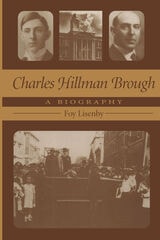
Charles Hillman Brough
A BiographyFoy Lisenby
University of Arkansas Press, 1996
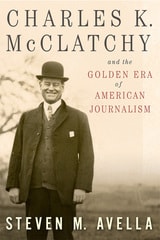
Charles K. McClatchy and the Golden Era of American Journalism
Steven M. Avella
University of Missouri Press, 2016
Charles K. McClatchy was twenty-five when he inherited The Sacramento Bee from his father, and his ensuing career as the paper’s editor extended well beyond the newsroom. Until his death in 1936, McClatchy was a consistent advocate for Progressive politics, a crusader for urban reform, a staunch isolationist, and a voice for Northern California. This biography explores his career as the long-time editor of the Bee in a work that weaves the history of Northern California with that of American newspapers.
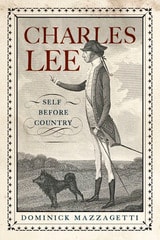
Charles Lee
Self Before CountryMazzagetti, Dominick
Rutgers University Press, 2013
Received an Honorable Mention for the American Revolution Round Table of Richmond's 2014 Book Award
Dominick Mazzagetti presents an engaging account of the life of Charles Lee, the forgotten man of the American Revolution. History has not been kind to Lee—for good reason. In this compelling biography, Mazzagetti compares Lee’s life and attributes to those of George Washington and offers significant observations omitted from previous Lee biographies, including extensive correspondence with British officers in 1777 that reflects Lee’s abandonment of the Patriots’ cause.
Lee, a British officer, a veteran of the French and Indian War, and a critic of King George III, arrived in New York City in 1773 with an ego that knew no bounds and tolerated no rivals. A highly visible and newsworthy personality, he quickly took up the American cause and encouraged rebellion. As a result of this advocacy and his military skills, Lee was granted a commission as a major general in the Continental Army and soon became second-in-command to George Washington. He helped organize the defense of Boston, designed defenses for New York City, and commanded the force that repelled the British attack on Charleston.
Upon his return to New York in 1776, Lee was considered by some leaders of the Revolution to be an alternative to George Washington, who was in full retreat from British forces. Lee’s capture by the British in December 1776 put an end to that possibility. Lee’s subsequent release in a prisoner exchange in 1778 and return to an American command led to a dramatic confrontation with Washington on the battlefield at Monmouth, New Jersey, in June 1778. Washington chastised Lee publicly for ordering an unnecessary retreat. Lee suffered the ignominy of a court-martial conviction for this blunder and spent the remaining years to his death in 1782 attacking Washington. Although few doubted Lee’s loyalty at the time, his actions at Monmouth fueled speculation that he switched sides during his imprisonment.
A discovery years after his death completed Lee’s tale. In 1862, a researcher discovered “Mr. Lee’s Plan,” a detailed strategy for the defeat of the American rebels delivered to British General William Howe while Lee was held in captivity. This discovery sealed Lee’s historical record and ended all further discussion of his contributions to the American Revolution. Today, few people even realize that Fort Lee, on the New Jersey side of the George Washington Bridge, was named in his honor.
Charles Olson's Reading
A BiographyRalph Maud
Southern Illinois University Press, 1996
In this narrative account of the life and work of Charles Olson, Ralph Maud focuses on what the poet read as a basis for understanding the work he produced.
To an extraordinary degree, Olson’s reading and life were coextensive, according to Maud, who notes that Olson saw his written output over his lifetime as a total cosmology. An individual who rarely traveled, this major American poet explored the world and its history as well as the furthest reaches of the thought of his day through books.
Maud builds upon George Butterick’s annotated listing of Olson’s library, bought by the University of Connecticut after the poet’s death in 1970. The present volume, however, adds categories of books Butterick deliberately omitted: Olson’s childhood books and poetry by his own contemporaries.
Linking Olson’s books to his intellectual and poetic development at each stage of his career, Maud reveals such little-known but important connections as the contracted book project "Operation Red, White and Black" and Olson’s plan for the long poem "West"—two unrealized projects much later shaped into The Maximus Poems.
Maud also outlines the surprisingly multiple role of the painter Corrado Cagli, who brought home to Olson the significance of the Holocaust and introduced him both to the Tarot and to the theories of non-Euclidean geometry that Olson variously incorporated into his poems and essays. In discussing Olson’s relationship to Ezra Pound, Maud defines in some detail what Olson gained from Pound and what he repudiated.
Maud refutes the notion that Olson’s intellectual and creative powers declined during the last years of his life, demonstrating that during these years Olson developed his Jungian interest, his attention to early Greek thought, and a new concern for Northern mythology.
This chronicle of Olson’s reading from childhood to deathbed constitutes a critical biography of the larger-than-life author of Call Me Ishmael and The Maximus Poems. No modern poet is more revealed in his sources than Olson. Maud’s comprehensive and complete study provides a basis for new and fresh modes of thinking about Olson’s great achievement.
Charles Valentine Riley
Founder of Modern EntomologyW. Conner Sorensen, Edward H. Smith, and Janet R. Smith, with Donald C. Weber
University of Alabama Press, 2019
This definitive biography is the first full account of a fascinating American scientist whose leadership created the modern science of entomology that recognizes both the essential role of insects in natural systems and their challenge to the agricultural food supply that sustains humankind. Charles Valentine Riley: Founder of Modern Entomology tells the story of how Riley (1843–1895), a young British immigrant to America—with classical schooling, only a smattering of natural history knowledge, and with talent in art and writing but no formal training in science—came to play a key role in the reorientation of entomology from the collection and arrangement of specimens to a scientific approach to insect evolution, diversity, ecology, and applied management of insect pests.
Drawing on Riley’s personal diaries, family records, correspondence, and publications, the authors trace Riley’s career as farm laborer, Chicago journalist, Missouri State Entomologist, chief federal entomologist, founder of the National Insect Collection, and initiator of the professional organization that became the Entomological Society of America. Also examined in detail are his spectacular campaigns against the Rocky Mountain Locust that stalled western migration in the 1870s, the Grape Phylloxera that threatened French vineyards in the 1870s and 80s, the Cotton Worm that devastated southern cotton fields after the Civil War, and the Cottony Cushion Scale that threatened the California citrus industry in the 1880s. The latter was defeated through importation of the Vedalia Beetle from Australia, the spectacular first example of biological control of an invasive insect pest by its introduced natural enemy.
A striking figure in appearance and deed, Riley combined scientific, literary, artistic, and managerial skills that enabled him to influence every aspect of entomology. A correspondent of Darwin and one of his most vocal American advocates, he discovered the famous example of mimicry of the Monarch butterfly by the Viceroy, and described the intricate coevolution of yucca moths and yuccas, a complex system that fascinates evolutionary scientists to this day. Whether applying evolutionary theory to pest control, promoting an American silk industry, developing improved spray technologies, or promoting applied entomology in state and federal government and to the public, Riley was the central figure in the formative years of the entomology profession. In addition to showcasing his own renderings of the insects he investigated, this comprehensive account provides fresh insight into the personal and public life of an ingenious, colorful, and controversial scientist, who aimed to discover, understand, and outsmart the insects.
Charlotte Delbo
A Life ReclaimedGhislaine Dunant, Translated by Kathryn M. Lachman
University of Massachusetts Press, 2021
Ghislaine Dunant's unforgettable biography of Delbo, La vie retrouvée (2016), captivated French readers and was awarded the Prix Femina. Now translated into English for the first time, Charlotte Delbo: A Life Reclaimed depicts Delbo's lifelong battles as a working-class woman, as a survivor, as a leftist who broke from the Communist Party, and most of all, as a writer whose words compelled others to see.
Chasing Good Sense
A Boy's Life on the FrontierHomer McCarty and Coralie McCarty Beyers
University of Utah Press, 2018
In the spirit of Huck Finn, Buck embarks on adventures and mischief with his loyal friend, Earl. Naïve, eager, and inquisitive, he seeks to make sense of his world. McCarty’s portrayal of the period is often humorous, capturing the intimacy of place and family through a young boy’s eyes.
McCarty completed this work in 1948. Had it not been for a series of fortuitous events and the dedication of his granddaughters, including Coralie Beyers, these pages would have been lost. Thanks to her efforts, her grandfather’s lively, entertaining book is now available for readers to relish and enjoy.
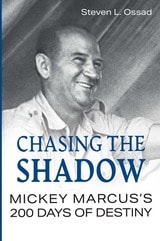
Chasing the Shadow
Mickey Marcus's 200 Days of DestinySteven L. Ossad
University of Missouri Press, 2024
The life of David “Mickey” Marcus has become the stuff of legends and myths (even fantasy), conspiracy, wild exaggeration, and untethered embellishment. The image of Marcus cast by the character portrayed by Kirk Douglas in the film version of his life still dominates most evocations of the man, for good or ill. And these days, reactions to the book or film rest mostly on the current headlines rather than the historical context of the struggle in which Marcus died, or the events that cast him as a real-life player in an event marked by destiny.
Chasing the Shadow: Mickey Marcus’s 200 Days of Destiny is the first comprehensive and balanced biography of David Daniel “Mickey” Marcus, a founder of American Civil Affairs and Military Government doctrine and practice and a seminal figure in early Israeli military history. Far from merely a tribute to Mickey Marcus's legacy, Ossad’s work serves as a critical tool for understanding the realities of mid-20th-century warfare in a Postwar colonial struggle and the dynamics of U.S.-Israeli military and political relations in 1948, the critical year for Israel’s struggle for independence. Indeed, Chasing the Shadow is a valuable read for those interested in Middle East history, Jewish military history, and a fascinating character whose story is told in an engaging, informative, and insightful narrative.
Chateaubriand Across Empires
Fabienne Moore
Bucknell University Press, 0
What happens when the liberty of ancient nobility collides with the revolutionary ideals of equality? This groundbreaking study explores how the American, French, Haitian, and Greek Revolutions redefined freedom—and how French Romantic figure Chateaubriand grappled with that transformation. Tracing his travels across England, North America, and the Mediterranean, this book uncovers Chateaubriand’s seductive visions of “paradises lost,” which were taken up, challenged, and reimagined by Anglophone and Hispanic writers.
From Charlotte Brontë to Harriet Beecher Stowe, from Byron to Bolaño authors found in Chateaubriand a conflicted but powerful voice at the crossroads of liberty, race, religion, and empire. This is the first comprehensive study to situate Chateaubriand within the histories of colonialism and global revolution, revealing a literary legacy that remains startlingly relevant in today’s struggles over equality.
Published by Bucknell University Press. Distributed worldwide by Rutgers University Press.
Che on My Mind
Margaret Randall
Duke University Press, 2013
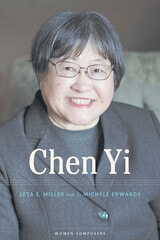
Chen Yi
Leta E. Miller and J. Michele Edwards
University of Illinois Press, 2020
Winner of the Leila Webster Memorial Music Award for the International Alliance for Women in Music of the 2022 Pauline Alderman Awards for Outstanding Scholarship on Women in Music
Chen Yi is the most prominent woman among the renowned group of new wave composers who came to the US from mainland China in the early 1980s. Known for her creative output and a distinctive merging of Chinese and Western influences, Chen built a musical language that references a breathtaking range of sources and crisscrosses geographical and musical borders without eradicating them.
Leta E. Miller and J. Michele Edwards provide an accessible guide to the composer's background and her more than 150 works. Extensive interviews with Chen complement in-depth analyses of selected pieces from Chen's solos for Western or Chinese instruments, chamber works, choral and vocal pieces, and compositions scored for wind ensemble, chamber orchestra, or full orchestra. The authors highlight Chen's compositional strategies, her artistic elaborations, and the voice that links her earliest and most recent music. A concluding discussion addresses questions related to Chen's music and issues such as gender, ethnicity and nationality, transnationalism, border crossing, diaspora, exoticism, and identity.
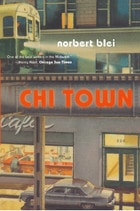
Chi Town
Norbert Blei
Northwestern University Press, 2003
Chi Townis the story of Norbert Blei's love affair with a city that shaped both his life and work. Along the route of this walking tour of the Windy City, you'll dine with Petros in Greek Town, see Studs Terkel in action at WFMT interviewing Dave Brubeck, listen to Mike Royko describe his own neighborhood, share the thoughts of Chicago sportswriter Jerome Holtzman, and meet newspaper vendors, trash collectors, bankers and more.
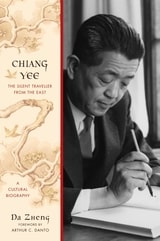
Chiang Yee
The Silent Traveller from the East--A Cultural BiographyZheng, Da
Rutgers University Press, 2010
This biography is more than a recounting of extraordinary accomplishments. It also embraces the transatlantic life experience of Yee who traveled from China to England and then on to the United States, where he taught at Columbia University, to his return to China in 1975, after a forty-two year absence. Interwoven is the history of the communist revolution in China; the battle to save England during World War II; the United States during the McCarthy red scare era; and, eventually, thawing Sino-American relations in the 1970s. Da Zheng uncovers Yee's encounters with racial exclusion and immigration laws, displacement, exile, and the pain and losses he endured hidden behind a popular public image.
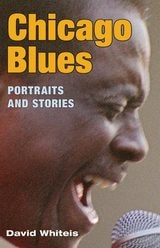
Chicago Blues
Portraits and StoriesDavid Whiteis
University of Illinois Press, 2006
Through revealing portraits of selected local artists and slice-of-life vignettes drawn from the city’s pubs and lounges, Chicago Blues encapsulates the sound and spirit of the blues as it is lived today. As a committed participant in the Chicago blues scene for more than a quarter century, David Whiteis draws on years of his observations and extensive interviews to paint a full picture of the Chicago blues world, both on and off the stage.
In addition to portraits of blues artists he has personally known and worked with, Whiteis takes readers on a tour of venues like East of Ryan and the Starlight Lounge, home to artists such as Jumpin’ Willie Cobbs, Willie D., and Harmonica Khan. He tells the stories behind the lives of past pioneers, including Junior Wells, pianist Sunnyland Slim, and harpist Big Walter Horton, whose music reflects the universal concerns with love, loss, and yearning that continue to keep the blues so vital for so many.
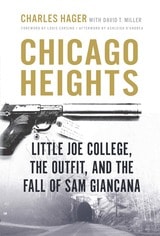
Chicago Heights
Little Joe College, the Outfit, and the Fall of Sam GiancanaCharles Hager with David T. Miller, Foreword by Louis Corsino, Afterword by Ashleigh D'Andrea
Southern Illinois University Press, 2018
In this riveting true story of coming of age in the Chicago Mob, Charles “Charley” Hager is plucked from his rural West Virginia home by an uncle in the 1960s and thrown into an underworld of money, cars, crime, and murder on the streets of Chicago Heights.
Street-smart and good with his hands, Hager is accepted into the working life of a chauffeur and “street tax” collector, earning the moniker “Little Joe College” by notorious mob boss Albert Tocco. But when his childhood friend is gunned down by a hit man, Hager finds himself a bit player in the events surrounding the mysterious, and yet unsolved, murder of mafia chief Sam Giancana.
Chicago Heights is part rags-to-riches story, part murder mystery, and part redemption tale. Hager, with author David T. Miller, juxtaposes his early years in West Virginia with his life in crime, intricately weaving his own experiences into the fabric of mob life, its many characters, and the murder of Giancana.
Fueled by vivid recollections of turf wars and chop shops, of fix-ridden harness racing and the turbulent politics of the 1960s, Chicago Heights reveals similarities between high-level organized crime in the city and the corrupt lawlessness of Appalachia. Hager candidly reveals how he got caught up in a criminal life, what it cost him, and how he rebuilt his life back in West Virginia with a prison record.
Based on interviews with Hager and supplemented by additional interviews and extensive research by Miller, the book also adds Hager’s unique voice to the volumes of speculation about Giancana’s murder, offering a plausible theory of what happened on that June night in 1975.
Chicago Portraits
New EditionJune Skinner Sawyers
Northwestern University Press, 2012
Chicago's Greatest Year, 1893
The White City and the Birth of a Modern MetropolisJoseph Gustaitis
Southern Illinois University Press, 2013
In 1893, the 27.5 million visitors to the Chicago World’s Fair feasted their eyes on the impressive architecture of the White City, lit at night by thousands of electric lights. In addition to marveling at the revolutionary exhibits, most visitors discovered something else: beyond the fair’s 633 acres lay a modern metropolis that rivaled the world’s greatest cities. The Columbian Exposition marked Chicago’s arrival on the world stage, but even without the splendor of the fair, 1893 would still have been Chicago’s greatest year.
An almost endless list of achievements took place in Chicago in 1893. Chicago’s most important skyscraper was completed in 1893, and Frank Lloyd Wright opened his office in the same year. African American physician and Chicagoan Daniel Hale Williams performed one of the first known open-heart surgeries in 1893. Sears and Roebuck was incorporated, and William Wrigley invented Juicy Fruit gum that year. The Field Museum, the Art Institute of Chicago, and the Museum of Science and Industry all started in 1893. The Cubs’ new ballpark opened in this year, and an Austro-Hungarian immigrant began selling hot dogs outside the World’s Fair grounds. His wares became the famous “Chicago hot dog.”
“Cities are not buildings; cities are people,” writes author Joseph Gustaitis. Throughout the book, he brings forgotten pioneers back to the forefront of Chicago’s history, connecting these important people of 1893 with their effects on the city and its institutions today. The facts in this history of a year range from funny to astounding, showcasing innovators, civic leaders, VIPs, and power brokers who made 1893 Chicago about so much more than the fair.
Chicago
A BiographyDominic A. Pacyga
University of Chicago Press, 2009
Chicago has been called by many names. Nelson Algren declared it a “City on the Make.” Carl Sandburg dubbed it the “City of Big Shoulders.” Upton Sinclair christened it “The Jungle,” while New Yorkers, naturally, pronounced it “the Second City.”
At last there is a book for all of us, whatever we choose to call Chicago. In this magisterial biography, historian Dominic Pacyga traces the storied past of his hometown, from the explorations of Joliet and Marquette in 1673 to the new wave of urban pioneers today. The city’s great industrialists, reformers, and politicians—and, indeed, the many not-so-great and downright notorious—animate this book, from Al Capone and Jane Addams to Mayor Richard J. Daley and President Barack Obama. But what distinguishes this book from the many others on the subject is its author’s uncommon ability to illuminate the lives of Chicago’s ordinary people. Raised on the city’s South Side and employed for a time in the stockyards, Pacyga gives voice to the city’s steelyard workers and kill floor operators, and maps the neighborhoods distinguished not by Louis Sullivan masterworks, but by bungalows and corner taverns.
Filled with the city’s one-of-a-kind characters and all of its defining moments, Chicago: A Biography is as big and boisterous as its namesake—and as ambitious as the men and women who built it.
Chicago
A BiographyDominic A. Pacyga
University of Chicago Press, 2009
This is an auto-narrated audiobook version of this book.
Chicago has been called by many names. Nelson Algren declared it a “City on the Make.” Carl Sandburg dubbed it the “City of Big Shoulders.” Upton Sinclair christened it “The Jungle,” while New Yorkers, naturally, pronounced it “the Second City.”
At last there is a book for all of us, whatever we choose to call Chicago. In this magisterial biography, historian Dominic Pacyga traces the storied past of his hometown, from the explorations of Joliet and Marquette in 1673 to the new wave of urban pioneers today. The city’s great industrialists, reformers, and politicians—and, indeed, the many not-so-great and downright notorious—animate this book, from Al Capone and Jane Addams to Mayor Richard J. Daley and President Barack Obama. But what distinguishes this book from the many others on the subject is its author’s uncommon ability to illuminate the lives of Chicago’s ordinary people. Raised on the city’s South Side and employed for a time in the stockyards, Pacyga gives voice to the city’s steelyard workers and kill floor operators, and maps the neighborhoods distinguished not by Louis Sullivan masterworks, but by bungalows and corner taverns.
Filled with the city’s one-of-a-kind characters and all of its defining moments, Chicago: A Biography is as big and boisterous as its namesake—and as ambitious as the men and women who built it.
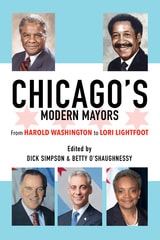
Chicago’s Modern Mayors
From Harold Washington to Lori LightfootEdited by Dick Simpson and Betty O'Shaughnessy
University of Illinois Press, 2024
Chicago’s transformation into a global city began at City Hall. Dick Simpson and Betty O’Shaughnessy edit in-depth analyses of the five mayors that guided the city through this transition beginning with Harold Washington’s 1983 election: Washington, Eugene Sawyer, Richard M. Daley, Rahm Emmanuel, and Lori Lightfoot. Though the respected political science, sociologist, and journalist contributors approach their subjects from distinct perspectives, each essay addresses three essential issues: how and why each mayor won the office; whether the City Council of their time acted as a rubber stamp or independent body; and the ways the unique qualities of each mayor’s administration and accomplishments influenced their legacy.
Filled with expert analysis and valuable insights, Chicago’s Modern Mayors illuminates a time of transition and change and considers the politicians who--for better and worse--shaped the Chicago of today.
Chicana Lives and Criminal Justice
Voices from El BarrioBy Juanita Díaz-Cotto
University of Texas Press, 2006
This first comprehensive study of Chicanas encountering the U.S. criminal justice system is set within the context of the international war on drugs as witnessed at street level in Chicana/o barrios. Chicana Lives and Criminal Justice uses oral history to chronicle the lives of twenty-four Chicana pintas (prisoners/former prisoners) repeatedly arrested and incarcerated for non-violent, low-level economic and drug-related crimes. It also provides the first documentation of the thirty-four-year history of Sybil Brand Institute, Los Angeles' former women's jail.
In a time and place where drug war policies target people of color and their communities, drug-addicted Chicanas are caught up in an endless cycle of police abuse, arrest, and incarceration. They feel the impact of mandatory sentencing laws, failing social services and endemic poverty, violence, racism, and gender discrimination. The women in this book frankly discuss not only their jail experiences, but also their family histories, involvement with gangs, addiction to drugs, encounters with the juvenile and adult criminal justice systems, and their successful and unsuccessful attempts to recover from addiction and reconstitute fractured families. The Chicanas' stories underscore the amazing resilience and determination that have allowed many of the women to break the cycle of abuse. Díaz-Cotto also makes policy recommendations for those who come in contact with Chicanas/Latinas caught in the criminal justice system.
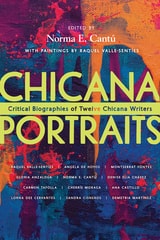
Chicana Portraits
Critical Biographies of Twelve Chicana WritersEdited by Norma E. Cantú; With paintings by Raquel Valle-Sentíes
University of Arizona Press, 2023
Artist Raquel Valle-Sentíes’s portraits bring visual dimension, while essays delve deeply into the authors’ lives for details that inform their literary, artistic, feminist, and political trajectories and sensibilities. The collection brilliantly intersects artistic visual and literary cultural productions, allowing complex themes to emerge, such as the fragility of life, sexism and misogyny, Chicana agency and forging one’s own path, the struggles of becoming a writer and battling self-doubt, economic instability, and political engagement and activism.
Arranged chronologically by birth order of the authors, the book can be read cover to cover for a genealogical overview, or scholars and general readers can easily jump in at any point and read about an individual author, regardless of the chronology.
Biographies included in this work include Raquel Valle-Sentíes, Angela de Hoyos, Montserrat Fontes, Gloria E. Anzaldúa, Norma E. Cantú, Denise Elia Chávez, Carmen Tafolla, Cherríe Moraga, Ana Castillo, Lorna Dee Cervantes, Sandra Cisneros, and Demetria Martínez.
Contributors
Cordelia E. Barrera
Mary Pat Brady
Norma E. Cantú
María Jesus Castro Dopacio
Carlos Nicolás Flores
Myrriah Gómez
Maria Magdalena Guerra de Charur
Gabriella Gutiérrez y Muhs
Georgina Guzmán
Cristina Herrera
María Esther Quintana
Eliza Rodríguez y Gibson
Meagan Solomon
Lourdes Torres
Raquel Valle-Sentíes
Jen Yáñez-Alaniz
Chicanas of 18th Street
Narratives of a Movement from Latino ChicagoLeonard G. Ramirez
University of Illinois Press, 2011
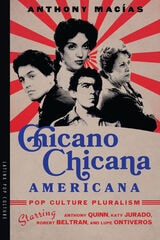
Chicano-Chicana Americana
Pop Culture Pluralism Starring Anthony Quinn, Katy Jurado, Robert Beltran, and Lupe OntiverosAnthony Macías
University of Arizona Press, 2023
Each biographical chapter analyzes an underappreciated actor, revealing their artistic contributions to U.S. common culture. Their long-shot careers tell a tale of players taking action with agency and fighting for screen time and equal opportunity despite disadvantages and differential treatment in Hollywood. These dynamic and complex individuals altered cinematic representations—and audience expectations—by surpassing stereotypes.
The book explores American national character by showing how ethnic Mexicans attained social and cultural status through fair, open competition without a radical realignment of political or economic structures. Their creative achievements demanded dignity and earned respect. Anthony Macías argues that these performances demonstrated a pop culture pluralism that subtly changed mainstream America, transforming it from the mythological past of the Wild West to the speculative future of science fiction.
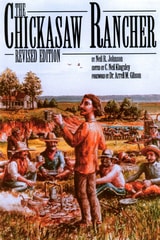
Chickasaw Rancher, Revised Edition
Neil R. Johnson
University Press of Colorado, 2001
The Chickasaw Rancher follows Montford T. Johnson's family and friends for the next thirty-two years. Neil R. Johnson describes the work, the ranch parties, cattle rustling, gun fights, tornadoes, the run of 1889, the hard deaths of many along the way, and the rise, fall, and revival of the Chickasaw Nation.
This revised edition of The Chickasaw Rancher, edited by C. Neil Kingsley, Neil R. Johnson's grandson, is the perfect addition to any reader's collection of the history of the American West.
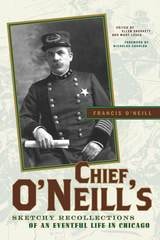
Chief O'Neill's Sketchy Recollections of an Eventful Life in Chicago
Francis O'Neill, Edited by Ellen Skerrett and Mary Lesch with a foreword by Nicholas Carolan
Northwestern University Press, 2008
This remarkable memoir of immigration and assimilation provides a rare view of urban life in Chicago in the late 1800s by a newcomer to the city and the Midwest, and the nation as well. Francis O’Neill left Ireland in 1865. After five years traveling the world as a sailor, he and his family settled in Chicago just shortly before the Great Fire of 1871.
As O’Neill looked back on his life, writing in Chicago at the age of 83, he could give first-hand accounts of the Pullman strike of 1894, the railway strike of 1903, and the packing-house strike of 1904. He could also reflect on the corruption that kept him, in spite of his innovations, extremely high exam scores, and performance, subject to powerful aldermen who prevented his advance as a member of the Chicago Police Department. Despite these obstacles, O’Neill eventually rose to be chief of police—a position from which he could enact much-needed civil service reform. In addition to his professional success, O’Neill is also remembered and beloved for his hobby, preserving traditional Irish music.
O’Neill’s story offers perspective on the inner workings of the police department at the turn of the twentieth century. His memoir also brings to life the challenges involved in succeeding in a new land, providing for his family, and integrating into a new culture. Francis O’Neill serves as a fine documentarian of the Irish immigrant experience in Chicago.
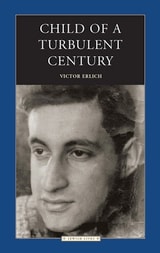
Child of a Turbulent Century
Victor Erlich
Northwestern University Press, 2006
Erlich conjures up what it was like to be a Bundist, the intensity of Socialist life at the time, the thinking after the Nazi invasion of Poland-before the pact between Hitler and Stalin became apparent. Figures such as Eleanor Roosevelt, Wendel Wilkie, Marc and Bella Chagall make appearances, as well as the famous logician Tarski, flunking Erlich in math. Throughout, despite the darkness, even the horror, of much of what he describes, the author maintains the beguiling tone and the warm manner of one who has reached the new millennium with rare and hard-won insight into the human comedy of his time.
Childhood
Nathalie Sarraute
University of Chicago Press, 2013
Childhood Years
A MemoirTanizaki Jun'ichiro; Translated by Paul McCarthy
University of Michigan Press, 2017
Children In The Field
edited by Joan Cassell
Temple University Press, 1994
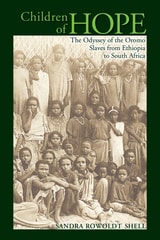
Children of Hope
The Odyssey of the Oromo Slaves from Ethiopia to South AfricaSandra Rowoldt Shell
Ohio University Press, 2018
In Children of Hope, Sandra Rowoldt Shell traces the lives of sixty-four Oromo children who were enslaved in Ethiopia in the late-nineteenth century, liberated by the British navy, and ultimately sent to Lovedale Institution, a Free Church of Scotland mission in the Eastern Cape, South Africa, for their safety. Because Scottish missionaries in Yemen interviewed each of the Oromo children shortly after their liberation, we have sixty-four structured life histories told by the children themselves.
In the historiography of slavery and the slave trade, first passage narratives are rare, groups of such narratives even more so. In this analytical group biography (or prosopography), Shell renders the experiences of the captives in detail and context that are all the more affecting for their dispassionate presentation. Comparing the children by gender, age, place of origin, method of capture, identity, and other characteristics, Shell enables new insights unlike anything in the existing literature for this region and period.
Children of Hope is supplemented by graphs, maps, and illustrations that carefully detail the demographic and geographic layers of the children’s origins and lives after capture. In this way, Shell honors the individual stories of each child while also placing them into invaluable and multifaceted contexts.