Results by title
4531 books match the query 'Cultural & Ethnic Studies' and 342 start with c
Challenged Sovereignty
The Impact of Drugs, Crime, Terrorism, and Cyber Threats in the CaribbeanIvelaw Lloyd Griffith
University of Illinois Press, 2024
Informed and up to date, Challenged Sovereignty explains the effects of today’s globalized problems on the contemporary Caribbean.
Challenges of Diversity
Essays on AmericaSollors, Werner
Rutgers University Press, 2017
What unites and what divides Americans as a nation? Who are we, and can we strike a balance between an emphasis on our divergent ethnic origins and what we have in common? Opening with a survey of American literature through the vantage point of ethnicity, Werner Sollors examines our evolving understanding of ourselves as an Anglo-American nation to a multicultural one and the key role writing has played in that process.
Challenges of Diversity contains stories of American myths of arrival (pilgrims at Plymouth Rock, slave ships at Jamestown, steerage passengers at Ellis Island), the powerful rhetoric of egalitarian promise in the Declaration of Independence and the heterogeneous ends to which it has been put, and the recurring tropes of multiculturalism over time (e pluribus unum, melting pot, cultural pluralism). Sollors suggests that although the transformation of this settler country into a polyethnic and self-consciously multicultural nation may appear as a story of great progress toward the fulfillment of egalitarian ideals, deepening economic inequality actually exacerbates the divisions among Americans today.
Challenging Beijing's Mandate of Heaven
Taiwan's Sunflower Movement and Hong Kong's Umbrella MovementMing-sho Ho
Temple University Press, 2019
In 2014, the Sunflower Movement in Taiwan grabbed international attention as citizen protesters demanded the Taiwan government withdraw its free-trade agreement with China. In that same year, in Hong Kong, the Umbrella Movement sustained 79 days of demonstrations, protests that demanded genuine universal suffrage in electing Hong Kong’s chief executive. It too, became an international incident before it collapsed. Both of these student-led movements featured large-scale and intense participation and had deep and far-reaching consequences. But how did two massive and disruptive protests take place in culturally conservative societies? And how did the two “occupy”-style protests against Chinese influences on local politics arrive at such strikingly divergent results?
Challenging Beijing’s Mandate of Heaven aims to make sense of the origins, processes, and outcomes of these eventful protests in Taiwan and Hong Kong. Ming-sho Ho compares the dynamics of the two movements, from the existing networks of activists that preceded protest, to the perceived threats that ignited the movements, to the government strategies with which they contended, and to the nature of their coordination. Moreover, he contextualizes these protests in a period of global prominence for student, occupy, and anti-globalization protests and situates them within social movement studies.
Challenging U.S. Apartheid
Atlanta and Black Struggles for Human Rights, 1960–1977Winston A. Grady-Willis
Duke University Press, 2006
Grady-Willis describes Black activism within a framework of human rights rather than in terms of civil rights. As he demonstrates, civil rights were only one part of a larger struggle for self-determination, a fight to dismantle a system of inequalities that he conceptualizes as “apartheid structures.” Drawing on archival research and interviews with activists of the 1960s and 1970s, he illuminates a wide range of activities, organizations, and achievements, including the neighborhood-based efforts of Atlanta’s Black working poor, clandestine associations such as the African American women’s group Sojourner South, and the establishment of autonomous Black intellectual institutions such as the Institute of the Black World. Grady-Willis’s chronicle of the politics within the Black freedom movement in Atlanta brings to light overlapping ideologies, gender and class tensions, and conflicts over divergent policies, strategies, and tactics. It also highlights the work of grassroots activists, who take center stage alongside well-known figures in Challenging U.S. Apartheid. Women, who played central roles in the human rights struggle in Atlanta, are at the foreground of this history.
Chang Ch’un-ch’iao and Shanghai’s January Revolution
Andrew G. Walder
University of Michigan Press, 1977
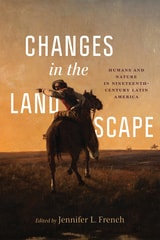
Changes in the Landscape
Humans and Nature in Nineteenth-Century Latin AmericaEdited by Jennifer L. French
Vanderbilt University Press, 2024
Ranging from the immediate aftermath of the Spanish‑American Wars of Independence (1810–1826) to the early twentieth century (1925), the volume’s essays cover a wide variety of genres and forms of cultural production, from José Hernández’s epic poem Martín Fierro to prose fiction, painting and photography, and the personal albums compiled by Spanish-American women. Individually and collectively, the essays engage with scientific writing as both a discourse of power and a source of potentially significant, even revelatory information about human and nonhuman nature. Changes in the Landscape enables readers to more fully understand the transition from colonial regimes to the ecocidal extractivism of the export boom (1870–1930) by drawing out and analyzing some of the cognitive resources and rhetorical strategies that were available to imagine, protest, or enact new norms and expectations regarding the relations between human and nonhuman life, be it the life of wildflowers, waterfalls, or Cuba’s Ciénaga de Zapata.
Changing Minds
Social Movements’ Cultural ImpactsFrancesca Polletta
Russell Sage Foundation, 2025
Polletta and Amenta examine the trajectories of U.S. social movements, including the old-age pension movements of the 1930s and 1940s, the Black rights movement of the 1950s and 1960s, the women’s movement of the 1970s, right-wing movements in the 1980s and 1990s, and the environmental movement up to the present, to determine when, why, and how social movements change culture. They find that influential movements are featured in the news, but not only in the news. Movement perspectives may appear also in opinion and commentary outlets, on television talk shows and dramas, in movies, stand-up comedy, and viral memes. Popular culture producers remake movement messages as they transmit them, sometimes in ways that make those messages compelling. For example, while the news largely ignored feminists’ challenge to inequality in the home, popular cultural outlets turned “liberation” into a resonant demand for women’s right to self-fulfillment outside the home and within it. Widespread attention to the movement may lead people to change their minds individually. But more substantial change is likely when companies, schools, and other organizations outside government strive to get out in front of a newly legitimate issue, whether environmental sustainability or racial equity, by adopting movement-supportive norms and practices. Eventually, ideas associated with a movement may become a new common sense—though not always the ideas that the movement intended.
Throughout Changing Minds, Polletta and Amenta provide activists with strategies for getting their message heard and acted on. They suggest how movement actors can get into the news as political players or experts rather than lawbreakers or zealots. They show when it makes sense for activists to work with popular cultural producers and when they should create their own cultural outlets. They explain why the routes to cultural influence have changed and why urging people to take one easy step to save the planet can do more harm than good.
Changing Minds is a fascinating exploration of why and how some social movements have caused profound shifts in society.
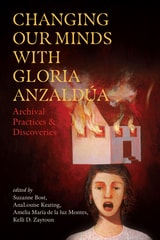
Changing Our Minds with Gloria Anzaldúa
Archival Practices and Discoveriesedited by Suzanne Bost, AnaLouise Keating, Amelia María de la luz Montes, Kelli D. Zaytoun
University of Texas Press, 2026
A collection of essays using Gloria Anzaldúa’s archival works to further explore and reassess the meaning of her legacy.
In the 1980s, Gloria Anzaldúa’s pioneering Borderlands/La Frontera and This Bridge Called My Back created new and durable trajectories for feminist, queer, Latinx, and postcolonial thought. Still, much of her writing was never published. Drawing on Anzaldúa’s impressive archive—manuscript drafts, personal memorabilia, correspondence, and drawings held at the Benson Collection at the University of Texas, Austin—this volume explores what we are still learning from a pathbreaking scholar more than twenty years after her death.
Changing Our Minds with Gloria Anzaldúa gathers essays from eleven writers working in diverse fields, including philosophy, literature, geography, performance studies, and visual arts. All have been powerfully influenced by Anzaldúa, and after examining her archives, all came to know her work anew. Each chapter relates discoveries among the unpublished materials, illuminating Anzaldúa’s celebrated texts and raising novel questions. A meditation, as well, on archivalism itself, Changing Our Minds reckons with the power of dusty papers to motivate new generations of readers outside the geographies and academic departments in which Anzaldúa has long been a fixture.
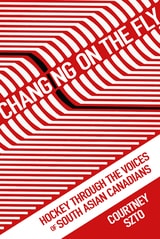
Changing on the Fly
Hockey through the Voices of South Asian CanadiansCourtney Szto
Rutgers University Press, 2021
Hockey and multiculturalism are often noted as defining features of Canadian culture; yet, rarely are we forced to question the relationship and tensions between these two social constructs. This book examines the growing significance of hockey in Canada’s South Asian communities. The Hockey Night in Canada Punjabi broadcast serves as an entry point for a broader consideration of South Asian experiences in hockey culture based on field work and interviews conducted with hockey players, parents, and coaches in the Lower Mainland of British Columbia. This book seeks to inject more “color” into hockey’s historically white dominated narratives and representations by returning hockey culture to its multicultural roots. It encourages alternative and multiple narratives about hockey and cultural citizenship by asking which citizens are able to contribute to the webs of meaning that form the nation’s cultural fabric.
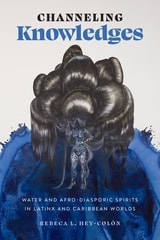
Channeling Knowledges
Water and Afro-Diasporic Spirits in Latinx and Caribbean WorldsRebeca L. Hey-Colón
University of Texas Press, 2023
2024 Honorable Mention, Isis Duarte Book Prize, Haiti/ Dominican Republic section, Latin American Studies Association
How water enables Caribbean and Latinx writers to reconnect to their pasts, presents, and futures.
Water is often tasked with upholding division through the imposition of geopolitical borders. We see this in the construction of the Rio Grande/Río Bravo on the US-Mexico border, as well as in how the Caribbean Sea and the Pacific Ocean are used to delineate the limits of US territory. In stark contrast to this divisive view, Afro-diasporic religions conceive of water as a place of connection; it is where spiritual entities and ancestors reside, and where knowledge awaits.
Departing from the premise that water encourages confluence through the sustainment of contradiction, Channeling Knowledges fathoms water’s depth and breadth in the work of Latinx and Caribbean creators such as Mayra Santos-Febres, Rita Indiana, Gloria Evangelina Anzaldúa, and the Border of Lights collective. Combining methodologies from literary studies, anthropology, history, and religious studies, Rebeca L. Hey-Colón’s interdisciplinary study traces how Latinx and Caribbean cultural production draws on systems of Afro-diasporic worship—Haitian Vodou, La 21 División (Dominican Vodou), and Santería/Regla de Ocha—to channel the power of water, both salty and sweet, in sustaining connections between past, present, and not-yet-imagined futures.

Chanting Down Babylon
Nathaniel Samuel Murrell
Temple University Press, 1998
Probing into Rastafari's still evolving belief system, political goals, and cultural expression, the contributors to this volume emphasize the importance of Africana history and the Caribbean context. "Long before the term 'Afrocentricity' came into popular use in the United States, Jamaican Rastafarians had embraced the concept as the most important recipe for naming their reality and reclaiming their black heritage in the African diaspora."
Character Is Destiny
The Autobiography of Alice SalomonAndrew Lees, Editor
University of Michigan Press, 2004
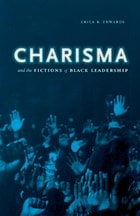
Charisma and the Fictions of Black Leadership
Erica R. Edwards
University of Minnesota Press, 2012
Social and political change is impossible in the absence of gifted male charismatic leadership—this is the fiction that shaped African American culture throughout the twentieth century. If we understand this, Erica R. Edwards tells us, we will better appreciate the dramatic variations within both the modern black freedom struggle and the black literary tradition.
By considering leaders such as Marcus Garvey, Martin Luther King Jr., Malcolm X, and Barack Obama as both historical personages and narrative inventions of contemporary American culture, Edwards brings to the study of black politics the tools of intertextual narrative analysis as well as deconstruction and close reading. Examining a number of literary restagings of black leadership in African American fiction by W. E. B. Du Bois, George Schuyler, Zora Neale Hurston, William Melvin Kelley, Paul Beatty, and Toni Morrison, Edwards demonstrates how African American literature has contested charisma as a structuring fiction of modern black politics.
Though recent scholarship has challenged top-down accounts of historical change, the presumption that history is made by gifted men continues to hold sway in American letters and life. This may be, Edwards shows us, because while charisma is a transformative historical phenomenon, it carries an even stronger seductive narrative power that obscures the people and methods that have created social and political shifts.
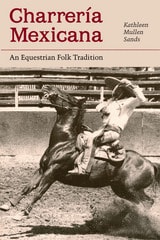
Charrería Mexicana
An Equestrian Folk TraditionKathleen Mullen Sands
University of Arizona Press, 1993
Chasing the American Dream in China
Chinese Americans in the Ancestral HomelandLeslie Kim Wang
Rutgers University Press, 2021
Chen Jiongming and the Federalist Movement
Regional Leadership and Nation Building in Early Republican ChinaLeslie H. Dingyan Chen
University of Michigan Press, 2000
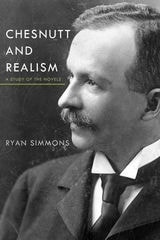
Chesnutt and Realism
A Study of the NovelsRyan Simmons
University of Alabama Press, 2006
Provides an important examination of Charles Chesnutt as a practitioner of realism
Although Chesnutt is typically acknowledged as the most prominent African American writer of the realist period, scholars have paid little attention to the central question of this study: what does it mean to call Chesnutt a realist? As a writer whose career was restricted by the dismal racial politics of his era, Chesnutt refused to conform to literary conventions for depicting race. Nor did he use his imaginative skills to evade the realities he and other African Americans faced. Rather, he experimented with ways of portraying reality that could elicit an appropriate, proportionate response to it, as Ryan Simmons demonstrates in extended readings of each of Chesnutt’s novels, including important unpublished works overlooked by previous critics.
In addition, Chesnutt and Realism addresses a curiously neglected subject in American literary studies—the relationship between American literary realism and race. By taking Chesnutt seriously as a contributor to realism, this book articulates the strategies by which one African American intellectual helped to define the discourses that influenced his fate.
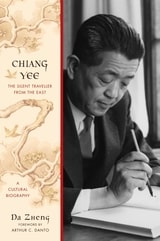
Chiang Yee
The Silent Traveller from the East--A Cultural BiographyZheng, Da
Rutgers University Press, 2010
This biography is more than a recounting of extraordinary accomplishments. It also embraces the transatlantic life experience of Yee who traveled from China to England and then on to the United States, where he taught at Columbia University, to his return to China in 1975, after a forty-two year absence. Interwoven is the history of the communist revolution in China; the battle to save England during World War II; the United States during the McCarthy red scare era; and, eventually, thawing Sino-American relations in the 1970s. Da Zheng uncovers Yee's encounters with racial exclusion and immigration laws, displacement, exile, and the pain and losses he endured hidden behind a popular public image.
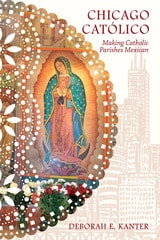
Chicago Católico
Making Catholic Parishes MexicanDeborah E. Kanter
University of Illinois Press, 2020
Deborah E. Kanter tells the story of neighborhood change and rebirth in Chicago's Mexican American communities. She unveils a vibrant history of Mexican American and Mexican immigrant relations as remembered by laity and clergy, schoolchildren and their female religious teachers, parish athletes and coaches, European American neighbors, and from the immigrant women who organized as guadalupanas and their husbands who took part in the Holy Name Society. Kanter shows how the newly arrived mixed memories of home into learning the ways of Chicago to create new identities. In an ever-evolving city, Mexican immigrants and Mexican Americans’ fierce devotion to their churches transformed neighborhoods such as Pilsen.
The first-ever study of Mexican-descent Catholicism in the city, Chicago Católico illuminates a previously unexplored facet of the urban past and provides present-day lessons for American communities undergoing ethnic integration and succession.
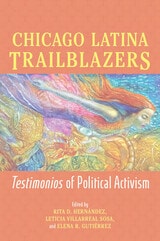
Chicago Latina Trailblazers
Testimonios of Political ActivismEdited by Rita D. Hernández, Leticia Villarreal Sosa, Elena R. Gutiérrez
University of Illinois Press, 2024
Mexican American and Puerto Rican women have long taken up the challenge to improve the lives of Chicagoans in the city’s Latino/a/x communities. Rita D. Hernández, Leticia Villarreal Sosa, and Elena R. Gutiérrez present testimonies by Latina leaders who blazed new trails and shaped Latina Chicago history from the 1960s through today.
Taking a do-it-all attitude, these women advanced agendas, built institutions, forged alliances, and created essential resources that Latino/a/x communities lacked. Time and again, they found themselves the first Latina to hold their post or part of the first Latino/a/x institution of its kind. Just as often, early grassroots efforts to address issues affecting themselves, their families, and their neighborhoods grew into larger endeavors. Their experiences ranged from public schools to healthcare to politics to broadcast media, and each woman’s story shows how her work changed countless lives and still reverberates across the entire city.
An eyewitness view of an unknown history, Chicago Latina Trailblazers reveals the vision and passion that fueled a group of women in the vanguard of reform.
Contributors: Ana Castillo, Maria B. Cerda, Carmen Chico, Aracelis Flecha Figueroa, Aida Luz Maisonet Giachello, Mary Gonzales, Ada Nivia López, Emma Lozano, Virginia Martinez, Carmen Mendoza, Elena Mulcahy, Guadalupe Reyes, Luz Maria B. Solis, and Carmen Velasquez
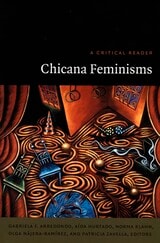
Chicana Feminisms
A Critical ReaderGabriela F. Arredondo, Aida Hurtado, Norma Klahn, Olga Nájera-Ramírez, and Patricia Zavella, eds.
Duke University Press, 2003
The contributors contemplate a number of facets of Chicana experience: life on the Mexico-U.S. border, bilingualism, the problems posed by a culture of repressive sexuality, the ranchera song, and domesticana artistic production. They also look at Chicana feminism in the 1960s and 1970s, the history of Chicanas in the larger Chicano movement, autobiographical writing, and the interplay between gender and ethnicity in the movie Lone Star. Some of the essays are expansive; others—such as Norma Cantú’s discussion of the writing of her fictionalized memoir Canícula—are intimate. All are committed to the transformative powers of critical inquiry and feminist theory.
Contributors. Norma Alarcón, Gabriela F. Arredondo, Ruth Behar, Maylei Blackwell, Norma E. Cantú, Sergio de la Mora, Ann duCille, Michelle Fine, Rosa Linda Fregoso, Rebecca M. Gámez, Jennifer González, Ellie Hernández, Aída Hurtado, Claire Joysmith, Norma Klahn, Amalia Mesa-Bains, Olga Nájera-Ramírez, Anna Nieto Gomez, Renato Rosaldo, Elba Rosario Sánchez, Marcia Stephenson, Jose Manuel Valenzuela, Patricia Zavella
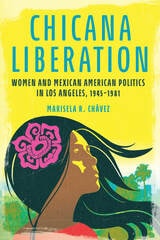
Chicana Liberation
Women and Mexican American Politics in Los Angeles, 1945-1981Marisela R. Chávez
University of Illinois Press, 2024
Mexican American women reached across generations to develop a bridging activism that drew on different methods and ideologies to pursue their goals. Marisela R. Chávez uses a wealth of untapped oral histories to reveal the diverse ways activist Mexican American women in Los Angeles claimed their own voices and space while seeking to leverage power. Chávez tells the stories of the people who honed beliefs and practices before the advent of the Chicano movement and the participants in the movement after its launch in the late 1960s. As she shows, Chicanas across generations challenged societal traditions that at first assumed their place on the sidelines and then assigned them second-class status within political structures built on their work. Fueled by a surging pride in their Mexican heritage and indigenous roots, these activists created spaces for themselves that acknowledged their lives as Mexicans and women.
Vivid and compelling, Chicana Liberation reveals the remarkable range of political beliefs and life experiences behind a new activism and feminism shaped by Mexican American women.
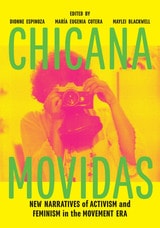
Chicana Movidas
New Narratives of Activism and Feminism in the Movement EraEdited by Dionne Espinoza, María Eugenia Cotera, and Maylei Blackwell
University of Texas Press, 2018
Winner, Best Multiauthor Nonfiction Book, International Latino Book Awards, 2019
With contributions from a wide array of scholars and activists, including leading Chicana feminists from the period, this groundbreaking anthology is the first collection of scholarly essays and testimonios that focuses on Chicana organizing, activism, and leadership in the movement years. The essays in Chicana Movidas: New Narratives of Activisim and Feminism in the Movement Era demonstrate how Chicanas enacted a new kind of politica at the intersection of race, class, gender, and sexuality, and developed innovative concepts, tactics, and methodologies that in turn generated new theories, art forms, organizational spaces, and strategies of alliance.
These are the technologies of resistance documented in Chicana Movidas, a volume that brings together critical biographies of Chicana activists and their bodies of work; essays that focus on understudied organizations, mobilizations, regions, and subjects; examinations of emergent Chicana archives and the politics of collection; and scholarly approaches that challenge the temporal, political, heteronormative, and spatial limits of established Chicano movement narratives. Charting the rise of a field of knowledge that crosses the boundaries of Chicano studies, feminist theory, and queer theory, Chicana Movidas: New Narratives of Activisim and Feminism in the Movement Era offers a transgenerational perspective on the intellectual and political legacies of early Chicana feminism.
Chicana Sexuality and Gender
Cultural Refiguring in Literature, Oral History, and ArtDebra J. Blake
Duke University Press, 2008
Blake looks at how the Chicana professional intellectuals and the U.S. Mexicana women refigure confining and demeaning constructions of female gender roles and racial, ethnic, and sexual identities. She organizes her analysis around re-imaginings of La Virgen de Guadalupe, La Llorona, indigenous Mexica goddesses, and La Malinche, the indigenous interpreter for Hernán Cortés during the Spanish conquest. In doing so, Blake reveals how the professional intellectuals and the working-class and semiprofessional women rework or invoke the female icons to confront the repression of female sexuality, limiting gender roles, inequality in male and female relationships, and violence against women. While the representational strategies of the two groups of women are significantly different and the U.S. Mexicanas would not necessarily call themselves feminists, Blake nonetheless illuminates a continuum of Chicana feminist thinking, showing how both groups of women expand lifestyle choices and promote the health and well-being of women of Mexican origin or descent.
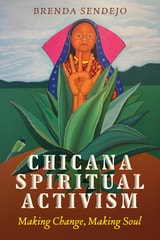
Chicana Spiritual Activism
Making Change, Making SoulBrenda Sendejo
University of Arizona Press, 2026
This book explores the profound impact of spiritual activism within the Chicana feminist movement in Texas. It illuminates how a cohort of Texas Chicanas embraced spiritual activism in pursuit of social change during the movement and into the present day.
The book draws on an array of qualitative methodologies—including interviews, autoethnography, testimonio, pláticas, and archival analysis—to develop what the author formulates as “methodologies of the spirit.” Focusing on the lived experiences, histories, and spiritual activism of sixteen Chicanas/Tejanas, Sendejo shows how these trailblazing women confronted the enduring impacts and repercussions of colonial legacies in Texas through their involvement in movement initiatives such as electoral politics through Mujeres Por La Raza, the cultural arts movement, developing Chicana feminist thought, and the establishment of bilingual education and Chicana/o studies programs.
The activists highlighted in the book include well-known figures such as Santa Barraza, Norma E. Cantú, Rosie Castro, Martha P. Cotera, Inés Hernández-Ávila, and others. Through their work, these activists emerged as architects of their own healing and transformation. Simultaneously, they opened avenues for others to embark on similar journeys reshaping religious practices and unearthing and disseminating spiritual, feminist, and ancestral knowledges.
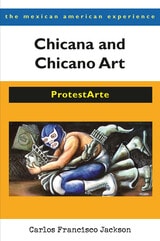
Chicana and Chicano Art
ProtestArteCarlos Francisco Jackson
University of Arizona Press, 2009
Although the word “Chicano” once held negative connotations, students—along with civil rights activists and artists—adopted it in the late 1960s in order to reimagine and redefine what it meant to be Mexican American in the United States. Chicanismo is the ideology and spirit behind the Chicano Movement and Chicanismo unites the artists whose work is revealed and celebrated in this book.
Jackson’s scope is wide. He includes paintings, prints, murals, altars, sculptures, and photographs—and, of course, the artists who created them. Beginning with key influences, he describes the importance of poster and mural art, focusing on the work of the Mexican artist José Guadalupe Posada and the significance of Mexican and Cuban talleres (print workshops). He examines the importance of art collectives in the United States, as well as Chicano talleres and community art centers, for the growth of the Chicano art movement. In conclusion, he considers how Chicano art has been presented to the general American public.
As Jackson shows, the visual arts have both reflected and created Chicano culture in the United States. For college students—and for all readers who want to learn more about this fascinating subject—his book is an ideal introduction to an art movement with a social conscience.
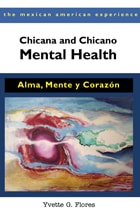
Chicana and Chicano Mental Health
Alma, Mente y CorazónYvette G. Flores
University of Arizona Press, 2013
Chicana and Chicano Mental Health offers a model to understand and to address the mental health challenges and service disparities affecting Mexican immigrants and Mexican Americans/Chicanos. Yvette G. Flores, who has more than thirty years of experience as a clinical psychologist, provides in-depth analysis of the major mental health challenges facing these groups: depression; anxiety disorders, including post-traumatic stress disorder; substance abuse; and intimate partner violence. Using a life-cycle perspective that incorporates indigenous health beliefs, Flores examines the mental health issues affecting children and adolescents, adult men and women, and elderly Mexican Americans.
Through case studies, Flores examines the importance of understanding cultural values, class position, and the gender and sexual roles and expectations Chicanas/os negotiate, as well as the legacies of migration, transculturation, and multiculturality. Chicana and Chicano Mental Health is the first book of its kind to embrace both Western and Indigenous perspectives.
Ideally suited for students in psychology, social welfare, ethnic studies, and sociology, the book also provides valuable information for mental health professionals who desire a deeper understanding of the needs and strengths of the largest ethnic minority and Hispanic population group in the United States.
Chicana/o Identity in a Changing U.S. Society
¿Quién Soy? ¿Quiénes Somos?Aída Hurtado and Patricia Gurin
University of Arizona Press, 2004
As the United States witnesses a major shift in its population—from a white majority to a country where no single group predominates—the new mix not only affects relations between ethnic groups but also influences how individuals view themselves. This book addresses the development of individual and social identity within the context of these new demographic and cultural shifts. It identifies the contemporary forces that shape group identity in order to show how Chicana/os' sense of personal identity and social identity develops and how these identities are affected by changes in social relations.
The authors, both nationally recognized experts in social psychology, are concerned with the subjective definitions individuals have about the social groups with which they identify, as well as with linguistic, cultural, and social contexts. Their analysis reveals what the majority of Chicanas/os experience, using examples from music, movies, and the arts to illustrate complex concepts. In considering ¿Quién Soy? ("Who Am I?"), they discuss how individuals develop a positive sense of who they are as Chicanas/os, with an emphasis on the influence of family, schools, and community. Regarding ¿Quiénes Somos? ("Who Are We?"), they explore Chicanas/os' different group memberships that define who they are as a people, particularly reviewing the colonization history of the American Southwest to show how Chicanas/os' group identity is influenced by this history. A chapter on "Language, Culture, and Community" looks at how Chicanas/os define their social identities inside and outside their communities, whether in the classroom, neighborhood, or region. In a final chapter, the authors speculate how Chicana/o identity will change as Chicanas/os become a significant proportion of the U.S. population and as such factors as immigration, intermarriage, and improvements in social standing influence the process of identification. At the end of each chapter is an engaging exercise that reinforces its main argument and shows how psychological approaches are applicable to real life. Chicana/o Identity in a Changing U.S. Society is an unprecedented introduction to psychological issues that students can relate to and understand. It complements other titles in the Mexican American Experience series to provide a balanced view of issues that affect Mexican Americans today.
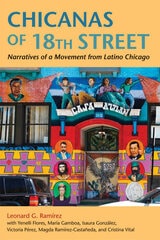
Chicanas of 18th Street
Narratives of a Movement from Latino ChicagoLeonard G. Ramirez
University of Illinois Press, 2011
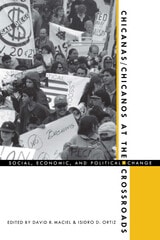
Chicanas/Chicanos at the Crossroads
Social, Economic, and Political ChangeEdited by David R. Maciel and Isidro D. Ortiz
University of Arizona Press, 1996
Chicanas/Chicanos at the Crossroads is a state-of-the-art assessment of the most significant developments in the conditions, fortunes, and experiences of Chicanas/os since the late seventies, with an emphasis on the years after 1980, which have thus far received little scholarly attention. Ten essays by leading Chicana and Chicano scholars on economic, social, educational, and political trends in Chicana/o life examine such issues as the rapid population growth of Chicanas/os and other Latinos; the ascendancy of Reaganomics and the turn to the right of American politics; the rise of anti-immigrant sentiment; the launching of new initiatives by the Mexican government toward the Chicano community; and the emergence of a new generation of political activists. The authors have been drawn from a broad array of disciplines, ranging from economics to women's studies, in order to offer a multidisciplinary perspective on Chicana/o developments in the contemporary era. The inclusion of authors from different regions of the United States and from divergent backgrounds enhances the broad perspective of the volume.
The editors offer this anthology with the intent of providing timely and useful insights and stimulating reflection and scholarship on a diverse and complex population. A testament to three decades of intense social struggle, Chicanas/Chicanos at the Crossroads is ample evidence that the legacy of the Movimiento is alive and well.
Contents
Part One: Demographic and Economic Trends Among Chicanas/os
1. Demographic Trends in the Chicano Population: Policy Implications for the Twenty First Century, Susan Gonzalez-Baker
2. Mexican Immigration in the 1980s and Beyond: Implications for Chicanos/as, Leo R. Chavez and Rebecca Martinez
3. Chicanas/os in the Economy: Issues and Challenges Since 1970, Refugio Rochin and Adela de la Torre
Part Two: Chicano Politics: Trajectories and Consequences
4. The Chicano Movement: Its Legacy for Politics and Policy, John A. Garcia
5. Chicano Organizational Politics and Strategies in the Era of Retrenchment, Isidro D. Ortiz
6. Return to Aztlan: Mexican Policy Design Toward Chicanos, María Rosa Garcia-Acevedo
Part Three: Chicana/o Educational Struggles: Dimensions, Accomplishments and Challenges
7. Actors Not Victims: Chicanos in the Struggle for Educational Equality, Guadalupe San Miguel
8. Juncture in the Road: Chincano Studies Since El Plan de Santa Barbara, Ignacio Garcia
Part Four: Gender Feminism and Chicanas/os: Developments and Perspectives
9. Gender and Its Discontinuities in Male/Female Domestic Relations: Mexicans in Cross Cultural Context, Adelaida R. Del Castillo
10. With Quill and Torch: A Chicana Perspective on the American Women's Movement and Feminist Theories, Beatríz Pesquera and Denise A. Segura
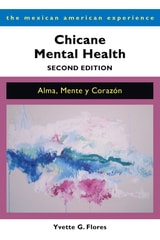
Chicane Mental Health, Second Edition
Alma, Mente y CorazónYvette G. Flores
University of Arizona Press, 2026
Chicane Mental Health offers an intersectional and developmental framework for understanding and addressing the mental health needs of Chicane communities. Drawing on over four decades of clinical and academic experience, Yvette G. Flores addresses the entire lifespan from children and youth to emerging adults, adults, and elders.
Foregrounding cultural humility and an understanding of Chicane strengths and community cultural wealth, the author uses vivid vignettes and community-based insights to address how historical trauma, systemic oppression, and sociocultural dynamics shape mental well-being. Flores highlights the cultural strengths and protective factors that foster resilience.
This new edition expands on Flores’s influential work by integrating Indigenous healing practices, decolonial theory, and liberatory models of care. It challenges dominant Western paradigms and calls for culturally affirming, community-engaged approaches to mental health. With a focus on issues such as depression, substance use, intimate partner violence, and intergenerational trauma, the book provides practical tools for scholars, clinicians, and students committed to social justice and healing in Chicane and Latine communities.
Chicanismo
The Forging of a Militant Ethos among Mexican AmericansIgnacio M. García
University of Arizona Press, 1997
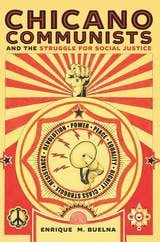
Chicano Communists and the Struggle for Social Justice
Enrique M. Buelna
University of Arizona Press, 2019
Lesser known is the influence that Communism and socialism had on the early roots of the Chicano Movement, a legacy that continues today. Examining the role of Mexican American working-class and radical labor activism in American history, Enrique M. Buelna focuses on the work of the radical Left, particularly the Communist Party (CP) USA.
Buelna delves into the experiences of Cuarón, in particular, as well as those of his family. He writes about the family’s migration from Mexico; work in the mines in Morenci, Arizona; move to Los Angeles during the Great Depression; service in World War II; and experiences during the Cold War as a background to exploring the experiences of many Mexican Americans during this time period.
The author follows the thread of radical activism and the depth of its influence on Mexican Americans struggling to achieve social justice and equality. The legacy of Cuarón and his comrades is significant to the Chicano Movement and in understanding the development of the labor and civil rights movements in the United States. Their contributions, in particular during the 1960s and 1970s, informed a new generation to demand an end to the Vietnam War and to expose educational inequality, poverty, civil rights abuses, and police brutality.
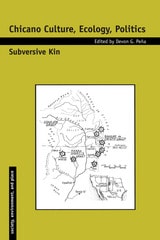
Chicano Culture, Ecology, Politics
Subversive KinDevon G. Peña
University of Arizona Press, 1998
Employing a variety of genres ranging from poetry to autobiography to theoretical and empirical essays, the voices in this collection speak to the most significant issues of environmentalism and social justice, recognizing throughout the need for a pluralism of Chicana/o philosophies. The contributors provide an excellent basis for understanding how multiple Chicana/o views on the environment play out in the context of dominant social, political and economic views. Chicano Culture, Ecology, Politics examines a number of Chicana/o ecological perspectives. How can the ethics of reciprocity present in Chicana/o agropastoral life be protected and applied on a broader scale? How can the dominant society, whose economic structure is invested in "placeless mobility," take note of the harm caused to land-based cultures, take responsibility for it, and take heed before it is too late? Will the larger society be "ecologically housebroken" before it destroys its home?
Grounded in actual political struggles waged by Chicana/o communities over issues of environmental destruction, cultural genocide, and socioeconomic domination, this volume provides an important series of snapshots of Chicana/o history. Chicano Culture, Ecology, Politics illuminates the bridges that exist—and must be understood—between race, ethnicity, class, gender, politics, and ecology.
CONTENTS
Part 1: IndoHispano Land Ethics
Los Animalitos: Culture, Ecology, and the Politics of Place in the Upper R¡o Grande, Devon G. Peña
Social Action Research, Bioregionalism, and the Upper Río Grande, Rubén O. Martínez
Notes on (Home)Land Ethics: Ideas, Values, and the Land, Reyes García
Part 2: Environmental History and Ecological Politics
Ecological Legitimacy and Cultural Essentialism: Hispano Grazing in Northern New Mexico, Laura Pulido
The Capitalist Tool, the Lawless, and the Violent: A Critique of Recent Southwestern Environmental History, Devon G. Peña and Rubén O. Martínez
Ecofeminism and Chicano Environmental Struggles: Bridges across Gender and Race, Gwyn Kirk
Philosophy Meets Practice: A Critique of Ecofeminism through the Voices of Three Chicana Activists, Malia Davis
Part 3: Alternatives to Destruction
The Pasture Poacher (a poem), Joseph C. Gallegos
Acequia Tales: Stories from a Chicano Centennial Farm, Joseph C. Gallegos
A Gold Mine, an Orchard, and an Eleventh Commandment, Devon G. Peña
Chicano Politics and Society in the Late Twentieth Century
Edited by David Montejano
University of Texas Press, 1999
The various protest movements that together constituted the Chicano Movement of the 1960s and 1970s urged a "politics of inclusion" to bring Mexican Americans into the mainstream of United States political and social life. This volume of ten specially commissioned essays assesses the post-movement years, asking "what went wrong? what went right? and where are we now?" Collectively, the essays offer a wide-ranging portrayal of the complex situation of Mexican Americans as the twenty-first century begins.
The essays are grouped into community, institutional, and general studies, with an introduction by editor Montejano. Geographically, they point to the importance of "Hispanic" politics in the Southwest, as well as in Chicago wards and in the U.S. Congress, with ramifications in Mexico and Central America. Thematically, they discuss "non-traditional" politics stemming from gender identity, environmental issues, theatre production, labor organizing, university policymaking, along with the more traditional politics revolving around state and city government, the Congressional Hispanic Caucus, and various advocacy organizations.
Chicano Popular Culture, Second Edition
Que Hable el PuebloCharles M. Tatum
University of Arizona Press, 2017
This edition features:
- Chicanas in the Chicano Movement and Chicanos since the Chicano Movement
- New material on popular authors such as Denise Chávez, Alfredo Vea, Luis Alberto Urrea, and Juan Felipe Herrera
- Suggested Readings to supplement each chapter
- Theoretical approaches to popular culture, including the perspectives of Norma Cantú, Alicia Gaspar de Alba, Pancho McFarland, Michelle Habell-Pallán, and Víctor Sorell
With clear examples, an engaging writing style, and helpful discussion questions, Chicano Popular Culture, Second Edition invites readers to discover and enjoy Mexican American popular culture.
Chicano Popular Culture
Que Hable el PuebloCharles M. Tatum
University of Arizona Press, 2001
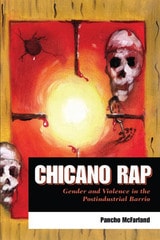
Chicano Rap
Gender and Violence in the Postindustrial BarrioBy Pancho McFarland
University of Texas Press, 2008
Powered by a driving beat, clever lyrics, and assertive attitudes, rap music and hip hop culture have engrossed American youth since the mid-1980s. Although the first rappers were African Americans, rap and hip hop culture quickly spread to other ethnic groups who have added their own cultural elements to the music. Chicano Rap offers the first in-depth look at how Chicano/a youth have adopted and adapted rap music and hip hop culture to express their views on gender and violence, as well as on how Chicano/a youth fit into a globalizing world.
Pancho McFarland examines over five hundred songs and seventy rap artists from all the major Chicano rap regions—San Diego, San Francisco and Northern California, Texas, and Chicago and the Midwest. He discusses the cultural, political, historical, and economic contexts in which Chicano rap has emerged and how these have shaped the violence and misogyny often expressed in Chicano rap and hip hop. In particular, he argues that the misogyny and violence of Chicano rap are direct outcomes of the "patriarchal dominance paradigm" that governs human relations in the United States. McFarland also explains how globalization, economic restructuring, and the conservative shift in national politics have affected Chicano/a youth and Chicano rap. He concludes with a look at how Xicana feminists, some Chicano rappers, and other cultural workers are striving to reach Chicano/a youth with a democratic, peaceful, empowering, and liberating message.
Chicano Renaissance
Contemporary Cultural TrendsEdited by David R. Maciel, Isidro D. Ortiz, and María Herrera-Sobek
University of Arizona Press, 2000
This collection examines changes across a broad range of cultural forms--art, literature, music, cinema and television, radio, and theater--with an emphasis on the last two decades. Original articles by both established and emerging scholars review such subjects as the growth of Tejano music and the rise of Selena, how films and television have affected the Chicana/o experience, the evolution of Chicana/o art over the last twenty years, and postmodern literary trends.
In all of the essays, the contributors emphasize that, contrary to the popular notion that Chicanas/os have succumbed to a victim mentality, they continue to actively struggle to shape the conditions of their lives and to influence the direction of American society through their arts and social struggle. Despite decades usually associated with self-interest in the larger society, the spirit of commitment and empowerment has continued to infuse Chicana/o cultural expression and points toward a vibrant future.
CONTENTSAll Over the Map: La Onda Tejana and the Making of Selena, Roberto R. Calderón
Outside Inside-The Immigrant Workers: Creating Popular Myths, Cultural Expressions, and Personal Politics in Borderlands Southern California, Juan Gómez-Quiñones
"Yo soy chicano": The Turbulent and Heroic Life of Chicanas/os in Cinema and Television, David R. Maciel and Susan Racho
The Politics of Chicano Representation in the Media, Virginia Escalante
Chicana/o and Latina/o Gazing: Audiences of the Mass Media, Diana I. Ríos
An Historical Overview/Update on the State of Chicano Art, George Vargas
Contemporary Chicano Theater, Arturo Ramírez
Breaking the Silence: Developments in the Publication and Politics of Chicana Creative Writing, 1973-1998, Edwina Barvosa-Carter
Trends and Themes in Chicana/o Writings in Postmodern Times, Francisco A. Lomelí, Teresa Márquez, and María Herrera-Sobek
Chicano Studies
The Genesis of a DisciplineMichael Soldatenko
University of Arizona Press, 2009
Chicano Studies is a comparatively new academic discipline. Unlike well-established fields of study that long ago codified their canons and curricula, the departments of Chicano Studies that exist today on U.S. college and university campuses are less than four decades old. In this edifying and frequently eye-opening book, a career member of the discipline examines its foundations and early years. Based on an extraordinary range of sources and cognizant of infighting and the importance of personalities, Chicano Studies is the first history of the discipline.
What are the assumptions, models, theories, and practices of the academic discipline now known as Chicano Studies? Like most scholars working in the field, Michael Soldatenko didn't know the answers to these questions even though he had been teaching for many years. Intensely curious, he set out to find the answers, and this book is the result of his labors. Here readers will discover how the discipline came into existence in the late 1960s and how it matured during the next fifteen years-from an often confrontational protest of dissatisfied Chicana/o college students into a univocal scholarly voice (or so it appears to outsiders).
Part intellectual history, part social criticism, and part personal meditation, Chicano Studies attempts to make sense of the collision (and occasional wreckage) of politics, culture, scholarship, ideology, and philosophy that created a new academic discipline. Along the way, it identifies a remarkable cast of scholars and administrators who added considerable zest to the drama.
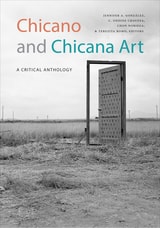
Chicano and Chicana Art
A Critical AnthologyJennifer A. Gonzalez, C. Ondine Chavoya, Chon Noriega, and Terezita Romo, editors
Duke University Press, 2019
Contributors. Carlos Almaraz, David Avalos, Judith F. Baca, Raye Bemis, Jo-Anne Berelowitz, Elizabeth Blair, Chaz Bojóroquez, Philip Brookman, Mel Casas, C. Ondine Chavoya, Karen Mary Davalos, Rupert García, Alicia Gaspar de Alba, Shifra Goldman, Jennifer A. González, Rita Gonzalez, Robb Hernández, Juan Felipe Herrera, Louis Hock, Nancy L. Kelker, Philip Kennicott, Josh Kun, Asta Kuusinen, Gilberto “Magu” Luján, Amelia Malagamba-Ansotegui, Amalia Mesa-Bains, Dylan Miner, Malaquias Montoya, Judithe Hernández de Neikrug, Chon Noriega, Joseph Palis, Laura Elisa Pérez, Peter Plagens, Catherine Ramírez, Matthew Reilly, James Rojas, Terezita Romo, Ralph Rugoff, Lezlie Salkowitz-Montoya, Marcos Sanchez-Tranquilino, Cylena Simonds, Elizabeth Sisco, John Tagg, Roberto Tejada, Rubén Trejo, Gabriela Valdivia, Tomás Ybarra-Frausto, Victor Zamudio-Taylor
Chicano and Chicana Literature
Otra voz del puebloCharles M. Tatum
University of Arizona Press, 2006
In this comprehensive examination of Chicano and Chicana literature, Charles M. Tatum brings a new and refreshing perspective to the ethnic identity of Mexican Americans. From the earliest sixteenth-century chronicles of the Spanish Period, to the poetry and narrative fiction of the second half of the nineteenth century and the first half of the twentieth century, and then to the flowering of all literary genres in the post–Chicano Movement years, Chicano/a literature amply reflects the hopes and aspirations as well as the frustrations and disillusionments of an often marginalized population.
Exploring the work of Rudolfo Anaya, Sandra Cisneros, Luis Alberto Urrea, and many more, Tatum examines the important social, historical, and cultural contexts in which the writing evolved, paying special attention to the Chicano Movement and the flourishing of literary texts during the 1960s and early 1970s. Chapters provide an overview of the most important theoretical and critical approaches employed by scholars over the past forty years and survey the major trends and themes in contemporary autobiography, memoir, fiction, and poetry.
The most complete and up-to-date introduction to Chicana/o literature available, this book will be an ideal reference for scholars of Hispanic and American literature. Discussion questions and suggested reading included at the end of each chapter are especially suited for classroom use.
Chicano-Chicana Americana
Pop Culture Pluralism Starring Anthony Quinn, Katy Jurado, Robert Beltran, and Lupe OntiverosAnthony Macías
University of Arizona Press, 2023
Each biographical chapter analyzes an underappreciated actor, revealing their artistic contributions to U.S. common culture. Their long-shot careers tell a tale of players taking action with agency and fighting for screen time and equal opportunity despite disadvantages and differential treatment in Hollywood. These dynamic and complex individuals altered cinematic representations—and audience expectations—by surpassing stereotypes.
The book explores American national character by showing how ethnic Mexicans attained social and cultural status through fair, open competition without a radical realignment of political or economic structures. Their creative achievements demanded dignity and earned respect. Anthony Macías argues that these performances demonstrated a pop culture pluralism that subtly changed mainstream America, transforming it from the mythological past of the Wild West to the speculative future of science fiction.
Chicanx Utopias
Pop Culture and the Politics of the PossibleLuis Alvarez
University of Texas Press, 2022
2023 Honorable Mention Best History Book, International Latino Book Awards
Broad and encompassing examination of Chicanx popular culture since World War II and the utopian visions it articulated
Amid the rise of neoliberalism, globalization, and movements for civil rights and global justice in the post–World War II era, Chicanxs in film, music, television, and art weaponized culture to combat often oppressive economic and political conditions. They envisioned utopias that, even if never fully realized, reimagined the world and linked seemingly disparate people and places. In the latter half of the twentieth century, Chicanx popular culture forged a politics of the possible and gave rise to utopian dreams that sprang from everyday experiences.
In Chicanx Utopias, Luis Alvarez offers a broad study of these utopian visions from the 1950s to the 2000s. Probing the film Salt of the Earth, brown-eyed soul music, sitcoms, poster art, and borderlands reggae music, he examines how Chicanx pop culture, capable of both liberation and exploitation, fostered interracial and transnational identities, engaged social movements, and produced varied utopian visions with divergent possibilities and limits. Grounded in the theoretical frameworks of Walter Benjamin, Stuart Hall, and the Zapatista movement, this book reveals how Chicanxs articulated pop cultural utopias to make sense of, challenge, and improve the worlds they inhabited.
Child Welfare Revisited
An Africentric PerspectiveEverett, Joyce E
Rutgers University Press, 2004
Why are there proportionally more African American children in foster care than white children? Why are white children often readily adoptable, while African American children are difficult to place? Are these imbalances an indication of institutional racism or merely a coincidence?
In this revised and expanded edition of the classic volume, Child Welfare, twenty-one educators call attention to racial disparities in the child welfare system by demonstrating how practices that are successful for white children are often not similarly successful for African American children. Moreover, contributors insist that policymakers and care providers look at African American family life and child-development from a culturally-based Africentric perspective. Such a perspective, the book argues, can serve as a catalyst for creativity and innovation in the formulation of policies and practices aimed at improving the welfare of African American children.
Child Welfare Revisited offers new chapters on the role of institutional racism and economics on child welfare; the effects of substance abuse, homelessness, HIV/AIDS, and domestic violence; and the internal strengths and challenges that are typical of African American families. Bringing together timely new developments and information, this book will continue to be essential reading for all child welfare policymakers and practitioners.
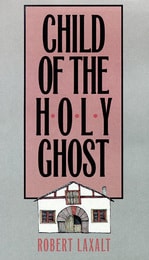
Child of the Holy Ghost
Robert Laxalt
University of Nevada Press, 1997

Child's Play
Sport in Kids' WorldsMessner, Michael A
Rutgers University Press, 2016
Children Of Strangers
Kathryn Morgan
Temple University Press, 1981
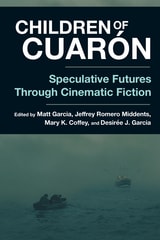
Children of Cuarón
Speculative Futures Through Cinematic FictionMatt Garcia
Rutgers University Press, 2027
Alfonso Cuarón’s Children of Men thrusts readers into a gripping near-future world where environmental collapse and global infertility have fortified borders and torn apart the fabric of society. Its stark depictions of mass deportation, lawless border zones, and the desperate fight for survival echo powerfully through Octavia Butler’s prophetic novels Parable of the Sower and Parable of the Talents, where environmental breakdown, migration, childbirth, and the resilience of women’s bodies form the core of her visionary storytelling. Remarkably, the futures imagined in these works are no longer distant—Butler’s 2024 has arrived, and Cuarón’s 2027 is nearly here. Children of Cuarón: Speculative Futures Through Cinematic Fiction ignites bold, necessary conversations about borders, immigration, and the urgent political, environmental, and social challenges facing our world today. By examining how speculative fiction dares to imagine what comes next, this book invites readers to confront the realities of our present—and the possibilities of our future—with fresh eyes and uncompromising clarity.
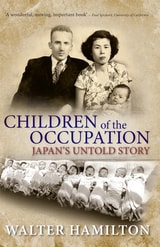
Children of the Occupation
Japan's Untold StoryHamilton, Walter
Rutgers University Press, 2013
Based on interviews with or research on 150 konketsuji—a now-taboo word for "mixed-blood" Japanese—journalist Walter Hamilton presents vivid first-person accounts of these adults as they remember their experiences of childhood loss. Using archival material from organizations dedicated to assisting the children, he combines moving personal tales with historical and political analyses of international race relations and immigration policy, particularly in North America and Australia.
Not only were attitudes and behaviors of the Japanese biased against the mixed-race children, but so were the restrictive and prejudicial immigration policies of the fathers’ native countries. Japan’s racial intolerance was fully matched in the nations it fought against. Hamilton examines how attitudes about race relations have evolved and traces the impact of racial ideology on national policy and cultural identity in Australia, Japan, and the United States.