Results by title
2706 books match the query 'European' and 156 start with c
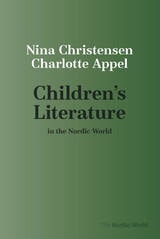
Children's Literature in the Nordic World
Charlotte Appel and NIna Christensen
University of Wisconsin Press, 2021
The emergence of a dedicated market for children’s books in the Global North coincided with national school reforms, when Luther’s Small Catechism started to be supplemented—or replaced—by new books published for and about young readers, learners, and citizens. Children’s use of books and media is closely related to adults’ wishes to influence the present and future of a child through instruction, entertainment, or play. Chapters point to strong continuities as well as remarkable changes in the relationships between child readers and adult authors, artists, publishers, teachers, librarians, and parents through the centuries.
Focusing on children as the central users and producers of texts, this interdisciplinary and transnational history shows how children’s exposure to and use of media impacted the Nordic welfare state, and vice versa. As narratives for young audiences are continuously rewritten, republished, and adapted into new forms, this pithy synthesis brings forward new knowledge about the material and social history of books, literature, and childhood.
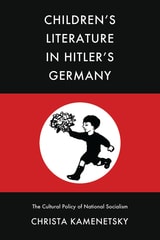
Children’s Literature in Hitler’s Germany
The Cultural Policy of National SocialismChrista Kamenetsky
Ohio University Press, 1984
Between 1933 and 1945, National Socialists enacted a focused effort to propagandize children’s literature by distorting existing German values and traditions with the aim of creating a homogenous “folk community.” A vast censorship committee in Berlin oversaw the publication, revision, and distribution of books and textbooks for young readers, exercising its control over library and bookstore content as well as over new manuscripts, so as to redirect the cultural consumption of the nation’s children. In particular, the Nazis emphasized Nordic myths and legends with a focus on the fighting spirit of the saga heroes, their community loyalty, and a fierce spirit of revenge—elements that were then applied to the concepts of loyalty to and sacrifice for the Führer and the fatherland. They also tolerated select popular series, even though these were meant to be replaced by modern Hitler Youth camping stories.
In this important book, first published in 1984 and now back in print, Christa Kamenetsky demonstrates how Nazis used children’s literature to selectively shape a “Nordic Germanic” worldview that was intended to strengthen the German folk community, the Führer, and the fatherland by imposing a racial perspective on mankind. Their efforts corroded the last remnants of the Weimar Republic’s liberal education, while promoting an enthusiastic following for Hitler.
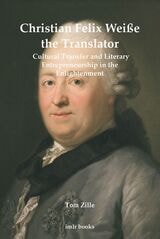
Christian Felix Weiße the Translator
Cultural Transfer and Literary Entrepreneurship in the EnlightenmentTom Zille
University of London Press, 2021
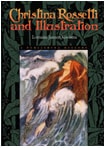
Christina Rossetti and Illustration
A Publishing HistoryLorraine Janzen Kooistra
Ohio University Press, 2002
Readers do not always take into account how books that combine image and text make their meanings. But for the Pre-Raphaelite poet Christina Rossetti, such considerations were central.
Christina Rossetti and Illustration maps the production and reception of Rossetti’s illustrated poetry, devotional prose, and work for children, both in the author’s lifetime and in posthumous twentieth-century reprints.
Lorraine Janzen Kooistra’s reading of Rossetti’s illustrated works reveals for the first time the visual-verbal aesthetic that was fundamental to Rossetti’s poetics. Her exhaustive archival research brings to light new information on how Rossetti’s commitment to illustration and attitudes to copyright and control influenced her transactions with publishers and the books they produced. Janzen Kooistra also tracks the poet’s reception in the twentieth century through a complex web of illustrated books produced for a wide range of audiences.
Analyzing an impressive array of empirical data, Janzen Kooistra shows how Rossetti’s packaging for commodity consumption—by religious presses, publishers of academic editions and children’s picture books, and makers of erotica and collectibles—influenced the reception of her work and her place in literary history.

Citizens of Everywhere
Searching for Identity in the Age of BrexitPeter Gumbel
Haus Publishing, 2020
Drawing on one family’s migration stories, Citizens of Everywhere explores the nature of belonging amid cycles of pluralism and nationalism. In an increasingly global world, nativist and diasporic impulses pull many people in contradictory directions that can be difficult to even understand. In Citizens of Everywhere, Gumbel grapples with this complexity through his own family history, revealing the personal costs of Britain’s recent isolationist retreat. Along the way, he laments the decline of British pluralism at the worst possible moment—as it rejects the European project and engages in an ill-fated struggle against an ever more interconnected world.
Citoyennes
Women and the Ideal of Citizenship in Eighteenth-Century FranceAnnie K. Smart
University of Delaware Press, 2012
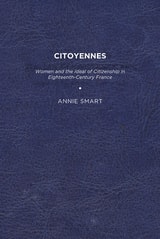
Did women have a civic identity in eighteenth-century France? In Citoyennes: Women and the Ideal of Citizenship in Eighteenth-Century France, Annie Smart contends that they did. While previous scholarship has emphasized the ideal of domestic motherhood or the image of the republican mother, Smart argues persuasively that many pre-revolutionary and revolutionary texts created another ideal for women–the ideal of civic motherhood. Smart asserts that women were portrayed as possessing civic virtue, and as promoting the values and ideals of the public sphere.
Contemporary critics have theorized that the eighteenth-century ideal of the Republic intentionally excluded women from the public sphere. According to this perspective, a discourse of “Rousseauean” domestic motherhood stripped women of an active civic identity, and limited their role to breastfeeding and childcare. Eighteenth-century France marked thus the division between a male public sphere of political action and a female private sphere of the home.
Citoyennes challenges this position and offers an alternative model of female identity. This interdisciplinary study brings together a variety of genres to demonstrate convincingly that women were portrayed as civic individuals. Using foundational texts such as Jean-Jacques Rousseau’s Emile, or on Education (1762), revolutionary gouaches of Lesueur, and vaudeville plays of Year II of the Republic (1793/1794), this study brilliantly shows that in text and image, women were represented as devoted to both the public good and their families.
In addition, Citoyennes offers an innovative interpretation of the home. Through re-examining sphere theory, this study challenges the tendency to equate the home with private concerns, and shows that the home can function as a site for both private life and civic identity.
Citoyennes breaks new ground, for it both rectifies the ideal of domestic Rousseauean motherhood, and brings a fuller understanding to how female civic identity operated in important French texts and images.
Published by University of Delaware Press. Distributed worldwide by Rutgers University Press.
City of Ash
Eugenijus Alisanka
Northwestern University Press, 2000
Civic and Uncivic Values in Poland
Value Transformation, Education, and CultureSabrina P. Ramet
Central European University Press, 2019
Civilizing War
Imperial Politics and the Poetics of National RuptureNasser Mufti
Northwestern University Press, 2018
Honorable Mention for the 2019 Sonya Rudikoff Prize, awarded by the Northeast Victorian Studies Association
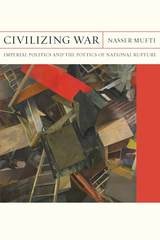
Civilizing War traces the historical transformation of civil war from a civil affair into an uncivil crisis. Civil war is today synonymous with the global refugee crisis, often serving as grounds for liberal-humanitarian intervention and nationalist protectionism.
In Civilizing War, Nasser Mufti situates this contemporary conjuncture in the long history of British imperialism, demonstrating how civil war has been and continues to be integral to the politics of empire. Through comparative readings of literature, criticism, historiography, and social analysis, Civilizing War shows how writers and intellectuals of Britain’s Anglophone empire articulated a “poetics of national rupture” that defined the metropolitan nation and its colonial others.
Mufti’s tour de force marshals a wealth of examples as diverse as Thomas Carlyle, Benjamin Disraeli, Friedrich Engels, Arthur Conan Doyle, Rudyard Kipling, Joseph Conrad, V. S. Naipaul, Nadine Gordimer, and Michael Ondaatje to examine the variety of forms this poetics takes—metaphors, figures, tropes, puns, and plot—all of which have played a central role in Britain’s civilizing mission and its afterlife. In doing so, Civilizing War shifts the terms of Edward Said’s influential Orientalism to suggest that imperialism was not only organized around the norms of civility but also around narratives of civil war.
Claiming a Tradition
Italian American Women WritersMary Jo Bona
Southern Illinois University Press, 1999
Bona discusses the novels in pairs according to their focus on Italian American life. She first examines the traditions of italianitá (a flavor of things Italian) that inform and enhance works of fiction. The novelists in that tradition were Mari Tomasi (Like Lesser Gods, 1949) and Marion Benasutti (No Steady Job for Papa, 1966).
Bona then turns to later novels that highlight the Italian American belief in the family's honor and reputation. Conflicts between generations, specifically between autocratic fathers and their children, are central to Octavia Waldo's 1961 A Cup of the Sun and Josephine Gattuso Hendin's 1988 The Right Thing to Do.
Even when writers choose to steer away from the familial focus, Bona notes, their developmental narratives trace the reintegration of characters suffering from a crisis of cultural identity. Relating the characters' struggles to their relationship to the family, Bona examines Diana Cavallo's 1961 A Bridge of Leaves and Dorothy Bryant's 1978 Miss Giardino.
Bona then discusses two innovative novels— Helen Barolini's 1979 Umbertina and Tina De Rosa's 1980 Paper Fish— both of which feature a granddaughter who invokes her grandmother, a godparent figure. Through Barolini's feminist and De Rosa's modernist perspectives, both novels present a young girl developing artistically.
Closing with a discussion of the contemporary terrain Italian American women traverse, Bona examines such topics as sexual identity when it meets cultural identity and the inclusion of italianitá when Italian American identity is not central to the story. Italian American women writers, she concludes, continue in the 1980s and 1990s to focus on the interplay between cultural identity and women's development.

Claribel Alegría and Central American Literature
Critical EssaysSandra M. Boschetto-Sandoval
Ohio University Press, 1993
These essays examine the multifaceted work of the Central American author whom Latin American literary historians consider precursor of “cultural dialogism” in poetry and fiction. As poet, essayist, journalist, novelist, and writer of “quasi–testimonio,” Alegría’s multiple discourses transgress the boundaries between traditional and postmodern political theories and practices. Her work reveals an allegory of relation and negotiation between “intelligentsia” and subaltern peoples as well as the need for a more socially extensive literature, not exclusive of more elite “magical literatures.”
The essays in the fist section frame Alegría’s discourses within sociohistorical, political, and literary contexts in order to illuminate the author’s singular place in the literary and political history of Central America. The essays in the second section engage in a feminist dialogic in which the reader encounters various critical validations and valorizations of Alegría’s many female voices. The third section involves the reader in the pursuit of extratextual or extraliterary resonances in Alegría’s work.
Class
Andrea Cavalletti
Seagull Books, 2019
Class, by Andrea Cavalletti, is a striking montage of diverse materials—Marx and Jules Verne, Benjamin and Gabriel Tarde. In it, Cavalletti asks whether the untimely concept of class is once again thinkable. Faced with new pogroms and state racism, he challenges us to imagine a movement that would unsettle and eventually destroy the crowd.
Class Feelings
Affect, Gentility, and the Victorian NovelSusan Zlotnick
Ohio University Press, 0
Drawing on new insights from affect theorists, Class Feelings reenergizes class as an analytic category. While the interest in gender, race, and sexuality as well as the increasingly global focus of nineteenth-century British literary studies have produced critically important new scholarship, class as a primary category of analysis has receded as a major topic of inquiry. This volume focuses on the work of three widely read Victorian novelists—Charles Dickens, Margaret Oliphant, and George Eliot—who were born into families best characterized as lower middle class and who shared structures of feeling common to upwardly mobile members of the mid-Victorian middle class. More particularly, Class Feelings charts class-specific emotions as they developed in relation to the practices of gentility, which had taken hold of the Anglophone world in the first half of the nineteenth century. Born in the 1810s and 1820s, all three novelists came of age during the early period of gentility’s reign and represented its practices within their novels. The self-consciousness associated with gentility—and particularly with its injunction against emotional display—left traces in the plots and characters of their novels and in the formal strategies the authors adopted. These formal features are attempts to manage the hard-to-control emotions linked to the lived experience of class, and they reveal a new way in which social class structures the nineteenth-century British novel. Middle-class gentility made fierce demands on individuals to discipline not only their bodies (through regular bathing, upright posture, moderate eating and drinking) but also their emotions. Outsiders to the increasingly elite social spheres they came to inhabit, Dickens, Oliphant, and Eliot represent in their novels the class emotions, such as shame, embarrassment, envy, anger, and pride, generated by inequalities and exclusions, but they also try to suppress those affective disturbances in the name of gentility. Nonetheless, class feelings churn throughout their texts, especially those written in the 1860s and 1870s, and those feelings are evident in the shame that haunts Dickens’s autobiographical writings, in the anger that bubbles up in Oliphant’s Carlingford tales, and in Eliot’s characteristic sensitivity. Bringing together affect theory, class studies, and Victorian literary criticism, Class Feelings demonstrates that social class is not only a material condition but also an emotional experience that fundamentally shapes literary form and cultural life.
Class Fictions
Shame and Resistance in the British Working Class Novel, 1890–1945Pamela Fox
Duke University Press, 1994
With a focus on certain classics in the working-class literary "canon," such as The Ragged Trousered Philanthropists and Love on the Dole, as well as lesser-known texts by working-class women, Fox uncovers the anxieties that underlie representations of class and consciousness. Shame repeatedly emerges as a powerful counterforce in these works, continually unsettling the surface narrative of protest to reveal an ambivalent relation toward the working-class identities the novels apparently champion.
Class Fictions offers an equally rigorous analysis of cultural studies itself, which has historically sought to defend and value the radical difference of working-class culture. Fox also brings to her analysis a strong feminist perspective that devotes considerable attention to the often overlooked role of gender in working-class fiction. She demonstrates that working-class novels not only expose master narratives of middle-class culture that must be resisted, but that they also reveal to us a need to create counter narratives or formulas of working-class life. In doing so, this book provides a more subtle sense of the role of resistance in working class culture. While of interest to scholars of Victorian and working-class fiction, Pamela Fox’s argument has far-reaching implications for the way literary and cultural studies will be defined and practiced.
Cleansing the City
Sanitary Geographies in Victorian LondonMichelle Allen
Ohio University Press, 2008
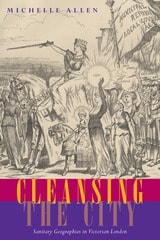
From the novels of Charles Dickens and George Gissing to anonymous magazine articles and pamphlets, resistance to reform found expression in the nostalgic appreciation of a threatened urban landscape and anxiety about domestic autonomy in an era of networked sanitary services. Cleansing the City emphasizes the disruptions and disorientation occasioned by purification—a process we are generally inclined to see as positive. By recovering these sometimes oppositional, sometimes ambivalent responses, Michelle Allen elevates a significant undercurrent of Victorian thought into the mainstream and thus provides insight into the contested nature of sanitary modernization.
Climate and the Making of Worlds
Toward a Geohistorical PoeticsTobias Menely
University of Chicago Press, 2021
In this book, Tobias Menely develops a materialist ecocriticism, tracking the imprint of the planetary across a long literary history of poetic rewritings and critical readings which continually engage with the climate as a condition of human world making. Menely’s central archive is English poetry written between John Milton’s Paradise Lost (1667) and Charlotte Smith’s “Beachy Head” (1807)—a momentous century and a half during which Britain, emerging from a crisis intensified by the Little Ice Age, established the largest empire in world history and instigated the Industrial Revolution. Incorporating new sciences into ancient literary genres, these ambitious poems aspired to encompass what the eighteenth-century author James Thomson called the “system . . . entire.” Thus they offer a unique record of geohistory, Britain’s epochal transition from an agrarian society, buffeted by climate shocks, to a modern coal-powered nation. Climate and the Making of Worlds is a bracing and sophisticated contribution to ecocriticism, the energy humanities, and the prehistory of the Anthropocene.
Close Reading
The ReaderFrank Lentricchia and Andrew DuBois, eds.
Duke University Press, 2003
From a 1938 essay by John Crowe Ransom through the work of contemporary scholars, Close Reading highlights the interplay between critics—the ways they respond to and are influenced by others’ works. To facilitate comparisons of methodology, the collection includes discussions of the same primary texts by scholars using different critical approaches. The essays focus on Hamlet, “Lycidas,” “The Rape of the Lock,” Ulysses, Invisible Man, Beloved, Jane Austen, John Keats, and Wallace Stevens and reveal not only what the contributors are reading, but also how they are reading.
Frank Lentricchia and Andrew DuBois’s collection is an essential tool for teaching the history and practice of close reading.
Contributors. Houston A. Baker Jr., Roland Barthes, Homi Bhabha, R. P. Blackmur, Cleanth Brooks, Kenneth Burke, Paul de Man, Andrew DuBois, Stanley Fish, Catherine Gallagher, Sandra Gilbert, Stephen Greenblatt, Susan Gubar, Fredric Jameson, Murray Krieger, Frank Lentricchia, Franco Moretti, John Crowe Ransom, Eve Kosofsky Sedgwick, Helen Vendler

Coalition Politics and Cabinet Decision Making
A Comparative Analysis of Foreign Policy ChoicesJuliet Kaarbo
University of Michigan Press, 2013
Every day, coalition cabinets make policy decisions critical to international politics. Juliet Kaarbo examines the dynamics of these multiparty cabinets in parliamentary democracies in order to assess both the quality of coalition decision making and the degree to which coalitions tend to favor peaceful or military solutions. Are coalition cabinets so riddled by conflict that they cannot make foreign policy effectively, or do the multiple voices represented in the cabinet create more legitimate and imaginative responses to the international system? Do political and institutional constraints inherent to coalition cabinets lead to nonaggressive policies? Or do institutional and political forces precipitate more belligerent behavior?
Employing theory from security studies and political psychology as well as a combination of quantitative cross-national analyses and twelve qualitative comparative case studies of foreign policy made by coalition cabinets in Japan, the Netherlands, and Turkey, Kaarbo identifies the factors that generate highly aggressive policies, inconsistency, and other policy outcomes. Her findings have implications not merely for foreign policy but for all types of decision making and policy-making by coalition governments.
Collaborative Dickens
Authorship and Victorian Christmas PeriodicalsMelisa Klimaszewski
Ohio University Press, 2019
From 1850 to 1867, Charles Dickens produced special issues (called “numbers”) of his journals Household Words and All the Year Round, which were released shortly before Christmas each year. In Collaborative Dickens, Melisa Klimaszewski undertakes the first comprehensive study of these Christmas numbers. She argues for a revised understanding of Dickens as an editor who, rather than ceaselessly bullying his contributors, sometimes accommodated contrary views and depended upon multivocal narratives for his own success.
Klimaszewski uncovers connections among and between the stories in each Christmas collection. She thus reveals ongoing conversations between the works of Dickens and his collaborators on topics important to the Victorians, including race, empire, supernatural hauntings, marriage, disability, and criminality. Stories from Wilkie Collins, Elizabeth Gaskell, and understudied women writers such as Amelia B. Edwards and Adelaide Anne Procter interact provocatively with Dickens’s writing. By restoring links between stories from as many as nine different writers in a given year, Klimaszewski demonstrates that a respect for the Christmas numbers’ plural authorship and intertextuality results in a new view of the complexities of collaboration in the Victorian periodical press and a new appreciation for some of the most popular texts Dickens published.
Collaborative Meaning in Medieval Scribal Culture
The Otho La3amonElizabeth J. Bryan
University of Michigan Press, 1999
In Collaborative Meaning in Medieval Scribal Culture, Bryan compares examples from the British Library Cotton Otho C.xiii manuscript of La3amon's Brut, the early thirteenth-century verse history that translated King Arthur into English for the first time. She discovers cultural attitudes that valued communal aspects of manuscript texts--for example, a view of the physical book as connecting all who read or even held it to each other.
The study is divided into two parts. Part one presents Early Middle English concepts of "enjoining" texts and explores the theoretical and methodological challenges they pose to present-day readers of scribally-produced texts. Part two conducts a detailed study of the multiple interpretations built into the manuscript text. Illustrations of manuscript pages accompany analysis, and the reader is invited to engage in interpreting the manuscript text.
Collaborative Meaning in Medieval Scribal Culture will be of interest to students and specialists in medieval chronicle histories, Middle English, Arthurian literature, and literary and textual theory.
Elizabeth J. Bryan is Associate Professor of English, Brown University.
Collected Poems
Donald Davie
University of Chicago Press, 1991
"Davie's voice—judgemental, ironic, epigrammatic, humorous, self-lacerating—speaks always with reference to an unhuman perpendicular standard that itself goes unquestioned. It is not a standard of Beauty or Truth; Davie is a poet of the third member of the Platonic triad, Justice."—Helen Vendler, The New Yorker
"[Davie's poems] are on the quiet side, often casual and musing in mood and tone; determined to resist large gestures of assent or denial. . .Donald Davie may just be the best English poet-critic of our time."—William Pritchard, The New Republic
"Donald Davie's Collected Poems does more than mark the culmination of one of the most distinguished careers in post-war British poetry; it is the autobiographical journey of a living poet at the height of his creative powers and the mastery of his craft. Davie is considered the most important and valuable contemporary link between poetry in England and America."—Sarah E. McNeil, Little Rock Free Press

Collected Poems
Thomas Bernhard
Seagull Books, 2017
Beloved Austrian writer Thomas Bernhard (1931–89) began his career in the early 1950s as a poet. Over the next decade, Bernhard wrote thousands of poems and published four volumes of intensely wrought and increasingly personal verse, with such titles as On Earth and in Hell, In Hora Mortis, and Under the Iron of the Moon. Bernhard’s early poetry, bearing the influence of Georg Trakl, begins with a deep connection to his Austrian homeland. As his poems saw publication and recognition, Bernhard seemed always on the verge of joining the ranks of Ingeborg Bachmann, Paul Celan, and other young post-war poets writing in German. During this time, however, his poems became increasingly more obsessive, filled with undulant self-pity, counterpointed by a defamatory, bardic voice utterly estranged from his country, all of which resulted in a magisterial work of anti-poetry—one that represents Bernhard’s own harrowing experience with his leitmotif of success and failure, which makes his fiction such a pleasure. There is much to be found in these pages for Bernhard fans of every stripe.
Collected Poems
Rainer Brambach
Seagull Books, 2014
Marked by his disregard for material values, a profound engagement with the landscape of the Upper Rhine, and a lasting commitment to humanity, Brambach’s poems are direct, unadorned, and free of pomp or ideology. His quiet images conjure up landscapes, small rural scenes, and interiors of bars and cafes. Brambach was, above all, an observer whose poems provide insights of deceptive simplicity that form a poetic essence confirming the significance of this author’s voice. This collection of poems, masterfully translated by noted writer and poet Esther Kinsky, represents the first major English translation of a significant European poet.
Collected Poems
With Notes Toward the MemoirsDjuna Barnes; selected and edited by Phillip Herrring and Osias Stutman
University of Wisconsin Press, 2005
This groundbreaking edition compiles many of the late unpublished works of American writer Djuna Barnes (1892–1982). Because she published only seven poems and a play during the last forty years of her life, scholars believed Barnes wrote almost nothing during this period. But at the time of her death her apartment was filled with multiple drafts of unpublished poetry and notes toward her memoirs, both included here for the first time. Best known for her tragic lesbian novel Nightwood, Barnes has always been considered a crucial modernist. Her later poetry will only enhance this reputation as it shows her remarkable evolution from a competent young writer to a deeply intellectual poet in the metaphysical tradition. With the full force of her biting wit and dramatic flair, Barnes’s autobiographical notes describe the expatriate scene in Paris during the 1920s, including her interactions with James Joyce and Gertrude Stein and her intimate recollections of T. S. Eliot. These memoirs provide a rare opportunity to experience the intense personality of this complex and fascinating poet.
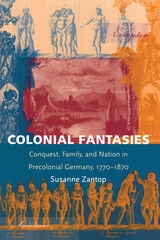
Colonial Fantasies
Conquest, Family, and Nation in Precolonial Germany, 1770-1870Susanne Zantop
Duke University Press, 1997
From as early as the sixteenth century, Germans preoccupied themselves with an imaginary drive for colonial conquest and possession that eventually grew into a collective obsession. Zantop illustrates the gendered character of Germany’s colonial imagination through critical readings of popular novels, plays, and travel literature that imagine sexual conquest and surrender in colonial territory—or love and blissful domestic relations between colonizer and colonized. She looks at scientific articles, philosophical essays, and political pamphlets that helped create a racist colonial discourse and demonstrates that from its earliest manifestations, the German colonial imagination contained ideas about a specifically German national identity, different from, if not superior to, most others.
Colonial Power, Colonial Texts
India in the Modern British NovelM. Keith Booker
University of Michigan Press, 1997
Colonies of Paradise
PoemsMatthias Göritz, translated from the German by Mary Jo Bang
Northwestern University Press, 2023
The first book of poetry by Matthias Göritz to be available in English, in a translation by a renowned writer
Very few books of poetry by contemporary German writers are available to English-speaking readers. In Colonies of Paradise, acclaimed poet and translator Mary Jo Bang introduces the poems of novelist, poet, and translator Matthias Göritz, one of the most exciting German writers publishing today. The poems in this book, which originally appeared in German under the title Loops, take the reader on a tour of Paris, Chicago, Hamburg, and Moscow as they explore childhood, travel, and the human experience. Unsettling our expectations about adulthood, the book permeates the quotidian with a disquieting strangeness that leads us deeper into our own lives and histories. Göritz’s sly humor, keen insight, and artistry are brought to the fore in Bang’s careful and innovative translation, allowing an English-language audience to enter fully the intricate interiority of Göritz’s work.
Colonization, Violence, and Narration in White South African Writing
André Brink, Breyten Breytenbach, and J. M. CoetzeeRosemary Jane Jolly
Ohio University Press, 1995
The representation of pain and suffering in narrative form is an ongoing ethical issue in contemporary South African literature. Can violence be represented without sensationalistic effects, or, alternatively, without effects that tend to be conservative because they place the reader in a position of superiority over the victim or the perpetrator?
Jolly looks at three primary South African authors—André Brink, Breyten Breytenbach, and J. M. Coetzee—to consider violence in the context of apartheid and colonialism and their inherent patriarchies.
Jolly also discusses the violence attendant upon the act of narration in the broader context of critiques of Kafka, Freud, Hegel, the postcolonial critics Jan Mohamed and Bhabha, and feminists such as Susan Suleiman.
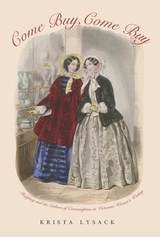
Come Buy, Come Buy
Shopping and the Culture of Consumption in Victorian Women’s WritingKrista Lysack
Ohio University Press, 2008
From the 1860s through the early twentieth century, Great Britain saw the rise of the department store and the institutionalization of a gendered sphere of consumption. Come Buy, Come Buy considers representations of the female shopper in British women’s writing and demonstrates how women’s shopping practices are materialized as forms of narrative, poetic, and cultural inscription, showing how women writers emphasize consumerism as productive of pleasure rather than the condition of seduction or loss. Krista Lysack examines works by Christina Rossetti, Mary Elizabeth Braddon, George Eliot, and Michael Field, as well as the suffragette newspaper Votes for Women, in order to challenge the dominant construction of Victorian femininity as characterized by self-renunciation and the regulation of appetite.
Come Buy, Come Buy considers not only literary works, but also a variety of archival sources (shopping guides, women’s fashion magazines, household management guides, newspapers, and advertisements) and cultural practices (department store shopping, shoplifting and kleptomania, domestic economy, and suffragette shopkeeping). With this wealth of sources, Lysack traces a genealogy of the woman shopper from dissident domestic spender to aesthetic connoisseur, from curious shop-gazer to political radical.
Comic Faith
The Great Tradition from Austen to JoyceRobert M. Polhemus
University of Chicago Press, 1980
Comics and Nation
Power, Pop Culture, and Political Transformation in PolandEwa Stanczyk
The Ohio State University Press, 2022
Winner, BASEES George Blazyca Award in East European Studies
Comics and Nation offers a fresh perspective on the role of popular culture in the one-hundred-year history of the Polish state, from its foundation in 1918 to the present. Drawing on dozens of press articles, interviews, and readers’ letters, Ewa Stanczyk discusses how journalists, artists, and audiences used comics to probe the boundaries of national culture and scrutinize the established notions of Polishness. Critical moments of Poland’s political transformation ––the establishment of the interwar Polish Republic, the Cold War, the liberalization of the 1970s, the 1989 democratic transition, the turn to memory politics in the 2000s––have all been reflected in the history of Polish comics. Stanczyk offers new insights into how the production of homegrown comics and the influx of foreign works enabled commentators to express their fears, hopes, and disillusionment with political, economic, and cultural changes in Poland and beyond. At its core, Comics and Nation rethinks the impact of popular culture and transnational exchange on Polish nation building, citizenship formation, and the legitimation of power.
Coming To
Consciousness and Natality in Early Modern EnglandTimothy M. Harrison
University of Chicago Press, 2020

Commentary and Ideology
Dante in the RenaissanceDeborah Parker
Duke University Press, 1993
Parker begins by tracing the criticism of Dante commentaries from the nineteenth century to the present and then examines the tradition of commentary from the Middle Ages to the Renaissance. She shows how the civic, institutional, and social commitments of commentators shaped their response to the Comedy, and how commentators tried to use the poem as an authoritative source for various kinds of social legitimation. Parker discusses how different commentators dealt with a deeply political section of the poem: the damnation of Brutus and Cassius.
The scope and importance of Commentary and Ideology will command the attention of a broad group of scholars, including Italian specialists on Dante, late medievalists, students and professionals in early modern European literature, bibliographers, critical theorists, historians of literary criticism and theory, and cultural and intellectual historians.
Commerce with the Classics
Ancient Books and Renaissance ReadersAnthony Grafton
University of Michigan Press, 1997
Commercial Visions
Science, Trade, and Visual Culture in the Dutch Golden AgeDániel Margócsy
University of Chicago Press, 2014
Margócsy introduces a number of natural historians, physicians, and curiosi in Amsterdam, London, St. Petersburg, and Paris who, in their efforts to boost their trade, developed modern taxonomy, invented color printing and anatomical preparation techniques, and contributed to philosophical debates on topics ranging from human anatomy to Newtonian optics. These scientific practitioners, including Frederik Ruysch and Albertus Seba, were out to do business: they produced and sold exotic curiosities, anatomical prints, preserved specimens, and atlases of natural history to customers all around the world. Margócsy reveals how their entrepreneurial rivalries transformed the scholarly world of the Republic of Letters into a competitive marketplace.
Margócsy’s highly readable and engaging book will be warmly welcomed by anyone interested in early modern science, global trade, art, and culture.
Common Prayer
The Language of Public Devotion in Early Modern EnglandRamie Targoff
University of Chicago Press, 2001
Through readings of William Shakespeare's Hamlet, Richard Hooker's Lawes of Ecclesiastical Politie, Philip Sidney's Apology for Poetry and his translations of the Psalms, John Donne's sermons and poems, and George Herbert's The Temple, Targoff uncovers the period's pervasive and often surprising interest in cultivating public and formalized models of worship. At the heart of this study lies an original and daring approach to understanding the origins of devotional poetry; Targoff shows how the projects of composing eloquent verse and improving liturgical worship come to be deeply intertwined. New literary practices, then, became a powerful means of forging common prayer, or controlling private and otherwise unmanageable expressions of faith.
Common Understandings, Poetic Confusion
Playhouses and Playgoers in Elizabethan EnglandWilliam N. West
University of Chicago Press, 2021
What if going to a play in Elizabethan England was more like attending a football match than a Broadway show—or playing in one? In Common Understandings, Poetic Confusion, William N. West proposes a new account of the kind of participatory entertainment expected by the actors and the audience during the careers of Shakespeare and his contemporaries. West finds surprising descriptions of these theatrical experiences in the figurative language of early modern players and playgoers—including understanding, confusion, occupation, eating, and fighting. Such words and ways of speaking are still in use today, but their earlier meanings, like that of theater itself, are subtly, importantly different from our own. Playing was not confined to the actors on the stage but filled the playhouse, embracing audiences and performers in collaborative experiences that did not belong to any one alone but to the assembled, various crowd. What emerged in playing was a kind of thinking and feeling distributed across persons and times that were otherwise distinct. Thrown apples, smashed bottles of beer, and lumbering bears—these and more gave verbal shape to the physical interactions between players and playgoers, creating circuits of exchange, production, and consumption.
Commons and Lords
A Short Anthropology of ParliamentEmma Crewe
Haus Publishing, 2015
Based on fieldwork within both Houses, this volume in the Haus Curiosities series provides a surprising twist in how relationships in each play out. The high social status of peers in the House of Lords gives the impression of hierarchy and, more specifically, patriarchy. In contrast, the House of Commons conjures impressions of equality and fairness between members. But actual observation reveals the opposite: while the House of Lords has an egalitarian and cooperative ethos that is also supportive of female members, the competitive and aggressive House of Commons is a far less comfortable place for women. Offering many surprises and secrets, this book exposes the sheer oddity of the British parliament system.
Community and Solitude
New Essays on Johnson’s CircleLee, Anthony W
Bucknell University Press, 2019
Contributors: Christopher Catanese, James Caudle, Marilyn Francus, Christine Jackson-Holzberg, Claudia Thomas Kairoff, Elizabeth Lambert, Anthony W. Lee, James E. May, John Radner, and Lance Wilcox.
Published by Bucknell University Press. Distributed worldwide by Rutgers University Press.
Comparative Essays on the Poetry and Prose of John Donne and George Herbert
Combined LightsRussell M. Hillier
University of Delaware Press, 2022
Comparative Media Systems
European and Global PerspectivesMiklós Sükösd
Central European University Press, 2010
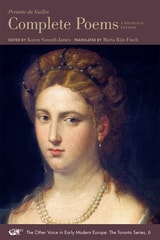
Complete Poems. A Bilingual Edition
Pernette du Guillet
Iter Press, 2010
This first complete English edition provides a fully-annotated bilingual text and a fresh perspective from which to appreciate the originality and beauty of this poetry.
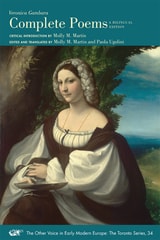
Complete Poems
A Bilingual EditionVeronica Gambara
Iter Press, 2014
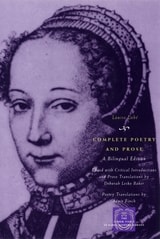
Complete Poetry and Prose
A Bilingual EditionLouise Labé
University of Chicago Press, 2006
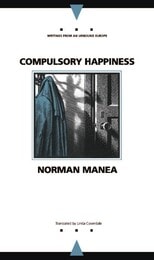
Compulsory Happiness
Norman Manea
Northwestern University Press, 1994
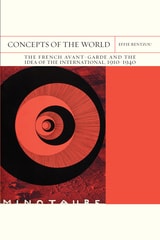
Concepts of the World
The French Avant-Garde and the Idea of the International, 1910–1940Effie Rentzou
Northwestern University Press, 2022
The writers and artists of the French avant-garde aspired to reach a global audience that would be wholly transformed by their work. In this study, Effie Rentzou delves deep into their depictions of the interwar world as an international and modern landscape, one marked by a varied cosmopolitanism. The avant-garde’s conceptualization of the world paralleled, rejected, or expanded prevailing notions of the global sphere.
The historical avant garde—which encompassed movements like futurism, Dada, and surrealism—was self-consciously international, operating across global networks and developed with the whole world as its horizon and its public. In the heady period between the end of the Belle Époque and the tumult of World War II, both individual artists (including Guillaume Apollinaire, Blaise Cendrars, Francis Picabia, Louis Aragon, Leonora Carrington, and Nicolas Calas) and collective endeavors (such as surrealist magazines and exhibitions) grappled with contemporary anxieties about economic growth, imperialism, and colonialism, as well as various universalist, cosmopolitan, and internationalist visions. By probing these works, Concepts of the World offers an alternative narrative of globalization, one that integrates the avant-garde’s enthusiasm for, as well as resistance to, the process. Rentzou identifies within the avant-garde a powerful political language that expressed the ambivalence of living and creating in an increasingly globalized world—a language that profoundly shaped the way the world has been conceptualized and is experienced today.
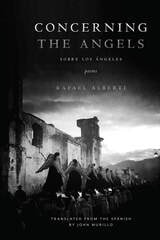
Concerning the Angels
Rafael Alberti
Four Way Books, 2025
Concordance to the French Poetry and Prose of John Gower
R. F. Yeager
Michigan State University Press, 1997
That the poet John Gower was a major literary figure in England at the close of the fourteenth century is no longer in question. Scholarly attention paid to him and to his work over the past twenty- five years has redeemed him from an undeserved obscurity imposed by the preceding two hundred. The facts of his life and career are now documented, and recent critical assessment has placed his achievement most accurately alongside Chaucer's, Langland's, and the Gawain- poet's.
Unique among his contemporaries, all of whom undoubtedly read and used French in some measure, Gower alone has left us a significant body of verse and prose in Anglo-Norman; chiefly, the twelve-stanza poem Mirour de l-Omme, the Cinkante Balades, and the Traitié pour les amantz marietz. We are offered in this concordance of his Anglo- Norman work a unique opportunity to view a poetic language as it was written and read in England until Gower's death in 1408 and beyond.
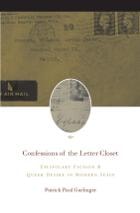
Confessions of the Letter Closet
Epistolary Fiction and Queer Desire in Modern SpainPatrick Paul Garlinger
University of Minnesota Press, 2005
Connected by the Ear
The Media, Pedagogy, and Politics of the Romantic LectureSean Franzel
Northwestern University Press, 2013
In this innovative new study, Sean Franzel charts the concurrent emergence of German Romantic pedagogy, the modern research university, and modern visions of the politically engaged scholar. At the heart of the pedagogy of Immanuel Kant, Johann Gottlieb Fichte, K. P. Moritz, A. W. Schlegel, Adam Müller, and others was the lecture, with its ability to attract listeners and to model an ideal discursive community, reflecting an era of revolution, reform, and literary, philosophical, and scientific innovation.
Along with exploring the striking preoccupation of Romantic thinkers with the lecture and with its reverberations in print, Franzel argues that accounts of scholarly speech from this period have had a lasting impact on how the pedagogy, institutions, and medial manifestations of modern scholarship continue to be understood.
"Sean Franzel’s archaeology illuminates both the bourgeois public sphere and discourse network 1800 by showing the romantic lecture to be the key cultural form in a pivotal moment of German intellectual history, a history long obsessed with the mediation of oral discourse and written text."—John Durham Peters, author of Speaking into the Air