Results by title
1993 books match the query 'Latin America' and 175 start with c
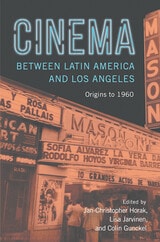
Cinema between Latin America and Los Angeles
Origins to 1960Horak, Jan-Christopher
Rutgers University Press, 2019
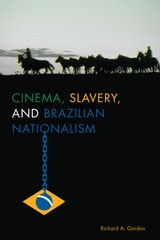
Cinema, Slavery, and Brazilian Nationalism
By Richard A. Gordon
University of Texas Press, 2015
A unique contribution to film studies, Richard Gordon’s Cinema, Slavery, and Brazilian Nationalism is the first full-length book on Brazilian films about slavery. By studying Brazilian films released between 1976 and 2005, Gordon examines how the films both define the national community and influence viewer understandings of Brazilianness. Though the films he examines span decades, they all communicate their revised version of Brazilian national identity through a cinematic strategy with a dual aim: to upset ingrained ways of thinking about Brazil and to persuade those who watch the films to accept a new way of understanding their national community.
By examining patterns in this heterogeneous group of films, Gordon proposes a new way of delineating how these films attempt to communicate with and change the minds of audience members. Gordon outlines five key aspects that each film incorporates, which describe their shared formula for and role in constructing social identity. These elements include the ways in which the films attempt to create links between the past and the viewers’ present and their methods of encouraging viewers to identify with their protagonists, who are often cast as a prototype for the nation. By aligning themselves with this figure, viewers arrive at a definition of their national identity that, while Afrocentric, also promotes racial and ethnic inclusiveness. Gordon’s innovative analysis transcends the context of his work, and his conclusions can be applied to questions of national identity and film across cultures.
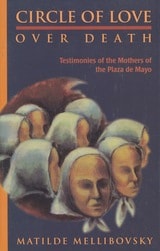
Circle of Love Over Death
The Story of the Mothers of the Plaza de MayoMatilde Mellibovsky
Northwestern University Press, 1996
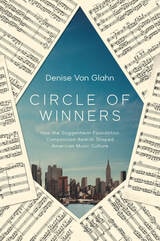
Circle of Winners
How the Guggenheim Foundation Composition Awards Shaped American Music CultureDenise Von Glahn
University of Illinois Press, 2023
An essential high culture institution, the John Simon Guggenheim Memorial Foundation has both supported and molded American musical culture. Denise Von Glahn examines the Foundation and its immense influence from the organization’s prehistory and origins through the onset of World War II.
Funded by the Guggenheim mining fortune, the Foundation took early shape from the efforts of Carroll Wilson, Frank Aydelotte, and Henry Allen Moe--three Rhodes Scholars who initially struggled to envision and implement the organization’s ambitious goals. Von Glahn also examines the career of the longtime musical advisor Thomas Whitney Surette while profiling early awardees Aaron Copland, Ruth Crawford Seeger, William Grant Still, Roger Sessions, George Antheil, and Carlos Chàvez. She examines the processes behind their selection, their values and aesthetics, and their relationships with the insiders and others who championed their work.
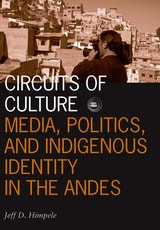
Circuits of Culture
Media, Politics, and Indigenous Identity in the AndesJeff D. Himpele
University of Minnesota Press, 2007
Set against the background of Bolivia’s prominent urban festival parades and the country’s recent appearance on the front lines of antiglobalization movements, Circuits of Culture is the first social analysis of Bolivian film and television, their circulation through the social and national landscape, and the emergence of the country’s indigenous video movement.
At the heart of Jeff Himpele’s examination is an ethnography of the popular television program, The Open Tribunal of the People. The indigenous and underrepresented majorities in La Paz have used the talk show to publicize their social problems and seek medical and legal assistance from the show’s hosts and the political party they launched. Himpele studies the program in order to identify the possibilities of the mass media as a site for political discourse and as a means of social action.
Charting as well the history of Bolivia’s media culture, Himpele perceptively investigates cinematic media as sites for understanding the modernization of Bolivia, its social movements, and the formation of indigenous identities, and in doing so provides a new framework for exploring the circulation of culture as a way of creating publics, political movements, and producing media.
Jeff D. Himpele is associate director for the McGraw Center for Teaching and Learning at Princeton University. He is an anthropologist and documentary filmmaker; his films include the award-winning Incidents of Travel in Chichen Itza and Taypi Kala: Six Visions of Tiwanaku.
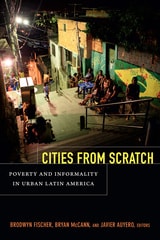
Cities From Scratch
Poverty and Informality in Urban Latin AmericaBrodwyn Fischer, Bryan McCann, Javier Auyero, eds.
Duke University Press, 2014
Contributors. Javier Auyero, Mariana Cavalcanti, Ratão Diniz, Emilio Duhau, Sujatha Fernandes, Brodwyn Fischer, Bryan McCann, Edward Murphy, Dennis Rodgers
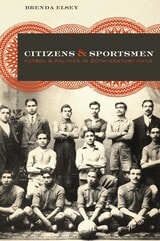
Citizens and Sportsmen
Fútbol and Politics in Twentieth-Century ChileBy Brenda Elsey
University of Texas Press, 2011
Fútbol, or soccer as it is called in the United States, is the most popular sport in the world. Millions of people schedule their lives and build identities around it. The World Cup tournament, played every four years, draws an audience of more than a billion people and provides a global platform for displays of athletic prowess, nationalist rhetoric, and commercial advertising. Fútbol is ubiquitous in Latin America, yet few academic histories of the sport exist, and even fewer focus on its relevance to politics in the region. To fill that gap, this book uses amateur fútbol clubs in Chile to understand the history of civic associations, popular culture, and politics.
In Citizens and Sportsmen, Brenda Elsey argues that fútbol clubs integrated working-class men into urban politics, connected them to parties, and served as venues of political critique. In this way, they contributed to the democratization of the public sphere. Elsey shows how club members debated ideas about class, ethnic, and gender identities, and also how their belief in the uniquely democratic nature of Chile energized state institutions even as it led members to criticize those very institutions. Furthermore, she reveals how fútbol clubs created rituals, narratives, and symbols that legitimated workers' claims to political subjectivity. Her case study demonstrates that the relationship between formal and informal politics is essential to fostering civic engagement and supporting democratic practices.
Citizens of Fear
Urban Violence in Latin AmericaRotker, Susana
Rutgers University Press, 2004
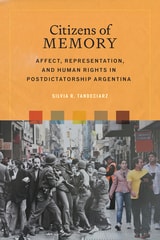
Citizens of Memory
Affect, Representation, and Human Rights in Postdictatorship ArgentinaSilvia R. Tandeciarz
Bucknell University Press, 2026
Published by Bucknell University Press. Distributed worldwide by Rutgers University Press.
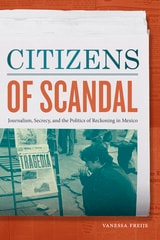
Citizens of Scandal
Journalism, Secrecy, and the Politics of Reckoning in MexicoVanessa Freije
Duke University Press, 2020
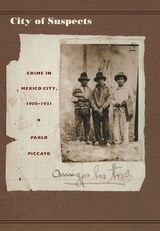
City of Suspects
Crime in Mexico City, 1900–1931Pablo Piccato
Duke University Press, 2001
By investigating postrevolutionary examples of corruption and organized crime, Piccato shines light on the historical foundations of a social problem that remains the main concern of Mexico City today. Emphasizing the social construction of crime and the way it was interpreted within the moral economy of the urban poor, he describes the capital city during the early twentieth century as a contested territory in which a growing population of urban poor had to negotiate the use of public spaces with more powerful citizens and the police. Probing official discourse on deviance, Piccato reveals how the nineteenth-century rise of positivist criminology—which asserted that criminals could be readily distinguished from the normal population based on psychological and physical traits—was used to lend scientific legitimacy to class stratifications and to criminalize working-class culture. Furthermore, he argues, the authorities’ emphasis on punishment, isolation, and stigmatization effectively created cadres of professional criminals, reshaping crime into a more dangerous problem for all inhabitants of the capital.
This unique investigation into crime in Mexico City will interest Latin Americanists, sociologists, and historians of twentieth-century Mexican history.
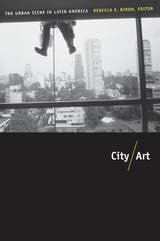
City/Art
The Urban Scene in Latin AmericaRebecca E. Biron , ed.
Duke University Press, 2009
Contributors delve into the aspirations embodied in the modernist urbanism of Brasília and the work of Lotty Rosenfeld, a Santiago performance artist who addresses the intersections of art, urban landscapes, and daily life. One author assesses the political possibilities of public art through an analysis of subway-station mosaics and Julio Cortázar’s short story “Graffiti,” while others look at the representation of Buenos Aires as a “Jewish elsewhere” in twentieth-century fiction and at two different responses to urban crisis in Rio de Janeiro. The collection closes with an essay by a member of the São Paulo urban intervention group Arte/Cidade, which invades office buildings, de-industrialized sites, and other vacant areas to install collectively produced works of art. Like that group, City/Art provides original, alternative perspectives on specific urban sites so that they can be seen anew.
Contributors. Hugo Achugar, Rebecca E. Biron, Nelson Brissac Peixoto, Néstor García Canclini, Adrián Gorelik, James Holston, Amy Kaminsky, Samuel Neal Lockhart, José Quiroga, Nelly Richard, Marcy Schwartz, George Yúdice
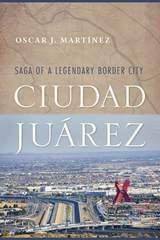
Ciudad Juárez
Saga of a Legendary Border CityOscar J. Martínez
University of Arizona Press, 2018
In Ciudad Juárez: Saga of a Legendary Border City, Oscar J. Martínez provides a historical overview of the economic and social evolution of this famous transnational urban center from the 1848 creation of the international boundary between Mexico and the United States to the present, emphasizing the city’s deep ties to the United States.
Martínez also explores major aspects of the social history of the city, including cross-border migration, urbanization, population growth, living standards, conditions among the city’s workers, crime, and the circumstances that led to the horrendous violence that catapulted Juárez to the top rung of the world’s most violent urban areas in the early twenty-first century.
In countless ways, the history of Juárez is the history of the entire Mexican northern frontier. Understanding how the city evolved provides a greater appreciation for the formidable challenges faced by Mexican fronterizos and yields vital insights into the functioning of borderland regions around the world.
Civil Obedience
Complicity and Complacency in Chile since PinochetMichael J. Lazzara
University of Wisconsin Press, 2020
Michael J. Lazzara boldly argues that today's Chile is a product of both complicity and complacency. Combining historical analysis with deft literary, political, and cultural critique, he scrutinizes the post-Pinochet rationalizations made by politicians, artists, intellectuals, bystanders, former revolutionaries-turned-neoliberals, and common citizens. He looks beyond victims and perpetrators to unveil the ambiguous, ethically vexed realms of memory and experience that authoritarian regimes inevitably generate.
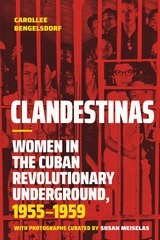
Clandestinas
Women in the Cuban Revolutionary Underground, 1955–1959Carollee Bengelsdorf. With Photographs Curated by Susan Meiselas.
Duke University Press, 2025
Clicas
Gender, Sexuality, and Struggle in Latina/o/x Gang Literature and FilmFrank García
University of Texas Press, 2024
2025 First Book Prize Honorable Mention, Cultural Studies Association
How Latina/o/x gang literature and film represent women and gay gang members’ challenges to gendered, sexual, racial, and class oppression.
Clicas examines Latina/o/x literature and film by and/or about gay and women gang members. Through close readings of literature and film, Frank García reimagines the typical narratives describing gang membership and culture, amplifying and complicating critical gang studies in the social sciences and humanities and looking at gangs across racial, ethnic, and national identities. Analyzing how the autobiographical poetry of Ana Castillo presents gang fashion, culture, and violence to the outside world, the effects of women performing female masculinity in the novel Locas, and gay gang members’ experiences of community in the documentary Homeboy, García complicates the dialogue regarding hypermasculine gang cultures. He shows how they are accessible not only to straight men but also to women and gay men who can appropriate them in complicated ways, which can be harming and also, at times, emancipating. Reading gang members as (de)colonial agents who contest the power relations, inequalities, oppressions, and hierarchies of the United States, Clicas considers how women and gay gang members resist materially and psychologically within a milieu shaped by the intersection of race, gender, sexuality, and class.
Clio's Laws
On History and LanguageBy Mauricio Tenorio-Trillo; translated by Mary Ellen Fieweger
University of Texas Press, 2019
Offering a unique perspective on the very notions and practices of storytelling, history, memory, and language, Clio’s Laws collects ten essays (some new and some previously published in Spanish) by a revered voice in global history. Taking its title from the Greek muse of history, this opus considers issues related to the historian’s craft, including nationalism and identity, and draws on Tenorio-Trillo’s own lifetime of experiences as a historian with deep roots in both Mexico and the United States. By turns deeply ironic, provocative, and experimental, and covering topics both lowbrow and highbrow, the essays form a dialogue with Clio about idiosyncratic yet profound matters.
Tenorio-Trillo presents his own version of an ars historica (what history is, why we write it, and how we abuse it) alongside a very personal essay on the relationship between poetry and history. Other selections include an exploration of the effects of a historian’s autobiography, a critique of history’s celebratory obsession, and a guide to reading history in an era of internet searches and too many books. A self-described exile, Tenorio-Trillo has produced a singular tour of the historical imagination and its universal traits.
Close Encounters of Empire
Writing the Cultural History of U.S.-Latin American RelationsGilbert M. Joseph, Catherine C. LeGrand, and Ricardo D. Salvatore, eds.
Duke University Press, 1998
Exploring a variety of nineteenth- and twentieth-century encounters in Latin America, these theoretically engaged essays by distinguished U.S. and Latin American historians and anthropologists illuminate a wide range of subjects. From the Rockefeller Foundation’s public health initiatives in Central America to the visual regimes of film, art, and advertisements; these essays grapple with new ways of conceptualizing public and private spheres of empire. As such, Close Encounters of Empire initiates a dialogue between postcolonial studies and the long-standing scholarship on colonialism and imperialism in the Americas as it rethinks the cultural dimensions of nationalism and development.
Coastal Ecosystems and Economic Strategies at Cerro Azul, Peru
The Study of a Late Intermediate KingdomEdited by Joyce Marcus
University of Michigan Press, 2016
Cobble Circles and Standing Stones
Archaeology at the Rivas Site, Costa RicaJeffrey Quilter
University of Iowa Press, 2004
Writing in the first person with a balance between informal language and academic theory, Quilter concludes that Rivas was a ceremonial center for mortuary rituals to bury chiefly elite on the Panteón. Through use of his narrative technique, he provides the reader with accounts of discoveries as they occurred in fieldwork and the development of interpretations to explain the ancient refuse and cobble architecture his team uncovered. As his story progresses amid the enchantment of the Costa Rican landscape, research plans are adjusted and sometimes completely overturned as new discoveries, often serendipitous ones, are made. Such changing circumstances lead to new insights into the rise and fall of the people who built the cobble circles and raised the standing stones at Rivas, a thousand years ago.
The only book in English that focuses on a single archaeological site in Costa Rica, which continues to develop as a destination for archaeological tourism, Cobble Stones and Standing Circles will appeal to laypeople and professionals alike.
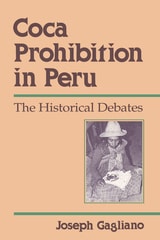
Coca Prohibition in Peru
The Historical DebatesJoseph A. Gagliano
University of Arizona Press, 1994
Cocaine
From Coca Fields to the StreetsEnrique Desmond Arias and Thomas Grisaffi, editors
Duke University Press, 2021
Contributors. Enrique Desmond Arias, Lilian Bobea, Philippe Bourgois, Anthony W. Fontes, Robert Gay, Paul Gootenberg, Romain Le Cour Grandmaison, Thomas Grisaffi, Laurie Kain Hart, Annette Idler, George Karandinos, Fernando Montero, Dennis Rodgers, Taniele Rui, Cyrus Veeser, Autumn Zellers-León
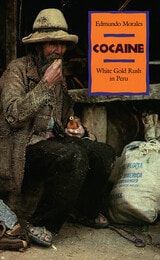
Cocaine
White Gold Rush in PeruEdmundo Morales
University of Arizona Press, 1989
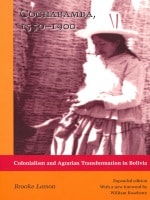
Cochabamba, 1550-1900
Colonialism and Agrarian Transformation in BoliviaBrooke Larson
Duke University Press, 1998
This study of Bolivia uses Cochabamba as a laboratory to examine the long-term transformation of native Andean society into a vibrant Quechua-Spanish-mestizo region of haciendas and smallholdings, towns and villages, peasant markets and migratory networks caught in the web of Spanish imperial politics and economics. Combining economic, social, and ethnohistory, Brooke Larson shows how the contradictions of class and colonialism eventually gave rise to new peasant, artisan, and laboring groups that challenged the evolving structures of colonial domination. Originally published in 1988, this expanded edition includes a new final chapter that explores the book’s implications for understanding the formation of a distinctive peasant political culture in the Cochabamba valleys over the eighteenth and nineteenth centuries.

Coded Encounters
Writing, Gender, and Ethnicity in Colonial Latin AmericaFrancisco Javier Cevallos
University of Massachusetts Press, 1994
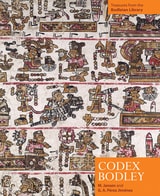
Codex Bodley
A Painted Chronicle from the Mixtec Highlands, MexicoMaarten Jansen and Gabina Aurora Pérez Jiménez
Bodleian Library Publishing, 2005
Codex Bodley explores the enormous wealth of information contained in the manuscript, which documents precolonial Mixtec genealogical relationships and historical events spanning from 900 AD to 1521. Maarten Jansen and Gabina Aurora Pérez Jiménez provide insightful and expert commentary on the manuscript, explaining its history as they consider key characteristics of Mixtec pictography. They then provide an engaging and masterful interpretation of the manuscript's narrative, with a detailed explanatory reading of its pictograms and their significance. Accompanied by vivid and colorful illustrations, Codex Bodley is an invaluable text for scholars of precolonial Mexican history, art, and culture.
Coffee and Conflict in Colombia, 1886-1910
Charles W. Bergquist
Duke University Press, 1978
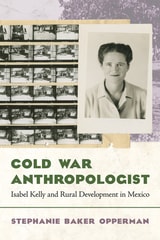
Cold War Anthropologist
Isabel Kelly and Rural Development in MexicoStephanie Baker Opperman
University of Arizona Press, 2024
Kelly’s transition from a prominent archaeologist to a key figure in applied anthropology is meticulously chronicled, unveiling her pivotal role in shaping rural development strategies in Mexico amidst the geopolitical context of the Cold War. Through an extensive examination of her correspondence, archival material, and scholarly output, Kelly’s evolving viewpoints offer profound insights into the intricate dynamics of U.S.-Mexico relations and the challenges encountered by female academics during this era.
Organized chronologically, each chapter of this work delves into distinct facets of Kelly’s international journey, with a particular emphasis on her involvement in cooperative programs aimed at fostering diplomatic relations with Mexico. Through this narrative framework, readers are immersed in a compelling exploration of Kelly’s enduring impact on both the field of anthropology and the realm of international diplomacy.
This book is indispensable for historians, anthropologists, and individuals intrigued by the nuanced complexities of Cold War politics, presenting pioneering research at the intersection of history and anthropology. Opperman skillfully brings to light the previously untold narratives of Isabel Kelly, unveiling her influence on mid-twentieth-century Mexico.
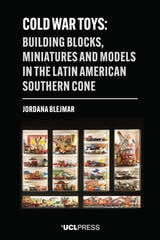
Cold War Toys
Building blocks, miniatures and models in the Latin American Southern ConeJordana Blejmar
University College London, 2026
A decolonial study of the toys that were produced and collected in Latin America during the Cold War.
Cold War Toys examines playthings manufactured, promoted, and commercialized in Argentina, Chile, and Uruguay during the second half of the twentieth century. Establishing connections and conversations with toys produced in earlier periods, including nineteenth-century dollhouses and building blocks created in the 1920s by Joaquín Torres-García, it goes on to analyze, among other items, construction sets made in 1970s Chile during Salvador Allende’s Popular Unity government, scale-model household appliances distributed by the Eva Perón Foundation, and more recent figurines such as the Latin American versions of G.I. Joe and Latin Barbie dolls.
The book approaches toys as “dispositifs”—cultural formations that condense the discourses, institutions, architectural forms, scientific statements, and philosophical propositions of Latin America’s Cold War. Drawing on a rich compendium of objects, many inspired by European or US brands, it shows how South American toys incorporated local characters, designs, messages, and materials through a process of creative adaptation, thereby acquiring new identities. These and other original artifacts are examined variously as commodities from a once-flourishing industry, works of art, originators of cultural myths, and training tools for Cold War childhoods. They are also seen as undervalued expressions of children’s material culture, imbued with the collective memory of a turbulent and contested era.
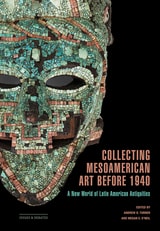
Collecting Mesoamerican Art before 1940
A New World of Latin American AntiquitiesAndrew D. Turner
J. Paul Getty Trust, The, 2024
This book traces the fascinating history of how and why ancient Mesoamerican objects have been collected. It begins with the pre-Hispanic antiquities that first entered European collections in the sixteenth century as gifts or seizures, continues through the rise of systematic collecting in Europe and the Americas during the nineteenth and twentieth centuries, and ends in 1940—the start of Europe’s art market collapse at the outbreak of World War II and the coinciding genesis of the large-scale art market for pre-Hispanic antiquities in the United States.
Drawing upon archival resources and international museum collections, the contributors analyze the ways shifting patterns of collecting and taste—including how pre-Hispanic objects changed from being viewed as anthropological and scientific curiosities to collectible artworks—have shaped modern academic disciplines as well as public, private, institutional, and nationalistic attitudes toward Mesoamerican art. As many nations across the world demand the return of their cultural patrimony and ancestral heritage, it is essential to examine the historical processes, events, and actors that initially removed so many objects from their countries of origin.
Collective Biologies
Healing Social Ills through Sexual Health Research in MexicoEmily A. Wentzell
Duke University Press, 2021
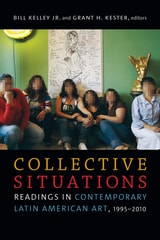
Collective Situations
Readings in Contemporary Latin American Art, 1995–2010Bill Kelley Jr. and Grant H. Kester, editors
Duke University Press, 2017
Contributors
Gavin Adams, Mariola V. Alvarez, Gustavo Buntinx, María Fernanda Cartagena, David Gutiérrez Castañeda, Fabian Cereijido, Paloma Checa-Gismero, Kency Cornejo, Raquel de Anda, Bill Kelley Jr., Grant H. Kester, Suzanne Lacy, Ana Longoni, Rodrigo Martí, Elize Mazadiego, Annie Mendoza, Alberto Muenala, Prerana Reddy, Maria Reyes Franco, Pilar Riaño-Alcalá, Juan Carlos Rodríguez
Collisions With History
Latin American Fiction and Social Science from “El Boom” to the New World OrderFrederick M. Nunn
Ohio University Press, 2001
Latin American intellectuals have traditionally debated their region’s history, never with so much agreement as in the fiction, commentary, and scholarship of the late twentieth century. Collisions with History shows how “fictional histories” of discovery and conquest, independence and early nationhood, and the recent authoritarian past were purposeful revisionist collisions with received national versions. These collisions occurred only because of El Boom, thus making Latin America’s greatest literary movement a historical phenomenon as well. Frederick M. Nunn discusses the cataclysmic view of history conveyed in Boom novels and examines the thought and self-perception of selected authors whose political activism enhanced the appeal of their works—historical and otherwise: Alejo Carpentier, Carlos Fuentes, Gabriel García Márquez, and Augusto Roa Bastos; Julio Cortázar, Isabel Allende, Mario Vargas Llosa, and Darcy Ribeiro.
Collisions with History demonstrates how their commentary on history, literature, politics, and international affairs reveals a conscious sense of purpose. From between the lines of their nonfiction emerges a consensus that outside forces have defined as well as controlled Latin America’s history.
Professor Nunn also suggests that, with novelists now no longer very interested in colliding with history, it may fall to social scientists to speak for what remains of the region’s past in the New World Order.
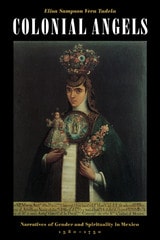
Colonial Angels
Narratives of Gender and Spirituality in Mexico, 1580-1750By Elisa Sampson Vera Tudela
University of Texas Press, 2000
Spain's attempt to establish a "New Spain" in Mexico never fully succeeded, for Spanish institutions and cultural practices inevitably mutated as they came in contact with indigenous American outlooks and ways of life. This original, interdisciplinary book explores how writing by and about colonial religious women participated in this transformation, as it illuminates the role that gender played in imposing the Spanish empire in Mexico.
The author argues that the New World context necessitated the creation of a new kind of writing. Drawing on previously unpublished writings by and about nuns in the convents of Mexico City, she investigates such topics as the relationship between hagiography and travel narratives, male visions of the feminine that emerge from the reworking of a nun's letters to her confessor into a hagiography, the discourse surrounding a convent's trial for heresy by the Inquisition, and the reports of Spanish priests who ministered to noble Indian women. This research rounds out colonial Mexican history by revealing how tensions between Spain and its colonies played out in the local, daily lives of women.
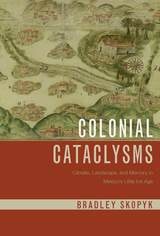
Colonial Cataclysms
Climate, Landscape, and Memory in Mexico’s Little Ice AgeBradley Skopyk
University of Arizona Press, 2020
The contiguous river basins that flowed in Tlaxcala and San Juan Teotihuacan formed part of the agricultural heart of central Mexico. As the colonial project rose to a crescendo in the sixteenth and seventeenth centuries, the Indigenous farmers of central Mexico faced long-term problems standard historical treatments had attributed to drought and soil degradation set off by Old World agriculture. Instead, Bradley Skopyk argues that a global climate event called the Little Ice Age brought cold temperatures and elevated rainfall to the watersheds of Tlaxcala and Teotihuacan. With the climatic shift came cataclysmic changes: great floods, human adaptations to these deluges, and then silted wetlands and massive soil erosion.
This book chases water and soil across the colonial Mexican landscape, through the fields and towns of New Spain’s Native subjects, and in and out of some of the strongest climate anomalies of the last thousand or more years. The pursuit identifies and explains the making of two unique ecological crises, the product of the interplay between climatic and anthropogenic processes. It charts how Native farmers responded to the challenges posed by these ecological rifts with creative use of plants and animals from the Old and New Worlds, environmental engineering, and conflict within and beyond the courts. With a new reading of the colonial climate and by paying close attention to land, water, and agrarian ecologies forged by farmers, Skopyk argues that colonial cataclysms—forged during a critical conjuncture of truly unprecedented proportions, a crucible of human and natural forces—unhinged the customary ways in which humans organized, thought about, and used the Mexican environment.
This book inserts climate, earth, water, and ecology as significant forces shaping colonial affairs and challenges us to rethink both the environmental consequences of Spanish imperialism and the role of Indigenous peoples in shaping them.
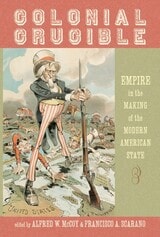
Colonial Crucible
Empire in the Making of the Modern American StateEdited by Alfred W. McCoy and Francisco A. Scarano
University of Wisconsin Press, 2009
Moving well beyond theory, this volume takes the next step, adding a fine-grained, empirical texture to the study of U.S. imperialism by analyzing its specific consequences. Across a broad range of institutions—policing and prisons, education, race relations, public health, law, the military, and environmental management—this formative experience left a lasting institutional imprint. With each essay distilling years, sometimes decades, of scholarship into a concise argument, Colonial Crucible reveals the roots of a legacy evident, most recently, in Washington’s misadventures in the Middle East.
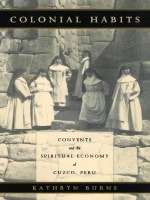
Colonial Habits
Convents and the Spiritual Economy of Cuzco, PeruKathryn Burns
Duke University Press, 1999
Based on unprecedented archival research, Colonial Habits demonstrates how nuns became leading guarantors of their city’s social order by making loans, managing property, containing “unruly” women, and raising girls. Coining the phrase “spiritual economy” to analyze the intricate investments and relationships that enabled Cuzco’s convents and their backers to thrive, Burns explains how, by the late 1700s, this economy had faltered badly, making convents an emblem of decay and a focal point for intense criticism of a failing colonial regime. By the nineteenth century, the nuns had retreated from their previous roles, marginalized in the construction of a new republican order.
Providing insight that can be extended well outside the Andes to the relationships articulated by convents across much of Europe, the Americas, and beyond, Colonial Habits will engage those interested in early modern economics, Latin American studies, women in religion, and the history of gender, class, and race.
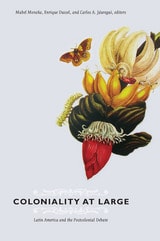
Coloniality at Large
Latin America and the Postcolonial DebateMabel Moraña, Enrique Dussel, and Carlos A. Jáuregui, eds.
Duke University Press, 2008
Written by internationally renowned scholars based in Latin America, the United States, and Europe, the essays reflect multiple disciplinary and ideological perspectives. Some are translated into English for the first time. The collection includes theoretical reflections, literary criticism, and historical and ethnographic case studies focused on Ecuador, Guatemala, Mexico, Brazil, the Andes, and the Caribbean. Contributors examine the relation of Marxist thought, dependency theory, and liberation theology to Latin Americans’ experience of and resistance to coloniality, and they emphasize the critique of Occidentalism and modernity as central to any understanding of the colonial project. Analyzing the many ways that Latin Americans have resisted imperialism and sought emancipation and sovereignty over several centuries, they delve into topics including violence, identity, otherness, memory, heterogeneity, and language. Contributors also explore Latin American intellectuals’ ambivalence about, or objections to, the “post” in postcolonial; to many, globalization and neoliberalism are the contemporary guises of colonialism in Latin America.
Contributors: Arturo Arias, Gordon Brotherston, Santiago Castro-Gómez, Sara Castro-Klaren, Amaryll Chanady, Fernando Coronil, Román de la Campa, Enrique Dussel, Ramón Grosfoguel, Russell G. Hamilton, Peter Hulme, Carlos A. Jáuregui, Michael Löwy, Nelson Maldonado-Torres, José Antonio Mazzotti, Eduardo Mendieta, Walter D. Mignolo, Mario Roberto Morales, Mabel Moraña, Mary Louise Pratt, Aníbal Quijano, José Rabasa, Elzbieta Sklodowska, Catherine E. Walsh
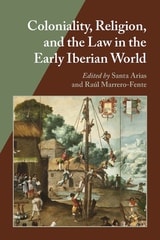
Coloniality, Religion, and the Law in the Early Iberian World
Santa Arias
Vanderbilt University Press, 2013
Hispanic Issues Series
Nicholas Spadaccini, Editor-in-Chief
Hispanic Issues Online
hispanicissues.umn.edu/online_main.html
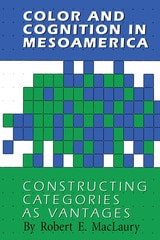
Color and Cognition in Mesoamerica
Constructing Categories as VantagesBy Robert E. MacLaury
University of Texas Press, 1996
More than 100 indigenous languages are spoken in Mexico and Central America. Each language partitions the color spectrum according to a pattern that is unique in some way. But every local system of color categories also shares characteristics with the systems of other Mesoamerican languages and of languages elsewhere in the world.
This book presents the results of the Mesoamerican Color Survey, which Robert E. MacLaury conducted in 1978-1981. Drawn from interviews with 900 speakers of some 116 Mesoamerican languages, the book provides a sweeping overview of the organization and semantics of color categorization in modern Mesoamerica.
Extensive analysis and MacLaury's use of vantage theory reveal complex and often surprising interrelationships among the ways languages categorize colors. His findings offer valuable cross-cultural data for all students of Mesoamerica. They will also be of interest to all linguists and cognitive scientists working on theories of categorization more generally.
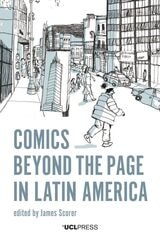
Comics Beyond the Page in Latin America
Edited by James Scorer
University College London, 2019
Communism in Mexico
A Study in Political FrustrationBy Karl M. Schmitt
University of Texas Press, 1965
The ease with which Cuba slipped into its relationship with Communism revived in the United States its recurring nightmare in which other Latin American countries, particularly Mexico, become satellites of Russia or Red China. But such an occurrence is most unlikely in Mexico, according to Karl Schmitt, former intelligence research analyst with the United States Department of State.
Communism in Mexico traces efforts during the early twentieth century to create a Soviet-style society in one of the largest and most strategically situated of the Latin American countries. Schmitt writes authoritatively of the Mexican Communist movement, tracing its development from an early and potentially powerful political-economic base to the increasingly fragmented and weakened collection of parties and front groups of the 1960s. He follows the various schisms and factional divisions to the mid-1950s, when the process of disintegration became most noticeable, and explores and analyzes in detail Communist attempts since then to establish unity among the many quarreling and frustrated groups of the now-splintered movement.
Three Communist parties in Mexico, a score of front groups, and numerous infiltration cells in non-Communist organizations such as student and labor groups, all recognize in a broad way a common and ultimate goal: the creation of a Soviet-style society. But their attempts at unity have consistently led only to further bickering and frustration. This period is subjected to a thorough study and analysis in an effort to understand and explain the Communists' lack of success. Schmitt presciently concludes that Communism's future in Mexico will be as cloudy as its past, and that the accelerating economy and improving social conditions there will serve to weaken the movement still further.
Concrete Dreams
Practice, Value, and Built Environments in Post-Crisis Buenos AiresNicholas D'Avella
Duke University Press, 2019
Conflict and Carnage in Yucatán
Liberals, the Second Empire, and Maya Revolutionaries, 1855–1876Douglas W. Richmond
University of Alabama Press, 2015
Synthesizing an extensive and heterogeneous range of sources, Douglas W. Richmond covers three tumultuous political upheavals of this period. First, Mexico’s fledgling republic attempted to impose a liberal ideology at odds with traditional Maya culture on Yucatán; then, the French-backed regime of Emperor Maximilian began to reform Yucatán; and, finally, the republican forces of Benito Juárez restored the liberal hegemony. Many issues spurred resistance to these liberal governments. Instillation of free trade policies, the suppression of civil rights, and persecution of the Roman Catholic Church mobilized white opposition to liberal governors. The Mayas fought the seizure of their communal properties. A long-standing desire for regional autonomy united virtually all Yucatecans. Richmond advances the thought-provoking argument that Yucatán both fared better under Maximilian’s Second Empire than under the liberal republic and would have thrived more had the Second Empire not collapsed.
The most violent and bloody manifestation of these broad conflicts was the Caste War (Guerra de Castas), the longest sustained peasant revolt in Latin American history. Where other scholars have advocated the simplistic position that the war was a Maya uprising designed to reestablish a mythical past civilization, Richmond’s sophisticated recounting of political developments from 1855 to 1876 restores nuance and complexity to this pivotal time in Yucatecan history.
Richmond’s Conflict and Carnage in Yucatán is a welcome addition to scholarship about Mexico and Yucatán as well as about state consolidation, empire, and regionalism.
Conflicted Memory
Military Cultural Interventions and the Human Rights Era in PeruCynthia E. Milton
University of Wisconsin Press, 2018
Milton calls attention to fabrications of our post-truth era but goes further to deeply explore the ways members of the Peruvian military see their past, how they actively commemorate and curate it in the present, and why they do so. Her nuanced approach upends frameworks of memory studies that reduce military and ex-military to a predictable role of outright denial.
Conflicted Memory
Military Cultural Interventions and the Human Rights Era in PeruCynthia E. Milton
University of Wisconsin Press, 2020
Conflicts over Coca Fields in Sixteenth-Century Perú
María Rostworowski de Diez Canseco
University of Michigan Press, 1988
Confronting Historical Paradigms
Peasants, Labor, And The Capitalist World SystemFrederick Cooper
University of Wisconsin Press, 1993
Confronting Historical Paradigms argues that confrontation with major paradigms of world history has marked the fields of African and Latin American history during the last quarter-century, and that the process has dramatically restructured historical and theoretical understanding of peasantries, labor, and the capitalist world system. Moreover, it maintains, the intellectual reverberations within and across the African and Latin American fields constitute a challenging and underappreciated counterpoint to laments that contemporary historical knowledge has suffered a splintering so extreme that it undermines larger dialogue and meaning.
The authors, in their substantive essays, synthesize, order, and evaluate the significance of the enormous resonating literatures that have come to exist for Africa and Latin America on the themes of the capitalist world system, labor, and peasantries. They historicize these literatures by analyzing an entire cycle of critical dialogue and confrontation with historical paradigms and the professional upheavals that accompanied them. They review the initial confrontations with frameworks of historical knowledge that erupted in the 1960s and the early 1970s; the emergence of new “dissident” paradigms; the outpouring of subsequent scholarship on peasants, labor, and capitalism that began to unravel the newly proposed paradigms by the 1980s and 1990s; and the outlines of the new interpretive frameworks that tended to displace both the “traditional” and “early dissident” paradigms. They also suggest possible outlines of a new cycle of “Third World” confrontations with paradigm, anchored in themes such as gender and ethnicity.
Confronting Historical Paradigms employs a historicized awareness of intellectual networks, conversations, and history–theory dialogues. The result is a critical analysis and synthetic presentation of substantive advances that have preoccupied scholarship on Africa and Latin America in recent decades and a powerful challenge to notions that “new” fields of history have ended up destroying intellectual coherence and community.
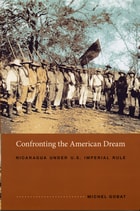
Confronting the American Dream
Nicaragua under U.S. Imperial RuleMichel Gobat
Duke University Press, 2005
Gobat focuses primarily on the reactions of the elites to Americanization, because the power and identity of these Nicaraguans were the most significantly affected by U.S. imperial rule. He describes their adoption of aspects of “the American way of life” in the mid–nineteenth century as strategic rather than wholesale. Chronicling the U.S. occupation of 1912–33, he argues that the anti-American turn of Nicaragua’s most Americanized oligarchs stemmed largely from the efforts of U.S. bankers, marines, and missionaries to spread their own version of the American dream. In part, the oligarchs’ reversal reflected their anguish over the 1920s rise of Protestantism, the “modern woman,” and other “vices of modernity” emanating from the United States. But it also responded to the unintended ways that U.S. modernization efforts enabled peasants to weaken landlord power. Gobat demonstrates that the U.S. occupation so profoundly affected Nicaragua that it helped engender the Sandino Rebellion of 1927–33, the Somoza dictatorship of 1936–79, and the Sandinista Revolution of 1979–90.
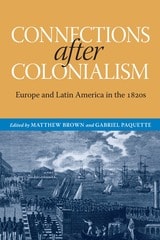
Connections after Colonialism
Europe and Latin America in the 1820sEdited by Mathew Brown and Gabriel Pacquette
University of Alabama Press, 2013
Contributing to the historiography of transnational and global transmission of ideas, Connections after Colonialism examines relations between Europe and Latin America during the tumultuous 1820s.
In the Atlantic World, the 1820s was a decade marked by the rupture of colonial relations, the independence of Latin America, and the ever-widening chasm between the Old World and the New. Connections after Colonialism, edited by Matthew Brown and Gabriel Paquette, builds upon recent advances in the history of colonialism and imperialism by studying former colonies and metropoles through the same analytical lens, as part of an attempt to understand the complex connections—political, economic, intellectual, and cultural—between Europe and Latin America that survived the demise of empire.
Historians are increasingly aware of the persistence of robust links between Europe and the new Latin American nations. This book focuses on connections both during the events culminating with independence and in subsequent years, a period strangely neglected in European and Latin American scholarship. Bringing together distinguished historians of both Europe and America, the volume reveals a new cast of characters and relationships including unrepentant American monarchists; compromise-seeking liberals in Lisbon and Madrid who envisioned transatlantic federations; British merchants in the River Plate who saw opportunity where others saw risk; public moralists whose audiences spanned from Paris to Santiago de Chile; and plantation owners in eastern Cuba who feared that slave rebellions elsewhere in the Caribbean would spread to their island.
Contributors
Matthew Brown / Will Fowler / Josep M. Fradera / Carrie Gibson / Brian Hamnett / Maurizio Isabella / Iona Macintyre / Scarlett O’Phelan Godoy / Gabriel Paquette / David Rock / Christopher Schmidt-Nowara / Jay Sexton / Reuben Zahler