Results by title
1787 books match the query 'Literary Collections' and 87 start with c
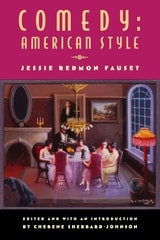
Comedy
American Style: Jessie Redmon FausetSherrard-Johnson, Cherene
Rutgers University Press, 2009
Cherene Sherrard-Johnson's introduction places this literary classic in both the new modernist and transatlantic contexts and will be embraced by those interested in earlytwentieth-century women writers, novels about passing, the Harlem Renaissance, the black/white divide, and diaspora studies. Selected essays and poems penned by Fauset are also included, among them "Yarrow Revisited" and "Oriflamme," which help highlight the full canon of her extraordinary contribution to literature and provide contextual background to the novel.
Coming After
Essays on PoetryAlice Notley
University of Michigan Press, 2005
Notley explores the work of second-generation New York School poets and their allies: Ted Berrigan, Anne Waldman, Joanne Kyger, Ron Padgett, Lorenzo Thomas, and others. These essays and reviews are among the first to deal with a generation of poets notorious for their refusal to criticize and theorize, assuming the stance that "only the poems matter." The essays are characterized by Notley's strong, compelling voice, which transfixes the reader even in the midst of professional detail. Coming After revives the possibility of the readable book of criticism.
Coming of Age in New Jersey
College and American CultureMoffatt, Michael
Rutgers University Press, 1989
Commentary on Thucydides, Book 3
Rachel Bruzzone
University of Michigan Press, 2025
Commentary on Thucydides, Book 3 remedies this situation by offering detailed linguistic explanations and grammatical clarifications designed to appeal both to seasoned Classicists and to a broader group of non-specialist readers who may still be developing their Greek language skills. Starting with 428 BCE, Book 3 covers a critical period of the Peloponnesian War in which the conflict began to manifest its extraordinary violence and scale. The book contains influential and controversial discussions, including Thucydides’ own analysis of the nature of war and the ways that it teaches “lessons of violence” to individuals and states. Book 3 also features the famous Mytilenean Debate, an argument premised on the thesis that all international relations are, or should be, fundamentally amoral. Educated readers have always looked to Thucydides in turbulent times, and this commentary will open up his text to a wider audience.
Compulsory Happiness
Norman Manea
Northwestern University Press, 1994
Conceptualisms
The Anthology of Prose, Poetry, Visual, Found, E- & Hybrid Writing as Contemporary ArtEdited by Steve Tomasula
University of Alabama Press, 2022
A wide-ranging anthology of experimental writing—prose, poetry, and hybrid—from its most significant practitioners and innovators
A variety of names have been used to describe fiction, poetry, and hybrid writing that explore new forms and challenges mainstream traditions. Those phrases include experimental, conceptual, avant-garde, hybrid, surfiction, fusion, radical, slip-stream, avant-pop, postmodern, self-conscious, innovative, L=A=N=G=U=A=G=E writing, alternative, and anti- or new literature. Conceptualisms: The Anthology of Prose, Poetry, Visual, Found, E- & Hybrid Writing as Contemporary Art is the first major anthology of writing that offers readers an overview of this other tradition as it lives in the early decades of the 21st century.
Featuring over 100 pieces from more than 90 authors, this anthology offers a plethora of aesthetics and approaches to a wide variety subjects. Editor Steve Tomasula has gathered poems, prose, and hybrid pieces that all challenge our understanding of what literature means. Intended as a collection of the most exciting and bold literary work being made today, Tomasula has put a spotlight on the many possibilities available to writers and readers wishing for a glimpse of literature’s future.
Readers will recognize authors who have shaped contemporary writing, as among them Lydia Davis, Charles Bernstein, Jonathan Safran Foer, Shelley Jackson, Nathaniel Mackey, David Foster Wallace, and Claudia Rankine. Even seasoned readers will find authors, and responses to the canon, not yet encountered. Conceptualisms is a book of ideas for writers, teachers and scholars, as well as readers who wonder how many ways literature can live.
The text features headnotes to chapters on themes such as sound writing, electronic literature, found text, and other forms, offering accessible introductions for readers new to this work. An online companion presents statements about the work and biographies of the authors in addition to audio, video, and electronic writing that can’t be presented in print. Visit www.conceptualisms.info to read more.
Concordance to the Letters of Emily Dickinson
Cynthia MacKenzie
University Press of Colorado, 2000
The similarities between the letters and the poems makes the typical concordance search for the poet's thematically significant words and biographical references particularly relevant. Tracing Dickinson's thoughts through her correspondence complements the ideas within her poetry and thus provides a more comprehensive insight into the poet's personal and artistic development. The concordance will facilitate an understanding of words or concepts that may be obscure in the poetry by itself. Research into Dickinson's problematic style, characterized by gaps, disjunctions, and ellipses, will be greatly enhanced.
By listing Dickinson's words together with their contexts and frequencies, the concordance provides the scholar with the ability to answer confidently questions of a statistical or stylistic nature. Finally, one of the most important functions of this concordance is to provide scholar, student, and general reader alike with endless opportunities to make exciting and unexpected discoveries by way of browsing.
Conditions Handsome and Unhandsome
The Constitution of Emersonian Perfectionism: The Carus Lectures, 1988Stanley Cavell
University of Chicago Press, 1991
"Cavell's 'readings' of Wittgenstein and Heidegger and Emerson and other thinkers surely deepen our understanding of them, but they do much more: they offer a vision of what life can be and what culture can mean. . . . These profound lectures are a wonderful place to make [Cavell's] acquaintance."—Hilary Putnam
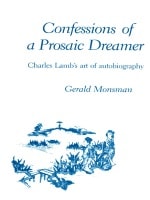
Confessions of a Prosaic Dreamer
Charles Lamb's Art of AutobiographyGerald Monsman
Duke University Press, 1984
Gerald Monsman in this study abandons the customary chronological approach to Lamb's life in favor of a more incisive, open-ended discussion of the Elia essays. By a close textual examination of Lamb's language, he relates the essayist's use of symbol and autobiographical concerns. Monsman contends and demonstrates that "as sharply and as pertinently as any artistic voice, Elia, the most celebrated persona in the nineteenth century, focuses the problems inherent in the modern literary imagination." Elia's "textual identity is a function of the author's actual life, of losses and imperfections artistically utilized and harmonized, employed against themselves to produce the rehabilitating symbol."
Confronting AIDS through Literature
The Responsibilities of RepresentationEdited by Judith Laurence Pastore
University of Illinois Press, 1993
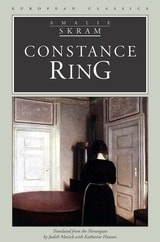
Constance Ring
Amalie Skram
Northwestern University Press, 2002
Contar historias
Escritura creativa en el aulaGabriela Polit Dueñas, Editora
University of Texas Press, 2023
A collection of essays and stories written in Spanish by students for students.
Contar Historias: Escritura creativa en el aula es una colección de ensayos e historias de no ficción escritas por estudiantes de grado y pregrado que tomaron cursos y/o asistieron a talleres de escritura impartidos el Departamento de Español y Portugués en la Universidad de Texas en Austin. El libro es una muestra del trabajo creativo de estudiantes que hablan español en casa pero que nunca escribieron un texto creativo en esta lengua; estudiantes para quienes el español es su segunda, tercera e incluso cuarta lengua, y estudiantes para quienes es su lengua materna. La diversidad de voces y la amplia raigambre cultural, lingüística y geográfica de la que emergen se juntan en este volumen que refleja la multiplicidad de maneras en que el español apela a las nuevas generaciones de estudiantes, no solo en UT sino en todo el país.
Contar historias: Escritura creativa en el aula (Telling Stories: Creative Writing in the Classroom) is a remarkable collection of topical essays and poignant stories written by undergraduate and graduate students who took courses and/or writing workshops offered by the Spanish Creative Writing Initiative in the Department of Spanish and Portuguese at the University of Texas at Austin. The book showcases an abundance of amazingly creative work and includes heritage speakers who have never before written a creative work in Spanish; students for whom Spanish is a second, third, and even fourth language; and native speakers. The diversity of voices from an array of cultural, linguistic, and geographical backgrounds collected in this volume reflects the multiplicity of ways in which Spanish appeals to students, not just at UT, but everywhere.
The stories include—but are not limited to—intimate tales of attending college; personal testimonials on the effects of climate change, experiences navigating the US health system, and accounts of many beautiful memories from childhood. They reveal the moving and diverse ways of communicating in Spanish and are themselves potent arguments for the importance of using creativity, working collaboratively, and telling stories in the classroom.
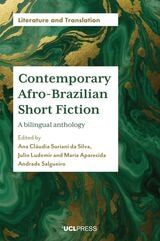
Contemporary Afro-Brazilian Short Fiction
Edited by Ana Cláudia Suriani da Silva, Julio Ludemir, and Maria Aparecida Andrade Salgueiro
University College London, 2024
Besides Africa, Brazil is the largest Afro-descendant country, however, literature produced by Black Brazilians is predominantly unknown in Brazil and abroad. Contemporary Afro-Brazilian Short Fiction emerges from a collaborative translation project, bringing Afro-Brazilian literature to a global audience demanding Afro-diasporic literature, as well as decolonial practices and content. This unique bilingual compilation of twenty-one short stories includes both established and emerging Afro-Brazilian voices, fostering cross-cultural understanding and affirming the legitimacy of Black Portuguese, pretoguês, as a literary language. The editors each provide introductions that contextualize the works, while also engaging in theoretical debates, shedding light on the role of literary translation in language teaching and the impact of the Literary Festival of the Peripheries in forming a new generation of Black Brazilian writers.
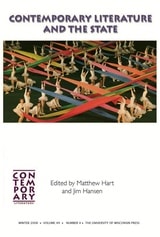
Contemporary Literature and the State
A special issue of Contemporary Literature 49:4 (Winter 2008)Matthew Hart
University of Wisconsin Press, 2009
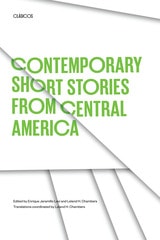
Contemporary Short Stories from Central America
Edited by Enrique Jaramillo Levi and Leland H. Chambers
University of Texas Press, 1993
This volume collects some of the best short fiction from the six Spanish-speaking countries of Central America—Guatemala, Honduras, El Salvador, Nicaragua, Costa Rica, and Panama. Selected from stories written between 1963 and 1988, it is a broad representation of active Central American writers.
Many of the stories are quite sophisticated and utilize elements of the absurd or techniques of magical realism. Some stories deal with war—the unending struggle against dictators and military power that engrosses Central Americans. Others explore the realm of the writer's imagination. Some of the writers included are Augusto Monterroso (Guatemala), Carmen Naranjo and Samuel Rovinski (Costa Rica), Rosa María Britton and Jaime García Saucedo (Panama), and Alfonso Quijada Urías (El Salvador).
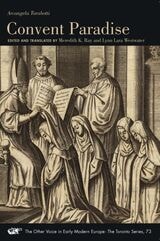
Convent Paradise
Arcangela Tarabotti
Iter Press, 2020
The Other Voice in Early Modern Europe - The Toronto Series volume 73
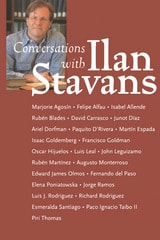
Conversations with Ilan Stavans
Ilan Stavans
University of Arizona Press, 2005
Spontaneous and surprising, these conversations reflect Latino life in the United States in all its facets. Among the more than two dozen selections, Edward James Olmos talks about Hispanics in Hollywood; John Leguizamo describes how he shapes a stage show; author Richard Rodriguez reflects on his gang background; Esmeralda Santiago takes on the Puerto Rican stereotype; and Piri Thomas shares thoughts on the writing of Down These Mean Streets. "A conversation is a tango," writes Stavans, "for it takes two to dance it." Conversations with Ilan Stavans invites readers to catch the rhythm and enjoy these unique meetings of minds.
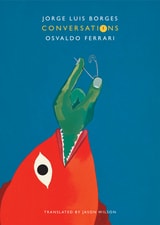
Conversations, Volume 1
Jorge Luis Borges and Osvaldo Ferrari
Seagull Books, 2014
The Argentine short-story writer, essayist, poet and translator, contributed immensely to twentieth-century literature, and more specifically to the genres of magical realism and fantasy. As he progressively lost his sight—he became completely blind by the age of fifty-five—the darkness behind his eyelids held enchanting imagery that translated into rich symbolism in his work. The inner workings of his curious mind are seen vividly in his conversations with Ferrari, and there’s not a subject on which he doesn’t cast surprising new light. As in his tale “The Other,” where two Borgeses meet up on a bench beside the River Charles, this is a dialogue between a young poet and the elder teller of tales where all experience floats in a miracle that defies linear time.

Coordinates
Placing Science Fiction and FantasyGeorge E Slusser
Southern Illinois University Press, 1983
These thirteen original essays were written specifically for the Third J. Lloyd Eaton Conference on Science Fiction and Fantasy Literature, held February 21–22, 1981, at the University of California, Riverside.
Leslie Fiedler sets the tone of this volume by fixing a basic set of coordinates—that of “elitist” and “popular” standards.
Those replying to his charge are: Eric S. Rabkin, Professor of English at the University of Michigan and author of The Fantasticin Literature, “The Descent of Fantasy”; Gerald Prince, Professor of French at the University of Pennsylvania, “How New is New?”; Mark Rose, Professor of English at the University of California at Santa Barbara, author of Alien Encounters, “Jules Verne: Journey to the Center of Science Fiction”; Joseph Lenz, who teaches English Literature at the University of Michigan, “Manifest Destiny: Science Fiction Epic and Classical Forms”; Michelle Massé, of the English Department at the George Mason University, “‘All you have to do is know what you want’: Individual Expectations in Triton”;Gary K. Wolfe, who teaches English at Roosevelt University, author of The Known and the Unknown, “Autoplastic and Alloplastic Adaptations in Science Fiction: ‘Waldo’ and ‘Desertion’”; Robert Hunt, an editor with Glencoe Press, “Science Fiction for the Age of Inflation: Reading Atlas Shrugged in the 1980s”; George R. Guffey, Professor of English at UCLA, “Fahrenheit 451and the ‘Cubby-Hole Editors’ of Ballantine Books”; H. Bruce Franklin, Professor of English and American Literature at Rutgers University at Newark, “America as Science Fiction: 1939”; Sandra M. Gilbert, Professor of English at the University of California at Davis, and coauthor with Susan Gubar of Madwoman in the Attic, “Rider Haggard’s Heart of Darkness”; the aforementioned Susan Gubar, Professor of English at Indiana University, “She in Her/and: Feminism as Fantasy”; and George R. Slusser, Curator of the Eaton Collection, “Death and the Mirror: Existential Fantasy.”
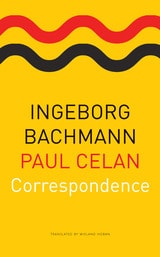
Correspondence
Paul Celan and Ingeborg Bachmann
Seagull Books, 2019
Collected here for the first time in English are their letters written between 1948 and 1961. Their correspondence forms a moving testimony of the discourse of love in the age after Auschwitz, with all the symptomatic disturbances and crises caused by their conflicting backgrounds and their hard-to-reconcile designs for living—as a woman, as a man, as writers. In addition to the almost 200 letters, the volume includes an important exchange between Bachmann and Gisèle Celan-Lestrange, who married Celan in 1951, as well as the letters between Paul Celan and Swiss writer Max Frisch.
“Scarcely more breathlessly and desperately can two lovers ever have struggled for words. Little known among German literary historians, the relationship between these two poets amounts to one of the most dramatic and momentous occurrences in German literature.”—FAZ, on the German edition
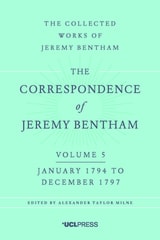
Correspondence of Jeremy Bentham Volume 5
January 1794 to December 1797Jeremy Bentham, edited by Alexander Taylor Milne, and series edited by J.H. Burns
University College London, 2017
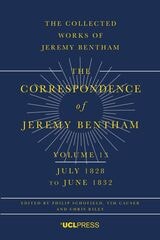
Correspondence of Jeremy Bentham, Volume 13
July 1828 to June 1832Edited by Philip Schofield, Tim Causer, and Chris Riley
University College London, 2024
The Correspondence of Jeremy Bentham, Volume 13 contains authoritative and fully annotated texts of all known and publishable letters sent both to and from Bentham between 1st July 1828 and his death on 6th June 1832. In addition to 474 letters, the volume contains three memorandums concerning Bentham’s health shortly before his death, his last will and testament, and extracts from both the autobiography and the manuscript diaries of Bentham’s nephew George. Among the letters that have already been published, most are drawn from the edition of The Works of Jeremy Bentham, prepared under the superintendence of Bentham’s literary executor John Bowring. A small number of letters have been reproduced from newspapers and periodicals.
This volume publishes, for the first time, the entire extant correspondence between Bentham and Daniel O’Connell, the Irish Liberator. Other new acquaintances include the barrister and law reformer, Charles Sinclair Cullen, and the Real Property Commissioner, John Tyrrell. Throughout the period, Bentham maintained regular contact with old friends and connections, but he also engaged in sporadic correspondence with such leading figures in government as the Duke of Wellington, Robert Peel, and Henry Brougham. Further afield, Bentham corresponded, amongst others, with the Marquis de La Fayette in France, Edward Livingston in the United States of America, and José Del Valle in Guatemala.
Correspondence of Jeremy Bentham, Volume 1
1752 to 1776Jeremy Bentham, edited by Timothy L. S. Sprigge, and series edited by J.H. Burns
University College London, 2017
Correspondence of Jeremy Bentham, Volume 2
1777 to 1780Jeremy Bentham, edited by Timothy L. S. Sprigge, and series edited by J.H. Burns
University College London, 2017
Correspondence of Jeremy Bentham, Volume 3
January 1781 to October 1788Jeremy Bentham, edited by Ian R. Christie, and series edited by J.H. Burns
University College London, 2017
Correspondence of Jeremy Bentham, Volume 4
October 1788 to December 1793Jeremy Bentham, edited by Alexander Taylor Milne, and general editor John R. Dinwiddy
University College London, 2017
Coyotes and Culture
Essays from Old MalibuClaire McEachern
University of Nevada Press, 2025
This unique collection of essays offers a gripping exploration of the precarious beauty and peril of California’s iconic coastline. Through essays blending personal narrative, cultural analysis, and history, author Claire McEachern takes us behind the scenes of surf and celebrities to paint a vivid portrait of life on the edge —both literally and metaphorically. From the rugged Santa Monica Mountains to the shimmering Pacific, this work captures the paradoxes of Old Malibu: a place of luxury and risk, natural splendor and ecological vulnerability.
As an East Coast academic married to a fifth-generation Californian cowboy, McEachern brings a wry yet tender lens to the modern American story, delving into what happens to love and community in a land of both devastating wildfires and extravagant wildflowers. Her reflections weave together questions of beauty, resilience, and humanity’s uneasy relationship with nature, creating an unforgettable narrative of place and survival. Readers drawn to the drama of human stories set against larger cultural and environmental forces will find this book both thought-provoking and deeply moving.
Creature Needs
Writers Respond to the Science of Animal ConservationChristopher Kondrich
University of Minnesota Press, 2024
A kaleidoscopic literary exploration of extinction and conservation, inspired by the latest scientific research
Creature Needs is a polyvocal call to arms about animal extinction and habitat loss that harnesses the power of literature and scientific research to move us, and stir our hearts and minds, toward action and change. A collection of new literary works by prominent writers paired with excerpts from recent scientific articles that inspired and informed them, this innovative anthology engages the collaborative, cross-disciplinary spirit and energy that is necessary to address the impact of humans on all other animals on our planet.
Divided into six sections representing the basic needs for survival—air, food, water, shelter, room to move, and each other—the stories and poems in Creature Needs vividly portray how these essential conditions are under assault through climate change, habitat loss, plastic and industrial pollution, and human intervention in natural landscapes. As the dominant species on Earth, humans not only control access to survival resources but we also overconsume and harm them. Rather than surrender to despair, the writers here believe that we have the power, if we choose, to change course and protect these resources.
A collaboration with the nonprofit organization Creature Conserve, Creature Needs is a path-setting fusion of literary art and scientific research that deepens our understanding of the interdependence between life and habitat, illuminating the stark choices we face to conserve resources and ensure that the basic needs of all species are met.
Contributors: Kazim Ali, Mary-Kim Arnold, Ramona Ausubel, David Baker, Charles Baxter, Aimee Bender, Kimberly Blaeser, Oni Buchanan, Tina Cane, Ching-In Chen, Mónica de la Torre, Tongo Eisen-Martin, Thalia Field, Ben Goldfarb, Annie Hartnett, Sean Hill, Hester Kaplan, Donika Kelly, Robin McLean, Miranda Mellis, Rajiv Mohabir, Kyoko Mori, David Naimon, Craig Santos Perez, Beth Piatote, Rena Priest, Alberto Ríos, Eléna Rivera, Sofia Samatar, Sharma Shields, Eleni Sikelianos, Maggie Smith, Juliana Spahr, Tim Sutton, Jodie Noel Vinson, Asiya Wadud, Claire Wahmanholm, Marco Wilkinson, Jane Wong.
Crete and James
Personal Letters of Lucretia and James GarfieldJohn Shaw
Michigan State University Press, 1994
Crete and James is a collection of letters exchanged by James A. Garfield and Lucretia Randolph Garfield during the mid-nineteenth century. Of the 1,200 or so letters written, the 300 included this work chronicle their courtship and marriage, and also discuss the Civil War, political affairs, and the details of daily life during the years 1853-1881. In them, we watch Crete grow from a shy girl into a self-confident woman who guides her husband in social and political matters. Through James’s flamboyant yet scholarly style, and Lucretia’s detailed, perceptive insights, we come to know them as though they were our close friends. Through their correspondence, the reader also meets the many people involved in their lives. Crete and James will be of great interest to those studying women’s history.

Crime Uncovered
DetectiveEdited by Barry Forshaw
Intellect Books, 2015
Taking readers into the worlds of such beloved authors as P. D. James, Henning Mankell, Jo Nesbø, Ian Rankin, and Håkan Nesser, this book zeroes in on the characteristics that define the iconic characters they created, discussing how they relate to their national and social settings, questions of class, and to the criminals they relentlessly pursue. Showing how the role of the authority figure has changed—and how each of these writers creates characters who work both within and against the strictures of official investigations—the book shows how creators cleverly subvert expectations of both police procedure and the crime genre itself.
Written by a leading expert in the field and drawn from interviews with the featured authors, Crime Uncovered: Detectivewill thrill the countless fans of Inspector Rebus, Harry Hole, Adam Dalgliesh, and the other enduring police detectives who define the genre.
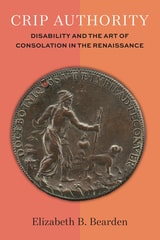
Crip Authority
Disability and the Art of Consolation in the RenaissanceElizabeth B. Bearden
University of Michigan Press, 2025
Disabled authors include Francesco Petrarca, Teresa de Cartagena, Giovani Paolo Lomazzo, Miguel de Cervantes Saavedra, Robert Burton, and John Milton. They all explore their experiences of disability, but their work has rarely or never been considered from a disability studies perspective. Bearden thus brings today’s models of disability studies and crip theory together with early modern articulations of disability based on ancient and Renaissance models of military, political, biblical, and literary authority. In sum, Crip Authority makes a significant contribution to the growing field of early modern disability studies and invites us to rethink the extent of crip history and the endurance of disability gain.
Critical Essays
Roland Barthes
Northwestern University Press, 1972

Critical Passions
Selected EssaysJean Franco
Duke University Press, 1999
A key participant in the major debates in Latin American studies—beginning with the “boom” period of the 1960s and continuing through debates on ideology and discourse, Marxism, mass culture, and postmodernism—Franco is recognized for her feminist critique of Latin American writing. While her principal books are all readily available, Franco’s several dozen articles are dispersed in a variety of periodicals in Latin America, Europe, and the United States. Although many of these essays are considered pioneering and classic, they have never before been collected in a single work. In this volume, Mary Louise Pratt and Kathleen Newman have organized the essays into four interrelated sections: feminism and the critique of authoritarianism, mass and popular culture, Latin American literature from the “boom” onward, and the cultural history of Mexico. As a group, these writings demonstrate Franco’s ability to reflect on and judge with equal seriousness all spheres of expression, whether subway graffiti, a fashion manual, or an avant-garde haiku. A bona fide fan of popular and mass media, Franco never allows her critiques to dissolve into the puritanical or reductive; instead, she finds ways to present and debate complex theoretical questions in direct and accessible language.
This volume will draw an extensive readership in Latin American, cultural, and women’s studies.
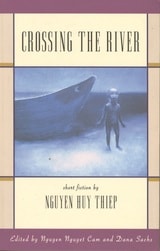
Crossing the River
Short Fiction by Nguyen Huy ThiepNguyen Huy Thiep
Northwestern University Press, 2002
Crossing the River presents a wide range of Nguyen Huy Thiep's short fiction, both realistic stories in contemporary settings and retellings of folk myths that serve as contemporary parables. When Thiep's stories first appeared in the 1980s, they set off a chain of debate, not only within intellectual and political circles, but also within the society at large. Typically, the struggles of his characters were about survival, not survival in the context of war or revolution, but survival in the context of the emotional and psychological strength it takes to live within the harsh confines of post-war Vietnamese society. Thiep captured the emotional quality of Vietnamese life in a way no other author had done, and his importance can be recognized today by his enormous influence on younger writers.
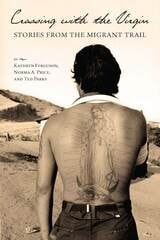
Crossing with the Virgin
Stories from the Migrant TrailKathryn Ferguson, Norma A. Price, and Ted Parks
University of Arizona Press, 2010
Crossing With the Virgin collects stories heard from migrants about these treacherous treks—firsthand accounts told to volunteers for the Samaritans, a humanitarian group that seeks to prevent such unnecessary deaths by providing these travelers with medical aid, water, and food. Other books have dealt with border crossing; this is the first to share stories of immigrant suffering at its worst told by migrants encountered on desert trails.
The Samaritans write about their encounters to show what takes place on a daily basis along the border: confrontations with Border Patrol agents at checkpoints reminiscent of wartime; children who die in their parents’ desperate bid to reunite families; migrants terrorized by bandits; and hovering ghost-like above nearly every crossing, the ever-present threat of death.
These thirty-nine stories are about the migrants, but they also tell how each individual author became involved with this work. As such, they offer not only a window into the migrants’ plight but also a look at the challenges faced by volunteers in sometimes compromising situations—and at their own humanizing process.
Crossing With the Virgin raises important questions about underlying assumptions and basic operations of border enforcement, helping readers see past political positions to view migrants as human beings. It will touch your heart as surely as it reassures you that there are people who still care about their fellow man.
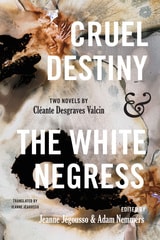
Cruel Destiny and The White Negress
Two Novels by Cléante Desgraves ValcinAdam Nemmers
Rutgers University Press, 2024
Cruel Destiny (1929) tells the tragic love story of Armand and Adeline, drawn together by a magnetic attraction, yet kept apart by a dark family secret. Depicting the heavy expectations placed upon women in Haiti’s elite society, it also explores the troubled and twisted relationships between the Haitians and their former colonial masters, the French.
In The White Negress (1934), a Frenchwoman moves to Haiti and is torn between two very different men, a Black Haitian lawyer, and a white American carpetbagger. Putting a fresh spin on the tired tragic mulatta trope, Valcin reveals the racial prejudices, class tensions, and anti-colonial resentments of an island under American occupation.
Together, these two novels expand our understanding of Caribbean literature, as well as the political struggles and artistic triumphs of Black women in the Americas.
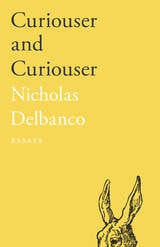
Curiouser and Curiouser
EssaysNicholas Delbanco
The Ohio State University Press, 2017
Whether exploring the history of personal viewing in the business of museum-going, musing on the process of rewriting one’s earliest published work, or looking back on the twists and turns of a life that spans the greater part of the twentieth century and into the twenty-first, Delbanco’s Curiouser and Curiouser invites adventurous readers to follow him down the rabbit hole as he reflects on life as a student, an observer, a writer, a lover, a father, a teacher, and most importantly, a participant in the everyday experiences of human life.