Results by title
1148 books match the query 'Political Ideologies' and 82 start with c
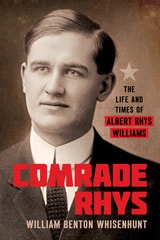
Comrade Rhys
The Life and Times of Albert Rhys WilliamsWilliam Benton Whisenhunt
University of Illinois Press, 2026
William Benton Whisenhunt draws on the largely untapped archive of Williams’s papers to provide a first-ever biography of the dedicated radical writer. Williams spent nearly ten years living and traveling in the USSR, where he observed the Soviet system and reported on it with unusual nuance in numerous books, articles, and speeches. Whisenhunt follows Williams from his early life as a lumberyard worker and preacher through his participation in the Revolution and his long career as a radical writer. Able to see socialism as flawed, Williams’s nonetheless defended it as an alternative to capitalism with such vigor that correspondents often addressed him as Comrade Rhys.
Astute and richly detailed, Comrade Rhys reveals the life and work of an overlooked radical thinker.

Concepts of International Relations, for Students and Other Smarties
Iver B. Neumann
University of Michigan Press, 2019
In a relaxed style, Neumann introduces the long-term historical emergence of concepts such as state (European), state (global), empire, nonstate agents, foreign policy, state system, nationalism, globalization, security, international society, great powers, diplomacy, war and peace, balance of power, international law, power and sovereignty, intervention, gender, and class. He demonstrates how such phenomena have been understood in different ways over time. First, the reader learns how the use of concepts is an integral part of politics. Second, the reader sees how social change has worked in the past, and is working now. Third, the book demonstrates how historical and social context matters in ongoing international relations.
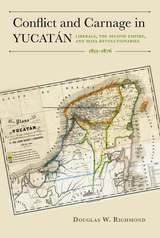
Conflict and Carnage in Yucatán
Liberals, the Second Empire, and Maya Revolutionaries, 1855–1876Douglas W. Richmond
University of Alabama Press, 2015
Synthesizing an extensive and heterogeneous range of sources, Douglas W. Richmond covers three tumultuous political upheavals of this period. First, Mexico’s fledgling republic attempted to impose a liberal ideology at odds with traditional Maya culture on Yucatán; then, the French-backed regime of Emperor Maximilian began to reform Yucatán; and, finally, the republican forces of Benito Juárez restored the liberal hegemony. Many issues spurred resistance to these liberal governments. Instillation of free trade policies, the suppression of civil rights, and persecution of the Roman Catholic Church mobilized white opposition to liberal governors. The Mayas fought the seizure of their communal properties. A long-standing desire for regional autonomy united virtually all Yucatecans. Richmond advances the thought-provoking argument that Yucatán both fared better under Maximilian’s Second Empire than under the liberal republic and would have thrived more had the Second Empire not collapsed.
The most violent and bloody manifestation of these broad conflicts was the Caste War (Guerra de Castas), the longest sustained peasant revolt in Latin American history. Where other scholars have advocated the simplistic position that the war was a Maya uprising designed to reestablish a mythical past civilization, Richmond’s sophisticated recounting of political developments from 1855 to 1876 restores nuance and complexity to this pivotal time in Yucatecan history.
Richmond’s Conflict and Carnage in Yucatán is a welcome addition to scholarship about Mexico and Yucatán as well as about state consolidation, empire, and regionalism.
Confronting Mass Democracy and Industrial Technology
Political and Social Theory from Nietzsche to HabermasJohn P. McCormick, ed.
Duke University Press, 2002
Scholars representing the fields of political science, philosophy, history, law, literature, and cultural studies devote essays to the work of Nietzsche, Weber, Heidegger, Lukács, Schmitt, Marcuse, Adorno, and Habermas. They also discuss the writings of such figures as Brecht and Freud, who are not primarily thought of as political theorists, and explore the thought of Helmut Plessner and reformist theorists from East Germany who have been little studied in the English language. In the process of debating the nature and responsibilities of the modern state in an era of mass politics, unparalleled military technology, capacity for surveillance, and global media presence, the contributors question whether technology is best understood as an instrument of human design and collective control or as an autonomous entity that not only has a will and life of its own but one that forms the very fabric of modern humanity.
Contributors. Seyla Benhabib, Richard J. Bernstein, Peter C. Caldwell, Richard Dienst, David Dyzenhaus, Andrew Feenberg, Nancy S. Love, John P. McCormick, Jan-Werner Müller, Gia Pascarelli, William E. Scheuerman, Steven B. Smith, Tracy B. Strong, Richard Wolin
Confronting the Nation
Jewish and Western NationalismGeorge L. Mosse
University of Wisconsin Press, 2024
Mosse considers a broad range of topics, from Nazi book burnings to Americans’ search for unifying national symbols during the Great Depression, exploring how the development of particular modes of art, architecture, and mass movements served nationalist agendas by dictating who was included in the image of the nation. These essays retain their significance today in their examination of the cultural and social implications of contemporary nationalism. A new critical introduction by Shulamit Volkov, professor emerita of history at Tel Aviv University, situates Mosse’s analysis within its historiographical context.
Conservative Ideology in the Making
Ivan Zoltan Denes
Central European University Press, 2009

Conspiracies in Broad Daylight?
Conspiracism, Fascism, and the Radical RightMarco Bresciani
Central European University Press, 2027
Conspiracies in Broad Daylight?
Conspiracism, Fascism, and the Radical RightMarco Bresciani
Central European University Press, 2027
Conspiracy/Theory
Joseph Masco and Lisa Wedeen, editors
Duke University Press, 2024
Contributors. Nadia Abu El-Haj, Hussein Ali Agrama, Kathleen Belew, Elizabeth Anne Davis, Joseph Dumit, Faith Hillis, Lochlann Jain, Demetra Kasimis, Susan Lepselter, Darryl Li, Louisa Lombard, Joseph Masco, Robert Meister, Timothy Melley, Rosalind C. Morris, George Shulman, Lisa Wedeen
Constitutional Democracy
János Kis
Central European University Press, 2003

Constructing Singapore
Elitism, Ethnicity and the Nation-building ProjectMichael D. Barr and Zlatko Skrbis
National University of Singapore Press, 2008
Constructivism Reconsidered
Past, Present, and FutureMariano E. Bertucci, Jarrod Hayes, and Patrick James, Editors
University of Michigan Press, 2018
Constructivism Reconsidered synthesizes the nature of and debates on constructivism in international relations, providing a systematic assessment of the constructivist research program in IR to answer specific questions: What extent of (dis)agreement exists with regard to the meaning of constructivism? To what extent is constructivism successful as an alternative approach to rationalism in explaining and understanding international affairs? Constructivism Reconsidered explores constructivism’s theoretical, empirical, and methodological strengths and weaknesses, and debates what these say about its past, present, and future to reach a better understanding of IR in general and how constructivism informs IR in particular.

Contagions
Nationalism, Populism, and the Pandemic at Europe’s EdgeJosip Glaurdic
Central European University Press, 2026
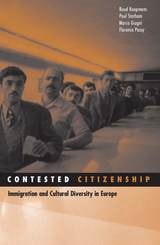
Contested Citizenship
Immigration and Cultural Diversity in EuropeRuud Koopmans
University of Minnesota Press, 2005
Revealing striking cross-national differences in how immigration and diversity are contended by different national governments, these authors find that how citizenship is constructed is the key variable defining the experience of Europe’s immigrant populations. Contested Citizenship provides nuanced policy recommendations and challenges the truism that multiculturalism is always good for immigrants. Even in an age of European integration and globalization, the state remains a critical actor in determining what points of view are sensible and realistic—and legitimate—in society.
Ruud Koopmans is professor of sociology at Free University, Amsterdam. Paul Statham is reader in political communications at the University of Leeds. Marco Giugni is a researcher and teacher of political science at the University of Geneva. Florence Passy is assistant professor of political science at the University of Lausanne, Switzerland.
Cores, Peripheries, and Globalization
Peter Hanns Reill
Central European University Press, 2011
Could it Happen Here?
The Day a Prime Minister Refuses to ResignPeter Hennessy
Haus Publishing, 2025
In light of the resurgence of the far Right across Europe and some of the rhetoric of the 2024 General Election, which carried whiffs of political authoritarianism, Could It Happen Here? explores the possible consequences of a British prime minister refusing to leave office. Mapping out the processes that might occur after such an eventuality, the responsibilities of key players in the United Kingdom’s democratic system, and the integrity of that system after years of stress, Peter Hennessy and Andrew Blick analyze the United Kingdom’s “unwritten” constitution and provide a crucial recommendation for protecting and strengthening the resilience of its parliamentary democracy.
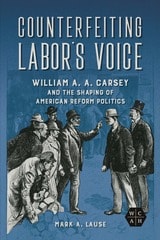
Counterfeiting Labor's Voice
William A. A. Carsey and the Shaping of American Reform PoliticsMark A. Lause
University of Illinois Press, 2024
Countermobilization
Policy Feedback and Backlash in a Polarized AgeEric M. Patashnik
University of Chicago Press, 2023
An essential look at how and why backlash movements are inherent to US policymaking.
The most successful policies not only solve problems. They also build supportive coalitions. Yet, sometimes, policies trigger backlash and mobilize opposition. Although backlash is not a new phenomenon, today’s political landscape is distinguished by the frequency and pervasiveness of backlash in nearly every area of US policymaking, from abortion rights to the Affordable Care Act.
Eric M. Patashnik develops a policy-centered theory of backlash that illuminates how policies stimulate backlashes by imposing losses, overreaching, or challenging existing arrangements to which people are strongly attached. Drawing on case studies of issues from immigration and trade to healthcare and gun control, Countermobilization shows that backlash politics is fueled by polarization, cultural shifts, and negative feedback from the activist government itself. It also offers crucial insights to help identify and navigate backlash risks.
Creating Conservatism
Postwar Words that Made an American MovementMichael J. Lee
Michigan State University Press, 2014

Creating Germans Abroad
Cultural Policies and National Identity in NamibiaDaniel Joseph Walther
Ohio University Press, 2002
When World War I brought an end to German colonial rule in Namibia, much of the German population stayed on. The German community, which had managed to deal with colonial administration, faced new challenges when the region became a South African mandate under the League of Nations in 1919. One of these was the issue of Germanness, which ultimately resulted in public conversations and expressions of identity.
In Creating Germans Abroad, Daniel Walther examines this discourse and provides striking new insights into the character of the German populace in both Germany and its former colony, Southwest Africa, known today as Namibia. In addition to German colonialism, Walther considers issues of race, class, and gender and the activities of minority groups. He offers new perspectives on German cultural and national identity during the Empire, the Weimar Republic, and the Third Reich.
In a larger context, Creating Germans Abroad acts as a model for investigating the strategies and motivations of groups and individuals engaged in national or ethnic engineering and demonstrates how unforeseen circumstances can affect the nature and outcome of these endeavors.
Creating Political Presence
The New Politics of Democratic RepresentationEdited by Dario Castiglione and Johannes Pollak
University of Chicago Press, 2018
In Creating Political Presence, a diverse and international group of scholars explores the implications of such a turn. Two broad, overlapping perspectives emerge. In the first section, the contributions investigate how political representation relates to empowerment, either facilitating or interfering with the capacity of citizens to develop autonomous judgment in collective decision making. Contributions in the second section look at representation from the perspective of inclusion, focusing on how representative relationships and claims articulate the demands of those who are excluded or have no voice. The final section examines political representation from a more systemic perspective, exploring its broader environmental conditions and the way it acquires democratic legitimacy.
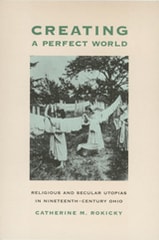
Creating a Perfect World
Religious and Secular Utopias in Nineteenth-Century OhioCatherine M. Rokicky
Ohio University Press, 2002
Powerful currents of religious revival and political and social reform swept nineteenth-century America. Many people expressed their radical religious and social ideals by creating or joining self-contained utopian communities. These utopianists challenged the existing social and economic order with alternative notions about religion, marriage, family, sexuality, property ownership, and wage labor.
Between 1787 and 1919, approximately 270 utopian communities existed in the United States. Due to its unique location on the young nation’s frontier, the state of Ohio was the site of much of this activity.
Creating a Perfect World examines Ohio’s utopian movements, both religious and secular. These include the United Society of Believers in Christ’s Second Coming, or Shakers; the Society of Separatists at Zoar; the Mormons, who stopped in the state for several years on their way west; and several societies based on the philosophies of European social reformers Robert Owen and Charles Fourier.
In this detailed account of a unique and fascinating chapter in Ohio’s history, Catherine M. Rokicky profiles these communities and explores their ideals, how and why they were established, their leaders, and their members’ reasons for joining and sometimes leaving. She also examines the roles men and women played, their approaches to communal living and community property, their economic activities, their relations with surrounding communities and the state, and the various reasons for their success or failure.
Creating the American State
The Moral Reformers and the Modern Administrative World They MadeRichard Stillman
University of Alabama Press, 1998
In this illuminating and provocative study, Stillman provides a new understanding of the foundation of the American state.
Whether renewing a driver's license, traveling on an airplane, or just watching in fascination as a robot probes Mars, we all participate in the everyday workings of the modern administrative state. As Stillman demonstrates in this study, however, we have not, until now, fully investigated or appreciated this administrative stateÕs origins or its evolution into the entity that so affects our lives today.
Stillman reveals that this modern enterprise emerged from a complex foundation of ideas and ideals rather than as a result of a simple, rational plan or cataclysmic event, as previously contended. In fact, he finds that the basis for our current administrative state lies in the lives of the seven individuals who, during the late 19th and early 20th centuries, invented its various elements.
Stillman also finds that although they lived at different times, these seven founders-George William Curtis, Charles Francis Adams, Jr., Emory Upton, Jane Addams, Frederick W. Taylor, Richard Childs, and Louis Brownlow-had much in common: all were products of intensely Protestant, small-town America, and all were motivated by strong moral idealism. Indeed, Stillman finds that state making in the United States has been a continuation of the Protestant goal to "protest and purify."
Some names are more recognizable than others, but all, through remarkable moral fervor and exceptional leadership skills, invented the administrative practices and procedures so familiar today.
Creative Dissent
Alternative Cultures during SocialismKatalin Cseh-Varga
Central European University Press, 2027
Creative Dissent argues that the region was teeming with alternative cultures: emerging practices and expressions that actively challenged the dominant social code and reshaped the reality of the people’s democracies.
The book explores how ordinary people, intellectuals, and cultural players across socialist Europe responded to state repression and comprehensive control with ingenuity and defiance. By examining how these dissenting voices circumvented or even penetrated official spaces, this collection illuminates the complex heterogeneity of life behind the Iron Curtain.
Structured around four key areas—communities, markets, media, and spaces—this work offers a necessary, nuanced understanding of cultural resistance and the limits of authoritarian control.
Critical Theory and Authoritarian Populism
Jeremiah Morelock
University of Westminster Press, 2018

Critique of Exotica
Music, Politics and the Culture IndustryJohn Hutnyk
Pluto Press, 2000
Cultural Dilemmas of Progressive Politics
Styles of Engagement among Grassroots ActivistsStephen Hart
University of Chicago Press, 2001
Through case studies of grassroots movements—particularly the economic justice work carried on by congregation-based community organizing and the pursuit of human rights by local members of Amnesty International—Hart shows how these groups develop distinctive ways of talking about politics and create characteristic stories, ceremonies, and practices. According to Hart, the way people engage in politics matters just as much as the content of their ideas: when activists make the moral basis for their activism clear, engage issues with passion, and articulate a unified social vision, they challenge the recent ascendancy of conservative discourse.
On the basis of these case studies, Hart addresses currently debated topics such as individualism in America and whether strains of political thought strongly informed by religion and moral values are compatible with tolerance and liberty.
Cultural Offensive
America's Impact on British Art Since 1945John A. Walker
Pluto Press, 1998
This is the first text to document in detail the variegated responses of British artists to postwar America and its art, criticism and mass media. Their reactions that ranged from Americanism – enthusiasm and compliance – to Anti-Americanism – criticism and resistance. Covering significant art movements such as Abstract Expressionism, the Independent Group and Pop Art, Walker synthesises information from hundreds of published sources and interviews to paint a vivid picture of a crucial period in British culture.
Many of the critics, painters and sculptors featured – Lawrence Alloway, Peter Blake, Reyner Banham, Anthony Caro, Clement Greenberg, David Hockney, Richard Hamilton, R.B. Kitaj, John Latham, Claes Oldenburg, Eduardo Paolozzi, Herbert Read, Bridget Riley, Larry Rivers – are now internationally famous. The study is brought up to date with an overview of the decline in American influence during in the 1980s and 1990s and the rise of Brit Art.
Cultures of Democracy, Volume 19
Dilip Parameshwar Gaonkar, ed.
Duke University Press, 0
The essays look at examples of democracy in a variety of spheres. One examines how the chewing of khat leaves in public gatherings in Yemen acts as a democratic practice by creating spontaneous forums for political discussion. Another considers the events of the 2003 municipal elections in Buenos Aires, when the center Right secured a record number of votes from an electorate jaded by political corruption by forming strategic alliances with local football clubs, ultimately leading to the election of the president of one popular club. And another essay explores the Indian government’s reaction when the political methods used to achieve the nation’s independence—defiance of the law, hunger strikes, demonstrations, and the destruction of public property—were used to challenge the government in the postcolonial period. Taken as a whole, the essays argue that democracy might be productively viewed as a cultural system inclusive of many cultures of democracy.
Contributors. Arjun Appadurai, Craig Calhoun, Dipesh Chakrabarty, Jean Comaroff, Carlos Forment, Dilip Parameshwar Gaonkar, Claudio Lomnitz , Manar Shorbagy, Charles Taylor, Lisa Wedeen
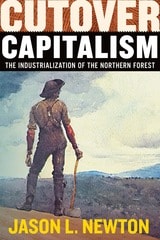
Cutover Capitalism
The Industrialization of the Northern ForestJason L. Newton
West Virginia University Press, 2024
2024 George Perkins Marsh Prize Runner-up
What happened to the loggers of America’s past when lumbermen moved west and south in the late nineteenth and early twentieth centuries? How did these communities continue to create value and meaning in these marginal lands? Cutover Capitalism: The Industrialization of the Northern Forest provides a new perspective on the process of industrialization in America through the study of rural workers in a cutover landscape.
Back when resources started running scarce, the environment of the forest and bodies of workers became the natural resources from which mills and landowners extracted. Bodies and cutover landscapes were mobilized in new ways to increase the scale and efficiency of production—a brutal process for workers, human and animal alike. In the Northern Forest, an industrial working class formed in relation to the unique ways that workers' bodies were used to produce value and in relation to the seasonal cycles of the forest environment.
Cutover Capitalism is an innovative historical study that combines methodological approaches from labor history, environmental history, and the new history of capitalism. The book tells a character-driven yet theoretically sophisticated story about what it was like to live through this process of industrialization.
Cyberlibertarianism
The Right-Wing Politics of Digital TechnologyDavid Golumbia
University of Minnesota Press, 2024
An urgent reckoning with digital technology’s fundamentally right-wing legal and economic underpinnings
In a timely challenge to the potent political role of digital technology, Cyberlibertarianism argues that right-wing ideology was built into both the technical and social construction of the digital world from the start. Leveraging more than a decade of research, David Golumbia traces how digital evangelism has driven the worldwide shift toward the political right, concealing inequality, xenophobia, dishonesty, and massive corporate concentrations of wealth and power beneath the utopian presumption of digital technology as an inherent social good.
Providing an incisive critique of the push for open access and open-source software and the legal battles over online censorship and net neutrality, Cyberlibertarianism details how the purportedly democratic internet has been employed as an organizing tool for terror and hate groups and political disinformation campaigns. As he unpacks our naively utopian conception of the digital world, Golumbia highlights technology’s role in the advancement of hyperindividualist and antigovernment agendas, demonstrating how Silicon Valley corporations and right-wing economists; antiestablishment figures such as Julian Assange, Elon Musk, Peter Thiel, Edward Snowden, and Mark Zuckerberg; and seemingly positive voices such as John Perry Barlow, Cory Doctorow, the Electronic Freedom Foundation, and Wikipedia all have worked to hamper regulation and weaken legal safeguards against exploitation.
Drawing from a wide range of thought in digital theory, economics, law, and political philosophy as well as detailed research and Golumbia’s own experience as a software developer, Cyberlibertarianism serves as a clarion call to reevaluate the fraught politics of the internet. In the hope of providing a way of working toward a more genuinely democratic and egalitarian future for digital technology, this magisterial work insists that we must first understand the veiled dogmas from which it has been constructed.
Retail e-book files for this title are screen-reader friendly.