Results by title
2285 books match the query 'Women' and 115 start with c

Clouds Without Rain
An Amish Country MysteryP. L. Gaus
Ohio University Press, 2001
Written in the tradition of Tony Hillerman, in Clouds without Rain, P. L. Gaus once again provides compelling intrigue and insight into Amish culture and tradition alongside contemporary American life.
In the wake of a fatal accident involving an Amish buggy and an eighteen-wheeler, Professor Michael Branden, working with the Holmes County Sheriff’s Department, becomes suspicious about the true nature of the crash. His suspicions only grow when the trustee of the dead man’s estate disappears a few days later.
Faced with Amish teenagers in goat masks robbing buggies on dusty lanes, land swindles involving out-of-town developers, several mysterious deaths, and the disappearance of a bank official, Branden realizes that there is far more to the story than a buggy crash on a sleepy country road.
This new edition of Clouds without Rain features an exclusive interview with the author, reading group materials, and a detailed map and driving guide to Holmes County, Ohio with everything one needs to visit the iconic scenes depicted in the story.
Clutch
An Education at WorkLinda Pawlenty
The Ohio State University Press, 2025

Coed Revolution
The Female Student in the Japanese New LeftChelsea Szendi Schieder
Duke University Press, 2021
Coeds Ruining the Nation
Women, Education, and Social Change in Postwar Japanese MediaJulia C. Bullock
University of Michigan Press, 2019
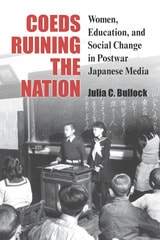
This is the first book in English to explore the arguments for and against coeducation as presented in newspaper and magazine articles, cartoons, student-authored school newsletters, and roundtable discussions published in the Japanese press as these reforms were being implemented. It complicates the notion of the postwar years as a moment of rupture, highlighting prewar experiments with coeducation that belied objections that the practice was a foreign imposition and therefore “unnatural” for Japanese culture. It also illustrates a remarkable degree of continuity between prewar and postwar models of femininity, arguing that Occupation-era guarantees of equal educational opportunity were ultimately repurposed toward a gendered division of labor that underwrote the postwar project of economic recovery. Finally, it excavates discourses of gender and sexuality underlying the moral panic surrounding coeducation to demonstrate that claims of rampant sexual deviance and other concerns were employed as disciplinary mechanisms to reinforce an ideology of harmonious gender complementarity and to dissuade women from pursuing conventionally masculine prerogatives.

Coin of the Realm
A NovelZoe Zolbrod
Northwestern University Press, 2027
Can liberation be found in the unexpected corners of a Renaissance faire?
In a near-future United States, the government has just stripped away the protections of birthright citizenship, and eighteen-year-old Raven is facing deportation. Her best hope: finding her long-gone father, an off-the-grid Renaissance faire entrepreneur called Tom the Hunter. If Raven can convince Tom to affirm his paternity, she will be able to remain in the only country she has ever known.
But Tom is no easy man locate, let alone tell what to do. The charismatic leader of an underground resistance movement based at a Ren faire in Bristol, Wisconsin, he has spent his life agitating against the ever-increasing reach of corporate and government surveillance while avoiding its gaze. In a society overrun by drones, self-driving cars, and wearable devices that track mood and behavior, he sends messages by pigeon and trains hawks to attack invaders. The only thing from the “regular world” allowed to enter his self-contained realm has been Gwen, his new lover. Facing economic and emotional headwinds after losing her job, Gwen has fled her family and a home dangerously in need of remediation, and she dives headfirst into an affair with the passionate yet conniving Tom. But when Tom’s machinations threaten those around him, Gwen begins to question her choice to leave her children behind for a world that may not be as empowering as it seems.
As Raven and Gwen become enmeshed in the vibrant and insurgent community of Bristol’s Ren faire and Tom’s antics reach unsettling new heights, each must make a choice on where they stand—and with whom.

Cold Spell
Deb Vanasse
University of Alaska Press, 2014
From the moment Ruth Sanders rips a glossy photo of a glacier from a magazine, she believes her fate is intertwined with the ice. Her unsettling fascination bewilders her daughter, sixteen-year-old Sylvie, still shaken by her father’s leaving. When Ruth uproots Sylvie and her sister from their small Midwestern town to follow her growing obsession—and a man—to Alaska, they soon find themselves entangled with an unfamiliar wilderness, a divided community, and one another. As passions cross and braid, the bond between mother and daughter threatens to erode from the pressures of icy compulsion and exposed secrets.
Inspired by her own experience arriving by bush plane to live on the Alaska tundra, Deb Vanasse vividly captures the reality of life in Alaska and the emotional impact of loving a remote and unforgiving land.
Cold War Progressives
Women's Interracial Organizing for Peace and FreedomJacqueline Castledine
University of Illinois Press, 2012
Collected Letters of a Renaissance Feminist
Laura Cereta
University of Chicago Press, 1997
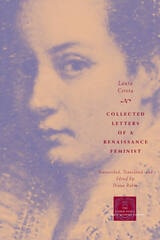
Yet these letters also furnish a detailed portrait of an early modern woman’s private experience, for Cereta addressed many letters to a close circle of family and friends, discussing highly personal concerns such as her difficult relationships with her mother and her husband. Taken together, these letters are a testament both to an individual woman and to enduring feminist concerns.
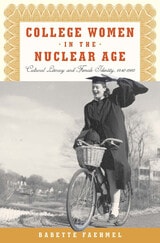
College Women In The Nuclear Age
Cultural Literacy and Female Identity, 1940-1960Babette Faehmel
Rutgers University Press, 2011
In the popular imagination, American women during the time between the end of World War II and the 1960s—the era of the so-called “feminine mystique”—were ultraconservative and passive. College Women in the Nuclear Age takes a fresh look at these women, showing them actively searching for their place in the world while engaging with the larger intellectual and political movements of the times.
Drawing from the letters and diaries of young women in the Cold War era, Babette Faehmel seeks to restore their unique voices and to chronicle their collective ambitions. She also explores the shifting roles that higher education played in establishing these hopes and dreams, making the case that the GI Bill served to diminish the ambitions of many American women even as it opened opportunities for many American men. A treasure-trove of original research, the book should stimulate scholarly discussion and captivate any reader interested in the thoughts and lives of American women.
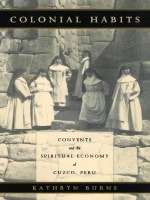
Colonial Habits
Convents and the Spiritual Economy of Cuzco, PeruKathryn Burns
Duke University Press, 1999
Based on unprecedented archival research, Colonial Habits demonstrates how nuns became leading guarantors of their city’s social order by making loans, managing property, containing “unruly” women, and raising girls. Coining the phrase “spiritual economy” to analyze the intricate investments and relationships that enabled Cuzco’s convents and their backers to thrive, Burns explains how, by the late 1700s, this economy had faltered badly, making convents an emblem of decay and a focal point for intense criticism of a failing colonial regime. By the nineteenth century, the nuns had retreated from their previous roles, marginalized in the construction of a new republican order.
Providing insight that can be extended well outside the Andes to the relationships articulated by convents across much of Europe, the Americas, and beyond, Colonial Habits will engage those interested in early modern economics, Latin American studies, women in religion, and the history of gender, class, and race.
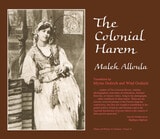
Colonial Harem
Malek Alloula
University of Minnesota Press, 1986
A collection of picture postcards of Algerian women exploited by the French, this “album” illustrates a powerful analysis of the distorting, denigrating effects of their presence on Algerian Society.
Colonial Inscriptions
Race, Sex, and Class in KenyaCarolyn Martin Shaw
University of Minnesota Press, 1995
In Kenyan colonialist imagery, the Kikuyu were vilified as deceitful servants while the Maasai were romanticized as noble savages in a fashion similar to American representation of the Black slave and the "wild" Indian. Carolyn Martin Shaw examines this imagery in the works of historians and ethnographers, as well as in novels and films.
Through the works of Louis Leakey, Jomo Kenyatta, Elspeth Huxley, and Isak Dinesen, along with her own ethnographic research, Martin Shaw investigates the discourses that shaped inequalities, rivalries, and fantasies in colonial Kenya. She explores narratives of domination and subordination, arguing that Europeans brought to Africa long-established ideas of difference that influenced racial inequalities in the colonial situation. Including discussion of the controversial practice of female genital mutilation, Colonial Inscriptions presents an African American woman's views of how images of African colonialism have been influenced by European and American racism and sexual fantasies.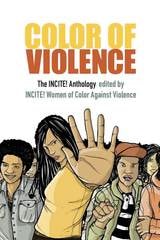
Color of Violence
The INCITE! AnthologyINCITE! Women of Color Against Violence, editor
Duke University Press, 2016
Colorado Women in World War II
Gail M. Beaton
University Press of Colorado, 2023
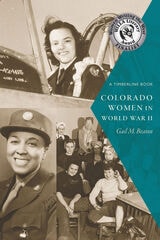
Four months before the attack on Pearl Harbor on December 7, 1941, Mildred McClellan Melville, a member of the Denver Woman’s Press Club, predicted that war would come for the United States and that its long arm would reach into the lives of all Americans. And reach it did. Colorado women from every corner of the state enlisted in the military, joined the workforce, and volunteered on the home front. As military women, they served as nurses and in hundreds of noncombat positions. In defense plants they riveted steel, made bullets, inspected bombs, operated cranes, and stored projectiles. They hosted USO canteens, nursed in civilian hospitals, donated blood, drove Red Cross vehicles, and led scrap drives; and they processed hundreds of thousands of forms and reports. Whether or not they worked outside the home, they wholeheartedly participated in a kaleidoscope of activities to support the war effort.
In Colorado Women in World War II Gail M. Beaton interweaves nearly eighty oral histories—including interviews, historical studies, newspaper accounts, and organizational records—and historical photographs (many from the interviewees themselves) to shed light on women’s participation in the war, exploring the dangers and triumphs they felt, the nature of their work, and the lasting ways in which the war influenced their lives. Beaton offers a new perspective on World War II—views from field hospitals, small steel companies, ammunition plants, college classrooms, and sugar beet fields—giving a rare look at how the war profoundly transformed the women of this state and will be a compelling new resource for readers, scholars, and students interested in Colorado history and women’s roles in World War II.

Colorado Women
A HistoryGail M. Beaton
University Press of Colorado, 2012
The experiences of Colorado women differed greatly across economic, ethnic, and racial backgrounds. Marital status, religious affiliation, and sexual orientation colored their worlds and others' perceptions and expectations of them. Each chapter addresses the everyday lives of women in a certain period, placing them in historical context, and is followed by vignettes on women's organizations and notable individuals of the time.
Native American, Hispanic, African American, Asian and Anglo women's stories hail from across the state--from the Eastern Plains to the Front Range to the Western Slope--and in their telling a more complete history of Colorado emerges. Colorado Women makes a significant contribution to the discussion of women's presence in Colorado that will be of interest to historians, students, and the general reader interested in Colorado, women's and western history.
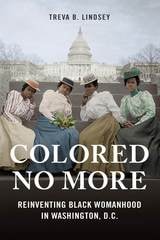
Colored No More
Reinventing Black Womanhood in Washington, D.C.Treva B. Lindsey
University of Illinois Press, 2017
Treva B. Lindsey presents New Negro womanhood as a multidimensional space that included race women, blues women, mothers, white collar professionals, beauticians, fortune tellers, sex workers, same-gender couples, artists, activists, and innovators. Drawing from these differing but interconnected African American women's spaces, Lindsey excavates a multifaceted urban and cultural history of struggle toward a vision of equality that could emerge and sustain itself. Upward mobility to equal citizenship for African American women encompassed challenging racial, gender, class, and sexuality status quos. Lindsey maps the intersection of these challenges and their place at the core of New Negro womanhood.
Comfort
A Novel of the Reverse Underground RailroadH.A. Maxson and Claudia H. Young
Parkhurst Brothers, Inc., 2014

Compelled to Act
Histories of Women's Activism in Western CanadaSarah Carter
University of Manitoba Press, 2020
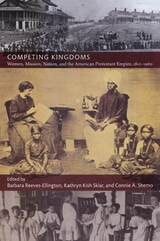
Competing Kingdoms
Women, Mission, Nation, and the American Protestant Empire, 1812–1960Barbara Reeves-Ellington, Kathryn Kish Sklar, and Connie A. Shemo, eds.
Duke University Press, 2010
An international and interdisciplinary group of scholars, the contributors bring under-utilized evidence from U.S. and non-U.S. sources to bear on the study of American women missionaries abroad and at home. Focusing on women from several denominations, they build on the insights of postcolonial scholarship to incorporate the agency of the people among whom missionaries lived. They explore how people in China, the Congo Free State, Egypt, India, Japan, Ndebeleland (colonial Rhodesia), Ottoman Bulgaria, and the Philippines perceived, experienced, and negotiated American cultural expansion. They also consider missionary work among people within the United States who were constructed as foreign, including African Americans, Native Americans, and Chinese immigrants. By presenting multiple cultural perspectives, this important collection challenges simplistic notions about missionary cultural imperialism, revealing the complexity of American missionary attitudes toward race and the ways that ideas of domesticity were reworked and appropriated in various settings. It expands the field of U.S. women’s history into the international arena, increases understanding of the global spread of American culture, and offers new concepts for analyzing the history of American empire.
Contributors: Beth Baron, Betty Bergland, Mary Kupiec Cayton, Derek Chang, Sue Gronewold, Jane Hunter, Sylvia Jacobs, Susan Haskell Khan, Rui Kohiyama, Laura Prieto, Barbara Reeves-Ellington, Mary Renda, Connie A. Shemo, Kathryn Kish Sklar, Ian Tyrrell, Wendy Urban-Mead
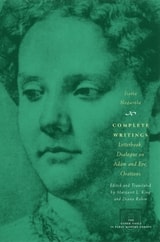
Complete Writings
Letterbook, Dialogue on Adam and Eve, OrationsIsotta Nogarola
University of Chicago Press, 2004
This volume presents English translations of all of Nogarola's extant works and highlights just how daring and original her convictions were. In her letters and orations, Nogarola elegantly synthesized Greco-Roman thought with biblical teachings. And striding across the stage in public, she lectured the Veronese citizenry on everything from history and religion to politics and morality. But the most influential of Nogarola's works was a performance piece, Dialogue on Adam and Eve, in which she discussed the relative sinfulness of Adam and Eve—thereby opening up a centuries-long debate in Europe on gender and the nature of woman and establishing herself as an important figure in Western intellectual history. This book will be a must read for teachers and students of Women's Studies as well as of Renaissance literature and history.
Composing Feminist Interventions
Activism, Engagement, PraxisKristine L. Blair
University Press of Colorado, 2018

Comrade or Brother?
A History of the British Labour MovementMary Davis
Pluto Press, 2009
Critical and iconoclastic, Comrade or Brother? traces the history of the British Labour Movement from its beginnings at the onset of industrialisation through its development within a capitalist society, up to the end of the twentieth-century. Written by a leading activist in the labour movement, the book redresses the balance in much labour history writing. It examines the place of women and the influence of racism and sexism as well as providing a critical analysis of the rival ideologies which played a role in the uneven development of the labour movement.
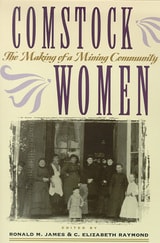
Comstock Women
The Making Of A Mining CommunityRonald M. James
University of Nevada Press, 1997
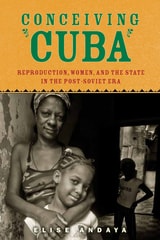
Conceiving Cuba
Reproduction, Women, and the State in the Post-Soviet EraAndaya, Elise
Rutgers University Press, 2014
Winner of the Adele E. Clarke Book Award from ReproNetwork
After Cuba’s 1959 revolution, the Castro government sought to instill a new social order. Hoping to achieve a new and egalitarian society, the state invested in policies designed to promote the well-being of women and children. Yet once the Soviet Union fell and Cuba’s economic troubles worsened, these programs began to collapse, with serious results for Cuban families.
Conceiving Cuba offers an intimate look at how, with the island’s political and economic future in question, reproduction has become the subject of heated public debates and agonizing private decisions. Drawing from several years of first-hand observations and interviews, anthropologist Elise Andaya takes us inside Cuba’s households and medical systems. Along the way, she introduces us to the women who wrestle with the difficult question of whether they can afford a child, as well as the doctors who, with only meager resources at their disposal, struggle to balance the needs of their patients with the mandates of the state.
Andaya’s groundbreaking research considers not only how socialist policies have profoundly affected the ways Cuban families imagine the future, but also how the current crisis in reproduction has deeply influenced ordinary Cubans’ views on socialism and the future of the revolution. Casting a sympathetic eye upon a troubled state, Conceiving Cuba gives new life to the notion that the personal is always political.
Concubines And Power
Five Hundred Years In A Northern Nigerian PalaceHeidi J. Nast
University of Minnesota Press, 2004
African Studies Association Women’s Caucus’s Aidoo-Snyder Book Prize winner
A Choice Outstanding Academic Title
The monumental palace of Kano, Nigeria, was built circa 1500 and is today inhabited by more than one thousand persons. Historically, its secluded interior housed hundreds of concubines whose role in the politics, economics, and culture of Kano city-state has been largely overlooked. In this pioneering work, Heidi J. Nast demonstrates how human-geographical methods can tell us much about a site like the palace, a place bereft of archaeological work or relevant primary sources.
Drawing on extensive ethnographic work and mapping data, Concubines and Power presents new evidence that palace concubines controlled the production of indigo-dyed cloth centuries before men did. The women were also key players in the assessment and collection of the state's earliest grain taxes, forming a complex and powerful administrative hierarchy that used the taxes for palace community needs. In addition, royal concubines served as representatives of their places of origin, their freeborn children providing the king with additional human capital to cement territorial alliances through marriage.
Social forces undoubtedly shaped and changed concubinage for hundreds of years, but Nast shows how the women’s reach extended far beyond the palace walls to the formation of the state itself.
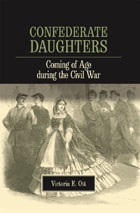
Confederate Daughters
Coming of Age during the Civil WarVictoria E. Ott
Southern Illinois University Press, 2008
Confederate Daughters: Coming of Age during the Civil War explores gender, age, and Confederate identity by examining the lives of teenage daughters of Southern slaveholding, secessionist families. These young women clung tenaciously to the gender ideals that upheld marriage and motherhood as the fulfillment of female duty and to the racial order of the slaveholding South, an institution that defined their status and afforded them material privileges. Author Victoria E. Ott discusses how the loyalty of young Southern women to the fledgling nation, born out of a conservative movement to preserve the status quo, brought them into new areas of work, new types of civic activism, and new rituals of courtship during the Civil War.
Social norms for daughters of the elite, their preparation for their roles as Southern women, and their material and emotional connections to the slaveholding class changed drastically during the Civil War. When differences between the North and South proved irreconcilable, Southern daughters demonstrated extraordinary agency in seeking to protect their futures as wives, mothers, and slaveholders.
From a position of young womanhood and privilege, they threw their support behind the movement to create a Confederate identity, which was in turn shaped by their participation in the secession movement and the war effort. Their political engagement is evident from their knowledge of military battles, and was expressed through their clothing, social activities, relationships with peers, and interactions with Union soldiers.
Confederate Daughters also reveals how these young women, in an effort to sustain their families throughout the war, adjusted to new domestic duties, confronting the loss of slaves and other financial hardships by seeking paid work outside their homes.
Drawing on their personal and published recollections of the war, slavery, and the Old South, Ott argues that young women created a unique female identity different from that of older Southern women, the Confederate bellehood. This transformative female identity was an important aspect of the Lost Cause mythology—the version of the conflict that focused on Southern nationalism—and bridged the cultural gap between the antebellum and postbellum periods.
Augmented by twelve illustrations, this book offers a generational understanding of the transitional nature of wartime and its effects on women’s self-perceptions. Confederate Daughters identifies the experiences of these teenage daughters as making a significant contribution to the new woman in the New South.

Conferencing on the Edge
A Queer History of Feminist Field FormationRachel Corbman
Duke University Press, 2027

Confidence Culture
Shani Orgad and Rosalind Gill
Duke University Press, 2022
Congo's Dancers
Women and Work in KinshasaLesley Nicole Braun
University of Wisconsin Press, 2023
In Congo’s Dancers, Lesley Nicole Braun uses the prism of the Congolese danseuse to examine the politics of control and the ways in which notions of visibility, virtue, and socio-economic opportunity are interlinked in this urban African context. The work of the danseuse highlights the fact that public visibility is necessary to build the social networks required for economic independence, even as this visibility invites social opprobrium for women. The concert dancer therefore exemplifies many of the challenges that women face in Kinshasa as they navigate the public sphere, and she illustrates the gendered differences of local patronage politics that shape public morality. As an ethnographer, Braun had unusual access to the world she documents, having been invited to participate as a concert dancer herself.

Conquering Heroines
How Women Fought Sex Bias at Michigan and Paved the Way for Title IXSara Fitzgerald
University of Michigan Press, 2020
Galvanized by their shared experiences with sex discrimination, the Ann Arbor women organized a group called FOCUS on Equal Employment for Women, led by activist Jean Ledwith King. Working with Bernice Sandler of the Women’s Equity Action League, they developed a strategy to unleash the power of another powerful institution—the federal government—to demand change at U-M and, they hoped, across the world of higher education. Prompted by a complaint filed by FOCUS, the U.S. Department of Health, Education, and Welfare soon documented egregious examples of discrimination in Michigan’s practices toward women and threatened to withhold millions of dollars in contracts unless the school adopted remedies. Among the hundreds of similar complaints filed against U.S. colleges in 1970–1971, the one brought by the Michigan women achieved the breakthrough that provided the historic template for settlements with other institutions.
Drawing on oral histories from archives as well as new interviews with living participants, Conquering Heroines chronicles this pivotal period in the histories of the University of Michigan and the women’s movement. An incredible story of grassroots activism and courageous women, the book highlights the kind of relentless effort that has helped make inclusivity an ongoing goal at U-M.
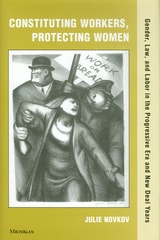
Constituting Workers, Protecting Women
Gender, Law and Labor in the Progressive Era and New Deal YearsJulie Novkov
University of Michigan Press, 2001
During the Progressive Era and New Deal, courts often invalidated generalized protective legislation, but frequently upheld measures that limited women's terms and conditions of labor. The book explores the reasoning in such cases that were decided between 1873 and 1937. By analyzing all reported opinion on the state and federal level, as well as materials from the women's movement and briefs filed in the U.S. Supreme Court, the study demonstrates that considerations of cases involving women's measures ultimately came to drive the development of doctrine.
The study combines historical institutionalism and feminism to address constitutional interpretation, showing that an analysis of conflict over the meaning of legal categories provides a deeper understanding of constitutional development. In doing so, it rejects purely political interpretations of the so-called Lochner era, in which the courts invalidated many legislative efforts to ameliorate the worst effects of capitalism. By addressing the dynamic interactions among interested laypersons, attorneys, and judges, it demonstrates that no individuals or institutions have complete control over the generation of constitutional meaning.
Julie Novkov is Assistant Professor of Political Science, University of Oregon
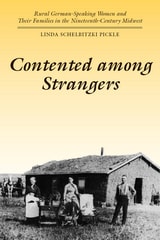
Contented among Strangers
Rural German-Speaking Women and Their Families in the Nineteenth-Century MidwestLinda Schelbitzki Pickle
University of Illinois Press, 1995
German-Americans make up one of the largest ethnic groups in the United States, yet their very success at assimilating has also made them one of the least visible. Contented among Strangers examines the central role German-speaking women in rural areas of the Midwest played in preserving their ethnic and cultural identity. Even while living far from their original homelands, these women applied traditional European patterns of rural family life and values to their new homes in Illinois, Iowa, Kansas, Missouri, and Nebraska. As a result they were more content with their modest lives than were their Anglo-American counterparts. Through personal recollections--including interesting diary material translated by the author, church and community documents, and migration and census data--Pickle reveals the diversity and richness of the women's experiences.
Contested Terrain
Reflections with Afghan Women LeadersSally L Kitch
University of Illinois Press, 2014
Contesting Archives
Finding Women in the SourcesEdited by Nupur Chaudhuri, Sherry J. Katz, and Mary Elizabeth Perry
University of Illinois Press, 2010
The contributors of Contesting Archives challenge the assumption that an archive is a neutral, immutable, and a historical repository of information. Instead, these historians view it as a place where decisions are made about whose documents--and therefore whose history--is important. Finding that women's voices and their texts were often obscured or lost altogether, they have developed many new methodologies for creating unique archives and uncovering more evidence by reading documents "against the grain," weaving together many layers of information to reveal complexities and working collectively to reconstruct the lives of women in the past.
Global in scope, this volume demonstrates innovative research on diverse women from the sixteenth century to the present in Spain, Mexico, Tunisia, India, Iran, Poland, Mozambique, and the United States. Addressing gender, race, class, nationalism, transnationalism, and migration, these essays' subjects include indigenous women of colonial Mexico, Muslim slave women, African American women of the early twentieth century, Bengali women activists of pre-independence India, wives and daughters of Qajar rulers in Iran, women industrial workers in communist Poland and socialist Mozambique, and women club owners in modern Las Vegas. A foreword by Antoinette Burton adroitly synthesizes the disparate themes woven throughout the book.
Contributors are Janet Afary, Maryam Ameli-Rezai, Antoinette Burton, Nupur Chaudhuri, Julia Clancy-Smith, Mansoureh Ettehadieh, Malgorzata Fidelis, Joanne L. Goodwin, Kali Nicole Gross, Daniel S. Haworth, Sherry J. Katz, Elham Malekzadeh, Mary Elizabeth Perry, Kathleen Sheldon, Lisa Sousa, and Ula Y. Taylor.
Contesting Publics
Feminism, Activism, EthnographyLynne Phillips and Sally Cole
Pluto Press, 2014
Through ethnographic cases and activists’ narratives, Contesting Publics analyses the challenges feminists face as they seek to engage with new spaces of participatory democracy in Latin America.
Lynne Phillips and Sally Cole analyse how new silences, exclusions and re-inscriptions of inequalities have emerged alongside these new spaces of participation. The book re-examines the relationship between public and private and speaks to a larger theoretical question: what is the meaning of 'the public' within democracy projects?
Contesting Publics considers current debates among feminists from different generations on the merits of a variety of strategies, goals and issues, drawing out vital lessons for students, researchers and activists in anthropology, gender studies and Latin American studies.
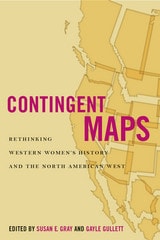
Contingent Maps
Rethinking Western Women's History and the North American WestEdited by Susan E. Gray and Gayle Gullett
University of Arizona Press, 2014
Contingent Maps demonstrates how employing place as an analytical tool transforms Western women’s history. Gray and Gullett depict place as not only a physical location but as a way of understanding, as the spatial configuration of power relations that are always in flux. As a place and many places, the West is therefore always being constructed. All maps are contingent, as Gray and Gullett’s reading of the articles in this collection attest. Contingent Maps offers histories of Wests ranging from the nineteenth century to the near present. This synthesis of feminist history and geography has the potential to revitalize the field of Western women’s history.
Continually Working
Black Women, Community Intellectualism, and Economic Justice in Postwar MilwaukeeCrystal Marie Moten
Vanderbilt University Press, 2023
Moten emphasizes the ways in which Black women transformed the urban landscape by simultaneously occupying spaces from which they had been historically excluded and creating their own spaces. Black women refused to be marginalized within the historically white and middle‑class Milwaukee Young Women's Christian Association (MYWCA), an association whose mission centered on supporting women in urban areas. Black women forged interracial relationships within this organization and made it, not without much conflict and struggle, one of the most socially progressive organizations in the city. When Black women could not integrate historically white institutions, they created their own. They established financial and educational institutions, such as Pressley School of Beauty Culture, which beautician Mattie Pressley DeWese opened in 1946 as a result of segregation in the beauty training industry. This school served economic, educational, and community development purposes as well as created economic opportunities for Black women. Historically and contemporarily, Milwaukee has been and is still known as one of the most segregated cities in the nation. Black women have always contested urban inequality, by making space for themselves and others on the margins. In so doing, they have transformed both the urban landscape and urban history.
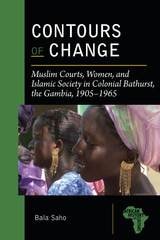
Contours of Change
Muslim Courts, Women, and Islamic Society in Colonial Bathurst, the Gambia, 1905-1965Bala Saho
Michigan State University Press, 2018
Control and Subversion
Gender Relations in TajikistanColette Harris
Pluto Press, 2004
Control and Subversion investigates the relationship of gender to the inner workings of social control, such as exposing ways in which Tajik society threatens men’s masculinity, thereby bringing them to force family members into conformity, irrespective of the suffering this may cause. It examines how masculine and feminine gender characteristics influence personal relationships and explores gender relations at their most intimate – from the secret musings of adolescent girls, through the painful experiences of young men, to the trauma of sexual initiation. Although largely concentrating on contemporary life, the book also discusses historical materials and Soviet influence on Tajik society. Control and Subversion is essential reading for anyone interested in Central Asia, Muslim societies, the lives of Muslim women, or gender in a Muslim context.
Convents and the Body Politic in Late Renaissance Venice
Jutta Gisela Sperling
University of Chicago Press, 2000
Sperling explains how women were not allowed to marry beneath their social status while men could, especially if their brides were wealthy. Faced with a shortage of suitable partners, patrician women were forced to offer themselves as "a gift not only to God, but to their fatherland," as Patriarch Giovanni Tiepolo told the Senate of Venice in 1619. Noting the declining birth rate among patrician women, Sperling explores the paradox of a marriage system that preserved the nobility at the price of its physical extinction. And on a more individual level, she tells the fascinating stories of these women. Some became scholars or advocates of women's rights, some took lovers, and others escaped only to survive as servants, prostitutes, or thieves.
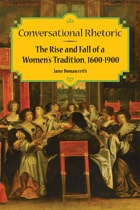
Conversational Rhetoric
The Rise and Fall of a Women's Tradition, 1600-1900Jane Donawerth
Southern Illinois University Press, 2011
Donawerth traces the development of women’s rhetorical theory through the voices of English and American women (and one much-translated French woman) over three centuries. She demonstrates how they cultivated theories of rhetoric centered on conversation that faded once women began writing composition textbooks for mixed-gender audiences in the latter part of the nineteenth century. She recovers and elucidates the importance of the theories in dialogues and defenses of women’s education by Bathsua Makin, Mary Astell, and Madeleine de Scudéry; in conduct books by Hannah More, Lydia Sigourney, and Eliza Farrar; in defenses of women’s preaching by Ellen Stewart, Lucretia Mott, Catherine Booth, and Frances Willard; and in elocution handbooks by Anna Morgan, Hallie Quinn Brown, Genevieve Stebbins, and Emily Bishop. In each genre, Donawerth explores facets of women’s rhetorical theory, such as the recognition of the gendered nature of communication in conduct books, the incorporation of the language of women’s rights in the defenses of women’s preaching, and the adaptation of sentimental culture to the cultivation of women’s bodies as tools of communication in elocution books.
Rather than a linear history, Conversational Rhetoric follows the starts, stops, and starting over in women’s rhetorical theory. It covers a broad range of women’s rhetorical theory in the Anglo-American world and places them in their social, rhetorical, and gendered historical contexts. This study adds women’s rhetorical theory to the rhetorical tradition, advances our understanding of women’s theories and their use of rhetoric, and offers a paradigm for analyzing the differences between men’s and women’s rhetoric from 1600 to 1900.
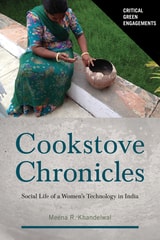
Cookstove Chronicles
Social Life of a Women’s Technology in IndiaMeena R. Khandelwal
University of Arizona Press, 2024
Based on anthropological research in Rajasthan, Cookstove Chronicles argues that the supposedly obsolete chulha persists because it offers women control over the tools needed to feed their families. Their continued use of old stoves alongside the new is not a failure to embrace new technologies but instead a strategy to maximize flexibility and autonomy. The chulha is neither the villain nor hero of this story. It produces particulate matter that harms people’s bodies, leaves soot on utensils and walls, and accelerates glacial melting and atmospheric warming. Yet it also depends on renewable biomass fuel and supports women’s autonomy as a local, do-it-yourself technology.
Meena Khandelwal, a feminist anthropologist, describes her collaboration with engineers, archaeologists, and others. She employs critical social theory and reflections from fieldwork to bring together research from a range of fields, including history, geography, anthropology, energy and environmental studies, public health, and science and technology studies (STS). In so doing she not only demystifies multidisciplinary research but also highlights the messy reality of actual behavior.
Cookstove Chronicles critically examines why, despite extensive development efforts, use of the chulha persists. It offers an important new framework for looking at development, technology, environmental change, and human behavior.
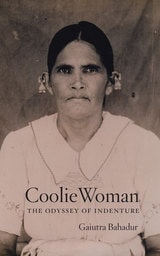
Coolie Woman
The Odyssey of IndentureGaiutra Bahadur
University of Chicago Press, 2013
Shunned by society, and sometimes in mortal danger, many coolie women were either runaways, widows, or outcasts. Many of them left husbands and families behind to migrate alone in epic sea voyages—traumatic “middle passages”—only to face a life of hard labor, dismal living conditions, and, especially, sexual exploitation. As Bahadur explains, however, it is precisely their sexuality that makes coolie women stand out as figures in history. Greatly outnumbered by men, they were able to use sex with their overseers to gain various advantages, an act that often incited fatal retaliations from coolie men and sometimes larger uprisings of laborers against their overlords. Complex and unpredictable, sex was nevertheless a powerful tool.
Examining this and many other facets of these remarkable women’s lives, Coolie Woman is a meditation on survival, a gripping story of a double diaspora—from India to the West Indies in one century, Guyana to the United States in the next—that is at once a search for one’s roots and an exploration of gender and power, peril and opportunity.
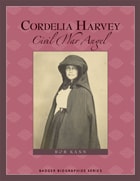
Cordelia Harvey
Civil War AngelBob Kann
Wisconsin Historical Society Press, 2011
Cordelia Harvey: Civil War Angel includes sidebars on medical care, early nursing, and military prisons. A timeline, glossary of terms, and suggestions for activities and discussion round out this spirited narrative.

Country Place
A NovelAnn Petry, foreword by Farah Jasmine Griffin
Northwestern University Press, 1947
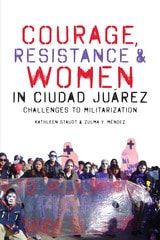
Courage, Resistance, and Women in Ciudad Juárez
Challenges to MilitarizationBy Kathleen Staudt and Zulma Y. Méndez
University of Texas Press, 2015
Ciudad Juárez has recently become infamous for its murder rate, which topped 3,000 in 2010 as competing drug cartels grew increasingly violent and the military responded with violence as well. Despite the atmosphere of intimidation by troops, police, and organized criminals, women have led the way in civil society activism, spurring the Juárez Resistance and forging powerful alliances with anti-militarization activists.
An in-depth examination of la Resistencia Juarense, Courage, Resistance, and Women in Ciudad Juárez draws on ethnographic research to analyze the resistance’s focus on violence against women, as well as its clash with the war against drugs championed by Mexican President Felipe Calderón with the support of the United States. Through grounded insights, the authors trace the transformation of hidden discourses into public discourses that openly challenge the militarized border regimes. The authors also explore the advocacy carried on by social media, faith-based organizations, and peace-and-justice activist Javier Sicilia while Calderón faced U.S. political schisms over the role of border trade in this global manufacturing site.
Bringing to light on-the-ground strategies as well as current theories from the fields of sociology, political anthropology, and human rights, this illuminating study is particularly significant because of its emphasis on the role of women in local and transnational attempts to extinguish a hot zone. As they overcome intimidation to become game-changing activists, the figures featured in Courage, Resistance, and Women in Ciudad Juárez offer the possibility of peace and justice in the wake of seemingly irreconcilable conflict.
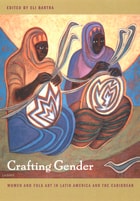
Crafting Gender
Women and Folk Art in Latin America and the CaribbeanEli Bartra, ed.
Duke University Press, 2003
Art historians, anthropologists, and sociologists from Latin America, the Caribbean, and the United States discuss artwork from Mexico, Argentina, Chile, Colombia, Ecuador, Panama, Suriname, and Puerto Rico, and many of their essays focus on indigenous artists. They highlight the complex webs of social relations from which folk art emerges. For instance, while several pieces describe the similar creative and technical processes of indigenous pottery-making communities of the Amazon and of mestiza potters in Mexico and Colombia, they also reveal the widely varying functions of the ceramics and meanings of the iconography. Integrating the social, historical, political, geographical, and economic factors that shape folk art in Latin America and the Caribbean, Crafting Gender sheds much-needed light on a rich body of art and the women who create it.
Contributors
Eli Bartra
Ronald J. Duncan
Dolores Juliano
Betty LaDuke
Lourdes Rejón Patrón
Sally Price
María de Jesús Rodríguez-Shadow
Mari Lyn Salvador
Norma Valle
Dorothea Scott Whitten
Crafting Selves
Power, Gender, and Discourses of Identity in a Japanese WorkplaceDorinne K. Kondo
University of Chicago Press, 1990
"Kondo's work is significant because she goes beyond disharmony, insisting on complexity. Kondo shows that inequalities are not simply oppressive-they are meaningful ways to establish identities."—Nancy Rosenberger, Journal of Asian Studies
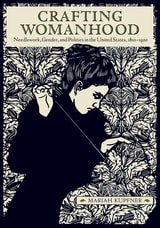
Crafting Womanhood
Needlework, Gender, and Politics in the United States, 1810-1920Mariah Kupfner
University of Delaware Press, 2027
Decorative needlework was a key medium through which American women constructed femininity and its relationship to public and political concerns in the nineteenth and early twentieth centuries. Through samplers, needlecases, lace coats, silk sofas, cotton scraps, banners, and other textile things, scholars can see the ways in which women and girls related to education, property-holding, slavery and freedom, labor, and women’s right to vote. Needlework’s durable association with “traditional” notions about womanhood made it a potent resource through which to make gender in expansive and meaningful ways that had profound public, political implications as educational opportunities for girls and women were expanding, and the antislavery and women's suffrage movements were growing. Indeed, needlework's very conventionality and relationship to the past made it a useful tool for crafting womanhood anew.

Creating the New Woman
The Rise of Southern Women's Progressive Culture in Texas, 1893-1918Judith N. McArthur
University of Illinois Press, 1998
Regionally distinct yet influenced by national trends, women's progressive culture in Texas offers a valuable opportunity to analyze the evolution of women's voluntary associations, their challenges to southern conventions of race and class, and their quest for social change and political power.
Judith McArthur traces how general concerns of national progressive organizations about pure food, prostitution, and education reform shaped programs at the state and local levels. Southern women differed from their Northern counterparts by devising new approaches to settlement work and taking advantage of World War I to challenge southern gender and racial norms. McArthur's original analysis details how women in Texas succeeded in securing partial voting rights before passage of the Nineteenth Amendment. She also provides valuable comparisons between North and South, among various southern states, and between black and white, and male and female, progressives.