Results by title
49 books match the query 'O.T'
A Model for the Christian Life
Hilary of Poitier's Commentary on the PsalmsPaul C. Burns
Catholic University of America Press, 2012
Called by Stories
Biblical Sagas and Their Challenge for LawMilner S. Ball
Duke University Press, 2000
He begins with the story of Moses, who is obliged both to speak for God to the Hebrews and to advocate for the Hebrews before God. What, asks Ball, does Moses’s predicament say to lawyers professionally bound to zealous representation of only one client? In the story of Rachel, Ball finds insights that comprehend the role of tears and emotion in the judicial process. He relates these insights to specific contemporary situations, such as a plant closing and the subsequent movement of jobs to Mexico and legal disputes over the sovereignty of native Hawaiians. In a discussion of “The Gospel According to John,” Ball points out that the writer of this gospel is free simultaneously to be critical of law and to rely extensively on it. Ball uses this narrative to explore the boundaries of free will and independence in lawyering. By venturing into the world of powerful events and biblical characters, Ball enables readers to contest their own expectations and fundamental assumptions.
Employing legal theory, theology, and literary criticism, Called by Stories distills a wisdom in biblical texts that speaks specifically to the working life of legal professionals. As such, it will enrich lovers of narrative and poetry, ethicists, literary and biblical scholars, theologians, lawyers, law students, judges, and others who seek to discern deeper meanings in the texts that have shaped their lives.
Children of Ezekiel
Aliens, UFOs, the Crisis of Race, and the Advent of End TimeMichael Lieb
Duke University Press, 1998
Beginning with the merkabah chariot literature of Hebrew and Gnostic mysticism, Lieb shows how religiously inspired people concerned with annihilating their heretical enemies seized on Ezekiel’s vision as revealing the technologically superior instrument of God’s righteous anger. He describes how many who seek to know the unknowable that is the power of God conceive it in technological terms—and how that power is associated with political aims and a heralding of the end of time. For Milton, Ezekiel’s chariot becomes the vehicle in which the Son of God does battle with the rebellious angels. In the modern age, it may take the form of a locomotive, tank, airplane, missile, or UFO. Technology itself is seen as a divine gift and an embodiment of God in the temporal world. As Lieb demonstrates, the impetus to produce modern technology arises not merely from the desire for profit or military might but also from religious-spiritual motives.
Including discussions of conservative evangelical Christian movements, Reagan’s ballistic shooting gallery in the sky, and the Nation of Islam’s vision of the “mother plane” as the vehicle of retribution in the war against racial oppression, Children of Ezekiel will enthrall readers who have been captivated, either through religious belief or intellectual interests, by a common thread uniting millennial religious beliefs, racial conflict, and political and militaristic aspirations.
Commentary on Zechariah
Robert C. Didymus the Blind
Catholic University of America Press, 2006
Commentary on the Psalms, Psalms 1-72
Robert C. Theodoret of Cyrus
Catholic University of America Press, 2000
Commentary on the Twelve Prophets
Robert C. Theodore of Mopsuestia
Catholic University of America Press, 2004
Commentary on the Twelve Prophets, Volume 1
Saint Cyril of Alexandria
Catholic University of America Press, 2007
Commentary on the Twelve Prophets, Volume 2
Saint Cyril of Alexandria
Catholic University of America Press, 2007
Daily Life in Biblical Times
Oded Borowski
SBL Press, 2003
Death and Dissymmetry
The Politics of Coherence in the Book of JudgesMieke Bal
University of Chicago Press, 1988
Counter to standard readings of Judges, Bal's interpretation demonstrates that the book has a political and ideological coherence in which the treatment of women plays a pivotal role. Bal concentrates here not on the assassinations and battles that rage through Judges but on the violence in the domestic lives of individual characters, particularly sexual violence directed at women. Her skillful reading reveals that murder, in this text, relates to gender and reflects a social structure that is inherently contradictory. By foregrounding the stories of women and subjecting them to subtle narrative analysis, she is able to expose a set of preoccupations that are essential to the sense of these stories but are not articulated in them. Bal thereby develops a "countercoherence" in conflict with the apparent emphases of Judges—the politics, wars, and historiography that have been the constant focus of commentators on the book.
Death and Dissymmetry makes an important contribution to the development of a feminist method of interpreting ancient texts, with consequences for religious studies, ancient history, literary theory, and gender studies.
Faithful Renderings
Jewish-Christian Difference and the Politics of TranslationNaomi Seidman
University of Chicago Press, 2006
Bringing together central issues in translation studies with episodes in Jewish–Christian history, Naomi Seidman considers a range of texts, from the Bible to Elie Wiesel’s Night, delving into such controversies as the accuracy of various Bible translations, the medieval use of converts from Judaism to Christianity as translators, the censorship of anti-Christian references in Jewish texts, and the translation of Holocaust testimony. Faithful Renderings ultimately reveals that translation is not a marginal phenomenon but rather a crucial issue for understanding the relations between Jews and Christians and indeed the development of each religious community.
Gregory of Nyssa
Homilies on the Song of SongsRichard A. Norris Jr.
SBL Press, 2012
Homilies on Genesis and Exodus
Catholic University of America Press, 1982
Homilies on Genesis, 1–17
Saint John Chrysostom
Catholic University of America Press, 1986
Homilies on Jeremiah and 1 Kings 28
Catholic University of America Press, 1998
Homilies on Joshua
Catholic University of America Press, 2002
Homilies on Judges
Catholic University of America Press, 2010
Homilies on Leviticus, 1-16
Catholic University of America Press, 1990
Judaism and Disability
Portrayals in Ancient Texts from the Tanach through the BavliJudith Z. Abrams
Gallaudet University Press, 1998
In Judaism and Disability, the archaic portrayals of mentally ill, mentally retarded, physically affected, deaf, blind, and other disabled people reflect the sharp contrast they presented compared to the unchanging Judaic ideal of the “perfect priest.” All of these sources describe this perfection as embodied in a person who is male, free, unblemished, with da’at (cognition that can be communicated), preferably learned, and a priest. The failure to have da’at stigmatized disabled individuals, who were also compromised by the treatment they received from nondisabled people, who were directing and constraining.
As the Judaic ideal transformed from the bodily perfection of the priest in the cult to intellectual prowess in the Diaspora, a parallel change of attitudes toward disabled persons gradually occurred. The reduced emphasis upon physical perfection as a prerequisite for a relationship with God eventually enabled the enfranchisement of some disabled people and other minorities. Scholars, students, and other readers will find the engrossing process disclosed in Judaism and Disability one that they can apply to a variety of other disciplines.
Judaism's Theological Voice
The Melody of the TalmudJacob Neusner
University of Chicago Press, 1995
In his attempt to answer these questions, Neusner sets forth the character and the form of the Torah as sung theology. Israel, the holy community, meets God in the synagogue, while at prayer, and in the yeshiva, when studying the Torah—at the moment in each setting when the Torah is received. In both circumstances people do not read but sing out its words. With the written part of the Torah sung in the synagogue, and the oral part declaimed in centers of sacred learning, music provides the medium for Judaism's theological voice.
Neusner identifies a reciprocal exchange between the holy community Israel and God: Israel sings to God when the Torah is studied, and God sings to Israel when the Torah is declaimed. Through the metaphor of music, Neusner offers an account of how he believes those faithful to the Torah meet God in the Torah, and how they should listen to the melody of God's self-revelation. The result is an original theological reflection that will interest all students of Judaism.
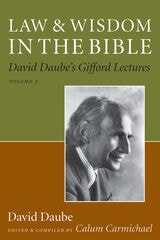
Law and Wisdom in the Bible
David Daube's Gifford Lectures, Volume IIDavid Daube
Templeton Press, 2010
"That over forty years after they were delivered these famous but unavailable Gifford Lectures should be published is occasion for celebration. Once again we hear Daube’s voice, patient and probing, as he turns over, tests, pushes fresh inquiries, and finds new insights. No man has had such a subtle sense of scriptural texts matched by such a supple sense of the practices and peculiarities of human beings engaged in the legal process. Law and Wisdom in the Bible is classic Daube." mdash;John T. Noonan Jr., United States Circuit Judge
David Daube (1909–99) was known for his unique and sophisticated research on Roman law, biblical law, Jewish Law, and medical ethics. In Law and Wisdom in the Bible, the first published collection of his 1964 Gifford Lectures, Daube derives from his complex understanding of biblical texts both ancient and contemporary notions about wisdom, justice, and education.
In addressing these and other profound issues, Daube crosses traditional disciplinary boundaries and bridges the
gap between humanism and religion, especially with regard to Christianity and Judaism. With his sophisticated understanding of Talmudic law and literature, his thinking, which is on full display in these lectures, revolutionized prevailing perceptions about the New Testament.
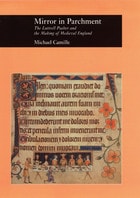
Mirror in Parchment
The Luttrell Psalter and the Making of Medieval EnglandMichael Camille
University of Chicago Press, 1998
The richly illuminated Luttrell Psalter was created for the English nobleman Sir Geoffrey Luttrell (1276-1345). Inexpensive mechanical illustration has since disseminated the book's images to a much wider audience; hence the Psalter's representations of manorial life have come to profoundly shape our modern idea of what medieval English people, high and low, looked like at work and at play. Alongside such supposedly truthful representations, the Psalter presents myriad images of fantastic monsters and beasts. These patently false images have largely been disparaged or ignored by modern historians and art historians alike, for they challenge the credibility of those pictures in the Luttrell Psalter that we wish to see as real.
In the conviction that medieval images were not generally intended to reflect daily life but rather to shape a new reality, Michael Camille analyzes the Psalter's famous pictures as representations of the world, imagined and real, of its original patron. Addressed are late medieval chivalric ideals, physical sites of power, and the boundaries of Sir Geoffrey's imagined community, wherein agricultural laborers and fabulous monsters play a similar ideological role. The Luttrell Psalter thus emerges as a complex social document of the world as its patron hoped and feared it might be.
On Genesis
Two Books on Genesis against the Manichees and On the Literal Interpretation of Genesis: An Unfinished BookSaint Augustine
Catholic University of America Press, 1991
Predicting the Past in the Ancient Near East
Mantic Historiography in Ancient Mesopotamia, Judah, and the Mediterranean WorldMatthew Neujahr
SBL Press, 2012
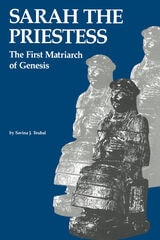
Sarah the Priestess
The First Matriarch of GenesisSavina Teubal
Ohio University Press, 1984
In a patriarchal environment such as the Canaan of Genesis, the situation is discordant and problematic. Dr. Teubal suggests that the difficulty is eliminated, however, if we understand that Sarah and the other matriarchs mentioned in the narratives acted within the established, traditional Mesopotamian role of priestess, of a class of women who retained a highly privileged position vis-a-vis their husbands.
Dr. Teubal shows that the “Sarah tradition” represents a nonpatriarchal system struggling for survival in isolation, in the patriarchal environment of what was for Sarah a foreign society. She further indicates that the insistence of Sarah and Rebekah that their sons and heirs marry wives from the old homeland had to do not so much with preference for endogamy and cousin marriage as with their intention of ensuring the continuation of their old kahina-tradition against the overwhelming odds represented by patriarchal Canaan.
Selected Prose Works
Commentary on Genesis, Commentary on Exodus, Homily on Our Lord, Letter to PubliusSaint Ephrem the Syrian
Catholic University of America Press, 1994
Social Theory and the Study of Israelite Religion
Essays in Retrospect and ProspectSaul M. Olyan
SBL Press, 2012
Surviving Lamentations
Catastrophe, Lament, and Protest in the Afterlife of a Biblical BookTod Linafelt
University of Chicago Press, 2000
In Surviving Lamentations, Tod Linafelt offers an alternative reading of Lamentations in light of the "literature of survival" (works written by survivors of catastrophe) as well as literary and philosophical reflections on "the survival of literature." He refocuses attention on the figure of Zion as a manifestation of a basic need to give voice to suffering, and traces the afterlife of Lamentations in Jewish literature, in which text after text attempts to provide the response to Zion's lament that is lacking in Lamentations itself.
Seen through Linafelt's eyes, Lamentations emerges as uncannily relevant to contemporary discourse on survival.
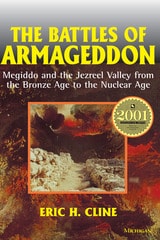
The Battles of Armageddon
Megiddo and the Jezreel Valley from the Bronze Age to the Nuclear AgeEric H. Cline
University of Michigan Press, 2002
> Best Popular Book on Archaeology
--Biblical Archaeology Society
Apocalypse. Judgment Day. The End Time. Armageddon. Students of the Bible know it as the place where the cataclysmic battle between the forces of good and the forces of evil will unfold. Many believe that this battle will take place in the very near future. But few know that Armageddon is a real place--one that has seen more fighting and bloodshed than any other spot on earth.
The name Armageddon is a corruption of the Hebrew phrase Har Megiddo, and it means "Mount of Megiddo." More than thirty bloody conflicts have been fought at the ancient site of Megiddo and adjacent areas of the Jezreel Valley during the past four thousand years. Egyptians, Israelites, Greeks, Muslims, Crusaders, Mongols, British, Germans, Arabs, and Israelis have all fought and died here. The names of the warring leaders reverberate throughout history: Thutmose III, Deborah, Gideon, Saul and Jonathan, Jezebel, Saladin, Napoleon, and Allenby, to name but the most famous. Throughout history Megiddo and the Jezreel Valley have been ground zero for battles that determined the very course of civilization. No wonder that the author of Revelation believed Armageddon, the penultimate battle between good and evil, would also take place here!
The Battles of Armageddon introduces readers to a rich cast of ancient and modern warriors, while bringing together for the first time the wide range of conflicts that have been fought at Megiddo and the Jezreel Valley from the Bronze Age to the Nuclear Age.
Eric H. Cline has participated in more than seventeen seasons of excavation and survey in Israel, Egypt, Jordan, Greece, and the United States. He is currently a Senior Staff Archaeologist at the ongoing excavations of Megiddo.
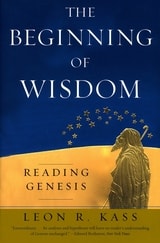
The Beginning of Wisdom
Reading GenesisLeon R. Kass
University of Chicago Press, 2006
“Extraordinary,” says the New York Times, “will leave no reader’s understanding of Genesis unchanged.”
Examining Genesis in a philosophical light, Leon Kass presents it not as a story of what happened long ago, but as the enduring story of humanity itself. He asserts that the first half of Genesis contains insights about human nature that “rival anything produced by the great philosophers.” Kass here reads these first stories—from Adam and Eve to the tower of Babel—as a mirror for self-discovery that reveals truths about human reason, speech, freedom, sexual desire, pride, shame, anger, and death. Taking a step further in the second half of his book, Kass explores the struggles in Genesis to launch a new way of life that addresses mankind’s morally ambiguous nature by promoting righteousness and holiness.
Even readers who don’t agree with Kass’s interpretations will find The Beginning of Wisdom a compelling book—a masterful philosophical take on one of the world’s seminal religious texts.
The Bible in the Sixteenth Century
David C. Steinmetz
Duke University Press, 1990
Contributors. Irena Backus, Guy Bedouelle, Kalman P. Bland, Kenneth G. Hagen, Scott H. Hagen, Scott H. Hendrix, R. Gerald Hobbs, Jean-Claude Margolin, H. C. Erik Midelfort, Richard A. Muller, John B. Payne, David C. Steinmetz
The Hebrew Bible and Philosophy of Religion
Jaco Gericke
SBL Press, 2012
The Homilies of Saint Jerome, Volume 1 (1–59 on the Psalms)
Saint Jerome
Catholic University of America Press, 1965
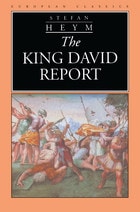
The King David Report
Stefan Heym
Northwestern University Press, 1997
Written by one of Germany's most acclaimed dissident authors, The King David Report is both an analysis of the writer's obligations to truth, and an astute satire on the workings of history and politics in a totalitarian state.
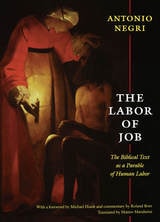
The Labor of Job
The Biblical Text as a Parable of Human LaborAntonio Negri
Duke University Press, 2009
The Labor of Job was first published in Italy in 1990. Negri began writing it in the early 1980s, while he was a political prisoner in Italy, and it was the first book he completed during his exile in France (1983–97). As he writes in the preface, understanding suffering was for him in the early 1980s “an essential element of resistance. . . . It was the problem of liberation, in prison and in exile, from within the absoluteness of Power.” Negri presents a Marxist interpretation of Job’s story. He describes it as a parable of human labor, one that illustrates the impossibility of systems of measure, whether of divine justice (in Job’s case) or the value of labor (in the case of late-twentieth-century Marxism). In the foreword, Michael Hardt elaborates on this interpretation. In his commentary, Roland Boer considers Negri’s reading of the book of Job in relation to the Bible and biblical exegesis. The Labor of Job provides an intriguing and accessible entry into the thought of one of today’s most important political philosophers.
The Old Testament and Christian Spirituality
Theoretical and Practical Essays from a South African PChristo Lombaard
SBL Press, 2012
An engaging anthology that deals with both theory and practice
The emerging discipline of biblical spirituality considers how faith finds expression within the biblical texts and how modern expressions of faith interact with those texts. This volume represents Christo Lombaard’s reflective, analytical, and exegetical contributions to the field in order to explore how biblical texts mediate faith, both ancient and contemporary. It reflects on aspects of the interaction of faith and Scripture, critically approaching both dimensions.
Features:
- Seven previously published papers drawn predominately from South African journals
- Explorations of how biblical texts mediate faith
- Close examination of the discipline of biblical spirituality as part of spirituality studies
The Politics of Pessimism in Ecclesiastes
A Social-Science PerspectiveMark R. Sneed
SBL Press, 2012
The Quest for the Historical Israel
Debating Archaeology and the History of Early IsraelIsrael Finkelstein
SBL Press, 2007
The Questions on the Octateuch, Volume 1
John F. Theodoret of Cyrus
Catholic University of America Press, 2007
The Questions on the Octateuch, Volume 2
John F. Theodoret of Cyrus
Catholic University of America Press, 2007
The Song of Songs and the Ancient Egyptian Love Songs
Michael V. Fox
University of Wisconsin Press, 1985
Theodoret of Cyrus
commentary on the Psalms, 73-150Robert C. Theodoret of Cyrus
Catholic University of America Press, 2000
Thinking Biblically
Exegetical and Hermeneutical StudiesAndré LaCocque and Paul Ricoeur
University of Chicago Press, 1998
LaCocque's commentaries employ a historical-critical method that takes into account archaeological, philological, and historical research. LaCocque includes in his essays historical information about the dynamic tradition of reading scripture, opening his exegesis to developments and enrichments subsequent to the production of the original literary text. Ricoeur also takes into account the relation between the texts and the historical communities that read and interpreted them, but he broadens his scope to include philosophical speculation. His commentaries highlight the metaphorical structure of the passages and how they have served as catalysts for philosophical thinking from the Greeks to the modern age.
This extraordinary literary and historical venture reads the Bible through two different but complementary lenses, revealing the familiar texts as vibrant, philosophically consequential, and unceasingly absorbing.
Universalism and Particularism at Sodom and Gomorrah
Essays in Memory of Ron PirsonDiana Lipton
SBL Press, 2012
Voices of Torah, Vol. 1
A Treasury of Rabbinic Gleanings on the Weekly Portions, Holidays and SpecialRabbi Hara E. Person
Central Conference of American Rabbis, 2011
A wonderful Torah study resource! Discover multiple perspectives on every parashah in this rich collection of commentary written by CCAR members. Includes holiday portions as well. Makes a great gift for students, teachers, and congregational leaders.
Available in a discounted bundle with Voices of Torah, Volume 2
What Has Athens to Do with Jerusalem?
Timaeus and Genesis in CounterpointJaroslav Pelikan
University of Michigan Press, 1997
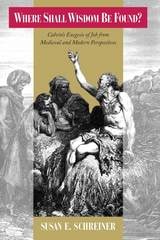
Where Shall Wisdom be Found?
Calvin's Exegesis of Job from Medieval and Modern PerspectivesSusan E. Schreiner
University of Chicago Press, 1994
For Calvin and his predecessors, Schreiner argues, the concept of intellectual perception is the key to an understanding of Job. The texts she examines constantly raise questions about the human capacity for knowledge: What can the sufferer who stands within history perceive about the self, God, and reality? Can humans truly perceive the workings of providence in their personal lives or in the tumult of history? Are evil and injustice a reality that we must confront before finding wisdom?
In her final chapter, Schreiner turns to the wide array of twentieth-century interpretations of Job, including modern biblical commentaries, the work of Carl Jung, and literary transfigurations by Wells, MacLeish, Wiesel, and Kafka. The result is a compelling demonstration of how the history of exegesis can yield vital insights for contemporary culture.

Women at Work in the Deuteronomistic History
Mercedes L. García Bachmann
SBL Press, 2013
A thorough study of the socio-economic and literary contexts of women in the Deuteronomistic History
Mercedes L. García Bachmann examines the key texts in the Deuteronomistic History that mention women in service occupations: slaves and dependents, cooks, wet nurses, childcare givers, prostitutes, and scribes. The mostly anonymous women who performed this work for others are sometimes mentioned only in a single verse. Consequently, they often are as unrecognized in modern scholarship as they seem in the biblical text. García Bachmann shows that these women were honored not in relation to matters such as sexual purity or marital faithfulness but on account of the valuable service that they provided.
- A close examination of unnamed women
- A review of previous work in feminist, ancient Near Eastern, biblical, and social-scientific studies
- Extensive coverage of Hebrew terms used for women workers
XIV Congress of the International Organization for Septuagint and Cognate Studies, Helsinki, 2010
Melvin K. Peters
SBL Press, 2013